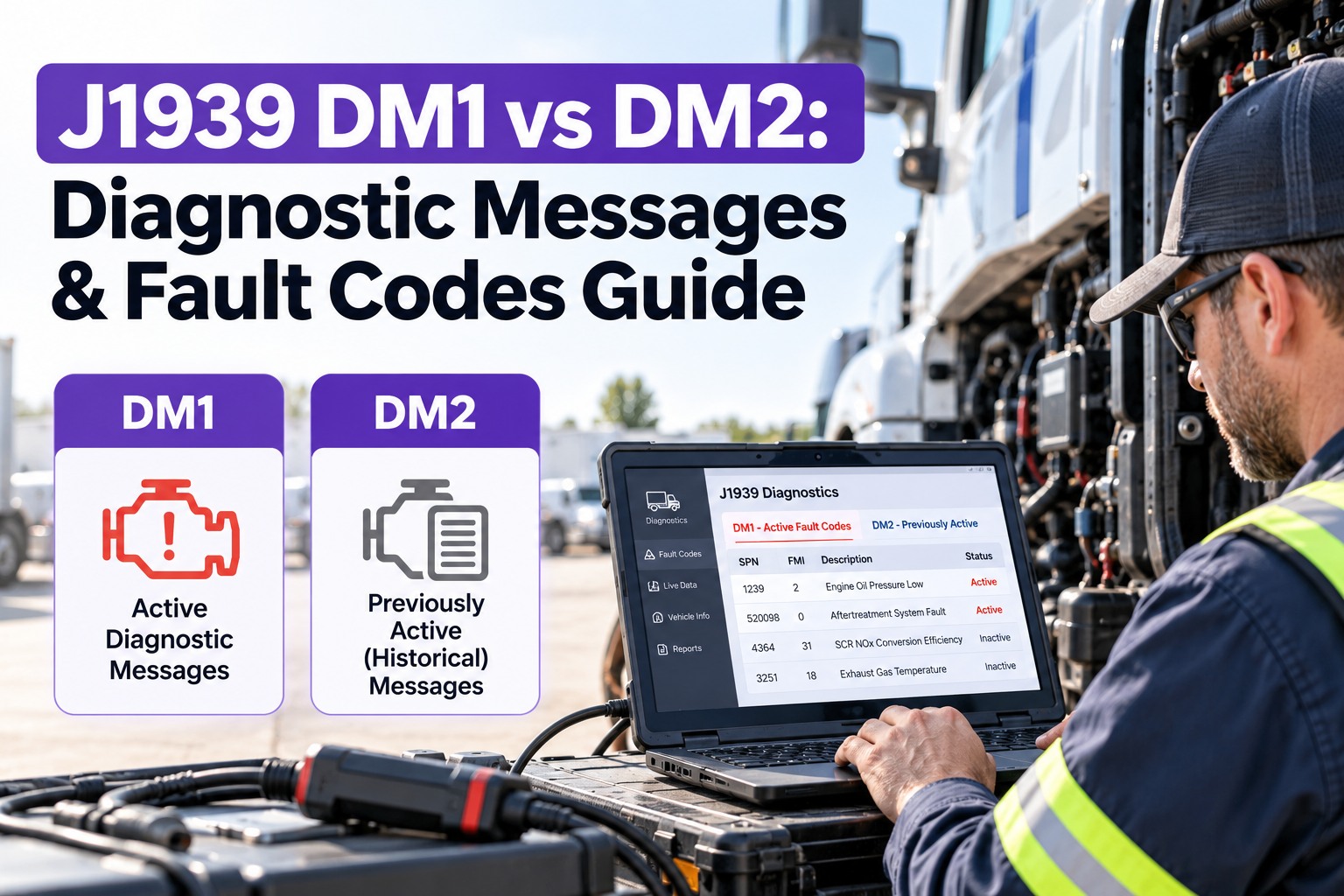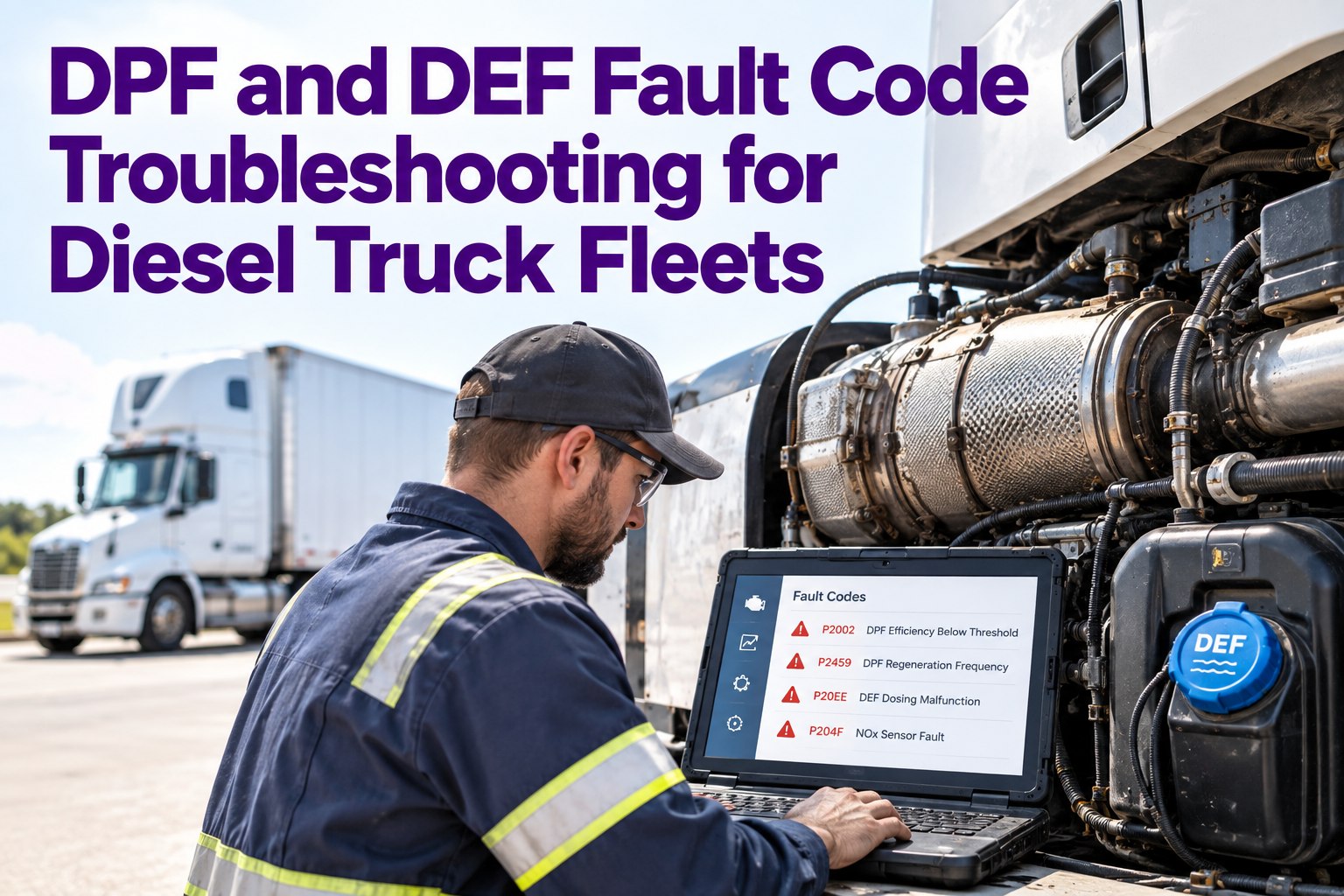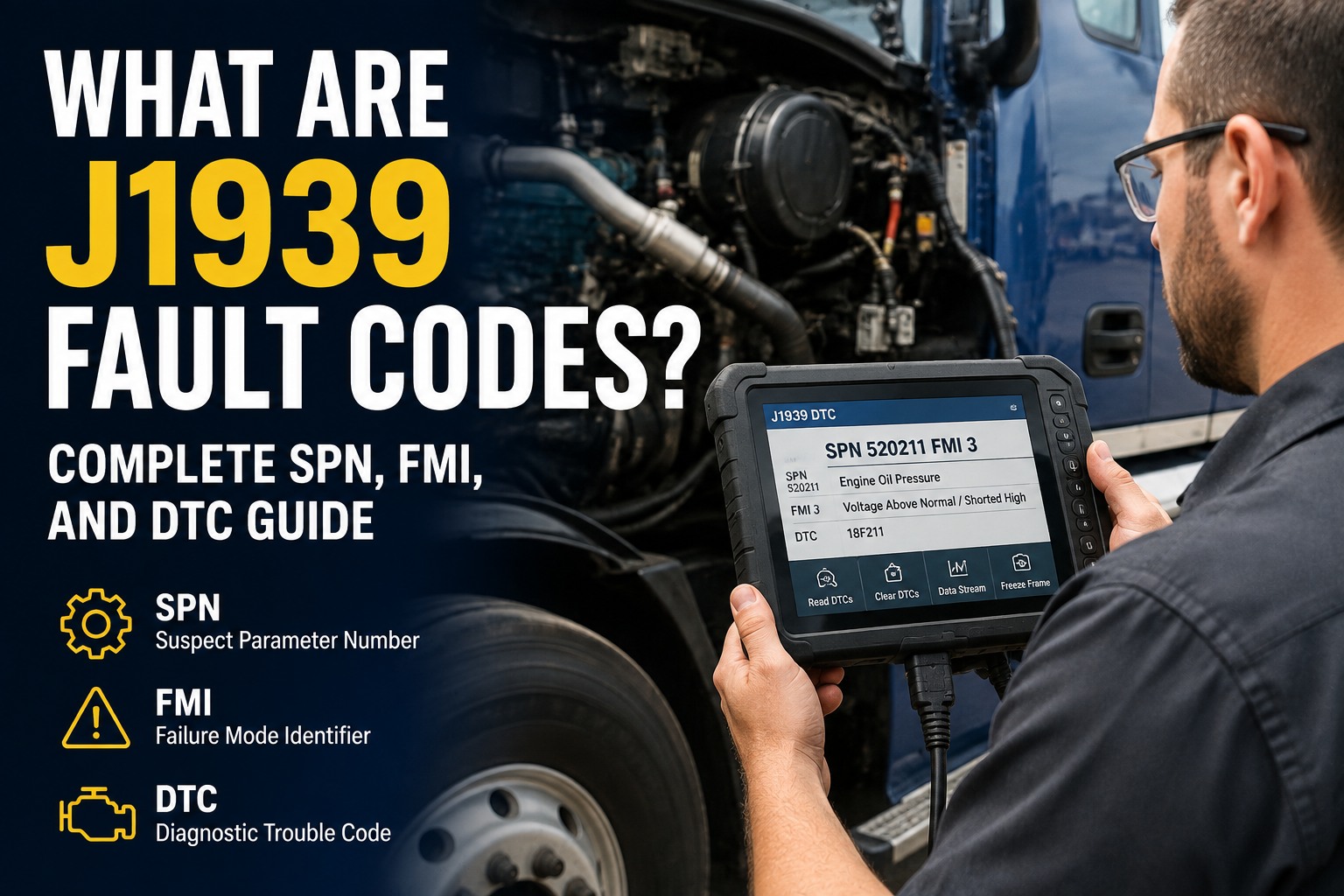
Every diesel driver has seen the dashboard light up with a new engine code and had to decide the same question in five seconds: do I keep driving to the next fuel stop, or do I pull over now? On modern EPA 2010+ aftertreatment systems, that decision determines whether the truck loses 25% torque, 50% torque, or gets crawled down to 5 mph before the driver reaches a shop. The regulatory reality is unambiguous: EPA-mandated operator inducement forces progressive speed and torque limiting on any 2010+ heavy-duty diesel with an unresolved SCR fault, and the derate sequence typically activates within 20-50 miles of the initial fault. What separates fleets that manage aftertreatment codes intelligently from fleets that get their trucks limped in at 5 mph is a shared severity framework — one that drivers, dispatch, and maintenance all understand and apply consistently. Every aftertreatment code (SPN 3251, SPN 5246, SPN 3216, SPN 4353, and the dozen other codes drivers see routinely) fits into one of four real-world severity tiers. Tier 1 codes let you complete the current route. Tier 2 codes require attention at the next stop. Tier 3 codes need a shop visit within 24 hours. Tier 4 codes require pulling over now. Get the tiering right and one aftertreatment fault costs $400 in scheduled parts and labor. Get it wrong and the same fault costs $8,000 in emergency service, tow, and multi-day downtime — plus a driver who spent 6 hours on the shoulder of I-40 at 5 mph waiting for a tow. Ready to give your drivers and dispatch a shared aftertreatment code severity framework? Sign up free for Truck Inspection & Maintenance today — no credit card required and start routing aftertreatment fault codes automatically by severity with driver guidance and shop routing, or contact our support team for a personalized walkthrough tailored to your engine mix (Cummins X15, Detroit DD-series, PACCAR MX, Volvo D-series, CAT C-series) and current aftertreatment fault volume.
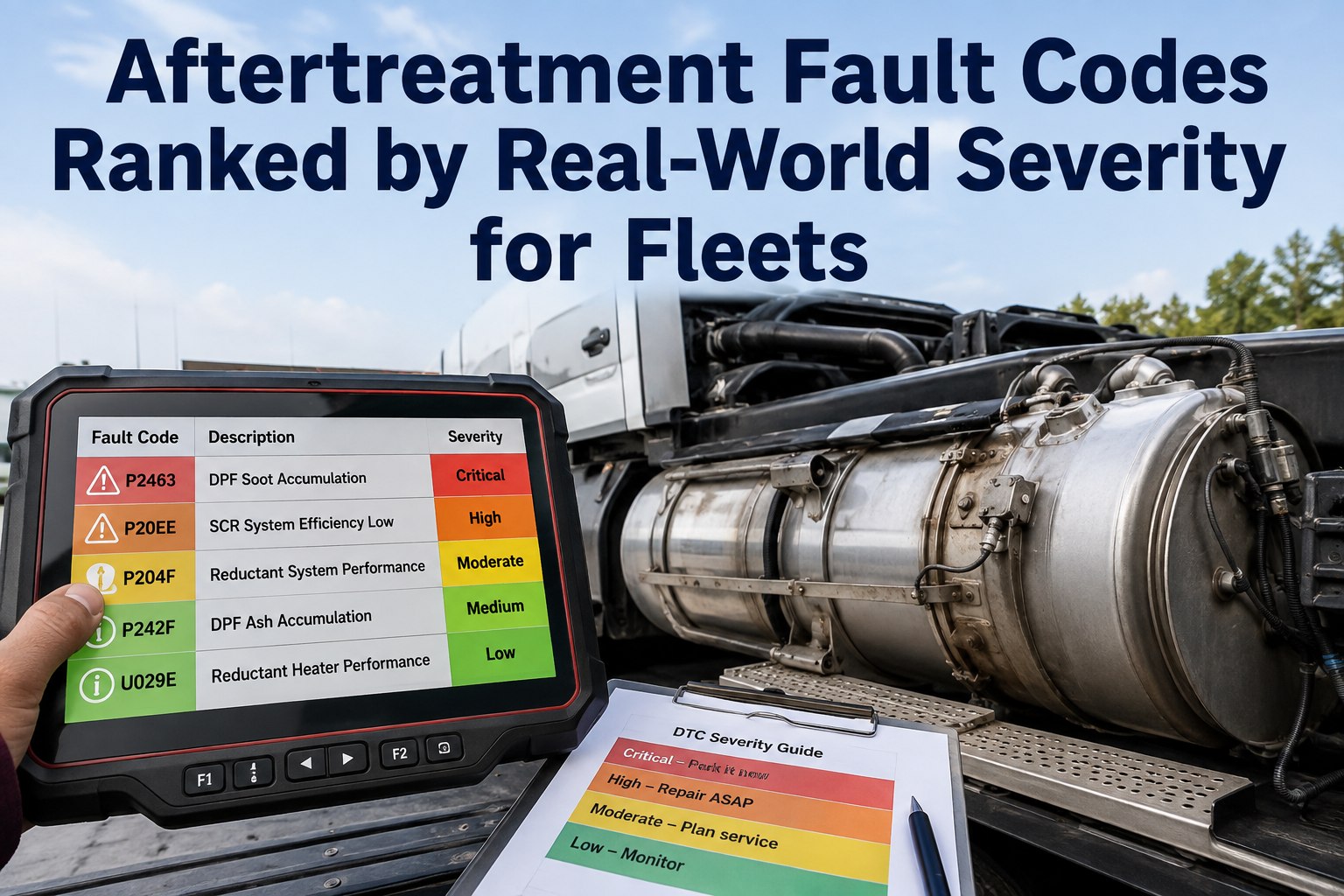
Aftertreatment Fault Codes Ranked by Real-World Severity for Fleets
Not every code means "pull over now." Four severity tiers determine driver action, dispatch decision, and shop routing. Here's the ranked reference every fleet should train on.
The 4-Tier Severity Framework — Driver Action Reference
Every aftertreatment fault code fits into one of four real-world severity tiers. The tier determines driver action, dispatch decision, and shop routing timeline. Train every driver and dispatcher on this framework.
The EPA Inducement Escalation Ladder
Understanding the escalation ladder is what turns aftertreatment codes from mysterious dashboard warnings into predictable events. Here's the EPA-mandated progression on every 2010+ heavy-duty diesel.
Common Aftertreatment Codes Ranked by Tier
The specific codes drivers see most often, mapped to their real-world severity tier. Print this reference and post it in every cab and dispatch station.
Route every aftertreatment code by severity automatically
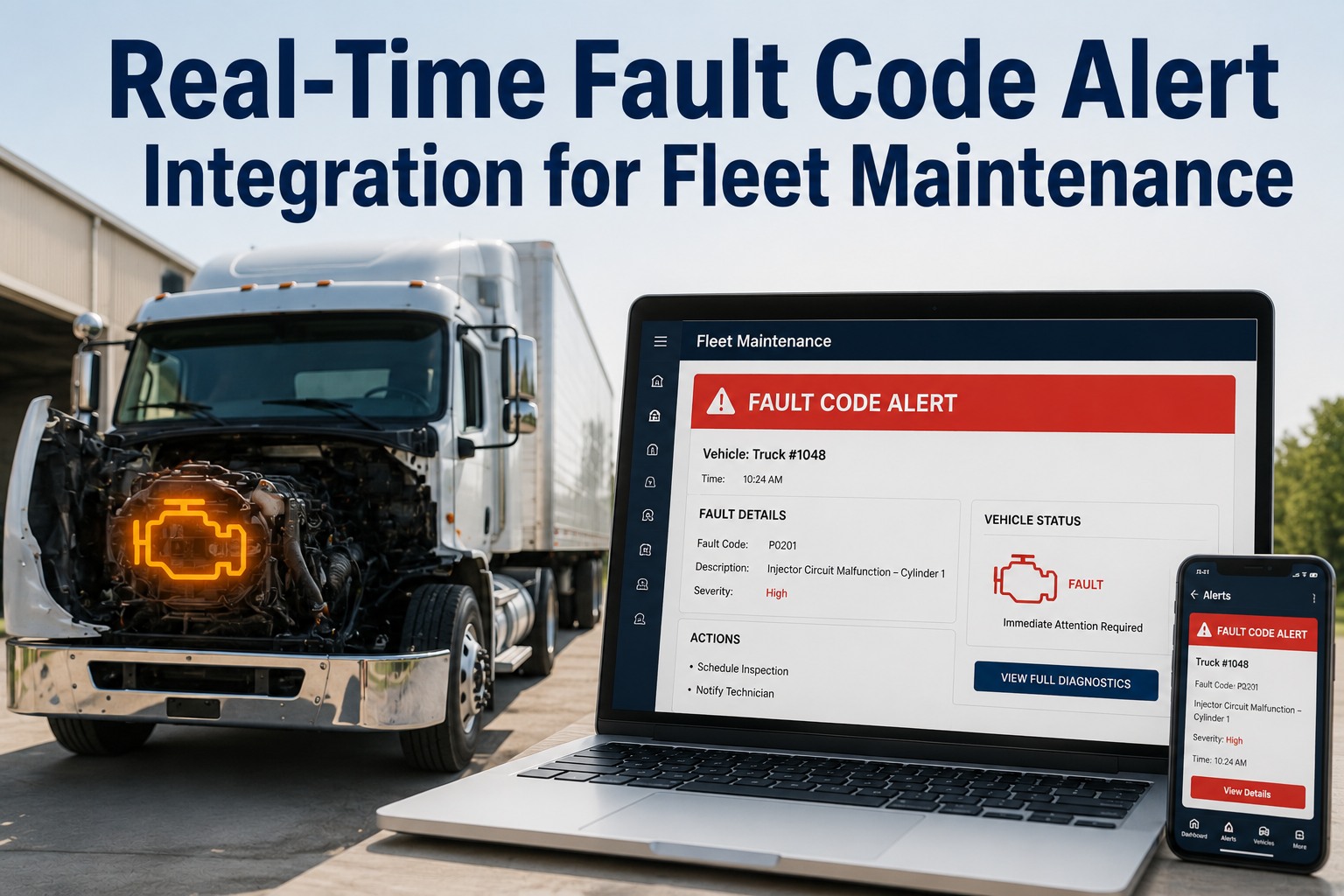
Real-time fault code capture from driver mobile app or telematics feed. Automatic severity tiering (1-4) with driver action guidance. Nearest capable shop routing based on tier and truck location. Dispatch alert on Tier 3-4 codes with alternate assignment suggestion. Root-cause code identification (masking codes flagged). Truck Inspection & Maintenance software gives drivers, dispatch, and shop foremen a shared severity framework that turns aftertreatment codes from crisis events into managed workflows.
Root Cause Detection — SPN 5246 Is Never the Cause
The single most common aftertreatment misdiagnosis is treating SPN 5246 (or SPN 1569) as the root cause. It never is. Here's the code-behind-the-code pattern to look for.
Fleet Response Protocol — What Every Team Should Do
Structured response to aftertreatment codes across driver, dispatch, and maintenance eliminates most Tier 4 events. Here's the 3-role protocol.
Frequently Asked Questions
Aftertreatment fault codes fall into four severity tiers. Tier 1 (Advisory) — yellow lamp with no active derate — schedule shop visit within 7 days, drive to next stop normally. Tier 2 (Attention Required) — amber lamp — complete current route, shop visit within 24-48 hours. Tier 3 (Derate Imminent) — SPN 5246 FMI 15 or equivalent inducement start — route to nearest capable shop immediately, do not extend route. Tier 4 (Pull Over Now) — 50% derate or 5 mph limiter engaged — safe pullover only, mobile mechanic or tow required. The critical rule: once an SCR inducement warning activates (SPN 5246 FMI 15), the truck typically has 20-50 miles before the next stage of derate engages. Continuing past the warning turns a $400 scheduled repair into an $8,000+ emergency event with tow, dealer diagnostic, and multi-day downtime. Get the tier right in the first 60 seconds and the fault is a managed event; get it wrong and it becomes a stranded truck at 5 mph on the shoulder of I-40. Truck Inspection & Maintenance software routes every code automatically by severity.
SPN 5246 is the SCR Operator Inducement code — the EPA-mandated progressive speed and torque limiting system on every 2010+ heavy-duty diesel. It is a consequence code, not a root cause. The FMI value tells you where you are in the escalation: FMI 15 (least severe, inducement starting), FMI 16 (moderately severe, 25% torque derate active), FMI 0 (most severe, at or near 5 mph limiter). The reason SPN 5246 "keeps coming back" is that technicians clear the code without fixing the actual root cause. Common root-cause codes that trigger 5246: SPN 3216 (SCR efficiency), SPN 3251 (DPF differential pressure), SPN 3361 (DEF dosing unit not responding), SPN 3364 (DEF quality low), SPN 4353 (DEF injection quantity low), SPN 3226 (DEF level low). Clearing SPN 5246 without fixing the root cause returns the code on the next drive cycle when the ECM re-detects the underlying fault. The correct diagnostic sequence: pull the full DTC history, identify the root-cause codes, fix those specifically, then verify with a clean drive cycle including successful parked regen if the fault involved DPF or SCR function. Only close the work order after a clean drive cycle.
EPA-mandated aftertreatment inducement escalates in five stages on 2010+ heavy-duty diesel engines. Stage 1: Initial fault detection (SPN 3216/3251/3361 root cause codes) — amber lamp, full power, no speed limit, window to fix is 48 hours. Stage 2: First inducement warning (SPN 5246 FMI 15) — yellow lamp, escalation timer starts, full power, window is 20-50 miles to next stage. Stage 3: 25% torque derate (SPN 5246 FMI 16) — amber lamp, torque cut 25%, full speed retained, additional 20-50 miles. Stage 4: 50% torque derate — red lamp likely, torque cut 50%, speed may limit to 55 mph, additional 20-50 miles. Stage 5: 5 MPH limp home (SPN 5246 FMI 0 / SPN 3712) — red lamp, speed capped at 5 mph, dealer reset required. The escalation timer varies by OEM (Cummins typically allows several hours at each stage; Detroit and PACCAR have their own timers), but the 20-50 mile per stage window is generally accurate. The critical insight: each stage is a warning that the truck is not yet at the worst state. Acting at Stage 2 or 3 routes to a $400 scheduled repair; ignoring until Stage 5 requires emergency service, tow, dealer diagnostic, and often multi-day downtime.
Yes, but the code returns and clearing without fixing is the primary cause of chronic aftertreatment problems in fleet operations. Clearing SPN 5246 with a scan tool takes 30 seconds; the code returns within one drive cycle if the underlying root cause (SPN 3216, 3251, 3361, 3364, 4353, or 3226) is not addressed. Worse, the escalation timer accumulates across clears — the ECM tracks how many times inducement has been triggered, and repeated clears without fix eventually trigger ECM lockout requiring dealer intervention to reset. The correct approach: (1) pull full DTC history including inactive/historic codes; (2) identify root-cause codes (not the masking codes 5246 and 1569); (3) fix root-cause codes with proper diagnostic — DEF quality check with refractometer, NOx sensor testing with bi-directional scan tool, parked regen verification, doser injector function test; (4) clear codes only after root-cause repair confirmed; (5) verify with clean drive cycle including successful regen for DPF-related faults. Fleet-wide DTC history is what catches the "cleared but returning" pattern that individual scan tool sessions miss. Contact our team to see Truck Inspection & Maintenance fleet-wide DTC history tracking.
DEF quality faults (SPN 3364) trigger when the aftertreatment system detects DEF that fails to meet the required urea concentration (32.5% urea, 67.5% deionized water per ISO 22241). Common causes: contaminated DEF from open storage or dirty transfer equipment, water contamination from condensation or intentional dilution, incorrect fluid mistakenly added to DEF tank (diesel, water, coolant), degraded DEF from long storage or high-temperature exposure (DEF has ~2-year shelf life, degrades faster above 86°F), improper concentration from purchase of counterfeit or off-spec product, frozen DEF followed by improper thaw that separates the components, and biological contamination in tanks that don't get fully consumed. Diagnostic sequence: use a refractometer to confirm 32.5% urea concentration in the DEF tank (specific gravity 1.087-1.093 at 20°C). If DEF fails refractometer test, drain tank completely, flush lines with distilled water, refill with certified fresh DEF from sealed container, verify concentration again after fill. Never continue operation with confirmed DEF quality fault — SCR damage accelerates and repair cost jumps from $400 (DEF service) to $7,000-$12,000 (SCR replacement on Detroit DD15 OneBox systems).
Generic OBD-II scanners cannot properly diagnose aftertreatment codes on heavy-duty diesel trucks. Required tool categories: OEM diagnostic software — Cummins INSITE for Cummins engines, Detroit DDDL for Detroit DD-series, PACCAR ESA for PACCAR MX, Volvo Tech Tool for Volvo D-series, and CAT ET for Caterpillar. These are the only tools that can command NOx sensor tests, run bi-directional aftertreatment component tests, force parked regens, and reset SCR/DPF derates. Universal J1939 scan tools with heavy-duty coverage can read SPN/FMI codes across brands but cannot perform brand-specific reset functions. Physical test equipment: refractometer for DEF concentration testing, digital multimeter for sensor voltage verification, thermal camera for aftertreatment temperature validation, boroscope for internal DPF inspection. Documentation: OEM service literature for the specific engine model and GHG level (GHG14/17/21 have different aftertreatment hardware configurations and inducement logic). Cost consideration: full OEM diagnostic laptop kits run $2,500-$5,000 per engine brand but pay back within 3-5 aftertreatment repairs by eliminating dealer diagnostic fees ($150-$250 per event) and enabling in-house fixes rather than tow-to-dealer. Try free: sign up here.
Truck Inspection & Maintenance software makes aftertreatment code severity a shared team language
Real-time fault code capture from driver mobile app or telematics integration. Automatic 4-tier severity classification with driver action guidance per code. Nearest capable shop routing based on tier, truck location, and available capacity. Dispatch alert on Tier 3-4 codes with alternate load assignment suggestion. Root-cause code identification with masking codes (SPN 5246, SPN 1569) flagged separately. Fleet-wide DTC history tracking to catch "cleared but returning" patterns. Every element of aftertreatment code management automated in one platform — because getting the tier right in the first 60 seconds is the difference between a $400 scheduled repair and an $8,000 emergency event.