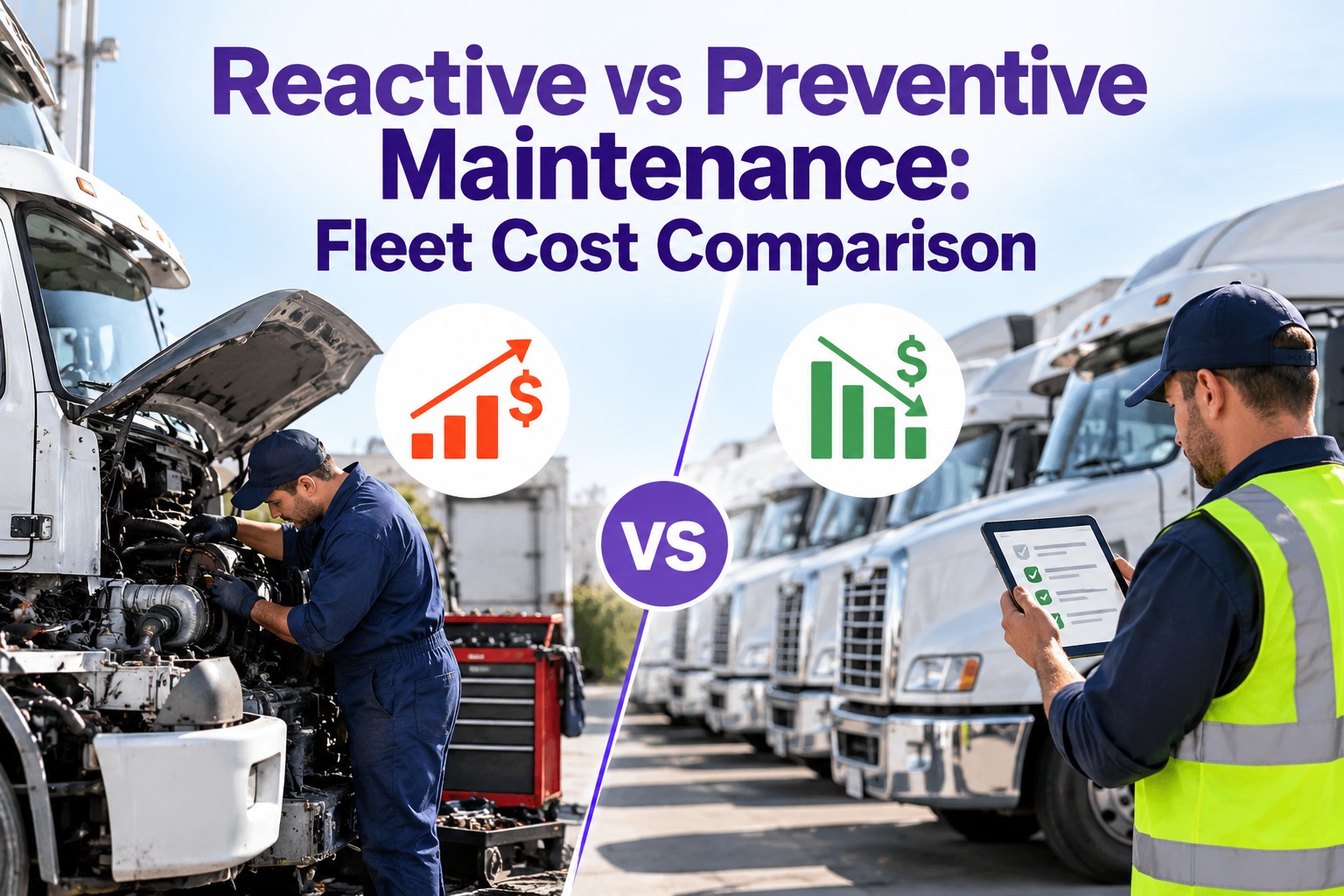
Every fleet does both kinds of maintenance. The real question is the mix. Preventive maintenance is work you schedule before a part fails: oil changes, brake checks, tire rotations. Corrective maintenance is work you do after a defect or failure shows up. Corrective work isn't the enemy, because a planned fix for a defect found in an inspection is routine. The costly kind is the unplanned corrective repair that happens on a roadside with a load on board. This guide compares the two, shows what really drives fleet maintenance cost, and explains how Truck Inspection & Maintenance Management Software (TIM) helps shift more of your work from the roadside to the shop bay. Start free and schedule your first preventive maintenance plan.
Preventive vs Corrective Maintenance · Fleet Cost Guide
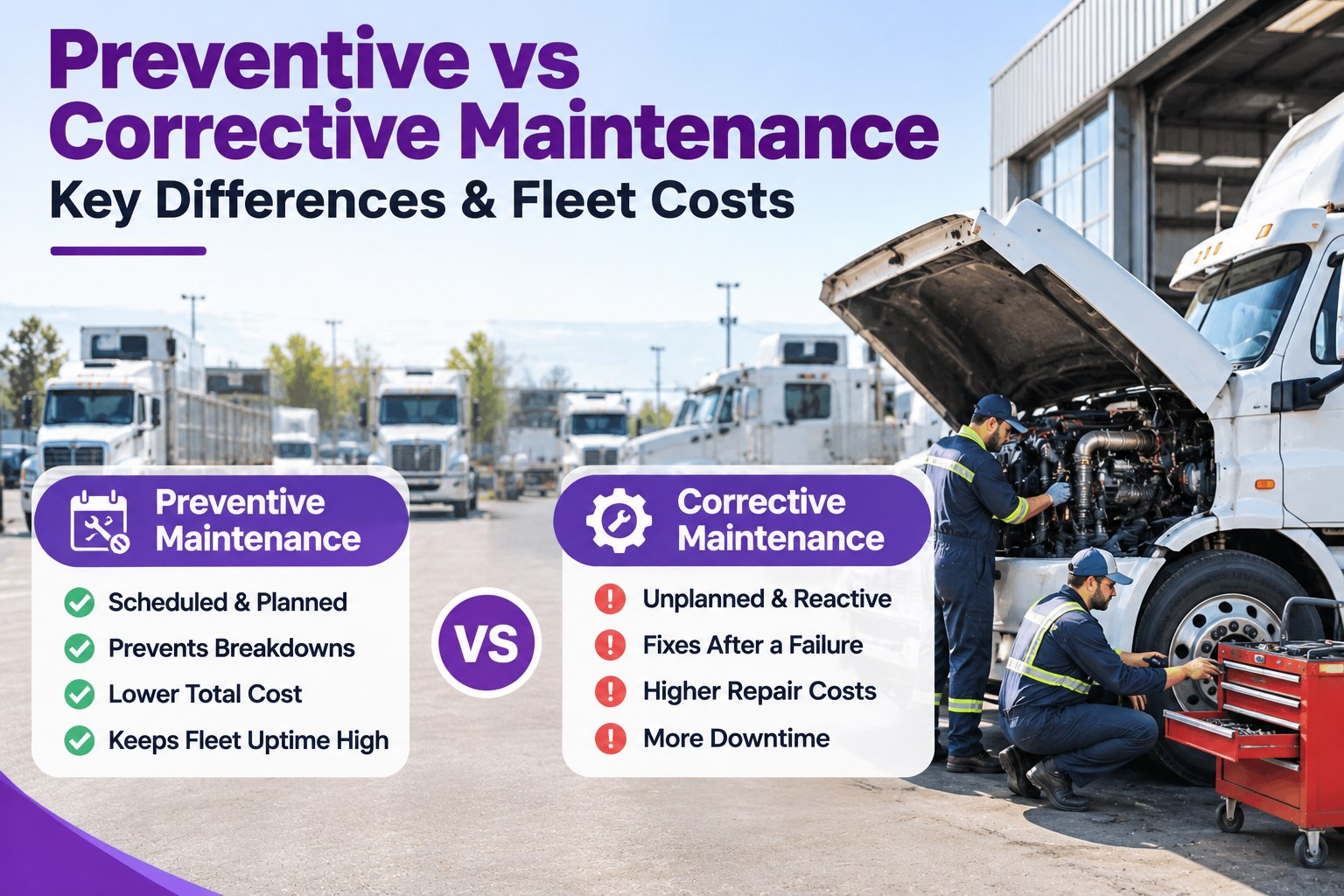
Preventive vs Corrective Maintenance: Key Differences & Fleet Costs
Maintenance costs keep climbing, and the repairs that hurt most are the ones nobody planned. TIM helps you move work out of the unplanned column: PM services scheduled by interval, driver inspections that turn defects into work orders before they become breakdowns, and one service history for every truck so repeat problems show up.
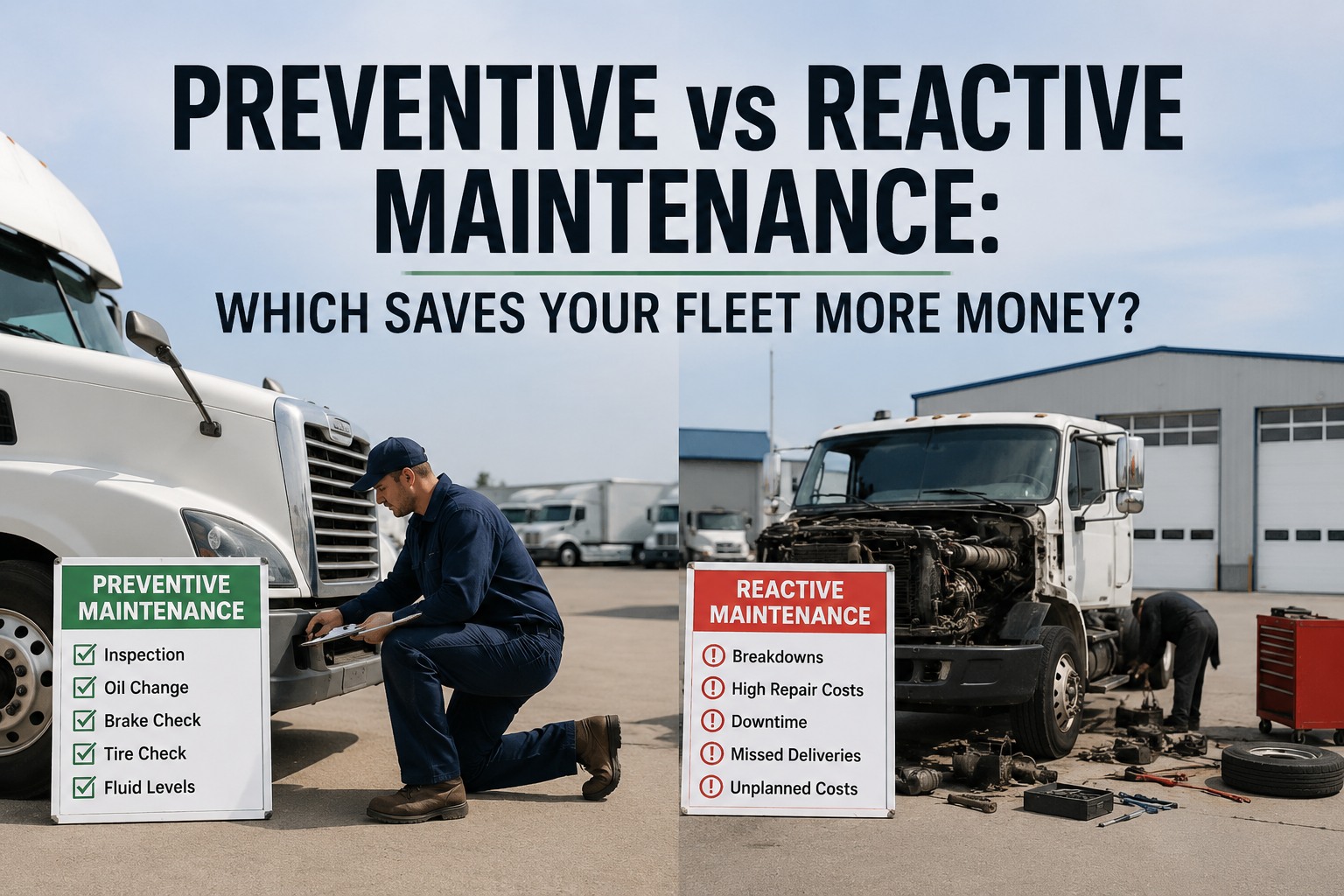
PlannedYou pick the time, the shop and the parts
vs
UnplannedThe failure picks all three for you
Head to Head: Preventive vs Corrective at a Glance
What it is
Scheduled work to keep parts from failing
Repair after a defect or failure appears
What triggers it
Time, mileage, engine hours or inspection results
A defect report, a warning light or a breakdown
Who controls timing
You do
Planned: you do. Emergency: the failure does.
Typical examples
Oil and filters, brake and tire checks, lubrication
Replacing a cracked hose, fixing a burned-out lamp, a roadside repair
Downtime
Short and scheduled around dispatch
Short if planned, long and disruptive if it's a breakdown
Main risk
Over-servicing or missing a due date
Secondary damage and missed deliveries
The Cost Is Rising, and the Hidden Part Is Bigger Than the Invoice
21.5¢per mile
Average repair and maintenance cost in 2025, up 8.6%Source: ATRI, Analysis of the Operational Costs of Trucking (2026 update). The figure covers parts, labor and roadside service, and tires are reported separately. Your own number will vary with equipment age, duty cycle and region.
When a truck breaks down, the repair invoice is only the part you can see. The rest sits below the waterline.
Above the waterline
PartsShop labor
Below the waterline: costs a roadside failure adds
Tow or roadside serviceRush partsMissed or late deliveryDriver and load sitting idleSecondary damageOvertime labor
The point A planned repair can still be corrective work. The difference is that you found the problem early enough to choose when, where and with which parts to fix it.
Four Types of Maintenance, Not Two
Most fleets run a blend. Understanding the four types helps you decide where each job belongs.
1PreventiveFixed-interval service by time, mileage or hours.Best for: oil, filters, lubrication, routine inspections
2Condition-basedAct when inspection findings or measurements show wear.Best for: tires, brakes, belts, hoses
3Planned correctiveA known defect is scheduled for repair at a convenient time.Best for: minor defects found in daily inspections
4Emergency correctiveA failure forces an immediate, unscheduled repair.The one to shrink
Which Approach Fits Which Component?
| Component | Best-fit approach | Why |
| Engine oil and filters |
Preventive |
Predictable wear, and failure is expensive |
| Brakes |
Preventive + Condition-based |
Safety-critical, and wear shows up in inspection |
| Tires |
Condition-based |
Measure tread and pressure, and replace by condition |
| Belts and hoses |
Condition-based |
Cracks and leaks are visible before failure |
| Batteries |
Condition-based |
Testing shows decline before no-start |
| Marker lamps, mud flaps, trim |
Planned corrective |
Low risk, so fix when found (check legal requirements for lighting) |
Make the Planned Column Bigger
Scheduled PM, inspection-driven work orders and a service history for every truck, so the repairs you can plan don't turn into the ones you can't.
Shifting the Mix: A 5-Step Plan
1Measure your baselineLabel each repair as planned or unplanned for 60 to 90 days.
2Set PM by intervalUse manufacturer schedules, then adjust for your duty cycle.
3Feed inspections into work ordersEvery defect gets an owner, a priority and a due date.
4Hunt repeat failuresThe same part failing on the same unit is a signal to look deeper.
5Review monthlyWatch your numbers and adjust intervals.
Four Numbers Worth Tracking
PM complianceShare of services done on time
Planned vs unplannedShare of work orders in each group
Repeat repairsSame defect on the same unit again
Cost per mile by unitWhich trucks are costing the most
How TIM Supports a Preventive Program
Scheduled PMRecurring services for each unit, with due dates visible to dispatch and the shop.
Inspections to work ordersDefects found in a driver's inspection or DVIR become tracked work orders.
Service historyOne record per truck and trailer, so repeat failures and costs show up.
Frequently Asked Questions
Is preventive maintenance always cheaper than corrective?
Not automatically. Servicing too often wastes money, and some low-risk parts are cheaper to fix when they fail. The savings come from preventing the failures that are costly, such as roadside breakdowns, safety defects and secondary damage. That's why most fleets use a mix.
Book a demo to see how TIM tracks both.
What is the difference between preventive and predictive maintenance?
Preventive maintenance follows a fixed schedule such as mileage or time. Predictive or condition-based maintenance acts on actual measurements and inspection findings, such as tread depth or a leak. Most fleets use both.
How do I know if my fleet relies too much on corrective maintenance?
Track planned versus unplanned work orders for a few months. If most of your repairs arrive as breakdowns or roadside calls, or the same defects keep coming back, the mix is leaning reactive.
Do daily inspections count as preventive maintenance?
They're the front end of it. Daily inspections find defects early, and a defect that is logged and scheduled is a planned repair instead of a breakdown.
Start free with guided inspections.
Plan · Inspect · Fix · Review
Make Fewer Repairs a Surprise
Put PM, inspections, defects and work orders in one system, and every truck's status is a tap away instead of a search through spreadsheets.
No credit card required. Free for up to 3 trucks. Built for FMCSA-compliant fleets.