The DOT annual inspection isn't the problem — walking a truck into it unprepared is. A vehicle that fails comes off the road until it's fixed and re-inspected, and the defects that fail it are almost always ones a pre-check would have caught a week earlier. This checklist walks the full §396.17 component scope so you fix the fail items on your own schedule, not the inspector's. Start free and put this prep checklist on every truck.
Pre-Inspection Prep · Full §396.17 Scope
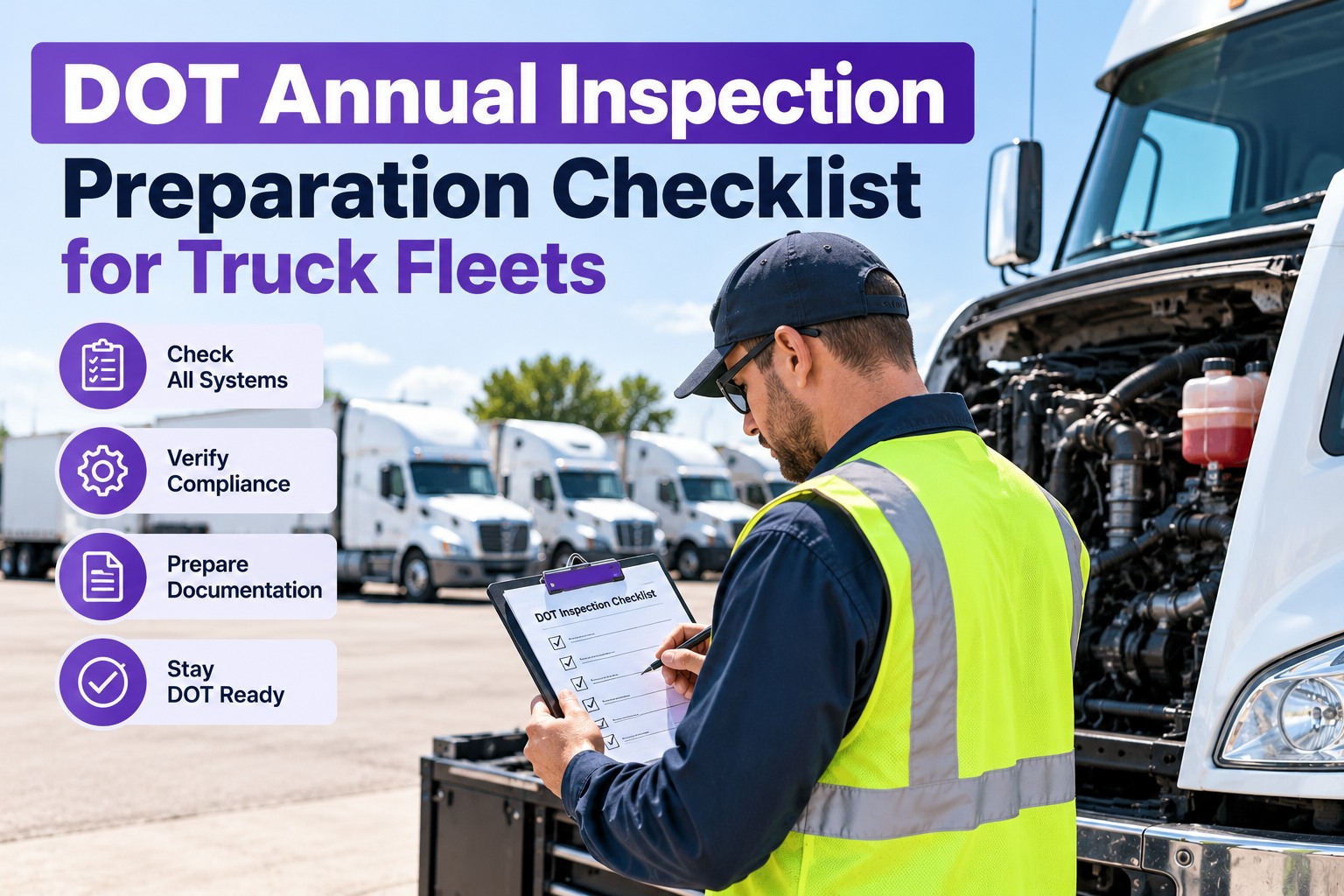
DOT Annual Inspection Preparation Checklist for Truck Fleets
A truck that fails its annual is a truck off the road plus a re-inspection fee plus a scramble to cover the load. Truck Inspection & Maintenance Management Software runs this prep check ahead of the official inspection — every component area flagged, every defect routed to a work order, every fix verified — so the inspector confirms what you already know instead of finding what you missed.
Every 12 morequired under §396.17
13 areasfull Appendix A component scope
Pre-checkedfix fail items on your schedule
How the Annual Inspection Actually Works
Before the checklist, three things worth getting straight — because carriers lose time to misunderstanding the rule, not just to bad brakes.
1
Every 12 months, every CMV
Under §396.17, each commercial vehicle needs a periodic inspection at least once every 12 months. Miss the window and the truck isn't legal to operate.
2
A qualified inspector signs it
The inspection must be done by someone meeting the §396.19 qualification standard — training or experience the carrier documents and keeps on file.
3
Appendix A sets the scope
The components checked aren't the inspector's choice — they're fixed in 49 CFR Part 396 Appendix A. Prep against that list and nothing surprises you.
The Pre-Inspection Checklist, by Component Area
Work this the way the inspector will — area by area. Tick each item as you verify it; anything you can't tick is a fix to schedule before the inspection date, not a surprise on it.
Where Trucks Fail First — Fix These Before Anything Else
Year after year, the same handful of component areas account for most annual-inspection rejections. If prep time is short, spend it here first.
BrakesOut-of-adjustment pushrods, thin linings, air leaks — the single largest fail and OOS category.
TiresTread below threshold, sidewall damage, or flat-spotting from a sticky brake found too late.
LightingA single dead lamp or cracked lens — cheap to fix, easy to miss, and a guaranteed rejection.
Steering & suspensionWorn tie-rod ends and cracked spring hangers that build up quietly between services.
Turn This Checklist Into a Guided Pre-Inspection
Truck Inspection & Maintenance Management Software puts every item above on the driver's or technician's phone as a guided pre-inspection, flags anything that fails, and routes it straight to a work order so it's fixed and verified before the official inspection date. It also tracks each truck's annual due date and warns you ahead of the window — so no vehicle ever ages past its inspection without someone knowing.
Frequently Asked Questions
How often is a DOT annual inspection actually required?
At least once every 12 months for each commercial motor vehicle, under 49 CFR 396.17. "Annual" is the floor, not a suggestion — operating a truck past its 12-month window makes it ineligible for service and is a common roadside and audit finding. Tracking each vehicle's due date so none slips past the window is half the battle; the components themselves are the other half.
Who is allowed to perform the annual inspection?
An inspector who meets the qualification standard in §396.19 — demonstrated training or experience in commercial vehicle inspection, with the carrier keeping documentation of that qualification on file. Many fleets use a qualified in-house technician; others use a certified third party. Either way, the pre-inspection prep in this checklist is separate from the official inspection — it's what you do first so the qualified inspector confirms a clean truck.
What happens if a truck fails its annual inspection?
The vehicle can't be operated until the failing components are repaired and it passes a re-inspection. That means unplanned downtime, a second inspection, and often a load left uncovered — all of which is avoidable by catching the same defects during prep. The whole point of a pre-inspection check is to move the discovery of fail items to a time and place you control.
Is a pre-inspection check the same as the annual inspection?
No — and that distinction matters. The annual inspection is the formal §396.17 inspection by a qualified inspector that produces the inspection report you retain. The pre-inspection check is your own dry run against the same component scope, done earlier, so you fix problems before they cost you a rejection. One is compliance; the other is how you pass it cleanly the first time.
Contact us to set up guided pre-inspections across your fleet.
Prep · Fix · Verify · Pass
Make Every Annual a Formality, Not a Gamble
Truck Inspection & Maintenance Management Software runs this full component checklist as a guided pre-inspection, routes every failed item to a verified repair, and tracks each truck's annual due date so nothing ages out. Fleets use it to walk into the annual already knowing the result — and to keep trucks earning instead of sitting in a re-inspection queue.
No credit card required. Free for up to 3 trucks. Built for FMCSA-compliant fleets.