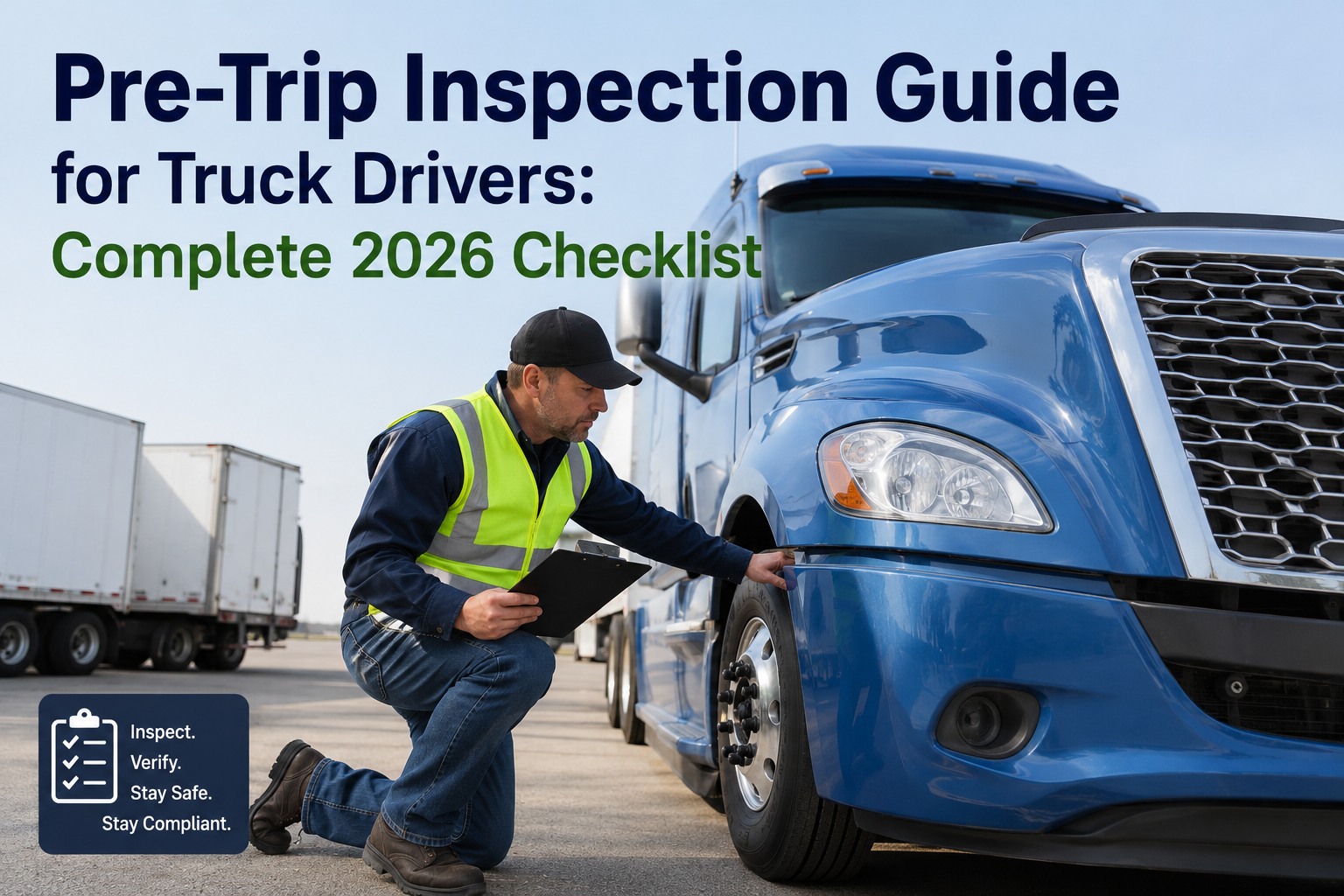
Every pre-trip is a DOT roadside inspection you give yourself first. The same brakes, tires, and lights an officer checks at the scale are the ones that put trucks out of service year after year — so the walk-around you do in the yard decides whether a defect costs a cheap fix or a roadside shutdown. This checklist is ordered the way trucks actually fail, covers reporting the defect, and keeps the record DOT wants. Let Truck Inspection & Maintenance Management Software (TIM) turn any defect into a tracked repair. Start free and run digital pre-trips on one record with TIM.
TIM · Pre-Trip Checklist · Digital DOT Compliance
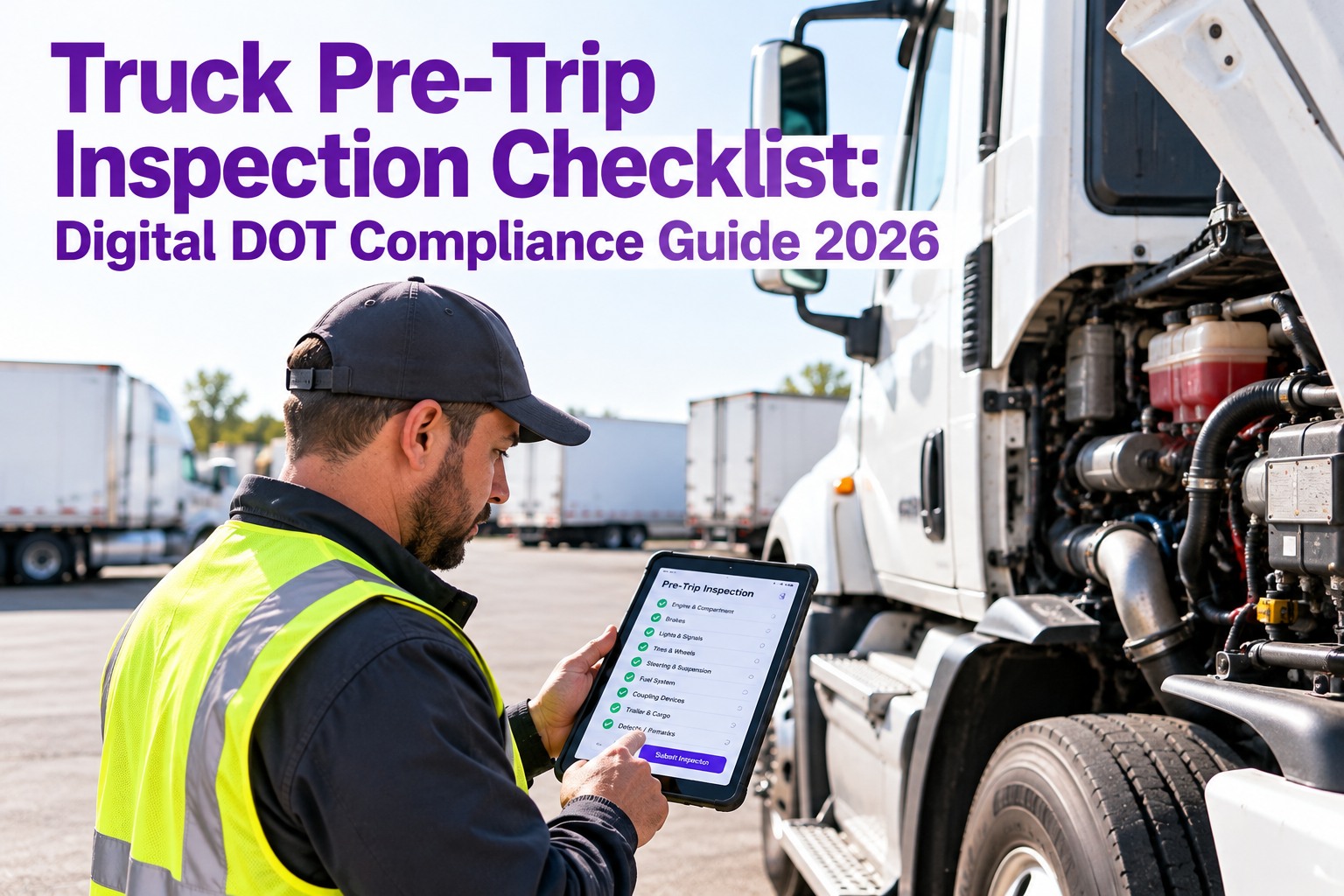
Truck Pre-Trip Inspection Checklist: Digital DOT Compliance Guide 2026.
A pre-trip isn't paperwork — it's the one chance to find a defect before it becomes a roadside out-of-service order or a breakdown on the interstate. Brakes, tires, and lights top the out-of-service charts every single year, so this checklist is built around where trucks actually fail. Walk it, report any defect, and TIM turns it into a graded work order while keeping the record audit-ready.
#1
brakes top the OOS charts
1
record, check to repair
The Pre-Trip Is a DOT Inspection You Give Yourself
Thinking of the walk-around as a self-inspection changes how seriously it gets done — three reasons it's worth the ten minutes.
◉
Same items an officer checksThe pre-trip covers the exact components a roadside inspection does — so a clean pre-trip is a clean roadside stop.
◧
A yard fix is a cheap fixA defect caught before the trip is a quick repair; the same defect found at the scale is a shutdown far from home.
▤
The record is the proofA reported defect, corrected and signed, is the chain an auditor wants — and digital keeps it retrievable.
Do it well and the roadside inspection holds no surprises. Contact our team to build a pre-trip that mirrors the DOT check.
Where Trucks Actually Fail
Out-of-service violations aren't spread evenly — a handful of systems account for most of them, year after year. Focus the pre-trip where the risk really is.
1
BrakesBrake systems and brake adjustment together are the single biggest out-of-service category
2
Tires & wheelsTread, pressure, and wheel defects — the second most common reason trucks are parked
3
LightsInoperative required lamps — simple to check, consistently near the top
4
Cargo securementLoose or inadequate load securement rounds out the top causes
That's why this checklist leads with brakes and tires, not the glovebox. Start free and focus every pre-trip where it counts with TIM.
The Pre-Trip Inspection Checklist
Walk these six systems before every trip, ordered by out-of-service risk. The HIGH badge marks the systems that cause the most roadside shutdowns. Tick each as you go, and report any defect before you roll.
B
Brakes & Air System
HIGHEST OOS RISK
T
Tires & Wheels
HIGH OOS RISK
L
Lights & Reflectors
HIGH OOS RISK
S
Steering & Suspension
MEDIUM OOS RISK
C
Coupling & Cargo Securement
MEDIUM OOS RISK
E
Safety & Emergency Equipment
REQUIRED
Six systems, risk-ordered, every item tracked. Start free and capture every pre-trip on one record with TIM.
THE STEP DRIVERS SKIP MOST — THE AIR BRAKE TEST
The three-part air brake test is the heart of a brake-focused pre-trip. First, the leakage test — with the system charged and brakes applied, air loss should stay within the allowed rate over a minute. Second, the low-air warning — pump the pressure down and confirm the warning light and buzzer activate before pressure falls below the threshold, typically around 60 PSI. Third, the spring-brake test — keep reducing pressure until the spring (parking) brakes apply on their own, usually between 20 and 45 PSI. Confirm the exact values against your vehicle; skipping this test is how a brake defect leaves the yard.
From Checklist to Compliance Record
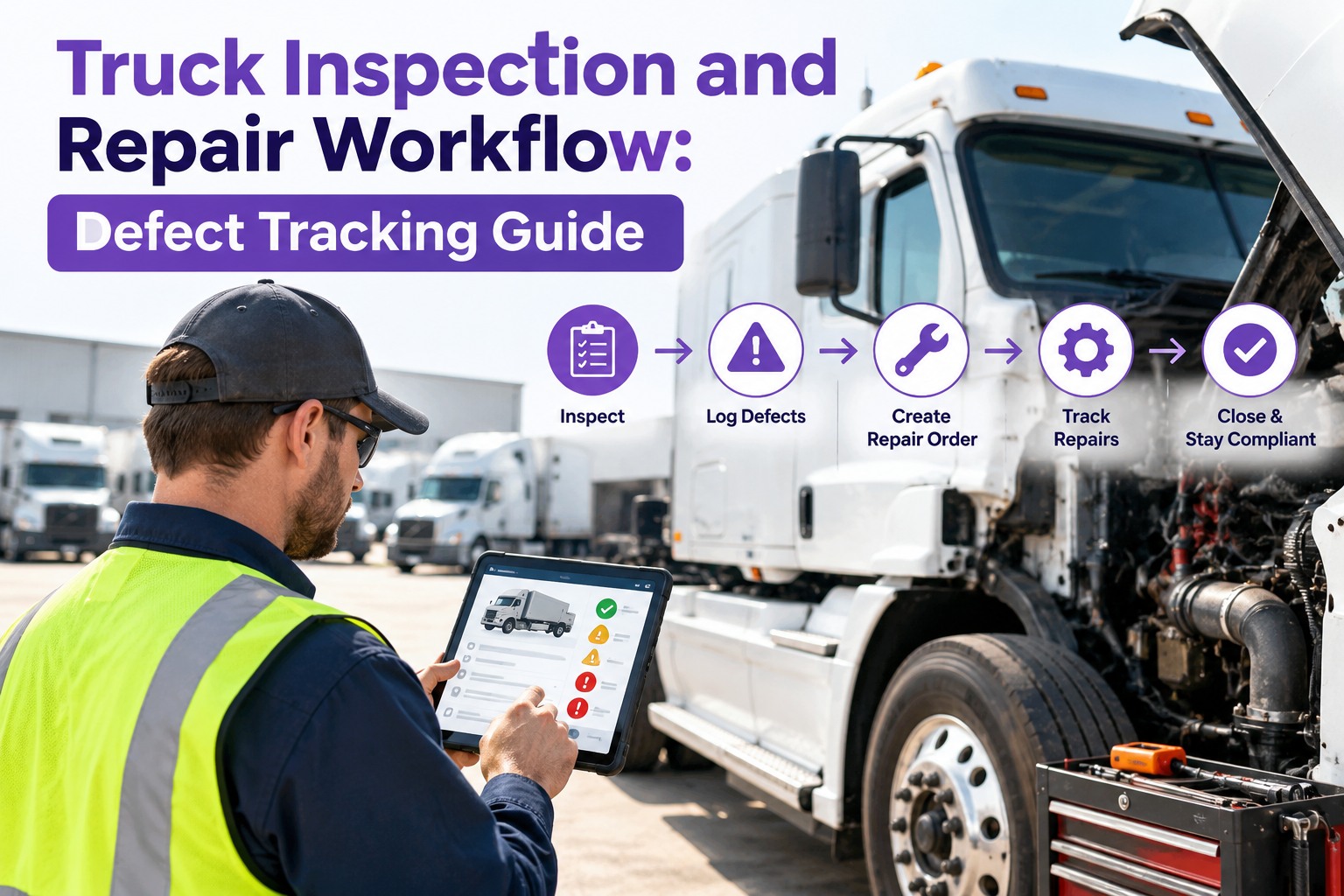
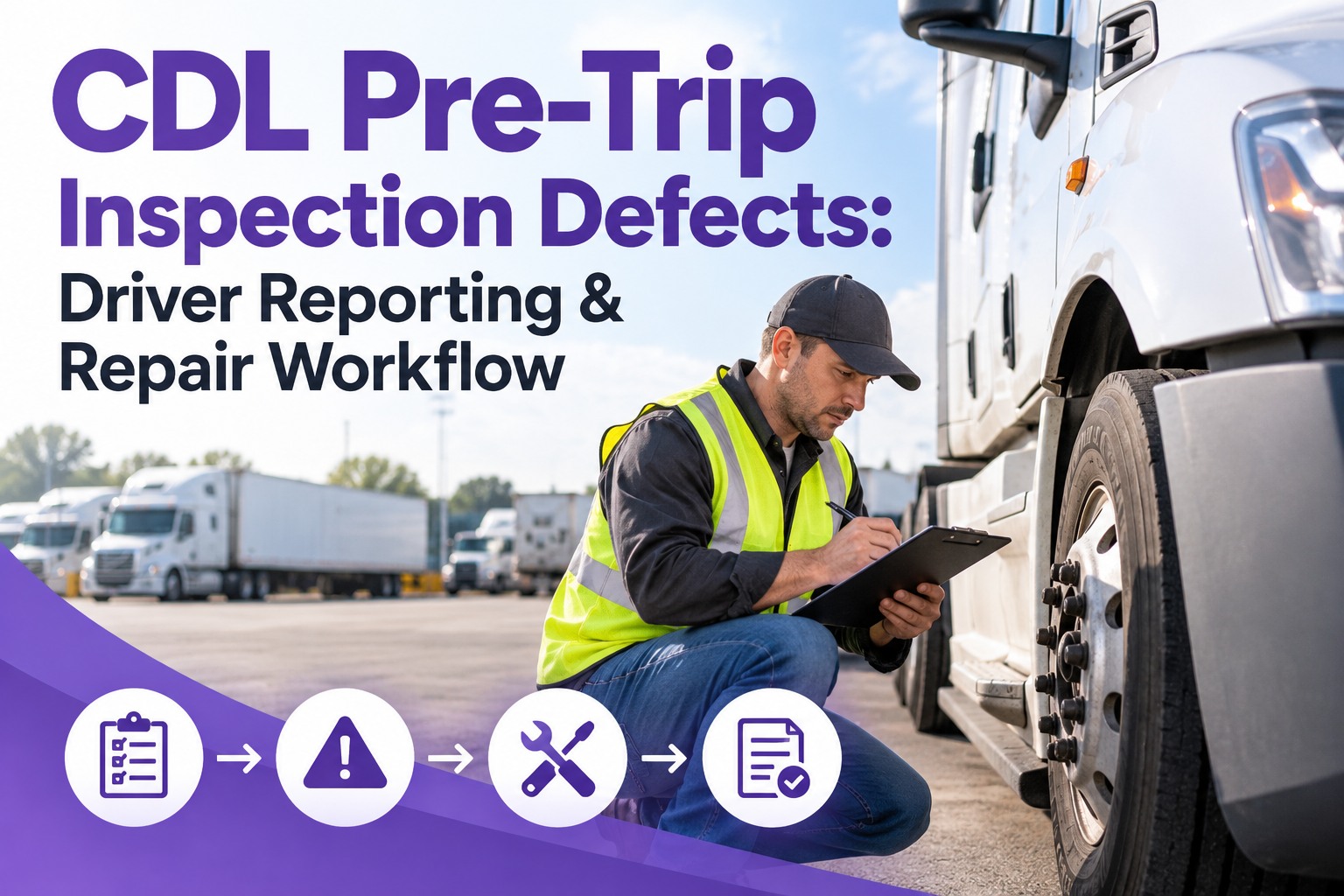
Finding the defect is half the job — reporting it and keeping the record is what satisfies the DOT. The chain is simple, and digital keeps it intact.
1
InspectWalk the risk-ordered checklist before the trip.
→
2
Report the defectLog it with a photo the moment it's found.
→
3
Certify the repairThe carrier corrects it before dispatch and signs off.
→
4
Keep the recordThe signed report retained and retrievable for audit.
On paper this chain scatters across cabs and trays; digitally it lives on one record. Contact our team to keep the whole chain audit-ready.
The Items That Catch Trucks Out
When a truck gets parked at the scale, it's usually one of these — and each is a checklist item above.
✕
Brakes out of adjustmentThe single most common out-of-service cause — and the three-part test plus a slack check catches it.
✕
Bad tire or exposed cordA cut, bulge, or flat on any position, inner duals included, that the walk-around would have found.
✕
Inoperative required lampA dead brake or marker light — the easiest defect to catch and the easiest to skip.
✕
Loose load securementStraps or chains that aren't tight or adequate for the load — a preventable top violation.
Every one is a ten-minute check that saves a shutdown. Start free and make sure nothing gets skipped with TIM.
How TIM Helps
Digital Pre-Trips, Defect Reporting, and DOT Records on One Record
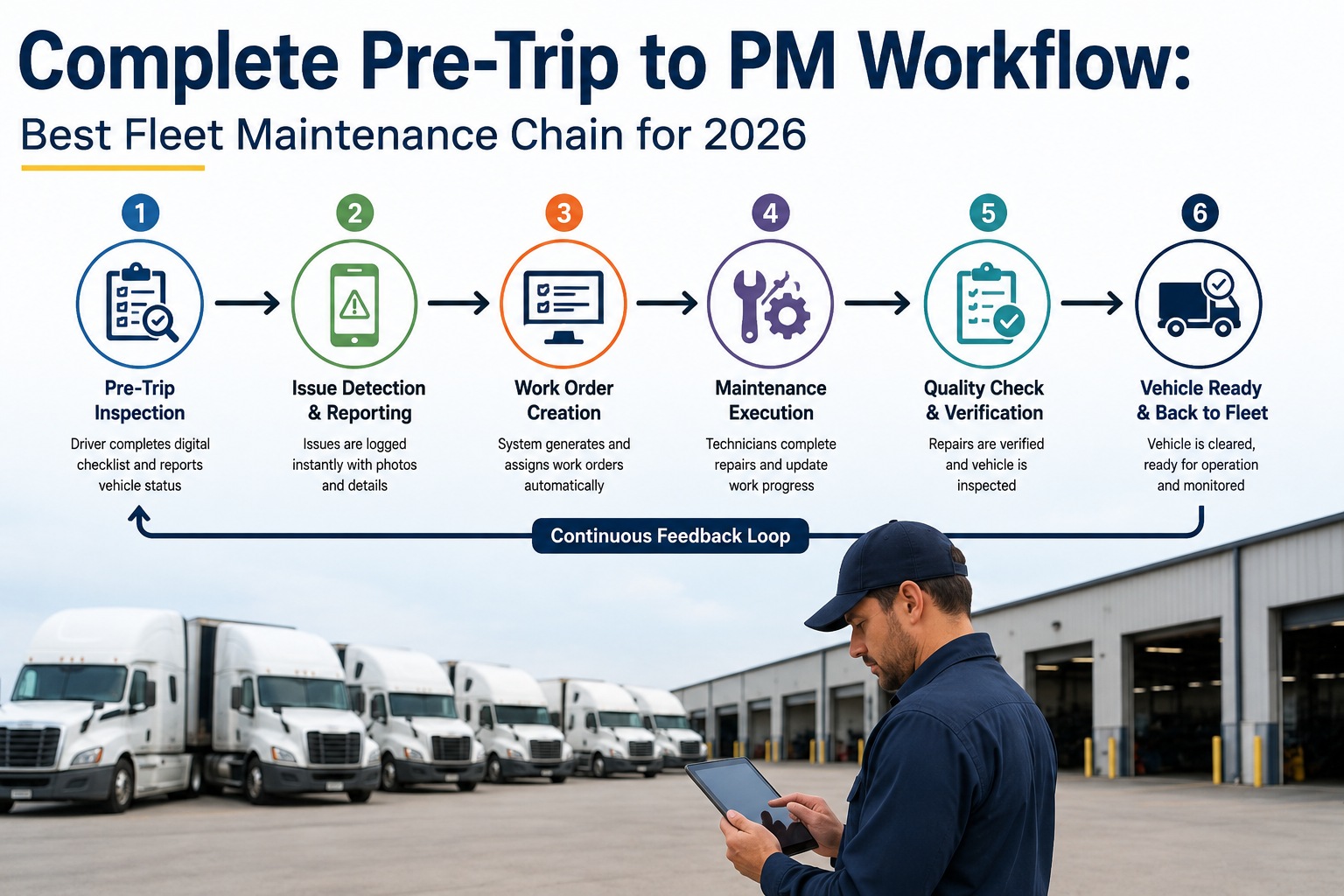
A pre-trip only protects you if the defect reaches the shop and the record reaches the auditor. TIM makes the checklist digital, turns any failed item into a graded work order on one unit record, and keeps the signed inspection history retrievable — so the walk-around, the repair, and the compliance proof all live in the same place.
1Digital pre-trip
→
2Defect graded
→
3Work order routed
→
4Record retained
Guided mobile checklistThe risk-ordered pre-trip on every driver's phone, with a photo on each defect.
Defect becomes a work orderA flagged item routes to the shop the moment it's filed — no re-keying.
Severity-based routingAn out-of-service defect goes now; a minor item joins the planned queue.
Review-and-sign chainThe report, repair, and certification kept together for 396.11 and 396.13.
Audit-ready recordsSigned inspection history searchable and produced on demand.
Per-unit historyEvery pre-trip, defect, and repair logged against that truck.
Frequently Asked Questions
What does a truck pre-trip inspection have to cover?
The components that affect safe operation — brakes and the air system, tires and wheels, lights and reflectors, steering and suspension, coupling devices and cargo securement, and the required safety and emergency equipment. These are the same systems a roadside inspection checks, which is why a thorough pre-trip is effectively a DOT inspection you perform yourself. Ordering the walk-around by out-of-service risk — brakes and tires first — puts your attention where defects most often park a truck.
Start free and run a complete digital pre-trip with TIM.
What are the most common out-of-service violations?
Brakes top the list year after year — brake system defects and brakes out of adjustment together are the single largest category — followed by tires, lights, and cargo securement. Inspectors can place a truck out of service when 20% or more of its brakes are out of adjustment, which is why the air brake test and a slack-adjuster check matter so much on the pre-trip. Knowing where trucks actually fail is the whole reason to order the checklist by risk rather than by habit.
How does the air brake test work?
It's three checks. The leakage test confirms air loss stays within the allowed rate with the brakes applied and the engine off. The low-air warning test confirms the light and buzzer activate before pressure falls below the threshold, typically around 60 PSI. The spring-brake test confirms the parking brakes apply on their own as pressure continues to fall, usually between 20 and 45 PSI. The exact values vary by vehicle, so confirm them against your truck — but skipping the test is how a brake defect ends up on the road.
What's the difference between a pre-trip and a DVIR?
The pre-trip happens before the run — the driver confirms the truck is safe to operate and catches defects before rolling. The DVIR, or driver vehicle inspection report, is the post-trip report documenting any defect found during the day so it can be repaired before the vehicle is used again. Both feed the same defect-to-repair chain, and under the federal rules the carrier has to certify that a reported defect affecting safety was corrected, with the next driver reviewing and signing before operating.
Why switch from a paper checklist to a digital one?
Because a paper pre-trip catches a defect but doesn't do anything with it. A digital inspection sends the failed item straight to the shop as a work order with a photo, flags an out-of-service defect on the spot, and keeps the signed record retrievable instead of buried in a cab or a filing box. For DOT compliance, a digital record also makes the review-and-sign chain easy to produce at an audit — which is exactly where paper and scattered records fall short.
Brakes · Tires · Lights · Report · Record
Ten Minutes in the Yard Beats a Day at the Scale
The pre-trip is the cheapest safety and compliance tool a fleet has — the same ten-minute walk-around that catches a worn brake or a dead lamp is the one that keeps a truck out of an out-of-service order. Ordered by where trucks actually fail, tied to a defect report, and kept as a digital record, it stops being a formality and starts being protection. TIM runs the whole chain on one record, so the truck that rolls out is one that passes the next inspection.
No credit card required · Free for up to 3 trucks · Digital pre-trips, defect-to-work-order, and audit-ready records built in