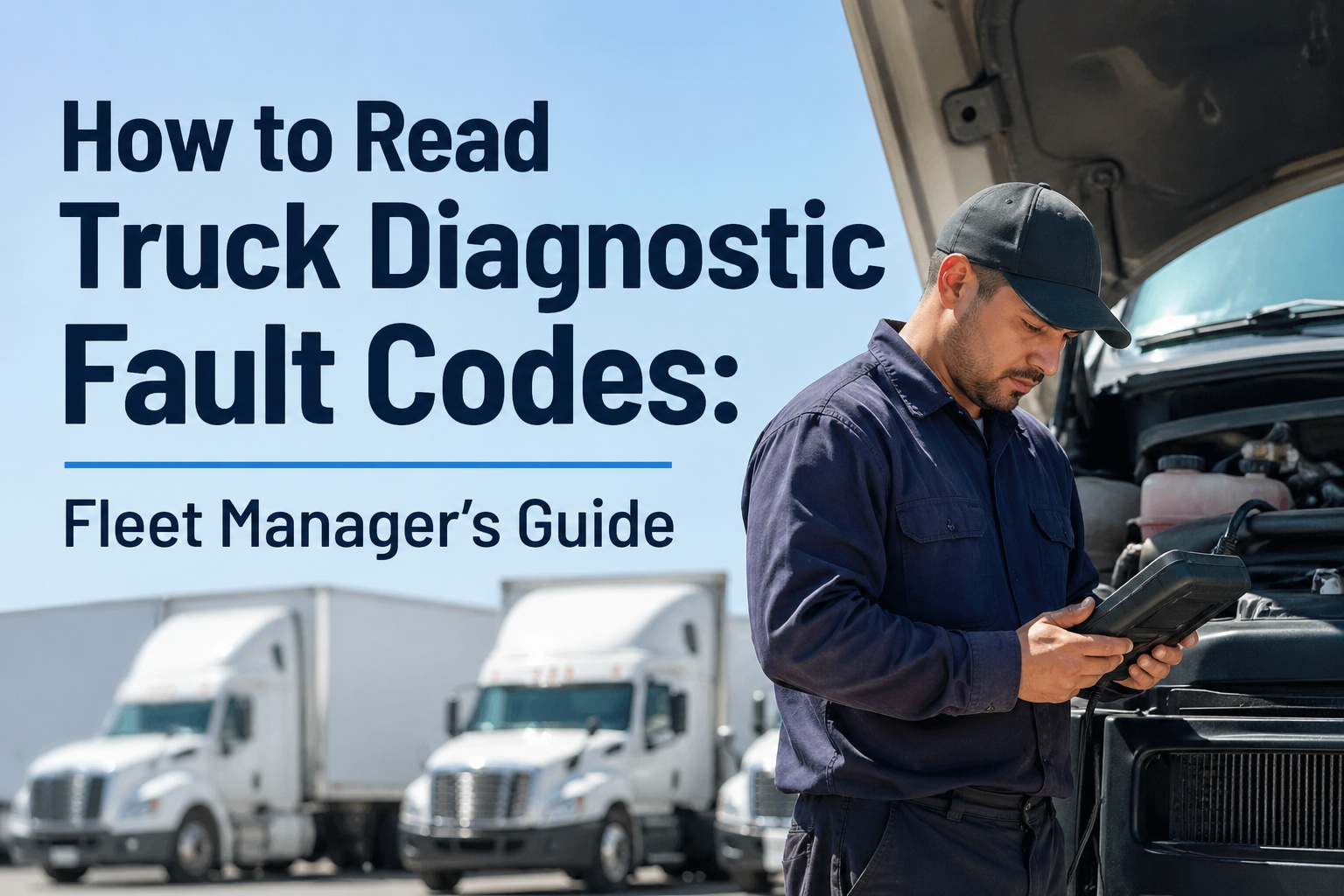
A dash lamp comes on, a technician plugs in, and a string like SPN 4364 FMI 18 appears. On a Cummins it may show as a fault-code number; on a Volvo it may read as a MID and a PID. It looks like two different languages. It isn't. Under the labels, both brands report faults the same way, through the SAE J1939 standard, and a fault code is a pointer to a system, not a diagnosis of a part. This guide decodes that shared language, shows how Cummins and Volvo each dress it up, and walks the common codes on the X15 and the D13. Start free and log every fault code against the truck with TIM.
TIM · Cummins & Volvo Fault Codes
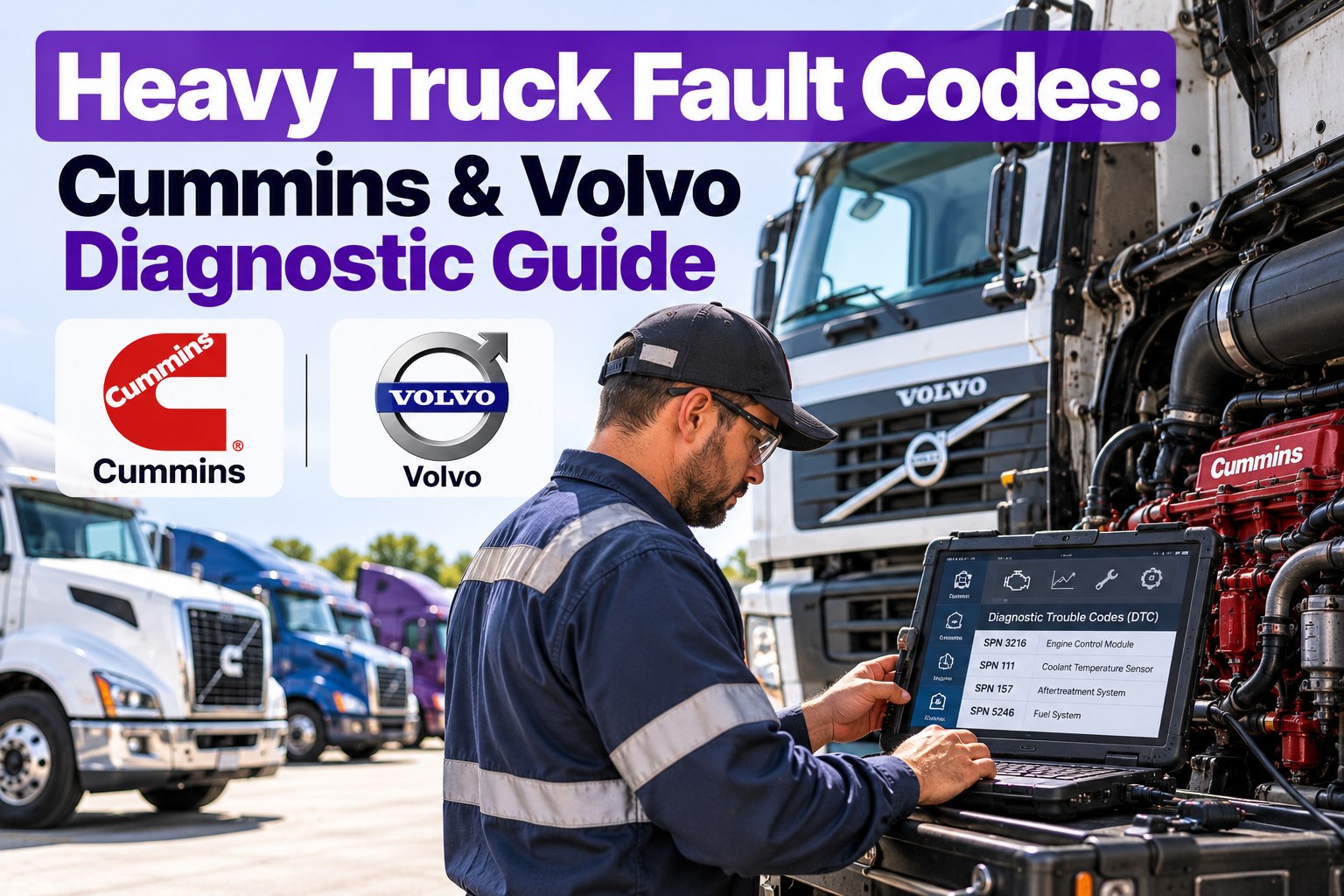
Heavy Truck Fault Codes: Cummins & Volvo Diagnostic Guide
Cummins and Volvo both report faults through SAE J1939 — an SPN that names the system and an FMI that says how it failed. Learn to read those two numbers and most of the mystery drops away, whether you're looking at an X15 or a D13. Truck Inspection & Maintenance Management Software (TIM) takes it from there: a code logged against the unit, a recurring one turned into a work order, and a fault history per engine so the code you cleared last month isn't a surprise this month.
How to Read a J1939 Fault Code
Nearly every code on a current heavy truck breaks into two parts. The SPN tells you what — which component or parameter the engine is unhappy about. The FMI tells you how — the nature and severity of the failure. Read them together and the code stops being a riddle.
SPN4364Suspect Parameter Number — the system or signal. 4364 is SCR catalyst conversion efficiency.
+
FMI18Failure Mode Identifier — how it failed. 18 is "below normal, moderately severe."
=
Reads as: SCR catalyst efficiency is low — moderately severe. Look at DEF quality, the catalyst, NOx sensors, and dosing, not one named part.
The FMI is the half most people skip, and it's where the triage lives. A handful cover most of what you'll see:
0 / 1Data valid but above / below normal — most severe
16 / 18Above / below normal — moderately severe
2Data erratic, intermittent, or incorrect
3 / 4Voltage above / below normal — a circuit fault
5Current below normal or open circuit
7Mechanical system not responding properly
31Condition exists — a status, not a circuit
9 / 19Abnormal refresh rate / bad network data
So SPN 157 FMI 3 is a rail-pressure sensor circuit problem, while SPN 157 FMI 18 is rail pressure actually reading low — same system, very different repair. Contact our team to standardize how your shop records SPN and FMI.
The Same Fault, Two Dialects
Cummins and Volvo each wrap J1939 in their own labeling and their own software. Knowing the wrapper tells you what you're looking at before you decode a thing.
Cummins
Shows a numeric Fault Code on the dash (for example FC 1921) that maps to an SPN/FMI pair; full detail reads out in INSITE. Engines: ISX15, X15.
Volvo
Legacy codes use MID / PID / PPID / PSID + FMI (the engine ECU is MID 128); newer trucks also show SPN/FMI, read in Premium Tech Tool. Engines: D11, D13.
Common Codes by Engine
These are codes a fleet sees often on each platform, with what the code points at and where to start looking. Treat them as a starting map — always confirm the exact code and calibration against the OEM's service information before you turn a wrench.
Cummins X15 / ISX15INSITE · Fault Code + SPN/FMI
SPN 4364 · FMI 18SCR conversion efficiency lowDEF quality, aged catalyst, NOx sensor drift, or dosing — a derate often follows.
SPN 3251 · FMI 16DPF differential pressure highSoot or ash load, incomplete regens, or the pressure lines and sensor.
SPN 157 · FMI 18Fuel rail pressure lowHigh-pressure pump, pressure-relief valve, filters, or a supply-side leak.
SPN 641 · FMI 7VGT turbo actuator not respondingCarboned vanes, a failing actuator, or its wiring; check for boost faults alongside.
Volvo D13 / D11Premium Tech Tool · MID 128 + FMI (SPN/FMI on newer)
SPN 4364 · FMI 18SCR conversion efficiency lowSame aftertreatment chain — DEF quality, dosing, NOx sensors, catalyst.
SPN 1761 · FMI 1DEF (reductant) tank level lowLow reagent or the tank level/quality sender; inducement follows if ignored.
SPN 3251 · FMI 16DPF differential pressure highSoot/ash load and regen history, or the delta-pressure sensor and lines.
MID 128 · PID 94 FMI 1Fuel pressure low (legacy label)Volvo's older code style for the same low-fuel-pressure condition.
From Code to Fix — Without Just Clearing It
The fastest way to turn a one-time code into a chronic one is to clear it and send the truck back out. A fault code is the start of the diagnosis, not the end.
1
Read the full codeCapture the SPN and FMI (and the brand code), plus whether it's active or logged, and the count.
→
2
Decode, don't assumeSPN names the system, FMI names the failure mode. A circuit FMI and a performance FMI send you to different places.
→
3
Verify with live dataConfirm the fault against sensor readings and freeze-frame before replacing anything — the code points, it doesn't prove.
→
4
Repair the root causeFix the underlying system, not the symptom; DEF quality faults are fluid problems far more often than sensor problems.
→
5
Clear and confirmClear the code, run the engine or a regen as needed, and confirm it stays gone before the truck is dispatched.
The Repeat Offenders on Both Engines
Whether it's an X15 or a D13, the same handful of systems generate most of the codes on a modern diesel — and aftertreatment leads by a wide margin.
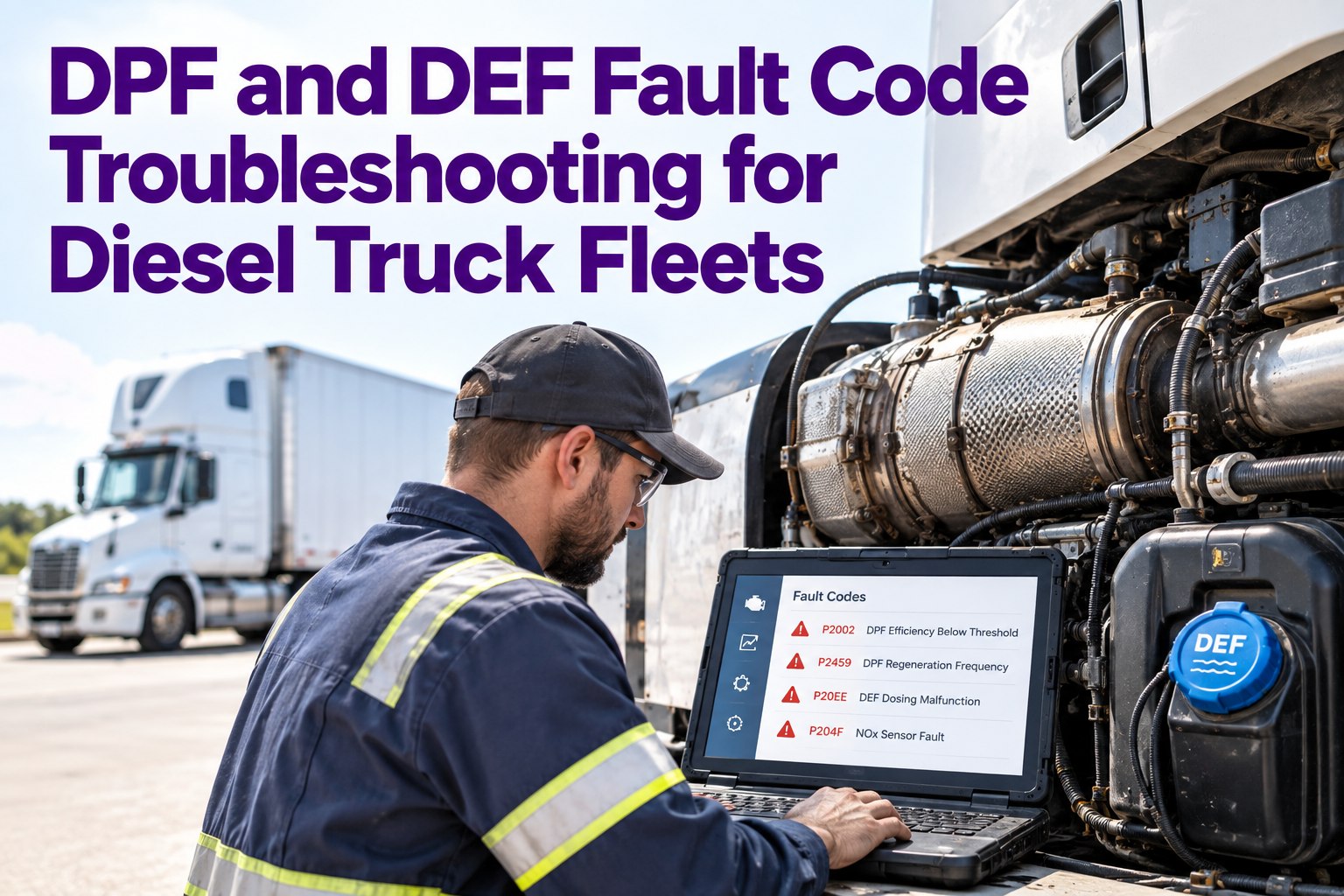
SCR efficiencySPN 4364 — the single most common serious code family; usually DEF quality or dosing, not the catalyst.
DEF quality & levelSPN 3364, 1761 — off-spec fluid, a bad quality sensor, or a low tank; verify the fluid first, every time.
DPF soot & pressureSPN 3719, 3251 — missed regens and short-cycle duty load the filter and raise differential pressure.
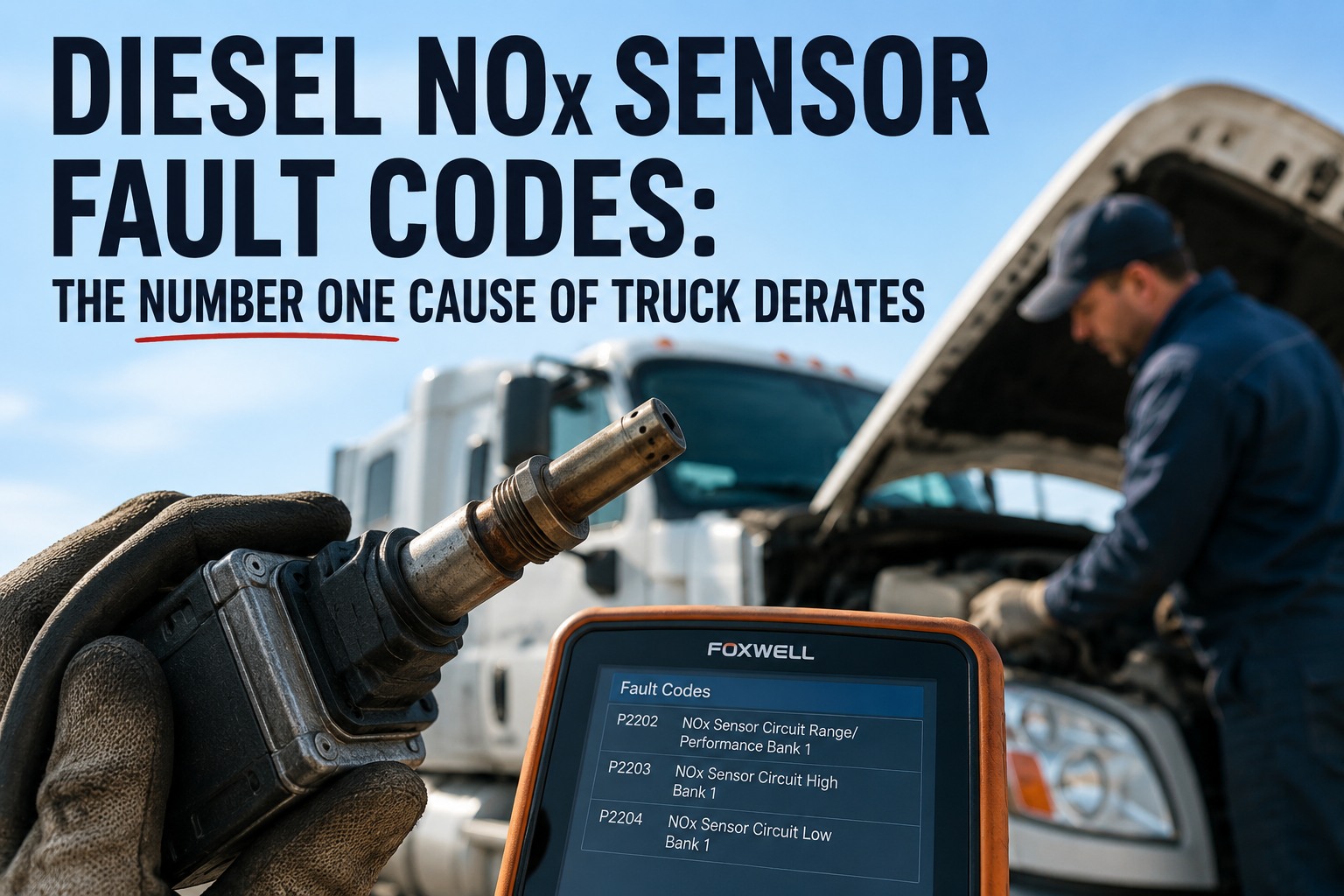
NOx sensorsSPN 3226, 3216 — inlet and outlet sensors drift and fail, and drag the SCR efficiency logic with them.
EGR systemSPN 27, 2791 — carbon on the valve, actuator faults, and flow or delta-pressure errors.
Fuel rail & turboSPN 157, 94, 103, 641 — rail pressure, supply, VGT actuator, and boost faults that drive derates.
A Code You Clear and Forget Comes Back
The trucks that eat a shop's time are the ones throwing the same code every few weeks, because nobody tracks that it's the same code. TIM logs every fault against the specific engine, flags the repeats, and turns a recurring code into a work order — so a chronic SCR or DPF fault gets chased to root cause instead of cleared again and again.
How TIM Turns Codes Into Fixed Trucks
A fault code read on a scan tool and cleared leaves no trace. On one record per truck, the same code becomes a history you can act on.
Every code on the unitFault codes logged against the specific truck and engine, with the SPN/FMI and when it appeared — not stranded on a laptop.
Repeat codes flaggedThe same SPN coming back is surfaced as a pattern, so a chronic fault gets chased instead of cleared on repeat.
Code becomes a work orderA serious or recurring code turns into an assigned, tracked repair with the diagnosis and parts attached.
Full fault historyPer-engine code history for warranty, trade-in, and spotting the truck that's quietly becoming a problem.
Regen & aftertreatment trailRegens, DEF issues, and SCR/DPF codes tracked together, since that's where most of the codes live.
Tied to inspection & PMA code links to the next service, so a fault caught on a scan feeds the same maintenance loop as a DVIR defect.
Frequently Asked Questions
What's the difference between SPN and FMI?
SPN (Suspect Parameter Number) identifies what the fault is about — a specific component, circuit, or measured parameter, like SCR catalyst efficiency or fuel rail pressure. FMI (Failure Mode Identifier) describes how that parameter failed — too high, too low, erratic, a circuit short, or no response. You need both: the SPN sends you to the system, and the FMI tells you whether you're chasing a performance problem or a wiring problem. Reading only the SPN is how good sensors get replaced for a fault that was really a circuit.
Start free and capture both numbers on every code with TIM.
Can I just clear a fault code and keep driving?
Clearing a code doesn't fix the condition that set it — and if the condition is still there, the code returns, often with a derate or inducement that gets more aggressive each time. Some aftertreatment faults will actively reduce engine power or road speed until the root cause is addressed. Clear a code only after you've diagnosed and repaired what caused it, then confirm it stays gone. Clearing to silence a lamp is how a small fault becomes a roadside breakdown.
Are Cummins and Volvo fault codes the same?
Underneath, largely yes — both report through SAE J1939, so an SCR efficiency or DPF pressure fault carries the same SPN on either engine. What differs is the wrapper: Cummins shows a fault-code number alongside the SPN/FMI, while Volvo uses MID/PID/PPID/PSID on older trucks and SPN/FMI on newer ones. Once you can read SPN and FMI, the same aftertreatment fault points to the same system on an X15 and a D13.
Contact us to standardize codes across a mixed-engine fleet.
What do most heavy-truck fault codes point to?
Aftertreatment, by a wide margin. SCR conversion efficiency, DEF quality and level, DPF soot and differential pressure, and the NOx sensors that feed those systems generate the bulk of the serious codes on both engines. The practical lesson: before you condemn a catalyst or a sensor, verify the DEF — off-spec or contaminated fluid is behind a surprising share of SCR and DEF-quality faults, and it's the cheapest thing to rule out.
Do I need a scan tool to read these codes?
For the full picture, yes. Dash lamps and a basic code reader tell you something is wrong and often show the SPN/FMI, but the OEM software — INSITE for Cummins and Premium Tech Tool for Volvo — gives you freeze-frame data, counts, and the live readings you need to verify before replacing parts. A good J1939 reader covers both engines at the dash level; the OEM tool is what closes the diagnosis.
Contact our team about logging scan-tool codes into TIM.
SPN · FMI · Cummins · Volvo
Read the Code, Fix the Truck, Keep the History
A fault code is a pointer, not a verdict — and on both Cummins and Volvo it's the same J1939 language once you know how to read it. Decode the SPN and FMI, chase the root cause instead of clearing the lamp, and keep every code on the truck's record so the repeats can't hide. TIM logs the codes, flags the patterns, and turns them into tracked repairs. It's free to start on your first three trucks.
No credit card required · Free for up to 3 trucks · Fault codes, recurring-code flags, and code-to-work-order built in