ABS and stability control are the systems that keep a panic stop from turning into a jackknife — and because they're electronic, they fail quietly. No noise, no pull, just a dash lamp most drivers learn to ignore. The irony is that the most common failure is also the cheapest part: a wheel speed sensor, or more often the wiring behind it. Leave the lamp on and you've quietly lost anti-lock braking and the stability control that rides on it, exactly when a wet corner or a hard stop would need them — plus a roadside flag. This guide covers how an ABS fails, how to read the fault, and why stability control depends on the same sensors. Start free and keep ABS faults off the road.
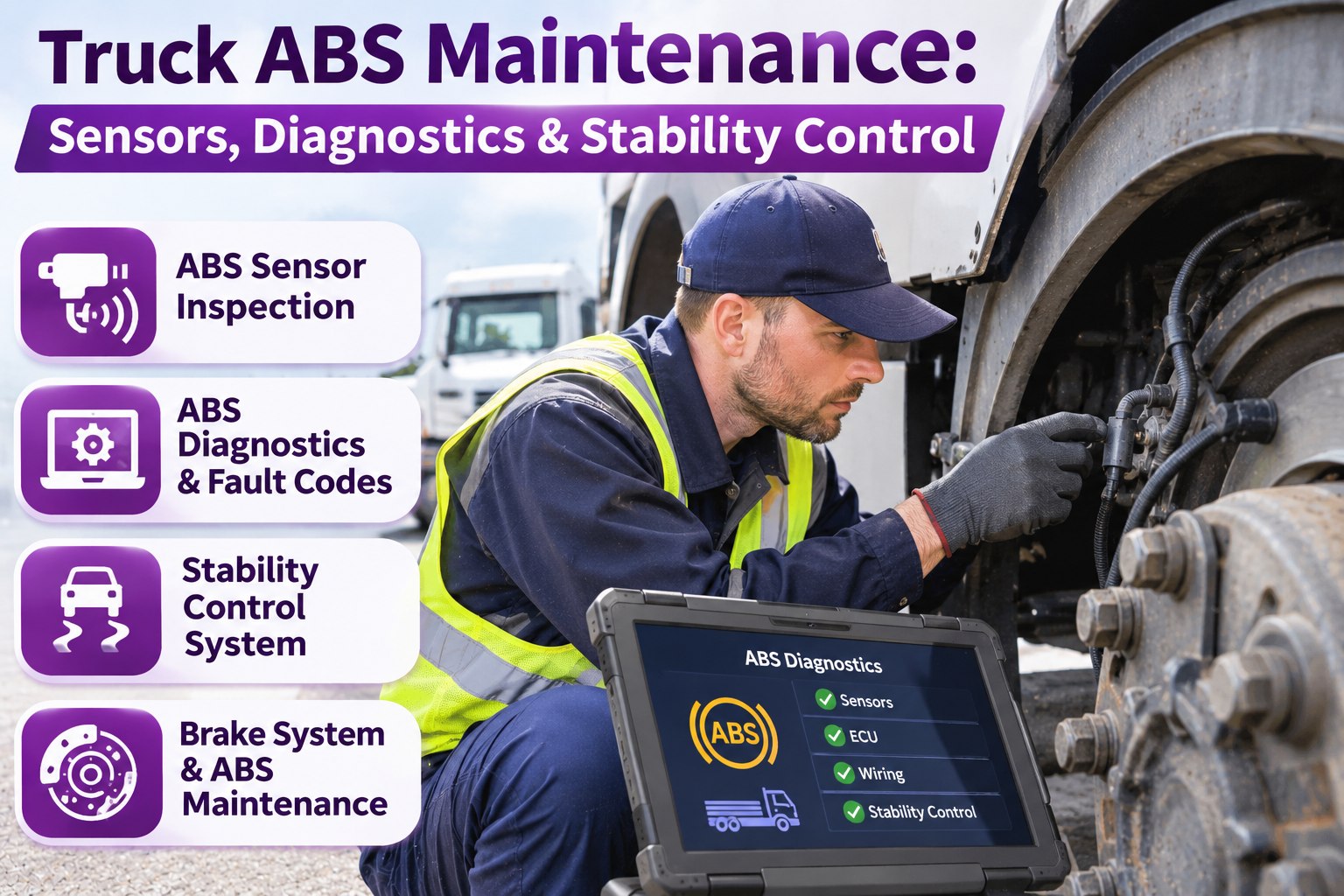
Truck ABS Maintenance: Sensors, Diagnostics & Stability Control
The Five Parts of an ABS
An anti-lock system is a short signal chain, and a fault anywhere along it lights the same lamp. Know the five parts and you know where to look.
Where ABS Faults Actually Come From
The failures aren't spread evenly. The wheel end is a hostile place — heat, vibration, water and road salt — and that's where the signal starts, so that's where most faults live.
The Air Gap: The Detail Behind Most Sensor Faults
Nearly every wheel-speed fault comes back to one thing — the air gap, the tiny space between the sensor tip and the tone ring. Too wide and the signal weakens, especially at low speed, and the ECU disables that wheel.
Reading the Fault: Blink Codes and Scan Tools
The system is built to tell you what's wrong — you just have to ask it the right way. There are two routes, and the wheel-specific codes point you straight at the corner to inspect.
Stability Control Rides on the Same Sensors
Here's why an ABS fault is bigger than it looks. Traction control and electronic stability control — roll and yaw — are built on top of ABS, using the very same wheel speed sensors plus a few of their own, like steering-angle and yaw sensors. Mandatory on new tractors under FMVSS 136, stability control is what catches a rollover or a skid before the driver can. But it can only act on a wheel the ABS can still read — so when a wheel speed sensor goes offline, that wheel loses anti-lock and its stability functions at the same time. The cheap sensor at the hub is holding up the most advanced safety system on the truck. Book a demo to keep ABS and stability faults visible fleet-wide.
Don't Just Pull the Bulb
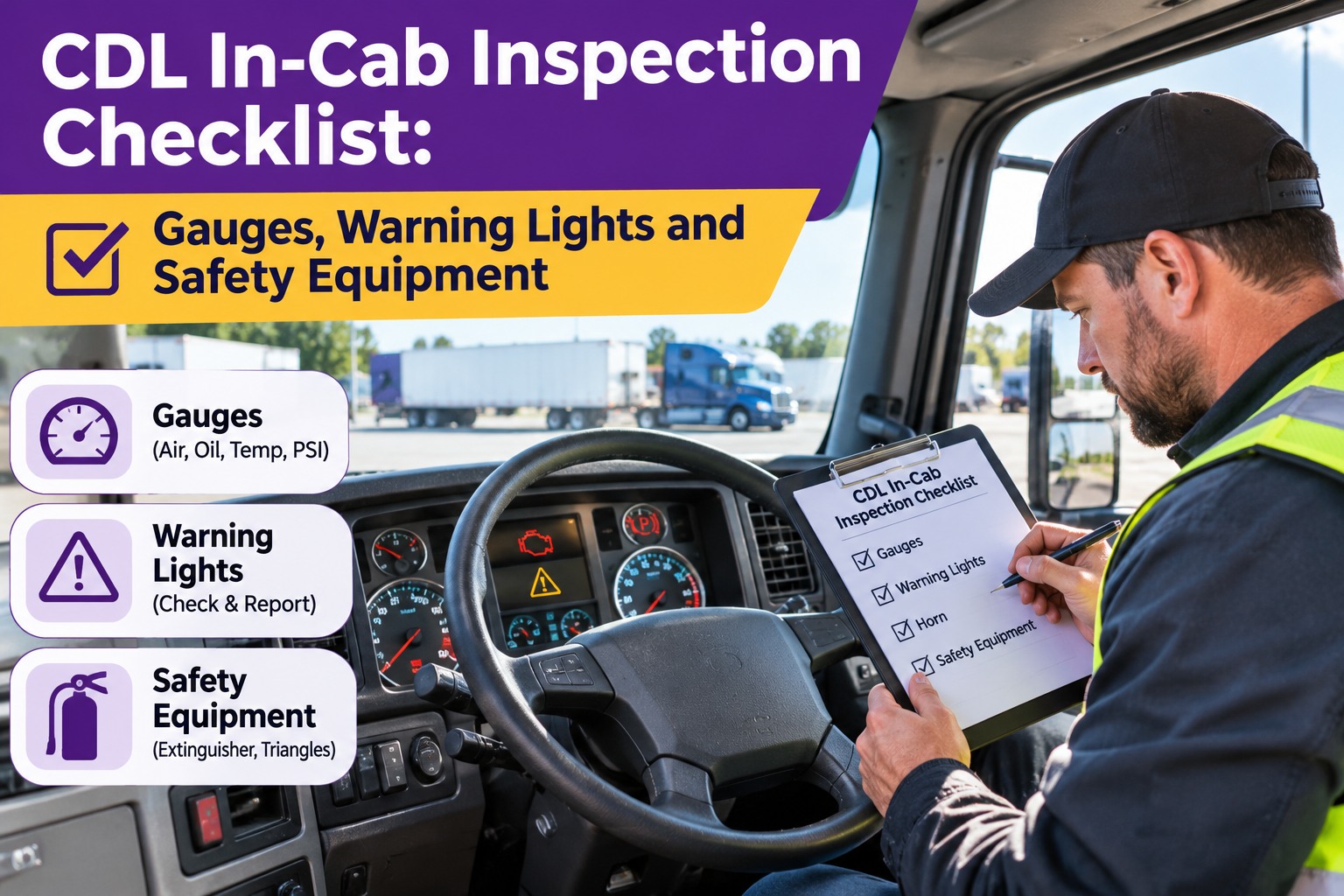
An ABS warning lamp is required equipment, and taping over it doesn't fix the fault — it hides a disabled safety system from the driver and lights up a roadside inspection. Log the lamp, read the code, fix the circuit, and the system is back to catching the stop the driver can't.
Why Fleets Track ABS in Software
Frequently Asked Questions
The system self-checks at power-up and lights the lamp if it stores a fault in one of five parts: the wheel speed sensor, tone ring, wiring, ECU or modulator valve. Most often it's the sensor or its cable at a wheel end. The base brakes still work, but anti-lock and stability are disabled until it's fixed. Book a demo to track ABS lamps per truck.
A wheel speed sensor problem — and often it's not the sensor itself but the connection between it and the ECU, which is why a "sensor" code should really be read as a "sensor circuit" code. Most trace back to the air gap widening from a worn hub, corrosion or a chafed cable. Book a demo to track repeat sensor faults.
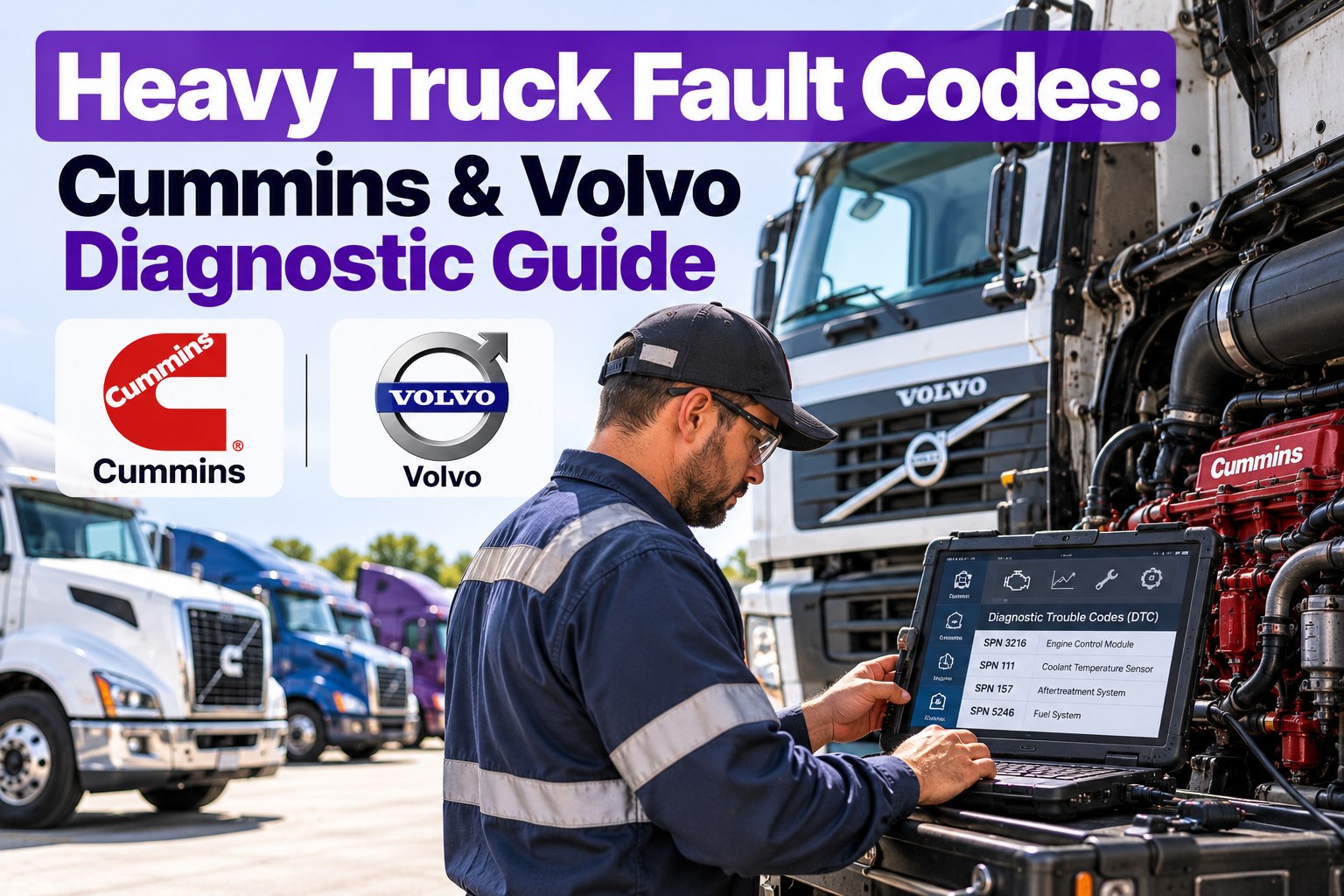
Two ways: activate the dash lamp's blink code — a Morse-like sequence your service manual decodes to the component and wheel — or pull the stored codes with a scan tool or J1939 software, which name the fault, such as excessive air gap or loss of signal, and the wheel end. Book a demo to log fault codes with the work order.
Yes. Traction and electronic stability control are built on the ABS and use the same wheel speed sensors, so when a sensor goes offline, that wheel loses both anti-lock and its stability functions. Fixing the ABS fault restores the stability system that depends on it. Book a demo to keep stability systems covered.
Keep the System That Catches the Stop the Driver Can't
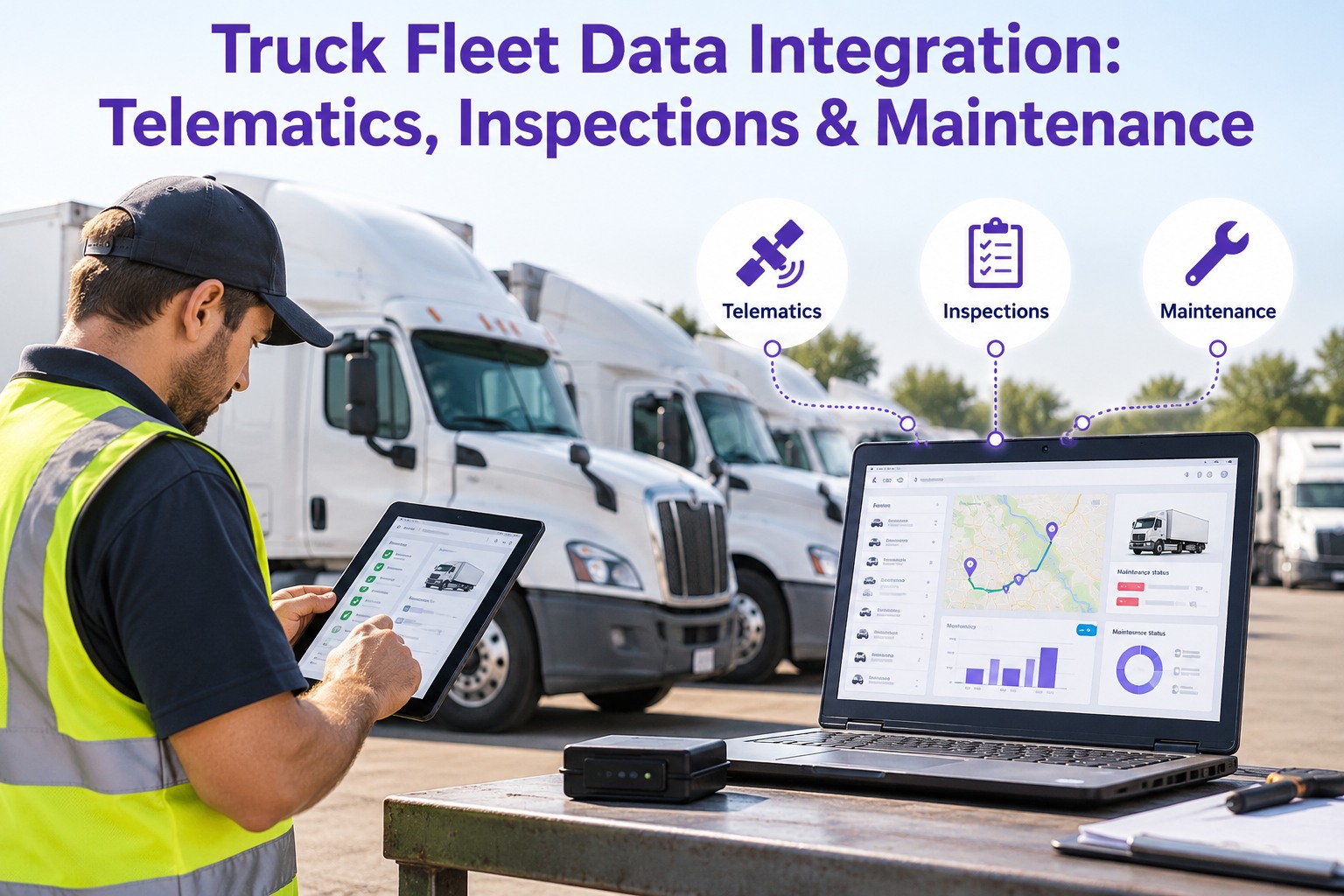
Truck Inspection & Maintenance Management Software puts the ABS lamp on every pre-trip, captures the fault code and the wheel it points to, and turns it into a scheduled repair — so anti-lock and stability control are working when the road turns bad.