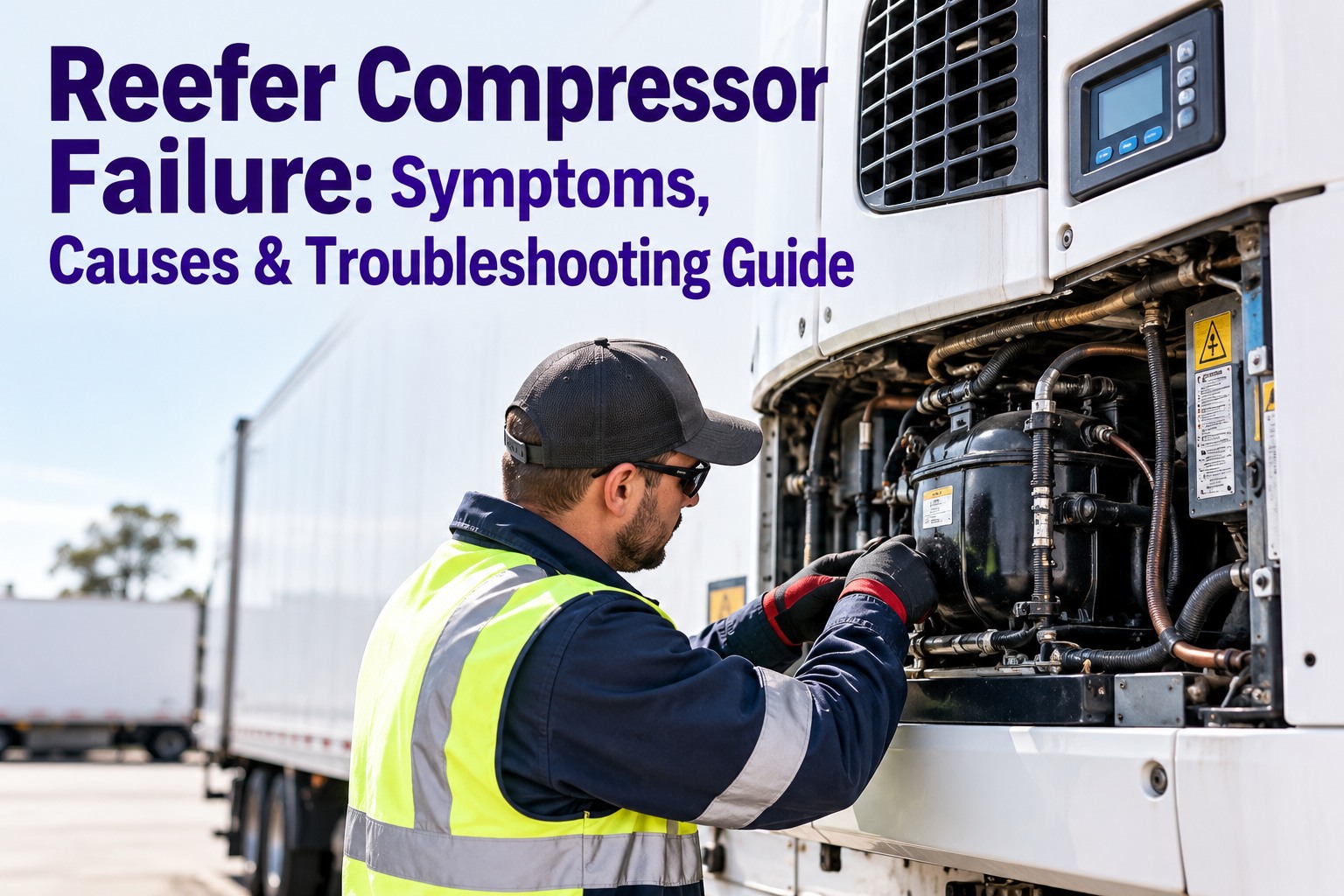
On a reefer, a failing compressor isn't just a repair bill — it's a trailer full of temperature-controlled cargo on a countdown. The compressor is the heart of the refrigeration unit, and when it starts to go, the warning signs show up days before it quits: the box won't hold setpoint, the unit short-cycles, a knock or rattle creeps in, the pressures drift. Catch those early and it's a belt, a charge, or a cleaned coil; miss them and it's a dead compressor and a rejected load. This guide walks the symptoms, the causes behind each one, the troubleshooting steps to isolate the fault, and the preventive maintenance that keeps the compressor alive — with Truck Inspection & Maintenance Management Software (TIM) turning every reefer check into a tracked action. Start free and keep your reefer units on schedule with TIM.
TIM · Reefer Compressor Failure
A Reefer Compressor Warns You for Days — Then Takes the Load With It
The compressor is the heart of the reefer, and it rarely dies without notice — the box drifts off setpoint, the unit short-cycles, a knock sets in, the pressures go wrong. Caught early, that's a cheap fix; ignored, it's a failed compressor and spoiled cargo. TIM keeps the reefer on a real PM schedule and turns every pre-trip and inspection finding into a graded work order, so a drifting unit gets looked at before the load is at risk.
The Symptoms — What a Failing Compressor Looks Like
A reefer compressor tells you it's in trouble in six recognizable ways. Learn the signs and a driver or technician catches the problem at pre-trip, not at the receiver's dock with a warm load.
◷
Won't hold setpoint
The box temperature drifts or swings wide and never settles where it's set. The clearest early sign the unit can't move heat the way it should.
↻
Short-cycling
The unit cycles on and off rapidly without holding temperature — straining the compressor and signaling a charge, airflow, or control fault.
◉
No clutch engagement
The unit calls for cooling but the compressor clutch doesn't engage — often electrical, and a hard stop on any cooling at all.
♪
Knocking or grinding
Rattling, knocking, or grinding from the compressor points at internal wear — bearings, valves, or lubrication failing.
◆
Pressure discrepancies
High-side and low-side pressures reading out of range on the gauges — a direct window into charge, restriction, or compressor problems.
▲
Overheating
The compressor runs hot from overwork, poor airflow, or low lubrication — heat that accelerates the wear toward failure.
The Causes Behind the Symptoms
Each symptom traces back to a cause, and most reefer compressor failures come from the same short list. Knowing which cause produces which symptom is how you troubleshoot instead of guess.
01
Low refrigerant or a leakA low charge from a leak or contamination stops the system absorbing heat — the most common reason a reefer won't cool. Oil residue on the lines is the tell.
02
Dirty condenser or evaporator coilsDirt, road debris, and bugs choke the coils and kill heat exchange, so the compressor overworks to hold temperature and runs hot.
03
Electrical faultsBlown fuses, stuck relays, a bad clutch coil, or a faulty control board stop the compressor engaging or cycling correctly.
04
Lubrication & internal wearLow oil or worn bearings and valves cause the knocking and overheating — the damage that turns a fixable fault into a replacement.
05
Sensor or thermostat faultsA faulty temperature sensor feeds wrong readings to the controller, so the unit cools to the wrong target or cycles when it shouldn't.
06
Belts, pulleys & valve blockageA cracked or frayed belt, a worn pulley, or a blocked expansion valve starves the compressor or stops it driving properly.
Pin the cause to the symptom and the repair is targeted, not a parts-swap guess. Contact our team to tie reefer symptoms to inspection checks in TIM.
Troubleshooting — Isolate the Fault in Order
When a reefer won't cool, work the checks cheapest and most common first. This sequence isolates most compressor-related faults before you reach for the manifold gauges or call a tech.
1
Check the obviousSetpoint correct, unit in the right mode, fuel/power adequate, airflow not blocked by the load. Rule out the simple before the mechanical.
→
2
Inspect coils & beltClean the condenser fins of debris and bugs; check the belt for cracks or fraying. Both are common, cheap, and fast to fix.
→
3
Look for a leakInspect the refrigerant lines for oil residue — the visual sign of a leak — before assuming the compressor itself is the fault.
→
4
Test electrical & pressuresCheck fuses and test the clutch coil with a multimeter; read high and low side with a manifold gauge to confirm the compressor's condition.
!
The compressor is usually the last suspect, not the first
Most "the compressor failed" calls turn out to be a low charge, a clogged coil, a bad belt, or an electrical fault — all cheaper and faster to fix than the compressor. Work the sequence in order and you confirm or rule out the common causes before condemning the most expensive part. Replacing a compressor that was only starved by a dirty coil fixes nothing and wastes the money.
Prevent It — the PM That Keeps a Compressor Alive
Almost every compressor failure is a preventable one. The maintenance that keeps the unit healthy is routine and cheap next to a replacement plus a lost load. Run it on a schedule, not on a hunch.
PRE-TRIP
- Confirm the unit pulls down to setpoint
- Listen for abnormal noise on start
- Check for visible leaks or oil residue
- Verify airflow and load clearance
QUARTERLY
- Clean condenser and evaporator coils
- Inspect belts and pulleys for wear
- Check refrigerant charge and lines
- Test sensor and thermostat calibration
SCHEDULED SERVICE
- Change oil and filters per the unit maker
- Full electrical and control check
- Pressure and performance test
- Log run hours against service intervals
Clean coils quarterly, or more often in dusty conditions; follow the reefer manufacturer's service intervals and procedures for charge, oil, and electrical work.
A Reefer Fault Is a Clock on the Cargo — Catch It Early
On a dry van a missed defect is downtime; on a reefer it's a spoiled load and a rejected delivery. TIM keeps the refrigeration unit on its own PM schedule — pre-trip, quarterly, and run-hour service — and the moment a driver flags a drifting box, a noise, or a leak, it becomes a graded work order routed to the shop. The early symptom gets acted on while it's still a belt or a coil, not after it's a dead compressor and a warm trailer.
Why the Reefer Needs Its Own Maintenance Track
The refrigeration unit is a second machine on the trailer, with wear and stakes the chassis PM never touches. Treating it as part of the trailer check is how the compressor gets neglected.
◉
Runs on its own hours
The reefer accumulates run hours independent of trailer miles — a parked trailer can run its unit for days. Service has to track run hours, not just mileage.
❄
Cargo is the real stake
A compressor failure doesn't just strand a trailer — it spoils a temperature-controlled load, which can cost far more than the repair itself.
◆
Its own systems
Refrigerant, coils, belts, controls, and sensors are a self-contained system with their own failure modes — none of them on a standard trailer checklist.
How TIM Runs It
Reefer Health to Work Order, on One Record
TIM runs the refrigeration unit as a tracked system of its own — inspected on cadence, with every drifting box or odd noise routed to a repair before the cold chain breaks.
Reefer-specific checklistsPre-trip, quarterly, and service checks for the unit — coils, belts, charge, controls — not buried in the trailer PM.
Symptom to work orderA flagged drift, noise, or leak becomes a graded, assigned repair the moment it's logged.
Run-hour PMSchedule reefer service on run hours, not trailer miles, so coil cleaning and oil changes come due on real use.
Severity routingA unit off setpoint with a load aboard pulls priority; a routine coil clean schedules into planned work.
Photo on the defectA photo of the oil residue or the reading rides with the work order, so the tech sees it before the truck arrives.
Per-unit reefer historyEvery reefer's symptoms, repairs, and service in one record, so repeat faults and failing units surface early.
Frequently Asked Questions
What are the first signs of reefer compressor failure?
The earliest and clearest sign is the box not holding setpoint — the temperature drifts or swings wide and never settles where it's set. Close behind are short-cycling, where the unit rapidly cycles on and off without maintaining temperature, and abnormal noise like knocking, rattling, or grinding from the compressor. You may also see the clutch failing to engage when the unit calls for cooling, high- and low-side pressures reading out of range, or the compressor running hot. These show up days before a full failure, which is why a pre-trip that checks pull-down and listens for noise catches most problems while they're still cheap.
Start free and catch reefer symptoms at pre-trip with TIM.
What usually causes a reefer compressor to fail?
The most common root cause isn't the compressor itself — it's something starving or overworking it. Low refrigerant from a leak is the leading reason a reefer won't cool; dirty condenser and evaporator coils choke heat exchange and make the compressor run hot; electrical faults like blown fuses, stuck relays, or a bad clutch coil stop it engaging; and low lubrication or worn bearings and valves cause the knocking and overheating that lead to true internal failure. Belts, pulleys, and a blocked expansion valve round out the list. The pattern is that most "compressor failures" start as a cheaper, preventable fault that was left to escalate.
How do I troubleshoot a reefer that won't cool?
Work from the cheapest and most common causes toward the expensive ones. Start with the obvious — correct setpoint, right mode, adequate fuel or power, and airflow not blocked by the load. Then inspect and clean the condenser coils and check the belt for cracks or fraying. Next, look for oil residue on the refrigerant lines, which is the visual sign of a leak, before you assume the compressor. Finally, test the electrical side — fuses and the clutch coil with a multimeter — and read the high and low side with a manifold gauge to confirm the compressor's actual condition. Running the sequence in order usually isolates the fault without condemning the most costly part first.
How often should a reefer unit be serviced?
On three clocks. Every trip, a pre-trip confirms the unit pulls down to setpoint, listens for abnormal noise, checks for visible leaks, and verifies airflow. Quarterly — or more often in dusty conditions — clean the condenser and evaporator coils, inspect belts and pulleys, check the refrigerant charge and lines, and test sensor and thermostat calibration. On the manufacturer's scheduled-service interval, change oil and filters, do a full electrical and control check, and run a pressure and performance test. Crucially, reefer service should track run hours, not just trailer miles, since the unit can run for days while the trailer sits still.
Why track the reefer separately from the trailer?
Because the refrigeration unit is effectively a second machine with its own systems, its own wear clock, and far higher stakes. It runs on run hours independent of trailer miles — a parked trailer can run its unit for days — so a mileage-based schedule misses its real usage entirely. Its refrigerant, coils, belts, controls, and sensors are a self-contained system with failure modes a standard trailer checklist doesn't cover. And a reefer failure doesn't just mean downtime; it means a spoiled temperature-controlled load that can cost many times the repair. Giving the reefer its own inspection cadence and PM track is how the compressor gets the attention its stakes demand.
Symptom · Cause · Troubleshoot · Prevent
Catch the Compressor Before It Catches the Load
A reefer compressor gives days of warning — a box off setpoint, a short cycle, a knock, a pressure that's drifted — but only if someone reads the signs and the finding turns into a fix. Know the symptoms, trace each to its cause, troubleshoot cheapest-first, and keep the unit on a run-hour PM schedule. TIM keeps the reefer on its own cadence and routes every symptom to a work order, so a drifting unit becomes a coil clean in the yard instead of a dead compressor and a rejected load.
No credit card required · Free for up to 3 trucks · Reefer-specific checklists, run-hour PM, and symptom-to-work-order built in