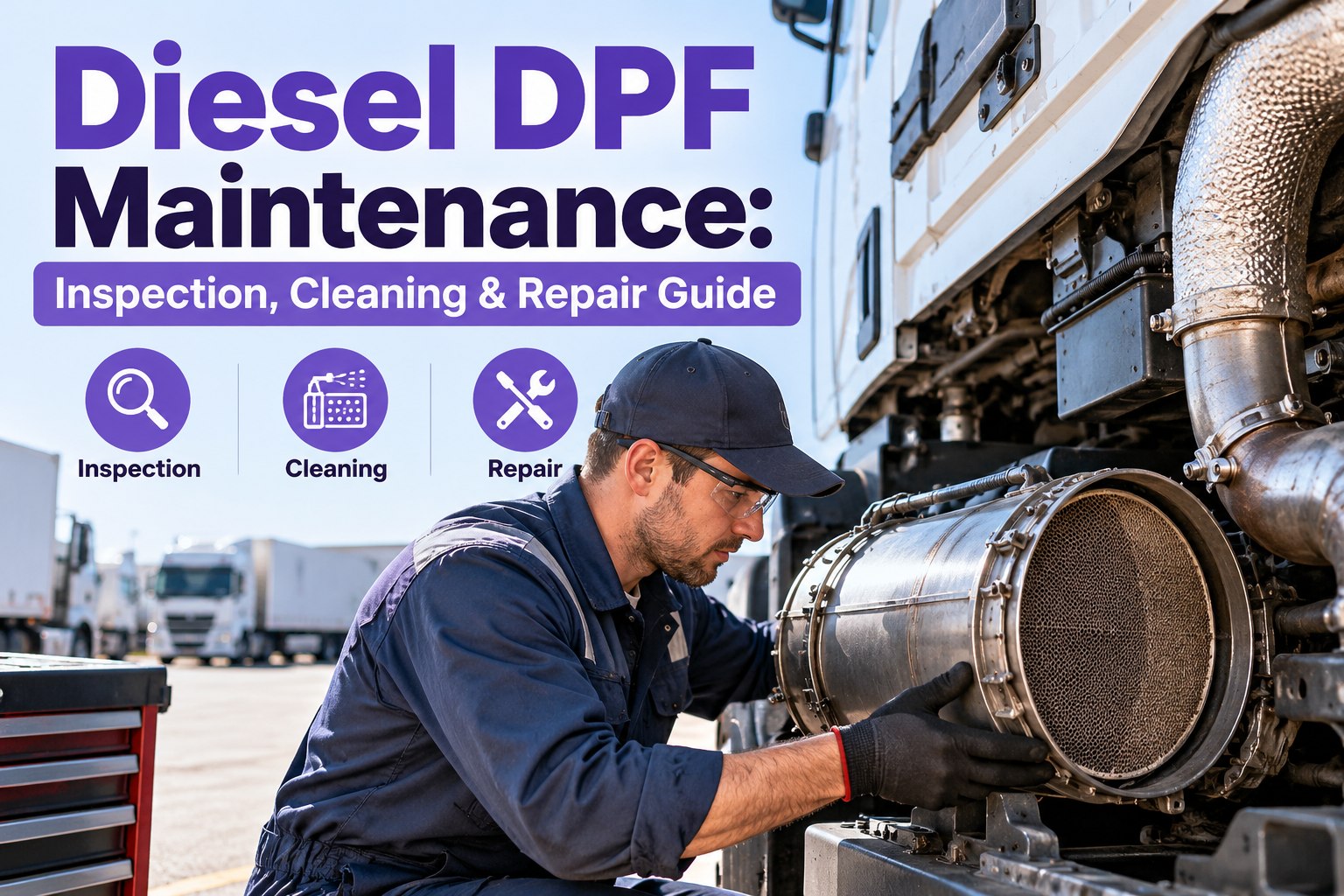
A diesel particulate filter doesn't usually fail on its own. It clogs because something upstream was ignored: a skipped regen, a leaking injector, a failing sensor or too much idling. By the time the dash light comes on, the truck is often minutes from a derate. This guide covers how to inspect a DPF, read the early signs of clogging, decide between regeneration, cleaning and replacement, and schedule the work before it becomes downtime. Emissions equipment has to stay on the truck and working under the federal Clean Air Act, and the driver's duty to confirm the truck is safe sits in 49 CFR 392.7 and 396.13. Procedures and limits vary by engine make and model year, so follow the OEM service information. Spotting a problem is only half of it. Getting it logged, assigned and followed up is what Truck Inspection & Maintenance Management Software is built for.
Diesel DPF Maintenance: Inspection, Cleaning & Repair Guide
Repeated regens, rising soot load and short-trip duty cycles leave clues long before a derate. Truck Inspection & Maintenance Management Software lets drivers log DPF warnings and regen events, flags repeat trucks, turns defects into work orders, and schedules DPF checks and cleanings in your PM plan.
How a DPF Gets Clogged
The filter traps soot. Heat burns that soot off during regeneration. Clogging happens when the soot comes in faster than it can be burned off, and what is left, ash, only goes away by cleaning or replacement. The loop below shows where it breaks.
If regens are interrupted, too frequent or never complete, the loop stalls at step 2 and the filter keeps loading.
Soot Load: What the Dash Is Telling You
Most trucks show DPF status in stages. Names and thresholds differ by manufacturer, but the pattern is similar. Treat each stage as a trigger for action, not something to wait out.
Clogged DPF: Symptoms Drivers Notice First
Drivers usually spot trouble before the shop does. Match the symptom to the likely cause, then check the most likely source first.
| Symptom | Likely Cause | Check First |
|---|---|---|
| Frequent regens | High soot output or a sensor reading wrong | DPF pressure sensor and its lines |
| Regens that never finish | Short trips, interrupted cycles or low exhaust temperature | Duty cycle, doser or injector, fault codes |
| Loss of power or poor fuel economy | Restricted flow through a loaded filter | Backpressure and soot load readings |
| Strong exhaust smell or heat | Regen in progress or an exhaust leak | Exhaust joints, clamps and gaskets |
| Oil level rising or fuel smell in oil | Fuel dilution from repeated in-cylinder dosing | Oil analysis and injector function |
| Fault code or derate after cleaning | Sensor, wiring or installation problem | Sensor connectors, hoses and mounting |
The DPF Inspection, Point by Point
Do this with the engine cool and the exhaust safe to touch. Pair it with a scan tool reading when you can. Items on the left are visual checks and items on the right are data and test checks.
- No cracks, dents or impact damage on the canister
- Clamps, brackets and mounts are tight, with no rubbing
- No black soot streaks or leaks at joints and gaskets
- Sensor wires and pressure lines are intact, not melted or chafed
- Heat shields are in place and not loose
- No signs of oil or coolant leaking into the exhaust
- Scan for active and stored fault codes
- Read soot load and compare to the OEM limit
- Check differential pressure across the filter
- Check ash load estimate or hours since last cleaning
- Review regen frequency and recent failed regens
- Test pressure sensor readings and hose condition
Regenerate, Clean or Replace?
The right fix depends on what is in the filter. Soot burns off. Ash does not. Always follow the OEM service procedure and warranty rules for your engine.
Burns soot off the filter, either on the road or parked.
- Use when: soot load is high but flow is not blocked
- Does not fix: ash buildup or cracked filters
- Watch for: repeat regens in a short time
Removes ash and stubborn deposits through a shop or off-vehicle process.
- Use when: ash load or hours reach your OEM interval
- Does not fix: cracked or melted substrate
- Watch for: record the date, and confirm the filter was tested after cleaning
Installs a new or remanufactured filter when the old one cannot be saved.
- Use when: substrate is cracked, melted or cleaning fails
- Also do: correct the root cause before installing
- Watch for: warranty and emissions compliance
Habits That Keep a DPF Healthy
Most DPF problems are duty-cycle and maintenance problems. These habits cut the number of trucks that end up on a tow.
See Which Trucks Are Heading for a Derate
Drivers log warnings, regen events and symptoms from their phone. The software keeps the history by truck, turns each defect into a work order, and schedules DPF inspections and cleanings in your PM plan. When a truck keeps coming back with the same issue, you see it in the record and can fix the cause rather than the symptom.
Where DPF Problems Cost Fleets
Frequently Asked Questions
Catch DPF Trouble Before It Becomes a Derate
Start free and log DPF warnings on one truck, or talk to our team about setting up emissions inspections and cleaning intervals for your fleet.