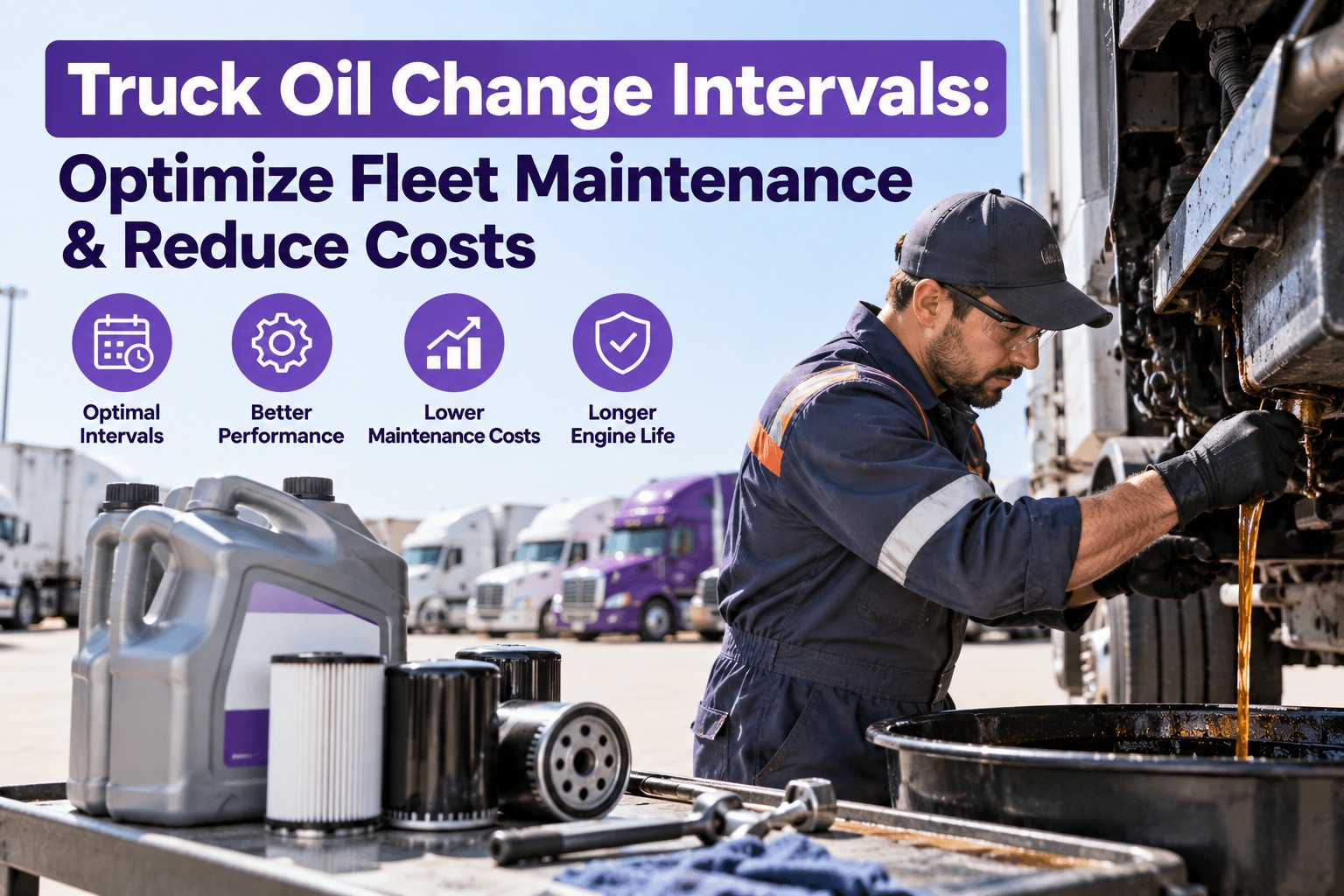
Most fleets change oil on a calendar or a mileage number, and most of the time that number is a guess. Change too early and you pay for oil, labor, and downtime you did not need. Change too late and you risk bearing wear, sludge, and an engine that fails far from the shop. Truck oil analysis replaces the guess with evidence: a small sample from each engine shows what is wearing, what is leaking in, and how much life the oil has left. The test only pays off when the result reaches the right truck, the right technician, and the next PM. This guide shows how to run oil analysis as part of one workflow, from the driver's inspection to the lab report to the next interval, and how to extend oil change intervals only when the data supports it. Start free and put oil sampling into your PM schedule.
Oil Changed on a Guess Costs You Either Way. Run It on Evidence.
Too early wastes money. Too late risks the engine. Truck Inspection & Maintenance Management Software connects the driver's inspection, the defect, the oil sample, and the PM work order in one workflow, so every truck's interval is based on its own results.
The Oil Analysis Loop, Run in One Place
A good program is simple and repeatable. These five steps work best when each one leaves a record that the next person can see.
Where Oil Problems Show Up First: The Inspection
Oil trouble often announces itself before any lab report arrives. A consistent DVIR and walkaround gives your analysis program an early warning system.
- Oil level on the dipstick, and any unusual top-offs
- Fresh oil under the engine or on the ground
- Oil pressure or check engine lamps
- Oil that looks milky or smells of fuel
- A photo of the leak or the dipstick
- The truck, location, and time
- A clear severity grade
- A named owner who must respond
How to Read the Lab Report
You do not need to be a chemist. Learn what each group of readings points to, and let your lab or technician confirm the cause.
- Iron: cylinder liners, gears, and shafts
- Copper and lead: bearings and bushings
- Aluminum and chromium: pistons and rings
- A steady rise matters more than one number
- Silicon: dirt past the air filter or intake seals
- Sodium, potassium, or glycol: possible coolant leak
- Water in oil: condensation or a seal problem
- Any coolant sign deserves prompt attention
- Fuel dilution thins the oil and weakens the film
- Common causes include injectors and heavy idling
- High soot thickens oil and speeds up wear
- Frequent regens can push both up
- Viscosity: too thin or too thick for the engine
- TBN: remaining ability to neutralize acids
- Oxidation and nitration: how worn out the oil is
- Additive levels: confirms the right oil was used
From Result to Action: Extend, Hold, or Act Now
After each report, put the truck in one of three groups. Your lab's limits and your engine maker's guidance set the exact numbers.
- Wear metals low and stable
- Viscosity within range
- Healthy TBN, low soot and fuel
- Wear metals trending upward
- Soot or fuel creeping up
- TBN dropping faster than expected
- Coolant or glycol in the oil
- Heavy fuel dilution or very low viscosity
- Sharp jump in wear metals
Raise intervals in small steps, and only with your engine maker's approval where warranty applies. Never extend a drain on a truck with a yellow or red result.
One Workflow From DVIR to Next PM
Drivers report it, the defect is graded, the shop gets a work order, and the next oil sample is scheduled. Nothing lives in a notebook or a text thread.
What to Set Up in Your Software
Four simple pieces turn oil analysis from a one-off test into a habit your whole team follows.
Sampling Do and Don't
A bad sample gives a bad answer. These habits keep your results trustworthy.
- Sample from the same point each time
- Take it with the engine warm and the oil mixed
- Record miles or hours on the oil and any top-offs
- Track each engine's trend over several samples
- Use dirty bottles or open them early
- Sample from a cold, settled pan
- Judge an engine from a single report
- Extend drains without checking warranty terms
Frequently Asked Questions
Run Oil Analysis Inside Your Maintenance Workflow
Guided inspections, photo defects, traffic-light grading, work orders, and PM scheduling in one system built for trucking fleets. Start free to set up your first oil-sample PM, or book a demo and we will walk through the loop with your fleet in mind.