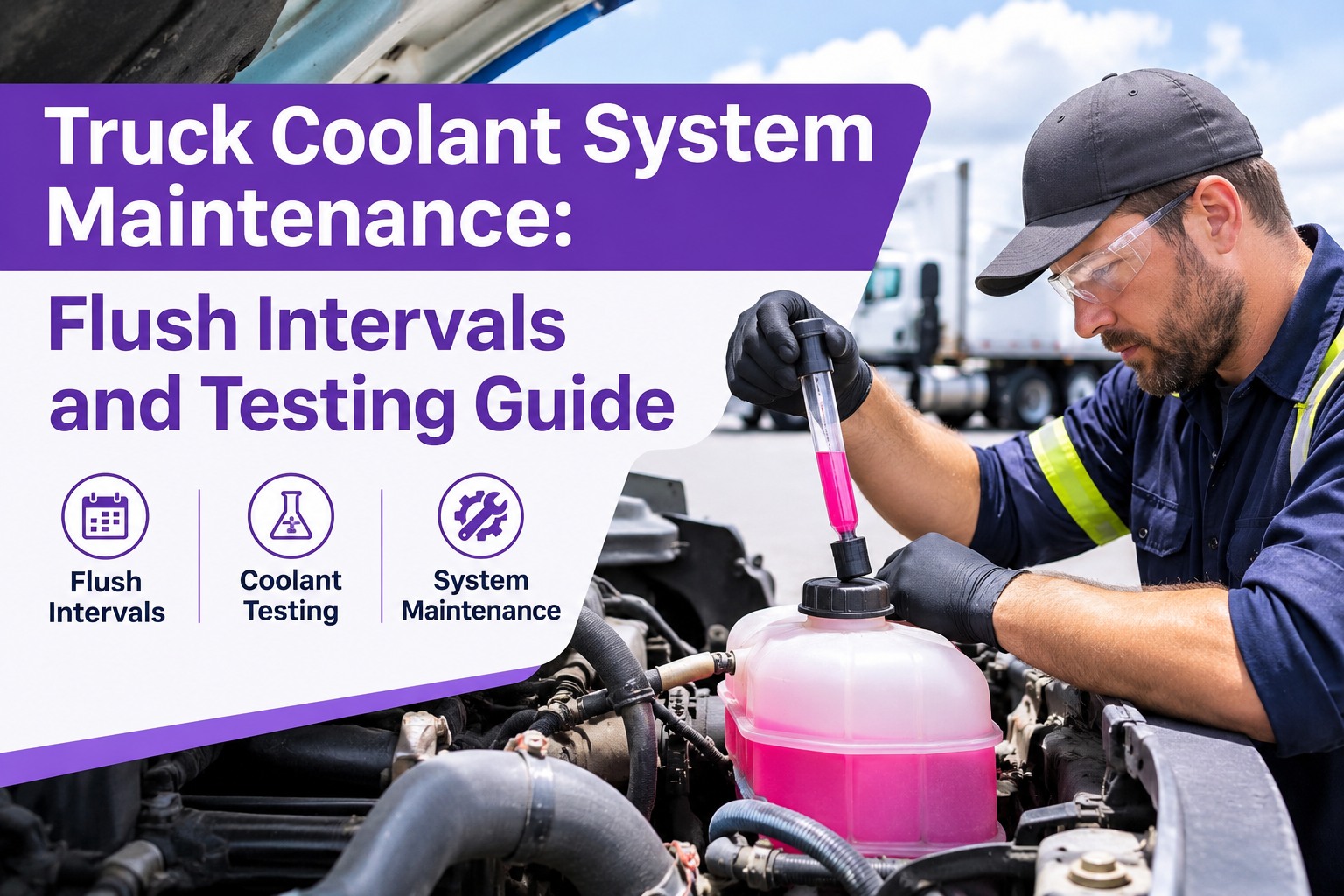
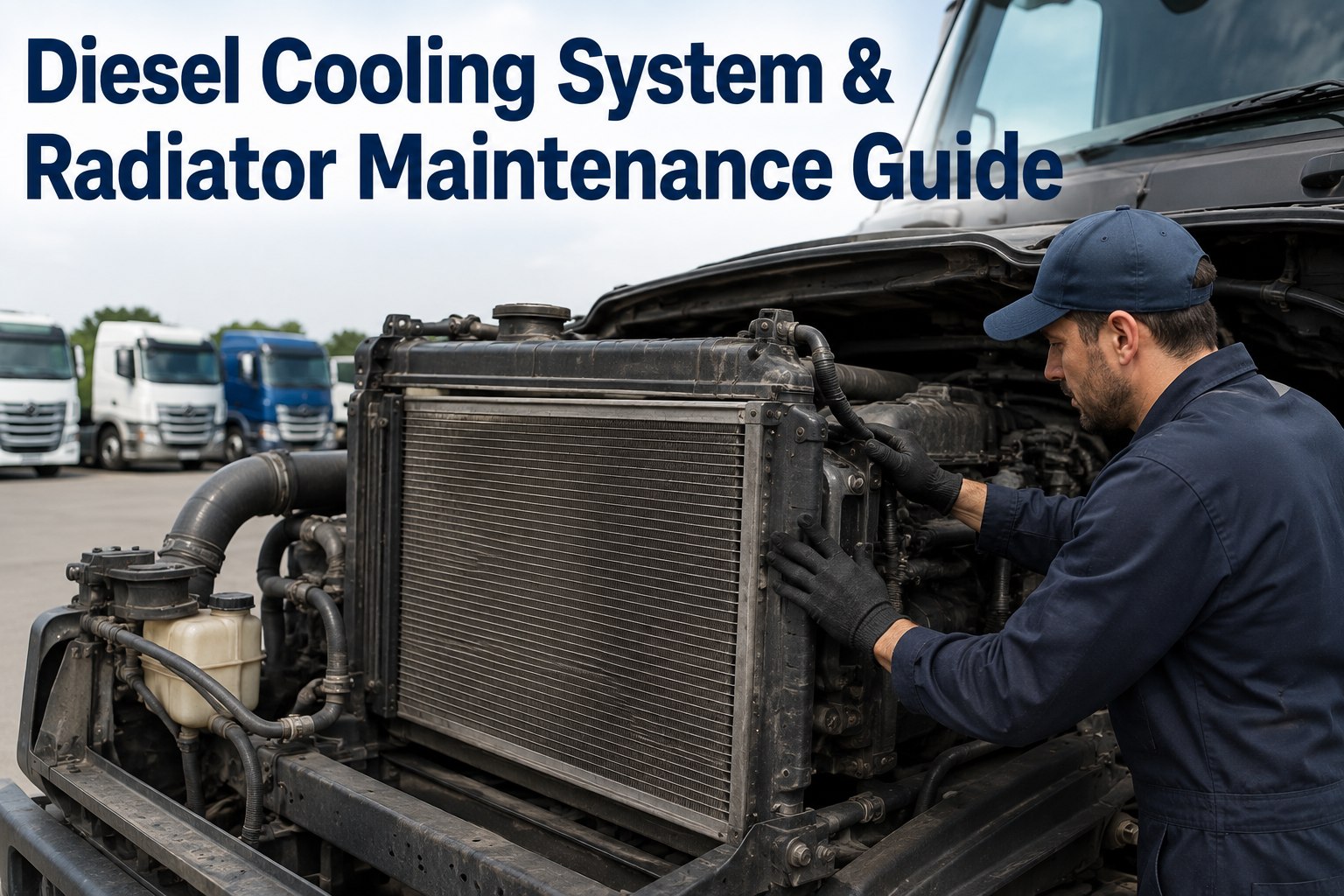
A cooling system rarely fails without warning. It sends small signals first: a low overflow tank, a faint sweet smell, a hose that feels soft, a temperature gauge that sits a little higher on hills. Miss those signals and the next one is a roadside tow, and in the worst cases a cracked head or a failed head gasket. Truck coolant system maintenance is mostly about two habits: checking the system on a schedule, and testing the coolant instead of guessing its age. This guide walks through the parts of a heavy-duty cooling system, the main coolant types, the tests that matter, and how to set coolant flush intervals that match your engines. Start free and add coolant checks to every pre-trip and PM.
Preventive Maintenance · Cooling System
Truck Coolant System Maintenance: Flush Intervals and Testing Guide
Overheating starts small and gets expensive fast. Truck Inspection & Maintenance Management Software puts the coolant check in the driver's inspection, grades what they find, and turns it into a work order and a scheduled PM, so a low tank or a weeping hose gets fixed before it strands a truck.
1
CheckLevel, leaks, hoses, and gauge behavior
2
GradePhoto and severity so the shop sees it
3
ScheduleTest, service, and flush on your PM plan
Safety first Never open a radiator or surge tank cap on a hot engine. The system is under pressure and the coolant can cause serious burns. Let the engine cool fully, and handle used coolant as hazardous waste per local rules, since it is toxic to people and pets.
Meet the Cooling System: Six Parts, Six Failure Points
Coolant moves heat away from the engine and back out through the radiator. When any one part weakens, the whole loop suffers.
1RadiatorWatch for bent or clogged fins, debris, and seepage at the tanks and seams.
2Hoses and clampsLook for swelling, soft spots, cracks, and crusty residue at the ends.
3Water pumpCheck for weeping at the weep hole, noise, or a loose, wobbly pulley.
4ThermostatA stuck valve can cause overheating or an engine that never warms up.
5Fan and clutchConfirm the fan engages, the blades are intact, and the belt is sound.
6Cap and overflow tankA weak cap or cracked tank loses pressure and coolant over time.
Coolant Types at a Glance
Not all coolant is the same, and the type decides how you test and maintain it. Always follow your engine maker's specification, and check the label on the jug and the tank.
Conventional (needs SCA)
OAT / ELC (extended life)
Hybrid
Additives
Supplemental coolant additives are added and monitored
Organic inhibitors built in for long service
Mix of organic and conventional inhibitors
Testing focus
Additive level, freeze point, pH
Freeze point, pH, condition, and any extender your maker calls for
Per the coolant maker's test method
Biggest risk
Depleted additives lead to liner pitting and corrosion
Mixing with the wrong type or using the wrong extender
Treating it as if it were another type
Mixing coolant types can break down the protection package. If you are unsure what is in a truck, test it and ask your coolant supplier before topping off.
Test, Don't Guess: Four Quick Coolant Checks
Test strips and a refractometer take a couple of minutes. A lab sample goes deeper when you see a warning sign.
Glycol
Freeze and boil protectionConfirms the mix is strong enough for your climate and the engine's heat load.Additives
Inhibitor levelShows whether corrosion and cavitation protection is still working.pH
Coolant conditionDrifting pH points to aging coolant or contamination.Debris
ContaminationOil, rust, scale, or sludge in the coolant means something else is wrong.
Setting Flush Intervals That Fit Your Fleet
There is no single number that suits every truck. Coolant type, engine, duty cycle, and test results all matter, so build the interval from your maker's guidance and confirm it with testing.
1Start with the maker's guidanceUse the engine and coolant manufacturer's recommended service interval as your baseline.
2Test at every PMRecord the results by truck so you can see additive depletion and condition trends.
3Correct early, flush on evidenceAdd what the test calls for, and flush sooner if the coolant fails a test or is contaminated.
4Fix the cause, then refillA flush will not cure a leak, a bad cap, or an oil cooler problem. Repair first, then refill with the right coolant.
Never Miss a Coolant Test or Flush Again
Schedule PMs by mileage or hours, add a coolant test step, and open a work order the moment a truck fails a check. Start free or book a demo.
Warning Signs: What the Truck Is Telling You
Drivers see these first. A good DVIR makes sure they get reported the same day.
StopTemperature gauge climbing or warning lampPull over safely and shut down. Driving hot can damage the engine quickly.
StopSteam, or coolant spraying from the engineLeave it to cool and have it towed or repaired. Do not open the cap.
SoonCoolant level dropping between checksLook for an external leak, and ask the shop to pressure test the system.
SoonMilky oil or white exhaust smokePossible coolant entering the engine. Get it diagnosed before further driving.
SoonSweet smell or crusty residue near hosesAn early leak. Photograph it and schedule a repair.
WatchGauge runs warmer on long climbsCheck fins for debris and the fan operation, and log it for the next PM.
Four Mistakes That Cost Fleets the Most
1Topping off with plain waterWater dilutes the glycol and the additives. Use the correct premixed coolant or the right ratio.
2Skipping the test because it looks fineCoolant color says little about its protection. Only a test shows what is left.
3Mixing coolant typesThe wrong blend can weaken protection. Record each truck's coolant type and stick to it.
4Replacing a part but not finding the causeA new hose will not help if a weak cap or a failing pump is the real problem.
Frequently Asked Questions
How often should I flush truck coolant?
It depends on the coolant type, the engine, and how the truck runs. Start with your engine and coolant maker's recommendation, then test at each PM and flush sooner if the coolant fails or is contaminated.
Start free and set coolant PMs by truck.
What is the difference between SCA and OAT coolant testing?
Conventional coolant relies on supplemental additives that need to be tested and replenished. OAT or extended life coolants carry long-life inhibitors, so testing focuses more on condition, glycol strength, and any extender your maker requires.
Book a demo to see how PM steps are built.
Can I mix different coolants in an emergency?
Adding a small amount to get to a shop is better than running low, but mixed coolant should be tested and often flushed afterward. Ask your coolant supplier or shop what is safe for your engine.
What causes a truck to overheat?
Common causes include low coolant, leaks, a stuck thermostat, a failing water pump, a clogged radiator, a weak fan clutch, or a bad cap. A pressure test and a visual check usually narrow it down.
Fewer Overheats · Planned Service
Put Coolant Checks Inside Your Maintenance Workflow
Guided inspections, photo defects, traffic-light grading, work orders, and PM scheduling in one system built for trucking fleets. Start free to add coolant checks, or book a demo and we will walk through it with your fleet in mind.
No credit card required. Free for up to 3 trucks.