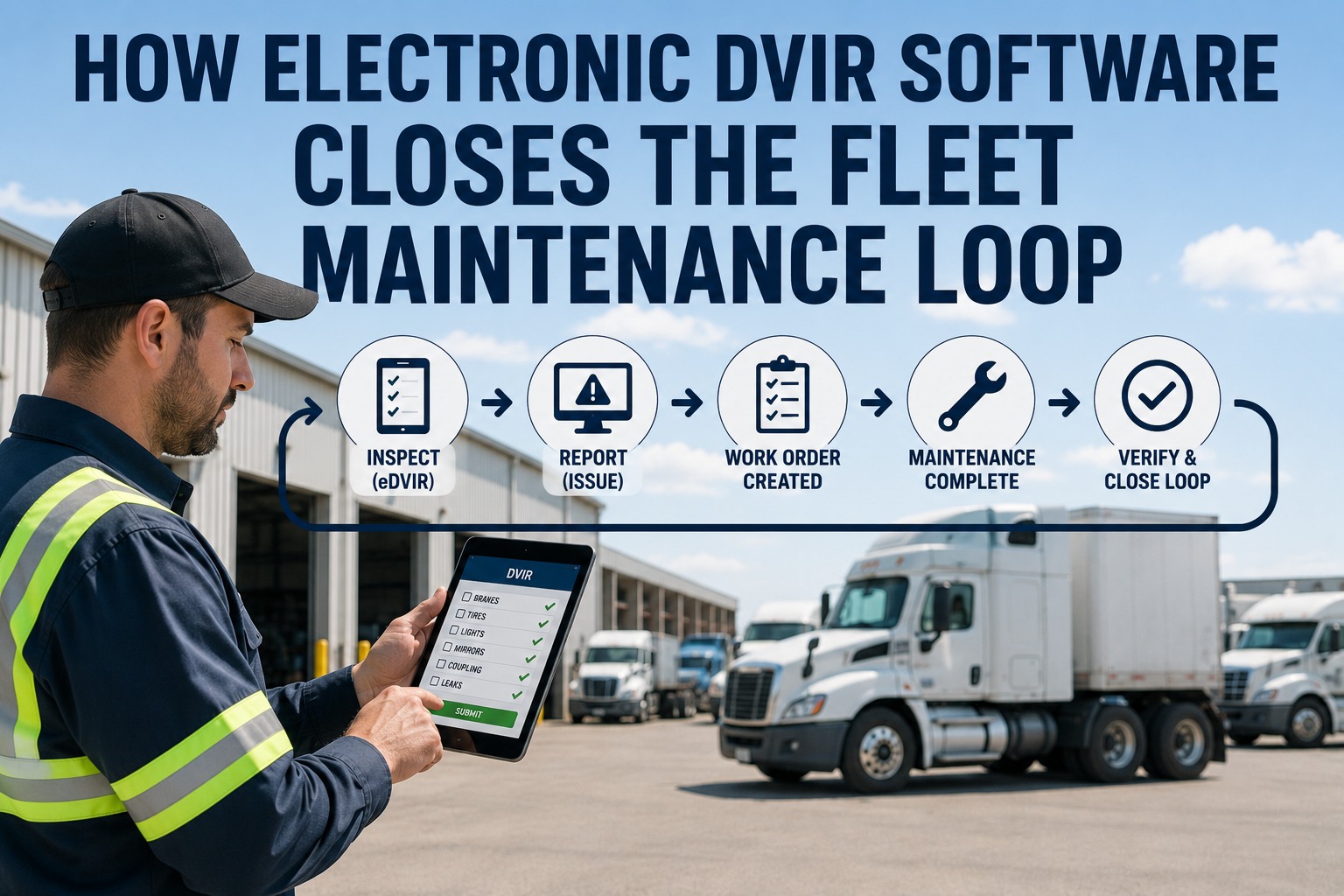
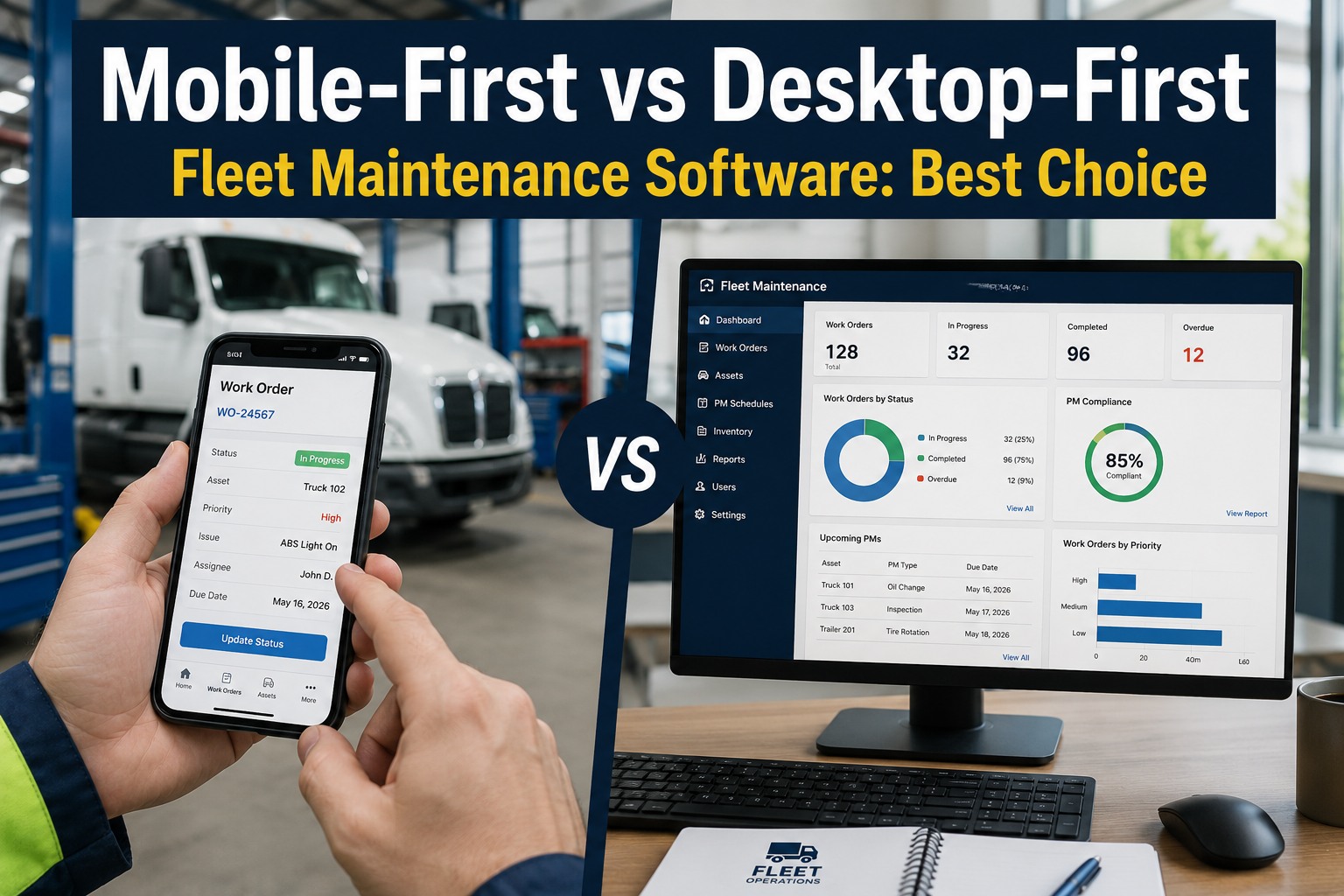
A driver finds a cracked brake line on the Tuesday post-trip, writes it up, and clocks out. On paper, that report walks into an office, waits for someone to read it, gets transcribed into a work order, and maybe reaches a technician by Thursday — if the slip doesn't get lost first. Every hop is a handoff, and every handoff is where the defect stalls. A clean mobile workflow removes the hops: the defect becomes a work order, notifies a technician, stages the parts, and ends in a certified repair — without anyone re-typing a thing. This article walks the anatomy of that handoff, shows where the baton gets lost between the cab and the bay, and how Truck Inspection & Maintenance Management Software (TIM) runs the loop end to end. Start free and close the DVIR-to-shop gap with TIM.
TIM · Mobile Work Order Handoff
The Defect Was Found Tuesday. Why Is the Truck Still Down Thursday?
A defect written on paper has to survive four handoffs before a wrench touches it — read, transcribed, assigned, parts-checked — and each one adds a day the truck sits or, worse, runs unfixed. TIM collapses that chain: the moment a driver files a DVIR defect, it becomes a graded work order, pings the right technician, flags the parts, and holds the repair open until it's certified — one record, no re-keying, no lost slips.
Every filed defect gets a first response within 4 hours — acknowledged, graded for severity, and assigned to a technician — not waiting on a slip to reach the office.
The Anatomy of a Clean Handoff — Five Stages
A mobile work order handoff isn't one action; it's a relay of five. Done right, the defect moves through all of them without a person re-entering it or a slip going missing. Here's each stage and what has to happen for the baton to pass cleanly.
1
Defect capturedDriver logs the defect on the mobile DVIR — description, severity, photo — at the point of inspection, not from memory hours later.
→
2
Work order createdThe failed item becomes a work order automatically — no one re-types it into a second system, and the photo rides along.
→
3
Technician notifiedSeverity routes it: a brake-line crack pages someone now; a worn wiper joins the planned queue. The right person sees it fast.
→
4
Parts stagedThe work order flags the parts needed and whether they're on the shelf — so the truck isn't pulled in only to wait on a back-order.
→
5
Repair certifiedThe fix is logged and certified against the original defect — closing the loop and the compliance record in one step.
Miss any one stage and the whole relay stalls — the defect is only as fast as its slowest handoff. Start free and run all five stages on one record with TIM.
Where the Baton Gets Lost
Every stalled repair traces back to a handoff that failed. These are the four break points that turn a two-hour fix into a two-day one — and every one of them is a handoff a mobile workflow removes.
01
Information delay
A paper slip disappears into an office instead of triggering action. The defect is known — but nobody who can fix it knows yet.
02
Context loss
The defect reaches the shop with no photo and no notes, so the technician re-diagnoses from scratch — repeating work the driver already did.
03
System silos
The inspection app and the maintenance system don't talk, so someone re-keys every defect — adding delay and transcription errors.
04
Incomplete follow-up
The defect gets logged and then forgotten, because inspection data sits disconnected from the repair queue. Nothing closes the loop.
Paper Handoff vs. Mobile Handoff
The same defect runs a very different gauntlet depending on how it's handed off. Line the two up and the cost of every extra hop becomes obvious.
PAPER / SILOED
- Slip carried to the office, read whenever someone gets to it
- Defect re-typed into a work-order system by hand
- Assignment depends on who happens to check the tray
- Parts discovered missing only after the truck is in the bay
- Closure lives in a different place than the original report
MOBILE / CONNECTED
- Defect files from the cab and routes instantly by severity
- Work order is generated automatically — zero re-entry
- The right technician is notified the moment it's filed
- Parts are flagged on the order before the truck rolls in
- Repair certifies against the original defect on one record
The gap between these two columns is measured in downtime and roadside risk. Contact our team to move your fleet to a connected handoff.
The Handoff Is Only as Fast as Its Weakest Link
You can have the best inspection app and the best-staffed shop and still lose a day if the defect can't get from one to the other cleanly. TIM removes the links that stall: the DVIR defect becomes a graded work order, the technician is notified by severity, the parts are flagged, and the repair certifies against the original report — all on one record, so nothing is re-typed, routed by hand, or forgotten in a tray.
The Two Clocks a Good Handoff Beats
If you measure only one thing about your shop workflow, measure time. Two clocks tell you whether your handoff is working — and both start the second a driver hits submit.
CLOCK 1
Time to first response
From defect filed to acknowledged, graded, and assigned. On paper this is measured in hours or days; a mobile handoff pulls it to minutes. This is the clock TIM answers with a 4-hour first-response standard.
CLOCK 2
Time to return-to-service
From defect filed to certified repair and truck back on the road. Every handoff you remove — re-entry, tray delay, parts surprise — comes straight out of this number.
How TIM Runs It
One Record From Defect to Certified Repair
TIM isn't an inspection app that hands off to a separate shop tool — the whole relay lives on one record, so the defect a driver files is the same object the technician closes.
Auto work-order creationA failed DVIR item becomes a work order the instant it's filed — no re-keying, no transcription errors.
Severity-based routingCritical defects notify a technician now; routine ones batch into planned work — the right urgency, automatically.
Photo & notes carried throughThe driver's evidence rides with the work order, so the technician never re-diagnoses from zero.
Parts flagged on the orderWhat's needed and what's in stock is visible before the truck comes in — fewer bay-side surprises.
Certified against the defectThe repair closes against the original report, so the loop and the compliance record close together.
Nothing falls throughOpen defects stay visible until closed — no slip lost in a tray, no follow-up forgotten.
Frequently Asked Questions
What is a DVIR-to-shop handoff, exactly?
It's the chain of steps a defect travels from the moment a driver reports it on a DVIR to the moment it's fixed and certified. A clean handoff has five stages — defect captured, work order created, technician notified, parts staged, repair certified — and moves through all of them without anyone re-entering the defect or losing a paper slip. The "handoff" is every point where the defect passes from one person or system to the next, and it's where most delay hides.
Start free and run a clean five-stage handoff with TIM.
Why do defects take so long to reach the shop on paper?
Because paper adds handoffs that don't move the repair forward. The slip has to be carried to an office, read by whoever gets to it, transcribed into a work-order system by hand, and then assigned — often depending on who happens to check the tray. Each hop adds time and a chance for the defect to get lost or garbled, and none of them is the actual fix. A mobile workflow removes the hops: the defect routes straight to the right person the moment it's filed.
What should trigger a technician notification?
Severity. A safety-critical defect like a brake-line crack should notify a technician immediately, while a minor item like a worn wiper can join the planned queue without paging anyone. Routing by severity is what keeps the urgent thing urgent and stops the shop from drowning in equal-weight alerts. The notification should also carry the defect's context — description, photo, unit — so the technician knows what they're walking into before they reach the truck.
Why should parts be flagged before the truck comes in?
Because pulling a truck into the bay only to discover the part is on back-order wastes the bay, the technician, and the truck's uptime all at once. When the work order flags the parts needed and whether they're in stock at the point it's created, the shop can stage what's available or order what isn't before the repair is scheduled — so the truck comes in when the fix can actually happen, not before.
How does a mobile handoff help with DOT compliance?
It keeps the whole chain on one record. When the defect report, the work order, and the repair certification all live together, the record shows a reported defect was corrected before the vehicle returned to service — the chain an auditor or roadside inspector wants to see — without anyone assembling it after the fact. Paper and siloed systems scatter that evidence across trays and tools, which is exactly where compliance gaps open up.
Captured · Created · Notified · Staged · Certified
Stop Losing Days Between the Cab and the Bay
The defect isn't the problem — the handoff is. Every hour a report spends being carried, read, re-typed, and reassigned is an hour the truck sits or runs unfixed. A connected mobile workflow collapses that chain to one record: filed, graded, notified, staged, certified. TIM runs the whole relay so the only time left in the loop is the time it takes to turn a wrench.
No credit card required · Free for up to 3 trucks · Auto work orders, severity routing, and certified closure built in