A garbage truck doesn't wear like a highway tractor. It starts and stops hundreds of times a shift, idles at every stop, runs the packer and lift hydraulics hour after hour, and gets washed down with whatever the route leaves...
All the important insights, guidance and news you need to know.
Keep up-to-date with all our latest company news and business content. The latest news, tips and advice to help you run your business with less fuss.
Latest Articles
Read More
Change oil too early and you pay for oil, filters and downtime you didn't need. Change it too late and you're gambling with bearings, rings and turbo life. Most fleets sit on one side of that line without knowing it,...

Read More
Coolant looks fine right up until it isn't. A diesel can run for months on coolant that has lost its additives, drifted out of pH, or been watered down below its freeze protection, while the damage builds quietly inside the...
Read More
A flatbed has no walls to hide behind. The load is out in the open, held by straps, chains, winches and the deck itself, so every worn component is a securement problem waiting for a bump in the road. Federal...
Read More
A PM that's a day late rarely looks like a problem — until it's a tow. Most fleets track services on a whiteboard, a spreadsheet, or one person's memory, while driver-reported defects sit in a separate pile of paper DVIRs....

Read More
A reefer trailer rolls into the yard reading five degrees warmer than setpoint, and the easy answer is "it's low on refrigerant — add a charge." That's often the expensive guess, not the diagnosis. A coil can ice over from...
Read More
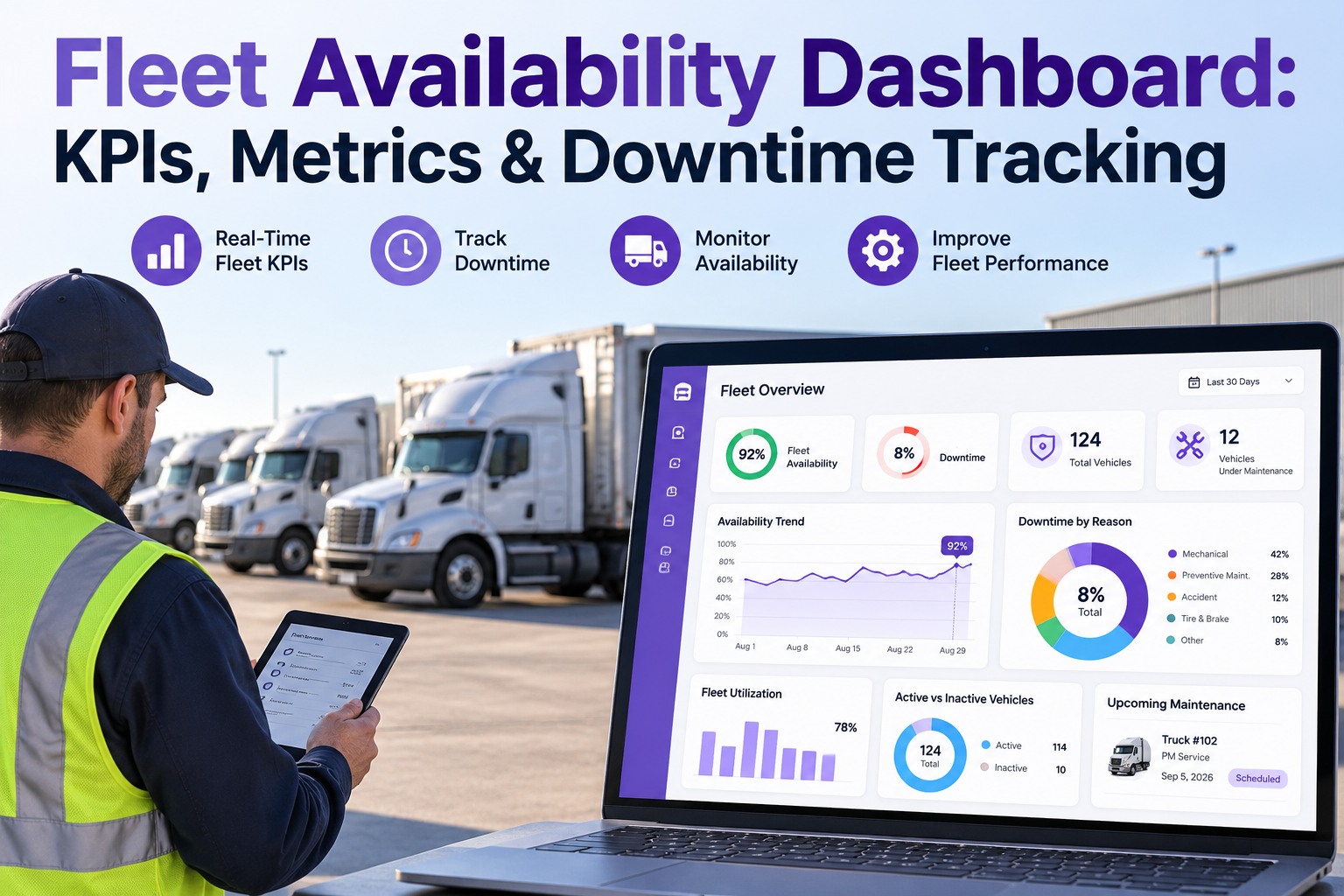
Most "fleet dashboards" show a single number — total downtime hours this month which tells you something went wrong without telling you why, where, or what to fix first. A real availability dashboard works backward from that number: PM compliance...
Read More
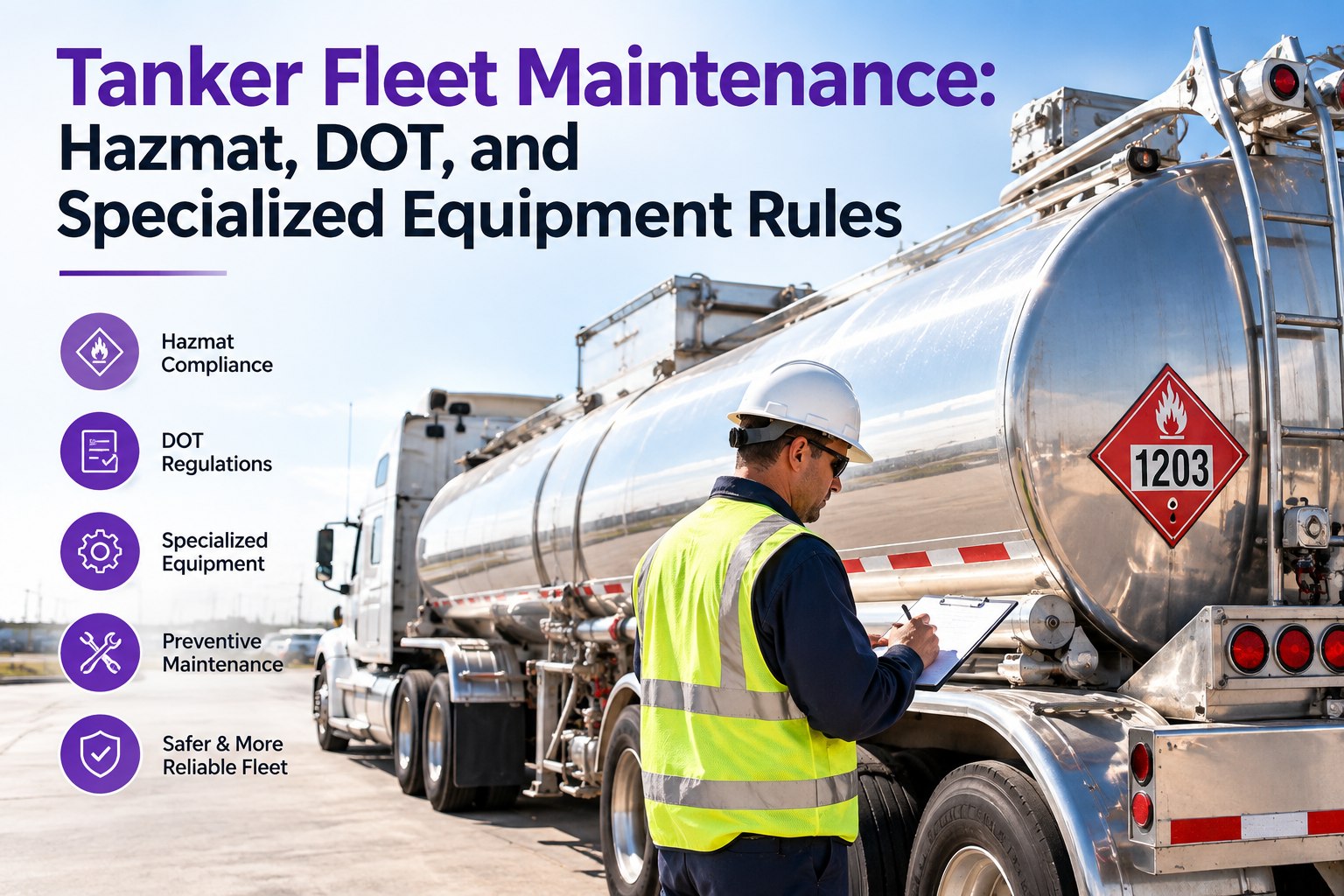
A dry van has one maintenance calendar. A tanker has two — the normal fleet PM every truck needs, and a second, federally mandated schedule of cargo-tank tests that decides whether the tank is even legal to load. Miss a...
Read More
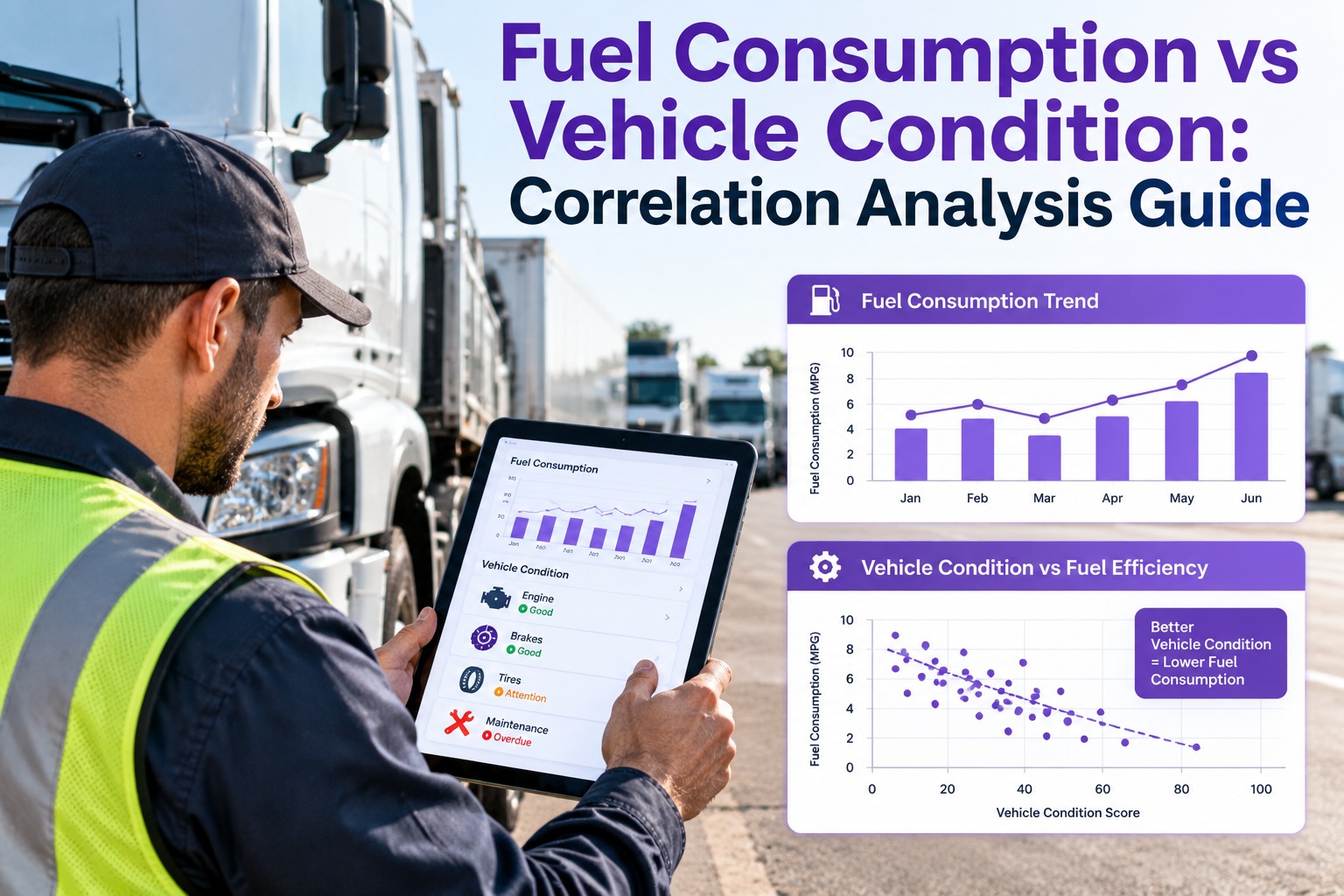
Every truck in your fleet is running a continuous health check you're probably not reading: its fuel burn. A dragging brake, an under-inflated tire, a failing oxygen sensor, a clogging fuel filter — each one makes the engine work harder...

Read More
Most fleets already own the data that would prevent half their breakdowns. The telematics box streams fault codes, live mileage, engine hours, and fuel trends all day — and almost none of it reaches the people scheduling maintenance. It lands...
Read More
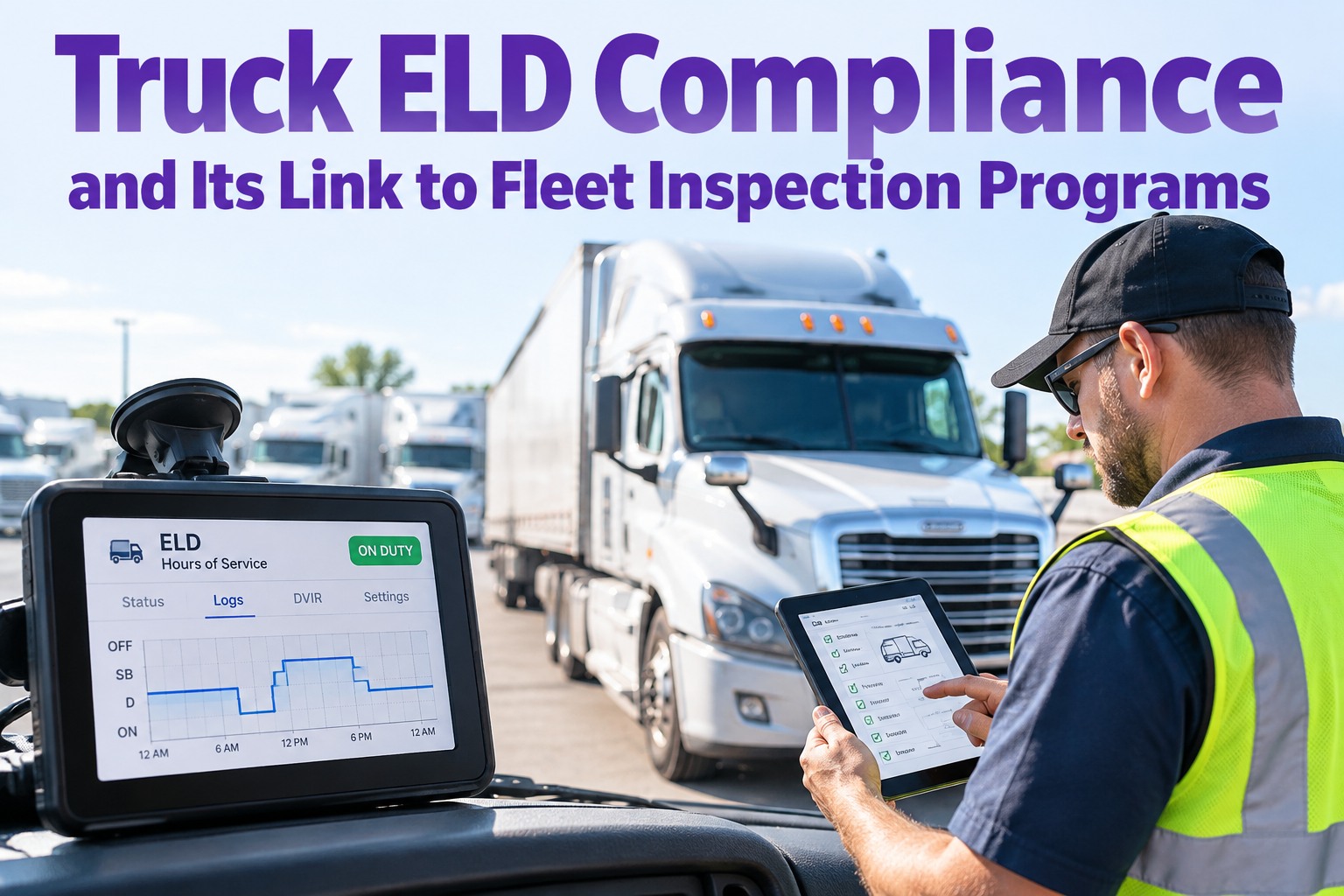
Most fleets treat the ELD as a box that does one job: keep drivers legal on hours. But the same device that logs duty status is also quietly recording the odometer and engine hours on every truck — the exact...
Read More
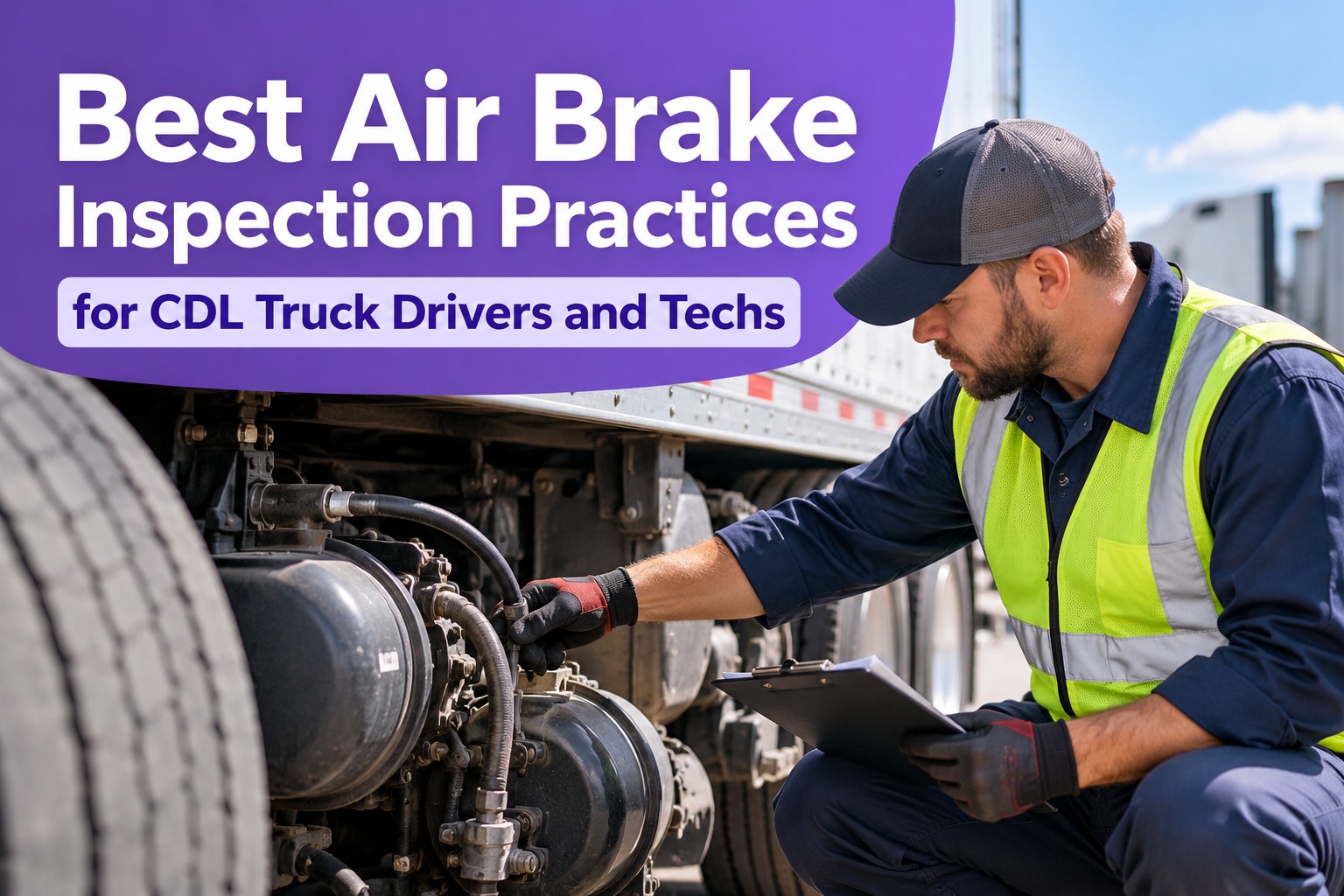
Year after year, brakes top the roadside out-of-service list — roughly 41% of vehicle OOS violations trace to the brake system. The reason is simple: air brakes fail in numbers, not looks. A chamber leaking 4 psi a minute, a...
Read More
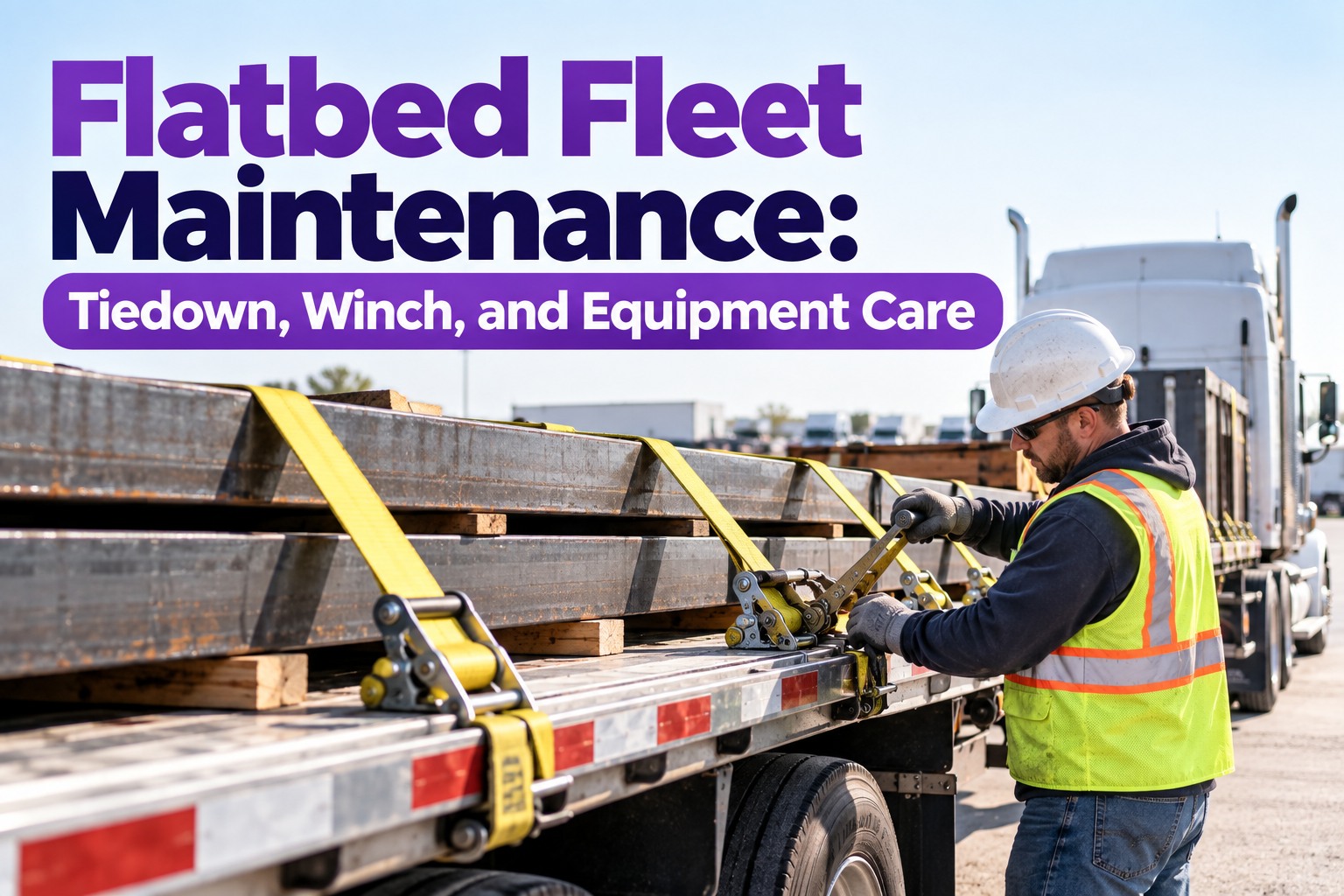
Standard fleet PM looks at the truck — the engine, the brakes, the tires. On a flatbed, that misses the equipment that actually keeps the load on the deck: the straps, chains, binders, and winches holding tens of thousands of...
Read More
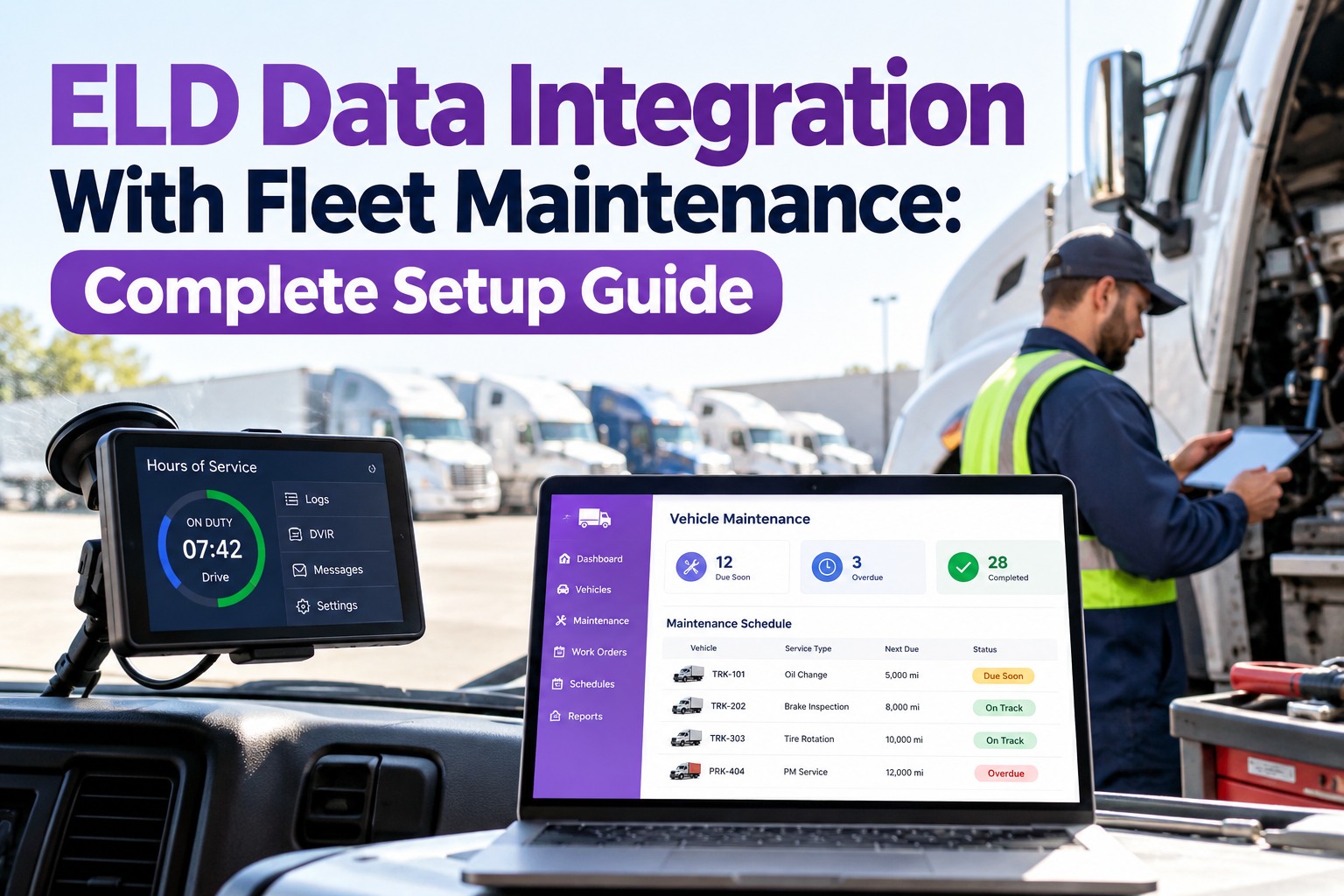
You already have an ELD on every truck — the mandate saw to that. What most fleets don't have is that device feeding the maintenance side. The ELD is wired into the engine, reading true mileage and engine hours all...
Read More
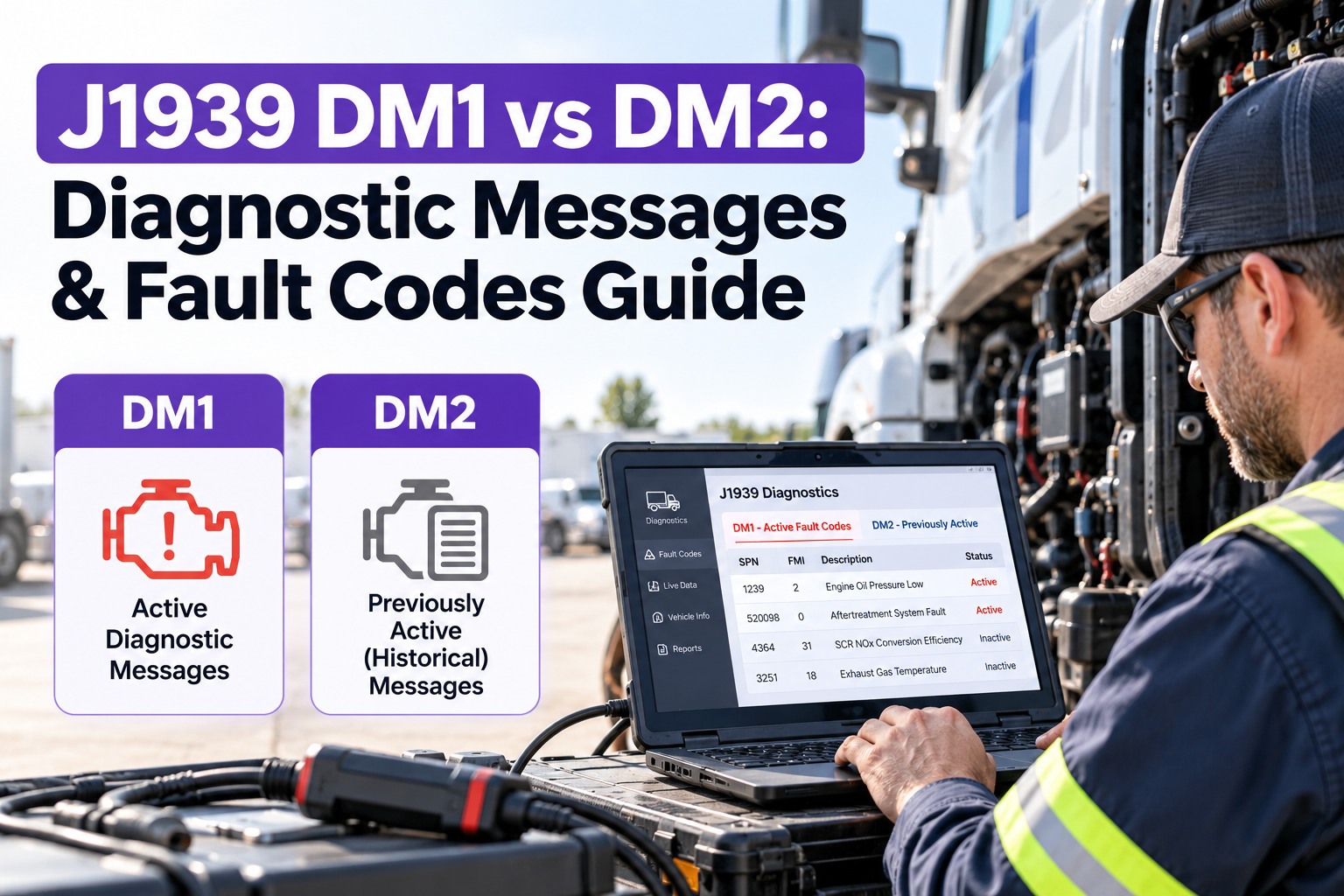
A heavy truck's engine is broadcasting its health every second — but only if you know which message to read. On the J1939 network, DM1 tells you what's wrong right now, and DM2 tells you what was wrong since the...
Read More
Most fleets don't budget for downtime — they get billed for it. A downtime budget flips that: it turns the most unpredictable line in your P&L into a number you set, defend each month, and drive down on purpose. Here's...
Read More
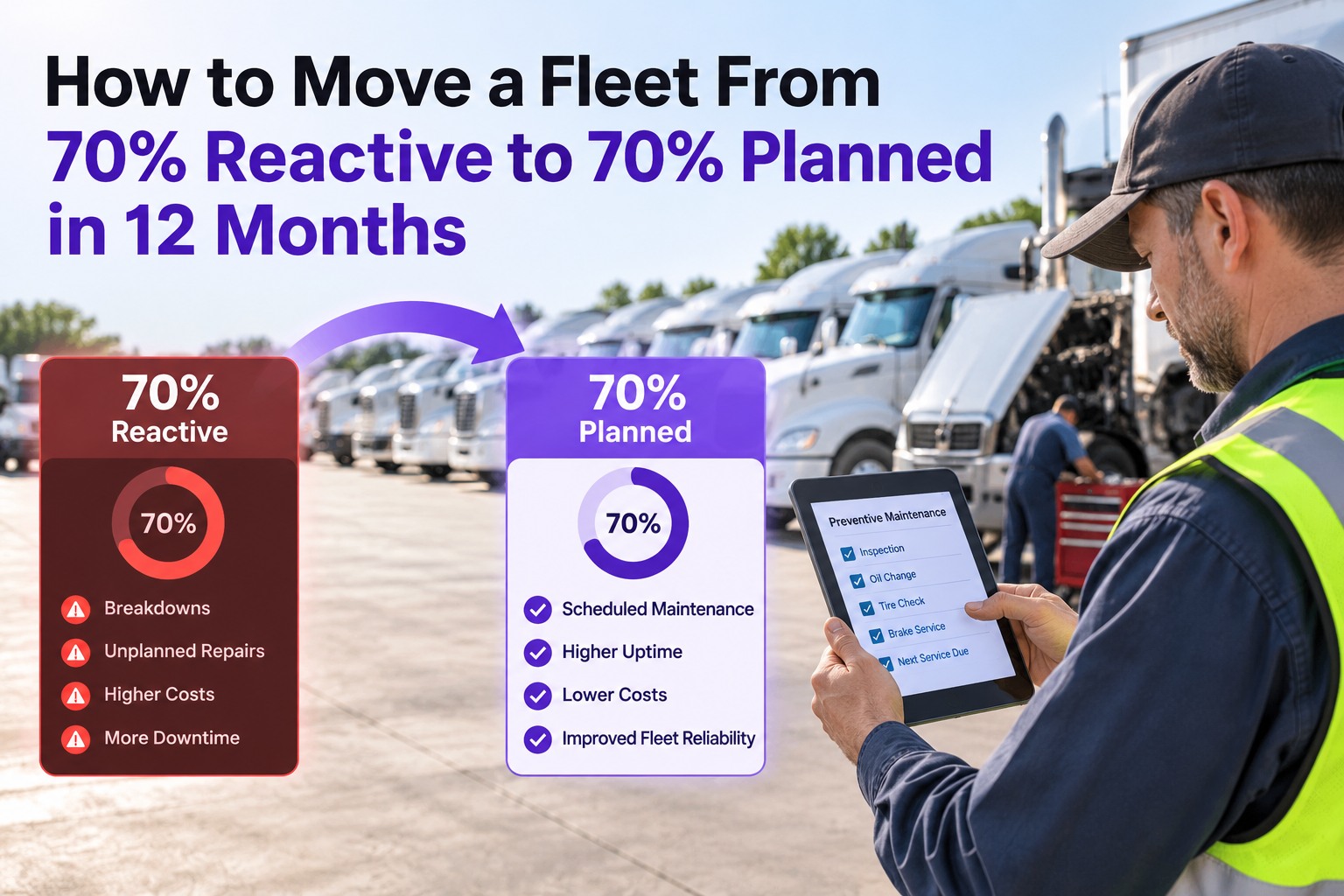
Most mid-size fleets run somewhere near 70% reactive — two out of every three maintenance hours spent chasing a breakdown that already happened. It feels normal because it's constant, but reactive work costs three to ten times what the same...

Read More
A driver finds a cracked brake line on the Tuesday post-trip, writes it up, and clocks out. On paper, that report walks into an office, waits for someone to read it, gets transcribed into a work order, and maybe reaches...
Read More
Here's what trips up fleets new to reefers: the trailer's odometer lies. A reefer's diesel engine keeps running when the trailer is parked — idling at the dock, holding a load overnight — so it stacks up engine hours completely...

Read More
A driver calls in from the shoulder of an interstate three states away. The truck is down, a load is on a clock, and the fleet manager is now trying to find a service provider in an unfamiliar area at...
Read More
A truck doesn't break down at a convenient hour. It breaks down at 2 a.m. on a Sunday, on the shoulder of an interstate, with a driver who's alone and a dispatcher who may or may not pick up. That's...

Read More
The cargo temperature is climbing, an alarm is on the display, and the driver has a decision to make on the side of the road — with a full load of perishables riding on getting it right, fast. A reefer...
Read More
Fleet compliance isn't one requirement — it's a dozen deadlines on a dozen different clocks, run by three different levels of government. FMCSA wants driver-qualification files and hours-of-service logs; the DOT wants annual inspections and DVIRs; the IRS-adjacent IFTA wants...
Read More
"Tow truck" isn't one machine — it's three rigs, each with a failure point the others don't have. A wrecker lives on its boom, winch, and wheel-lift; a rotator adds a slewing crane, outriggers, and rigging that can drop a...
Read More
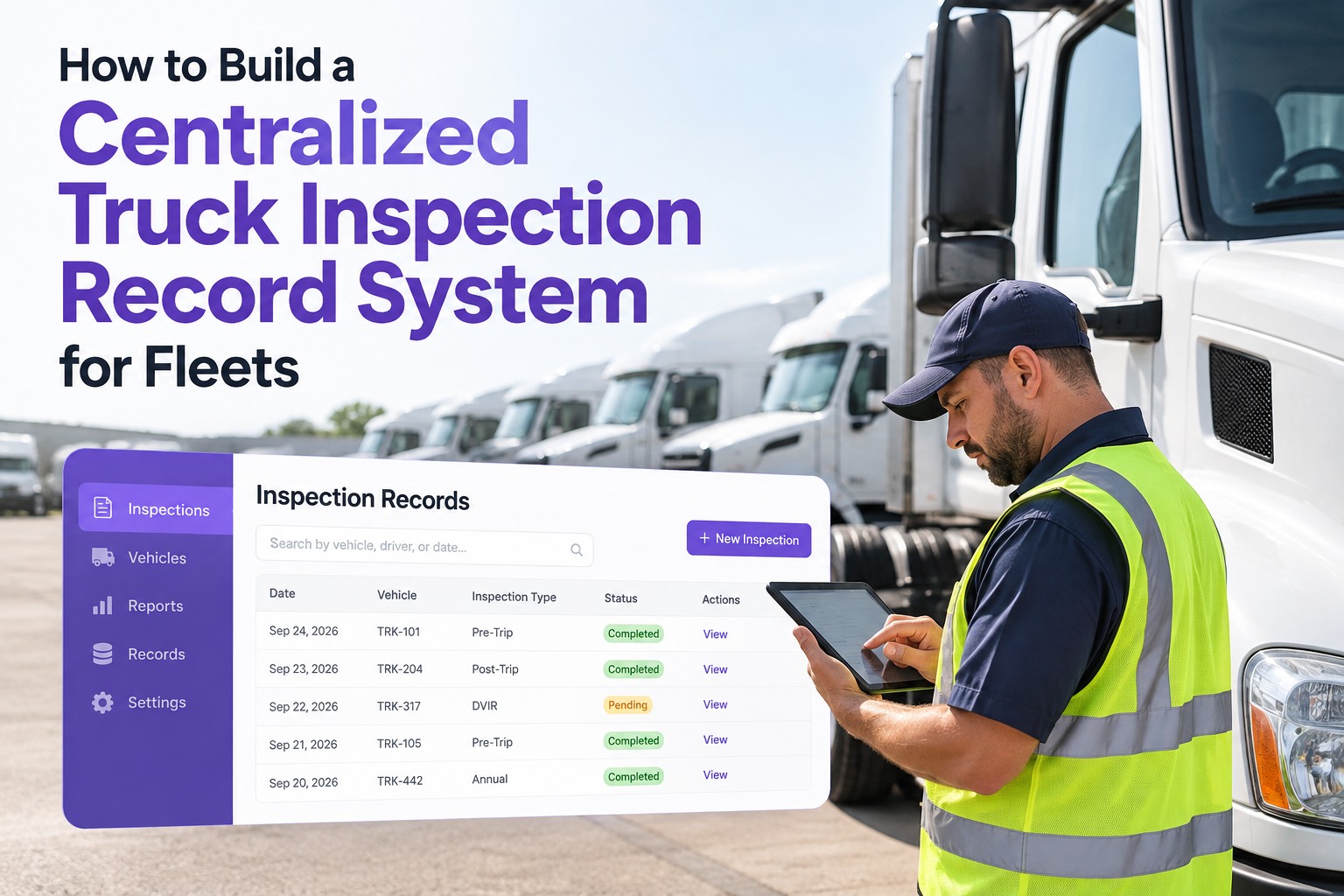
An auditor calls with 48 hours' notice and asks for one specific DVIR truck 4407, 74 days ago. Either it comes up in seconds from any phone or workstation, or it doesn't, and "we probably have it in the file...
Read More
A technician opens a work order, walks to the shelf, and the part isn't there. The repair stops. The truck sits. Someone pays overnight freight to get a part that should have been in the bin — if it can...

Read More
A marine support truck lives two lives every shift. One at the dock — salt air, standing water, crane loads, container interchange — and one on the public highway, where a corroded brake line or a cracked chassis rail is...
Read More
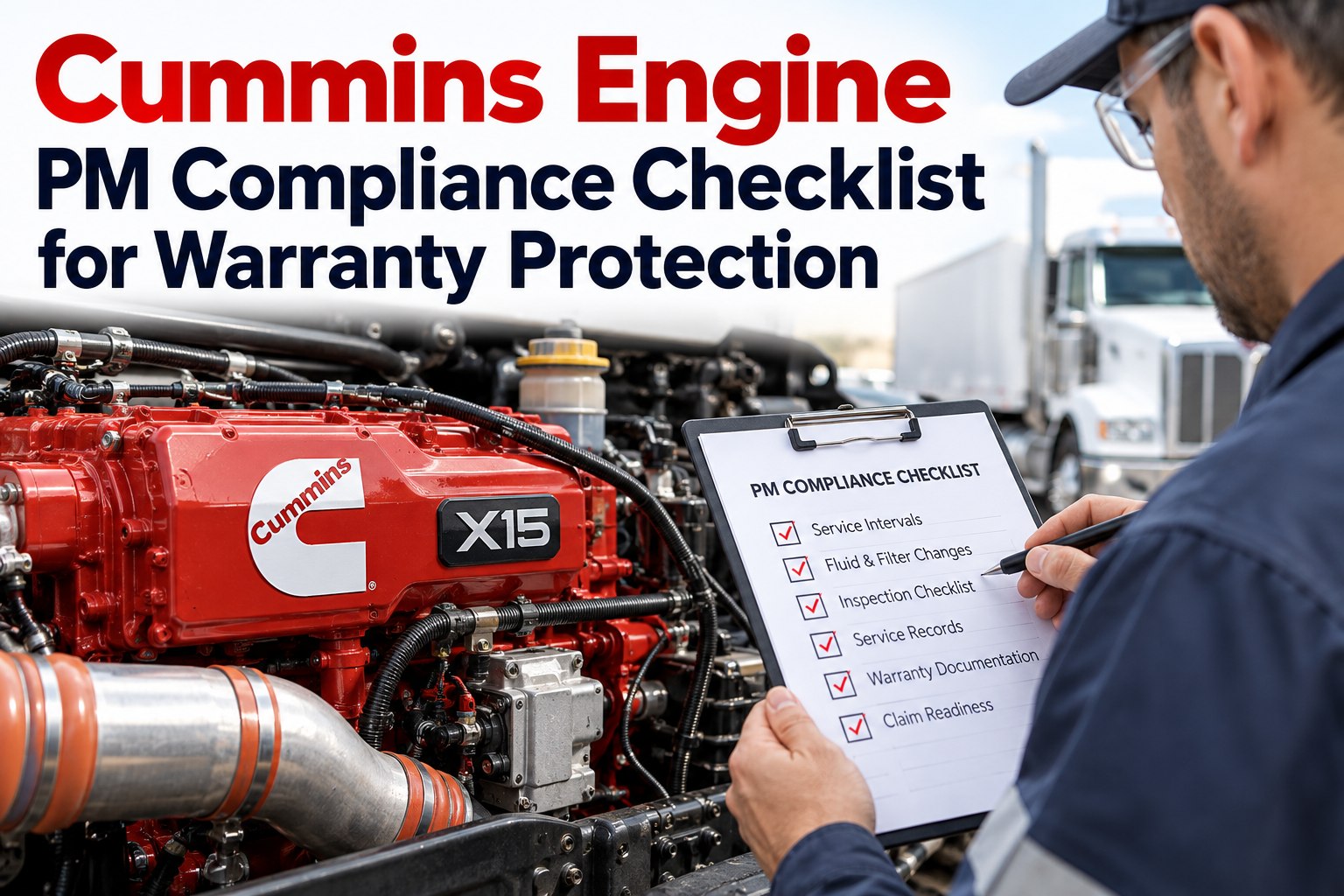
When a Cummins engine fails under warranty, one question decides whether you get a covered repair or a five-figure invoice: can you prove the maintenance was done? Cummins covers failures from factory materials and workmanship — not failures traced to...
Read More
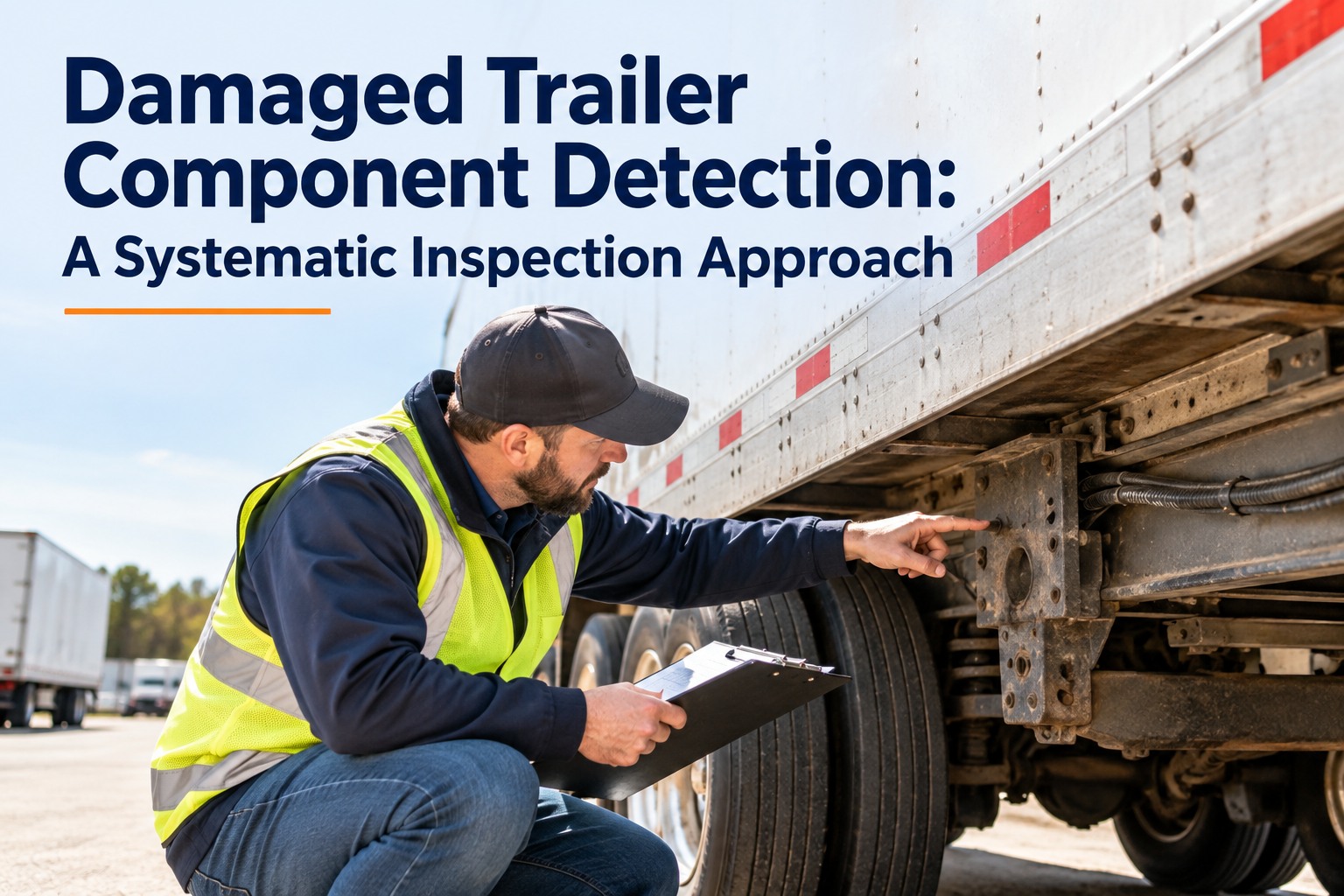
A cracked crossmember weld doesn't announce itself. The trailer tows straight, the load rides fine — until an inspector's flashlight finds it at a scale house and the unit is parked on the spot. Under 49 CFR 393.201(a), a cracked,...
Read More
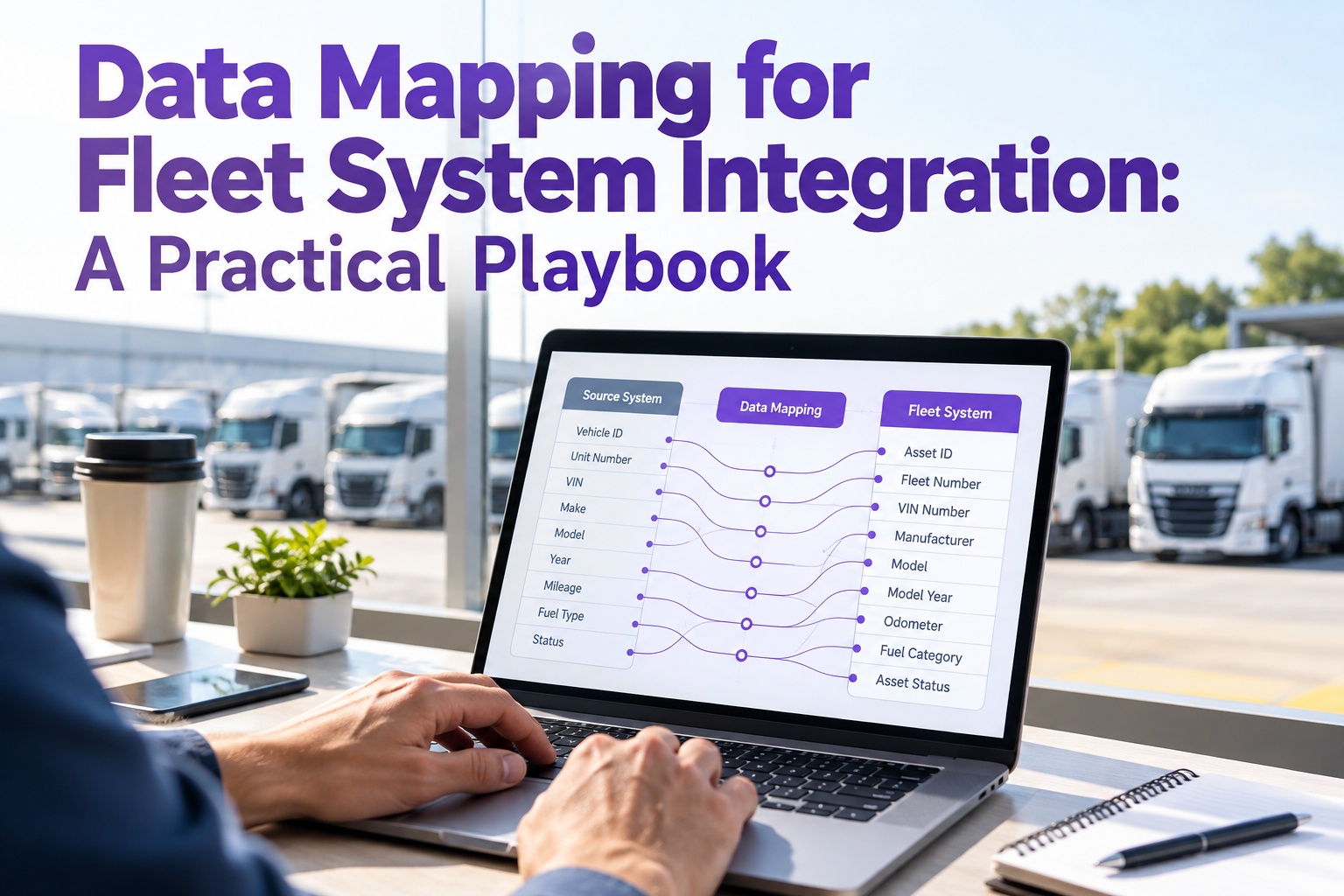
Every fleet integration project — telematics into the CMMS, work orders into accounting, ELD into HOS reporting, fuel-card into cost analytics — succeeds or fails at the field-mapping stage. A driver_id in the ELD that doesn't match the employee_id in...

Read More
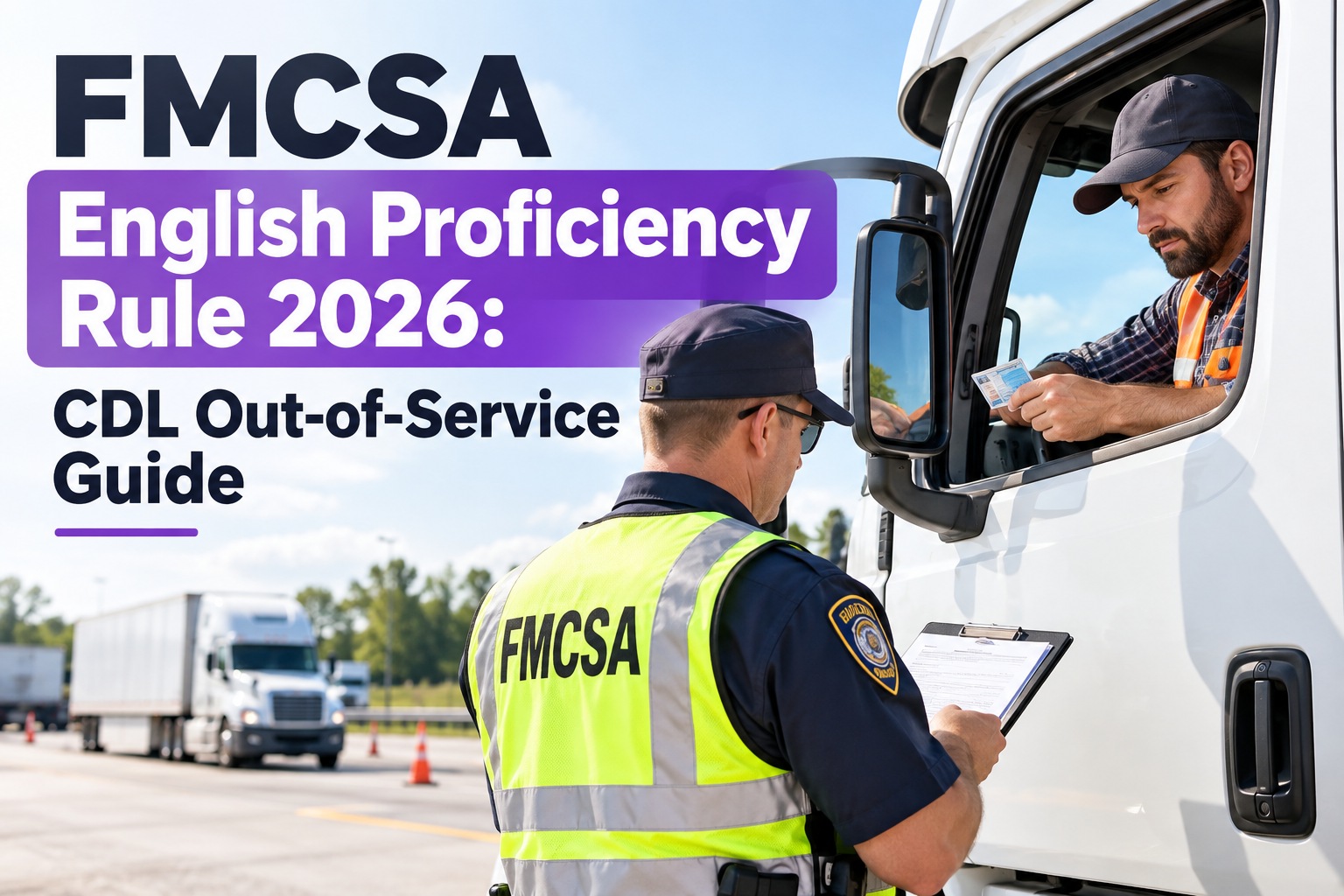
The FMCSA roadside English test isn't a paper exam — it's an in-person, on-camera, on-shoulder assessment that decides whether the trip continues. Under 49 CFR §391.11(b)(2), if the inspector detects signs of struggling during the opening in-English exchange, a two-step...
Read More
The FMCSA English Language Proficiency rule under 49 CFR §391.11(b)(2) went from dormant policy to an active out-of-service violation on June 25, 2025, and H.R. 7148 codified it into statutory federal law in early 2026. For a CDL driver, this...

Read More
The FMCSA English Language Proficiency rule under 49 CFR §391.11(b)(2) is now enforced at every roadside — CVSA added it to the OOS criteria on June 25, 2025, and H.R. 7148 codified it into statutory law in 2026. A driver...
Read More
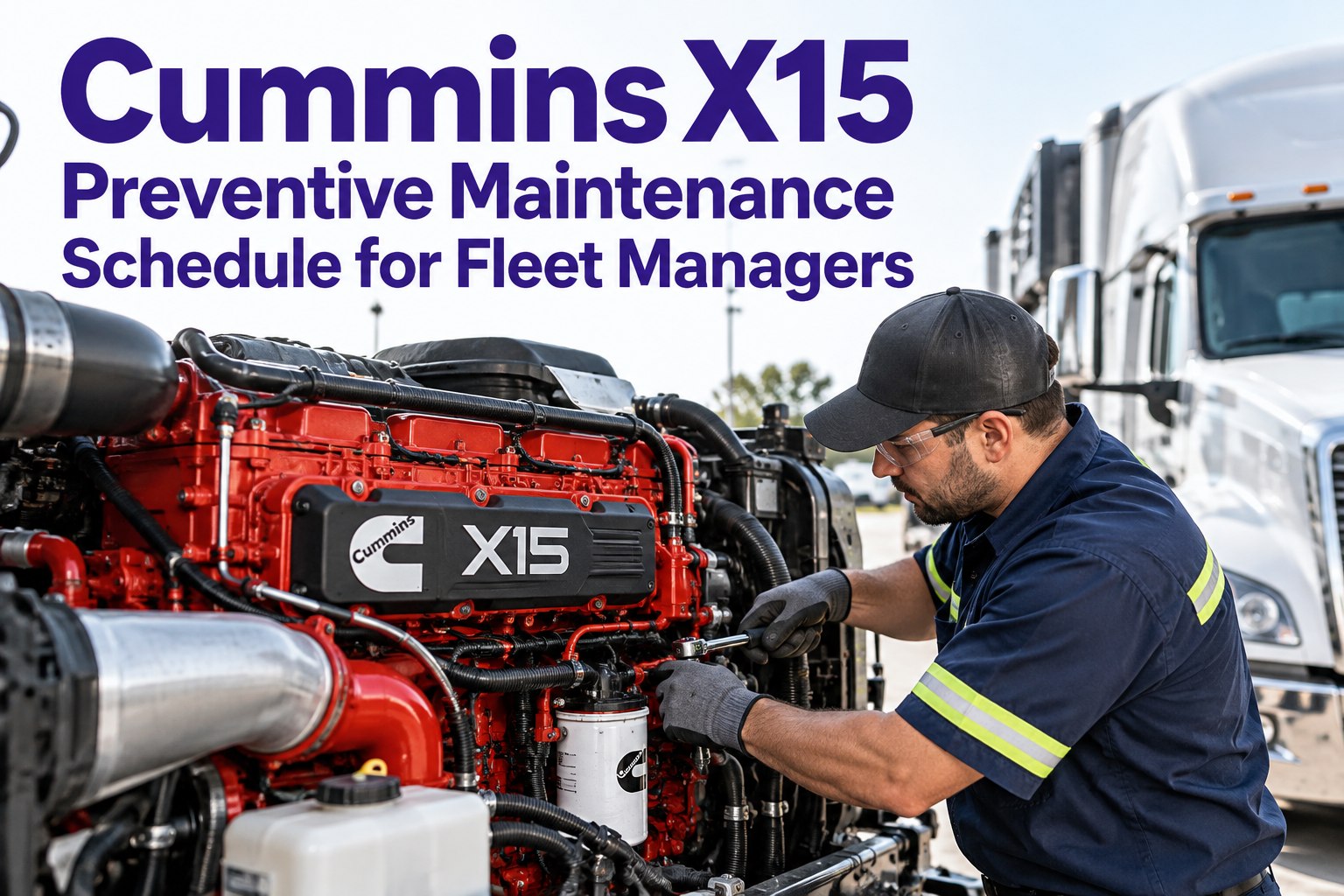
The most expensive mistake a fleet makes with a Cummins X15 isn't skipping an oil change — it's running the wrong interval because the duty cycle was misjudged. The X15 doesn't have one PM schedule; it has one that swings...
Read More
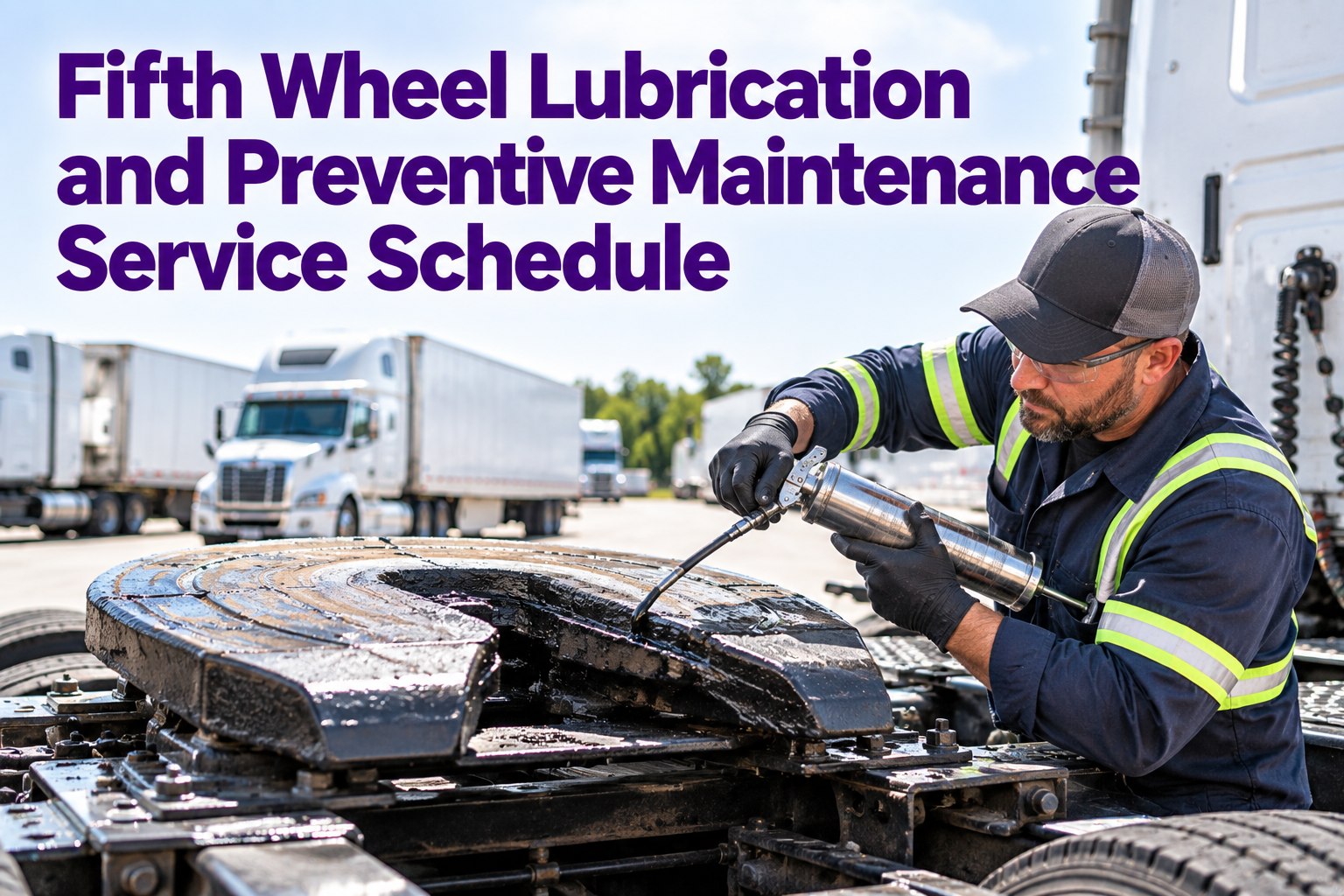
The fifth wheel does the heaviest coupling work on a Class 8 tractor — and it's the assembly most fleets under-service. Skip the top-plate grease and the wear liner scores; skip the jaw lube and the lock corrodes; skip the...
Read More
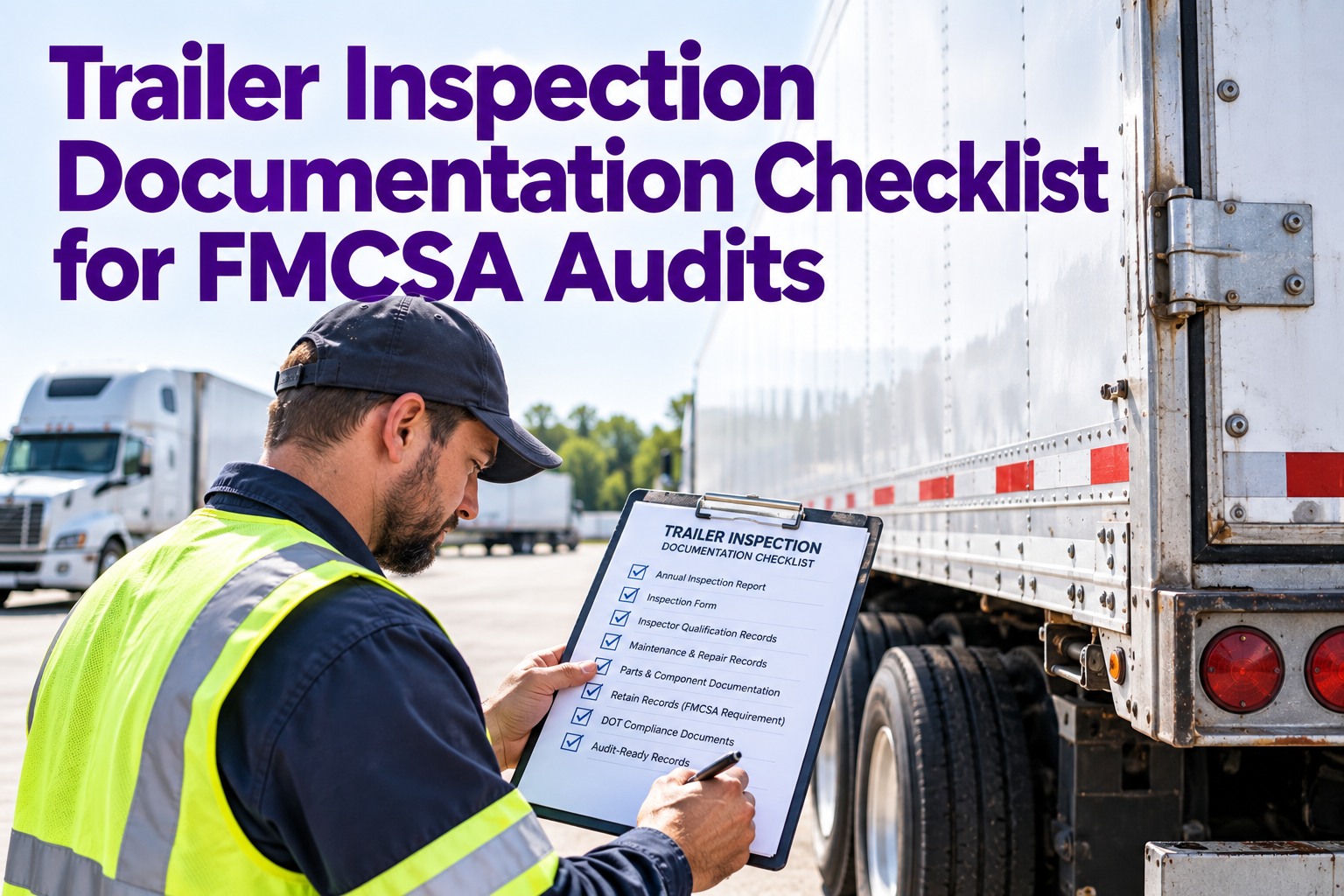
FMCSA audits don't test whether the trailer is safe — they test whether the fleet can produce the documentation that proves it. Missing inspector qualification records, expired retention, or a defect without repair certification all trigger findings even on a...
Read More
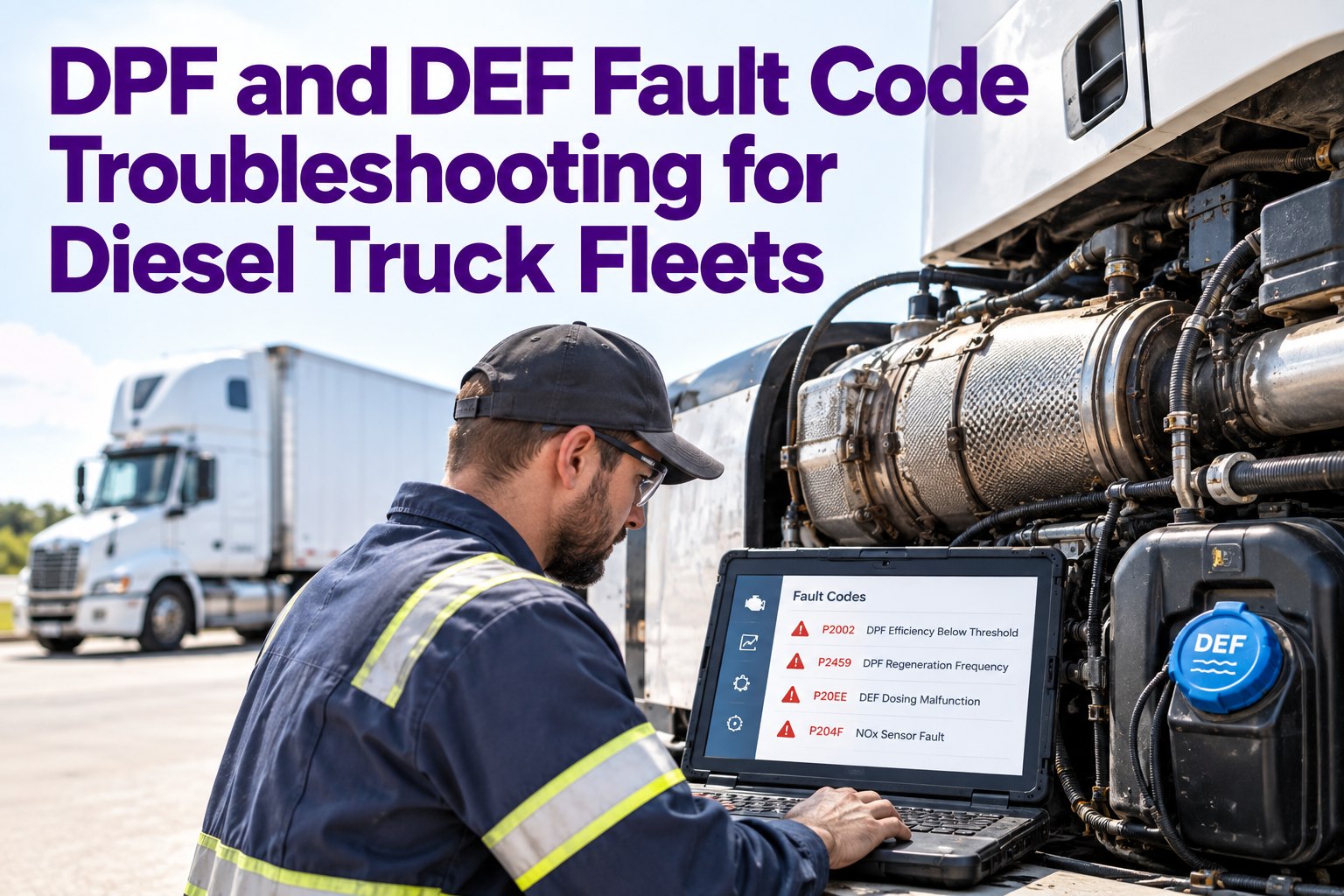
DPF and DEF codes account for the largest share of active fault codes on modern diesel fleets. A truck hits SPN 3719, SPN 3226, or P207F on a Tuesday and by Friday it's in a 25–40% derate — and by...
Read More
A reefer trailer is a second diesel engine. It burns 0.4–1.5 gallons an hour, 18–24 hours a day, whether the tractor is moving or parked. On a 40-unit reefer fleet that's $150K–$300K a year in diesel most CFOs never see...
Read More
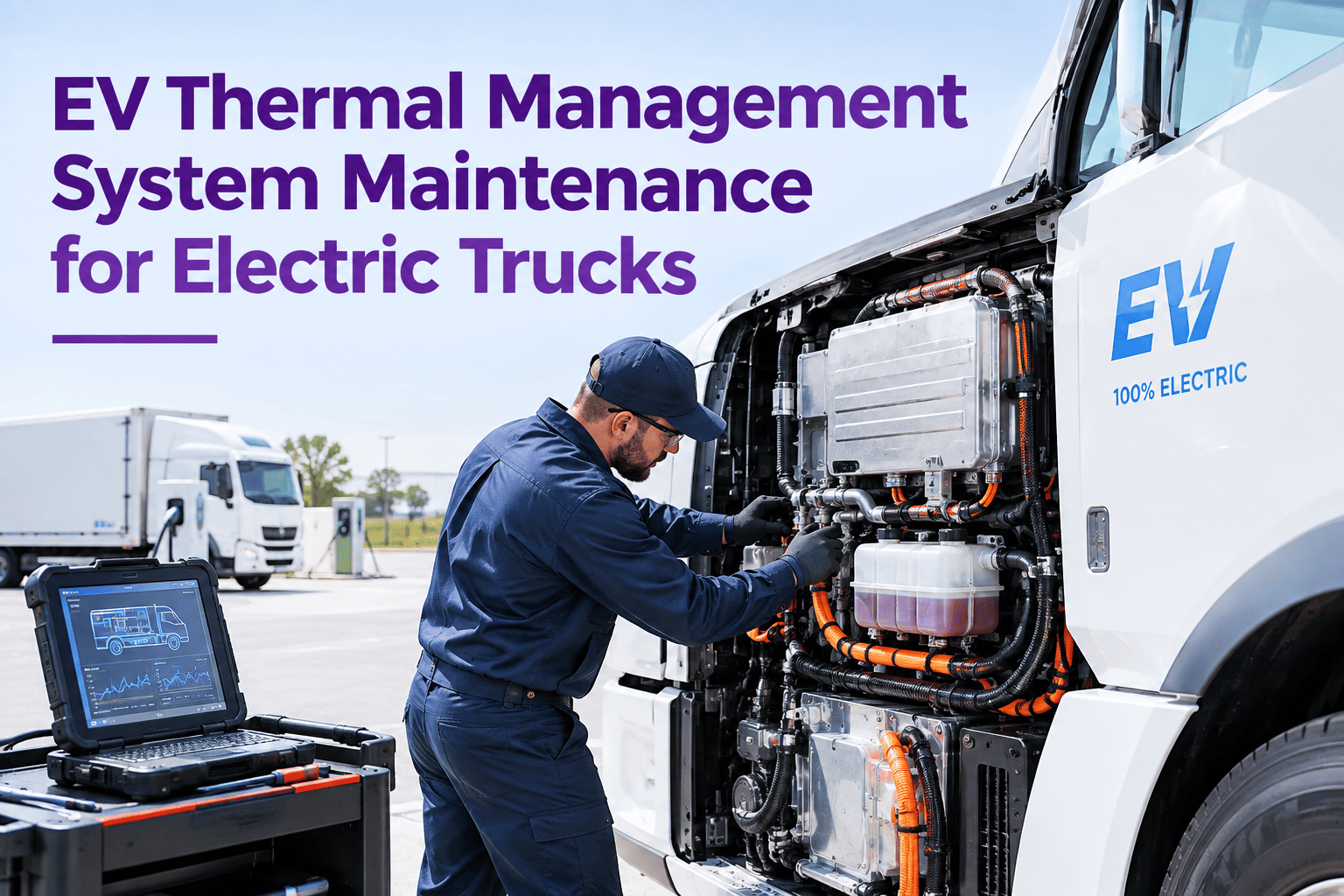
An electric truck lives or dies by one number: the temperature of its battery pack. Lithium-ion cells hold full power, fast charging, and range only inside a narrow window — roughly 25–35°C (77–95°F). Push past ~95°F and cells degrade permanently;...

Read More
A ready-mix concrete truck and a construction dump truck run duty cycles that break standard highway PM schedules. Constant drum rotation under 66,000+ lb GVW, hydraulic PTO loads for every discharge, aggregate dust in every filter, corrosive concrete washout on...
Read More
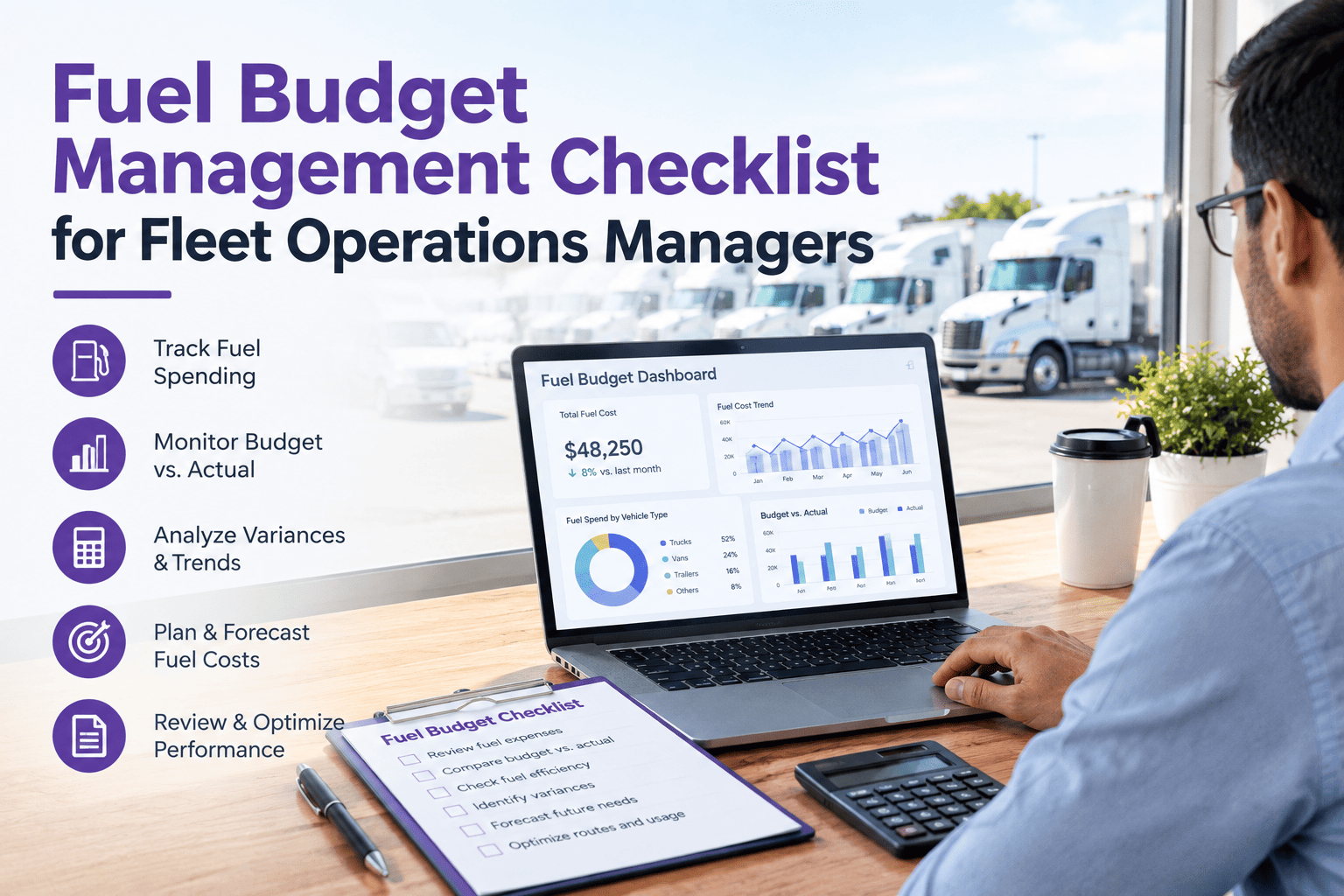
A fuel budget built once a year on a single assumed price per gallon is stale within a month. Diesel averaged $3.21 in 2024, swung to $3.83 in 2023, spiked to $4.99 in 2022, and 2026 outlooks show continuing volatility...
Read More
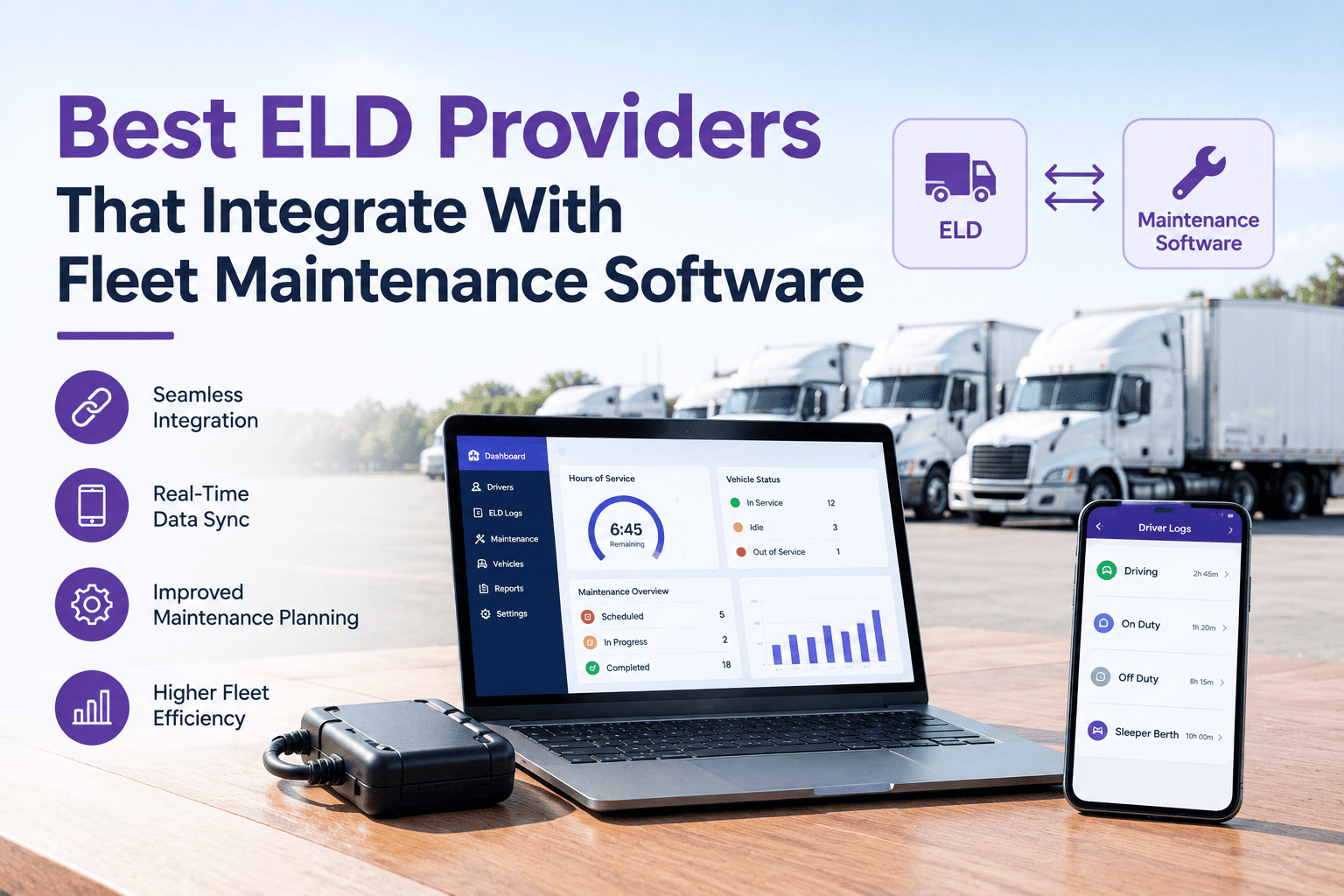
An ELD provider that logs hours but doesn't talk to your maintenance platform is a compliance tool, not a fleet system — every odometer reading, every fault code, every idle hour has to be typed twice or exported nightly to...
Read More
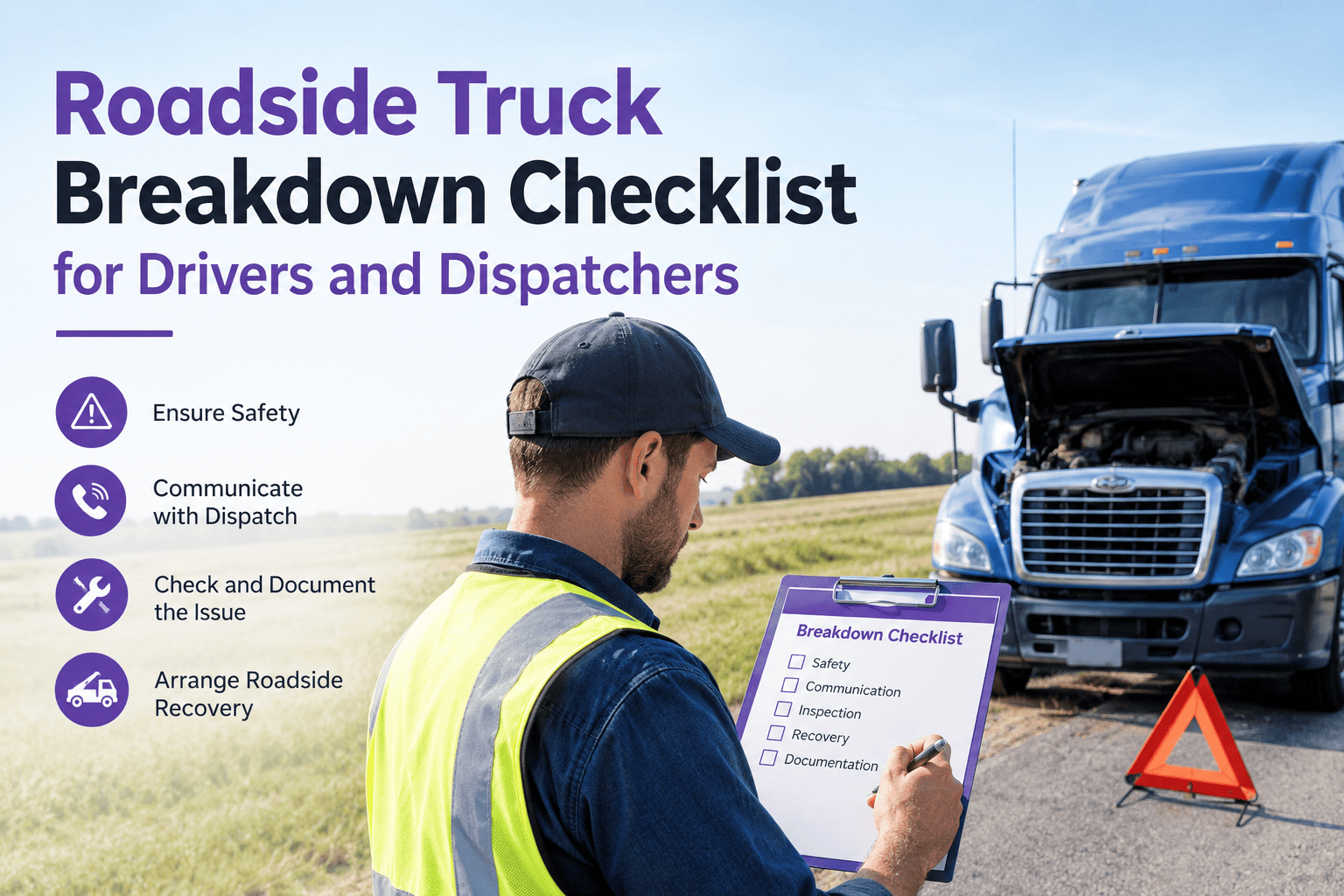
A breakdown on the shoulder of an interstate is not the moment to figure out the protocol — it's the moment the protocol either exists or doesn't. FMCSA §392.22 requires warning devices deployed within 10 minutes of a CMV stopping...

Read More
A truck that isn't rolling isn't earning — and downtime rarely disappears in one big block. It leaks out in dozens of small handoffs: a DVIR that sits in an inbox, a defect sent to the shop as three words,...
Read More
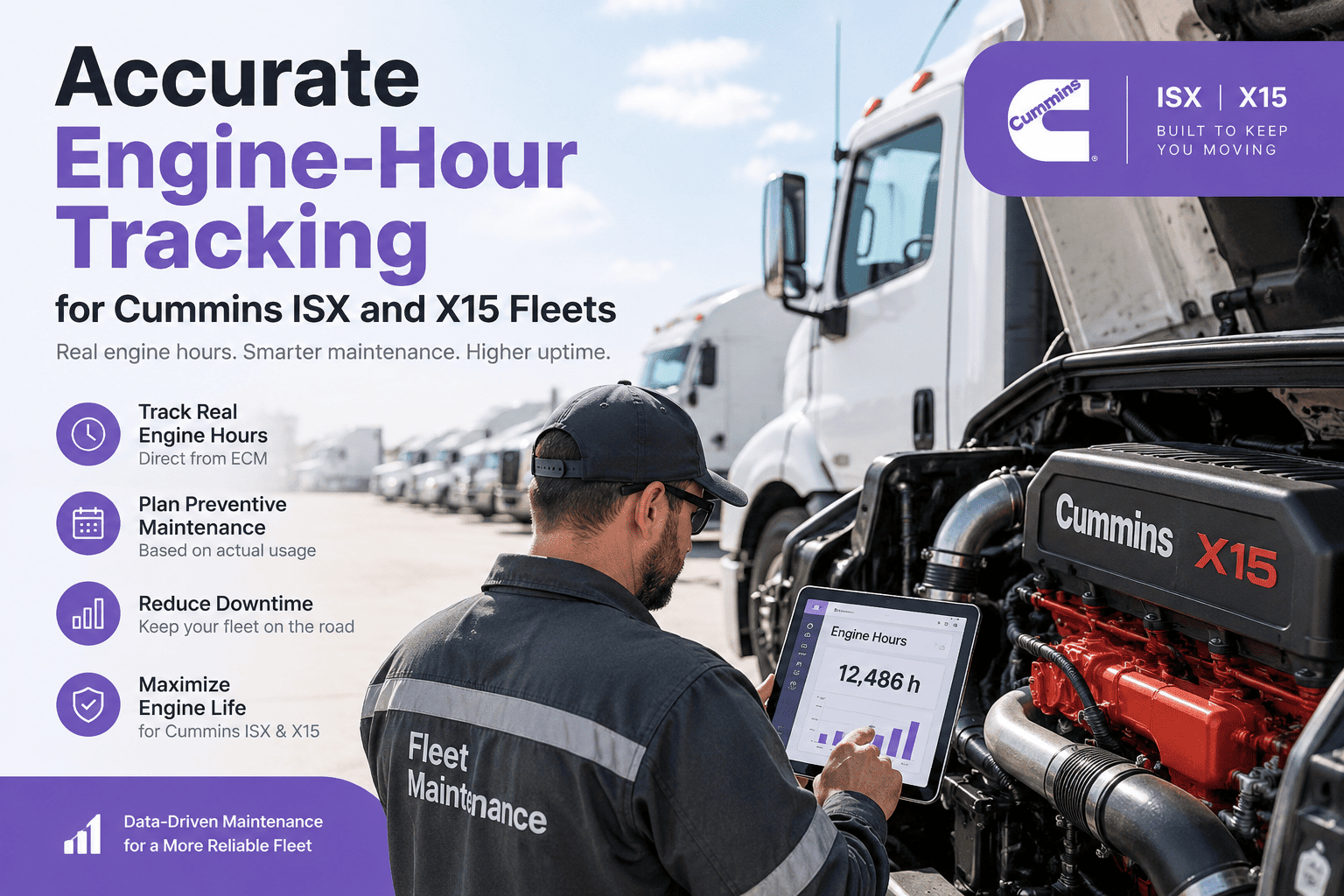
An engine-hour number is only useful if it's accurate — and on Cummins ISX and X15 fleets, "accurate" isn't automatic. The ECM stores several different hour counters (total run hours, idle hours, PTO hours, key-on time), a driver's paper log...
Read More
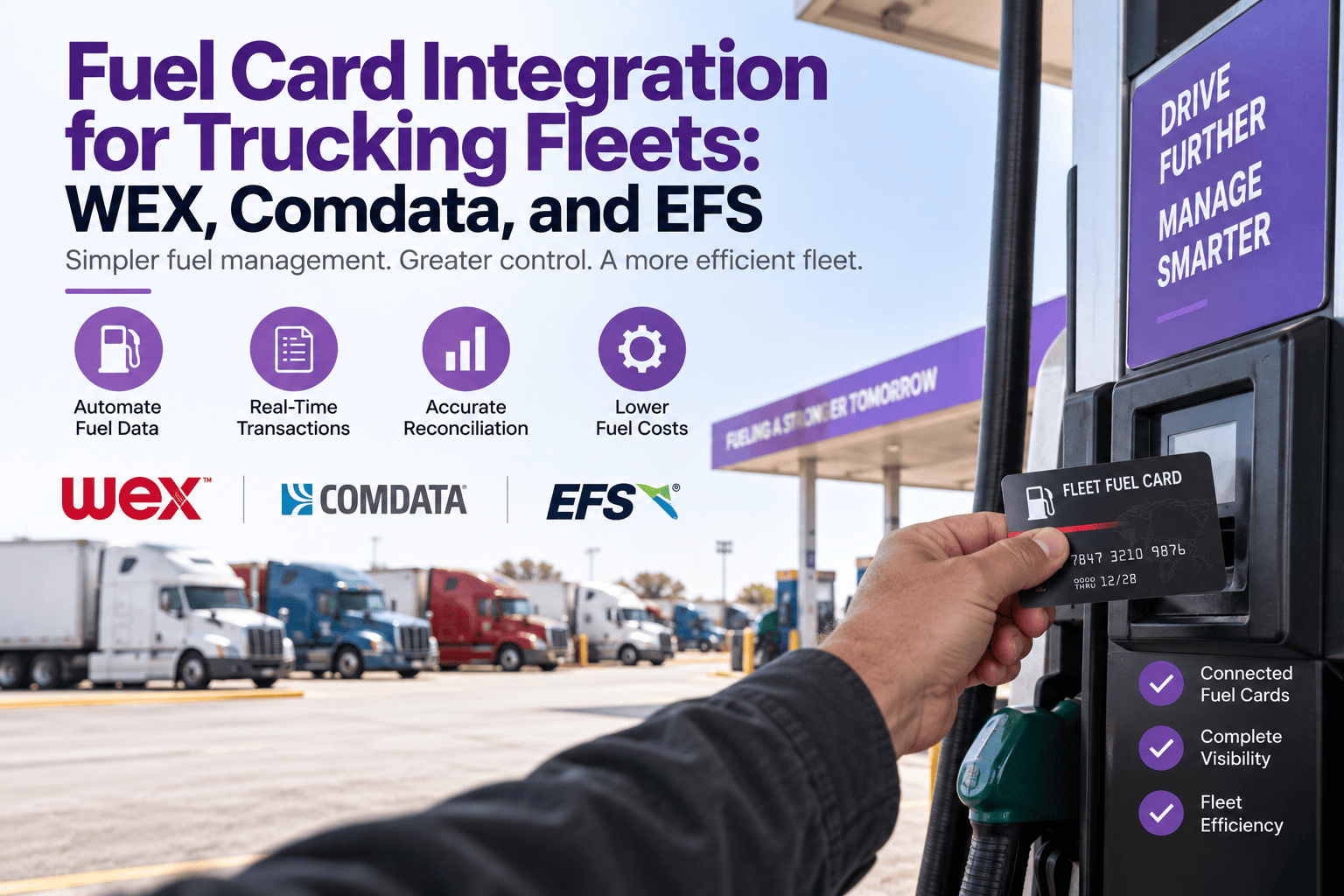
Fuel is 35–40% of a fleet's operating cost, and every gallon that lands in the fleet ledger by manual entry is a reconciliation line item that nobody has time to do properly. Truck Inspection & Maintenance Management Software solves this...

Read More
A construction fleet is the hardest inspection program to run because it stacks two regulatory frameworks under one fleet. A Class 8 dump truck answers to FMCSA §396.11. An excavator on the jobsite answers to OSHA §1926.602. A road-going mobile...
Read More
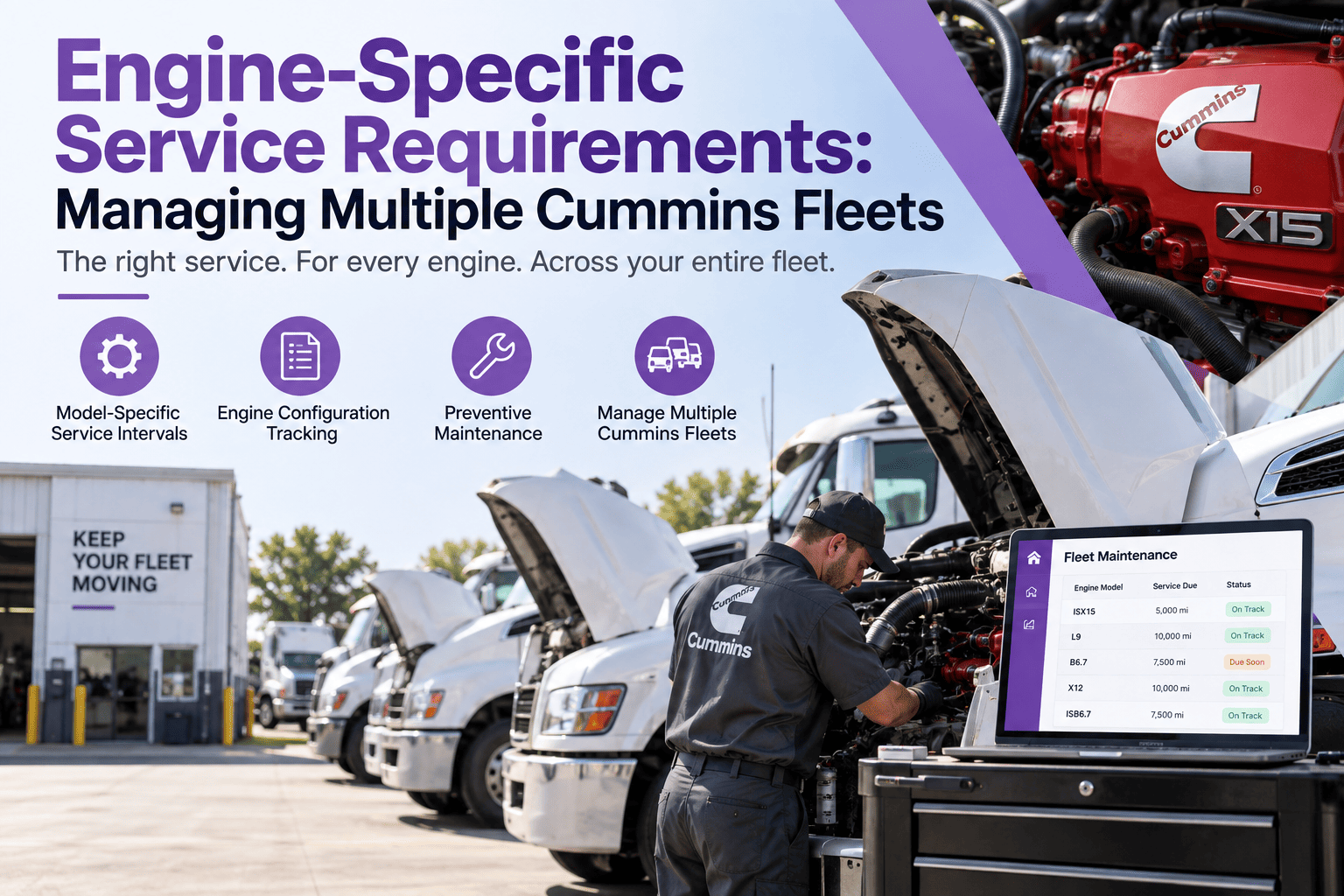
A fleet with 40 Cummins engines is rarely a fleet with 40 identical PM schedules. An EPA 2010 ISX15 running the CM2250 ECM has different oil and DPF intervals than a 2020 X15 on CM2450. A B6.7 medium-duty runs on...
Read More
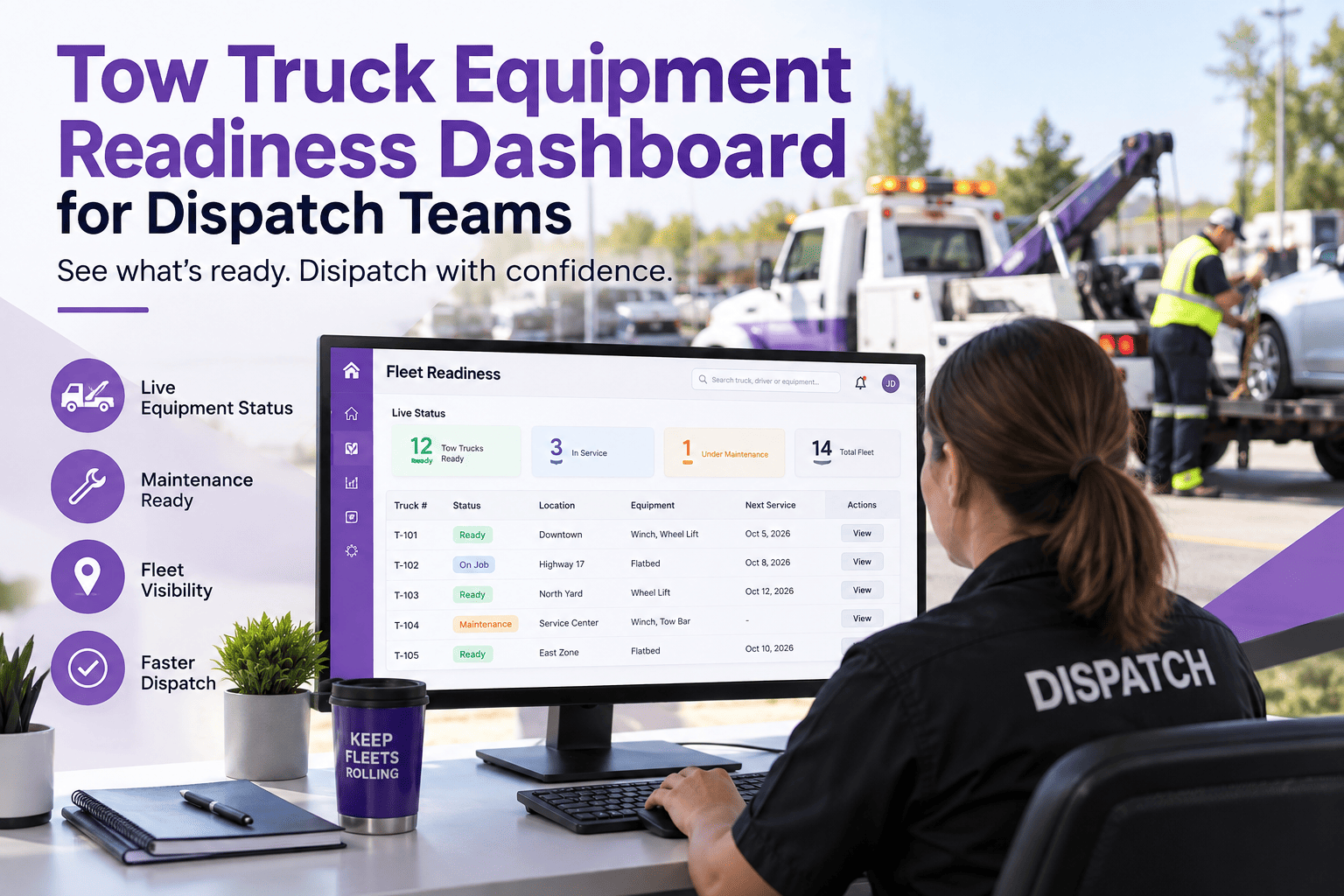
The two most expensive words in a tow dispatcher's day are "send the closest truck." A rollback sent to a Class 8 rollover can't do the job. A heavy-duty wrecker sent to a sedan repo burns diesel and blocks the...
Read More
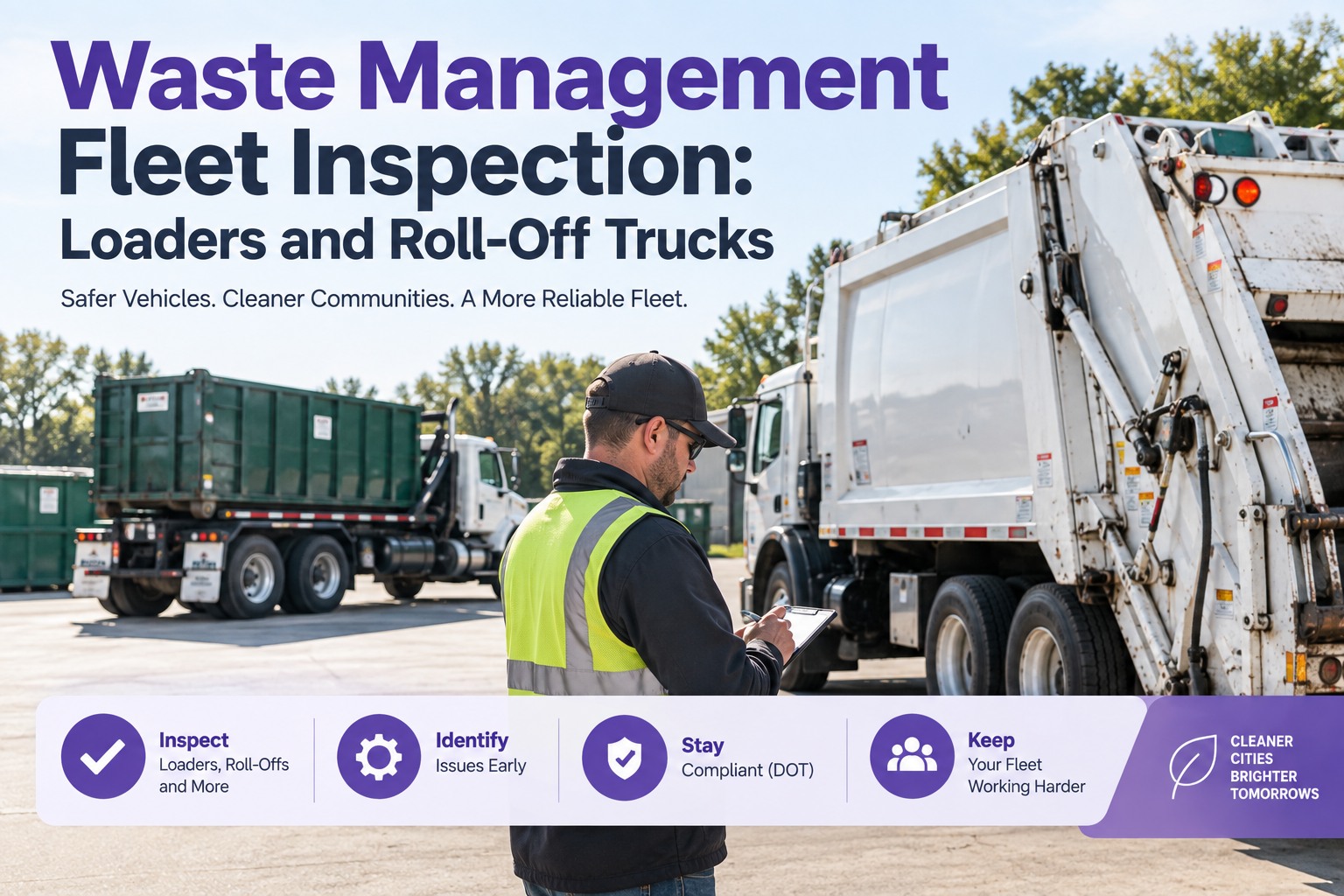
A waste management fleet isn't one kind of truck — it's three, and each one wears out on a completely different schedule. A rear loader on residential routes runs 800–1,200 packer cycles per shift. A side loader on ASL routes...
Read More
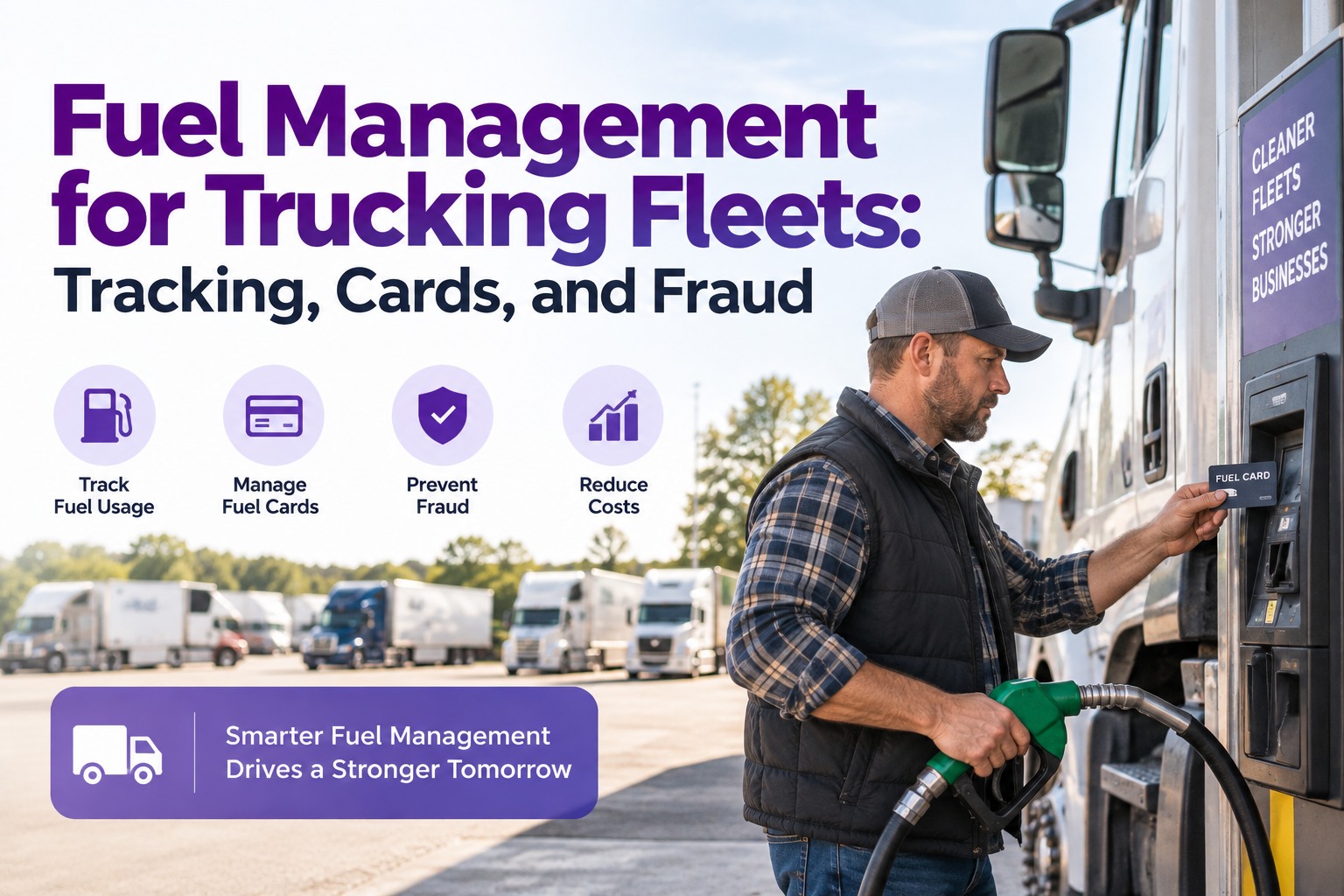
Fuel is the single largest variable cost in trucking — 30–60% of total operating spend depending on route mix and diesel prices — and it's also the one most fleets reconcile the least carefully. Card swipes, bulk-tank drawdowns, and telematics...

Read More
A utilities fleet isn't one thing — a bucket truck answers to ANSI A92.2, a digger derrick to ANSI A10.31, and a service van to DOT §396.11. One checklist across all three is how a bucket rolls without a current...

Read More
Every modern truck streams thousands of data points a day, and most of them are fine — that's why static-threshold alerts either fire on everything or fire on nothing. Anomaly detection asks a different question: is this truck behaving unlike...

Read More
A rising CSA score is the quietest, most expensive problem in trucking brokers see it before they award loads, insurers see it before they renew, and FMCSA sees it before they knock. And in 2026 the math changed under everyone's...
Read More
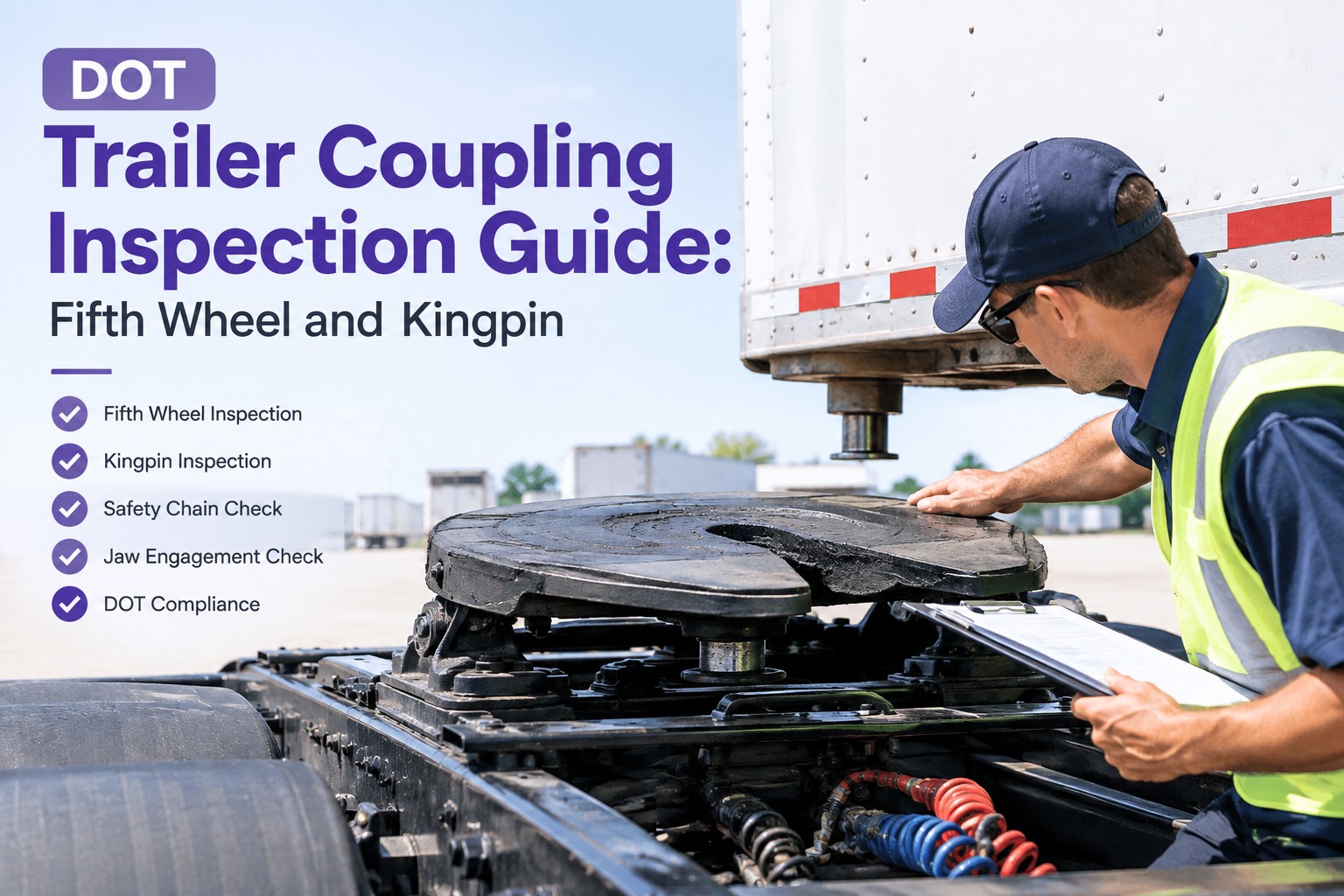
A driver couples up, feels the "tug test" hold, and pulls out — forty minutes later a roadside inspector gauges the kingpin and finds it worn past spec. The tug test passed. The coupling didn't. Fifth-wheel and kingpin inspection isn't...
Read More
An annual inspection sticker on the windshield feels like proof of compliance until an auditor asks for the actual report behind it and finds nothing on file, or finds a defect from that inspection that was never shown as repaired....
Read More
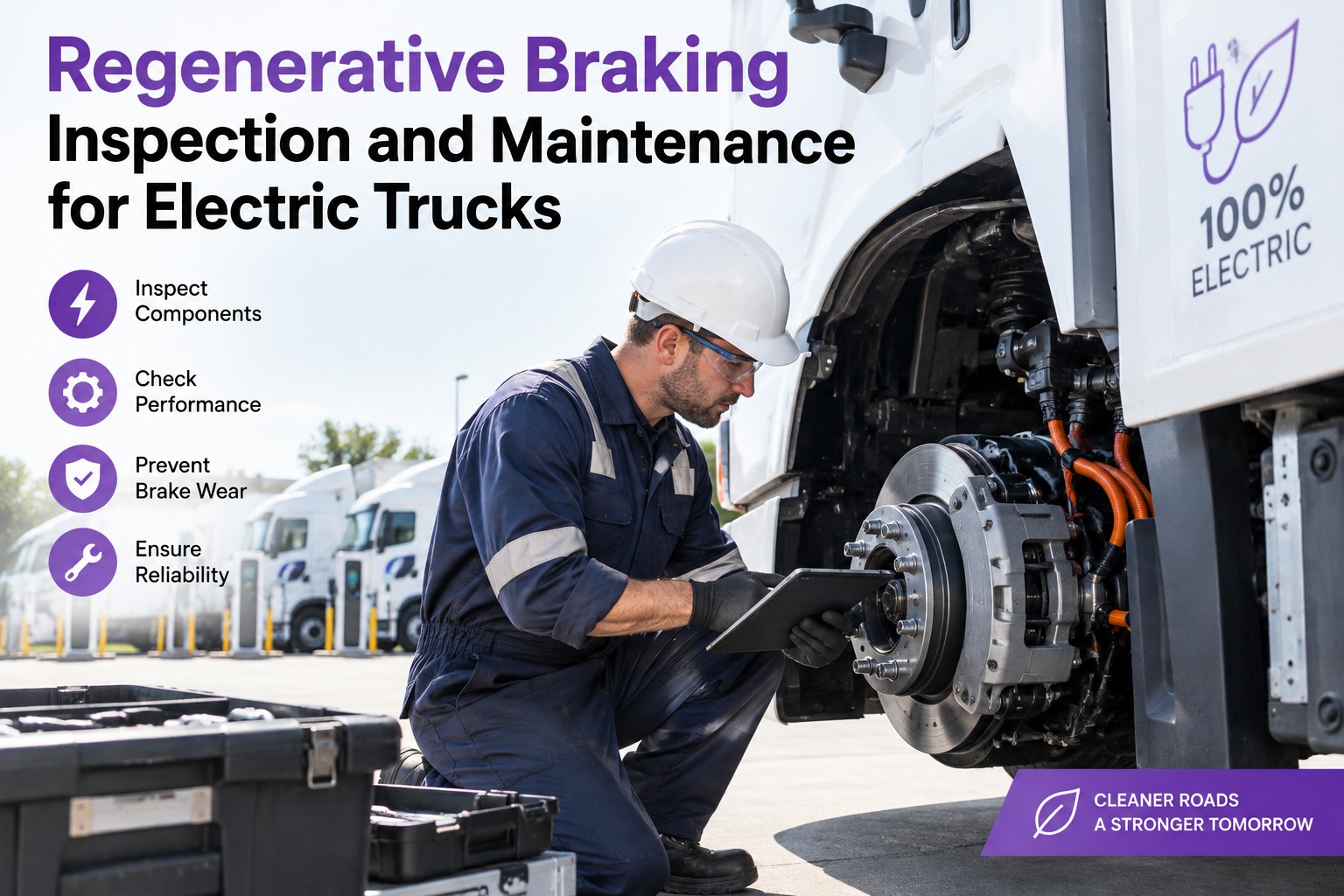
An electric truck's brake pads can look nearly untouched at 40,000 miles — and that's exactly the problem. Regenerative braking does most of the slowing down electronically, which means the friction brakes barely engage, rarely get hot, and rarely scrub...
Read More
Check the odometer on a yard truck and it barely tells you anything — a few thousand miles a year, still parked at the same distribution center it started at. Check what it actually does in a single shift and...
Read More
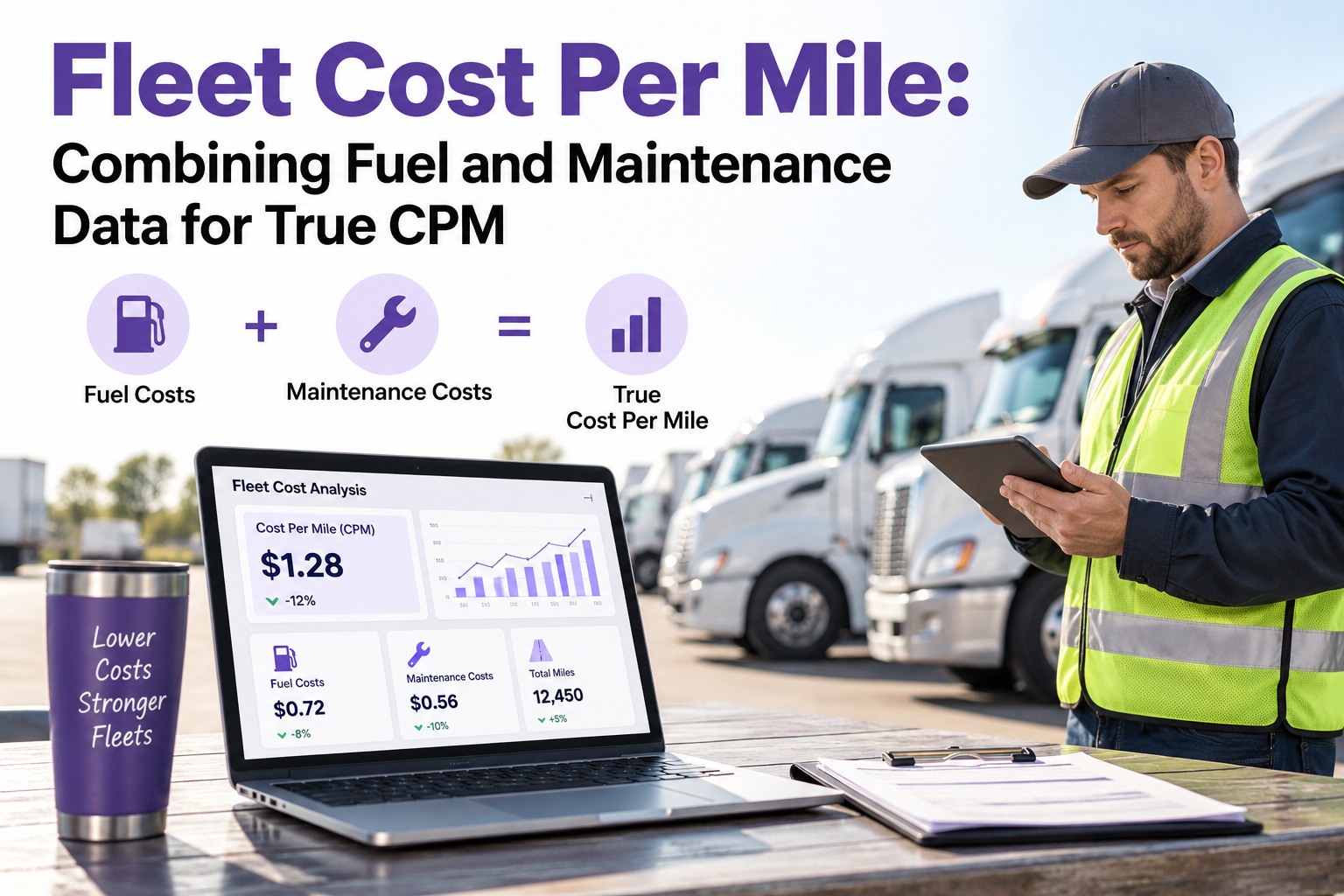
Ask five fleet managers their cost per mile and you'll get five different numbers not because their trucks cost different amounts to run, but because they're calculating from different data sets. Some pull fuel from the fuel-card portal and stop...

Read More
Every fleet has been told predictive maintenance is the future. Almost no fleet actually runs it — because most predictive claims are marketing dressed on the same fixed-mile schedule everyone already has. The real thing is different: telematics data feeding...

Read More
Every truck over 10,001 lbs running interstate already has an ELD — the FMCSA mandate saw to that. It's logging every mile the truck moves, timestamped and driver-attributed, and syncing to the cloud in real time. Meanwhile, the same fleet...

Read More
The same wheel seal has been replaced on Truck 214 four times this year. Every mechanic did the job right; every seal came out of the box in spec; the truck still leaks. That's a recurring failure — and it...
Read More
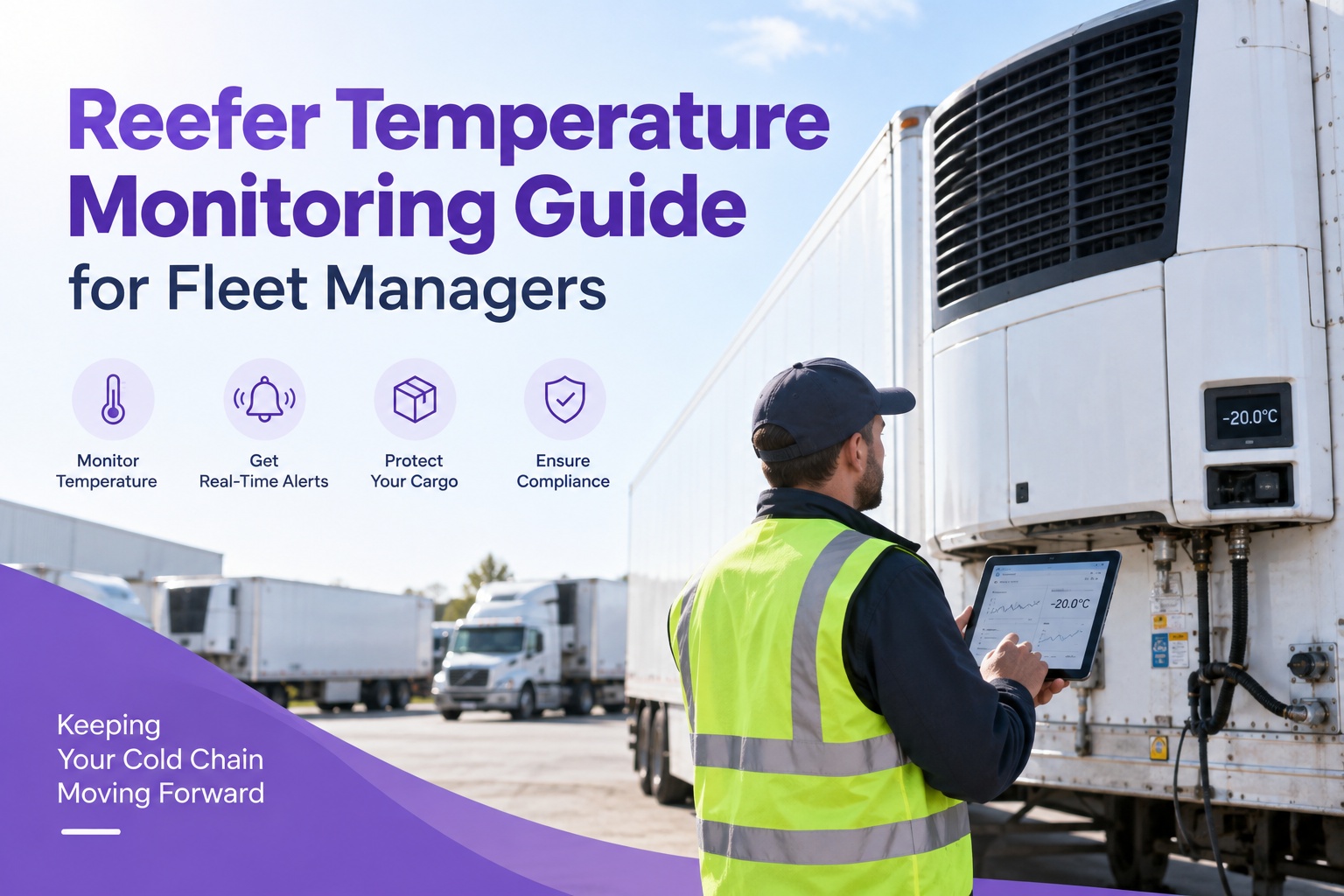
A reefer's job isn't refrigeration — it's proof of refrigeration. The unit can hold a load at 34°F all day long, but if the temperature log has a two-hour gap or an unexplained spike, the receiver rejects the load, the...

Read More
Most fleets already have telematics — GPS, ECM data, idle time, fuel burn, harsh events sitting in a dashboard someone opens on Monday and forgets by Wednesday. The maintenance system runs on a separate spreadsheet with mileage entered by hand....

Read More
A manufacturing fleet isn't one fleet — it's two. There's the highway side that runs raw materials in and finished goods out, subject to FMCSA rules, DOT audits, and §396.11 DVIRs. And there's the yard side that shuttles pallets, feeds...
Read More
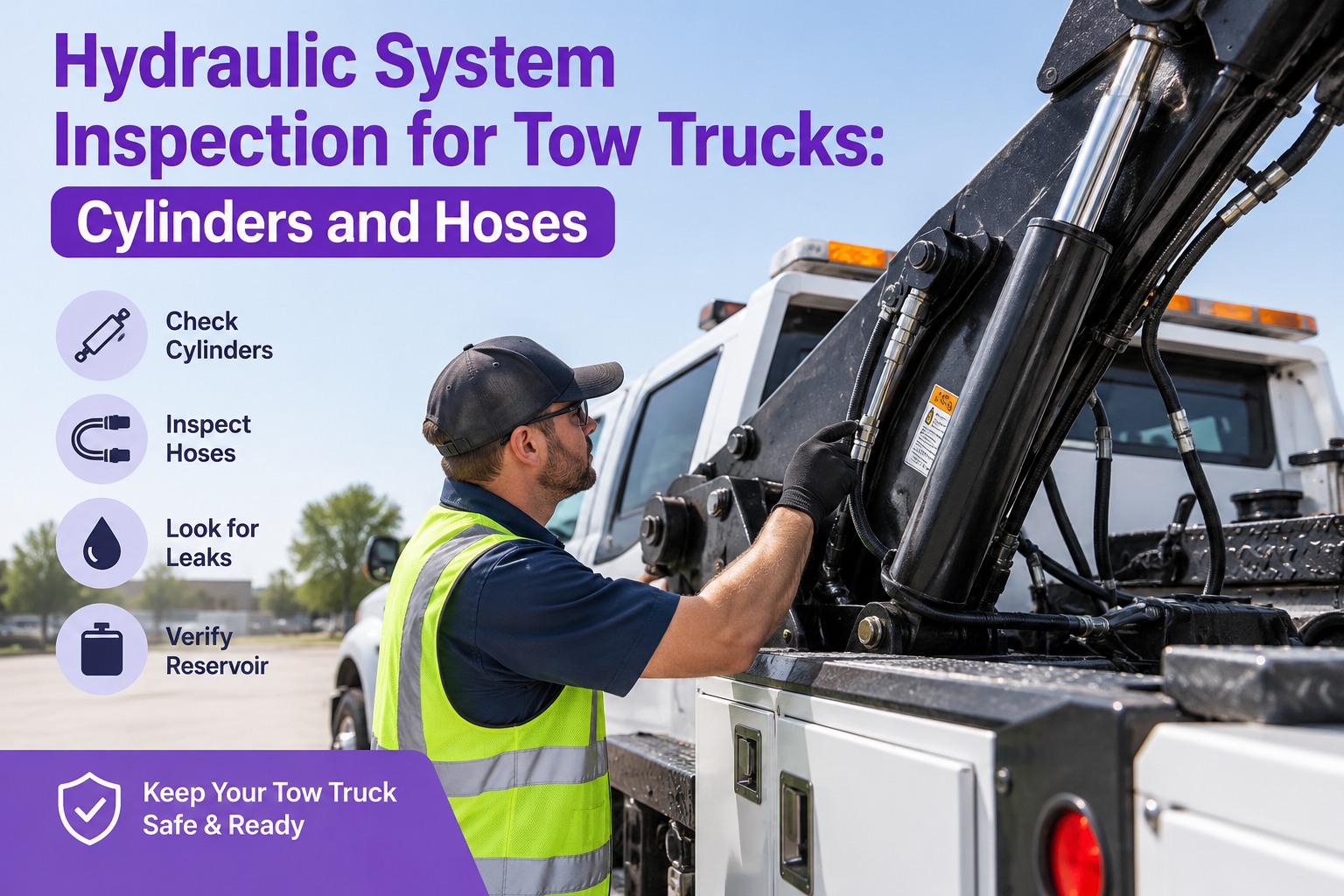
When a tow truck's hydraulics fail, it's not "the truck is down" — it's "the recovery in progress just became someone else's recovery." A boom that won't lift, a wheel-lift that won't lock, a wrecker cable stuck under load —...
Read More
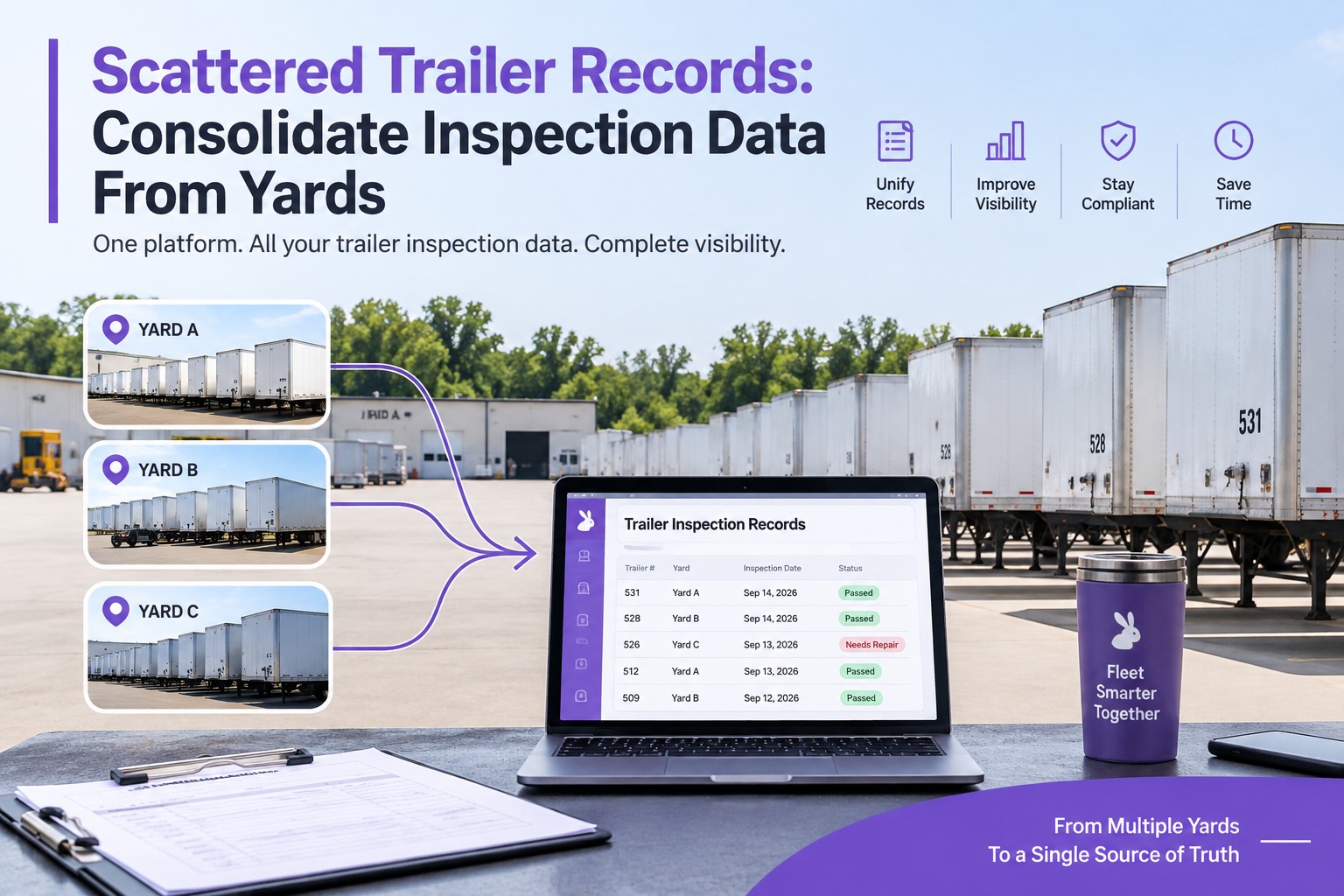
A trailer that runs Dallas–Phoenix–Atlanta over six months isn't in one file cabinet it's in three, in three different yards, on three different clipboards, and if the DOT walks in tomorrow, someone spends a day driving to pull them. That's...
Read More
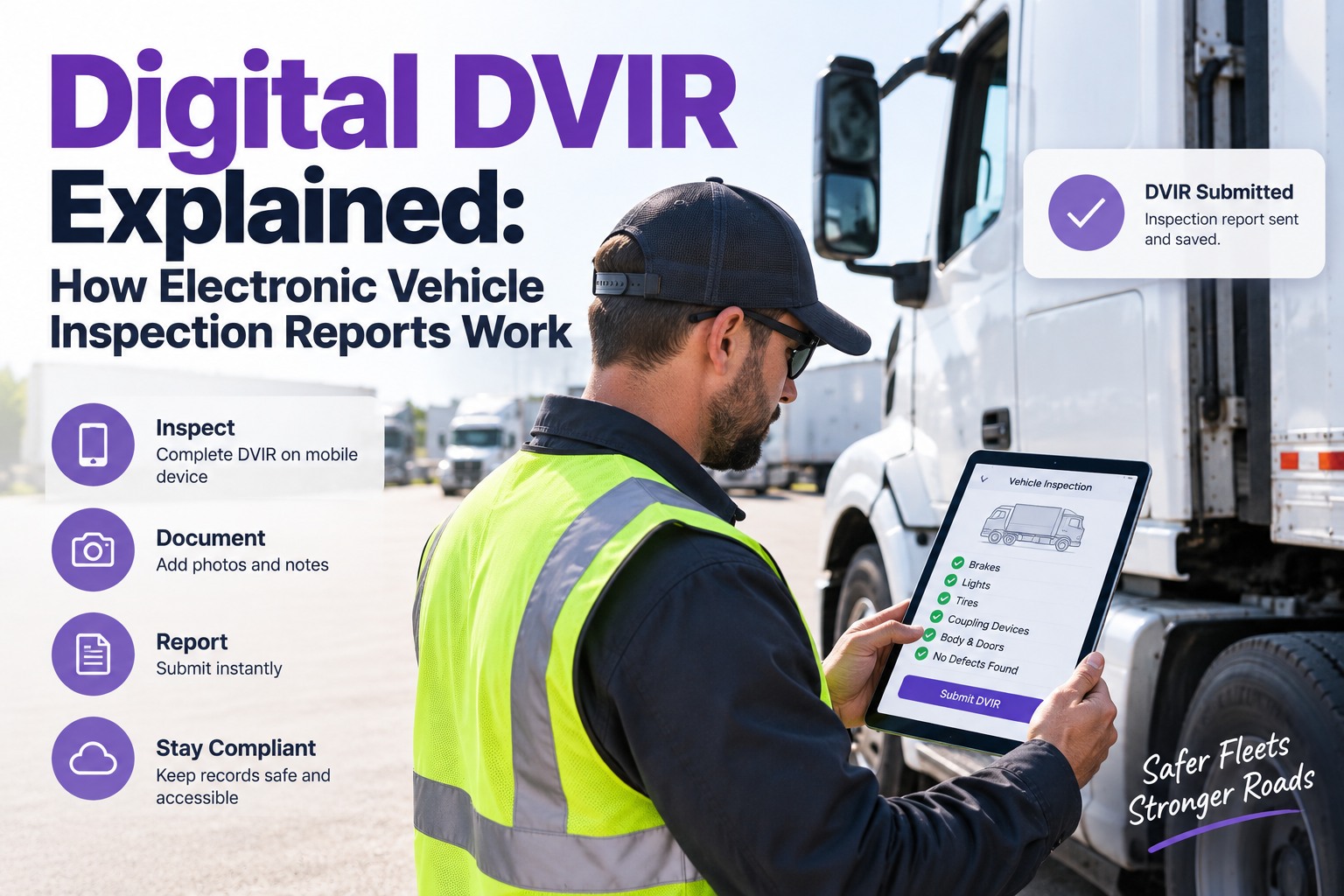
A paper DVIR is a form. A digital DVIR is a workflow. The form-vs-workflow difference is why fleets that switch usually don't go back — the same 30 checkpoints a driver used to fill out on a clipboard now trigger...
Read More
Every commercial trailer in the US needs a §396.17 annual inspection — a once-a-year, top-to-bottom check by a qualified inspector covering thirteen component areas set out in Appendix G of the FMCSA regulations. Miss it and the truck can be...

Read More
Every fleet inspection app on the market claims to "digitize DVIRs." Most of them just put the clipboard on a screen — same 30-line form, now typed instead of handwritten, still ignored by dispatch and still ambiguous to the shop....
Read More
A preventive maintenance schedule looks simple on paper — every truck, every 25,000 miles, oil and filters. What breaks it in practice isn't the interval, it's everything around the interval: the dispatcher who needs the truck at 24,800 miles, the...
Read More
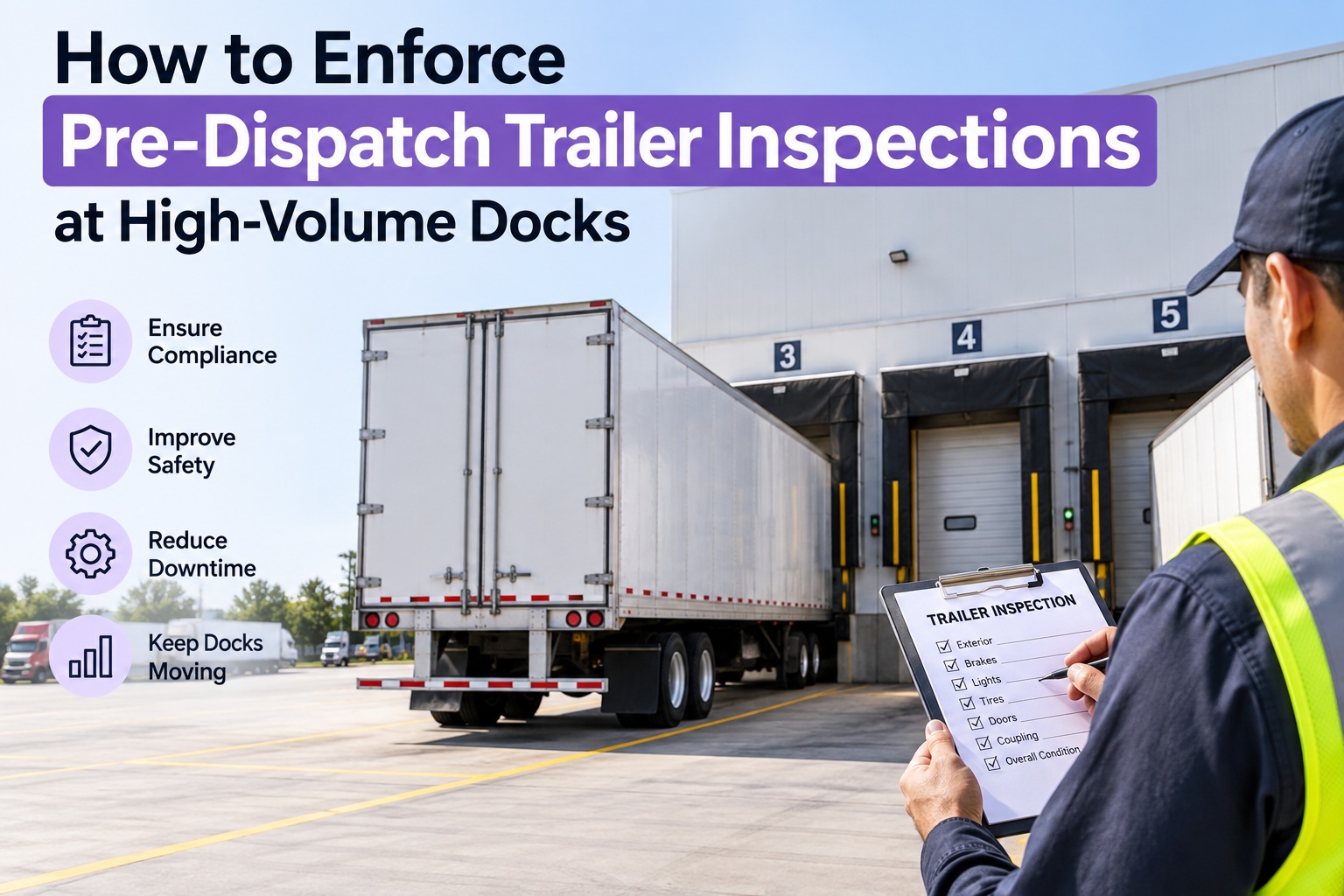
The trailer inspection your fleet designed is thorough. The one that actually happens when the dock is slammed and dispatch is behind is a driver walking the length of the trailer in fifteen seconds and signing the sheet. That gap...
Read More
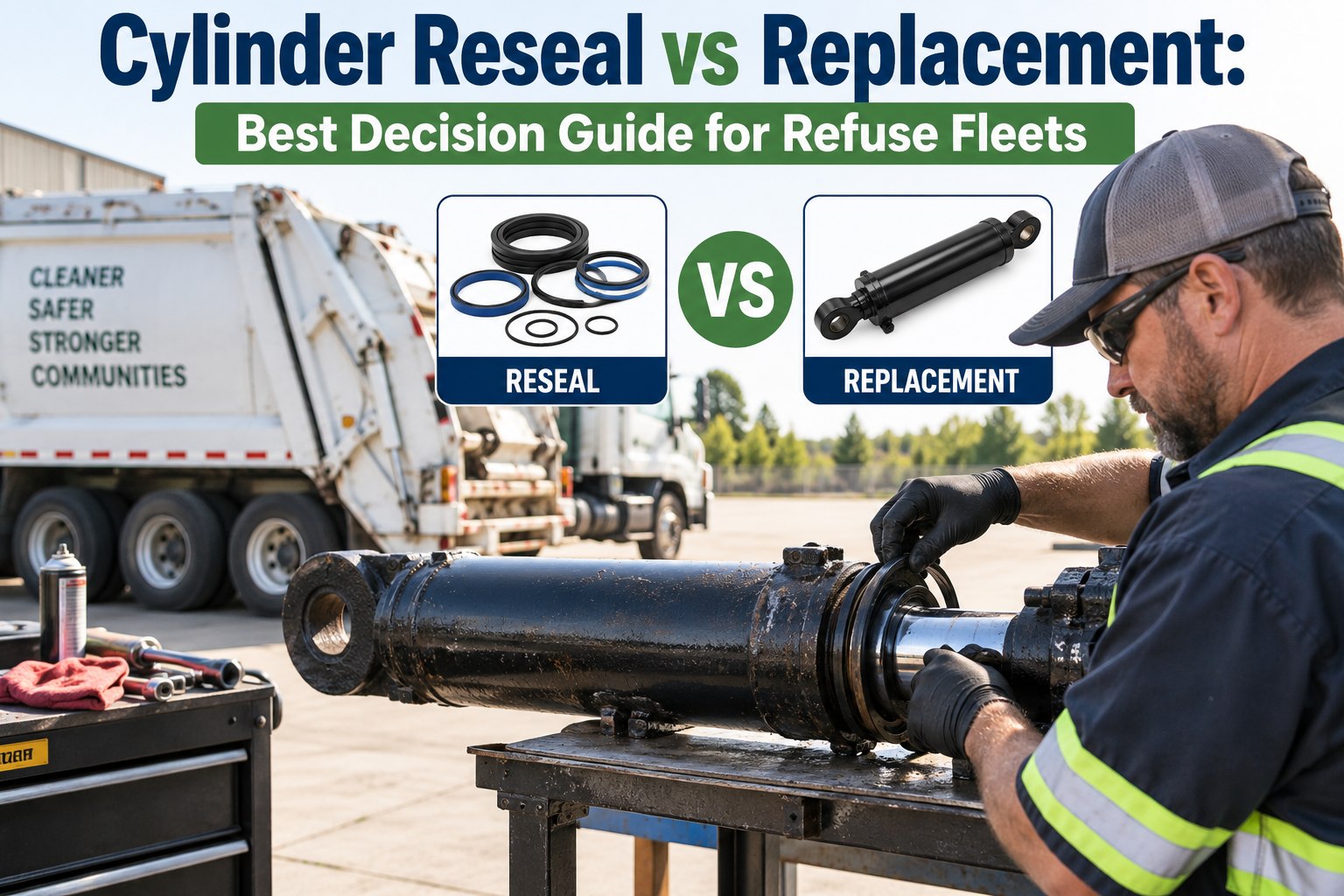
When a packer cylinder leaks, the instinct is to reseal — it's cheaper, right? Only if the rod and bore underneath are clean. Run new seals against a scored rod and they fail again within weeks, because the damaged surface...
Read More
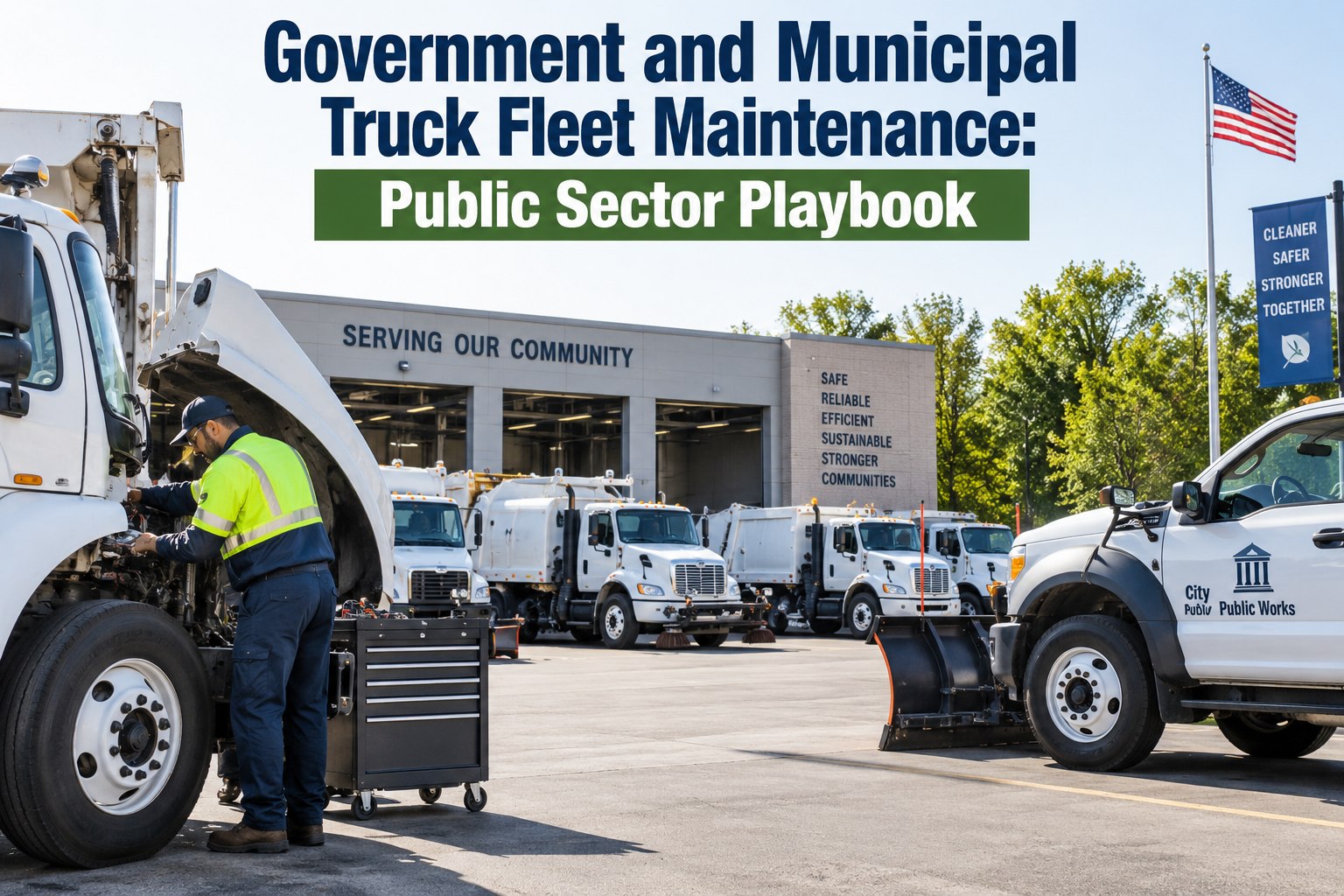
A private fleet answers to the DOT and the EPA. A municipal fleet answers to the DOT, the EPA, GASB, NFPA, FTA, the state inspector, the procurement office, the union contract, and — the morning after a snowplow sits dead...

Read More
An over-the-road tractor works 300 days a year at a steady pace, so its PM schedule is a calendar you follow. A grain hauler is the opposite animal: it runs flat out for roughly 90 days of harvest, then sits...
Read More
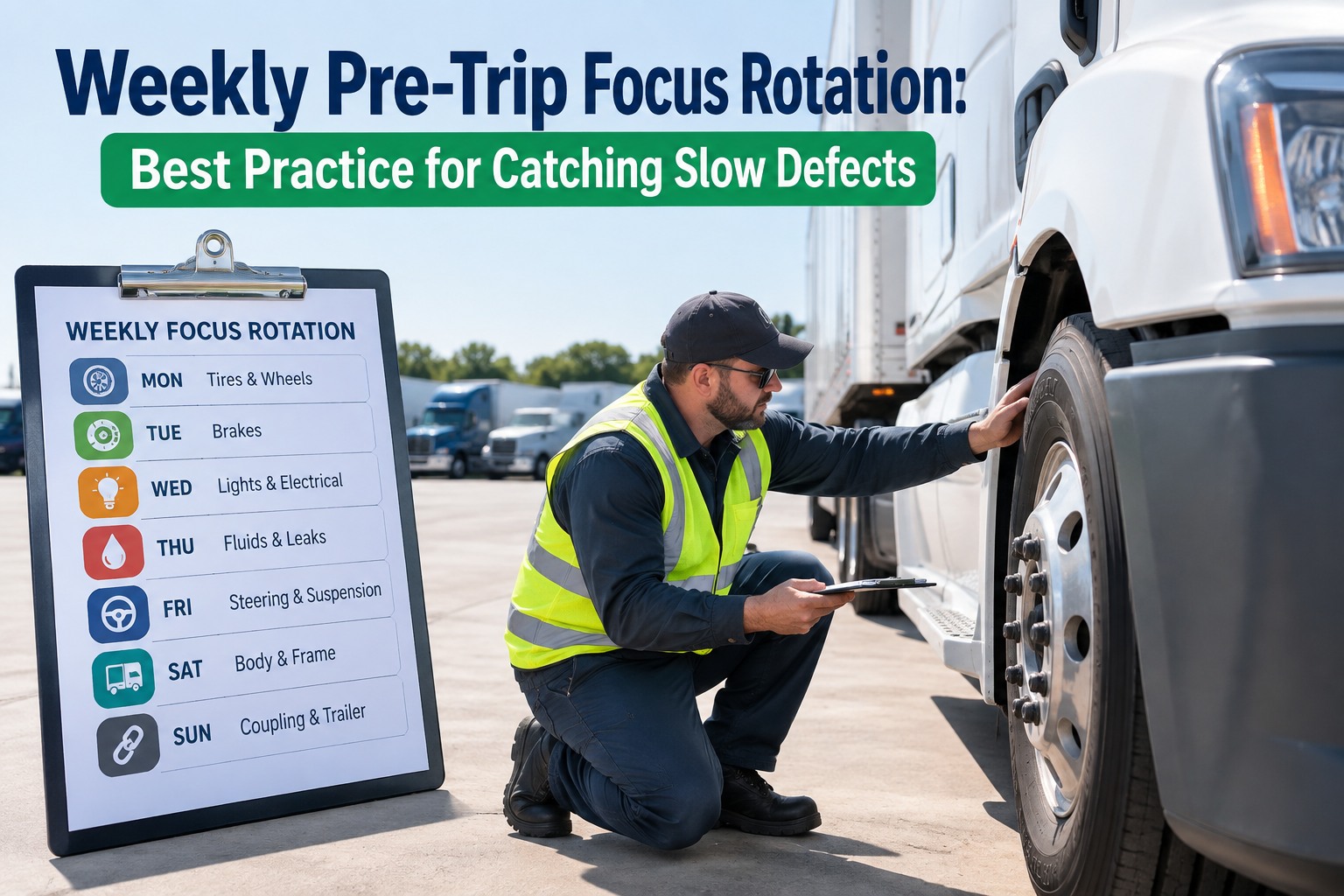
Here's the uncomfortable truth about the daily walk-around: a driver who inspects the same 45 checkpoints every single morning stops seeing any of them by week two. The eye glides over the brake chamber, the tire sidewall, the marker light...
Read More
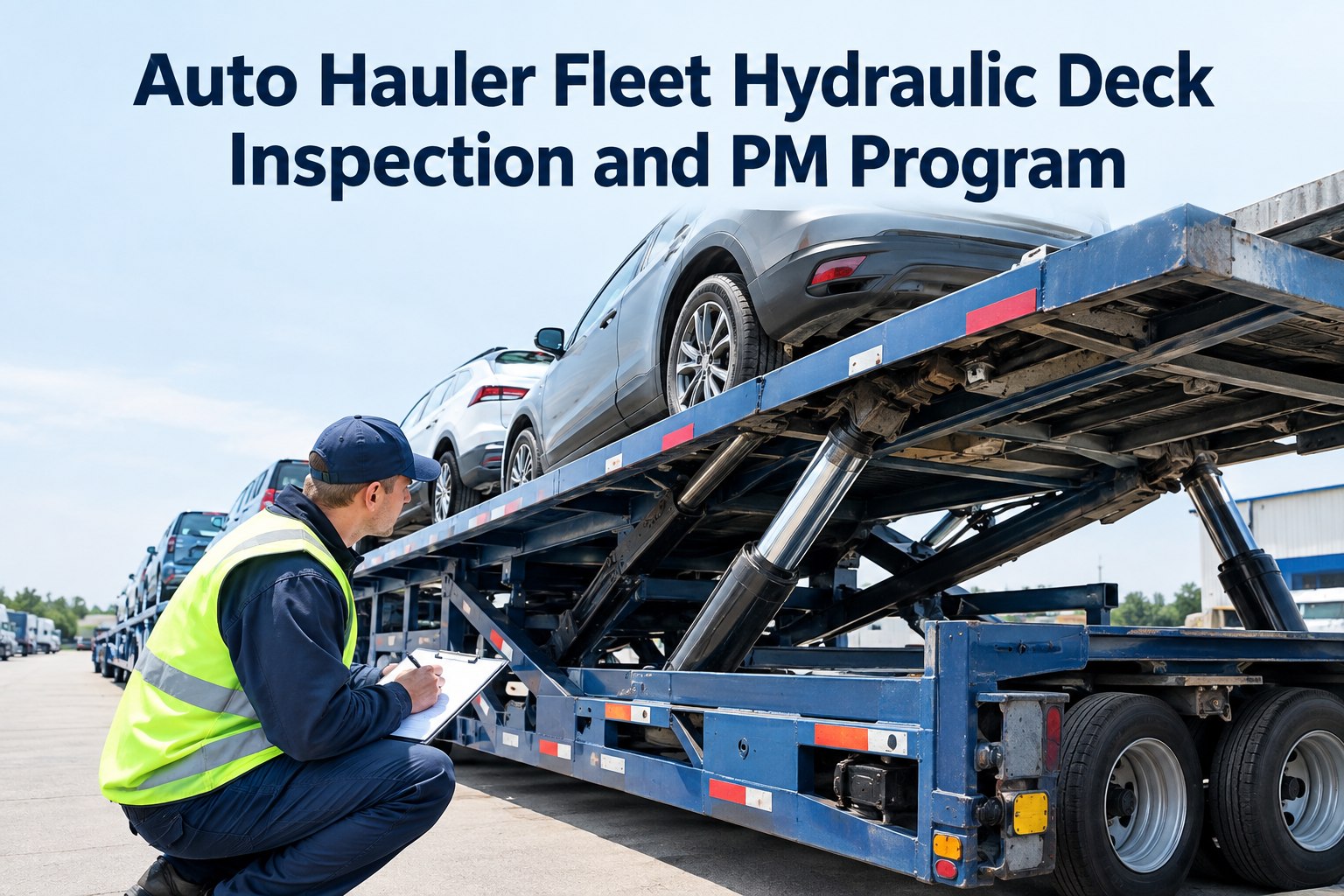
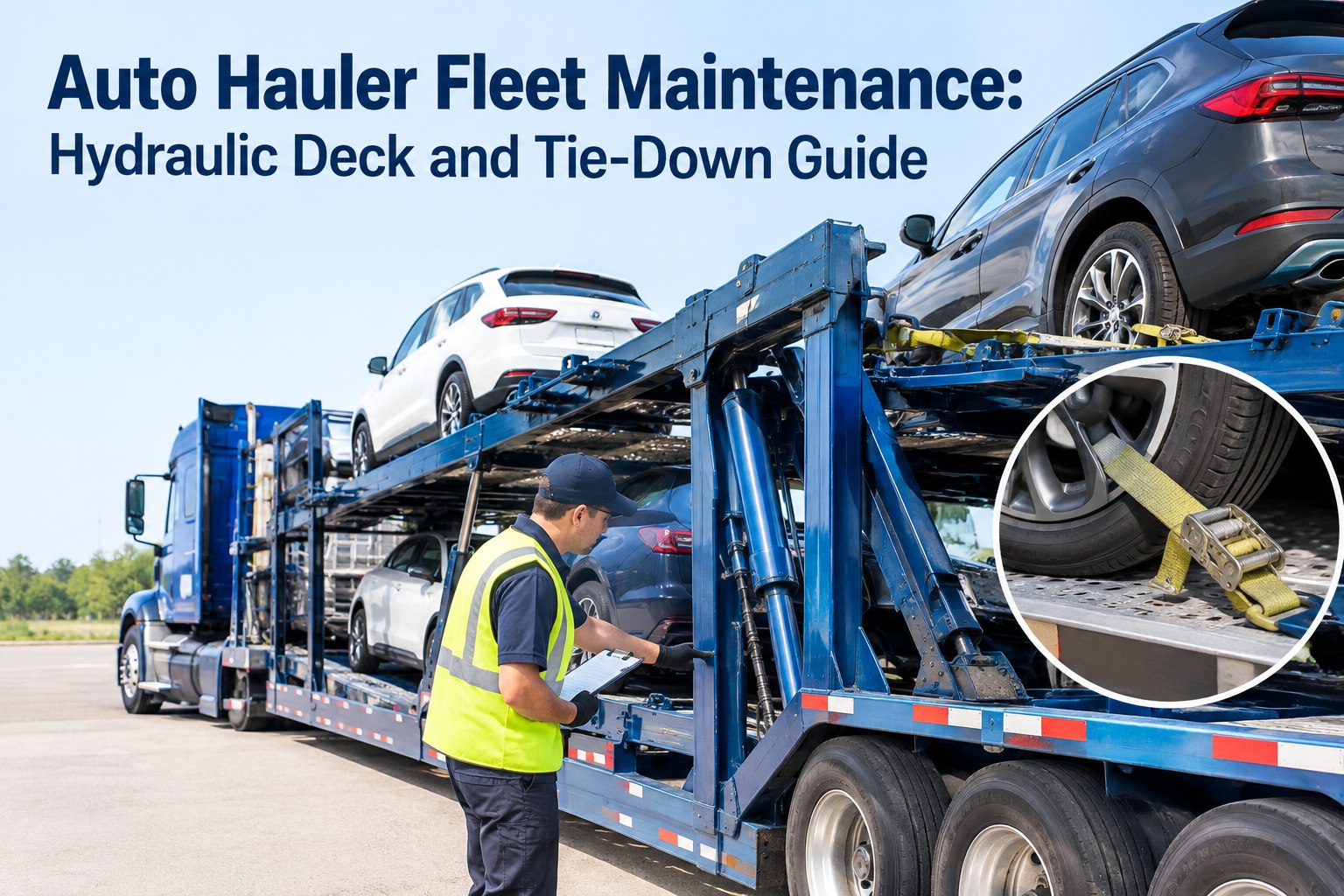
An auto hauler's hydraulic deck fails on a clock a mileage schedule can't see: it raises, lowers, tilts, and locks dozens of times a day under load, so wear tracks cycle count, not odometer miles. And the biggest killer is...
Read More
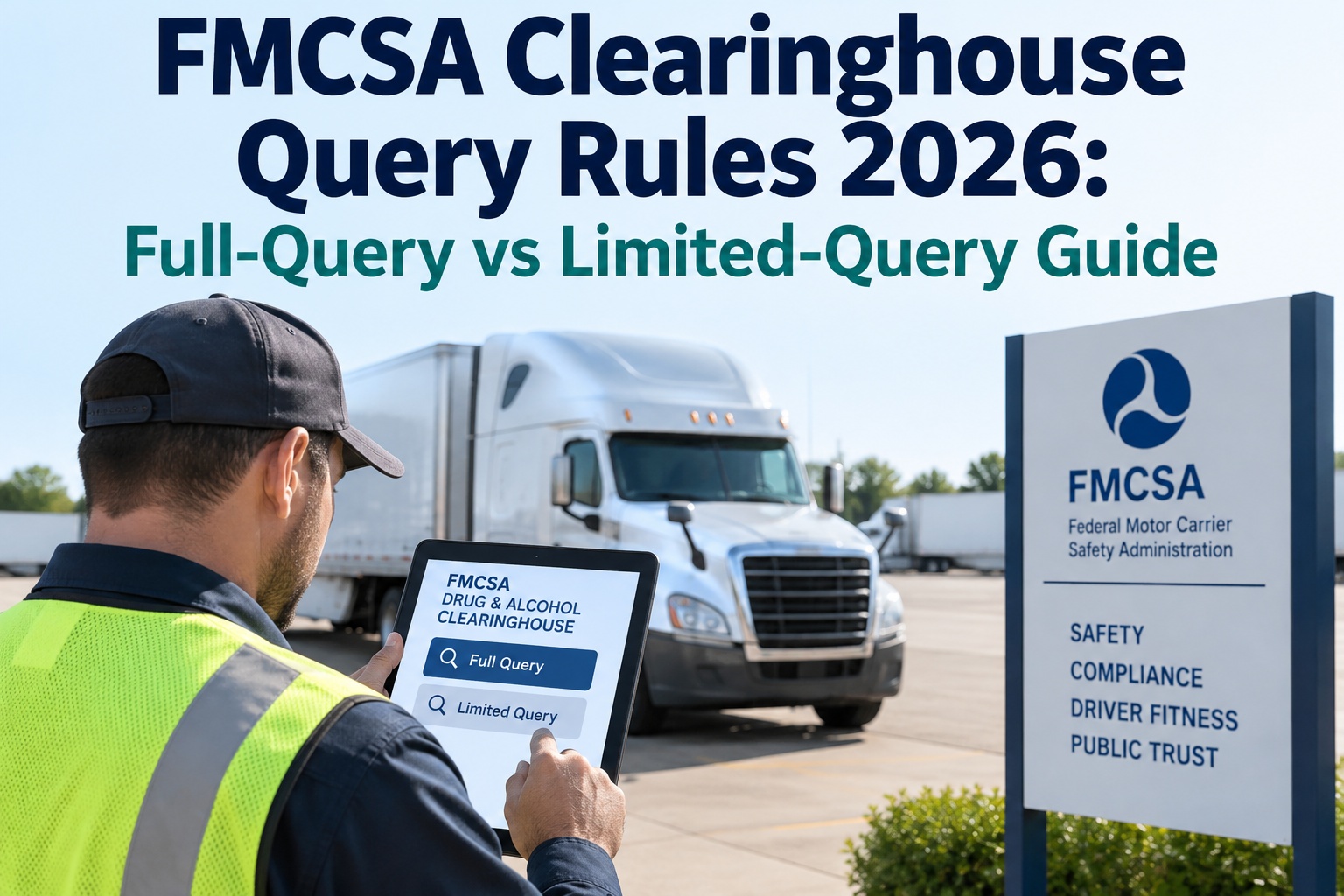
The FMCSA Clearinghouse runs on two query types that get constantly confused and getting them backwards is one of trucking's fastest-growing violations. A full query shows a driver's actual record and needs electronic consent inside the Clearinghouse; a limited query...
Read More
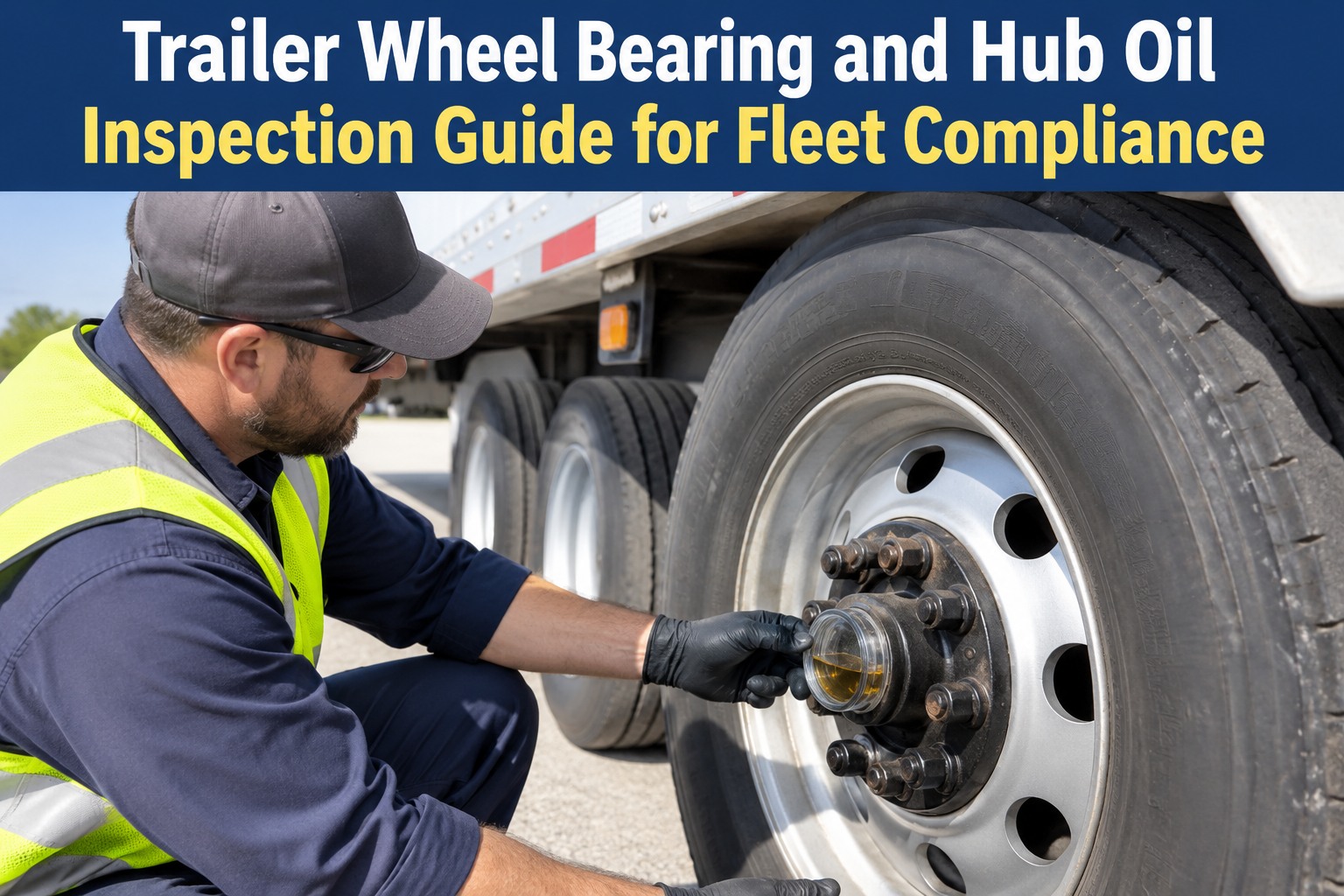
A wheel-end failure is never just a wheel-end failure. When a trailer hub seal lets go, it doesn't fail one system — it fails two. The lubricant drains and the bearing starves toward seizure; the same oil slings inward onto...

Read More
Roughly 70% of hydraulic failures on a refuse fleet trace back to one root cause: contaminated fluid. Not a worn pump, not a bad cylinder — dirt, water, and metal particles circulating through the system, scoring rod surfaces and wearing...
Read More
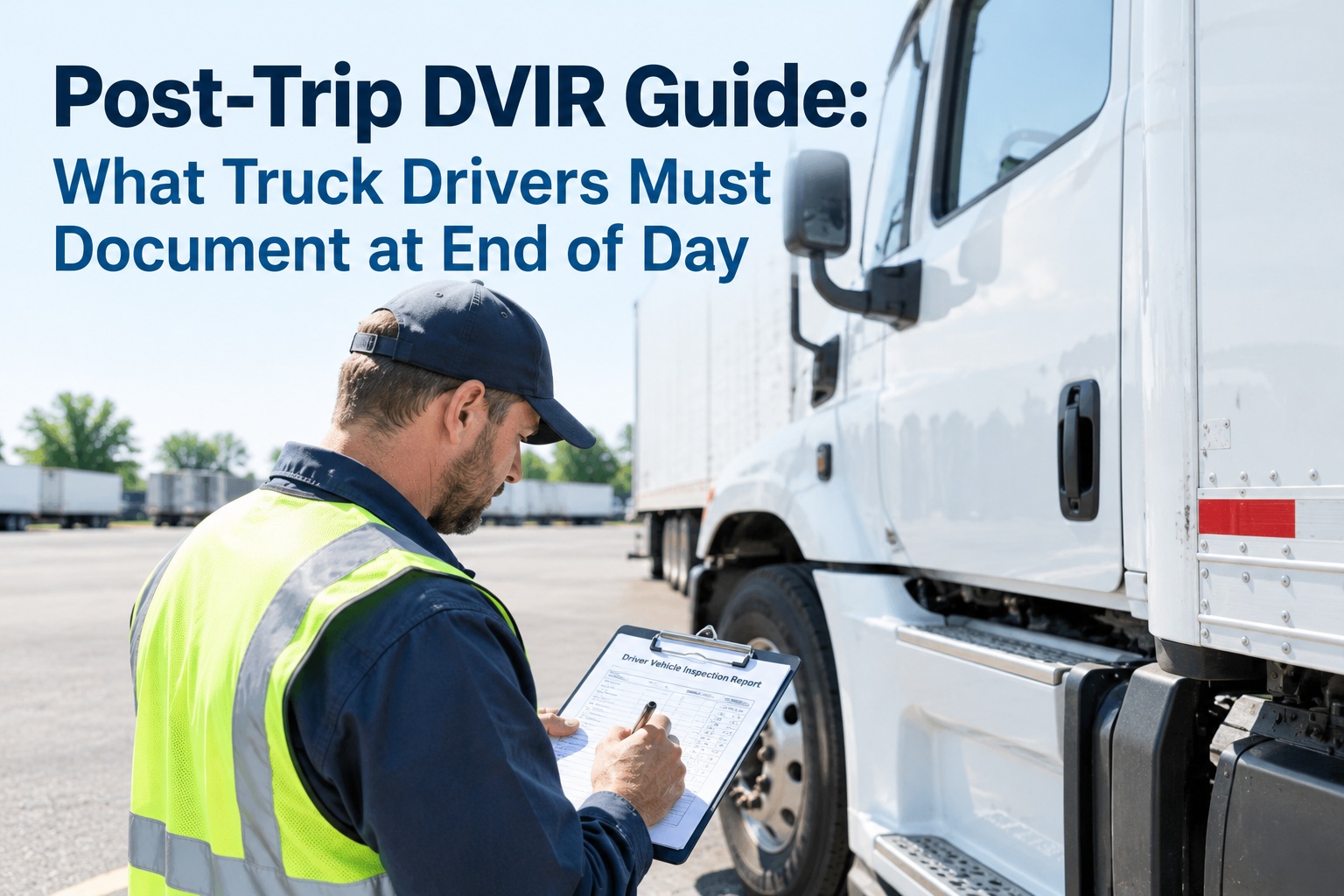
Here's the thing most driver training gets subtly wrong: FMCSA doesn't actually mandate a "post-trip inspection" the way it mandates the pre-trip. What 49 CFR 396.11 requires is the DVIR — a written report of the defects a driver found...
Read More
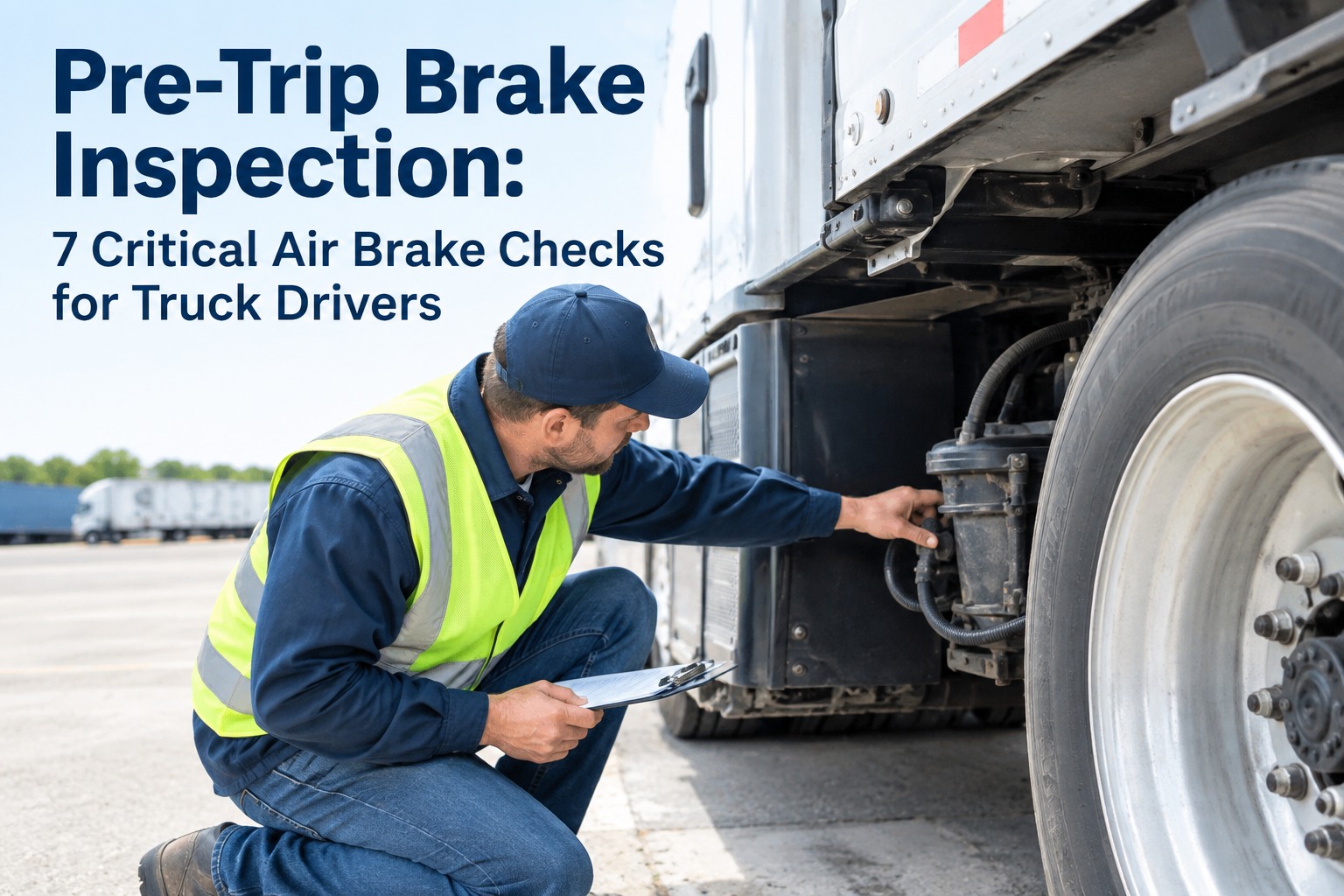
Brakes are the single most-cited system at roadside inspections — air brake defects drive a large share of every out-of-service order written at the scale house. And the math is brutal: under CVSA criteria, if 20% of a vehicle's brakes...
Read More
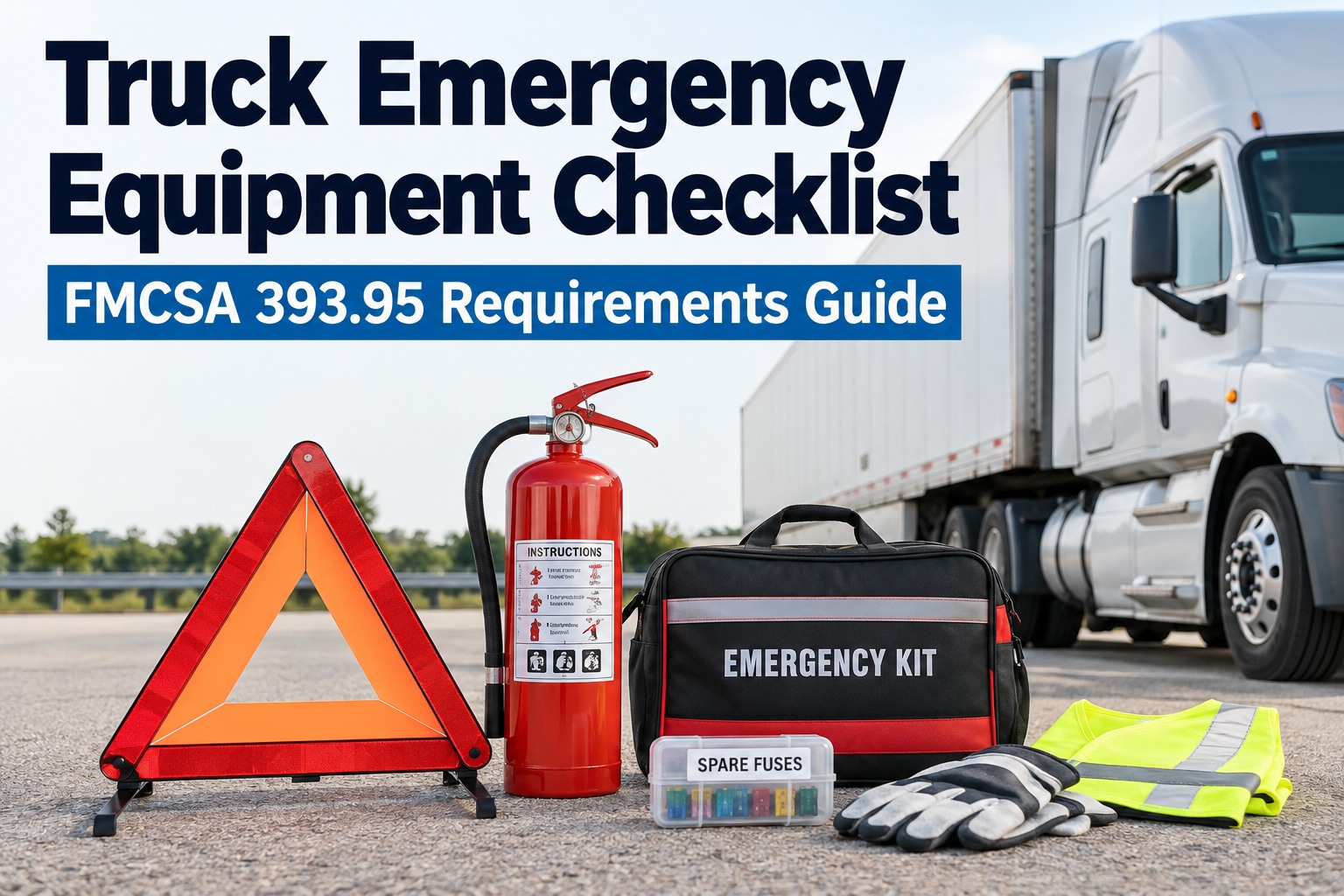
Here's the trap with truck emergency equipment: the rule is short, the items are cheap, and the checklist you find online is probably out of date. FMCSA rewrote § 393.95 twice in 2026 — spare fuses are gone, liquid-burning flares...

Read More
In agriculture, timing isn't a preference — it's the whole game. A combine that goes down during a 72-hour harvest weather window doesn't just cost a repair bill; it costs the yield for that portion of the crop. The fix...
Read More
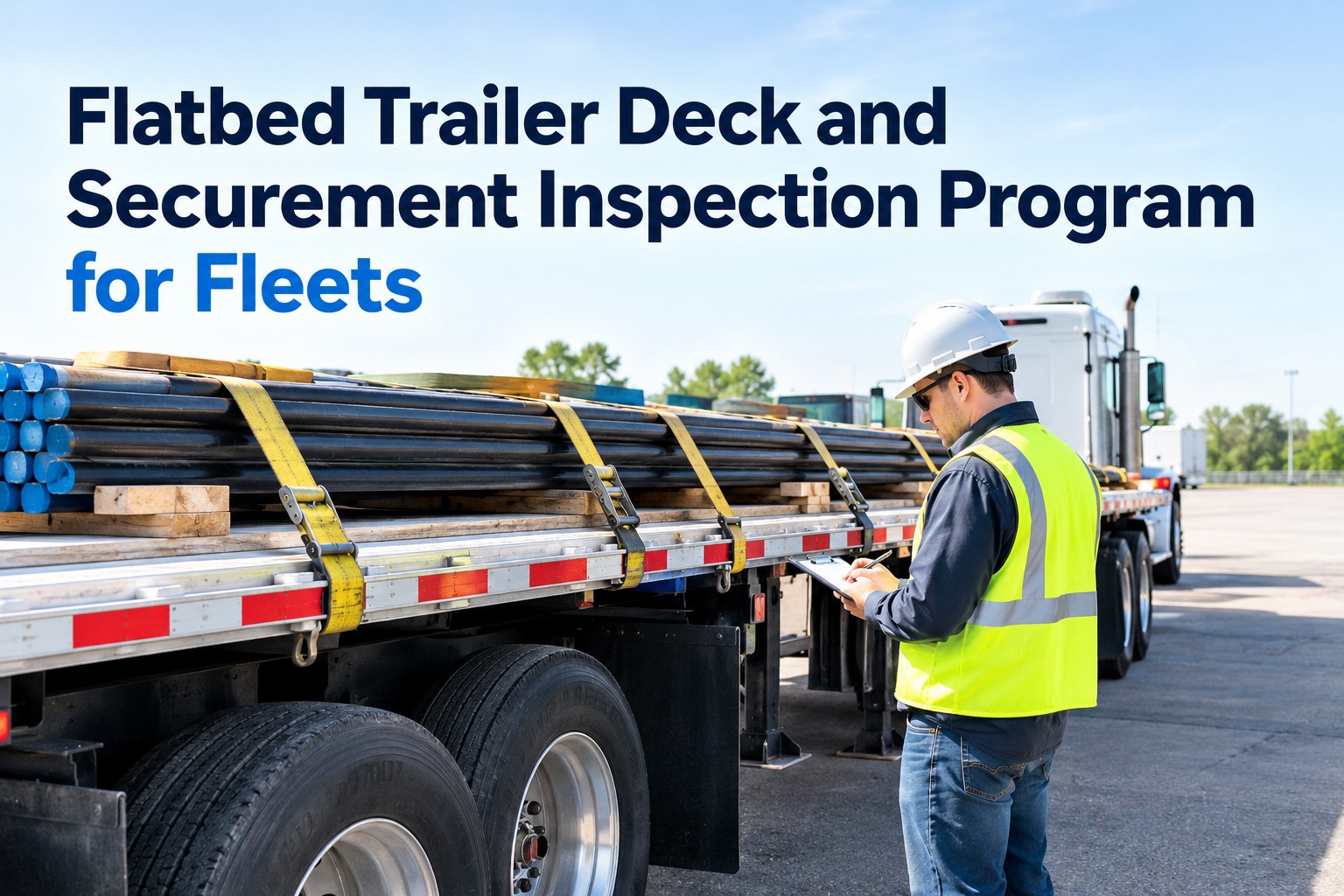
Your DVIR program inspects the truck. On a flatbed, that's only half the safety system. An enclosed trailer has walls to contain a load; a flatbed has nothing but a deck and a web of chains, straps, and binders —...
Read More
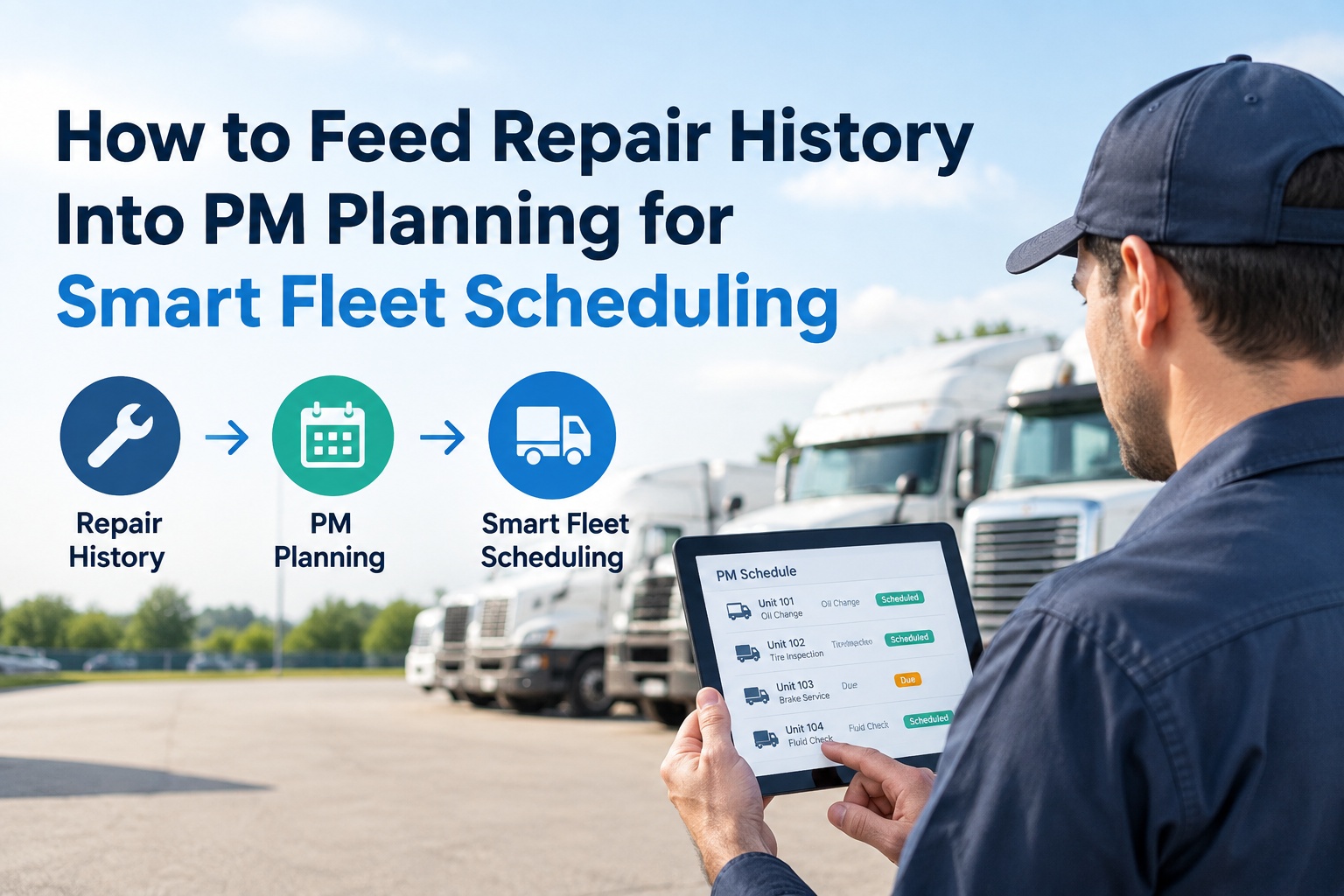
Your repair log is the most valuable PM planning input you own — the only data that shows what's actually failing on your trucks, routes, and duty cycle, not what an OEM manual guessed. But the loop is rarely closed:...
Read More
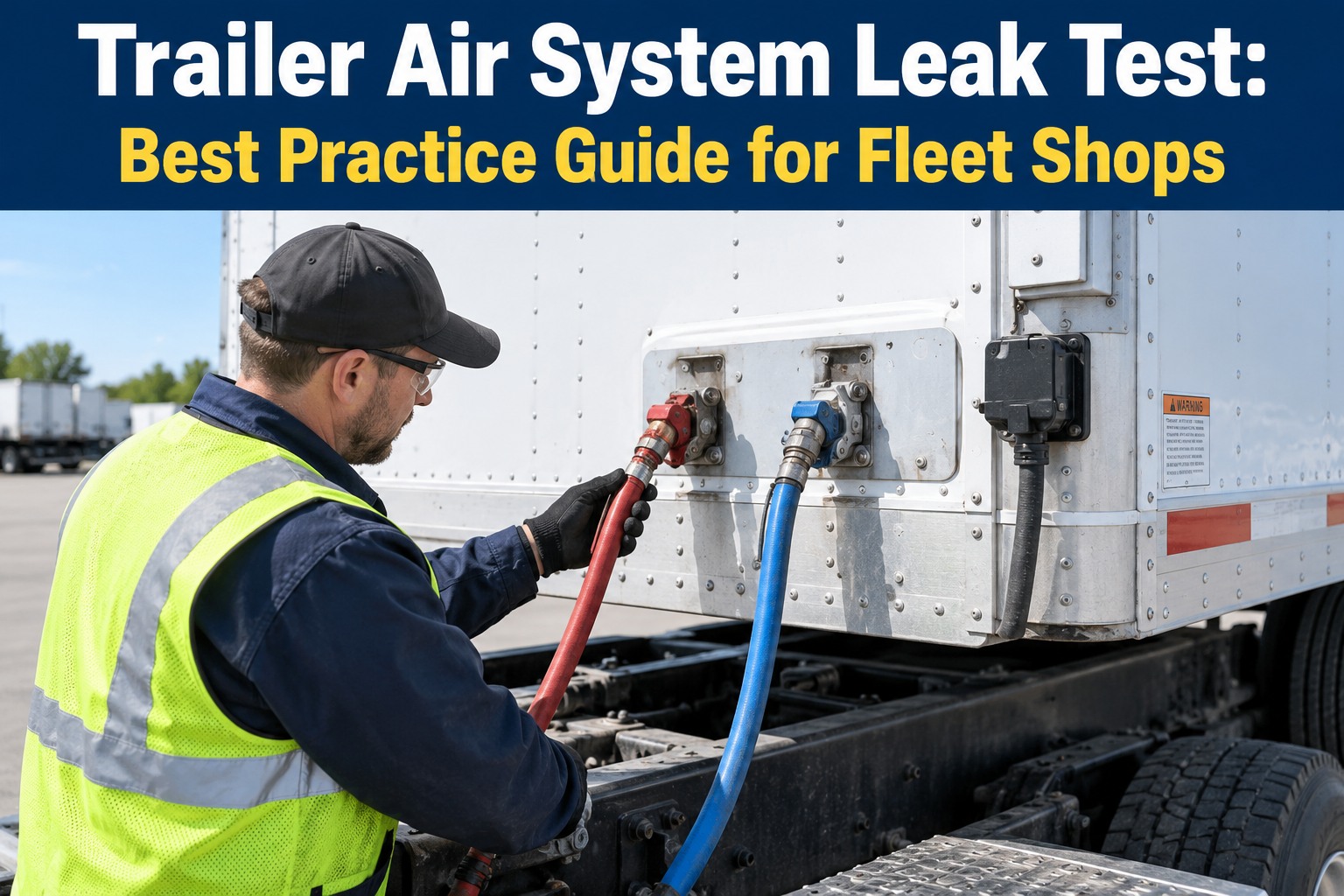
A trailer that loses 6 psi a minute doesn't announce itself. It sits in the yard looking fine, passes a glance, and then fails a roadside leakdown test — or worse, bleeds its reservoir overnight until the spring brakes lock...
Read More
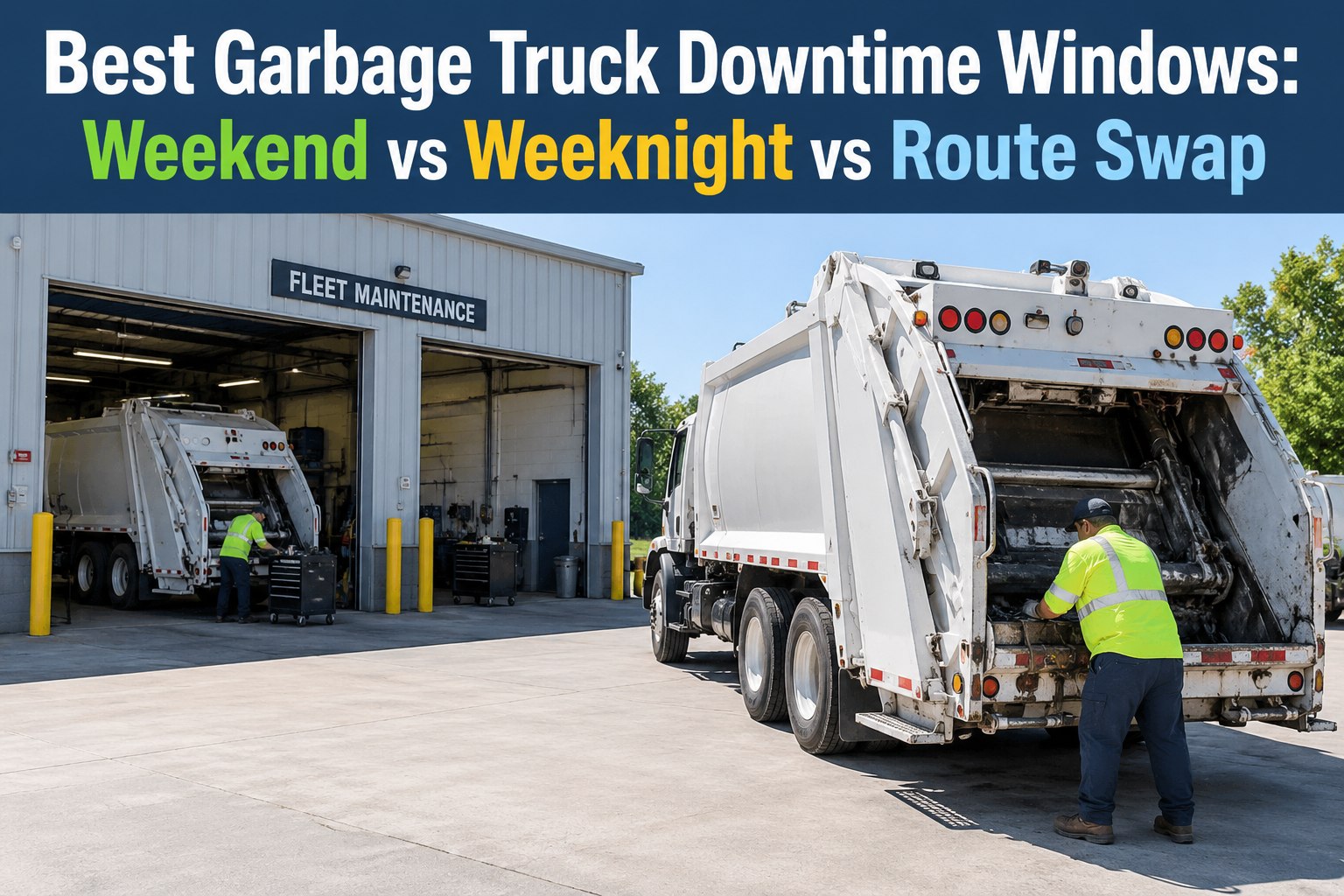
Every refuse fleet manager runs into the same wall: the truck has to be on the street when the route runs, and PM has to happen when it doesn't — but a garbage truck's "doesn't" is a narrow, awkward slice...
Read More
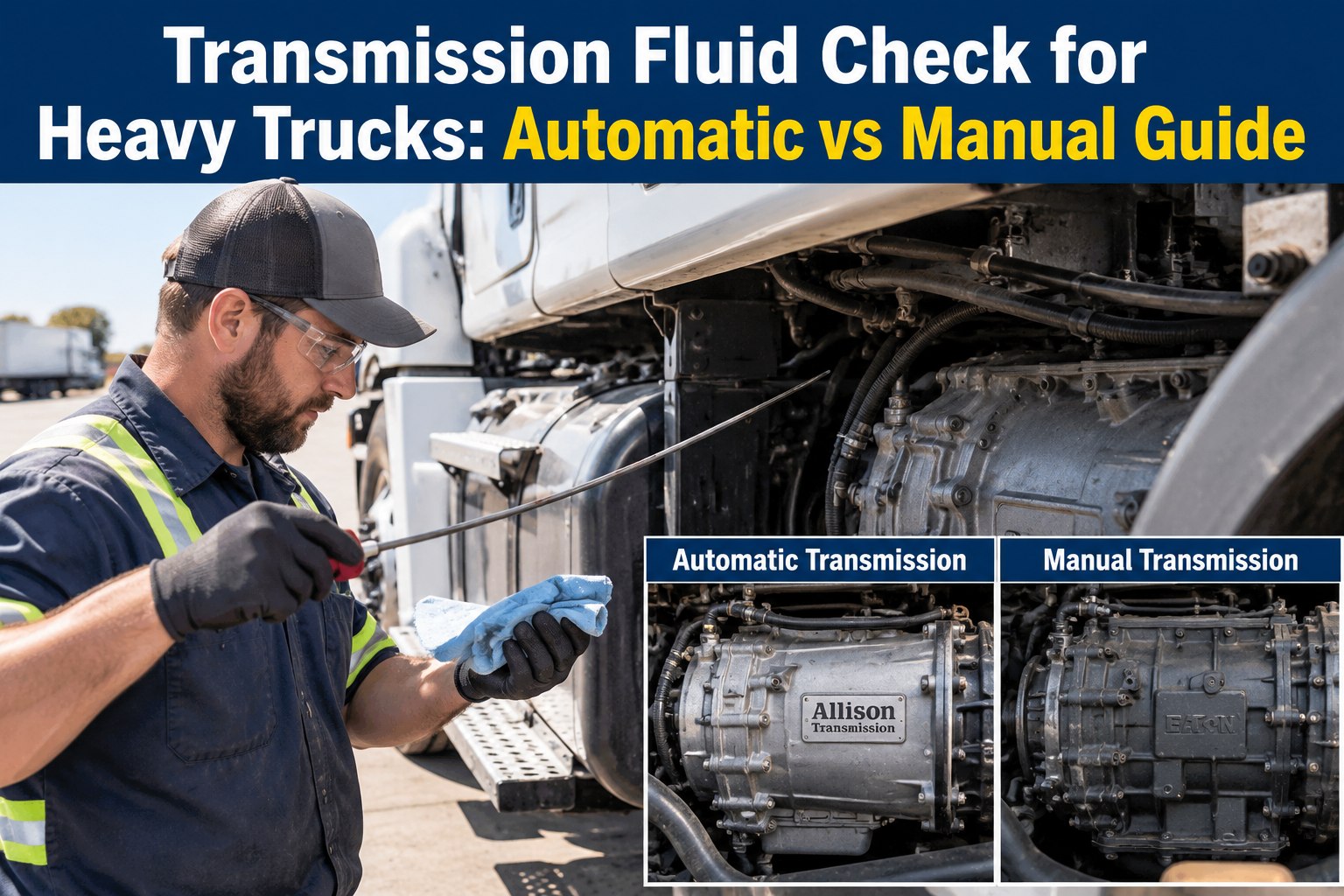
Ask a driver to "check the transmission fluid" and the right answer depends entirely on what's bolted behind the engine. On an Allison automatic, checking it with the engine off gives you a dangerously wrong reading. On an Eaton Fuller...
Read More
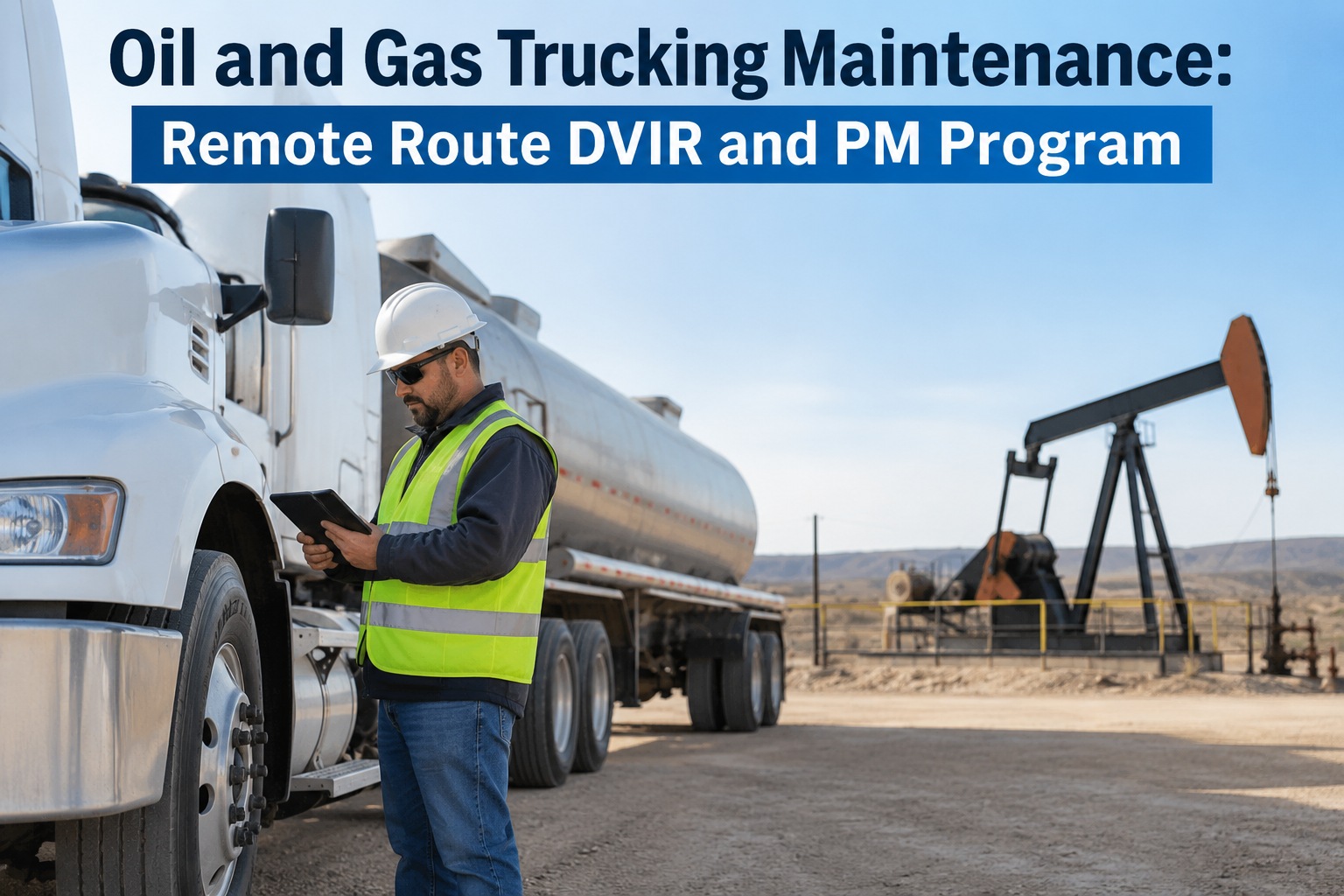
On a normal freight lane, a breakdown means a tow and a late delivery. On an oilfield lease road, it can mean a driver stranded hours from the nearest town, no cell signal to call for help, an H₂S environment,...
Read More
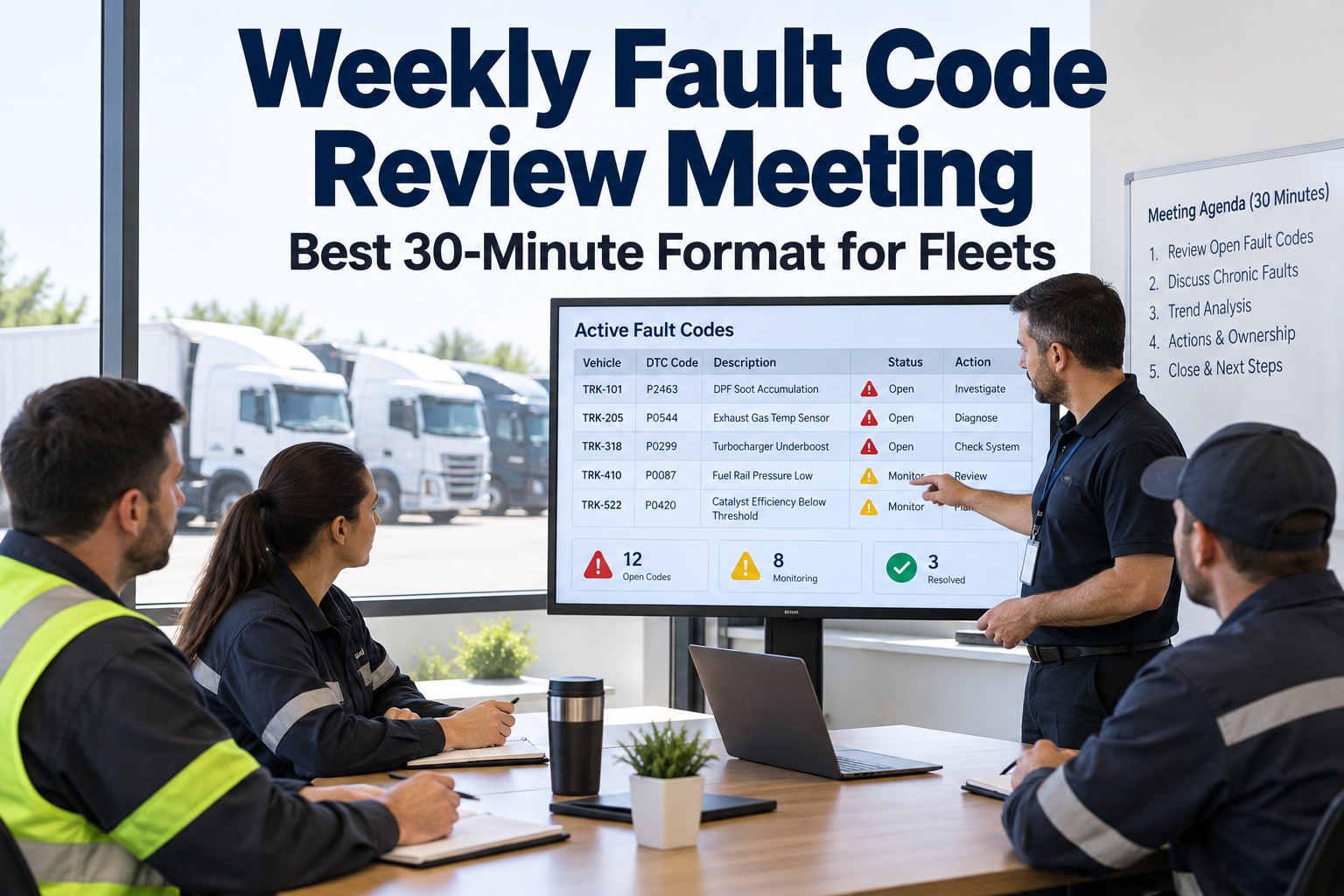
Your telematics already catches fault codes the instant an ECU throws them. That's not the problem. The problem is the code that fires, gets glanced at, and gets ignored — then fires again next week, and the week after, until...
Read More
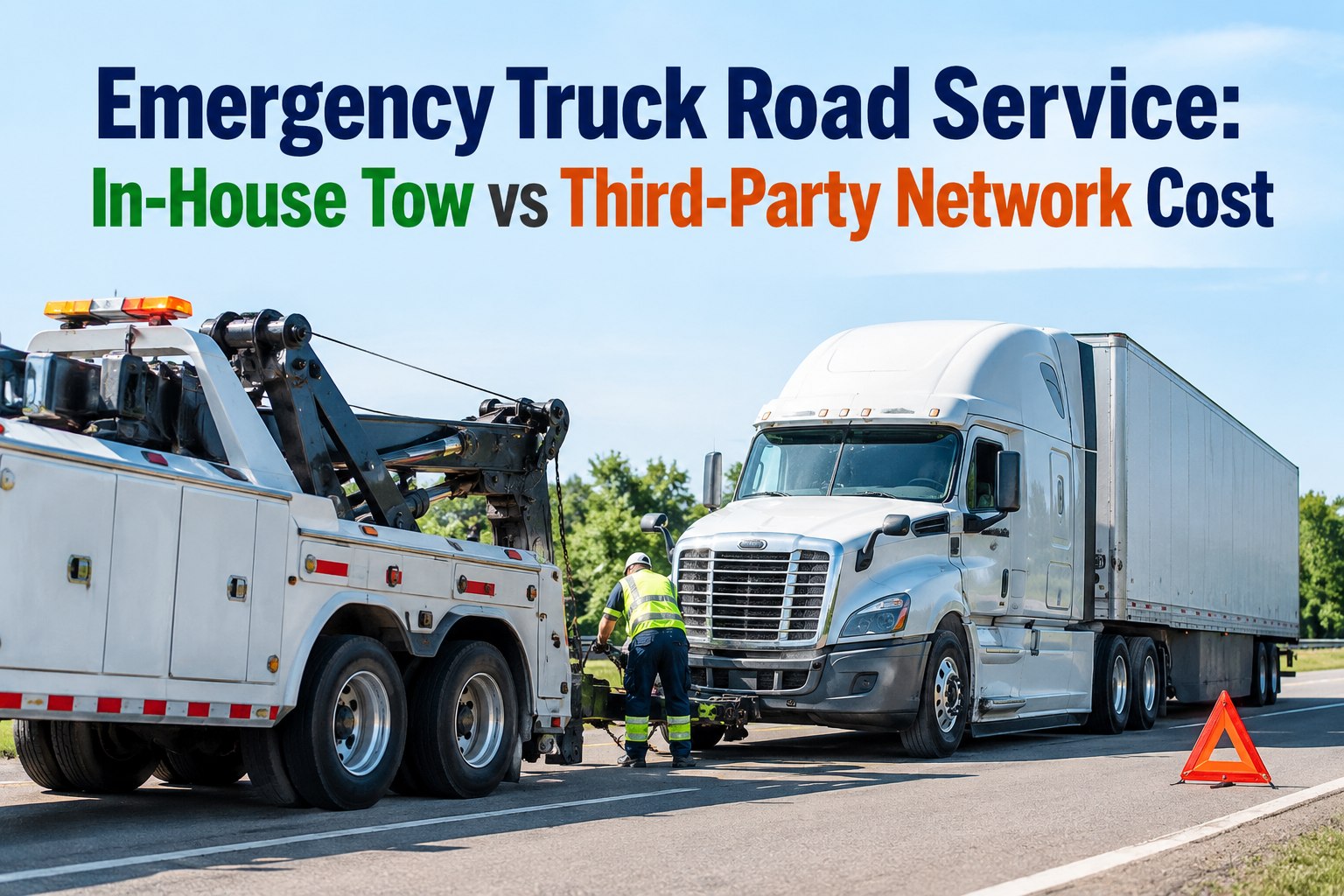
When a truck goes down on the shoulder, the meter starts running twice — once on the clock, at $448 to $760 per day in lost revenue for that unit, and once on the tow bill, which can swing from...

Read More
A private fleet that connects its telematics feed to its maintenance system gets fewer breakdowns and lower costs. A government fleet gets all of that — plus something a private fleet never has to think about: the ability to answer...
Read More
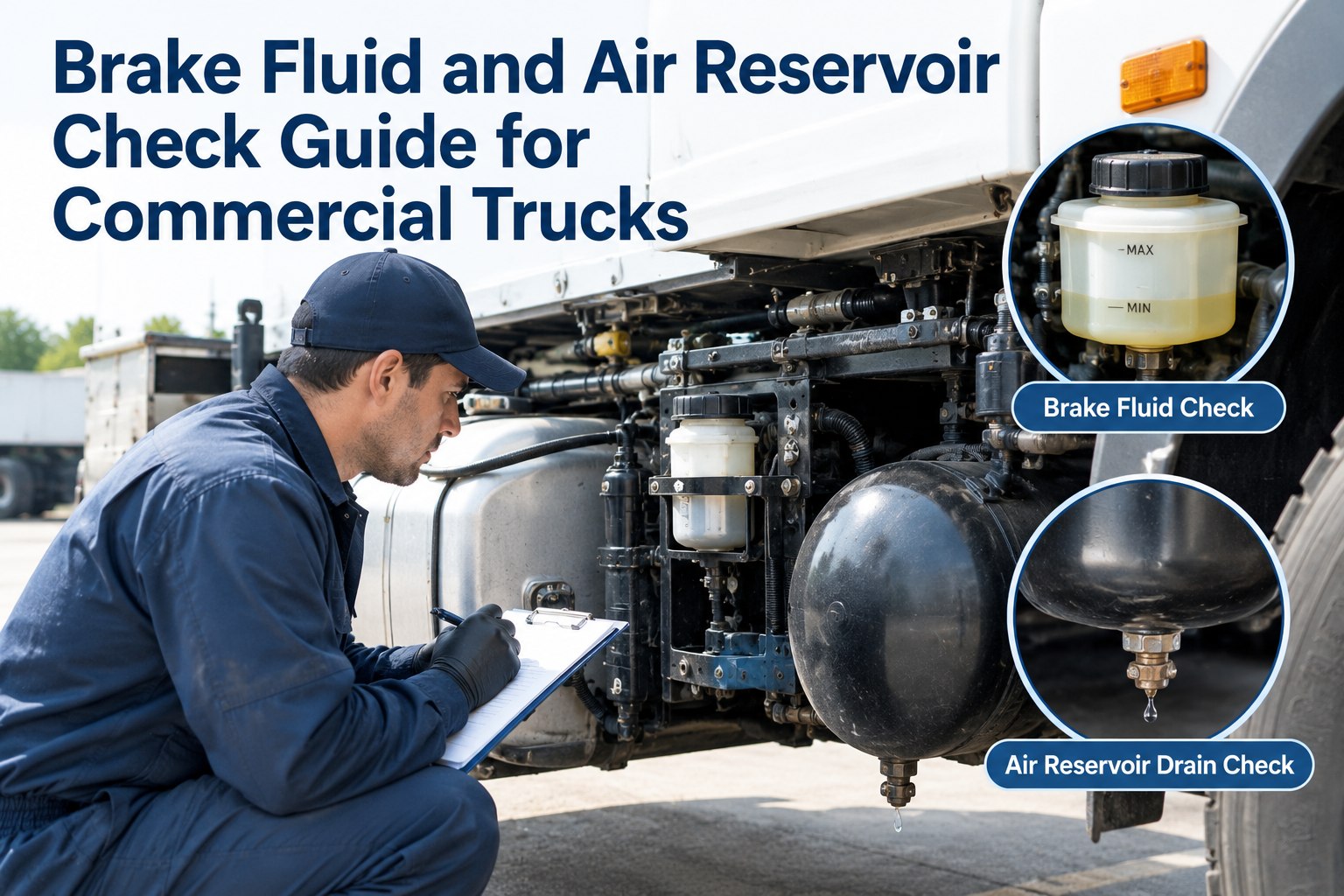
Two commercial trucks can sit side by side in the same yard and need completely different brake maintenance. The Class 8 tractor runs air brakes — its number-one enemy is water condensing inside the reservoirs, purged by a daily drain....
Read More
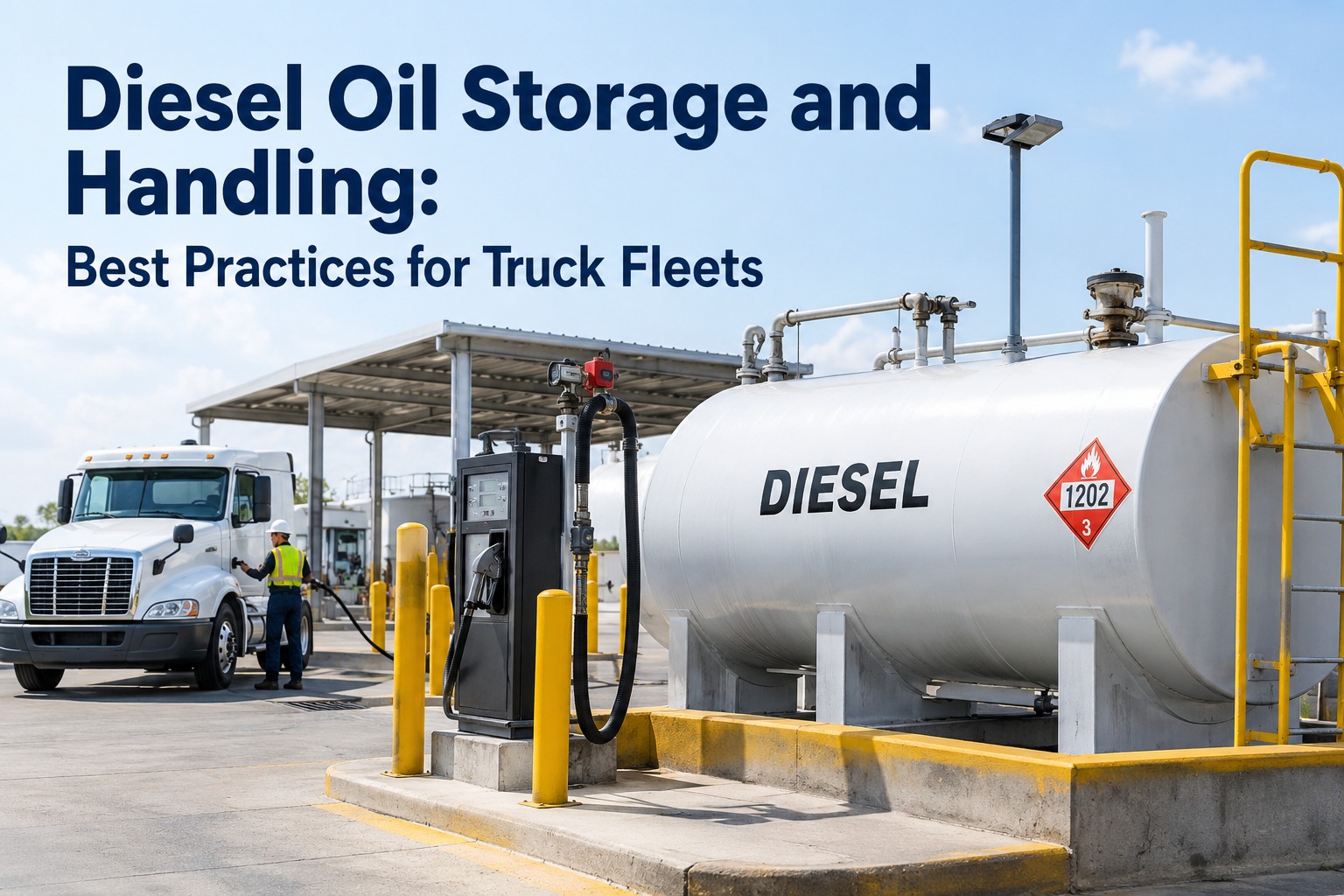
Most fleets treat new oil as clean oil. It isn't. Independent particle-count studies have found that oil straight from a drum or bulk tank routinely arrives dirtier than the engine it's headed into — in one widely cited review of...
Read More
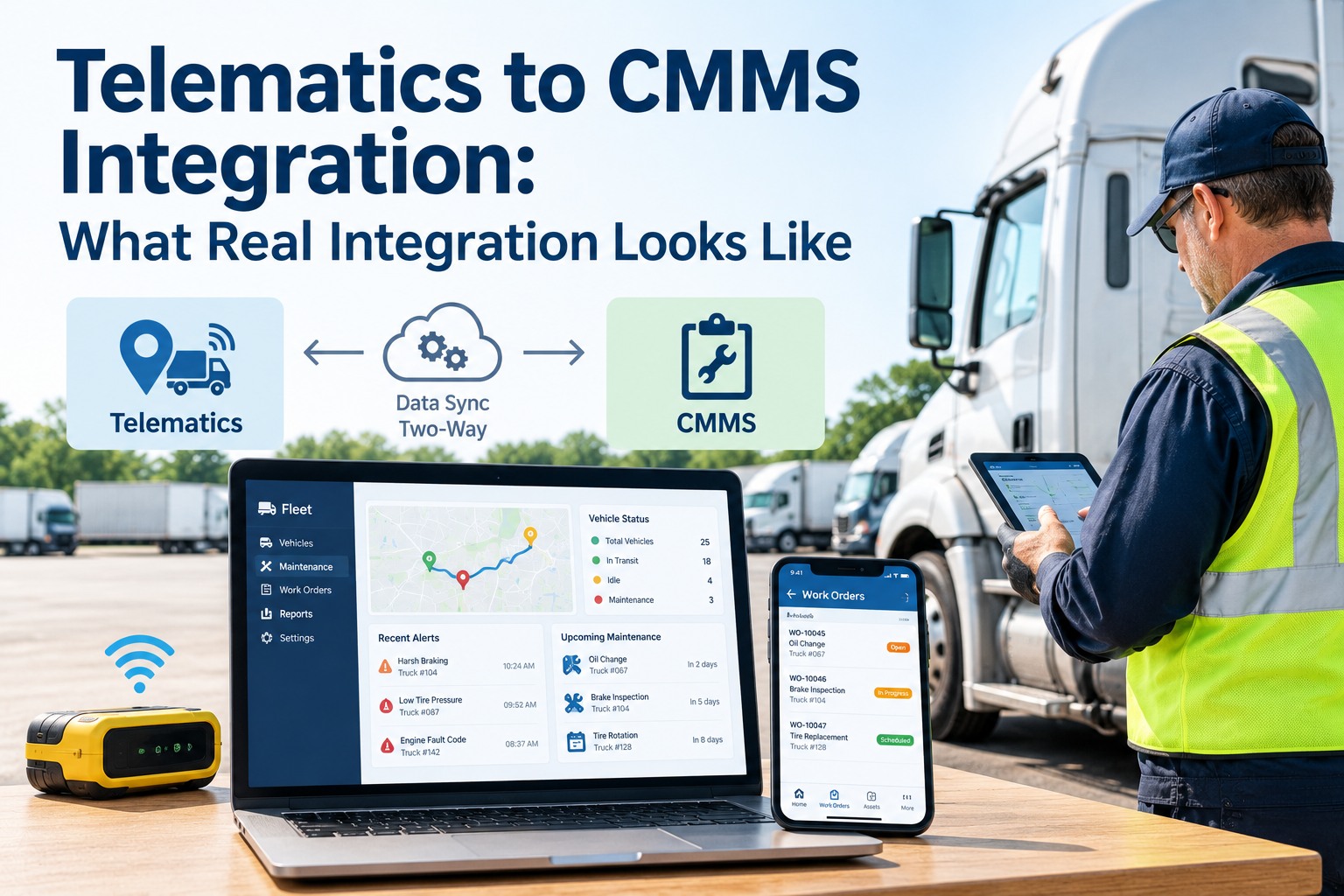
Ask ten fleet software vendors if they have "telematics-CMMS integration" and you'll get ten yeses. Ask what happens when a fault code fires and the answers diverge dramatically — from "we send you an email" to "a work order opens...
Read More
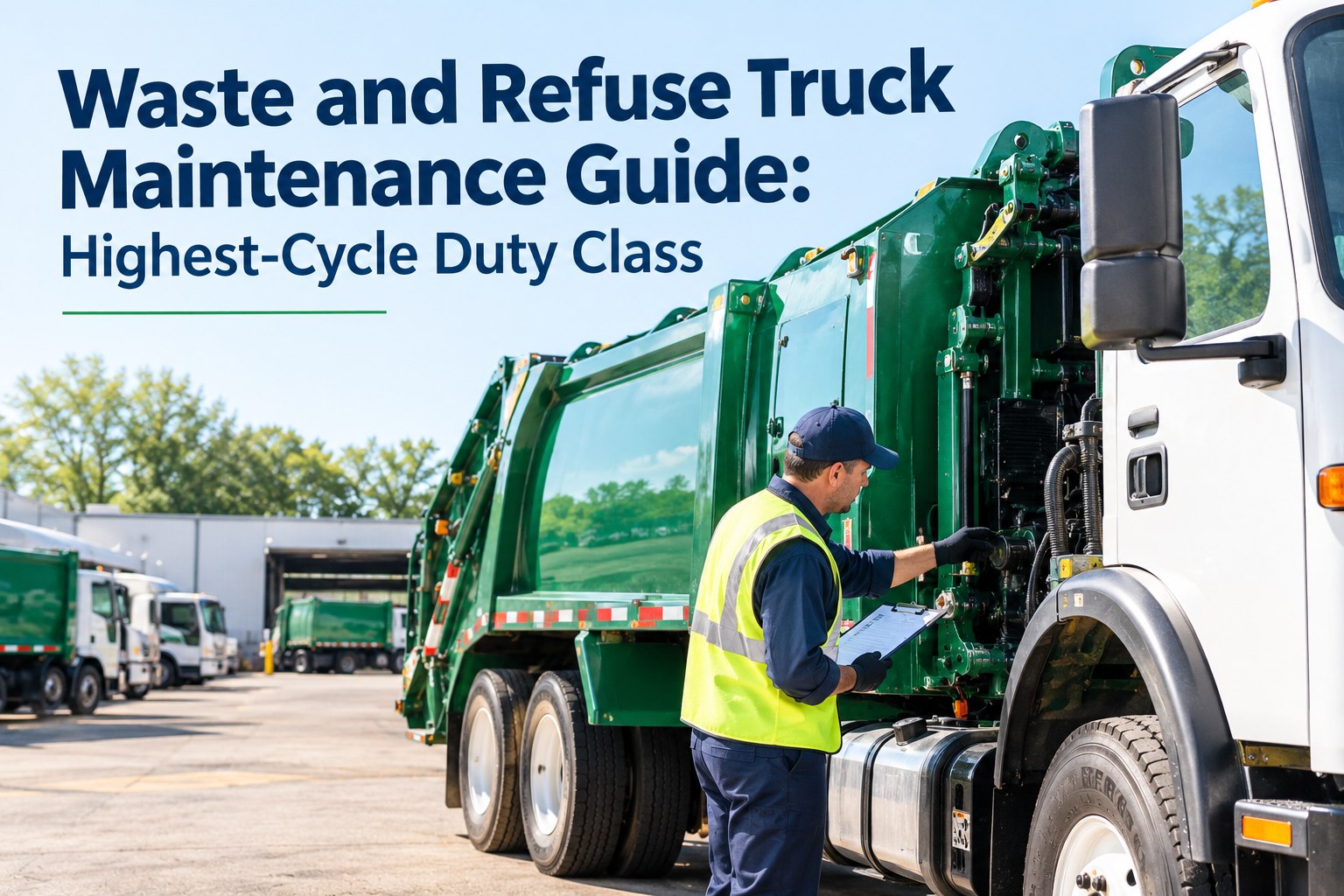
A refuse truck lives in a duty cycle no other truck class touches. On a residential route it does 800-1,200 start-stops per shift, 600-1,000 hopper cycles, 400-700 packer cycles, plus arm lifts on automated side loaders. On a commercial front-loader...
Read More
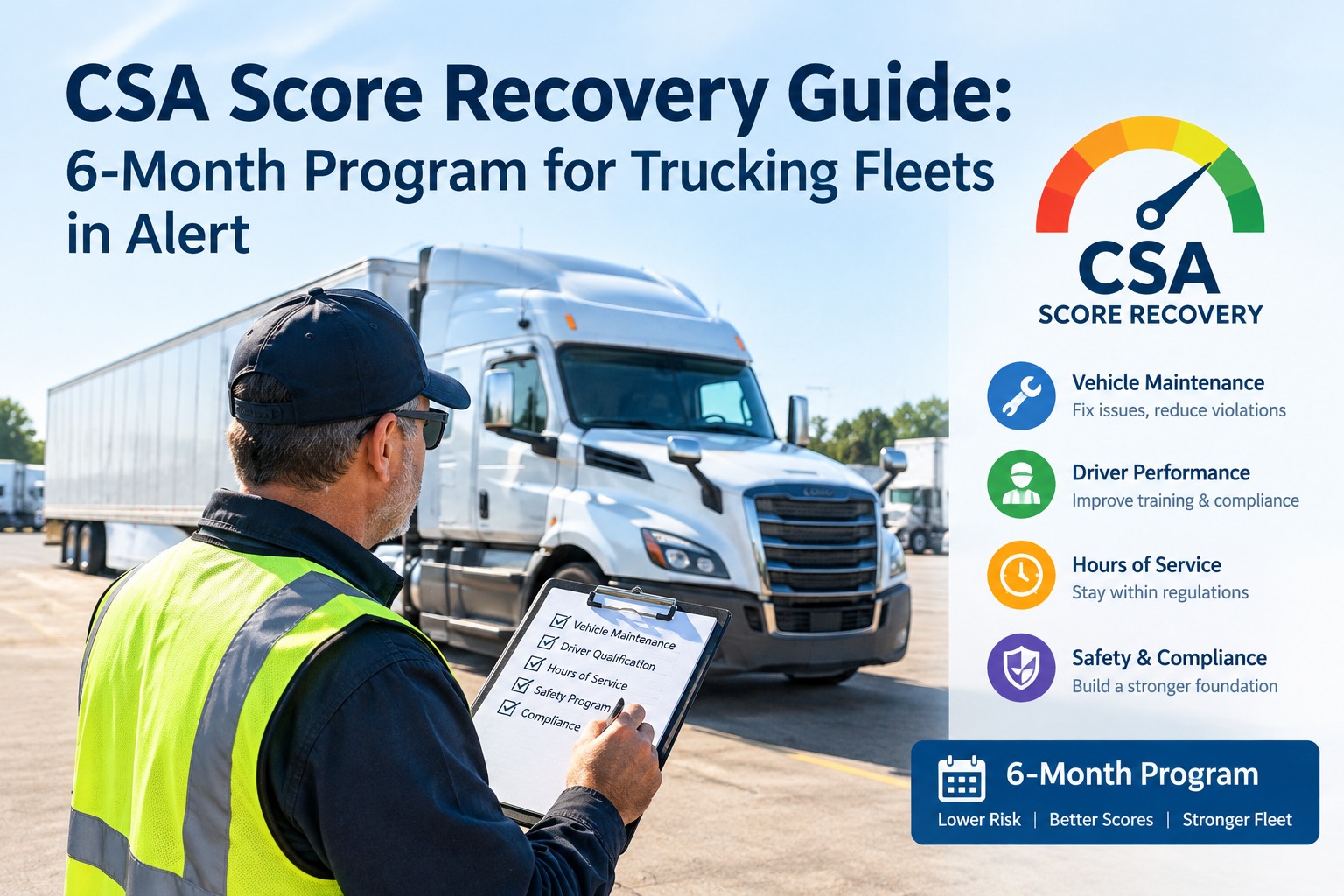
An 80th percentile in Vehicle Maintenance isn't a death sentence — it's a 6-month project. Fleets in the alert range that follow a structured recovery program consistently drop 15-30 percentile points inside two quarters. Fleets that don't follow a program...
Read More
Auto haulers carry the highest per-load cargo value in trucking outside of specialized couriers — a fully loaded 8-9 car carrier moves $200K-$600K of finished vehicles per trip. A single tie-down failure or hydraulic deck drop doesn't just cost the...
Read More
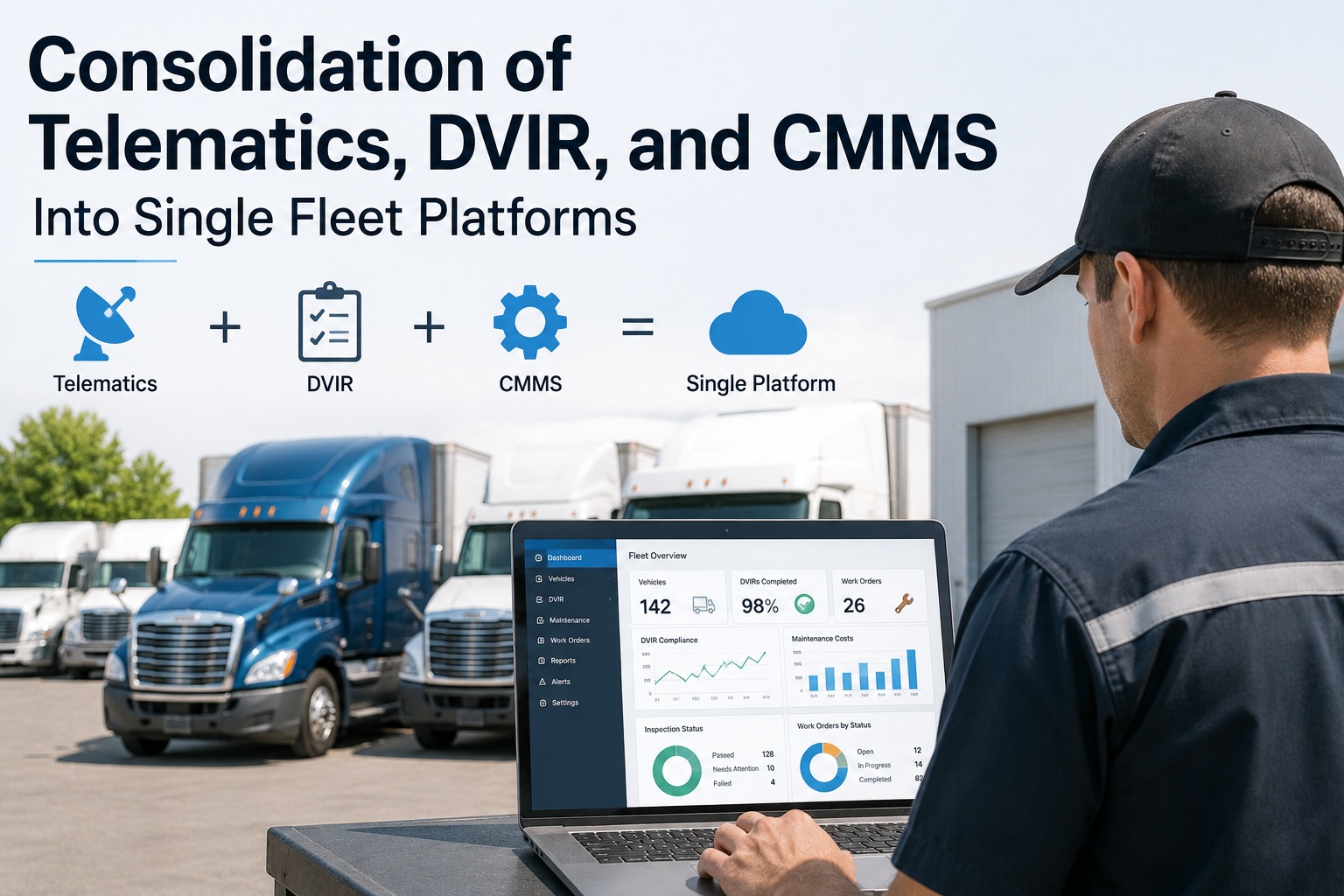
The classic fleet stack — telematics from one vendor, DVIR from a second, CMMS from a third, plus a spreadsheet on top — is quietly being replaced. 2026 is the year platform consolidation stops being a promise and becomes the...
Read More
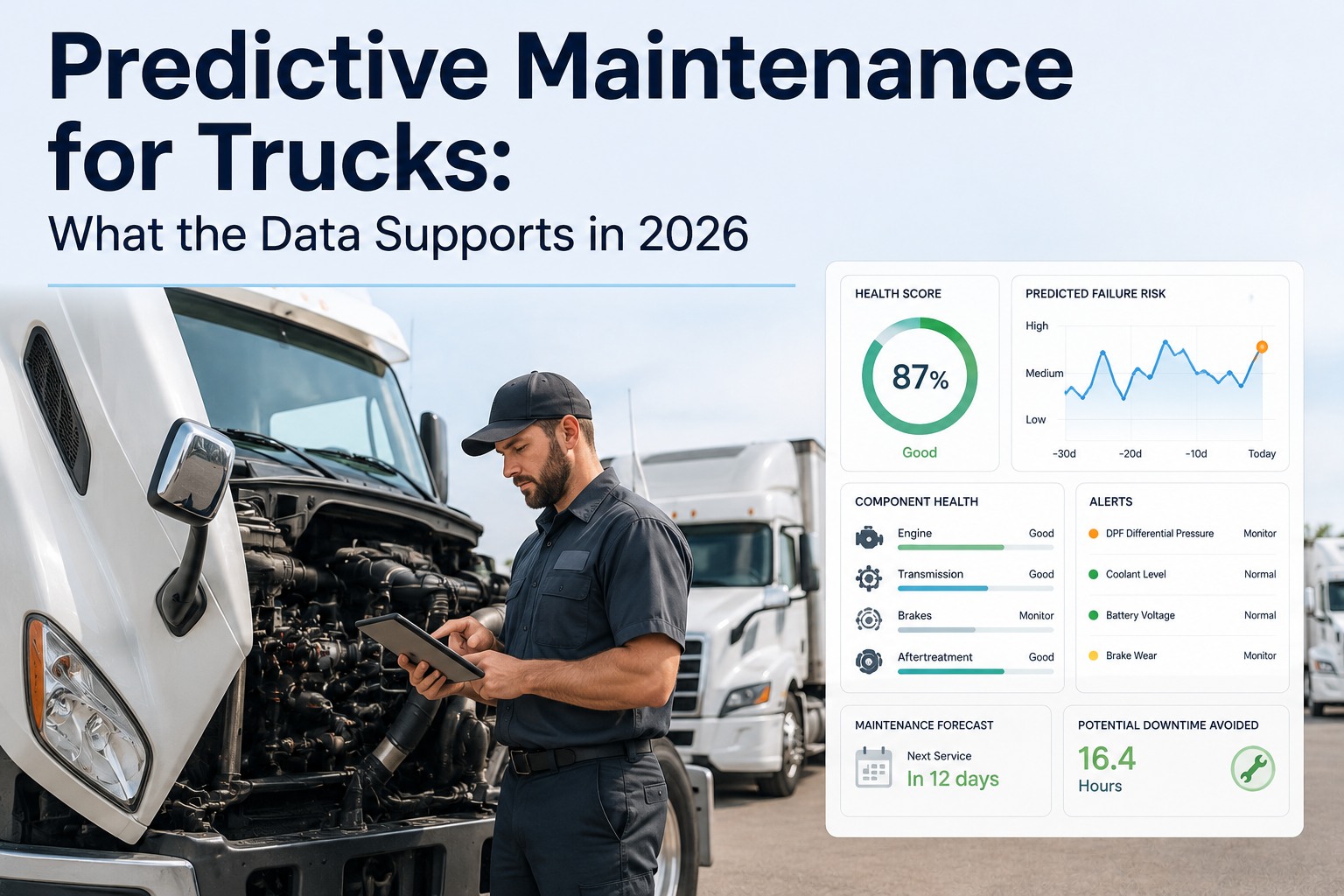
Vendor decks promise 10x ROI, 70% fewer breakdowns, and payback in 90 days. Fleet managers who've actually deployed predictive maintenance in trucking report something different: modest, defensible gains that require patience, clean data, and an honest baseline. The gap between...

Read More
OTR fleets don't fail like regional or urban fleets. When a linehaul truck breaks down 400 miles from a terminal at 2 a.m., the closest shop is somewhere on the interstate, the closest OEM tech is a shift away, and...

Read More
Missing or incomplete driver qualification files are one of the top findings in FMCSA compliance reviews — each documentation gap can trigger civil penalties, elevated Driver Fitness BASIC exposure, insurance surcharges, and broker vetting failures. Under 49 CFR §391.51, every...
Read More
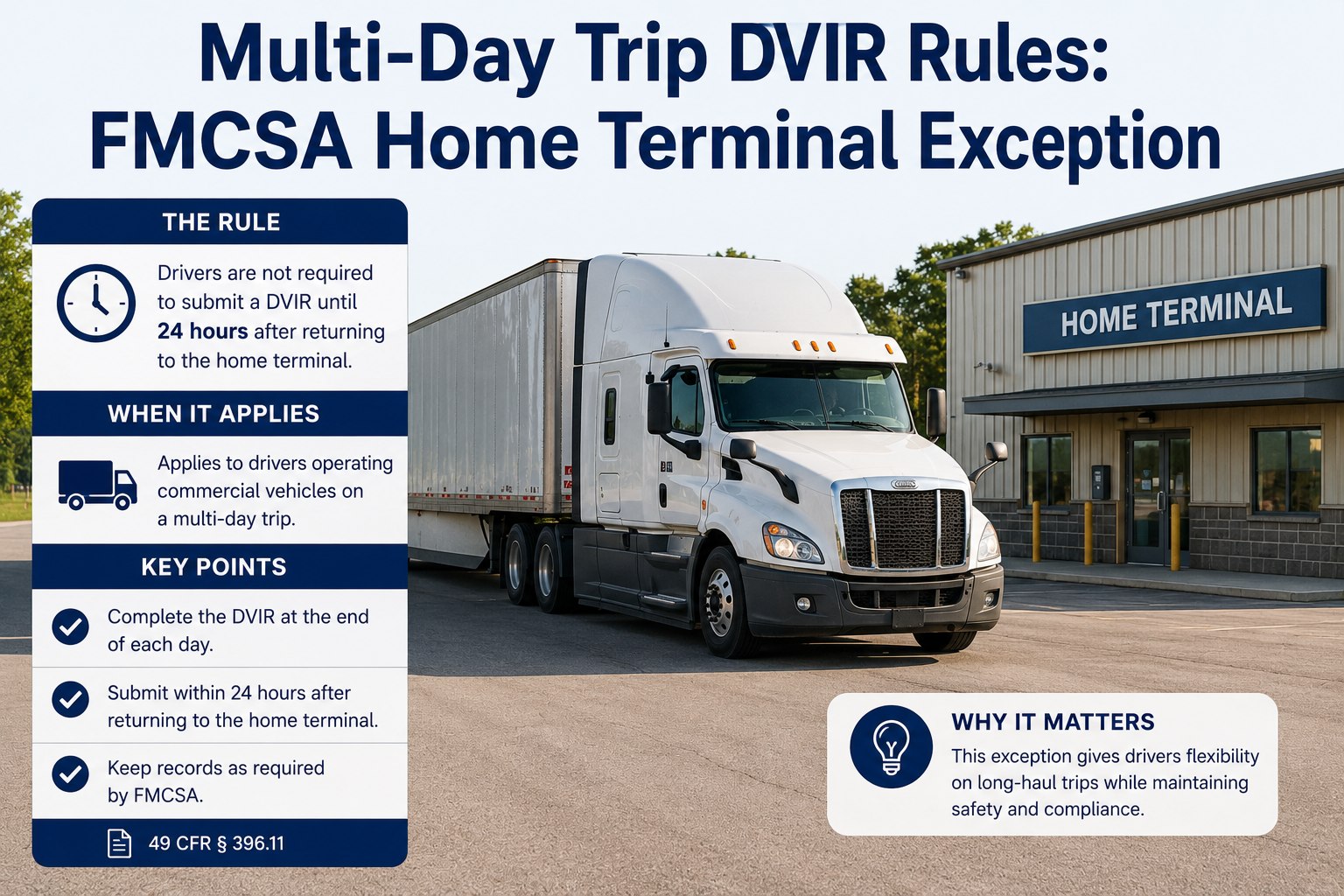
A driver leaves Monday morning on a five-day run. When are DVIRs due? Every night by fax? On return to home terminal? Never, if no defects were found? The answer confuses more fleets than any other DVIR question — and...

Read More
Lighting defects are the #1 category of vehicle-related roadside violations in FMCSA data — a single burned-out marker lamp can put a truck out of service on a Level 1 inspection. FMCSA §393.11 spells out exactly which lights, reflectors, and...
Read More
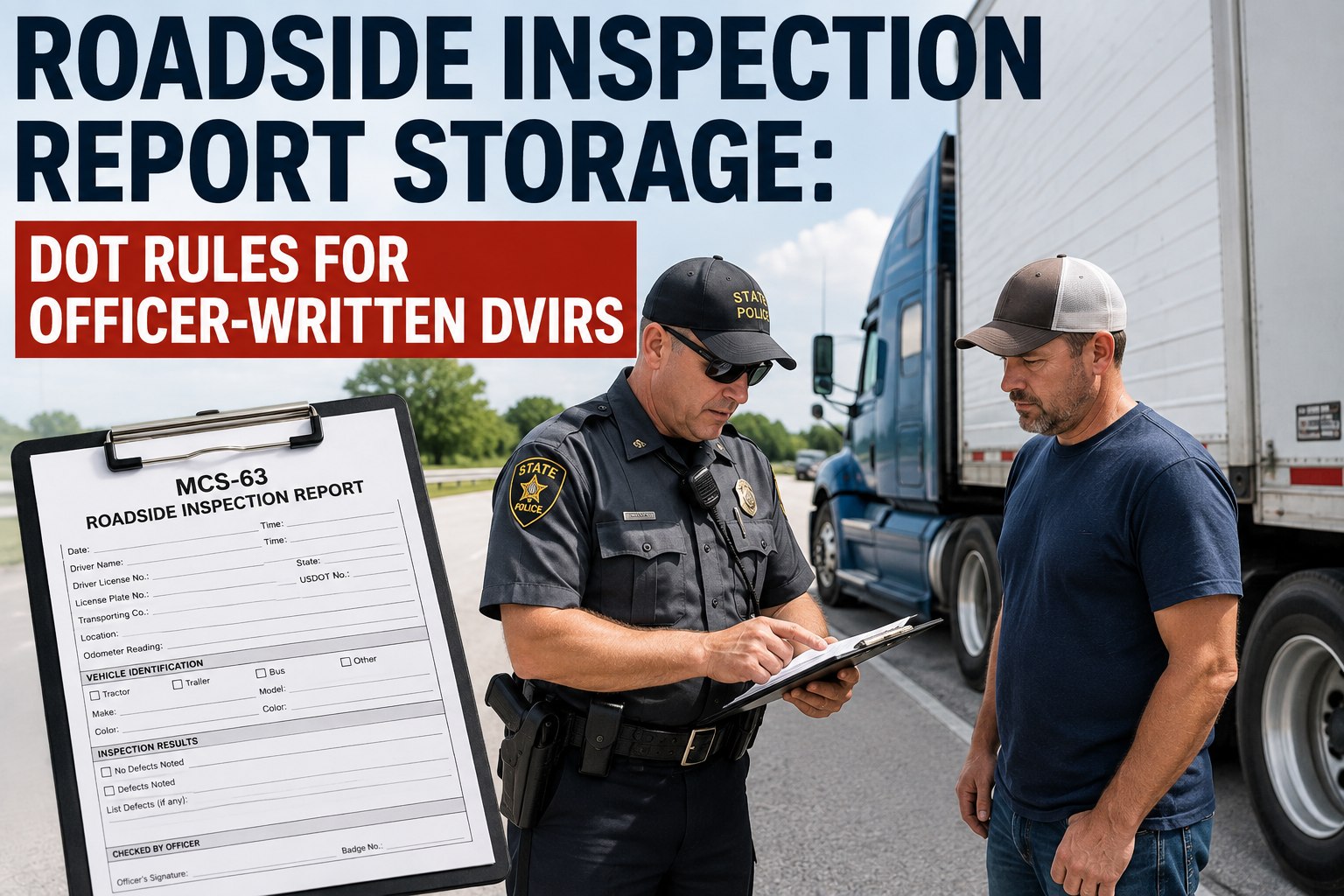
When a DOT officer or CVSA-certified inspector writes a roadside inspection report, that document instantly becomes a federal recordkeeping obligation with a 15-day compliance window and a 12-month retention requirement. Miss the certification deadline, misplace the paper copy, or fail...
Read More
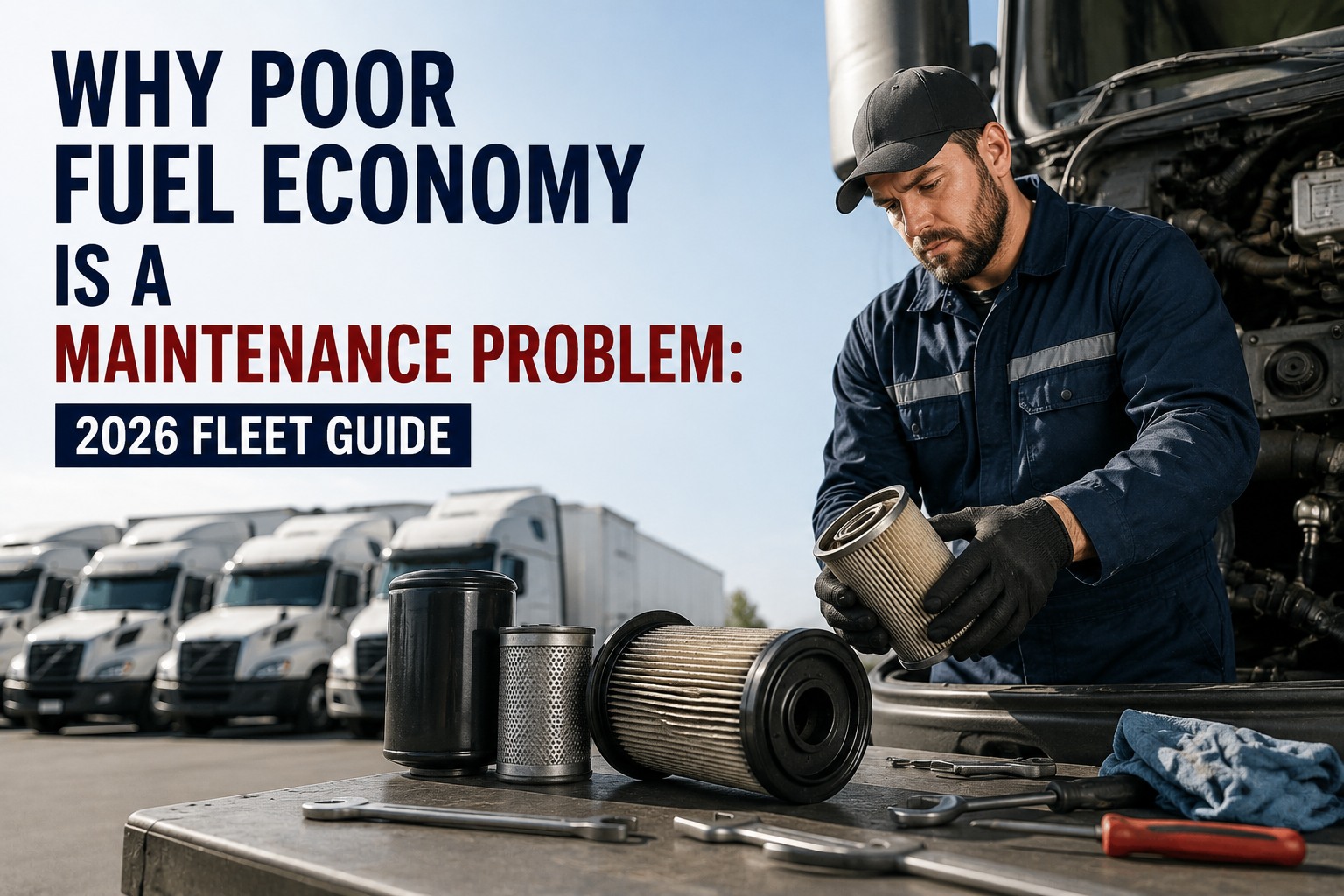
The industry knee-jerk when MPG drops is to blame the driver. Real fleet data says otherwise: roughly 60% of diesel fuel economy loss traces back to maintenance issues, not driver behavior. Under-inflated tires alone can cost 3% MPG. A clogged...
Read More
You bought telematics. You bought a maintenance system. You paid an integrator to connect them. Six months later, PMs trigger on the wrong units, fault codes show up three days late, and half the fleet is missing from the sync....
Read More
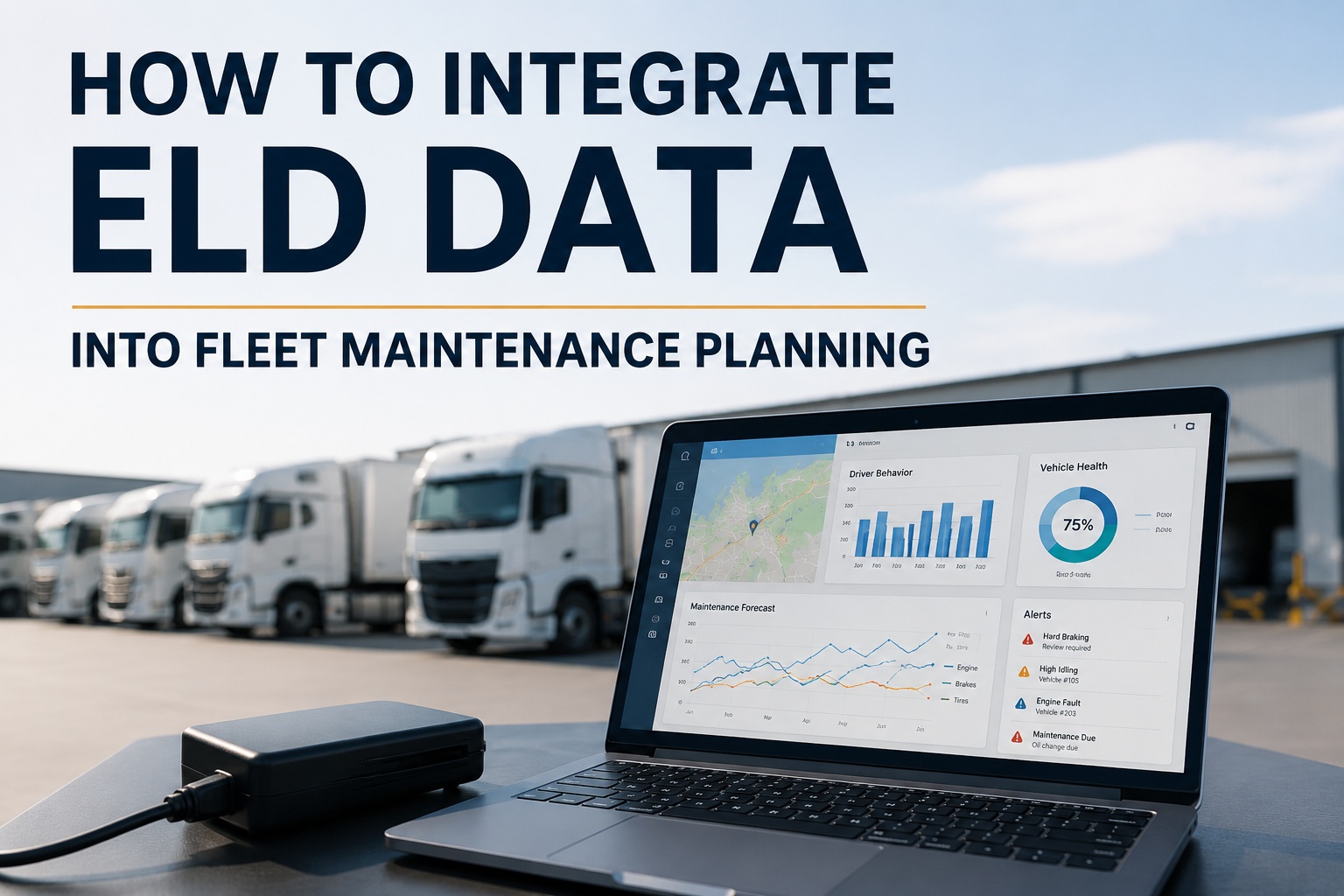
An ELD is a compliance device that streams a maintenance-grade data feed. Most fleets buy it for HOS logging and stop there — leaving 90% of the value on the truck. Every ELD in a commercial fleet continuously broadcasts engine...
Read More
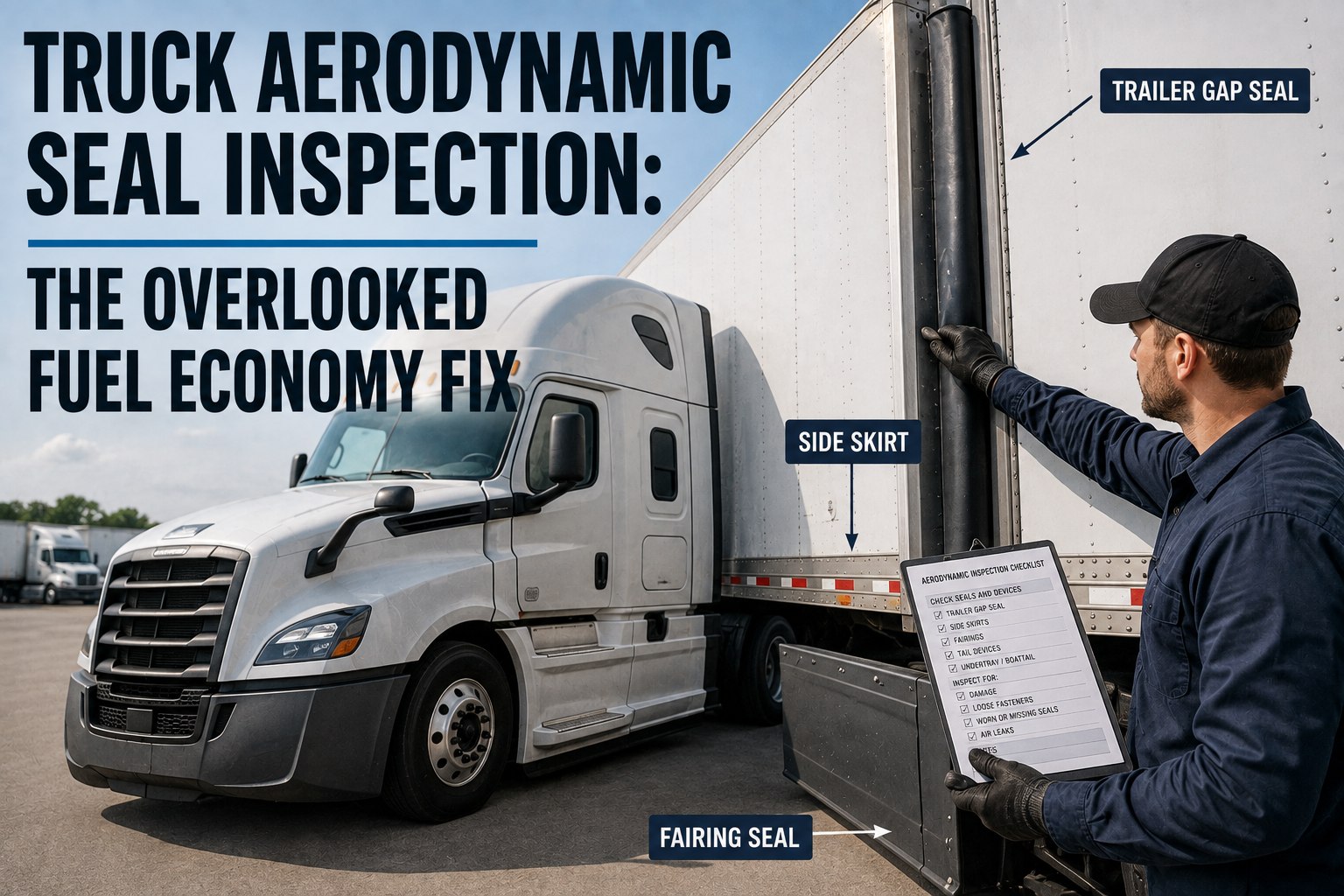
Aerodynamic drag consumes roughly 65% of the energy a tractor uses to pull a trailer at highway speed. Fleets know this — which is why nearly every long-haul truck now runs with side skirts, cab extenders, chassis fairings, and gap-closure...
Read More
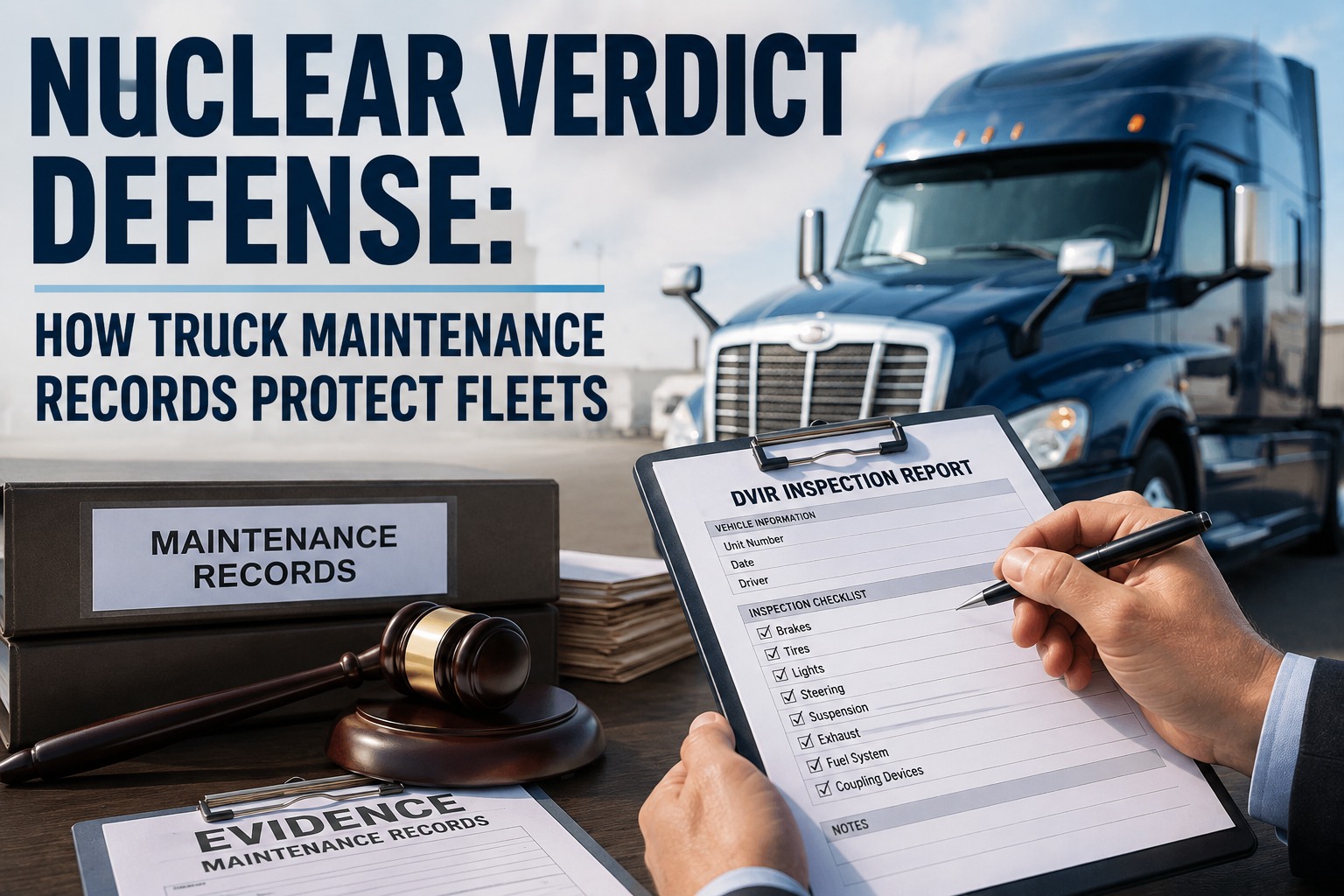
The crash isn't what wins or loses the case. What wins or loses it is what your records look like on a subpoena. Nuclear verdicts against trucking companies — jury awards of $10 million or more — have climbed roughly...

Read More
Every fleet has that one truck. It comes back to the shop for the same fault twice a quarter, gets a fresh part, rolls out, and returns three weeks later with a repaint of the same failure. The technicians know...
Read More
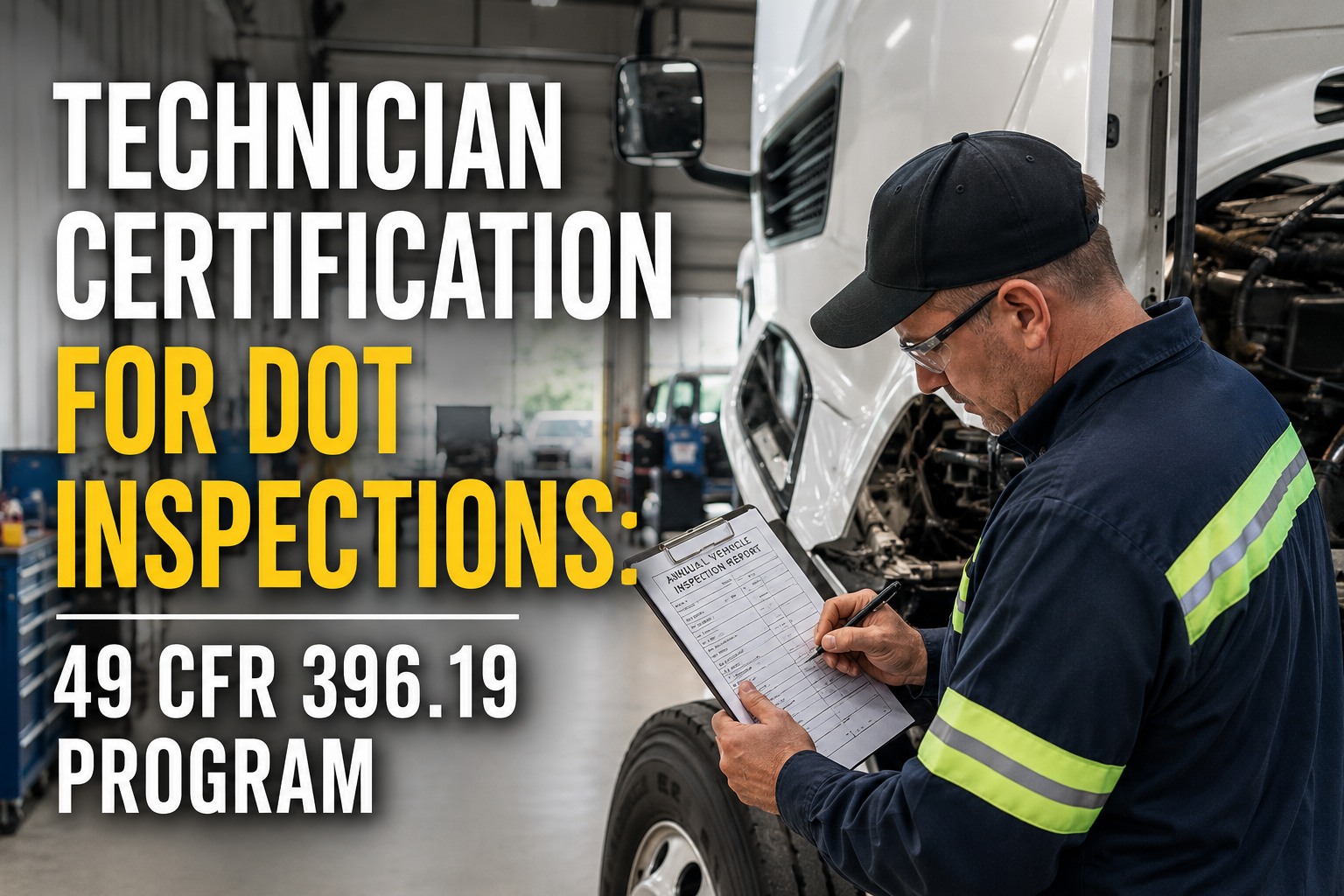
Most DOT audit findings on inspector qualification aren't caused by unqualified technicians — they're caused by fully qualified technicians whose paperwork doesn't prove it. Under 49 CFR 396.19, motor carriers and intermodal equipment providers must ensure every person performing an...
Read More
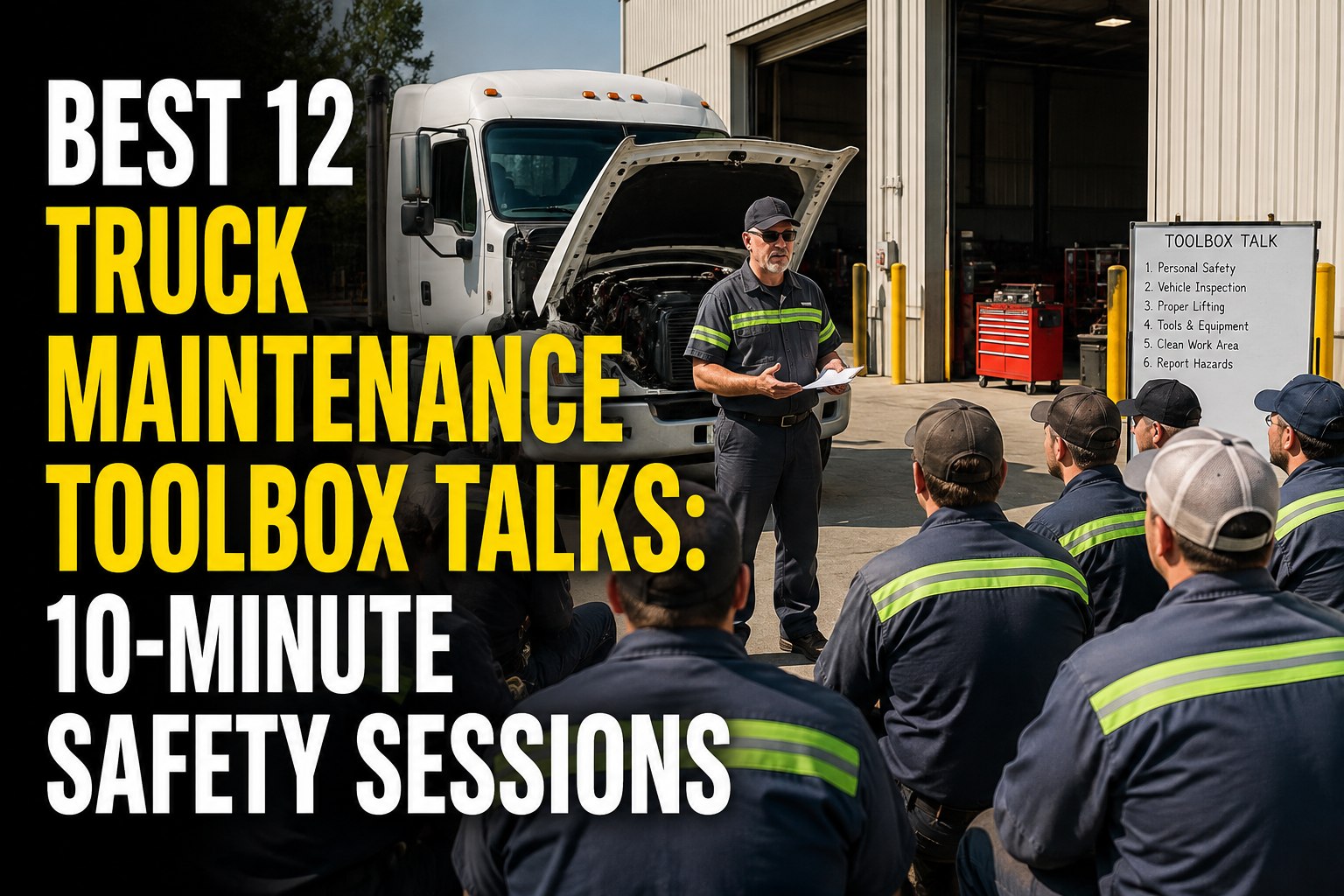
Ask any shop foreman what actually moves the needle on defect rates, CSA scores, and preventable breakdowns, and you'll rarely hear "annual training." You'll hear "the ten minutes we spend together every morning." Toolbox talks — short, focused, pre-shift safety...
Read More
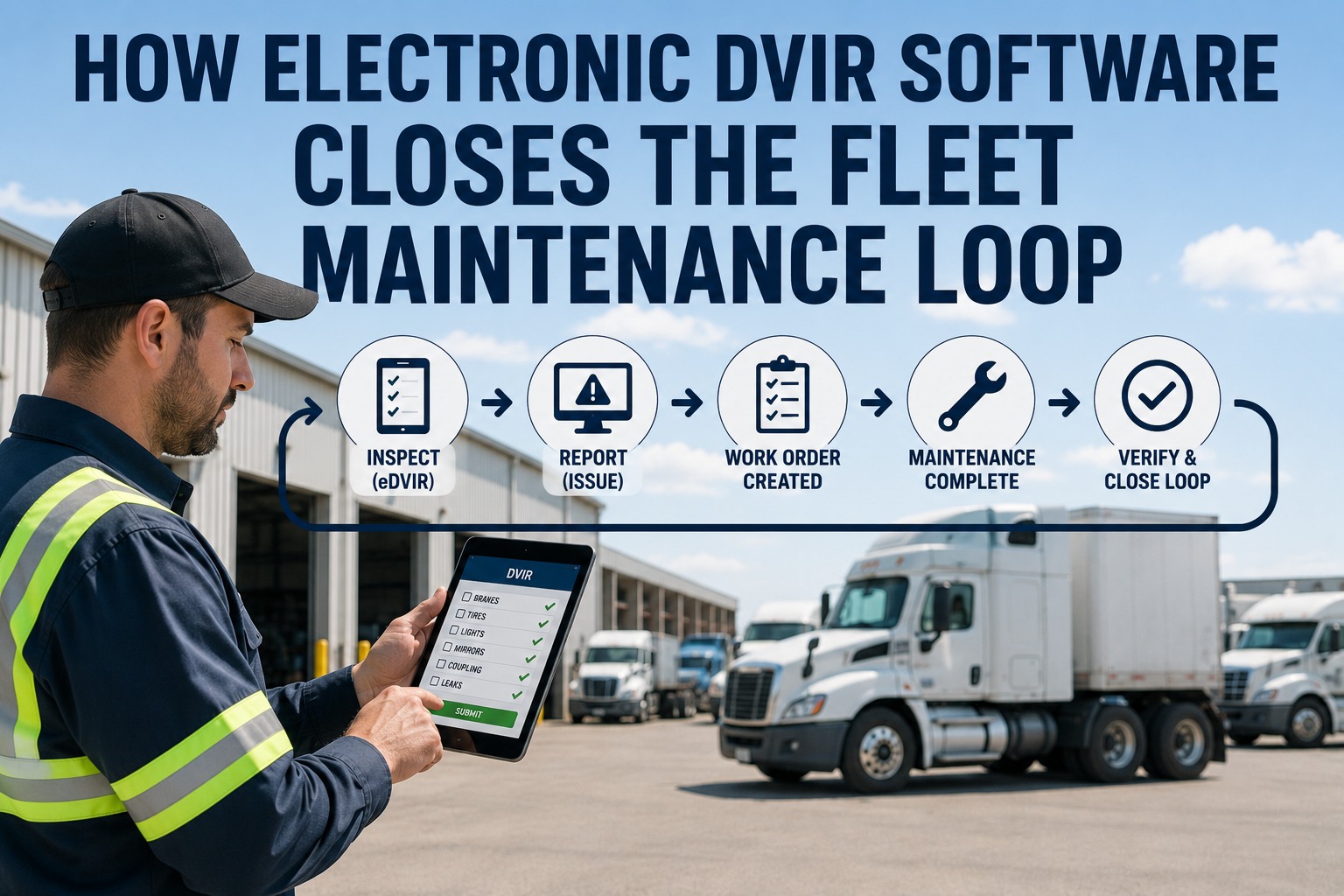
A paper DVIR is a compliance artifact. An electronic DVIR is a workflow trigger. That's the entire difference — and it's what closes the loop most fleets don't know is open. In a paper fleet, the pre-trip inspection, the defect...
Read More
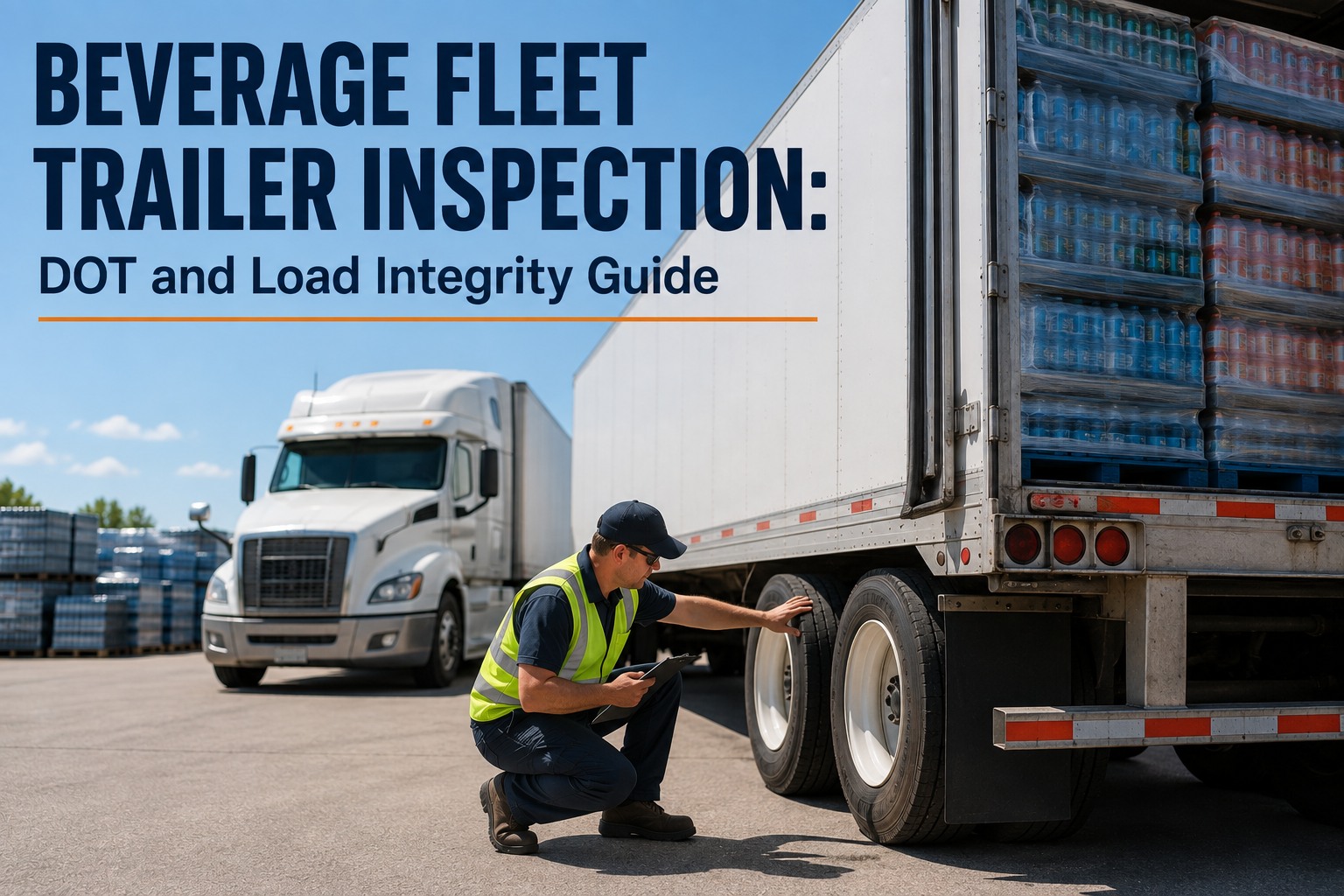
Beverage trailers live at the intersection of DOT compliance and load integrity. The FMCSA rules apply the same as any other trailer — brakes, coupling, lights, tires — but bay-loaded kegs, palletized cases, and refrigerated micro-brews add load-integrity checks that...
Read More
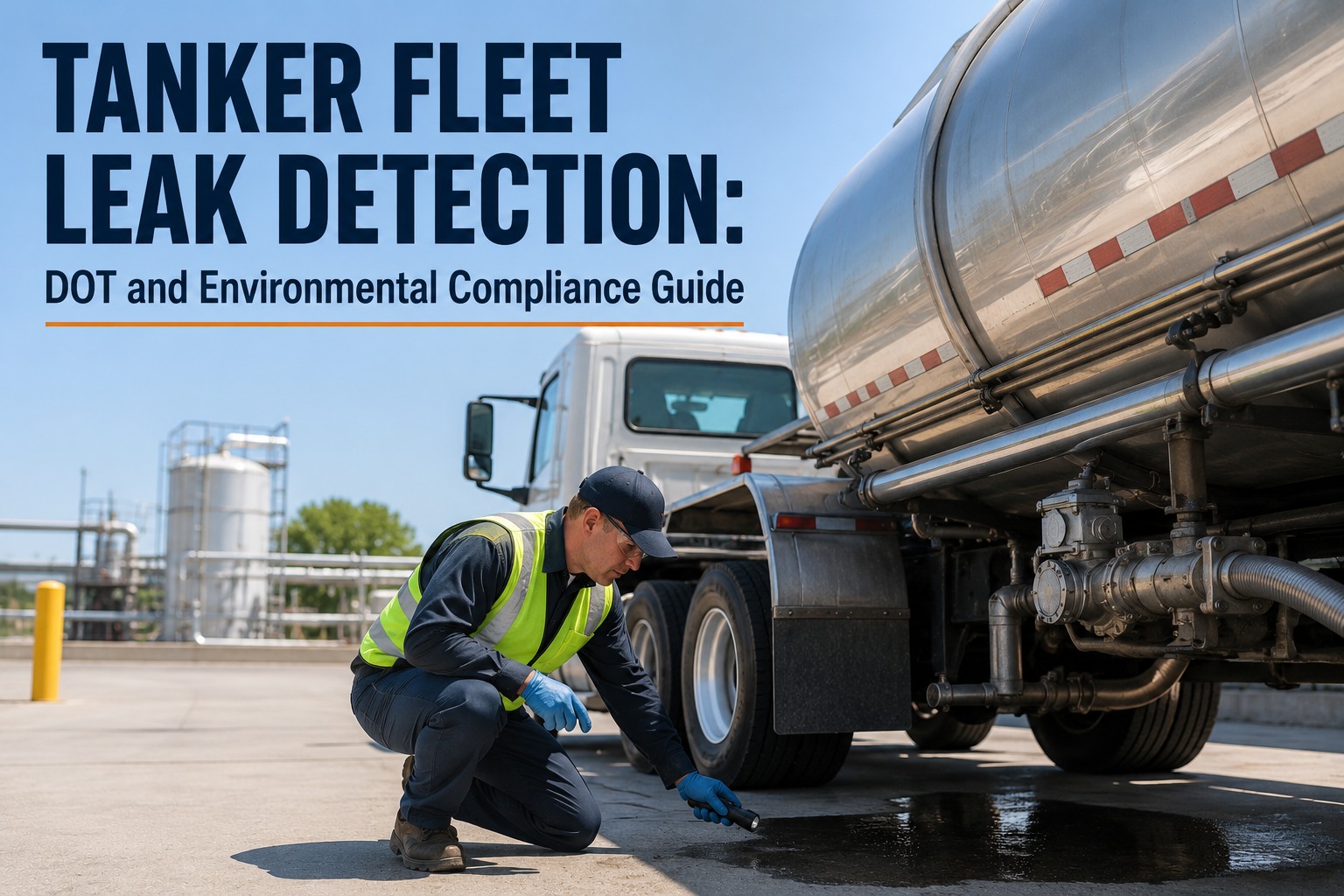
A dry-van fleet detects a fluid leak and files a DVIR entry. A tanker fleet detects a fluid leak and starts a 12-hour countdown clock to the National Response Center. The compliance surface is completely different. Under 49 CFR §171.15,...
Read More
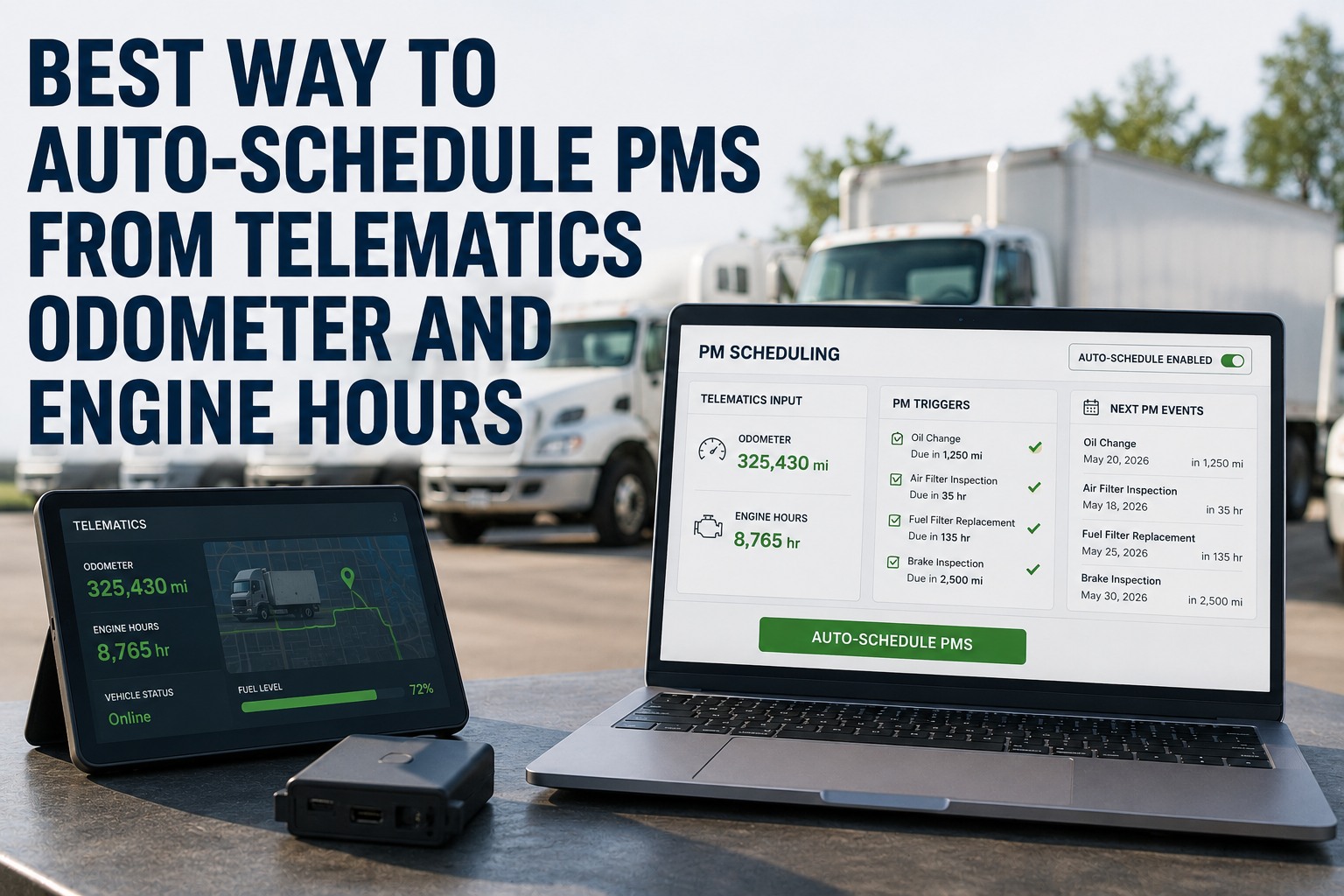
Every truck fleet has telematics. Every truck fleet has PM intervals. And in most fleets, those two systems don't talk to each other — the ELD/GPS unit reports odometer and engine hours to one dashboard, and the shop foreman tracks...
Read More
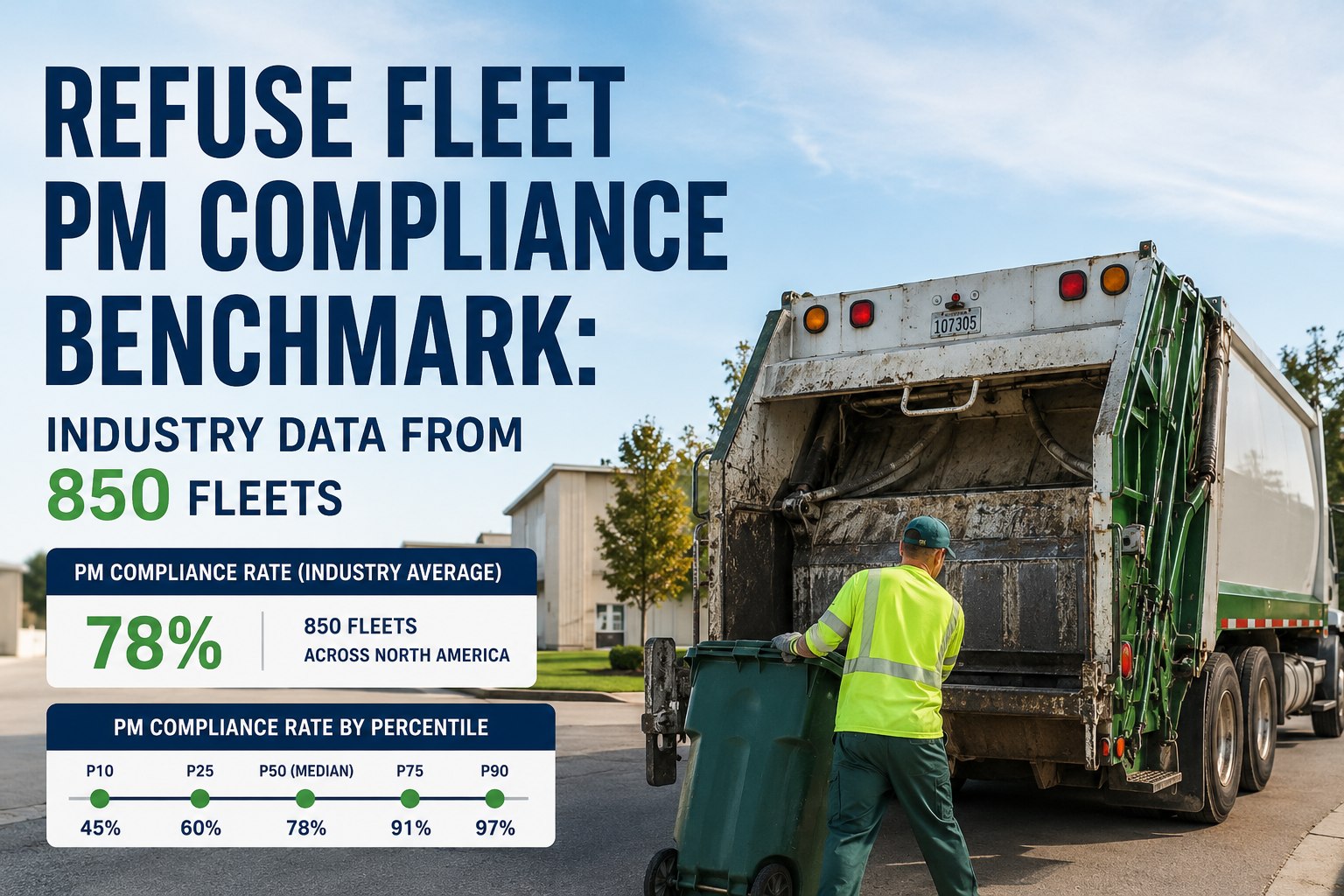
The average refuse fleet runs 71% PM compliance. Top-quartile fleets hit 94%+. That 23-point gap is not talent, not equipment, not fleet age — it's data discipline plus the right toolset. Fleets at 71% average 2.8 unplanned breakdowns per truck...

Read More
Long-distance moving fleets run a maintenance pattern that no other trucking segment shares. A refuse truck comes home to the same yard every night. A linehaul freight tractor moves between fixed terminals with in-network shops. A moving truck picks up...
Read More
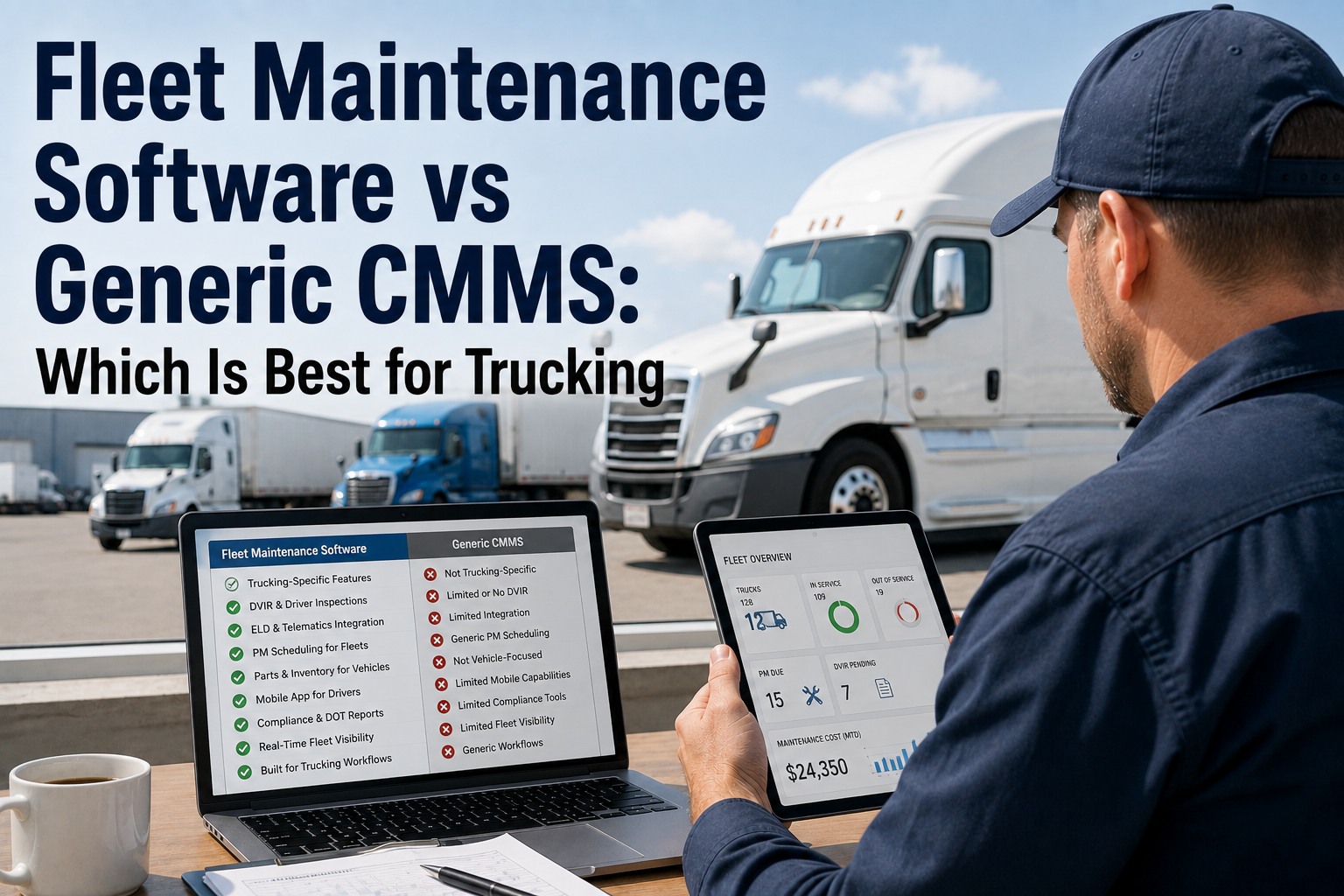
A generic CMMS was built to schedule PM on 200 pieces of factory equipment sitting in one building. A fleet maintenance platform was built to keep 200 trucks running across three time zones under FMCSA regulation. They look similar on...

Read More
Food and beverage fleets run on a clock nobody else in trucking has to answer to. The reefer trailer left the DC at 4am pre-cooled to 34°F. The load has a 6-hour window to make the grocery DC crossdock or...
Read More
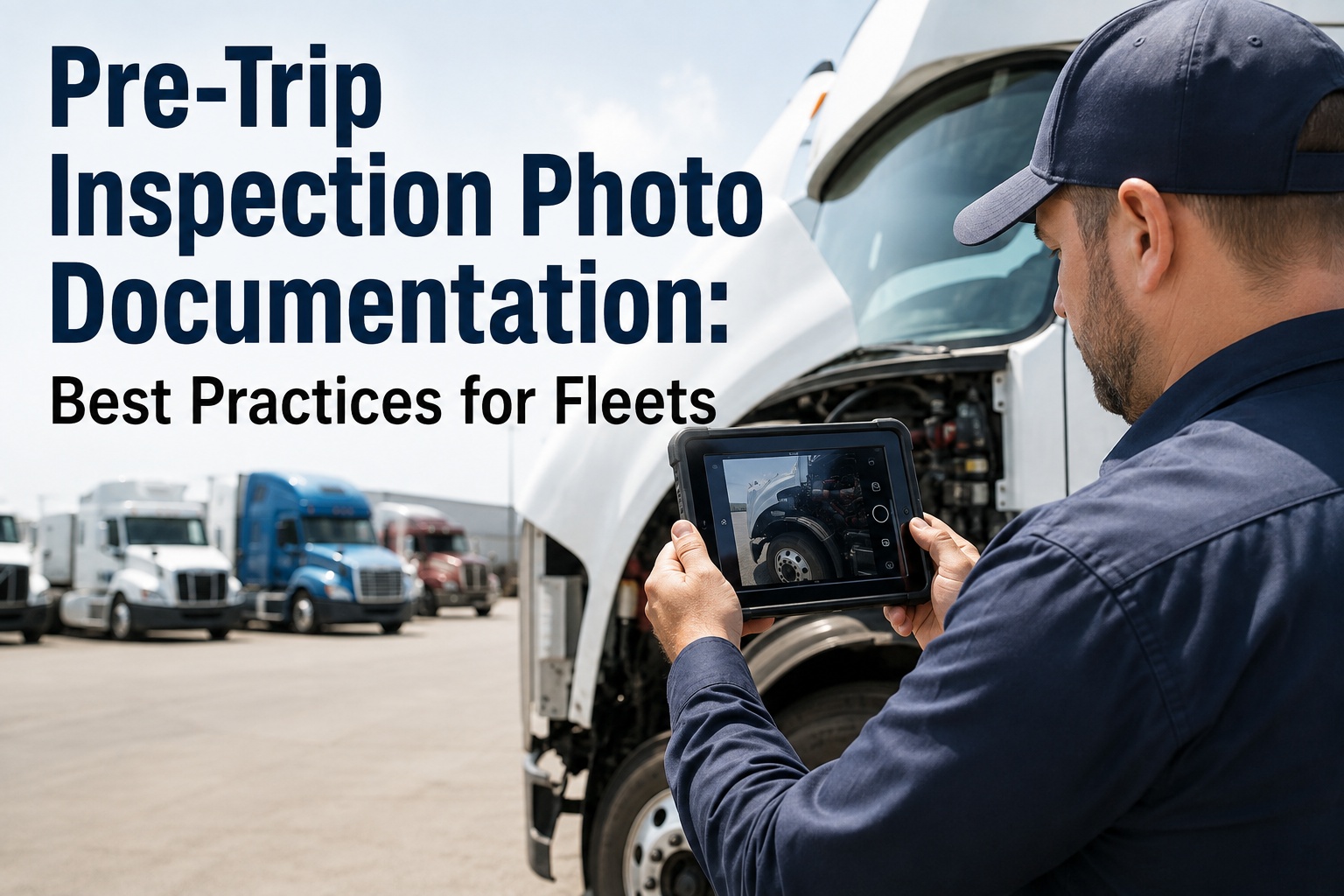
Two drivers do the same pre-trip inspection on the same truck. Driver A signs the DVIR and moves on. Driver B captures three timestamped, geo-tagged photos of the brake chambers, the tire tread with a gauge visible, and the fuel-air...
Read More
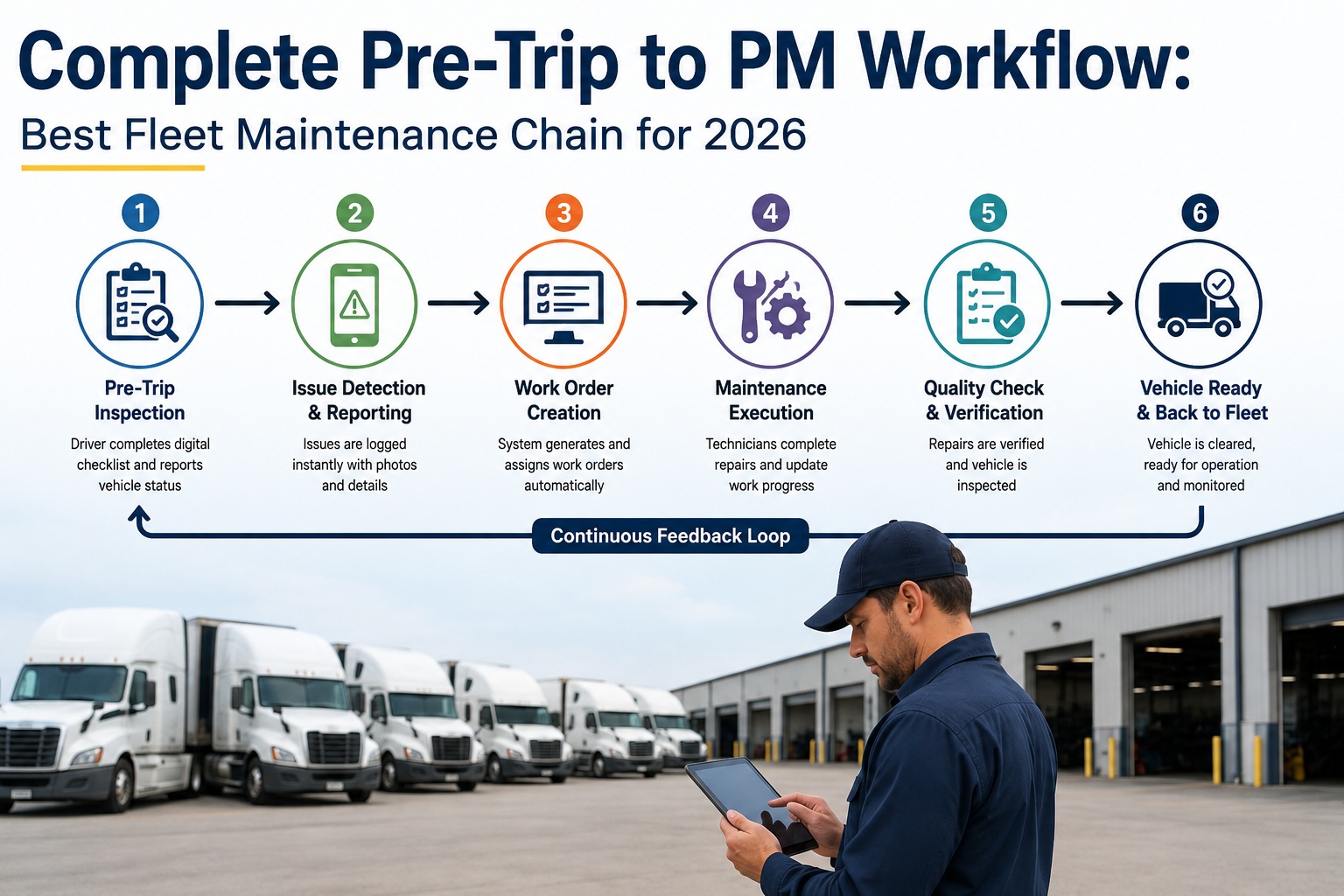
Most fleets run five maintenance activities that never talk to each other. The driver does a pre-trip on paper. The dispatcher assigns the truck. Something breaks mid-route. The post-trip DVIR notes it. The paper hits the shop three shifts later....
Read More
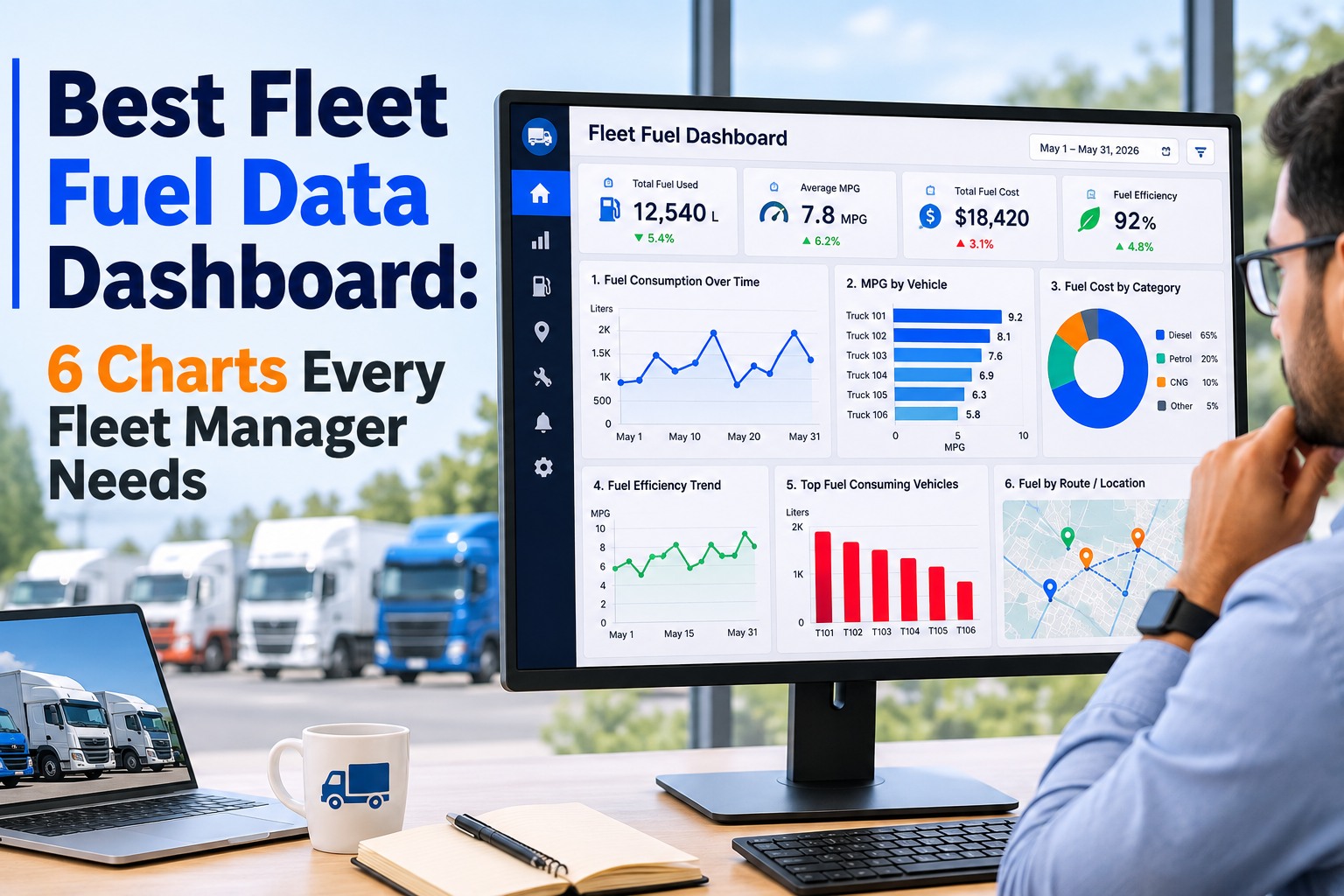
Every fleet manager has a fuel dashboard. Almost none of them have the right one. The typical setup shows total monthly fuel spend, average fleet MPG, and a red-yellow-green traffic light nobody trusts — because none of it says which...
Read More
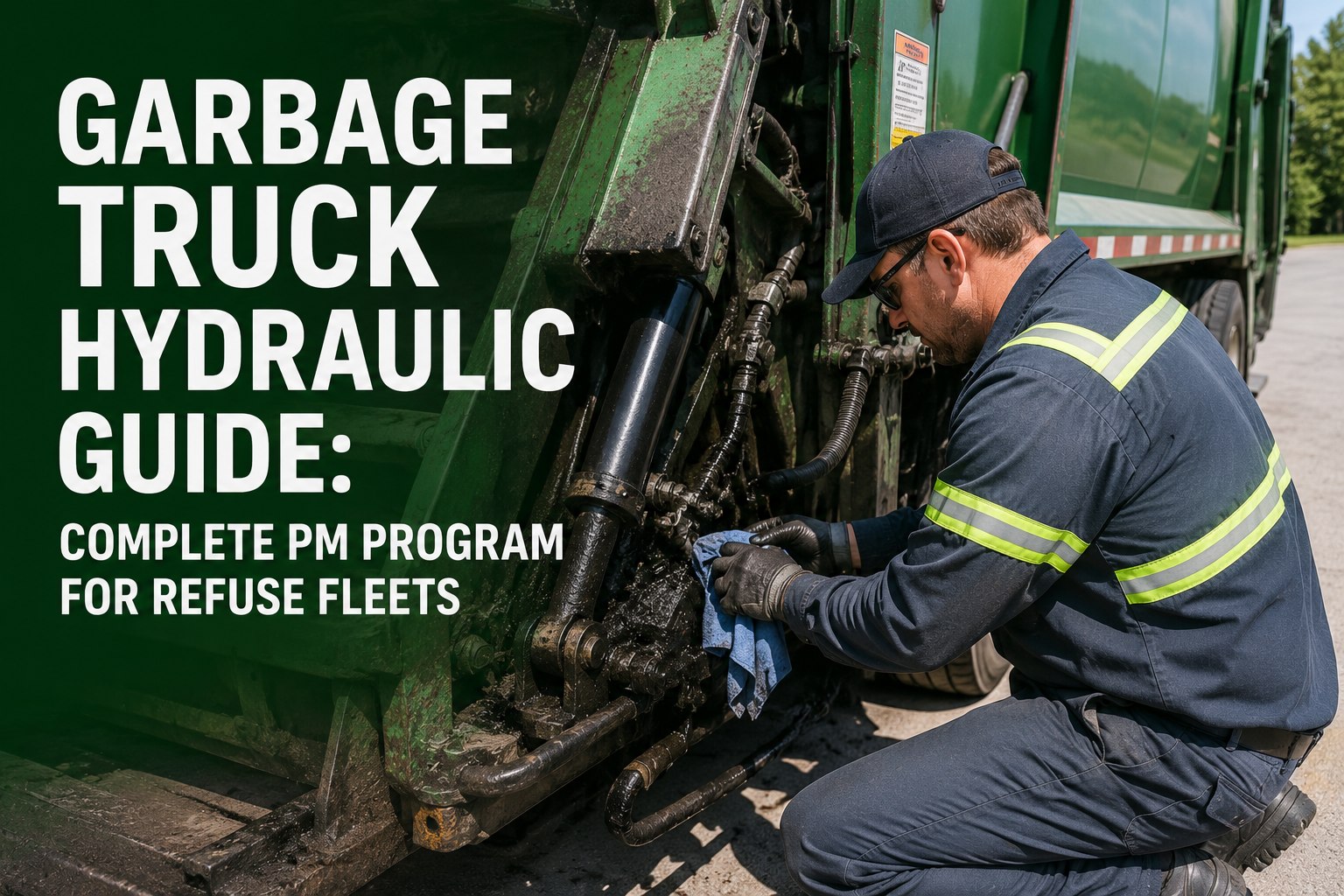
A refuse truck's hydraulic system does more work in one route than most construction equipment does in a week — packer, ejector, tailgate, tipper, and lift arms all firing off the same reservoir, all day, every day. Which is why...
Read More
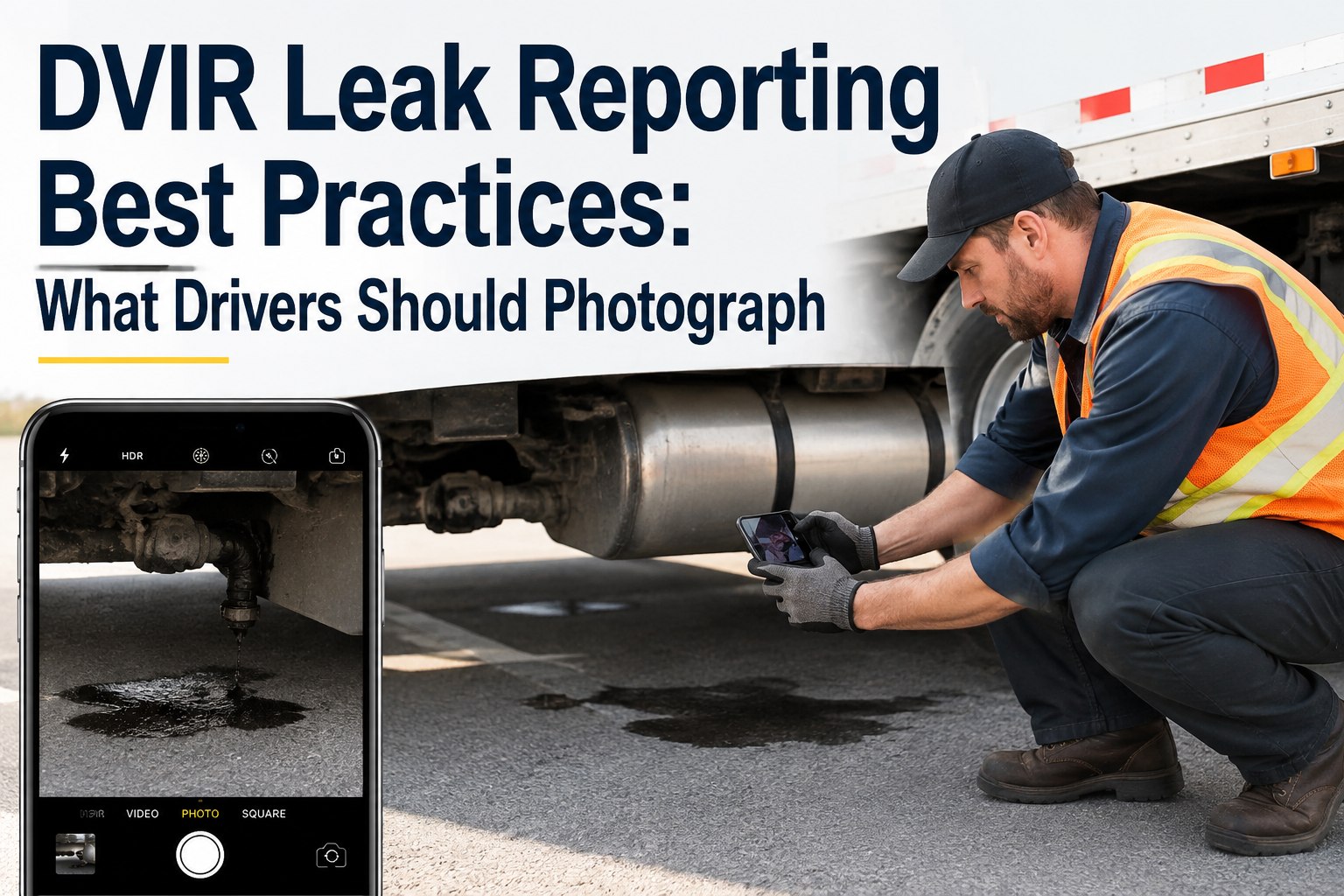
"Small leak under truck" is the DVIR entry that costs fleets the most. It tells the shop nothing about which fluid, where on the truck, how fast it's dripping, or whether the truck can run the route tomorrow. So the...

Read More
The single most expensive DVIR mistake a fleet makes isn't a missed defect — it's an unclear one. "Brake feels weird" costs an hour of shop diagnostic time. "Left rear brake chamber pushrod stroke 2.5 inches, released position, air pressure...
Read More
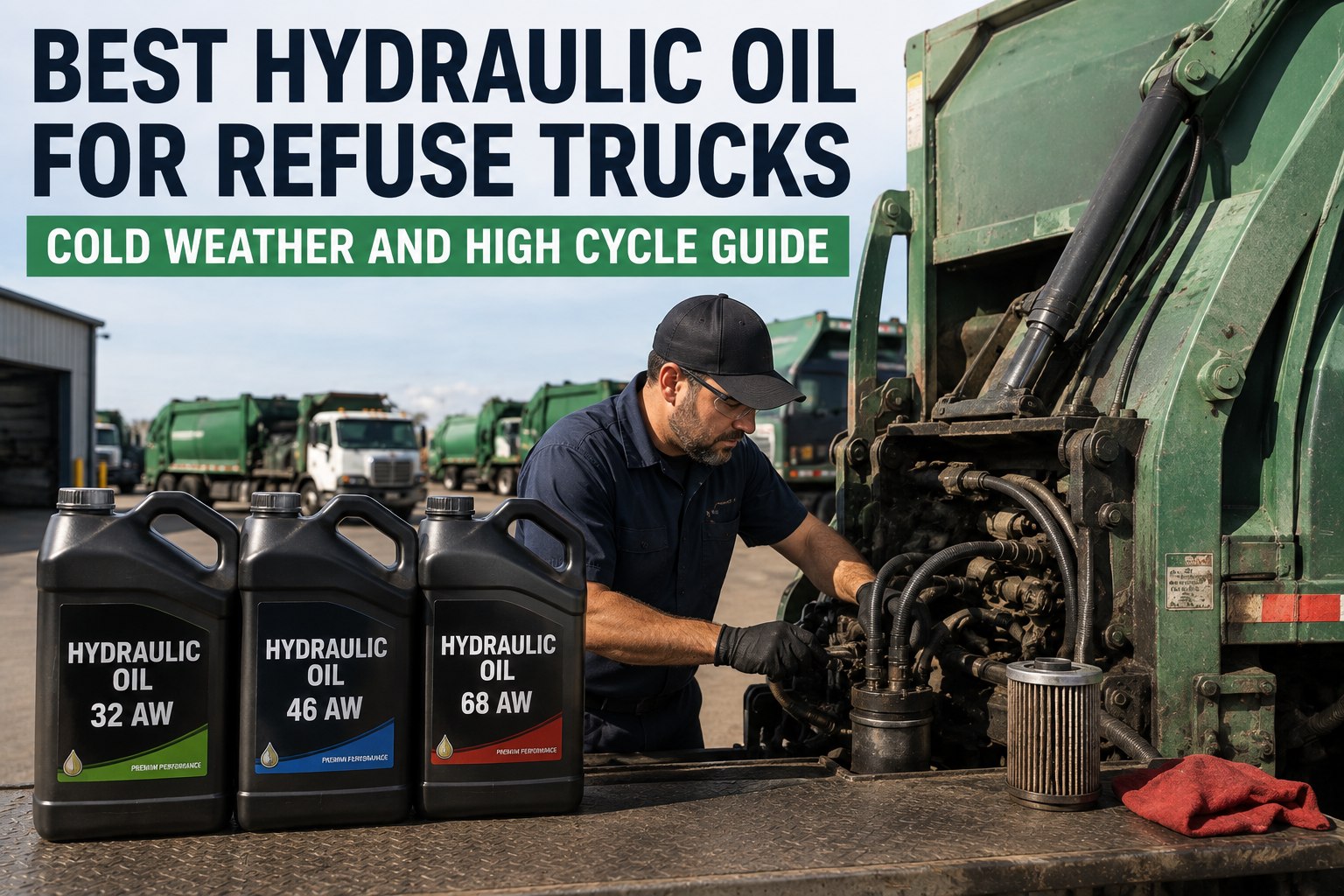
A refuse truck's hydraulic system runs the harshest fluid duty in commercial trucking — 800–1,200 packer cycles a day, 150–160°F reservoir temps under peak load, and the exact same fluid asked to move at –5°F on a January morning six...
Read More
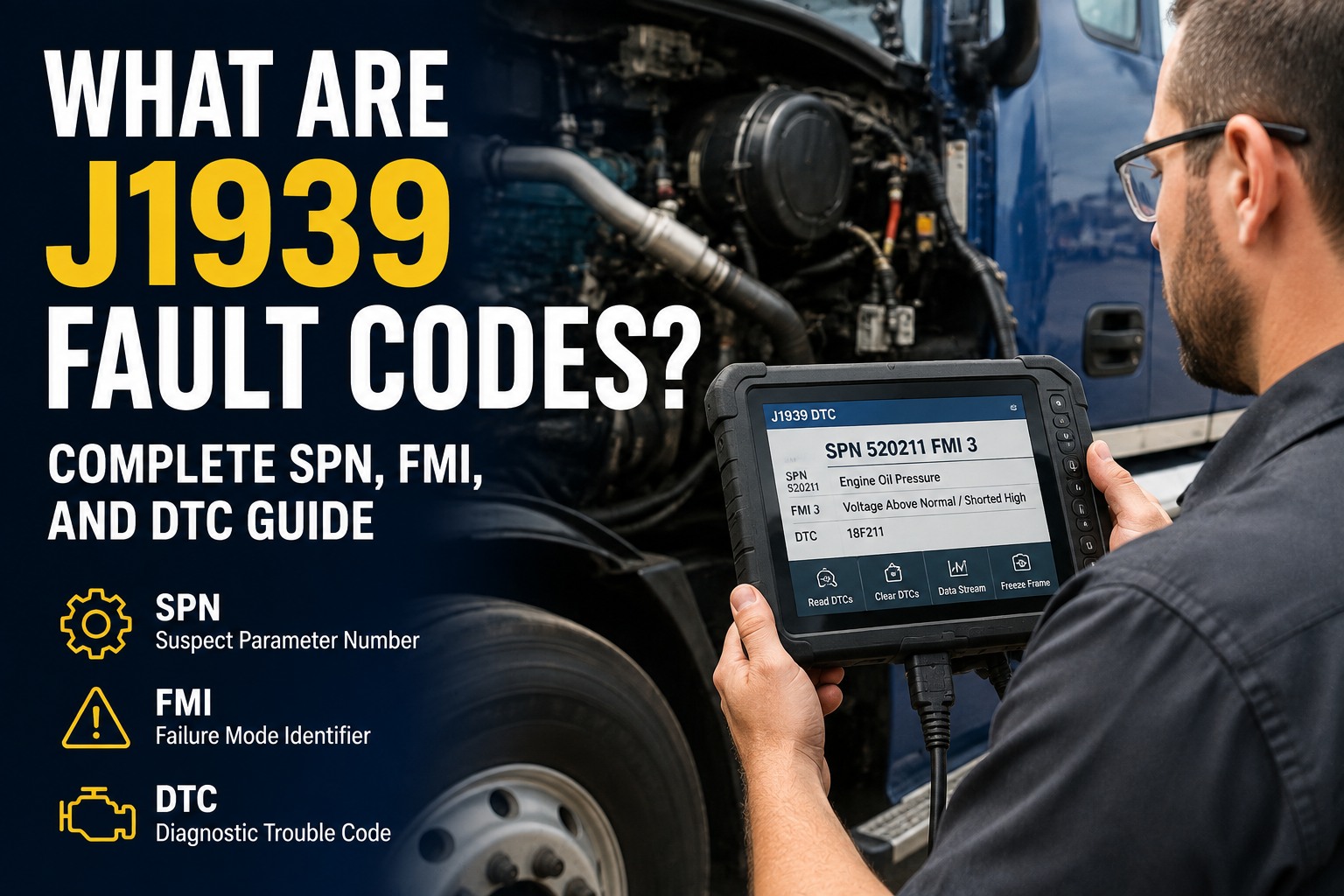
A dash lamp comes on. The driver calls dispatch. Dispatch calls the shop. The shop plugs in a scanner and gets back "SPN 3226 FMI 20" — five characters that mean nothing to most people who read them. So the...

Read More
The average trailer in a US fleet runs at roughly 60% utilization — sitting idle for four out of every ten operating hours. At any given moment, 10-20% of trailers in a typical fleet are effectively unaccounted for, carrying insurance,...
Read More
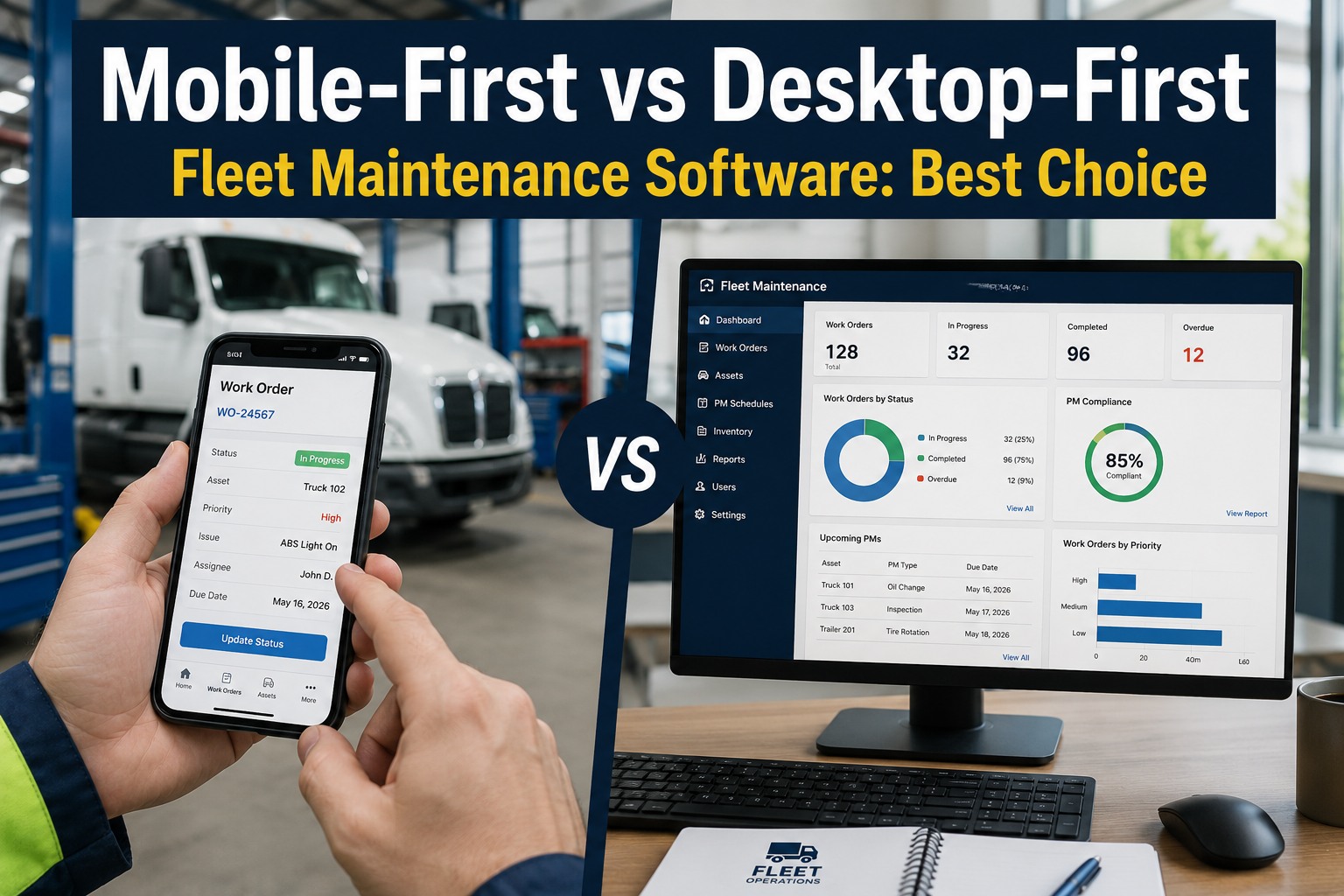
Every fleet software evaluation comes down to one question most buyers never ask: was this platform built for a laptop or for a phone? The answer determines everything downstream. 30-40% of fleet software implementations fail specifically because the mobile experience...
Read More
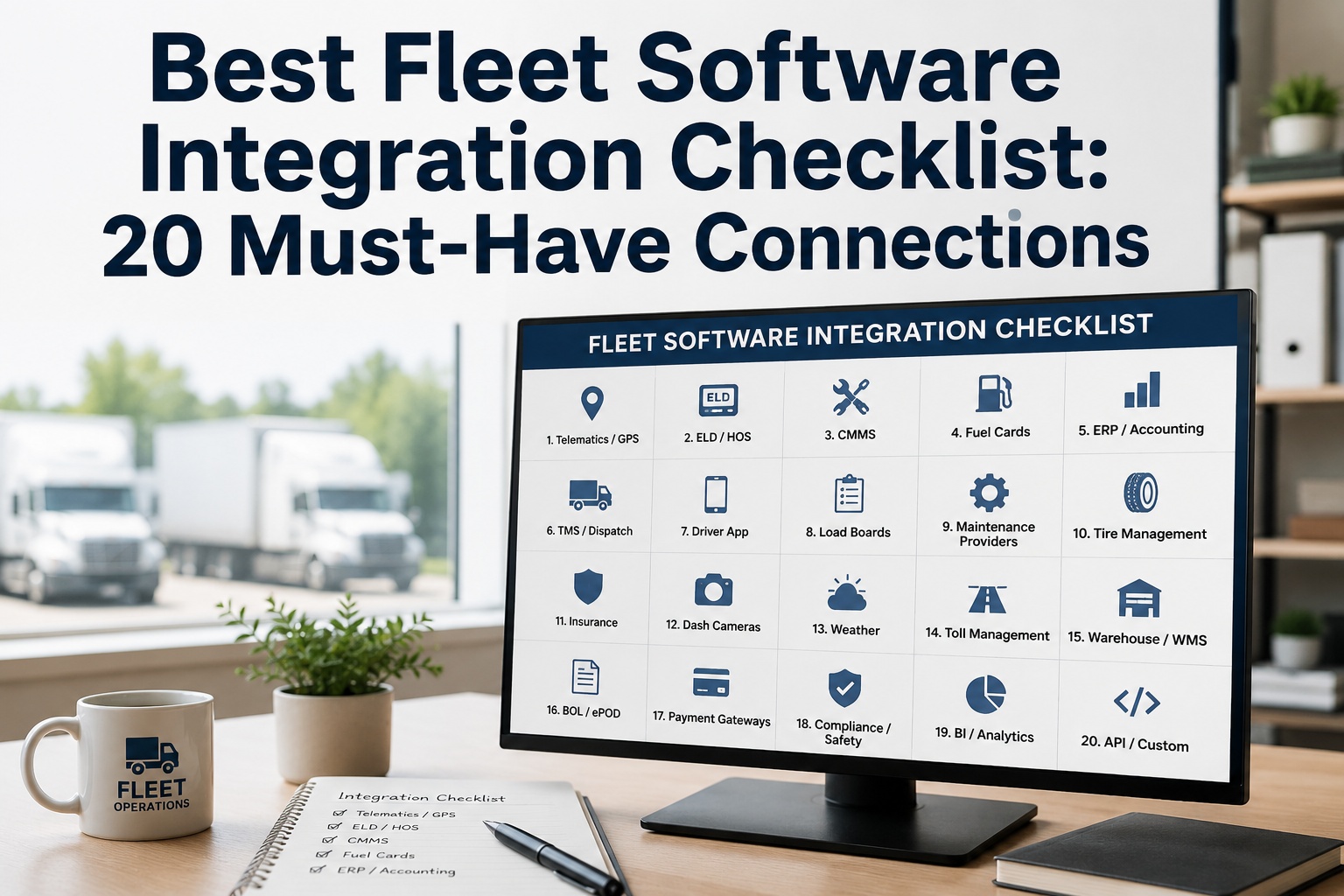
Every fleet manager has watched the same thing happen. Fuel card transactions arrive as a monthly CSV that somebody has to reconcile against telematics GPS pings to catch fraud. Engine fault codes flash on the driver's dashboard and never make...
Read More
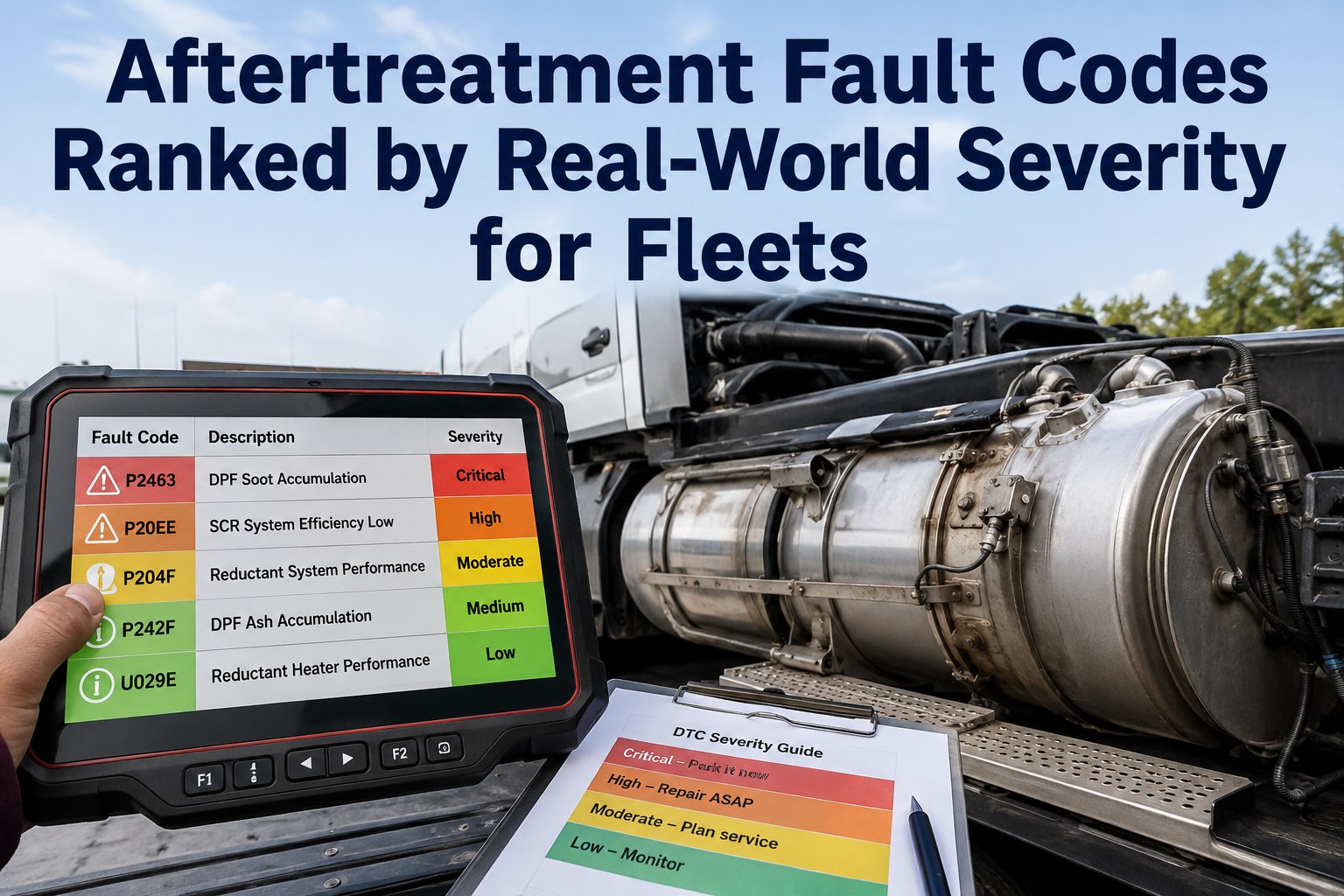
Every diesel driver has seen the dashboard light up with a new engine code and had to decide the same question in five seconds: do I keep driving to the next fuel stop, or do I pull over now? On...
Read More
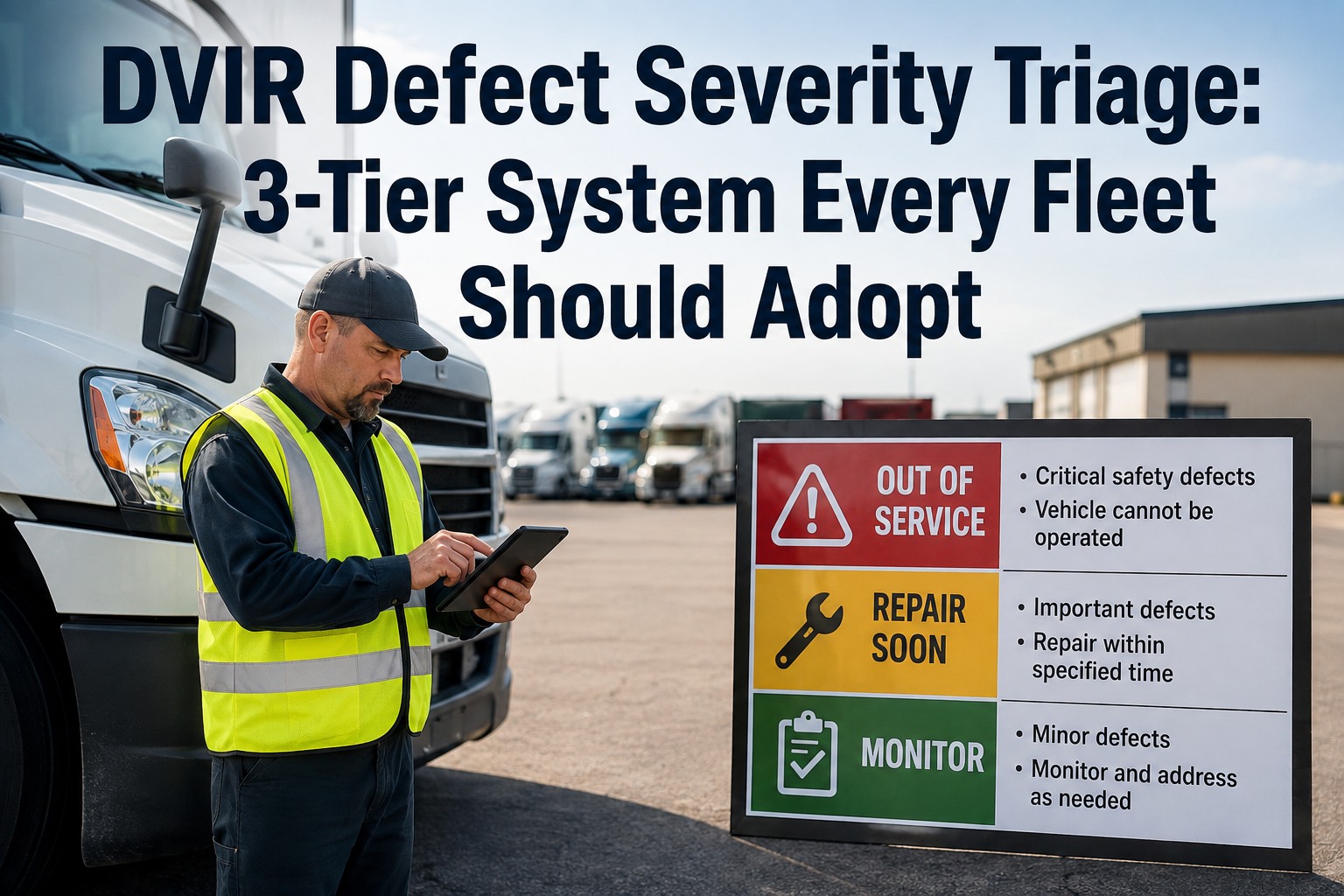
Every day in America, 3.5 million commercial drivers file DVIRs and the shop floors that receive them face the same impossible problem — a stack of defects, all marked "found," with no clear signal about what has to happen right...

Read More
Every diesel engine oil system needs particulate protection, but not all filters do the same job. Full-flow filters process 100% of the oil coming off the pump — they're the primary defense every engine ships with — and typically trap...
Read More
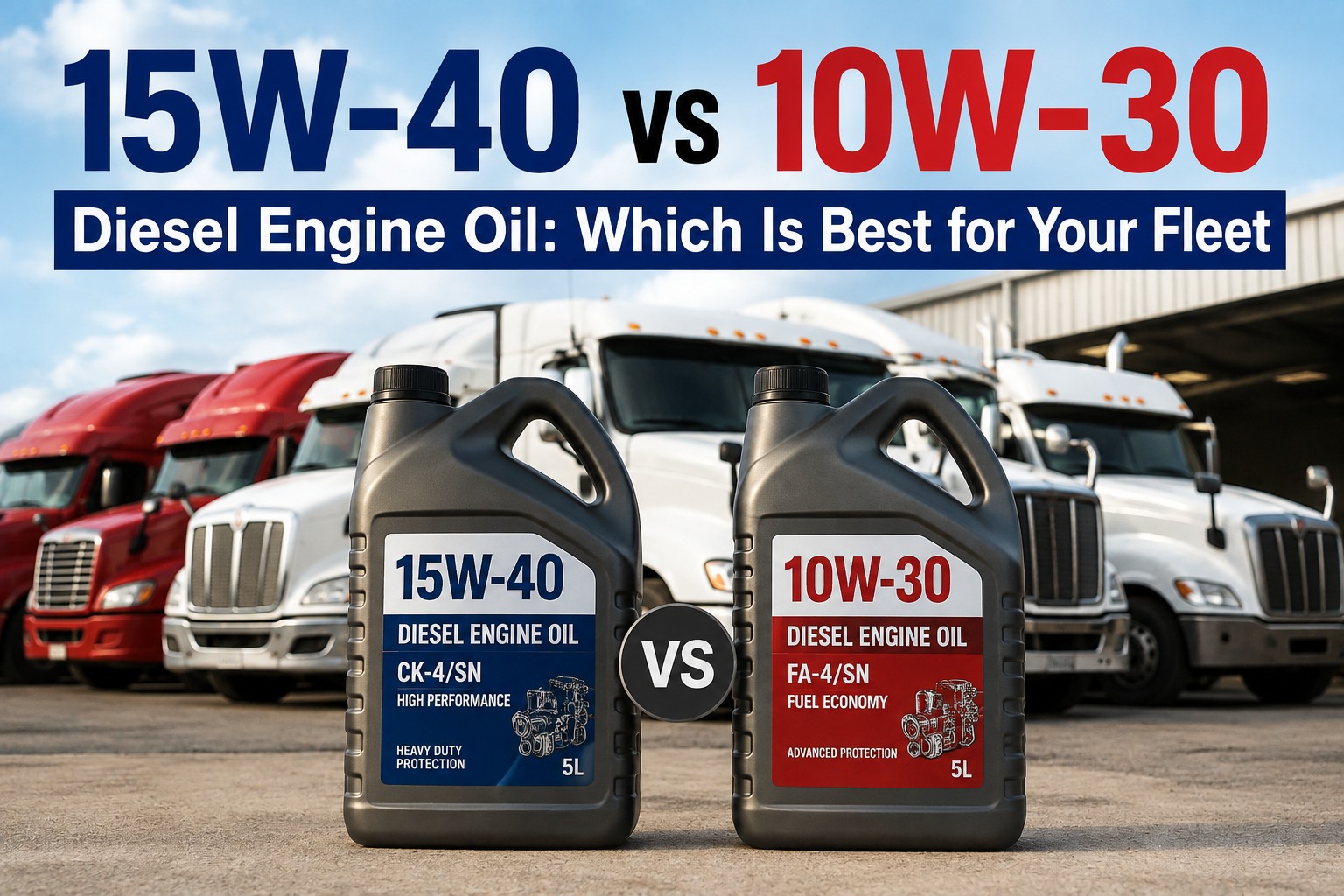
For 20 years, 15W-40 was the answer. It was the oil that came out of the barrel at every truck stop, the grade every mechanic recommended, the viscosity that filled 75% of every heavy-duty engine in America — and for...
Read More
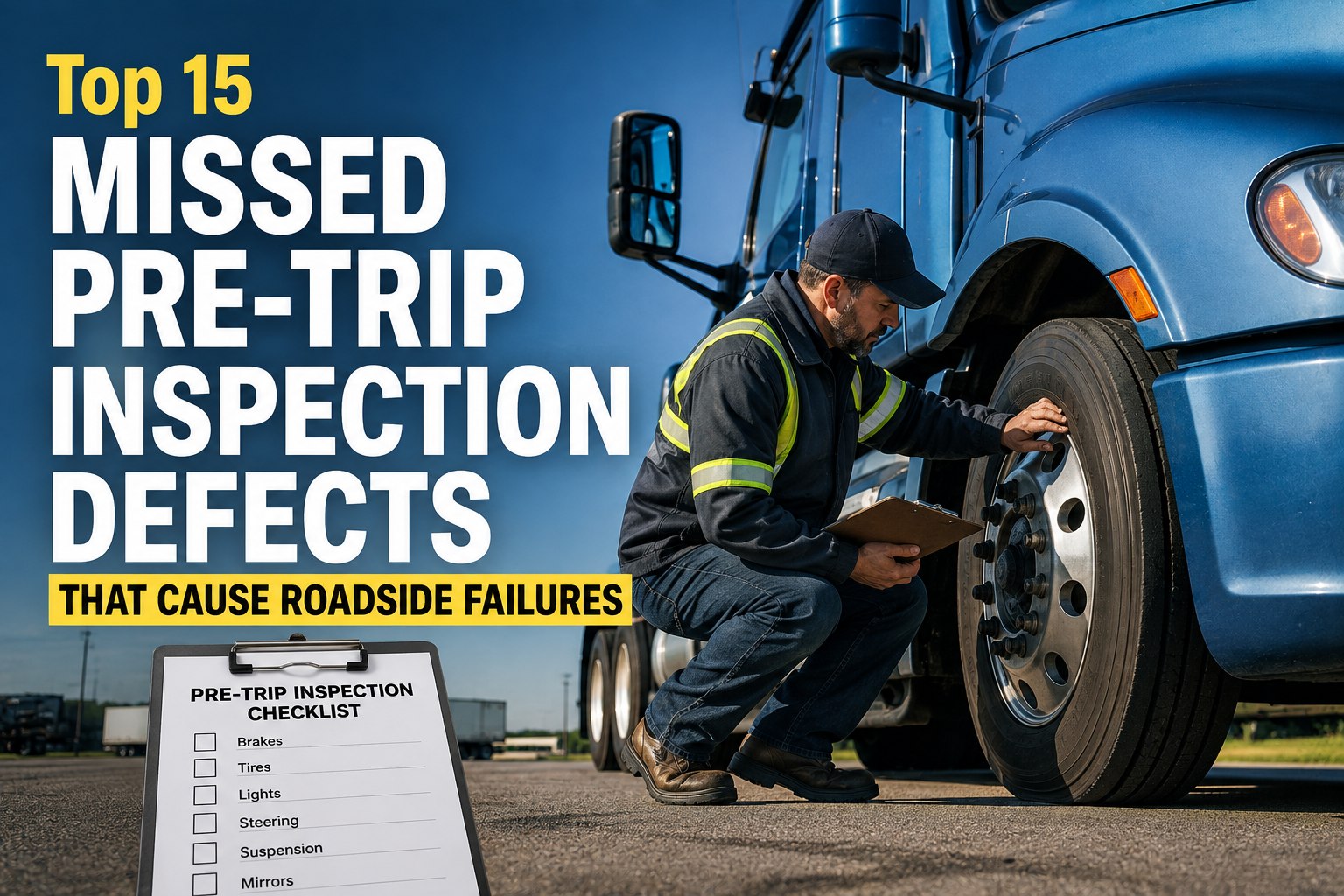
Roadside inspection data tells the same story every year: the defects that put trucks out of service aren't exotic failures — they're the same handful of items a driver could catch in a 10-minute walkaround. During the 2025 CVSA International...
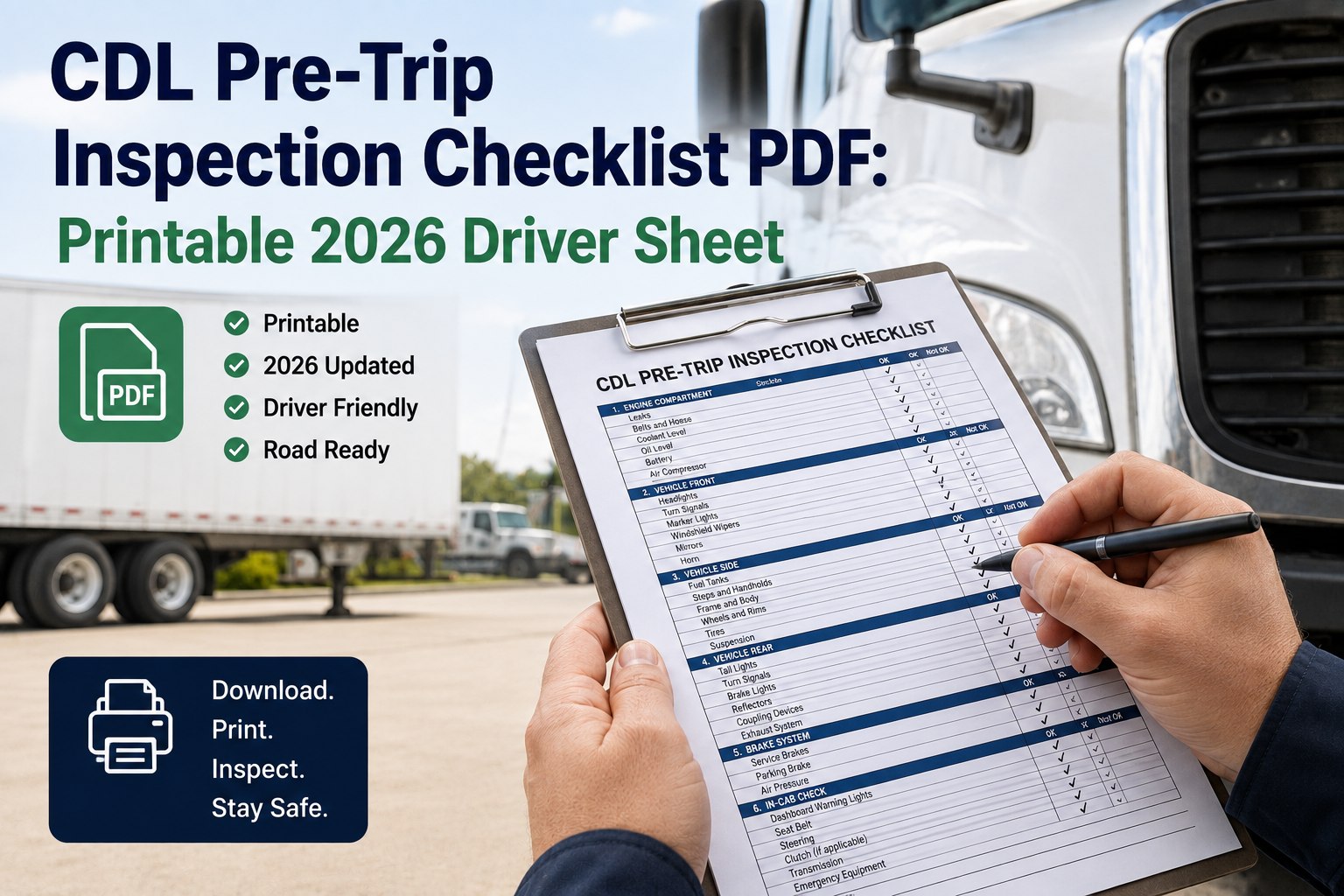
Read More
Every CDL driver in America starts the day the same way — walking around a truck, kicking tires, opening the hood, testing the air brakes. It is federal law under 49 CFR 392.7 and 49 CFR 396.13, and it is...
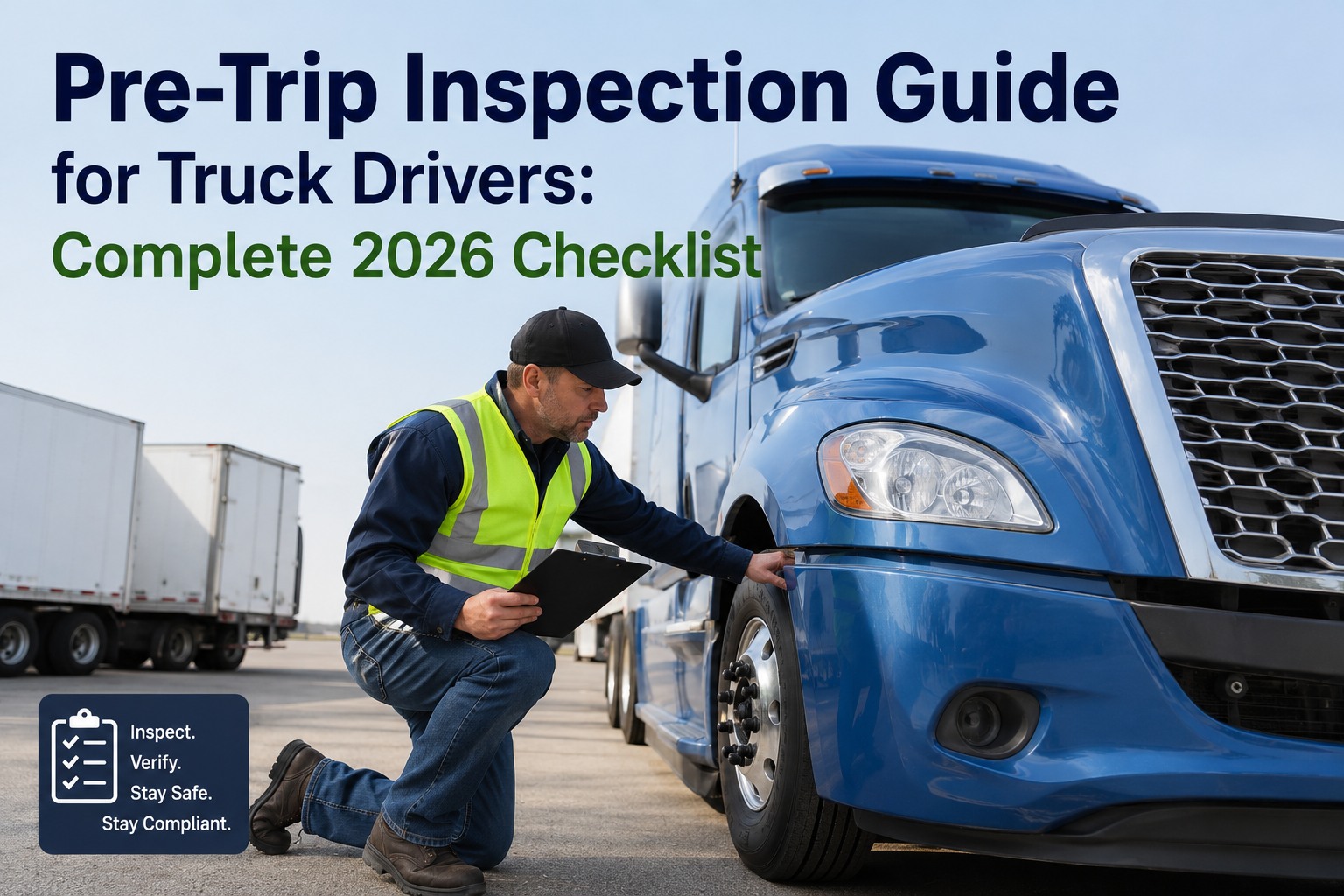
Read More
Every DOT roadside inspection begins with the same question — did you do your pre-trip? Under the 2026 CSA overhaul, the answer matters more than ever: Vehicle Maintenance now splits into two BASIC categories including "Driver Observed" violations, and OOS...
Read More
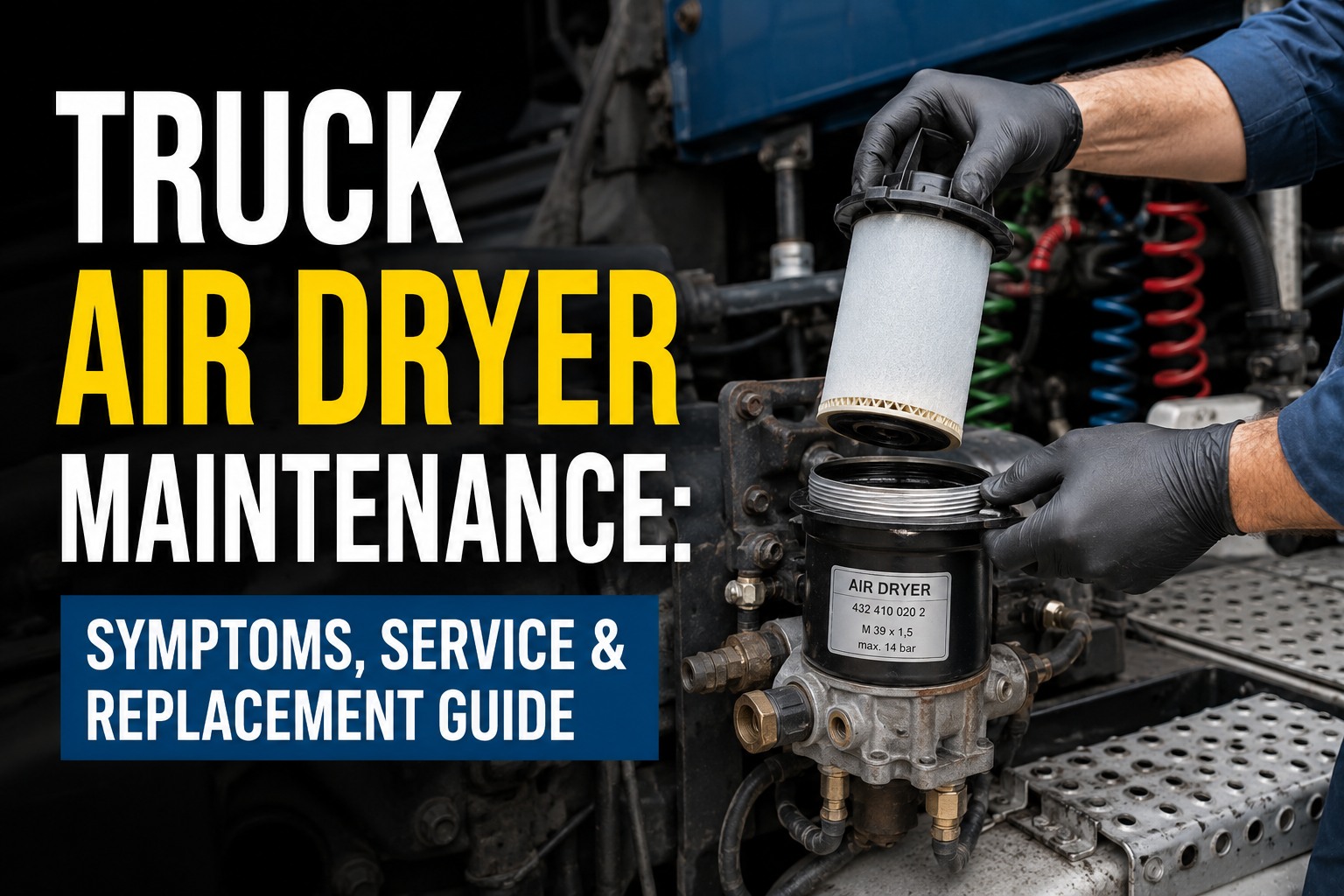
The air dryer on a commercial truck is the piece of hardware that separates air brakes that work from air brakes that don't. A diesel-driven air compressor pumps atmospheric air into the brake reservoirs — and along with the air,...
Read More
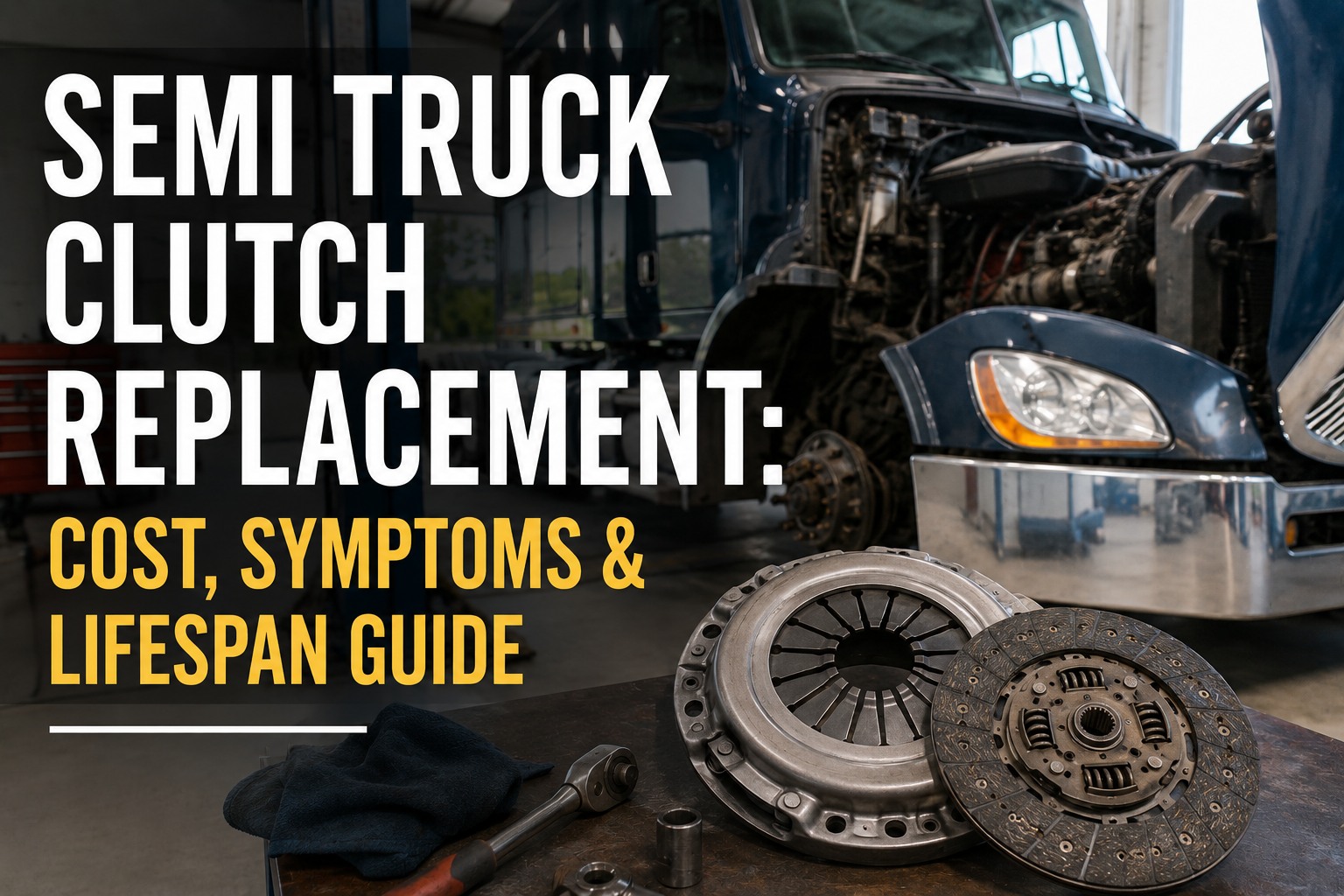
Semi truck clutch replacement is one of the most misunderstood expenses in commercial trucking — quoted anywhere from $1,000 to $6,500 depending on the shop, the truck, the parts choice, and whether the flywheel needs work. The wide range isn't...
Read More
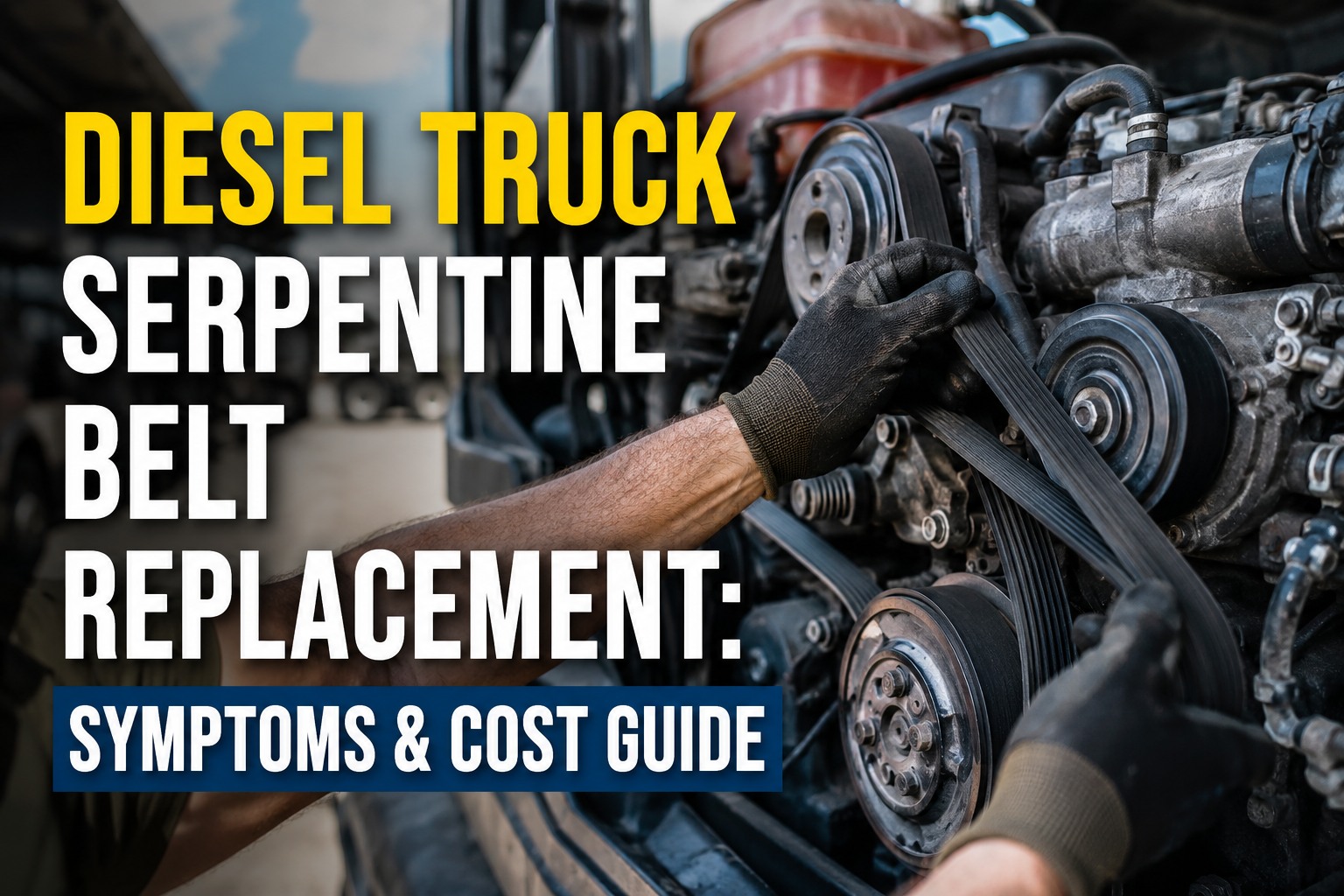
A diesel truck's serpentine belt is a $50 rubber ribbon that stands between $10,000 worth of connected engine accessories and the shoulder of the highway. When it snaps, everything snaps at once — the alternator stops charging, the water pump...
Read More
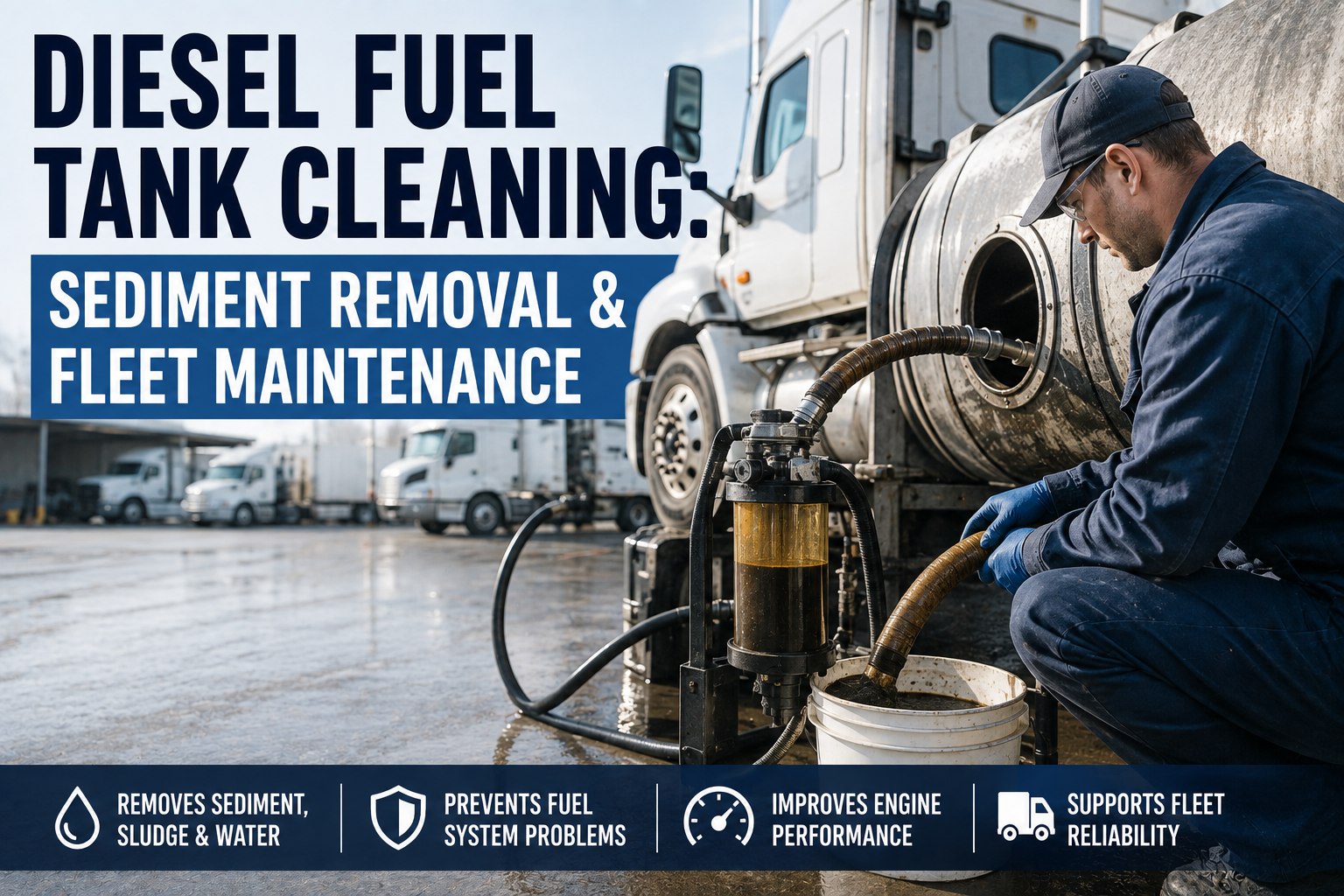
Every diesel fuel tank in a fleet — whether it's the saddle tank on a Class 8 tractor or a 10,000-gallon bulk storage tank at the yard — accumulates contamination the moment fuel enters it. Water condenses from air breathing...

Read More
Every winter, thousands of diesel trucks strand across North America for the same reason: fuel gelling. It happens because diesel fuel contains paraffin wax — perfectly dissolved and invisible above freezing, but when temperatures drop, the wax crystallizes out of...
Read More
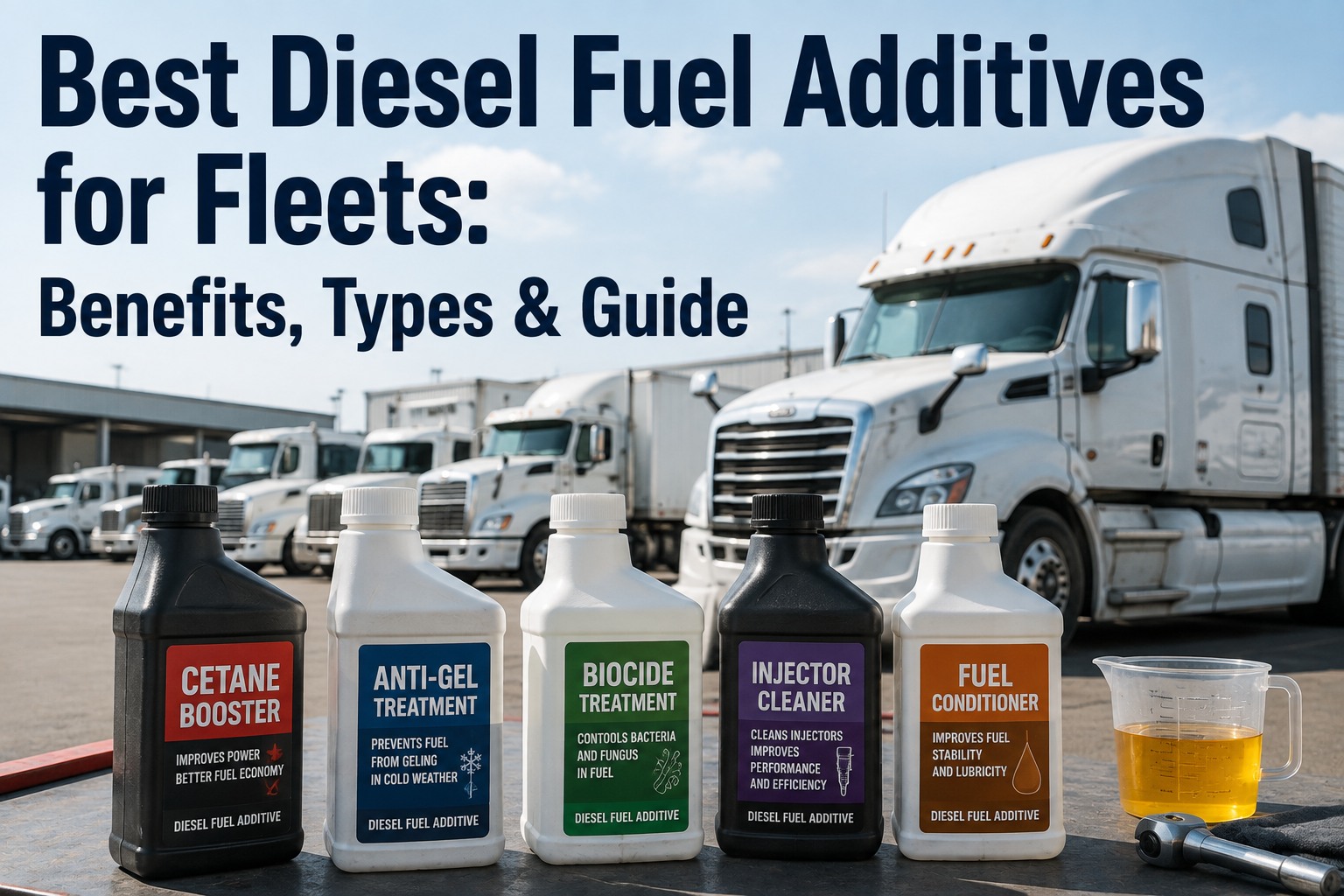
Diesel fuel additives sit at an awkward intersection in fleet management: some are genuine problem-solvers that save thousands in repairs, some are marketing snake oil that costs money and delivers nothing, and telling the two apart requires understanding what's actually...

Read More
Box trucks live a different life than either a diesel pickup or a Class 8 tractor. A typical last-mile delivery box truck stops and starts 60–150 times per shift, opens and closes the roll-up door hundreds of times a week,...

Read More
Here's the operational reality most fleet electrification pilots discover the hard way: EVs, chargers, and telematics platforms all generate rich data — but they generate it in isolation. The vehicle knows its state of charge. The charger knows kilowatt-hours dispensed....
Read More
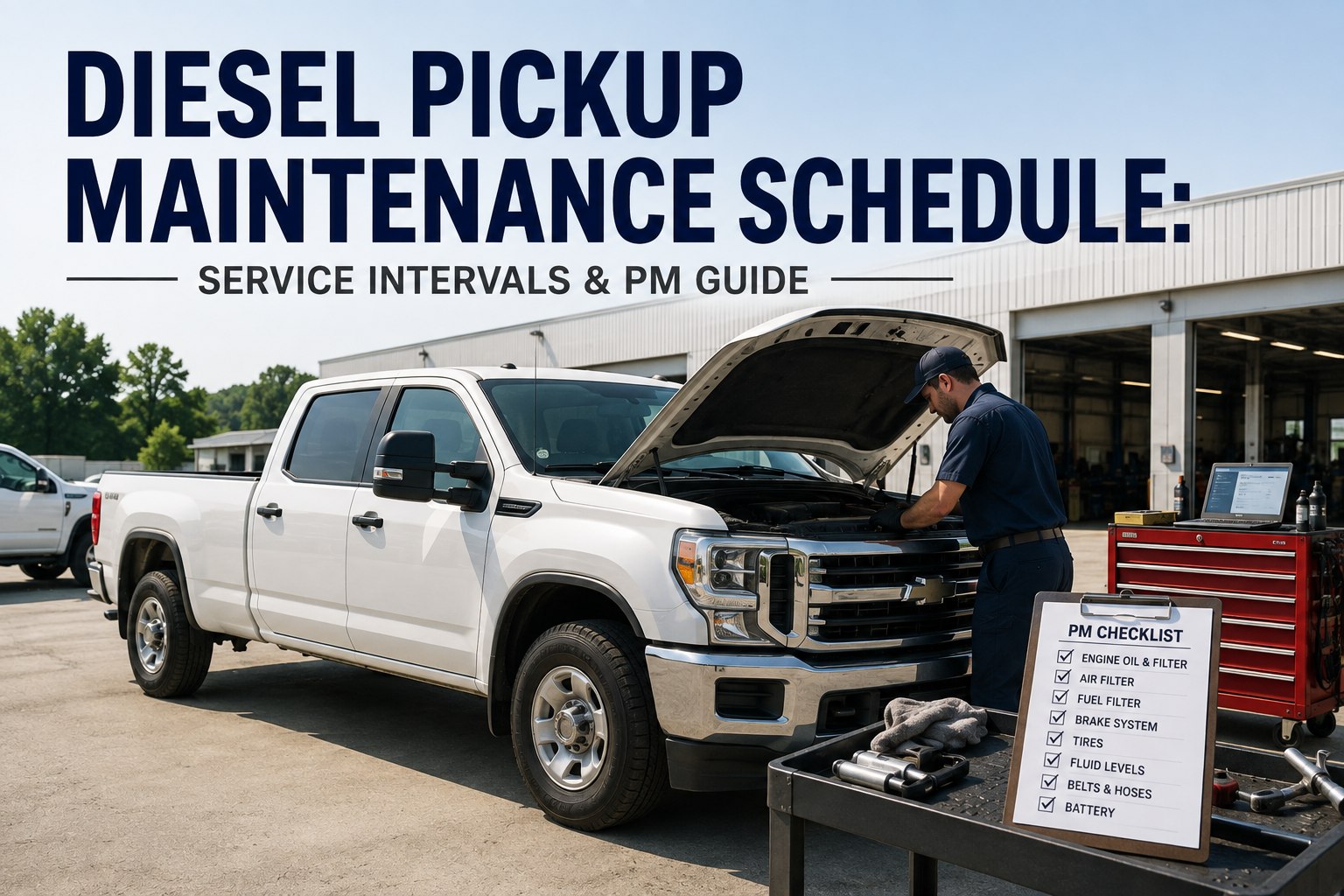
A well-maintained diesel pickup runs 500,000+ miles. A neglected one needs $8,000–$15,000 in emissions-system repairs by 150,000 miles and gets scrapped at 250,000 with a bad turbo, seized injectors, or a failed DPF that costs more to replace than the...

Read More
A bulk trailer isn't just a container on wheels — it's a pressure vessel with a discharge system that moves 40,000+ pounds of cement, flour, plastic pellets, or grain out of the tank in 30 to 90 minutes using compressed...
Read More
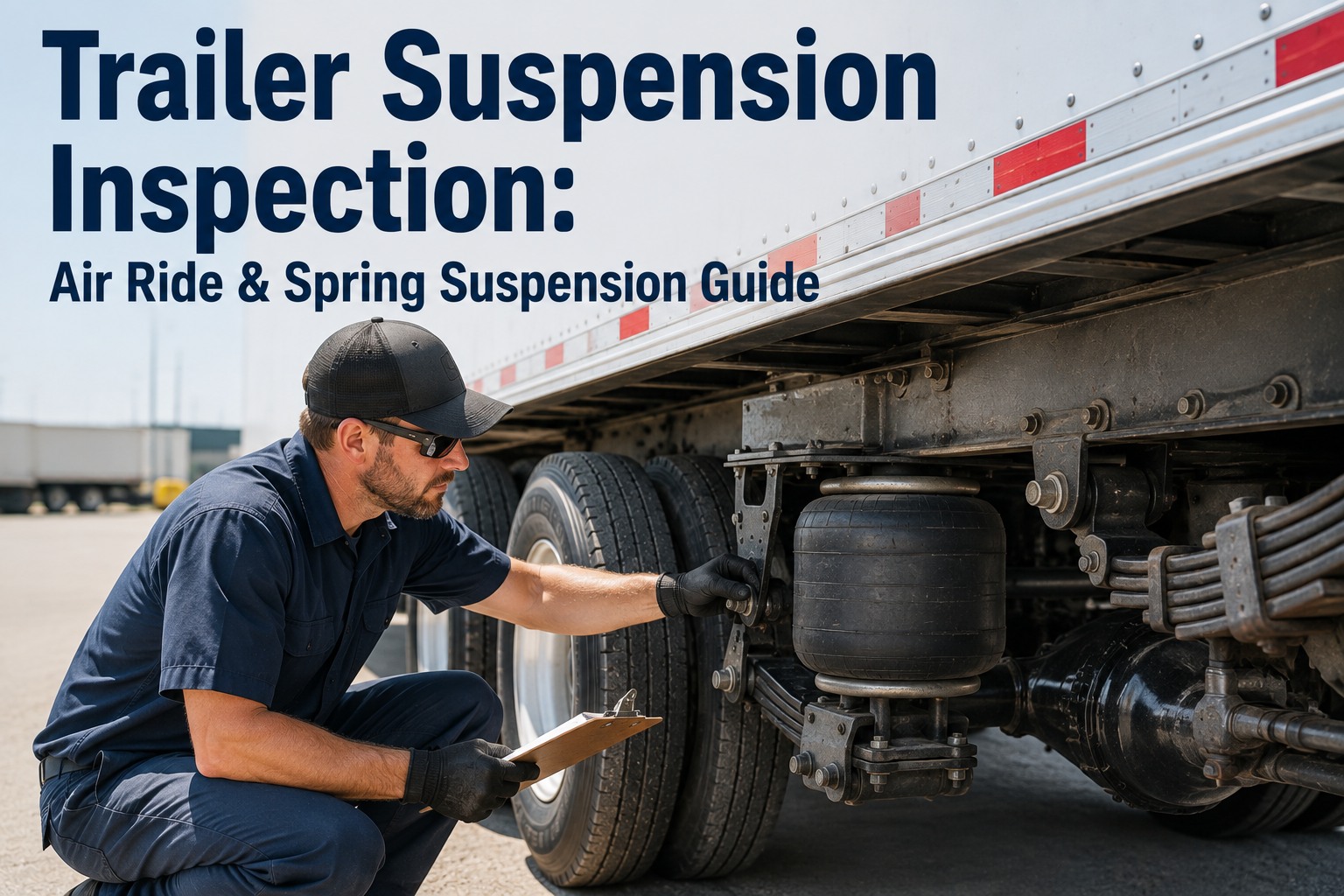
A trailer's suspension is what stands between a cargo load, the axles, and the road — and unlike brakes or lights, most suspension defects don't announce themselves with an obvious symptom until damage has cascaded to multiple components. A single...
Read More
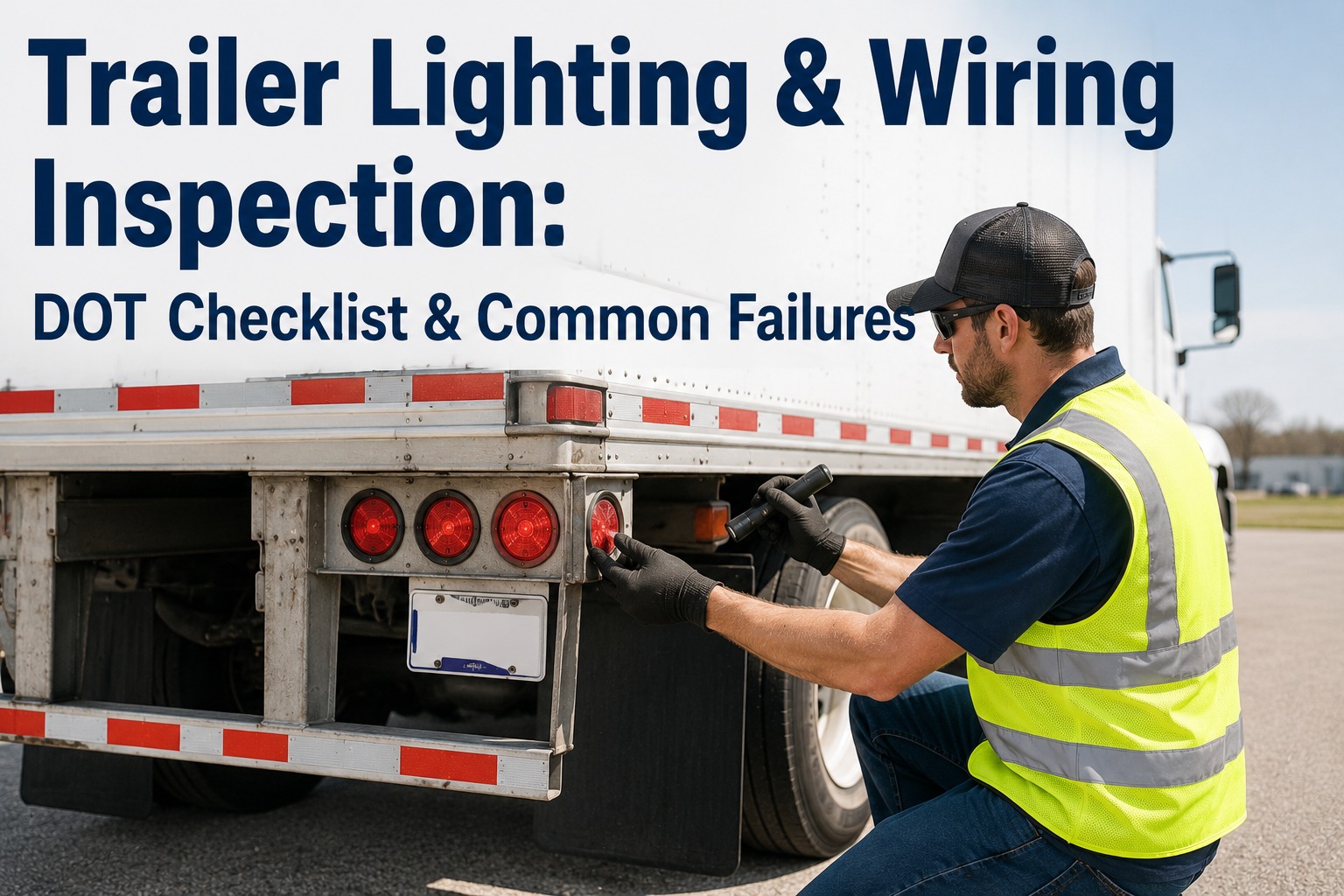
Lighting failures are the single most preventable out-of-service violation on a commercial trailer — and one of the most common. In every CVSA International Roadcheck year over year, inoperative lights, missing reflectors, and defective marker lamps consistently rank in the...
Read More
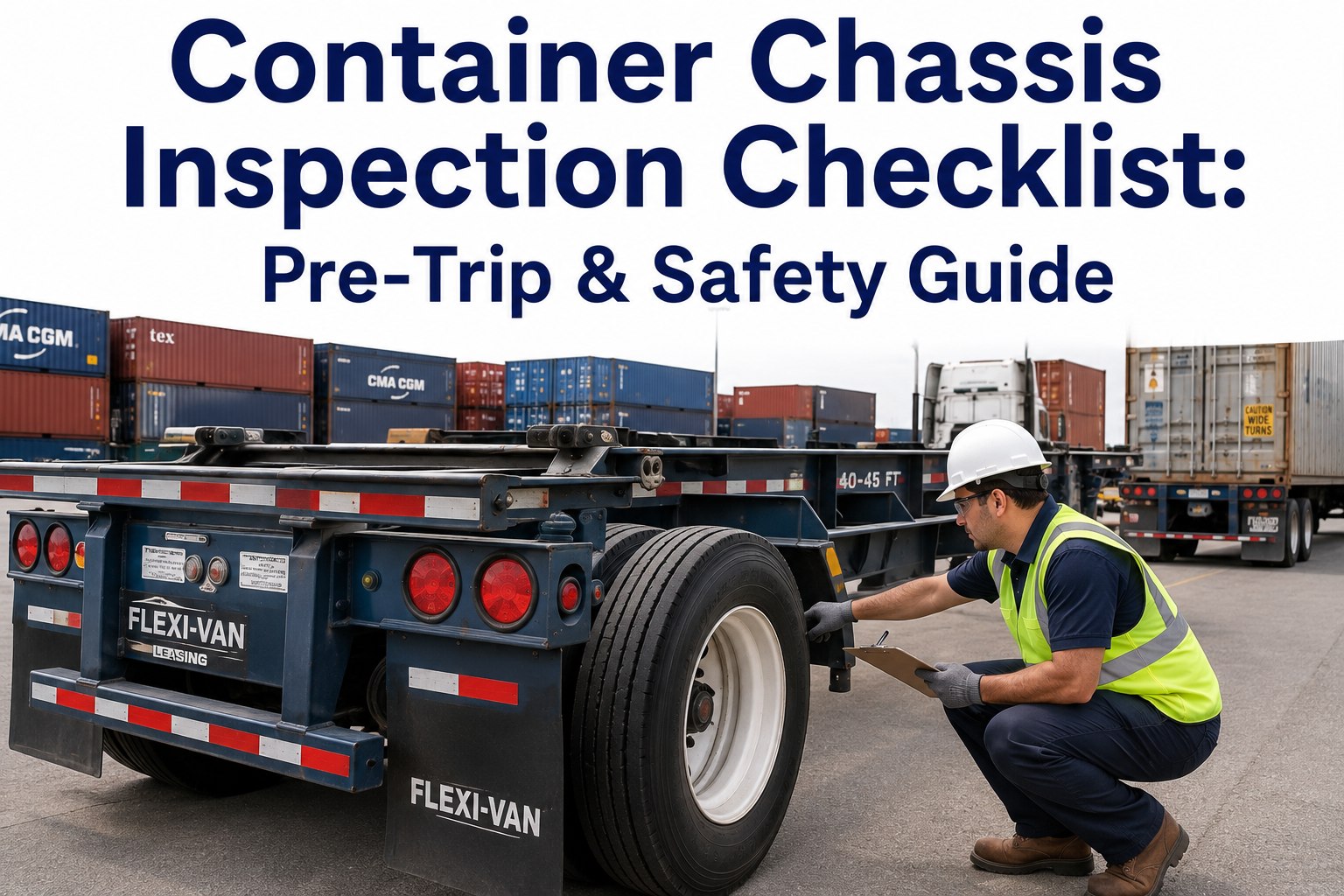
An intermodal container chassis is one of the strangest pieces of equipment in commercial trucking — legally, mechanically, and operationally. It's a trailer without a body, whose entire purpose is to carry a piece of cargo (the container) that clicks...
Read More
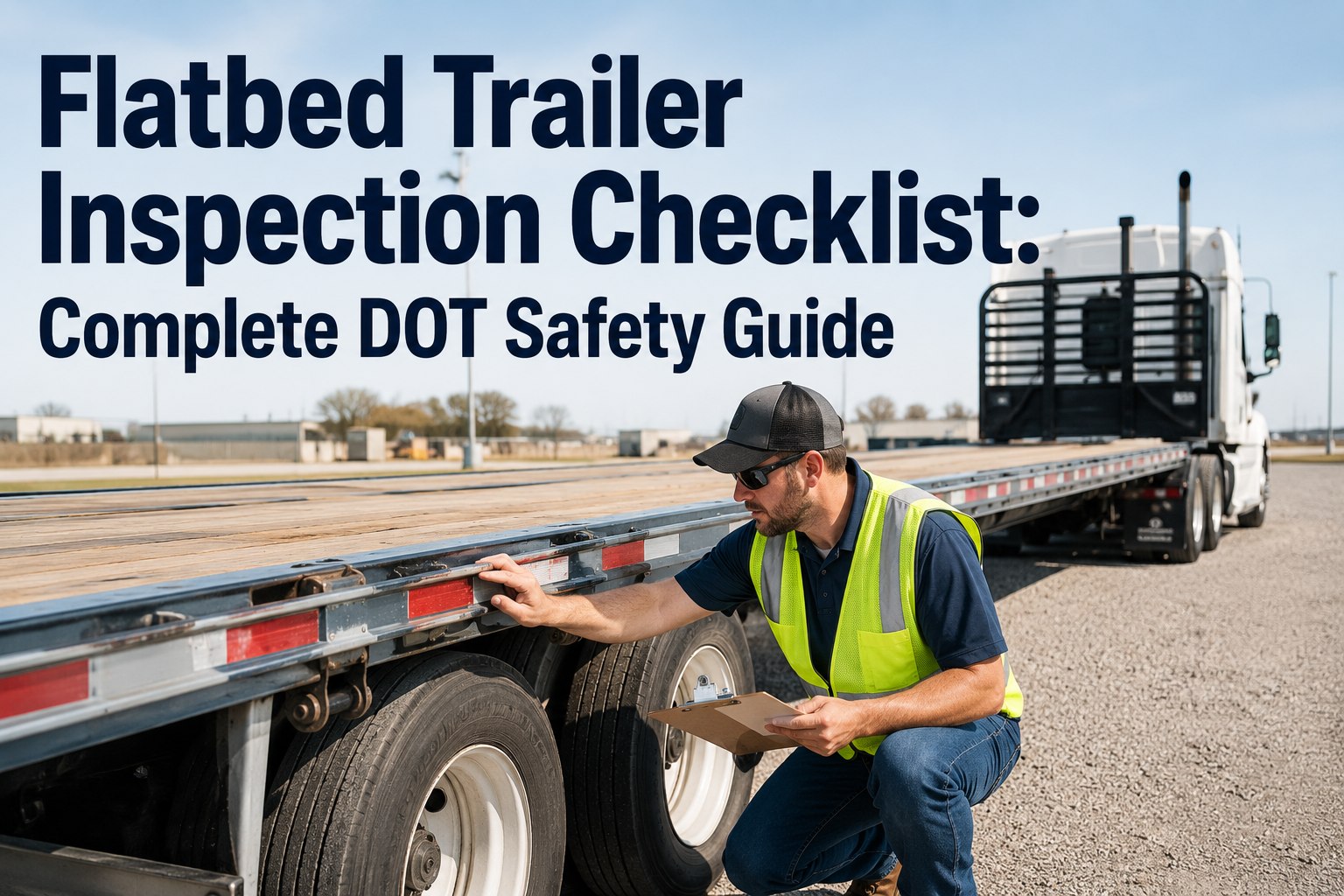
A flatbed load doesn't hide anything. Every strap, every chain, every binder, every stake pocket, every rub rail, and every inch of deck is visible to every inspector who walks past — which is exactly why flatbed loads draw disproportionate...
Read More
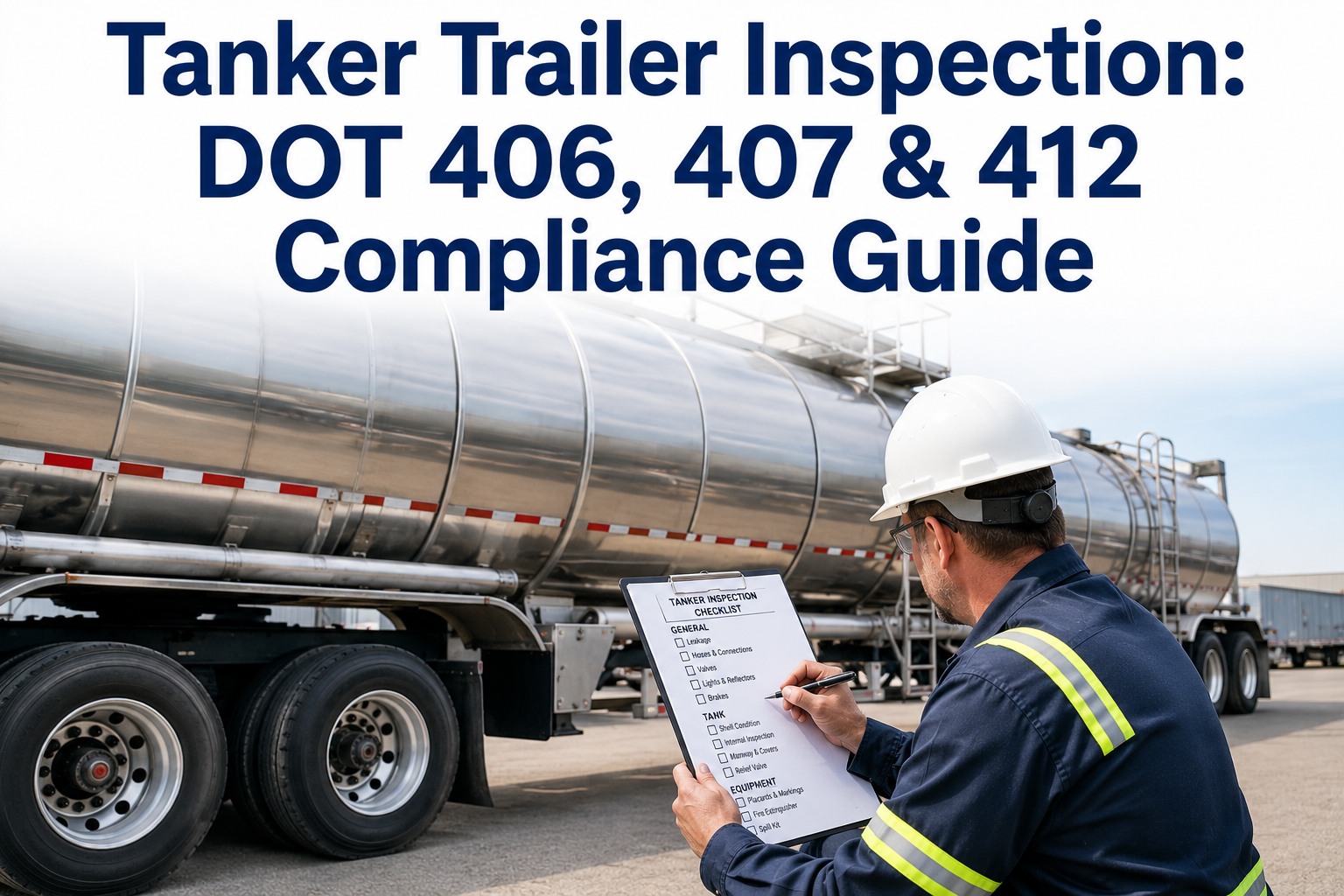
A cargo tank hauling gasoline, sulfuric acid, or liquid asphalt is not a trailer with regulations bolted on top — it's a pressure vessel that has to be built, inspected, and re-tested to a specific DOT specification for the material...
Read More
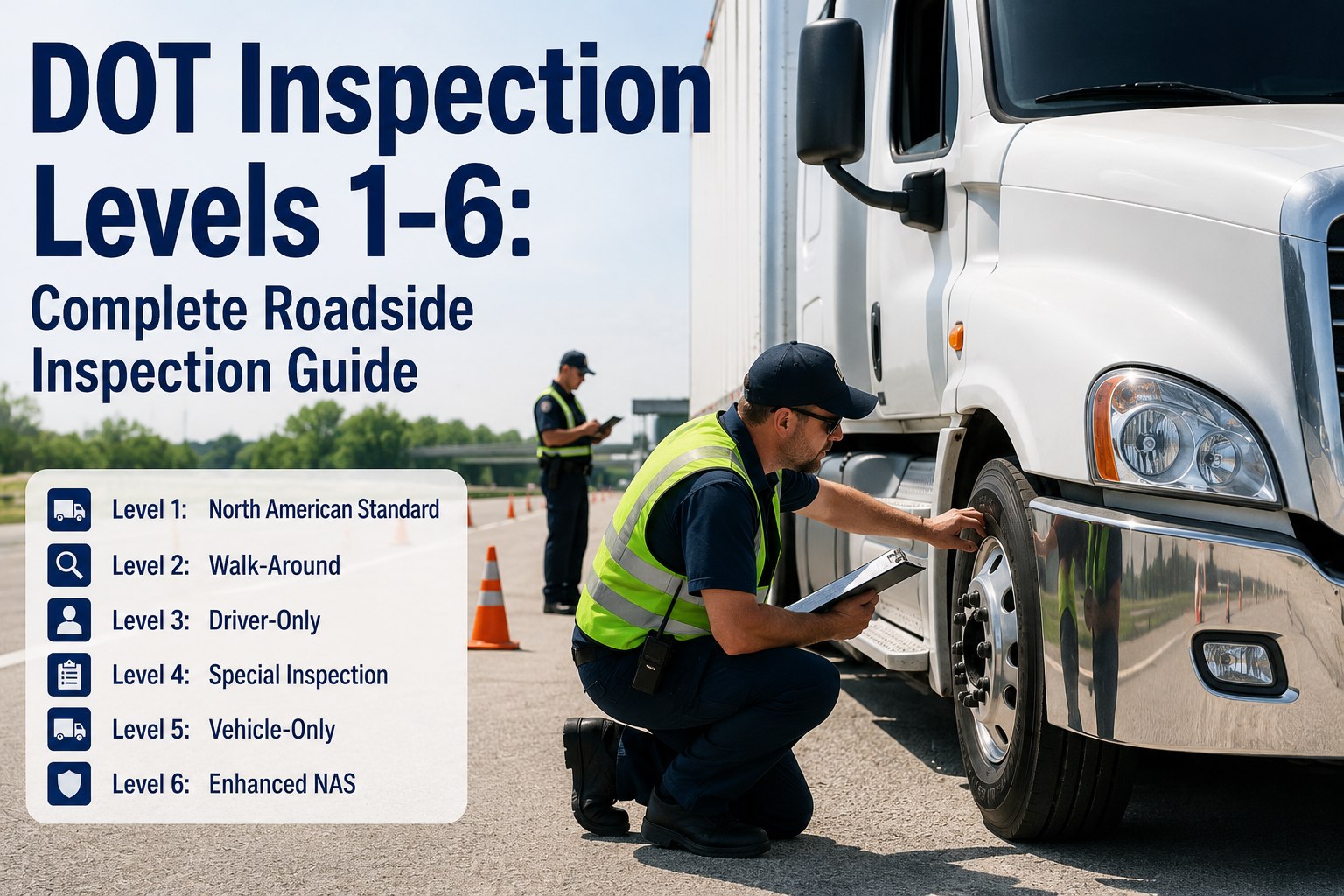
Every year approximately 4 million commercial motor vehicle inspections happen across North America — at weigh stations, in rest areas, on the shoulder, and at carrier terminals. The Commercial Vehicle Safety Alliance (CVSA) standardizes exactly what each of those inspections...
Read More
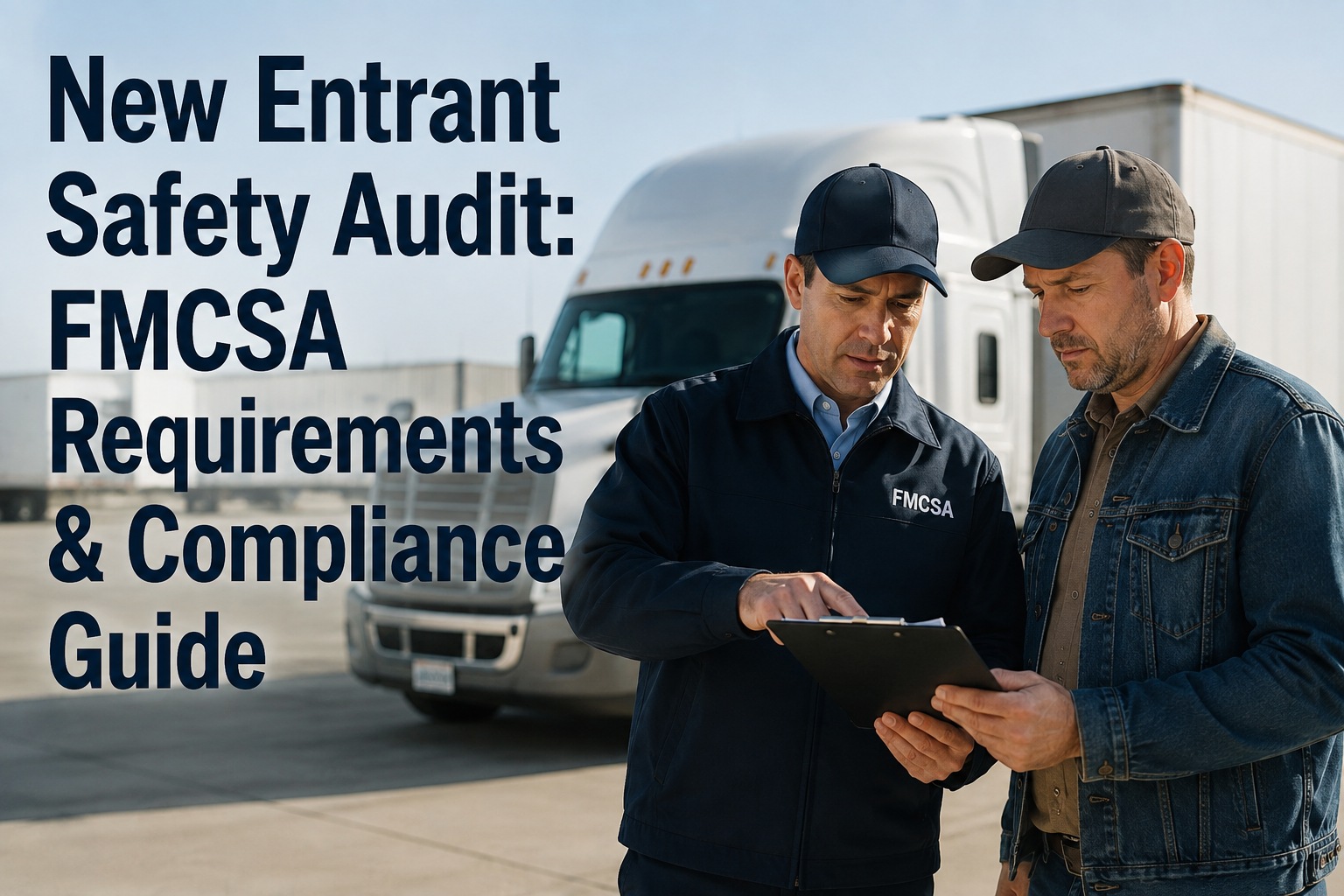
The moment a new motor carrier's USDOT number activates, the clock starts on an 18-month probation window that will determine whether the company earns permanent operating authority or gets shut down before it ships its first year of freight. Inside...
Read More
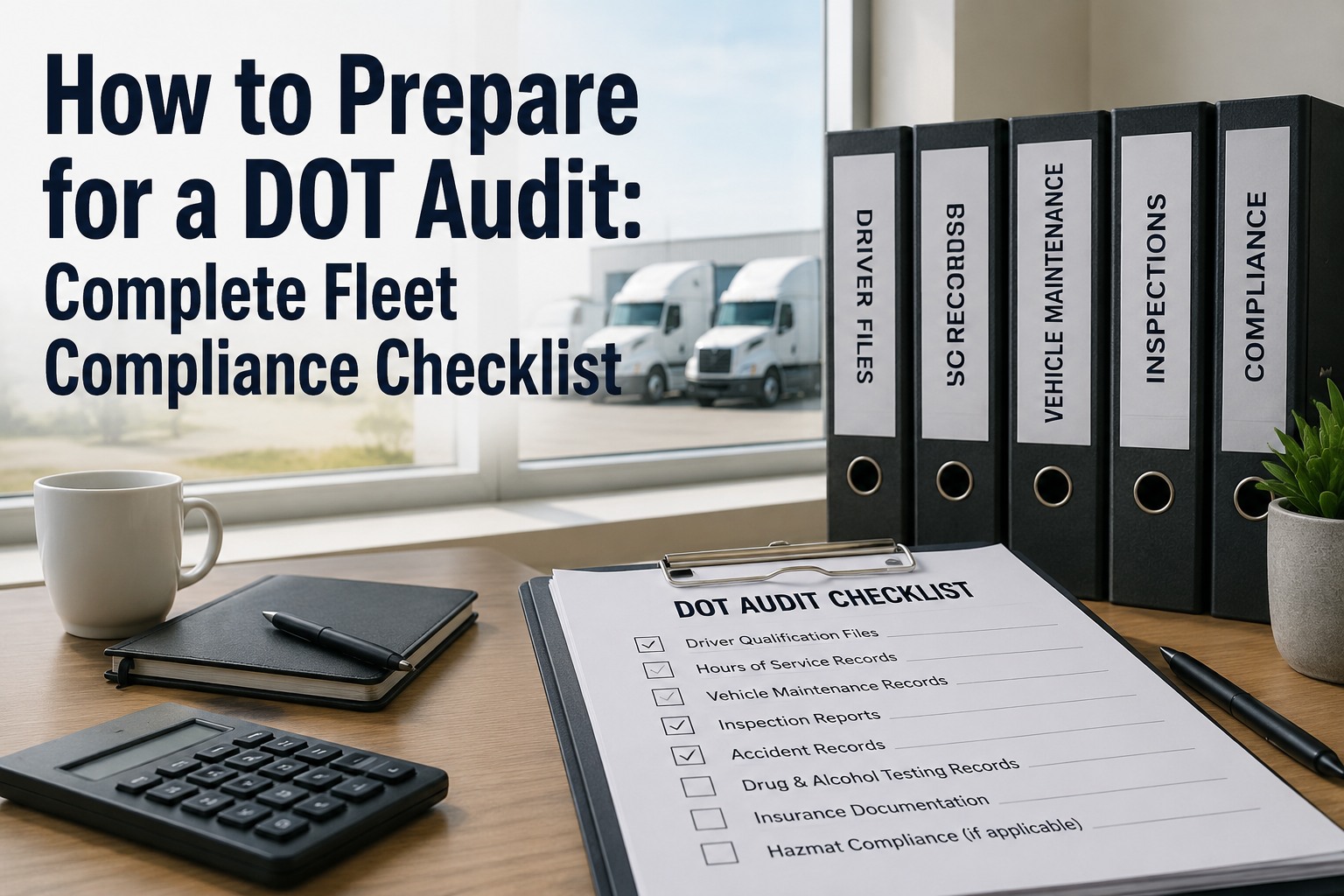
An FMCSA audit letter is the least fun envelope a fleet manager opens all year — and 93% of fleets that receive one walk away with at least one citation. Some of those citations run into fines of $19,277 per...
Read More
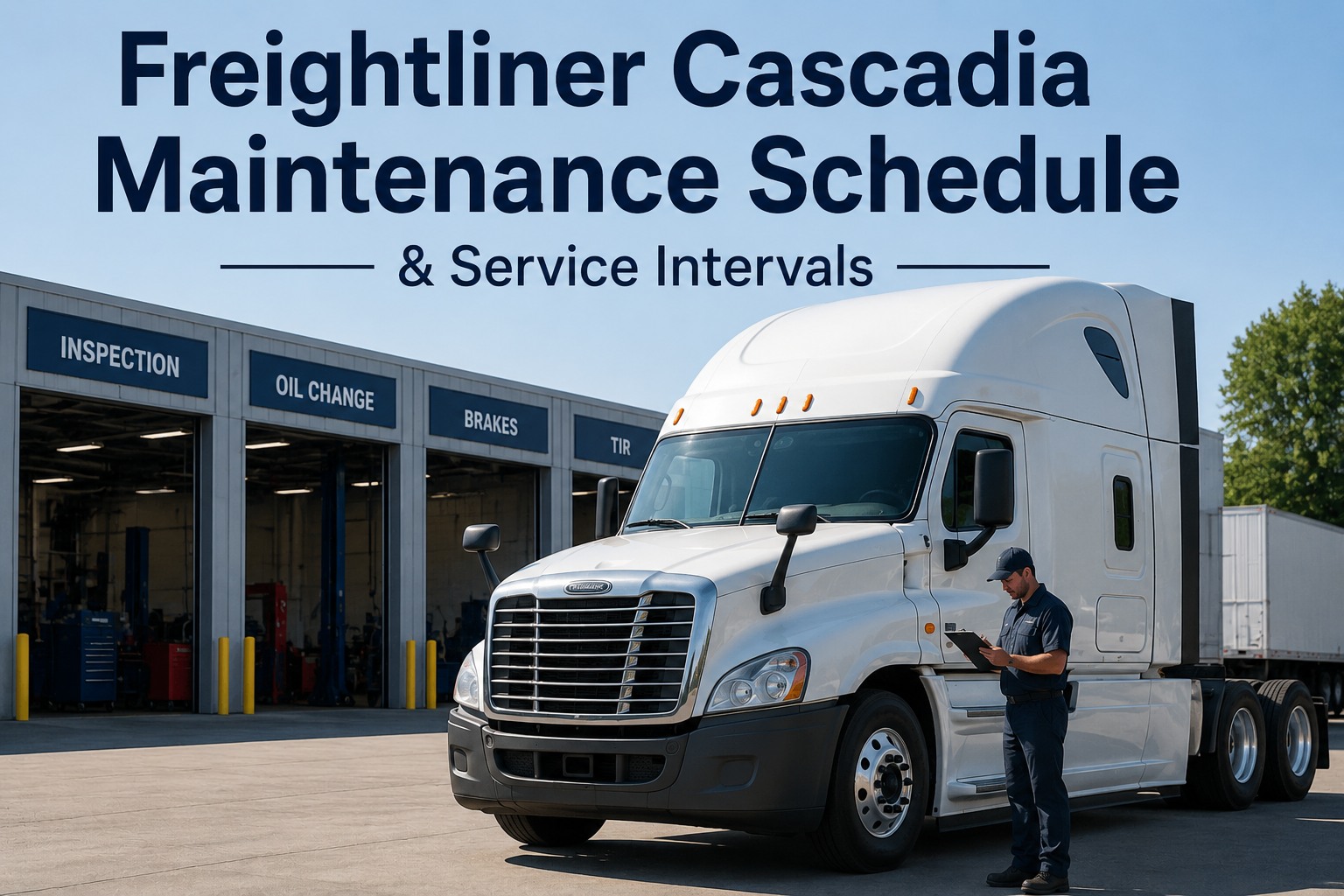
The Freightliner Cascadia is the best-selling Class 8 truck on North American highways, and when properly maintained it routinely delivers 1,000,000+ miles of service. When it isn't, the same truck develops turbocharger wear, DPF clogging, cooling system failures, and DD15...
Read More
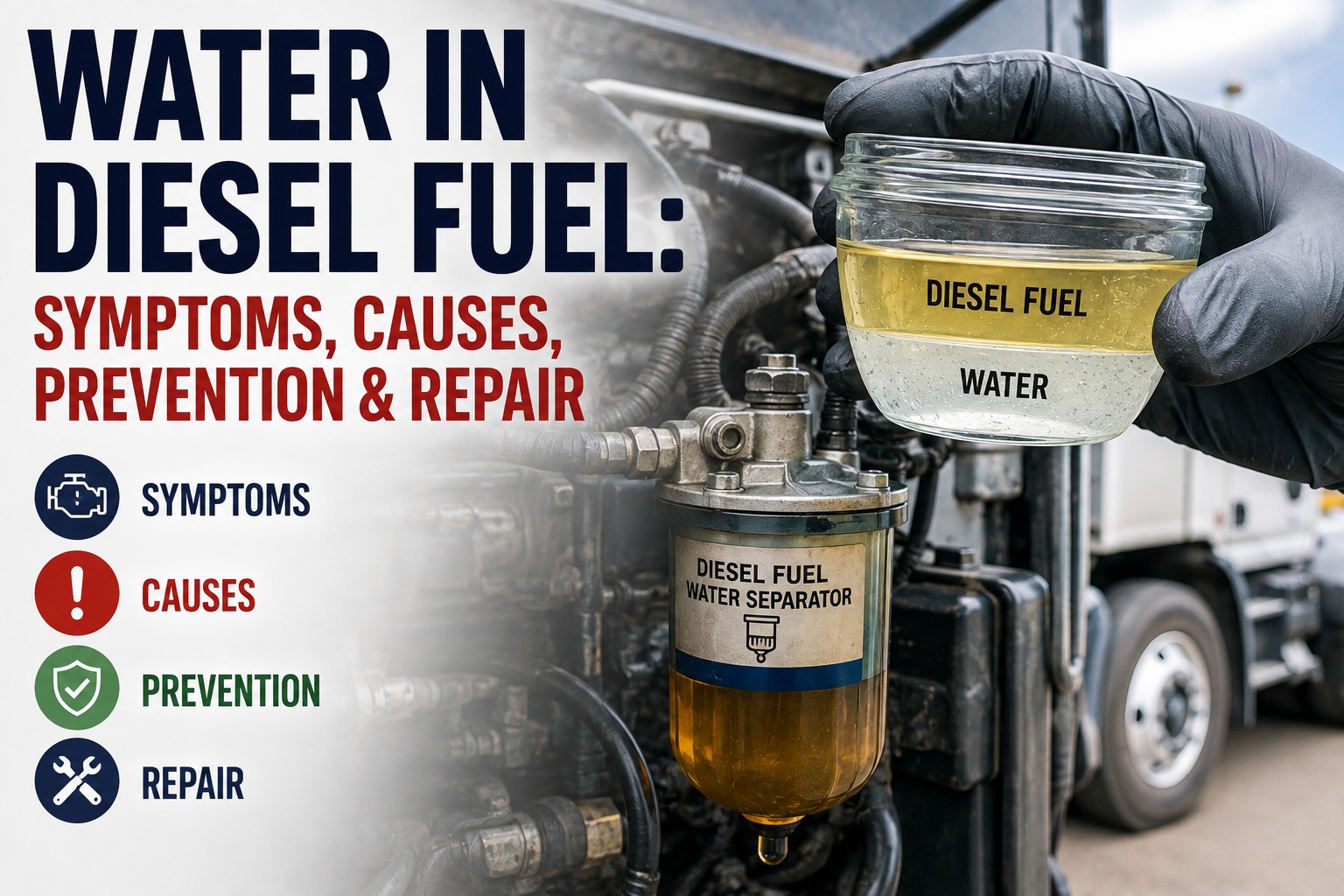
Modern common-rail diesel engines run injector clearances of 1 to 3 microns — one-thirtieth the width of a human hair — at pressures north of 30,000 PSI. Diesel fuel isn't just what those systems burn; it's what lubricates every precision...
Read More
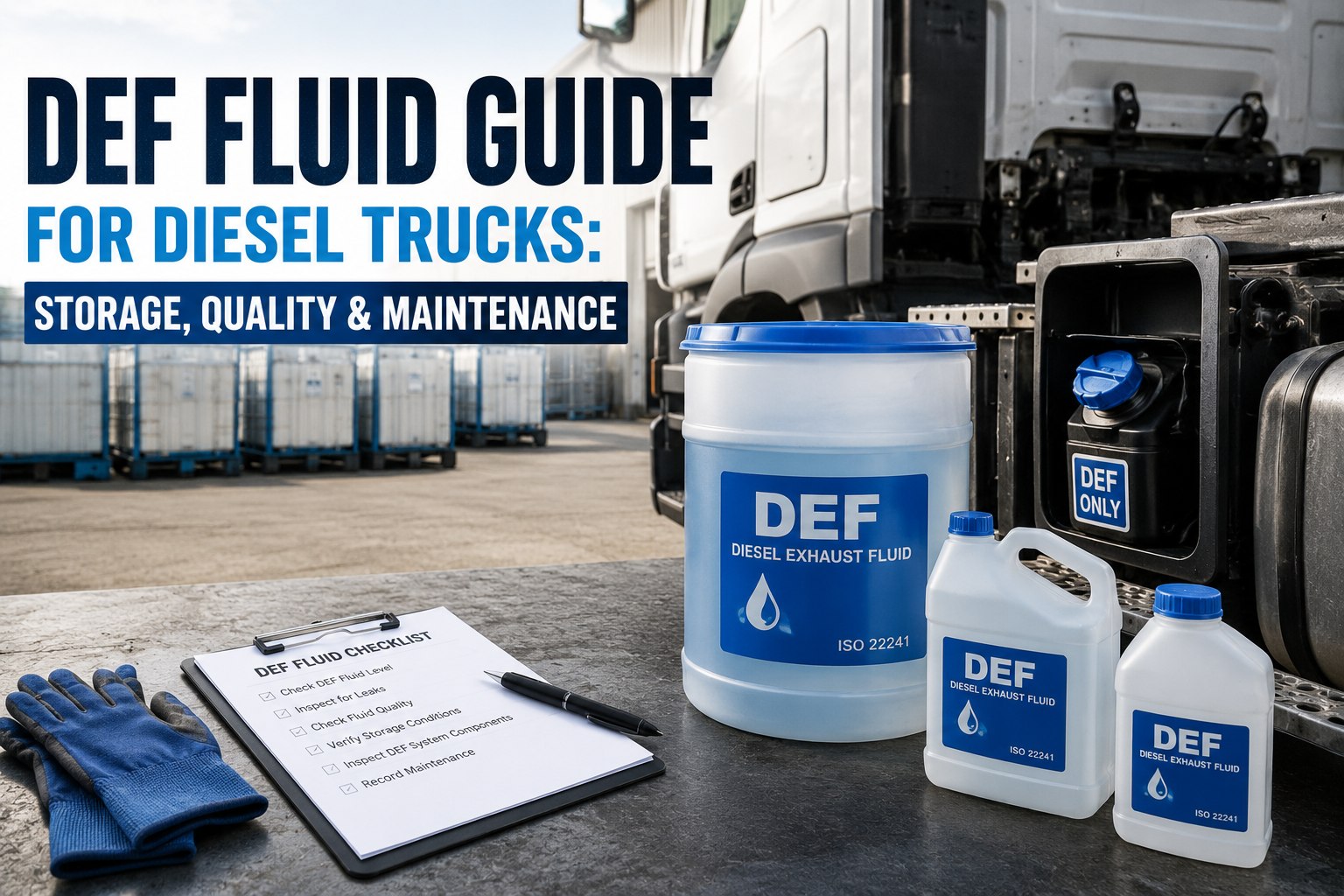
Diesel Exhaust Fluid is 67% deionized water and 33% chemically pure urea — nothing exotic on paper, but that mixture is the single most contamination-sensitive fluid on a modern diesel truck. Pour in something that shouldn't be there, store it...
Read More
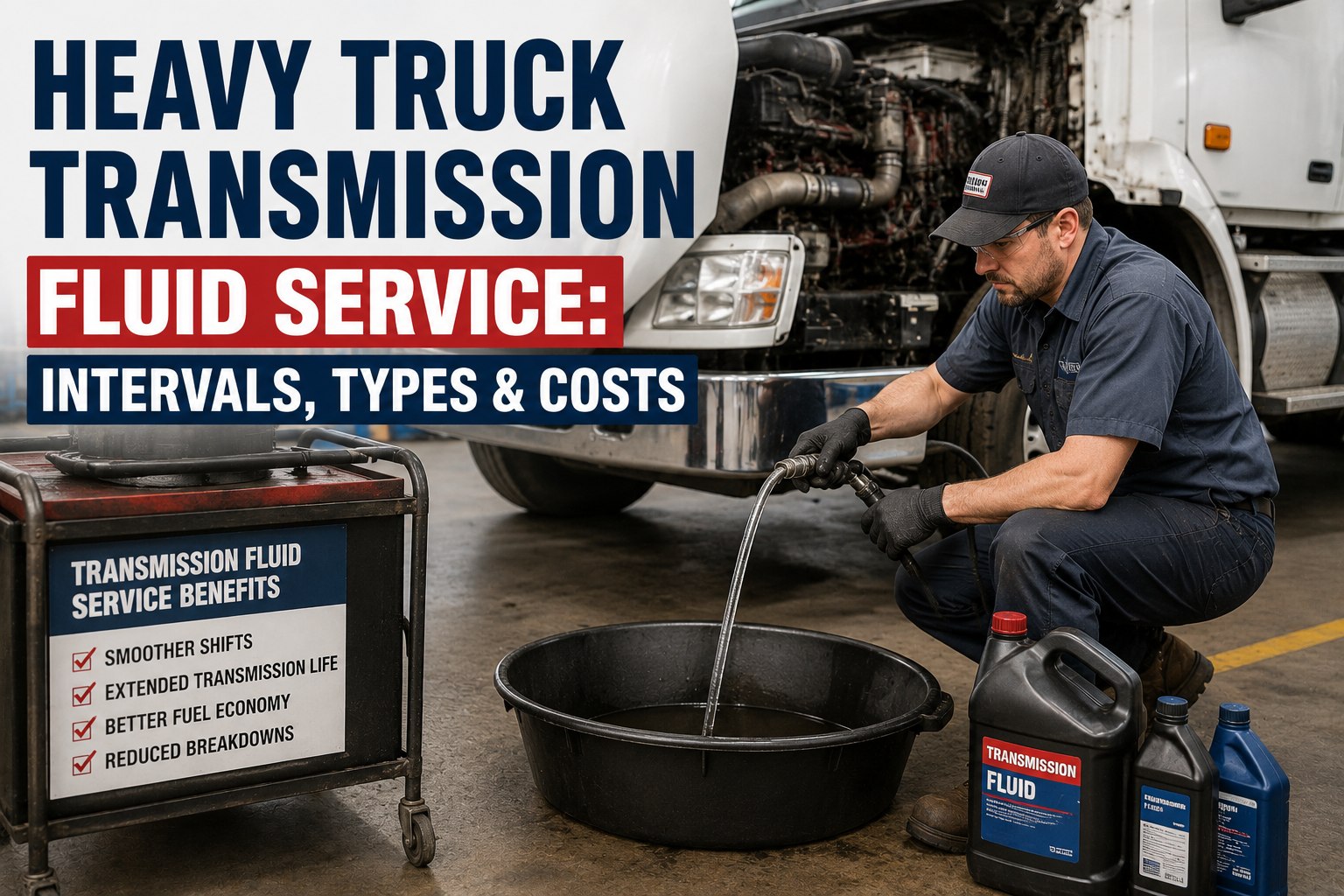
A Class 8 transmission is the single most expensive component you can destroy through a missed fluid change. An Allison 4500 RDS rebuild runs $8,000 to $15,000. An Eaton 18-speed rebuild lands between $10,000 and $22,000. A full replacement on...
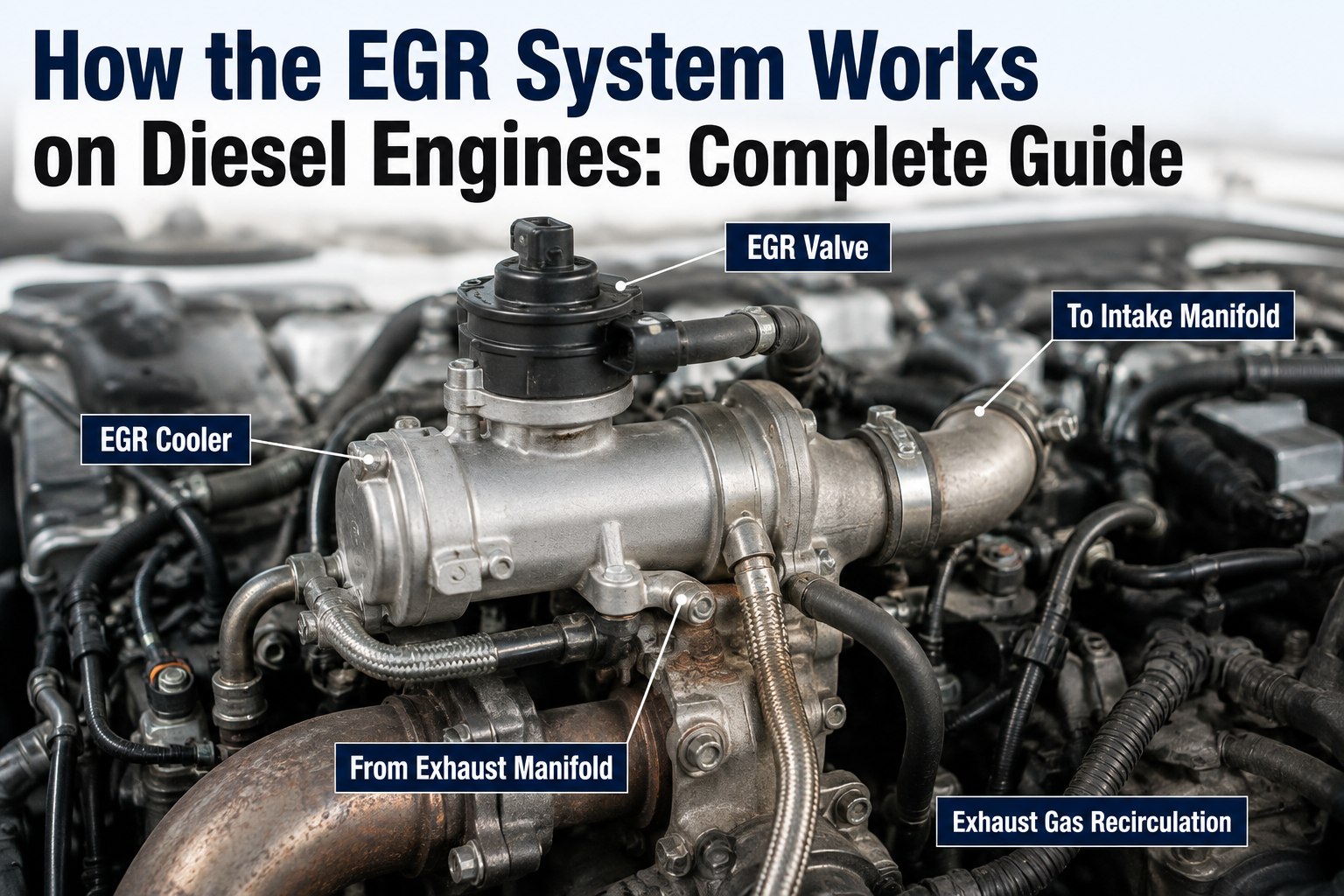
Read More
An EGR system does something that sounds backwards: it takes exhaust gas the engine just produced and feeds part of it back into the intake to be breathed in again. There's a precise reason for it. Nitrogen oxides — the...
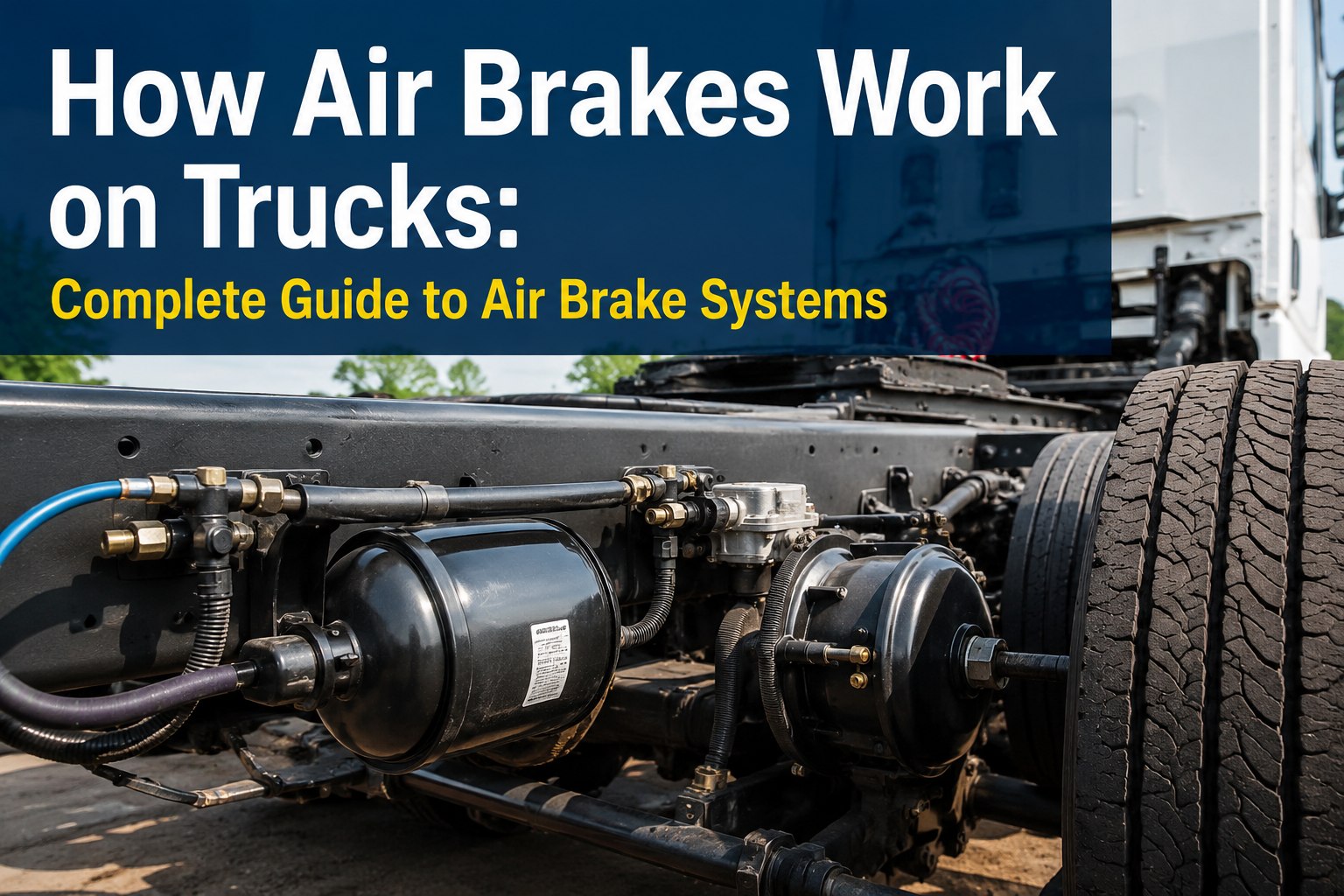
Read More
Air brakes work opposite to what most people think. On a car, you press the pedal and hydraulic pressure applies the brakes. On a commercial truck, the brakes are already applied by powerful springs — and compressed air is what...
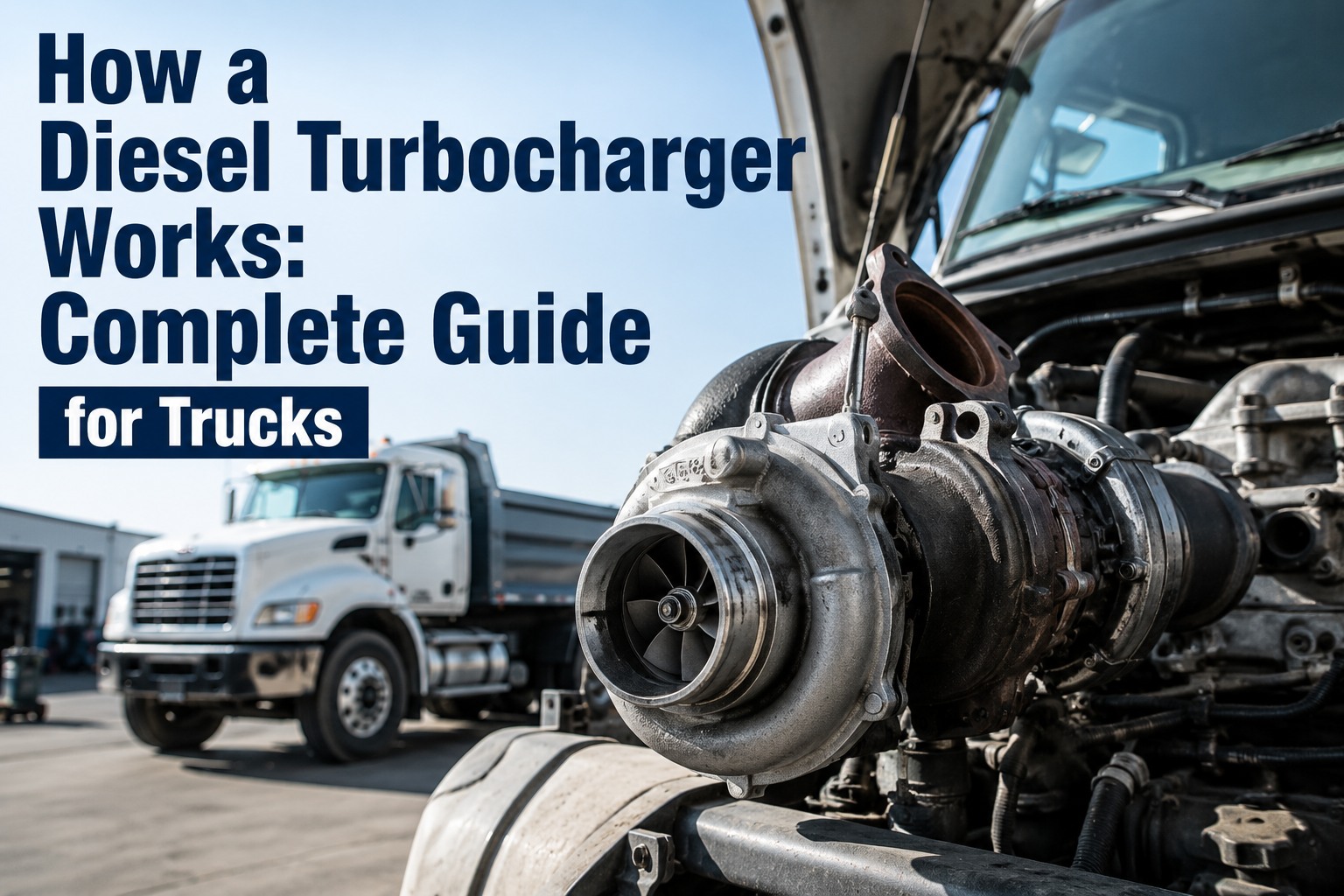
Read More
The diesel turbocharger is the most engineered component under your hood and the smallest — a matchbook-sized turbine spinning at over 100,000 RPM, handling exhaust temperatures above 1,400°F, single-handedly delivering the torque that makes a modern diesel worth owning. Without...
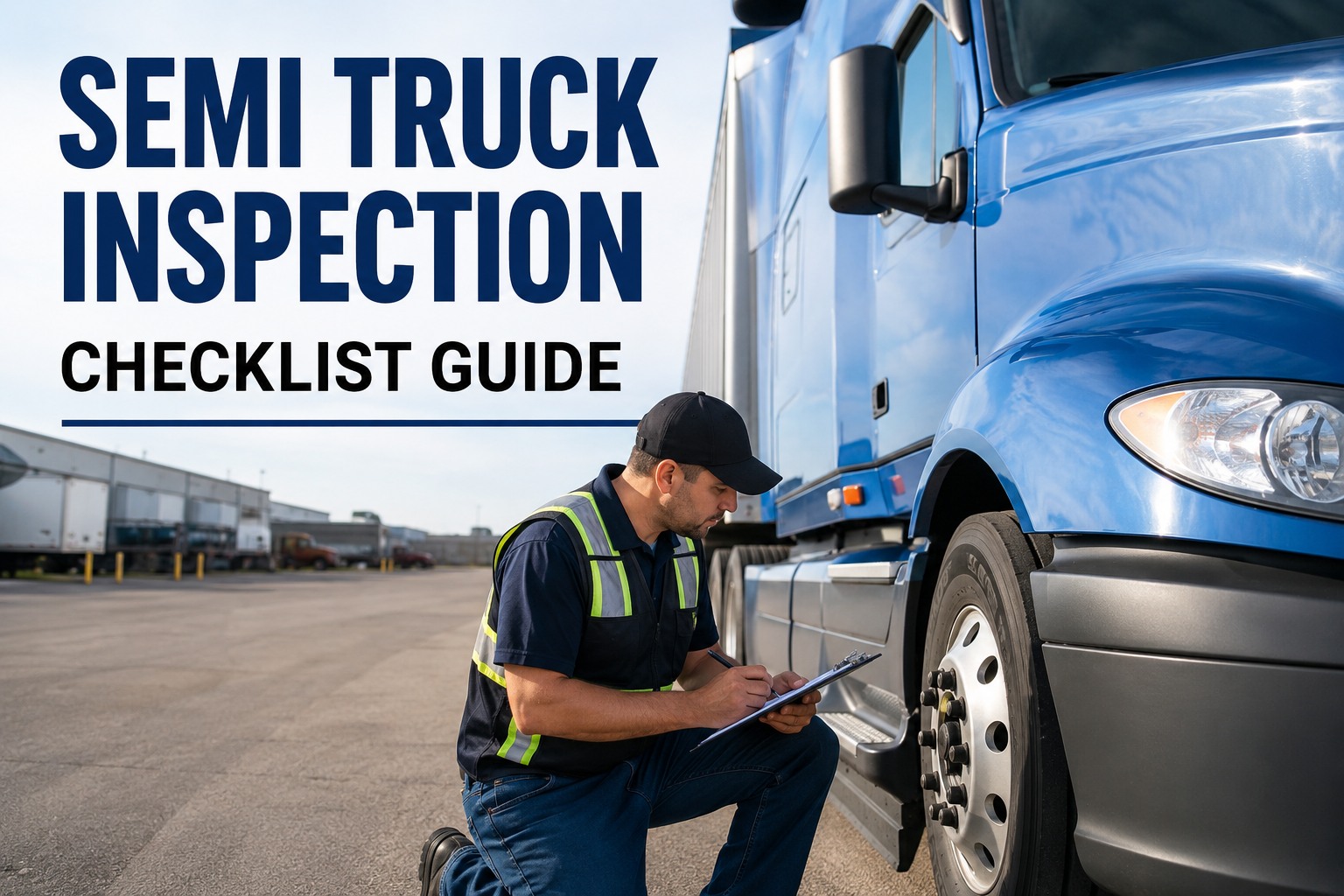
Read More
Semi trucks are the most inspected commercial vehicles on the road — and for good reason. According to the Bureau of Labor Statistics, drivers of heavy trucks and tractor-trailers experience fatal accidents at rates higher than nearly any other occupation,...
Read More
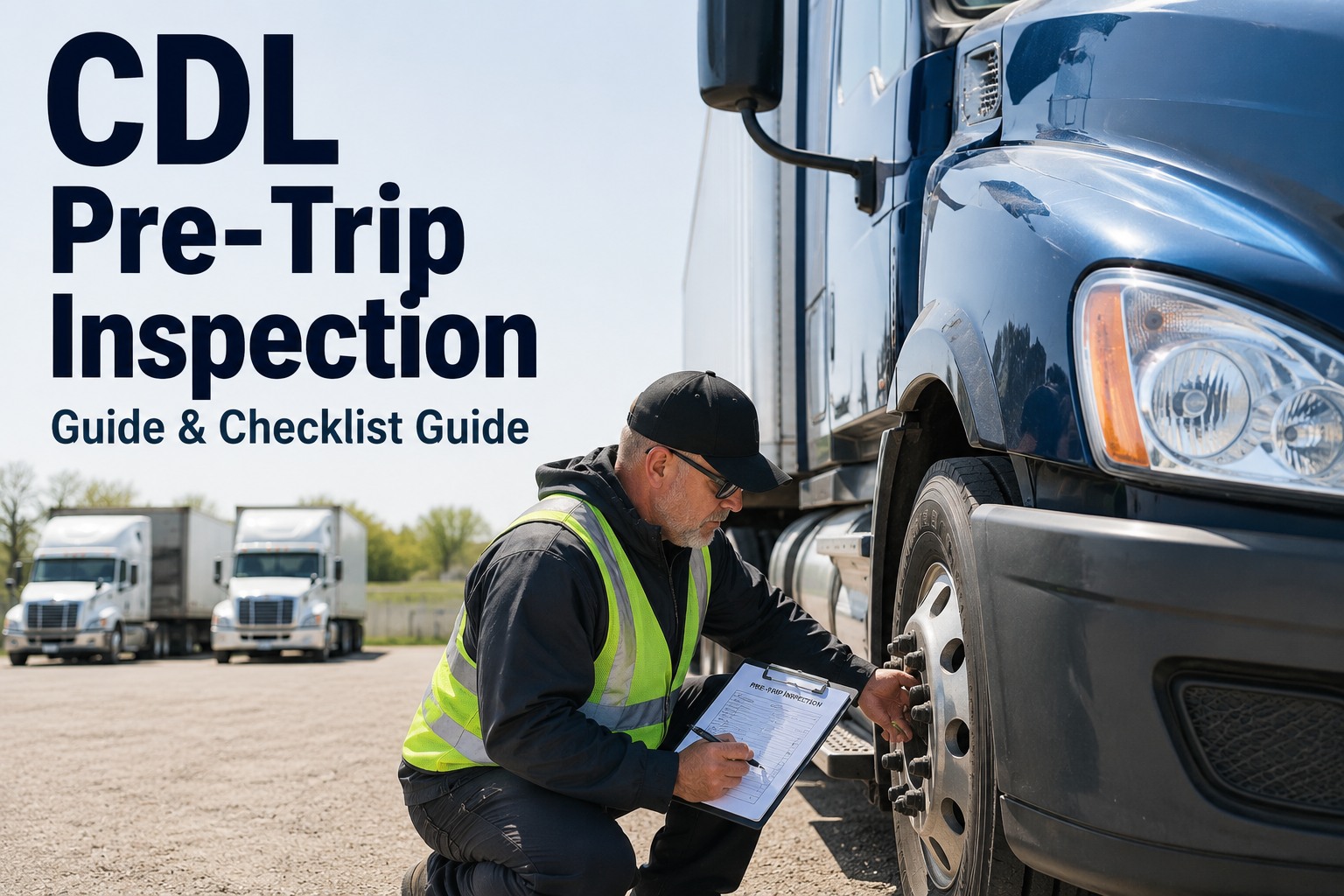
The CDL pre-trip inspection is the single most-failed portion of the commercial driver's license skills test — not because it's technically difficult, but because it requires memorizing 100+ inspection points, calling each one out loud in the correct order, and...
Read More
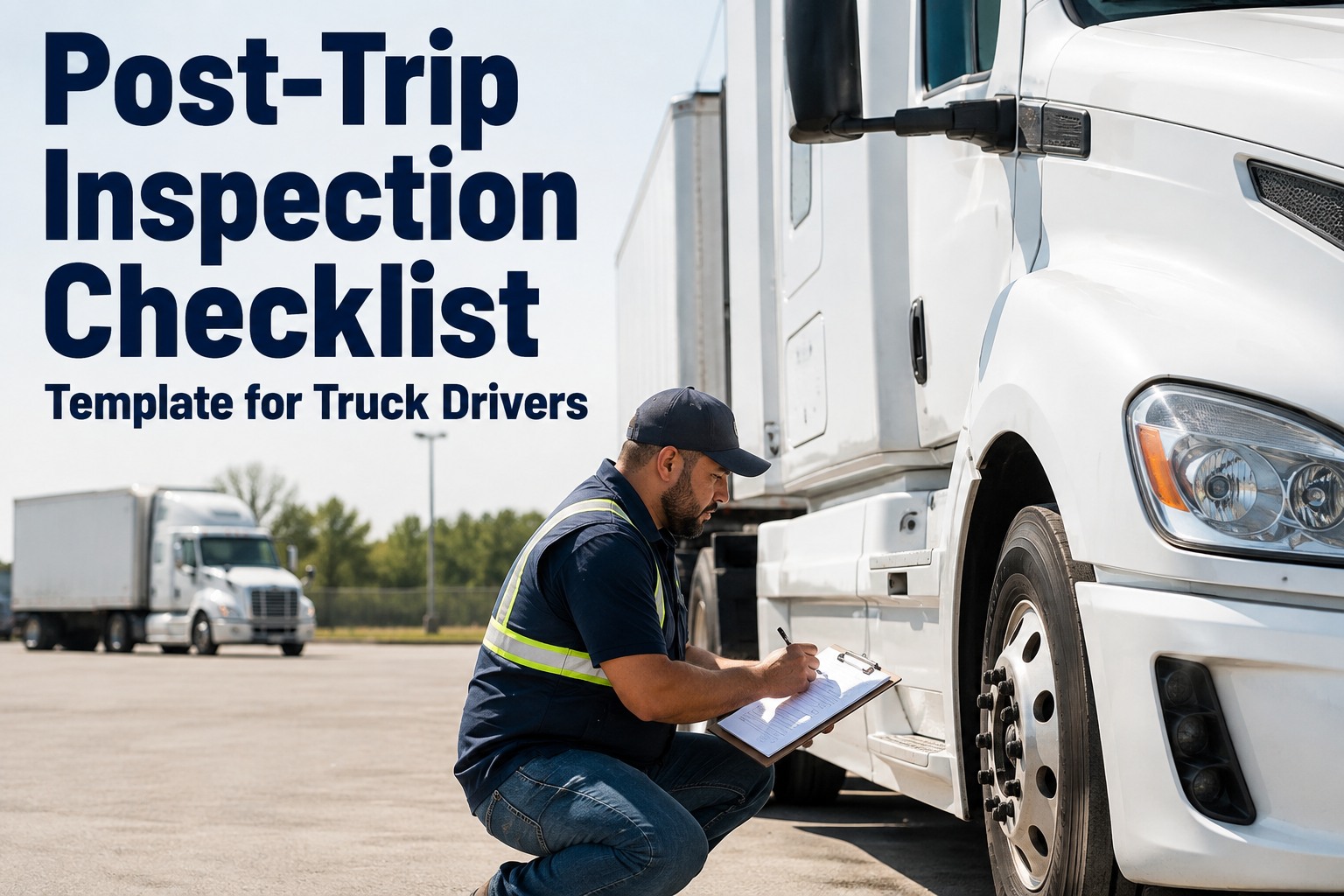
Here's the truth most CDL training programs skim over: FMCSA doesn't technically mandate a formal "post-trip inspection" the way it mandates the pre-trip. What 49 CFR 396.11 actually requires is the DVIR — a written report of defects discovered during...
Read More
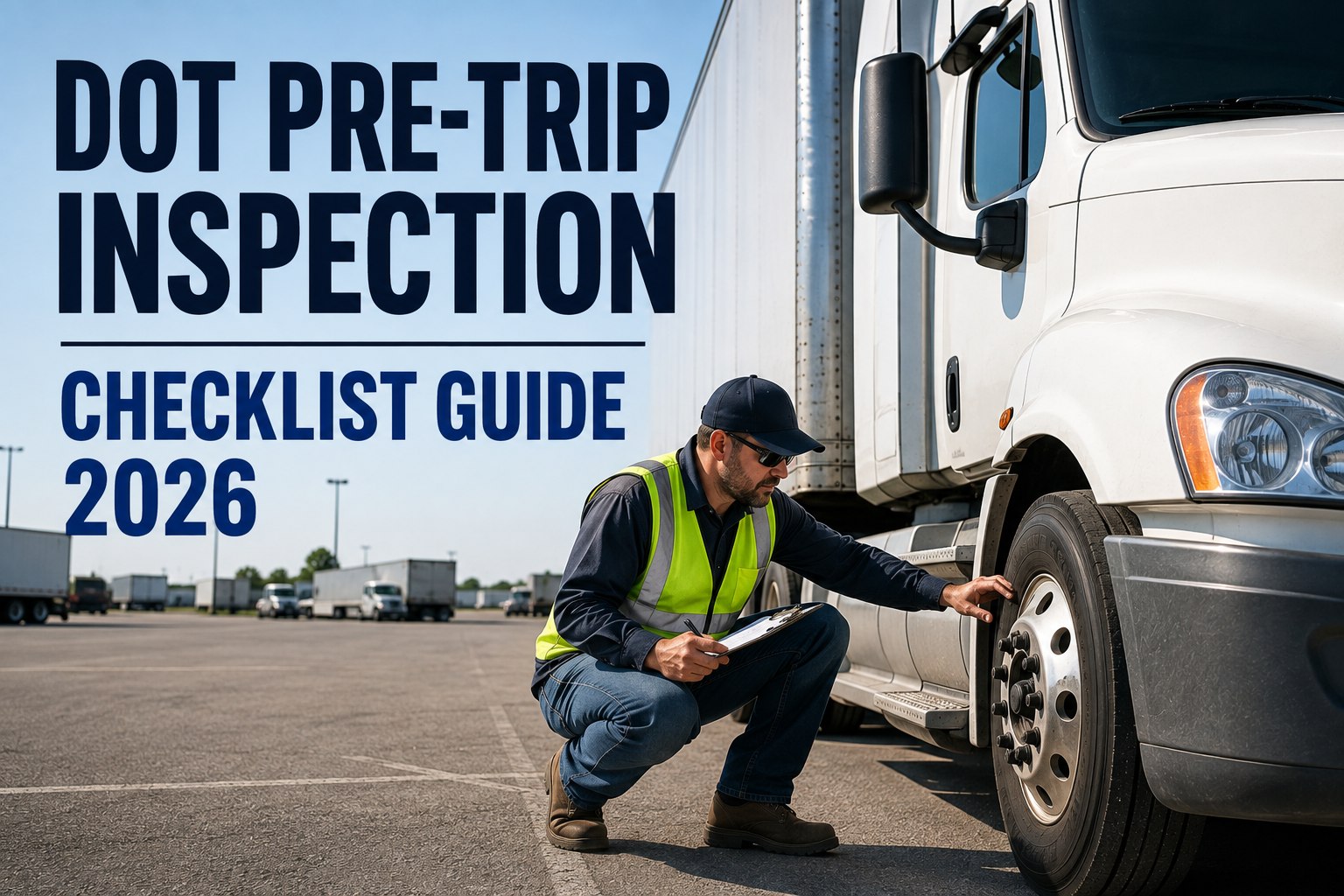
The DOT pre-trip inspection isn't optional. Under FMCSA §396.13 and §396.11, every driver of a commercial motor vehicle over 10,001 pounds GVWR must inspect the vehicle before operating, review the previous DVIR, and file a written report of any defect...

Read More
The Camshaft Position Sensor (CMP) is the small Hall-effect sensor that tells your diesel's ECU exactly where the camshaft is at every moment of rotation — and unlike its cousin the crankshaft position sensor, the CMP does one job the...
Read More
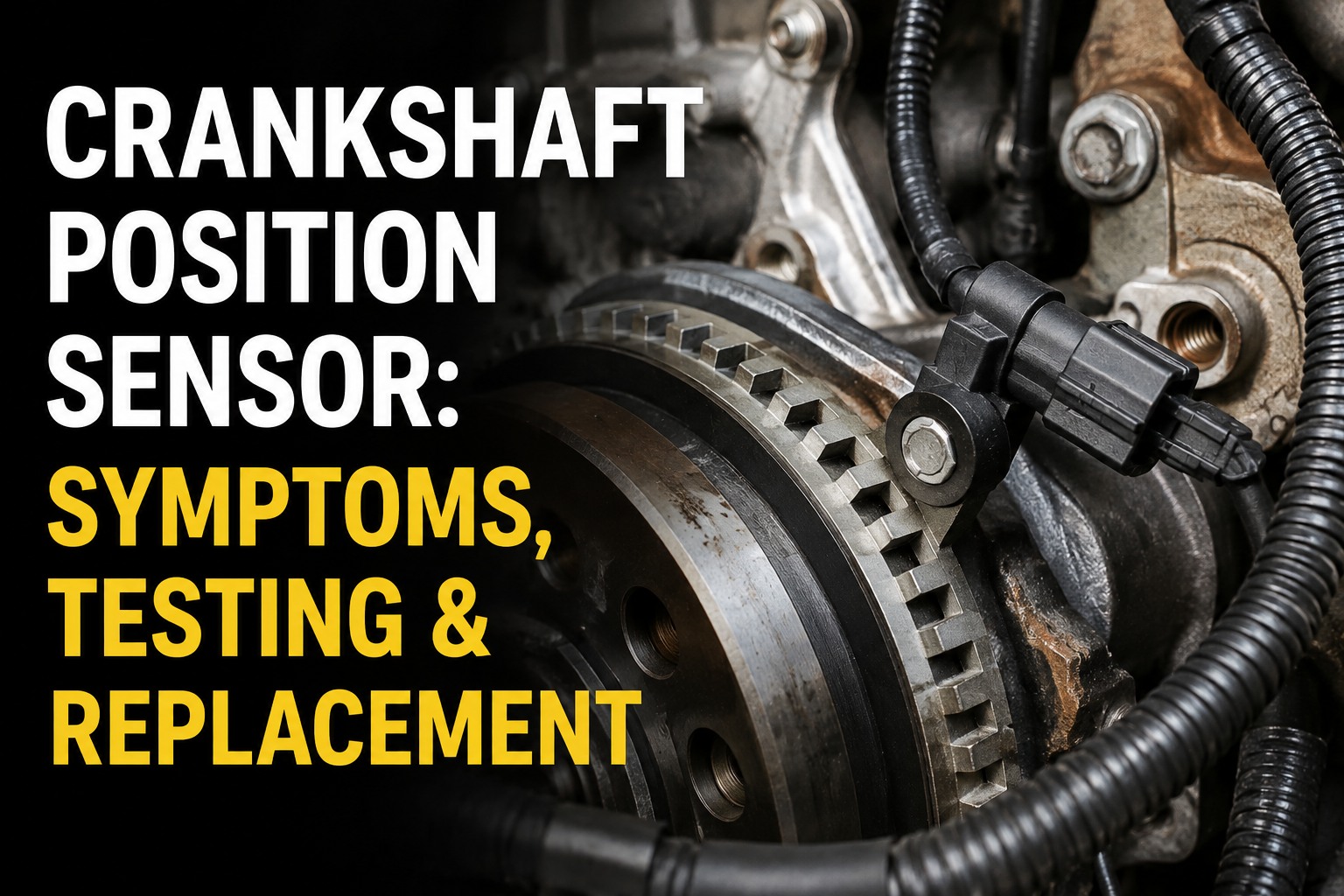
The Crankshaft Position Sensor (CKP) is the smallest component with the largest job description on your entire diesel engine — it tells the ECU exactly where the crankshaft is at every moment of rotation, providing the primary timing reference for...

Read More
The Manifold Absolute Pressure sensor is the single most important input the ECM uses to decide how much fuel to inject on each cycle. It measures the pressure inside the intake manifold — reading the boost from the turbocharger, air...
Read More
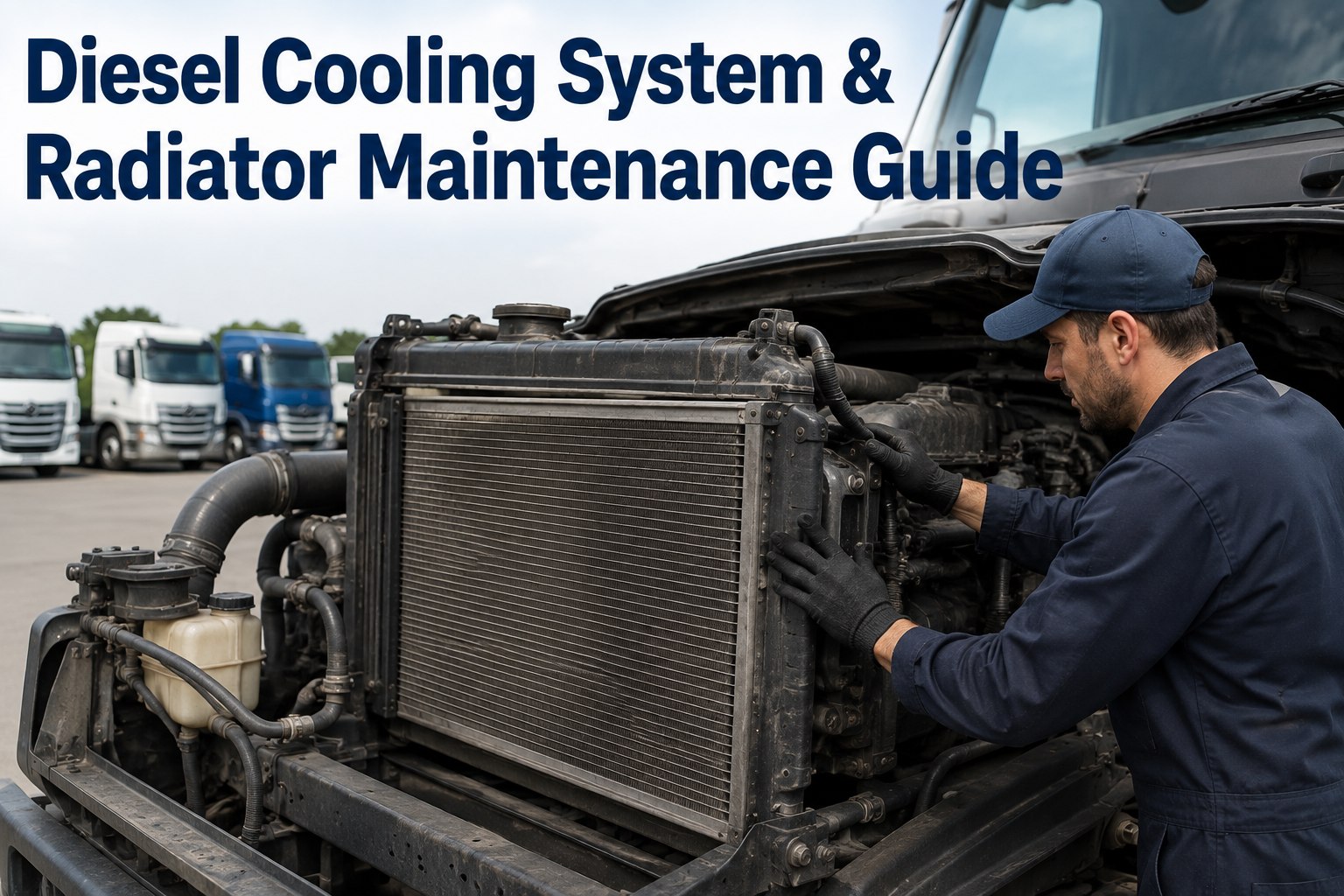
The cooling system is the single most overlooked component of diesel maintenance — and industry data consistently shows it causes roughly one in four major diesel engine failures. Every gallon of diesel burned generates enormous amounts of heat, and only...
Read More
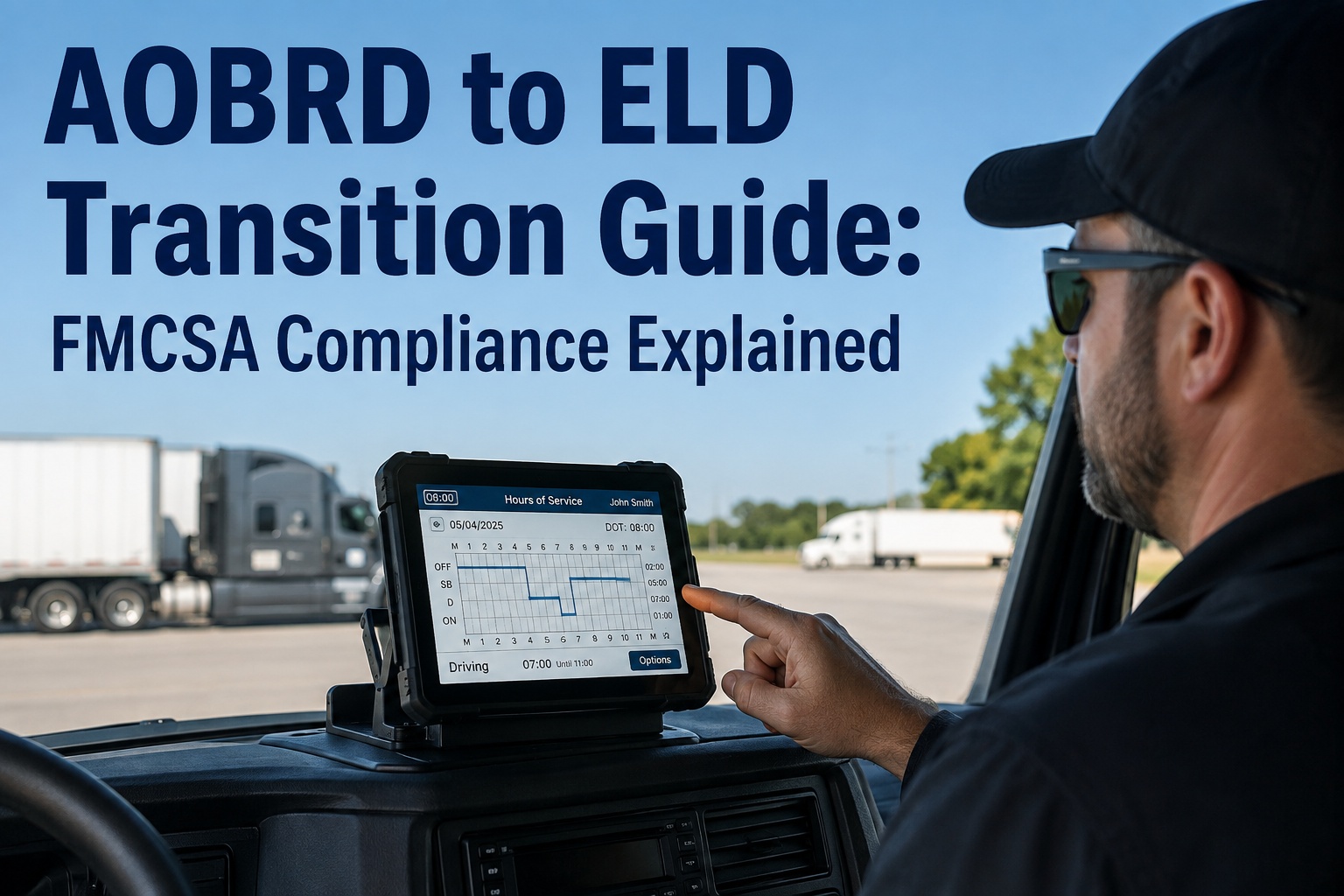
The AOBRD-to-ELD transition officially closed on December 16, 2019 — but the migration story is still very much alive in 2026. Fleets acquiring older operations, carriers pulling grandfathered trucks out of storage, and safety managers inheriting legacy compliance stacks are...

Read More
Every ELD on the FMCSA registered list technically meets the minimum federal requirement — automatic driving-time capture synced to the engine control module, duty-status logging, and roadside data transfer in one of four approved formats. That's the floor, not the...
Read More
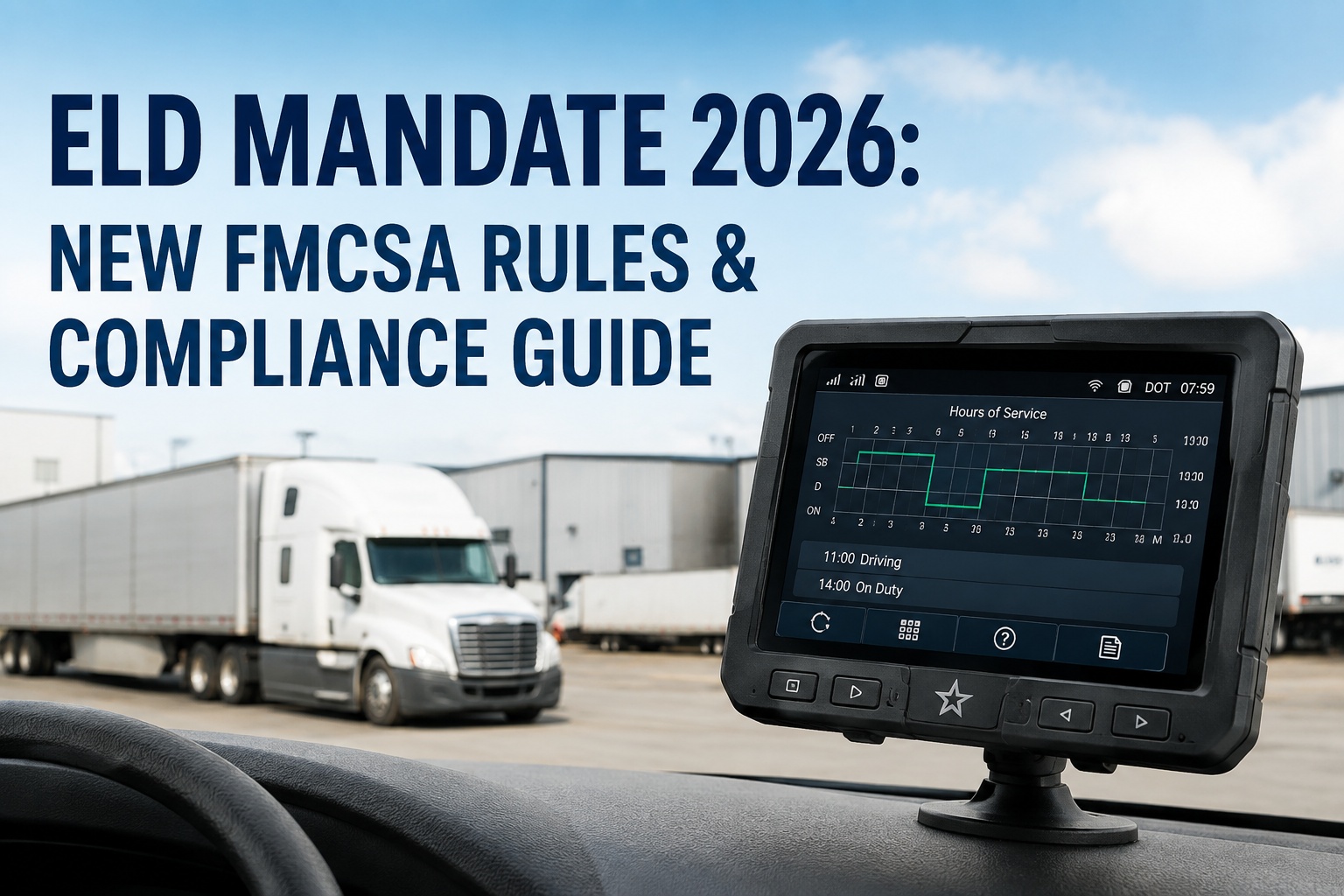
The ELD Mandate itself hasn't changed in 2026 — but the enforcement environment around it has changed dramatically, and fleets treating "we have a device" as compliance are getting caught. FMCSA estimates the ELD mandate prevents 1,844 crashes, 562 injuries,...
Read More
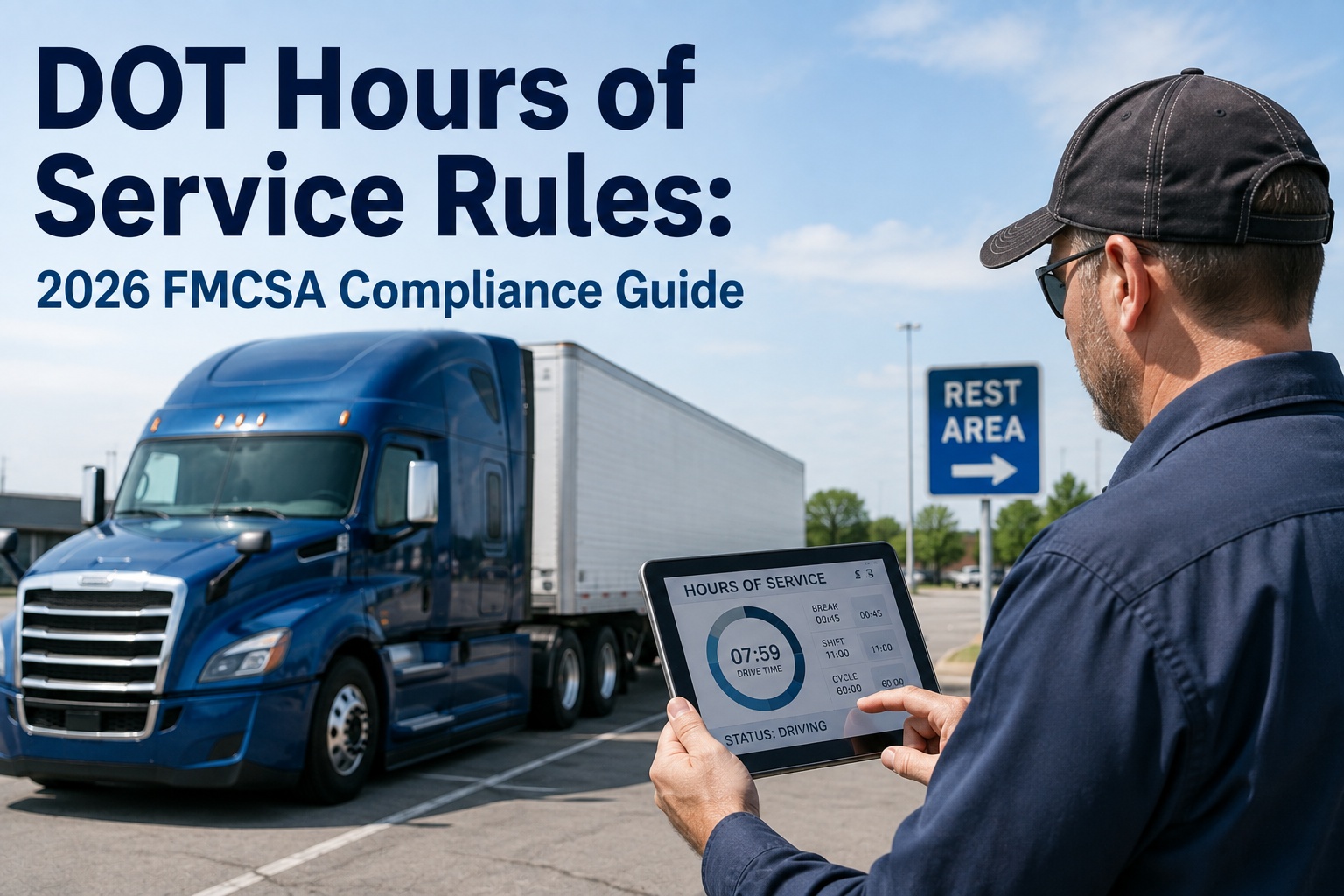
Every commercial driver on the road today operates against four clocks running simultaneously — the 11-hour driving limit, the 14-hour on-duty window, the 30-minute break trigger at 8 hours of driving, and the 60/70-hour weekly cumulative cap. Federal Motor Carrier...

Read More
Driver fatigue is one of the deadliest risks in commercial trucking — and one of the most systematically undermanaged. The National Highway Traffic Safety Administration reports drowsy driving contributes to roughly 18% of all fatal commercial vehicle crashes, and NTSB...
Read More
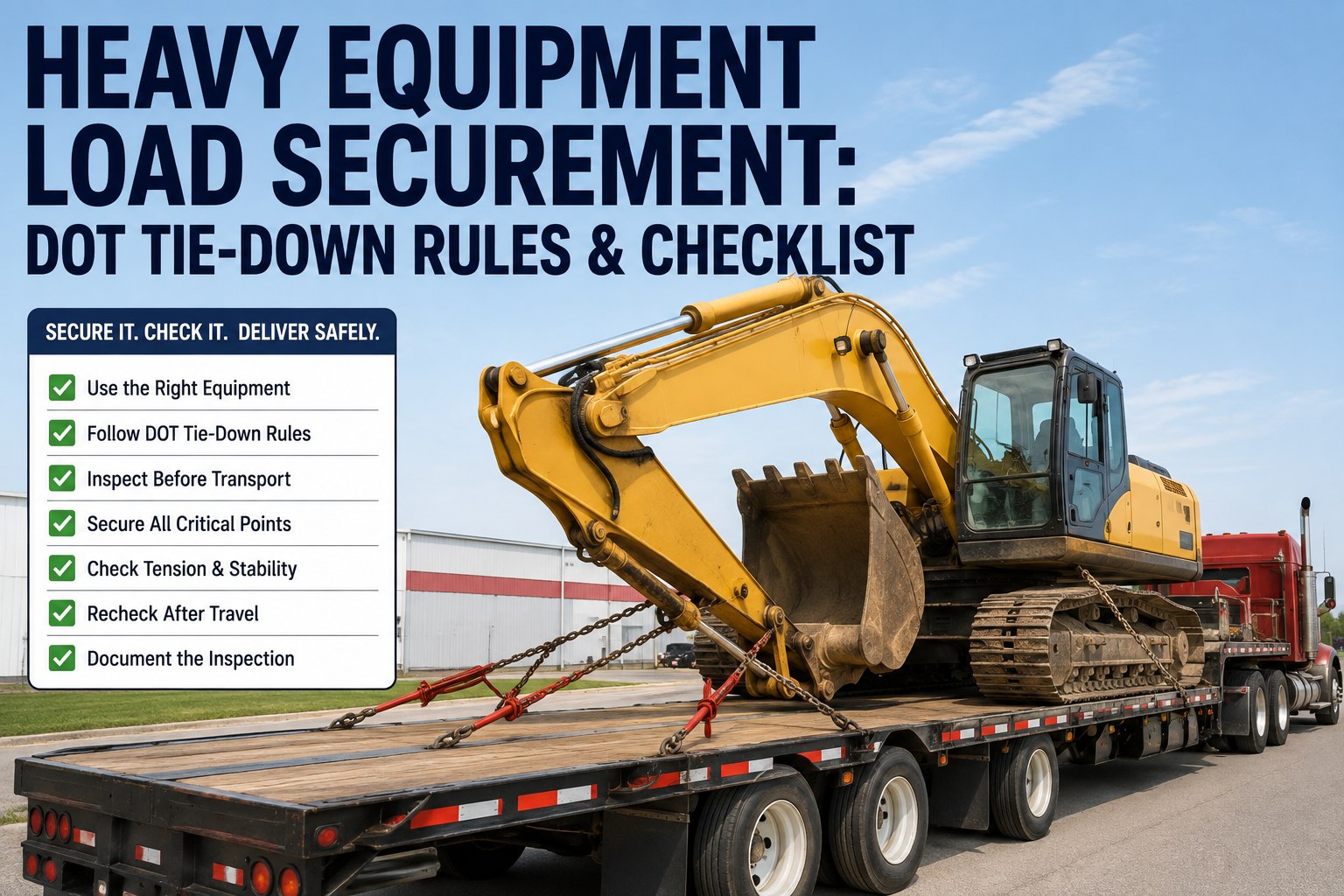
A 45,000-pound excavator on a lowboy is not just a bigger version of a lumber load. Federal Motor Carrier Safety Regulation 49 CFR §393.130 treats heavy equipment as its own category with its own rules — minimum 4 direct tie-downs...
Read More
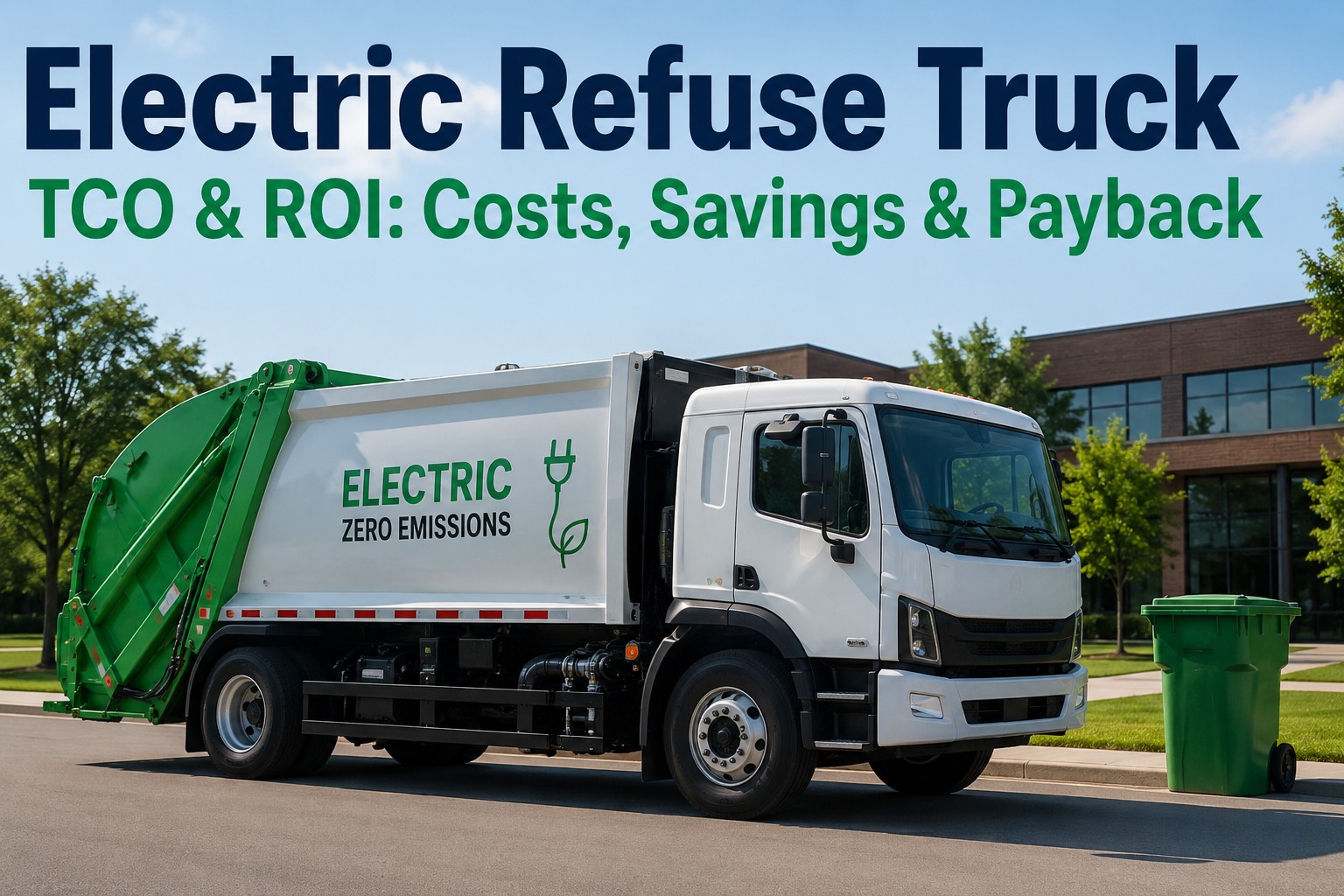
Electric refuse trucks look expensive on the sticker — $500,000 to $650,000 versus $250,000 to $350,000 for a comparable diesel — and that price gap is what stops most fleet directors from taking the conversation further. But refuse duty is...
Read More
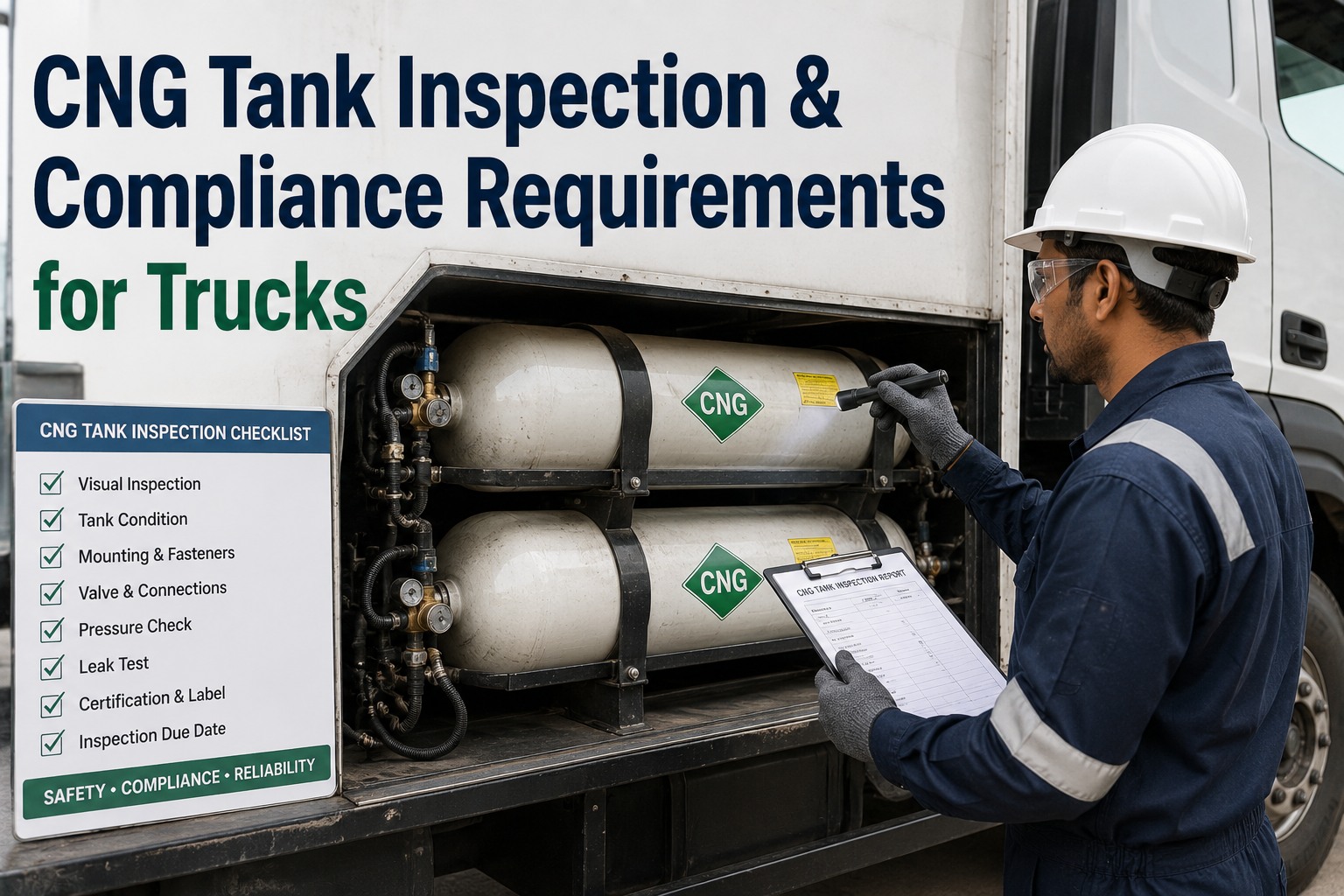
A CNG tank stores natural gas at 3,000–3,600 PSI — pressures that turn a hairline crack into a catastrophic rupture. That's why the Federal Motor Vehicle Safety Standard (FMVSS 304), NFPA 52, and CGA C-6.4 don't treat CNG cylinders like...
Read More
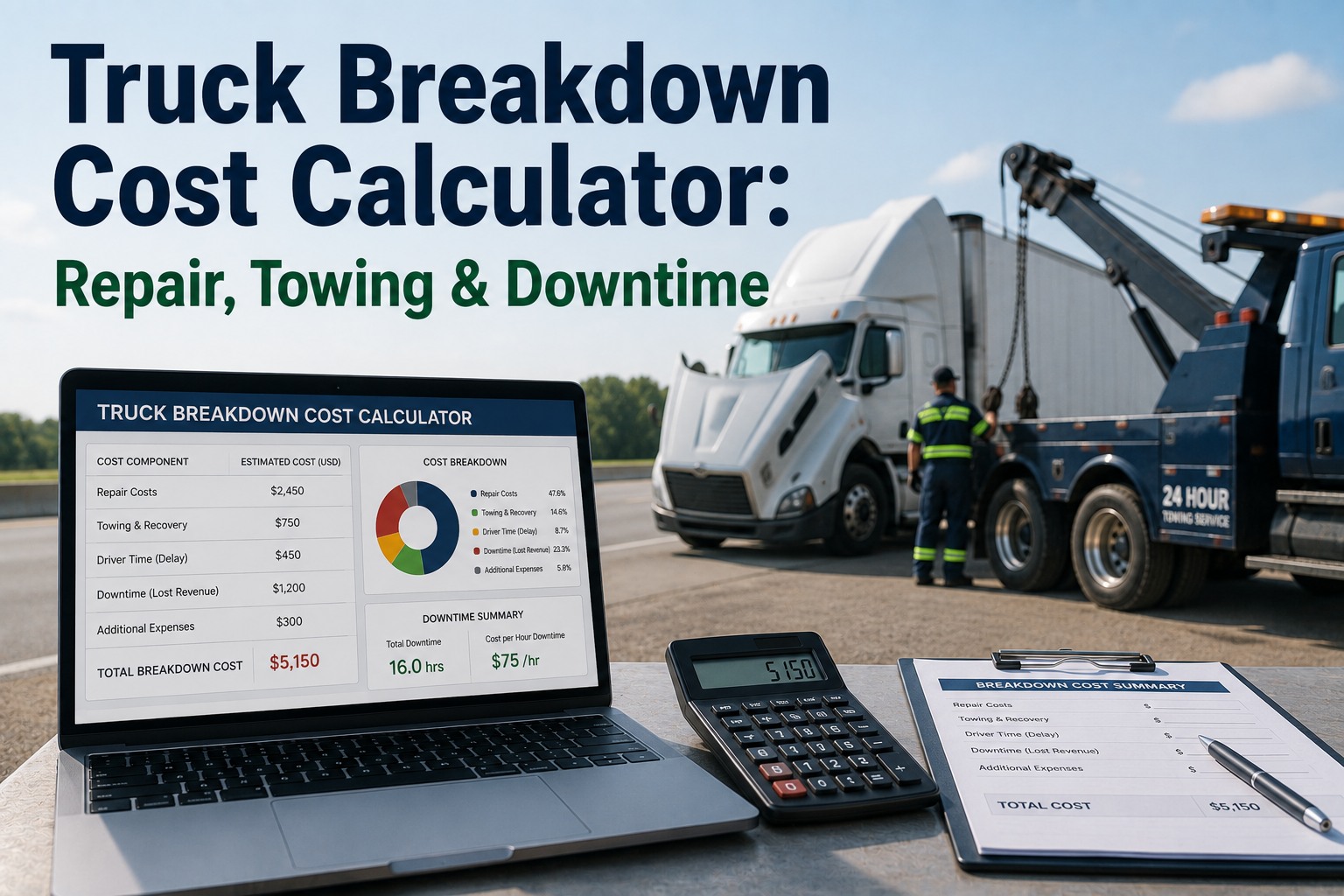
A commercial truck breakdown on the interstate looks like a repair bill. It's actually seven separate bills stacked on top of each other — the tow, the roadside diagnosis, the rush parts freight, the after-hours labor, the hotel for the...
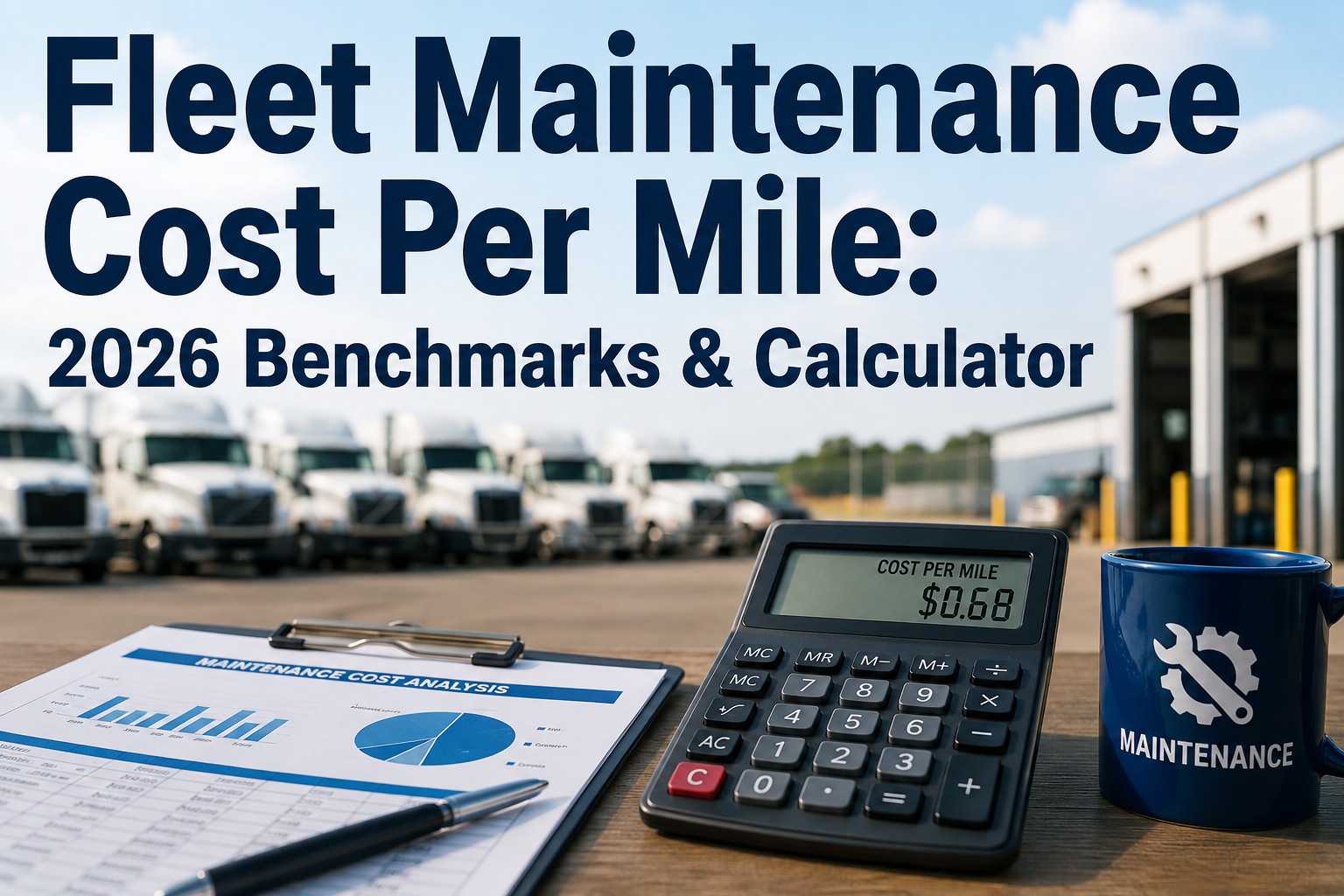
Read More
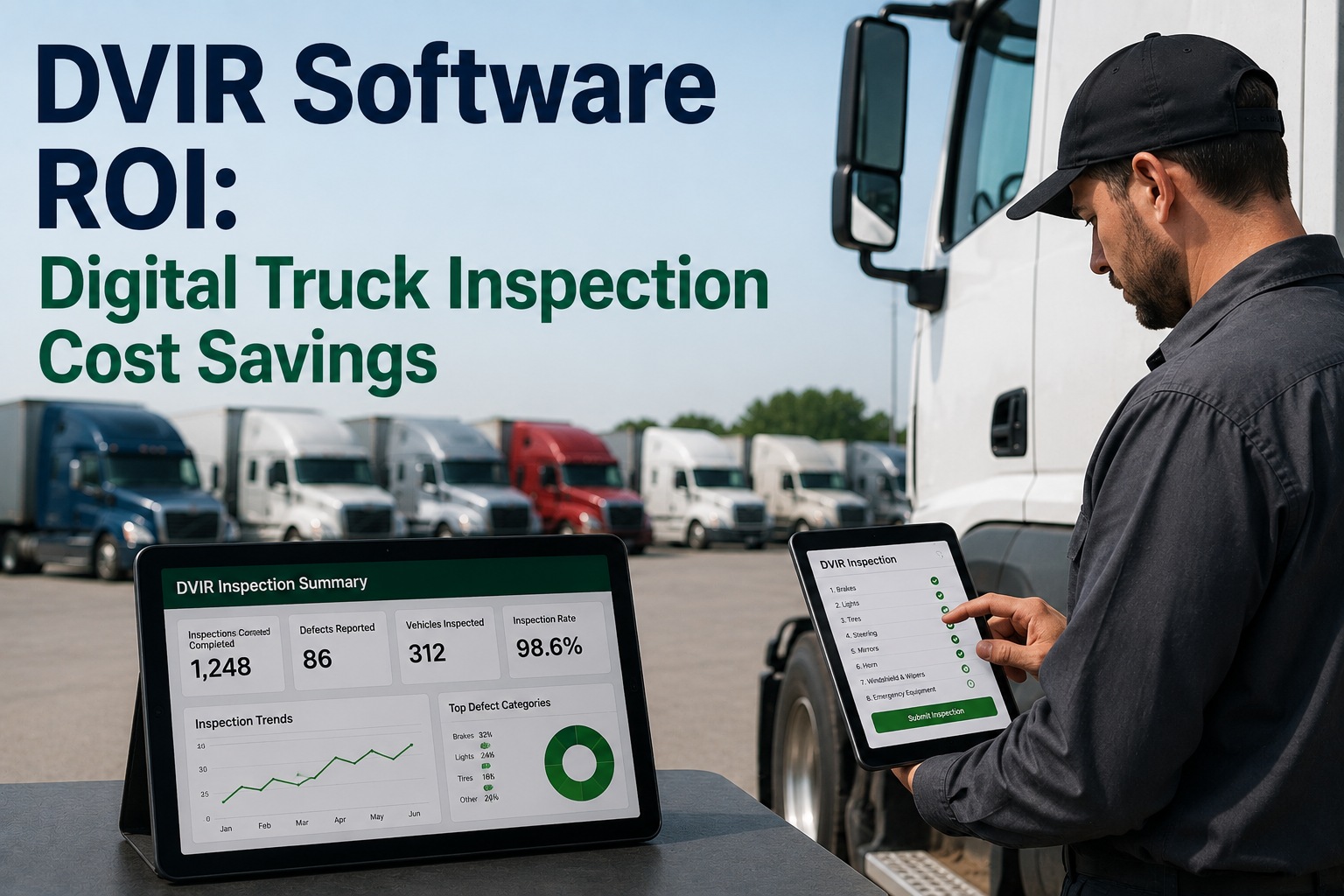
The 2026 ATRI Operational Costs of Trucking report just dropped a number that stings: repair and maintenance now averages 40.4 cents per mile — up 8.6% year over year — making it one of the fastest-rising line items on any...
Read More
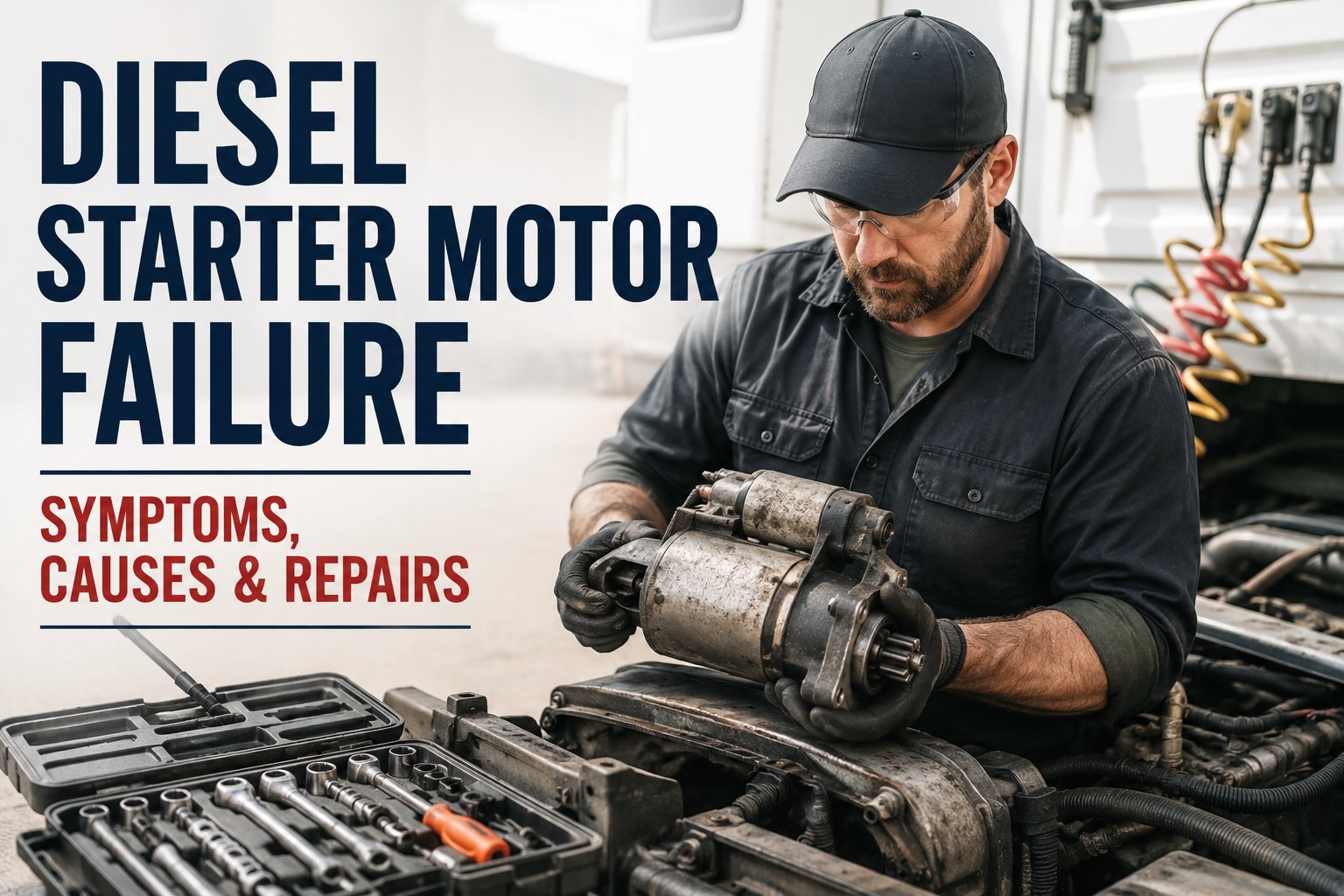
Every day, thousands of commercial drivers scribble their DVIR on a triplicate carbon-copy form, tear off the top sheet, and hand it to a dispatcher who may or may not read it before the next shift. The Federal Motor Carrier...
Read More
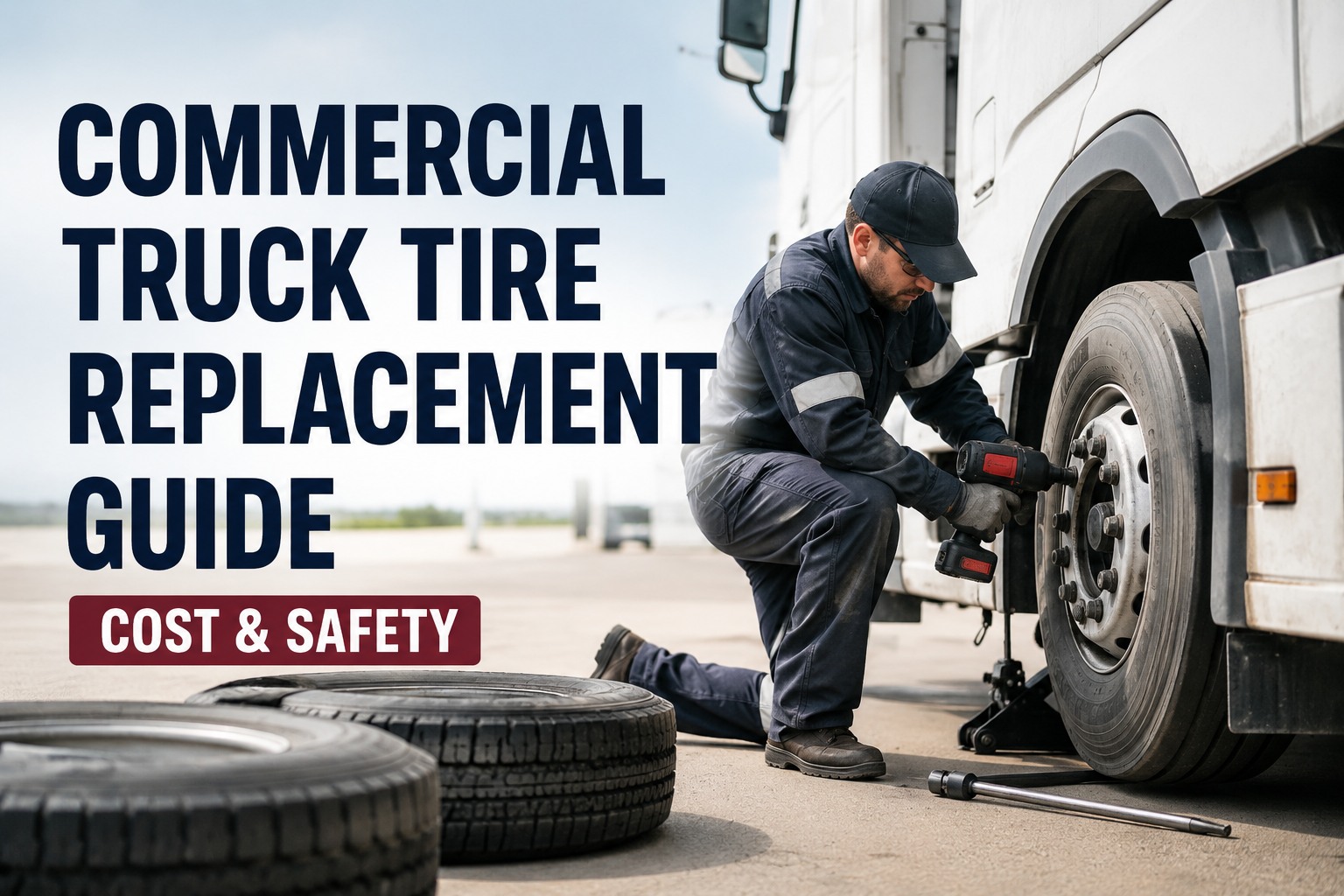
A commercial diesel that won't crank at 5 AM in a fleet yard is more than an inconvenience — it's a missed dispatch, a broken schedule, and often a $900 tow-plus-repair bill that could have been prevented with 30 seconds...
Read More
Tires are the third-largest expense in a commercial fleet — behind only labor and fuel — and mismanaged tire replacement quietly bleeds an average carrier $2,500 to $4,000 per vehicle every year. The math is brutal: a 100-truck fleet spending...
Read More
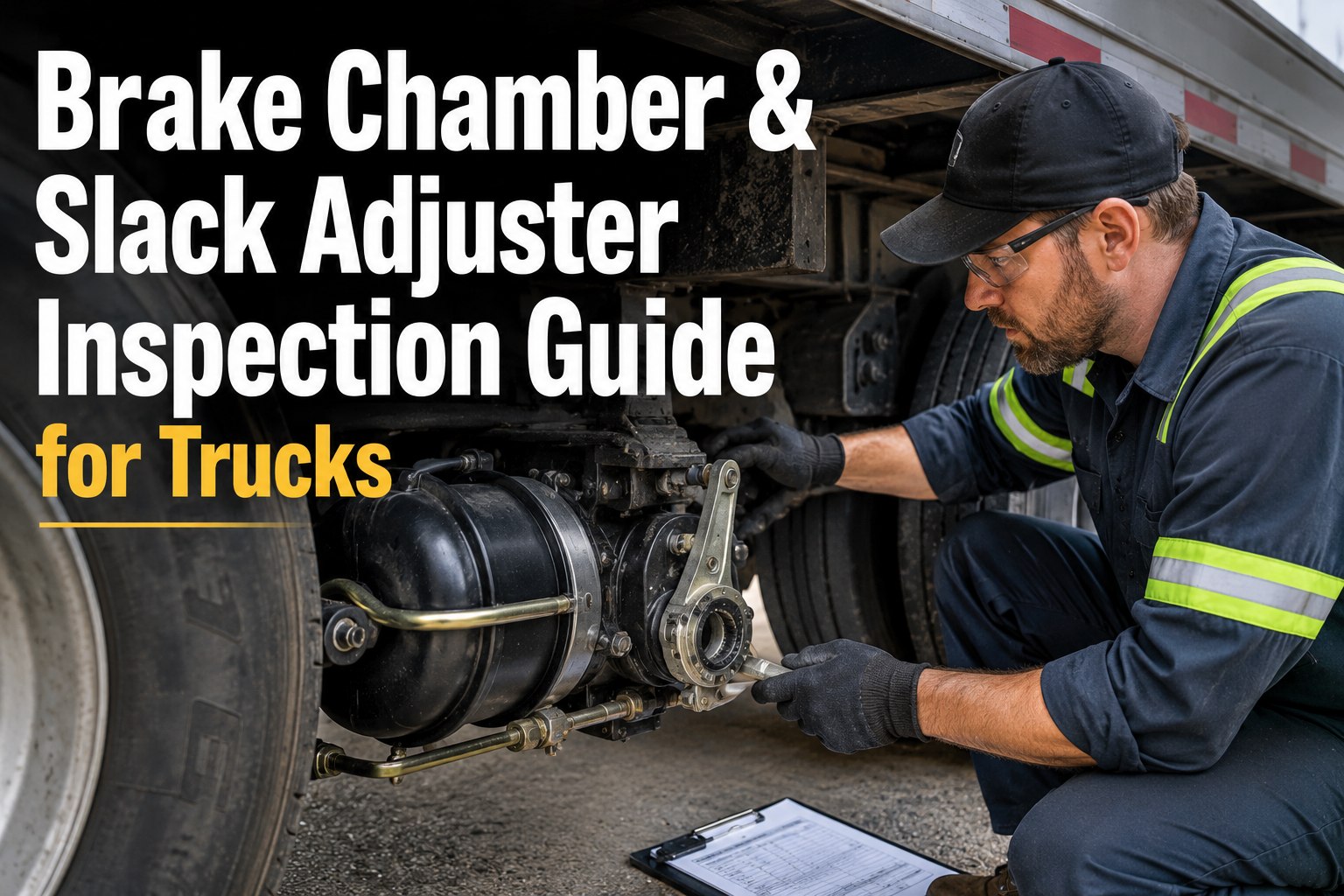
Every year, brake system defects put more trucks out of service than any other maintenance category — and the single biggest culprit isn't a blown chamber or a snapped pushrod. It's a slack adjuster that has drifted a quarter inch...
Read More
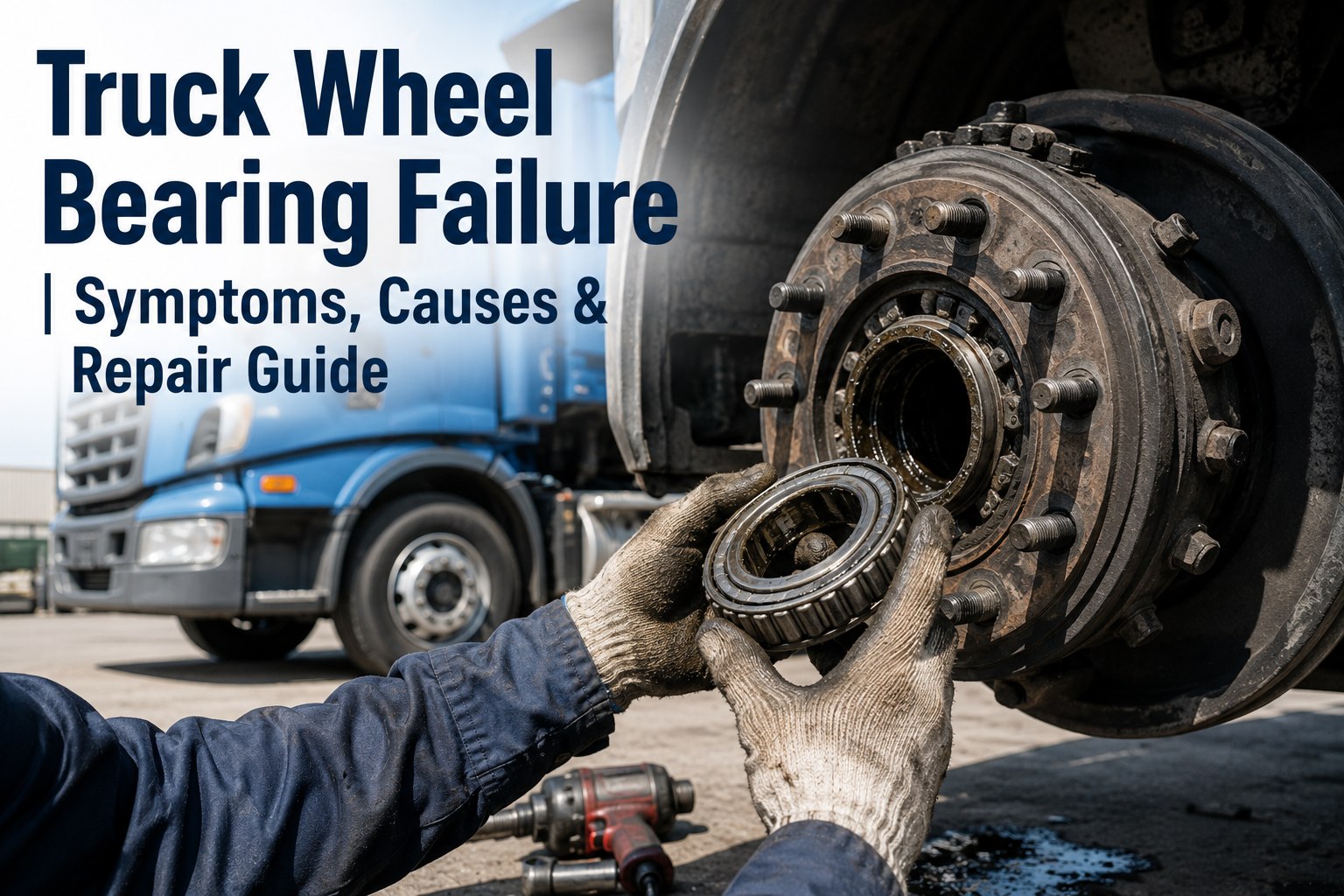
There's a wheel-off incident roughly every eight hours in the United States. That statistic is why wheel bearings occupy a different category from every other component that fails on a truck — when an alternator, starter, injector, or EGR valve...
Read More
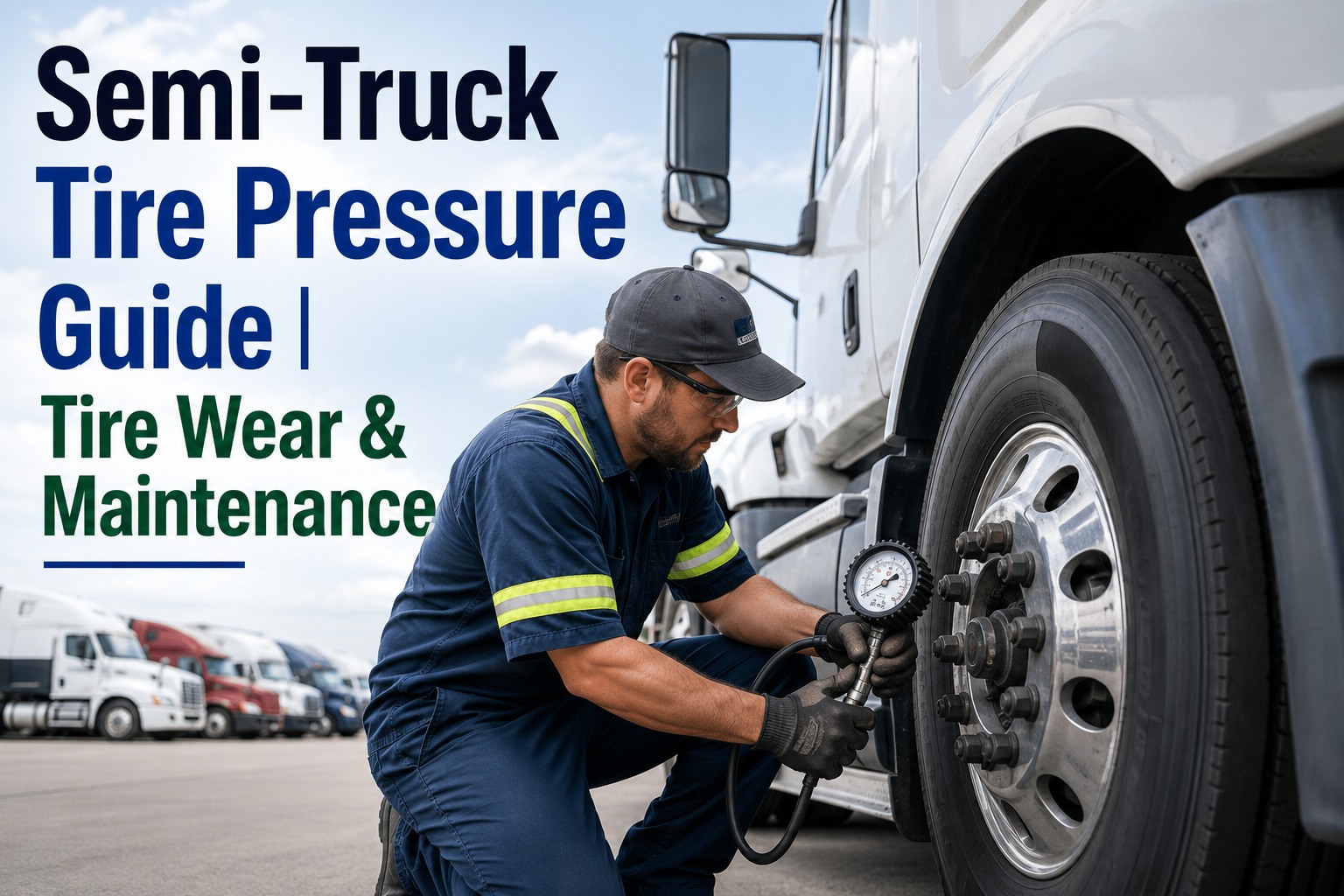
A worn semi-truck tire is a diagnostic readout, not just an expense. Shoulders worn on both edges while the center still has depth? That's underinflation, and the tire has been telling you for thousands of miles. Center worn while the...
Read More
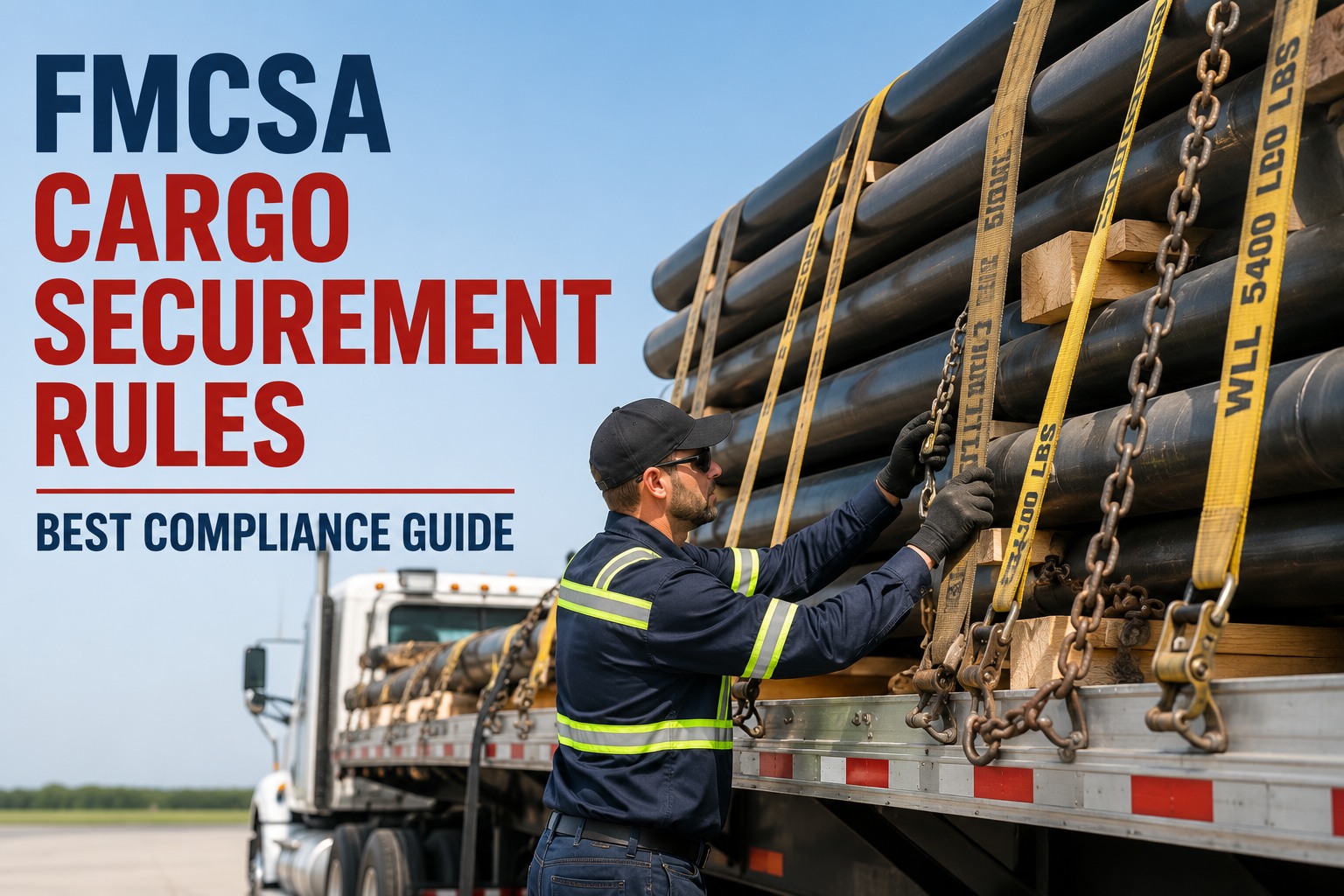
Cargo securement is the rare federal regulation that comes down to arithmetic. Strip away the dense language of 49 CFR Part 393 Subpart I and two numbers govern almost every flatbed load in America: you need enough tiedowns for the...
Read More
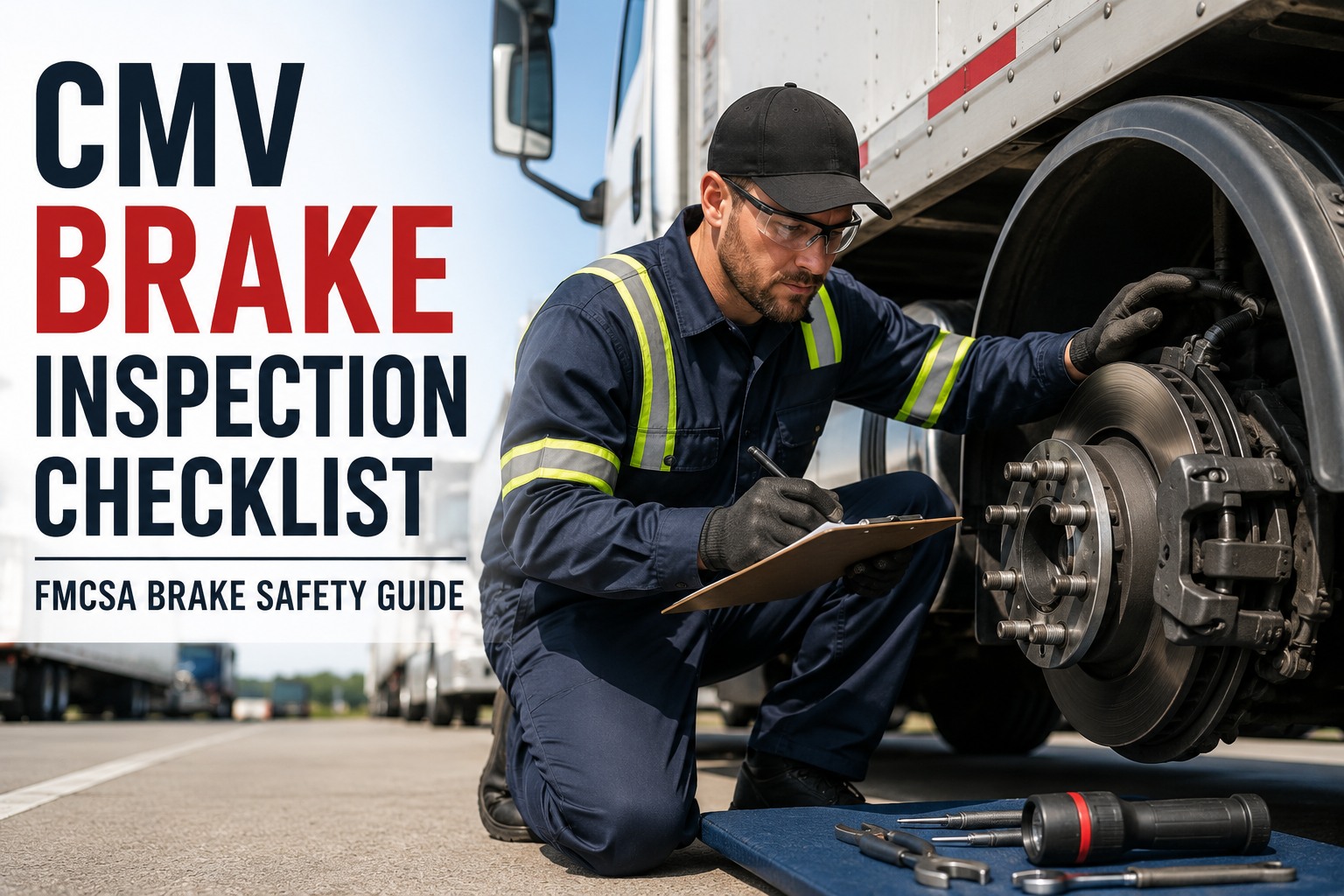
Brakes put more commercial vehicles out of service than any other system, year after year — and the reason isn't that fleets don't care about brakes. It's that brake compliance is decided by measurements, not by looking. A driver can...
Read More
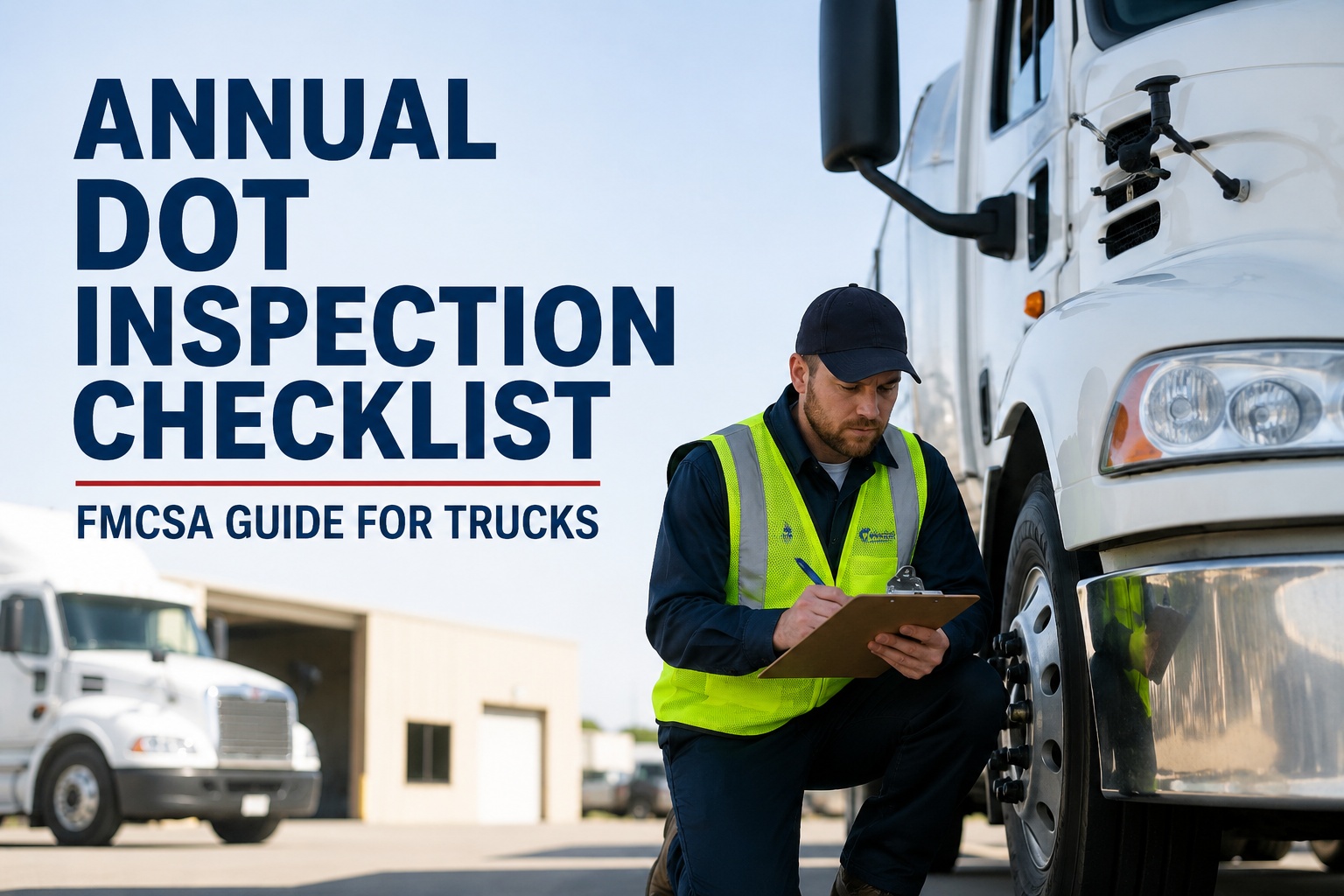
Roughly 133,000 annual inspection citations get written every year, making it the second most common FMCSA violation category — and the striking thing is how few of them involve a genuinely unsafe truck. Carriers get cited because a trailer was...
Read More
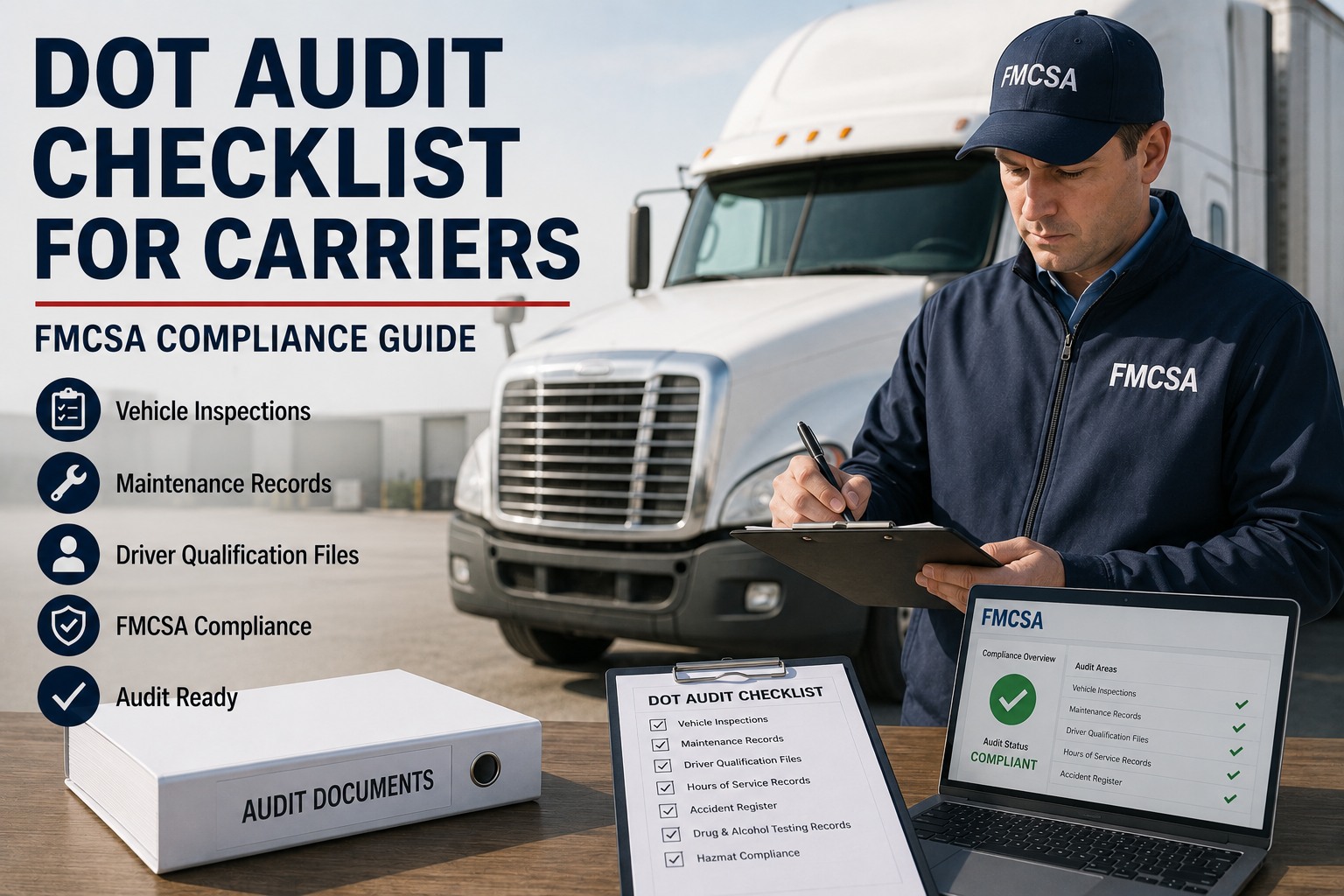
A DOT audit is not a roadside inspection — it's a records review, and that changes everything about how you prepare. An investigator isn't looking at your trucks; they're looking at your paperwork, checking whether the safety systems federal law...
Read More
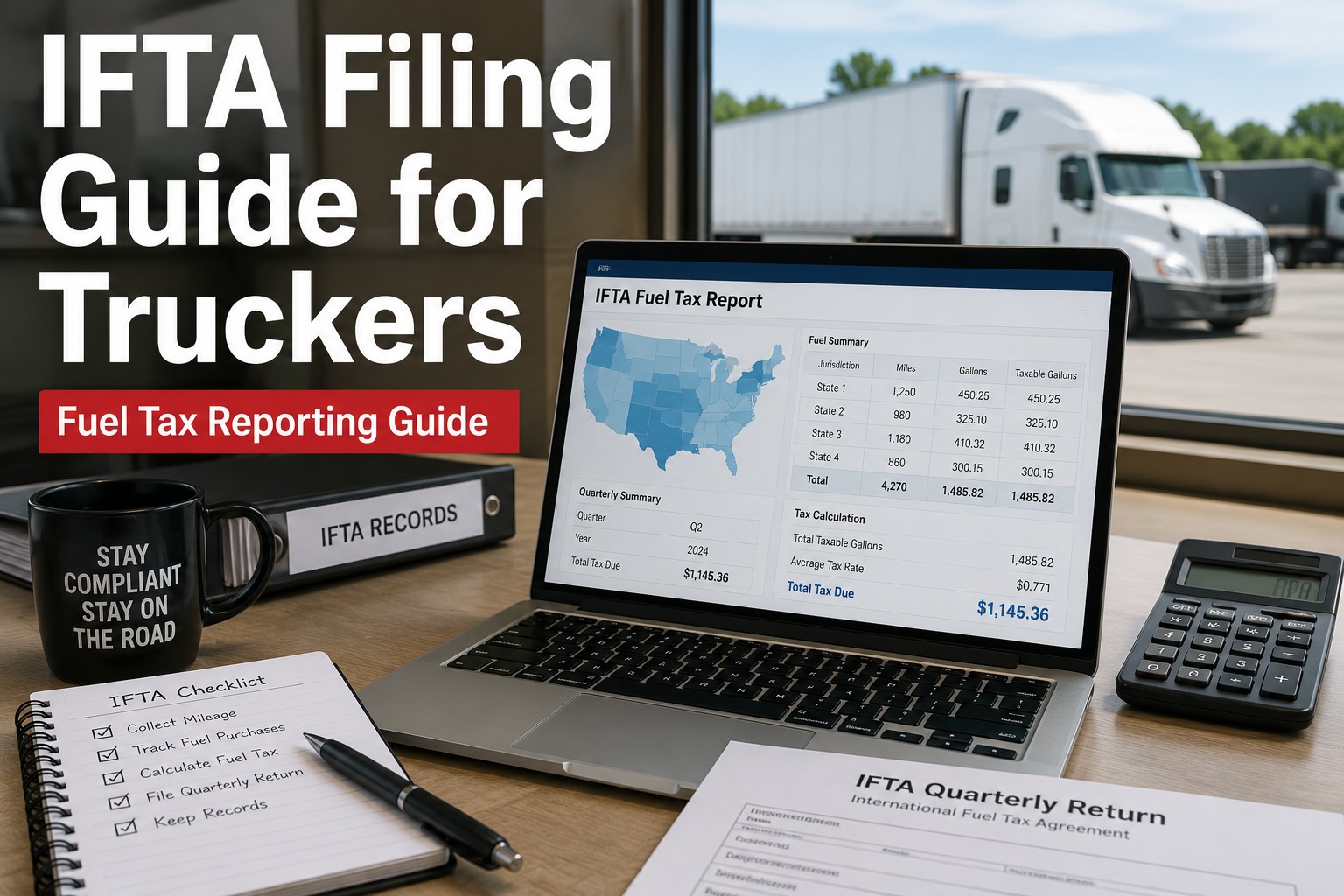
Here's the thing most drivers never quite get told about IFTA: you don't pay fuel tax where you buy the fuel — you pay it where you burn it. Fill up cheap in one state, drive those gallons through a...
Read More
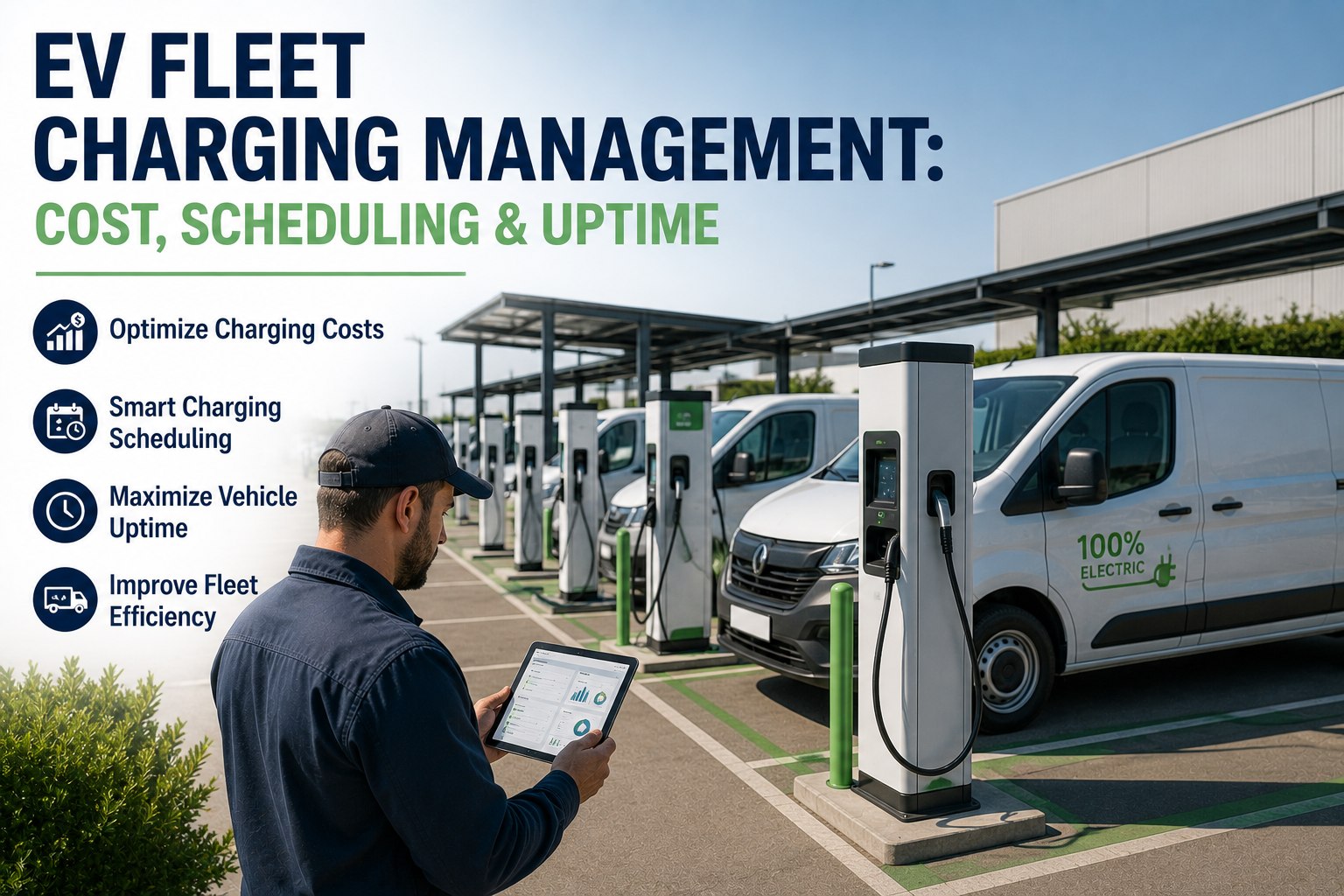
Every night, a fleet manager running electric trucks faces a question diesel never asked: will every vehicle have enough charge by dawn to cover its route — without the electricity bill exploding? Because with EVs, the hard part isn't plugging...
Read More
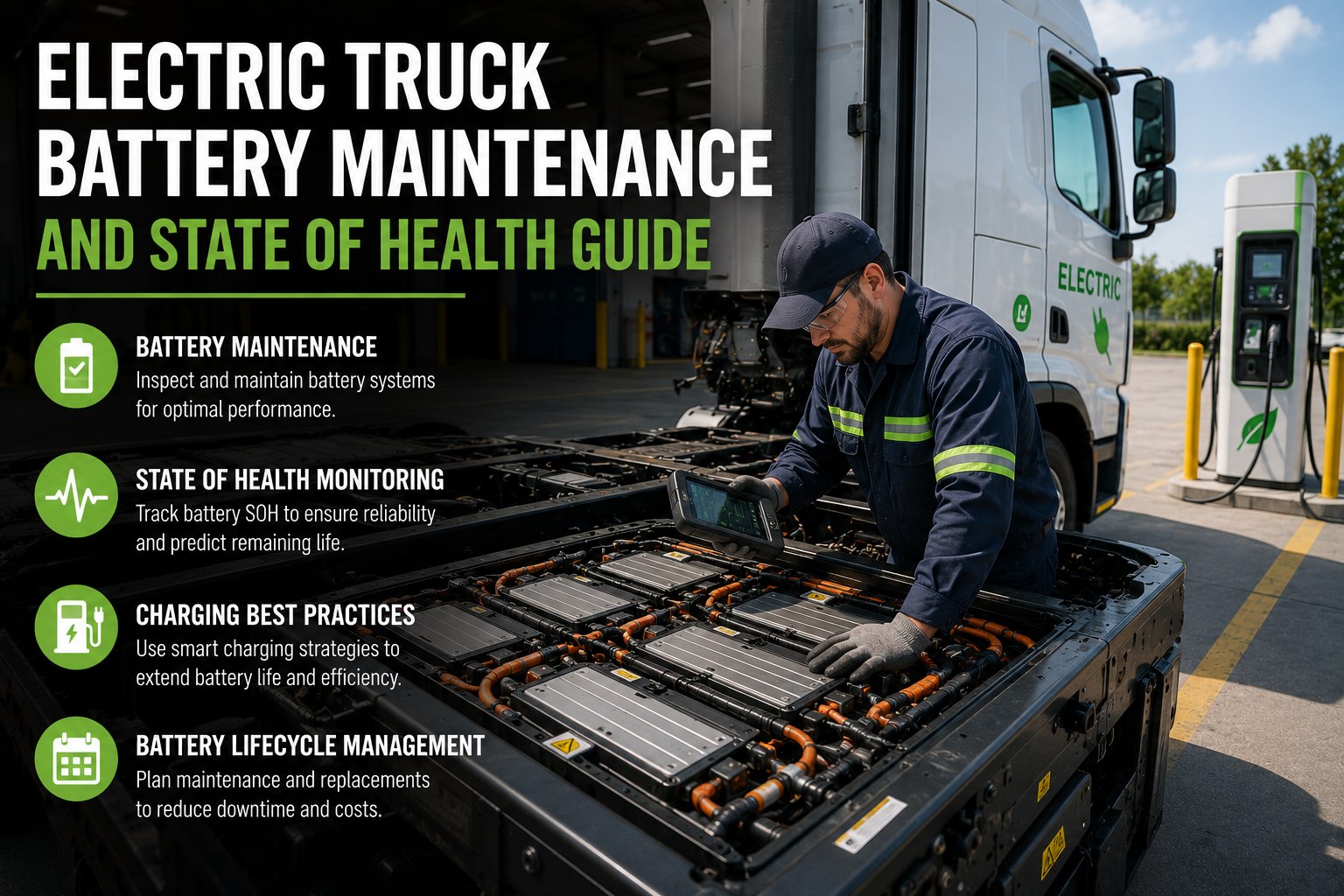
On an electric truck, the battery isn't a component — it's the single most valuable asset on the vehicle, and it has an odometer that only runs one direction. That gauge is called State of Health, and it quietly decides...
Read More
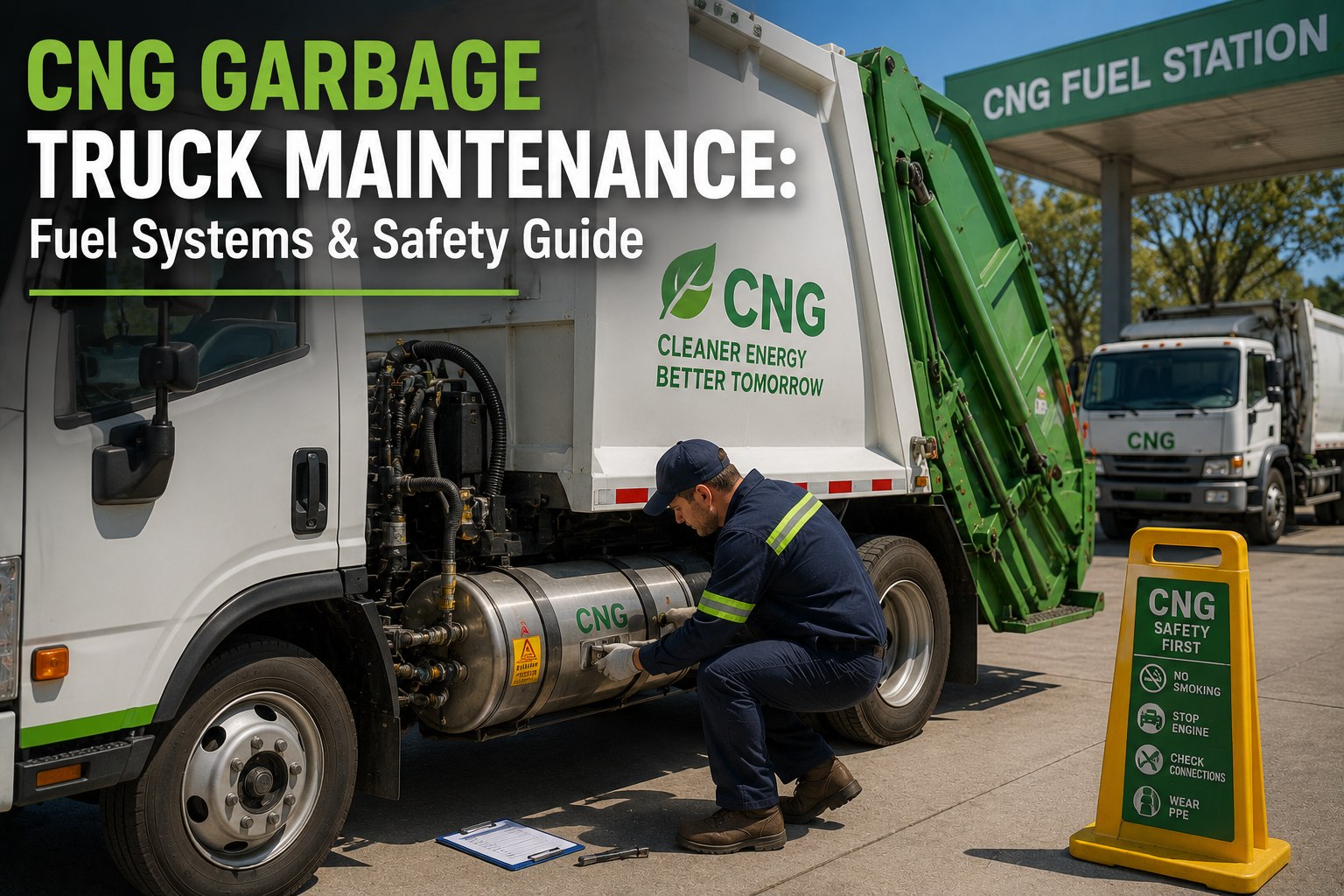
A CNG garbage truck carries something no diesel truck does: a bank of cylinders holding natural gas at 3,600 psi, mounted on the roof or behind the cab, riding through the single harshest duty cycle in trucking. Constant stop-start, heavy...
Read More
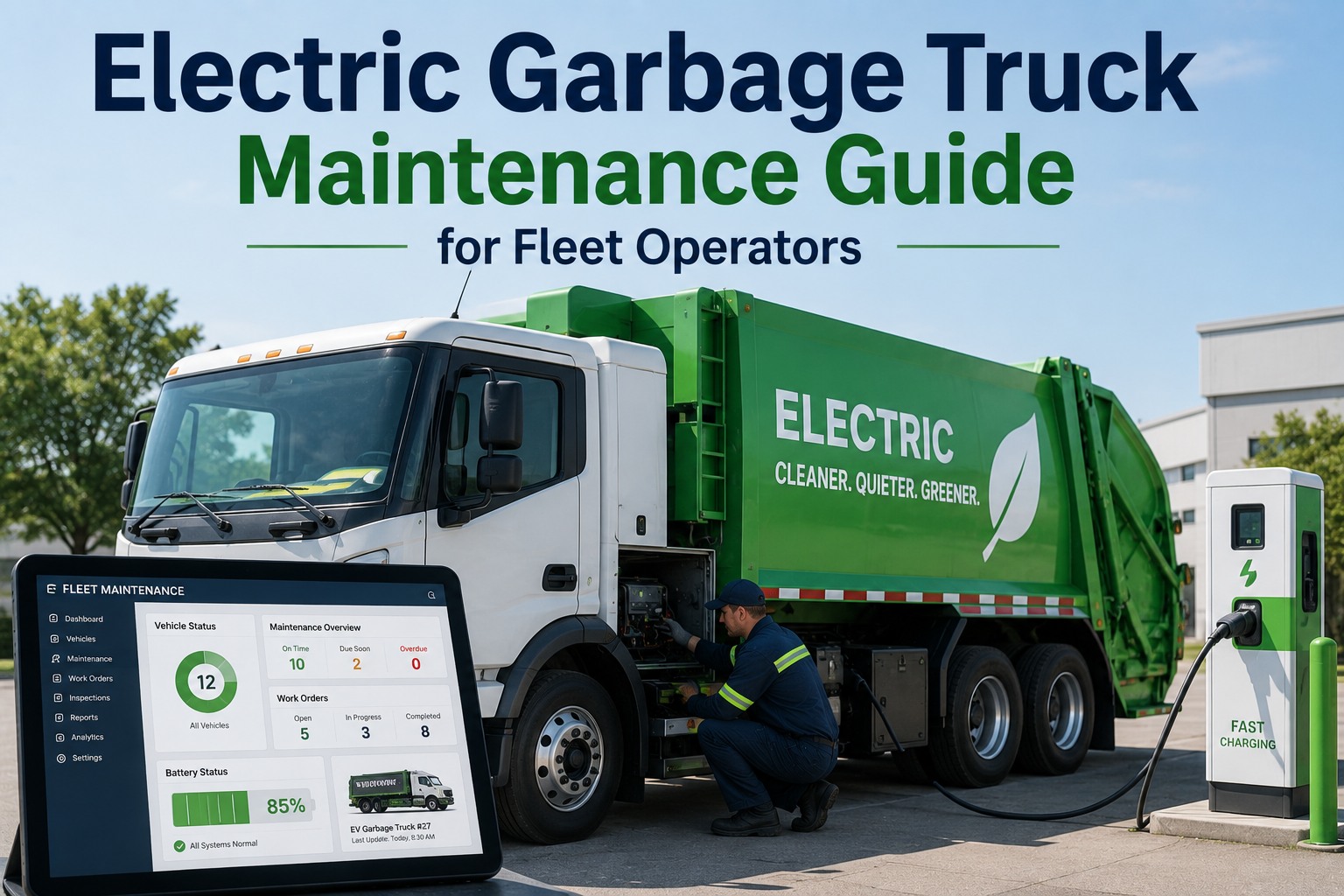
The garbage truck is quietly becoming the poster child for heavy-duty electrification — and it makes sense the moment you look at the duty cycle. A refuse truck stops as often as 700 to 1,000 times a day, crawls a...

Read More
A heavy-duty truck doesn't speak the same diagnostic language as the pickup in your driveway. Plug a $30 OBD-II reader into a Class 8 tractor and you'll get nothing — commercial diesels run on J1939, a completely different protocol, and...

Read More
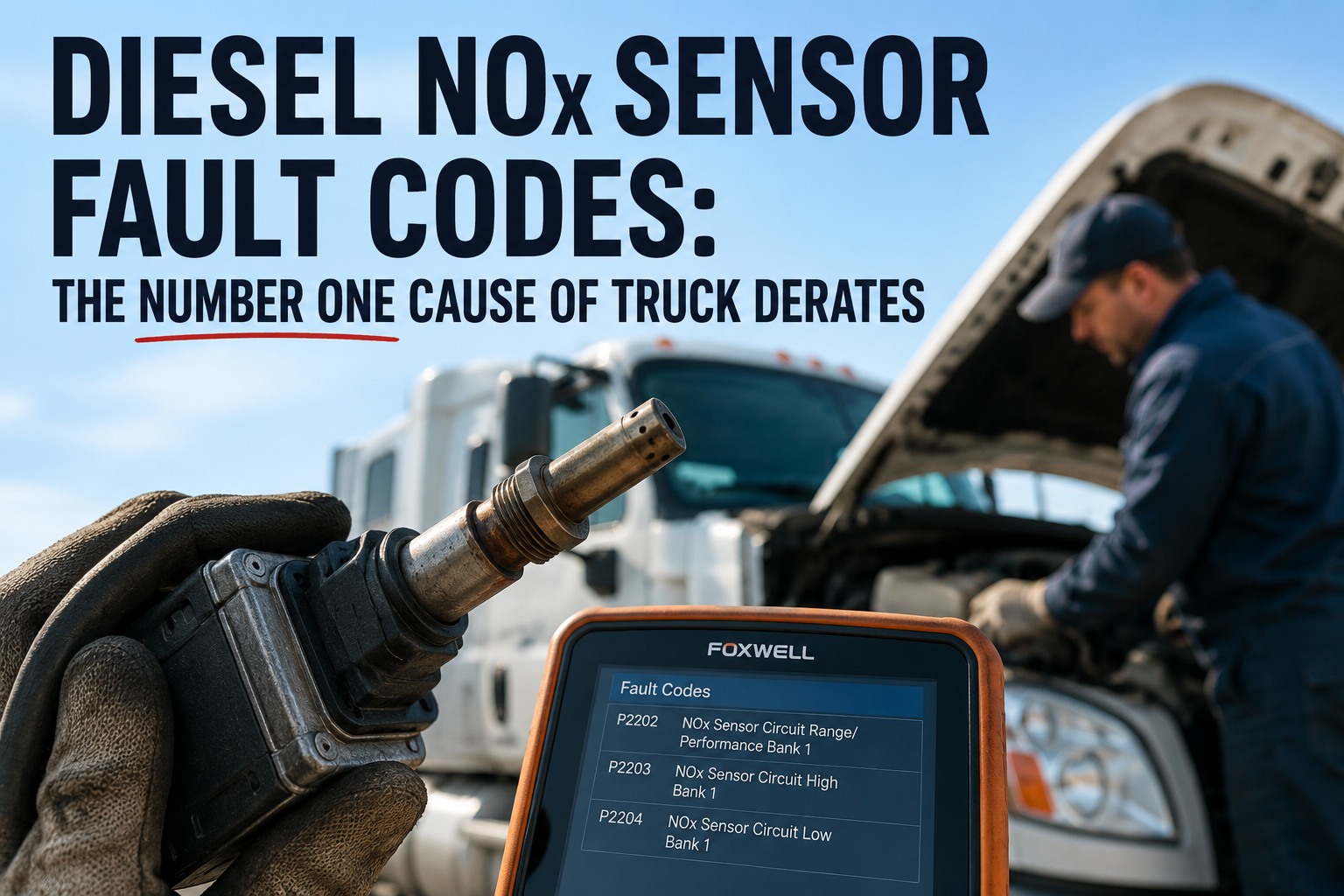
A DEF system fault is different from almost every other code on a diesel truck, because it comes with a countdown. When your emissions system flags a problem, federal law requires the truck to progressively reduce its own power —...
Read More
NOx sensor codes are among the most expensive-looking faults a diesel can throw — and among the most misdiagnosed. A driver sees a check-engine light, a DEF warning lamp, and a "service exhaust system" message counting down the miles, and...
Read More
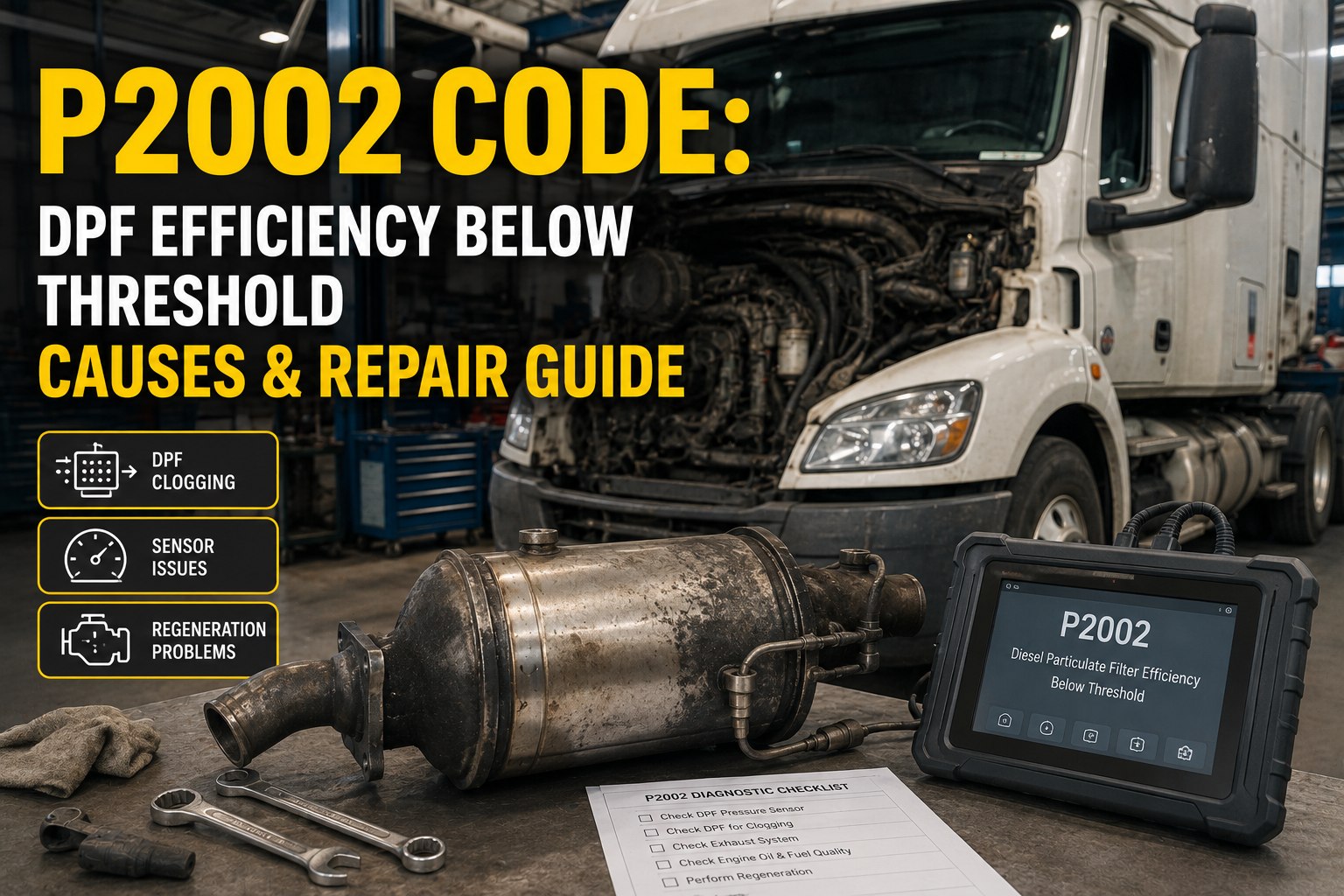
P2002 is the code that panics owner-operators and shouldn't — at least not always. It reads as "Diesel Particulate Filter Efficiency Below Threshold (Bank 1)," and in plain terms it means the truck's computer has decided the DPF isn't trapping...

Read More
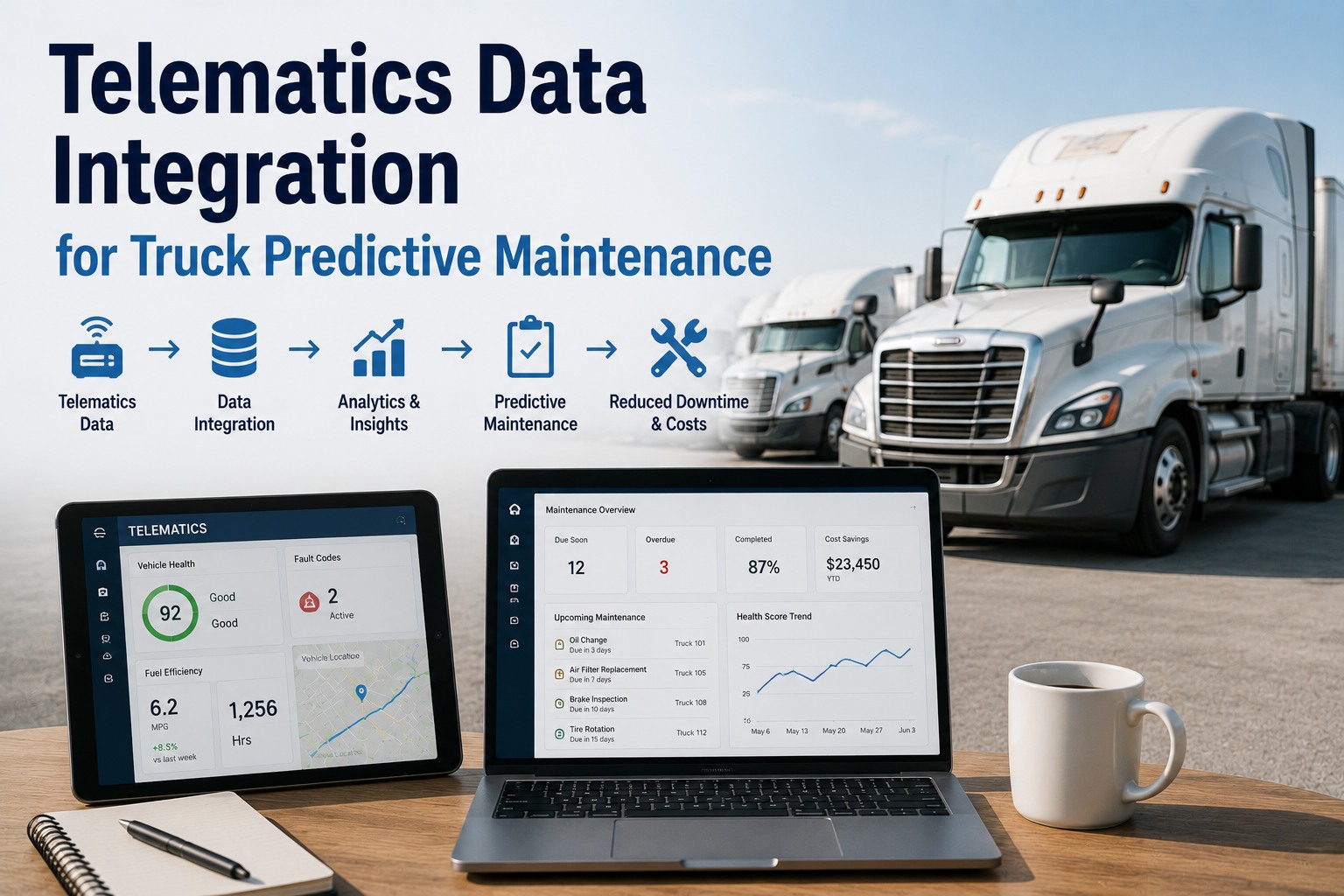
In 2026 the fleets winning on uptime aren't the ones with the best mechanics — they're the ones with the best data. And the gap is brutal: 73% of fleets still run reactive maintenance, fixing trucks after they break, at...
Read More
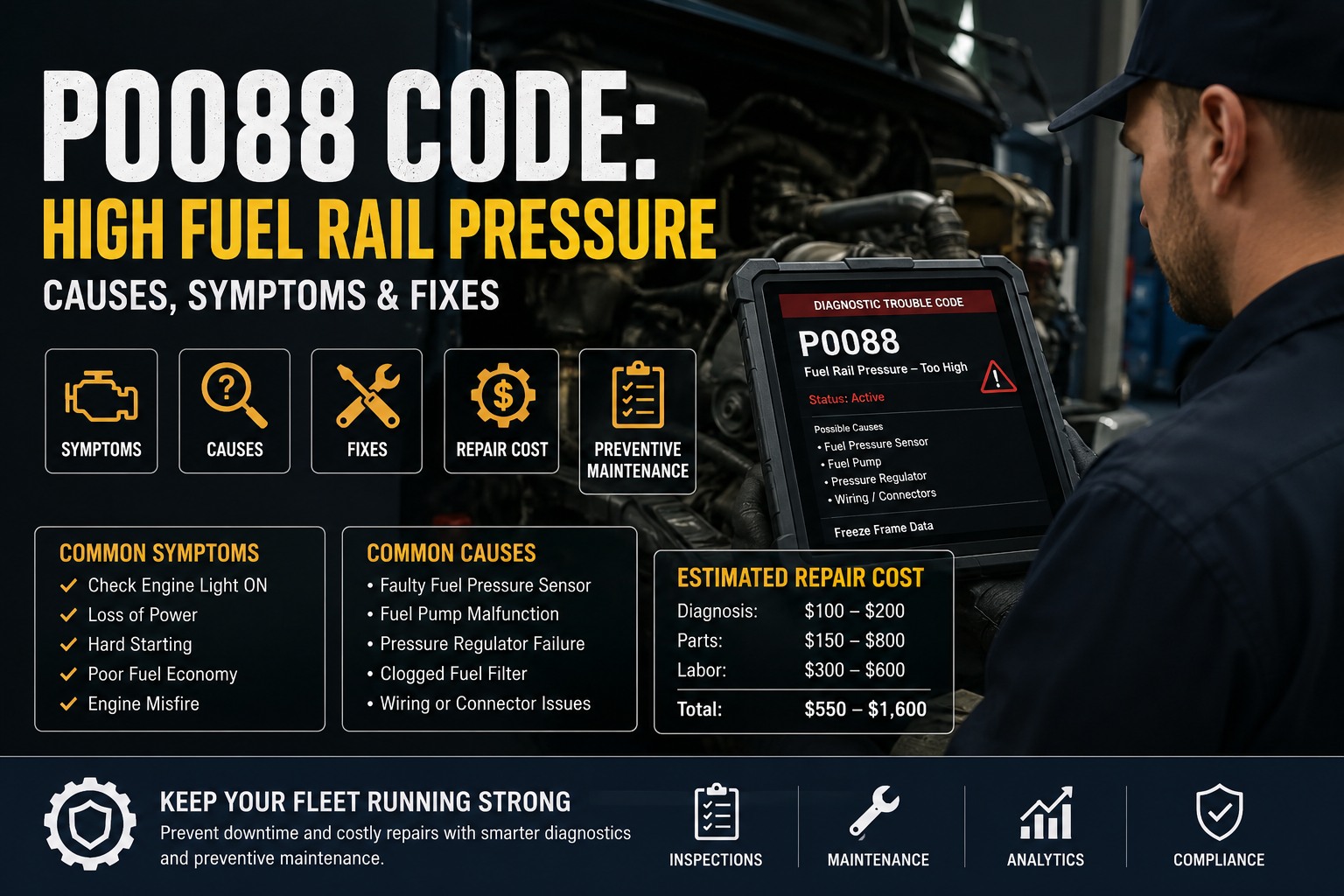
A P0088 code is your diesel's ECM saying the fuel rail pressure has climbed higher than it commanded — and it's one of the few codes where the smartest first move is to stop driving. Over-pressurized fuel can leak and...

Read More
Fatigue almost never announces itself. It doesn't arrive as a driver deciding they're too tired to continue — it arrives as a slow slide the driver is subconsciously fighting and losing, what safety researchers call the fatigue loop. Blinks get...
Read More
Ask a fleet manager how they decide when to service a truck and you'll learn almost everything about their operation. Some answer "when it breaks." Most say "every 5,000 miles, same as always." A few say "when the data tells...

Read More
Every fleet platform claims it "integrates." The word does a lot of hiding. Sometimes it means a real REST API with webhooks and a sandbox; sometimes it means a nightly CSV export and a support ticket. The difference matters enormously,...
Read More
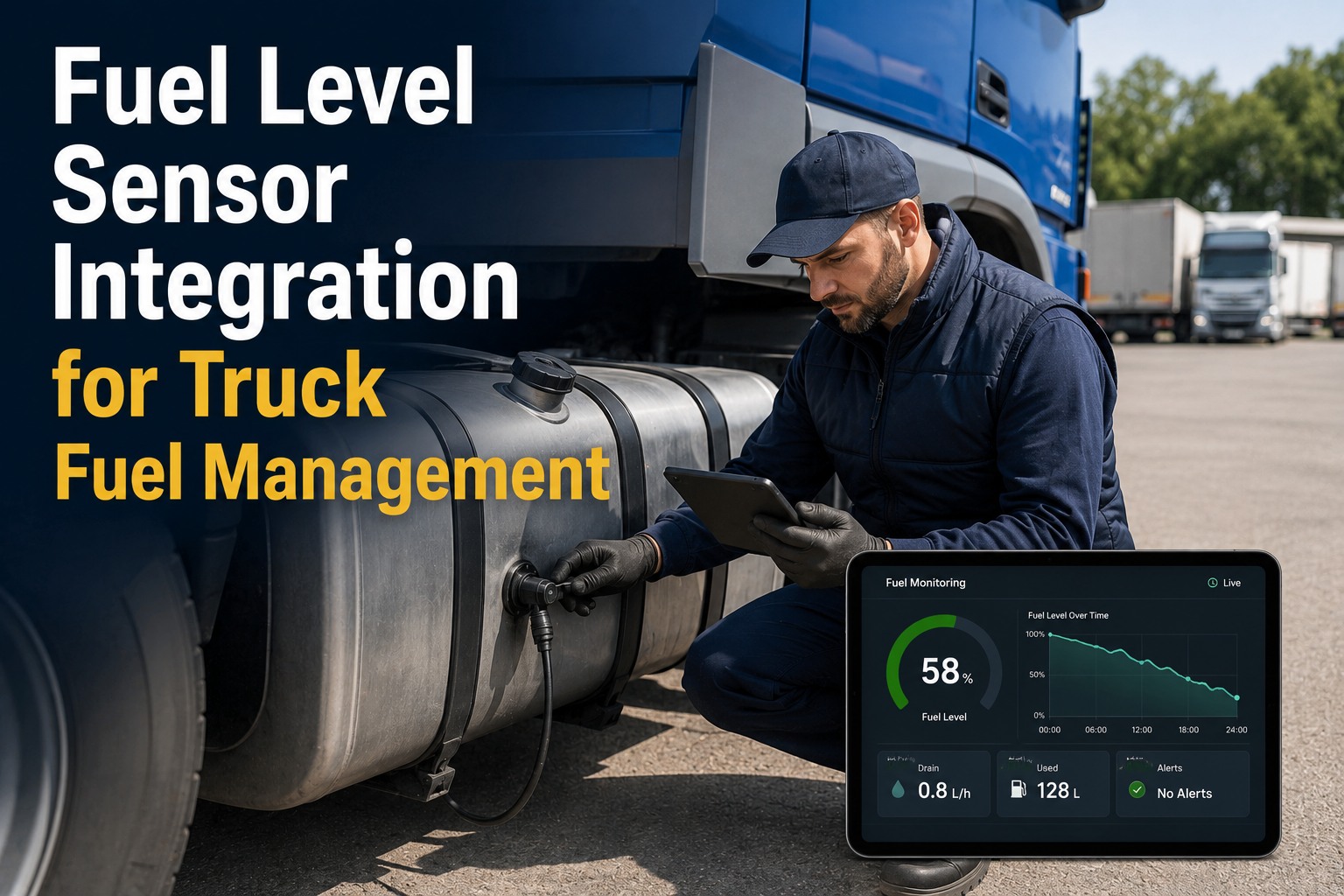
Plot a truck's fuel level over a week and you get a line that tells you almost everything. It slopes gently down as the engine burns diesel. It jumps vertically when the driver fills up. And every so often —...
Read More
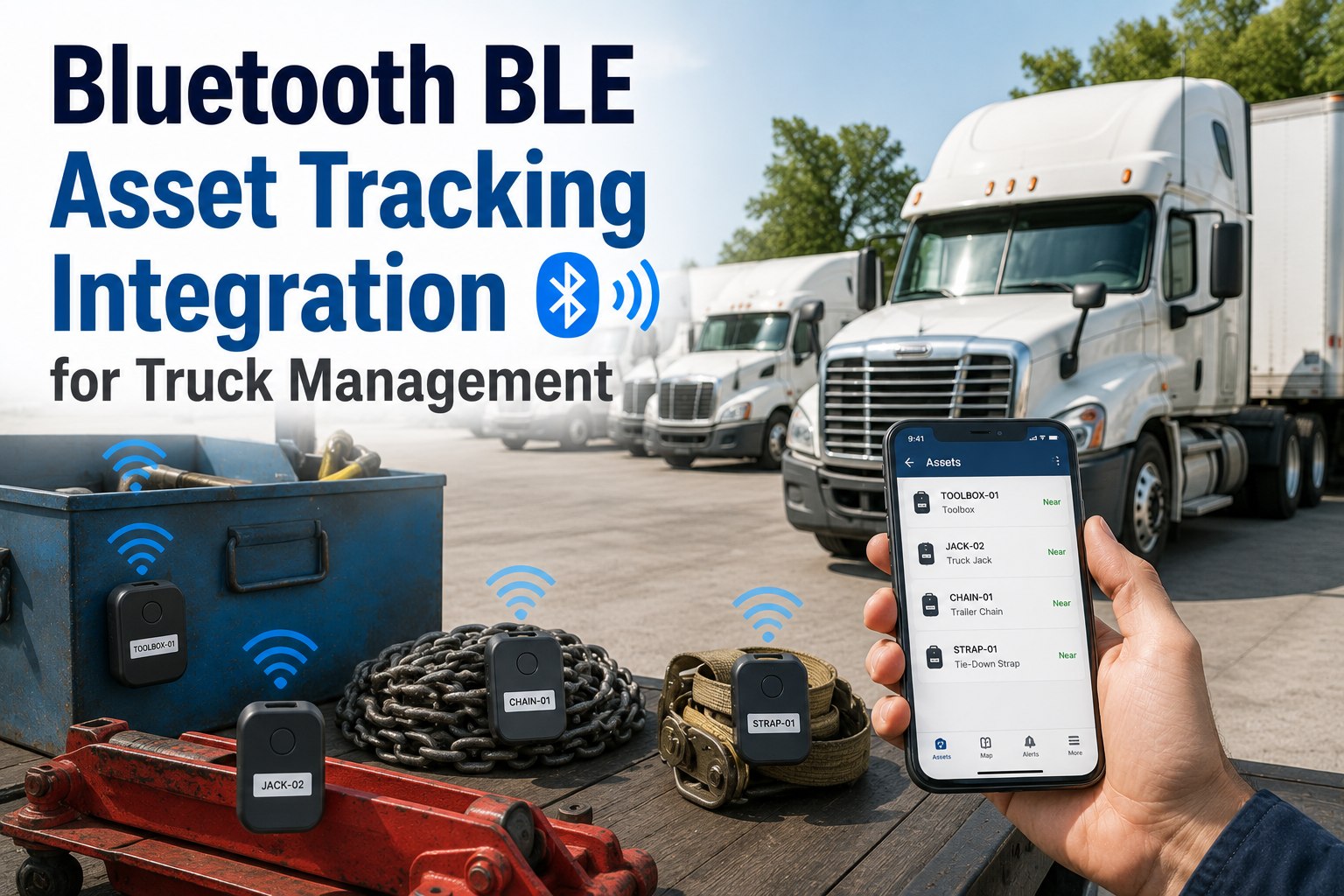
Ask a yard manager where the torque wrench is and you'll get a shrug. Ask which of the twelve generators went out on Tuesday's job and never came back, and you'll get a longer shrug. A typical worksite carries seven...
Read More
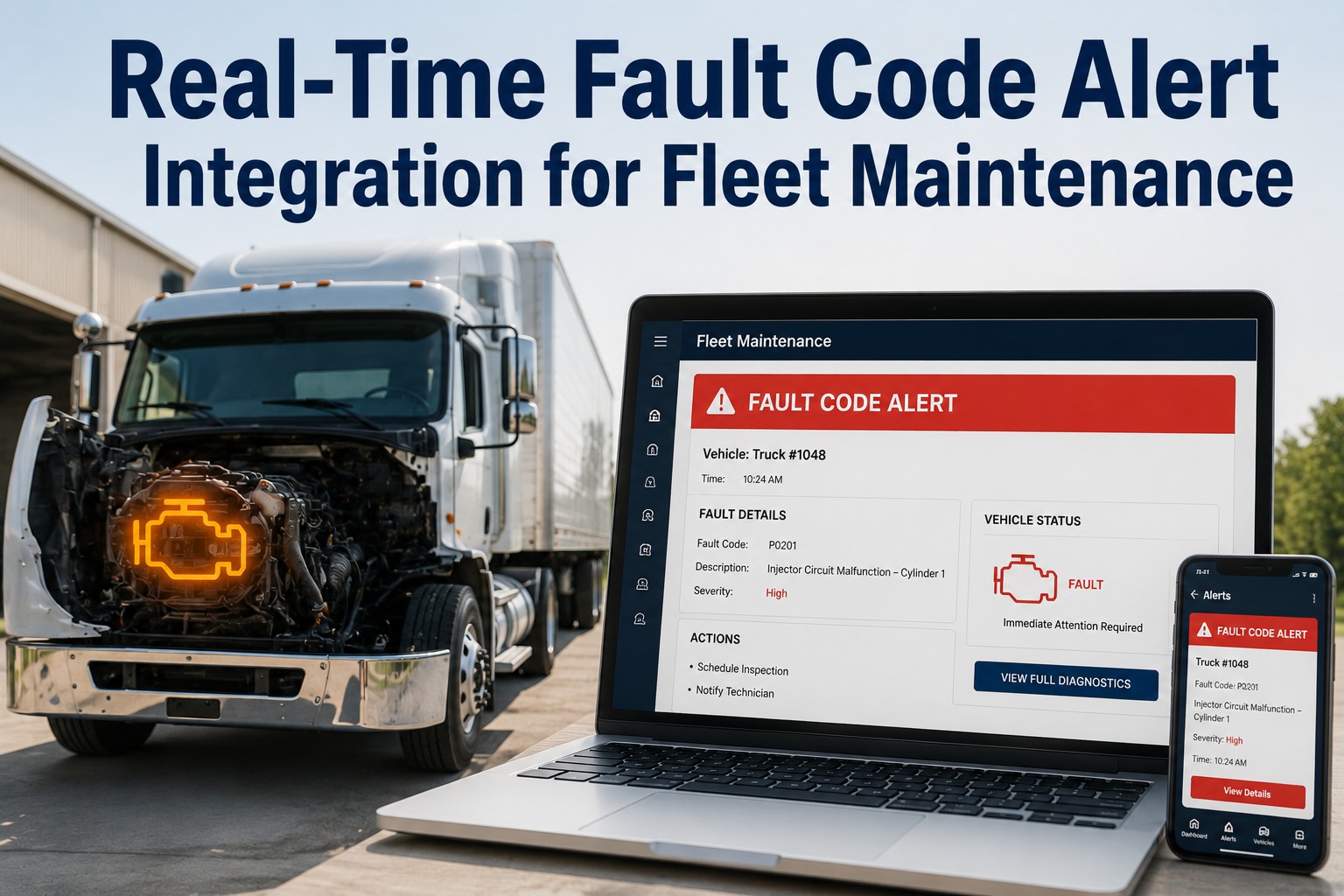
A single heavy truck can throw around 300 diagnostic trouble codes in a month. Most are noise — a momentary sensor blip, an emissions advisory, a code that clears itself on the next drive cycle. Buried in that flood are...
Read More
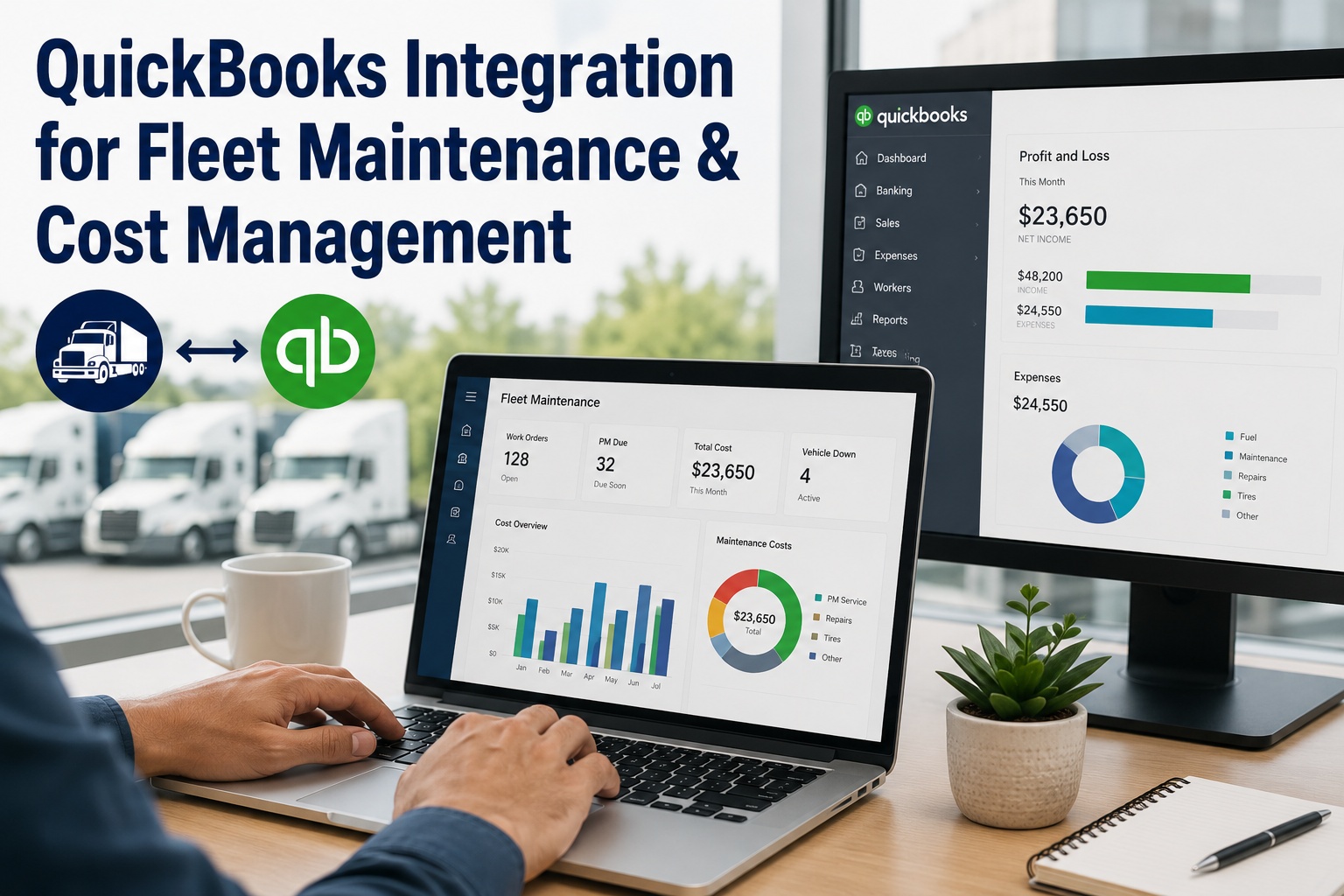
Here's a scene every fleet operator knows. A technician closes a major repair on Tuesday. The parts, the labor hours, the outside-vendor invoice — all captured in the maintenance system. Then someone in the office spends part of Thursday retyping...
Read More
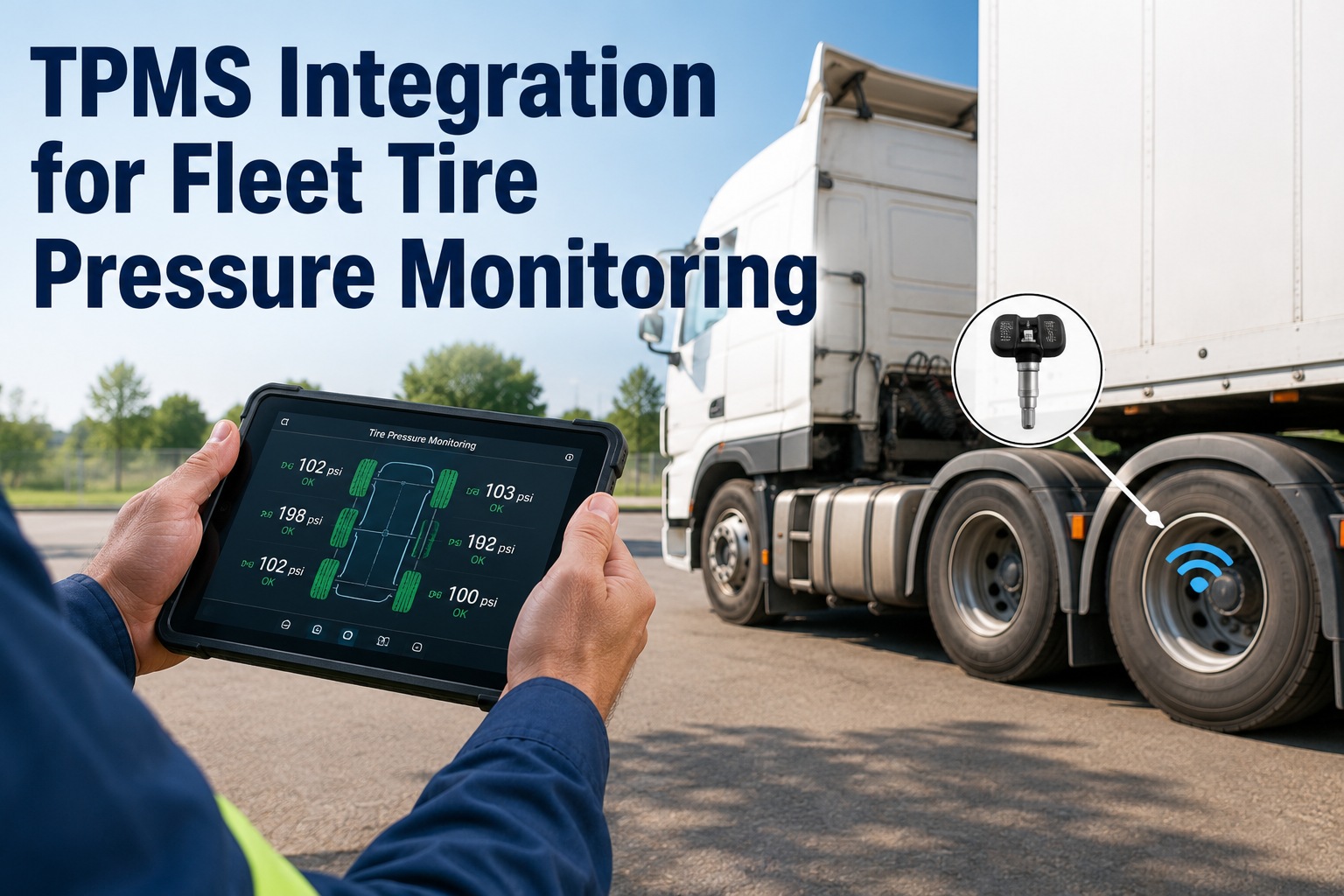
A driver in an 18-wheeler cannot see or feel a low tire on a 53-foot trailer. Eighteen tires, each carrying four to six thousand pounds at over 100 PSI, and the first sign of trouble is usually the blowout itself...
Read More
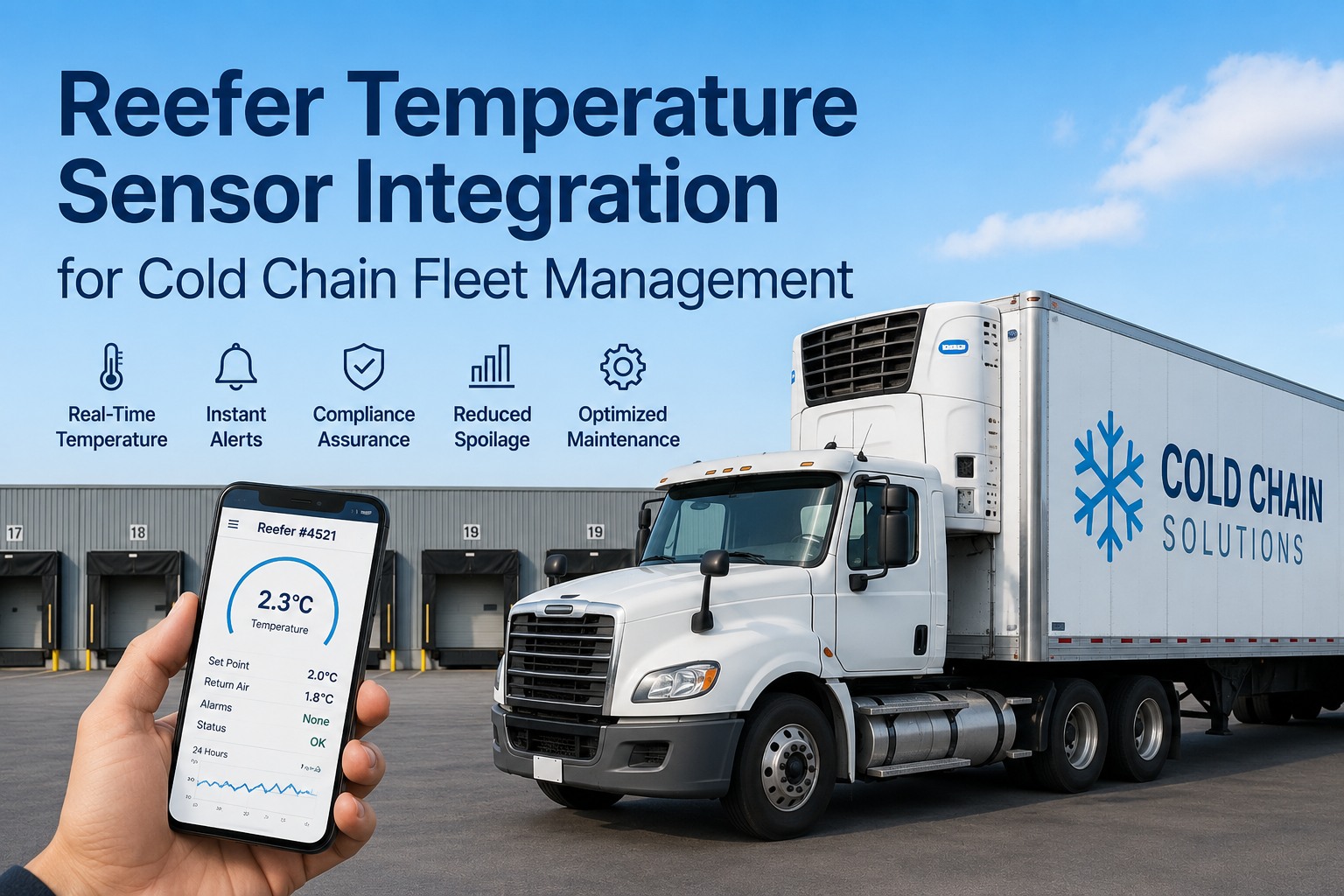
A refrigerated load has one job: stay in its temperature band from pickup to delivery. Cross out of it for too long and the entire shipment is typically considered compromised — regardless of how brief the breach was — and...
Read More
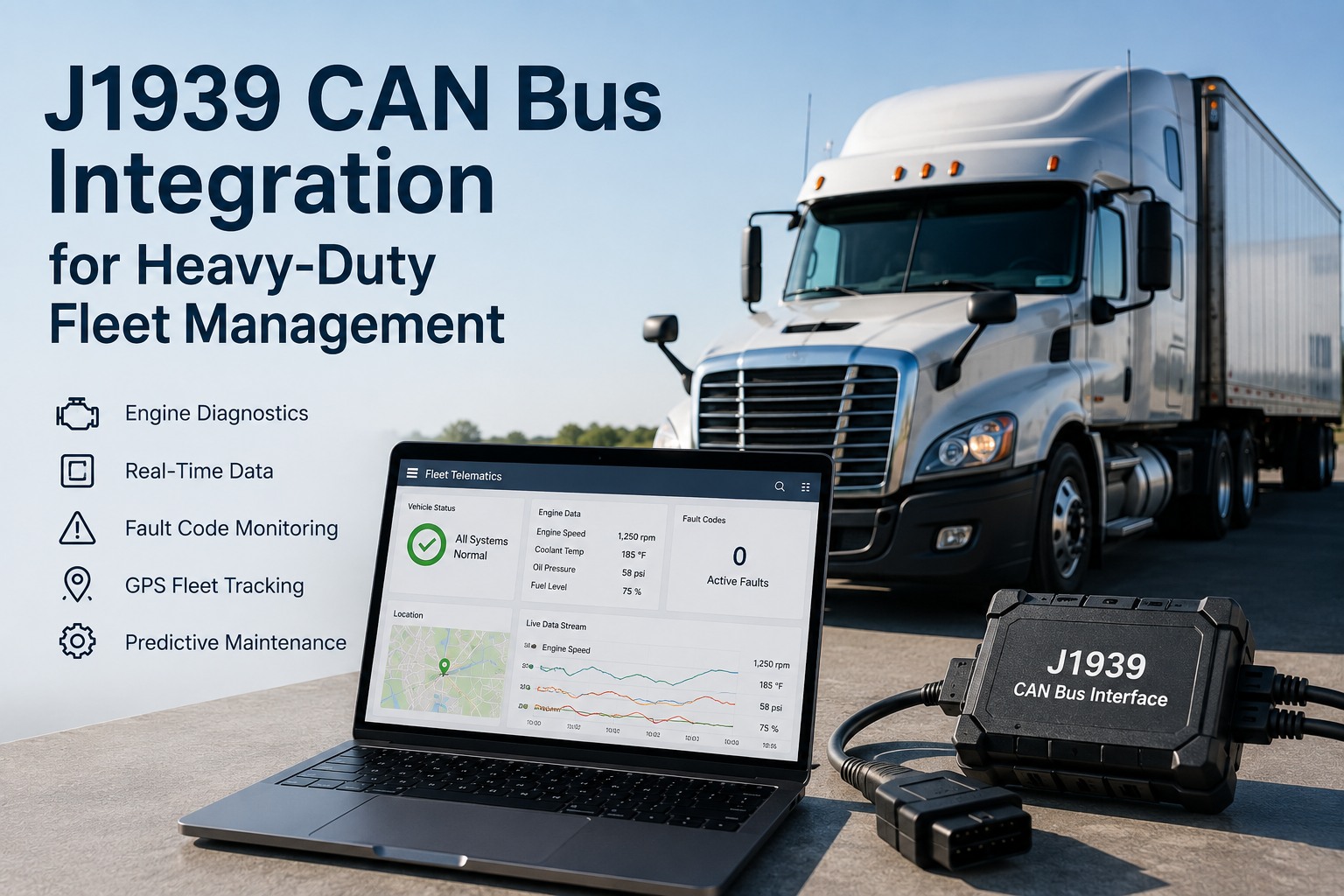
Every heavy-duty truck on your lot is already broadcasting its own health, once per second, on a wire most fleets never tap. The SAE J1939 protocol is the language a Class 6–8 truck's engine, transmission, brakes, and aftertreatment system use...
Read More
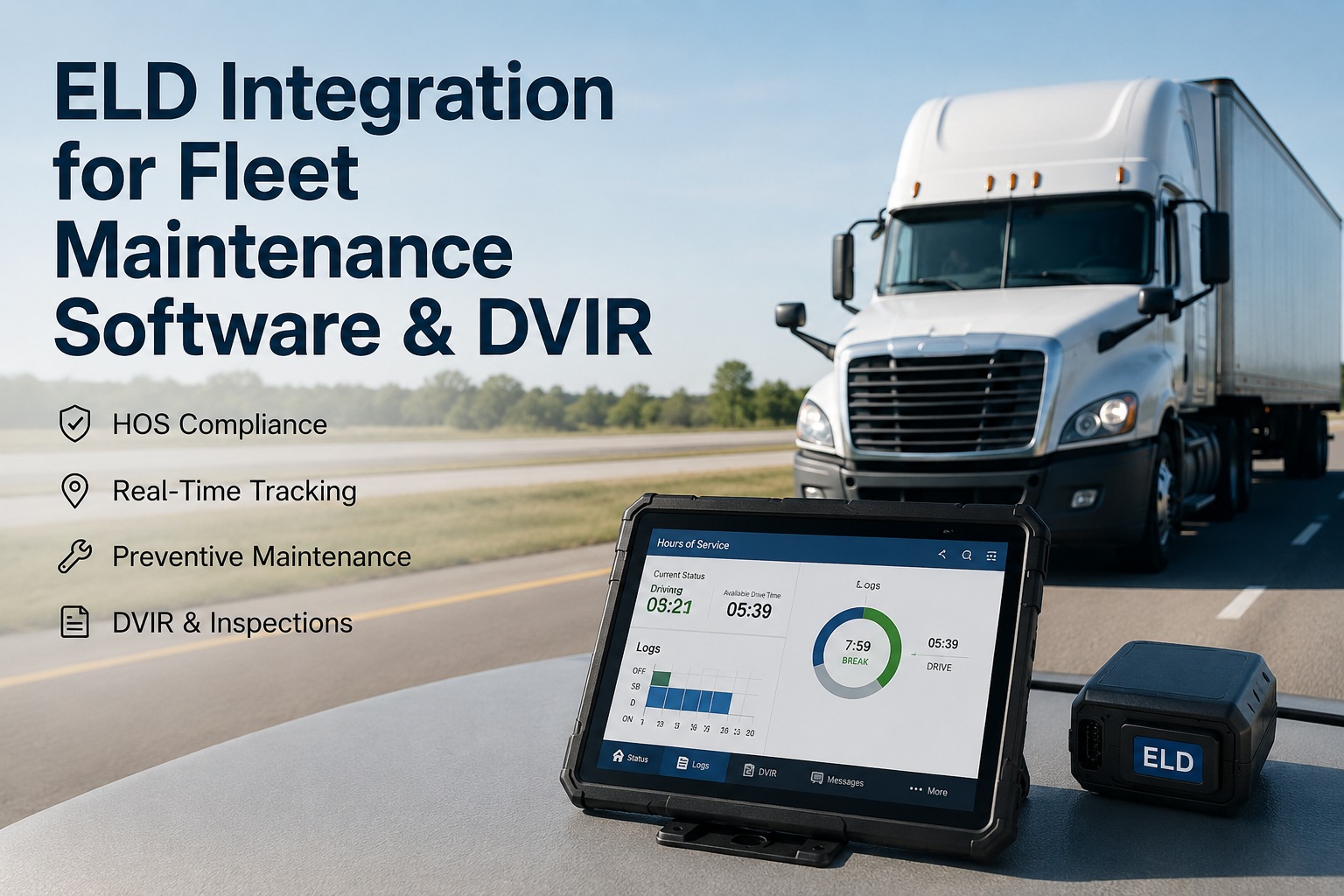
Every ELD in your fleet plugs into the engine and records two things at once: the driver's hours of service and the vehicle's operating data. Most fleets use only the first half. The HOS logs go to the compliance folder;...

Read More
Most fleets already run GPS telematics. The device in each vehicle is quietly logging odometer readings, engine hours, fault codes, and location every few minutes — a stream of exactly the data a maintenance program needs. The problem is that...

Read More
Verizon Connect Reveal already collects the numbers that should be driving your maintenance program — odometer readings, engine hours, diagnostic trouble codes, GPS location, DVIR defects. The catch is that telematics is built to show you those numbers, not to...
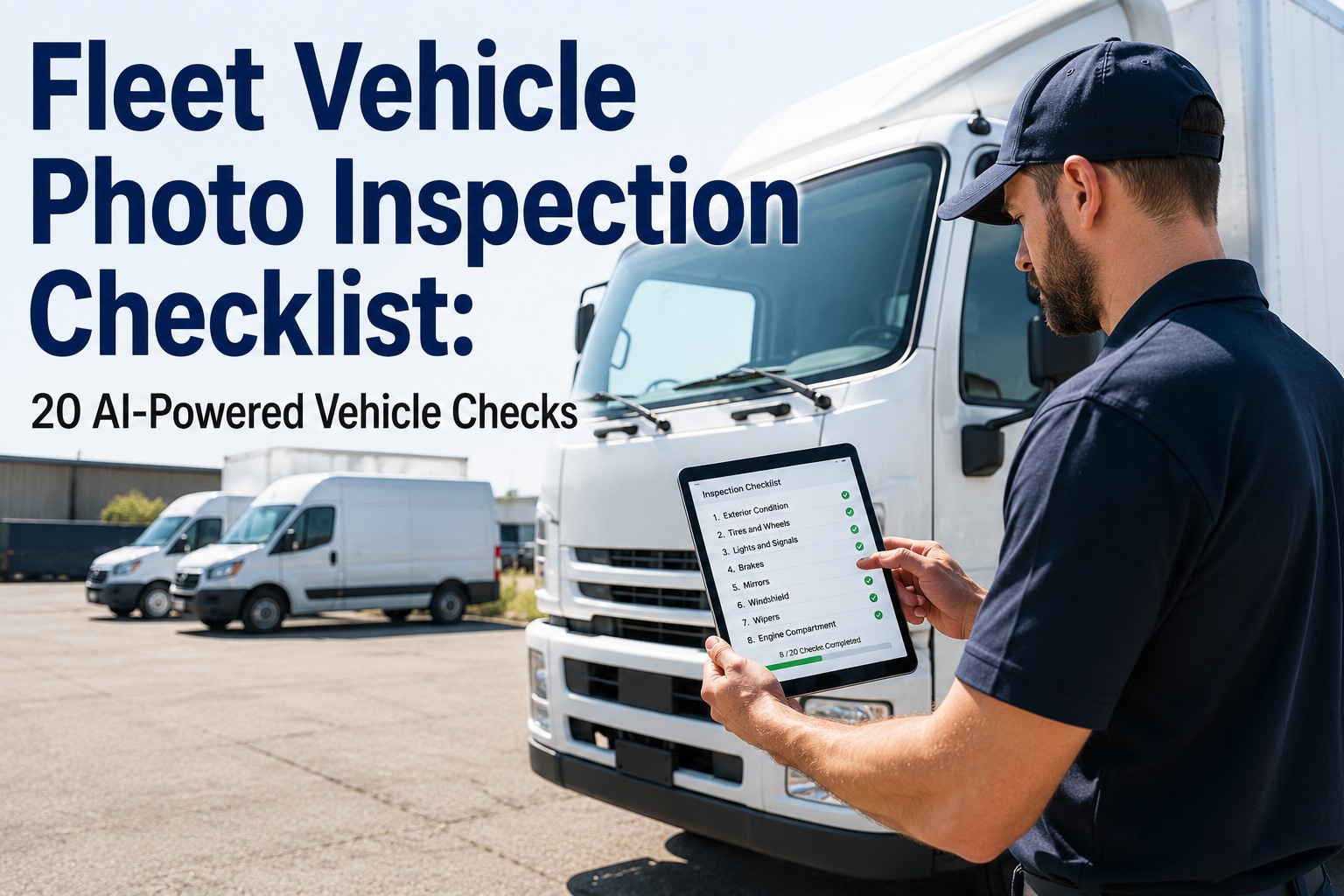
Read More
A driver checks "brakes: OK" on a paper form, snaps nothing, and rolls out. Three days later a plaintiff's attorney asks the question that sinks fleets in court: how do we actually know anyone looked? The clipboard can't answer. A...
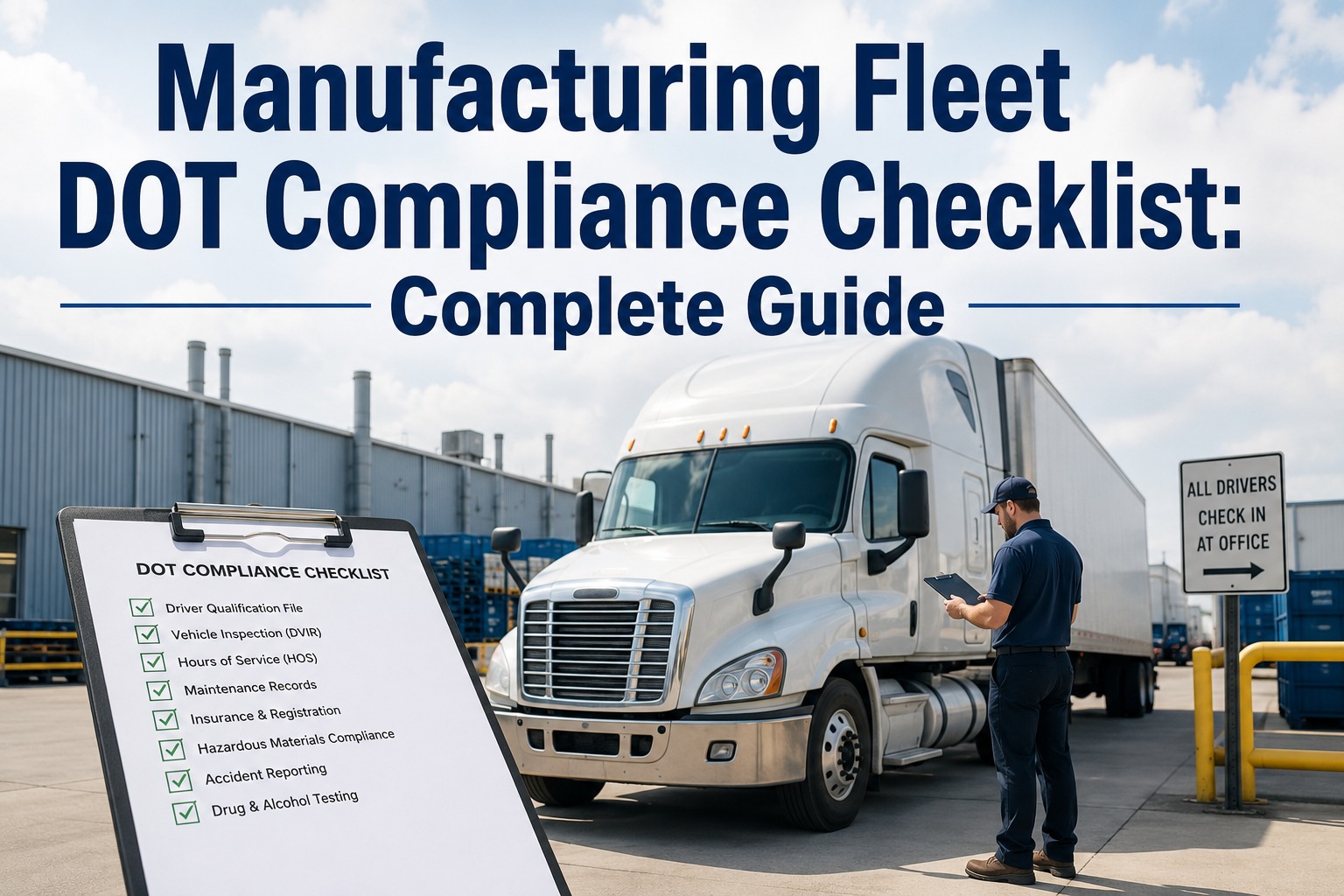
Read More
Here's the trap that catches plant transportation managers off guard: you don't have to be a trucking company to be a motor carrier in the eyes of the FMCSA. If your facility runs its own trucks to move outbound product...

Read More
Ninety seconds. That's roughly how long a proper walkaround takes on a delivery van — and it's the cheapest insurance a last-mile operation can buy. A soft tire, a dead brake light, a mirror knocked out of place overnight: none...
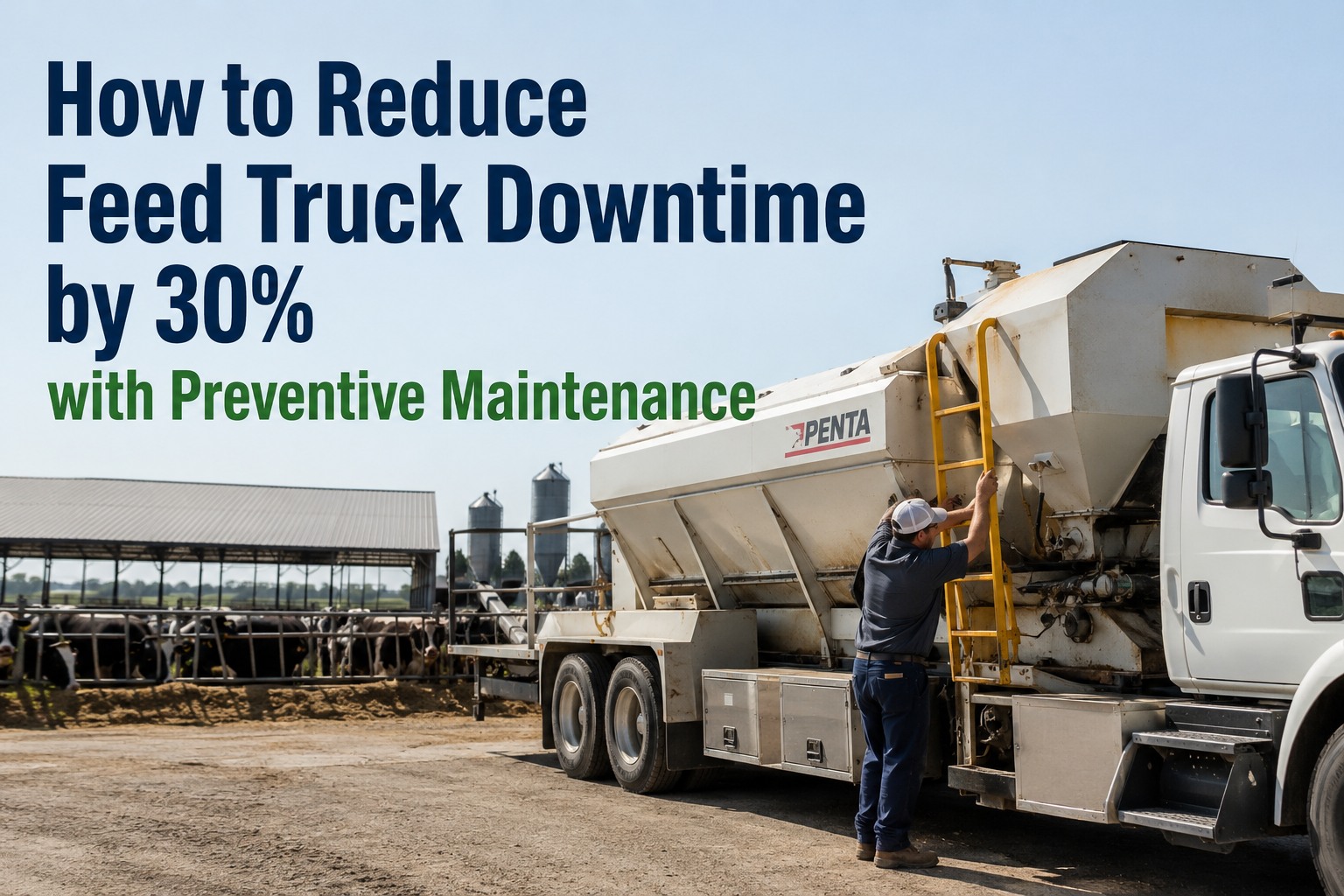
Read More
On a dairy or feedlot, the feed truck is the one machine that can't take a day off. Cows get fed on a schedule whether or not the mixer is running, and when a feed truck goes down, the ration...
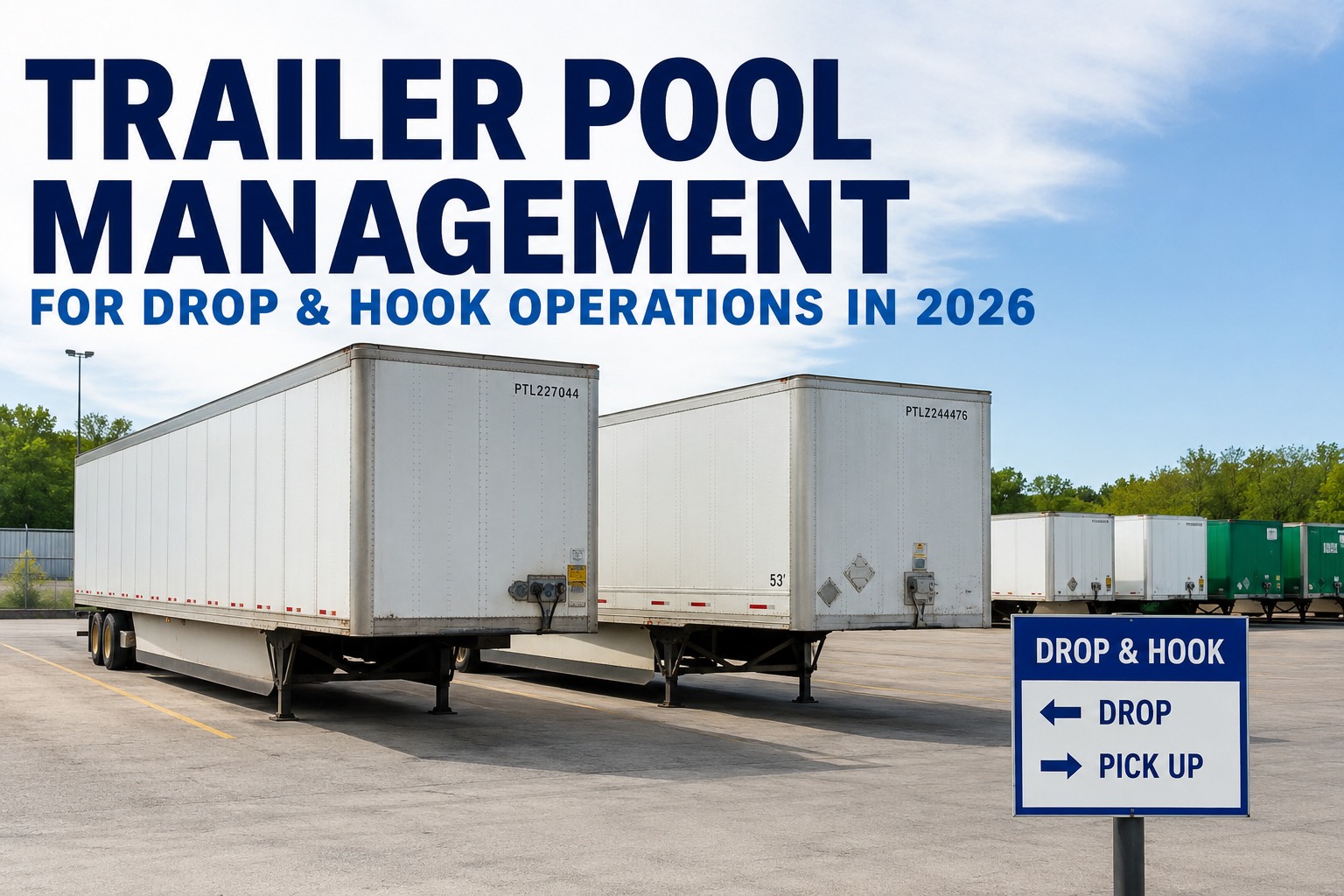
Read More
Drop-and-hook is the freight world's version of a relay race: a driver drops a loaded trailer, grabs a pre-staged one, and is back on the road before the dock crew has even touched the freight. Done right, it kills detention,...
Read More
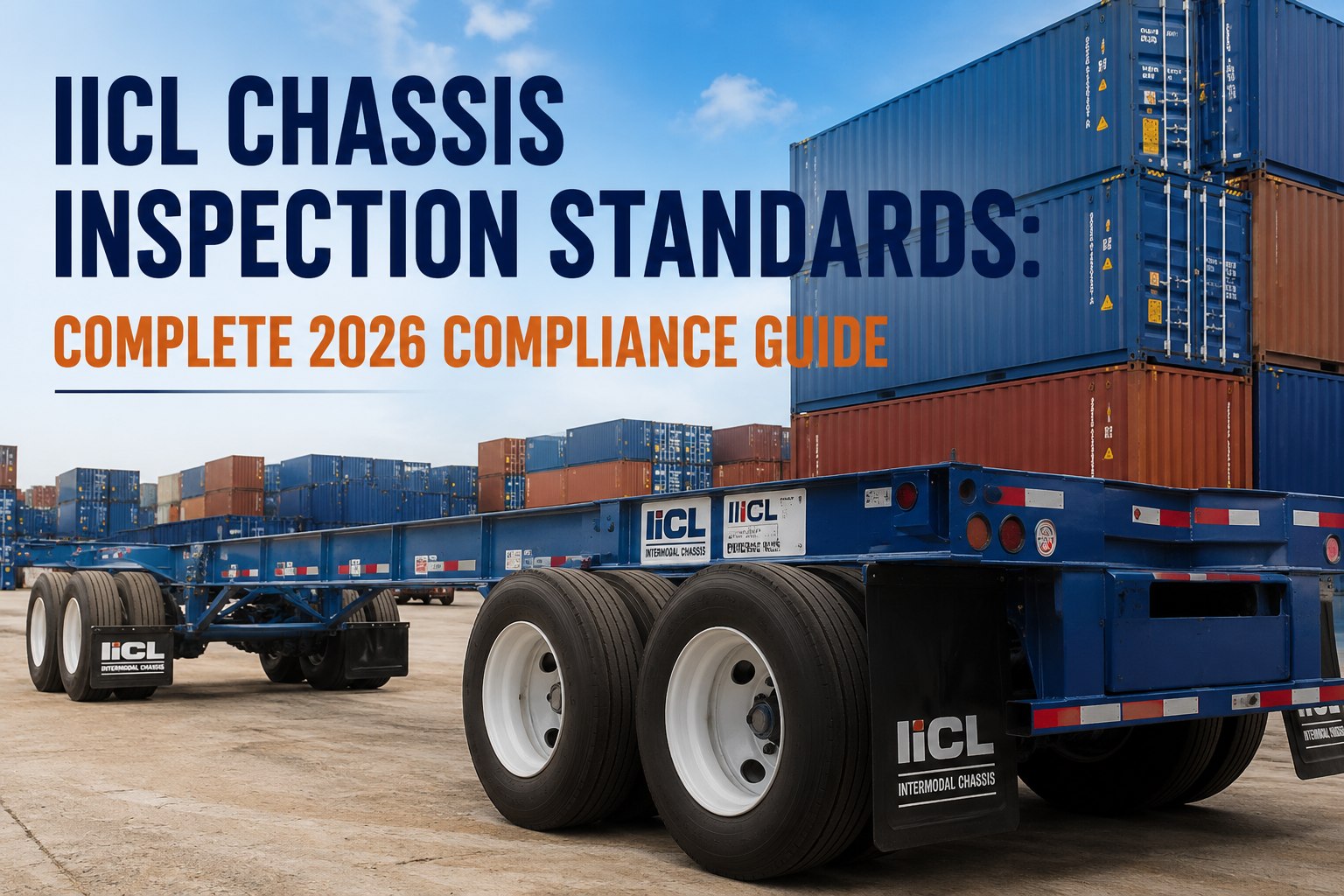
An intermodal chassis lives a hard life — pulled from a pool, hooked by a driver who's never seen it before, run over the road, and dropped at a yard hundreds of miles away. The question that follows it everywhere...
Read More
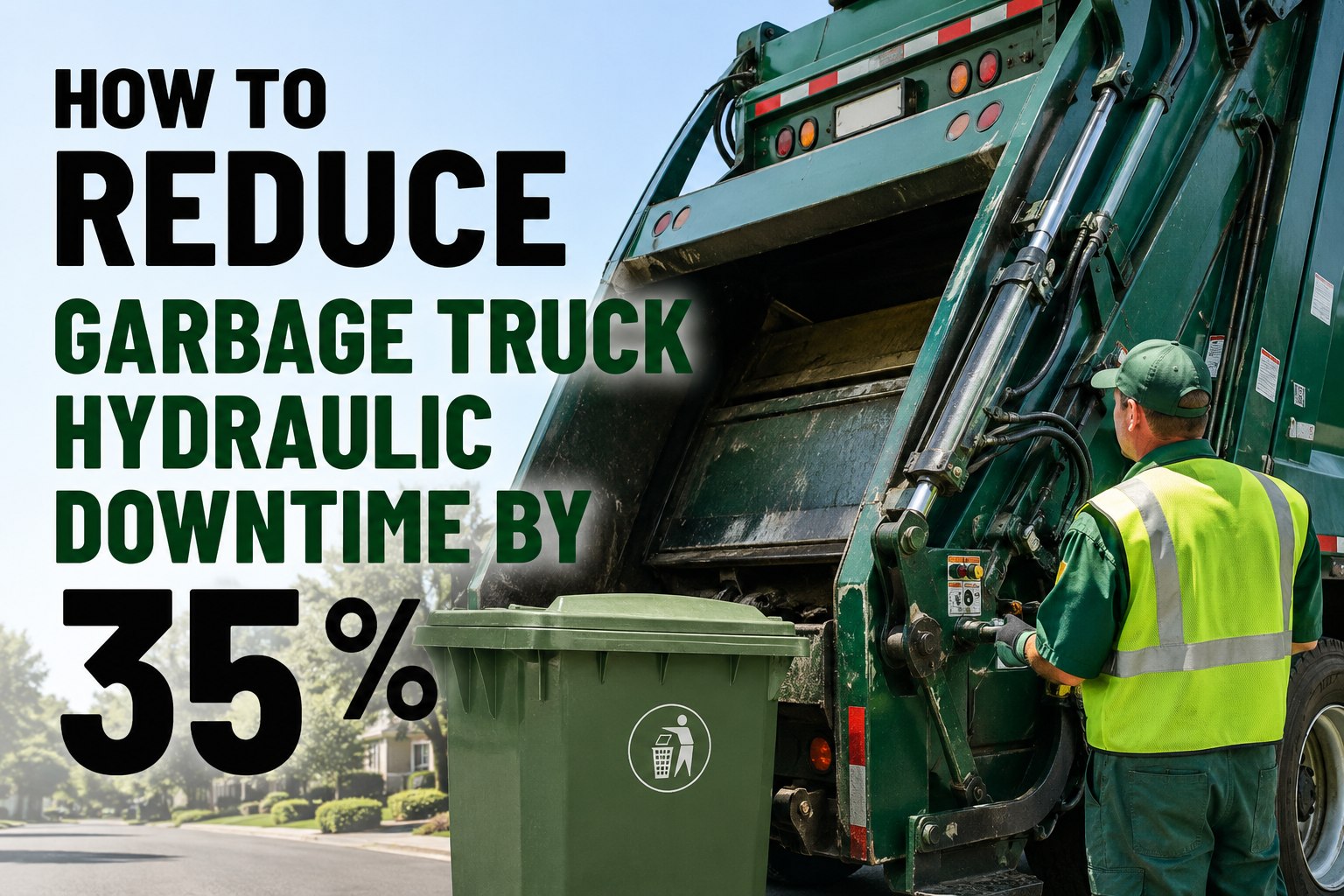
A garbage truck doesn't earn a dime sitting in the yard. And when one stops mid-route, the cause is almost always the same: the hydraulic system that runs the packer, the lift arm, and the tailgate has failed. A blown...
Read More
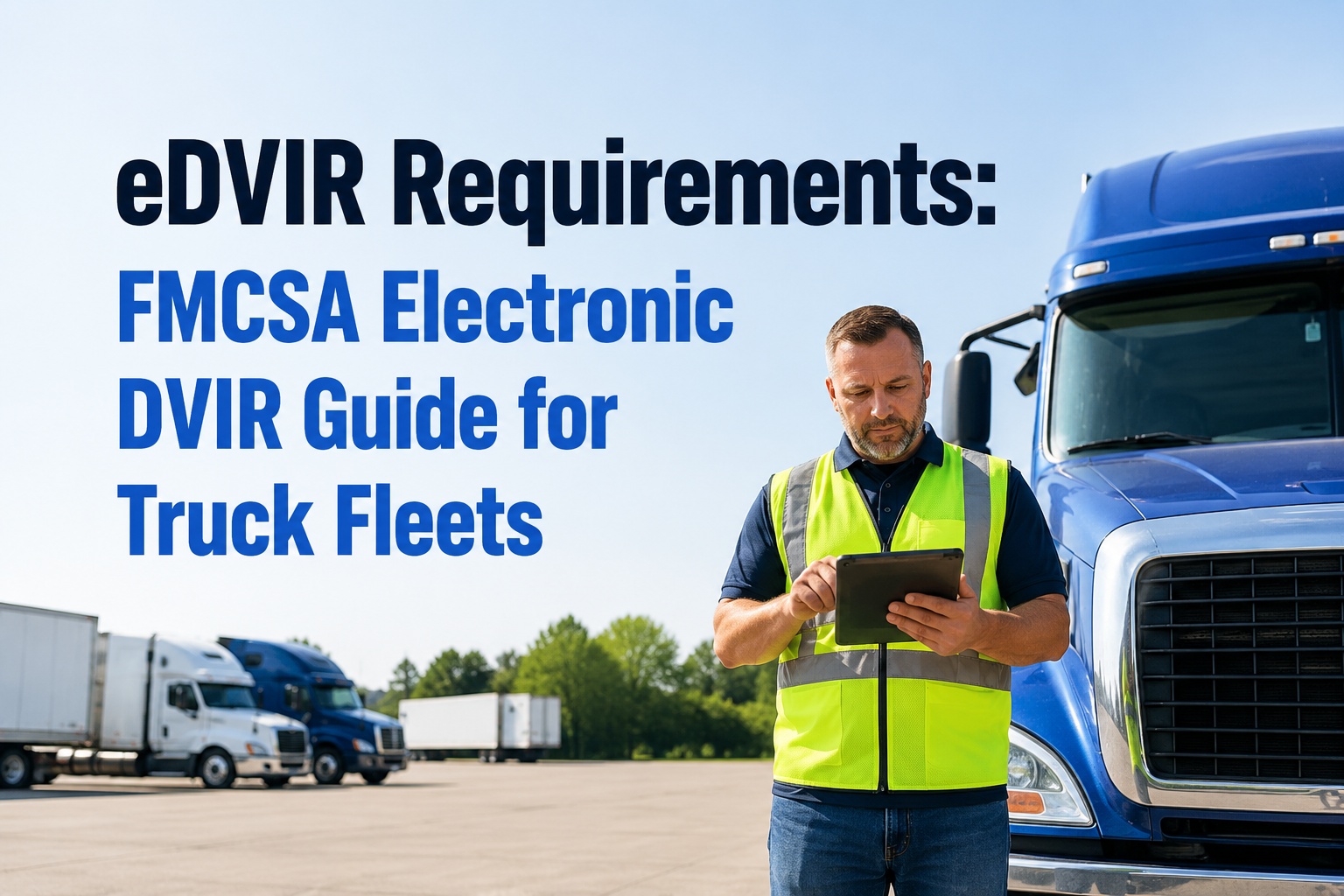
For a decade, fleets that wanted to go paperless on driver inspections lived in a grey area. Electronic DVIRs were technically allowed under 49 CFR 390.32, but the paper-centric wording in 396.11 and 396.13 meant different auditors, attorneys, and DOT...
Read More
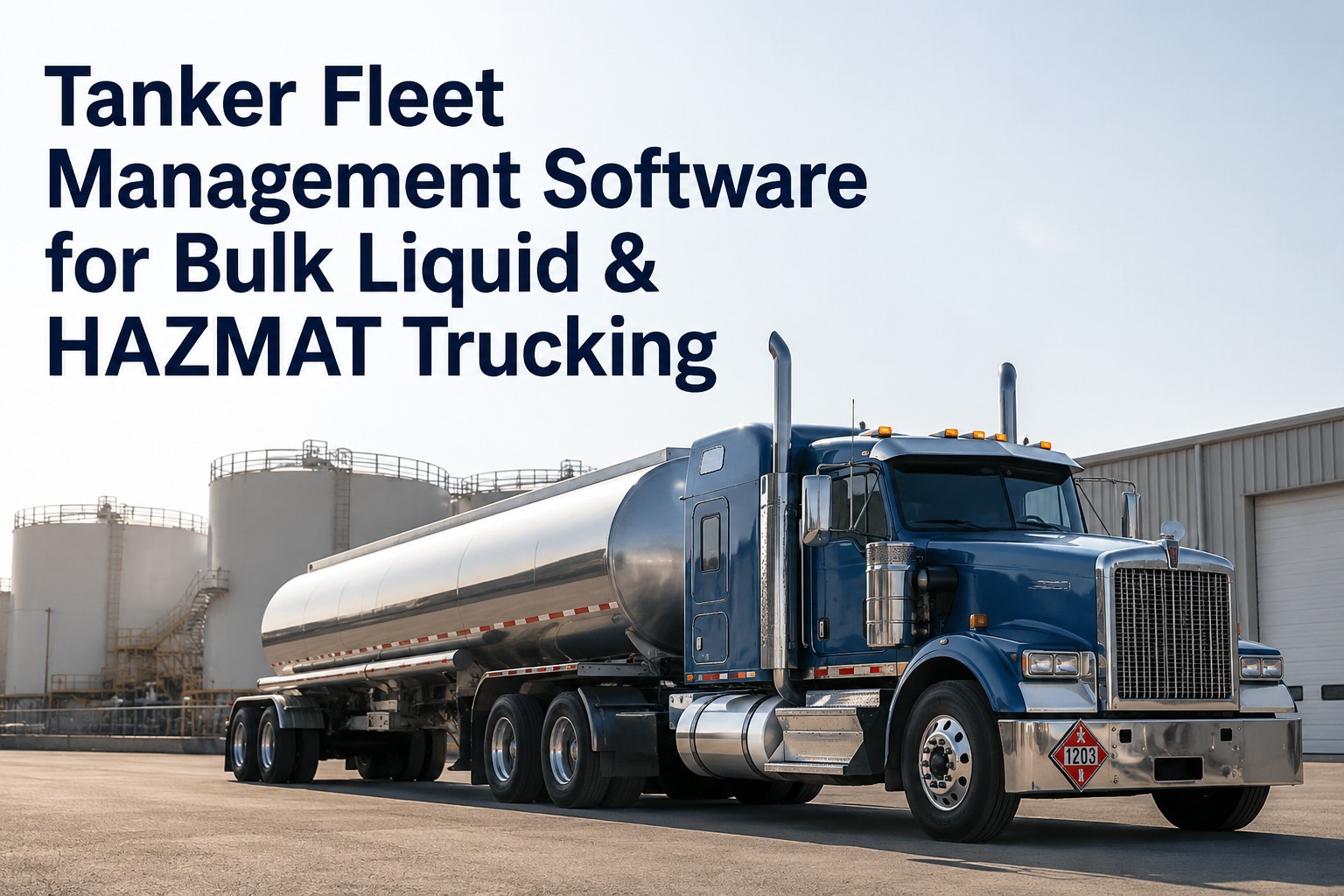
A tanker hauling 8,000 gallons of flammable liquid is a rolling compliance file. Miss one external visual inspection deadline, let a pressure-relief valve drift out of spec, or lose the paperwork from a five-year internal — and a single roadside...

Read More
Every morning a dispatcher picks up the phone and asks the same question: "Where are you?" Multiply that by forty trucks and you've burned an hour before the first load moves. Meanwhile a unit sits idling at a yard for...
Read More
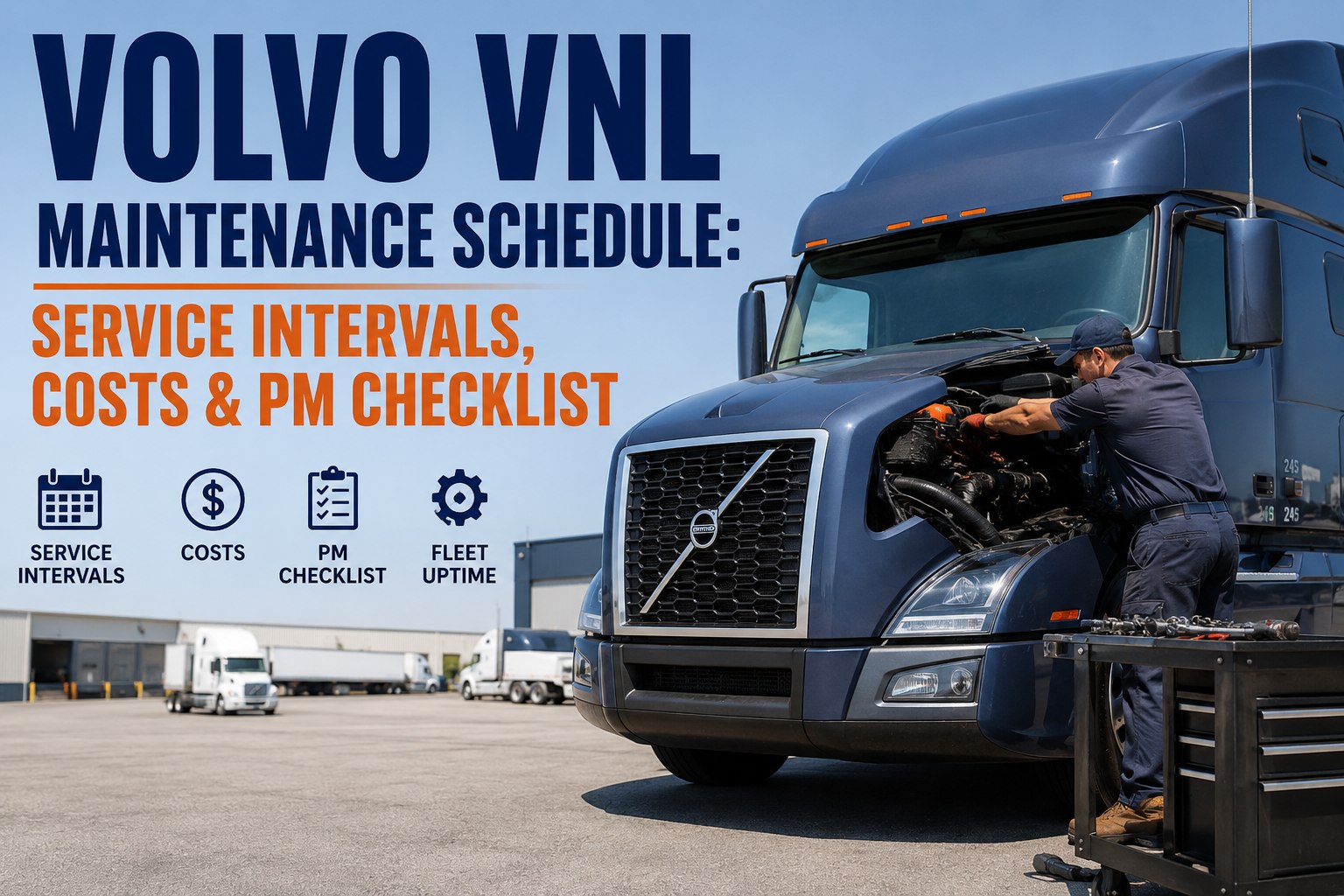
The Volvo VNL is built to run 600,000-plus miles — but only if its D13 engine, I-Shift transmission, and aftertreatment system get serviced on Volvo's schedule, not whenever someone remembers. The trap most fleets fall into is treating every VNL...
Read More
Only 7% of motor carriers pass a DOT audit without a single violation. The other 93% average six violations each — and in 2026, those violations cost more than ever: up to $19,277 for a single hours-of-service infraction, $13,300 to...
Read More
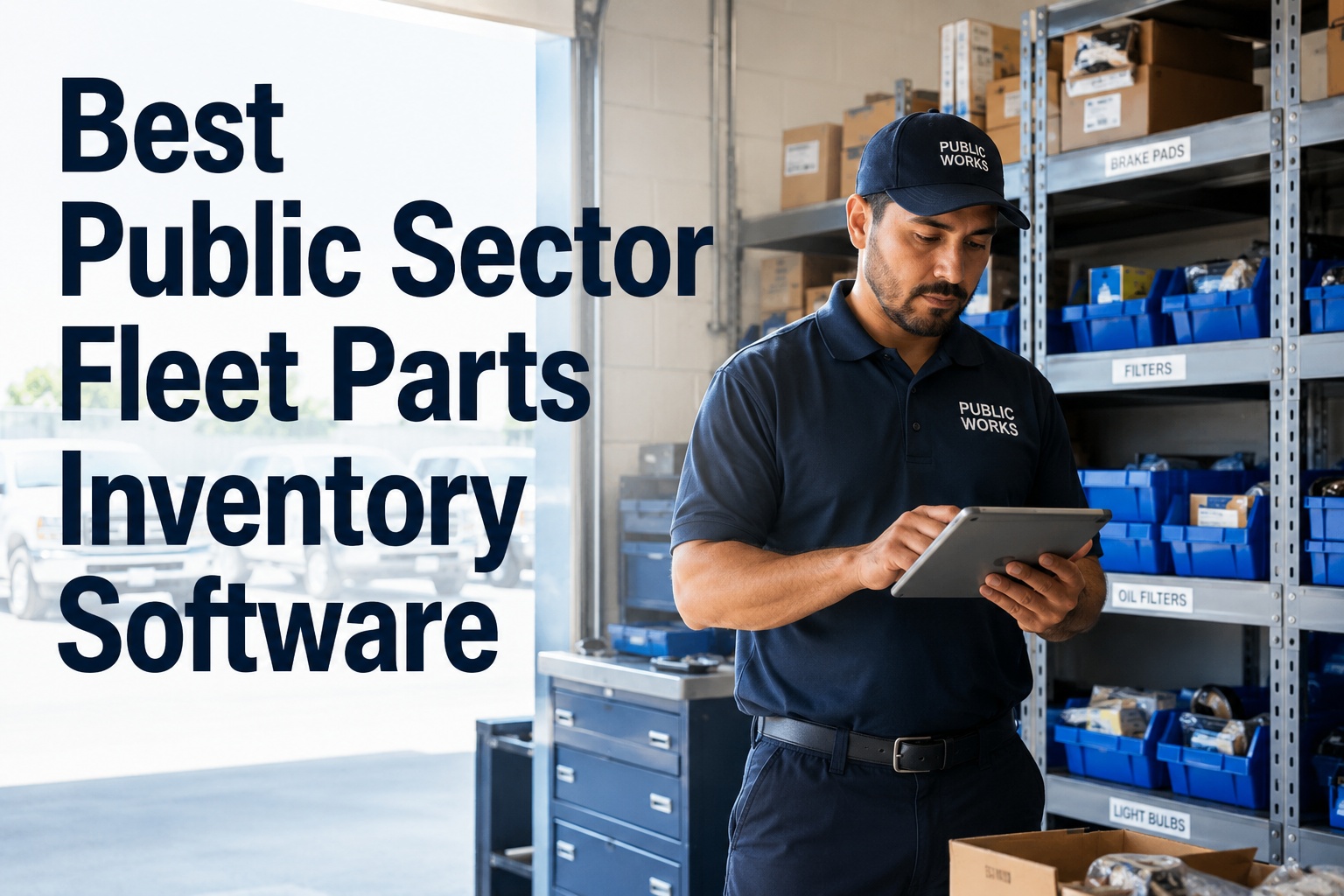
In a government fleet warehouse, a missing part isn't just an operational problem — it's an audit finding waiting to happen. When an auditor asks where a $40,000 generator or a pallet of brake assemblies went, "I think we used...
Read More
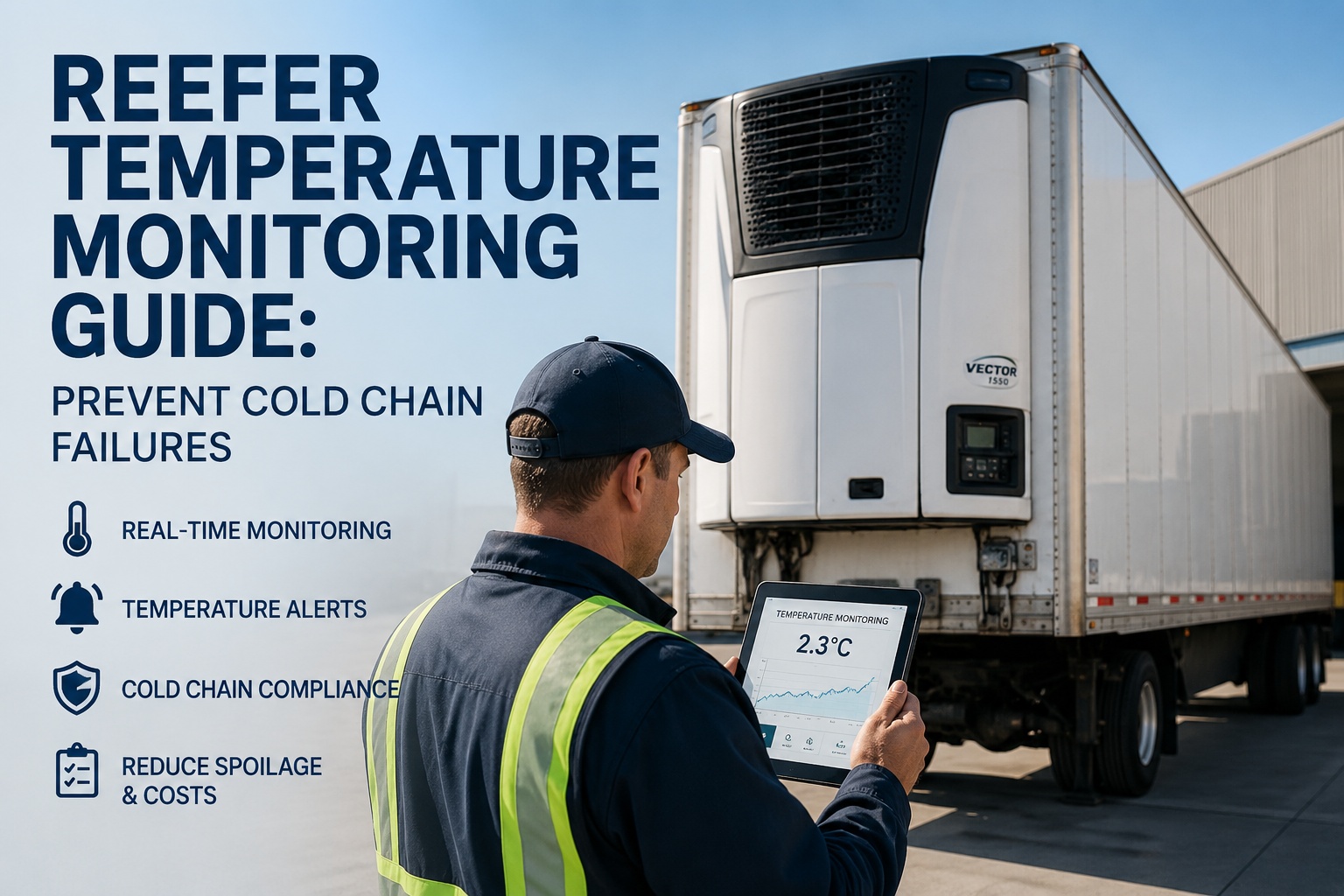
A reefer load almost never spoils all at once — it dies in the gaps. The trailer holds a perfect 34°F on the highway, then the unit cycles off at a dock, a door stays open 20 minutes during a...
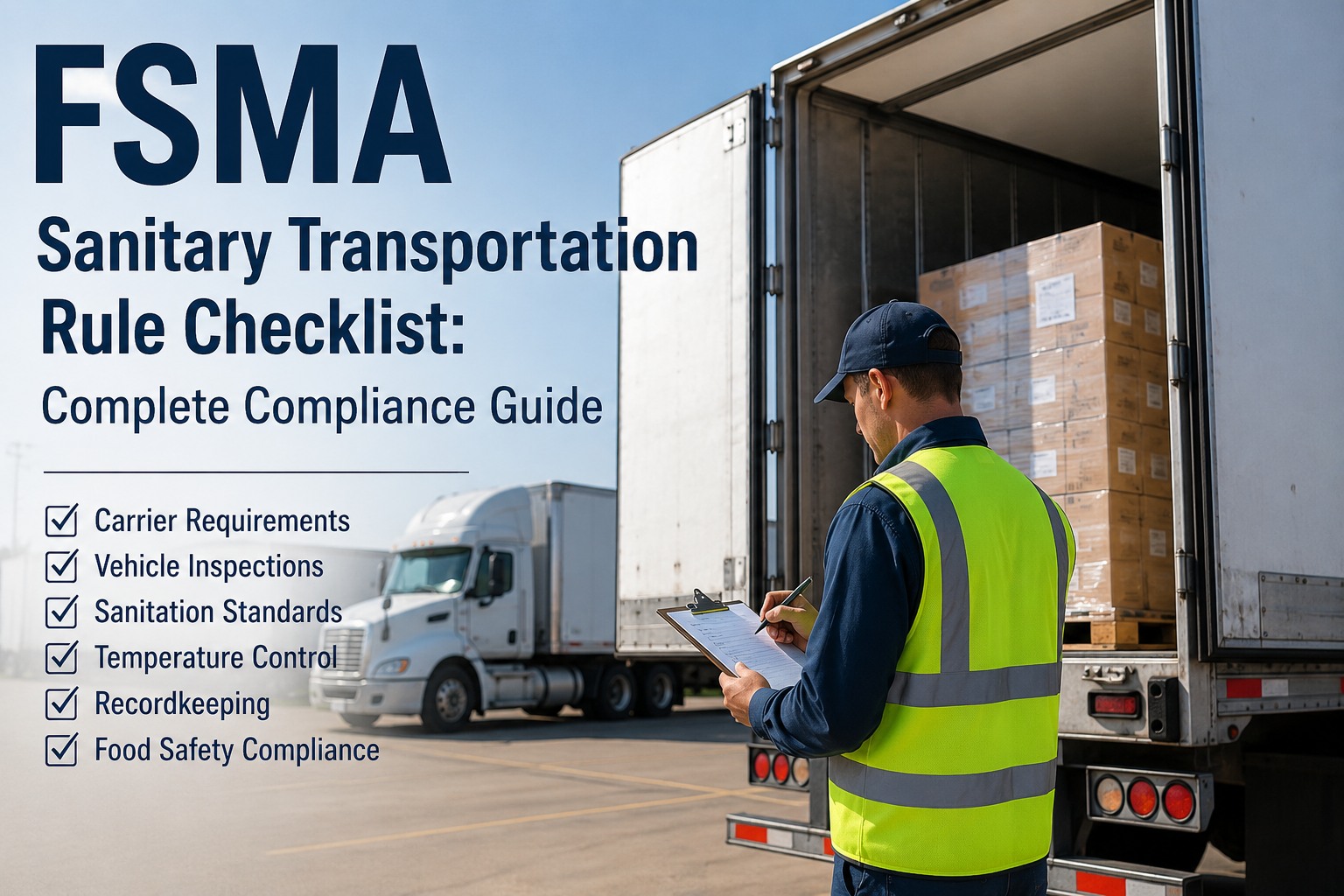
Read More
Under FDA rules, a refrigerated trailer can hold food at a perfect 34°F the entire trip and still fail compliance — if the temperature was never recorded, the vehicle's cleaning wasn't documented, or the driver was never trained. That's the...
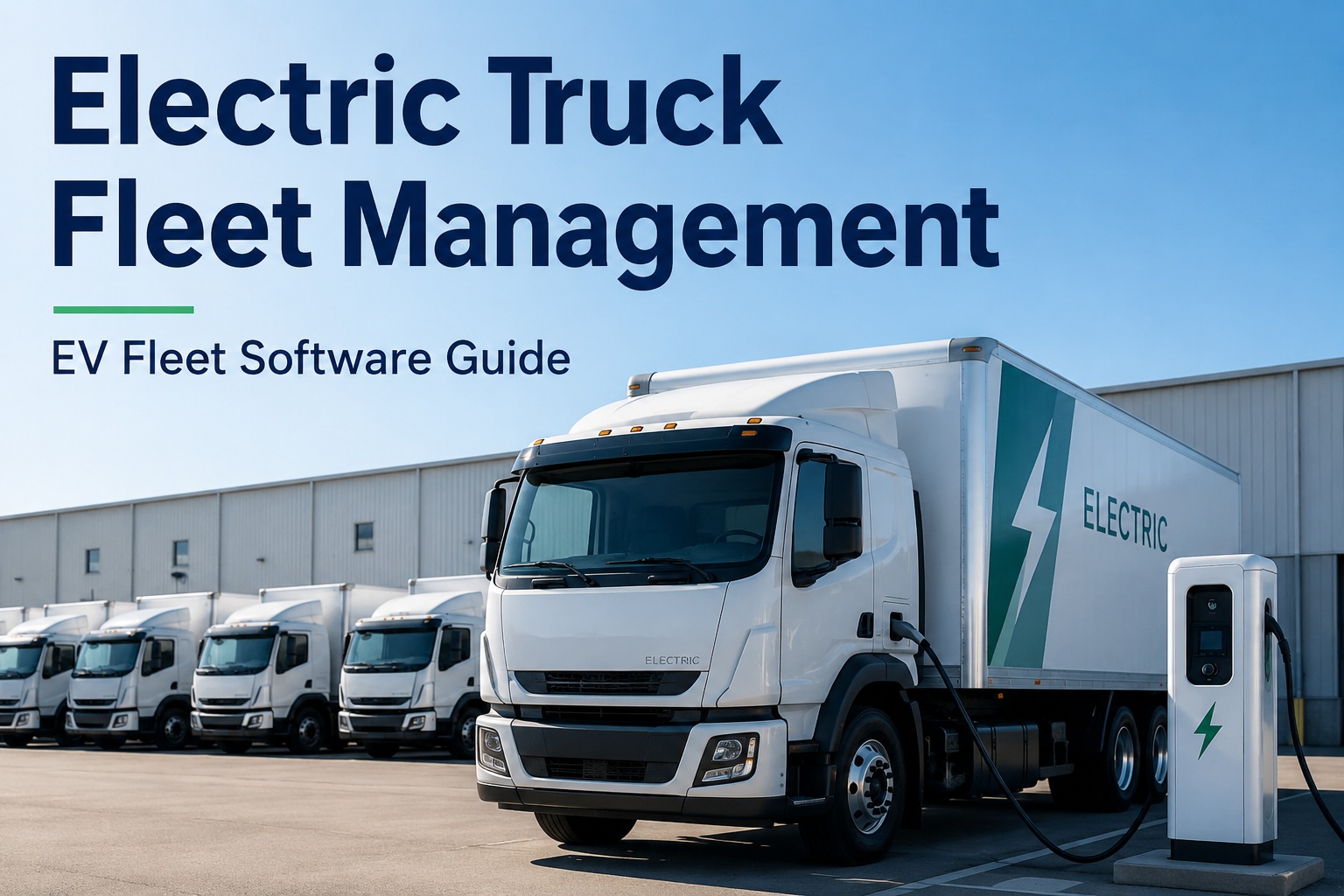
Read More
Somewhere in your maintenance budget is a line item that should never have been there: a $4,200 transmission repair on a truck still under powertrain warranty, paid in full because the spreadsheet had no column for "check coverage before approving...
Read More
Somewhere in your maintenance budget is a line item that should never have been there: a $4,200 transmission repair on a truck still under powertrain warranty, paid in full because the spreadsheet had no column for "check coverage before approving...
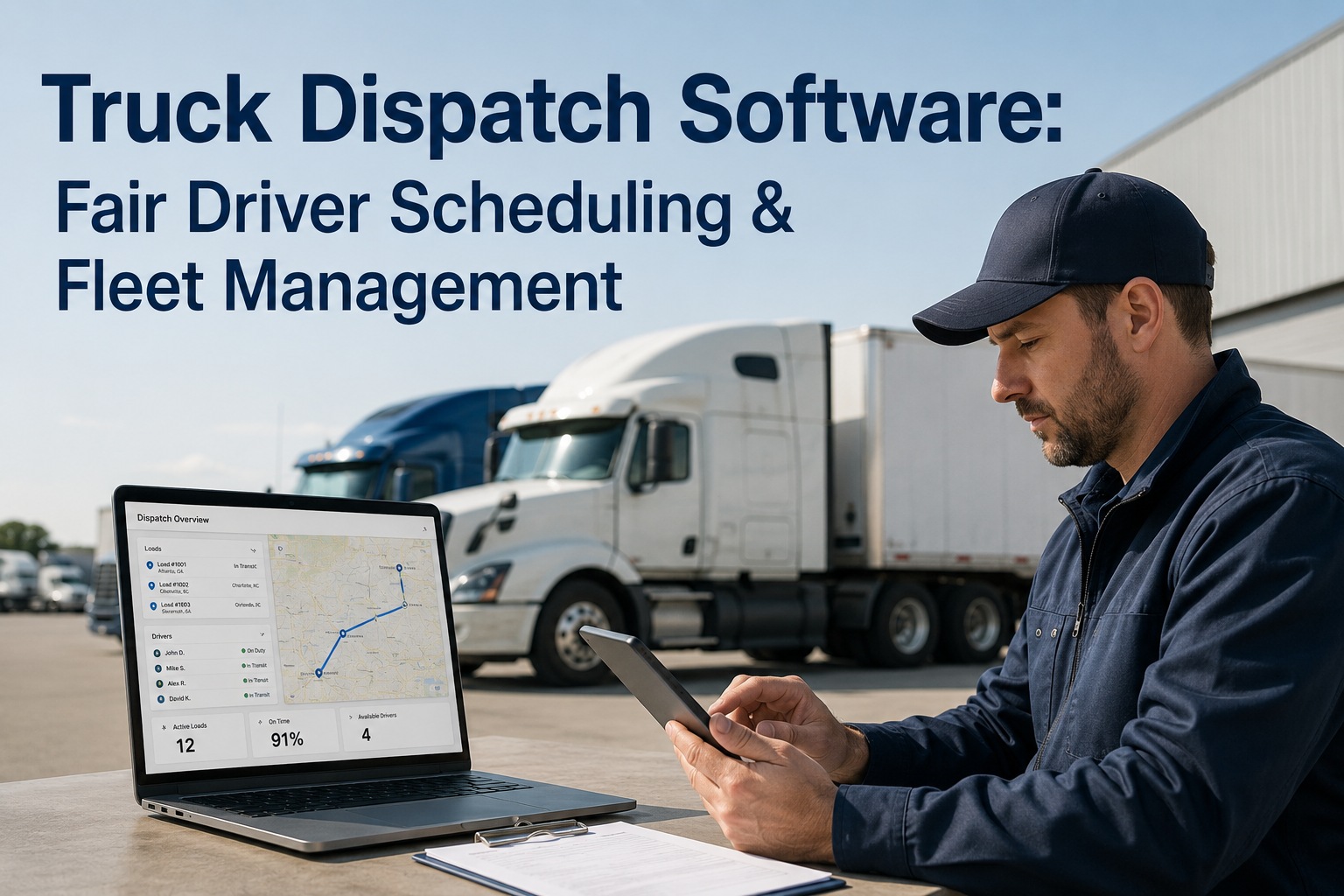
Read More
Drivers rarely quit over pay alone — they quit over the dispatch board. The good loads always going to the same three names, the home-time promise broken again, the schedule that swings from a 14-hour grind to two days sitting...

Read More
Your tractors are wired for telematics, but the trailers they pull are mostly dark — and the trailer is where the freight, the detention, and the theft risk actually live. Trailer telematics closes that gap by treating the unpowered asset...
Read More
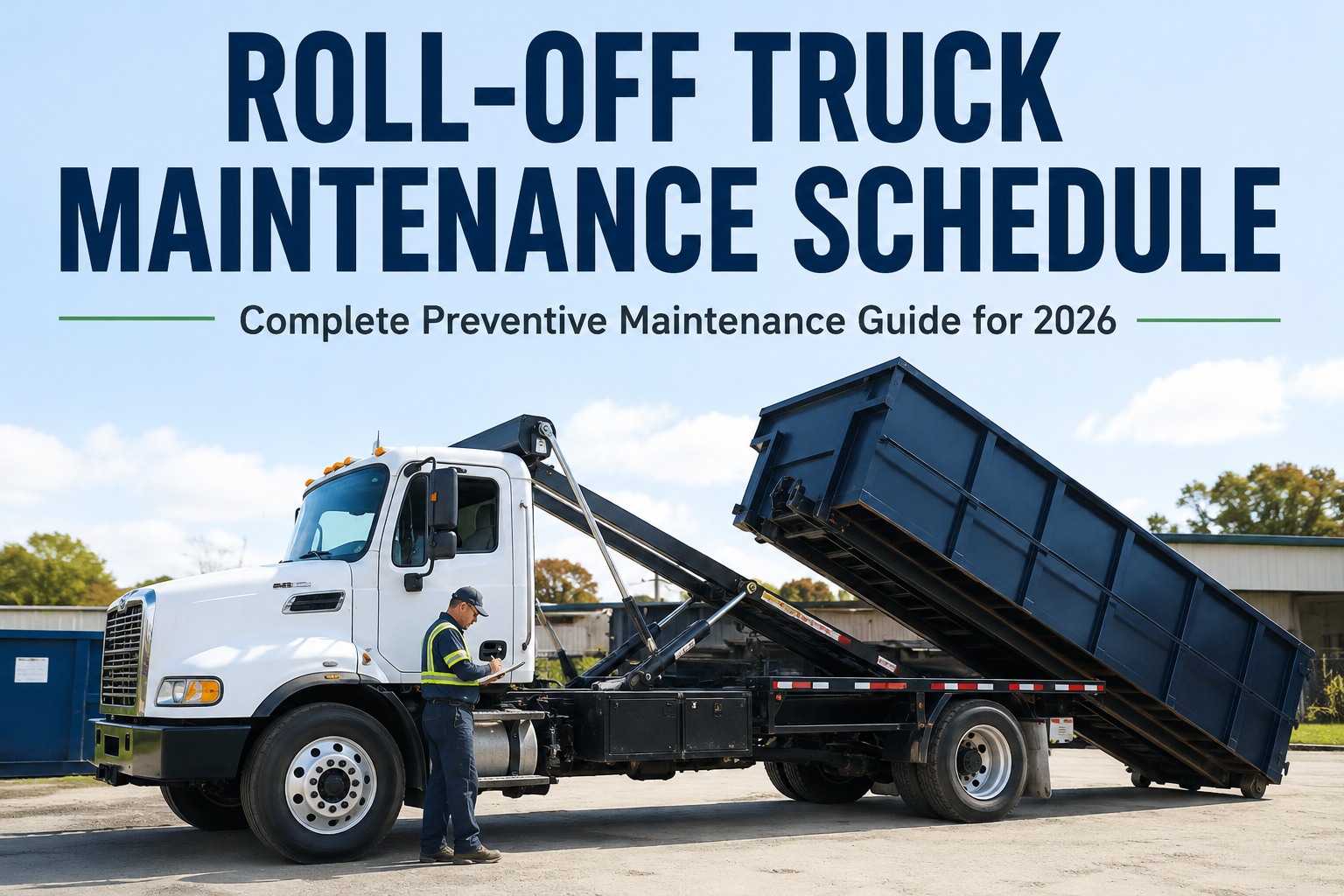
A roll-off truck breaks the rules every standard PM schedule is built on. Mileage-based maintenance assumes wear comes from driving — but a roll-off accumulates most of its damage through hoist cycles, lifting and dropping containers 10 to 25 times...
Read More
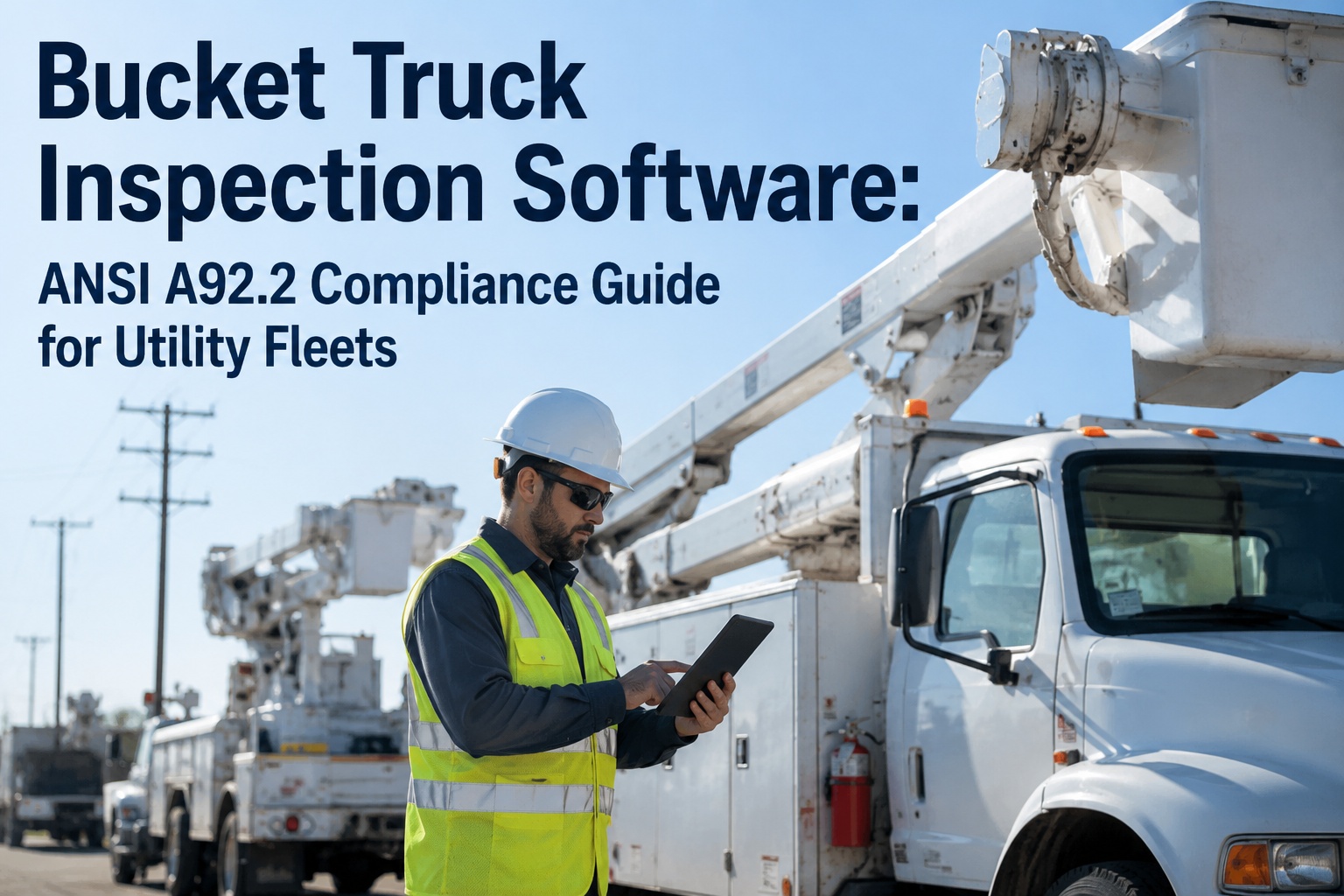
A bucket truck is the rare vehicle where a missed inspection can kill someone two ways — a boom failure that drops a worker, or a dielectric breakdown that puts thousands of volts through the operator. That's why ANSI A92.2...

Read More
In the oilfield, a missing $40 hydraulic seal doesn't cost $40 — it idles a rig at $80,000 to over $1 million a day until the part arrives. That's the brutal math that makes parts inventory the single highest-leverage system...

Read More
In intermodal, the container gets all the attention — but the chassis underneath it is where the money quietly leaks. A chassis sits on the street an average of 5.5 days per move, often unaccounted for, mis-billed on per diem,...
Read More
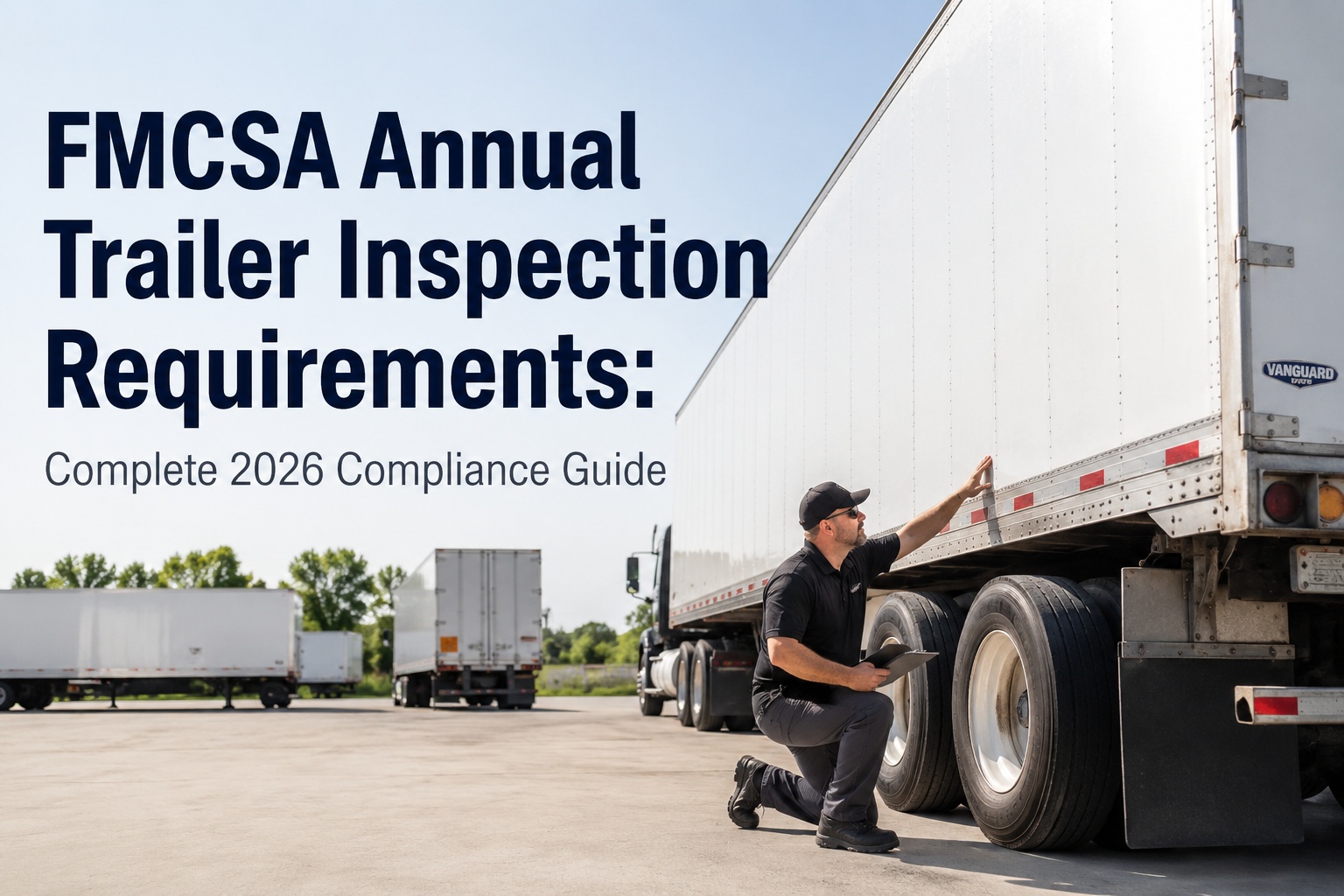
A trailer can be mechanically perfect and still put your operation out of service — if the annual inspection paperwork isn't right. Under 49 CFR 396.17, every trailer rated over 10,001 pounds must pass a full safety inspection once every...

Read More
Most fleets track every tractor down to the minute — and lose sight of the trailers entirely. Yet trailers carry the freight, outnumber the trucks, and spend 30 to 40% of their lives sitting unmonitored in drop yards and customer...

Read More
A truck going nowhere still burns fuel — about 0.8 gallons every hour it sits idling. That sounds trivial until you multiply it: a single Class 8 idling adds up to roughly $58,000 in wasted diesel across a 100-truck fleet...

Read More
If you don't know your cost per mile, you're guessing — and in a freight market this tight, guessing loses money one load at a time. The industry average cost to run a truck hit $2.26 per mile in 2024,...
Read More
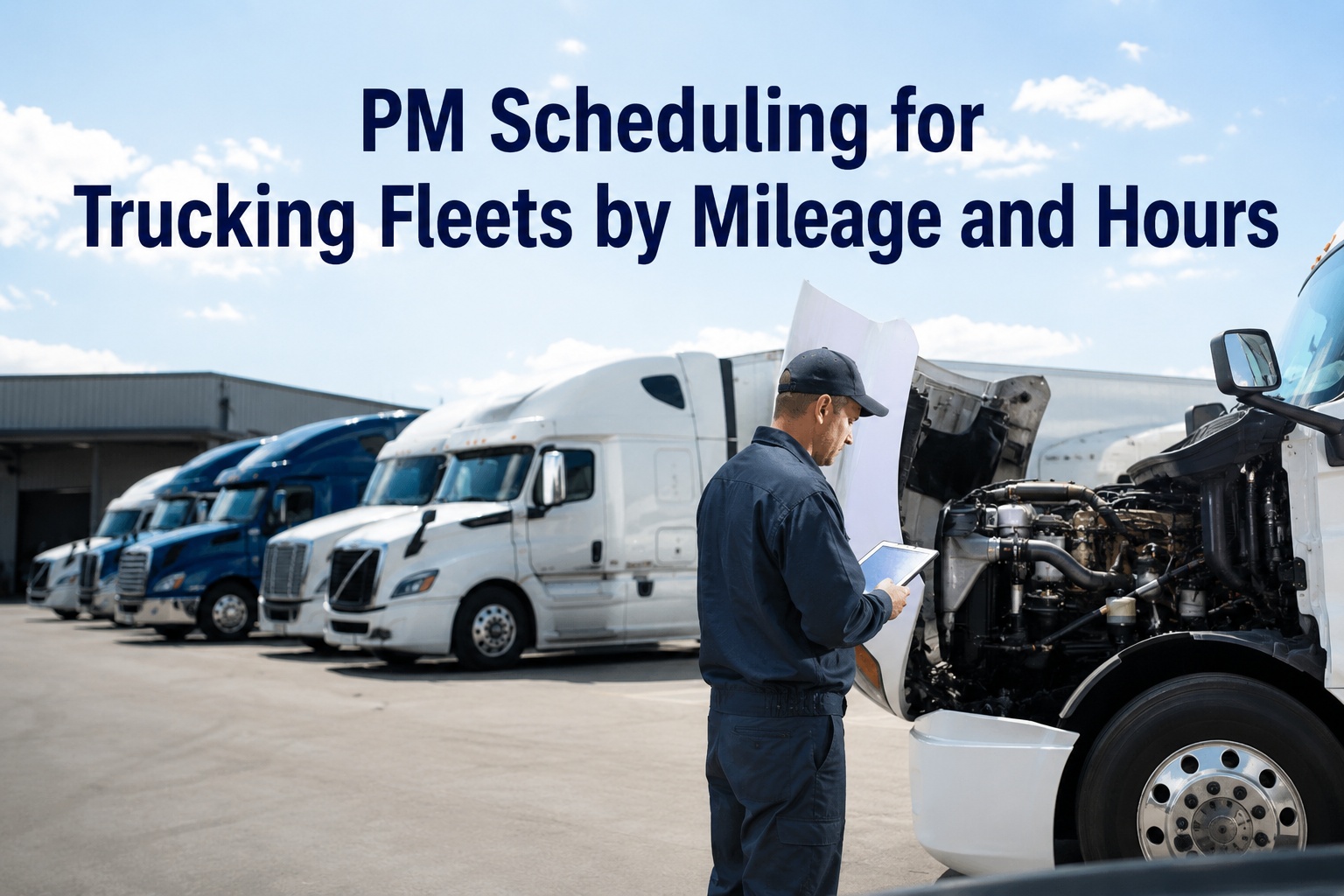
Two trucks leave the yard the same morning. One runs 600 highway miles; the other idles all day on a job site and covers 40. A calendar-based PM program services them on the exact same date — over-maintaining the idler,...
Read More
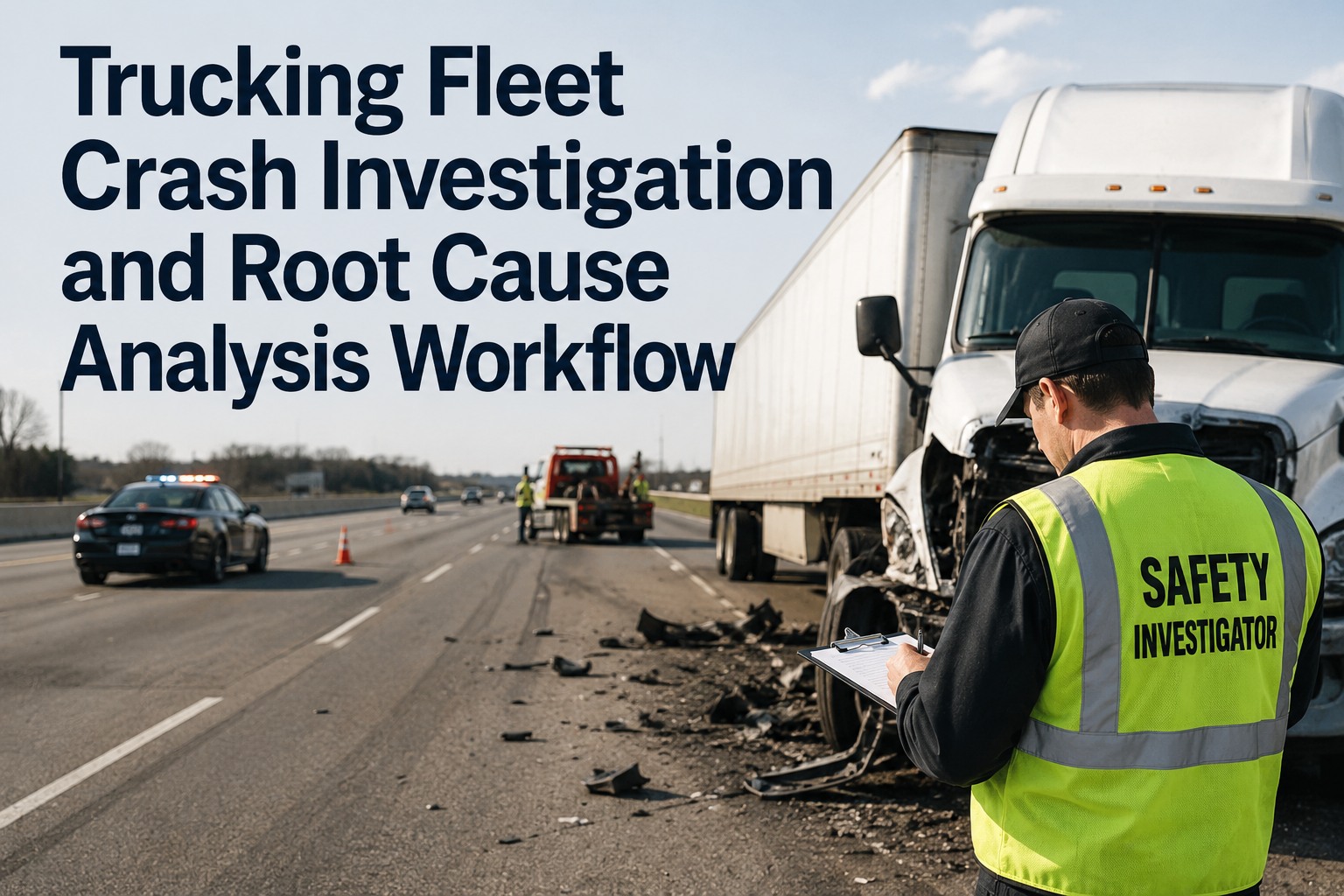
The moment a truck crashes, a clock starts — and most of the evidence that proves what happened is already counting down to deletion. Dashcam loops overwrite in one to three days. Telematics data is purged in about thirty. ELD...

Read More
Your fuel card statement shows transactions. It does not show that the truck was 200 miles away when the card was swiped, that 170 gallons went into a 120-gallon tank, or that someone siphoned 10 gallons during an overnight stop....
Read More
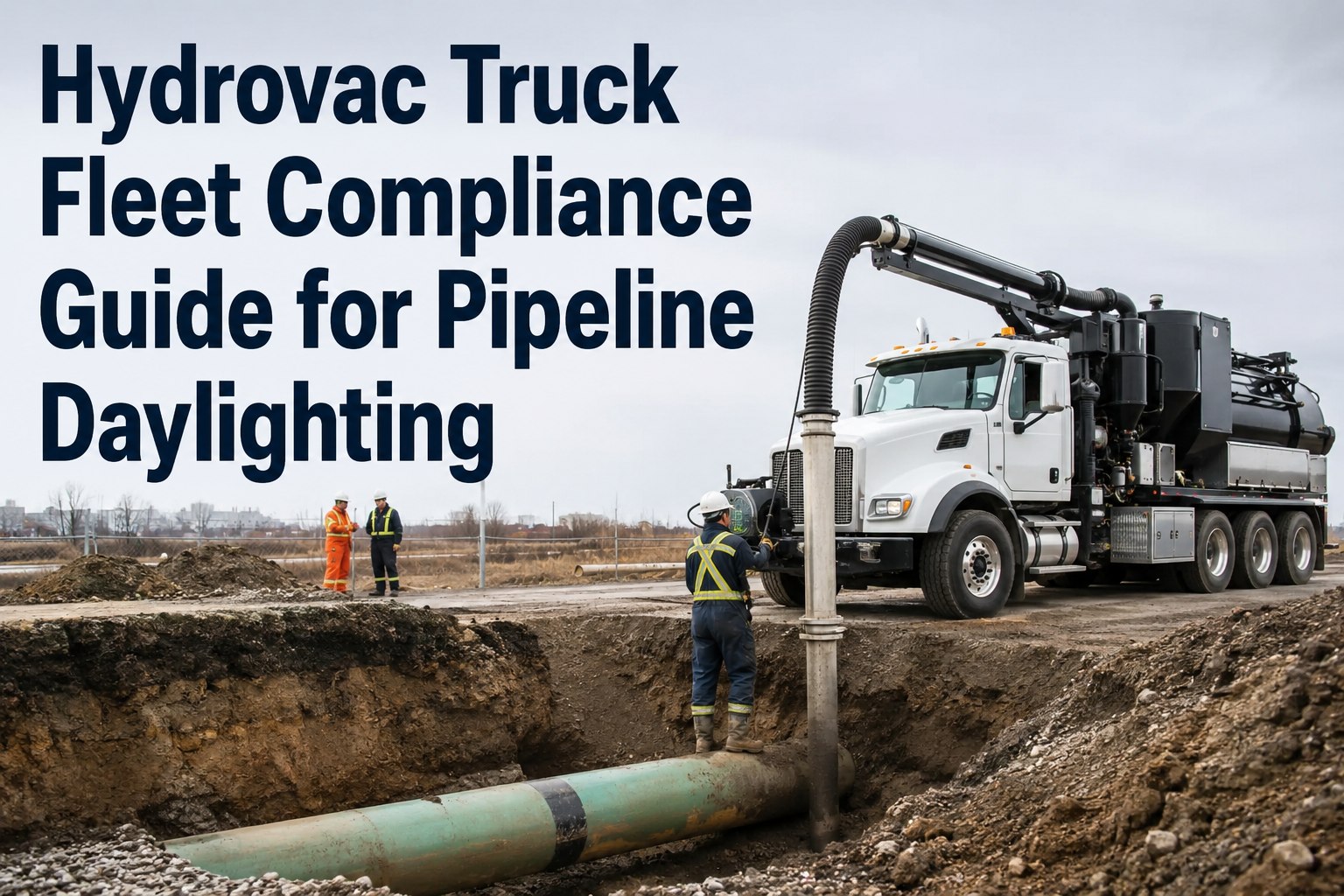
A hydrovac crew can do everything right at the dig and still create a compliance disaster on paper. An expired one-call ticket, a spoil load dumped at an unlicensed site, a missing utility-verification photo — any one of these turns...
Read More
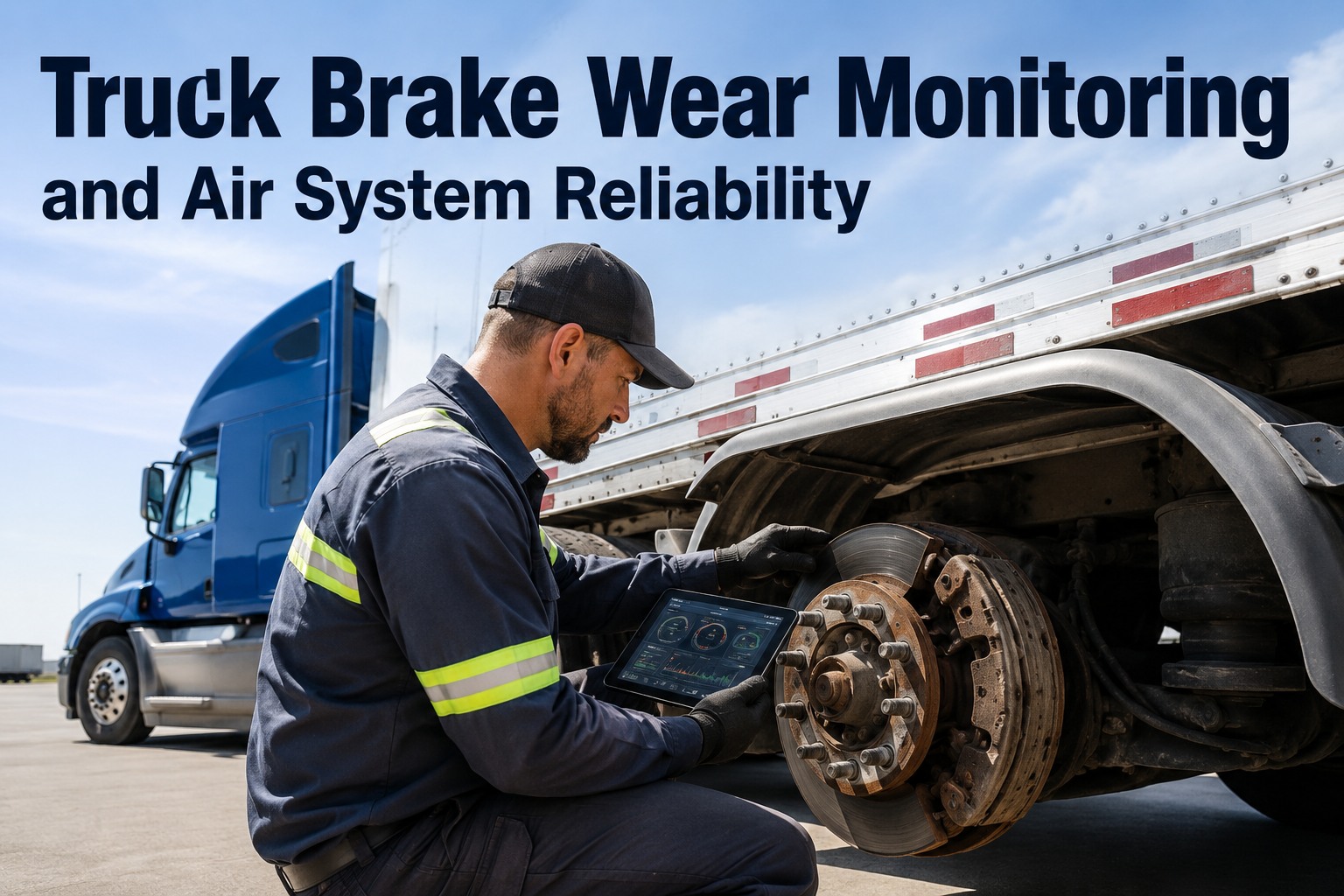
One in four trucks pulled into a 2025 roadside inspection went out of service — and brakes were the single biggest reason, behind 24.4% of all vehicle OOS cases. Brakes also contribute to roughly 30% of truck crashes. Here's the...
Read More
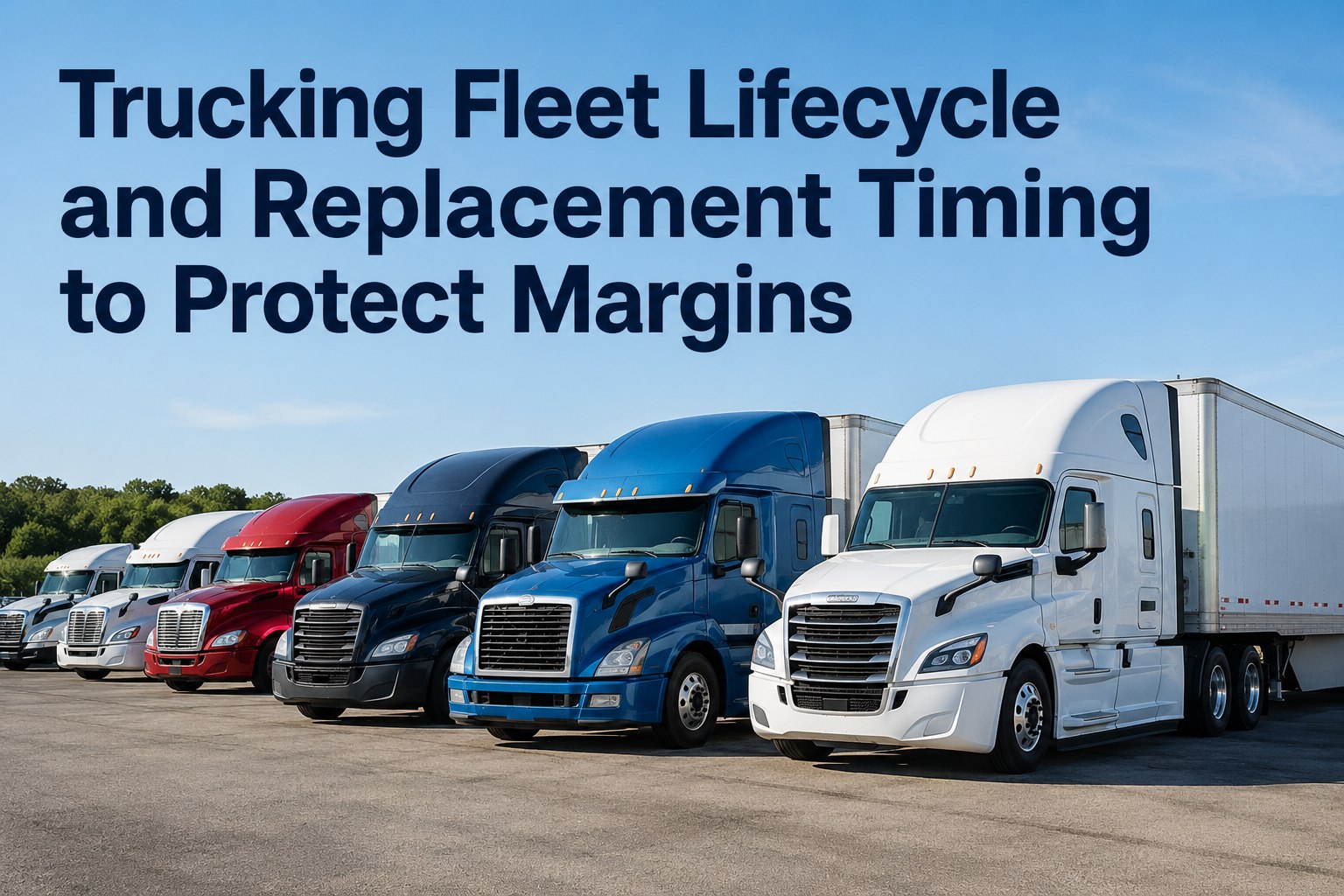
Every truck has a moment when it's worth the most it will ever be worth to keep — and most fleets blow right past it. Run a unit too long and maintenance climbs, downtime stacks up, and resale value evaporates....
Read More
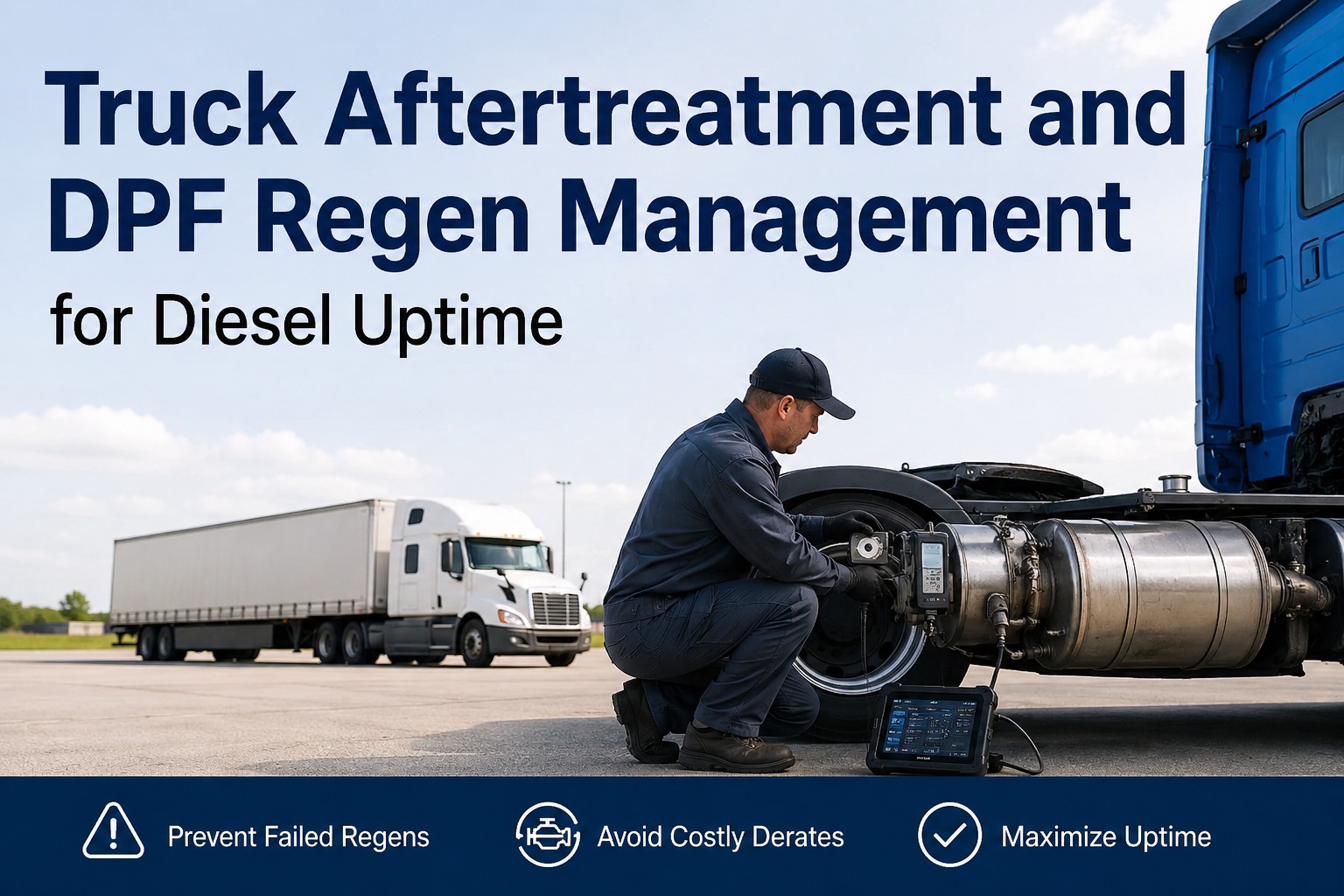
A truck doesn't derate without warning — it warns for weeks and nobody's listening. Soot climbs past 50%, active regens start firing every few hundred miles, a fault code quietly blocks the next cycle, and then at 90% the ECM...
Read More
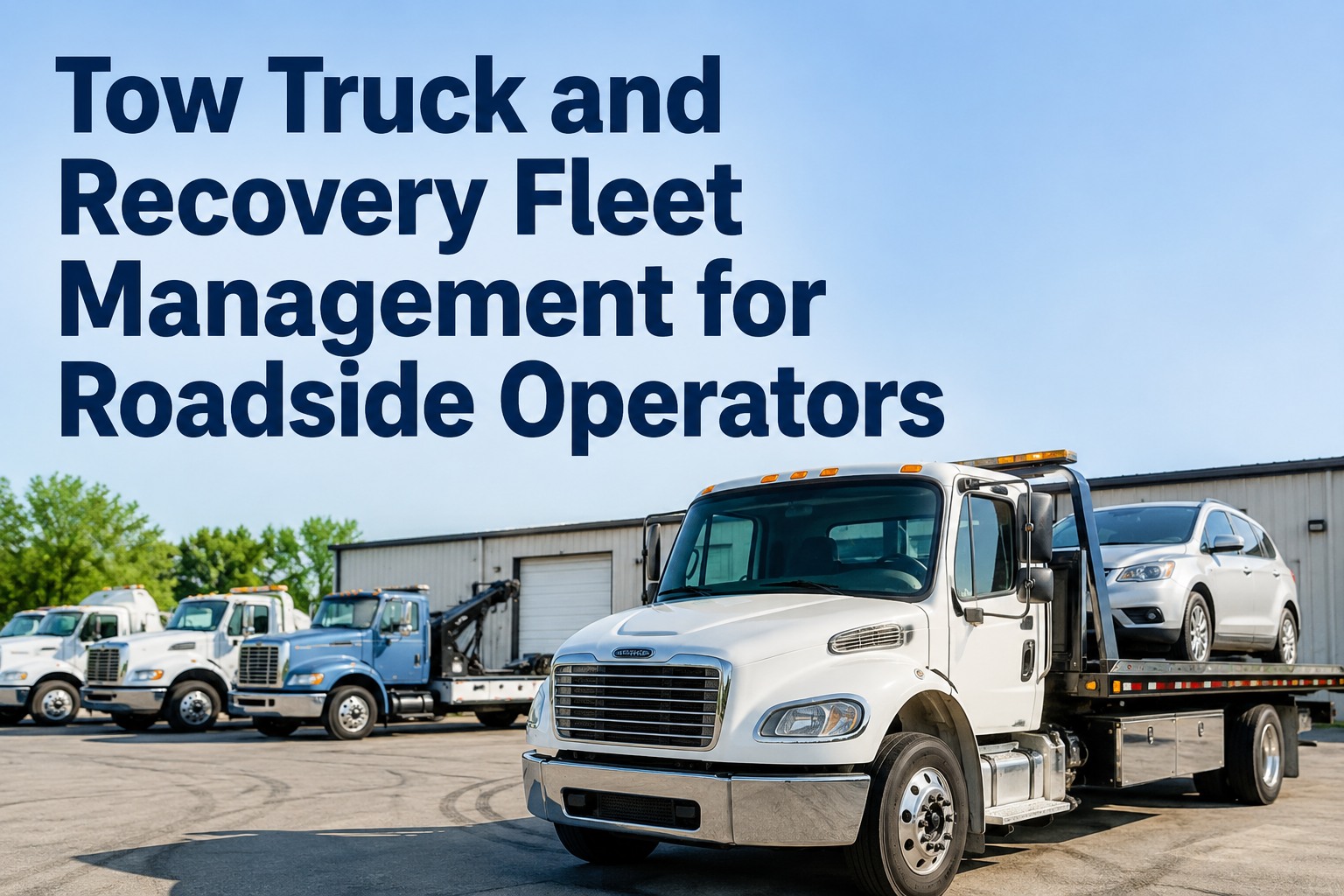
A tow truck is the one vehicle that can't break down — because when it does, there's no one to call. Recovery fleets run 24/7, in storms and at 3 a.m., on the same highways everyone else is trying to...
Read More
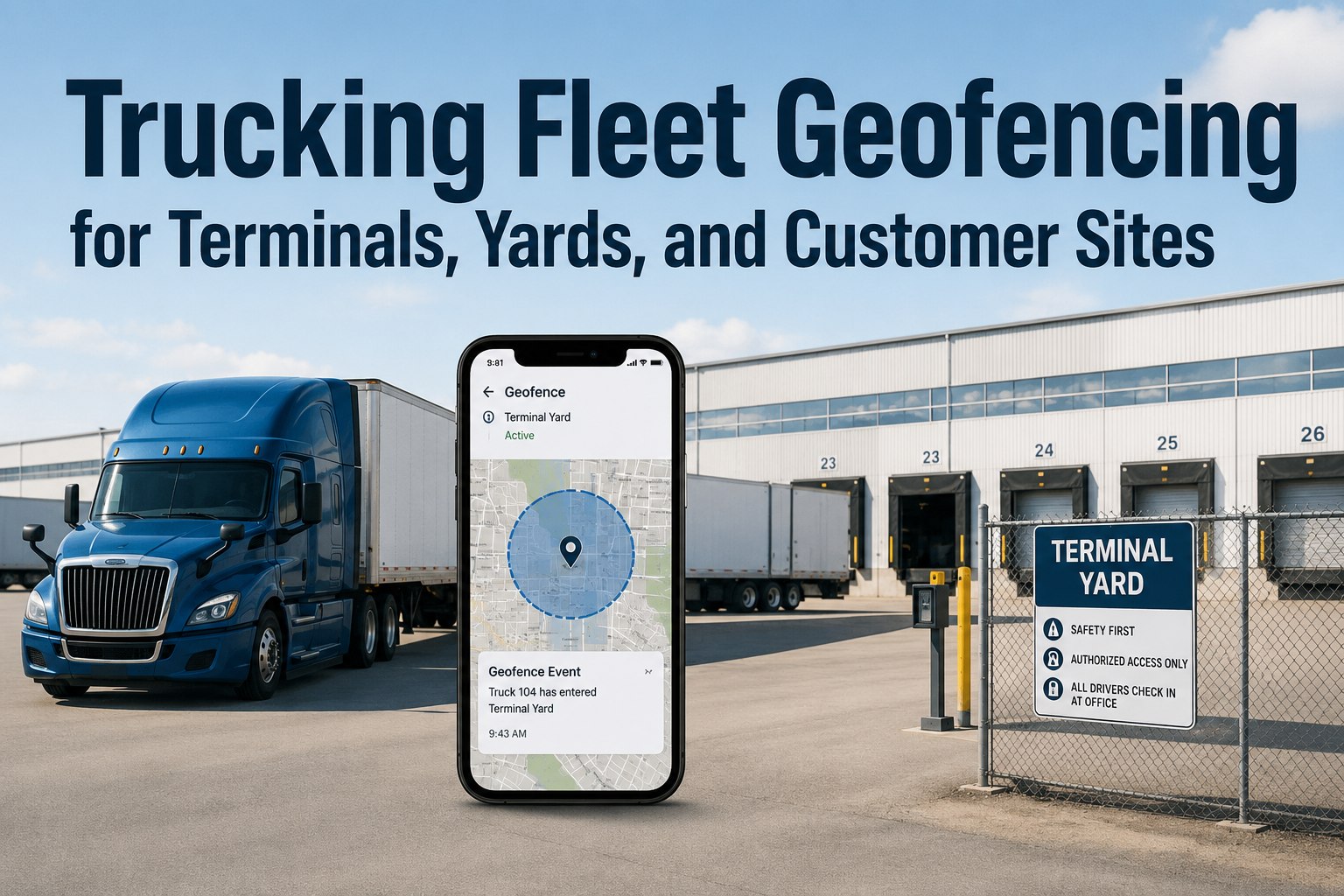
The average driver spends 2.5 hours a day waiting at facilities, detention touches roughly 40% of truckload stops, and it drains the industry more than $15 billion a year — yet only about 29% of carriers actually collect the detention...
Read More
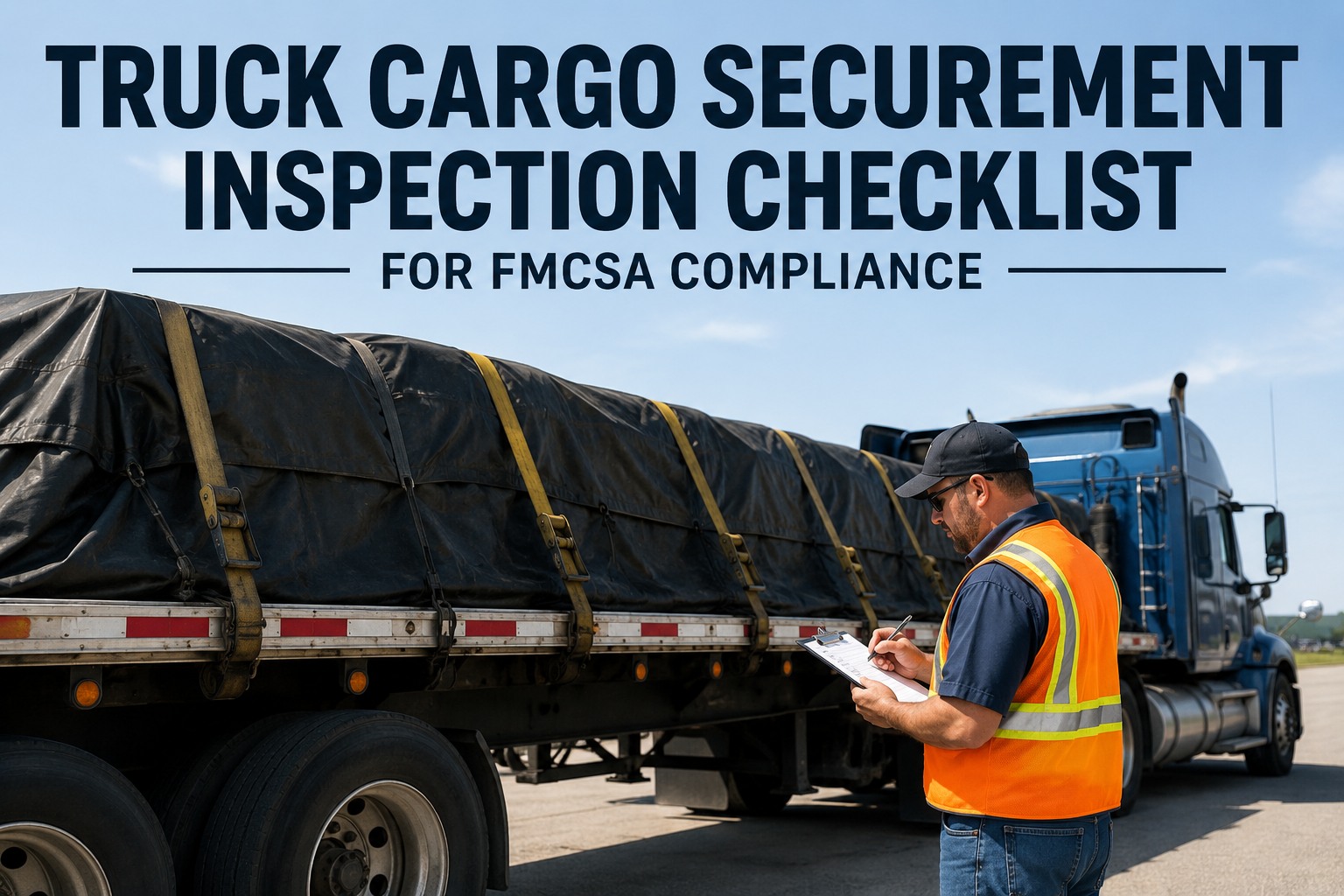
Four straps rated at 2,000 lbs each on a 20,000-lb machine isn't a secured load — it's a decorated one, providing 40% of the working load limit federal law requires and failing the moment the driver brakes hard. Cargo securement...
Read More
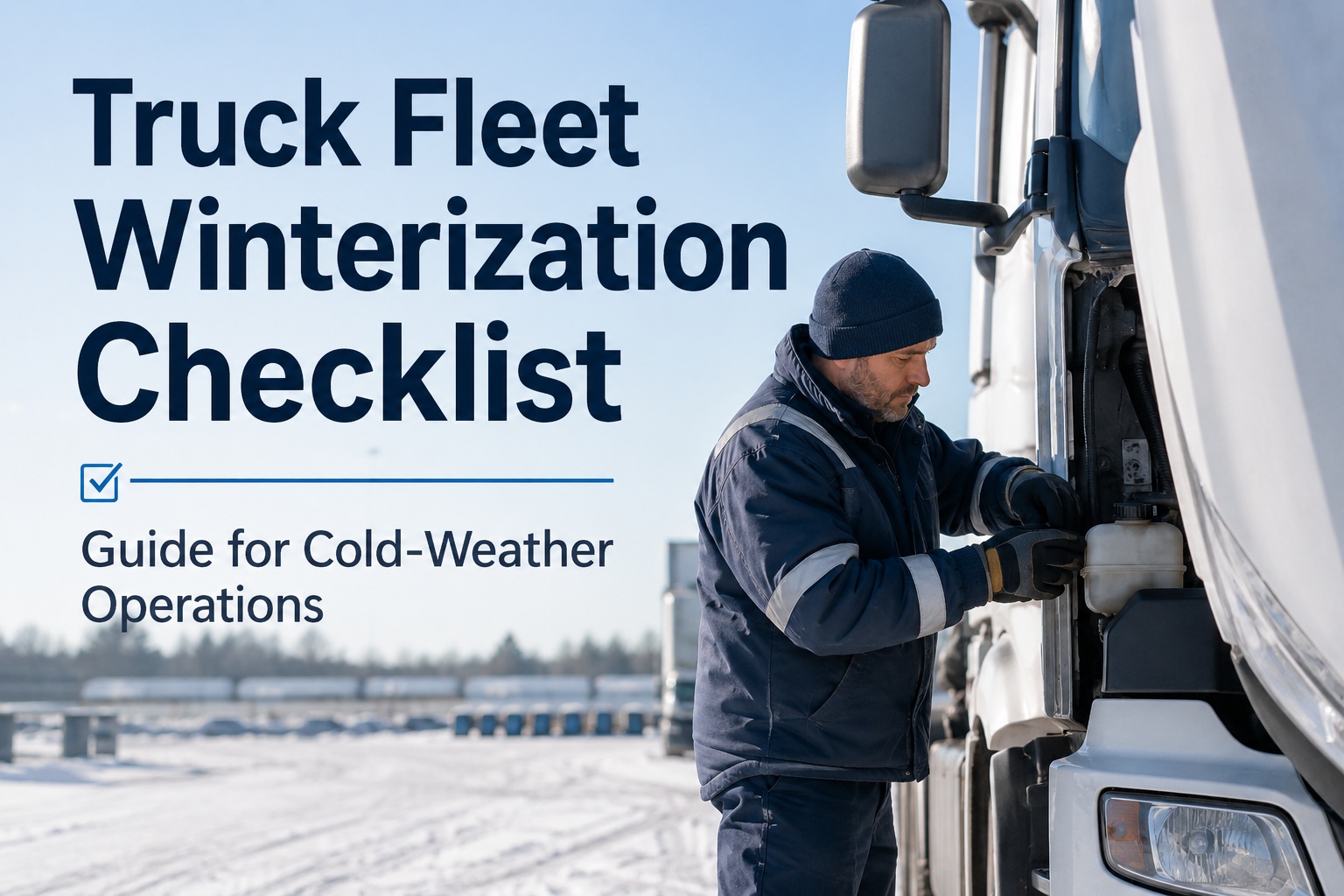
Winter doesn't break trucks creatively — it breaks them predictably. Diesel gels at 15°F, DEF freezes solid at 12°F, batteries lose up to 60% of their cranking power at 0°F, and moisture trapped in air lines freezes brakes shut. Every...

Read More
Every load that rolls is a bet that the driver is legal, the clock is clean, the credentials are current, and the truck is roadside-ready. Get one wrong and the cost is brutal: an HOS or ELD violation runs up...

Read More
Fuel is the largest controllable cost in trucking — roughly $0.48 to $0.62 of every mile, or more than 20% of gross revenue before a single other bill is paid. And most of the waste isn't the pump price; it's...

Read More
One in five trucks pulled into a DOT inspection doesn't drive away. During the 2025 CVSA International Roadcheck, 22.6% of vehicles were placed out of service — and the overwhelming majority were stopped for defects a proper pre-trip would have...
Read More
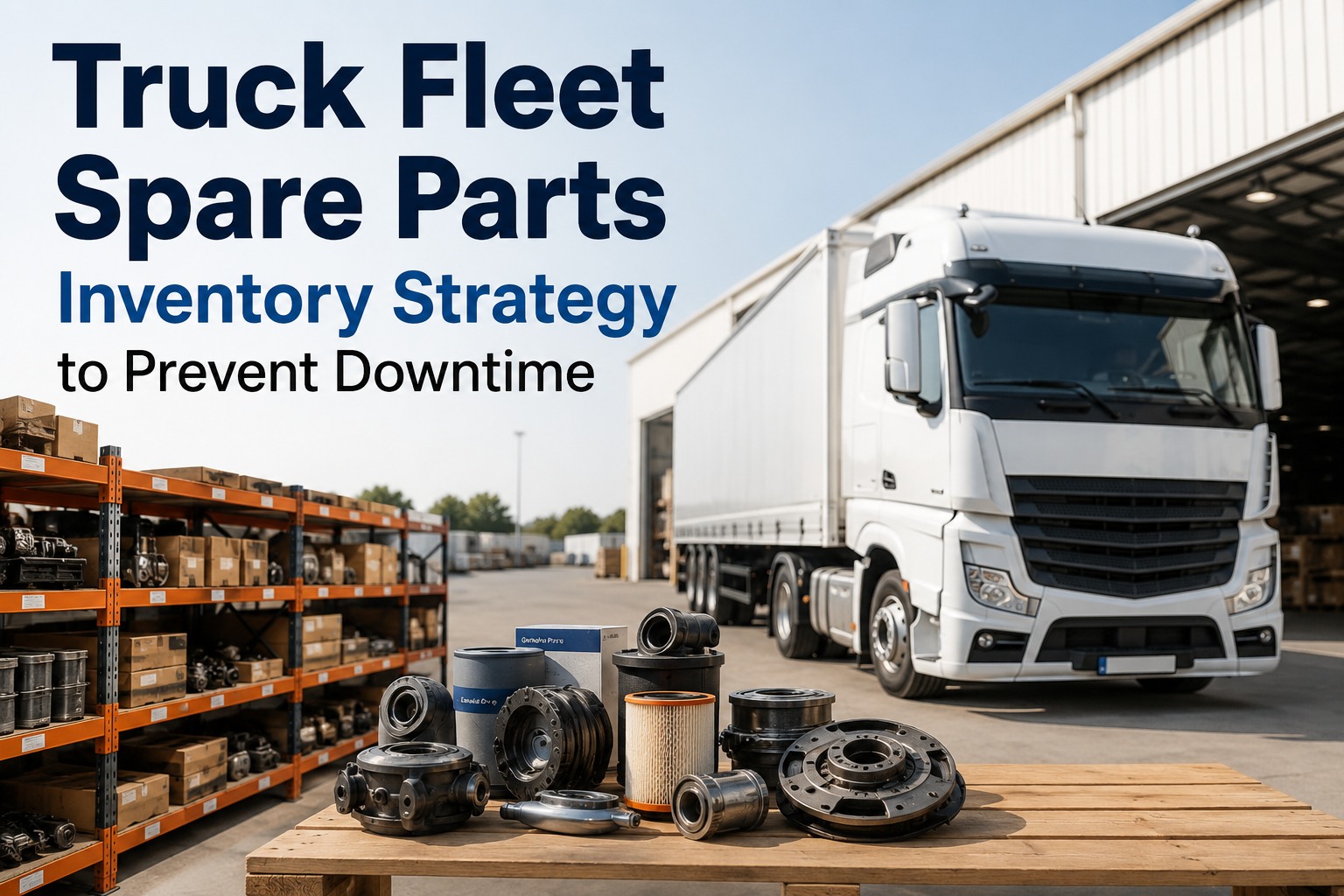
A $40 hydraulic fitting is not a $40 problem when it is missing. The moment a truck needs a part that isn't on the shelf, a 30-minute repair becomes a multi-day wait — emergency shipping at 3–5x cost, overtime labor,...
Read More
Your fleet average is a lie of omission. A blended cost per mile of $2.05 hides the lane bleeding $2.60 and the driver crashing twice as often as the rest. With trucking's marginal cost at a record $1.78 per mile...
Read More
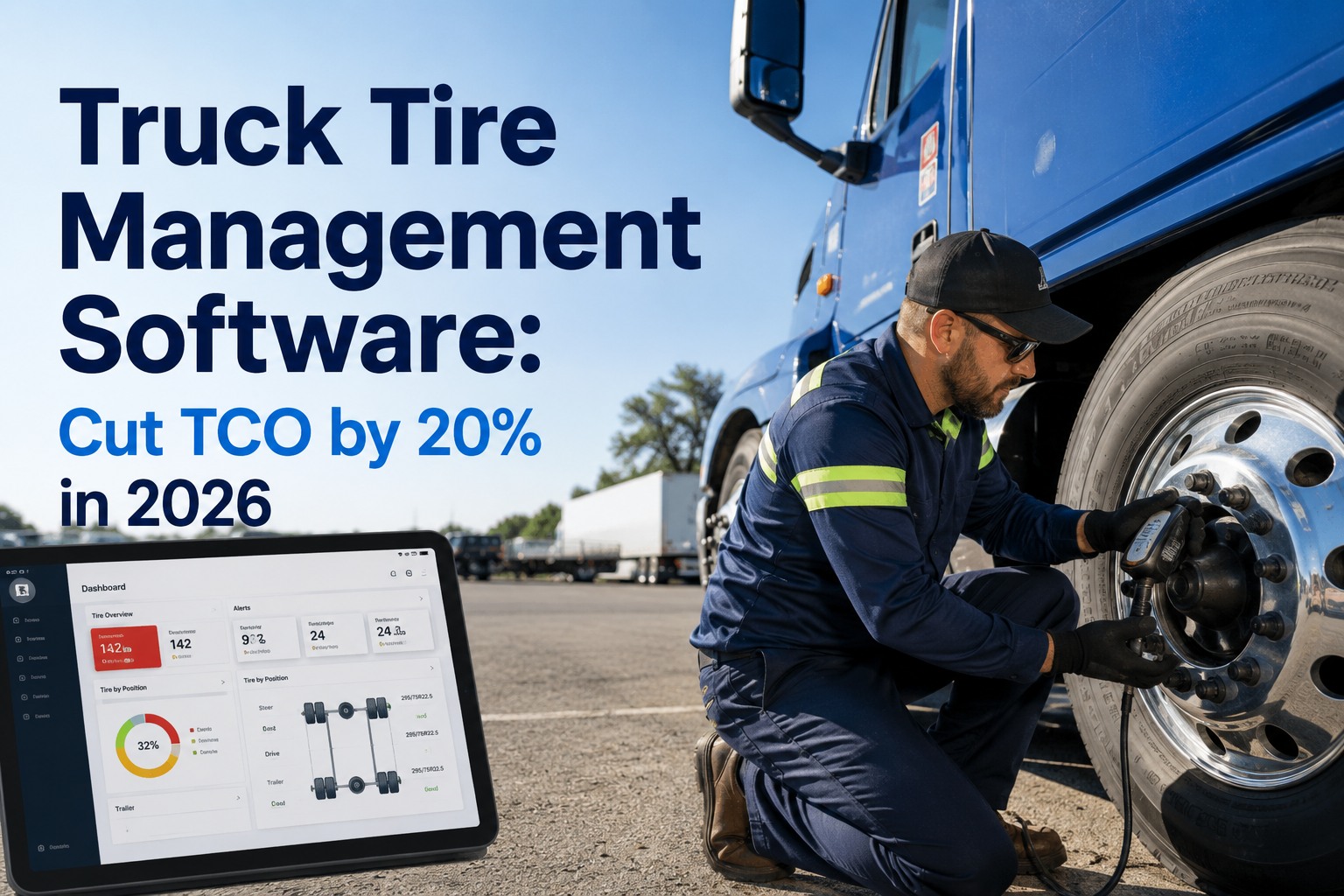
Tires are the single largest variable cost in most fleet budgets — and one of the most mismanaged. A tire running 8 PSI low wears its shoulders 25% faster and burns 3% more fuel on every mile. A casing scrapped...

Read More
A loaded triaxle dump truck can run $220,000 in 2026, and on a busy civil job you might have twenty of them cycling between a cut site and a fill site. When you cannot see where they are, fuel disappears,...

Read More
A DOT audit is not a surprise — it is a records test you already know the questions to. Auditors check the same six factors, flag the same 11 automatic-failure conditions, and send a pass-or-fail notice within 45 days. The...
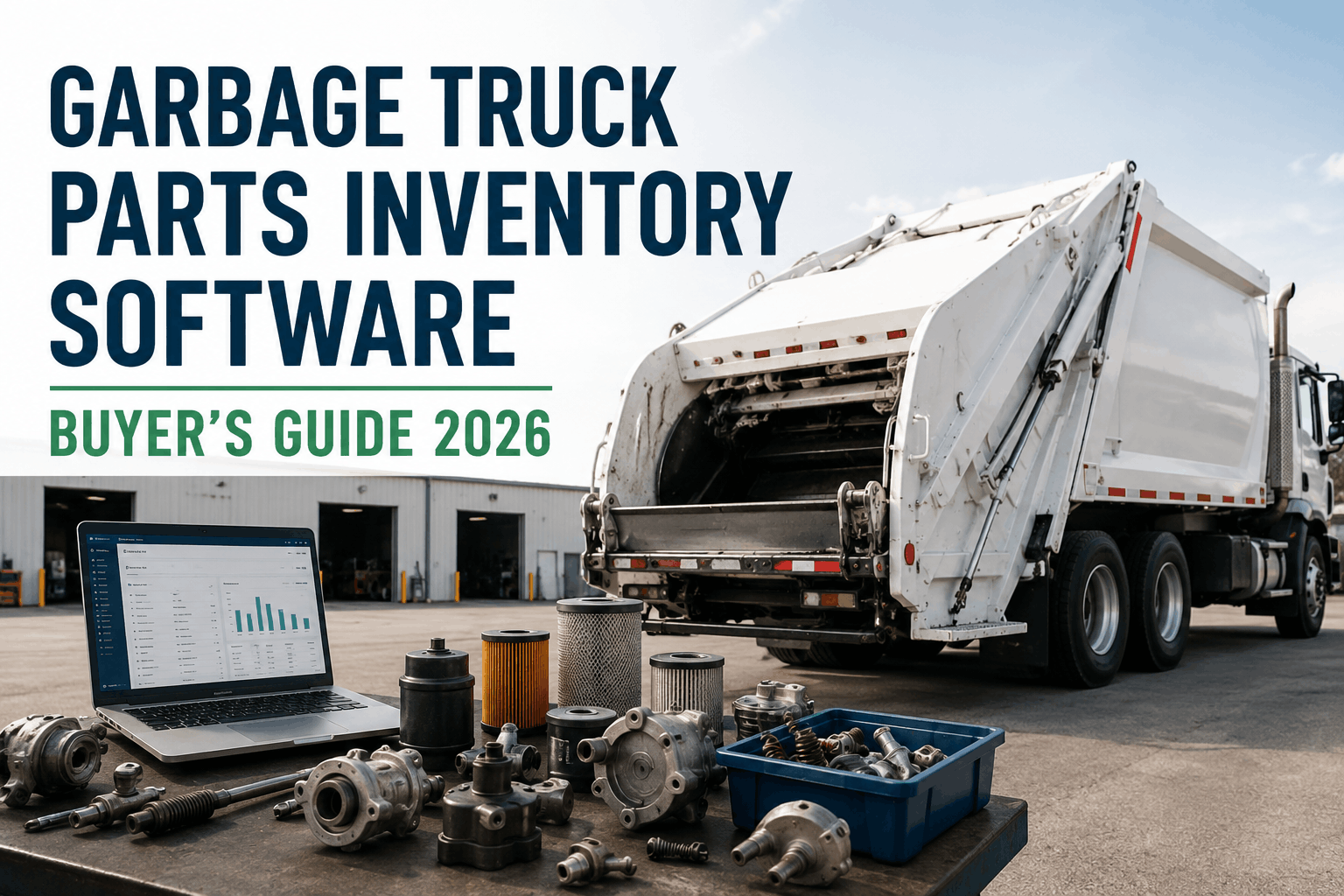
Read More
A garbage truck does not fail like a delivery van. Compactor hydraulics fail at roughly three times the rate of over-the-road systems, packer blades cycle every 30 seconds, and a single hydraulic failure can park a truck mid-route — leaving...

Read More
One worn brake, one cracked marker lamp, one tire below 2/32" — that is all it takes to pull a trailer out of service and stamp points onto your CSA score that linger for 24 months. At the 2025 International...

Read More
Mine haul roads do not forgive paperwork gaps. In 2025, powered haulage became the deadliest category of mining fatalities since 2006 — and MSHA inspectors now treat a missed pre-shift defect record the same way they treat a defective brake....
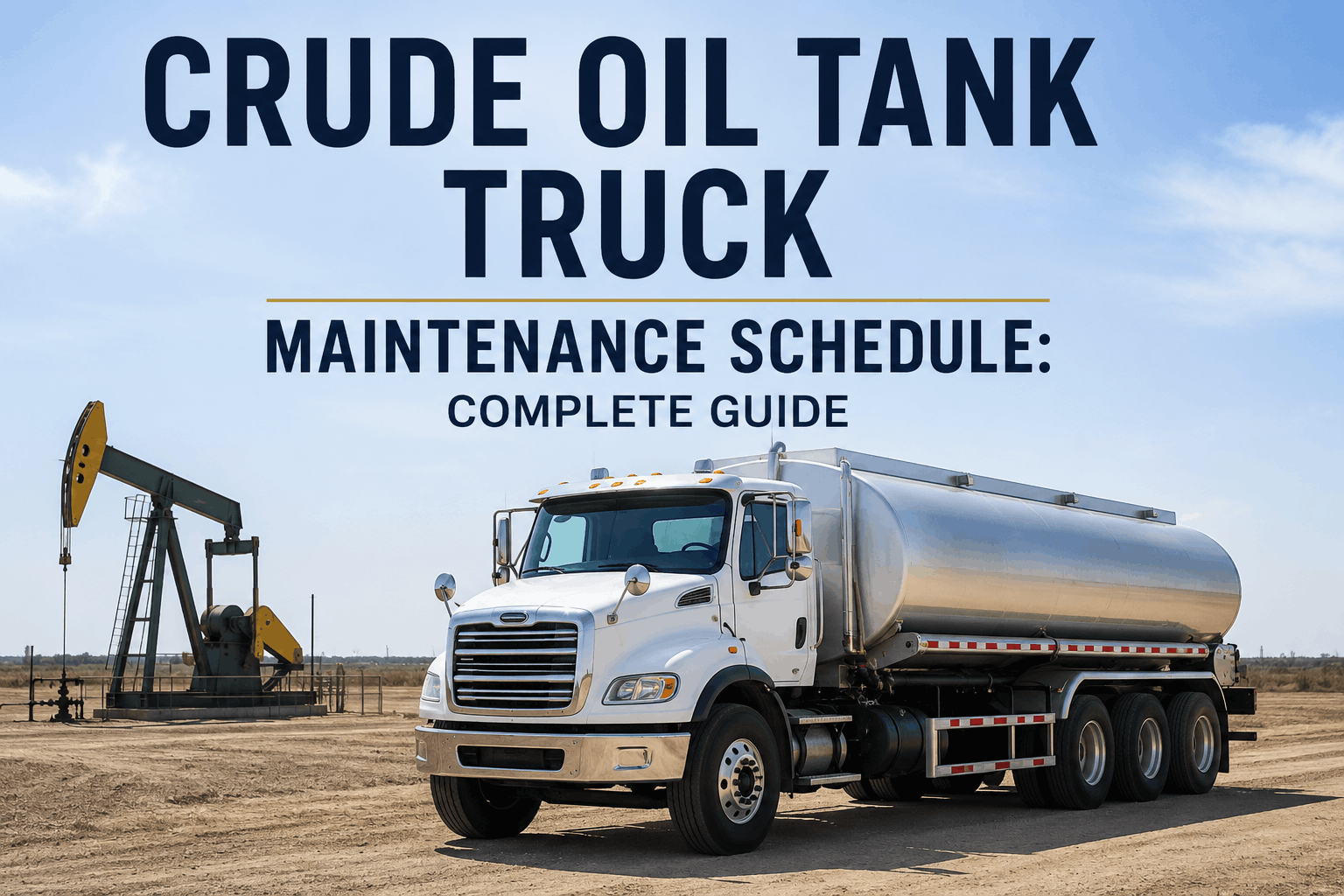
Read More
Crude oil tank truck preventive maintenance operates under a regulatory and operational framework distinct from any other commercial truck category. The combination of DOT 406/407 cargo tank specifications, hazardous materials transportation requirements under 49 CFR Parts 171-180, specialized pump systems...
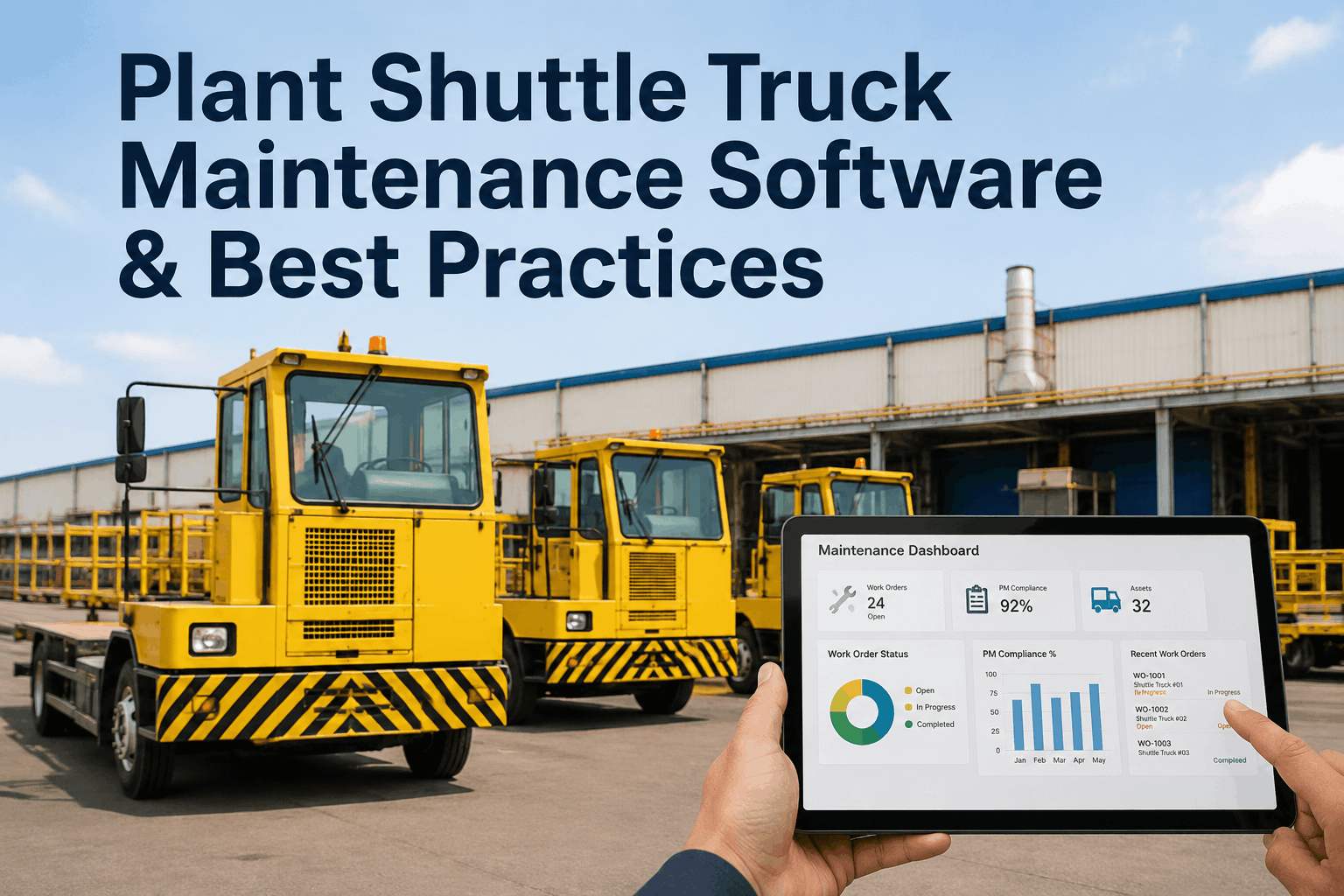
Read More
Plant shuttle trucks — yard tractors, spotters, plant haulers, and between-building delivery vehicles — operate under a different maintenance profile than any other commercial truck category. The combination of continuous 8-24 hour daily operation, high-cycle trailer hookup activity (50-200+ daily...
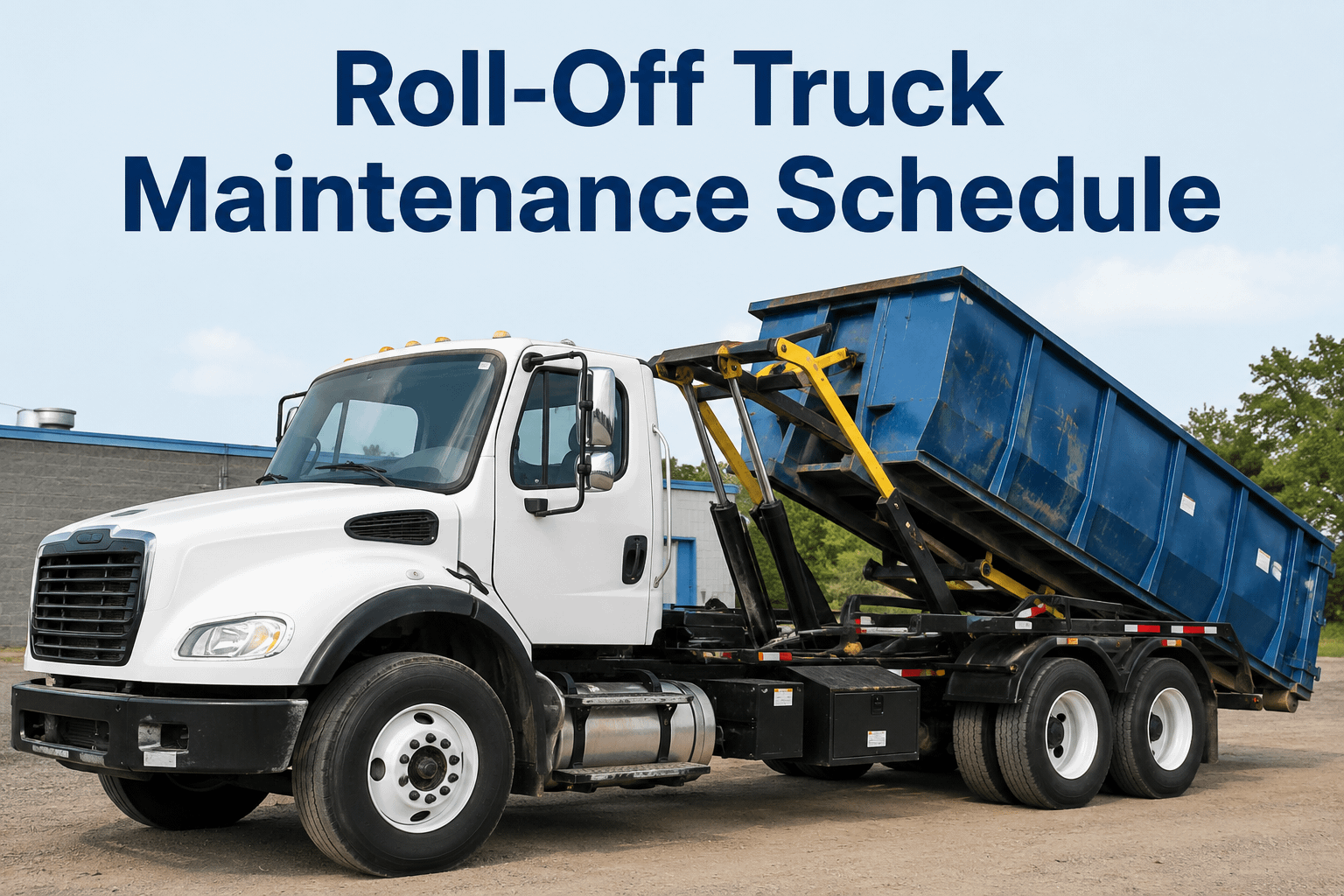
Read More
Roll-off truck preventive maintenance operates on a different framework than any other commercial vehicle. The combination of heavy chassis (Class 7-8 typically), PTO-driven hydraulic systems, specialized hoist mechanisms (cable hoist or hook lift), sub-frame mounting, container hold-downs, and tarp systems...
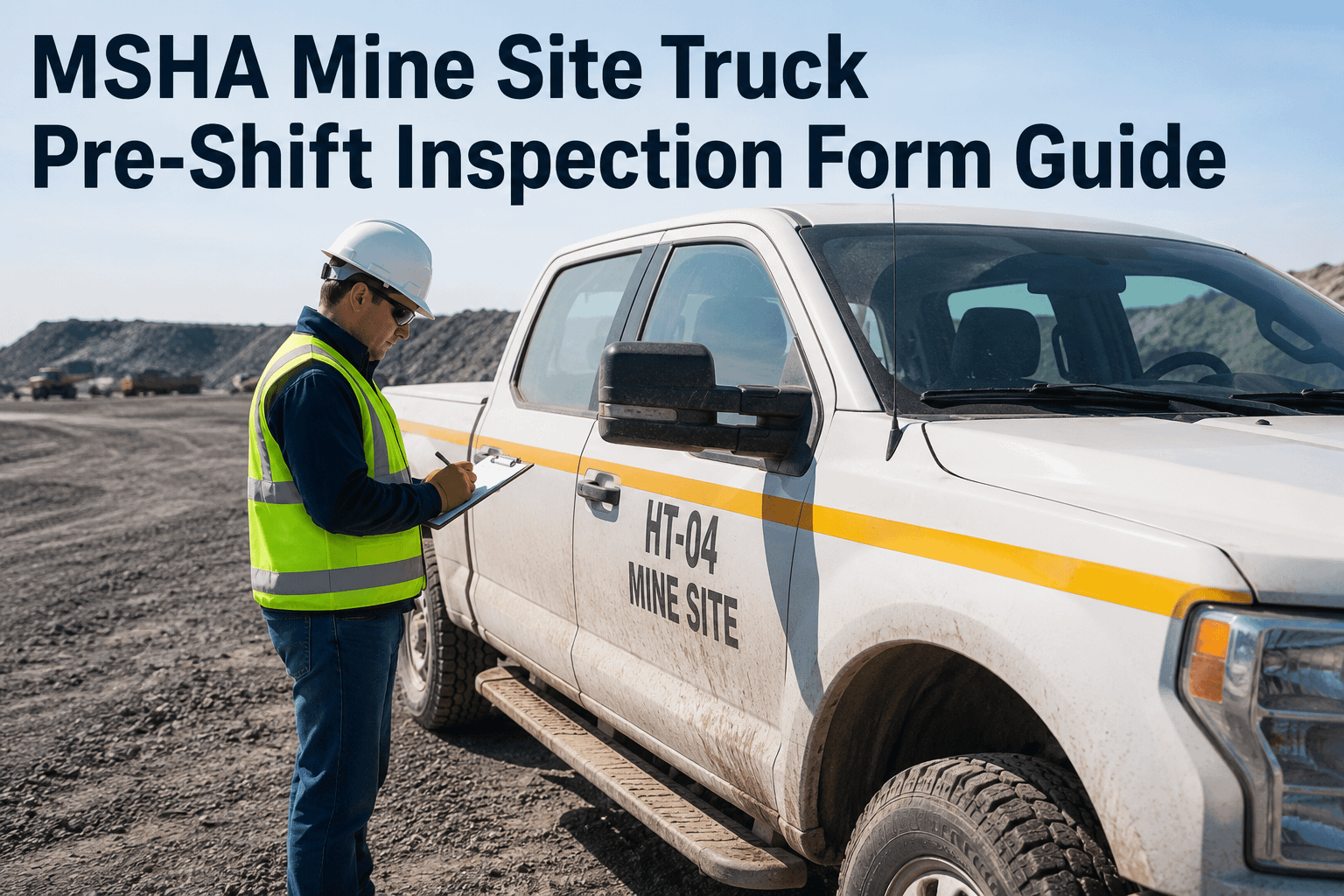
Read More
MSHA pre-shift truck inspections operate under a different regulatory framework than FMCSA DVIRs — same vehicles, different rules, separate penalty systems. Mining operations need a pre-shift template that satisfies 30 CFR §56.14100 (surface metal/non-metal), §57.14100 (underground metal/non-metal), §77.1606 (surface coal),...
Read More
An ELD is mandatory equipment for most commercial drivers — but "mandatory" doesn't mean "all the same." Every certified device clears the same FMCSA bar, so certification is the floor, not the differentiator. What actually separates a good ELD from...
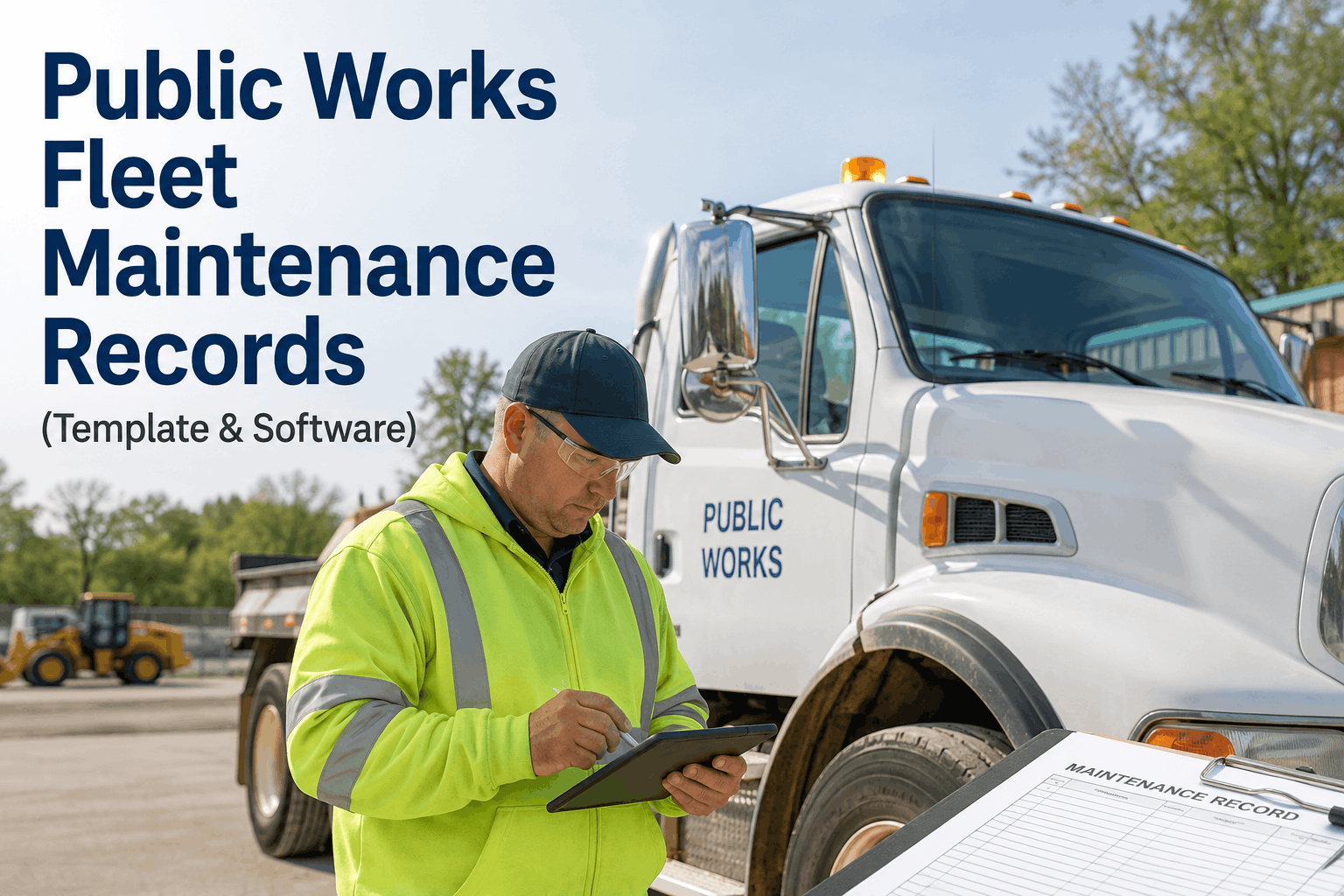
Read More
Public works fleet maintenance records occupy a regulatory and operational space distinct from both commercial trucking and other government operations. The vehicles themselves carry the same FMCSA recordkeeping obligations as any commercial motor vehicle — §396.3 systematic maintenance records, §396.17...

Read More
Farm truck DOT exemptions exist in a regulatory gray zone that catches many agricultural operators off guard — exemptions are real and substantial, but their boundaries are precise and the penalties for misunderstanding them are severe. The core framework is...

Read More
Reefer truck preventive maintenance differs from reefer trailer PM in ways that operations managers often discover only after deploying generic templates that don't fit. A reefer truck is a straight truck (Class 4-7 typically) with an integrated refrigerated body and...
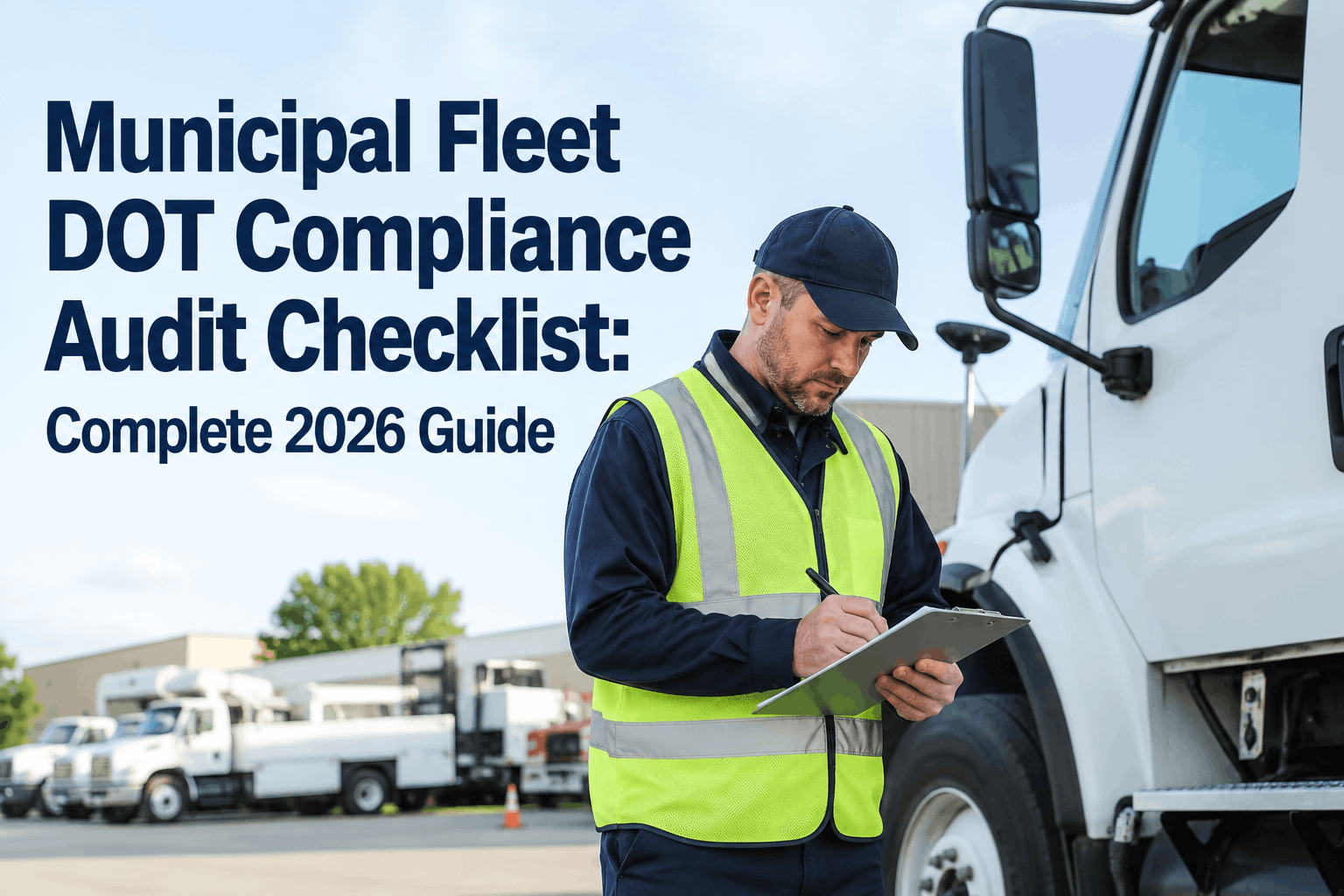
Read More
Municipal and government fleet DOT compliance occupies a distinct space in the FMCSA regulatory landscape — one that combines all the obligations of commercial fleet operations with several public sector complications that commercial carriers don't face. Public works, sanitation, water...

Read More
DVIR apps for delivery vans and box trucks operate in a distinct space within commercial fleet software — one shaped by last-mile delivery economics that differ fundamentally from over-the-road trucking. Delivery drivers face 100-150 stops per shift, work under tight...

Read More
DOT compliance software has shifted from "operational convenience" to "operational requirement" for commercial trucking fleets in 2026. The regulatory environment that emerged through 2025 made paper-based compliance functionally impossible for any meaningful fleet operation: the eDVIR Final Rule (effective March...

Read More
Mining service truck downtime carries a cost structure most fleet managers from highway operations find difficult to comprehend. A water truck on dust suppression duty doesn't just affect itself — when the water truck stops, haul roads become unsafe within...
Read More
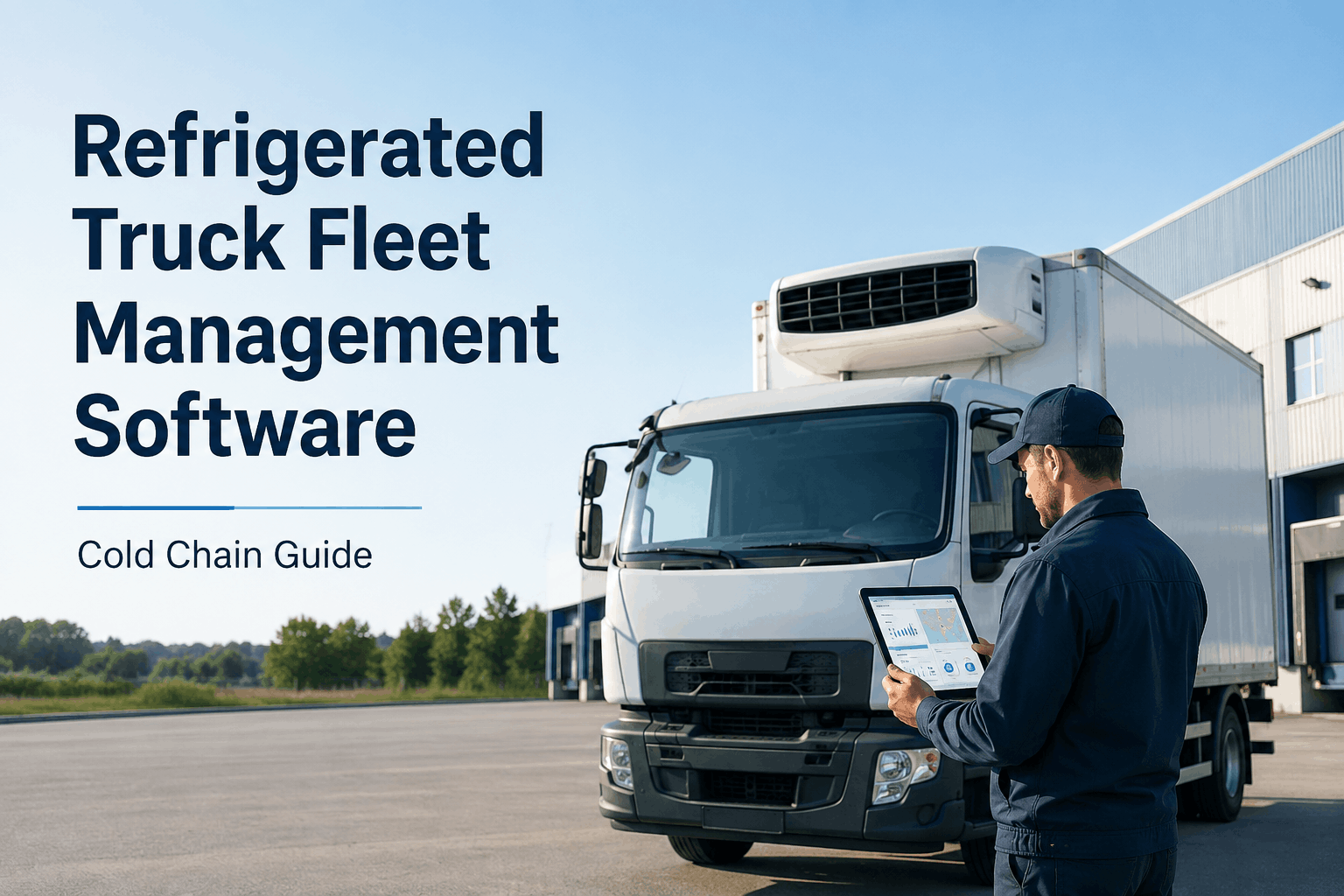
Choosing refrigerated truck fleet management software is structurally different from choosing generic fleet software — and most reefer operators discover this after deploying a generic platform that fails on the features that actually matter for cold chain operations. Generic fleet...
Read More
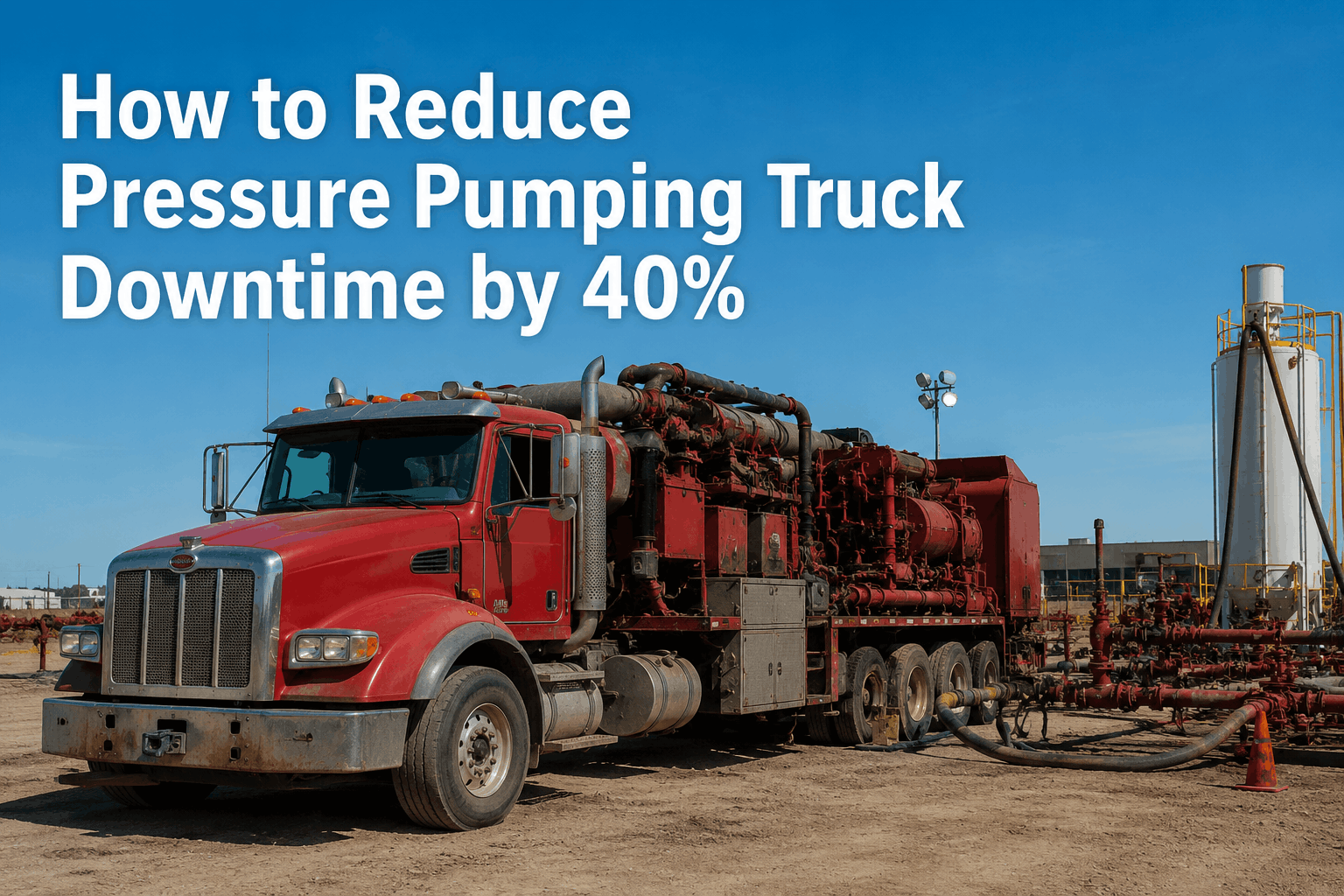
Pressure pumping truck downtime is the most expensive equipment failure mode in the commercial trucking world — and it isn't close. A pressure pumping unit (often called a frac truck) is a $1.5M-$3M+ self-contained pumping system: a 2,500-3,000 hp diesel...
Read More
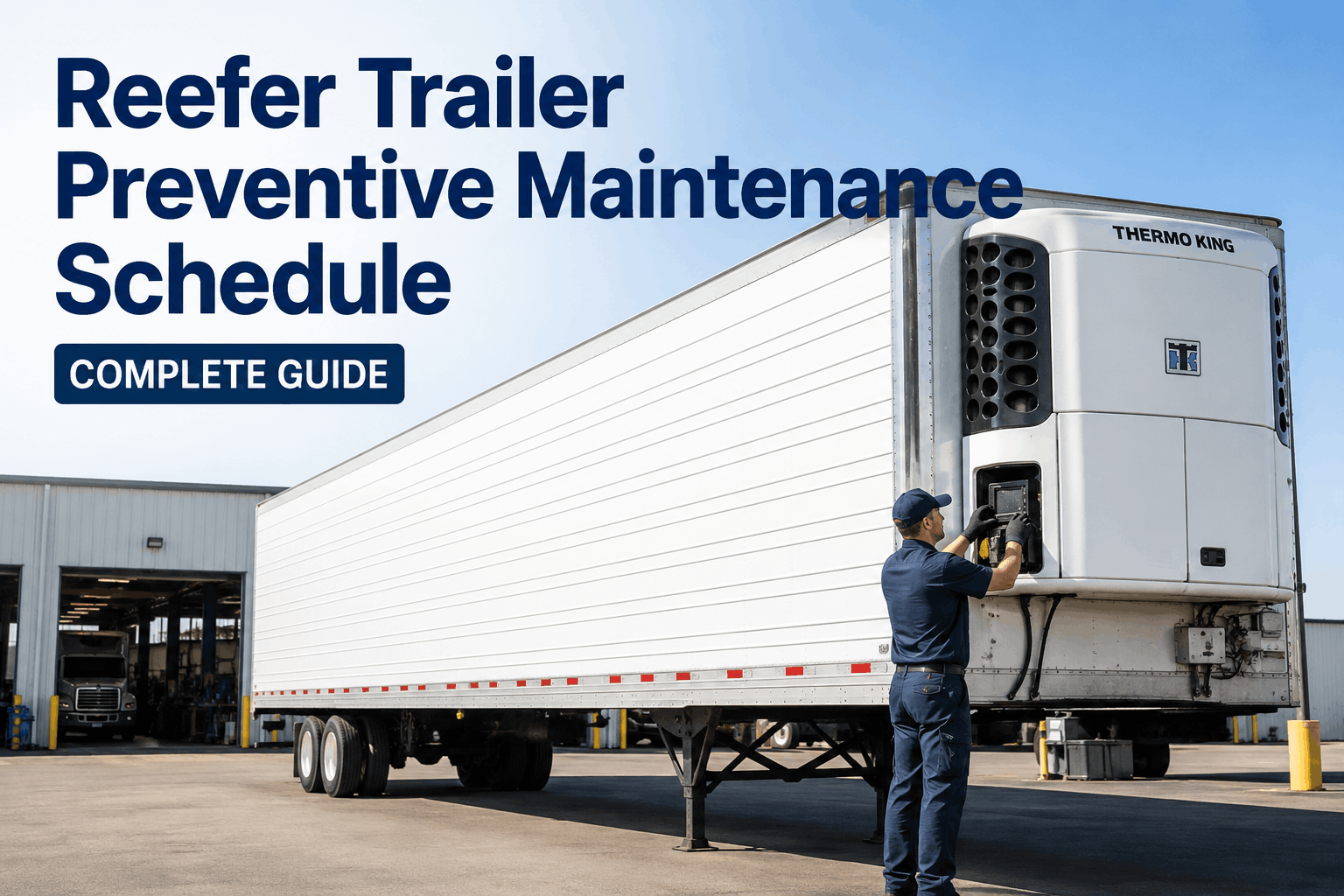
Reefer trailer maintenance occupies a uniquely high-stakes operational space — failure modes that on a dry-van trailer produce inconvenience produce six-figure cargo loss on a refrigerated trailer. A failed compressor on a loaded reefer destroys $50,000-$500,000+ of perishable cargo. A...
Read More
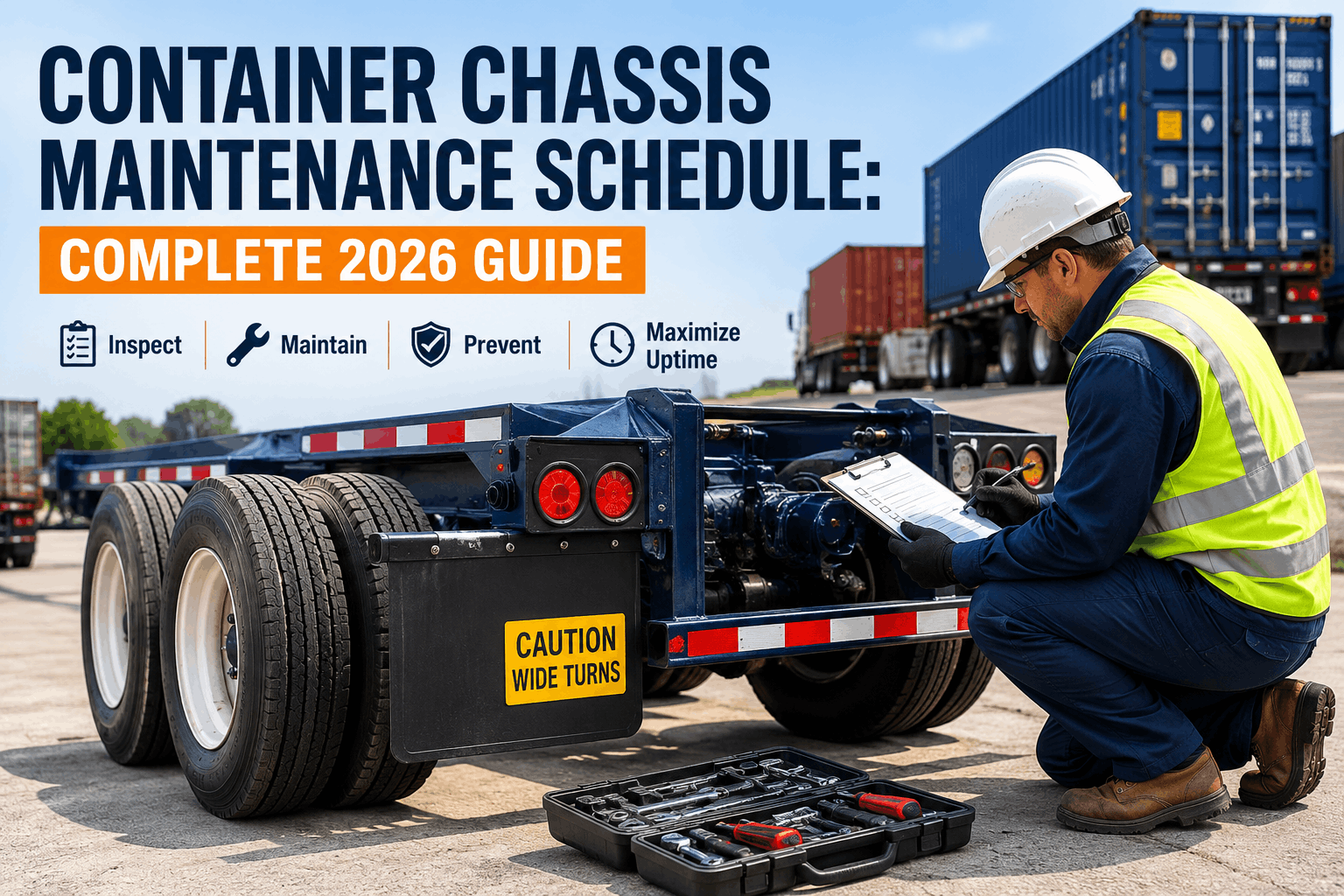
Container chassis maintenance occupies a unique regulatory and operational space that even experienced fleet managers commonly underestimate. Unlike tractors, chassis are governed by a separate FMCSA regulatory framework — Intermodal Equipment Provider (IEP) regulations under 49 CFR Part 385 Subpart...
Read More
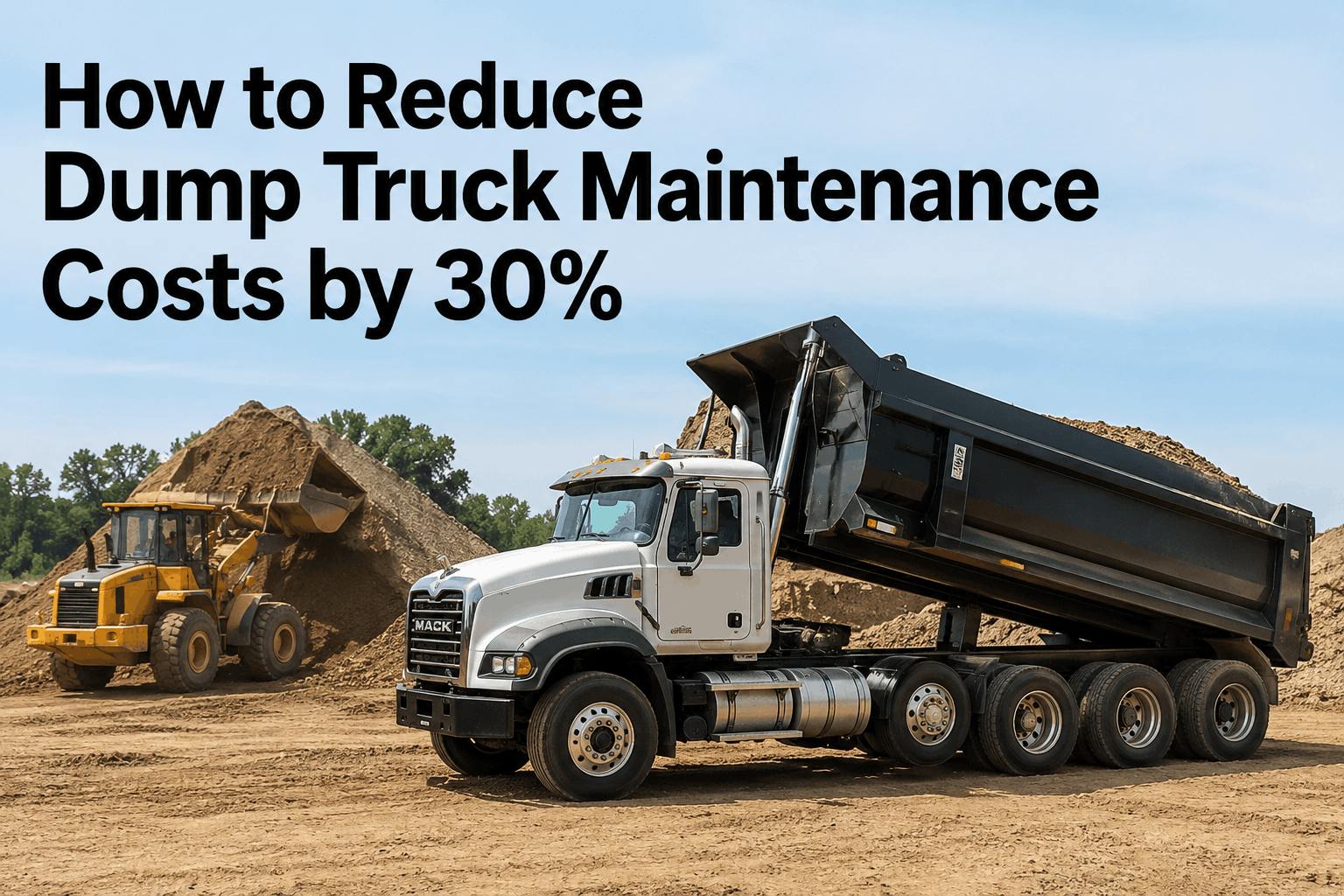
Dump truck operations cost more to maintain than any other Class 8 application — and the gap isn't small. Where linehaul trucks operate at OEM-published PM intervals, dump trucks need PM intervals reduced 30-50% to handle the severe-duty cycle: heavy...
Read More
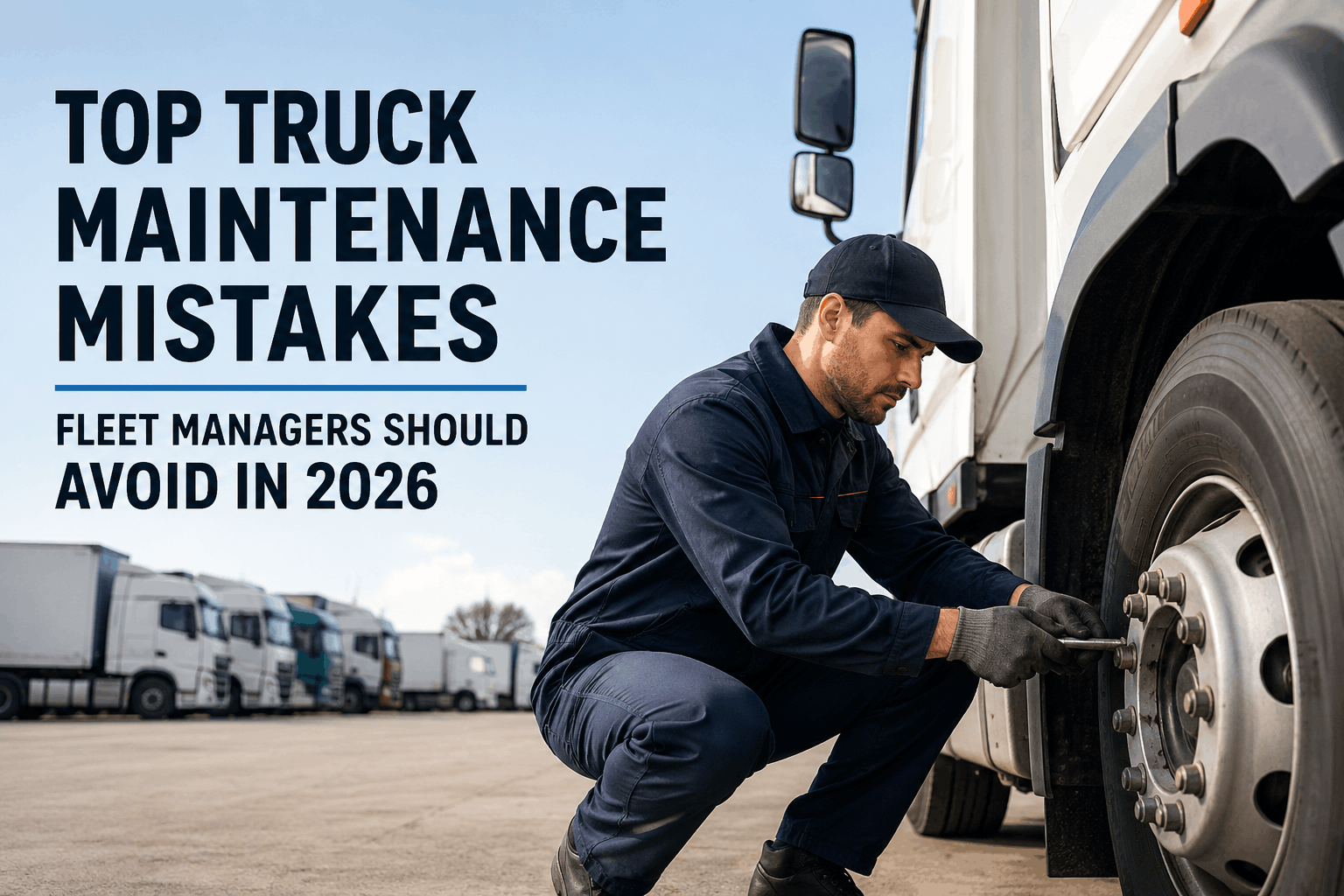
The fleets that consistently outperform the industry aren't doing radically different things — they're avoiding the same 8 mistakes that quietly compound across reactive-maintenance fleets. Each mistake individually seems small: a single skipped PM, one undocumented pre-trip, a defect reported...
Read More
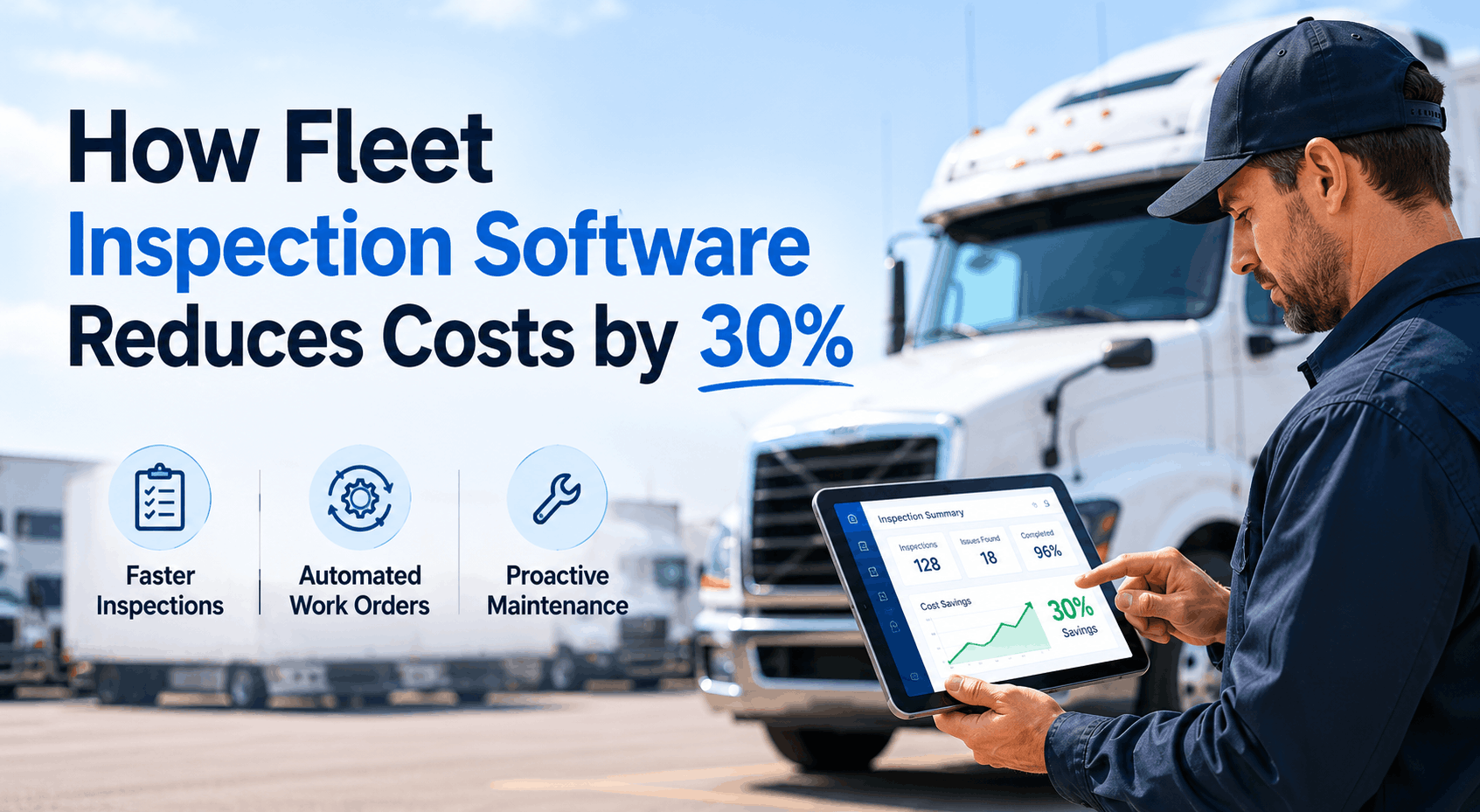
The 30% fleet cost reduction documented in industry case studies isn't marketing language — it's the cumulative output of six specific cost-reduction mechanisms that compound when fleet inspection software replaces paper-based or spreadsheet-based maintenance workflows. The mechanisms are individually unremarkable:...
Read More
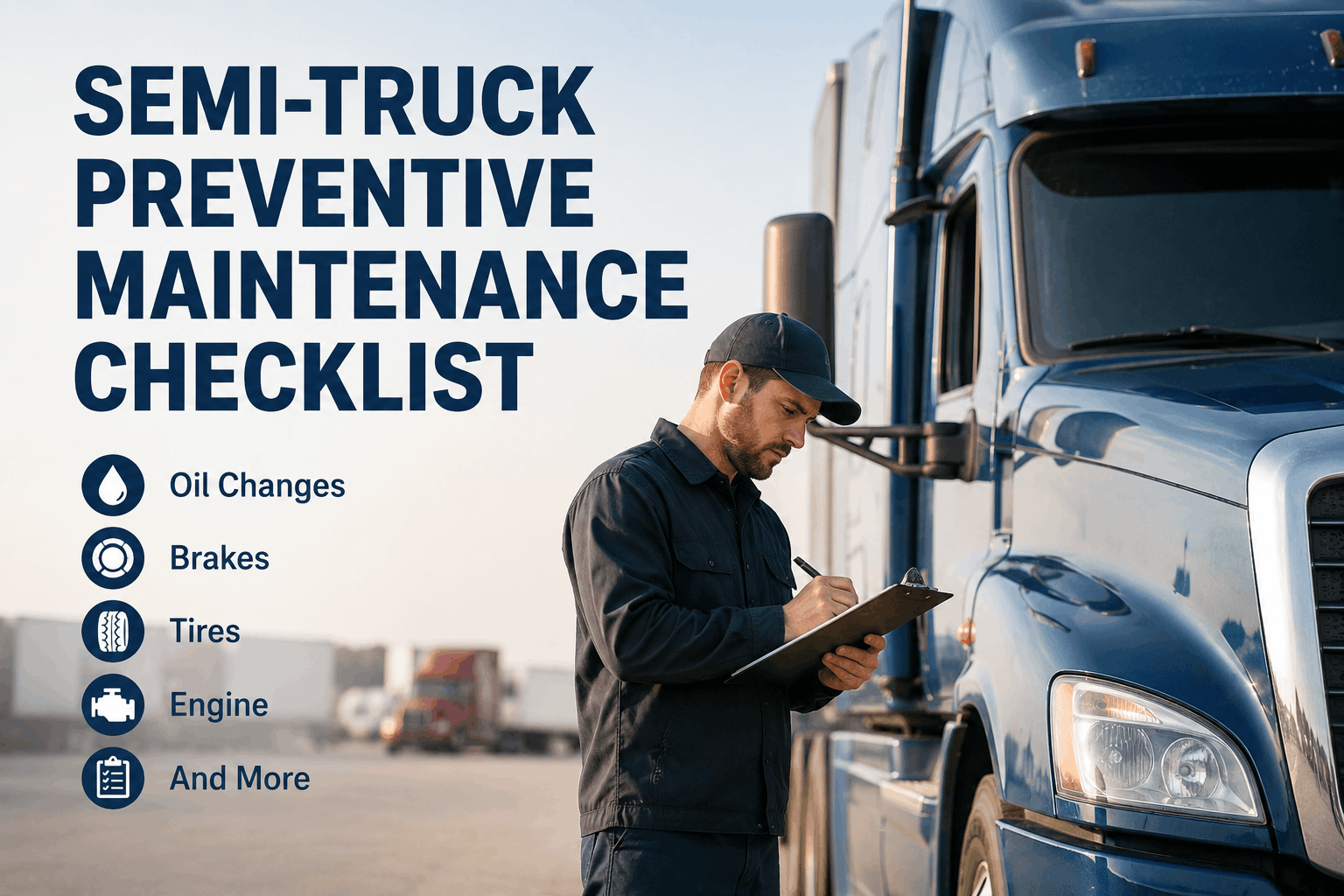
Preventive maintenance is the single highest-ROI activity in commercial fleet operations — and also the most commonly mis-executed. Industry data consistently shows fleets running structured PM programs report 20-30% reductions in total maintenance cost, 89% reduction in unplanned breakdowns, and...
Read More
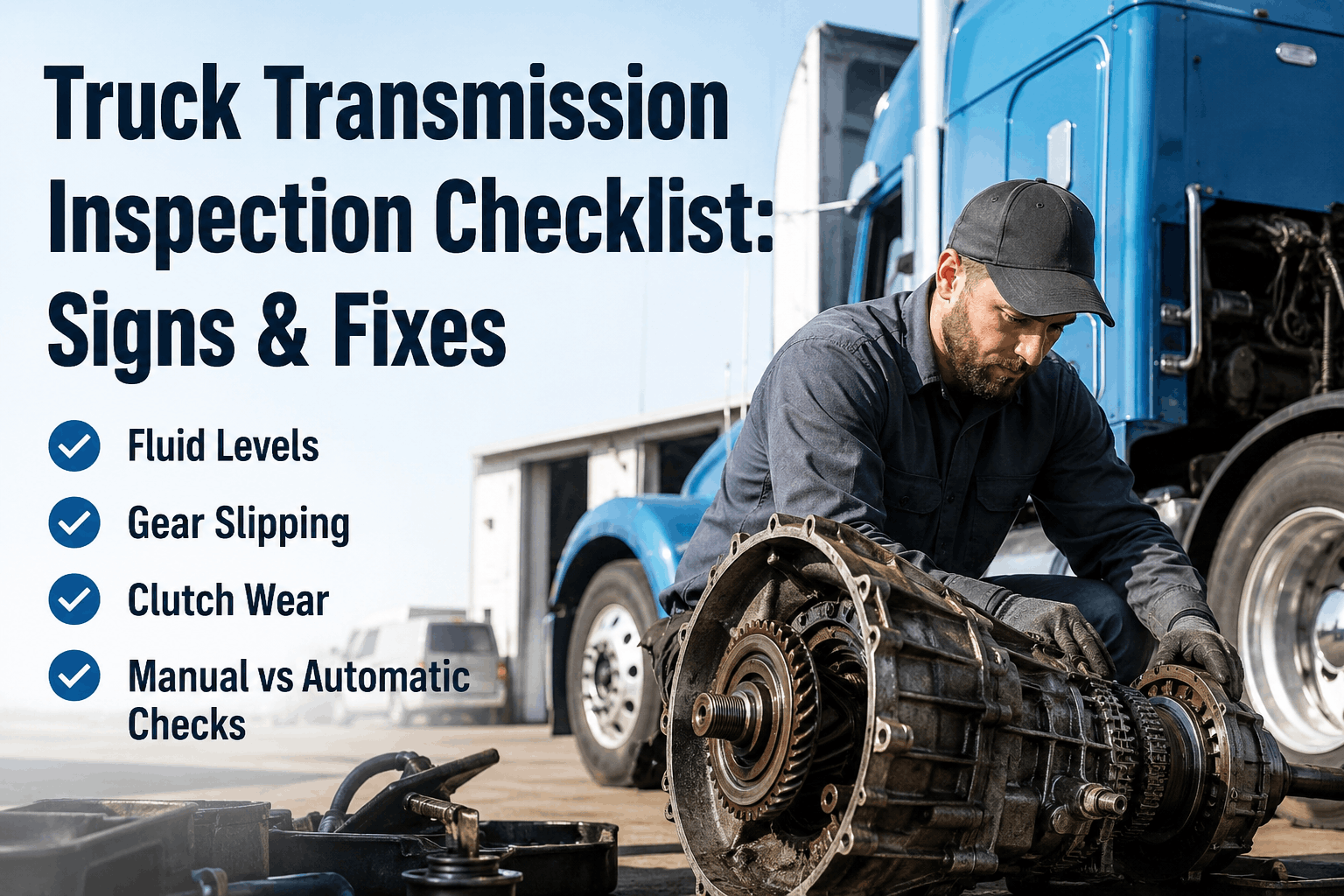
The truck transmission inspection that catches problems early costs $400 in fluid and filter. The transmission inspection that misses problems costs $5,000-$20,000 in rebuild or replacement — and the gap between these two outcomes is the difference between disciplined inspection...

Read More
Truck cab climate control occupies an unusual position in commercial fleet operations: it's simultaneously a driver wellbeing system, a federal safety compliance item, and a heavily EPA-regulated service category — and fleet managers commonly confuse which rules apply to which...

Read More
Cold weather doesn't just slow trucks down — it actively attacks them. Diesel fuel begins gelling at 15°F as paraffin crystallizes in fuel lines and filters. DEF (Diesel Exhaust Fluid) freezes solid at 12°F since it's 67.5% water by composition....

Read More
The question "how often should a commercial truck be inspected" doesn't have a single answer — and that's the problem most fleet managers face when building their compliance program. FMCSA requires inspections at multiple cadences simultaneously: pre-trip every day before...
Read More
The first question every FMCSA auditor asks: produce these specific records, right now. The 48-hour window between an audit notice and the deadline to deliver complete records is when fleets discover whether their compliance program actually works. And the answer...

Read More
The fleet maintenance software market in 2026 has crossed an inflection point. Over 200 platforms now compete for fleet operators making the paper-to-digital transition or replacing first-generation systems they've outgrown — and most look almost identical during a 30-minute demo....
Read More
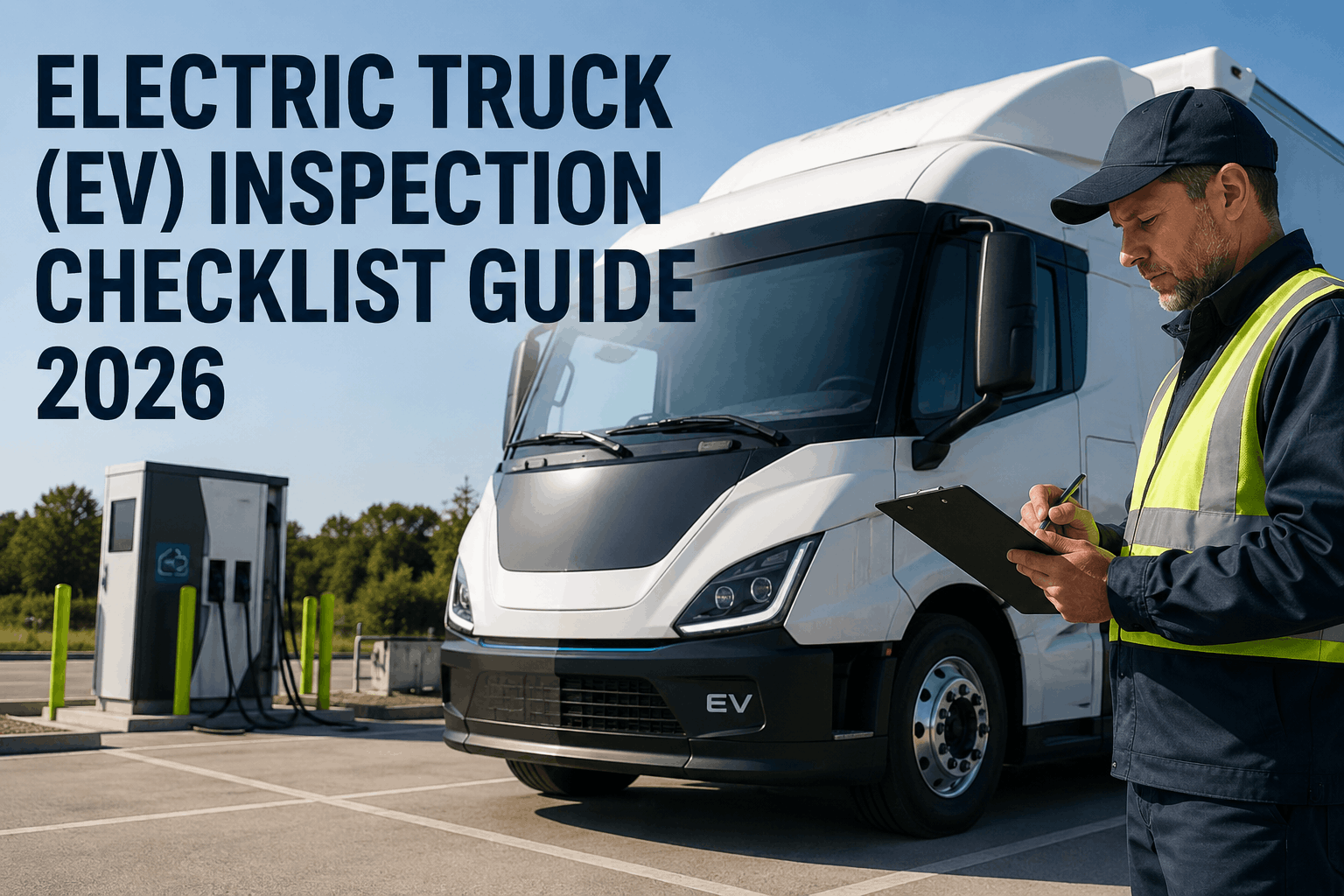
Electric truck inspection in 2026 isn't simpler than diesel inspection — it's different. The items that disappear with electrification (engine oil, transmission fluid, belts, exhaust system, fuel system, aftertreatment) get replaced by items that didn't previously exist: high-voltage battery State...
Read More
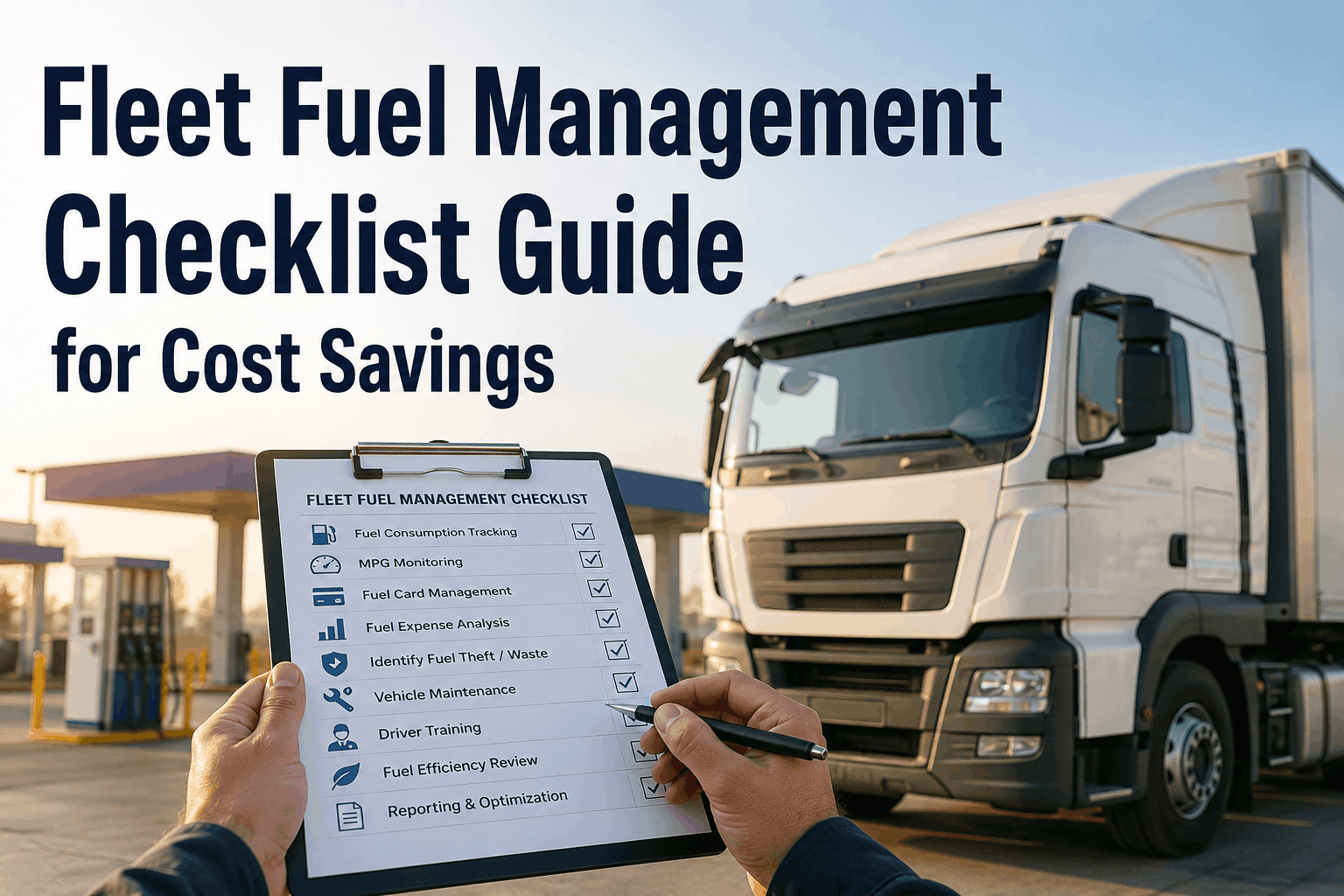
Fuel is the single largest variable cost in commercial fleet operations — typically running 30-40% of total operating expense for over-the-road trucking and growing as a percentage in fleets running heavy idle hours. And it's the cost category where the...
Read More
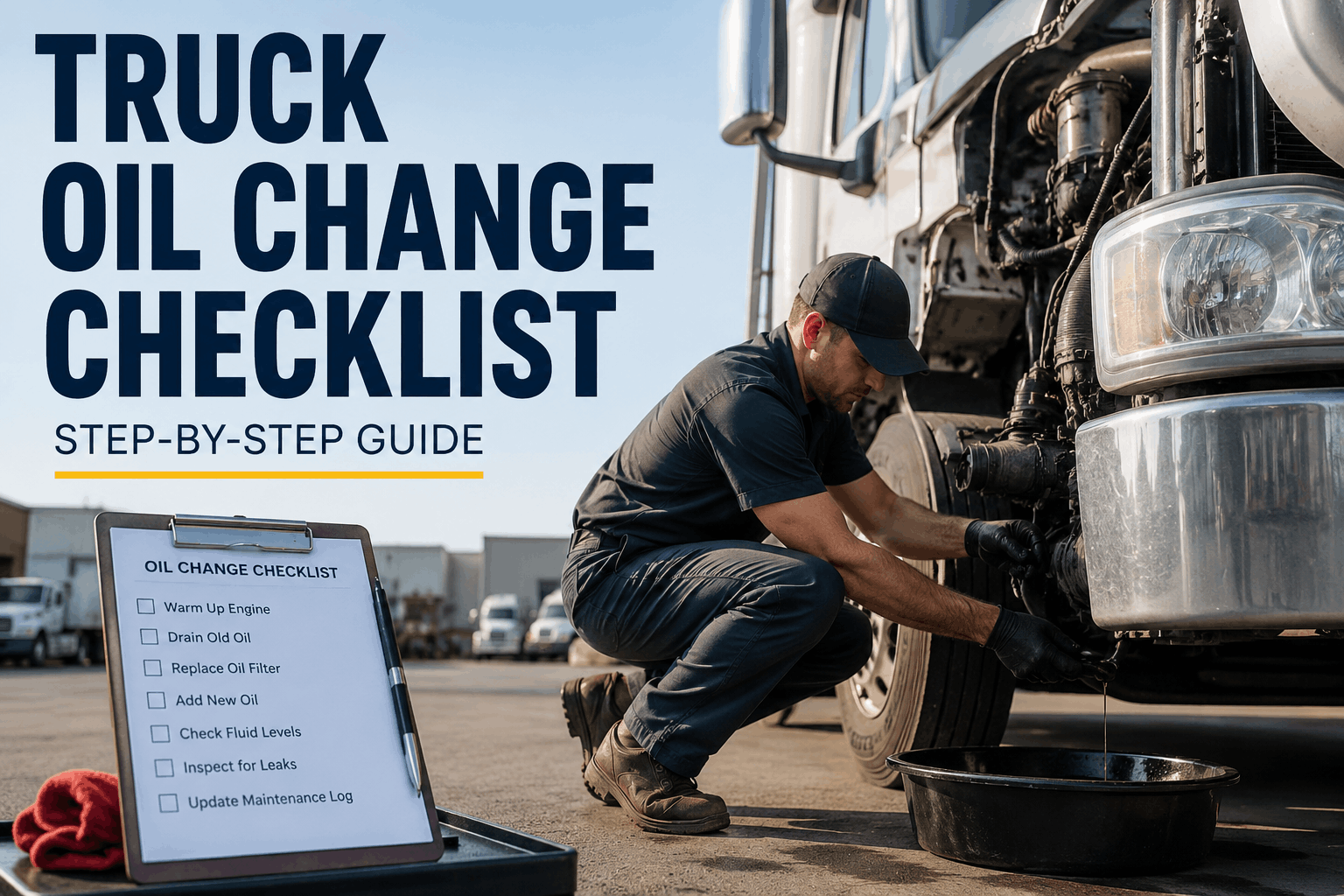
Engine oil is the single most consequential consumable in any commercial diesel fleet. Get the change interval and procedure right and a well-maintained Class 8 truck routinely reaches 500,000+ miles before major engine work; get it wrong and you're looking...

Read More
The truck inspection app market has evolved rapidly through 2025-2026, transforming what used to be a paper-clipboard chore into a 5-12 minute mobile workflow that captures photo evidence, GPS timestamps, and digital signatures while routing defects directly into the maintenance...

Read More
Fleet electrification in 2026 has crossed the line from pilot program to operational decision. DHL, UPS, and FedEx have committed to a combined 20,000 electric delivery trucks by year-end, fleets running battery-electric operations are reporting 25-40% reductions in fuel and...

Read More
Fleet electrification in 2026 has crossed the line from pilot program to operational decision. DHL, UPS, and FedEx have committed to a combined 20,000 electric delivery trucks by year-end, fleets running battery-electric operations are reporting 25-40% reductions in fuel and...

Read More
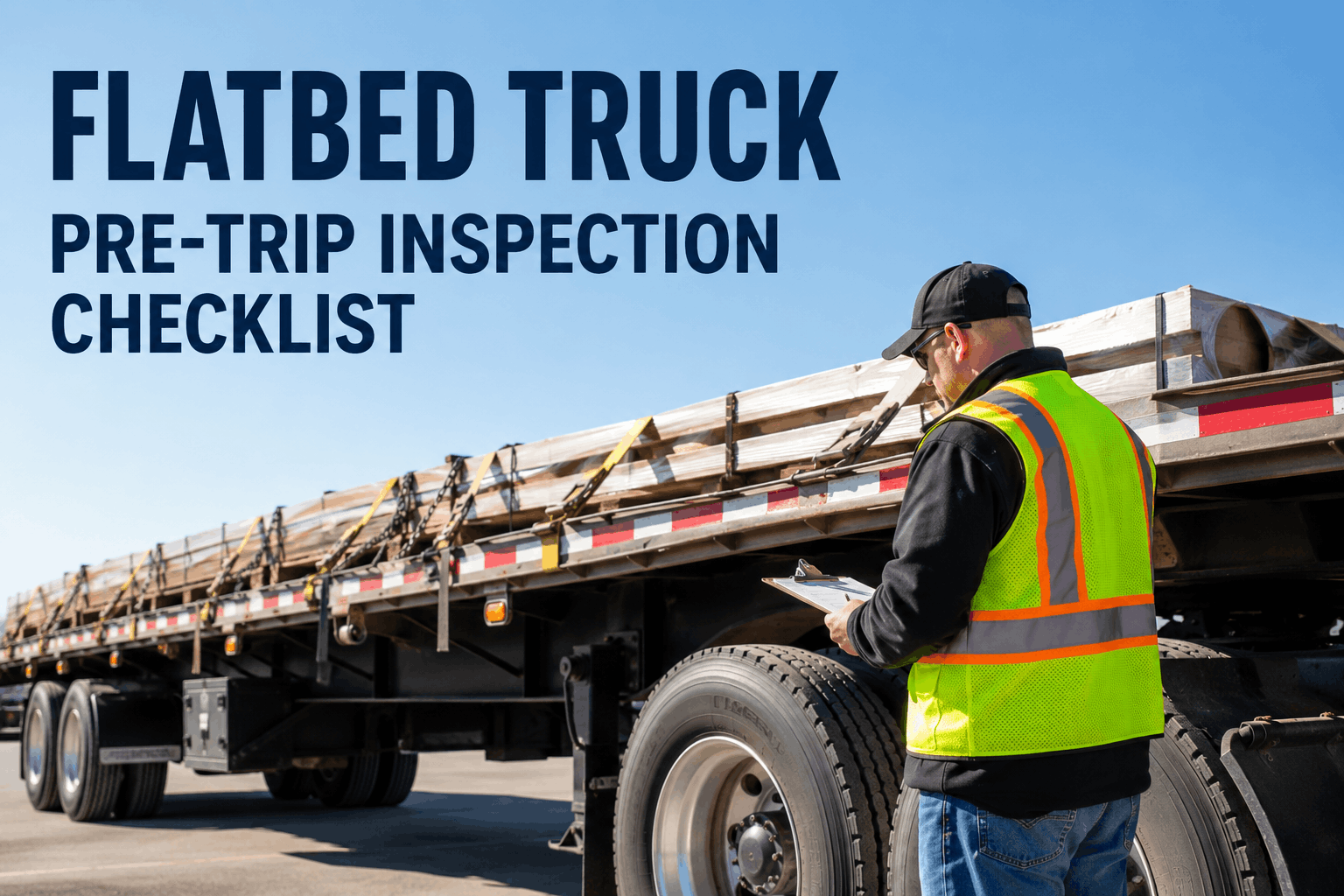
The single most common reason a commercial truck gets pulled out of service at a roadside inspection is a defect that should have been caught before the truck ever left the yard — a brake out of adjustment, a burned-out...
Read More
Flatbed trucking carries a compliance burden no enclosed trailer faces: the load is exposed, the securement is visible to every passing inspector, and a single shifted strap can put a vehicle out of service on the spot. FMCSA cargo securement...
Read More
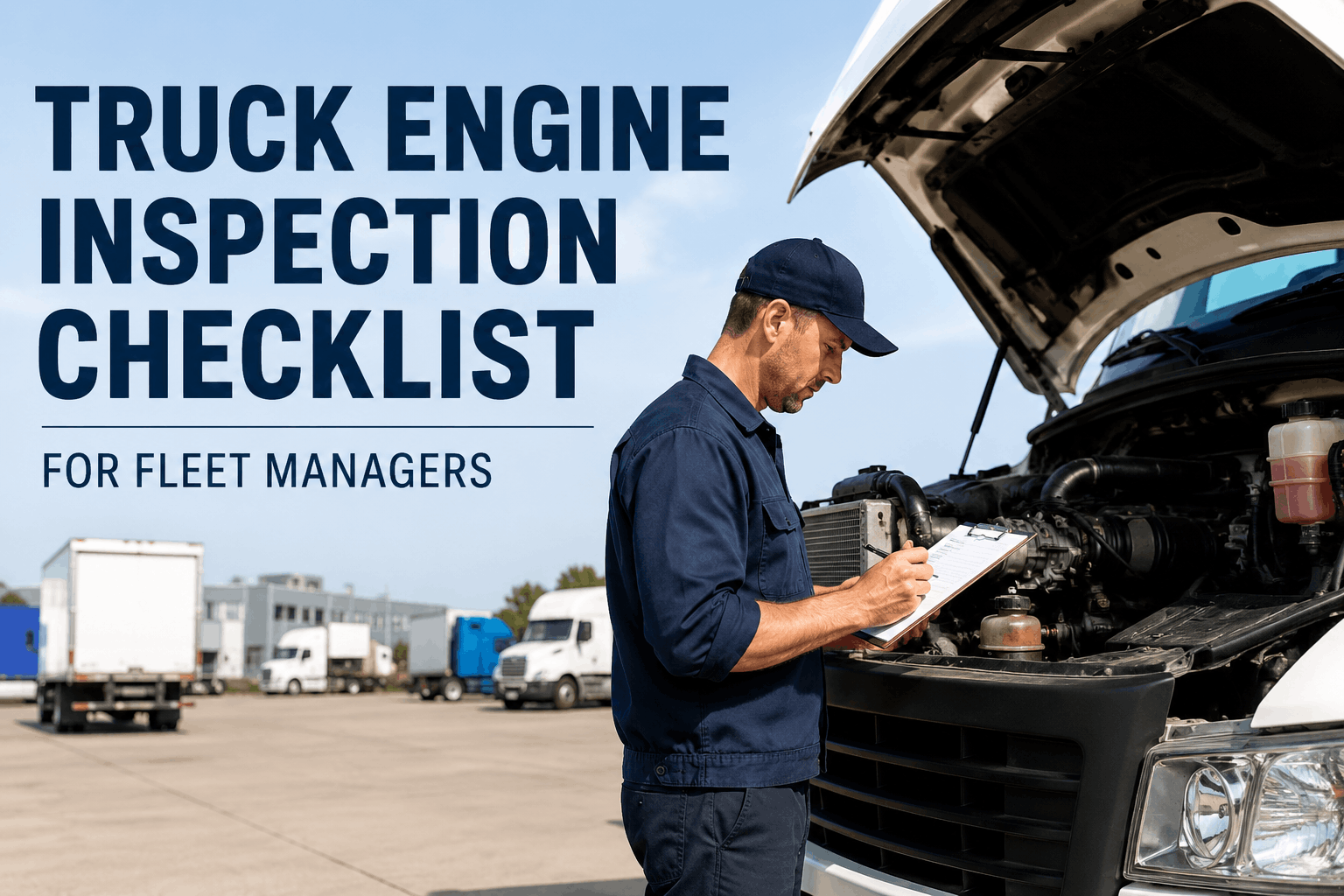
The engine is the single most expensive component on a commercial truck to replace — a diesel engine rebuild runs $25,000-$45,000, and a complete replacement can exceed $50,000 once labor and downtime are factored in. Yet the failures that destroy...
Read More
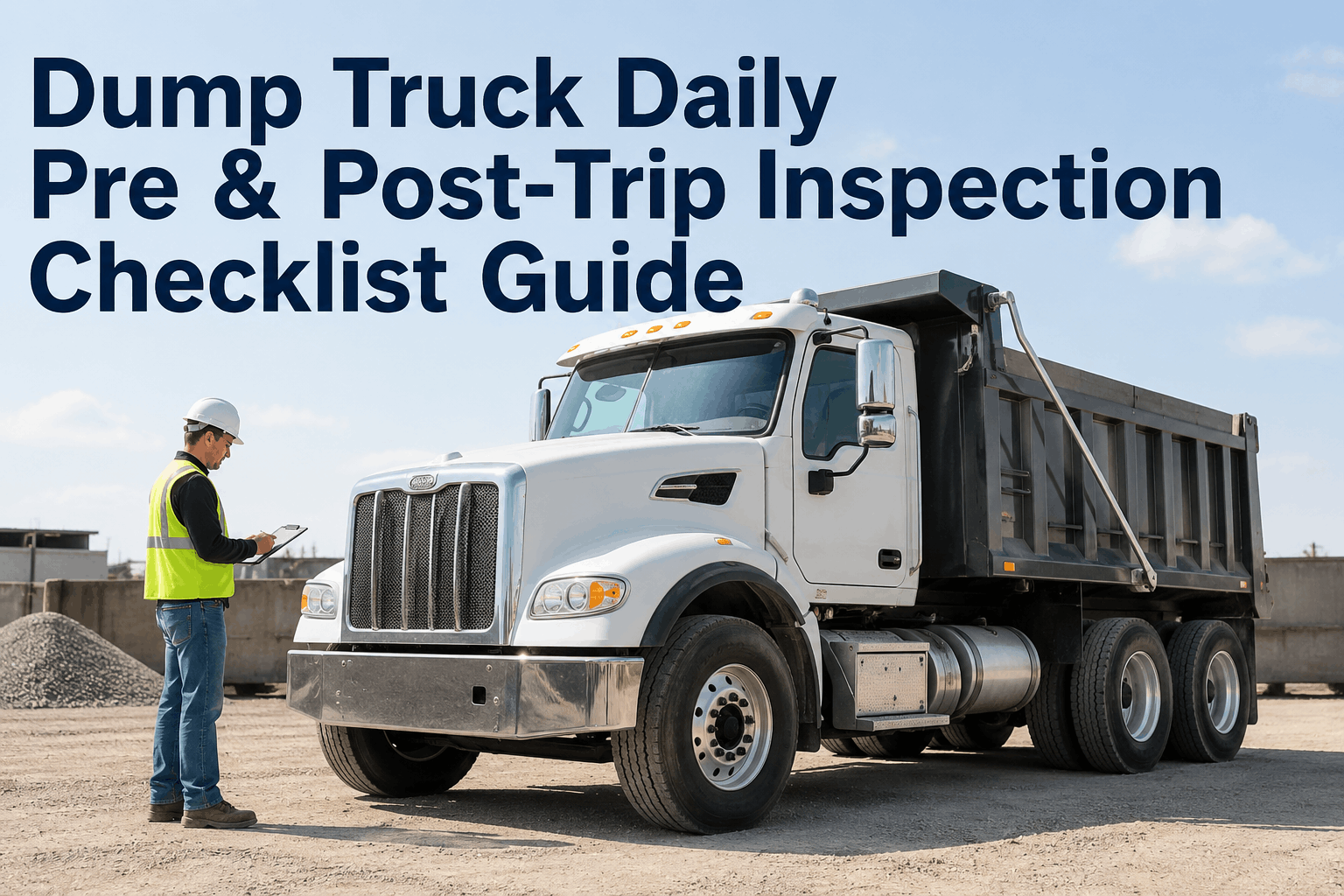
A dump truck is the only commercial vehicle that combines highway-speed operation with a hydraulically lifted bod capable of weighing 30,000+ pounds when loaded — which means the failure modes are unique and the consequences are severe. A burst hydraulic...
Read More
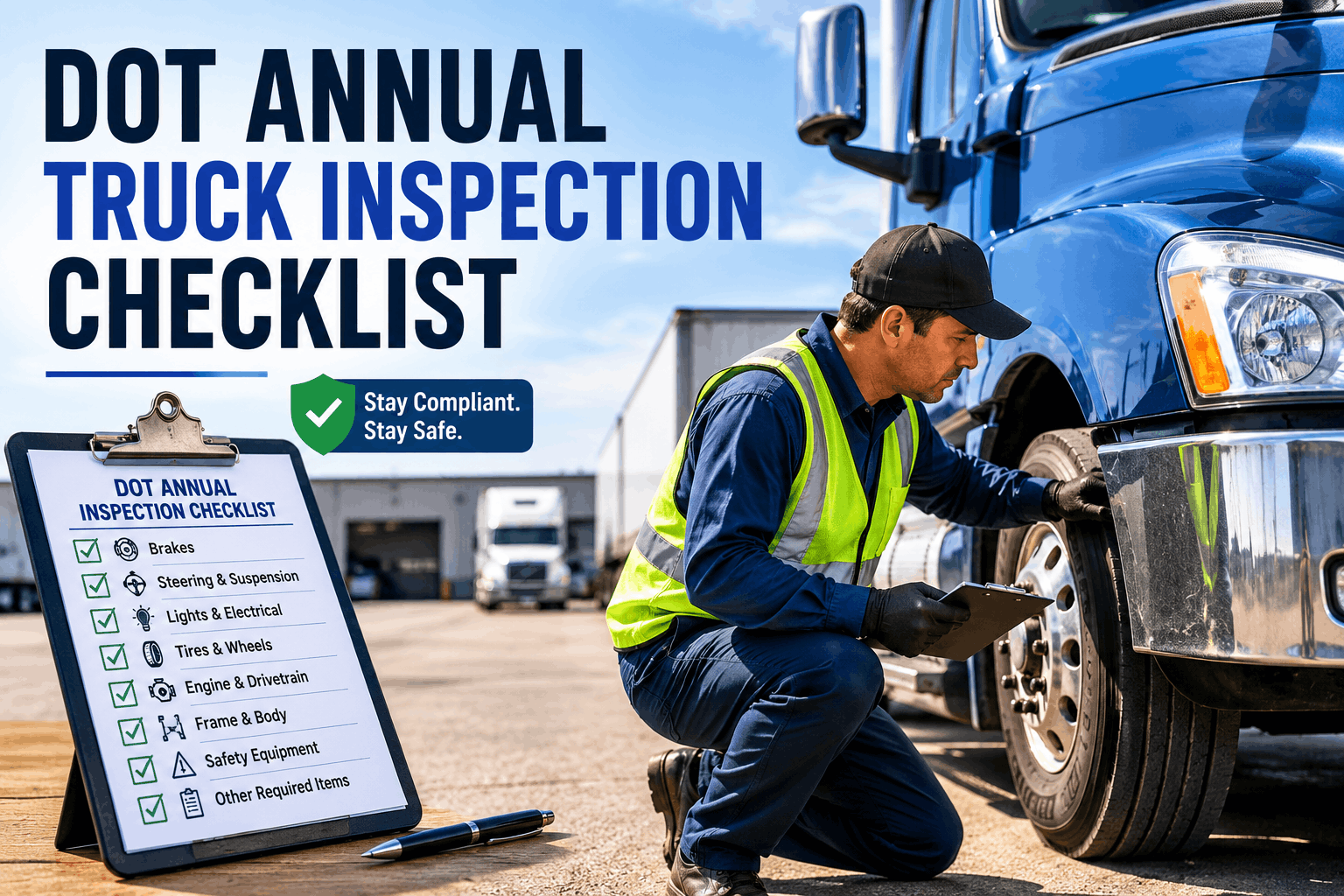
The DOT annual inspection under 49 CFR §396.17 is the federally mandated once-per-year safety check that every commercial motor vehicle operating in interstate commerce must pass before continuing in service. Unlike daily driver pre-trip inspections, this is a measured technical...
Read More
Preventive maintenance in trucking is the structured discipline of servicing commercial vehicles on planned intervals — by mileage, engine hours, or calendar dates — to catch component wear before it causes breakdowns, instead of waiting for failures to force emergency...
Read More
Winter doesn't just stress commercial fleets — it exposes every weakness in your maintenance program in a 90-day window. Engine oil thickens and increases startup resistance below freezing. Diesel fuel begins forming paraffin crystals at 15°F that clog fuel lines...

Read More
Truck idling is the most recoverable cost in fleet operations — because reducing it requires zero capital investment in most cases. A single Class-8 truck idling for just one hour burns approximately 0.8 gallons of diesel according to the US...
Read More
The work order is the document that connects every reported defect, every preventive maintenance task, and every emergency repair to an actual technician finishing actual work on an actual truck. It's the operational backbone of fleet maintenance — and the...
Read More
FMCSA Hours of Service regulations under 49 CFR Part 395 are the federal rulebook that governs every commercial driver's day — and they're the most frequently violated set of rules in commercial trucking. FMCSA data identifies driver fatigue as a...
Read More
Fleet maintenance software has crossed from competitive advantage to operational necessity in 2026. Industry benchmarks show fleets running structured CMMS platforms save an average of $3,120 per vehicle per year — combining fuel optimization (38% of savings), maintenance cost reduction...
Read More
Every minute a truck sits idle costs commercial fleets between $448 and $760 per day in direct downtime expense — and that's before counting the tow bill, the expedited parts shipping at 3-5× standard rates, the overtime labor for emergency...

Read More
Driverless freight is no longer a 2030 forecast — it's a 2026 operational reality. Aurora Innovation has logged over 250,000 driverless miles on US public highways with zero system-attributed collisions, Kodiak Robotics operates the largest fleet of driverless Class 8...
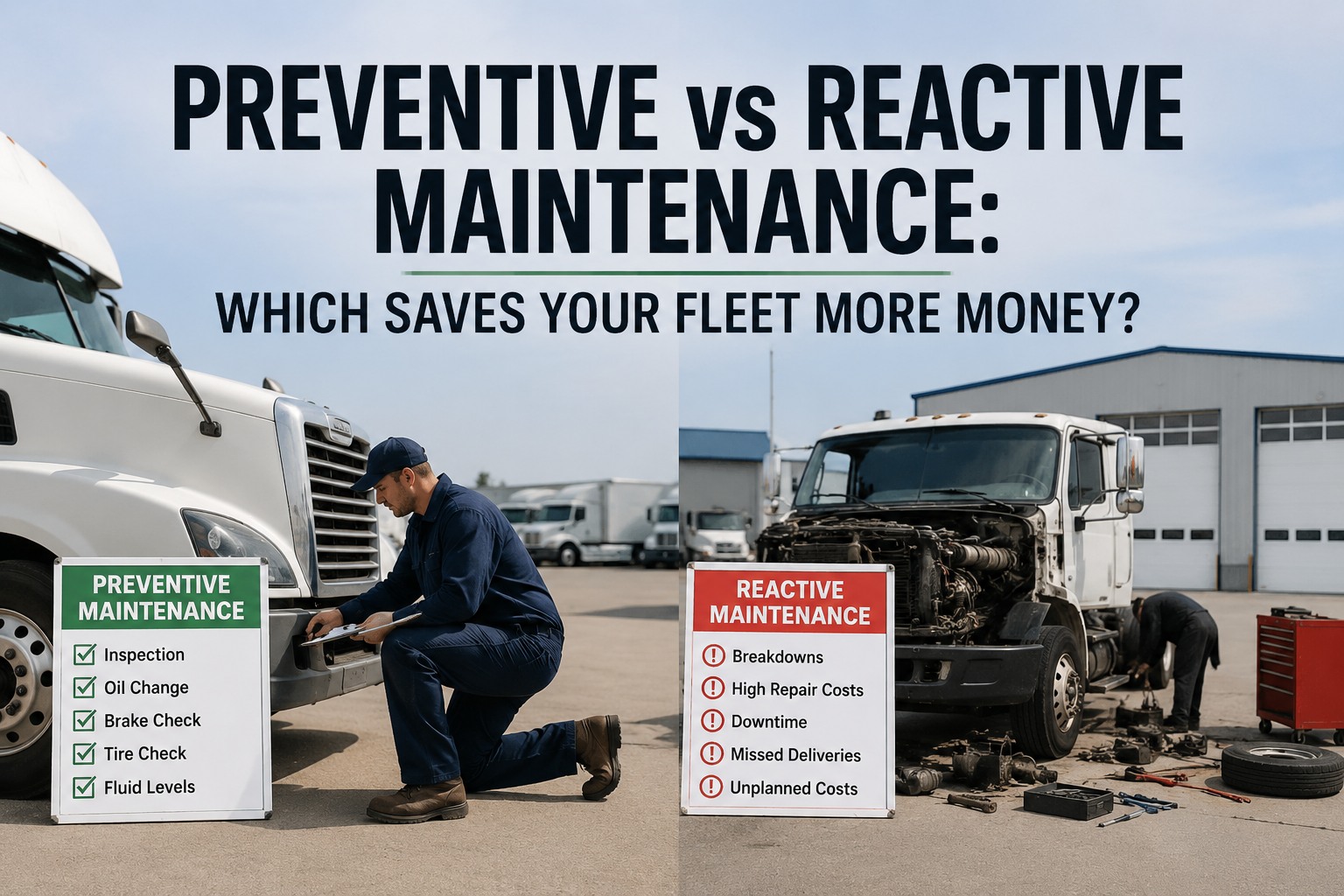
Read More
The math on preventive versus reactive fleet maintenance is one of the most lopsided cost comparisons in commercial trucking — and one of the most ignored. Reactive repairs cost 3 to 9 times more than the equivalent preventive maintenance, every...

Read More
The 2026 CVSA International Roadcheck just wrapped on May 14 — 72 hours of concentrated enforcement across North America that produces some of the most sobering compliance numbers in trucking. The 2025 Roadcheck inspected 56,178 commercial vehicles and placed 22.6%...
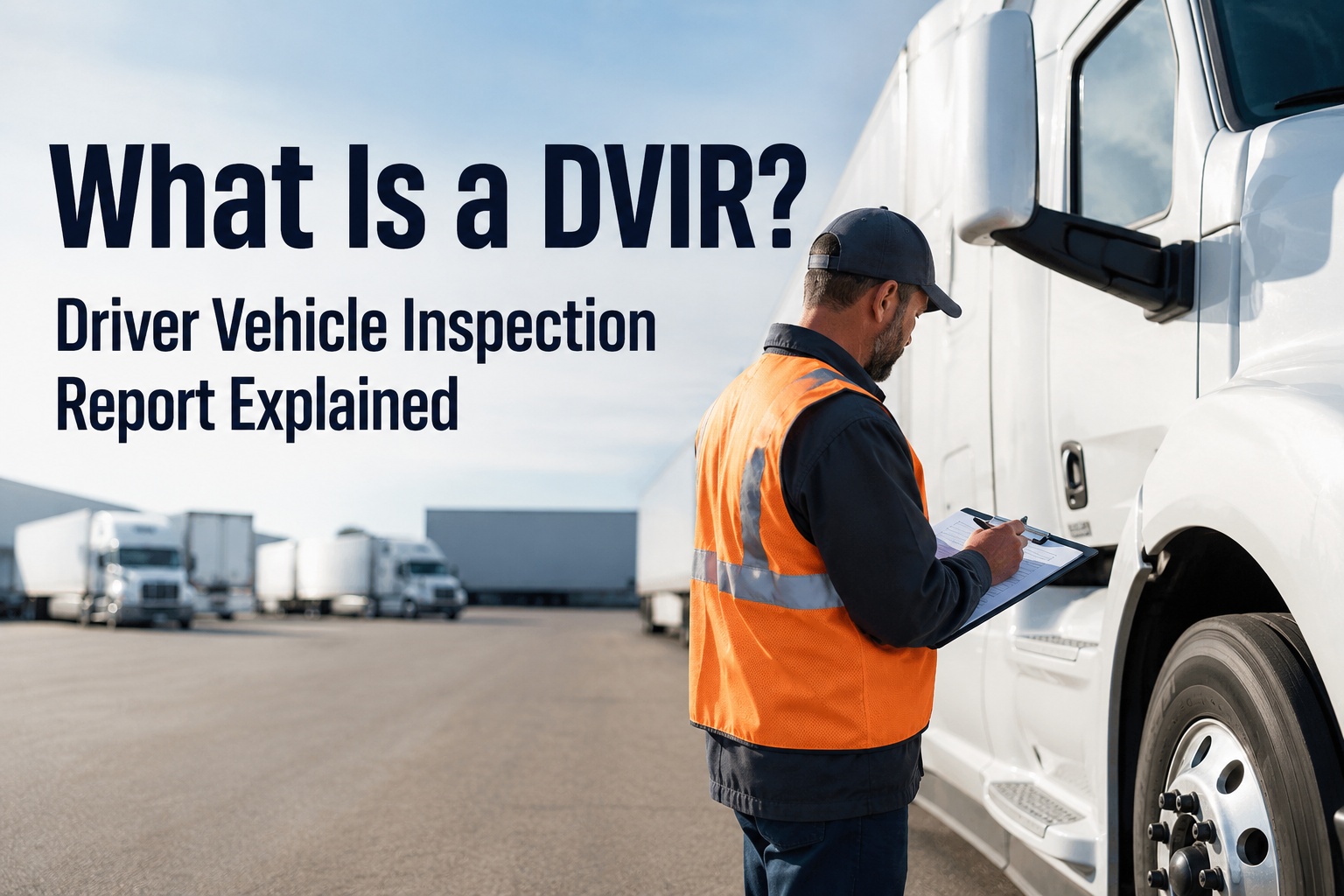
Read More
A DVIR is short for Driver Vehicle Inspection Report — a written or digital report that commercial drivers must complete at the end of their workday under 49 CFR §396.11, documenting the condition of their vehicle and any defects that...
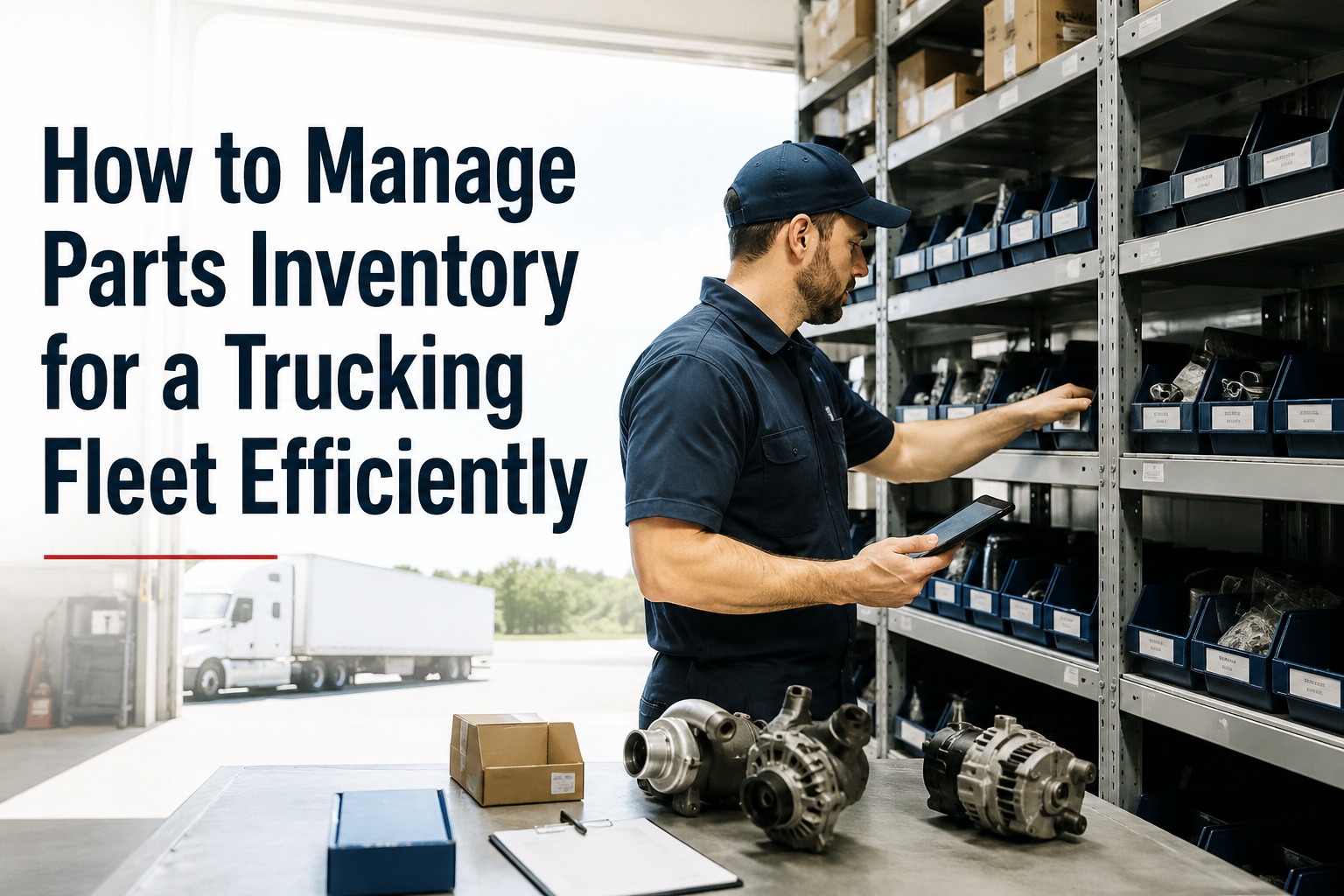
Read More
A $40 hydraulic hose fitting can idle a $300,000 truck for a week if it's not on the shelf. Q4 2025 saw parts costs jump 3.7% year-over-year according to the Decisiv/TMC benchmark report — making parts the largest driver of...

Read More
The fleet management software market crossed $30 billion in 2026 — and approximately 40% of fleet managers regret their first software choice. That's not because the platforms are bad. It's because most buyers evaluate based on vendor demos and feature...
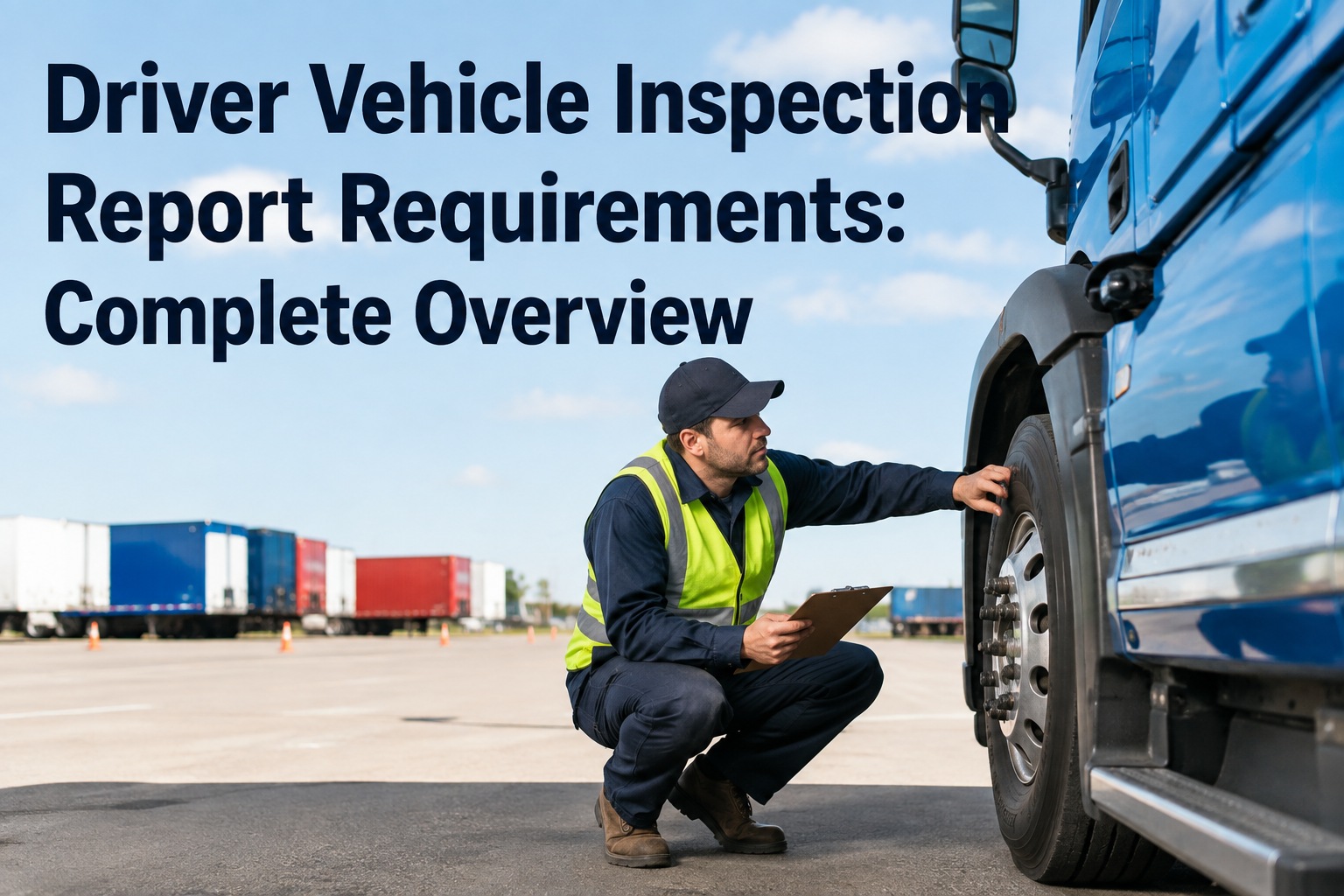
Read More
The DVIR is the most-audited compliance document in commercial trucking — and the most-misunderstood. Federal Motor Carrier Safety Administration data shows that fewer than 7% of motor carriers pass a focused compliance review without at least one DVIR violation. The...

Read More
Mining fleet safety operates in a different regulatory universe than every other industrial vertical. Where over-the-road trucking answers to FMCSA and construction answers to OSHA, mining fleets answer to MSHA — and MSHA inspects every operation on a mandatory cadence...
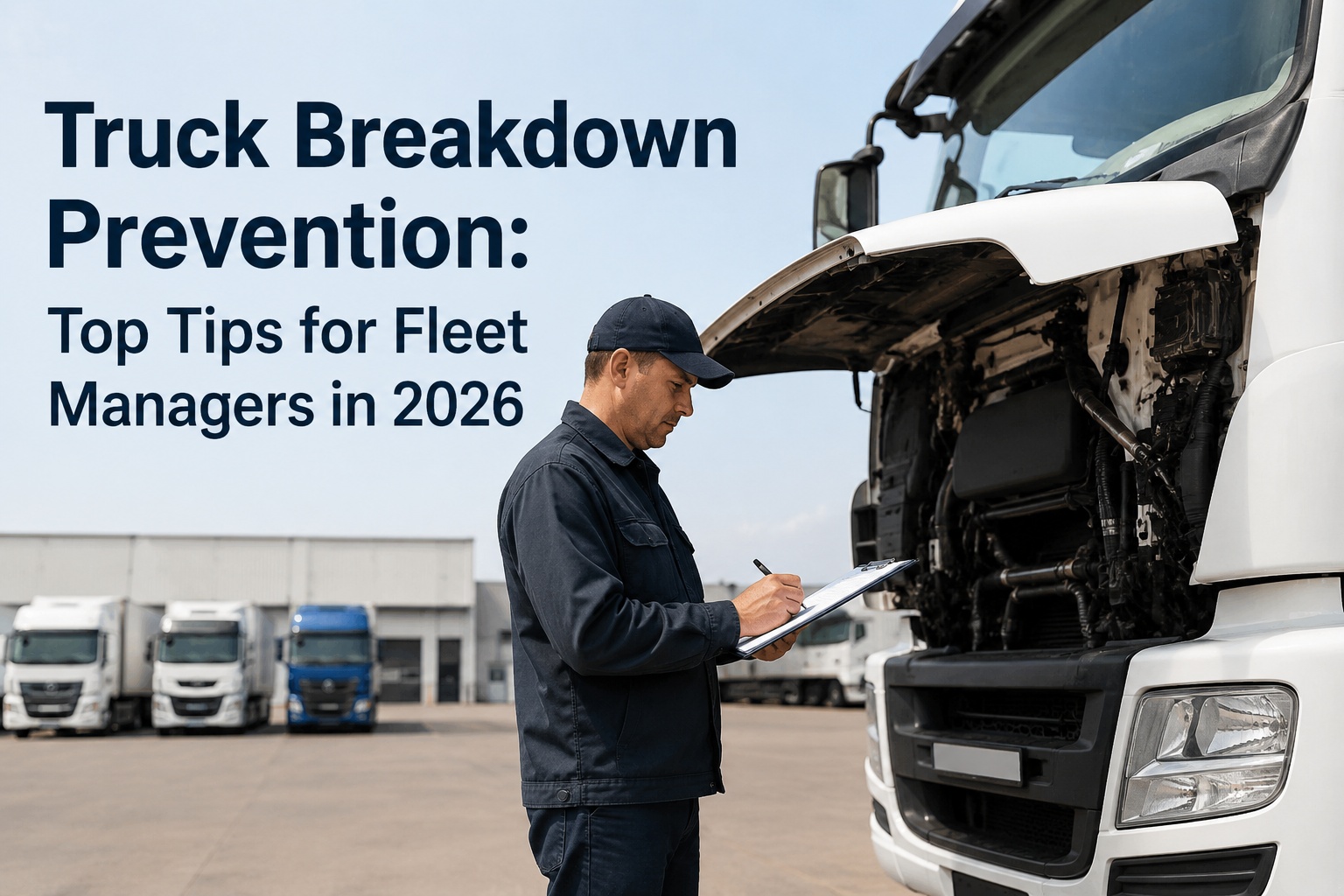
Read More
The 2026 math on truck breakdowns is brutal. Operating costs sit at $2.25 per mile. For-hire margins run at -2.3%. The average truck loses 8.7 days annually to unplanned downtime — and 78% of those breakdowns trace back to preventable...

Read More
Construction fleet management is fundamentally different from over-the-road trucking. A single operation typically runs four asset categories that each demand entirely different maintenance logic: heavy equipment scheduled by engine hours (excavators, loaders, dozers), on-road trucks scheduled by mileage (haulers, service...
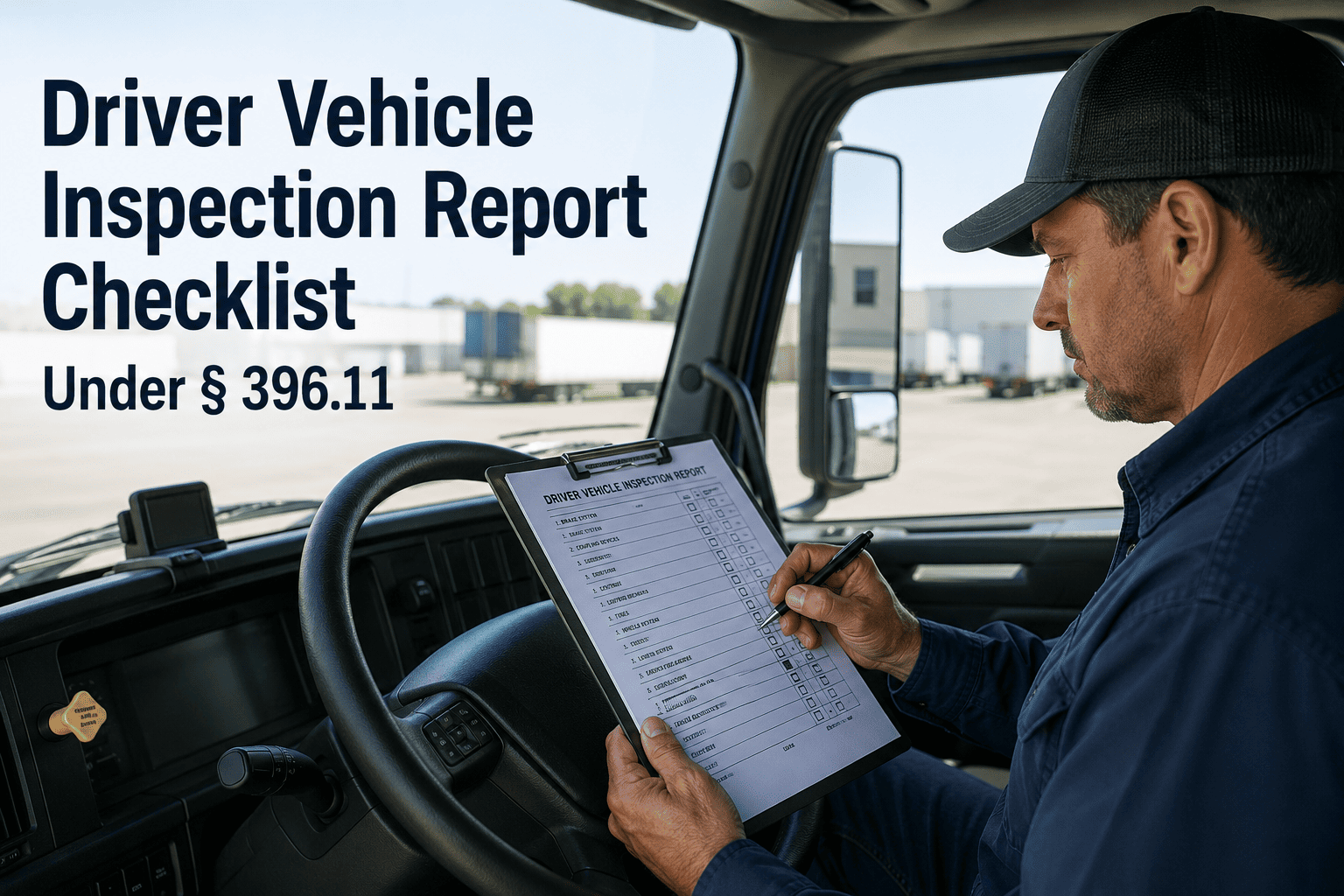
Read More
The Driver Vehicle Inspection Report under 49 CFR §396.11 is one of the most-violated and most-misunderstood compliance documents in commercial trucking. FMCSA estimates proper DVIRs prevent approximately 14,000 accidents every year — yet only 7% of motor carriers pass a...
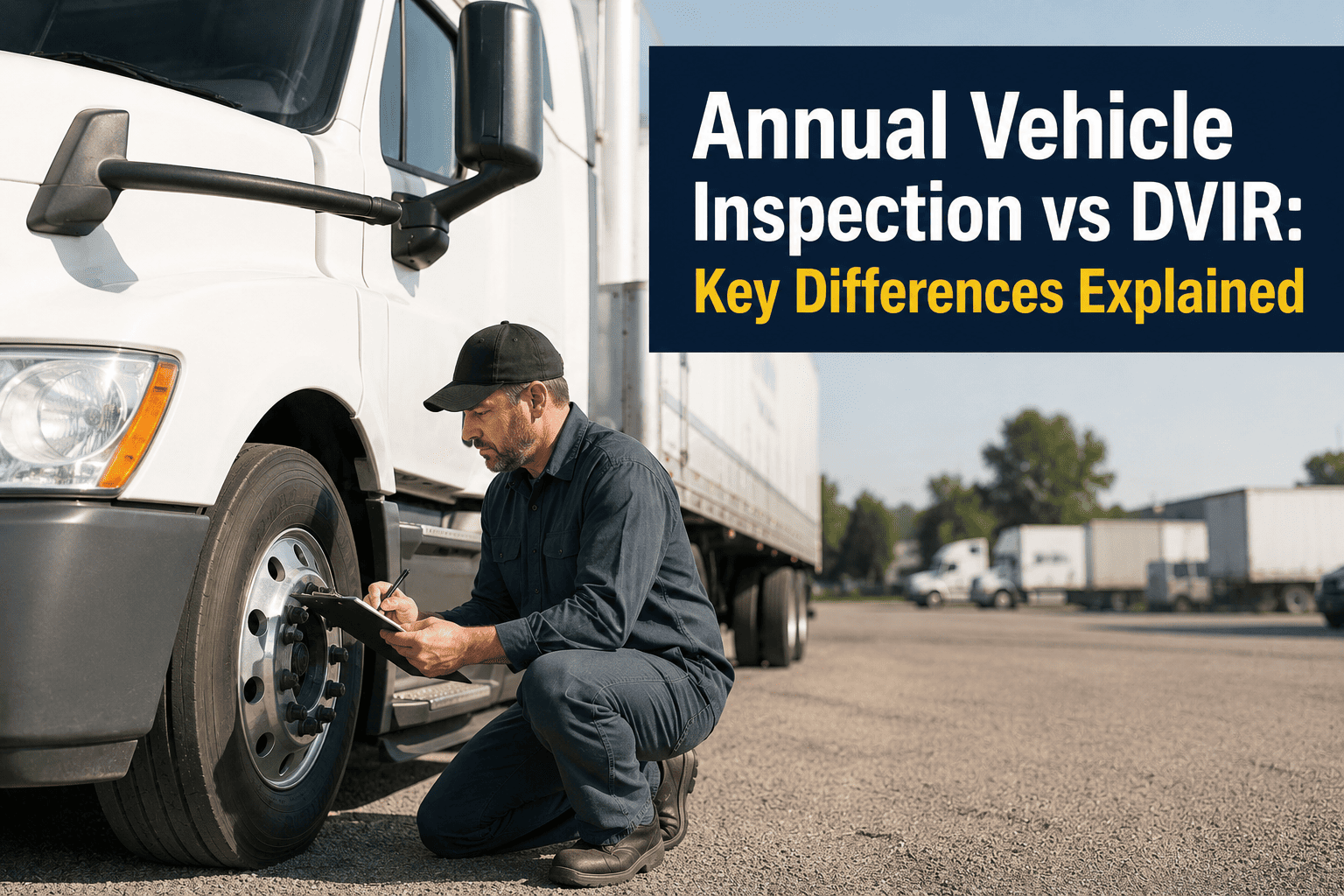
Read More
Two of the most-cited compliance failures in 2026 FMCSA audits trace back to the same root cause: fleet managers who didn't fully understand the difference between a Driver Vehicle Inspection Report (DVIR) and an Annual DOT Vehicle Inspection. They sound...

Read More
Most fleet PM programs cover their power units thoroughly and forget that trailers exist. A 53-foot trailer hauling 80,000 pounds across hundreds of thousands of miles per year — with its own brakes, suspension, lighting, ABS, electrical, and structural elements...
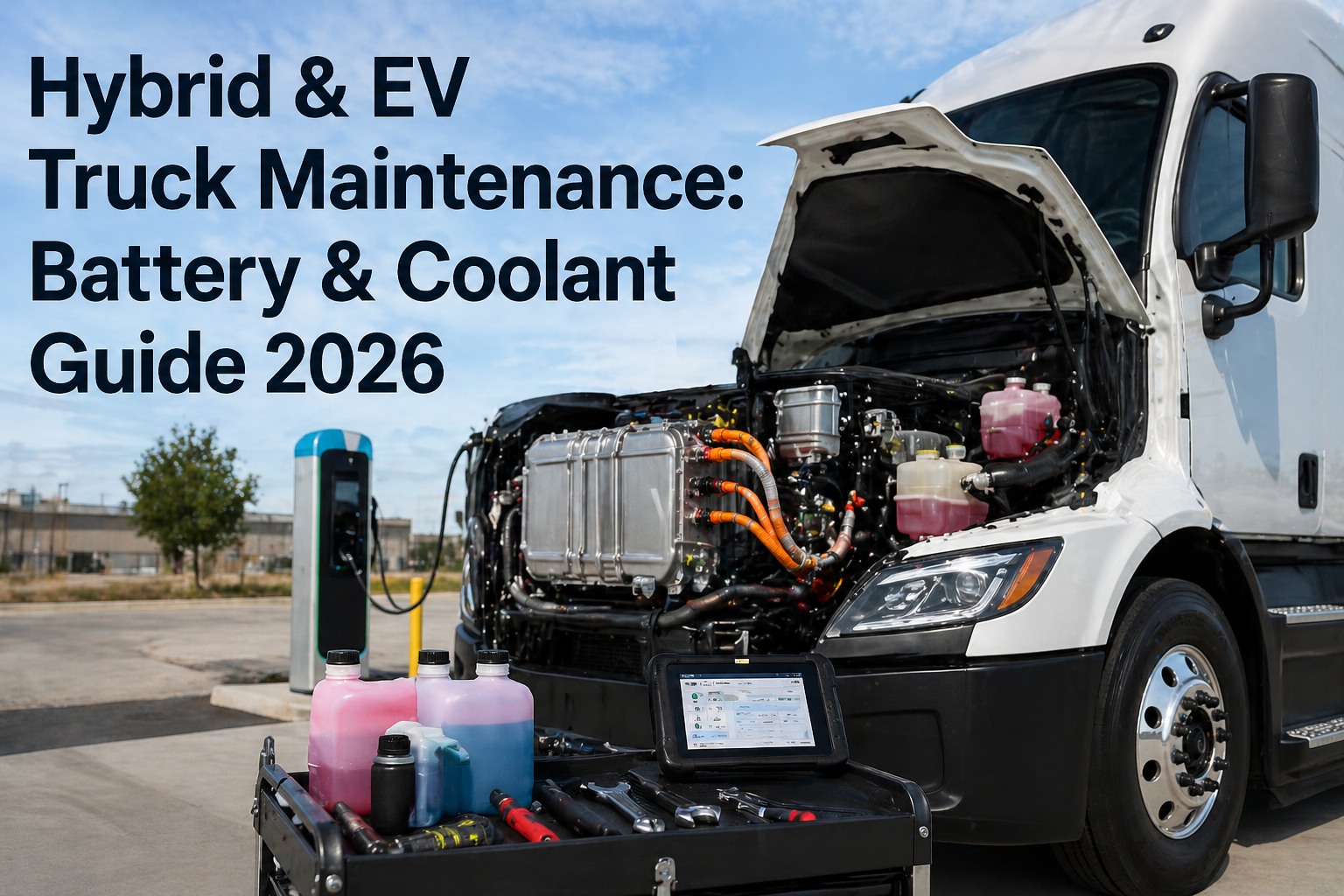
Read More
Fleet maintenance just changed shape. Over 4.2 million commercial EVs now operate across North American fleets, and Fortune 500 logistics operators have committed to 40–60% electrification by 2030. The arithmetic is favorable — EVs deliver roughly 50% lower total maintenance...
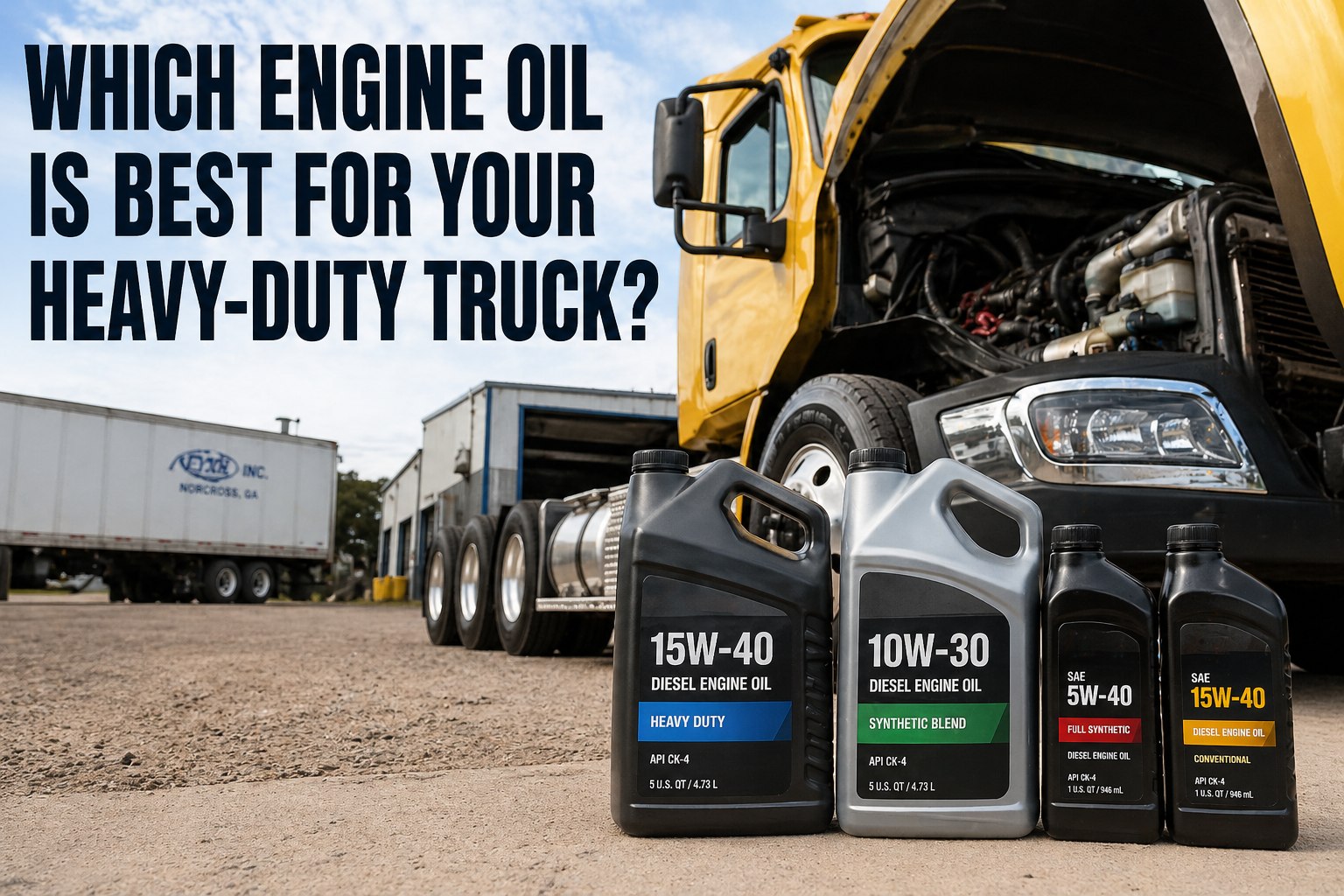
Read More
The wrong engine oil costs a fleet more than the right oil ever could. Switch from factory-fill 10W-30 back to 15W-40 "out of habit" and you lose 1–2% fuel economy — roughly $400–$800 per truck per year. Run conventional in...
Read More
The single most asked question in fleet maintenance: "My truck just hit 50,000 miles — what services are due?" Or 100K. Or 250K. The answer matters more than most operators realize, because each odometer milestone unlocks a different set of...
Read More
A fleet manager's job in 2026 looks nothing like it did five years ago. The Federal Motor Carrier Safety Administration's new Safety Measurement System now splits Vehicle Maintenance into two separate compliance categories — meaning a fleet with poor maintenance...
Read More
Every dollar spent on truck PM service saves $4–$8 in emergency repairs, towing, and lost revenue. Yet 70% of fleet managers still operate reactively — fixing trucks after they break down on I-40, rather than scheduling the $800 service that...
Read More
Fleet managers ask the same question every week: "We inspect every truck daily — why are we still getting roadside breakdowns?" The answer is almost always the same. Inspections find defects. Maintenance fixes them. The gap between those two is...
Read More
Every modern Class 8 truck on the road is constantly running self-diagnostics — and when something goes wrong, the engine ECM broadcasts a string of numbers that looks like this: SA 0 SPN 100 FMI 1. To an untrained operator,...
Read More
A tow truck operator who skips a daily inspection isn't saving 15 minutes — they're betting their license, their cargo, and someone else's life that nothing has gone wrong overnight. A frayed winch cable can snap under load with 8,000+...

Read More
The average fleet wastes 5–10% of its annual budget on underutilized assets and poor PM compliance — and most fleet managers can't even see it happening. Unplanned downtime alone costs $448–$760 per vehicle per day. Yet 53% of fleets are...

Read More
Eight out of ten fleet professionals now run GPS fleet tracking — up 11 percentage points year-over-year — and the numbers behind that adoption surge tell the story. Fleets using modern telematics report 30–40% efficiency improvements, 12% reductions in fuel...
Read More
The right engine oil can extend your truck's engine life by 200,000+ miles. The wrong one can turn a $12,000 top-end rebuild into a $45,000 in-frame overhaul — and void the warranty that would have covered both. With more than...

Read More
More than half of a Class 8 truck's highway fuel burns just pushing air out of the way. At 65 MPH, aerodynamic drag consumes over 50% of total engine output — which means every square inch of turbulent airflow translates...
Read More
A single unplanned truck breakdown costs fleets an average of $500 per day in downtime — before the $15,000 repair bill even lands. Yet industry data shows 60% of those unplanned events could have been detected weeks earlier during routine...
Read More
A single preventable truck accident costs fleets an average of $16,000 — and that number quadruples with injuries, exceeding $500,000 when a fatality is involved. The Federal Motor Carrier Safety Administration confirms that fleets running structured, consistent safety training programs...