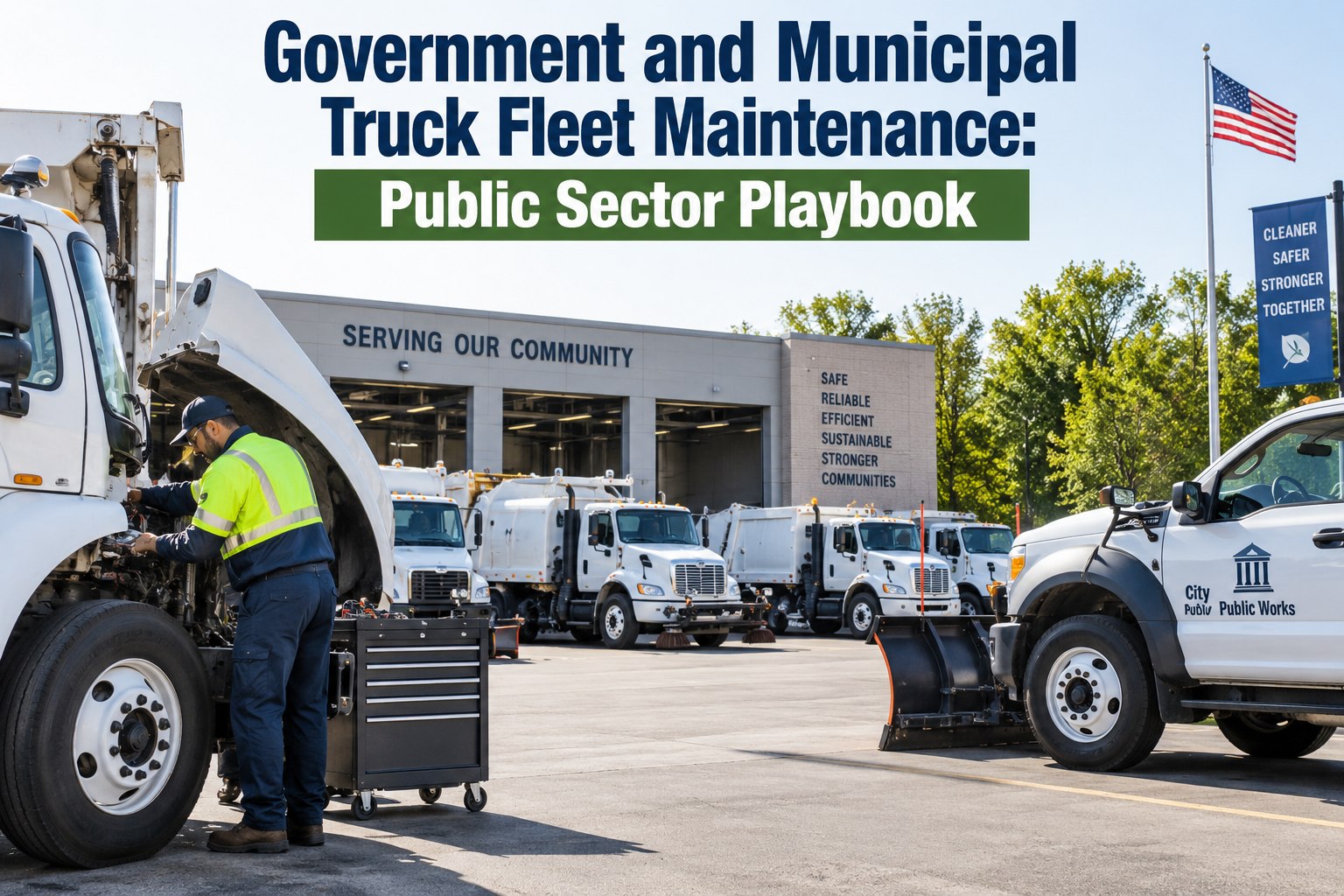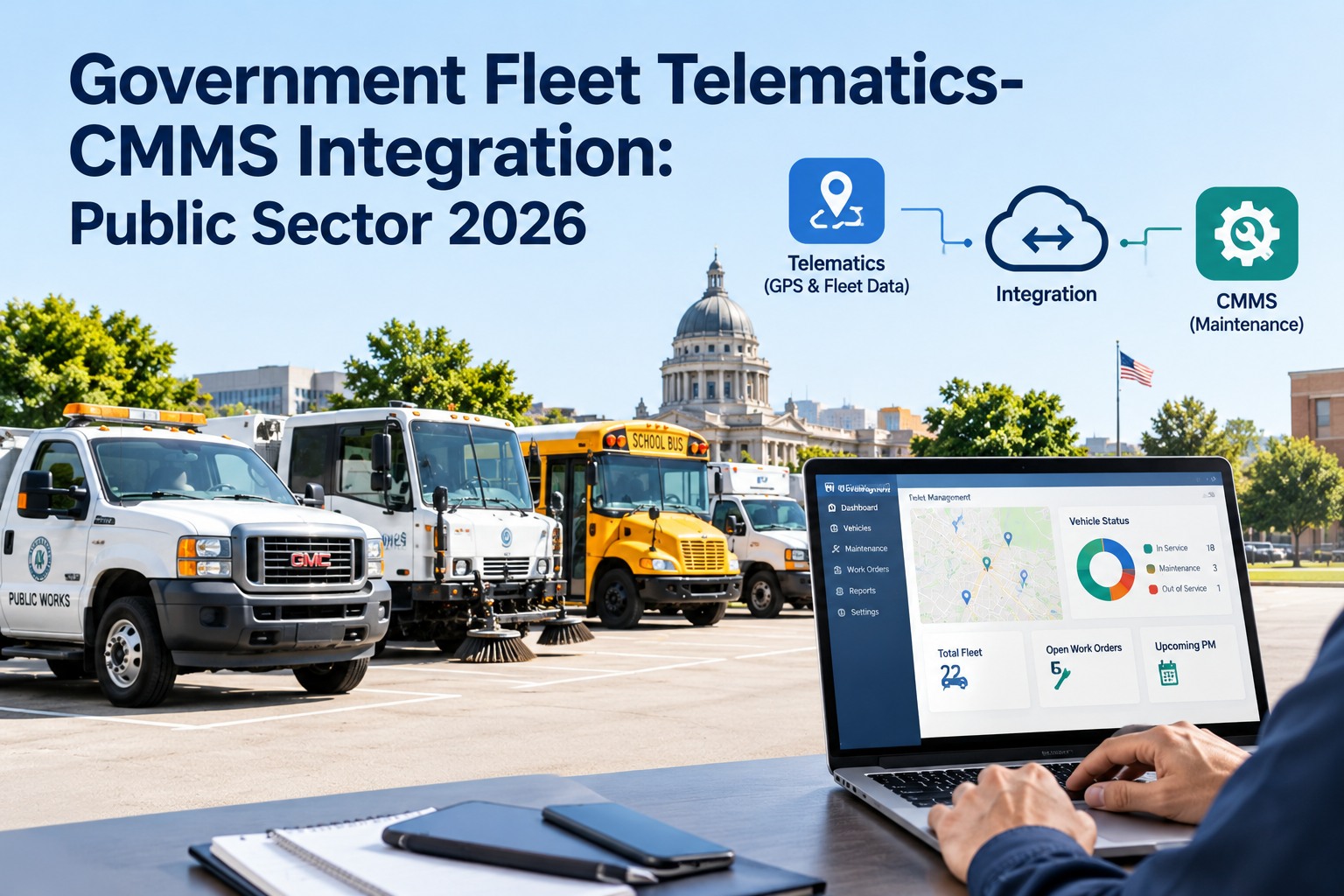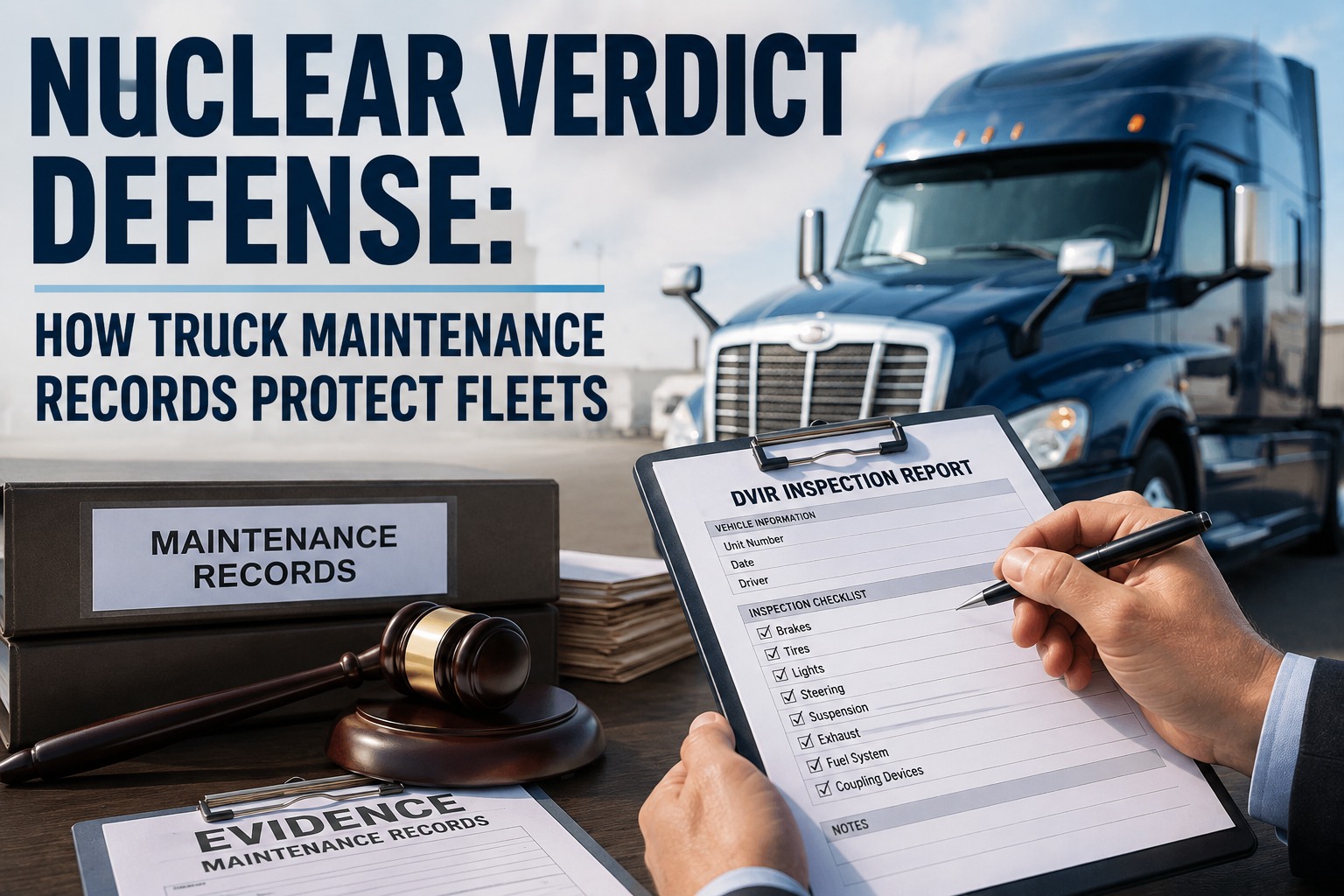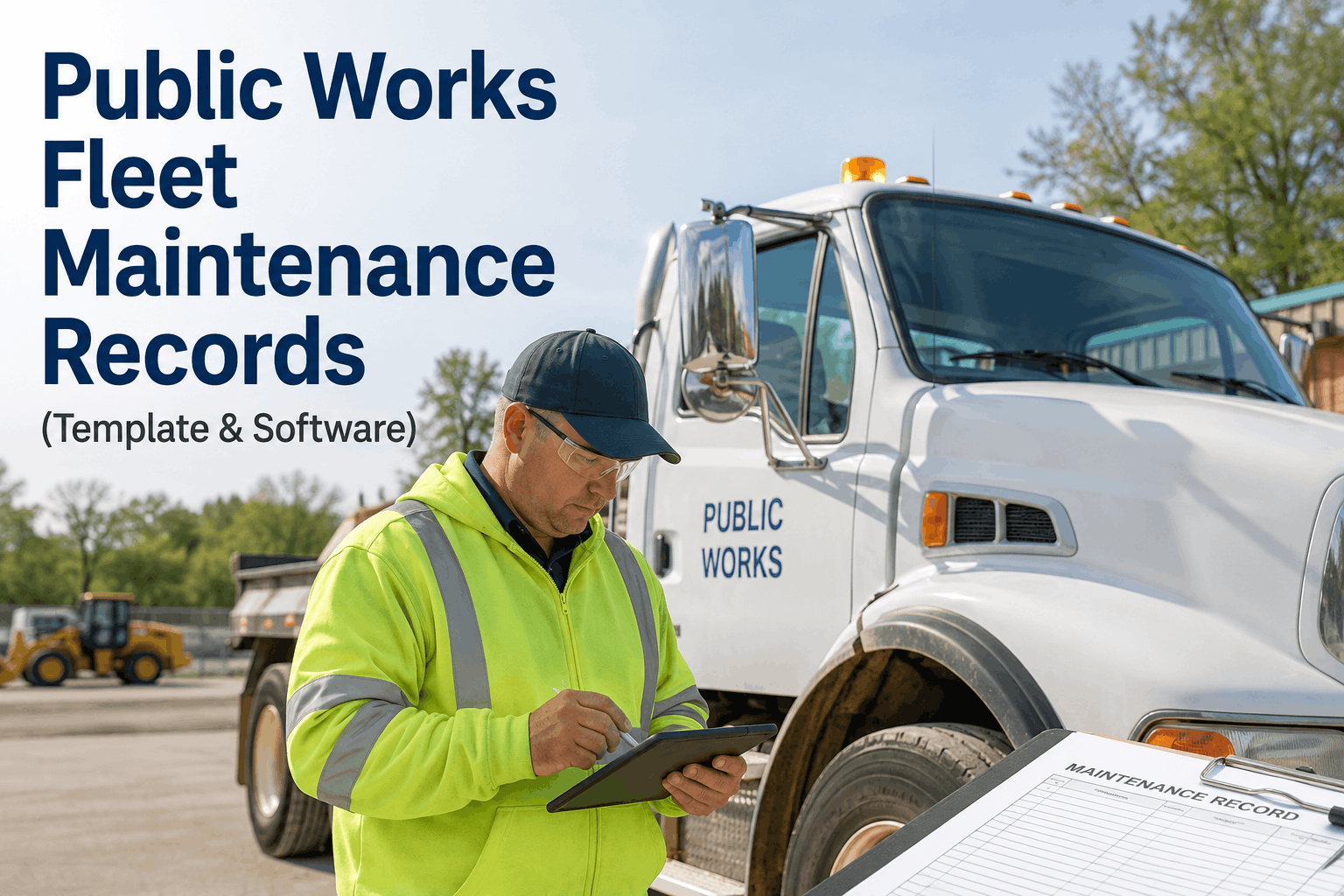
Public works fleet maintenance records occupy a regulatory and operational space distinct from both commercial trucking and other government operations. The vehicles themselves carry the same FMCSA recordkeeping obligations as any commercial motor vehicle — §396.3 systematic maintenance records, §396.17 annual periodic inspection records with §396.21 14-month retention, §396.11 DVIR records, and the §396.13 chain of custody — but layered on top are public sector requirements that commercial carriers never face. Procurement integration ties each repair to purchase orders, vendor contracts, and competitive bidding documentation. Asset management coupling links maintenance records to capital depreciation schedules, GAAP accounting, and inspector general performance audits. FOIA and state public records laws make every maintenance record potentially public, exposing compliance gaps to news coverage and political consequences. Internal city or county auditor reviews examine maintenance records against budgeted PM schedules, vendor selection processes, and operational efficiency metrics. The fleet manager juggling snow plows, street sweepers, vacuum trucks, dump trucks, crew trucks, and specialized equipment needs records workflow that handles all these dimensions simultaneously without producing the data fragmentation that causes audit findings.
The 2026 regulatory environment intensifies public works records requirements in three ways. The eDVIR Final Rule (effective March 23, 2026) authorizes electronic DVIRs under §396.11, formalizing what was previously interim guidance — meaning paper-based records systems now operate behind the regulatory baseline rather than meeting it. The 2026 CSA scoring overhaul weights out-of-service violations at 2× severity, splits Vehicle Maintenance into two BASIC categories, adds the "Driver Observed" BASIC, and uses a 24-month violation window — making maintenance records gaps that previously affected single audit cycles now compound across multiple years. Paper medical certificates were eliminated January 10, 2026 with all CDL driver medical examiner records flowing through electronic FMCSA systems, affecting public works operations using CDL drivers (snow plow operators, sanitation drivers, vacuum truck operators commonly require CDL). The combination produces an environment where digital recordkeeping has shifted from operational preference to compliance baseline — and where the records template, retention discipline, and software selection meaningfully affect audit outcomes.
This guide is the complete public works fleet maintenance records framework for 2026: the 8-section records template covering every required documentation element, the retention timeline for each record type, the 4 software approaches for public works records management, common documentation mistakes, and the digital workflow that turns audit response into routine business. Start your free trial of our truck inspection and maintenance software to deploy public works records workflow — live in 10 minutes, free for up to 3 trucks.
Public Works Fleet Maintenance Records: Template & Software
Why Public Works Records Differ From Commercial Fleet Records
Public works fleet operations produce records requirements unique to government operations. Understanding these differences explains why generic fleet records templates fail when applied to public works operations.
Procurement Integration
Asset Management Coupling
Specialized Equipment Records
FOIA & Public Records Exposure
Multi-Auditor Review
Records Schedule Compliance
The 8-Section Maintenance Records Template
Every public works maintenance records system covers these 8 sections. The depth varies by record type, but the sections don't. Contact our sales team for help deploying public works-specific templates.
01 Vehicle Identification
02 PM History
03 Repair Records
04 Annual Periodic Inspection
05 DVIR Records
06 Specialized Equipment
07 Body & Damage Records
08 Operator Complaints & Follow-Up
Retention Requirements by Record Type
Different record types carry different retention requirements under FMCSA, state, and local government records schedules. Public works operations must satisfy the longest applicable retention for each record type.
| Record Type | FMCSA Minimum | Typical Local Government | Practical Best Practice |
|---|---|---|---|
| DVIR records | 3 months (§396.11) | 3-12 months | 1 year minimum, longer if defects |
| PM and repair records | Vehicle service + 6 mo (§396.3) | Vehicle life + 3-7 years | Vehicle life + 7 years |
| Annual periodic inspection | 14 months (§396.21) | 14-36 months | 3 years minimum |
| Accident register | 3 years (§390.15) | 5-10 years | 10 years for serious incidents |
| Warranty records | N/A | Warranty period + 1-3 years | Warranty period + 5 years |
| Capital asset records | N/A | Asset life + 7-10 years | Per local records schedule |
| Operator complaints | N/A | 3-7 years | 7 years if related to incident |
| Procurement/PO records | N/A | 3-7 years (varies by state) | Per state procurement statute |
FMCSA retention is the federal minimum — but public works operations must comply with the longest applicable retention from all sources. Local government records retention schedules typically extend FMCSA minimums substantially for capital asset documentation, repair history, and procurement records. State procurement statutes may impose specific retention requirements on PO documentation. Public records laws (FOIA, state equivalents) generally require accessibility for the retention period — meaning records must be both retained and retrievable, not just stored. The practical recommendation: maintain records for the longest applicable period rather than tracking multiple expiration dates per record. Digital systems with structured retention policies handle this automatically while paper systems require continuous manual review.
The 4 Software Approaches for Public Works Records
Public works fleets typically use one of four software approaches for maintenance records. Match the approach to your operation's scale, complexity, and existing systems integration requirements.
Integrated Fleet Management Platform
RECOMMENDED FOR MOSTDedicated CMMS With Fleet Module
FOR LARGE OPERATIONSStandalone Apps + Separate Systems
FRAGMENTED — AVOIDEnterprise Asset Management (EAM)
FOR ENTERPRISE GOVERNMENTCommon Public Works Records Mistakes
Five mistake patterns produce most public works records audit findings. Address them proactively rather than discovering them during compliance reviews.
Incomplete Vendor & PO Documentation
Missing Specialized Equipment Records
Broken DVIR Chain of Custody
Undocumented Systematic PM
Inadequate Retention Discipline
Frequently Asked Questions
What's the minimum retention for public works maintenance records?
The applicable minimum depends on record type and the longest applicable retention from FMCSA, state, and local government records schedules. FMCSA minimums: DVIR 3 months per §396.11, PM/repair records vehicle service + 6 months per §396.3, annual periodic inspection 14 months per §396.21, accident register 3 years per §390.15. However, local government records retention schedules typically require longer retention — commonly vehicle life + 3-7 years for capital asset documentation, 3-10 years for accident records, and 3-7 years for procurement/PO records per state procurement statutes. Public records laws (FOIA federal, state equivalents) generally require records be retrievable for the retention period, not just stored — meaning archived records must remain accessible. The practical guidance: maintain records for the longest applicable retention period rather than tracking multiple expiration dates. For most public works operations, this means: DVIR records 1+ year (especially when defects documented), PM/repair records throughout vehicle life plus 7 years minimum, annual inspections 3+ years, accident register 10 years for serious incidents, capital asset records per local schedule. Records destruction must follow approved schedules — never destroy records based on operational convenience or storage space considerations. Start your free trial for compliant retention workflow.
Are public works maintenance records subject to FOIA?
Yes — public works fleet maintenance records are generally subject to Freedom of Information Act requests at the federal level and state public records law at state and local levels. Specific patterns: federal FOIA covers records of federal government departments and agencies but generally not state or local government records; state public records laws (varies by state but often called "Sunshine Laws" or similar) cover state and local government records including municipal fleet operations; some records may be exempt or partially redactable for specific reasons including ongoing investigations, personal information, contractually confidential information, and security-sensitive details. Maintenance records exposure scenarios: citizen requests examining specific equipment after public incidents; news media investigations following accidents or service failures; political opposition research; advocacy group oversight programs; commercial competitors requesting vendor information; insurance carriers requesting documentation for claims. The practical implications: maintain records with the assumption they may become public; ensure records accurately reflect actual operations rather than aspirational documentation; redact personal information appropriately when fulfilling requests; consult legal counsel for sensitive requests; use digital systems that can produce filtered/redacted exports efficiently. Records gaps revealed through FOIA requests produce political and public relations consequences beyond just compliance findings. Contact our sales team for FOIA-ready records workflow.
How do specialized equipment records differ from standard truck records?
Public works fleets include specialized equipment that standard truck PM templates miss. Common categories requiring separate records tracking: snow plows and salt spreaders — blade replacement intervals, hydraulic system maintenance, salt spreader calibration verification, control system testing; street sweepers — brush replacement on rotation schedules (typically 200-400 hours), vacuum system maintenance, hopper system inspection, water tank and spray nozzle maintenance; vacuum and sewer trucks — vacuum pump service, hose inspection, tank cleaning records, hydraulic system maintenance for boom operation; lift trucks and crane vehicles — annual ANSI inspections, hydraulic system maintenance, structural inspection requirements, operator certification tracking; asphalt and paving trucks — heating system maintenance, asphalt distributor service, application equipment calibration; tree service trucks — chipper maintenance, hydraulic system service, PTO maintenance, blade sharpening records. Each specialized equipment category has manufacturer-recommended maintenance intervals that differ from base truck intervals. Records must capture: equipment identification, scheduled maintenance intervals, completion dates, parts used, calibration verification where applicable, qualified technician identification. Generic fleet records templates that don't accommodate specialized equipment produce documentation gaps that audit reviews identify as systematic maintenance failures under §396.3. Software platforms designed for public works applications include specialized equipment templates as configuration options.
What's the typical cost of public works fleet maintenance records software?
Cost varies substantially by software approach. Integrated fleet management platforms (recommended for most operations): $25-65 per vehicle per month including compliance, maintenance, DVIR, and procurement integration. For a 50-vehicle public works fleet, this represents $15,000-$39,000 annually. Dedicated CMMS with fleet modules: $35-100 per vehicle per month plus base CMMS licensing (typically $500-$5,000+ monthly for system licensing). Better fit when fleet is part of broader asset management including buildings and infrastructure. Standalone apps with separate systems: variable cost typically $10-30 per vehicle per month per app, totaling $40-100+ per vehicle per month when adding multiple disconnected systems. Higher hidden costs from manual reconciliation work. Enterprise Asset Management (EAM) like SAP, Oracle, IBM Maximo: $100+ per vehicle per month equivalent including base licensing, implementation costs $50,000-$500,000+, ongoing maintenance and support. Only appropriate for largest municipal operations. Cost considerations specific to public works: procurement constraints (must purchase through cooperative agreements, state contracts, or formal RFPs); training cost for non-technical fleet staff; integration with existing financial and procurement systems; vendor reliability and support quality for government operations. Free tier platforms (typically 1-3 vehicles) allow validation before scaling. The pricing is trivial relative to compliance penalty exposure: single missing maintenance record violation $1,584/day, $7,000+ DQF violation, $19,277-$23,048 OOS operation penalty. Sign up free for cost-effective public works workflow.
How long does public works records software take to deploy?
Deployment timeline varies by software approach and integration complexity. Modern cloud-based fleet management platforms: 10 minutes to 4 weeks. Quick deployment (under 1 day): platform setup, basic DVIR templates, simple PM scheduling, manual vendor entry. Most public works operations start here for initial pilot. Standard deployment (1-2 weeks): customized inspection templates for specialized equipment categories, PO integration with procurement system, retention policies configured per local records schedule, driver/operator training. Full deployment (2-4 weeks): financial system integration for capital asset depreciation, FOIA-ready export workflow, multi-department access permissions, custom reporting for inspector general reviews. CMMS with fleet modules: 4-12 weeks typical for fleet-only deployment; 3-6 months for full CMMS deployment including facility assets. Enterprise EAM systems (SAP, Oracle, IBM Maximo): 6-18 months typical implementation including configuration, integration, training, and parallel operation periods. Procurement timeline often adds weeks: RFP process can take 60-120 days, cooperative purchasing agreements faster but still 2-4 weeks for contract execution. Modern platforms with state contract pricing (NASPO ValuePoint, GSA Schedule 70) reduce procurement timeline substantially. The practical recommendation: start with free tier (1-3 vehicles) for initial validation, expand through cooperative purchasing once approach is validated, integrate financial systems in phased rollout rather than big-bang deployment. Speed matters — every month of delay compounds compliance exposure and reactive maintenance cost. Talk to our sales team for accelerated deployment.
What happens during a FMCSA audit of public works fleet records?
FMCSA compliance reviews of public works fleets follow predictable patterns but include some government-specific considerations. Audit triggers: poor CSA scores in any BASIC, post-accident review after fatal incidents, complaint-based investigations, random selection, new entrant safety assurance, or referral from another investigation. Audit notification arrives via mail or email with document request and response window — typically 48 hours for focused reviews, 30 days for compliance reviews. Document request typically includes: DVIRs for selected dates and vehicles; DQF for selected drivers; PM/repair records for selected vehicles; annual inspection records; drug/alcohol testing documentation; accident register; HOS/ELD records for CDL operations; maintenance program documentation under §396.3. Public works-specific considerations: investigators may request procurement documentation linking repairs to vendors; specialized equipment maintenance receives scrutiny if standard templates appear to miss application-specific items; FOIA requests may surface gaps during or after the audit period; political accountability adds pressure beyond standard compliance findings. Audit findings produce: Corrective Action Response (CAR) requirements within 30-60 days; civil penalties ranging from $1,584/day for missing records to $19,277-$23,048 for OOS operation; CSA score damage compounding across 24-month window; potential conditional safety rating; increased audit attention in future periods. Public works defense: structured digital records with clear retention discipline produce documentation requested within minutes; the same records satisfying FMCSA also satisfy internal auditors, inspector general reviews, and FOIA requests; integrated procurement records defend against findings about vendor selection or repair cost effectiveness.