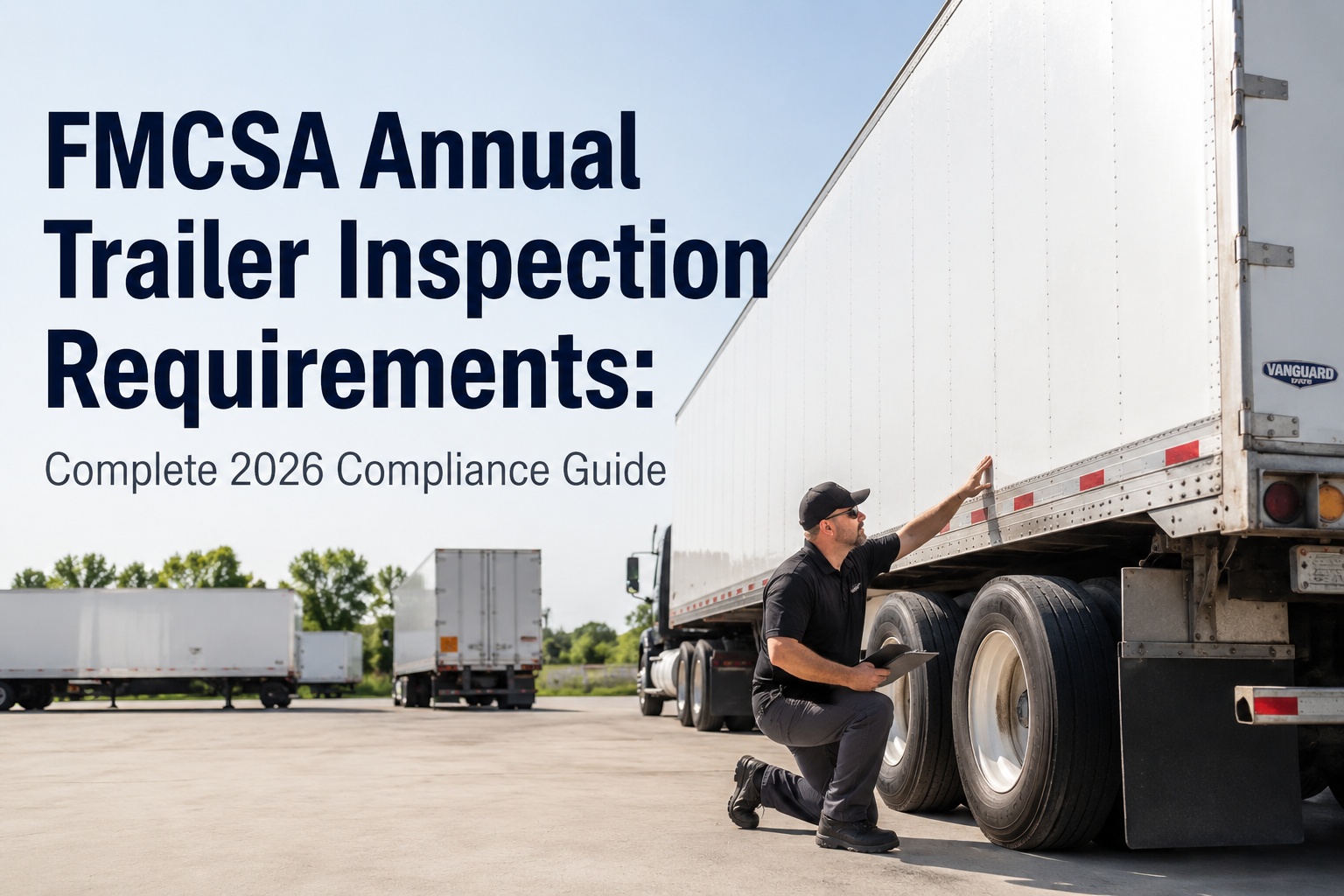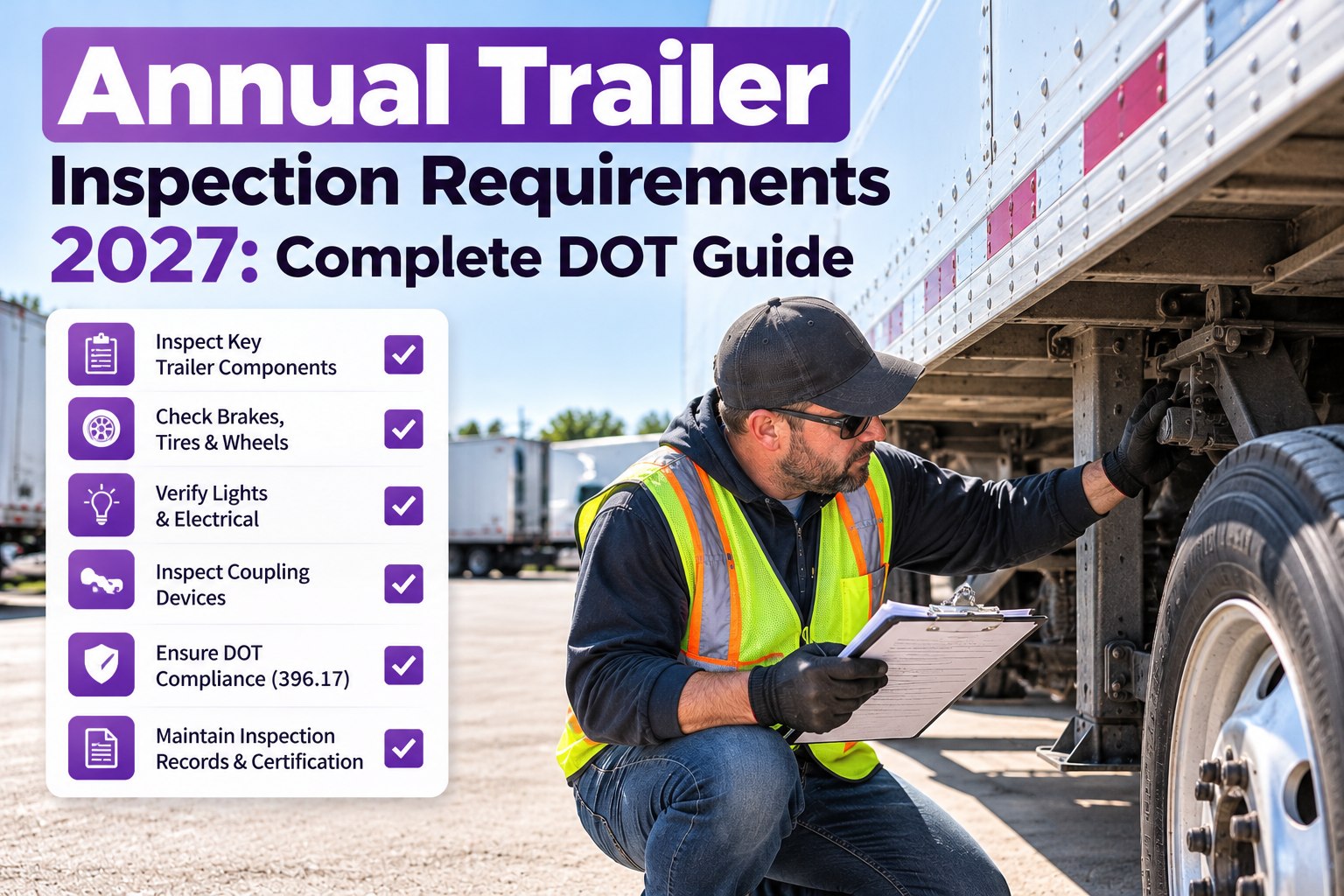
Every trailer over 10,001 lbs has to pass a DOT annual inspection — and the rule that matters isn't a calendar year, it's 12 months from the last inspection date. Miss the window and a roadside officer treats the trailer as if it was never inspected: an out-of-service order on the spot. For a fleet of fifty trailers, that's fifty separate expiration clocks ticking on their own schedules, and the one you forget is the one that gets grounded. This guide covers what 2027 requires, who can sign off, how long to keep the paper, and how to never miss a date. Start free and track every trailer's annual expiration in one place.
Annual Trailer Inspection Requirements 2027: Complete DOT Guide
The annual inspection rests on three sections of the federal rules: what gets inspected, who's qualified to inspect it, and how the record is kept. Get all three right and the trailer is compliant; miss any one and the inspection is invalid. Truck Inspection & Maintenance Management Software tracks every trailer's inspection date, inspector qualification, and certificate — and alerts you before a single one lapses.
§396.17 — When It's Due and What Gets Inspected
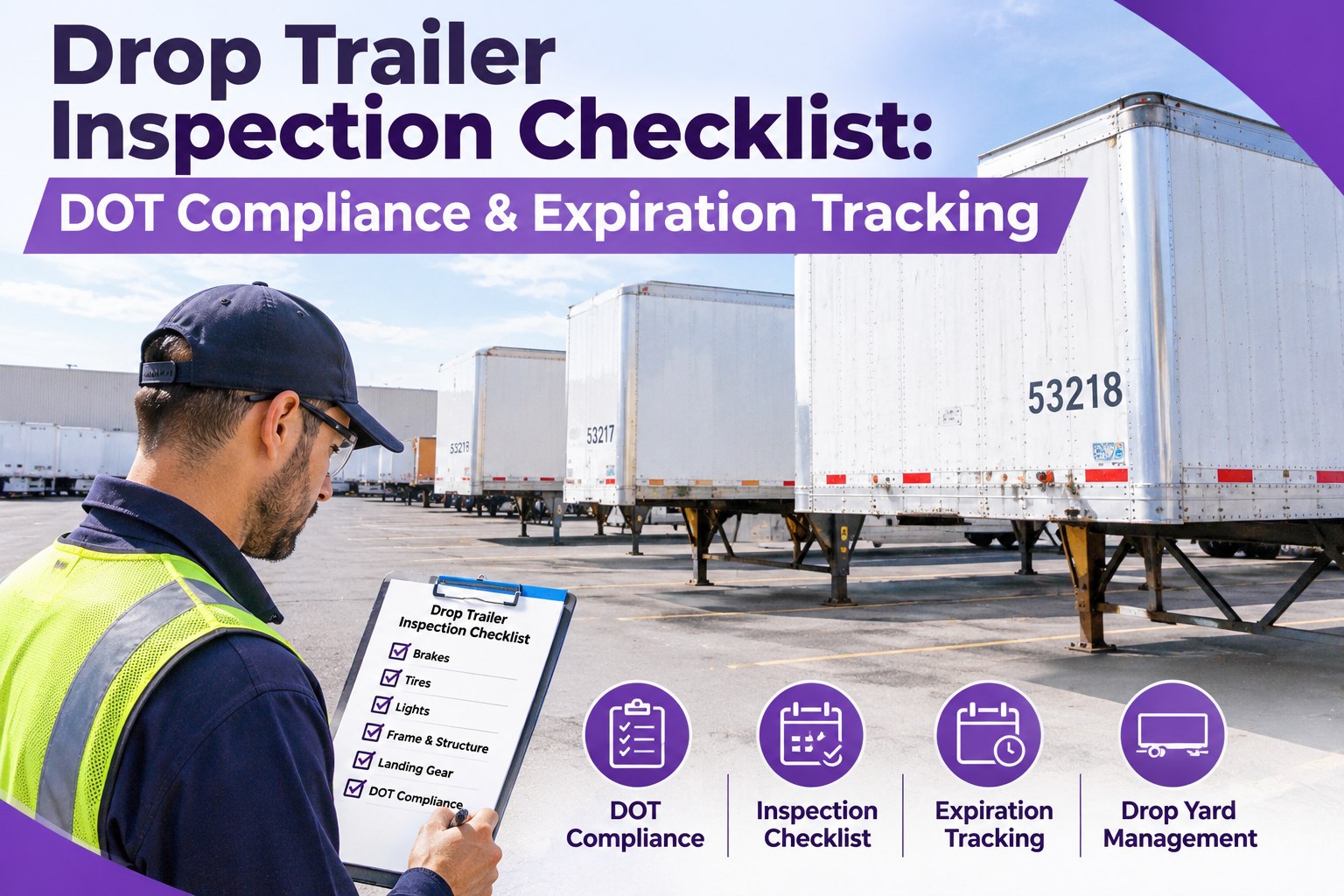
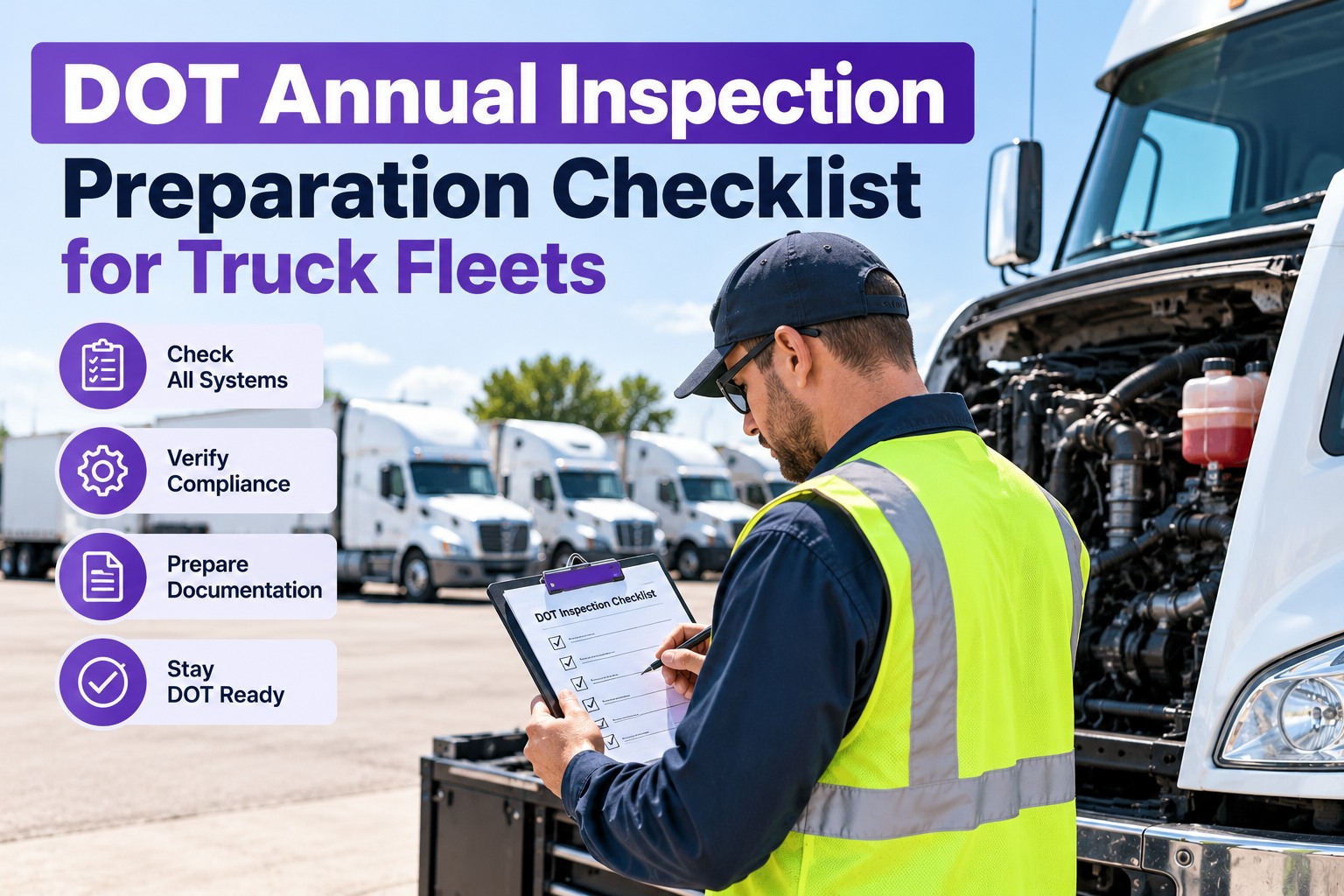
Every commercial unit at 10,001 lbs GVWR or more — trailers included — must pass a comprehensive inspection at least once every 12 months. The clock runs from the last inspection date, not the calendar year: a trailer done on 18 July 2026 is due by the end of July 2027. The inspection covers the Appendix A component groups.
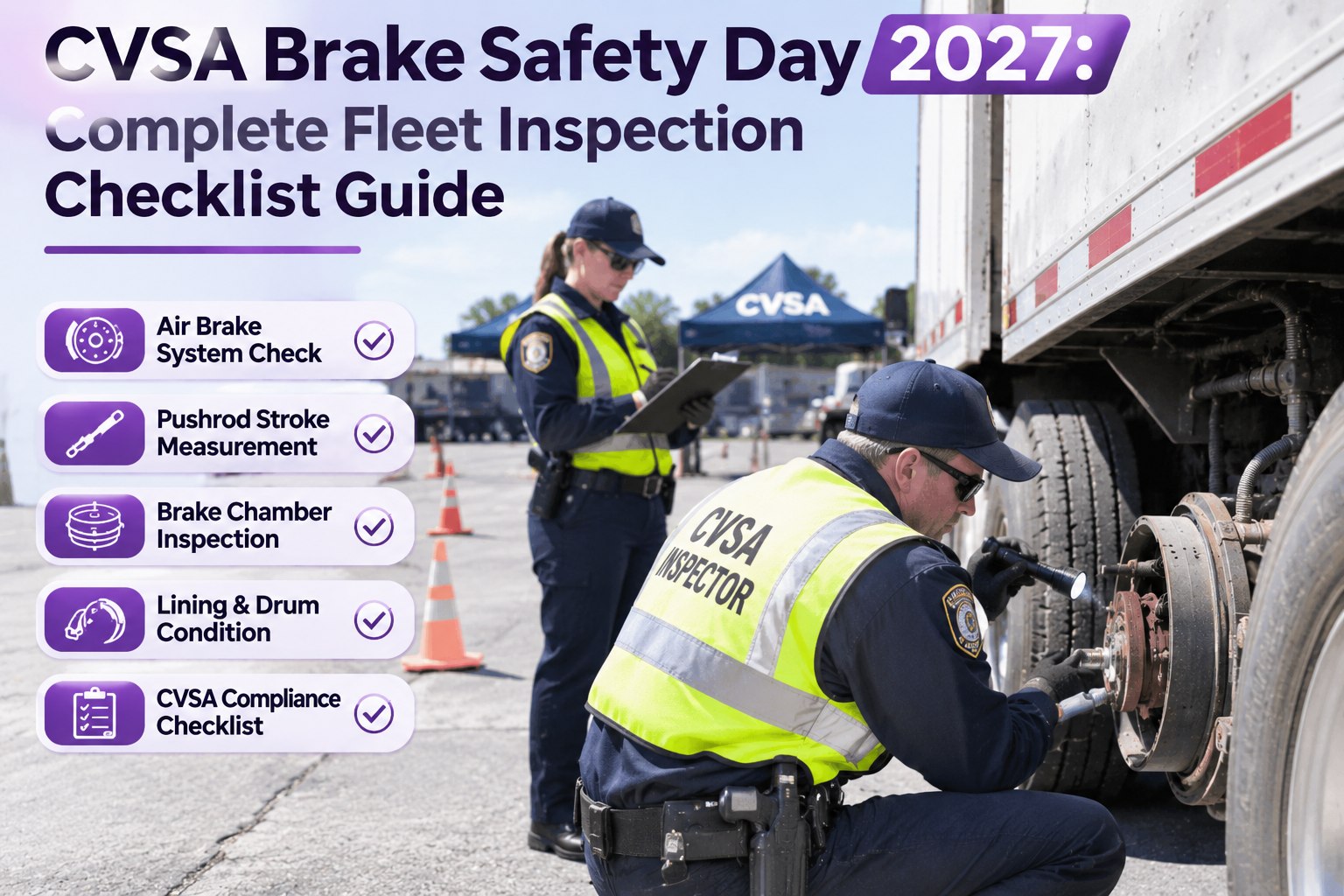
Brake defects alone drive nearly one in five out-of-service orders during CVSA Roadcheck — which is why the brake group gets the hardest look on any trailer. Book a demo to tie annual findings straight to work orders.
§396.19 — Who's Qualified to Inspect
The inspection is only valid if the person who signs it is qualified under §396.19 — a report signed by anyone else is invalid on its face. The good news for fleets: in-house inspection is fully allowed, as long as your inspector meets the bar and has a qualification file on record.
Understands the Appendix A criteria, can identify defects, and is proficient in the methods and tools — through a training program, a state certificate, or training plus at least one year of experience.
The carrier keeps evidence of the inspector's qualification — training records, experience letters, identity — on file for the inspector's tenure plus one year.
The report identifies the inspector, carrier, vehicle, date, items checked, and results. No qualification file behind the signature, and the whole inspection doesn't count.
§396.21 — The Record and the Proof
Passing the inspection isn't enough — the paperwork has to exist and ride with the trailer. Two things are non-negotiable: the retained report and the proof in the vehicle.
This is the part fleets underestimate. An expired decal with no current report copy in the unit, or a missing decal with no report, means the roadside officer treats the trailer as never inspected — and an out-of-service order can issue on the spot. The inspection could have been done perfectly; if the proof isn't current and present, the trailer is grounded.
In-House or Third-Party? Both Are Allowed
You don't have to send every trailer out. The rule lets a carrier inspect in-house with a qualified inspector, which for a large fleet is usually faster and cheaper — provided the qualification file and the records are airtight.
Fully allowed with a §396.19-qualified inspector on staff. Faster turnaround, lower cost per unit, full control of scheduling — but you own the qualification file and the retention discipline.
A qualified shop or state program signs the report. Less record-keeping burden on you, but you depend on their schedule and still have to keep the certificate and proof current on every unit.
Fifty Trailers, Fifty Expiration Clocks — One Dashboard
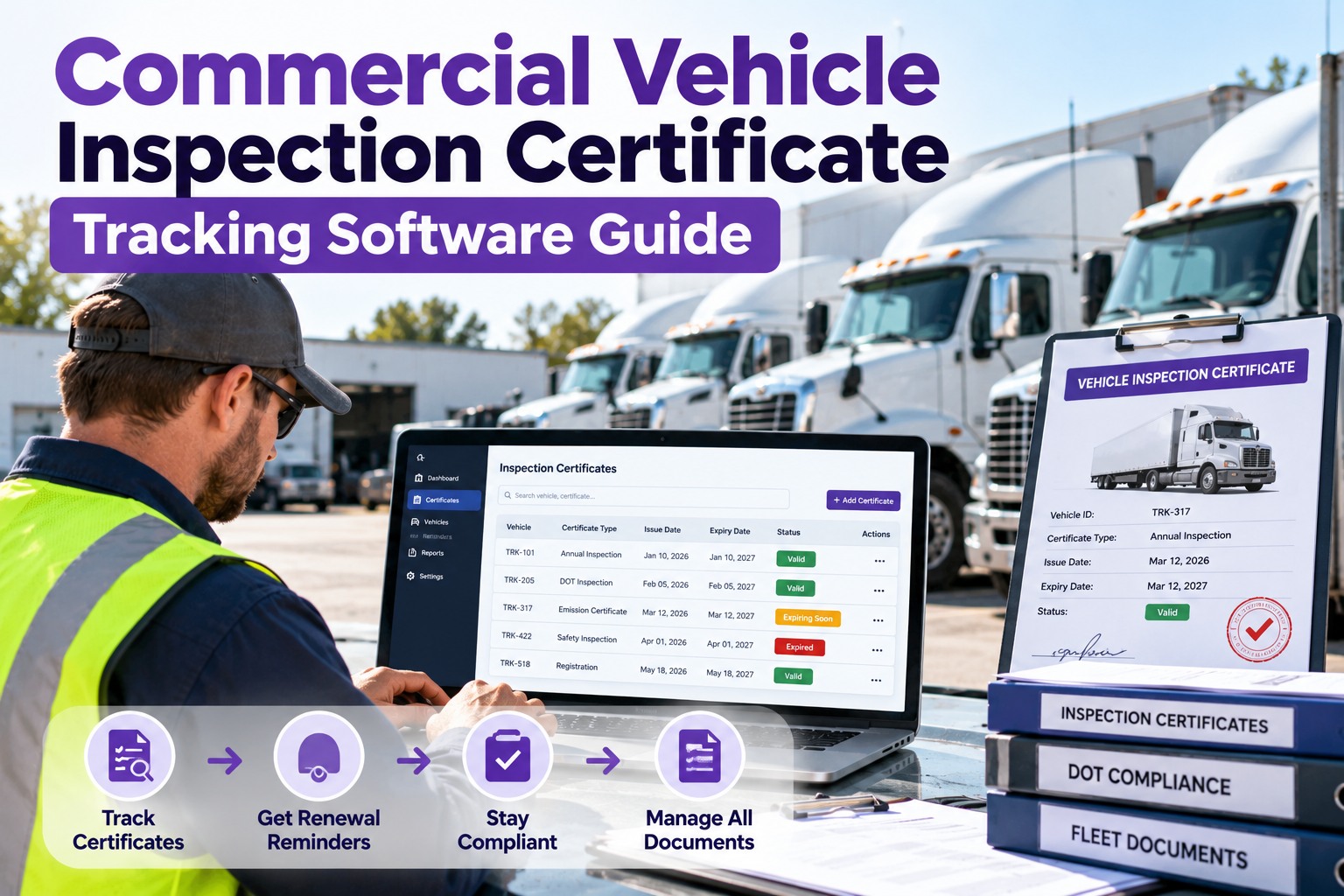
The hard part of annual inspections at fleet scale isn't the inspection — it's never missing a date across dozens of units whose clocks all run independently. Truck Inspection & Maintenance Management Software holds every trailer's inspection date, inspector, and certificate on one record, flags units nearing expiration at 60, 30, 14, and 7 days out, and surfaces the clustered expirations before they bunch up on one week. A failed annual becomes a work order, the certificate stays on file for its 14 months, and no trailer rolls on an expired sticker. Start free and put every annual on an alert.
Scheduling Annuals Across a Large Trailer Fleet
Because the due date is 12 months from each trailer's last inspection, a big fleet's expirations scatter across the whole year — and cluster unpredictably. Staying ahead is a tracking problem, not an inspection problem.
Frequently Asked Questions
Keep Every Trailer's Annual Current — and Provable
Truck Inspection & Maintenance Management Software tracks each trailer's §396.17 due date, holds the §396.19 inspector file and the §396.21 certificate per unit, and alerts you at 60, 30, 14, and 7 days before any annual lapses. Turn a failed inspection into a work order, keep the proof on file for its 14 months, and never let a trailer roll on an expired sticker.