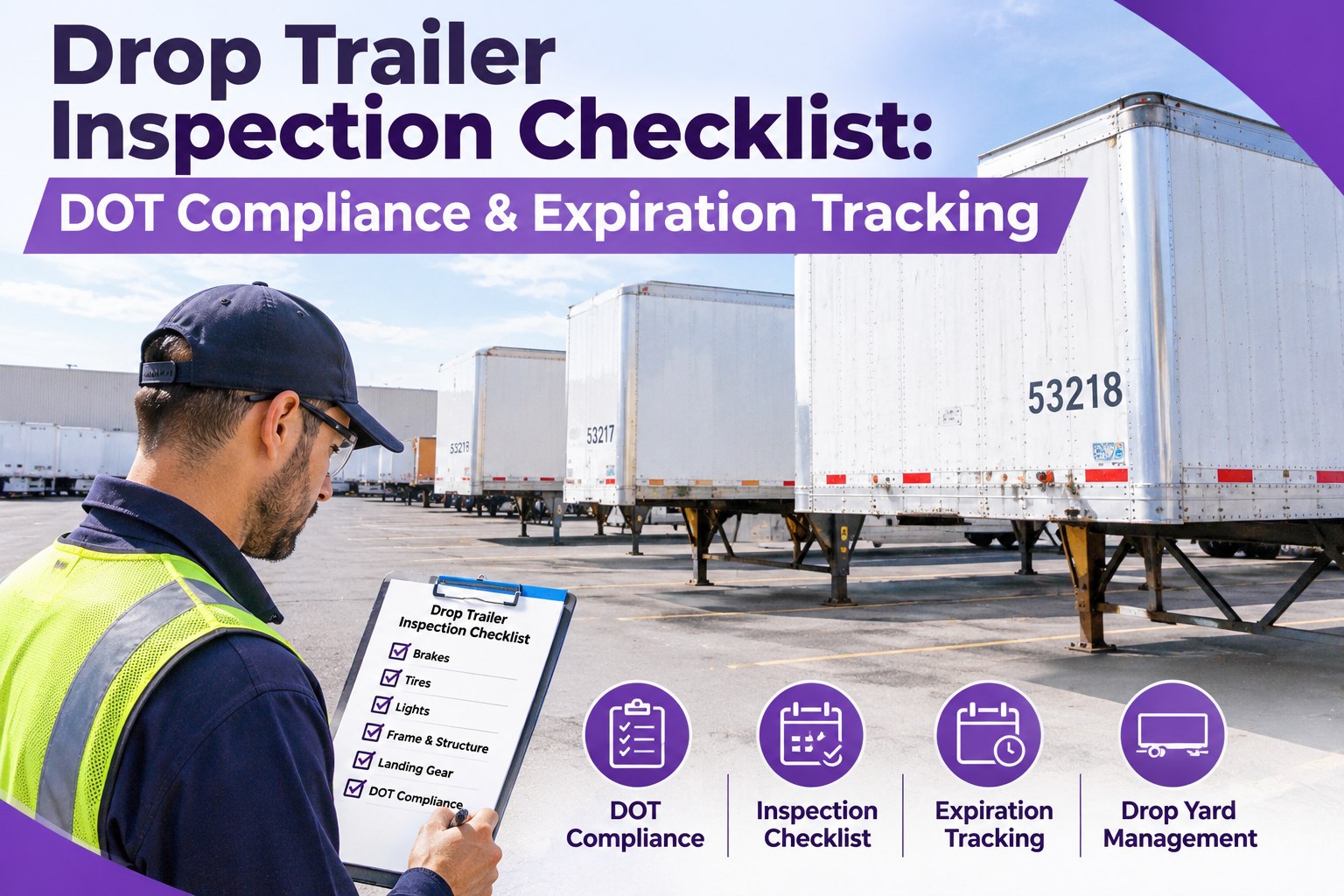
A drop trailer's biggest compliance risk isn't a worn brake — it's a calendar. Leave a trailer spotted in a customer's lot for six weeks and its annual DOT inspection keeps counting down exactly as fast as it would on a trailer running 500 miles a day. You can't dispatch a unit whose inspection is past twelve months, but you also can't inspect what you can't find. The whole game is knowing where every trailer sits and when each one expires before a driver hooks to the one that lapsed while nobody was watching. Start free and track every trailer's inspection date.
Drop Trailer Inspection Checklist: DOT Compliance & Expiration Tracking
Why Spotted Trailers Quietly Fall Out of Compliance
A trailer left at a customer site or a yard runs the same twelve-month clock as one on the road — but it has none of the daily eyes on it that catch a lapse. Three forces push unattended trailers out of compliance, and they all work in the dark.
What the DOT Actually Requires
The rules are short and strict. Every trailer is its own commercial vehicle, and the tractor's clean file does nothing for the box behind it.
The Expiration Problem Is a Visibility Problem
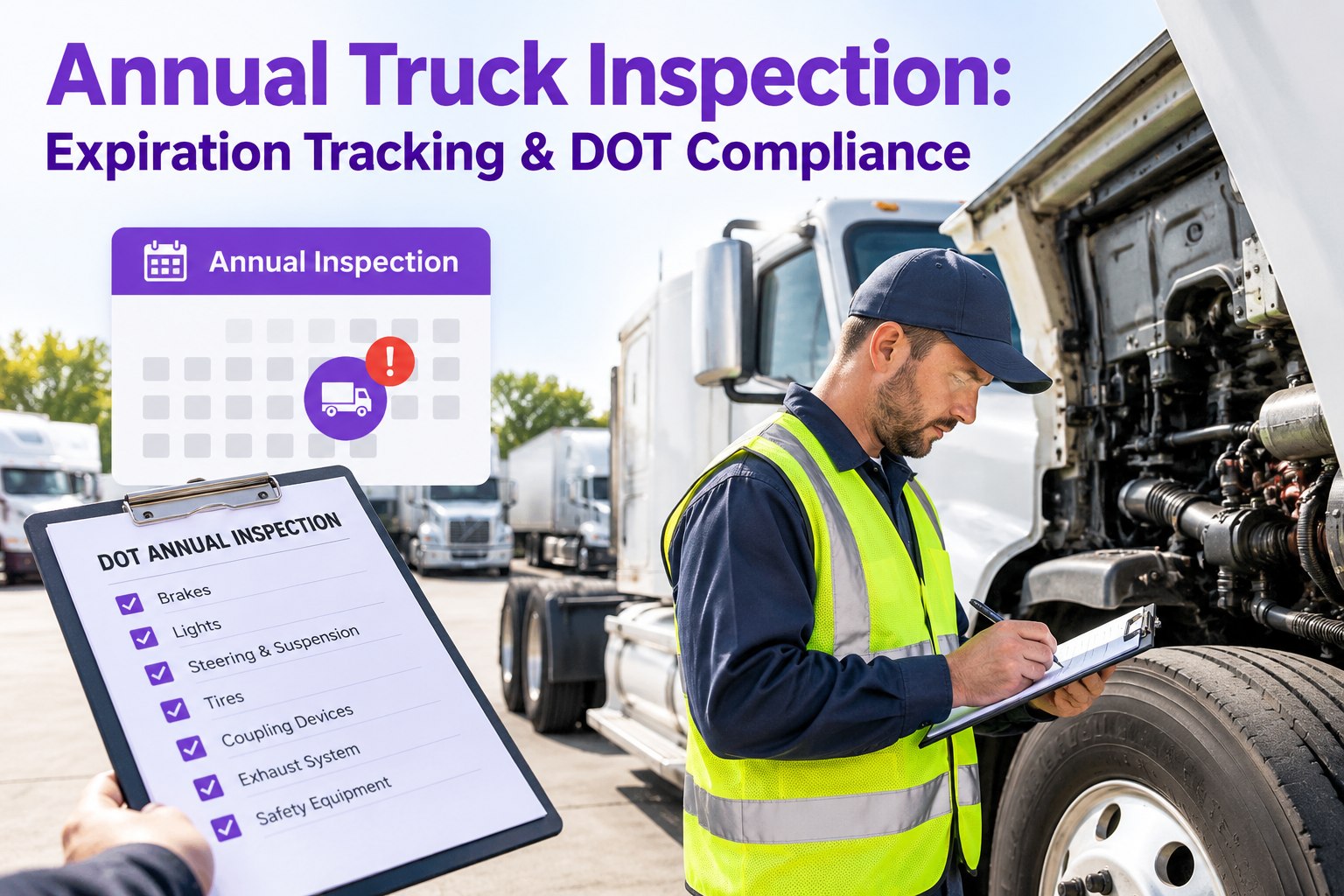
You can't manage a date you can't see. The fix is one list of every trailer — its location and its expiration — sorted into a window you can act on, so renewals get scheduled before the deadline instead of discovered after it.
The point isn't a prettier record — it's that a renewal lands on a schedule and a lapsed trailer can't be assigned to a load by mistake. Book a demo to see the expiration board on your own fleet.
The Return-to-Service Inspection
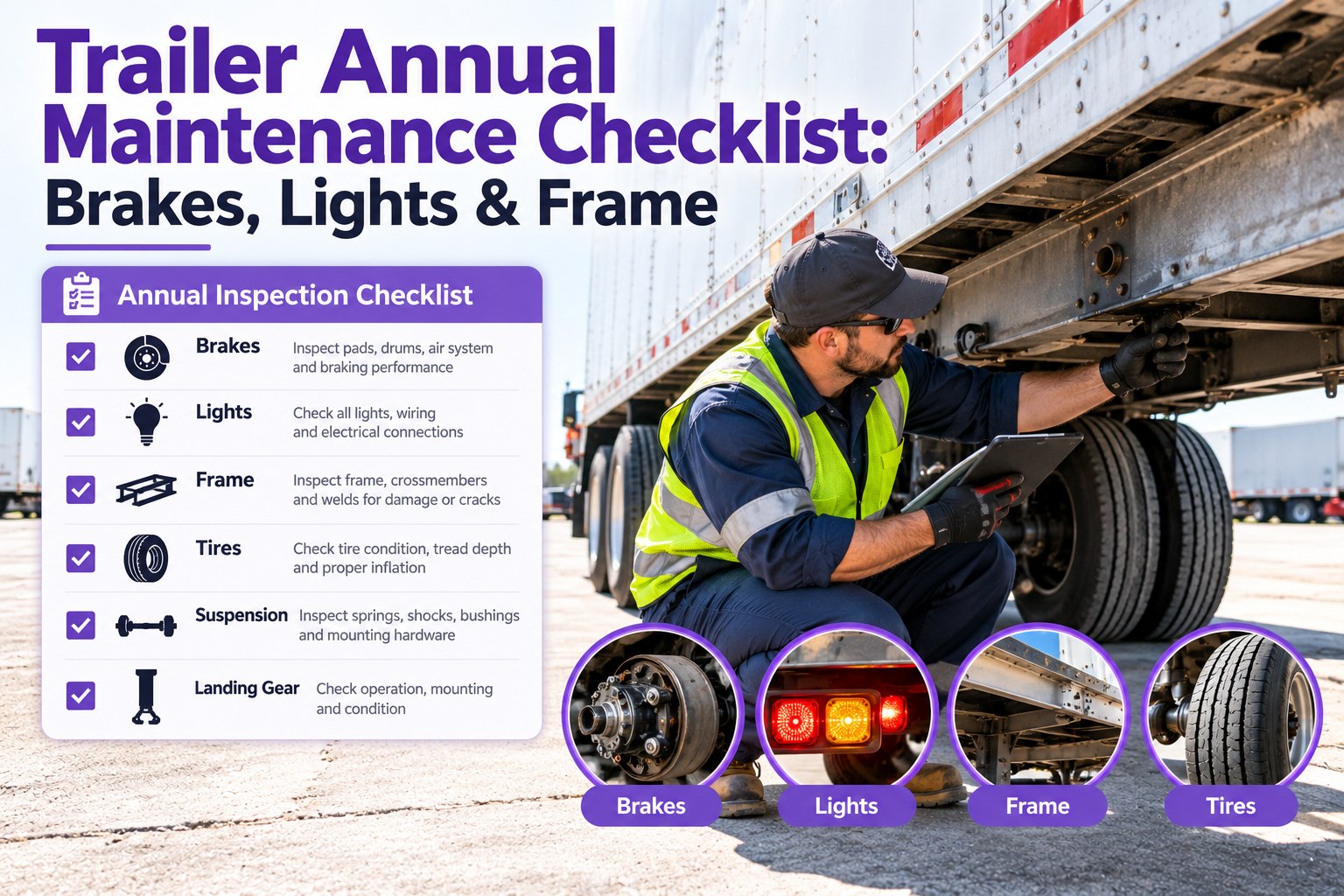
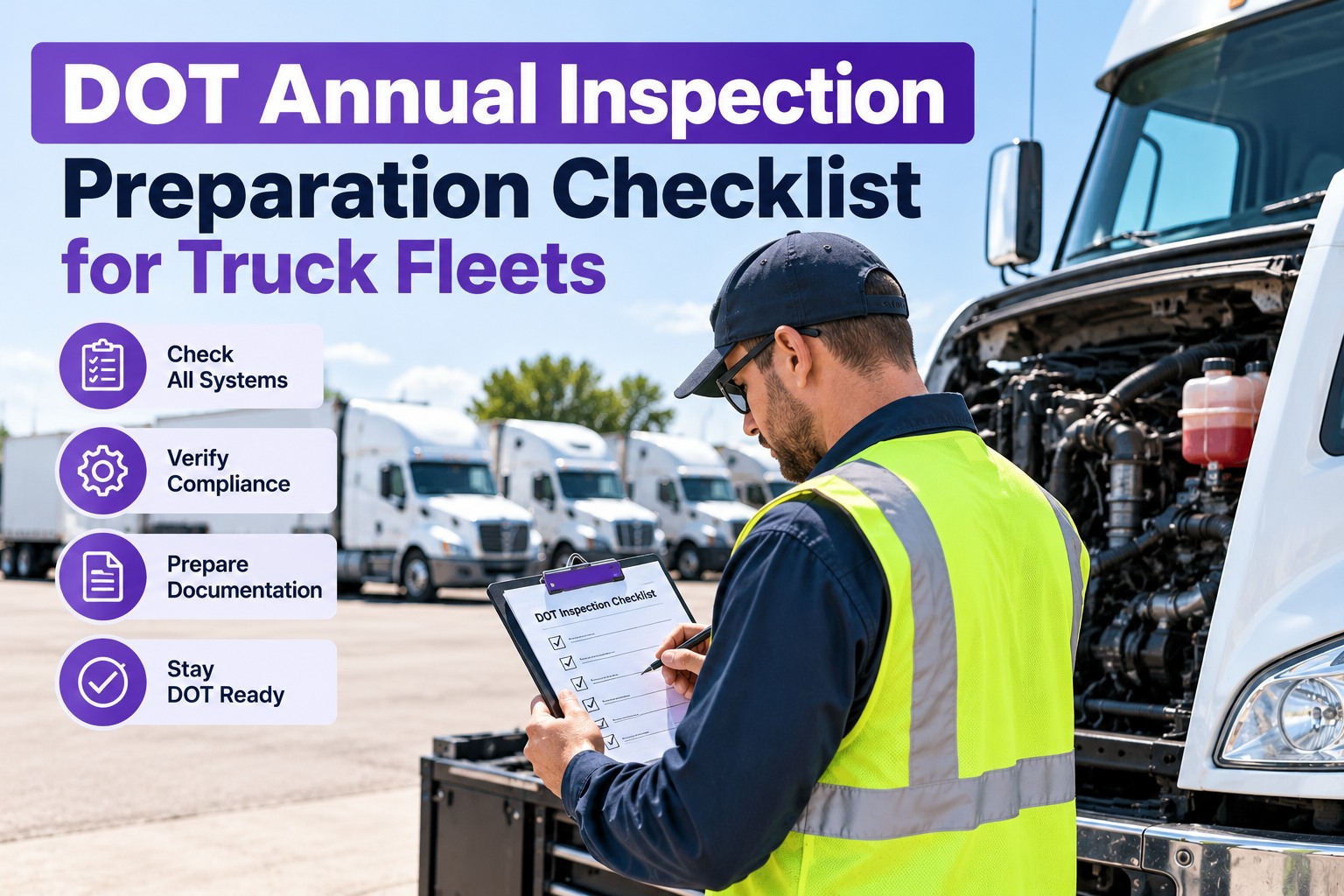
Before a parked trailer goes back under a load — and at every annual — it gets the full Appendix A walkaround. Work it top to bottom and log each item as you clear it.
Parked Doesn't Mean Protected
A trailer sitting for weeks degrades in ways a moving one doesn't. These are the items that quietly fail while a unit waits, and the reason a long-parked trailer needs more than a glance before it rolls.
One List, Every Trailer, Every Date
Compliance on a scattered trailer fleet comes down to a single question: can you see every unit and its expiration in one place? Put the inspection, the location and the clock under each trailer and the answer is yes — before an auditor or a roadside asks it for you.
Interchange & Customer-Lot Trailers
Shared equipment adds one more wrinkle: when a trailer sits in an interchange pool or a customer's yard, the inspection duty still follows the carrier operating it, and intermodal equipment providers carry their own obligations. The practical rule is simple — whoever puts the trailer on the road owns the current inspection, so the only safe position is to track the expiration on every unit you might dispatch, no matter whose lot it's parked in or whose logo is on the door. Book a demo to track pooled and interchange trailers together.
Why Fleets Run Trailer Compliance in Software
Frequently Asked Questions
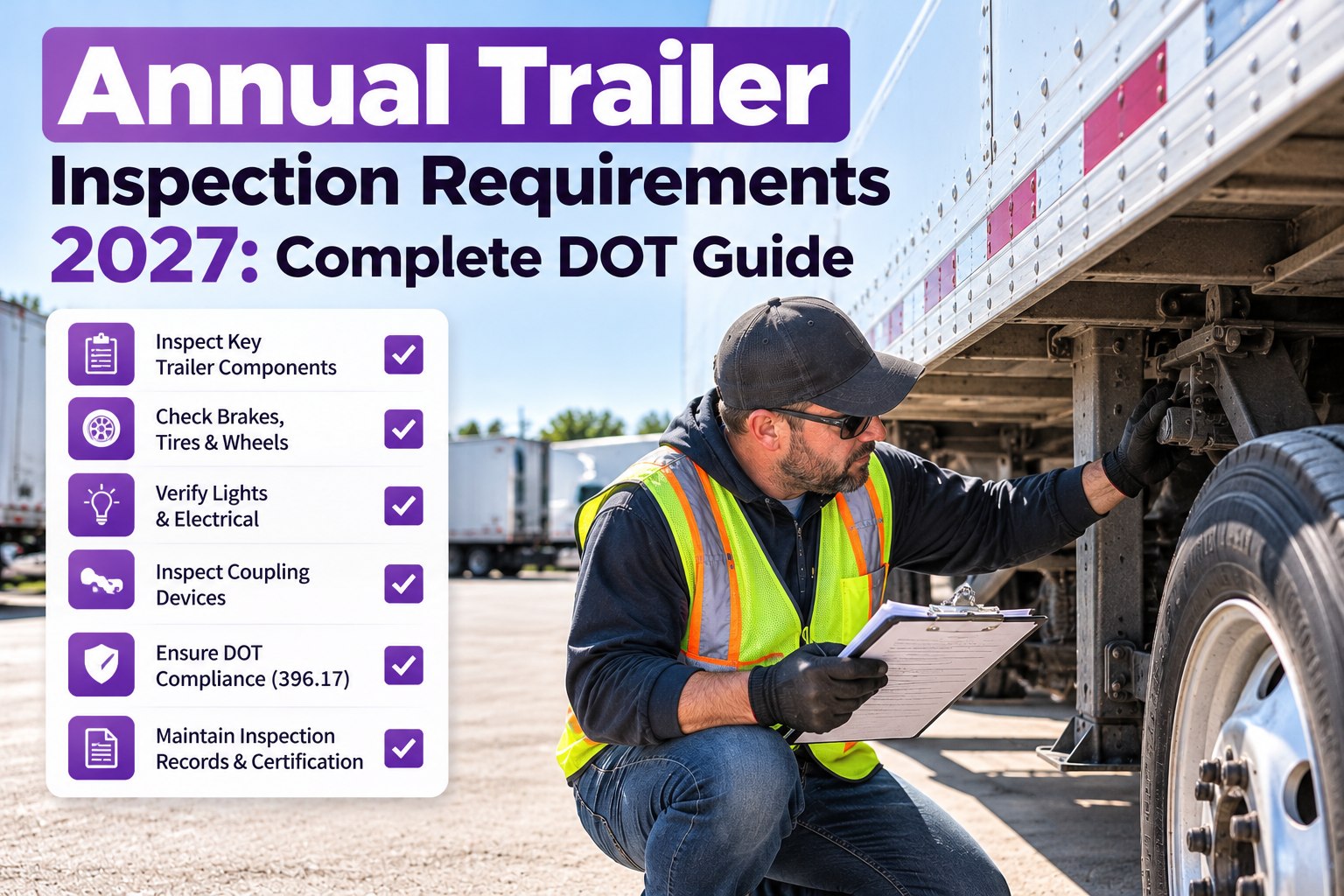
It's the same federal annual inspection every trailer needs under 49 CFR 396.17 — the difference is that a spotted trailer is easy to forget. The twelve-month clock runs whether the unit moves or sits, so the inspection is due by the last day of the month a year after the last one, parked or not. Book a demo to track inspection due dates automatically.
Yes. The annual inspection requirement is tied to operating the trailer, and the twelve-month validity doesn't pause while it's parked. A unit that's sat for months can't be dispatched on a lapsed inspection — it has to be re-inspected first. Book a demo to see parked-trailer compliance tracking.
Under 49 CFR 396.21, the carrier retains the inspection report for 14 months where the vehicle is housed or maintained, and proof rides on the trailer as a decal or report. Missing retention records are among the gaps auditors find most often. Book a demo to keep inspection records audit-ready.
The carrier operating the trailer is responsible for its current annual inspection, and intermodal equipment providers have obligations of their own. Because the duty follows whoever dispatches it, the safe practice is to track the expiration on every unit you might put on the road. Book a demo to manage pooled trailers in one place.
Never Let a Trailer Lapse in a Lot Again
Truck Inspection & Maintenance Management Software ties every annual inspection to the trailer, counts down to each expiration, and keeps the record audit-ready — so a scattered trailer fleet stays compliant without anyone chasing paper.