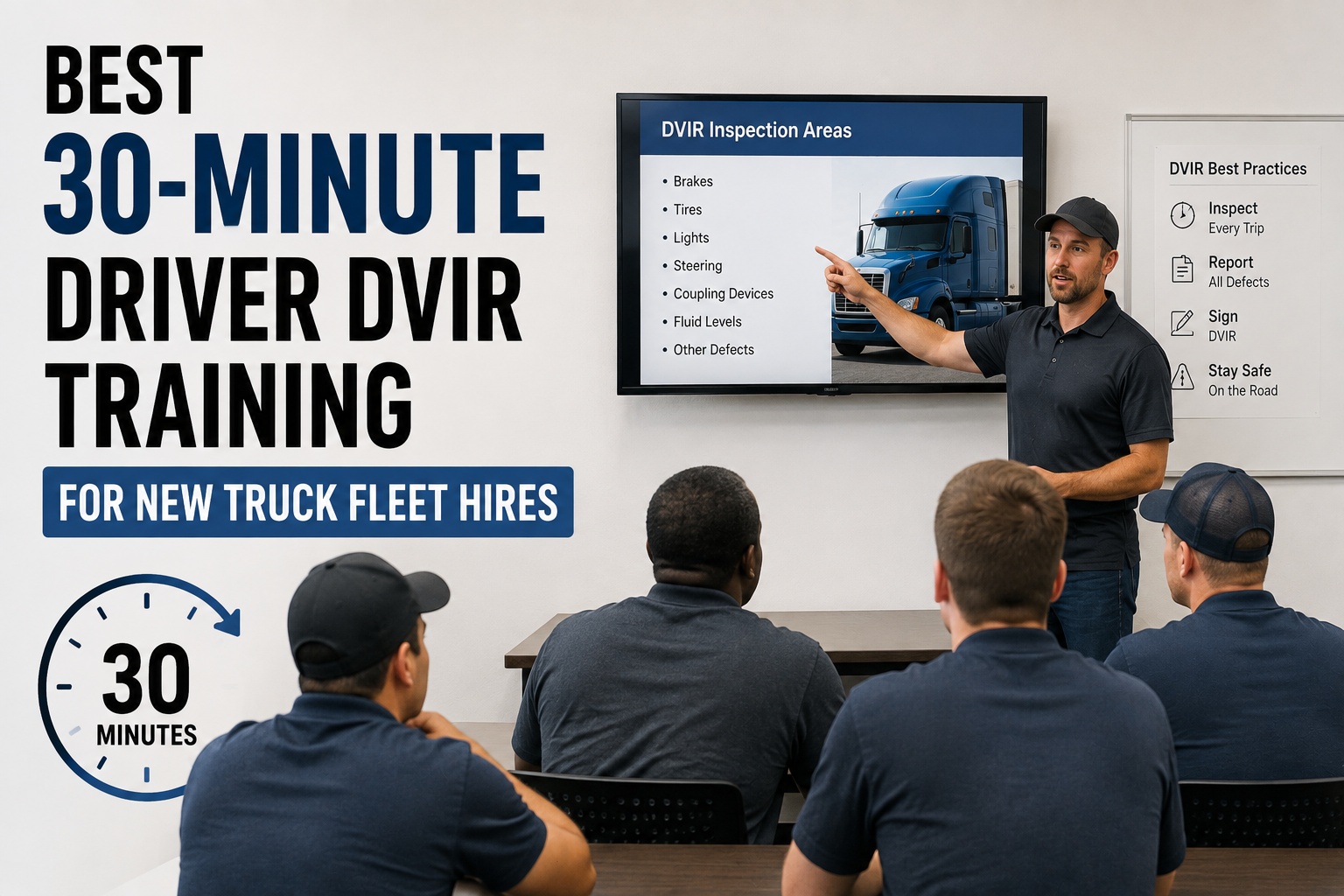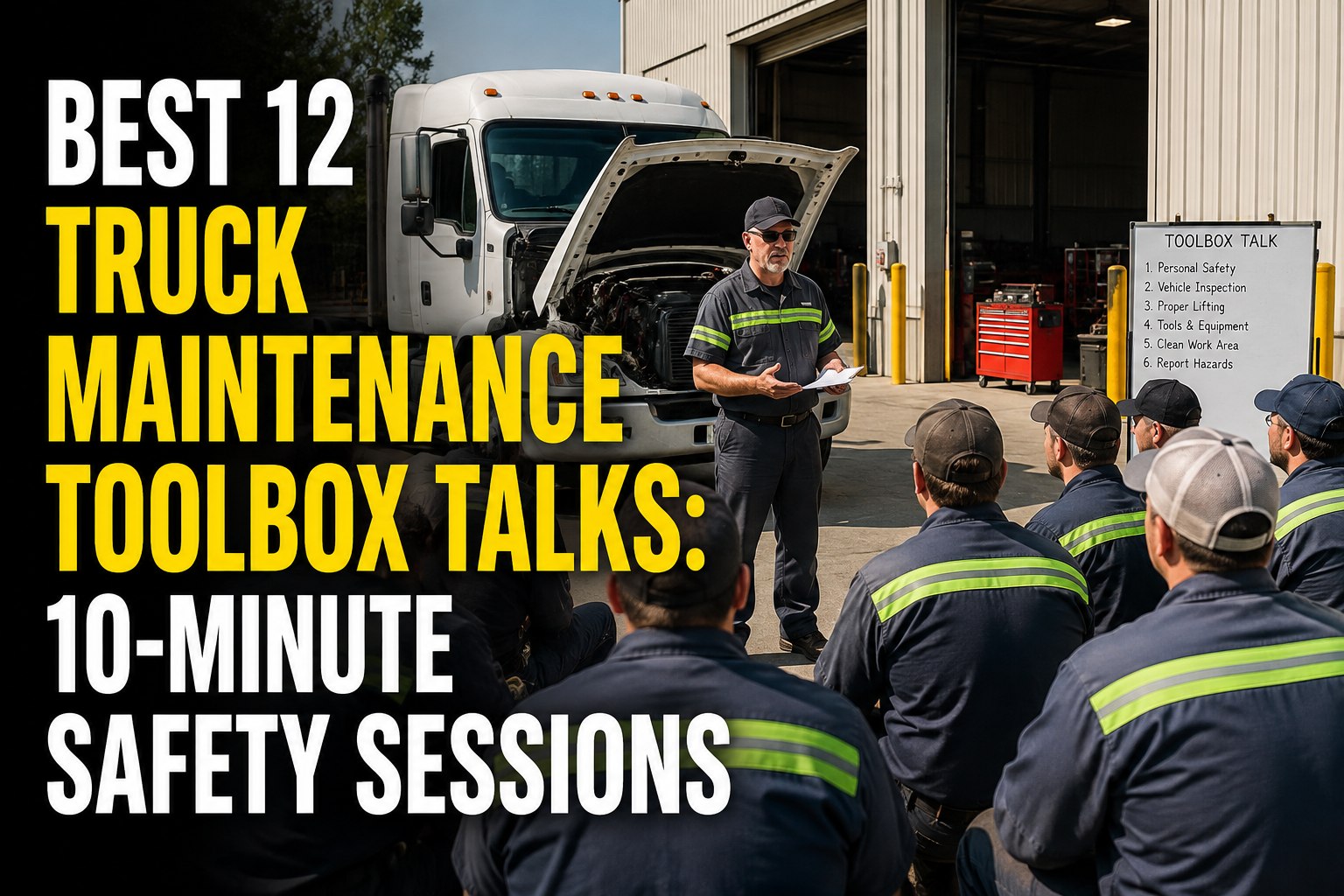
Ask any shop foreman what actually moves the needle on defect rates, CSA scores, and preventable breakdowns, and you'll rarely hear "annual training." You'll hear "the ten minutes we spend together every morning." Toolbox talks — short, focused, pre-shift safety briefings — are the single most under-used compliance tool in trucking. When done consistently, they cut roadside violations, catch defects earlier in the DVIR chain, and build a maintenance culture drivers actually buy into. When done poorly (or not at all), they become the reason fleets fail audits they otherwise would have passed. This checklist gives you 12 ready-to-run 10-minute toolbox talks covering the full maintenance lifecycle — pre-trip inspections, DVIR chain of custody, preventive maintenance, diagnostic trouble codes, and root cause analysis — with talking points, driver questions, and sign-off structure your team can start using this week. Start a free Truck Inspection & Maintenance trial to schedule, deliver, and log every talk from one system your drivers already use for DVIRs.
The Best 12 Truck Maintenance Toolbox Talks: 10-Minute Safety Sessions
Twelve field-tested, ten-minute toolbox talks covering pre-trip inspection, DVIR compliance, preventive maintenance, DTC response, and root cause analysis — with talking points, driver prompts, and sign-off structure that keep every session focused, documented, and audit-ready.
Why 10-Minute Talks Beat Hour-Long Meetings
Toolbox talks work because they respect the two things a driver actually has: limited attention before a shift, and a very specific set of hazards they'll face that day. A monthly hour-long safety meeting gets skimmed and forgotten. A focused 10-minute talk on brake slack — right before the driver walks out to inspect the brakes — sticks. Fleets running structured talk programs with our team's guidance consistently report lower defect rates within the first quarter.
Short, single-topic sessions land far better than long, multi-topic meetings — drivers remember the one thing, not five diluted ones.
Every talk creates a signed attendance record — proof to auditors and insurers that safety training is ongoing, not annual theater.
Daily rituals build habit. When talks are consistent, drivers begin flagging near-misses on their own instead of waiting for incidents.
Fleets running structured toolbox talks see measurably fewer DVIR and vehicle maintenance BASIC violations at roadside inspection.
The 12 Toolbox Talks — Grouped by Lifecycle Stage
These twelve are organized to mirror how a defect actually moves through a fleet: catch it (pre-trip), document it (DVIR), prevent it (PM), diagnose it (DTC), and eliminate its cause (RCA). Rotate through them monthly, or pick the ones that match your current pain points — sign up free for up to 3 trucks and load the full 12-talk series into your account in minutes.
Break the truck into seven physical zones — front, driver side, rear, curb side, engine, in-cab, coupling — so nothing gets skipped. Talk through why sequence beats memory.
Prompt: "What's the one item you skip most on rushed mornings?"Push-rod stroke limits, low-air warning testing, tank drain-off, and the 60-psi apply test. The most cited pre-trip defect category on roadside inspections.
Prompt: "When did you last hear your low-air warning trigger correctly?"Tread depth minimums, sidewall damage, lug torque and rust streaks, fifth wheel jaw engagement, safety chain hookup. All CSA vehicle-maintenance BASIC hotspots.
Prompt: "What's the earliest sign of a loose wheel you've caught?"How a well-written defect — location, symptom, severity, photo — routes straight to the right technician versus a vague "brakes bad" that bounces back for clarification.
Prompt: "Show your last defect entry. Would the mechanic know what to grab?"Driver report, mechanic certification, next-driver acknowledgment. Which link auditors check first, and why the third signature is the most commonly missed in DOT reviews.
Prompt: "Did you review the last DVIR before you climbed in this morning?"Why a geotagged photo of a cracked mud flap beats a paragraph of description — in maintenance handoff, roadside disputes, and litigation defense.
Prompt: "What's a defect a photo would have settled faster than a call?"Mileage isn't everything. Idle hours, PTO cycles, and route severity all shift the real service interval. Why "the OEM says X" is a starting point, not the answer.
Prompt: "Which of our units are running the hardest right now?"Driver observations that never make it to the PM sheet. Build the habit of flagging "watch items" — noises, smells, hard shifts — even when nothing is broken yet.
Prompt: "What's been quietly bugging you about your unit this week?"Winter fuel treatment, air-dryer purge cycles, coolant concentration, tire pressure swings. What changes on the checklist when the temperature does.
Prompt: "Which seasonal item bit us hardest last year?"P-codes vs C-codes, active vs pending, and the three DTCs that always mean "pull over now." How to describe a fault to the shop without saying "check engine light on."
Prompt: "Last light you saw — what did you do in the first five minutes?"Simple root cause analysis. Why "we replaced the part" isn't a fix if the same failure keeps returning — and how to trace it back to a real cause.
Prompt: "Which unit keeps landing in the shop for the same issue?"The near-miss you don't report becomes the incident someone else has. Build psychological safety around raising concerns before they escalate.
Prompt: "What almost happened this week that we should learn from?"Anatomy of a 10-Minute Talk
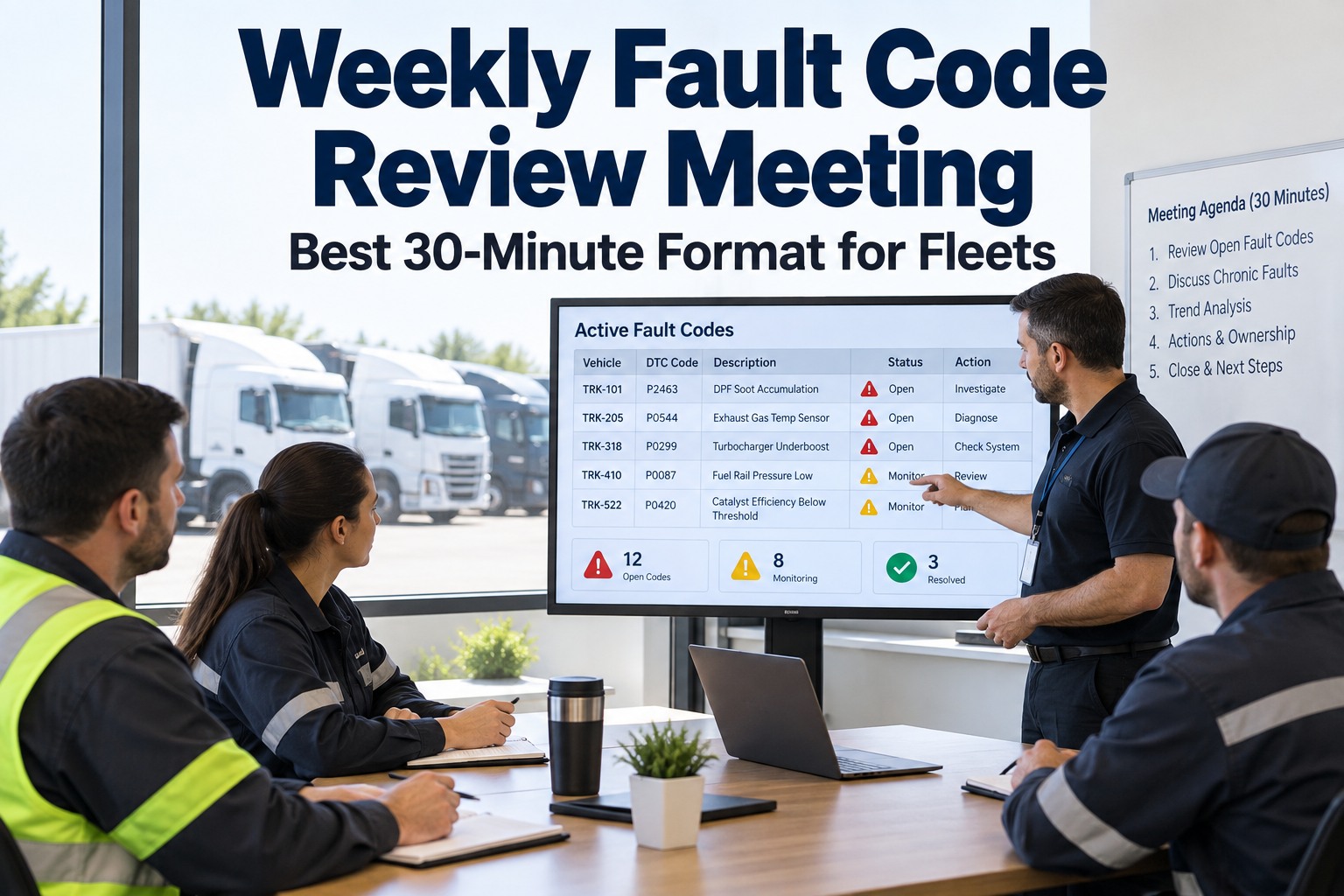
Every session in the series follows the same structure. The consistency is the point — drivers know exactly what's coming, foremen know how to run it, and the sign-off record looks identical to an auditor no matter who led the talk.
Open with a real incident, a recent near-miss, or a roadside violation from another fleet. One minute. No slides.
Four minutes on the single topic. Three or four talking points maximum. Show the item on an actual truck when possible.
Ask the driver prompt. Let two or three people share. This is where the real learning happens — from each other, not from you.
One-line action for the day. Capture signatures — digitally on a tablet, with timestamp and GPS — and log the talk.
Run Every Talk Like It's Audit Day
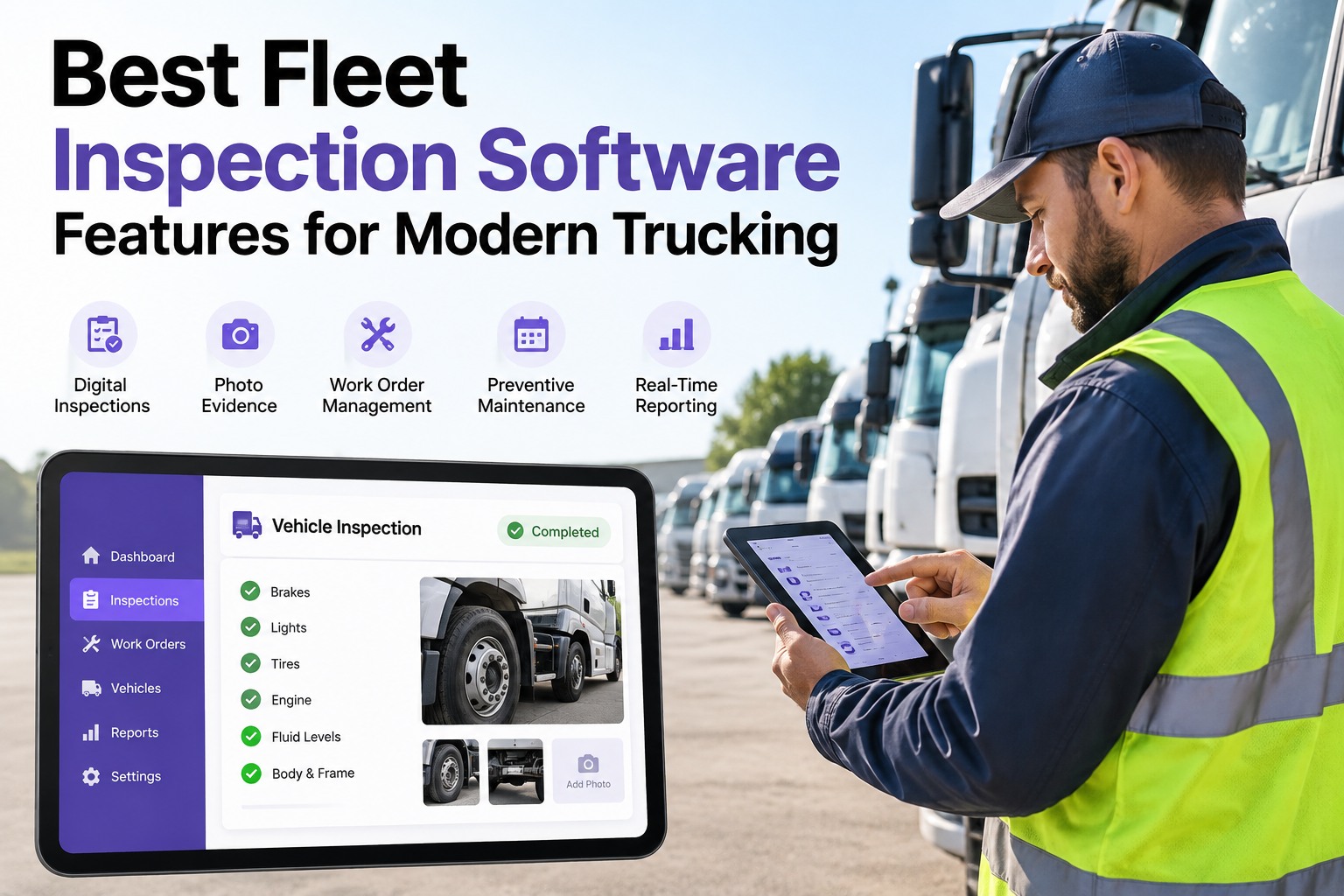
Truck Inspection & Maintenance lets you launch a toolbox talk from a tablet, project the talking points, capture driver signatures with GPS and timestamp, and log the session against the unit and driver — so when the DOT asks for training records, one filter surfaces every talk your fleet has run.
What Sign-Off Should Capture
An unsigned toolbox talk is a conversation. A signed one is a compliance record. These are the five data points that turn a good talk into an audit-defensible artifact — the same metadata that gives digital DVIRs their legal weight. Talk to our compliance team about migrating existing paper sign-off sheets into a searchable digital record.
Locked template so the same talk delivered by two foremen looks identical in the record.
Individual sign-off, not a shared clipboard. Auditors count names, not check-marks.
Server-verified time — proves the talk happened before dispatch, not backfilled after an incident.
Coordinates confirm the session happened at the yard, not signed off from a truck stop.
Stored beyond the DVIR 90-day floor so training history is available for any date range.
Rotation Plan: 12 Talks Across the Year
Twelve talks map naturally to a monthly rotation, but the highest-performing fleets front-load the pre-trip and DVIR talks in Q1 — before winter defect rates spike — and rotate the DTC and RCA talks quarterly. Here's the pattern most shop foremen settle into — and if you'd like help mapping this rotation to your specific vehicle mix and route profile, our support team walks new fleets through it during onboarding. Create your free account to get started.
Frequently Asked Questions
Weekly is the industry standard for high-performing fleets, with a daily 2–3 minute micro-talk on very high-risk operations. Ten-minute weekly sessions balance the retention benefit against driver-hour realities. What matters more than frequency is consistency — an inconsistent weekly cadence beats an on-again-off-again daily one every time. Start a free trial to schedule and log talks digitally.
FMCSA doesn't mandate toolbox talks by name, but 49 CFR 390.3(e)(1) requires carriers to instruct drivers in the regulations, and Part 380 mandates specific driver training. In practice, DOT auditors and insurance underwriters routinely ask to see safety training records — and a consistent toolbox talk log is one of the strongest artifacts you can produce to show ongoing driver instruction beyond initial hire.
Whoever is closest to the work. Shop foremen lead maintenance-focused talks (DVIR, PM, DTC), lead drivers or safety managers lead pre-trip and behavioral talks. Rotating leaders across the year keeps sessions fresh and gives more staff visibility. What you want to avoid is one person delivering the same script for months — engagement drops fast when talks feel like a recording.
No. Toolbox talks reinforce and extend formal training — they don't replace entry-level driver training, HazMat certifications, or annual refreshers required by regulation. Think of them as the daily maintenance layer on top of the structural training program. Fleets that get this balance right have both: formal training on record, plus a rich log of ongoing 10-minute sessions. Ask how to structure the two together.
Almost always a symptom of one of three things: talks are too long, topics feel disconnected from the driver's actual day, or discussion is skipped in favor of one-way lecture. Trim to under 10 minutes, pick a topic tied to a real incident from the past week, and always end with a prompt that requires driver input. Engagement follows relevance and brevity — not enthusiasm.
Turn Every 10 Minutes Into a Compliance Asset
Truck Inspection & Maintenance ties toolbox talks to the rest of your maintenance system — the same platform that runs your digital DVIRs, PM schedules, and defect-to-work-order flow also schedules your safety sessions, captures GPS-stamped signatures, and stores the record for any audit window your DOT reviewer names.