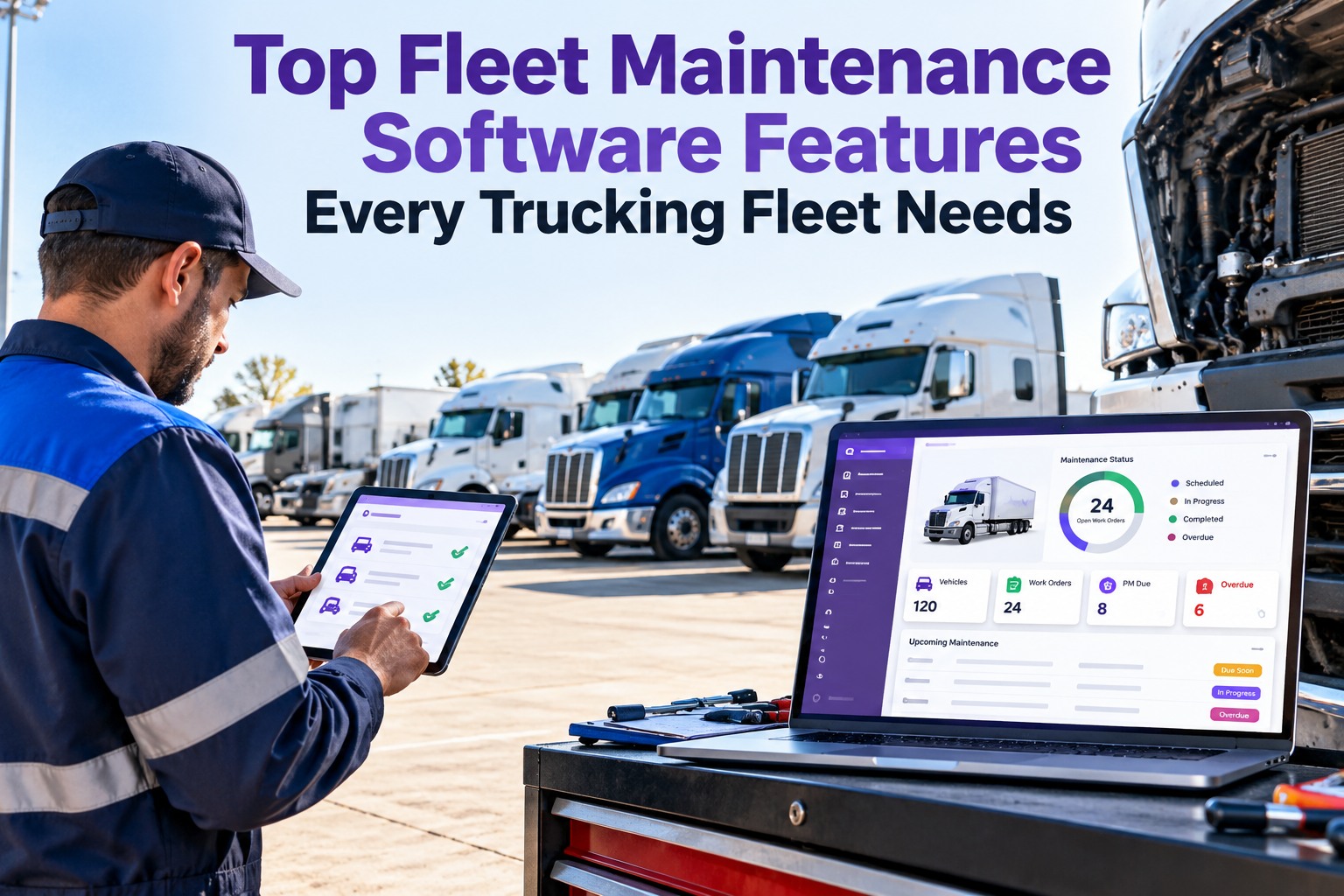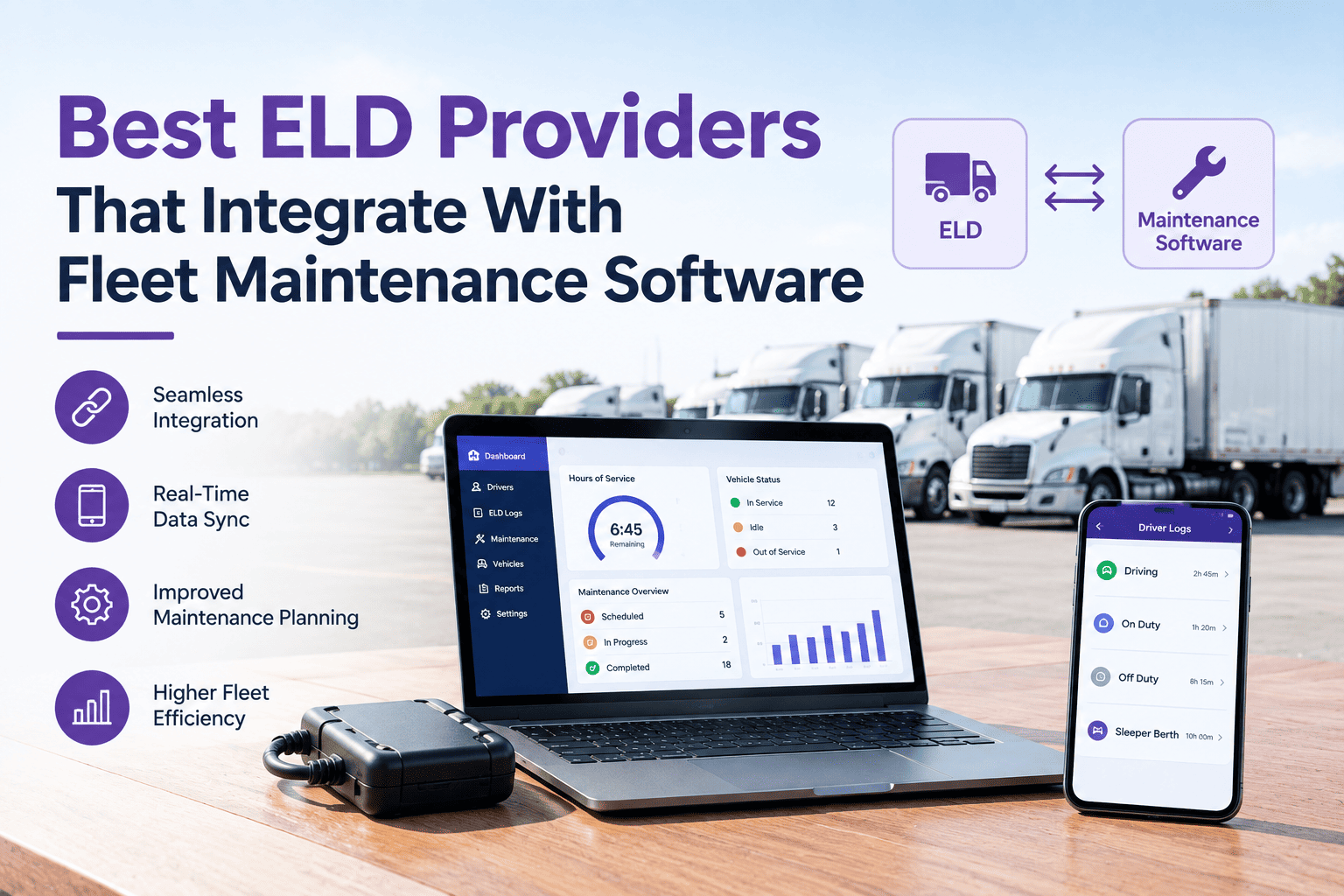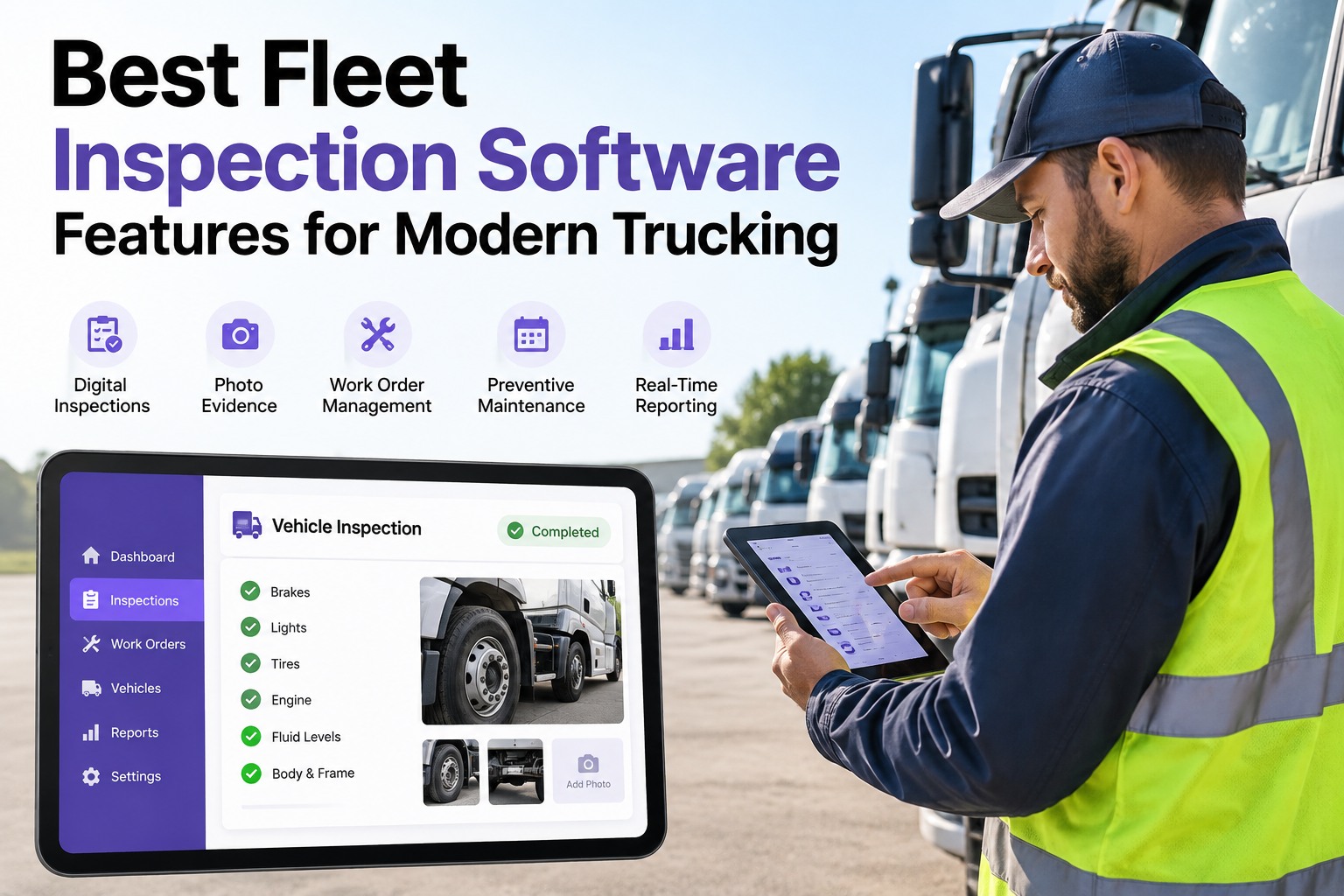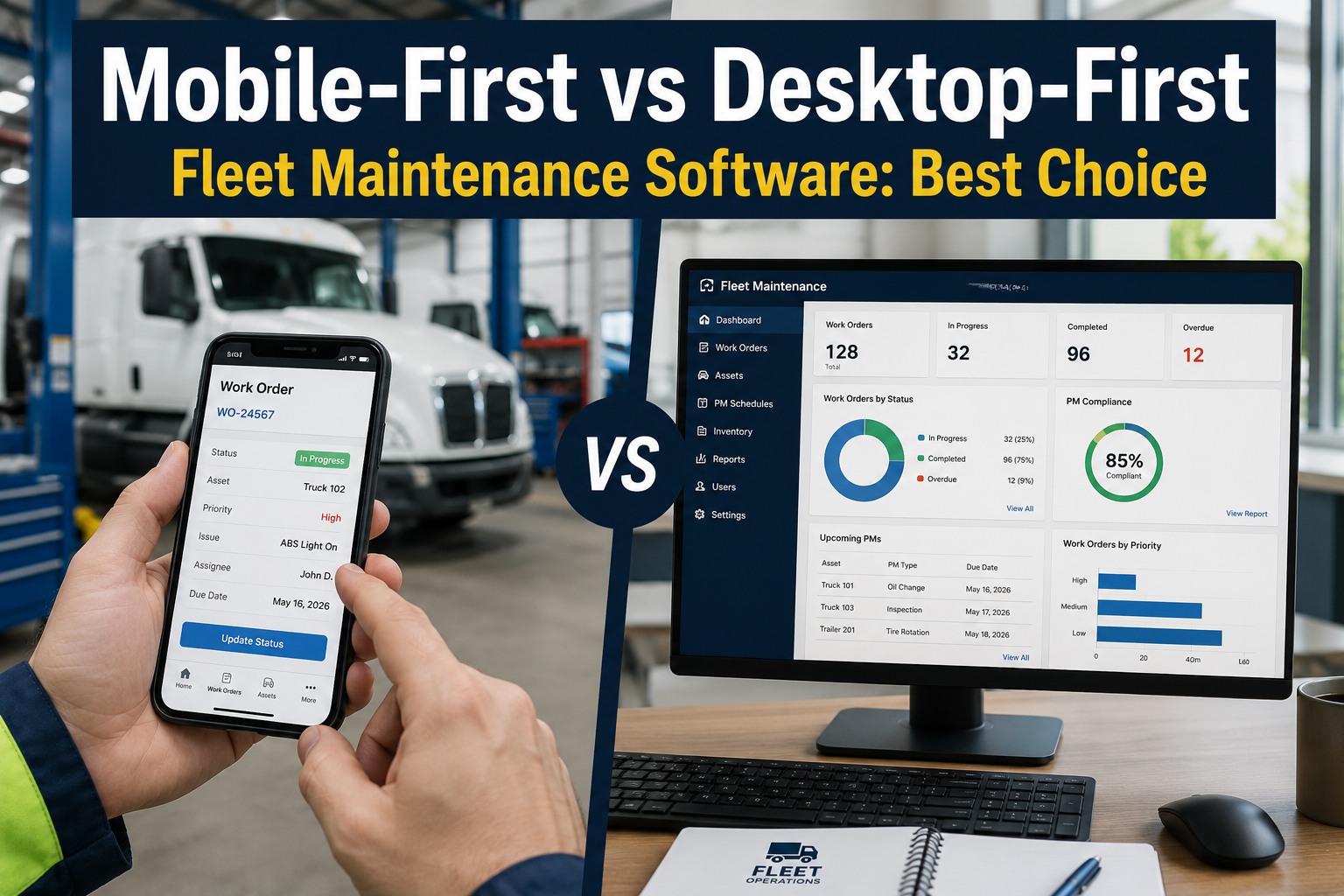
A generic CMMS was built to schedule PM on 200 pieces of factory equipment sitting in one building. A fleet maintenance platform was built to keep 200 trucks running across three time zones under FMCSA regulation. They look similar on a feature list — asset tracking, work orders, PM schedules, reporting. They diverge fast the moment you try to run a trucking operation on the wrong one. The generic CMMS can't produce a §396.11 DVIR chain of custody. It doesn't ingest J1939 diagnostic trouble codes from the truck's ECM. It has no concept of a roadside inspection intake workflow. It doesn't distinguish PTO hours from total engine hours. And when the FMCSA auditor requests 90 days of DVIR records with three signatures each within 48 hours, the generic CMMS produces spreadsheet exports the auditor can't accept as compliant records. Fleets that try to force a manufacturing CMMS onto trucking discover the compliance gaps in an audit — after the citations are already written. This guide walks the exact feature gap between generic CMMS platforms and trucking-specific fleet maintenance software, and explains which one is right for your operation. Sign up free for Truck Inspection & Maintenance today — no credit card required to run a trucking-first platform built for FMCSA compliance from day one, or contact our team for a platform comparison audit configured to your current CMMS setup.
Fleet Maintenance Software vs Generic CMMS: Which Is Best for Trucking
Same feature list on the sales page. Very different outcomes on an FMCSA audit. Here's the exact gap between a generic CMMS and a trucking-first platform.
The Two Platforms Solve Two Different Problems
Generic CMMS platforms — the well-known factory maintenance tools — were built to schedule preventive maintenance on stationary industrial equipment. Fleet maintenance software was built for a completely different physics: mobile assets, federal compliance, and driver workflows. Understanding what each was designed for makes the selection question straightforward.
The 8 Trucking-Specific Requirements a Generic CMMS Can't Handle
This is where the theoretical comparison becomes concrete. Every one of the following is a specific operational requirement that a generic CMMS either doesn't support at all or supports so poorly that the fleet ends up running spreadsheets alongside the "system of record."
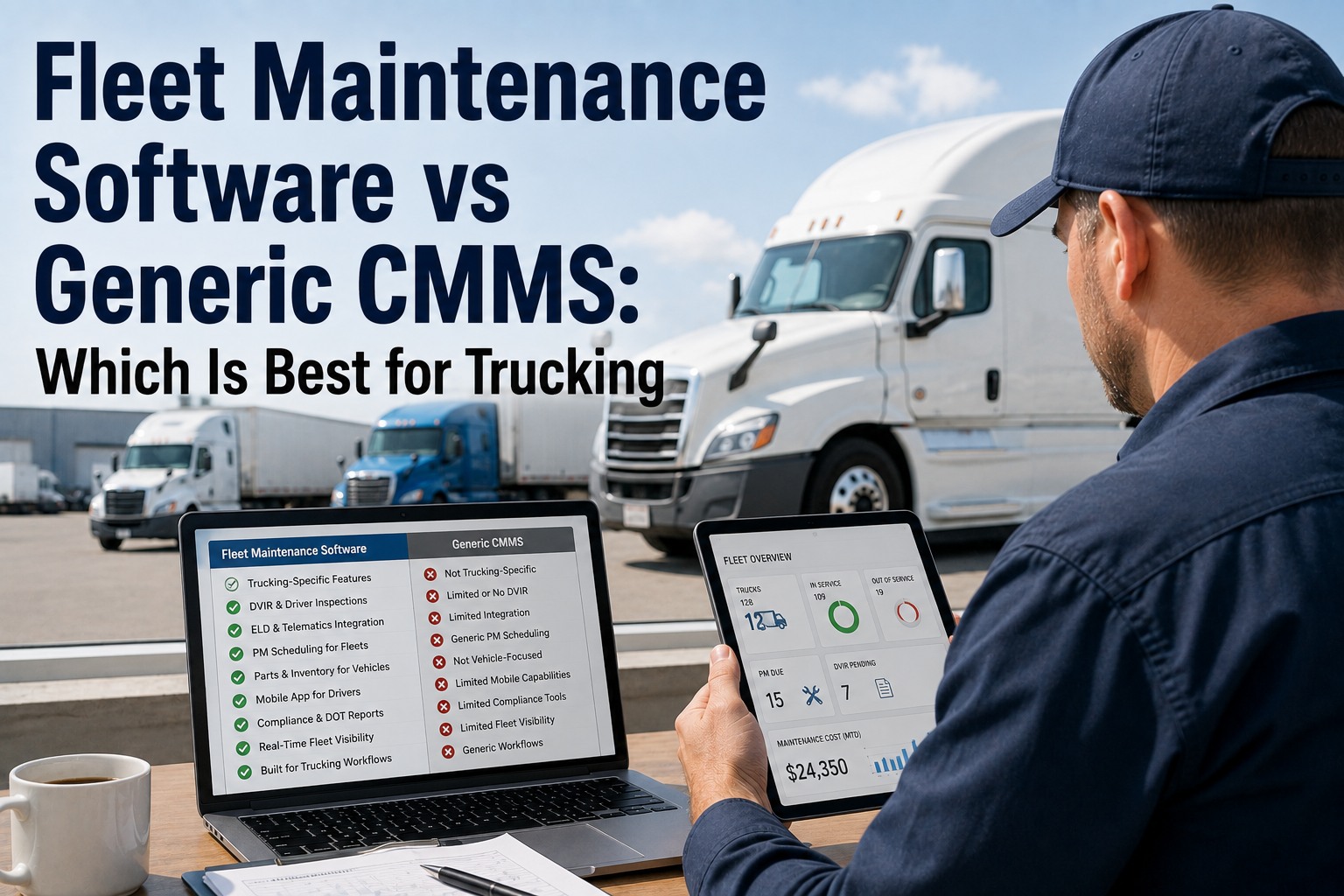
The Direct Feature Comparison
Side-by-side across the 12 features that separate a compliant trucking operation from a spreadsheet workaround. Green means native support with no configuration. Amber means possible with heavy customization. Red means functionally absent.
| Feature | Generic CMMS | Fleet Maintenance Software |
|---|---|---|
| Preventive maintenance scheduling | ✓ Native | ✓ Native |
| Work order management | ✓ Native | ✓ Native |
| Parts inventory tracking | ✓ Native | ✓ Native |
| DVIR 3-signature chain (§396.11 & §396.13) | ✗ Absent | ✓ Native |
| Driver mobile app (not shop app) | ◐ Limited | ✓ Native |
| Photo evidence with server timestamp + GPS | ◐ Custom | ✓ Native |
| J1939 DTC ingestion (SPN/FMI) | ✗ Absent | ✓ Native |
| First-to-occur PM (mi + hr + calendar) | ◐ Custom | ✓ Native |
| Roadside inspection intake workflow | ✗ Absent | ✓ Native |
| §396.17 annual DOT inspection tracking | ✗ Absent | ✓ Native |
| CSA score & BASIC violation tracking | ✗ Absent | ✓ Native |
| 48-hour auditor record production | ✗ Fails | ✓ Native |
The Cost of Choosing the Wrong Tool
The comparison isn't just about features. It's about what the wrong choice costs when things go sideways. Here's what fleets actually experience running trucking on a generic CMMS.
Run trucking on software built for trucking — from day one
FMCSA §396.11 / §396.13 DVIR chain native. J1939 DTC ingestion. First-to-occur PM logic. §396.17 tracking. CSA integration. 48-hour audit-ready record production. Built for commercial fleets, not adapted from manufacturing.
When a Generic CMMS Actually Makes Sense
Generic CMMS platforms are excellent tools — for the operations they were designed to serve. Understanding when they fit prevents the wrong-tool-wrong-job trap in the other direction.
The Hybrid Case — When Fleets Run Both
Some organizations have both — a manufacturing operation with an internal fleet, or a construction company with fixed equipment plus on-highway trucks. In those cases, running both platforms is usually right, with clear separation of scope.
Frequently Asked Questions
Physically yes, functionally no. Generic CMMS platforms handle basic PM scheduling, work orders, and parts inventory competently — but they can't produce a §396.11 DVIR chain of custody, don't ingest J1939 diagnostic trouble codes from truck ECMs, have no roadside inspection intake workflow, and can't produce records in the format FMCSA auditors expect within the 48-hour production window. Fleets that force a manufacturing CMMS onto trucking typically end up running spreadsheets alongside the "system of record" to fill the compliance gaps — which defeats the purpose of having a system at all. The gap becomes visible during the first FMCSA compliance audit, at which point citations are already written.
The DVIR three-signature chain of custody — §396.11 driver signature, §396.11(c) mechanic certification, and §396.13 next-driver acknowledgment, all tied to the same electronic record with timestamps, GPS, and dispatch-lock enforcement. This is the single most-cited failure in FMCSA audits, and generic CMMS work order structures don't map to it. You can build a workaround, but the underlying data model isn't designed for the three-role handoff FMCSA requires, and the workaround typically fails during the audit that matters. Everything else — J1939 DTC ingestion, first-to-occur PM logic, §396.17 tracking, CSA integration — matters, but the DVIR chain is the compliance foundation that either exists natively or doesn't.
J1939 is the SAE-standard CAN bus protocol commercial trucks use to broadcast engine, transmission, and aftertreatment data. When something goes wrong, the truck generates a diagnostic trouble code with two components: SPN (Suspect Parameter Number, identifying the system) and FMI (Failure Mode Identifier, identifying the failure type). Fleet software that ingests J1939 in real time can auto-generate work orders the moment a fault appears — often before the driver even notices the warning light. Generic CMMS platforms weren't built to parse J1939 because factory equipment uses OEM-specific protocols, not a common standard. This is why trucking-first platforms detect and diagnose faults faster than adapted CMMS installations. Try the platform free to see J1939 integration in action.
Fine ranges start at $200 per violation and escalate to $16,000+ for patterns of falsified inspections or systemic non-compliance. Only 7% of motor carriers pass a compliance review without a single violation, and most of the failures are DVIR-related recordkeeping issues that would have been prevented by trucking-first software. Beyond direct fines, DVIR violations feed CSA Vehicle Maintenance BASIC scoring which affects insurance rates and customer contract eligibility for two years. Worst outcome: pattern findings that trigger operating authority review. Fleets running generic CMMS often discover the software gap during the audit itself — records can't be produced in the format required within the 48-hour window, and the citations pile up on process rather than on trucks.
Technically yes, practically it becomes a maintenance liability. Every generic CMMS vendor will offer to build DVIR functionality, add photo capture, integrate telematics, and stitch together the pieces. This works during the sales cycle. In production, the customization becomes a Frankenstein platform that breaks on every vendor update, requires a dedicated admin to maintain, and still can't produce auditor-ready records because the underlying data model wasn't designed for FMCSA compliance. Native trucking platforms have the compliance workflows built into the core, updated by the vendor when regulations change (like the February 2026 eDVIR final rule), and validated against audit scenarios. Native beats customized every time when regulatory format is the deliverable — customization can't retrofit compliance into a system architecture built for a different problem.
When an organization operates both fixed assets and on-highway vehicles — a manufacturing plant with an internal fleet, a construction company with off-highway equipment plus DOT-registered trucks, or a utility with facilities plus service vehicles. In these cases, running both platforms with clear scope separation is usually right: generic CMMS owns factory equipment PM, building systems, off-highway construction equipment, and fixed asset inventory; fleet software owns all on-highway vehicles subject to FMCSA, DVIR and §396 compliance, driver training and qualification files, CSA score tracking, and roadside inspection intake. The two platforms should share master data (asset registry, purchase orders, financial GL codes) but operate independently on the workflow layer. Trying to force one platform to do both jobs always compromises one operation. Contact our team for a scope separation template.
The migration is more straightforward than most fleets expect because the two systems overlap in the areas that don't matter for compliance. Asset registry, parts inventory, and historical work order data typically export as CSV from any CMMS and import into fleet platforms without transformation. What has to be rebuilt from scratch is the compliance layer — DVIR workflows, driver mobile app rollout, J1939 telematics integration, §396.17 tracking, and CSA violation history. Typical migration timeline: 2-4 weeks for a mid-size fleet (50-200 trucks), starting with a pilot group of 5-10 trucks to validate workflows before fleet-wide rollout. The fleet keeps running on the old CMMS in parallel until the new platform's compliance records are complete for 90 days — which is when the transition can be declared complete and the legacy system can be archived.
Stop stretching factory software over a fleet problem
FMCSA-native compliance workflows. DVIR three-signature chain. J1939 DTC ingestion. First-to-occur PM logic. Roadside inspection intake. §396.17 tracking. CSA integration. 48-hour audit-ready record production. Built for fleets that want to pass audits, not survive them.