Ask a long-haul driver why they left a fleet and "the bunk A/C never worked" comes up more than anyone in the office expects. An OTR driver spends 250 to 300 nights a year in that sleeper — it is their home on the road, and when the parked HVAC quits on a 95-degree night, the truck stops being a place they want to stay. On a Cascadia, sleeper comfort runs on a handful of systems that each need their own upkeep: the parked A/C, the bunk heater, the cabin air filter, and the batteries that power all of it with the engine off. This guide covers them, with retention in mind. Start free and keep every sleeper system on a PM schedule.
Freightliner Cascadia · Sleeper & HVAC PM
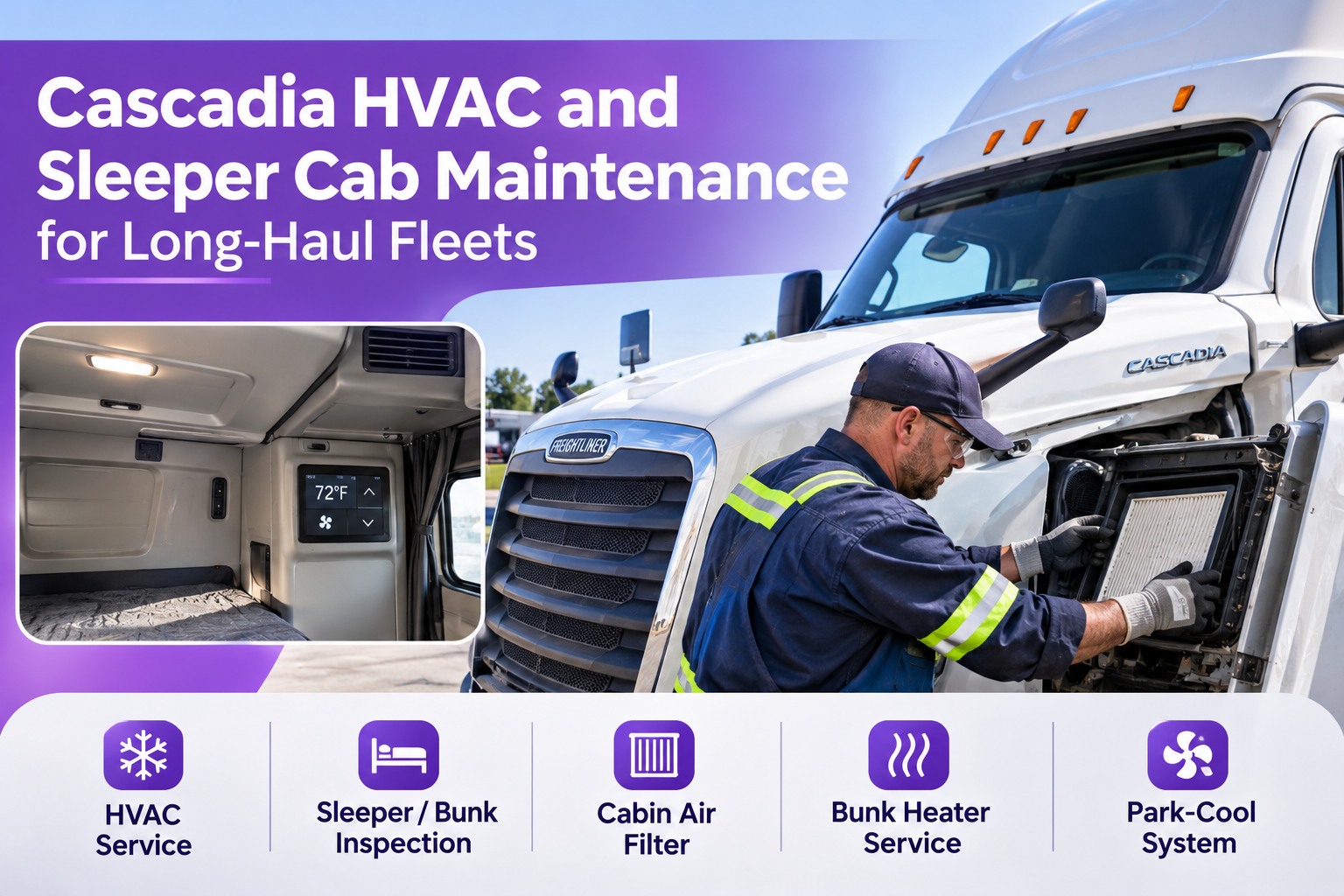
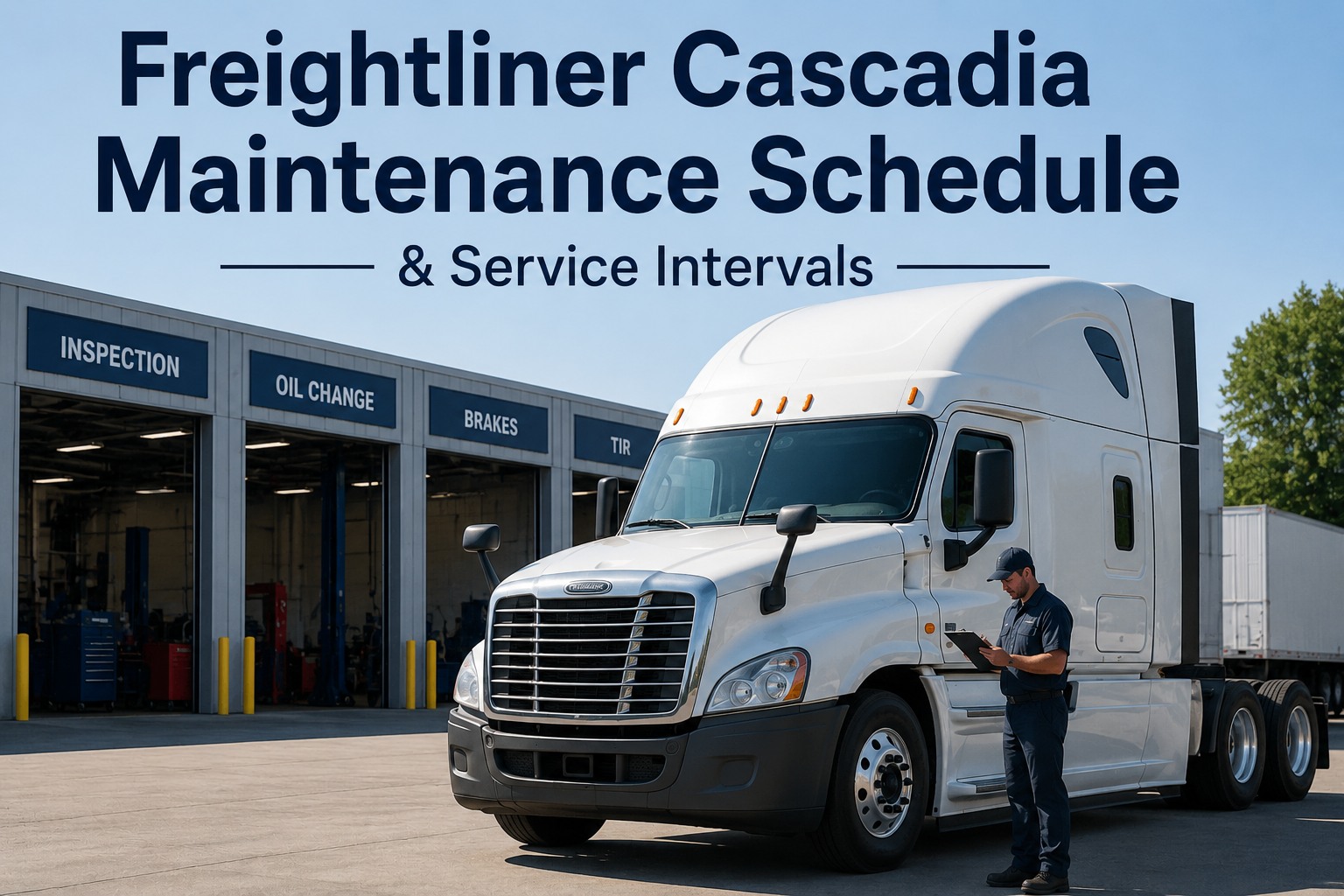
Cascadia HVAC and Sleeper Cab Maintenance for Long-Haul Fleets
A dead bunk heater or a weak battery bank doesn't throw a code — it shows up as a driver who won't take the next long run. Truck Inspection & Maintenance Management Software runs the loop that keeps the cab livable: a sleeper-comfort walkaround on every digital inspection, each weak system logged to the truck's DVIR, any defect turned into an assigned work order, and filter and heater service scheduled — so the parked HVAC works on the night the driver needs it, not after they've complained.
Engine onPre-cool / pre-heat the bunk
→
Engine offParked HVAC maintains it
→
BatteriesPower it through the night
250–300nights a year an OTR driver sleeps in the cab
No-idleparked HVAC keeps comfort without burning fuel at rest
<1 amp/hrtypical draw of a diesel bunk heater on a 12V system
Batteriesthe part that most often ends overnight comfort
How the Cascadia Parked HVAC Actually Works
The single most common sleeper complaint is a misunderstanding, not a failure: the parked system maintains a temperature, it doesn't produce one from scratch.
1Pre-condition with the engineBring the bunk to the temperature you want with the engine running and the dash system — then close the curtain.
2Parked HVAC holds itThe battery-powered or auxiliary system maintains that temperature with the engine off. It is not built to cool a hot sleeper from scratch.
3Insulation does the restA well-sealed, well-insulated cab holds temperature far longer — which is why door and curtain seals matter to comfort.
Teach this once and half your "the A/C is broken" tickets turn out to be a sleeper that was never pre-cooled. Book a demo to track sleeper-comfort findings per truck.
The Four Systems That Keep a Sleeper Livable
Parked cooling
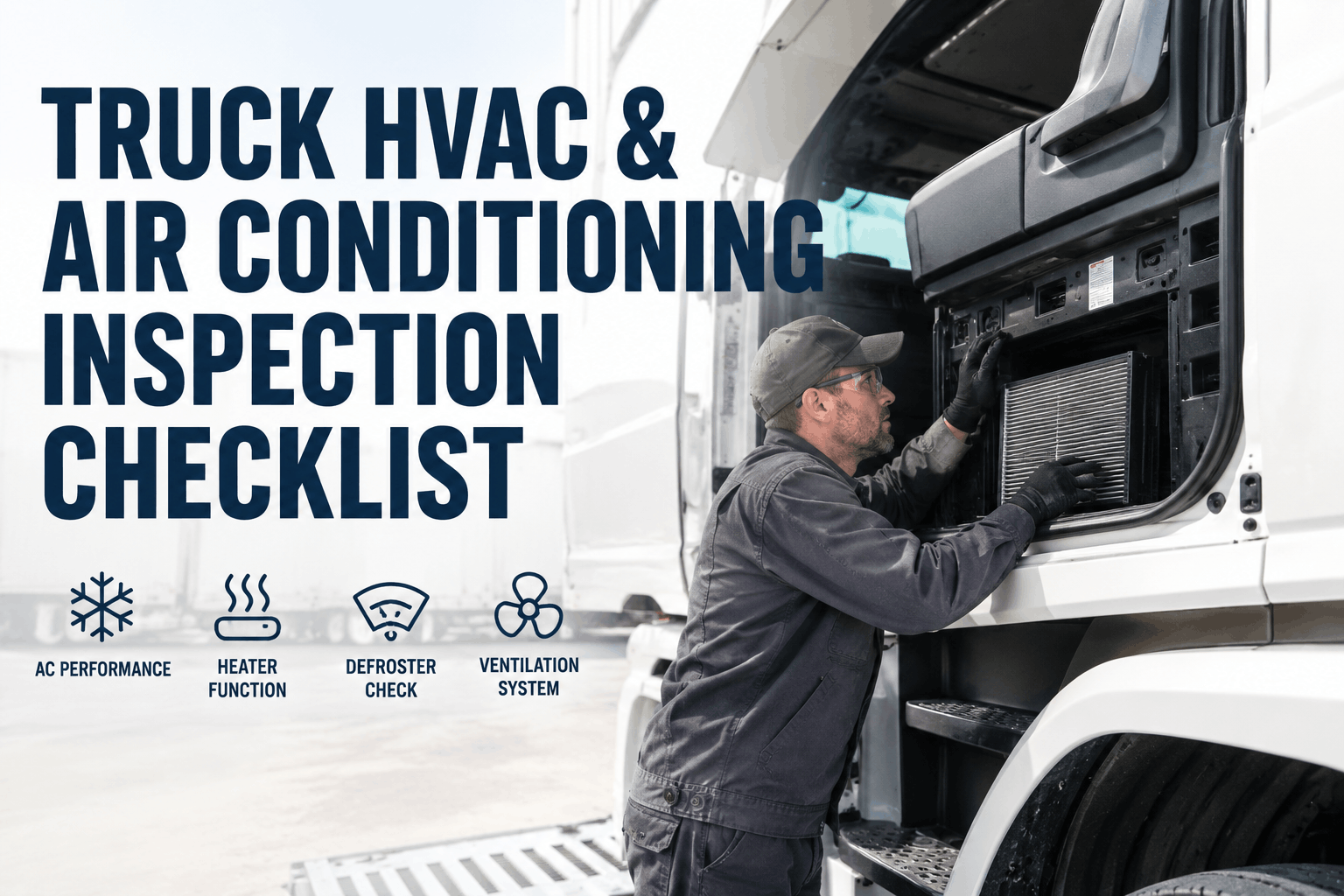
Check refrigerant charge, blower motor and the evaporator. Balance rear-bunk and dash airflow — if the air has nowhere to go, the bunk stays warm. Never pressure-test the A/C with compressed air.
Bunk heater
The diesel-fired heater warms coolant to the heater core. Watch for it blowing cold after 10–15 minutes — usually a fuel pump, controller, or coolant-circulation fault, not the heater itself.
Cabin air filter
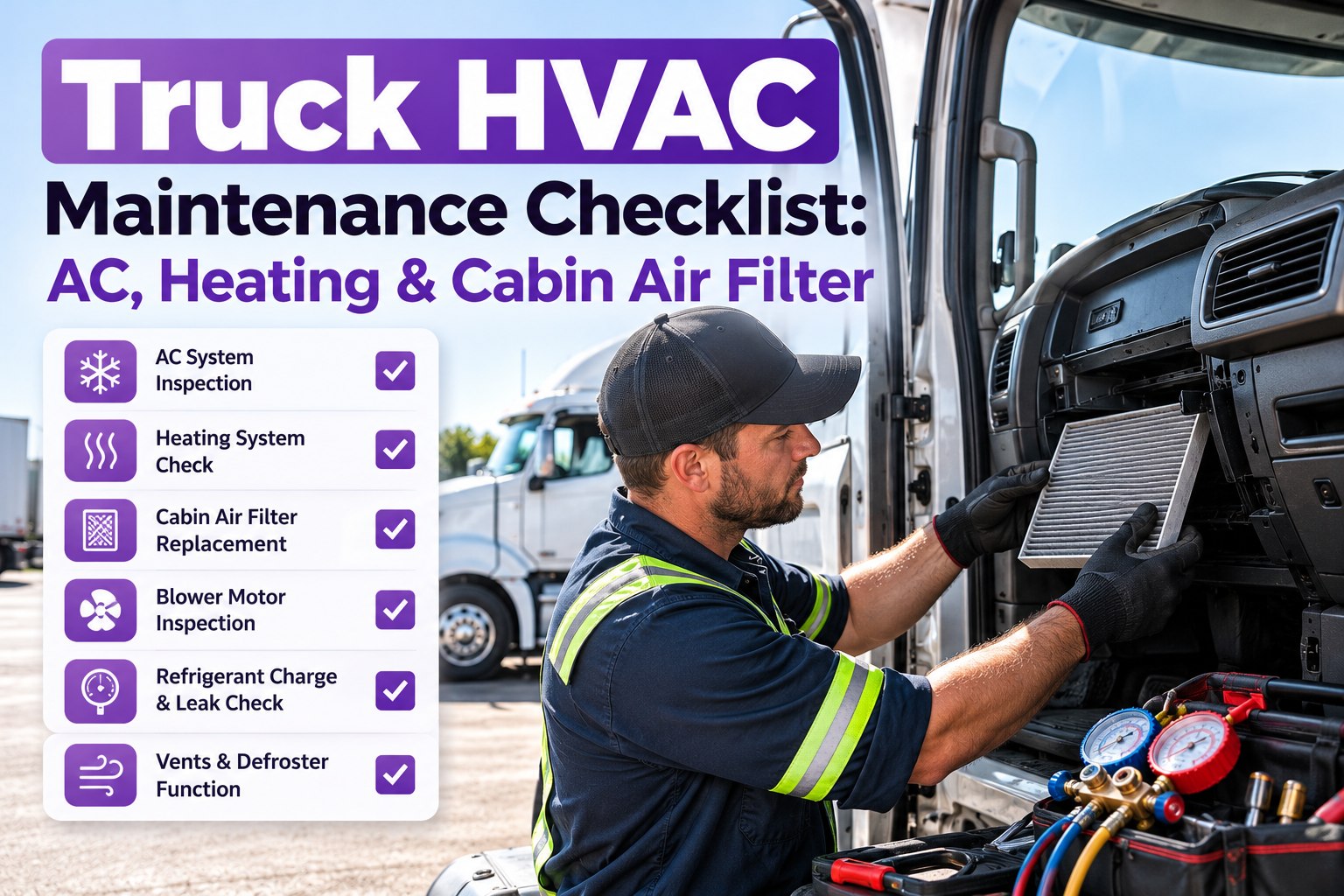
Behind the driver's seat at the blower housing — under the cabinet on 60/72-inch sleepers, under the bunk on 48-inch. Replace with a Freightliner-approved filter; a parked-HVAC unit has its own separate filter.
Battery bank
No-idle comfort lives or dies here. Weak or aging batteries are the top reason overnight heat or cool quits. Test state of health, keep terminals clean, confirm charge monitoring works.
Comfort Is a Retention Metric
A bunk that's cold in July costs you a driver, not just a repair. Truck Inspection & Maintenance Management Software puts the sleeper systems on the same PM schedule as the driveline, turns a weak-battery or dead-heater finding into a work order, and keeps the history — so comfort is maintained on a plan, not patched after a resignation.
If There's an APU: Fold It Into PM
Many Cascadias run an auxiliary power unit instead of, or alongside, the factory parked HVAC. Each type has its own upkeep.
Diesel APU
It's a small engine — oil and filter, air filter, fuel filter, and belt service on its own interval, coordinated with the truck's PM. Some model years need a diesel particulate filter.
Electric / battery APU
Fewer moving parts, but the battery pack is everything. Monitor state of health and charge; a typical under-bunk unit targets several hours of climate control per charge.
Schedule the APU service with the rest of the truck so it never becomes the thing nobody owns. Start free and put APU service on the same schedule.
Interior & Comfort Walkaround
Vents & airflow
→Rear-bunk vents open and delivering; dash and bunk airflow balanced
Seals & curtain
→Door seals and the bunk curtain intact — they hold the conditioned air in
Mattress & interior
→Mattress condition, panels, lighting and grab handles sound and clean
Controls respond
→Sleeper control panel powers the fan, heat and A/C — no dead panel
The small stuff is what a driver actually lives with every night. Book a demo to add a comfort walkaround to every inspection.
Cascadia parked-HVAC configurations vary by model year and spec — ParkSmart, the newer Battery Powered HVAC System, and aftermarket APUs all behave differently. Follow the maintenance manual for the specific truck and use Freightliner-approved parts.
Frequently Asked Questions
1Why won't the Cascadia parked A/C cool the bunk?
Most often because the sleeper was never pre-cooled. The parked system — ParkSmart or the newer battery-powered HVAC — is designed to maintain a temperature, not produce one from scratch, so the bunk has to be brought down with the engine and dash A/C first, then the curtain closed. If it was pre-cooled and still runs warm, check refrigerant charge, the blower, the evaporator, and whether rear and dash airflow are balanced.
Book a demo to log A/C faults per truck.
2Why does the bunk heater blow cold after a few minutes?
A diesel bunk heater that fires then goes cold after ten or fifteen minutes usually isn't the heater itself — it's the fuel pump, the HVAC controller, or a coolant-circulation problem keeping it from heating the core. Weak batteries are another common culprit, since the heater needs power to run its pump and fan. Diagnose the pump and coolant side before replacing the heater.
Book a demo to track heater repairs over time.
3Where is the Cascadia sleeper cabin air filter?
On the forward side of the blower fan housing behind the driver's seat — under the cabinet on 60- and 72-inch sleepers, under the bunk on 48-inch sleepers, reached through the sleeper HVAC access panel. Use only a Freightliner-approved filter, and remember a ParkSmart-equipped truck has its own separate air filter on the inboard side of the blower housing.
Book a demo to schedule filter changes.
4Why do sleeper comfort problems trace back to the batteries?
Because no-idle comfort is battery-powered. With the engine off, the batteries run the parked HVAC, the bunk heater's pump and fan, and the hotel loads — so a weak or aging bank is the single most common reason overnight heat or cool quits partway through a rest break. Testing battery state of health and confirming the charge-monitoring works should be part of every sleeper PM.
Book a demo to track battery health per truck.
Pre-cooled · Powered · Filtered · On record
Keep the Cab a Place Drivers Want to Stay
Truck Inspection & Maintenance Management Software puts the parked HVAC, bunk heater, cabin filter and battery bank on one PM schedule, opens a work order on any weak system, and keeps the history that proves the sleeper was ready — so comfort stops being the reason a driver leaves.
No credit card required. Free for up to 3 trucks. Built for long-haul and OTR fleets.