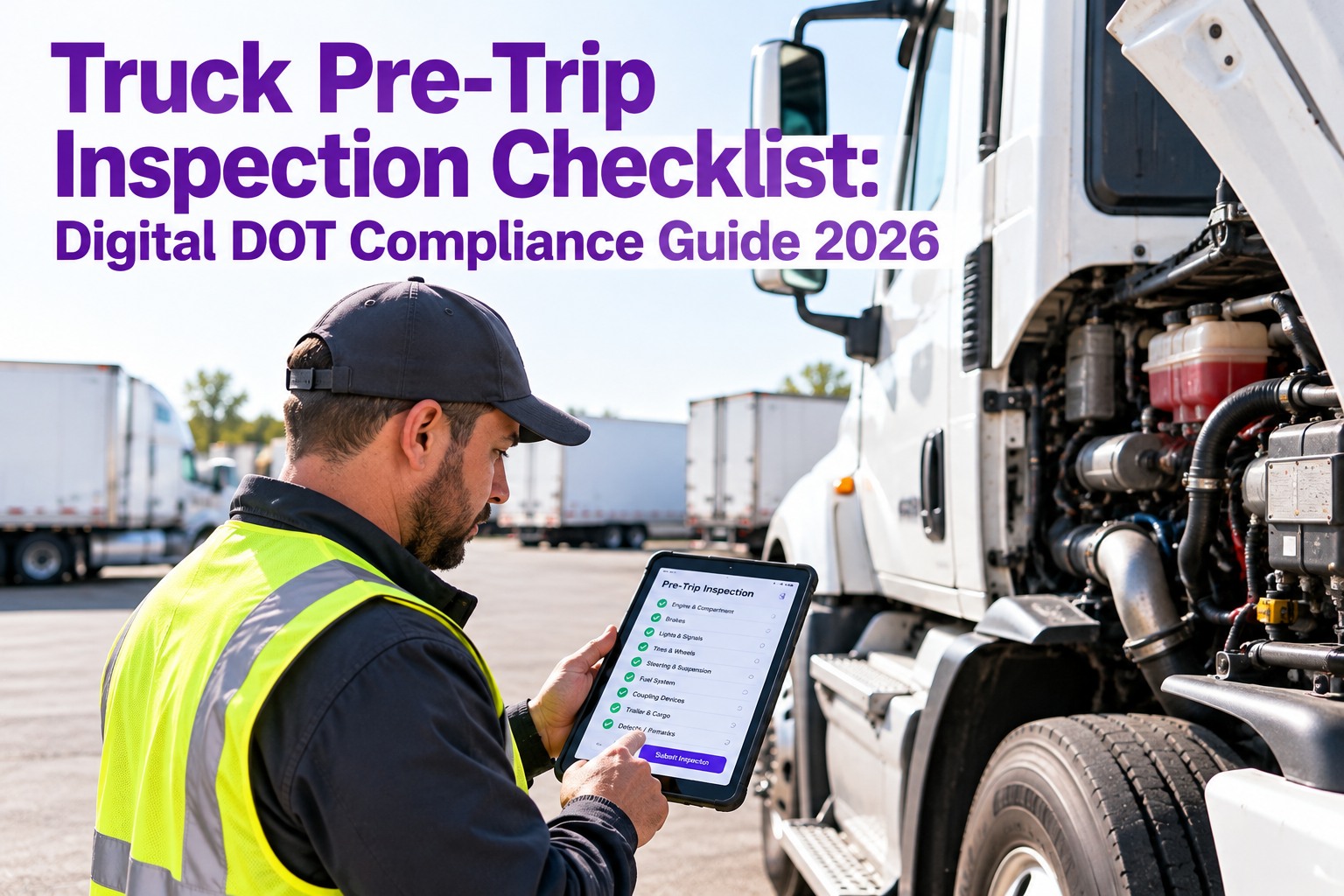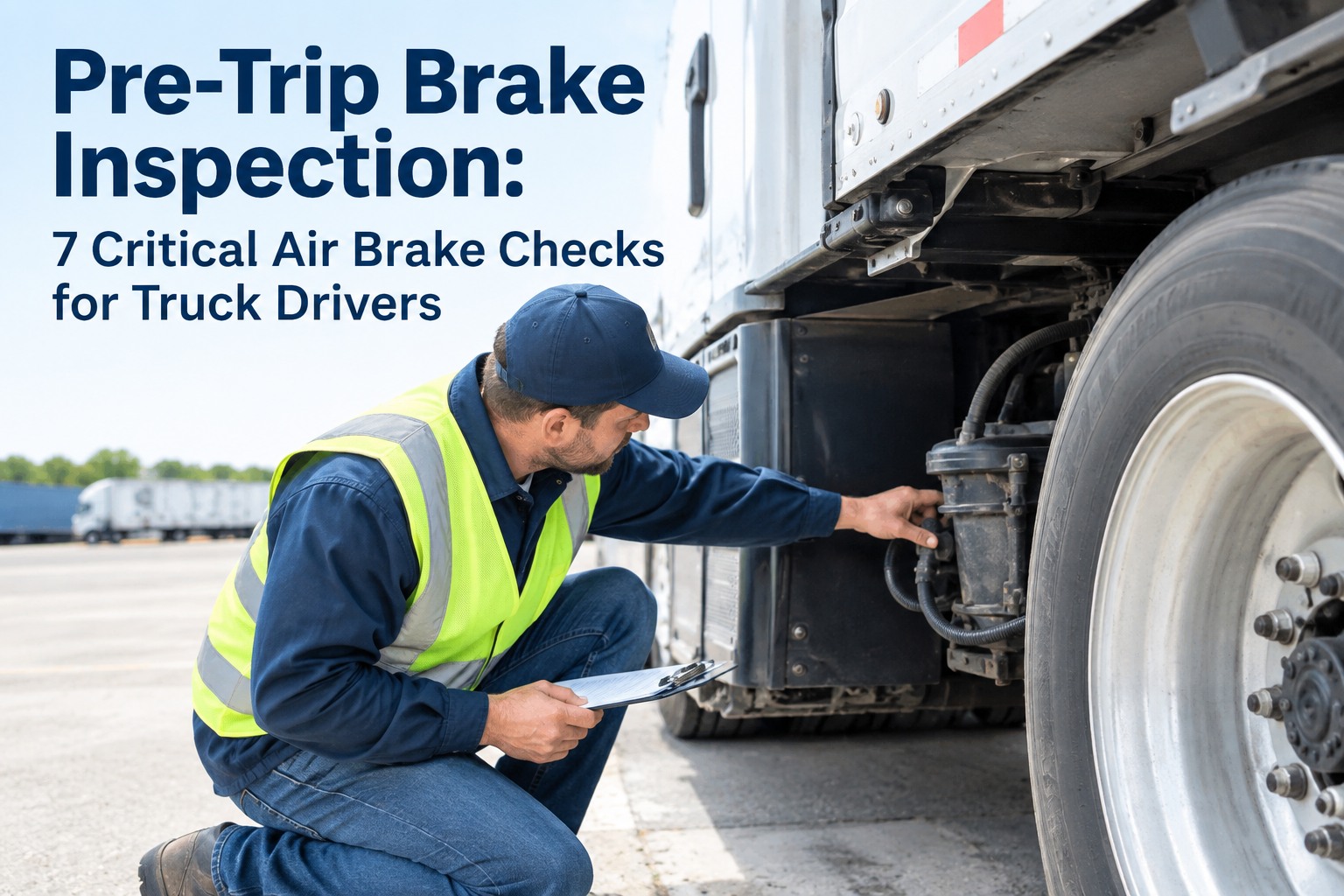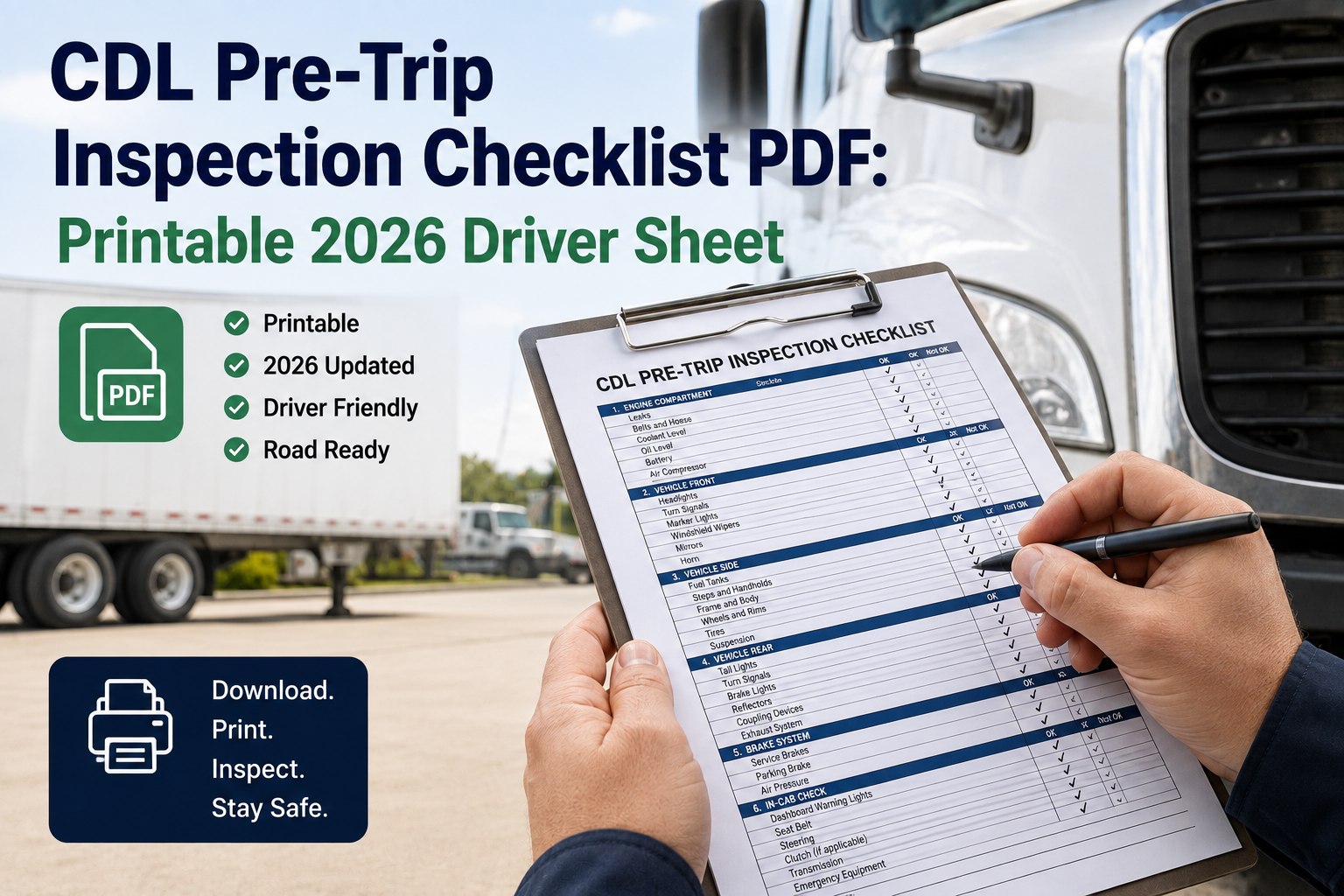
Every CDL driver in America starts the day the same way — walking around a truck, kicking tires, opening the hood, testing the air brakes. It is federal law under 49 CFR 392.7 and 49 CFR 396.13, and it is the single most enforced item in commercial trucking. During the 2025 CVSA International Roadcheck, 18–22% of vehicles inspected were placed out of service, and the majority of those violations — bad brakes, worn tires, dead lights — were defects a proper pre-trip would have caught in the yard for the price of ten minutes. In 2026 the stakes went up again: FMCSA's overhauled CSA model added a new "Driver Observed" violation category that puts pre-trip inspection quality directly on the carrier's public safety score. A single out-of-service violation now averages $4,200 in penalties. Civil penalties can reach $16,000 per violation for carriers and over $4,000 for individual drivers. Yet the industry runs on the same tired paper form the driver stuffs in the glove box, marks a hurried "OK", and never looks at again. This page gives you the real thing: a printable 2026 CDL pre-trip inspection checklist PDF that follows the FMCSA 7-point walk-around method, covers all 45+ tractor checkpoints plus 15+ trailer points, meets the DVIR documentation standard of 49 CFR 396.11, and passes the CDL skills test. Below you will find the full walk-around sequence, the mandatory air brake test procedure, the top defects that fail roadside inspections, and how the free Truck Inspection & Maintenance app replaces paper DVIRs with mobile inspections that are time-stamped, GPS-tagged, and DOT-audit ready — sign up free for up to 3 vehicles or talk to our team for larger fleets.
CDL Pre-Trip Inspection Checklist PDF — Printable 2026 Driver Sheet
The 7-point walk-around, air brake test procedure, and defect criteria every CDL driver needs — printable, mobile-ready, DOT-defensible.
Why the 2026 CDL Pre-Trip Matters More Than Ever
The rules did not change — how they are enforced did. Three shifts every fleet manager and CDL driver should understand:
Driver-Observed CSA Category
Under the 2026 CSA overhaul, violations a driver should have caught during pre-trip — bald tires, broken lights, obvious leaks — now score in a separate "Driver Observed" category that hits the carrier's public safety percentile directly. Sloppy pre-trips are now visible to shippers and insurers.
OOS Violations Weigh 2x
Out-of-service violations now carry double severity weight in the SMS calculation. One missed brake defect that puts a truck OOS at roadside will move your carrier's percentile toward the 65th-percentile investigation threshold faster than a dozen minor citations ever did.
eDVIR Now Explicitly Authorized
FMCSA's 2025 rulemaking explicitly authorized electronic DVIRs as equivalent to paper. Fleets moving to mobile inspection apps get time-stamps, GPS, photo evidence, and 24-month audit trails — the paper form in the glove box no longer competes. Start your free eDVIR trial.
The FMCSA 7-Point Walk-Around Method
This is the sequence taught in CDL training programs nationwide and expected on the skills test. Follow it every time, in this order, and nothing gets missed:
Approach & Vehicle Overview
Look under and around the vehicle for leaks. Check the lean of the truck. Note the general condition and any fresh damage. Verify the parking brake is set.
Engine Compartment
Hood up. Check oil, coolant, power steering, and windshield washer levels. Inspect belts (½ to ¾ inch play max), hoses, and the alternator/water pump mounting.
In-Cab Inspection & Start
Enter cab, check gauges, controls, and safety equipment. Start engine. Test steering play (max 10° / 2 inches on 20-inch wheel). Check air pressure builds 85–100 PSI in 45 seconds.
Driver-Side Walk-Around
Steering linkage, drag link, tie rods. Fuel tank secure, cap tight. Drive tires — tread depth 4/32" minimum on steer, 2/32" on drive. Slack adjuster play under 1 inch.
Rear of Vehicle
Splash guards secure. Rear lights, reflectors, and license plate visible. Rear tire condition. Doors secure. Trailer coupling — kingpin, fifth wheel jaws locked, no gap.
Passenger-Side & Coupling
Mirror side check. Airlines and electrical cord secure, not rubbing. Trailer landing gear fully raised, handle secured. Wheels on trailer axles — same criteria as tractor.
Air Brake Test & Light Check
Full FMCSA air brake test sequence: leak-down, low-air warning at 60 PSI, tractor protection valve pops 20–40 PSI, service brake test at 5 mph. Then walk lights.
The Full 45+ Point Printable Checklist
Organized by walk-around zone. Print it, laminate it, keep it on the clipboard — or skip the paper entirely and sign up free to run the same 45+ point list as a guided digital inspection on every driver's phone:
Mandatory Air Brake Test Sequence
The five-step air brake test is required by FMCSA before every trip in a combination vehicle. Skipping any step is an automatic failure on the CDL skills test — and a serious violation at roadside:
Build air to governor cut-out (~120 PSI). Engine off, key on. Release parking brakes. Press and hold service brake firmly for 1 minute.
Pump the brake pedal to bleed pressure down. Warning light and buzzer must activate before pressure drops below 60 PSI.
Continue pumping brake pedal. Tractor protection valve and trailer supply valve must pop out automatically.
Restart engine. From 85 PSI, air pressure must build to 100 PSI within 45 seconds. Governor should cut out at ~120 PSI.
Release parking brakes. Roll forward at 5 mph. Apply service brake firmly. Truck should stop straight — no pulling to either side.
The 60-PSI Rule Trips Up Most Rookies
On the CDL skills test, the examiner watches the low-air warning like a hawk. If the buzzer and light do not activate before pressure drops to 60 PSI, it is an instant fail — and at roadside it is an out-of-service order under 49 CFR 393.51. Verify it every single day. This is the exact defect that a paper checklist marked "OK" cannot defend if an accident happens.
Top 5 Defects That Fail Roadside Inspections
The 2025 CVSA Roadcheck data tells the same story every year — five defect categories cause the majority of out-of-service violations. All five are catchable in the pre-trip, and every one auto-flags a work order to your shop when caught inside our app. Book a walkthrough to see how it works:
Brake Defects — 41% of OOS Violations
Out-of-adjustment slack adjusters, cracked brake drums, worn linings below 1/4", inoperative brake lights, air leaks. Any of these is an instant OOS. Slack adjuster check is 10 seconds per axle.
Tire Violations — 21.4% of OOS Violations
Tread depth below spec (4/32" steer, 2/32" drive/trailer), sidewall cuts, exposed body ply, flat tires, mismatched sizes on dual assemblies. Bring a tread depth gauge — do not eyeball it.
Lights & Reflectors
Inoperative required lamps — headlights, tail lights, brake lights, turn signals, marker lights, license plate lamp. Missing or non-reflective DOT tape on trailer sides.
Steering & Suspension
Excess steering play, cracked leaf springs, shifted leaves, leaking air bags, missing U-bolts. Distinguish shock "misting" (OK) from active dripping leaks (fail).
Coupling & Cargo Securement
Fifth wheel not fully locked, visible gap between trailer and fifth wheel plate, missing safety latch, unsecured cargo shifting in transit, insufficient tie-down count.
Skip the paper. Get audit-ready inspections on every driver's phone.
Truck Inspection & Maintenance turns the printable PDF above into a guided mobile inspection with time-stamps, GPS location, photo evidence for every defect, and automatic DVIR generation under 49 CFR 396.11. Fleet dashboards surface expired inspections before dispatch, defect trends before they become breakdowns, and eDVIR history for every DOT audit. Sign up in under 10 minutes — free forever for up to 3 vehicles.
Paper Checklist vs Digital eDVIR
The FMCSA's 2025 rulemaking explicitly authorized electronic DVIRs. Here is what changes when you make the switch — and why fleets that create a free account in the morning are usually live by lunch:
Traditional Pre-Trip Form
- Driver marks a box, signs, throws in glove box
- Lost, coffee-stained, or "misplaced" before audit
- No time-stamp — impossible to prove when it was done
- No photo evidence of defect condition
- Manual data entry into fleet system, if ever
- Defect trends invisible until breakdown happens
- DOT audit prep = week of digging through folders
Truck Inspection & Maintenance
- Driver runs guided checklist on their phone
- Every entry time-stamped and GPS-tagged automatically
- Photo attached to every defect — audit-defensible
- Signed by driver on-screen, stored 24+ months
- Defects auto-generate work orders to the shop
- Dashboard surfaces trends: recurring air leaks, tire wear patterns
- DOT audit prep = filter by date, export PDF, done
Frequently Asked Questions
How long should a proper CDL pre-trip inspection take?
A thorough pre-trip takes 15–30 minutes for an experienced CDL driver on a tractor-trailer combination, or 30–45 minutes for a new driver still learning the sequence. Doing it in 5 minutes is not an inspection — it is checking boxes on a form. With a guided digital inspection app, the same 45+ point walk-around drops to under 10 minutes because the app handles documentation, photos, and DVIR generation automatically. FMCSA does not specify a minimum time, but the inspection must be thorough enough to identify defects in all 11 required component categories under 49 CFR 392.7.
Do I need to do a pre-trip if I drove the same truck yesterday?
Yes. FMCSA 49 CFR 396.13 requires a pre-trip inspection before operating a commercial motor vehicle each day, regardless of who drove it last. Conditions change overnight — air leaks develop, lights burn out, tires lose pressure, vandalism happens in unsecured yards. You must also review the previous DVIR and sign acknowledgment that any reported defects were repaired or determined not to require repair before operating the vehicle.
What is the difference between a pre-trip inspection and a DVIR?
A pre-trip inspection (49 CFR 392.7) is the physical safety check the driver performs before operating the vehicle each day. A DVIR — Driver Vehicle Inspection Report (49 CFR 396.11) — is the written document filed at the end of the workday to record the vehicle's condition and any defects found. Since 2014, property-carrying CMV drivers only need to file a DVIR when defects are found, but the pre-trip itself is still required every day. Most fleets require "no-defect" DVIRs as company policy because it proves the inspection actually happened.
Is the printable PDF checklist DOT compliant on its own?
The checklist itself is DOT compliant when it covers all required component categories under 49 CFR 392.7 and the DVIR includes driver signature, date, vehicle identification, and defect status per 49 CFR 396.11. The weakness of paper is not the form — it is the paper trail. Lost or missing DVIRs during a compliance audit are cited as inspection failures. Electronic DVIRs generated by mobile apps solve this by storing every inspection with time-stamp, GPS, driver signature, and photos in a searchable database for the required retention period.
What are the penalties for skipping a pre-trip inspection?
Civil penalties can reach $16,000 per violation for carriers and over $4,000 per violation for individual drivers. A single out-of-service violation now averages $4,200 in penalties. Beyond the fine, violations stay on the carrier's CSA safety score for 24 months, affect insurance premiums, trigger DOT audits, and can result in the driver's CDL being placed in prohibited status. Under the 2026 CSA overhaul, pre-trip-catchable defects now score in a separate "Driver Observed" category that is visible to shippers.
How does Truck Inspection & Maintenance help my fleet?
Truck Inspection & Maintenance replaces paper pre-trip and DVIR forms with a guided mobile inspection app that every driver runs on their own phone — no hardware to buy. Every inspection is time-stamped, GPS-tagged, and stored with photos for the required retention period. Defects automatically generate work orders to the maintenance shop. Fleet managers get a live dashboard showing which trucks have completed pre-trips, which have open defects, and which are due for PM service. Free forever for up to 3 vehicles. Talk to our team or start a free trial in 10 minutes.
The best pre-trip checklist is the one your drivers actually finish.
Paper checklists get skipped, lost, or half-filled. Digital eDVIRs from Truck Inspection & Maintenance turn every phone into a guided FMCSA-compliant inspection tool — time-stamped, GPS-tagged, photo-verified, and audit-ready for 24+ months. Set up the entire fleet in under an hour. Free forever for up to 3 vehicles. No credit card, no hardware, no contract.