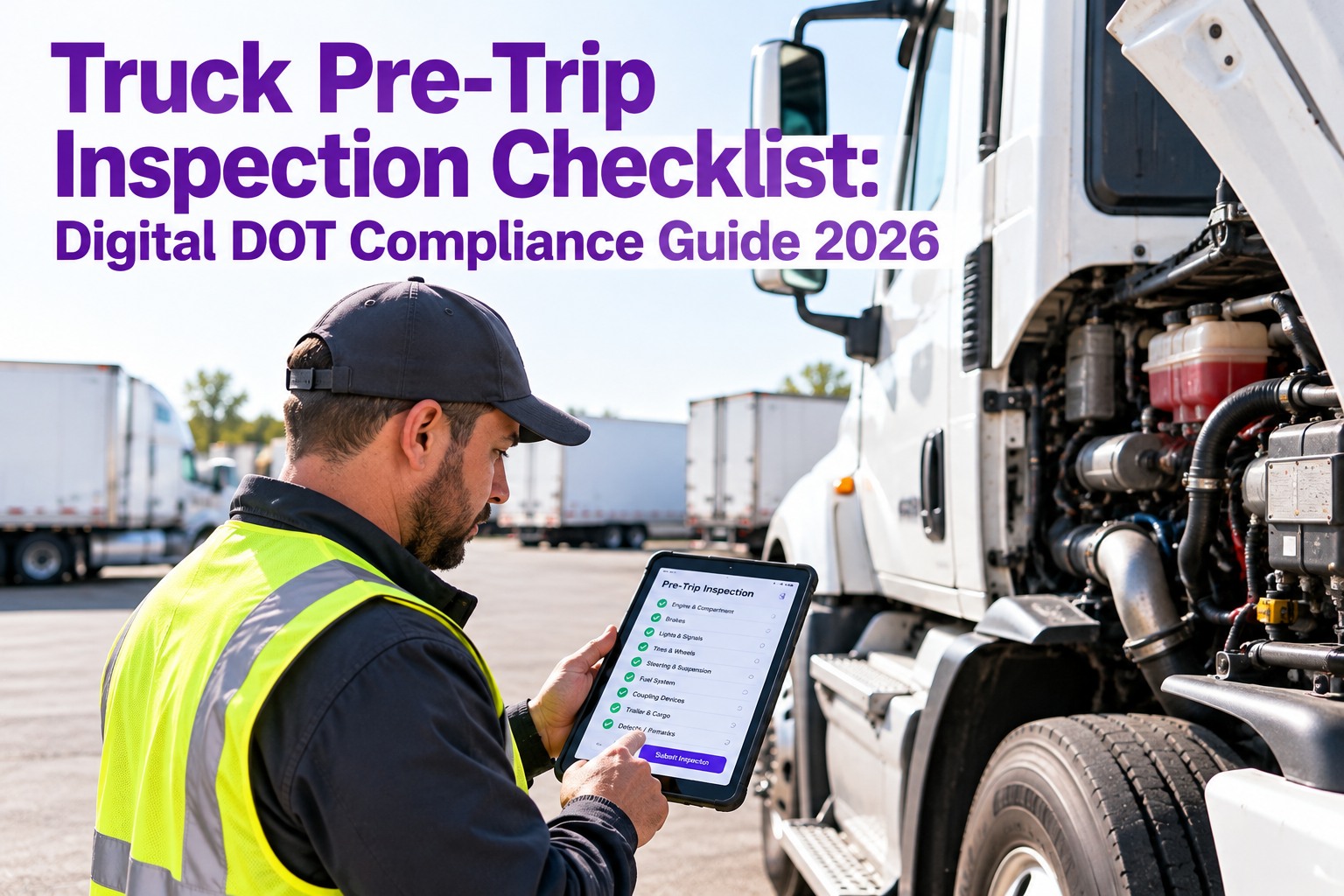
Every DOT roadside inspection begins with the same question — did you do your pre-trip? Under the 2026 CSA overhaul, the answer matters more than ever: Vehicle Maintenance now splits into two BASIC categories including "Driver Observed" violations, and OOS orders carry 2× severity weight. A single OOS violation averages $4,200 in penalties, and 18.1% of trucks inspected during 2025 CVSA Roadcheck were placed out of service — most for brake or tire defects a proper walkaround would have caught. Under 49 CFR 392.7, a driver may not operate a CMV unless satisfied that 11 specific parts and accessories are in good working order; under § 396.13, the driver must review the previous DVIR before departure. This guide covers the 11 mandatory § 392.7 items, the 7-point walkaround, air brake test sequence, OOS trigger defects, and DVIR chain-of-custody. Ready to make pre-trip a documented event instead of a signature guess? Sign up free for Truck Inspection & Maintenance today — no credit card required and start running guided § 392.7 digital DVIRs across your entire fleet within minutes, or contact our support team for a personalized walkthrough tailored to your fleet size and 2026 CSA compliance requirements.
Pre-Trip Inspection Guide for Truck Drivers: Complete 2026 Checklist
One walkaround. 11 mandatory § 392.7 items. 45+ power unit checkpoints. $4,200 average per OOS violation. Here's every checkpoint every 2026 pre-trip requires.
The 11 Mandatory § 392.7 Items — What Every Pre-Trip MUST Cover
Under 49 CFR 392.7, a driver may not operate a commercial motor vehicle unless satisfied that these 11 specific parts and accessories are in good working order. These are the non-negotiables that define legal compliance.
The 7-Point Walkaround Method
Every experienced CDL driver follows the same route around the truck. The 7-point walkaround covers 45+ checkpoints on the power unit plus 15+ on the trailer in a systematic sequence that catches every § 392.7 item.
Air Brake Test — The 4-Part Sequence
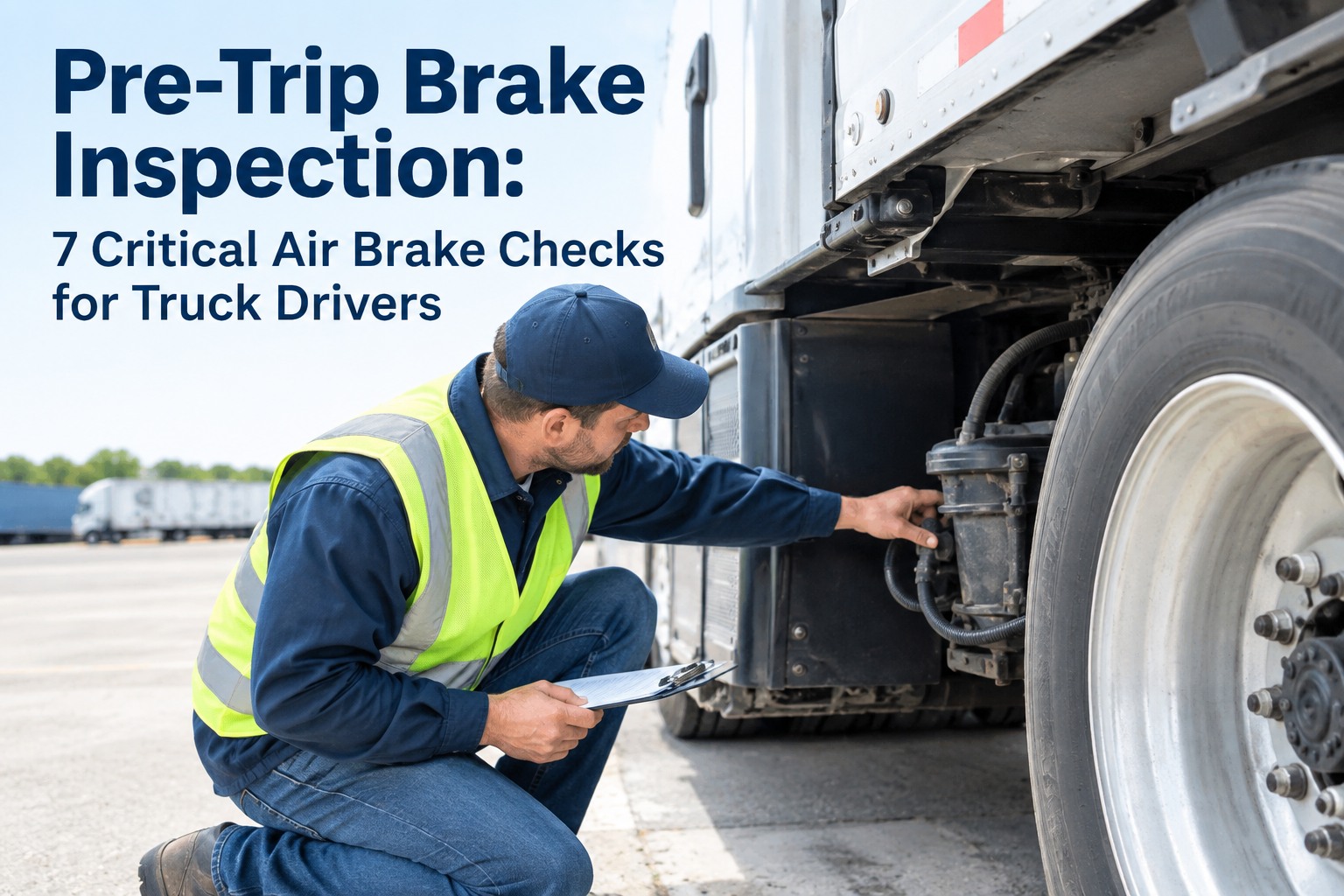
Every pre-trip on an air-brake truck ends with a 4-part in-cab air brake test. This is the sequence FMCSA examiners score on the CDL skills test — and it's the sequence roadside inspectors expect to see documented.
Turn every pre-trip into a 10-minute photo-verified digital DVIR
Guided § 392.7 checklists covering all 11 mandatory items. Photo verification per checkpoint. Automatic DVIR generation per § 396.11. Chain-of-custody signature enforcement per § 396.13. Truck Inspection & Maintenance software makes pre-trip a documented event instead of a signature at the end of a hurried walkaround.
Out-of-Service Trigger Reference — Automatic Fail Defects
Certain defects trigger an immediate out-of-service order at roadside. Learn these categories and you'll know exactly what NOT to leave the yard with — because these are the ones that end the trip before it starts.
DVIR Chain-of-Custody Under § 396.13
Pre-trip doesn't exist in isolation — it's part of a compliance chain that spans from the previous driver's post-trip DVIR to your own signature acknowledging the vehicle is safe to operate. Miss the chain and you own every defect.
Frequently Asked Questions
Under 49 CFR 392.7, a commercial driver may not operate a commercial motor vehicle unless satisfied that 11 specific parts and accessories are in good working order. The mandatory § 392.7 items are: (1) Service brakes including trailer brake connections, (2) Parking (hand) brake, (3) Steering mechanism, (4) Lighting devices and reflectors, (5) Tires, (6) Horn, (7) Windshield wipers, (8) Rear vision mirrors, (9) Coupling devices, (10) Wheels and rims, and (11) Emergency equipment. Under 49 CFR 396.13, the driver must also review the previous Driver Vehicle Inspection Report (DVIR), verify that any noted defects were repaired or deemed unnecessary for repair, and sign to acknowledge the review before operating. A thorough pre-trip inspection covers approximately 45 checkpoints on the power unit and 15 additional points for trailers, taking 10-15 minutes with digital tools or 30-45 minutes with paper checklists. Truck Inspection & Maintenance software covers every § 392.7 item with guided digital DVIRs.
A thorough pre-trip inspection typically takes 15-30 minutes for experienced CDL drivers, depending on vehicle type. Combination vehicles (tractor-trailer) require more time than single units. The 7-point walkaround method covering all required areas usually takes 20-25 minutes when done properly on paper. Digital guided pre-trip apps compress the time to 10-15 minutes because the driver isn't fumbling with paper checklists, and photo verification captures evidence at each checkpoint automatically. Rushing pre-trip inspections leads to missed defects that cause roadside out-of-service violations, and those minutes protect your CDL, your CSA scores, and lives on the road. FMCSA estimates that thorough pre-trip inspections prevent approximately 14,000 commercial vehicle accidents every year.
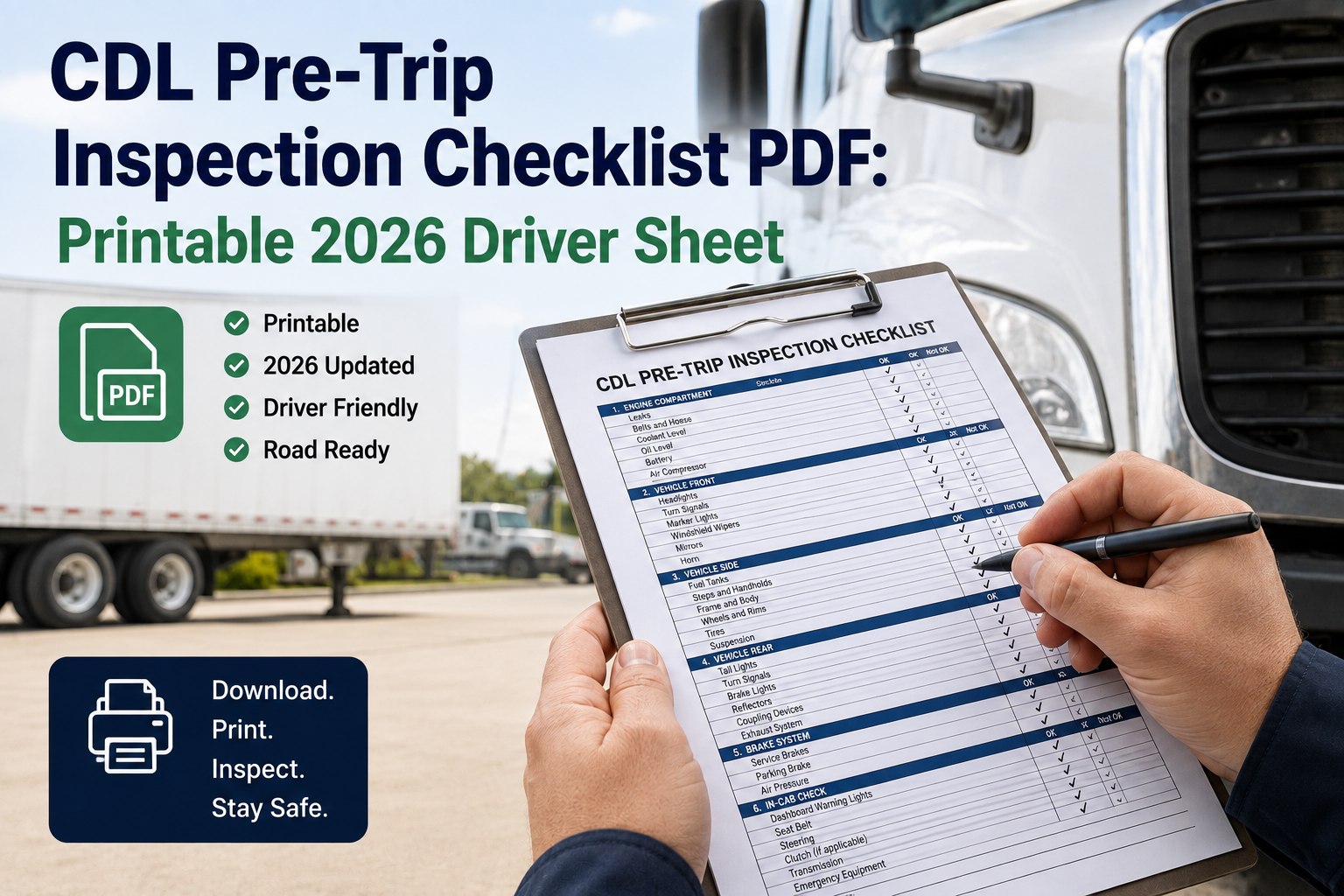
No — the pre-trip inspection under § 392.7 itself does not require a written report. It's an inspection requirement: the driver must be "satisfied" that the vehicle is in safe operating condition before operating. However, the post-trip DVIR under § 396.11 IS required at the end of each workday, and the pre-trip is tied to the DVIR chain-of-custody under § 396.13. For property-carrying CMVs (since 2014), a written DVIR is only required when defects are found — but if defects exist, the DVIR must be completed and the carrier must repair and certify before next dispatch. The next driver must then review the previous DVIR, confirm repairs were made, and sign to acknowledge before operating. This creates the chain-of-custody that FMCSA and enforcement officers review during compliance audits. Most professional fleets require written pre-trip documentation regardless of the minimum regulation, because it protects the driver and the carrier from disputed liability.
The 2026 CSA (Compliance, Safety, Accountability) overhaul introduces several changes that directly impact pre-trip inspection quality. Vehicle Maintenance splits into two separate BASIC categories — standard maintenance violations and a new "Driver Observed" violation type that specifically scores defects a driver should have caught at pre-trip. Out-of-service violations now carry 2× severity weight in the scoring calculation. The overall model uses 116 grouped violation types rather than the previous individual approach. The impact on fleet operations: a single burned-out marker light or an out-of-adjustment brake caught at roadside now hits your CSA score TWICE (both in standard Vehicle Maintenance AND in Driver Observed), and if it triggers an OOS order it counts at 2× severity. This makes daily pre-trip inspection quality directly visible in the carrier's SMS percentile rankings — clean daily inspections actively improve safety scores, while missed defects compound rapidly. Contact our team to see how digital DVIRs track Driver Observed compliance.
Certain defects trigger an immediate out-of-service order at roadside — the truck cannot be operated until the defect is repaired. The main OOS categories include: BRAKES — 20%+ of brakes out of adjustment on combination vehicle, air leak rate over 3 PSI/min for combinations, illuminated ABS malfunction lamp, cracked brake drums or missing shoes. TIRES — steer tire tread below 4/32", drive or trailer tread below 2/32", any sidewall damage or exposed cord/belt, flat tire or air loss over 50%. LIGHTS — inoperative brake lights or turn signals, all headlights inoperative, missing or damaged required reflectors, illegible USDOT identification. STEERING — excessive steering wheel play, loose or damaged steering components. COUPLING — fifth wheel not fully engaged, safety latch not locked. SUSPENSION — cracked/broken leaf springs, ruptured air bag, stretched U-bolts. Every one of these is preventable at pre-trip — none require special equipment beyond a tread gauge, a good ear, and a systematic walkaround.
Yes — and FMCSA has explicitly authorized electronic DVIRs (eDVIRs). Digital pre-trip inspection apps offer significant advantages over paper: guided workflows that ensure all § 392.7 items get checked, photo verification per checkpoint providing evidence of the inspection, automatic DVIR generation with time-stamps for compliance chain-of-custody, defect routing to the maintenance shop in real-time (before the truck leaves the yard), and time compression from 30-45 minutes on paper to 10-15 minutes digitally. Digital DVIRs also solve the chain-of-custody problem under § 396.13 — the next driver sees the previous DVIR on their phone or tablet, reviews the maintenance actions taken, and signs digitally with a full audit trail. Records retention (3 months minimum under § 396.11) is automatic. For fleets targeting improved CSA scores under the 2026 overhaul, digital pre-trip is now considered a best practice rather than an optional upgrade. Try free: sign up here.
Truck Inspection & Maintenance software makes pre-trip a 10-minute documented event, not a signature guess
Guided § 392.7 digital DVIRs covering all 11 mandatory items. 7-point walkaround workflow with 45+ power unit and 15+ trailer checkpoints. Photo verification per checkpoint. § 396.13 chain-of-custody enforcement — previous DVIR review required before next dispatch. Automatic defect routing to maintenance shop. 2026 CSA-aware categorization (Driver Observed tracking). Records retention automatic per § 396.11. Every element of pre-trip compliance managed in one platform — because a $4,200 OOS violation is prevented by a $10 marker lamp caught before departure.