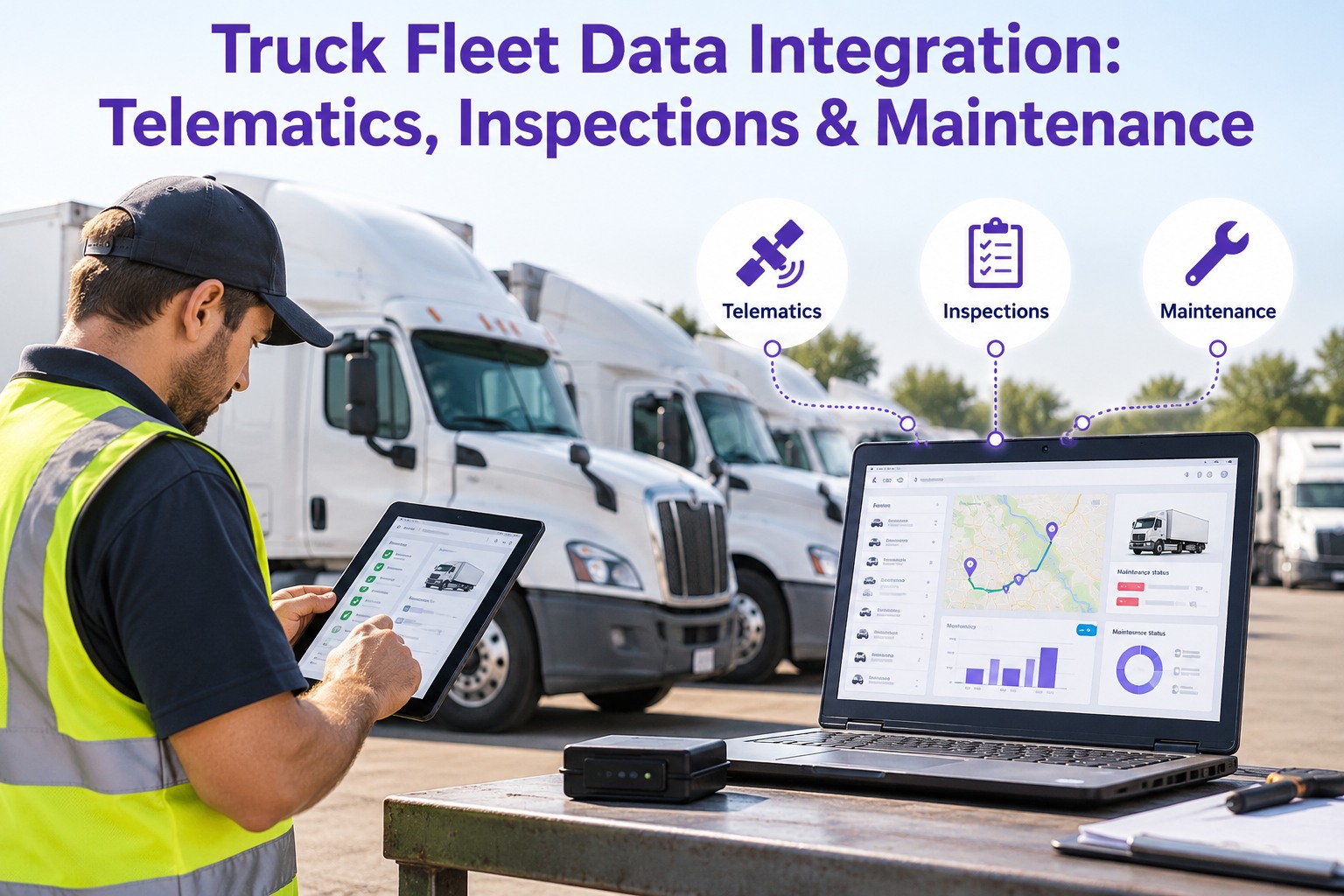
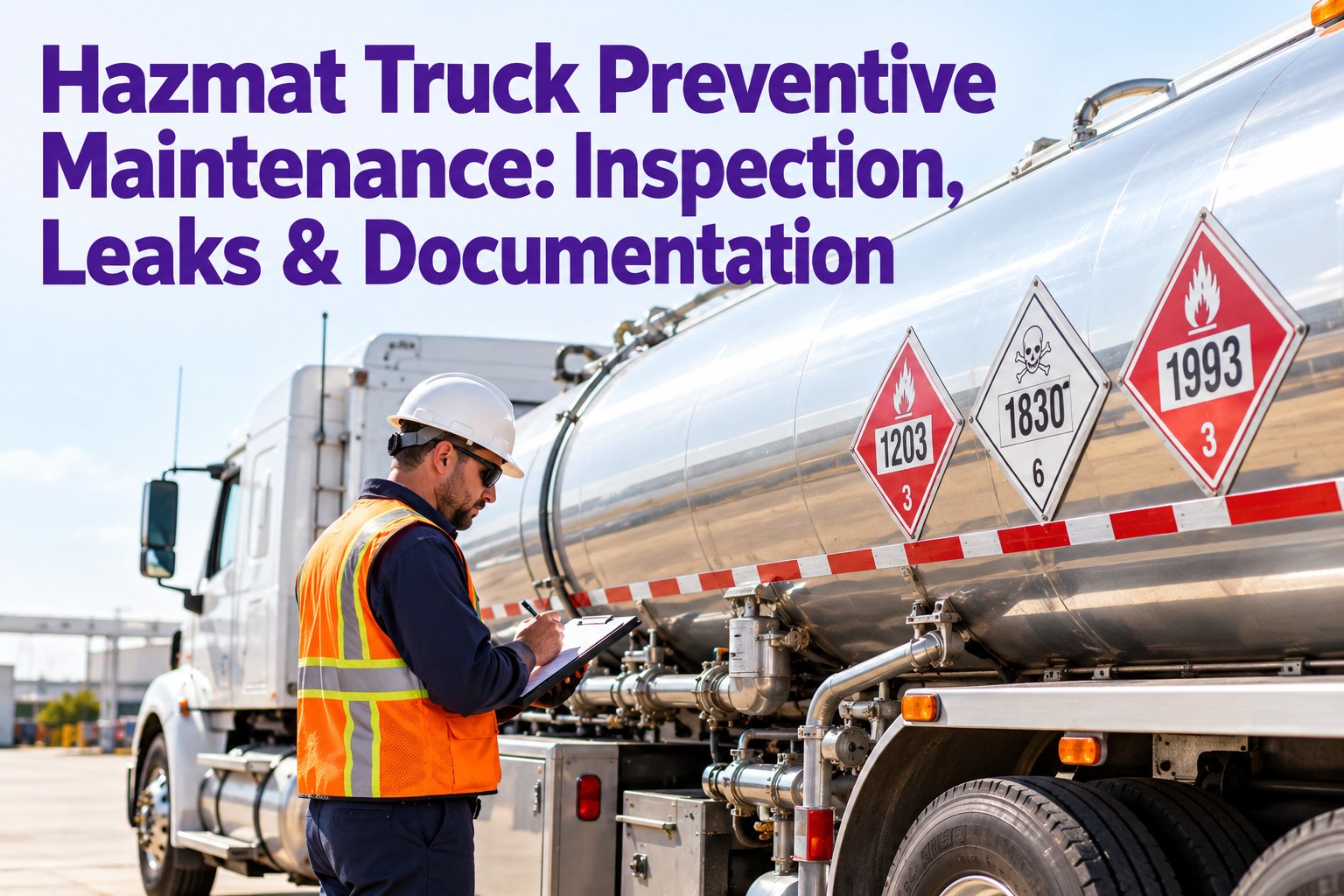
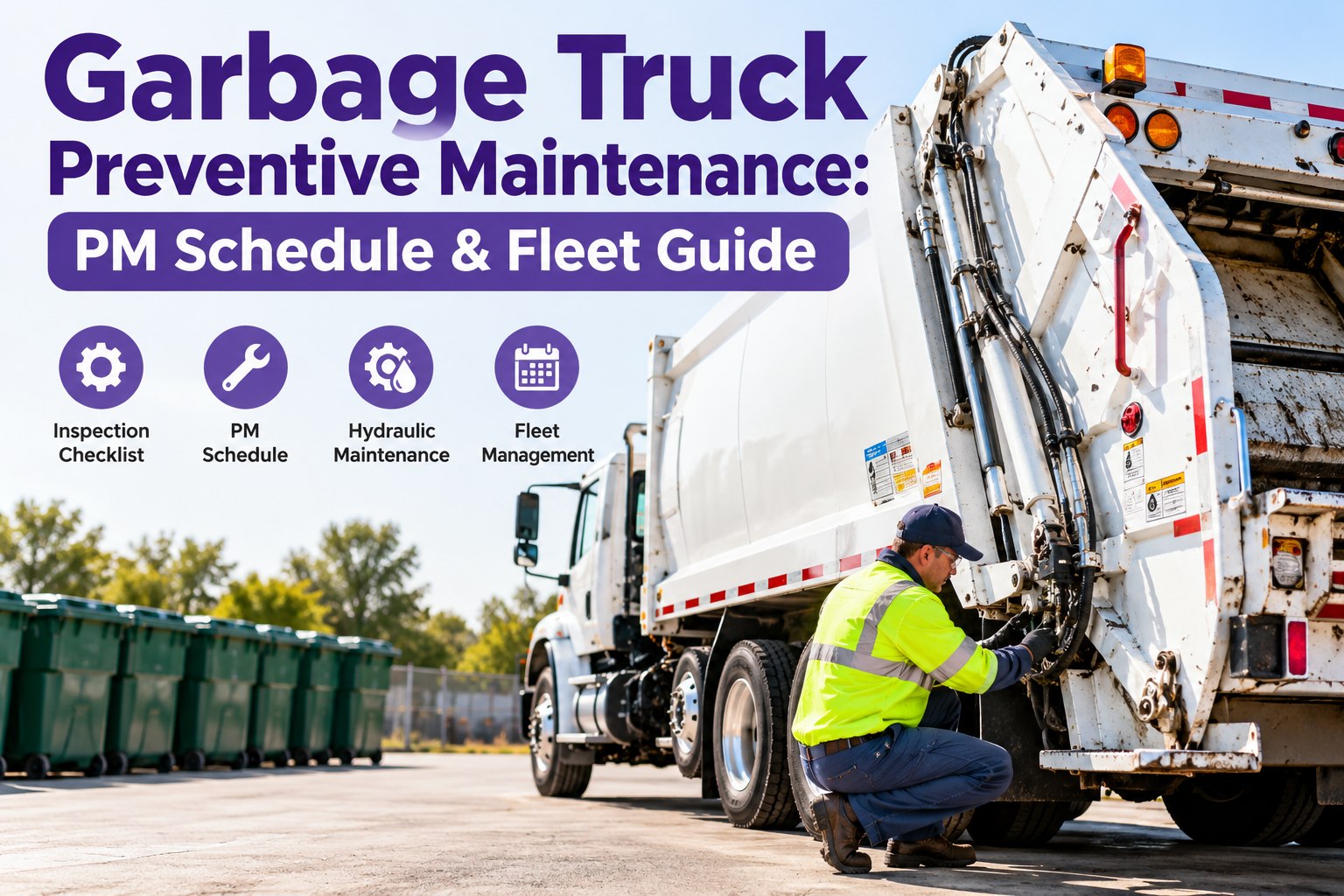
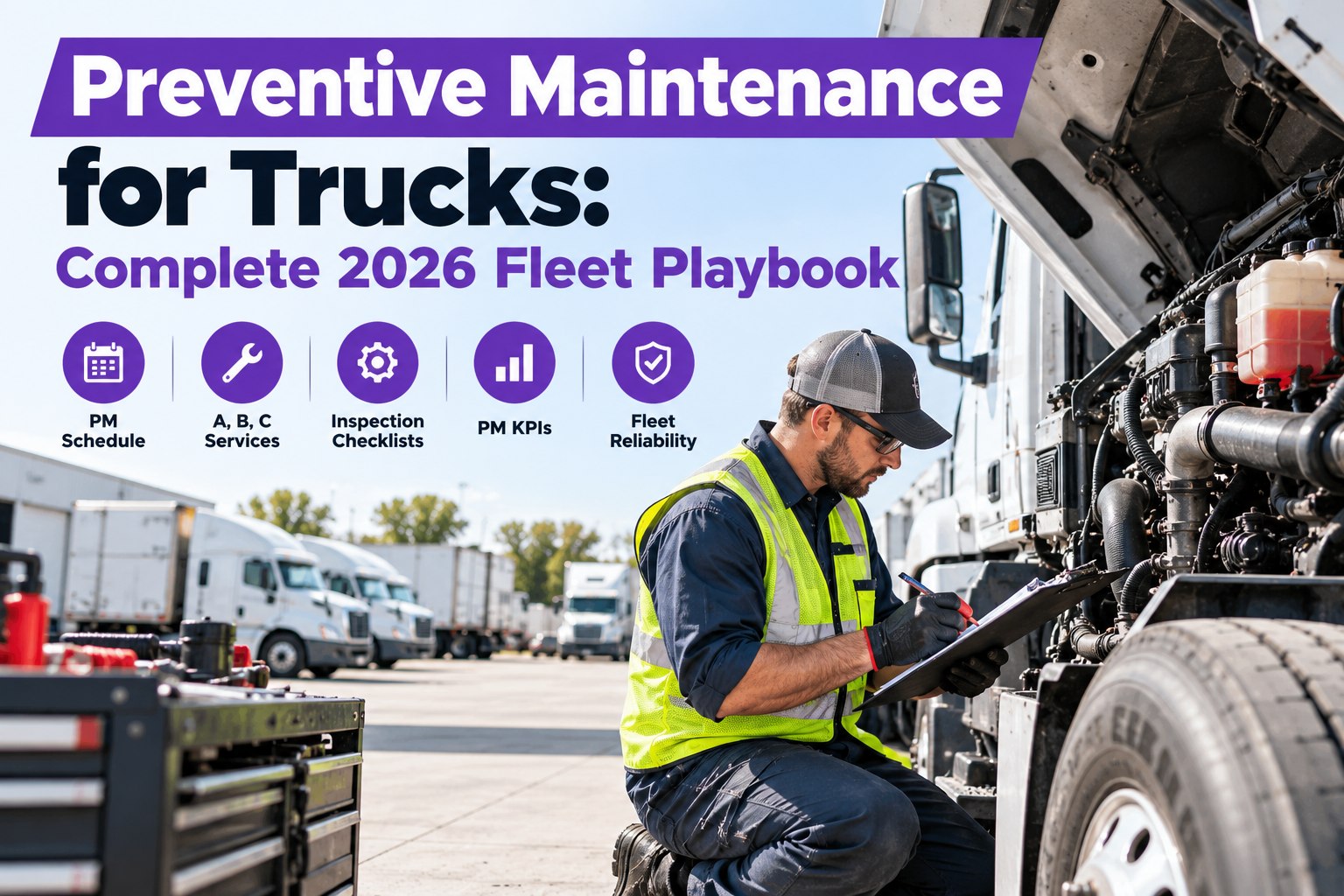
A construction fleet lives a harder life than almost any other — brutal duty cycles, dust and mud, overloaded axles, and trucks scattered across job sites that are never in the same place twice. When one goes down, it doesn't just lose a truck; it stalls a crew, a pour, or a whole day's schedule. Managing that well takes more than a spreadsheet — it takes a connected system for inspections, maintenance, defects, and compliance. This guide breaks that system into its parts and shows how Truck Inspection & Maintenance Management Software (TIM) runs it. Start free and bring your construction fleet onto one system with TIM.
TIM · Inspection · PM · Uptime
Construction Fleet Management: Truck Inspection, PM & Uptime.
Construction fleets run the toughest duty cycle in trucking — and they do it spread across sites, mixing haulers, mixers, and dumps on one yard. Keeping them running isn't one task; it's inspections, preventive maintenance, defect tracking, work orders, and compliance all working together. TIM pulls those into one record per truck, so a problem caught at the walk-around becomes a scheduled fix, not a breakdown mid-pour.
1
record per truck, inspection to repair
6
functions, one connected system
0
slips lost between site and shop
Why Construction Fleets Are Harder to Manage
A construction fleet isn't a line-haul operation with predictable routes and depots. Four realities make it its own kind of problem — and each one is a reason generic fleet tools fall short.
⛰
Brutal duty cycleDust, mud, overloading, and rough ground wear trucks far faster than highway miles ever would.
📍
Scattered across sitesTrucks and drivers are spread over job sites, not parked at one yard where a manager can eyeball them.
⬓
A mixed fleetDumps, mixers, flatbeds, and haulers each wear differently and need their own service intervals.
⏱
Downtime stalls the jobA truck down on site doesn't lose a delivery — it idles a crew and can push a whole schedule.
Manage all of that from paper and memory and something always slips. Contact our team to see how a connected fleet handles it.
The Construction Fleet Operating System
Keeping a construction fleet running comes down to six functions working together. Run them in separate tools — or separate heads — and the handoffs between them are where trucks fall through. Here's what each one does and why it matters.
01◉
Digital inspections
Drivers walk a guided pre-trip on a phone and log defects with photos — legible, time-stamped, and sent the moment they're found, not hours later on a slip.
02⟳
Preventive maintenance
Service scheduled by miles, engine hours, and duty cycle — so each truck and asset type comes due on its own clock instead of a single generic interval.
03⚑
Defect tracking
Every reported fault is graded by severity and tracked until it's closed — so nothing urgent rolls and nothing minor is forgotten.
04▤
Work orders
A defect becomes a work order routed to the right technician with the photo and notes attached — no re-typing, no lost paperwork.
05🛡
Compliance records
Inspection reports, repairs, and service history kept searchable and retained — produced on demand instead of dug out of a cab or a box.
06⏱
Jobsite uptime
The payoff of the other five — trucks that are ready when the crew is, because problems were caught and fixed before they became breakdowns.
Six functions, one record per truck — that's the whole idea. Start free and run all six on one system with TIM.
The Uptime Equation
Uptime on a construction fleet isn't luck — it's the output of three things done consistently. Miss any one and the equation breaks.
◉
Catch it earlyA guided daily inspection finds the defect at the walk-around, not on the shoulder.
+
⟳
Service on timePreventive maintenance on the right clock stops wear from becoming failure.
+
▤
Fix it fastA defect that becomes a routed work order is closed before it idles a crew.
=
⏱
Trucks ready for the jobUptime where it counts — on site, when the crew needs them.
Each term is a function from the system above — which is why they only work when they're connected. Contact our team to build your uptime equation.
Where Construction Fleets Lose Uptime
Almost every avoidable breakdown traces back to the same handful of gaps — and all of them come from functions that aren't talking to each other.
✕
Defects stuck on paperA fault found on site sits on a slip in a truck cab instead of reaching the shop — until it fails.
✕
PM on one generic clockA dump and a mixer serviced on the same interval means one is always over-serviced and the other under.
✕
No visibility across sitesTrucks scattered over job sites mean no one sees what's due or what's broken until a driver calls it in.
✕
Compliance scrambleInspection and repair records scattered across cabs and trays turn an audit into a fire drill.
Close these gaps and the breakdowns that stall job sites mostly disappear. Start free and close the uptime gaps with TIM.
How TIM Helps
One System From the Walk-Around to the Work Order
TIM runs the whole construction fleet operating system on one record per truck — so an inspection defect, a PM due date, and a repair all live together instead of in separate tools that don't talk. That's what keeps trucks ready across scattered sites.
1Inspect on site
→
2Defect graded
→
3Work order routed
→
4Repair logged & PM set
Guided mobile inspectionsDrivers walk a pre-trip from any site, with a photo on every defect.
PM by miles, hours & typeEach asset type runs on its own schedule, not one blanket interval.
Defect becomes a work orderA flagged fault routes to the shop the moment it's filed — no re-keying.
Severity-based routingSafety-critical faults go now; minor wear joins the planned queue.
Fleet-wide visibilitySee what's due and what's down across every site on one dashboard.
Audit-ready recordsInspections and repairs kept per unit, searchable and produced on demand.
Frequently Asked Questions
What makes construction fleet management different from other fleets?
The duty cycle and the spread. Construction trucks run in dust, mud, and overloading that wears them far faster than highway miles, and they're scattered across job sites rather than parked at one depot. On top of that it's usually a mixed fleet — dumps, mixers, flatbeds — each needing its own service intervals. That combination is why a generic, one-size fleet approach tends to miss things a construction operation can't afford to miss.
Start free and manage a mixed construction fleet with TIM.
How does digital inspection improve fleet uptime?
It closes the gap between finding a defect and fixing it. On paper, a fault found on site sits in a truck cab until someone reads the slip — often after it's already failed. A digital inspection sends the defect the moment it's logged, with a photo, so it can become a work order and reach the shop while it's still a small fix. Catching problems early is the single biggest lever on uptime.
How should preventive maintenance be scheduled for a mixed fleet?
By the meter that actually drives wear on each asset. A dump truck running road miles, a mixer wearing on drum run-time, and a truck idling on PTO work all age differently, so scheduling them on one blanket mileage interval over-services some and under-services others. The better approach is to set PM by miles, engine hours, or run-time per asset type, then adjust from each truck's own history.
Why keep inspection and repair records digitally?
Because scattered records turn routine compliance into a scramble. When inspection reports, defects, and repairs all live on one record per truck, you can show that a reported defect was corrected before the truck went back to work — and produce it on demand instead of digging through cabs and trays. It also gives you the per-unit history that makes PM and cost decisions far sharper.
Do I need separate software for inspections, PM, and work orders?
You don't, and separate tools are usually where trucks fall through — the defect found in the inspection app never reaches the maintenance system, so it's forgotten. The point of a connected fleet system is that an inspection defect, a PM schedule, and a work order are the same record moving through stages, not three disconnected ones. That's what removes the handoffs where uptime is lost.
Inspect · Maintain · Repair · Comply · Run
Keep the Fleet Ready, Not the Crew Waiting
On a construction fleet, uptime isn't a metric on a report — it's whether the truck shows up ready when the crew does. Scattered sites, brutal conditions, and a mixed fleet make that hard to manage from paper and memory. A connected system catches problems early, services each truck on the right clock, and turns every defect into a tracked repair. TIM runs it all on one record, so the fleet keeps moving and the job keeps going.
No credit card required · Free for up to 3 trucks · Inspections, PM scheduling, defect tracking, and audit-ready records built in