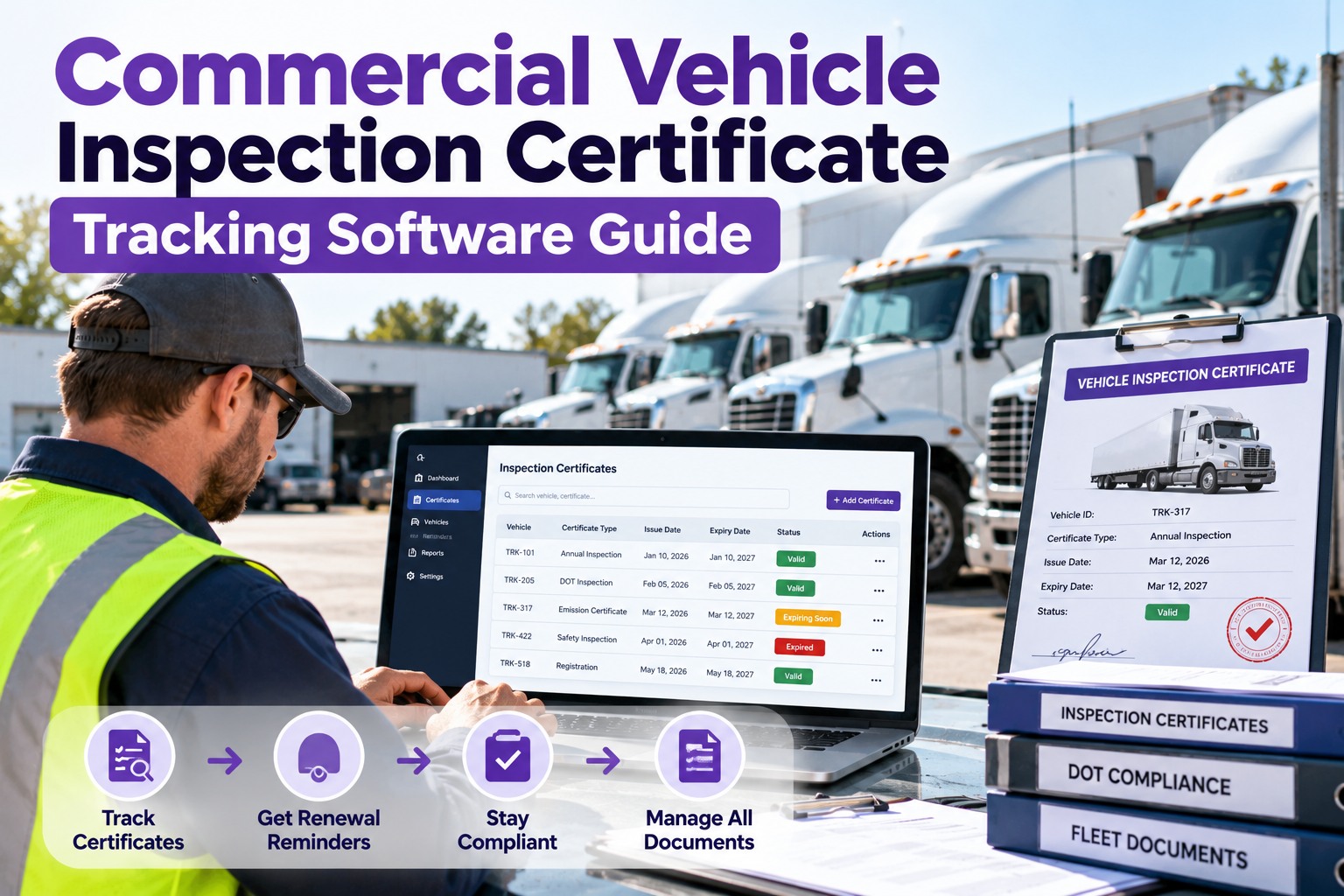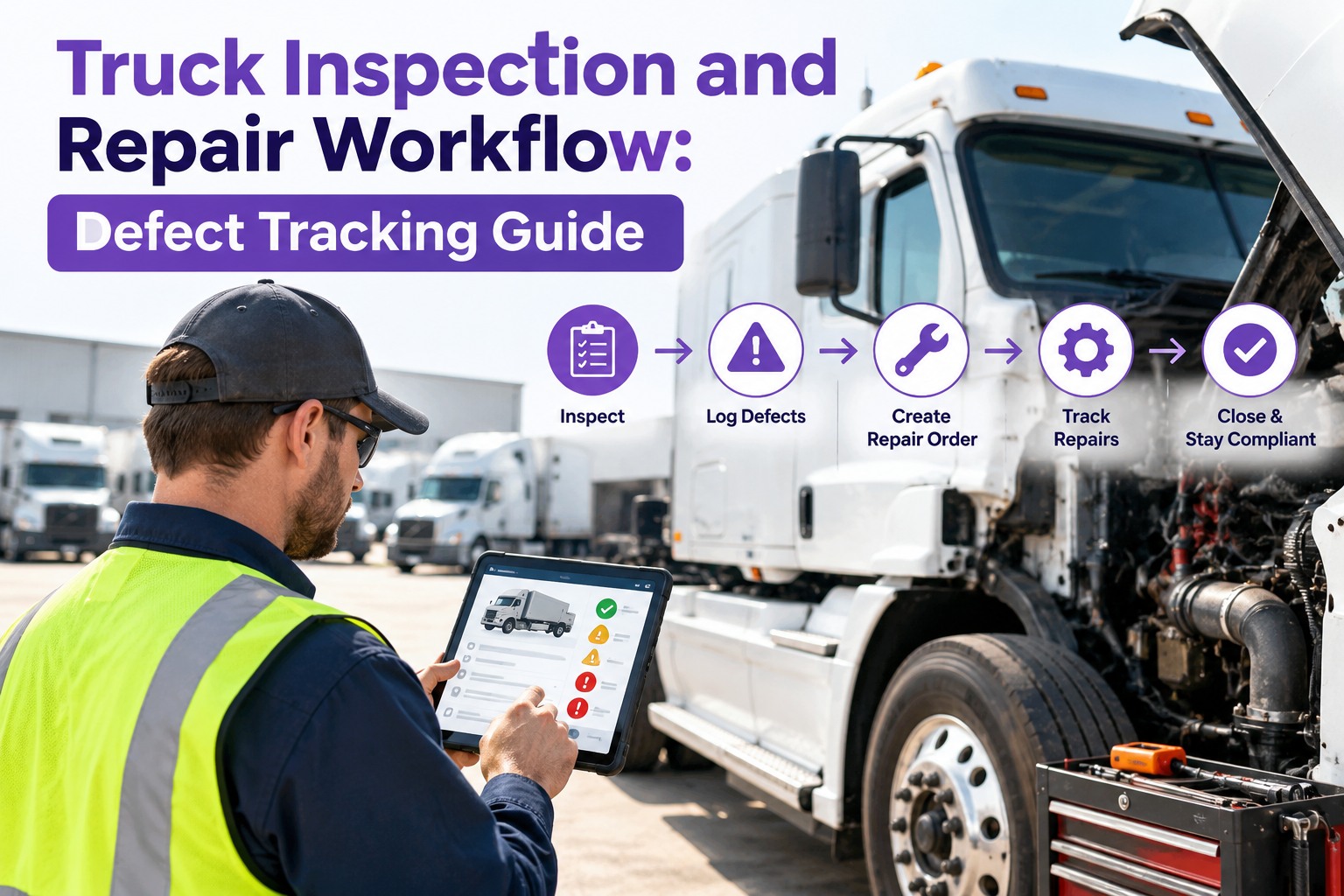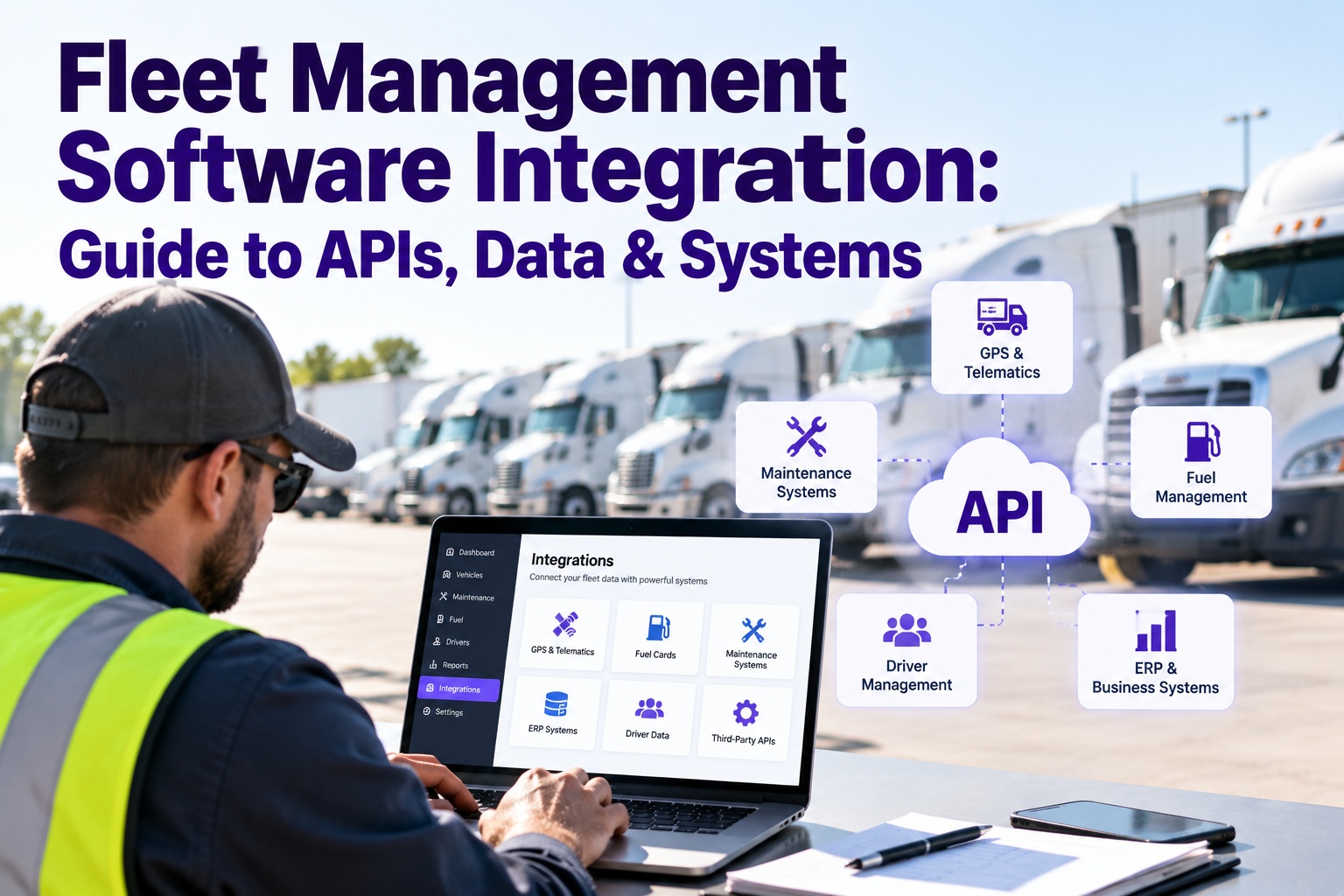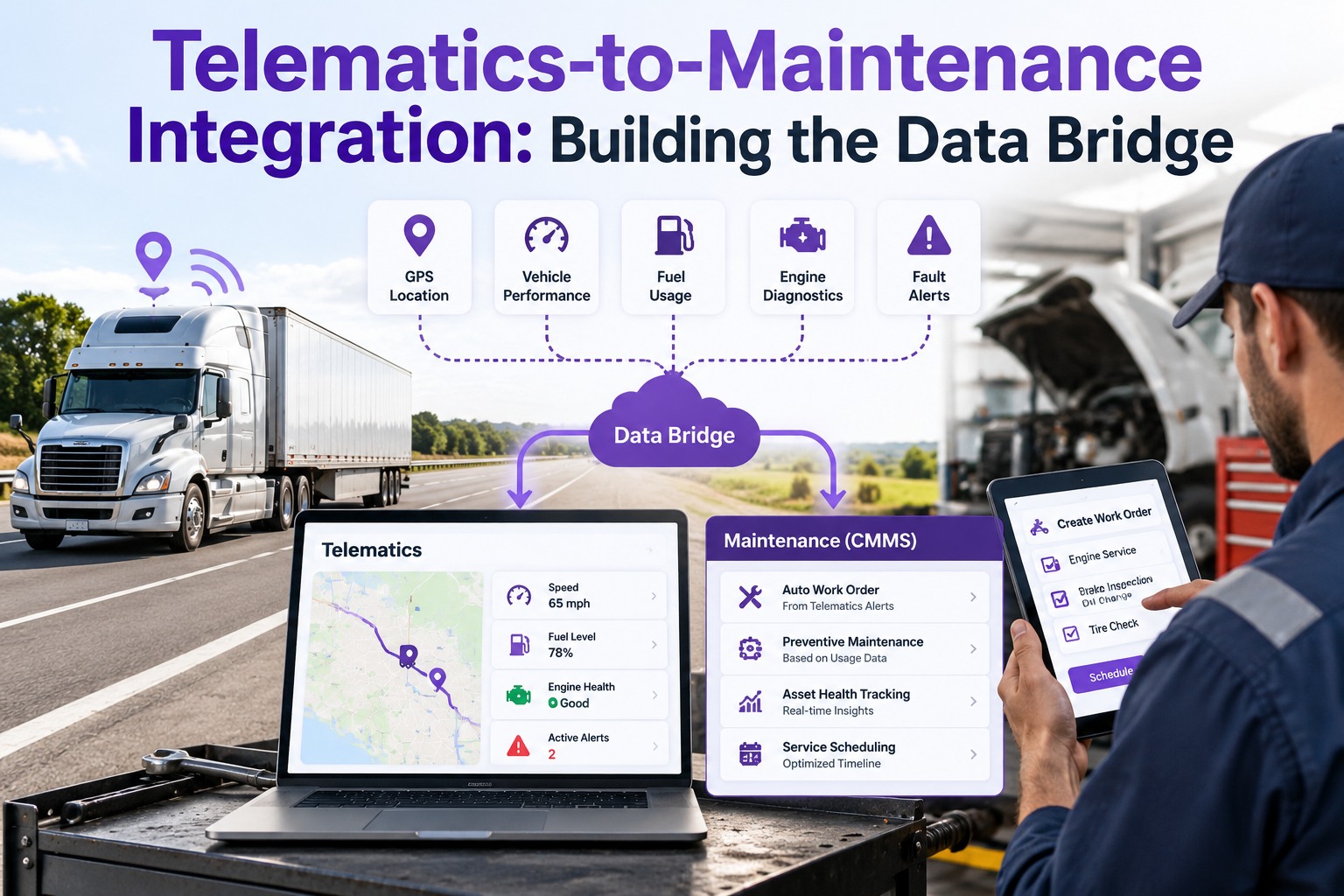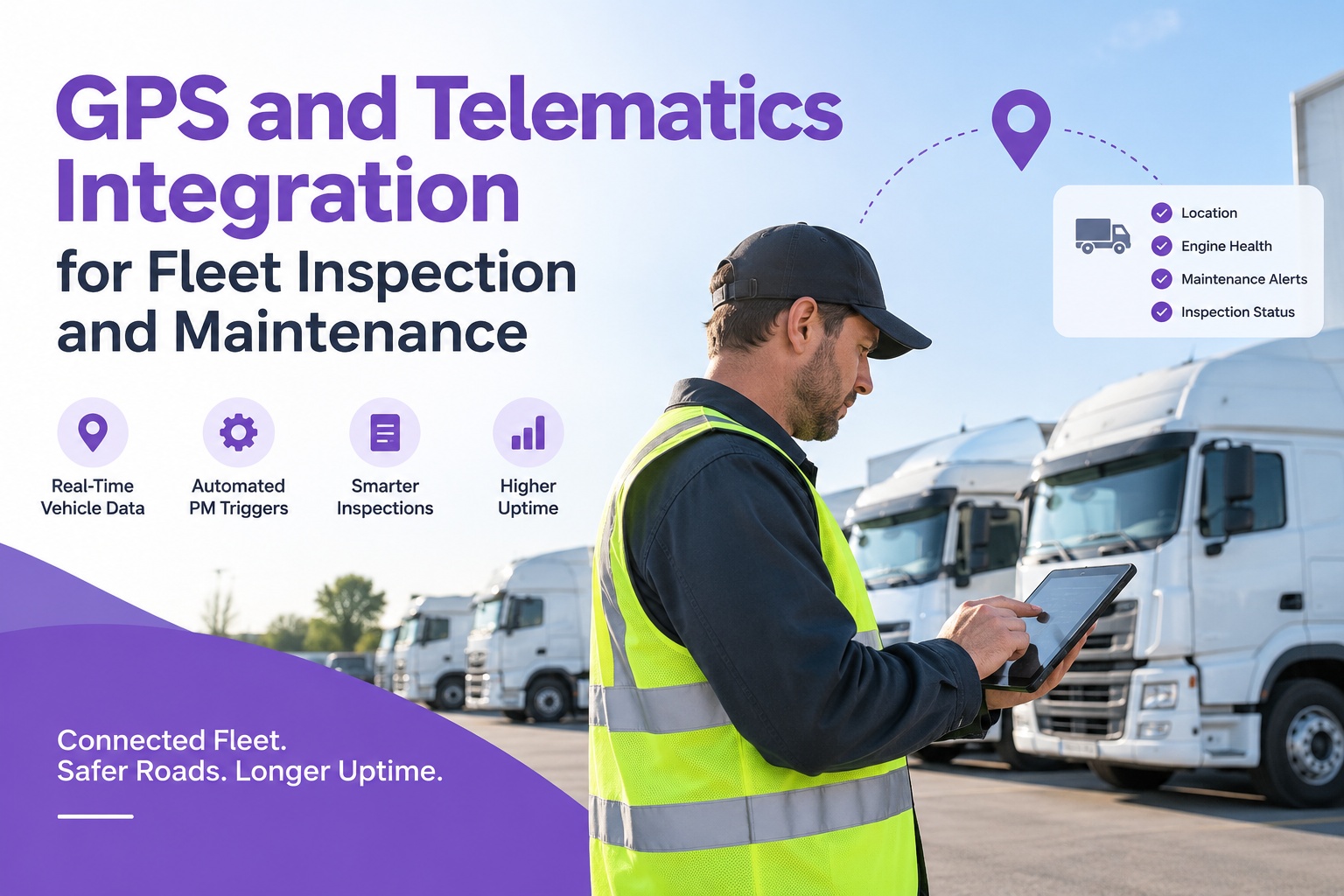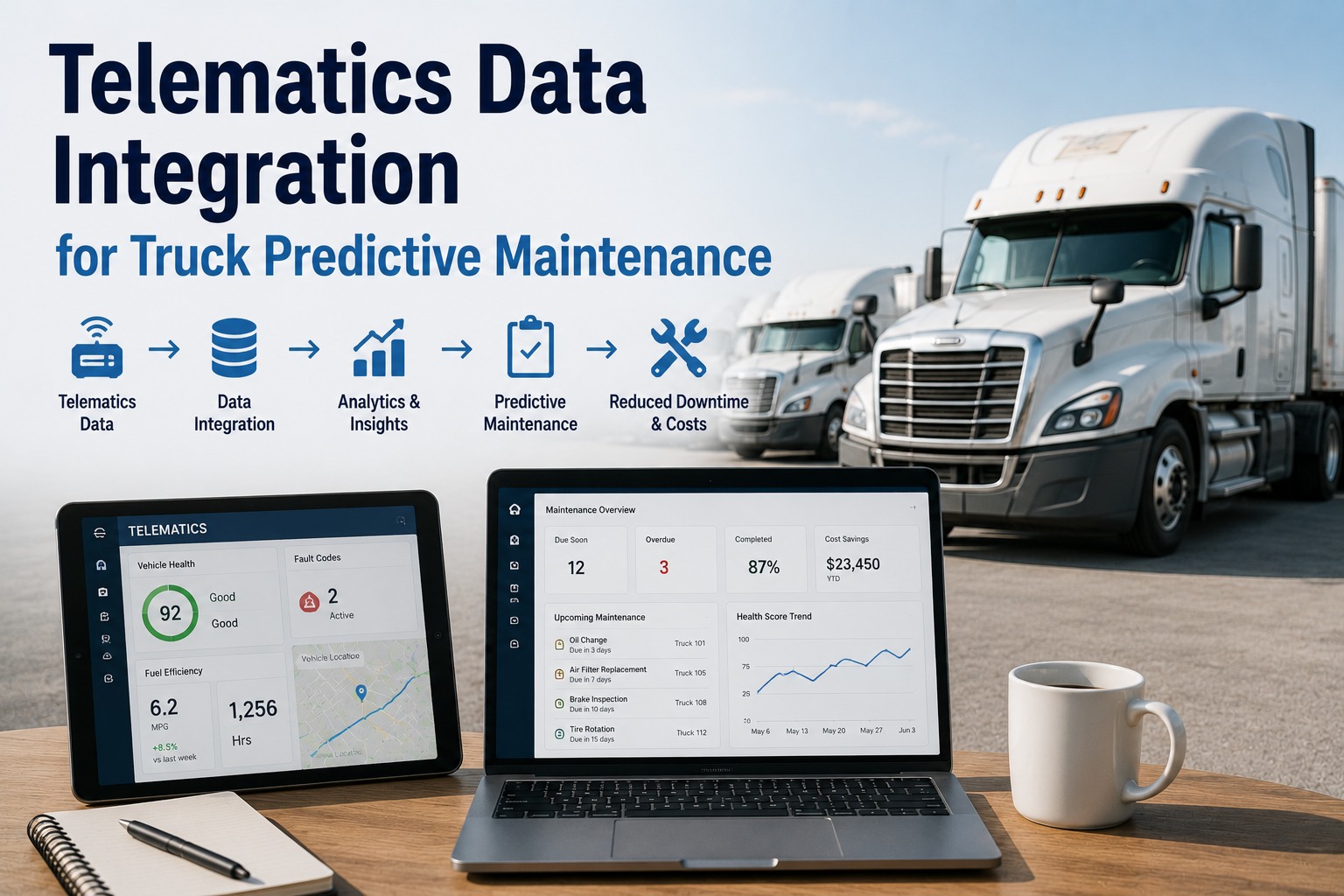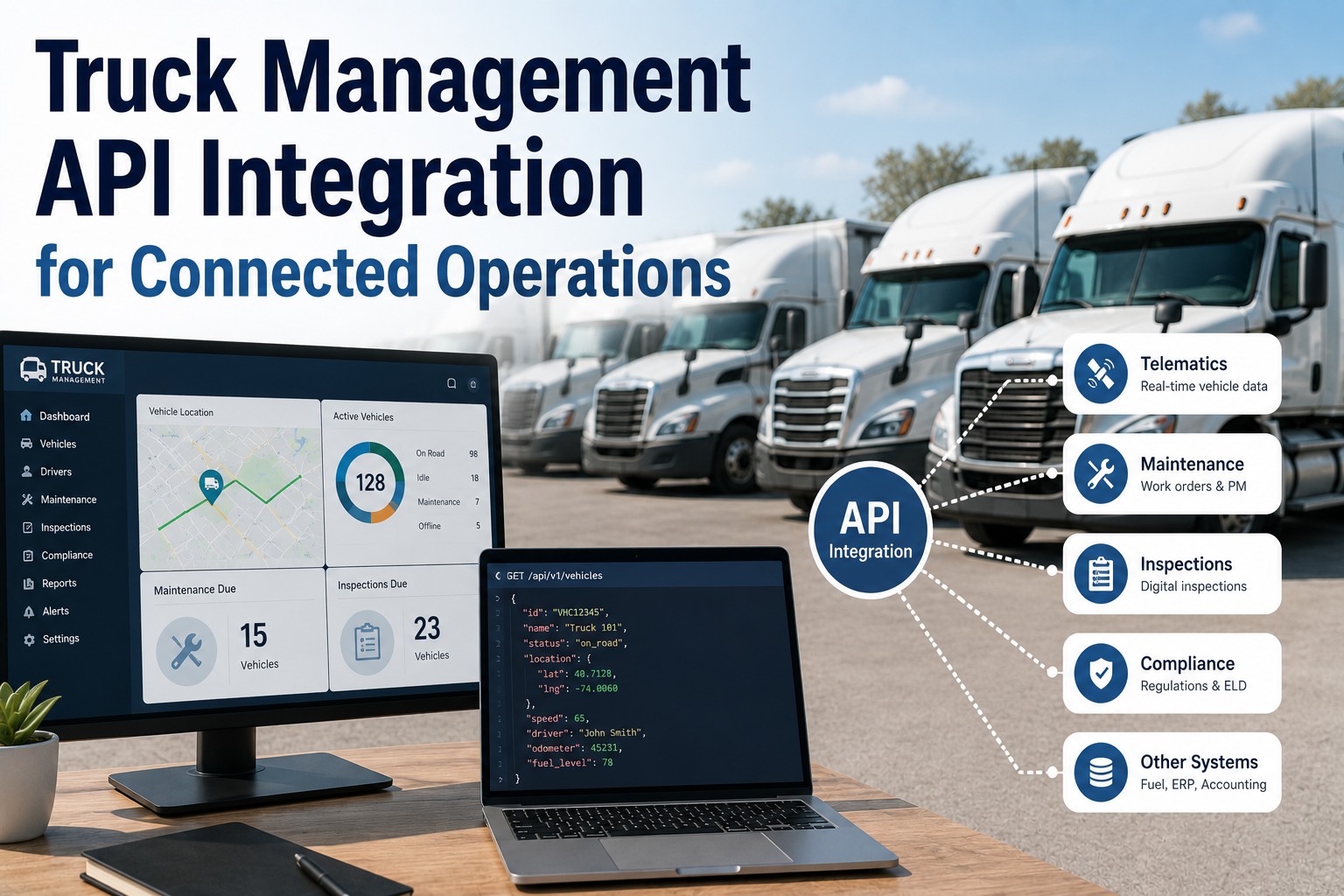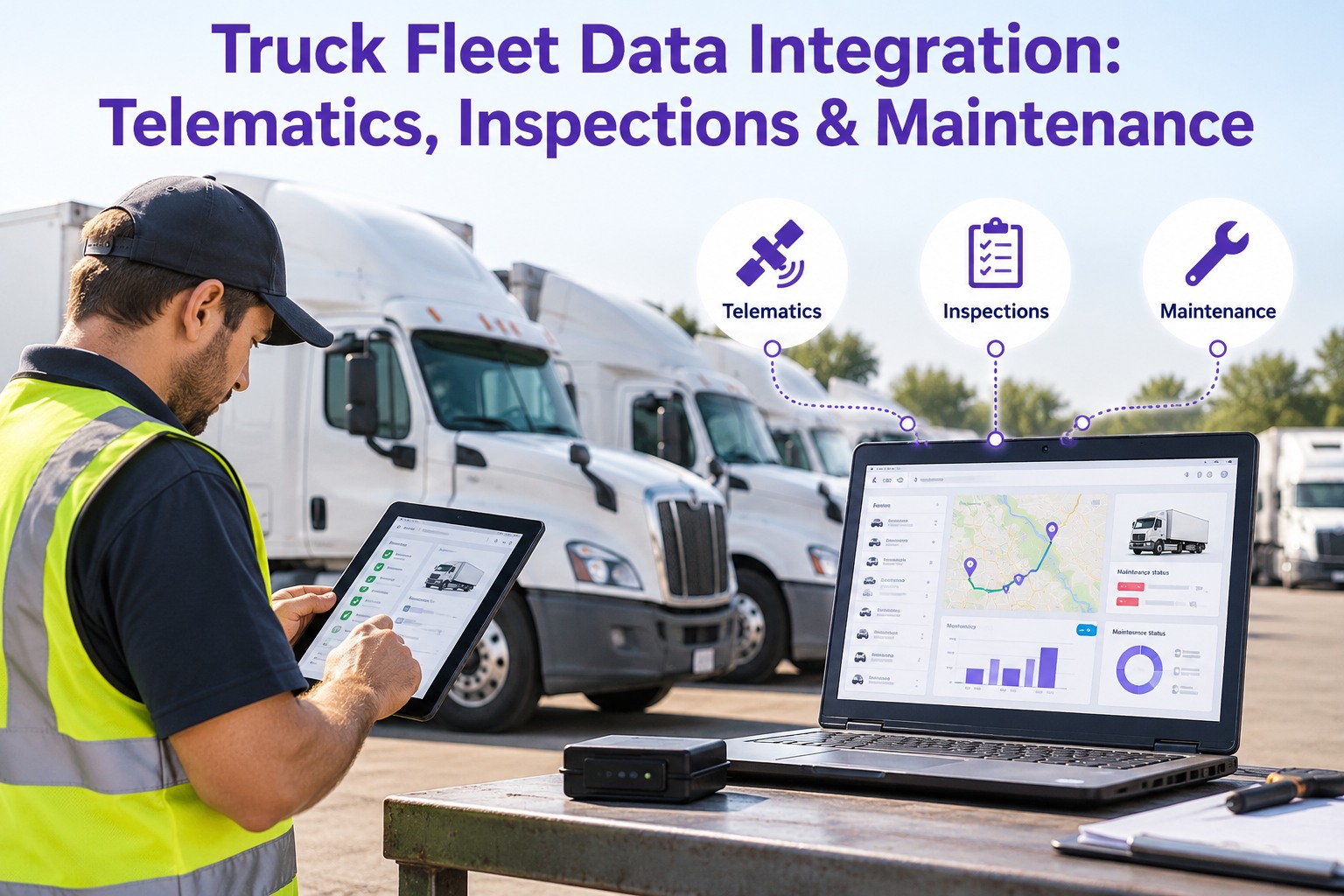
Most fleets already have the data to run a tight maintenance program — they just have it in three places that never talk. Telematics knows the mileage, hours, and fault codes. Drivers log inspections on paper or a separate app. The shop keeps a work-order spreadsheet of its own. Our Truck Inspection & Maintenance Management Software pulls all three into one record per truck, so a fault code, a driver defect, and a scheduled PM become one plan instead of three silos. Contact our team to see all three streams running on one screen.
Three Data Streams. One Software. One Truth About Every Truck.
Our Truck Inspection & Maintenance Management Software ties live telematics (mileage, engine hours, fault codes, location) to the driver's digital inspection (DVIR defects with photos) and the shop's work-order history — so every signal, from any source, ends up on the same unit timeline. A fault code becomes a work order. A failed inspection item becomes a work order. A PM due date becomes a work order. One loop, one record, zero re-keying.
The Silo Problem Our Software Was Built to Fix
Fleet data lives in different corners because the tools that produced it were bought at different times for different reasons. The result is three partial pictures of the same truck — and every gap between them is where a defect slips through.
Mileage, engine hours, DTCs, idle time — accurate, live, and completely blind to what the driver found this morning or what the shop fixed last week.
DVIRs piling up in a binder or an app no one in the shop opens. A defect written down is only a defect found; if nobody acts on it, it is still a liability.
Work orders, PM dates, parts, labor costs — in a sheet whose last edit was Thursday and whose owner left in March. No tie to the live reads from telematics.
What Each Stream Brings — and What Our Software Does With It
Each stream carries data the other two cannot see. Integrated inside our software, every signal has a job: either it triggers a work order, closes one, or adds to the unit's history.
- Mileage & engine hours — fire PM triggers automatically
- Fault codes (J1939 DTCs) — raise a graded work order on the fly
- Idle & PTO time — flag units aging faster than their mileage
- Location & routing — pair findings to the route that caused them
- Harsh events — brake, cornering, acceleration patterns tied to the VIN
- Pre- and post-trip DVIRs — guided checks per FMCSA §396.11
- Defect photos — timestamped visual evidence, not a text note
- Driver sign-off — electronic signature on every submission
- Severity grading — safety-critical vs scheduled, flagged in the field
- Repeat findings — the same defect surfacing on two shifts is caught
- Work orders — opened, graded, assigned, closed with proof
- PM history — every service tied to the VIN and the mileage/hours it ran
- Parts & labor — cost per unit, per failure mode, per repair
- Downtime tracking — how long a truck was out, and why
- Compliance records — annual DOT, DVIR files, PM proofs ready for audit
From Signal to Work Order — The Integrated Loop
Integration is not three dashboards on one screen. Integration is a signal from one stream turning into action in another, automatically. Here is what one real event looks like running end-to-end inside our software.
Truck 142 throws DTC SPN 157 (fuel rail pressure) while on route. The signal lands in our software within minutes.
A graded WO is auto-created against VIN, routed to the shop, and tagged "fuel system — monitor, service at return".
At end-of-shift, the driver flags "engine power loss" on the DVIR. Our software links the DVIR to the open WO automatically.
Fuel rail pressure sensor replaced, labor logged, part added, photo attached, WO closed — all tied to the DTC that started it.
Six Things That Break Without Integration
The gaps between three disconnected tools are where fleets lose uptime, miss defects, and fail audits. Our Truck Inspection & Maintenance Management Software closes each one by design.
DTCs sit in the telematics console with no path to the shop. Our software routes every meaningful code into a graded WO automatically.
A DVIR flagged "repair later" is a liability if no one did. Our software ties every DVIR defect to a WO with status and sign-off.
Odometer phoned in weekly drifts hundreds of miles. Our software pulls live mileage so PMs fire on the real number.
Parts in one sheet, labor in another, downtime nowhere. Our software rolls all three to the VIN so you can see the real cost of ownership.
DVIRs, PMs, annual inspection in three systems. Our software keeps the full compliance file in one searchable place.
The same defect on three trucks in a month is invisible across silos. Our software surfaces the pattern against the fleet, not just the unit.
What to Look For in an Integrated Platform
Not every "integration" is one. These are the capabilities our Truck Inspection & Maintenance Management Software was built around, and the ones to check for in any fleet platform you compare it against.
How Our Software Runs the Integrated Program
The three streams coming in are only half the job. The other half is making sure the right person acts on the right signal at the right time — which is what our software does automatically, every day, on every truck.
One Software. All Three Streams. Every Truck on One Timeline.
Our Truck Inspection & Maintenance Management Software pulls telematics, driver inspections, and shop maintenance into one record per truck, raises graded work orders from any signal, fires PMs on live mileage and hours, and keeps the full compliance file behind it. Fewer silos, cleaner audits, and a fleet you can actually run from one screen.
Expert Review
Frequently Asked Questions
What is fleet data integration, in plain terms?
Can your software pull data from my current telematics provider?
How does a fault code become a work order automatically?
Does integration help with FMCSA audits and roadside inspections?
What's the biggest payoff from integrating these three streams?
One Software to Run the Whole Fleet from One Record.
Our Truck Inspection & Maintenance Management Software ties live telematics, driver DVIRs, and shop maintenance into one timeline per truck. Every signal becomes a graded work order. Every work order closes with proof. Every record is ready for the next audit. A fleet that runs on one truth, not three.