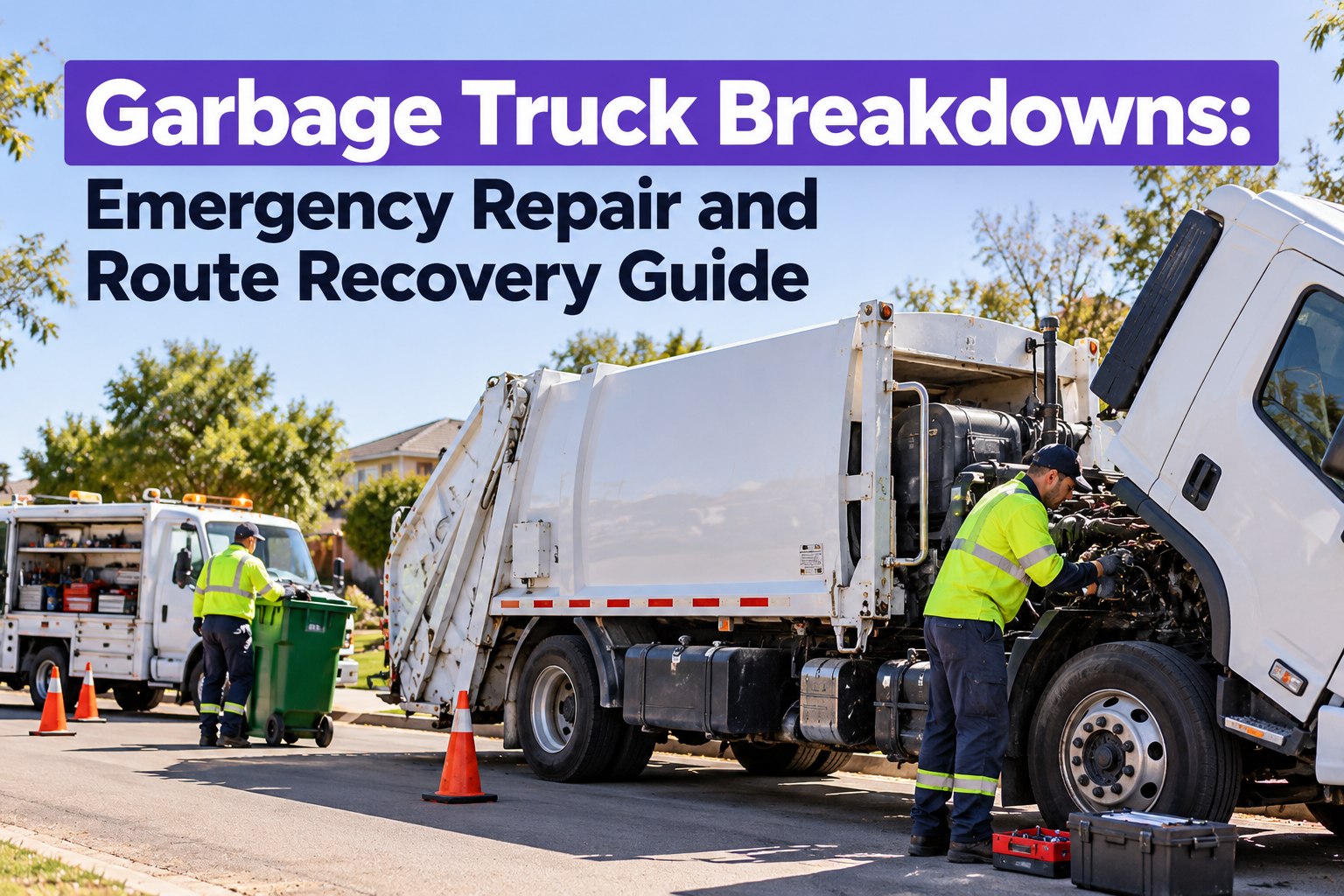
When a garbage truck dies mid-route, you're not just down a truck you're down a block of uncollected bins, a crew standing idle, a $1,200 missed-route day running, and a municipal penalty clock ticking. A refuse truck works harder than almost anything on the road, so breakdowns aren't rare events to be surprised by; they're a scenario to have a plan for. This guide lays out that plan: what to do in the first minutes, how to decide on a backup, and how to recover the route. Start free and turn breakdown chaos into a logged response.
Garbage Truck Breakdowns: Emergency Repair and Route Recovery Guide
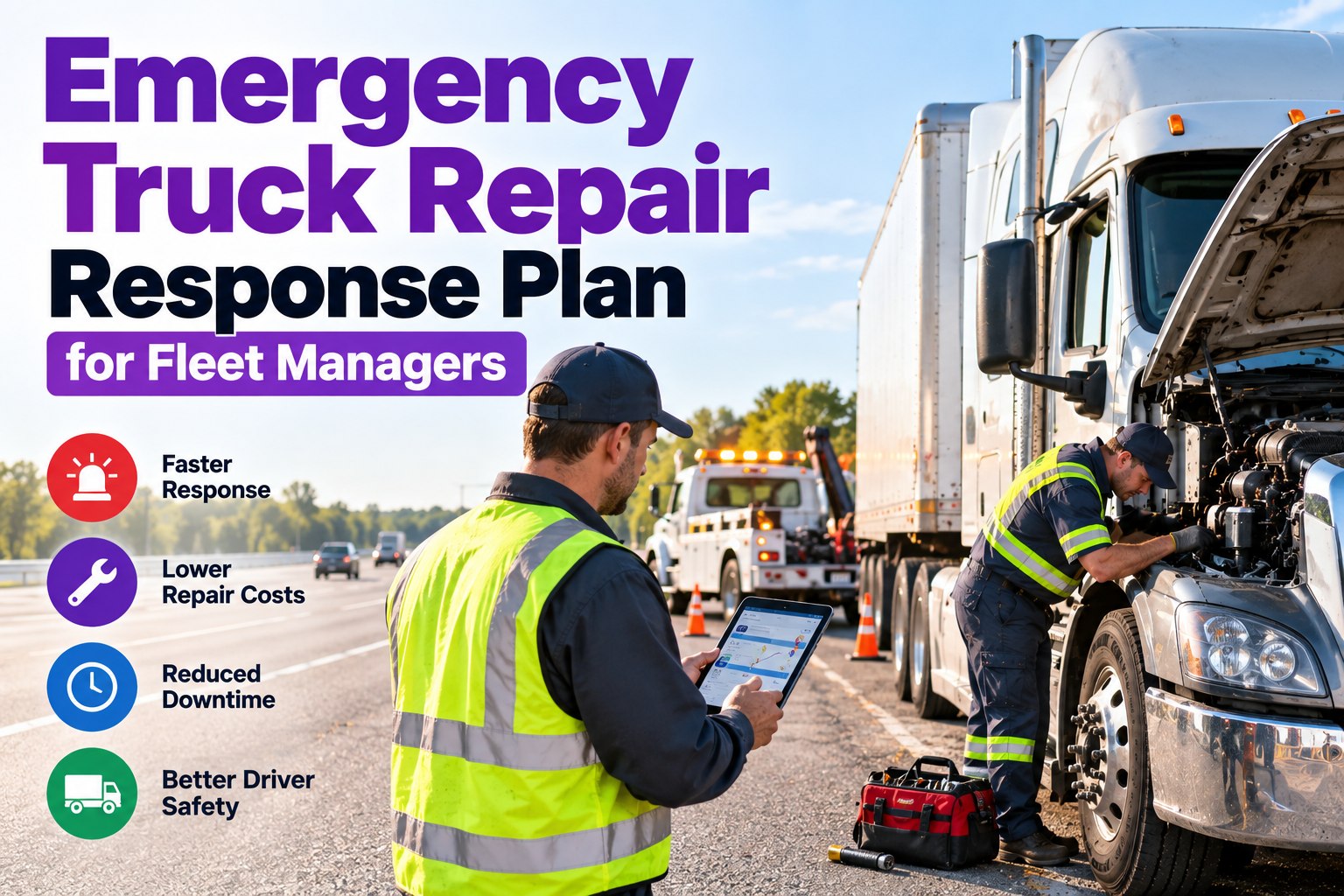
A breakdown is a clock, not a crisis — every minute between the stall and the backup is uncollected route and mounting penalty. Truck Inspection & Maintenance Management Software gives the crew a one-tap breakdown report, routes it to the shop and dispatch at once, and keeps the whole response on a timeline so a dead truck becomes a recovered route, not a lost day.
Why Refuse Trucks Break Down More
A garbage truck isn't a highway hauler that happens to carry trash — it lives in the harshest duty cycle in trucking, and its parts wear on a clock measured in months, not years. Knowing that reframes the breakdown: it's not bad luck, it's a predictable consequence of the work.
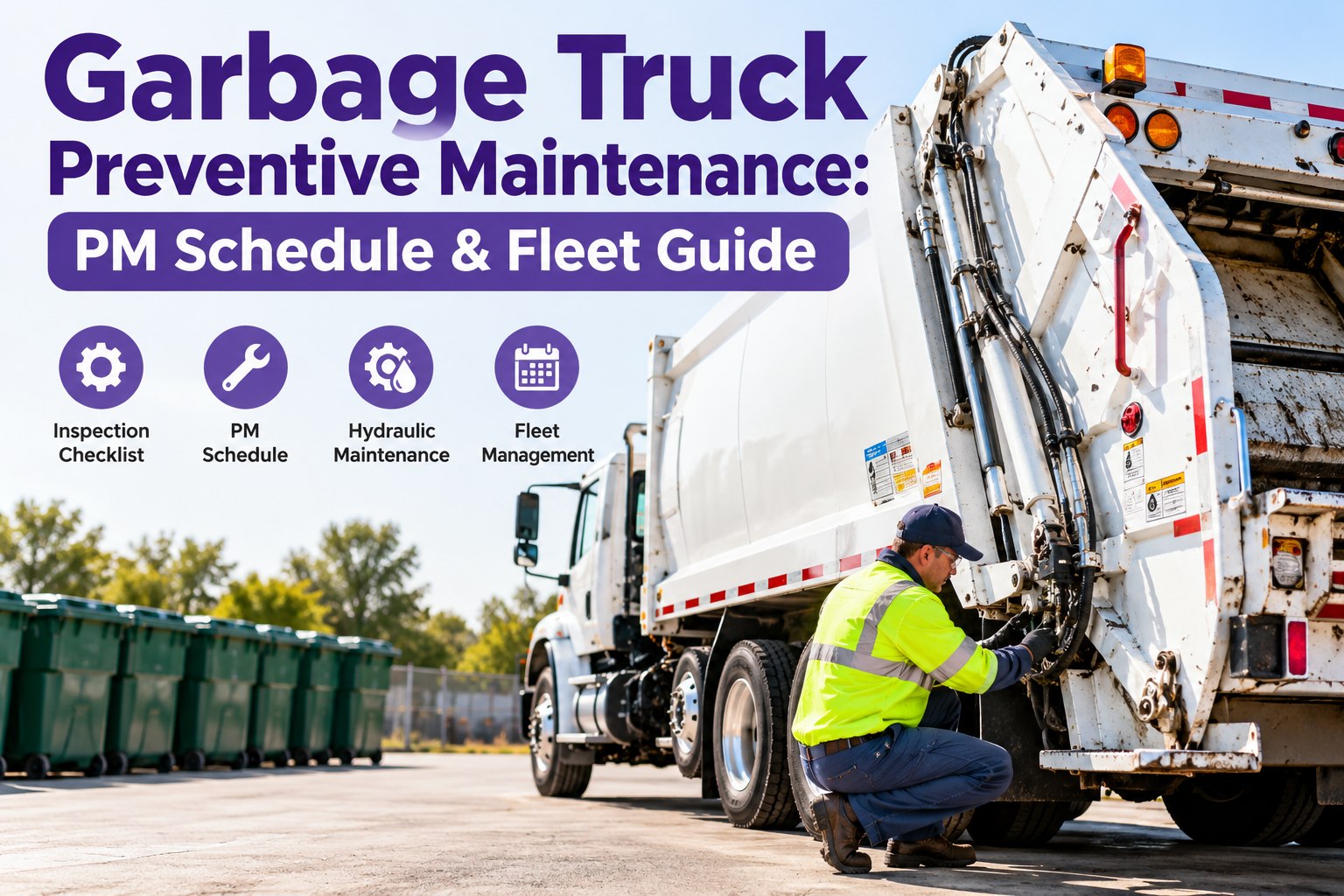
The result shows in the wear clock: hydraulic hoses last 18–30 months against 4–5 years on a highway fleet, brake pads 4–6 months against 18–24, and corrosion alone drives 18–22% of unplanned downtime. The breakdown you're planning for is usually one of these parts reaching the end of a short life.
The First 30 Minutes — A Breakdown Response Timeline
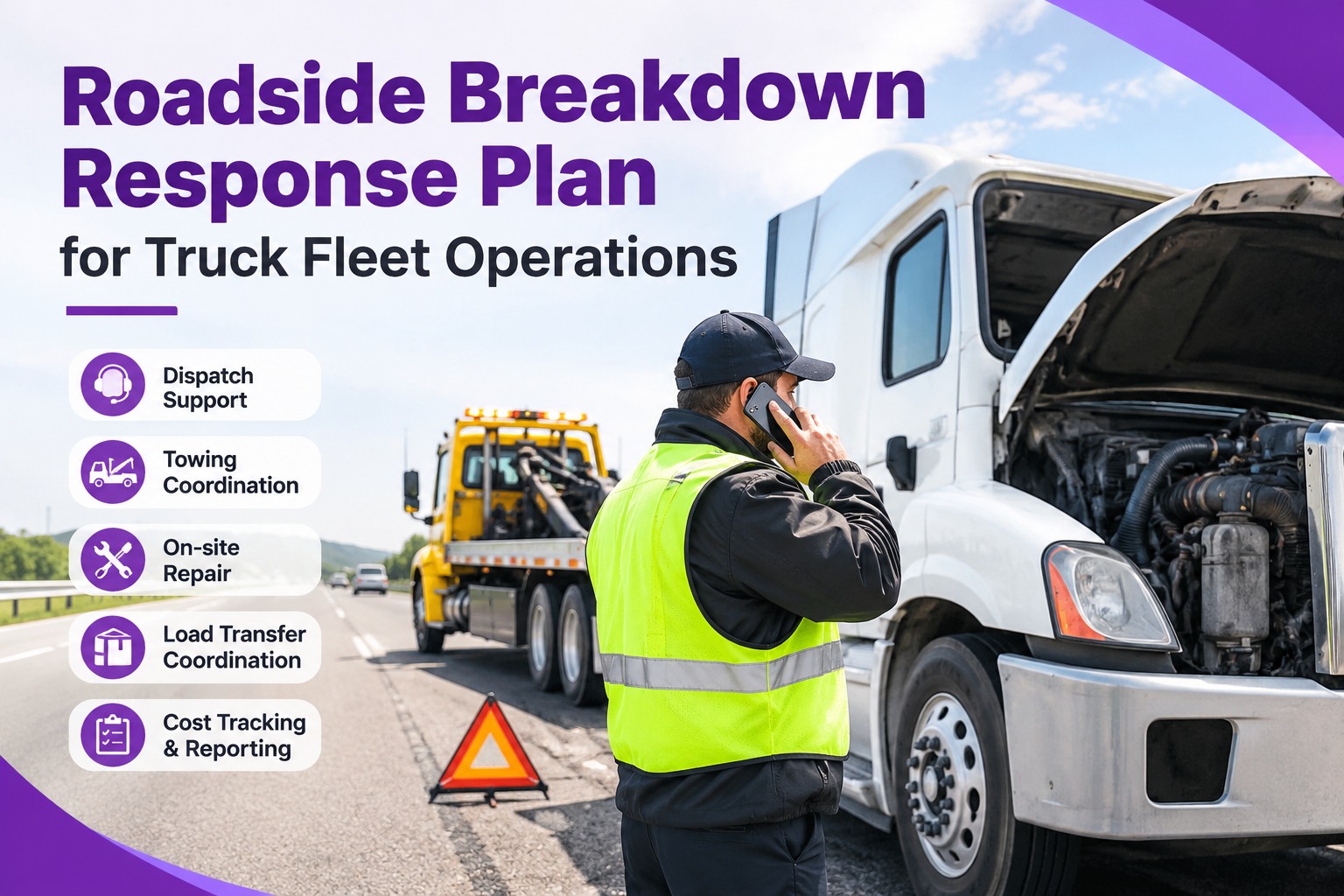
What happens between the stall and the recovery decides the cost. Work this sequence and a breakdown stays a delay; freelance it and it becomes a lost route. Each step has an owner and a goal.
Get it safely stopped and visible, hazards on, crew clear of traffic. On a loaded packer, note whether the hydraulics failed with the blade mid-cycle — that changes how it's handled.
One breakdown report — location, symptom, photo — reaches the shop and dispatch at the same time. No phone-tag chain where the shop hears third-hand ten minutes later.
The shop reads the symptom and makes the call — a blown hydraulic hose or a simple electrical fault may be a roadside repair; a hydraulic pump or engine failure is a tow and a backup.
If it's not a quick fix, dispatch a spare or reassign the route now — not after the tow truck arrives. The sooner the backup rolls, the less route is lost.
Hand the remaining stops to the backup or a neighbouring route, mark where collection stopped, and log the completed and missed stops so nothing gets skipped twice.
Roadside Fix or Backup Truck? The Decision
The single call that decides the day is whether to repair at the roadside or recover the route another way. It comes down to the failure, the time, and whether the truck is loaded.
- Blown hydraulic hose with a spare on the service truck
- Simple electrical fault, blown fuse, or loose connection
- Minor issue with the truck lightly loaded and parts on hand
- Mobile tech can reach it faster than a spare can deploy
- Hydraulic pump, transmission, or engine failure
- Brake or safety defect that can't be driven on
- Truck is full and can't finish regardless of the fix
- Repair time would blow the collection window either way
The Backup Vehicle Problem — Handling a Loaded Truck
A dead refuse truck is often a full refuse truck, and that complicates everything. The recovery plan has to answer three questions a dry-van breakdown never faces.
Software That Runs the Breakdown Playbook
Helping with exactly this is the job. Truck Inspection & Maintenance Management Software gives the crew a one-tap breakdown report that reaches the shop and dispatch together, with location, symptom, and photo attached — so the roadside-or-backup call gets made in minutes, not after a chain of phone calls. The whole response stays on a timeline, the repair becomes a tracked work order, and the breakdown is logged against the truck. Over a few months that log turns into a pattern: the hoses and pumps that keep failing surface as a PM fix, so the next breakdown is the one you prevented.
From Response to Prevention — Stop Repeating the Breakdown
Emergency response saves the day; it doesn't save next week. The breakdowns worth planning for are the ones the duty cycle makes predictable — catch those on a schedule and most roadside emergencies never happen.
Frequently Asked Questions
Turn a Dead Truck Into a Recovered Route
Truck Inspection & Maintenance Management Software gives crews a one-tap breakdown report, routes it to the shop and dispatch together, keeps the response on a timeline, and logs every breakdown against the truck so the repeat failures become a PM fix. Fleets run it to keep a $180 hose from costing a $1,200 route day.