There are two ways to decide when a truck is due for service: by the miles it's driven, or by the time that's passed. Pick the wrong one and you lose money in opposite directions — a time-based rule over-services the truck that barely moves, while a mileage-based rule lets a low-use vehicle sit un-serviced for over a year. Both triggers are measuring real wear; they're just measuring different kinds of it. This comparison lays out where each one wins, what each one misses, the cost of choosing wrong, and the hybrid rule that top fleets actually run. Start free and set the right trigger on every truck.
Mileage-Based vs Time-Based · Fleet Cost Comparison
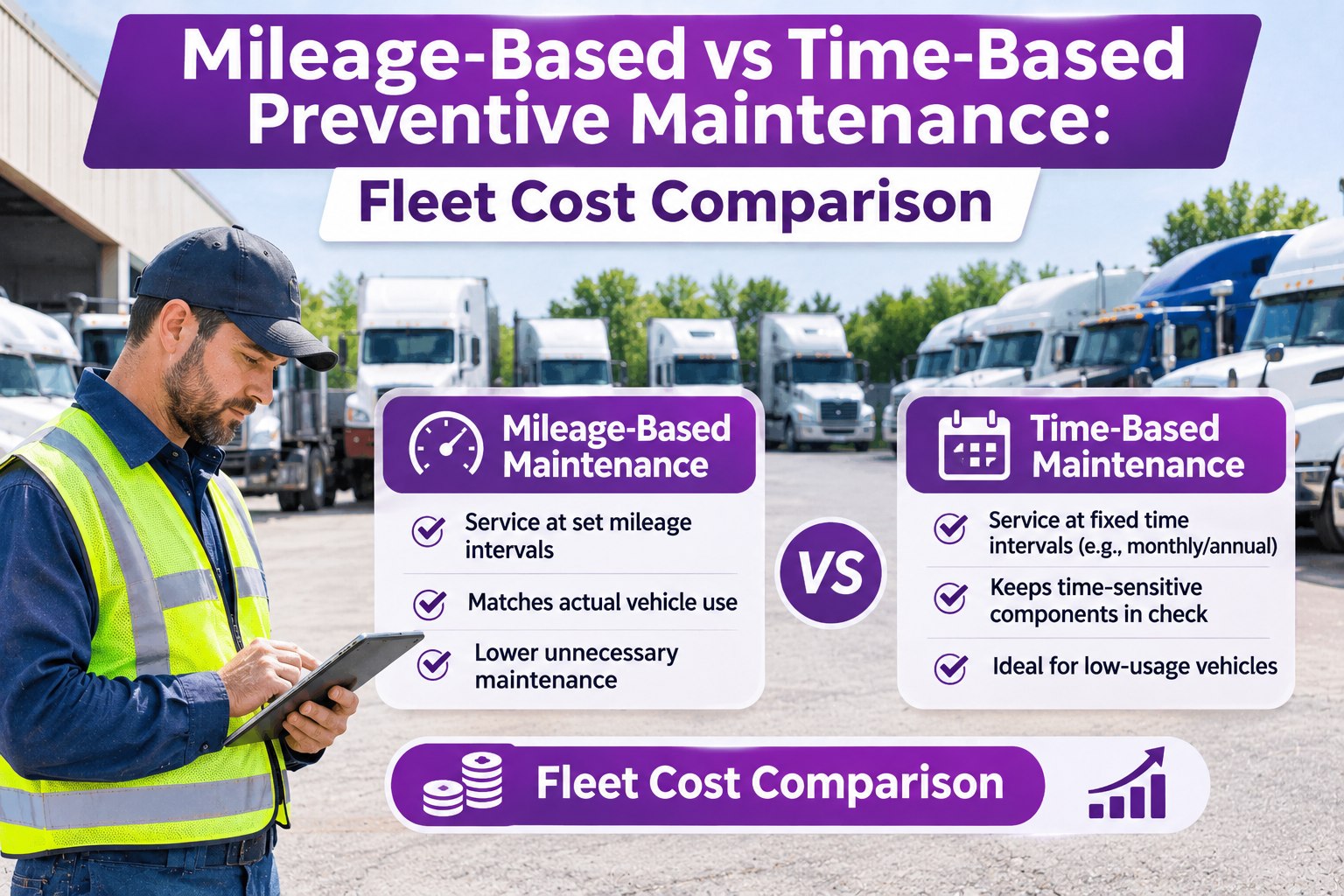
Mileage-Based vs Time-Based Preventive Maintenance: Fleet Cost Comparison
Neither trigger is wrong — each is right for a different truck. Truck Inspection & Maintenance Management Software sets the trigger per vehicle and services on whichever comes first, so the hard-running trucks and the ones that sit are both covered.
Mileage-Based
Wins on steady, high-distance highway trucks
VS
Time-Based
Wins on low-use, seasonal & spare units
The right answer depends on how each truck is used — and most fleets need both.
Same Goal, Different Clock
Both approaches aim to service a truck before something fails — they just read a different gauge to decide when. Understand what each one actually measures and the choice gets simple.
MIMileage-Based
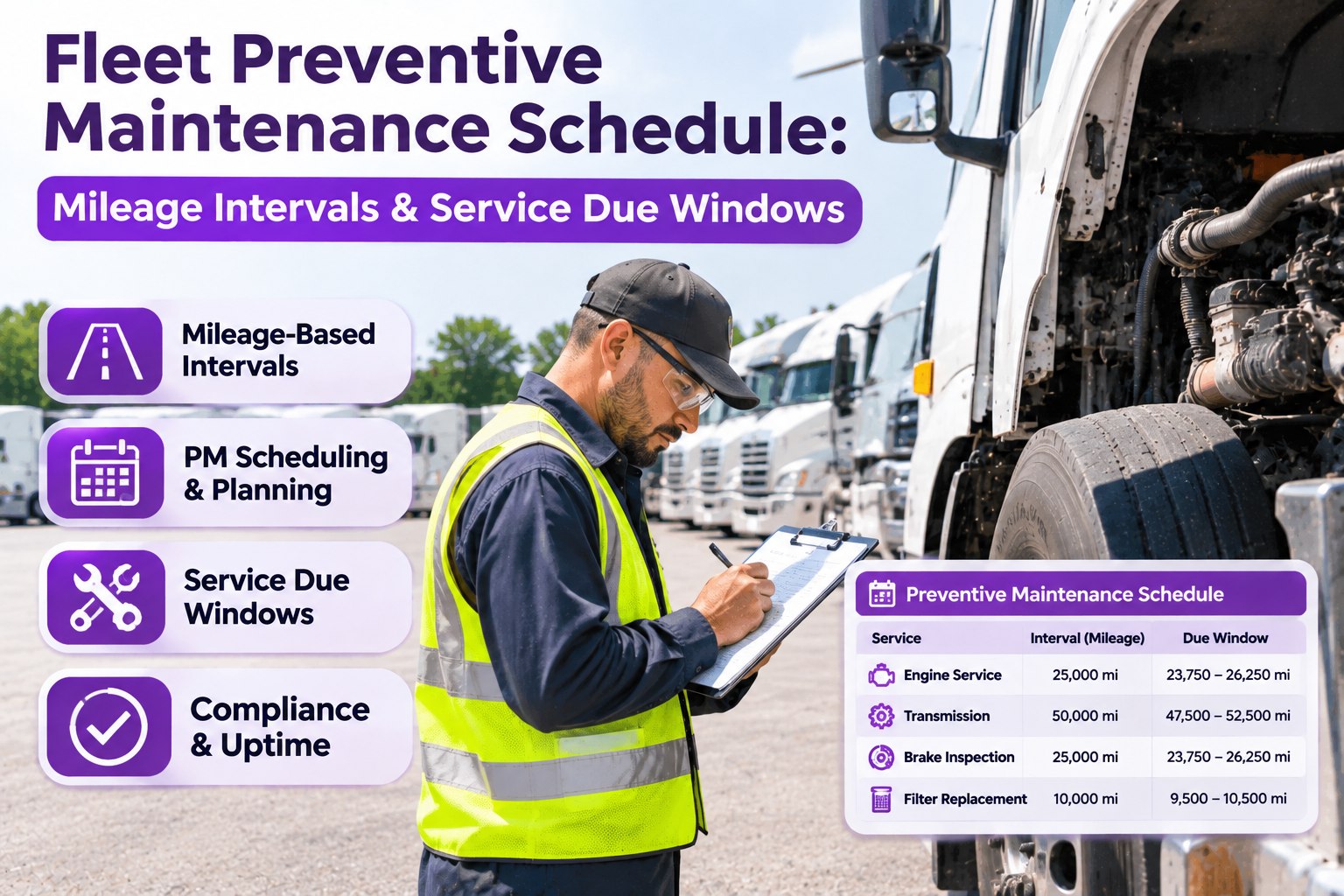
Service every set number of miles — oil at 25,000, a brake check at 50,000. It measures distance wear: the drivetrain, tires and brakes that wear as the truck covers ground.
TMTime-Based
Service every set period — oil every 6 months, coolant every 2 years. It measures aging: the fluids, rubber and seals that degrade on the clock whether the truck moves or not.
Where Each One Wins — and What It Misses
Each trigger has a sweet spot and a blind spot. Match the trigger to the duty and you catch the wear that matters; mismatch it and you miss exactly what the other one would have caught.
Mileage-Based
Best forHigh-distance highway trucks — 100,000+ miles a year, low idle, regular routes. Distance wears the drivetrain, not the calendar.
Blind spotA low-mileage unit that sits still ages anyway — a 5,000-mile oil interval on a 4,200-mile-a-year vehicle won't trigger for over a year.
Time-Based
Best forLow-use, seasonal, spare and compliance vehicles — the ones that age faster than they rack up miles, and fluids that degrade regardless of distance.
Blind spotIt over-services a truck that sits and under-serves one that runs — a quarterly PM on a truck already 25,000 miles out is 10,000 miles overdue.
The Cost of Choosing Wrong
This isn't academic — picking the wrong trigger shows up in the budget two different ways, and a blanket interval across a mixed fleet manages to do both at once.
15–25%
Wasted PM spend
A one-size interval over-services the low-duty units — paying for oil, filters and labor the truck didn't need yet, fleet-wide.
~8×
Deferral multiplier
The other direction: a missed service on a hard-running truck, where roughly every $500 of deferred PM turns into a four-figure unscheduled repair.
4.8×
Unscheduled vs planned
The same mechanical failure costs several times more fixed as a breakdown than as a planned service — the core reason the trigger has to fit the truck.
Figures are industry estimates for mixed commercial fleets; your own numbers depend on duty mix and how far intervals drift. The direction is what matters: both over- and under-maintenance cost real money, in opposite ways.
The Catch: Fluids Age Even When the Truck Doesn't
Here's the detail that trips up pure mileage schedules. A truck can sit for months and still degrade, because chemistry and rubber don't care about the odometer. This is the whole case for a time trigger alongside miles.
Engine oilOxidizes and collects moisture and fuel dilution — and short trips and idling degrade it faster than the miles suggest.
CoolantCorrosion inhibitors deplete over time regardless of distance, leaving the system unprotected.
Brake fluidAbsorbs moisture from the air, lowering its boiling point whether the truck is driven or parked.
Rubber & sealsTires, hoses and seals harden and crack with age, not just mileage — a parked truck's tires still time out.
BatteryCapacity fades with time and heat cycles, so a low-mileage unit can still be dead when it's needed.
The legal clockThe annual DOT inspection is due every 12 months under 49 CFR 396.17 — a calendar backstop no mileage rule satisfies.
The Answer Fleets Actually Run: Whichever Comes First
The real-world winner isn't one trigger — it's both, with the first to arrive driving the work order. Set each service on a mileage threshold and a time threshold, and the truck gets serviced whenever either is reached.
PM-A at 10,000 mi OR 250 hrs OR 30 days— whichever comes first
High-mile tractorHits the mileage threshold first — the time trigger never fires, and that's correct.
Seasonal plowHeavy use four months, parked eight. The time trigger catches the degradation that eight months of sitting would otherwise hide.
Spare / backup unitRarely reaches its mileage mark, so the calendar trigger keeps it from quietly slipping out of compliance.
This is why a mixed fleet can't be governed by one trigger: the hybrid rule lets each truck answer to whichever clock is telling the truth about its wear. Book a demo to see whichever-comes-first scheduling in action.
Stop Paying for the Wrong Trigger
Over-service the trucks that sit, under-serve the ones that run, and a blanket interval costs you both ways. Trigger each truck by miles and time together, and the spend lands where the wear actually is.
A Quick Decision Guide
Pick mileage-basedSteady, high-distance highway trucks with regular routes and low idle, where distance is the honest measure of wear.
Pick time-basedLow-use, seasonal, spare and compliance vehicles that age faster than they accumulate miles — and for fluids that degrade on the clock.
Use both, whichever firstMixed-duty, idle- and PTO-heavy, and seasonal fleets — which is to say, most real fleets. It's the only rule that catches both failure modes.
Why Fleets Automate the Trigger Choice
Per-truck triggersMileage, time or both set on each unit, so the high-mile tractor and the spare van each get the right clock.
Whichever comes firstEvery service watches both thresholds and fires on the first to arrive — no low-use unit slips through.
Meter & date captureOdometer reads and calendar dates kept current per truck, so neither trigger is a guess.
No over-serviceTiered A/B/C services so nothing is done more often than its interval — the 15–25% waste stays off the bill.
Advance alertsA heads-up before each threshold, so the service is planned, not a scramble or a miss.
Compliance backstopThe 12-month DOT inspection tracked on the calendar regardless of miles, so the legal clock never lapses.
Frequently Asked Questions
1
Is mileage-based or time-based maintenance better?
Neither on its own — it depends on the truck. Mileage-based fits steady high-distance highway units; time-based fits low-use, seasonal and spare vehicles whose fluids age faster than they rack up miles. Most fleets run both and service on whichever comes first. Book a demo to set the right trigger per truck.
2
Why does a low-mileage truck still need regular service?
Because fluids and rubber age regardless of distance. Oil oxidizes and absorbs moisture, coolant inhibitors deplete, brake fluid takes on water, and tires and seals harden with time. A 5,000-mile oil interval on a vehicle driven 4,200 miles a year won't trigger for over a year, so a time trigger is what keeps it serviced. Book a demo to add calendar triggers to low-use units.
3
How much does the wrong PM trigger cost?
Both directions cost money. A blanket interval over-services the low-duty trucks — industry estimates put that at 15–25% wasted PM spend fleet-wide — while under-serving the hard-running ones, where a deferred service can turn a few hundred dollars into a four-figure breakdown, since unscheduled repairs run several times the planned cost. Book a demo to right-size your intervals.
4
What is whichever-comes-first PM scheduling?
You set each service on both a mileage threshold and a time threshold — say 10,000 miles or 30 days — and the truck is serviced whenever either is reached first. A high-mile truck hits miles first; a parked seasonal unit hits time first. It's the hybrid rule that catches both kinds of wear. Book a demo to see whichever-comes-first scheduling.
Right trigger · Right truck · No waste
Service Each Truck on the Clock That Tells the Truth
Truck Inspection & Maintenance Management Software sets mileage and time triggers on every vehicle, services on whichever comes first, and keeps the legal inspection clock running — so you stop over-paying on the trucks that sit and stop losing the ones that run.
No credit card required. Free for up to 3 trucks. Built for FMCSA-compliant fleets.