Lights are the cheapest thing on a truck to fix and the most common reason it gets stopped. A dead marker lamp or a corroded connector is a minutes-long repair in the yard — and an out-of-service order on the roadside. This checklist walks every required lamp, signal, and reflector by position, so a burnt-out bulb is caught before dispatch, not by an officer. Start free and put the lighting check on every driver's phone.
Truck Lighting Inspection · Headlights · Signals · Marker Lamps
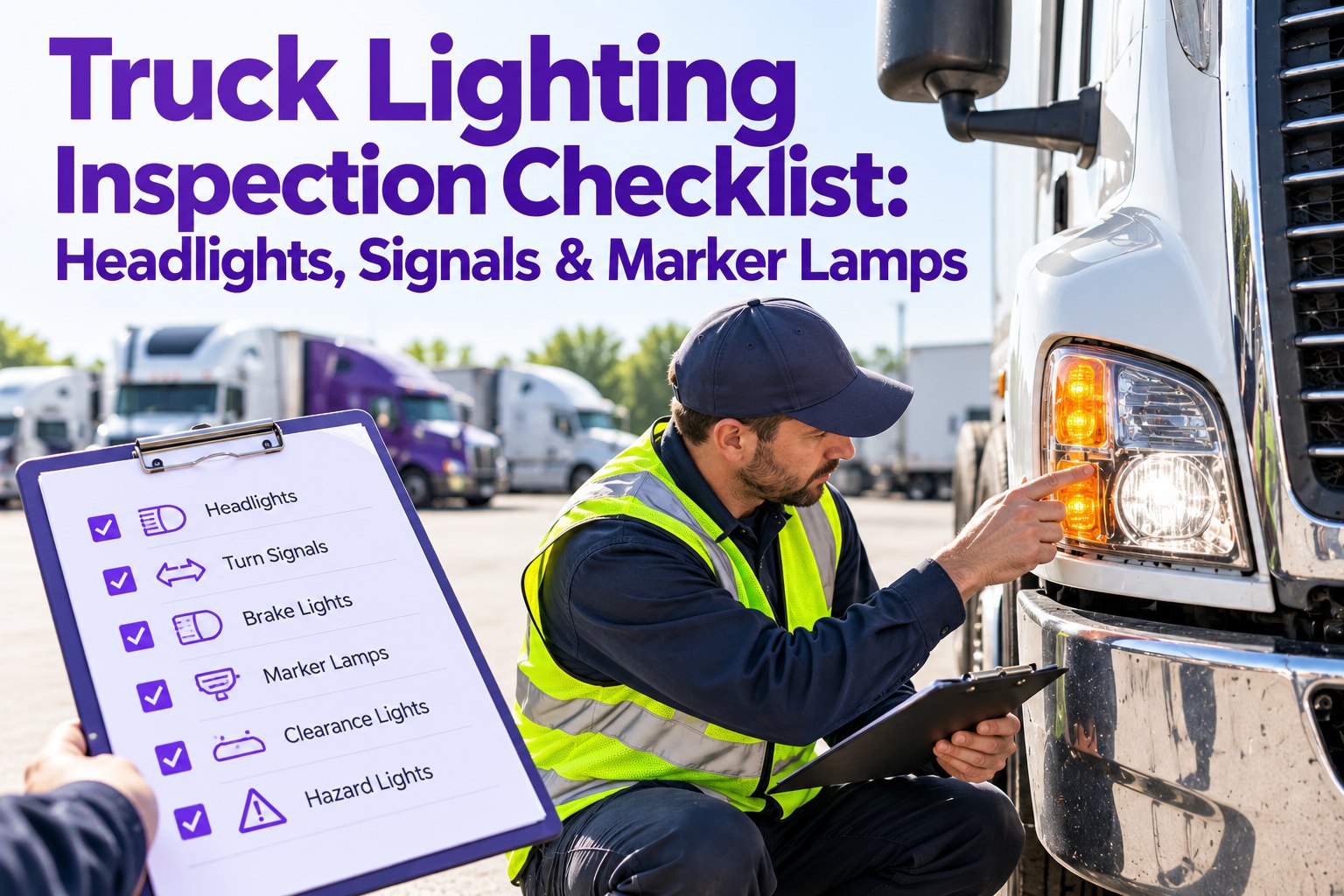
Truck Lighting Inspection Checklist: Headlights, Signals & Marker Lamps
One inoperable lamp is the most-cited vehicle defect in roadside inspections — and the easiest to miss on a quick walkaround. Truck Inspection & Maintenance Management Software turns the lighting check into a guided, position-by-position inspection on the driver's phone, and the moment a lamp fails, it becomes a graded work order routed straight to the shop — so the truck rolls with every required light working.
Every lampfront, side, and rear checked by position
Lamp out → work ordergraded and assigned the moment it's logged
DVIR-readya lighting defect on record, with a photo
4hr
A lighting defect gets a 4-hour first response. When a driver logs a lamp out, it's acknowledged, graded, and assigned within four hours — because a truck can't legally run after dark with a required light dead, and the fix is almost always a bulb or a connector away.
Lamp Color Is Set by the Rule, Not by Preference
Under 49 CFR 393.11, every required lamp has a fixed color and position — and a wrong-color or wrong-place lamp fails just like a dead one. The whole system comes down to three colors: amber up front and along the sides, red at the rear, and white for the headlamps, backup, and plate. Keep this legend in mind as you walk the truck.
AmberFront & side — turn signals, clearance, ID, side markers
RedRear — tail, stop, clearance, side markers, reflectors
WhiteHeadlamps, backup lamps, and the license plate lamp
Rear turn signals may be amber or red. Confirm each lamp against 49 CFR 393.11 and your vehicle type — this is a planning guide, not the regulation itself.
The Lighting Inspection Checklist
Walk the truck in one direction — front, down the side, around the rear and finish inside with the controls and wiring. Tick each lamp as you confirm it lights, is the right color, and isn't cracked, fogged, or blocked. In our software this is a guided sequence on the phone, and any item left unchecked becomes a graded work order with a photo before the truck leaves, so contact us to shape the list around your own fleet's lamps.
Where Lighting Actually Fails
A bulb rarely just "burns out." On a commercial truck the failure almost always starts at the connection — corrosion, vibration, or a splice someone put in to get through the week. Knowing the real failure points is what turns a lighting check from a glance into a diagnosis.
⚠Corroded connectorsThe single most common failure — road salt and moisture eat the contacts, and the lamp flickers or dies
⚡Vibration failuresConstant shake fatigues bulb filaments and LED solder joints, especially on exterior marker and clearance lamps
✂Wire damage & splicesShorts, chafed insulation, and temporary splices that corrode and fail on the road
◼Dock & yard impactsForklifts and dock equipment crack lenses, tear tape, and snap wiring at the rear
☀Degraded conspicuity tapeUV, chemicals, and abrasion dull or peel the reflective striping until it stops reflecting
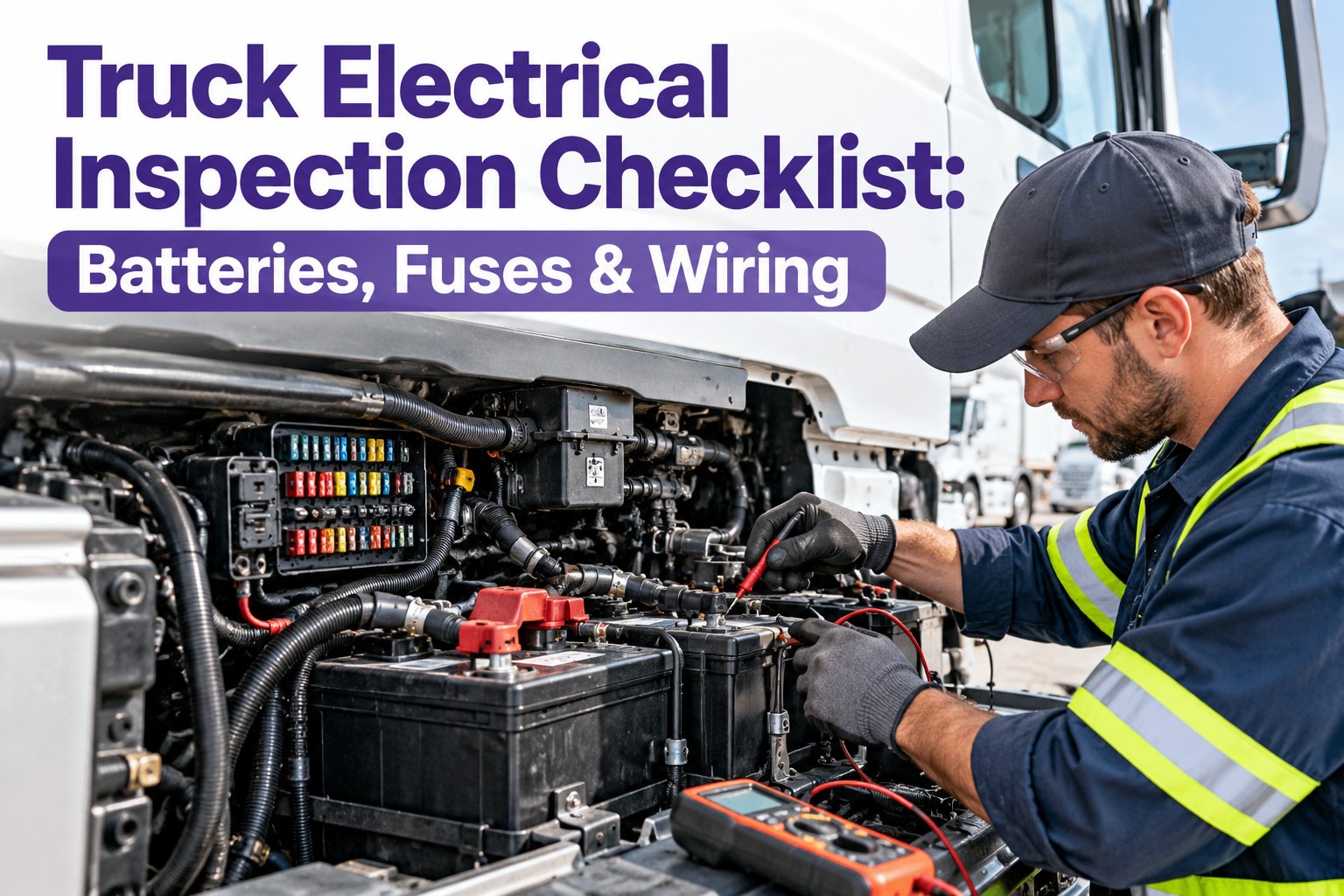
◐Moisture in housingsA cracked lens or failed seal lets water in, fogging the lamp and corroding the socket
Out of service
An inoperable or missing required lamp — headlamp, tail, stop, or turn signal — is an out-of-service condition under the CVSA North American Standard, and "lamps inoperable" has ranked as the number-one vehicle violation in recent roadside inspection years. Missing or deteriorated conspicuity tape is citable too. The point of a lighting program isn't paperwork; it's keeping a two-dollar bulb from sidelining the truck.
From Lamp-Out to Repaired, Without the Paper Slip
A guided lighting walkaround on the driver's phone; every dead lamp, cracked lens, or faded reflector turned into a graded work order the moment it's logged; a photo attached as proof; and a clean DVIR behind it all. That's a fleet whose lights pass before the officer ever looks.
How Our Software Runs the Lighting Check
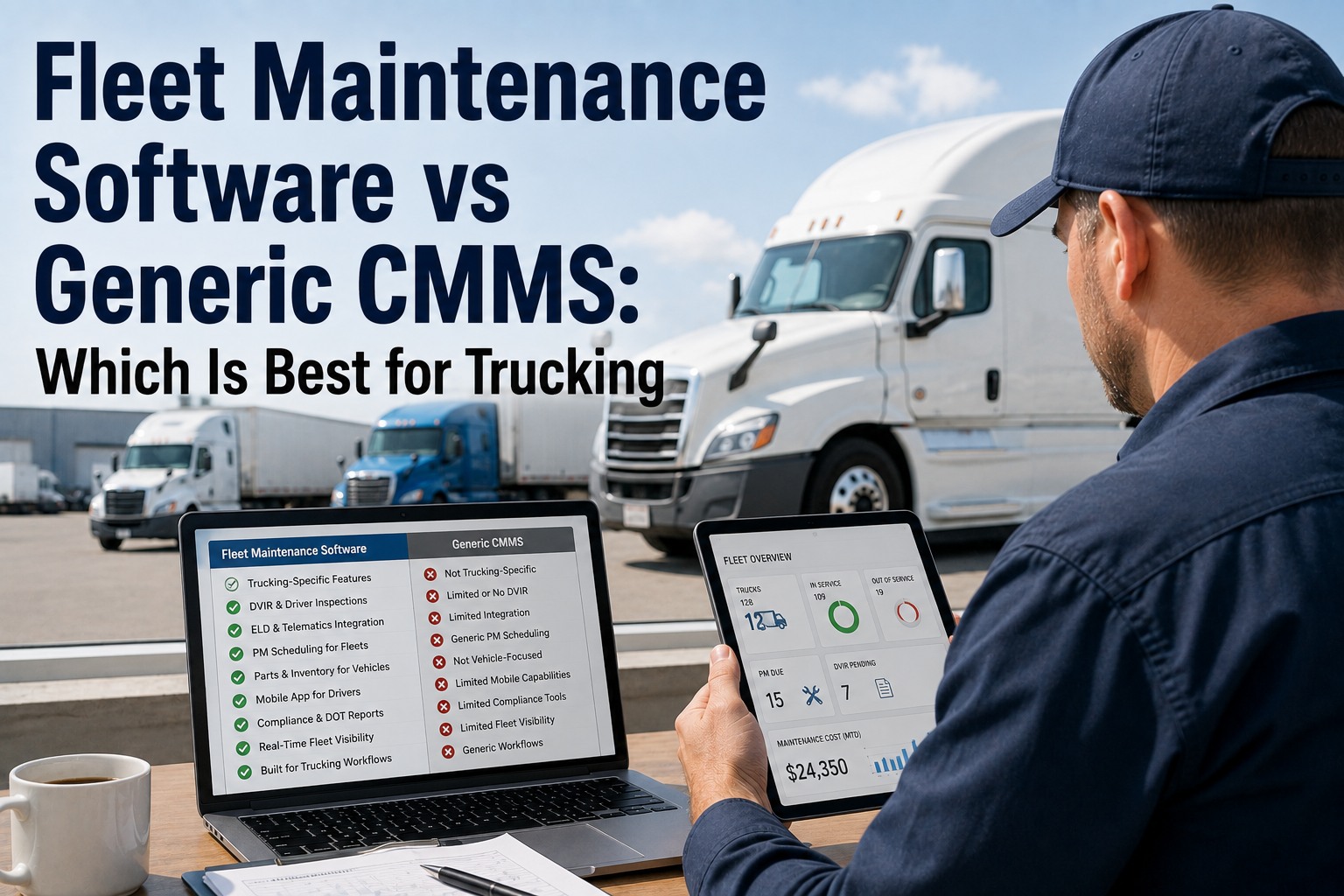
The checklist above is only as good as whether it gets done and whether the dead lamp actually reaches a mechanic. Truck Inspection & Maintenance Management Software closes that gap — the inspection happens on the phone, the defect becomes work, and the record stands up when an auditor asks.
01Guided lighting walkaroundFront, side, and rear lamps checked by position on the phone — no lamp skipped
02Lamp out → graded work orderA failed lamp becomes a work order, graded and assigned, with a 4-hour first response
03Photo on every defectTimestamped proof of the cracked lens or dead lamp, attached to the record
04Per-unit lighting historyEvery lamp failure tracked to the VIN, so a recurring connector problem shows
05Conspicuity & reflector trackingTape and reflectors on the same check, not forgotten until they're cited
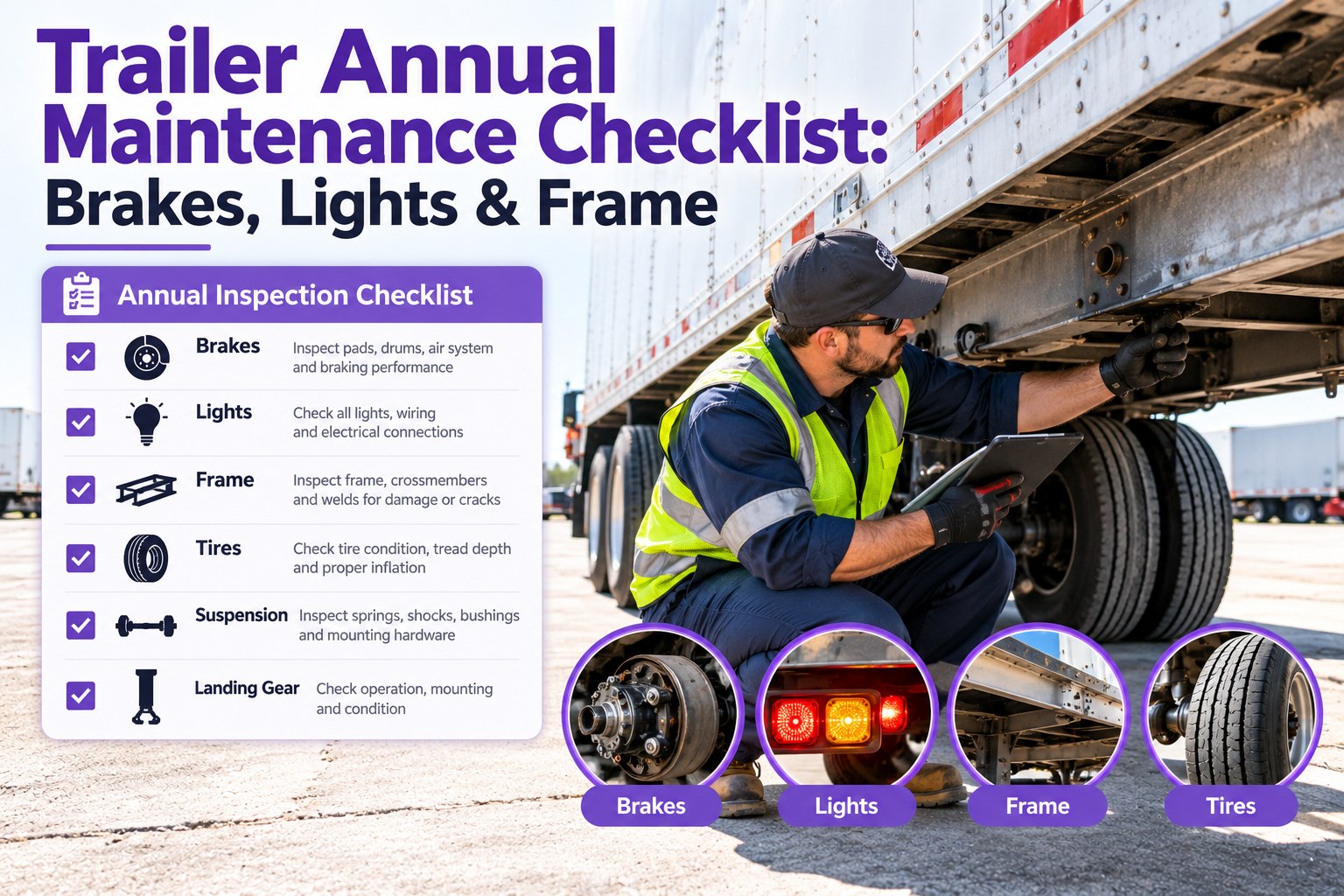
06DVIR-ready recordsThe lighting defect, the fix, and the sign-off in one searchable file
Frequently Asked Questions
What lights are required on a commercial truck?
Under 49 CFR 393.11, a commercial truck needs headlamps, front and rear turn signals, tail lamps, stop lamps, backup lamps, a license plate lamp, clearance lamps, side marker lamps (front, intermediate, and rear), identification lamps, reflex reflectors, and hazard warning flashers — plus retroreflective conspicuity tape on most trailers. The exact set depends on the vehicle type and dimensions, so confirm the full list for your specific truck.
Start free and load the right lamp list for each unit.
What color does each truck lamp have to be?
Front and side lamps are amber — turn signals, clearance, identification, and side marker lamps. Rear lamps are red — tail, stop, clearance, side marker, and reflex reflectors, with rear turn signals allowed as amber or red. Headlamps, backup lamps, and the license plate lamp are white. A wrong-color lamp fails inspection just like a dead one, so color is part of the check, not an afterthought.
Can one dead light put a truck out of service?
Yes. An inoperable or missing required lamp — a headlamp, tail lamp, stop lamp, or turn signal — is an out-of-service condition under the CVSA North American Standard, and a truck can't legally run after dark with a required light dead. That's why a lamp-out is worth catching in the yard, where it's a quick bulb or connector fix, rather than at the roadside.
Why do truck lights keep failing?
A bulb rarely fails on its own. The most common cause is a corroded connector — road salt and moisture attack the contacts — followed by vibration fatiguing bulb filaments and LED joints, chafed or spliced wiring, dock impacts cracking lenses, and moisture getting into a cracked housing. Tracking each failure to the unit is how a recurring wiring problem gets found instead of re-bulbed every month.
How often should truck lights be inspected?
Lights are a daily pre-trip item — the driver confirms every required lamp works before each trip, and reports any that don't. A fuller check of reflectors, conspicuity tape, connectors, and wiring fits a weekly walkaround, with the annual DOT inspection covering the full lighting system. A guided check keeps the daily version honest without slowing the driver down.
Front · Side · Rear · Wiring — One Lighting Check
Make the Dead Lamp Impossible to Miss
Give every driver a guided lighting walkaround by position, turn every lamp-out into a graded work order with a 4-hour first response, attach a photo as proof, and keep a DVIR-ready record behind it all. Fewer roadside stops, cleaner inspections, and a two-dollar bulb that never costs you a day.
No credit card required. Reflects 49 CFR 393.9 and 393.11 — confirm current federal and state requirements. Not legal advice.