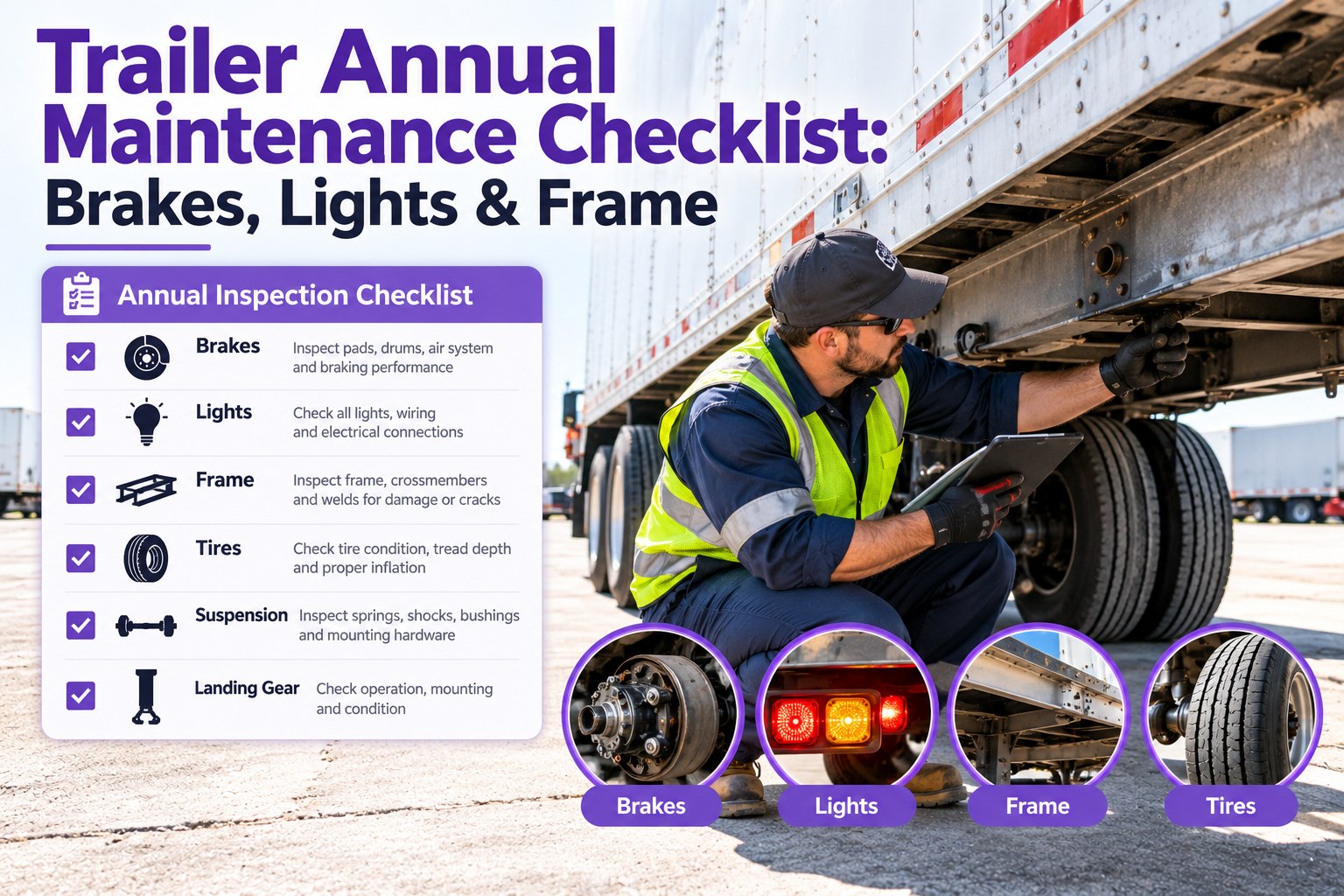
A trailer has no engine, no dashboard, and no driver living with it day to day which is exactly why it's the half of the combination that gets neglected. It sits in a yard between loads, swaps between tractors, and only speaks up when a brake drags or a light dies at the scale. The annual inspection is the one time all year someone looks at the whole thing — nose to tail, frame to lamp. This checklist walks the trailer by zone the way an inspector does, so every structural, braking, and lighting item is cleared before the decal goes on. Start free and run every trailer's annual on TIM.
A tractor gets a pre-trip every day; a trailer can go weeks between hard looks. By the time a cracked crossmember, a worn kingpin, or a dead brake chamber shows up, it's at a roadside scale. What you want is one thorough annual that clears the whole trailer and leaves a record you can prove. That's the loop Truck Inspection & Maintenance Management Software (TIM) runs for you — the inspection flags each defect, it becomes a graded work order, the repair is tracked to a verified close, and the trailer stays on a preventive-maintenance schedule between annuals.
Annual-ready, provenEvery Appendix A item is tracked to a pass or a work order — so no component is skipped and no decal goes on an unverified check.
The annual isn't a glance — it's a front-to-back teardown-level look at five zones, each with its own failure habits. Here's the map before the checklist, so you know what you're walking up to at every point along the trailer.
ANose & Coupling
BFrame & Structure
CSuspension
DBrakes
ERear & Lights
A · NoseKingpin, upper coupler, landing gear, 7-way and air lines
B · FrameRails, crossmembers, floor, body panels, doors
C · SuspensionSprings or air bags, hangers, U-bolts, bushings
D · BrakesChambers, slack adjusters, linings, air lines, ABS
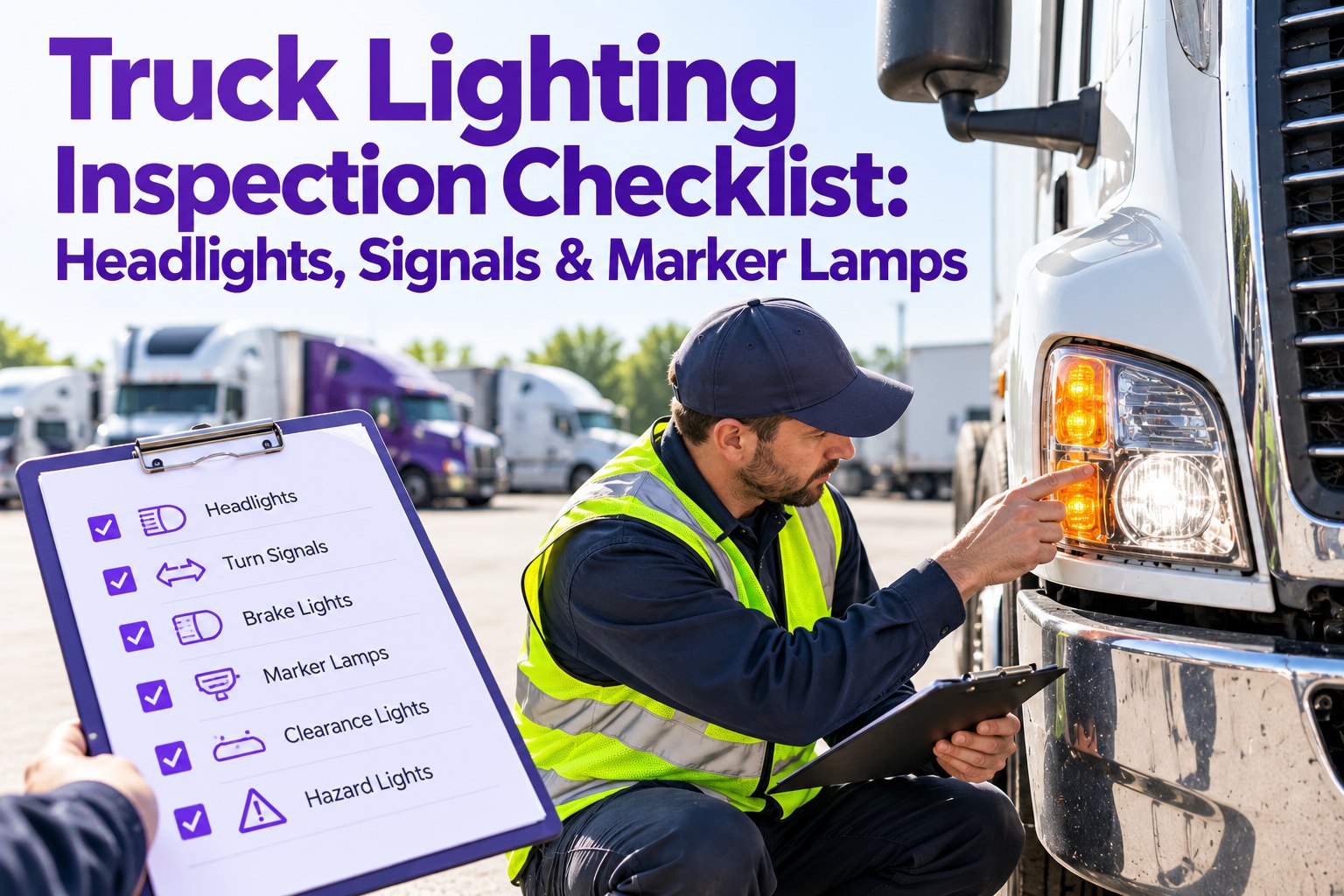
E · RearLamps, reflectors, conspicuity tape, bumper, wiring
What the Annual Catches That a Daily Walkaround Doesn't
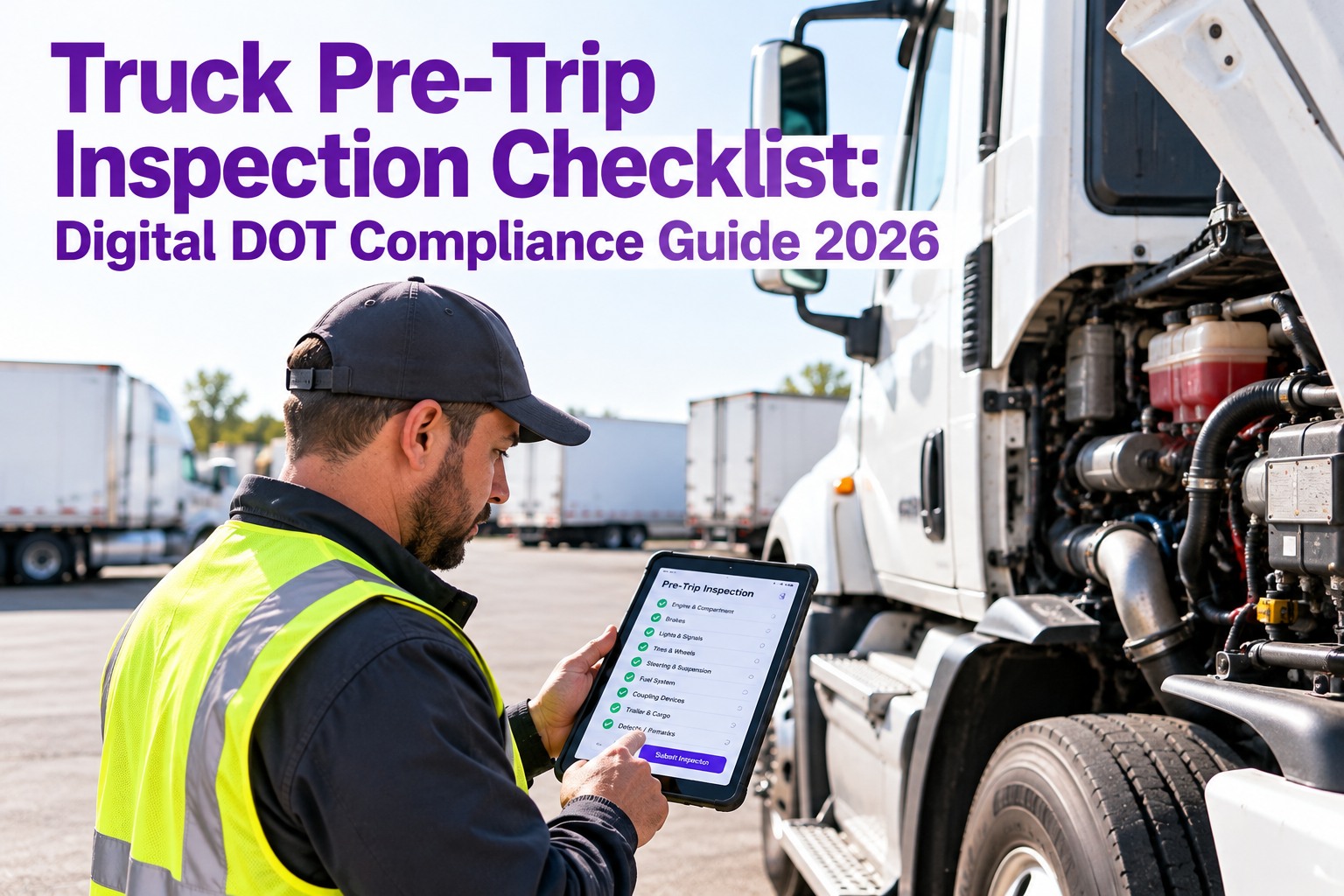
A driver's pre-trip is a surface check done in minutes. The annual goes deeper — under the trailer, inside the drum, into the structure — and that depth is the whole point.
DAILY WALKAROUND
Lights and reflectors working
Tires visibly inflated, no obvious damage
Landing gear up and secured
Doors latched, load secure
No obvious leaks or hanging parts
ANNUAL INSPECTION
Brake lining thickness and drum condition measured
Kingpin wear and upper-coupler plate checked
Frame rails and crossmembers probed for cracks
Suspension bushings, hangers, and U-bolts examined
Wheel bearings, seals, and slack-adjuster stroke verified
Work the five zones in order, nose to tail, plus wheels and lights. Tap each box as you clear it. Every section maps to the federal periodic-inspection standard — an item you can't clear is a defect to repair and re-check before the trailer passes.
5 checksA · Nose & CouplingApp. A
5 checksB · Frame & StructureApp. A
4 checksC · SuspensionApp. A
5 checksD · BrakesApp. A
5 checksWheels · Tires, Rims & HubsApp. A
4 checksE · Rear, Lights & ConspicuityFMVSS 108
28 Checks, Five Zones, One Clean Annual
The annual only counts if every zone is cleared and the result is on record — a decal with no inspection behind it is worth nothing in an audit. TIM holds the whole annual on one record per trailer: each item passed or turned into a work order, the repair tracked to a verified close, and the inspection kept with the unit's history.
Clearing the checks is only half the job — the annual has to produce proof that outlives the inspection. These are the three records that make a trailer's annual defensible when someone asks.
01
The inspection reportA completed periodic-inspection report listing each component and its pass-or-repair result, kept with the trailer's file.
02
The qualified inspectorProof the person who signed meets the federal inspector-qualification standard — training or experience on record.
03
The decal & retentionA legible inspection decal that matches the report, with the record retained for the required period — commonly 14 months.
A trailer gets neglected because it has no home screen and no driver tracking it. TIM gives each trailer its own record — so the annual, the repairs between annuals, and the history all live in one place instead of a folder in the shop.
Trailer-specific checklistBuild the annual around the trailer's own systems — coupling, frame, brakes, lights — not a tractor list.
Defect becomes a work orderA failed item turns into a repair job with a photo, tied to the exact zone and component.
Nothing passes with an open defectA trailer with an unresolved critical item is flagged until the fix is verified.
PM between annualsSchedule brake, tire, and bearing service on a cadence so the annual isn't the only check.
Report & decal on recordThe inspection, inspector, and decal detail are stored with the unit for the retention period.
Every trailer visibleSee which units are annual-due, in repair, or cleared across the whole trailer pool at a glance.
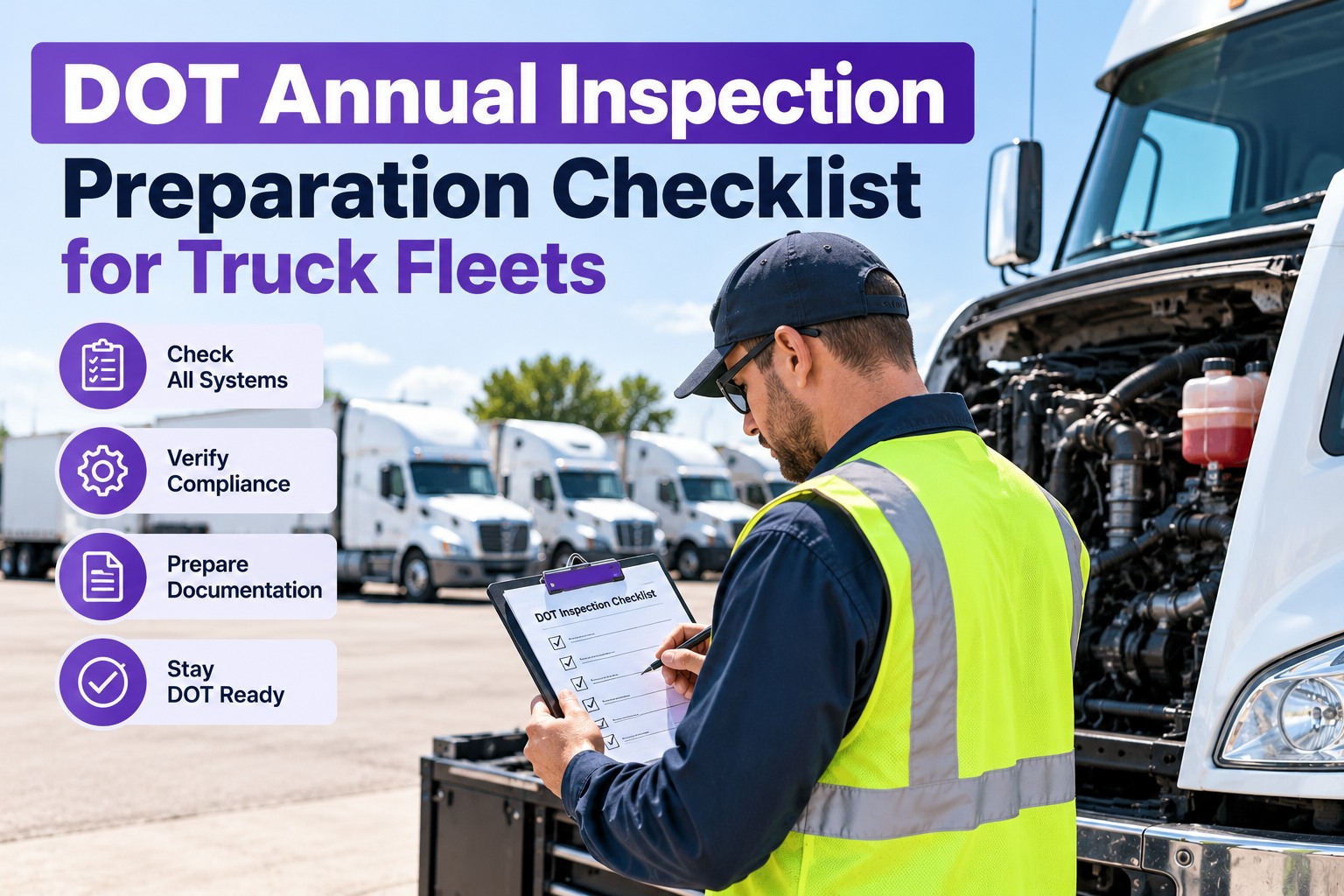
Yes. A trailer that's part of a commercial combination is subject to the same federal periodic (annual) inspection requirement as the power unit — every component must be inspected at least once every 12 months against the federal standard, and the trailer has to carry documentation of a passing inspection. In practice that means the same depth of check a tractor gets: brakes, suspension, frame, tires, wheels, lighting, and the coupling hardware that's unique to the trailer. The annual is separate from, and on top of, the daily driver inspection.
What's checked on a trailer that isn't on a tractor?
The coupling and structural items specific to being towed. That means the kingpin and upper-coupler plate that lock into the fifth wheel, the landing gear, the trailer's own frame rails and crossmembers, the floor and body, the rear impact guard, and the conspicuity tape along the sides and rear. The brake, suspension, tire, wheel, and lighting checks mirror a tractor's, but a trailer annual lives or dies on the structure and coupling — those are what carry the load and hold the trailer to the truck.
How is the annual different from a daily trailer check?
Depth. A daily walkaround is a surface check done in minutes — lights on, tires up, landing gear secured, doors latched. The annual goes under and into the trailer: measuring brake lining and drum condition, checking kingpin and upper-coupler wear, probing frame rails and crossmembers for cracks, examining suspension bushings and hangers, and verifying wheel bearings and slack-adjuster stroke. The daily keeps a known-good trailer safe between loads; the annual is what confirms it's still sound a year of hard miles later.
Who can perform a trailer annual inspection?
A qualified inspector — someone who meets the federal inspector-qualification standard through a combination of training and experience, or a government or recognized inspection program. The point is that the person signing off understands the standard and the out-of-service criteria, not just that they can spot an obvious problem. Keep proof of the inspector's qualification on file alongside the inspection report; an auditor can ask you to show that the person who passed the trailer was actually qualified to.
How long do I keep a trailer's annual inspection record?
The documentation of the most recent periodic inspection is retained for the period set by the federal rules — commonly 14 months from the inspection date — and kept where it can be produced on request. The record, the proof of inspector qualification, and a legible decal that matches the report should travel together, because the decal alone doesn't prove the inspection happened to standard. Keeping all three on one record per trailer is what turns a passed annual into something you can prove in an audit. Start free and retain every trailer annual with TIM.
Give the Trailer the Annual the Tractor Takes for Granted
The trailer carries the load and takes the abuse, and it's the unit most likely to roll a year on a check nobody did. Walk the five zones, clear the 28 items, keep the report, inspector proof, and decal together — and let TIM hold the whole annual on one record per trailer so the next one is a glance, not a scramble. It's free to start on your first three trailers.