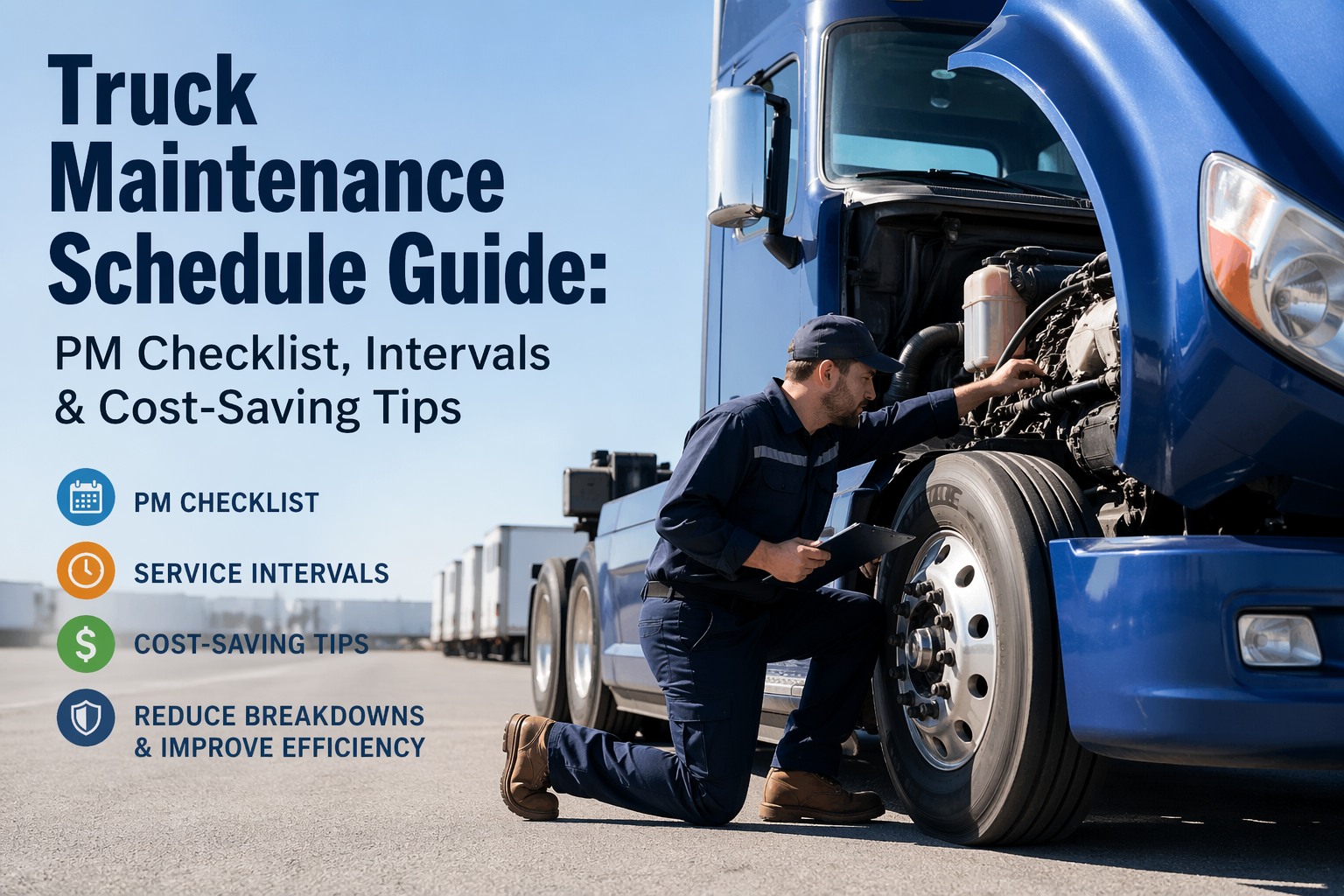
Grease is the cheapest part of truck maintenance and one of the most skipped. A dry U-joint, a starved fifth wheel plate, or a seized slack adjuster rarely fails the day it is missed. It fails weeks later, on the road, as a vibration, a hard-coupling problem, or a brake out of adjustment. A good truck lubrication schedule tells your team which grease points to hit, how often, and with what, so nothing depends on memory. This guide maps every major grease point on a tractor-trailer, gives typical service intervals, and shows how to keep the whole program on autopilot. Start free and schedule lube services automatically.
Lubrication · Grease Points · Service Intervals
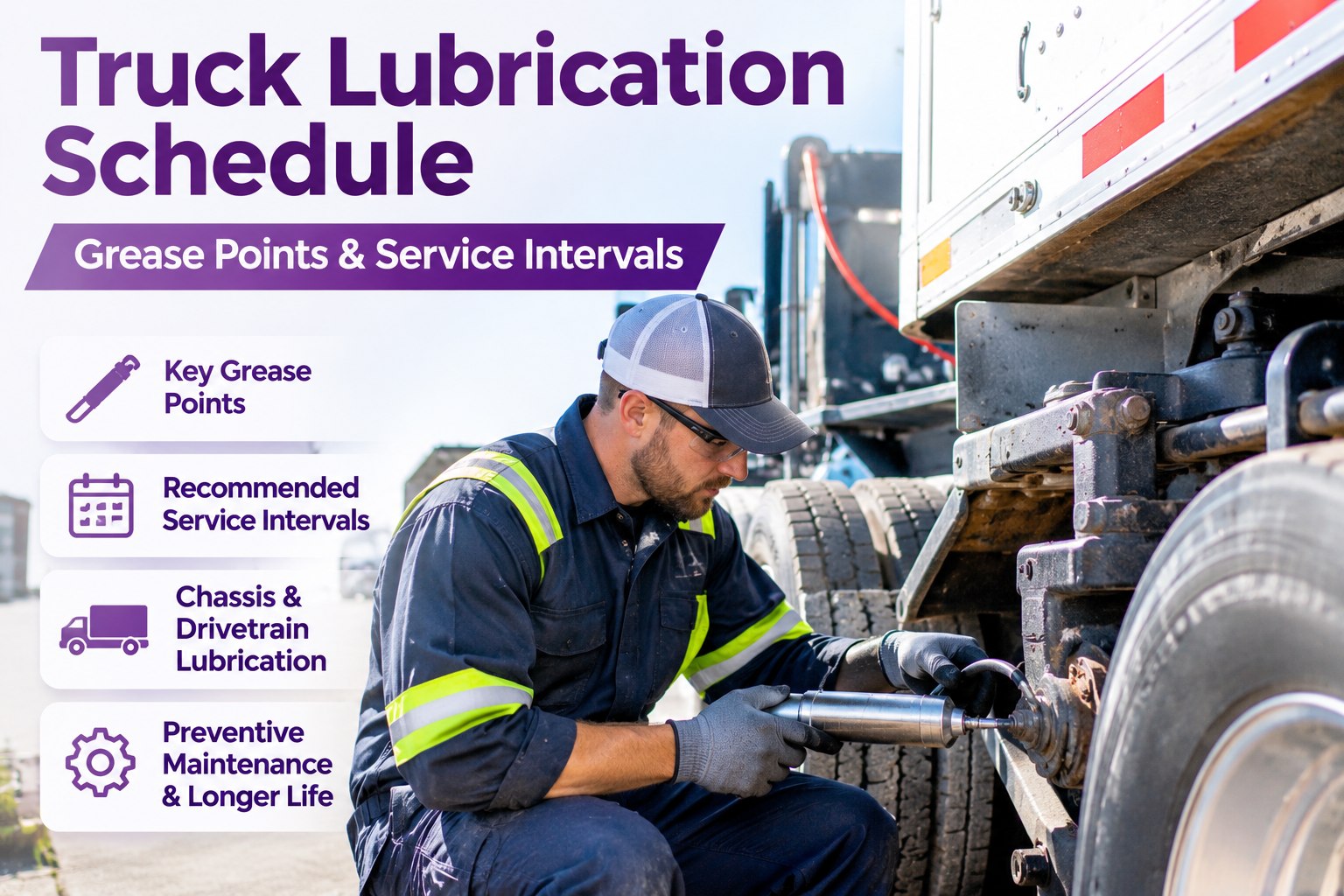
Truck Lubrication Schedule: Grease Points & Service Intervals
A clear map of where grease goes on a commercial truck, and a schedule your shop can actually follow. Truck Inspection & Maintenance Management Software turns lube intervals into automatic work orders with a checklist for each point.
5truck zones with grease points
4service cadences from every trip to yearly
1schedule that follows your OEM's guidance
Read this first Intervals in this guide are typical starting points. Your engine, axle, driveline, and fifth-wheel manufacturers publish the official lubrication specifications, and severe duty (dust, wet, off-road, heavy loads) calls for shorter intervals. Always follow the OEM manual for your equipment.
The Grease Point Map: Five Zones to Cover
Instead of memorizing a long list, walk the truck in zones. Each zone below shows the points that normally take grease.
Zone 1Front Axle & Steering
- Steering knuckle king pins (upper and lower)
- Tie rod ends
- Drag link ends
- Steering linkage and pitman arm joints
Zone 2Driveline
- U-joints at every greasable cross
- Slip yoke spline
- Center bearing, where equipped
- Inter-axle driveline joints
Zone 3Brakes & Suspension
- Slack adjusters (automatic types with a fitting)
- Brake camshaft bushings
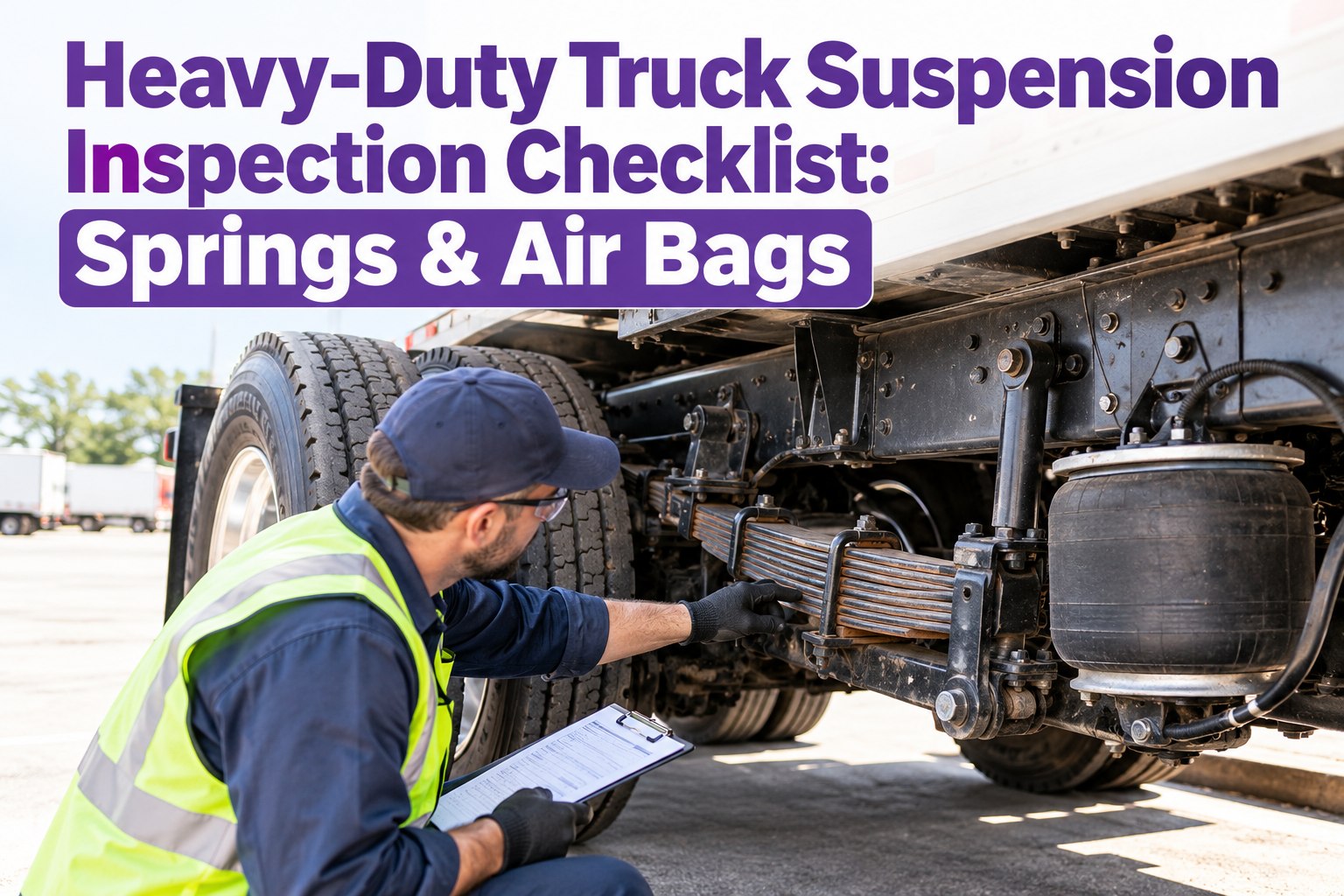
- Spring pins, shackles, and equalizer bushings
- Torque arm and rod-end bushings
Zone 4Coupling
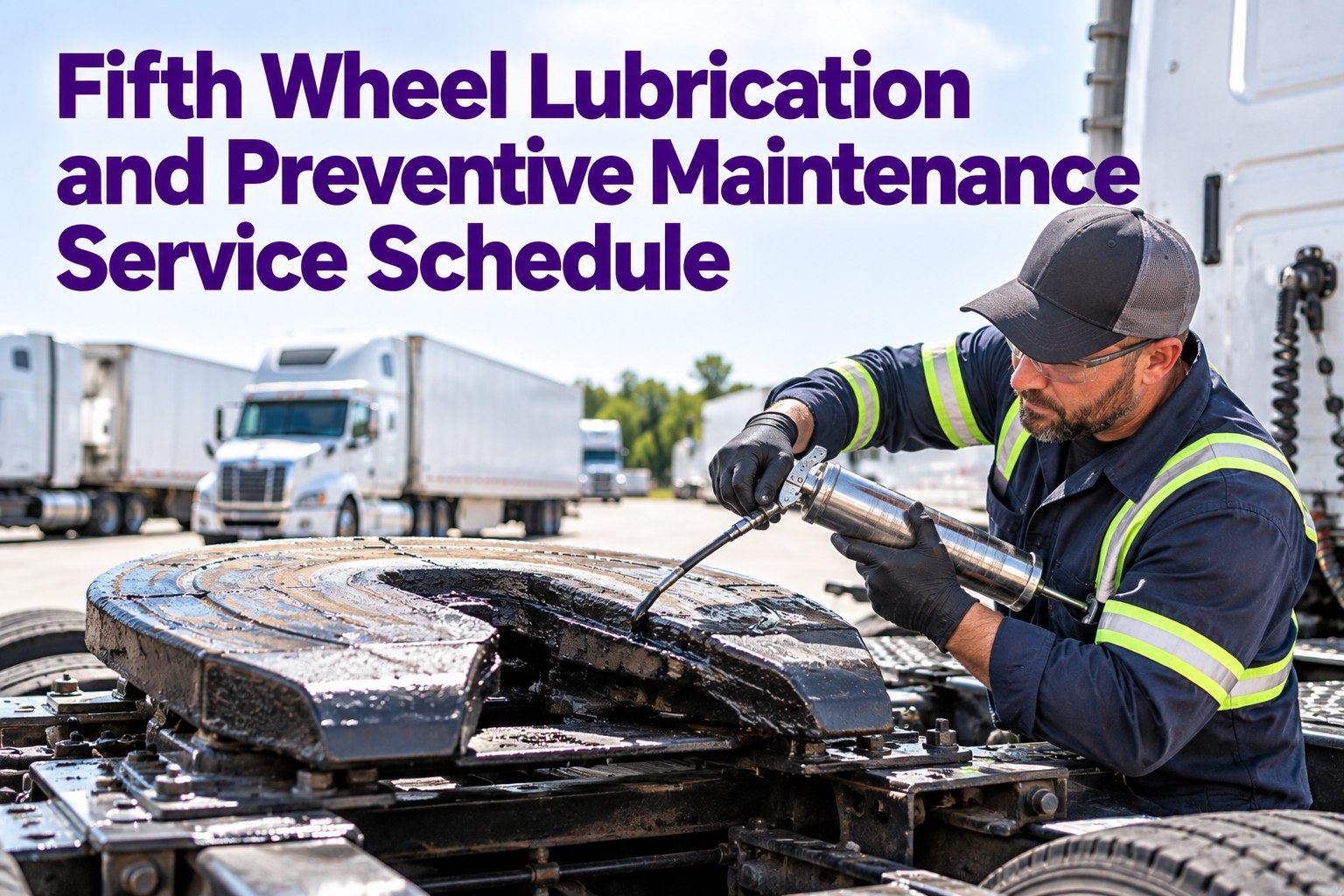
- Fifth wheel top plate (contact surface)
- Fifth wheel pivot and bracket points
- Release handle and locking mechanism, per OEM
- Trailer kingpin plate area
Zone 5Trailer
- Landing gear gearbox and legs
- Trailer slide or tandem release pins
- Trailer brake camshafts and slack adjusters
- Door hinges and latches, as needed
Fittings and locations vary by make and model. Sealed or "lubed-for-life" components should not be greased unless the manufacturer says so.
The Lube Cadence Ladder: How Often, and What Gets Done
Not every point needs attention at the same pace. Think of the program as four steps on a ladder, from a quick look every day to a full yearly service.
YearlyDeep serviceFull chassis lube, driveline and suspension inspection for play and wear, replace worn bushings and seals, service the fifth wheel mechanism, and recheck the whole program.
QuarterlySeasonal catch-upLubricate low-mileage and idle-heavy units that did not reach their mileage interval, and service landing gear and trailer points.
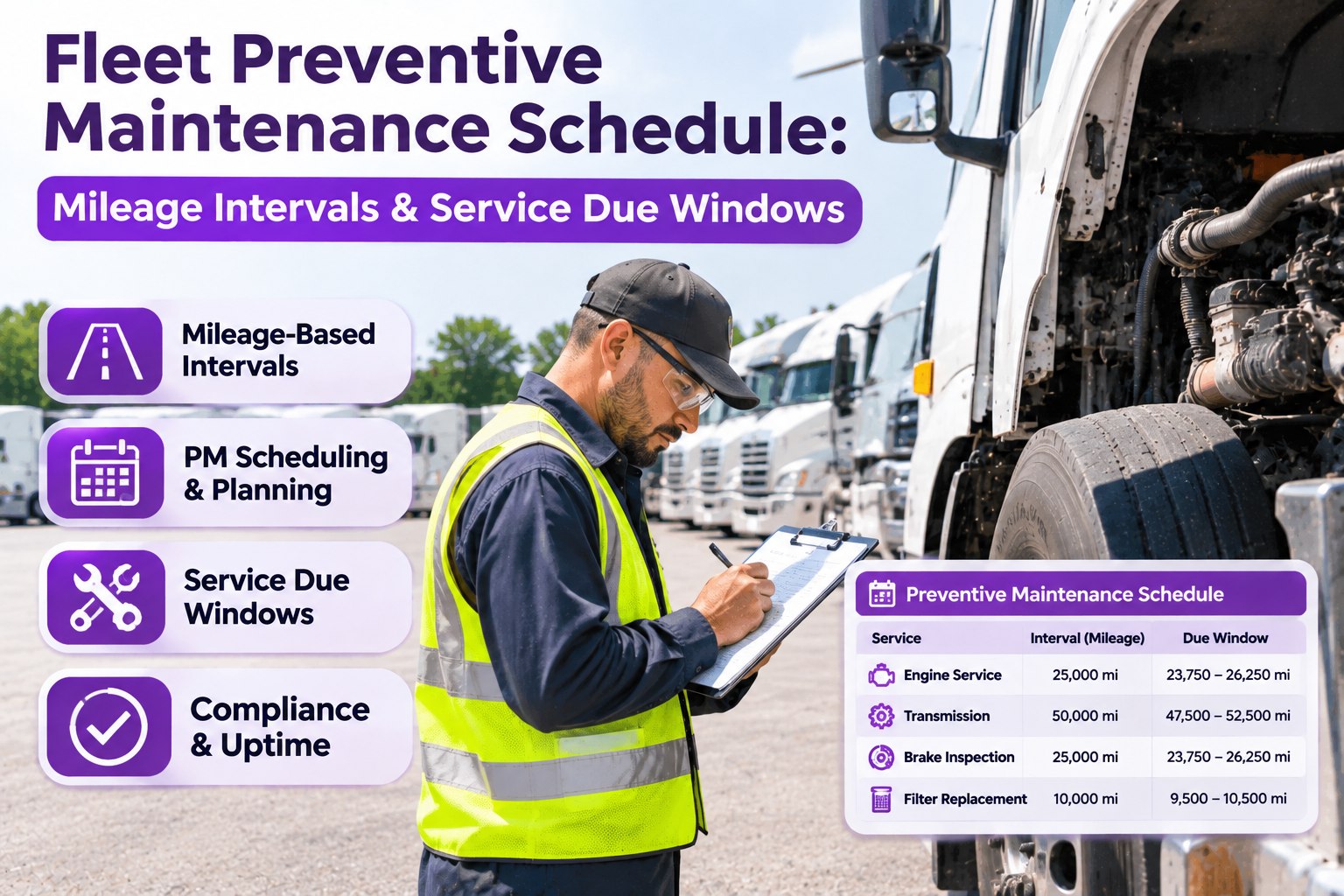
Every lube serviceFull chassis lubeTypically set by mileage or time, whichever comes first. Many fleets use 15,000 to 25,000 miles as a starting range, then adjust to OEM guidance and duty cycle.
Every tripEyes-on checkThe driver's pre-trip looks for dry or rust-streaked fifth wheel plates, grease leaks, torn boots, and loose parts, and reports them.
Which Grease Goes Where
Using the wrong grease can be as harmful as skipping it. Follow the OEM chart, and keep these general rules in mind.
Chassis pointsA quality extreme-pressure (EP) grease, commonly NLGI No. 2, is the usual choice for U-joints, king pins, and suspension bushings.
Fifth wheel plateUse a grease approved for fifth wheels. Some fleets use specialty greases, and some use plates that are lube-free by design, so check your model.
Cold climatesChoose a grease rated for your lowest operating temperature so it still pumps and spreads in winter.
Mixing greasesDifferent thickener types can be incompatible. Stick to one approved grease per point, or purge fully when switching.
Make the Schedule Run Itself
Set your lube intervals once, and the system creates a work order with the right checklist when each truck is due. No sticky notes, no guessing. Start free or book a quick demo.
Too Little vs. Too Much: Both Cause Damage
Under-greasing
- Metal-on-metal wear and heat
- Squeaks, clunks, and driveline vibration
- Seized joints and worn bushings
- Harder steering and uneven tire wear
Over-greasing
- Blown seals and ballooned boots
- Grease on brake components, reducing braking
- Dirt that sticks to excess grease and acts as an abrasive
- Wasted grease and messy shops
Rule of thumb Pump slowly and stop when fresh grease just begins to appear at an open seal, or when a boot starts to swell. Be especially careful at brake camshafts, where grease must stay away from brake linings.
Build Your Program in Four Steps
1List every grease pointBy unit type: tractor, trailer, and equipment
2Set intervalsMiles, hours, or time, using OEM guidance
3Standardize greaseOne approved product per point, clearly labeled
4Record and reviewLog each service and check for repeat wear
Frequently Asked Questions
How often should a truck be greased?
There is no single number. Many fleets lube chassis components every 15,000 to 25,000 miles or on a time basis, and shorten the interval for severe duty. Your OEM service manual is the final word.
Start free and set intervals per truck.
How often should the fifth wheel be lubricated?
Drivers should look at the plate at every coupling. Lubrication timing depends on the model, since some plates need regular greasing and others are designed to run with little or none. Check the manufacturer's guidance and lubricate whenever the surface looks dry or worn.
Book a demo to see inspection-driven lube alerts.
Do all U-joints and slack adjusters need grease?
No. Many modern components are sealed and do not have a fitting. Greasing a sealed part can damage it, so only service points that have a fitting and are listed in the OEM guide.
What happens if I skip lubrication for a few months?
Wear accelerates quietly. You may see vibration, noise, stiff steering, or a part that fails inspection. Replacing a seized U-joint or bushing costs far more than the grease that would have protected it.
Lubricate on Time · Fewer Breakdowns
Put Your Lube Program on Autopilot
Automatic lube work orders, point-by-point checklists, and complete service history for every truck and trailer. Start free or book a demo with our team.
No credit card required. Free for up to 3 trucks.