Suspension defects don't announce themselves the way a bad tire or a dead light does a cracked spring hanger or a slowly leaking air bag can ride for weeks before anyone notices, right up until an inspector finds it or an axle shifts. Yet the out-of-service rules here are blunt and specific: a quarter of the leaves broken, a deflated bag, a missing main leaf. This checklist walks both leaf-spring and air-bag systems against those exact lines. Start free and inspect every suspension point against its own limit.
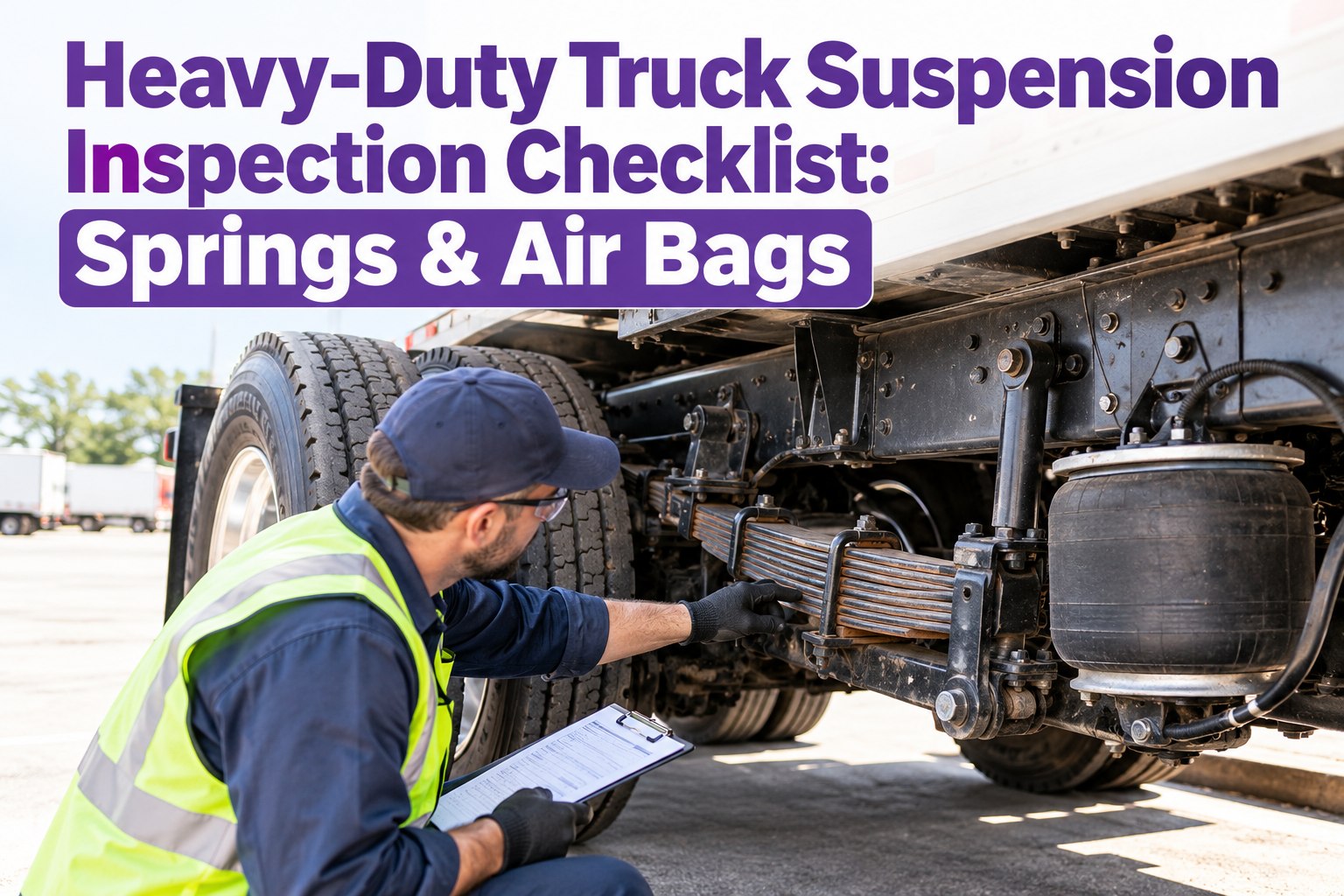
Heavy-Duty Truck Suspension Inspection Checklist: Springs & Air Bags
Suspension holds the axle where it belongs and keeps the load off the frame — when it fails, steering, braking, and tire wear all go with it. Truck Inspection & Maintenance Management Software puts each spring, bag, shock, and mount on the inspection with its own pass/fail limit, and turns any failed point into a dated work order before it becomes a roadside find.
Why a Walkaround Misses Suspension Defects
Brakes and tires get looked at every day; suspension rarely does, because so much of it sits high, tucked behind the wheels, and gives no obvious symptom until something lets go. That's exactly why it climbs the out-of-service lists during inspection blitzes — the defects were there for weeks, just never looked for. A structured suspension pass, on a set interval, is the only thing that catches them early.
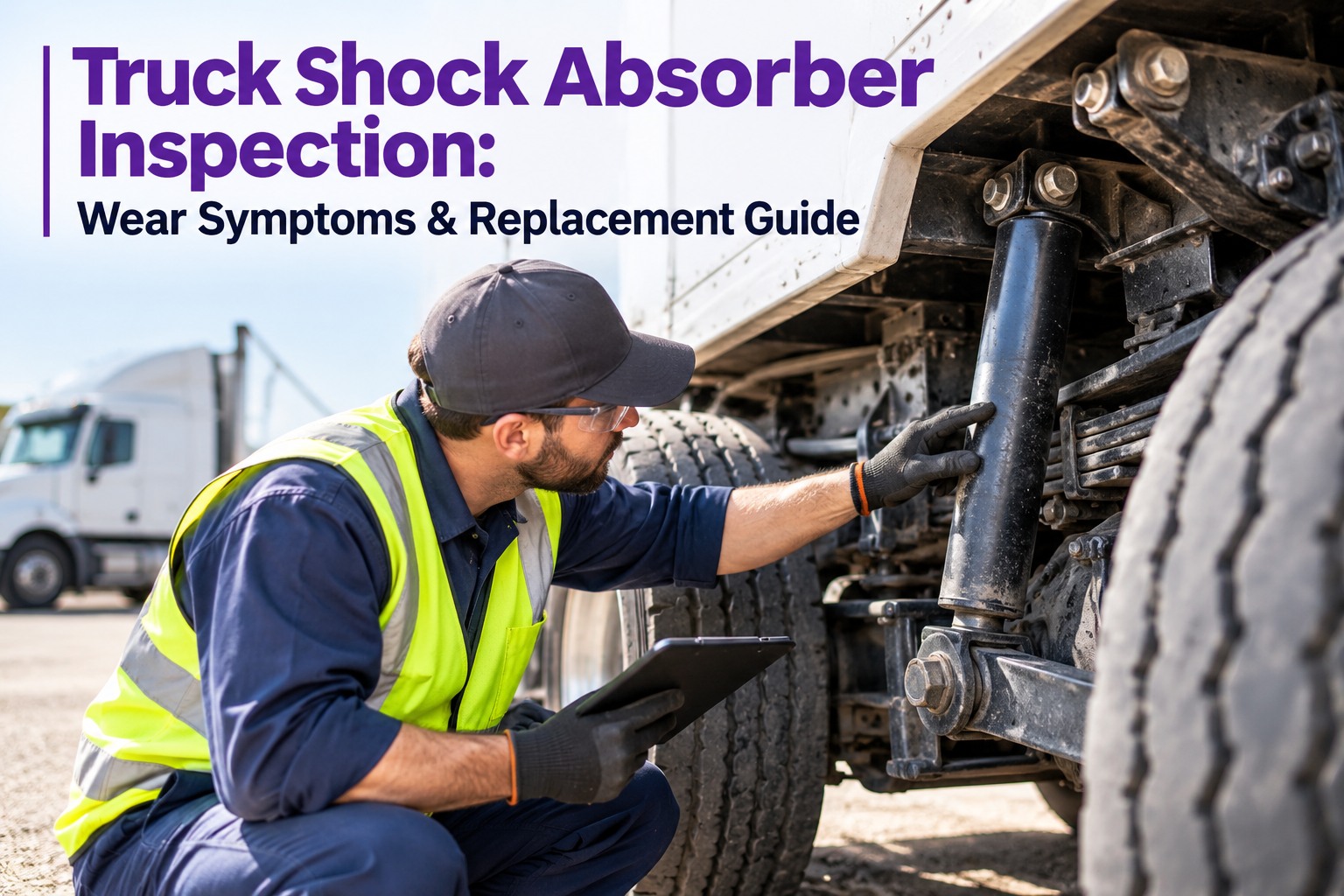
Stacked steel leaves carry the load and locate the axle. Found on most tractors, trailers, and vocational trucks. Fails through cracked and broken leaves, shifting spring packs, and cracked hangers.
Rubber air springs cushion the load and hold ride height. Common on tractors and air-ride trailers. Fails through leaks, cuts and bulges, a deflated bag, and chafed air lines.
Any one of these grounds the truck on its own — no percentage math required. Catch them in the yard and they're a work order; catch them at a scale and they're an out-of-service order on your record.
Checklist 1 — Leaf-Spring Suspension
Work each axle end in turn: count the leaves, then follow the load path down through the U-bolts, hangers, shackles, and pins. Look for the tell-tales of movement — shiny nuts, rust trails, polished contact spots — as hard as you look for outright cracks.
Checklist 2 — Air-Bag Suspension
Air suspension gives you two things to judge: the bag itself, and whether the truck sits level and holds pressure. Walk the bags for damage, then watch the ride height and leak rate — a bag that looks fine can still be losing air faster than the limit allows.
Software Built to Run This Checklist for You
Helping with exactly this is the job. Truck Inspection & Maintenance Management Software puts every item above on the tech's device with its own limit attached — leaf count, leak rate, bag age, the 55-psi protection point. A point that fails flags the component, and a failed component opens a dated work order routed to the shop with the finding and a photo on it. The slow-developing defects that a daily walkaround skips get a scheduled pass that actually catches them.
What a Failing Suspension Does to the Rest of the Truck
Suspension rarely fails alone — it drags other systems down with it, which is why a small defect here is worth catching early. Here's what each failure sets off downstream.
Frequently Asked Questions
Catch Suspension Defects in the Yard, Not at the Scale
Truck Inspection & Maintenance Management Software turns this checklist into a live inspection on your tech's device — every leaf-spring and air-bag item carrying its own limit, every failed point opening a tracked work order with a photo. Fleets run it to keep suspension off the out-of-service list and their axles where they belong.