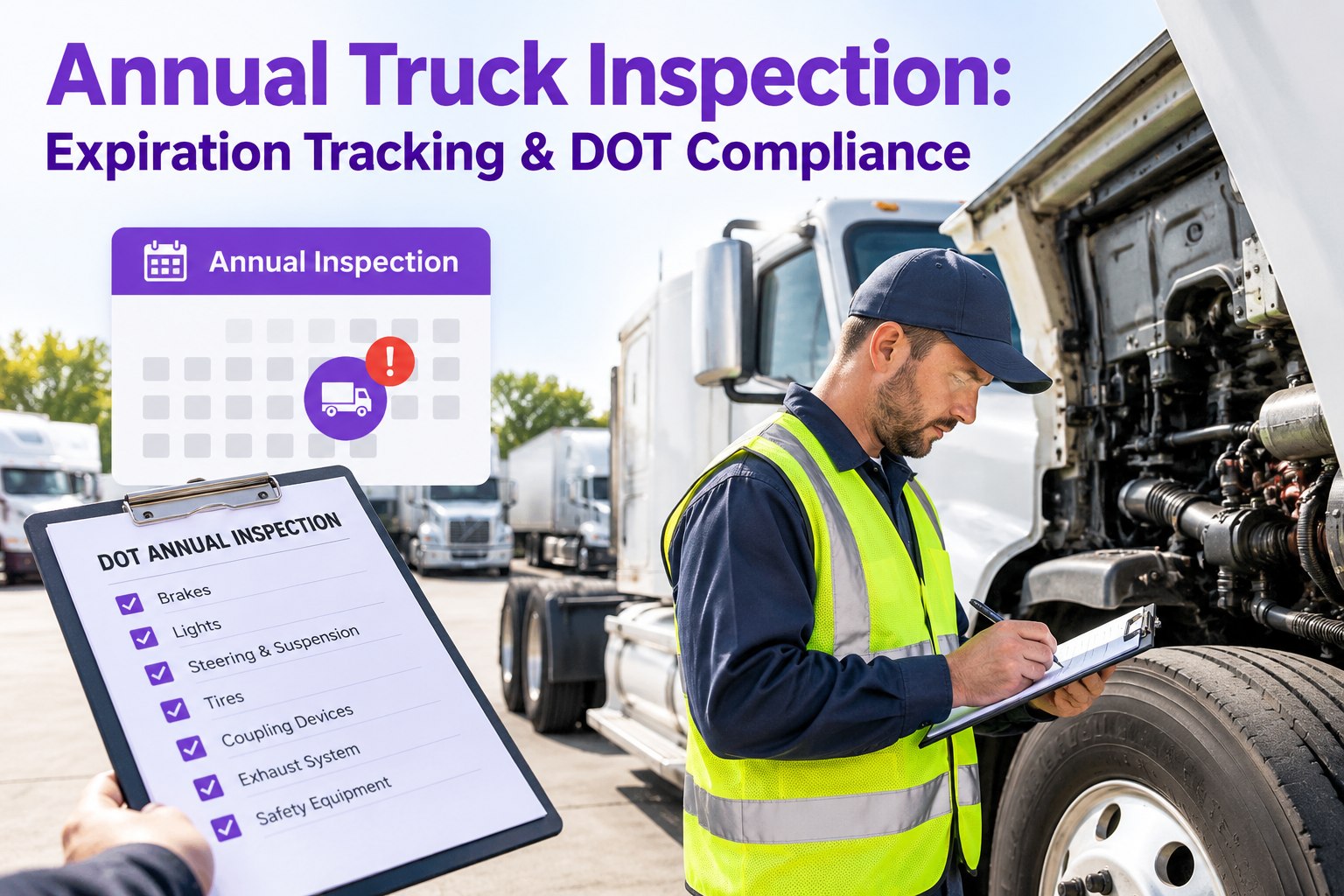
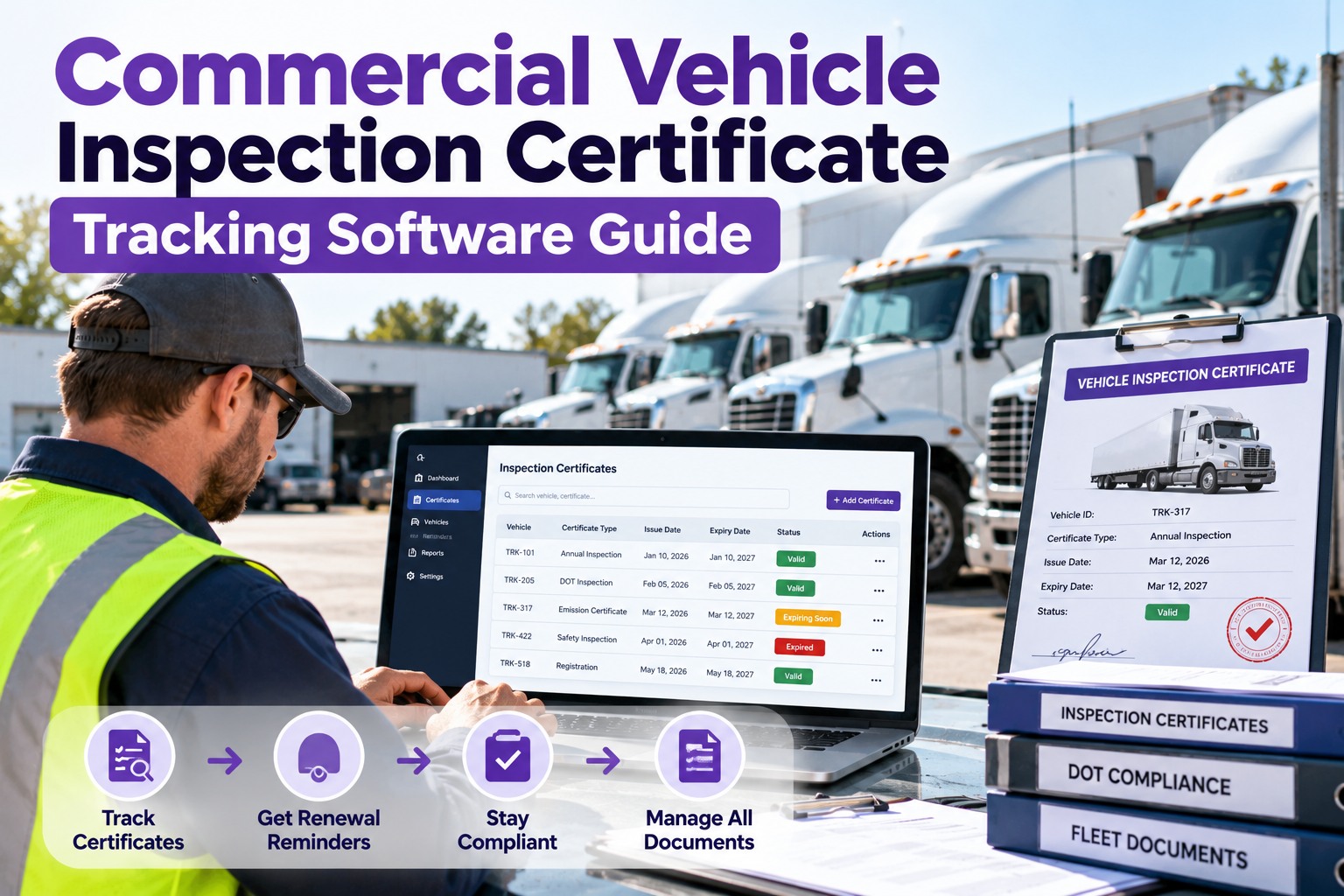
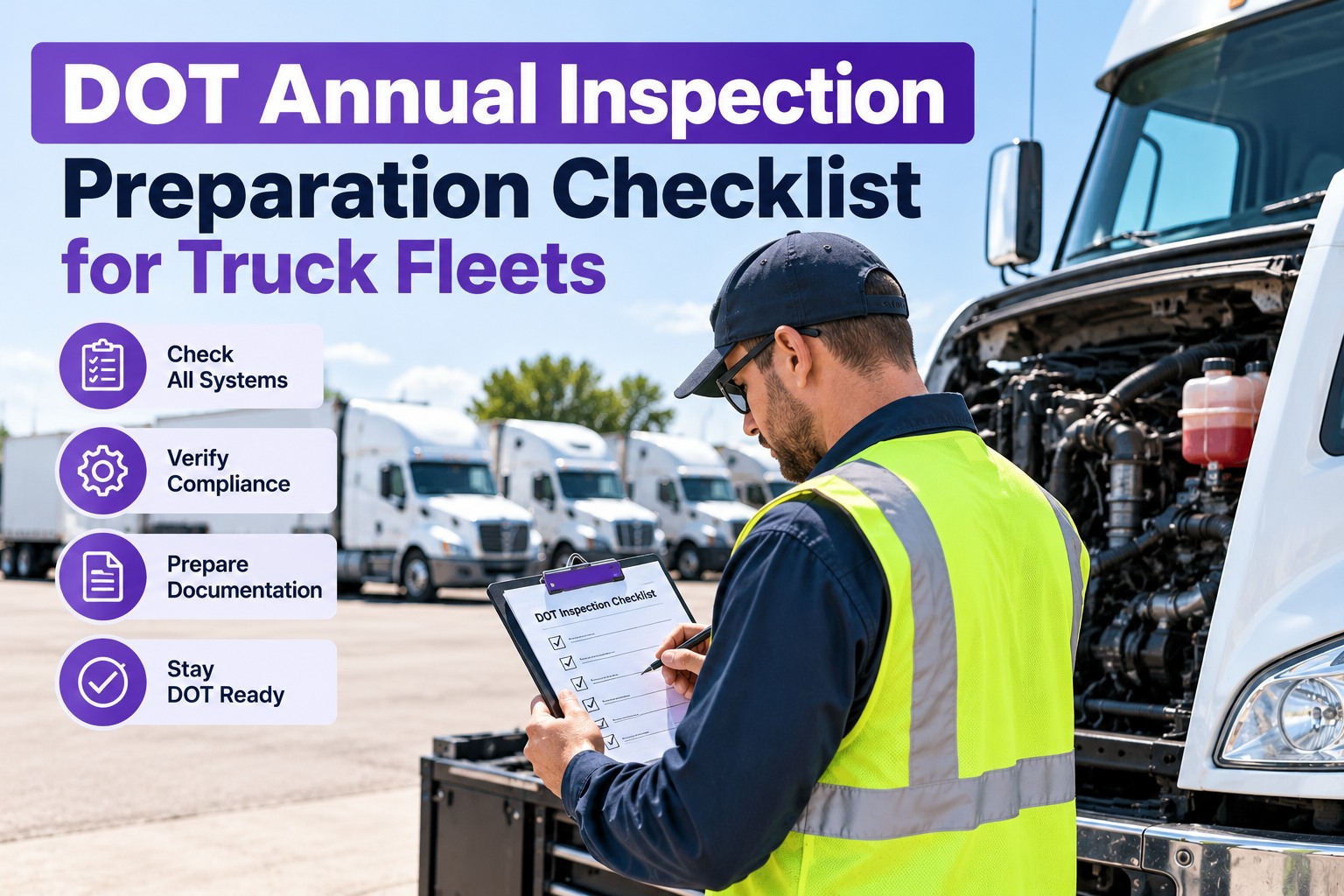
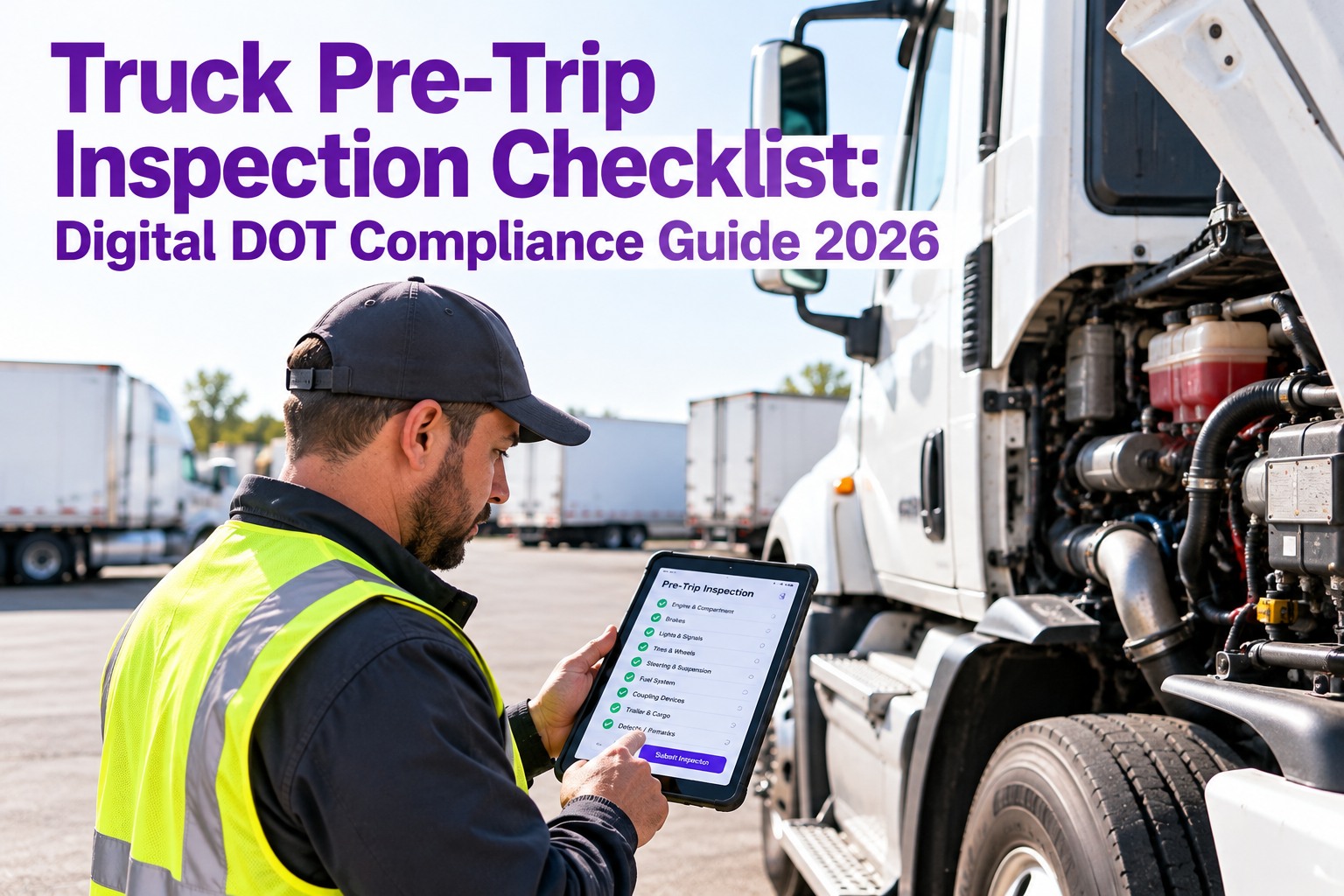
Every commercial truck needs an annual inspection at least once every 12 months and the hard part isn't passing it, it's knowing the exact date each truck is due before it quietly expires. One lapsed sticker can sideline a truck at a roadside stop long after the inspection itself was simple. This is how to track expiration dates across a fleet, stay ahead of every due date, and keep the records DOT wants, with Truck Inspection & Maintenance Management Software (TIM) watching the calendar for you. Start free and never miss an inspection due date with TIM.
TIM · Annual Inspection · Expiration Tracking
The Inspection Was the Easy Part. Knowing When It Expires Is Where Fleets Slip.
A missed annual inspection isn't a maintenance failure — it's a tracking failure. Every truck comes due on its own date, the proof sits in a binder nobody can find fast, and the first reminder is often a roadside inspector. TIM tracks every due date, warns you well before each one lapses, and keeps the inspection record on file — so compliance runs on a calendar, not on luck.
12 mo
inspection cycle per truck
14 mo
the record must be retained
0
expired stickers caught at the scale
Why Annual Inspections Slip Through
Nobody plans to run an expired truck. It happens because the due date is easy to lose track of — for three reasons.
◷
The date is invisibleAn inspection passed in March is forgotten by September — nothing surfaces the expiration until it's already past.⊞
Every truck is on its own clockA 40-truck fleet has 40 different due dates, impossible to hold in your head or on a wall calendar.◱
The proof lives in a binderWhen an officer or auditor asks, the record is in a folder somewhere — and finding it fast is its own problem.
Each of these is a tracking gap, not a shop problem. Contact our team to put every due date on one screen.
The Fleet Due-Date Status Board
The whole game is knowing, at a glance, which trucks are fine, which are coming due, and which have lapsed. A status board sorts the fleet into three lanes so nothing hides.
CURRENT
Inspection valid — plenty of runway
Unit 118Due in 7 months
Unit 204Due in 5 months
Unit 177Due in 4 months
EXPIRING SOON
Schedule the re-inspection now
Unit 142Due in 23 days
Unit 091Due in 11 days
OVERDUE
Park until re-inspected — do not dispatch
Unit 066Lapsed 9 days ago
One look answers the only question that matters: what's safe to dispatch today. Start free and see your whole fleet sorted this way with TIM.
The Alert Ladder — Catch It Before It Lapses
A good tracking system doesn't warn you the day a truck expires. It warns you early enough to book the re-inspection without disrupting a route — a ladder of reminders, not a single alarm.
90 DAYS
First heads-up — the inspection is on the horizon; plan it into the schedule.
→
60 DAYS
Book the re-inspection with your qualified inspector or shop.
→
30 DAYS
Confirm it's scheduled; chase it if it isn't on the calendar yet.
→
DUE
Inspection completed, sticker applied, record filed before the date.
→
OVERDUE
The truck comes off dispatch until it's re-inspected — no exceptions.
The earlier the first reminder, the less a due date ever turns into downtime. Contact our team to set the alert ladder for your fleet.
WHAT THE RULES REQUIRE
Under 49 CFR 396.17, every commercial motor vehicle must pass a periodic (annual) inspection at least once every 12 months, performed by a qualified inspector against the federal minimum standards. The inspection report — or a copy — has to be retained for 14 months from the inspection date, kept where the vehicle is based or maintained, and many fleets use the inspection decal to show the date at a glance. The takeaway for tracking: the inspection has a hard expiration, and the record outlives it by two months. Confirm current federal and state requirements, since this is general guidance, not legal advice.
What a Missed Date Actually Costs
An expired annual inspection is a small oversight with outsized consequences — all of them avoidable with tracking.
✕
Out of service at the scaleAn expired or missing inspection can sideline the truck and driver at a roadside stop, mid-route and far from home.✕
Compliance score hitA lapsed periodic inspection is a recordable violation that follows the carrier, not just the truck.✕
Failed auditIf the report can't be produced within the retention window, the paperwork gap is its own finding.✕
Unplanned downtimeA truck caught overdue is parked until re-inspected — the worst possible time to lose it.
Every one of these traces back to a date nobody was watching. Start free and take the date off your worry list with TIM.
How TIM Helps
Every Due Date Watched, Every Record on File
Expiration tracking is a calendar problem and a records problem at once — TIM handles both. It holds every truck's inspection due date, warns you on a ladder of reminders well before each lapses, and keeps the inspection report on the same unit record, so you can prove compliance as fast as you can spot what's coming due.
1Due date logged
→
2Tiered alerts fire
→
3Re-inspection done
→
4Record on file
Due dates per truckEvery unit's annual inspection date held and counted down, not kept in someone's head.
Tiered expiration alertsReminders at 90, 60, and 30 days so a due date never becomes a surprise.
Fleet status at a glanceThe whole fleet sorted into current, expiring, and overdue on one screen.
Inspection record storedThe report kept on the unit record and produced on demand within the retention window.
Per-unit historyEvery past inspection logged against the truck for its whole service life.
Nothing dispatched overdueOverdue units flagged clearly so they stay parked until re-inspected.
Frequently Asked Questions
How often does a commercial truck need an annual inspection?
At least once every 12 months. Under 49 CFR 396.17, every commercial motor vehicle has to pass a periodic inspection against the federal minimum standards within each 12-month window, performed by a qualified inspector. Because the clock runs per truck from its last inspection date, a mixed fleet ends up with many different due dates — which is exactly why tracking each one matters as much as the inspection itself.
Start free and track every truck's 12-month cycle with TIM.
How long do I have to keep the inspection record?
Fourteen months from the inspection date. The periodic inspection report, or a copy of it, must be retained for 14 months and kept where the vehicle is based or maintained, so the record outlives the 12-month inspection cycle by two months. If a truck is sold or leased out, the documentation requirements still have to be met, which is why keeping the report on the unit's own record — rather than a shared binder — makes audits far easier.
What happens if a truck's annual inspection expires?
It shouldn't be dispatched. An expired or missing periodic inspection can put the truck and driver out of service at a roadside inspection, and it's a recordable violation that reflects on the carrier's compliance record, not just the individual vehicle. The practical rule is simple: an overdue unit comes off dispatch until it's re-inspected and the record is back in order — which is why catching the date early, before it lapses, is the whole point of tracking.
Who is allowed to perform the annual inspection?
A qualified inspector who meets the federal requirements for training or experience. The inspection has to cover the federal minimum standards — brakes, steering, lighting, tires, wheels, frame, coupling devices, and the rest — and the carrier is responsible for keeping proof that the inspector was qualified. Many fleets use a certified inspection facility, while others qualify their own technicians; either way, the qualification and the inspection report both become part of the records you need to keep.
How do I track inspection due dates across a whole fleet?
By holding each truck's due date in one system that counts down and alerts you, instead of a spreadsheet nobody keeps current. The reliable approach is a status view that sorts the fleet into current, expiring, and overdue, backed by reminders that fire well before each date — 90, 60, and 30 days out — so re-inspections get scheduled without disrupting routes. Pairing that with the stored inspection records means tracking and proof live in the same place.
Track · Alert · Re-Inspect · Record
Put Compliance on a Calendar, Not on Luck
An annual inspection is only as good as your ability to remember when it expires. Across a fleet, that's dozens of dates no one can hold by hand — and the cost of missing one is a sidelined truck and a compliance hit. Tracking turns it into a non-event: every due date watched, every reminder fired early, every record on file. TIM runs that calendar for you, so the only surprise left is how little you have to think about it.
No credit card required · Free for up to 3 trucks · Due-date tracking, tiered alerts, and record retention built in