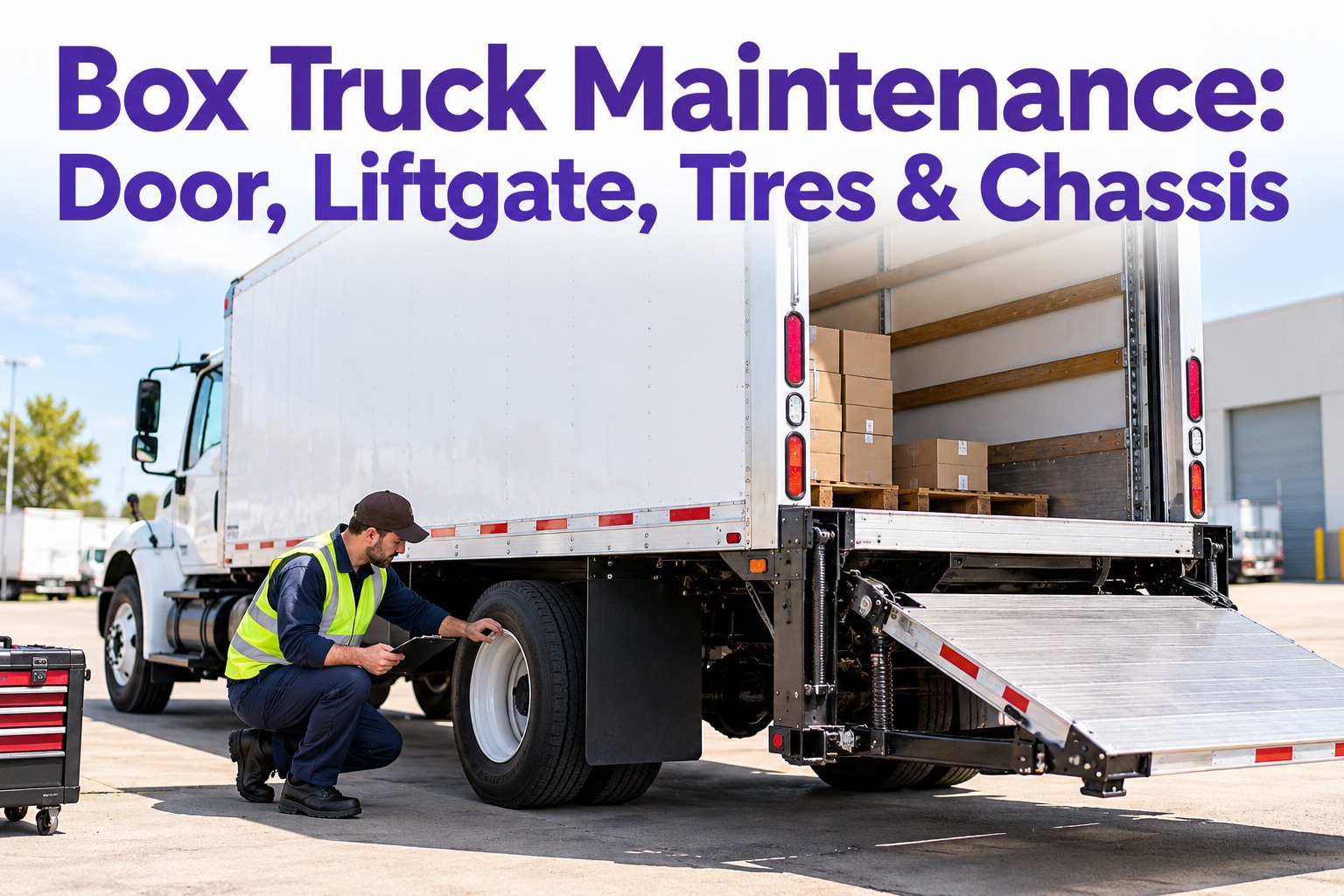
A box truck fails at the back before it fails under the hood — a jammed door, a dead liftgate, or a worn tire is enough to sit the load. This is a maintenance program for the four systems that strand delivery trucks: door, liftgate, tires, and chassis. Start free and put the whole program on every driver's phone.
Box Truck Maintenance · Inspect → Defect → Work Order → PM
Box Truck Maintenance: Door, Liftgate, Tires & Chassis
A stuck door, a dead liftgate, a worn steer tire, a sagging spring nobody wrote down — any one sits the load, usually on a truck that looked fine that morning. Truck Inspection & Maintenance Management Software runs the whole loop: a guided walkaround on the driver's phone, every defect turned into a graded work order the moment it's logged, and PM scheduled on real mileage and engine hours — so the truck that rolls out is the one that's actually ready.
Defect → work ordergraded and assigned the moment it's logged
One programdoor, liftgate, tires, and chassis on one schedule
Real-usage PMscheduled by mileage and engine hours, not a flat calendar
Four Systems, Four Clocks
A box truck doesn't wear evenly. The door cycles hundreds of times a day, the liftgate runs on the battery and heats its hydraulics, the tires scrub through every tight turn, and the chassis takes the pounding underneath all of it. A program that treats them the same misses the one that's about to fail. Our software gives each system its own check and its own clock on the driver's phone, then flags what's due before it turns into a breakdown — here is what each one wears, and how often it needs eyes on it.
▤
Roll-Up Door
Wears from constant cycling, weather, and dock impacts
Check weekly
⬒
Liftgate
Heavy hydraulic and electrical duty, dozens of lifts a day
Test daily · service monthly
◎
Tires
Stop-and-go scrub, curb hits, uneven delivery loads
Check daily
▥
Chassis
Urban pounding, corrosion, suspension and frame stress
Monthly · annual DOT
The Roll-Up Door — The Part That Decides Whether the Route Moves
Roll-up doors take constant cycles, weather, and dock bumps, with a counterbalance spring carrying the load. When a roller binds or the spring weakens the door sticks — and forcing it turns a quick fix into a bent panel. In our software, the door is a guided check across the six areas below, and any failed item becomes a graded work order with a photo.
Tracks & rollersClean and free of debris; rollers spin smoothly, none seized or flat-spotted
Counterbalance springCorrect tension — the door glides, doesn't slam shut or crawl up
SealsHead, side, and bottom seals intact — this is what keeps weather off the cargo
Panels & slatsNo bends, cracks, or separation; hinges between slats sound
Latch & lockCloses secure and opens easy; cargo stays in, thieves stay out
Cables & pull strapNot frayed or fraying; pull strap present so no one yanks the panel itself
What grounds a door A snapped counterbalance spring, a seized roller, a torn seal letting rain onto the load, or a cracked panel. Nearly all of these start as a door that's a little harder to lift than last week — and because our software keeps every door check tied to the unit, that slow change shows up in the history instead of surprising a driver mid-route. A weekly look, plus a firm rule for drivers ("never force a door against resistance — report it"), catches it while it's still a spring, not a replacement door.
The Liftgate — High Duty, High Current, Highest Neglect
A liftgate is a hydraulic machine running on the truck's own battery, and almost every failure traces to one of three systems — hydraulic, electrical, or mechanical — each of which warns you before it strands a load. Our software splits the liftgate into exactly these three checks on the phone and routes any flagged item to the shop as a graded work order.
HydraulicThe muscle
- Fluid level and condition — low or dirty fluid is the top cause of sluggish lifts
- Hoses, fittings, cylinders, and seals — look for weeping, leaks, or soft spots
- Pump runs clean and builds pressure
- Jerky or slow motion usually means low fluid or air in the lines
ElectricalThe power
- Battery charge and terminals — a liftgate pulls heavy current and kills weak batteries
- Fuses, switches, and wiring intact, no corrosion
- Ground connections clean and tight
- A gate that won't move at all is usually power, not hydraulics
MechanicalThe structure
- Platform hinges, pins, and bushings — no excess play
- Rollers and chains on rail lifts, mounting bolts tight
- Platform surface sound, no cracks or sharp edges
- Squeak, grind, or bang on the cycle points to wear here
Why the liftgate gets skipped It works until it doesn't. A weak battery or a slow seal seep is invisible on a quick glance, so the gate keeps running right up to the day it quits mid-route with a loaded pallet on the platform. Our software puts the monthly function-test-under-load and the fluid, hose, and battery check on every unit automatically, so the one truck whose gate is fading gets caught while it's still a top-off and a terminal cleaning — not a tow and a ruined delivery window.
Tires — Where the Load Meets the Road (and the DOT Meets You)
Delivery routes scrub tires harder than the odometer shows — tight turns, curbs, stop-and-go, and uneven loads. Tread and sidewalls need a gauge, not a kick with a boot. Our software records tread depth at each wheel position, so a wear pattern shows up two inspections early and a thinning tire gets flagged before an officer finds it.
Steer tires4/32"minimum tread depth (FMCSA)
Drive & rear tires2/32"minimum tread depth (FMCSA)
InflationTo speccheck cold with a gauge — low pressure runs hot and fails
- Sidewalls — no cuts, bulges, or exposed body cord
- Lug nuts — none missing or loose, no rust streaks weeping from the studs
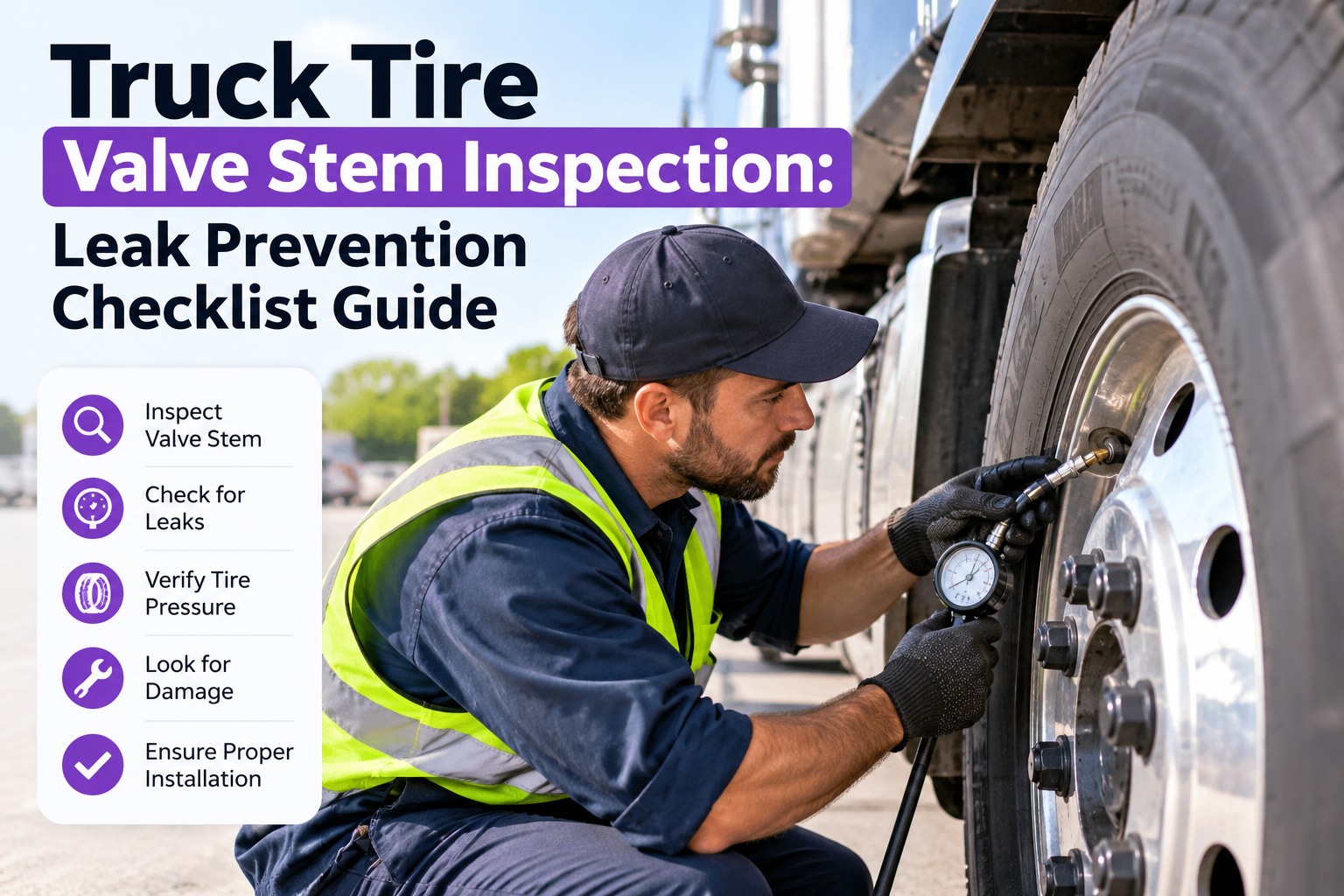
- Valve stems — capped and not leaking
- Wear pattern — cupping, feathering, or one-sided wear points to alignment or suspension, not just the tire
- Each wheel position — the software records each one separately so a wearing pattern shows up two inspections early
The Chassis — The Frame That Carries Everything Else
The chassis goes unnoticed until it squeaks, sags, or cracks. Urban delivery pounds the suspension and undercarriage while corrosion does its slow work underneath. Our software builds an undercarriage pass into the schedule across the six zones below, and turns anything found underneath into a work order instead of a note that gets lost.
SuspensionLeaf springs (sagging, broken, shifted), air bags (cracked, bulging, leaking), shocks, bushings, U-bolts, hangers
Frame & crossmembersCracks, rust-through, bent rails, loose body mounts between the chassis and the box
LubricationGrease every zerk fitting on schedule — dry joints wear fast and announce it with a squeal
BrakesLinings or pads above minimum, no leaks, slack and pushrod in spec, the full system healthy
Wheel bearings & hubsNo play, no overheating, seals not weeping grease or oil
Undercarriage & wiringFuel and brake lines secure, wiring not chafing, all lights working
The slow failures Suspension and frame problems almost never appear overnight. A sagging spring, a weeping shock, a hairline crack in a crossmember — each one shows up on a walkaround weeks before it puts a truck out of service. Our software keeps every underbody check in the unit's history, so the fleet that looks underneath on a schedule sees the trend building; the one that waits for the noise pays for the tow.
The Maintenance Program — One Schedule, Five Clocks
The trap is one flat calendar for every truck. A box truck idling through city traffic ages faster than its mileage shows, so each system needs the clock that drives its wear. Our software runs all five tiers below — each scheduled on whichever comes first (mileage, engine hours, or time), with reminders sent so nothing falls due unnoticed.
Daily
Pre-tripTires, lights, door function, liftgate function, leaks under the truck, mirrors and wipers
Weekly
WalkaroundDoor tracks, rollers and seals, fluid levels, tire pressure, lug check, a look at the chassis
Monthly
Service checkLiftgate hydraulics, battery and pivots, brake check, suspension look, grease critical points
Quarterly
Deep inspectionFull chassis and undercarriage, wheel bearings, full brake measurement, alignment check
Annual
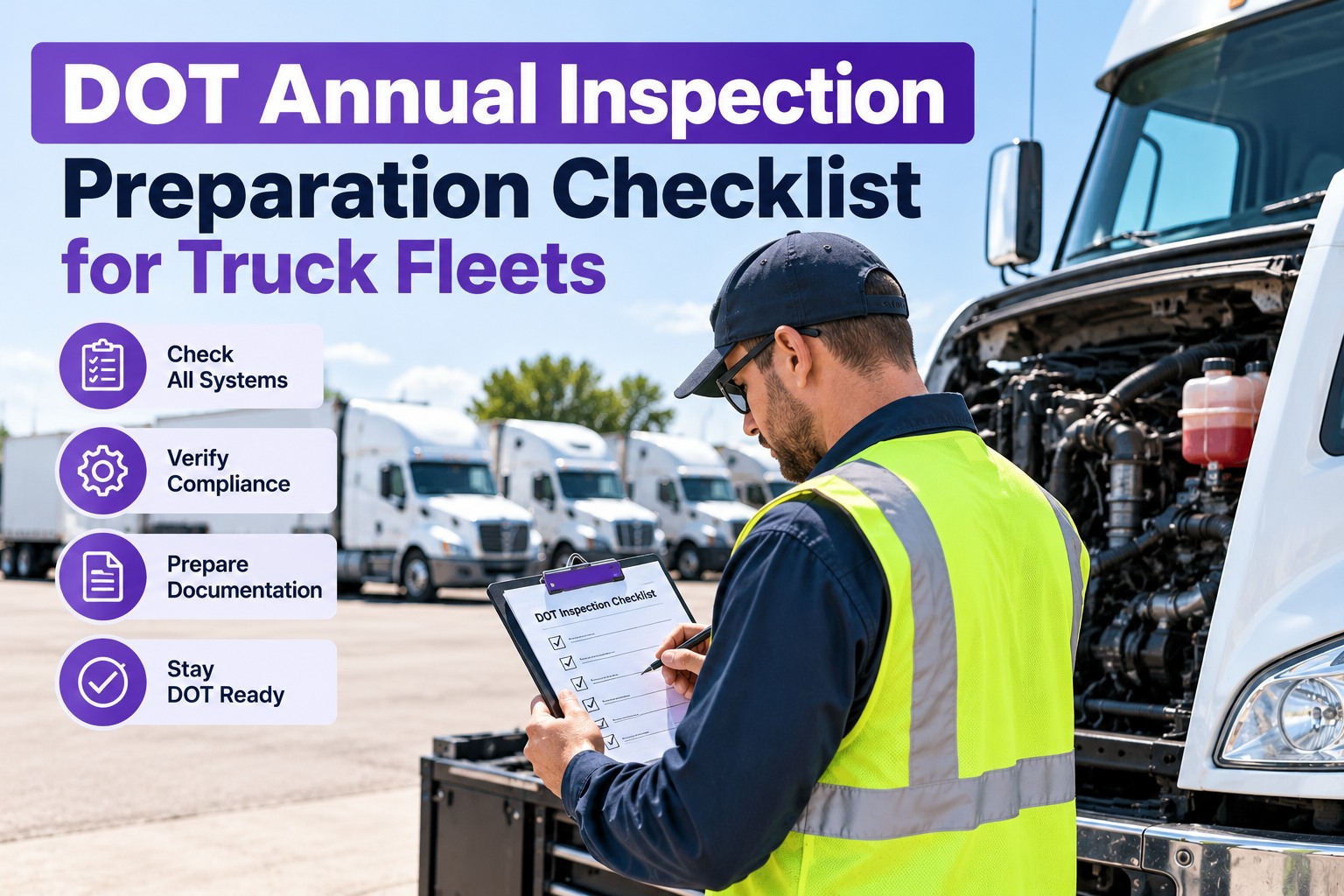
DOT periodicFull inspection to 49 CFR 396 Appendix A by a qualified inspector, report kept on file
The Compliance Line
A box truck rated at 10,001 lb GVWR or more is a commercial motor vehicle. That means a DOT periodic (annual) inspection to 49 CFR 396.17 / Appendix A is required at least every 12 months, performed by a qualified inspector under §396.19, with the report retained for 14 months. Drivers still inspect and report defects daily under §392.7 and §396.11, and a few states are stricter — New York, for example, requires it every six months for vehicles over 10,000 lb. A maintenance program isn't only about uptime; it's the paper trail that proves the truck was safe to operate — and our software keeps the daily reports, the PM history, and the annual inspection in one file that's ready the moment an auditor asks.
The Whole Program, on One Phone
Our Truck Inspection & Maintenance Management Software gives you a guided walkaround that covers door, liftgate, tires, and chassis in order; every failed item routed straight to a graded work order; preventive maintenance scheduled on real mileage and engine hours; and a clean record behind all of it. That's a box-truck fleet that rolls on time and passes when the sticker comes due.
How Our Software Runs Your Box-Truck Program
Software doesn't turn a wrench. What our Truck Inspection & Maintenance Management Software does is make sure the check actually happens, the finding reaches the shop, and the service lands on schedule — so the gap between "the driver noticed something" and "a mechanic fixed it" stops swallowing your trucks.
01Guided walkaroundDoor, liftgate, tire, and chassis checks in a fixed order on the driver's phone — no step skipped
02Finding → graded work orderA failed item becomes a work order, graded urgent or scheduled, with no debate in the yard
03PM on real usageIntervals set by mileage and engine hours, triggered on whichever one hits first
04Per-unit historyEvery door, liftgate, tire, and spring tracked to the VIN so a pattern is visible
05Photo & signatureTimestamped proof on every defect — the record says what was found, not just that it was
06Audit-ready fileDaily reports, PM, and the annual inspection in one searchable place when an officer asks
Frequently Asked Questions
What should a box truck maintenance program cover?
A complete program covers the four systems that actually sideline a delivery truck — the roll-up door, the liftgate, the tires, and the chassis — plus the engine and fluids the manufacturer schedules. The key is matching each system to the right clock: daily pre-trip checks on tires and door and liftgate function, weekly walkarounds, monthly service on the liftgate and brakes, a quarterly deep look underneath, and the annual DOT inspection. Our software bundles all of it into one guided program on the phone.
Start free and build the full program in minutes.
How often should I service a box truck liftgate?
Run a quick function test under load every day, and do a real service check monthly — hydraulic fluid level and condition, hoses and seals for leaks, battery charge and terminals, and the platform pivots and bolts. Anything deeper, like a failing pump, worn cylinder, or structural crack, should go to a qualified technician. Most liftgate breakdowns warn you first with slow or jerky motion, so catching them monthly keeps them cheap — and our software puts that daily test and monthly check on every unit so neither gets skipped.
What are the DOT tire tread minimums for a box truck?
Under FMCSA rules, steer tires must have at least 4/32" of tread, and drive and rear tires at least 2/32". Measure with a gauge rather than eyeballing it, and also check for cuts, bulges, exposed cord, correct inflation, and missing lug nuts — any of which can put the truck out of service regardless of tread depth. Our software records tread depth per wheel so a thinning tire is flagged before it drops below the line.
Do box trucks need a DOT annual inspection?
If the box truck is rated at 10,001 lb GVWR or more, yes — it's a commercial motor vehicle and needs a periodic inspection at least every 12 months under 49 CFR 396.17, performed by a qualified inspector and documented, with the report kept for 14 months. Some states require it more often (New York, for instance, every six months). Lighter box trucks used purely for non-commercial purposes may be exempt, so confirm your vehicle's GVWR and your state's rules. Our software tracks each truck's inspection date and flags it before it lapses.
Should I schedule maintenance by mileage or by time?
Use whichever comes first. A box truck on a city delivery route racks up engine hours, heat cycles, and door-and-liftgate cycles far faster than its odometer suggests, so a pure mileage schedule lets a hard-working truck drift past due. Set both a mileage limit and a time or engine-hour limit per system — our software tracks all three and triggers service the moment any one of them is reached.
Door · Liftgate · Tires · Chassis — One Program
Build a Box-Truck Program That Catches Problems Before the Route Does
Our Truck Inspection & Maintenance Management Software gives every driver a guided walkaround across all four systems, routes every finding to a graded work order, schedules preventive maintenance on real mileage and engine hours, and keeps an audit-ready record behind it all. Fewer mid-route breakdowns, cleaner DOT inspections, and trucks that are ready at the back as well as the front.
No credit card required. Reflects 49 CFR — confirm current federal and state requirements. Not legal advice.