The valve stem is the smallest part of a truck tire and the one most likely to quietly empty it. A stem the size of your finger holds back 100+ psi, sits exposed to road salt, heat, and ozone, and gets bent every time a hose is yanked off it. When it leaks, it rarely blows — it bleeds, a pound or two a week, until the casing runs hot and underinflated and a steer tire lets go at highway speed. This checklist shows you where a valve leaks, how to find it in two minutes with soapy water, and what to replace before it strands a truck. Start free and log every valve-stem check with TIM.
TIM · Tire Valve Stem Inspection
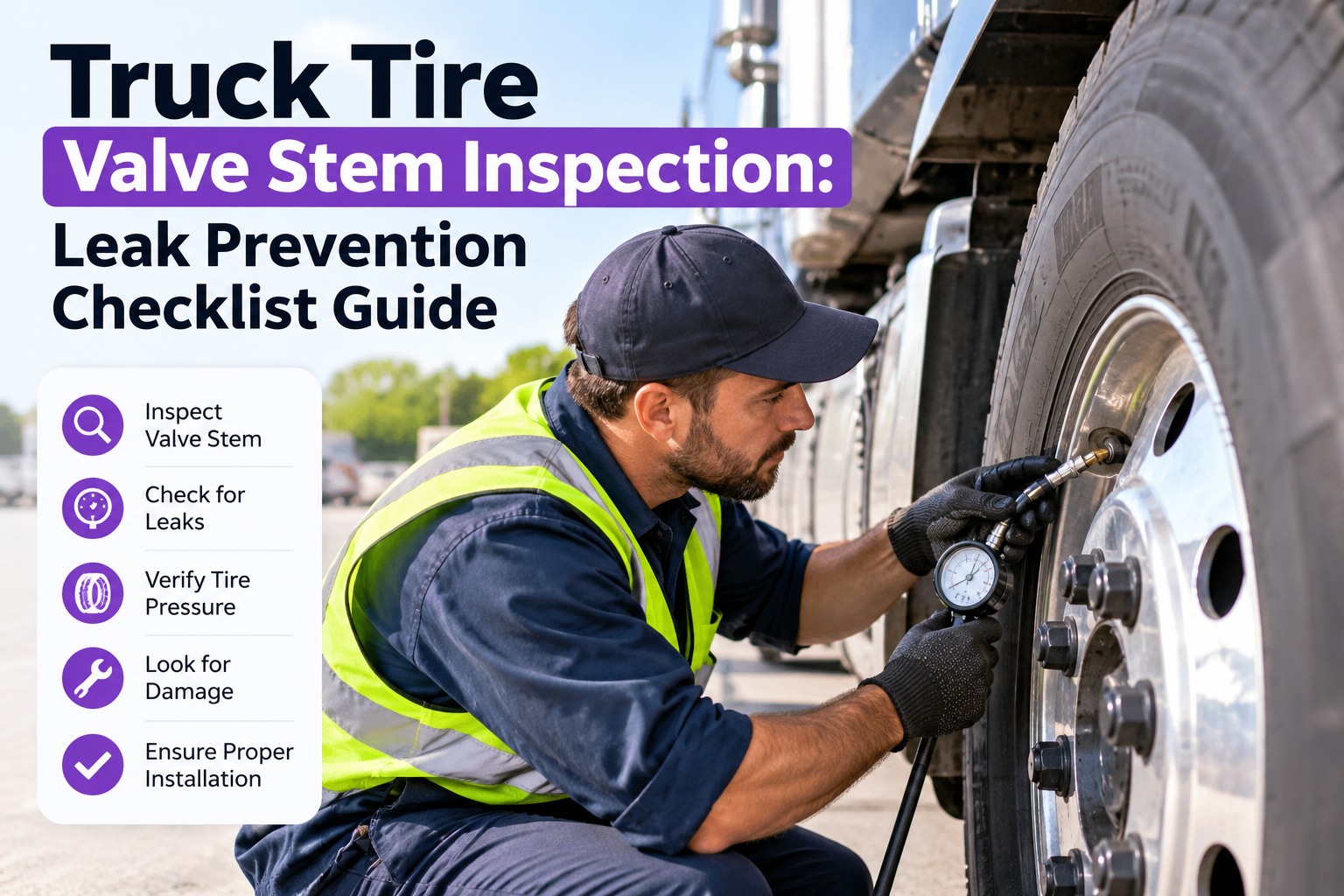
Truck Tire Valve Stem Inspection: Leak Prevention Checklist Guide
You air it up, it rolls, and days later it's low again — a slow valve leak quietly running a tire underinflated until it overheats and lets go on the road. What you want is simple: catch the weeping valve before the blowout, and know the fix actually happened. That's the loop Truck Inspection & Maintenance Management Software (TIM) runs for you — the driver flags the valve on a mobile inspection or DVIR, it becomes a graded work order on the spot, the repair is tracked to a verified close, and the valve stays on a preventive-maintenance cadence so it's checked before it bleeds.
Why a Pinhole Leak Is a Big Deal
Underinflation is the number-one killer of truck tires, and a leaking valve is one of the most common ways a tire gets there. The damage is slow, cumulative, and expensive long before the blowout.
#2
Tires are the second most common vehicle out-of-service defect at roadside inspections — behind only brakes
20%
Run a tire 20% underinflated and you can cut its tread life by roughly a third from heat and flex fatigue
~1 psi
A tire can lose about a pound of pressure a month on its own — a valve leak turns that trickle into a weekly drain
Anatomy of a Valve — and Where It Leaks
A valve looks like one piece but it's four seal points, and a leak can hide at any of them. Knowing the four is what turns a vague "it keeps going soft" into a two-minute diagnosis.
1
The cap
Not decoration — a secondary seal that keeps road salt, water, and grit off the core. Missing caps are how cores corrode.
2
The core
The spring-loaded check valve inside. Road salt corrodes it and debris holds it open — the most frequent slow-leak source.
3
The stem body
Rubber snap-in stems dry out, crack, and split at the base with age, heat, and ozone. Metal stems rely on an O-ring that can compress or crack.
4
The base & stem hole
Where the stem seats through the rim. A burr, corrosion, or an off-angle seat from a past tire change leaks right at the wheel.
Rubber snap-in stems are cheap and common; bolt-in metal stems show up on aluminum wheels and anything with a pressure sensor. Each fails differently, so the check covers both. Contact our team to set up valve checks across your fleet.
The Valve Stem Inspection Checklist
Walk each wheel position and work the valve from the cap inward. Tap each box as you clear it. Anything you can't clear is a leak path — tag it for the soapy-water test below and fix it before the tire runs soft.
17 Checks Stand Between a Slow Leak and a Blowout
None of this takes tools you don't already carry — a gauge, a spray bottle, a valve tool. The hard part is doing it on every position, every cycle, and making sure a found leak actually gets fixed instead of topped off. TIM turns the valve check into a tap-through on the phone, logs who did it, and turns a weeping valve into a work order before the tire runs soft.
Stop-Use Conditions — Fix Before It Rolls
Most valve findings are a schedule-it item. These four are not — they bleed fast or hide a failing tire, and the unit shouldn't dispatch until they're sorted.
Fix FirstAny one of these holds the truck
⊘A cracked or split stem base showing steady bubbles under soapy water
⊘A position reading well below target — confirm it's a valve leak, not a punctured casing
⊘A core that won't hold once soap is applied to the tip
⊘A bent or sheared stem on an inner dual you can't reach to monitor
A valve is a few dollars and a few minutes in the shop — a blown steer casing on the interstate is neither. Contact our team to build stop-use rules into your tire checks.
How TIM Delivers It
Keep the Smallest Part on the Maintenance Radar
Valve stems get skipped precisely because they're small and cheap — right up until one empties a tire on the road. TIM keeps the check scheduled, the finding logged, and the fix tracked, so the cheapest failure on the truck stops being a surprise.
Valve on the tire checkCap, core, stem, and base ride in the mobile tire inspection — not left to memory.
Photo the weep, raise a jobA leaking valve becomes a work order with a photo attached, tied to the exact position.
Pressure logged per positionReadings recorded wheel by wheel, so a slow bleed shows as a trend, not a surprise.
Catch the repeat offenderHistory per tire and position flags the wheel that keeps losing air for a real fix.
PM on a tire cadenceSchedule valve and pressure checks on the interval that fits your routes and season.
Nothing rolls out softAn open valve or pressure defect flags the unit until the fix is verified.
Frequently Asked Questions
How do I find a valve stem leak?
Soapy water is the fastest, most reliable test. Brush or spray a soap-and-water mix over the whole stem, including where the base meets the rim, and watch for bubbles — a steady stream of them is an active leak. Then take the cap off and put soap on the valve tip; bubbles there point to a bad core rather than the stem body. If the stem is clean but the tire still loses air, check the full bead seat, because a slow bead leak can feel exactly like a valve leak. A gauge that keeps reading low on the same position is your first clue to run the test.
What causes a truck tire valve stem to leak?
Four things, mostly. A corroded valve core — road salt attacks it and breaks the seal — is one of the most common slow leaks. Age and heat dry out rubber snap-in stems until they crack or split at the base. A missing cap lets moisture and grit reach the core, so the cap being gone is often the start of the problem. And a stem seated off-angle or through a burred, corroded stem hole leaks right at the wheel. Metal bolt-in stems add one more: an O-ring at the base that can compress or crack over time.
Does the valve cap really matter?
Yes — more than most drivers think. The cap is a secondary seal. Its job is to keep road salt, water, and debris off the valve core, which is the part most likely to corrode and leak. A core exposed by a missing cap is far more likely to develop a slow leak, especially on salted winter roads. On a commercial truck, a proper cap also matters for reaching inner-dual valves through flow-through caps and extensions. Replacing a lost cap costs almost nothing and prevents one of the most common slow leaks there is.
How often should valve stems be inspected?
Fold it into your regular tire and pressure checks — for most fleets that means a quick look at every pre-trip and a closer inspection with the gauge on a set interval. Because a tire naturally loses roughly a pound of pressure a month and a leaking valve accelerates that, the valve is worth eyeballing every time pressure is checked. Any time a position reads low, inspect the valve before simply airing it up, or you'll be chasing the same tire every few days. Software helps by putting the valve on the tire checklist and tracking pressure per position so a slow bleed shows as a trend.
Can I just keep adding air to a leaking valve?
It's the most expensive habit in the shop. Topping off a leaking valve masks the problem while the tire spends most of its life underinflated — running hot, flexing hard, and wearing out far faster, with a real blowout risk if it's a steer tire. The valve itself is a few-dollar part that takes minutes to replace. Chasing it with an air hose costs you tread life, fuel, and eventually a casing, plus the downtime of the failure. Find it, fix it, and log it.
Start free and track valve repairs to closure with TIM.
Cap · Core · Stem · Base · Pressure · Leak Test
The Cheapest Fix on the Truck Is Also the Easiest to Skip
A valve stem costs a few dollars and takes a few minutes — and ignoring it costs a tire, the fuel it burned running soft, and the downtime when it finally lets go. Run the 17 checks, confirm with soapy water, honor the stop-use lines, and let TIM keep the valve on the radar and the repair tracked to closure. It's free to start on your first three trucks.
No credit card required · Free for up to 3 trucks · Mobile tire checks, photo defects, and repair tracking built in