Passing the CDL skills test does not mean a new driver can run a pre-trip you would trust on a loaded trailer Monday morning. That gap — between a memorized exam and a reliable daily habit — is where onboarding wins or loses. Here is how to train new drivers on pre-trip inspections, and how Truck Inspection & Maintenance Management Software turns each practice run into a record. Start free and onboard drivers on one record.
New Driver Onboarding · Pre-Trip Training
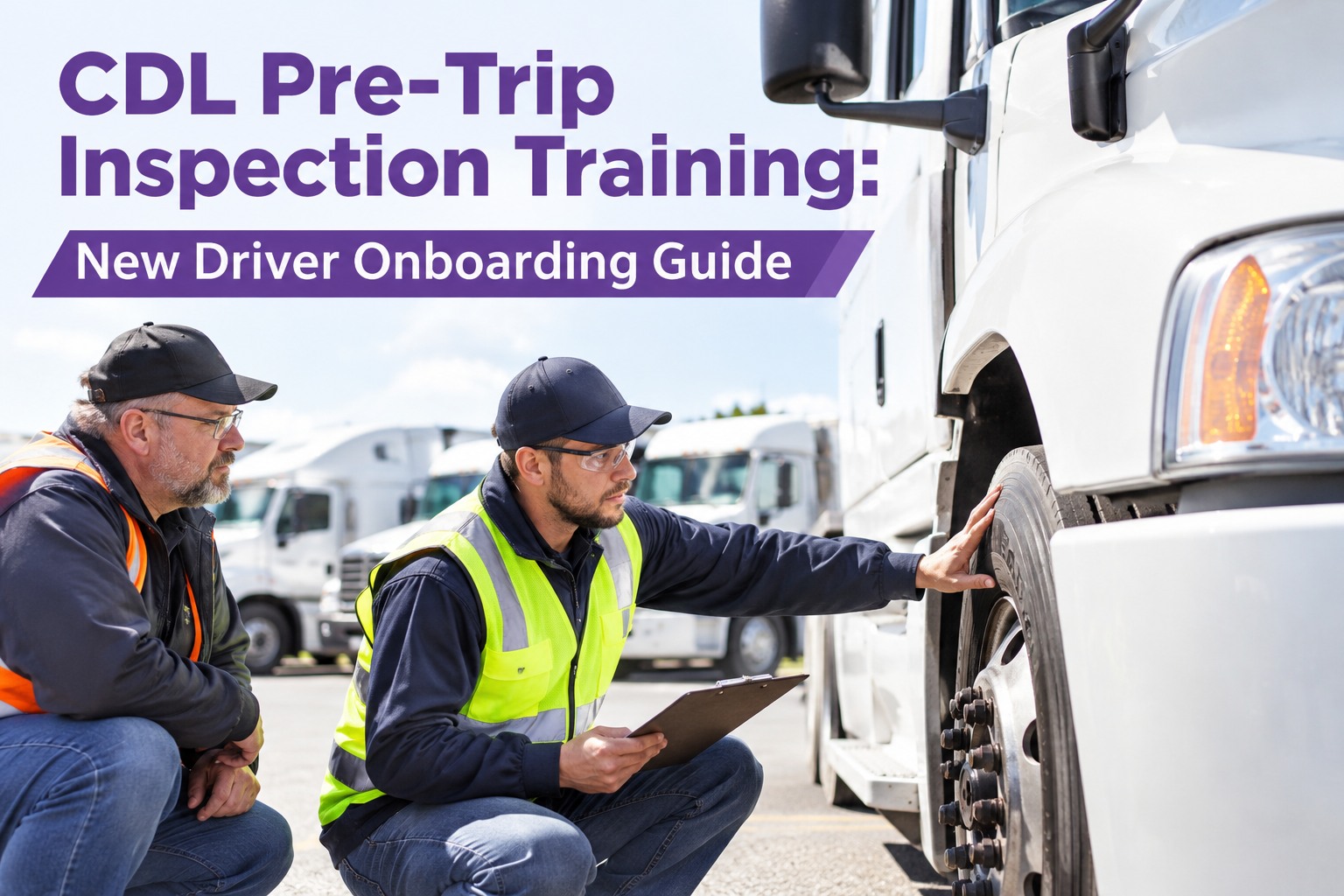
CDL Pre-Trip Inspection Training: New Driver Onboarding Guide
From the first ride-along to a confident solo walkaround — a structured path that makes your newest hire inspection-ready, FMCSA-compliant, and far more likely to still be driving for you at 90 days.
Phase 1ELDT & BasicsTheory + behind-the-wheel, names the parts
→
Phase 2SupervisedWalkaround with a trainer watching
→
Phase 3Solo-ReadyConsistent, recorded, audit-clean
~30%of new drivers quit within the first 90 days
$8k–$20ktypical cost each time an early hire leaves
50%+lower turnover reported with structured onboarding
~41%of vehicle out-of-service orders are brake-related — all catchable on a pre-trip
Why Pre-Trip Training Belongs at the Center of Onboarding
A new driver's pre-trip habit forms in the first few weeks and rarely changes after. Teach a rushed routine now and you own that risk for years. The stakes are real: roughly a third of new hires leave inside 90 days, each departure costing $8k–$20k — while a structured program is tied to turnover cuts of 50% or more. Pre-trip training pays twice: fewer trucks out of service, and drivers confident enough to stay. Book a demo to see onboarding and inspections on one screen.
Start With the Rules: FMCSA Ground Every New Driver Should Know
Three references do most of the work. A new driver who can name them inspects like a professional.
49 CFR § 392.7
Be satisfied it is safe
No vehicle may be driven unless the driver is satisfied the required parts are in good working order.
49 CFR § 396.13
Review the last report
The driver reviews the last inspection report and confirms noted defects were corrected. New drivers often miss this.
49 CFR Part 380
ELDT before the test
Theory plus behind-the-wheel from a registered provider, required before a first-timer can sit the skills test.
Phase 1 — What ELDT Already Taught (and What It Did Not)
Most first-time Class A hires arrive having completed federal ELDT. Knowing what it covers tells you where the real gaps are.
ELDT covered this
- Two parts — theory (knowledge) and behind-the-wheel (range + public road)
- An 80% minimum score on the theory assessment before moving to behind-the-wheel
- Training delivered by a provider on the FMCSA Training Provider Registry
- Naming the major vehicle systems and the general purpose of an inspection
Your onboarding must add this
- A pre-trip run the way your fleet does it, on your equipment
- The daily DOT pre-trip habit — not the slow, verbal test version
- Reviewing the prior DVIR and logging today's findings on your system
- Speed with completeness: a real inspection that still fits the shift
There is no federal minimum hour count for theory, so hands-on quality varies widely by school. Treat each new hire's first supervised walkaround as a true baseline. Start free and capture that baseline walkaround.
Phase 2 — Teach the Seven-Step Walkaround in Order
The skills test and the daily pre-trip share one federal seven-step method under Part 396. Teaching it in a fixed order is the best way to stop a new driver skipping a section.
01Vehicle overviewApproach and note general condition — lean, fresh fluid on the ground, damage. Check the last inspection report.
02Engine compartmentEngine off: fluid levels, belts, hoses, leaks, steering and suspension components, battery secured.
03In-cab, start engineThree points of contact in. Parking brake holds, gauges, steering play within about 10° (roughly 2 inches), horn, wipers, mirrors.
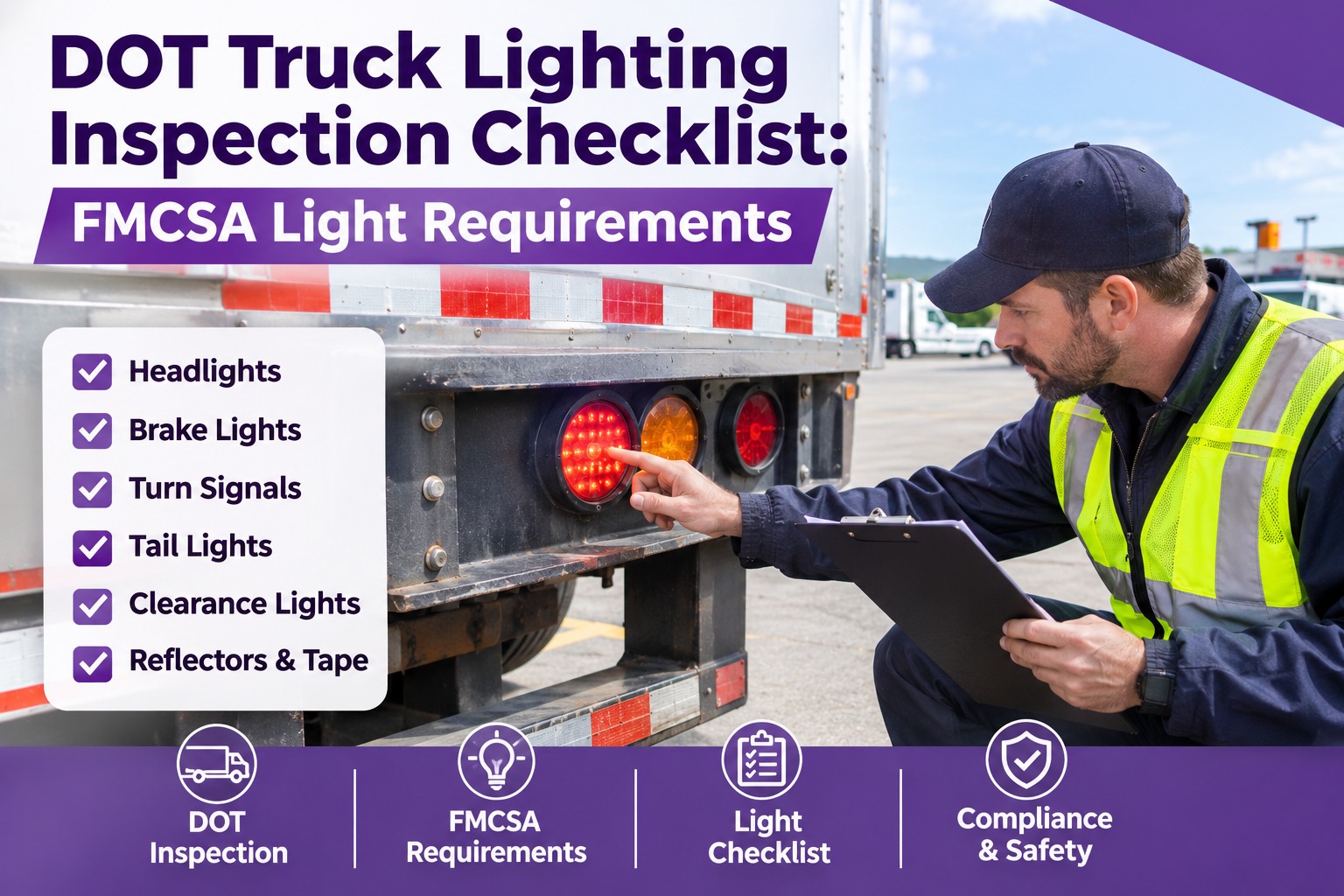
04Lights checkHeadlights, high beams, markers, flashers. Then shut unneeded lights so the walkaround confirms what should be on.
05WalkaroundThe biggest step — each wheel, tire, hub, brake component, suspension, frame, fuel and exhaust area, coupling, lamps and reflectors.
06Signal & brake lightsTurn signals and brake lamps working front and rear, clean and the right color.
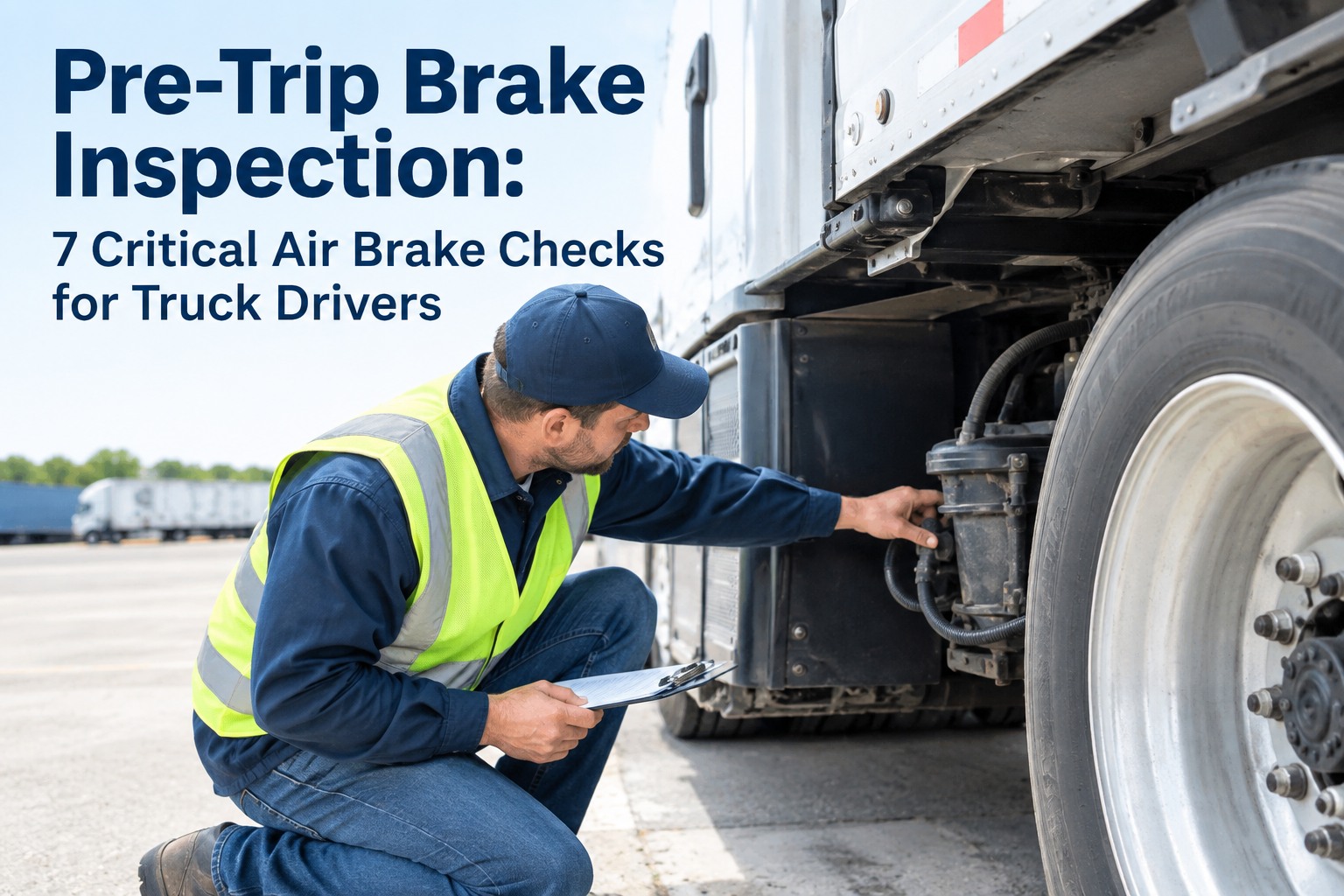
07Air brake checkThe applied-leakage, low-air-warning and parking-brake test — the sub-step where most skills-test candidates lose the exam.
Have the trainee say each part out loud and name the defect they are checking for. "Point to it, name it, say what would fail it" is the habit that outlasts the test — and the one inspectors reward.
Where new drivers lose the most points
Rushing the undercarriageBrake components, slack adjusters and suspension are skimmed. Brakes alone drive about 41% of vehicle out-of-service orders.
Fumbling the air brake testThe sequence is a memory test; breaking the order is the most common instant fail. Drill it until it is automatic.
Skipping the prior report§ 396.13 review gets forgotten. Make reading yesterday's findings step zero of every shift.
Silent inspectingChecking without naming the part or the fault means nobody — examiner or trainer — can tell what was actually looked at.
Turn Every Practice Walkaround Into a Record
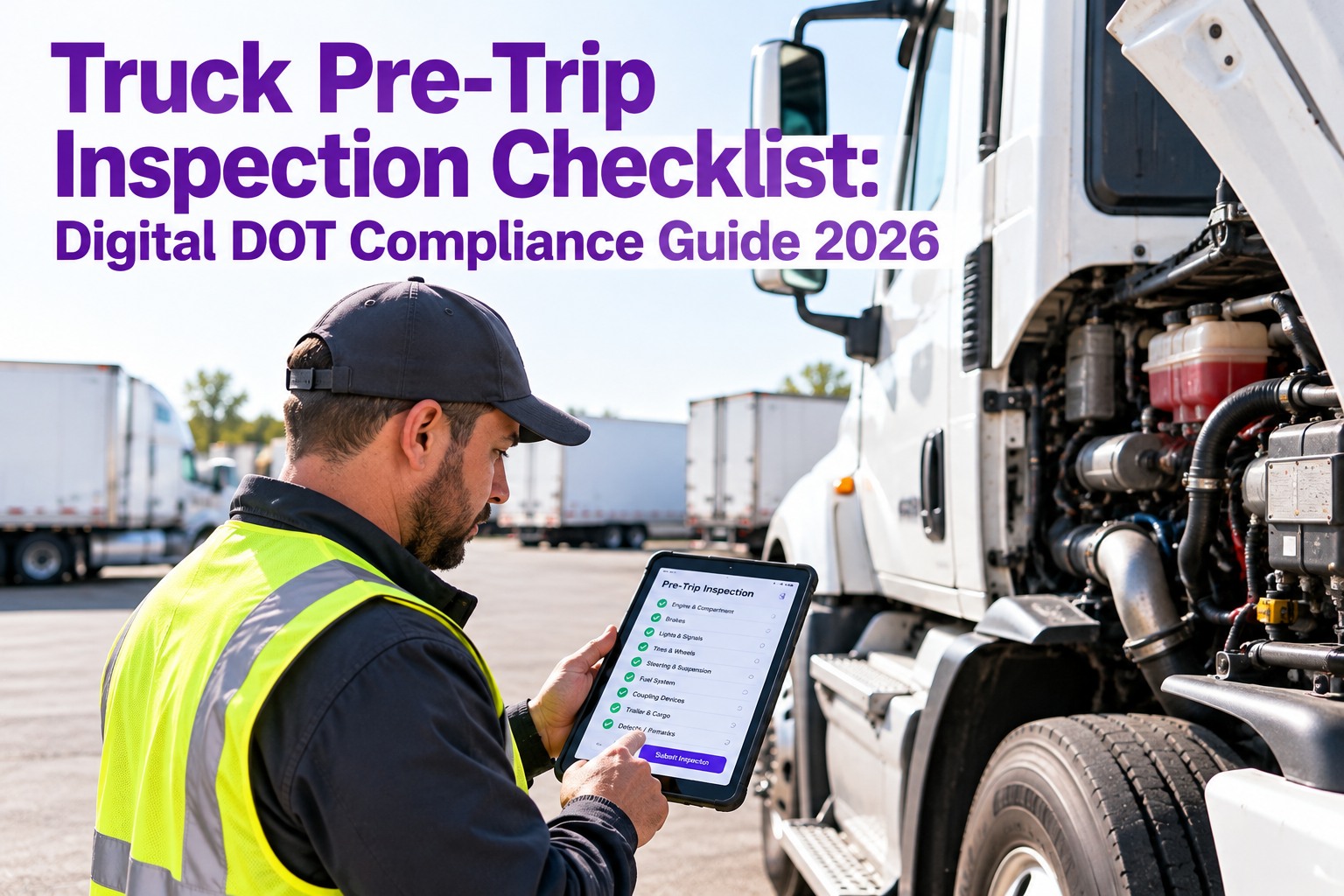
With Truck Inspection & Maintenance Management Software, a trainee runs the seven steps on a phone, flags a defect, and it becomes a work order and a dated record against that truck. Trainers see who inspected what, and new hires learn the real workflow from day one — not a paper form they will abandon.
Phase 3 — The 30-60-90 Day Path to Solo
Competence is not a one-day sign-off. Pair it with the 30-60-90 structure so a driver goes solo only when the habit is genuinely there.
Day 30Supervised & corrected
- Walkaround run with a trainer present, every shift
- Driver Qualification File complete — MVR, medical card, Clearinghouse query
- First review: equipment concerns, early feedback, no solo yet
Day 60Operating independently
- Inspections run solo; trainer spot-checks the records, not the driver
- Defects logged and closed without prompting
- Second review: safety record and inspection consistency
Day 90Solo-ready & retained
- Formal review: clean, consistent pre-trip history on record
- Retention conversation — the moment turnover is won or lost
- Ongoing cadence set: annual MVR, DQF renewals, refreshers
Clearing 90 days without an incident is the number everyone watches — and a documented inspection history is the clearest proof a driver is ready. Book a demo to map the 30-60-90 path to your fleet.
How Truck Inspection & Maintenance Management Software Runs New-Driver Training
A clipboard can't show whether a trainee's walkaround is improving. Software can — every inspection becomes data you coach from.
Guided digital walkaroundThe seven steps run in order on a phone, so a new driver is coached by the app and never skips a section.
Photo-logged defectsA trainee snaps the worn component; it attaches to the inspection and becomes a work order automatically.
Prior-report review built inYesterday's findings surface before today's drive, making the § 396.13 habit unavoidable.
Per-driver inspection historySee which new hires are thorough and which need another ride-along — by the record, not a hunch.
Driver Qualification File in one placeMedical card, MVR, training sign-offs stored against the driver for audit day.
Audit-ready from day oneEvery practice run is dated and retained, so a new driver's record is complete long before an inspector asks.
The result: a new driver who inspects the way your fleet expects, backed by a record that protects you both. Start free and onboard your next driver on one system.
Frequently Asked Questions
1How long does it take to train a new CDL driver on pre-trip inspections?
Plan for the full 30-60-90 window, not one session. A driver can recite the seven steps in days, but running them at shift speed without skipping the undercarriage or air brake test takes weeks of supervised repetition — trainer present through day 30, solo around day 60, confirmed at 90.
Book a demo to see a 30-60-90 onboarding path in the software.
2What are the seven steps of a CDL pre-trip inspection?
Vehicle overview, engine compartment, in-cab with engine start, lights, the full walkaround, the signal and brake-light check, and the air brake test. The order varies slightly by state, but one fixed sequence stops a new driver forgetting a section. The air brake test is where most candidates fail — drill it until automatic.
Book a demo to run the seven steps as a guided check.
3Does ELDT replace company pre-trip training?
No. ELDT (required under Part 380 before the skills test) teaches theory and behind-the-wheel basics through a registered provider — but not your fleet, your trucks, or your daily DOT routine. With no federal minimum theory hours, quality varies by school. Treat ELDT as the floor and build your program on top.
Book a demo to layer your onboarding over ELDT.
4Why does pre-trip training affect driver retention?
Because the first 90 days are when roughly a third of new drivers leave, and an unprepared hire is one who quits. Being shown, watched, and corrected builds the confidence that keeps a driver in the seat — and formal onboarding is tied to cutting first-90-day turnover by half or more. It protects your safety score and your roster at once.
Book a demo to tie inspections to retention.
Ready on day one · Compliant by day 90 · Retained for the long haul
Onboard Your Next Driver on One Record
Truck Inspection & Maintenance Management Software turns every training walkaround into a dated, audit-ready record — so new drivers learn the real workflow, trainers coach from data, and your fleet keeps the people it worked so hard to hire.
No credit card required. Free for up to 3 trucks. Built for FMCSA-compliant fleets.