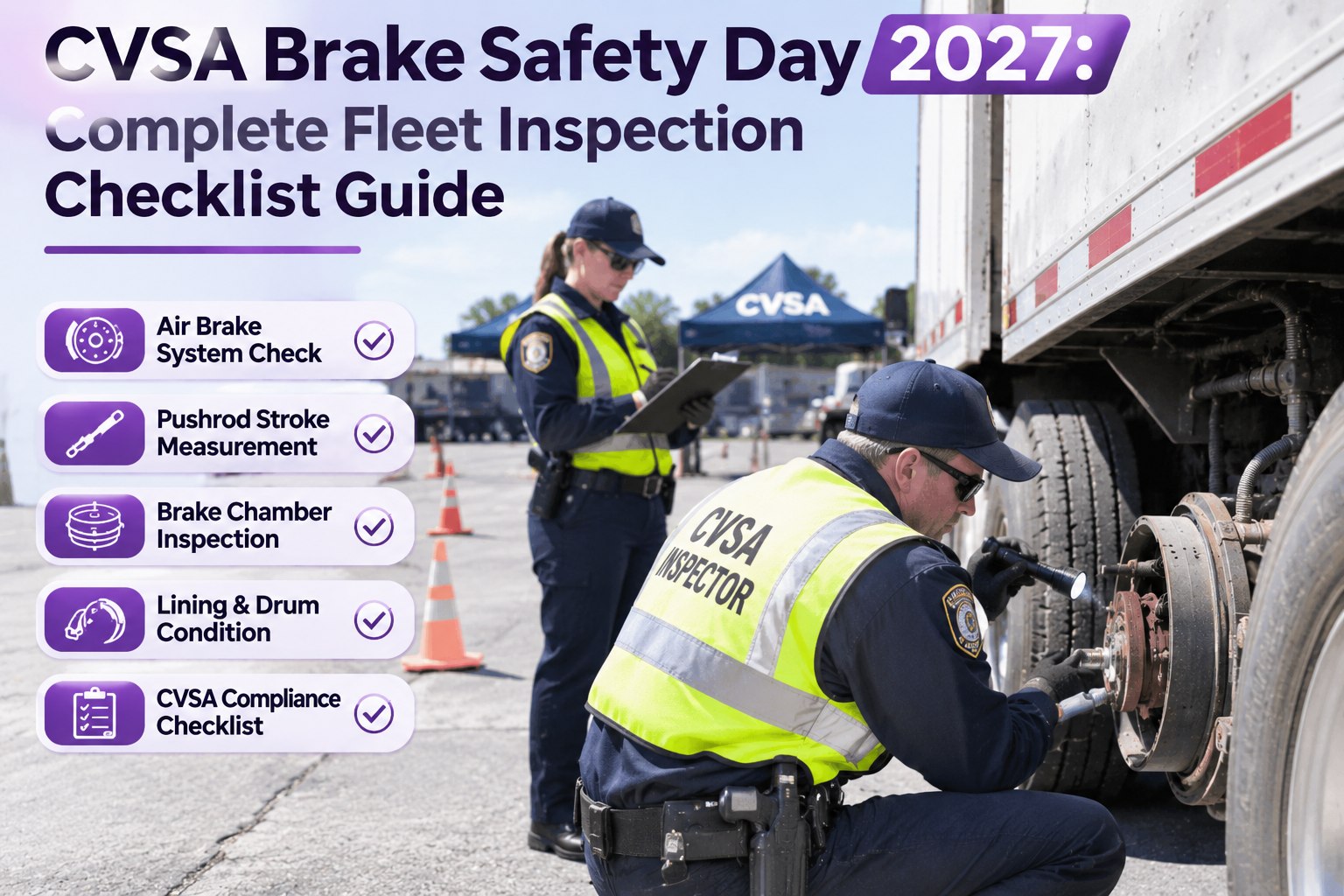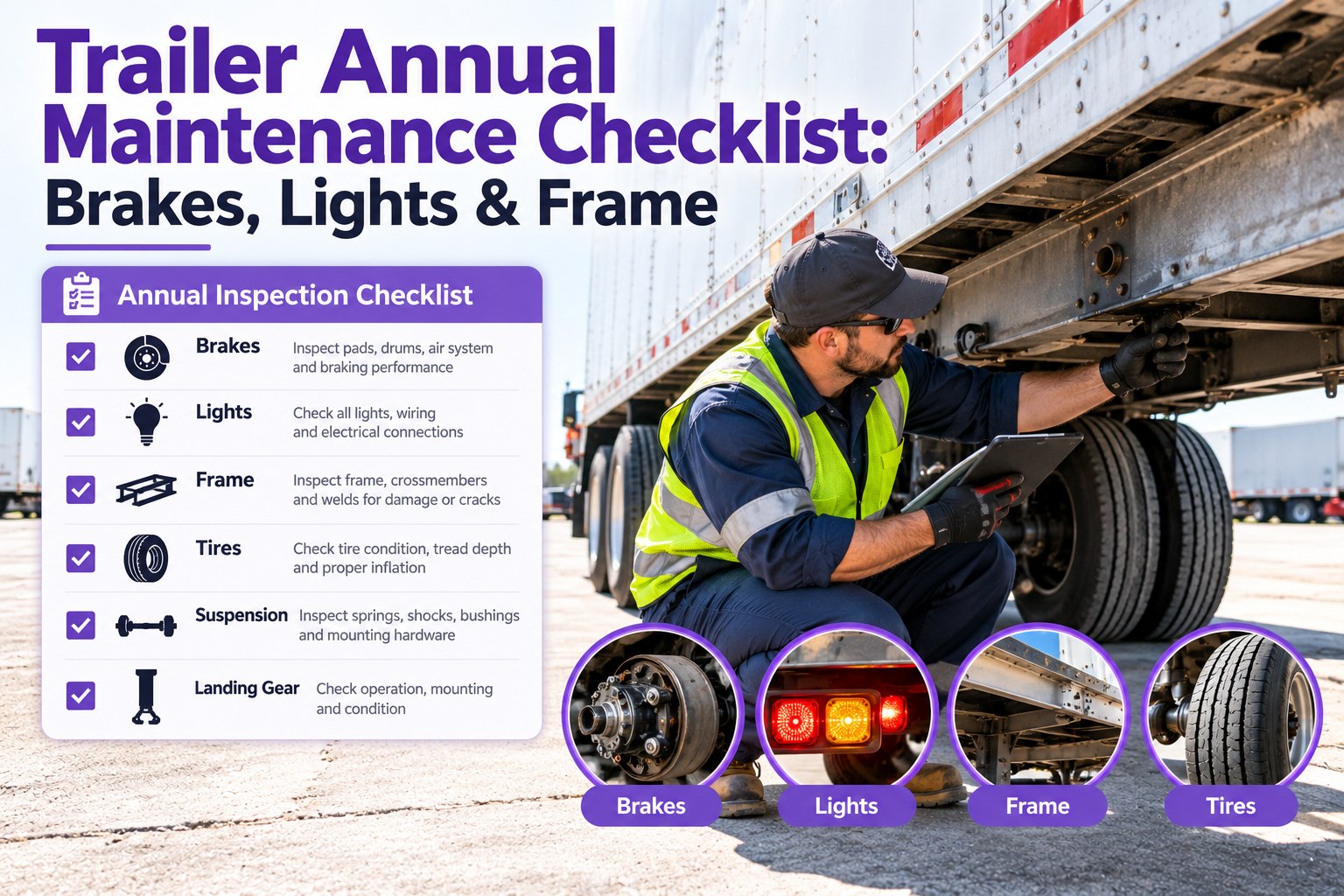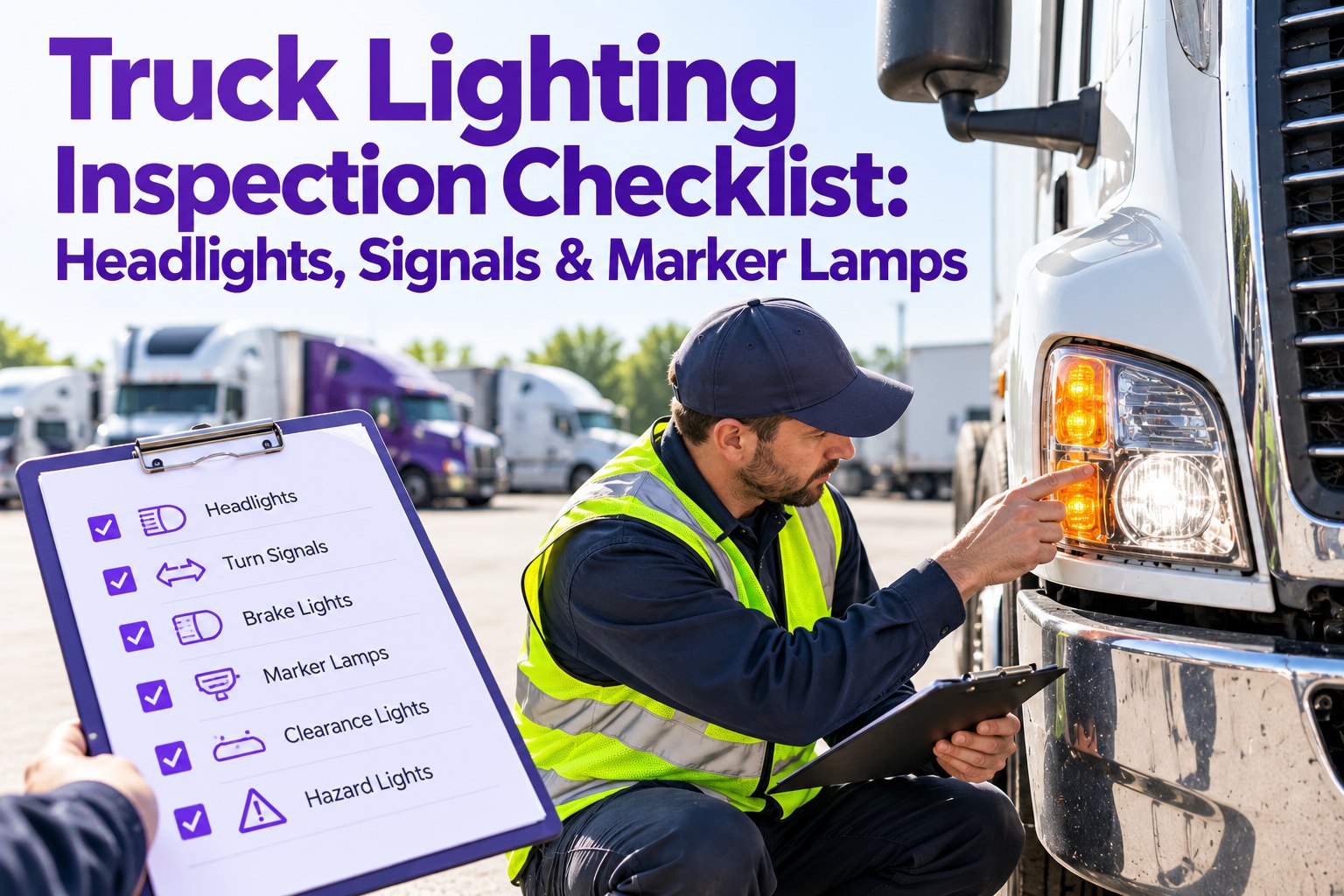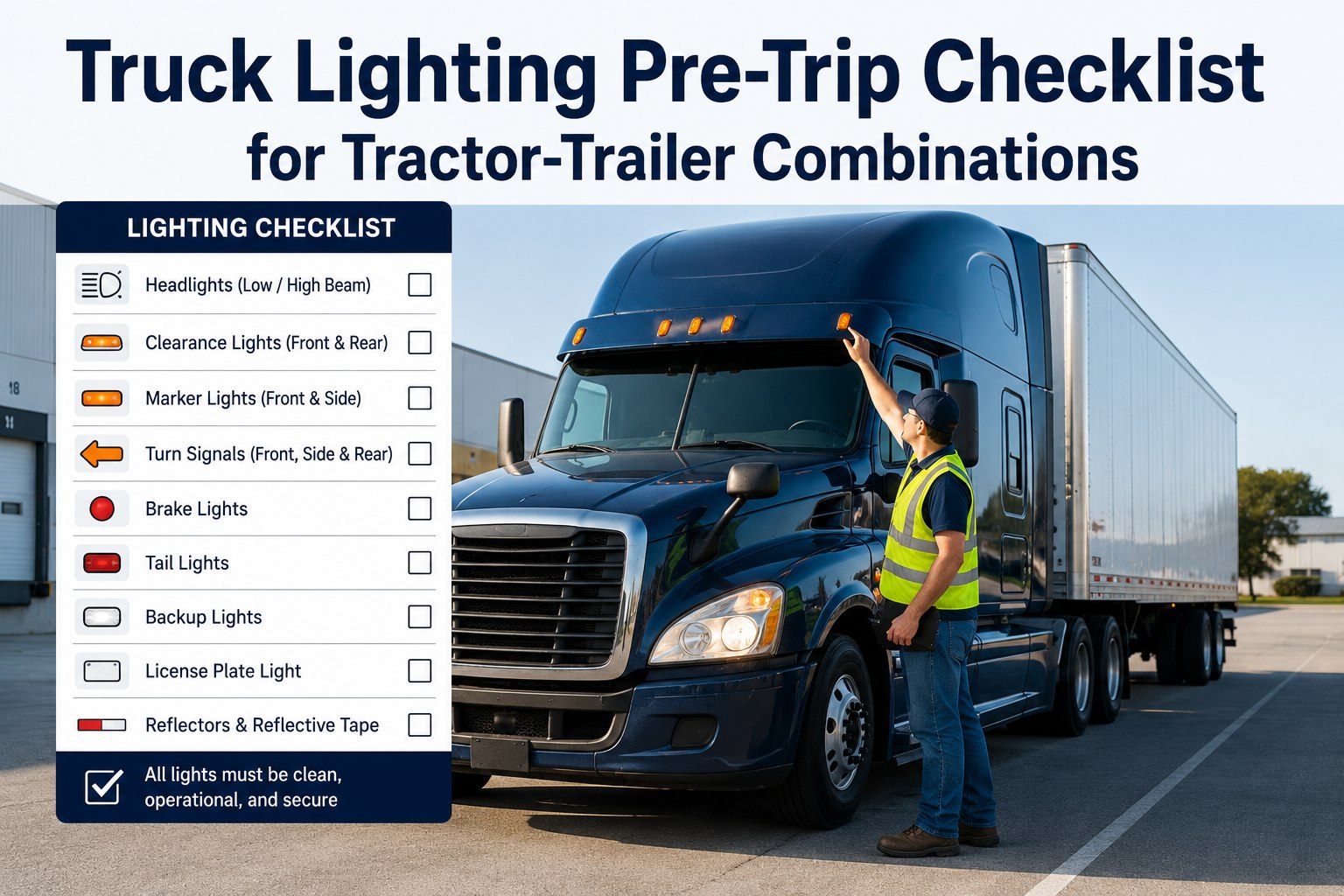
Lighting is one of the fastest ways a truck lands out of service — and one of the easiest to fix before it ever gets there. A single dead brake lamp, a wrong-colored tail light, or a strip of missing reflective tape is an instant roadside citation. The rules behind each one are oddly specific about color, count and position, but learn the pattern and the whole check takes under a minute. Below is the full FMCSA lighting walkaround under 49 CFR 393, grouped the way you actually inspect a truck — front, sides, rear. Start free and put this checklist on every driver's phone.
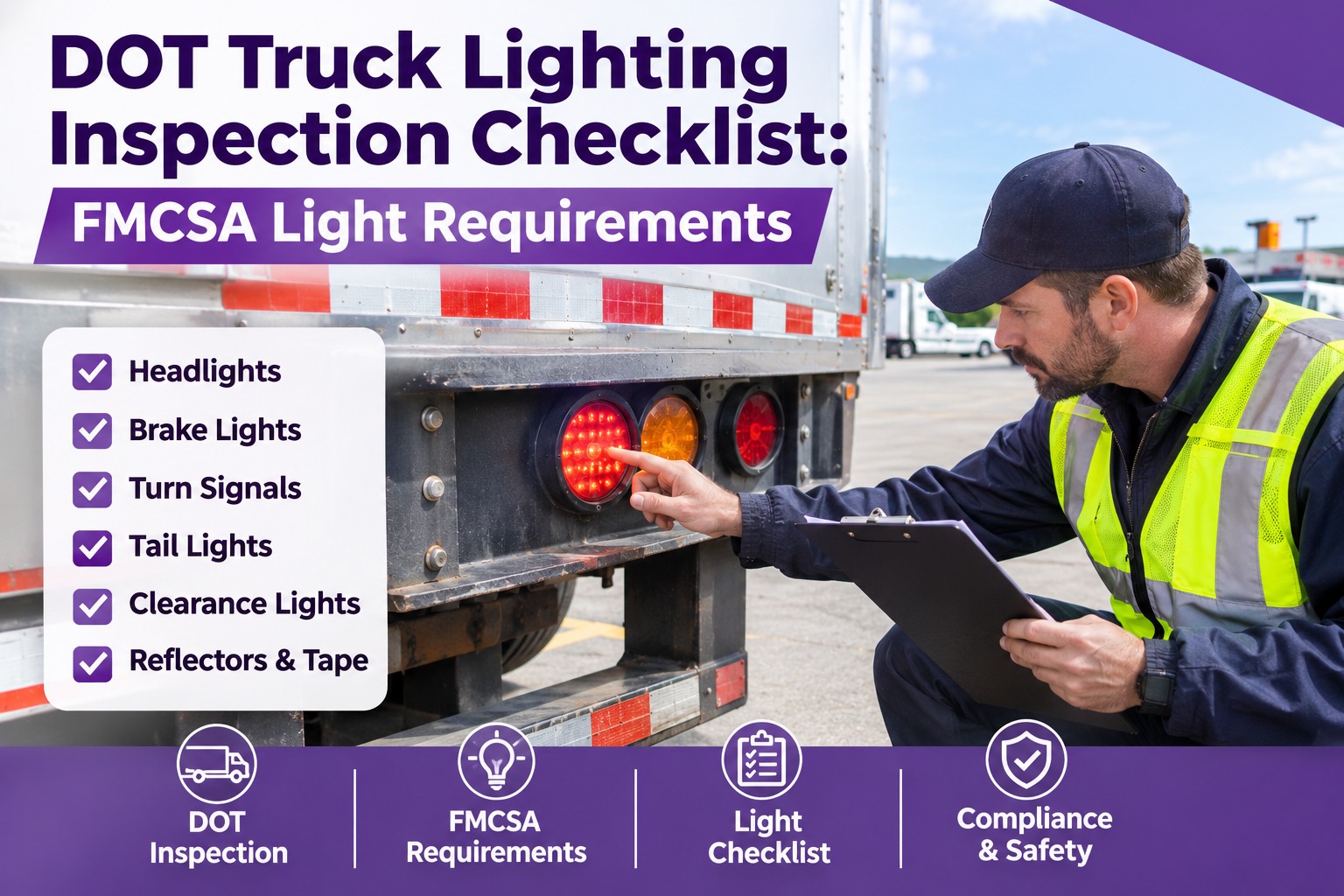
DOT Truck Lighting Inspection Checklist: FMCSA Light Requirements
Color by Direction: The Rule Behind Every Item
Before running the checklist, learn the logic — FMCSA assigns lamp color by the direction a light faces. Get this and you can spot a wrong-colored lamp from across the yard.
The Lighting Inspection Checklist
Walk the truck the same way every pre-trip — front, both sides, rear, then the connection. Tap each item as you clear it; anything that fails becomes a defect, not a memory.
This one catches fleets running aftermarket light bars. Under 49 CFR 393.11(c), a commercial vehicle may not be equipped with an amber stop lamp or amber tail lamp — rearward stop and tail light must be red. A combined assembly that shows amber where it should show red is a violation waiting for an inspection, even if every bulb works.
Conspicuity: The Red-and-White Rule Explained
Section 04 above checks it; here's why it's there. 49 CFR 393.13 requires retroreflective material so other drivers see a trailer's shape at night. It applies to trailers 80 inches or wider and over 10,000 lbs GVWR built on or after December 1, 1993, with older trailers retrofitted.
The Violations That Actually Trip Fleets
A Dead Lamp Logged at 6 AM Beats One Found at the Scale
The difference is whether the check reached the shop. Put the lamp map on a digital DVIR, flag a dead or wrong-colored light with a photo, and it becomes a work order in the yard instead of a citation and a CSA hit on the road.
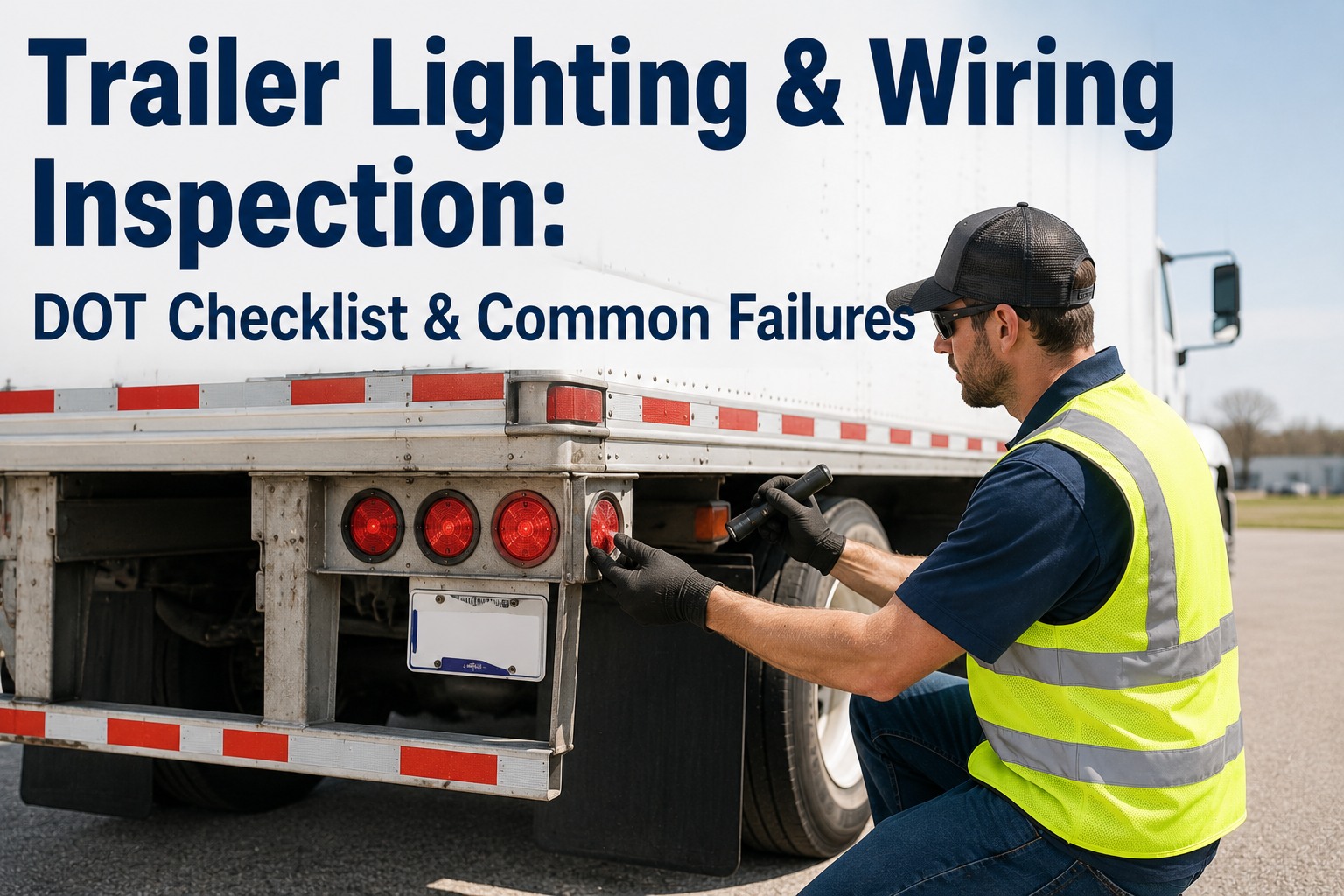
Why Trailer Lights Fail First
If one end of the rig goes dark, it's almost always the trailer. The seven-pin cord takes constant flex, road salt and vibration, so corroded pins and chafed grounds are the usual culprits long before a bulb itself burns out. A green film on the plug or a lamp that flickers over bumps points at the connection, not the light. Sealed LED lamps and a clean, greased connector cut most of it — but the trailer end still earns the closest look on every pre-trip. Start free and track trailer lighting defects by unit.
Why Fleets Run the Lighting Check in Software
Frequently Asked Questions
Red. Under 49 CFR 393.11, rear stop and tail lamps must be red, and 393.11(c) specifically prohibits amber stop and tail lamps — so an aftermarket assembly showing amber at the rear is a violation even if it works. Amber belongs on the front and sides. Book a demo to flag wrong-color lamps automatically.
Three facing forward in amber and three facing rearward in red on vehicles 80 inches or wider, mounted on the centerline and spaced 6 to 12 inches apart. A cluster of two, or uneven spacing, is a common citation. Book a demo to put the full lamp map on your DVIR.
Trailers 80 inches or wider over 10,000 lbs GVWR need certified red-and-white retroreflective material at least 2 inches wide: covering at least half of each side, a full strip across the lower rear, and inverted-L marks at the upper rear corners. Faded or missing tape is a violation. Book a demo to track conspicuity by unit.
Yes. An inoperative required lamp or missing required conspicuity material can place a truck out of service at the roadside until it's repaired and re-inspected, and the citation carries a CSA severity weight on the carrier's record. A one-minute pre-trip check prevents nearly all of it. Book a demo to see lighting compliance tracking.
Never Roll on a Dead Lamp Again
Truck Inspection & Maintenance Management Software puts the full FMCSA lamp map on every pre-trip, flags a dark or wrong-colored light with a photo, and turns it into a scheduled repair before it's a roadside citation.