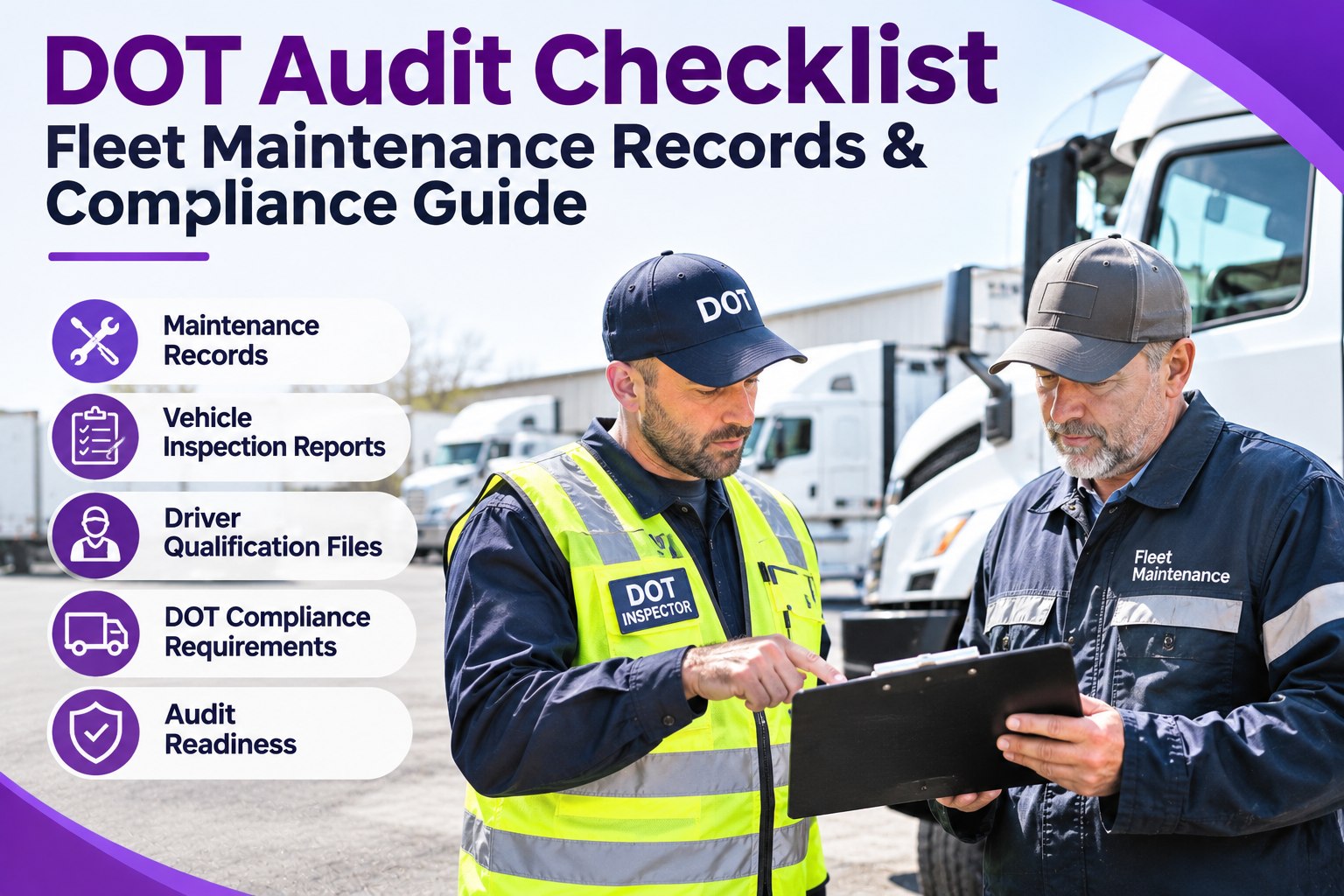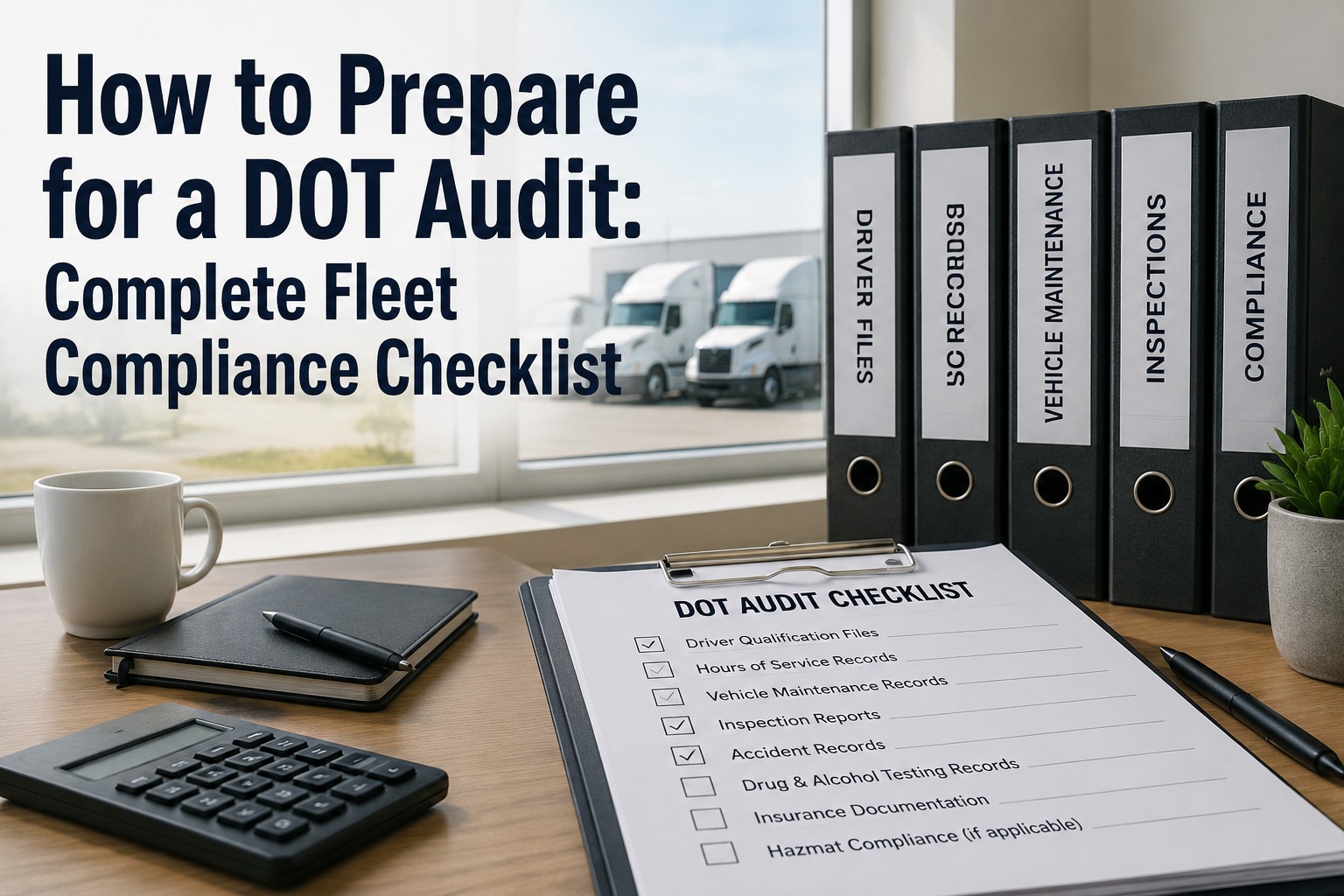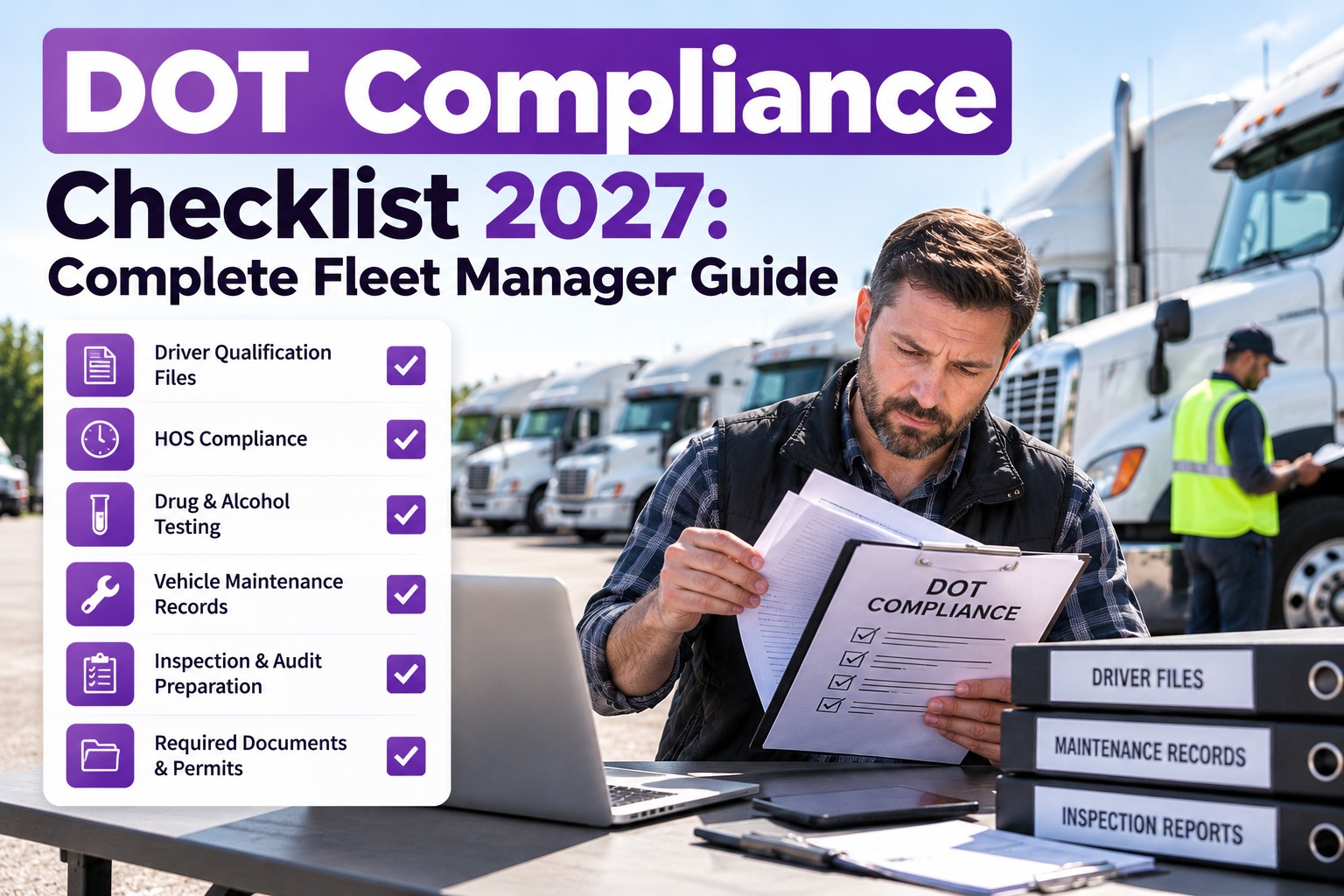
A DOT audit isn't really about whether your fleet is safe — it's about whether you can prove it on demand, often inside 48 hours. The whole review falls into six record categories, and the fleets that keep those audit-ready every day pass in an afternoon while the rest scramble for a week. This guide breaks down all six, the retention clock on each, and a prep timeline that turns an audit notice into a routine instead of a crisis. Start free and keep every record audit-ready.

DQ Files · HOS · Testing · Records · Audit

DOT Compliance Checklist 2027: Complete Fleet Manager Guide

01Driver Qualification§391.51
02Hours of Service§395
03Drug & Alcohol§382
04Vehicle Maintenance§396
05Accident Register§390.15
06Audit Prep & ResponsePart 385

Know Which Audit You're Facing

Not every review is the same, and the notice you get depends on the type. A compliance review is the one that carries a rating — and that rating follows your fleet into insurance quotes and broker vetting.

New Entrant Audit

Within your first 12 months. Foundational safety areas, pass or fail, usually 30+ days' notice.

Compliance Review

Full scope. Rated Satisfactory, Conditional or Unsatisfactory — 3 to 10 business days' notice on-site.

Focused Investigation

A single problem area, usually tied to one elevated CSA score. Ends in a corrective plan.

Off-Site Review

Records only — and the tightest clock, with as little as 48 hours to produce them.

The One RuleYou can't build a record after the notice arrives

Every category below has a retention clock that runs whether or not an audit is coming. A DQ file assembled the week the auditor calls, or a DVIR backfilled off memory, is the finding — not the fix. Audit-readiness is a daily habit, not a fire drill. The fleets that pass simply produce what they already keep.

What a Compliance Review Rates You

A compliance review ends in one of three ratings, and the middle one is the one that quietly costs money long after the auditor leaves.

SatisfactoryNormal operating status — records held up.
ConditionalKeep operating, but a corrective plan is required — and it affects insurance and broker vetting.
UnsatisfactoryDeemed unfit to operate.

The Six Record Categories — and How Long to Keep Each

This is the heart of it. Each category has its own retention window, and an auditor can ask for any of them. Keep everything at least this long.

RecordKeep forBasis
Driver qualification fileActive + 3 years§391.51
Annual MVR & driver review3 years§391.25
ELD data & RODS6 months§395
Drug/alcohol — positives & refusals5 years§382
Drug/alcohol — negatives1 year§382
DVIRs3 months§396.11
Annual inspection report14 months§396.17
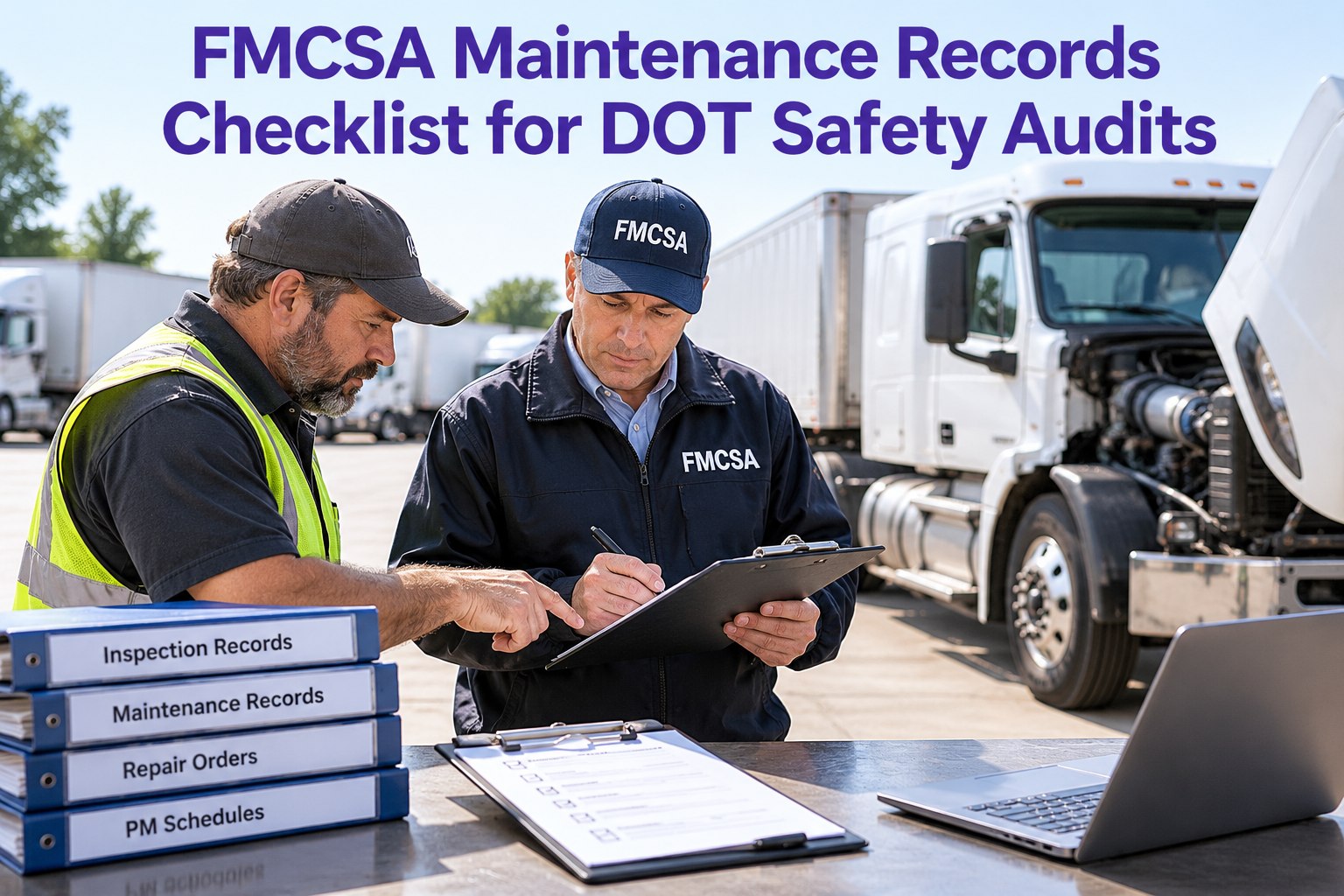
Maintenance & repair records18 months on-site§396.3
Accident register3-year rolling§390.15
These are minimums — many fleets keep DVIRs 12 months and more. The accident register must be producible immediately on request, not within the usual window.

Audit-Ready Is a Setting, Not a Scramble

Truck Inspection & Maintenance Management Software keeps the maintenance side of your audit always current — every DVIR, annual inspection, work order and repair signed, dated and searchable — so when the notice comes, that category is a two-minute export, not a weekend in the file room.

The Prep Timeline: Two Weeks to Audit Day

When a notice does land, there's a rhythm to getting ready. Work backward off audit day and nothing gets missed.

T-14Baseline gap checkSample DQ files, DVIRs, 12 months of maintenance and HOS; find the holes while there's time to fix them.
T-48hExport & formatPull and organize every record on the auditor's request list in the format they want.
Day 0One point of contactOne person fields the auditor, keep a running log, and document a corrective plan for any finding.

The DOT Compliance Checklist

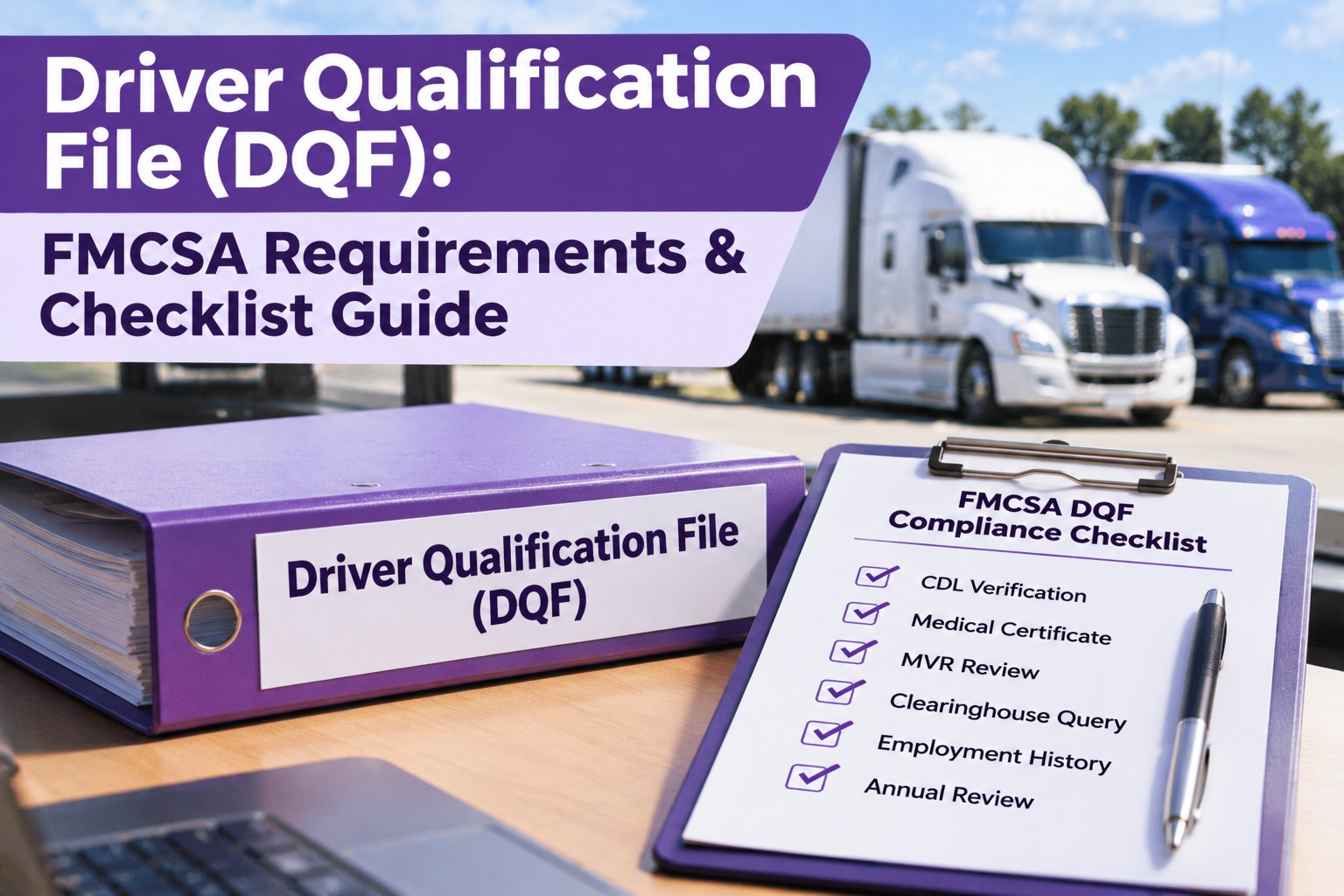
Work the six categories in order. Tick each item as you confirm it's current and retained — Truck Inspection & Maintenance Management Software keeps the maintenance records in this checklist signed and audit-ready on their own.

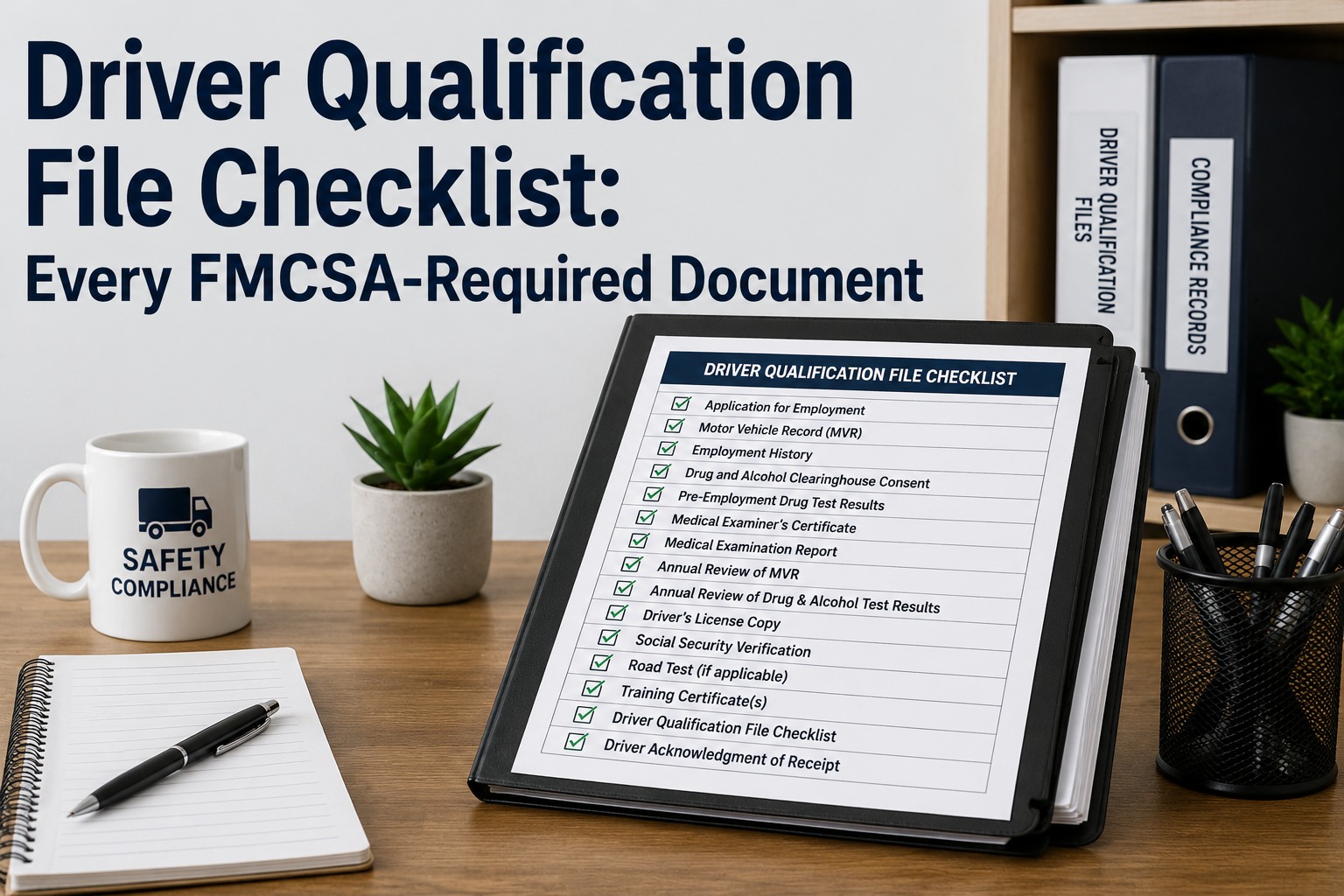
01Driver qualification files6
02Hours of service & ELD4
03Drug & alcohol program4
04Vehicle maintenance records5
05Accident register & audit response5

The Fleet That Keeps the Record Passes the Audit

Auditors don't grade how safe you feel — they grade what you can produce. Truck Inspection & Maintenance Management Software keeps the vehicle-maintenance category audit-ready every day, so the one part of the review you own completely is the part that's never a problem.

Why Fleet Managers Run Compliance in Software

Paper files age, scatter and disappear — and a missing document is a finding whether or not the work was done. A searchable, dated record is the difference between a satisfactory rating and a conditional one. Start free and make the maintenance category audit-proof.

▦Every DVIR on recordSigned, dated and retained past the minimum.
◷Retention trackedRecords held the right length, nothing purged early.
✎Annual inspections filedThe 14-month report on every unit, never missing.
⚑PM compliance visibleOverdue maintenance flagged before it's a finding.
⌕Export in minutesThe maintenance category pulled for the auditor fast.
◉One source of truthDefect, repair and inspection on one searchable record.

Frequently Asked Questions

01
How much notice do I get for a DOT audit?
It depends on the type. An off-site records review can give as little as 48 hours; an on-site compliance review runs 3 to 10 business days; a new entrant audit is usually scheduled 30+ days out. The accident register, though, must be producible immediately on request. Book a demo to keep records export-ready.
02
What's in a driver qualification file?
The employment application, previous-employer verification, a road test or equivalent, the MVR, the annual review and certification of violations, the current medical certificate and National Registry verification, among others — kept for every active driver plus three years after they leave. Book a demo to see the compliance workflow.
03
How long do I keep maintenance and DVIR records?
DVIRs for at least 3 months, the annual inspection report for 14 months, and maintenance and repair records for 18 months on-site. These are federal minimums — many fleets hold DVIRs a full year because a longer record is stronger evidence in a review. Book a demo to track retention automatically.
04
What does a conditional rating actually cost?
Beyond the required corrective-action plan, a conditional rating follows your fleet into insurance renewals and broker vetting, so the real cost shows up in premiums and lost loads long after the audit. Keeping records current is what keeps the rating satisfactory. Book a demo to protect your safety rating.
Six categories · Retained · Audit-ready

Turn the Next Audit Notice Into a Non-Event

Keep all six record categories current to their retention clock, run the prep timeline off a checklist, and let the software hold the maintenance side audit-ready — so a 48-hour notice is an export, not an emergency.
No credit card required. Free for up to 3 trucks. Built for FMCSA-compliant fleets.