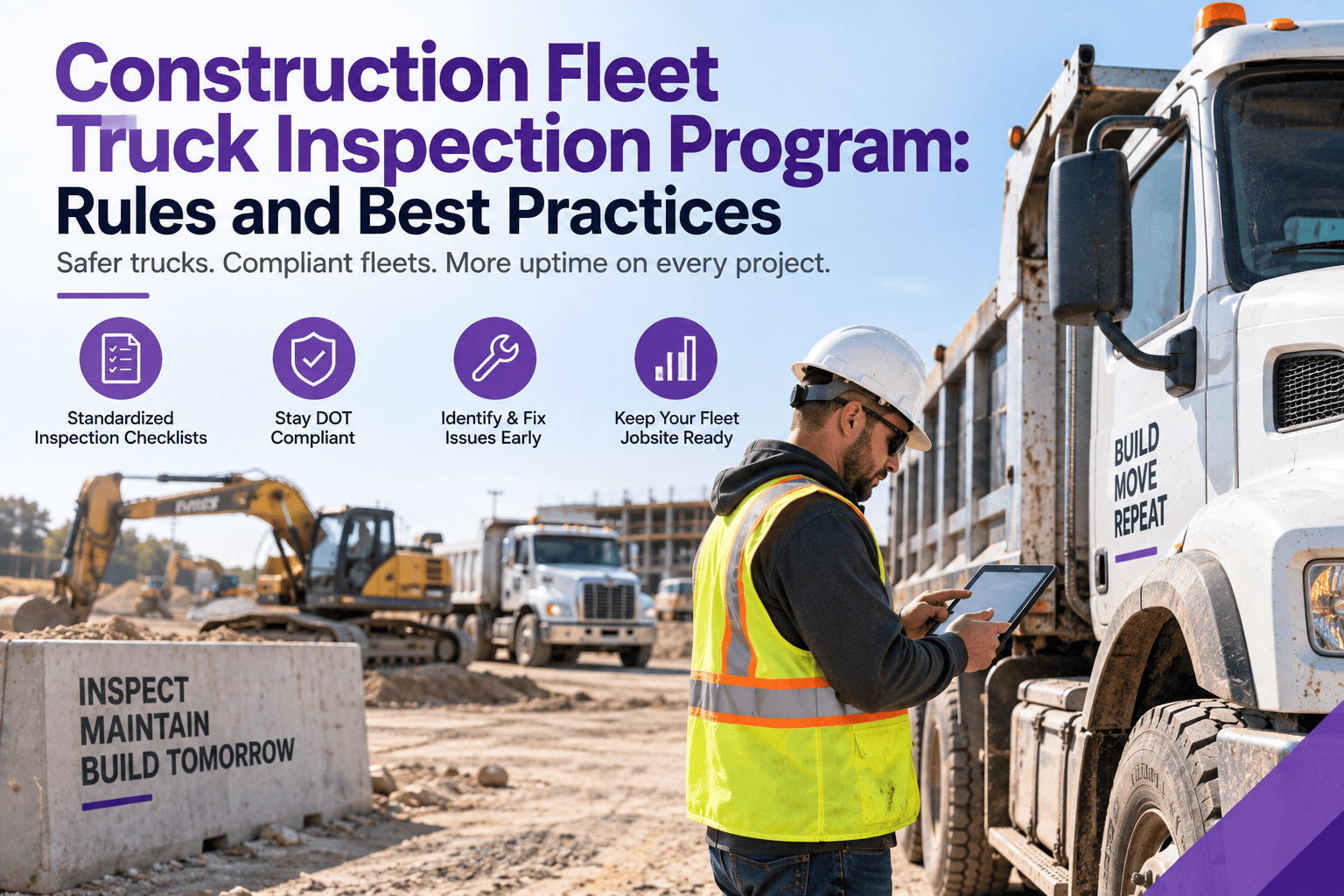
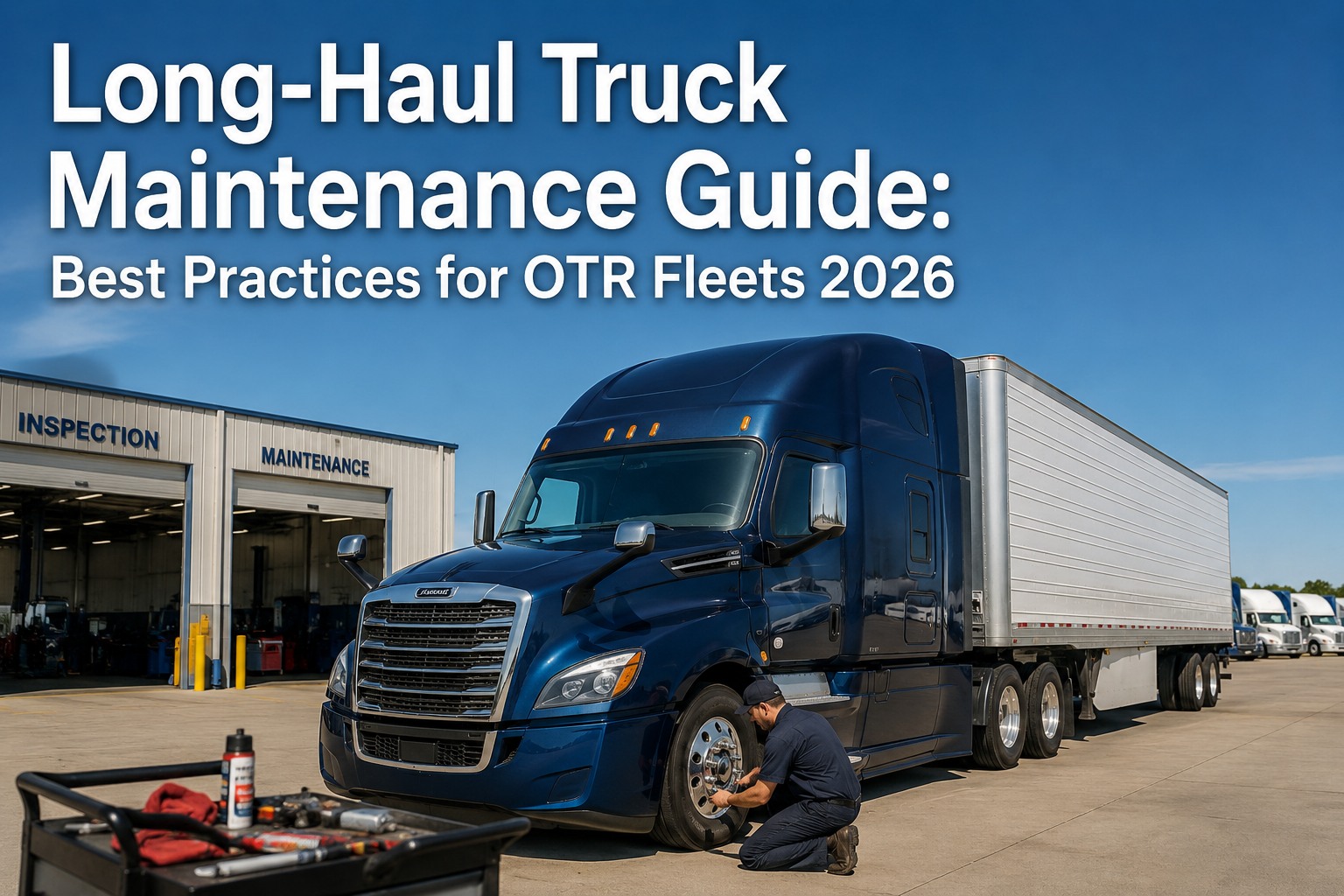
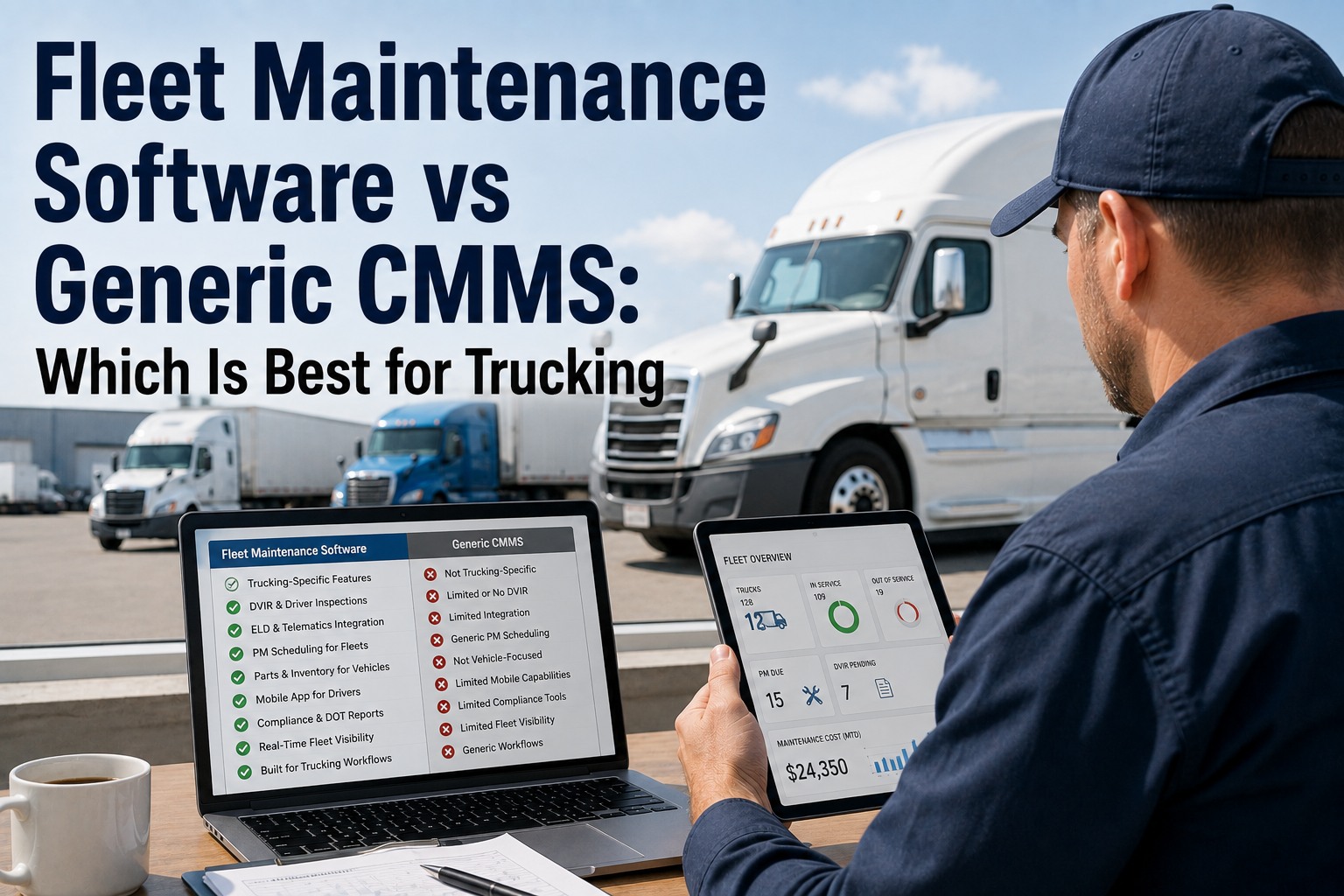
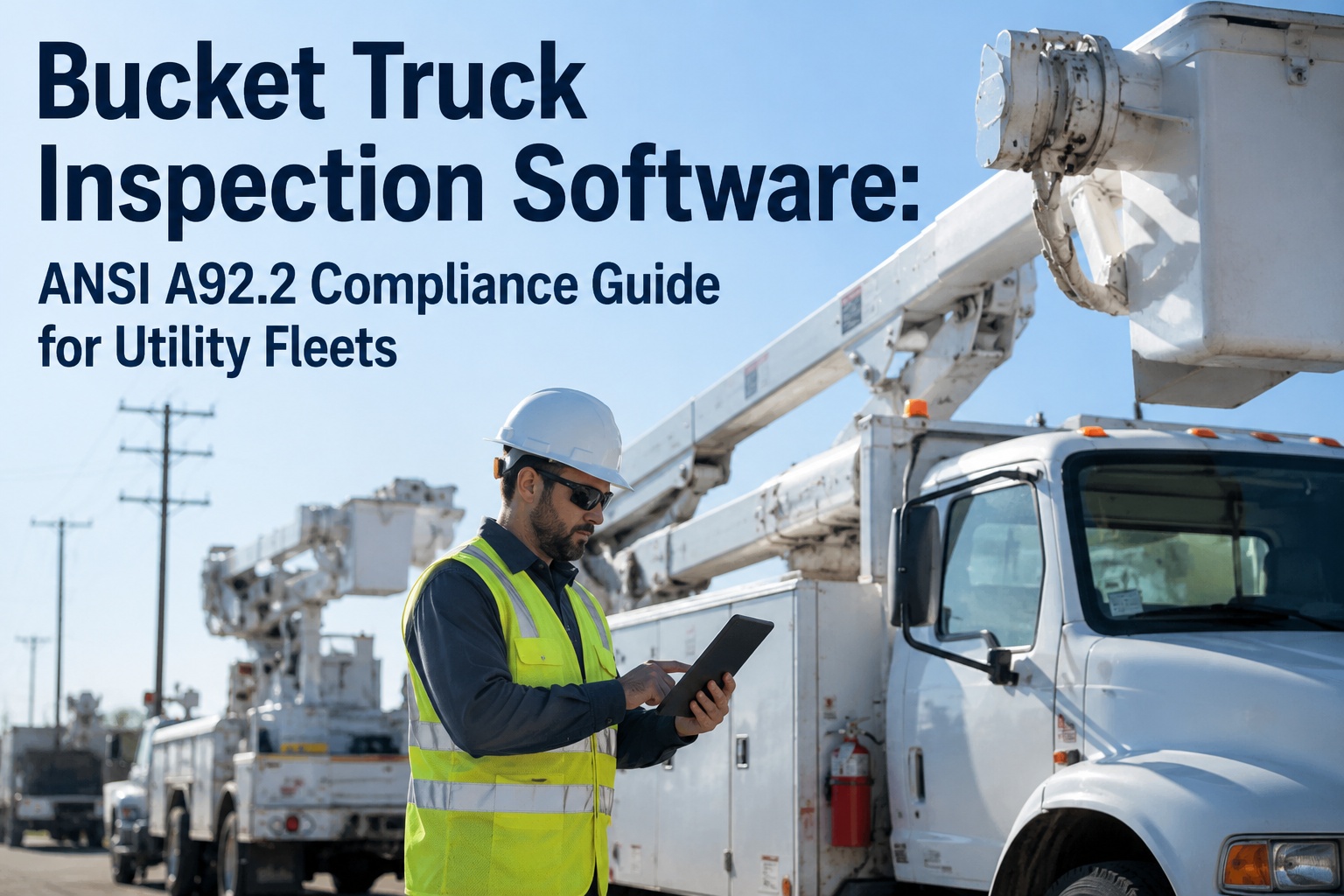
The most dangerous moment in a dump truck's day isn't on the highway — it's the thirty seconds the bed is in the air. A raised body turns a stable truck into a top-heavy one, and the ground it's parked on, the lines overhead, and the pins holding the tailgate all suddenly matter in ways they never do loaded flat. A dump truck inspection isn't just a heavier pre-trip; it's a check on the one system that can tip the truck or let a bed fall on someone. This checklist covers it — hoist, bed, tailgate, and chassis. Start free and put this dump-truck check on every unit.
Hoist · Bed · Tailgate · Chassis
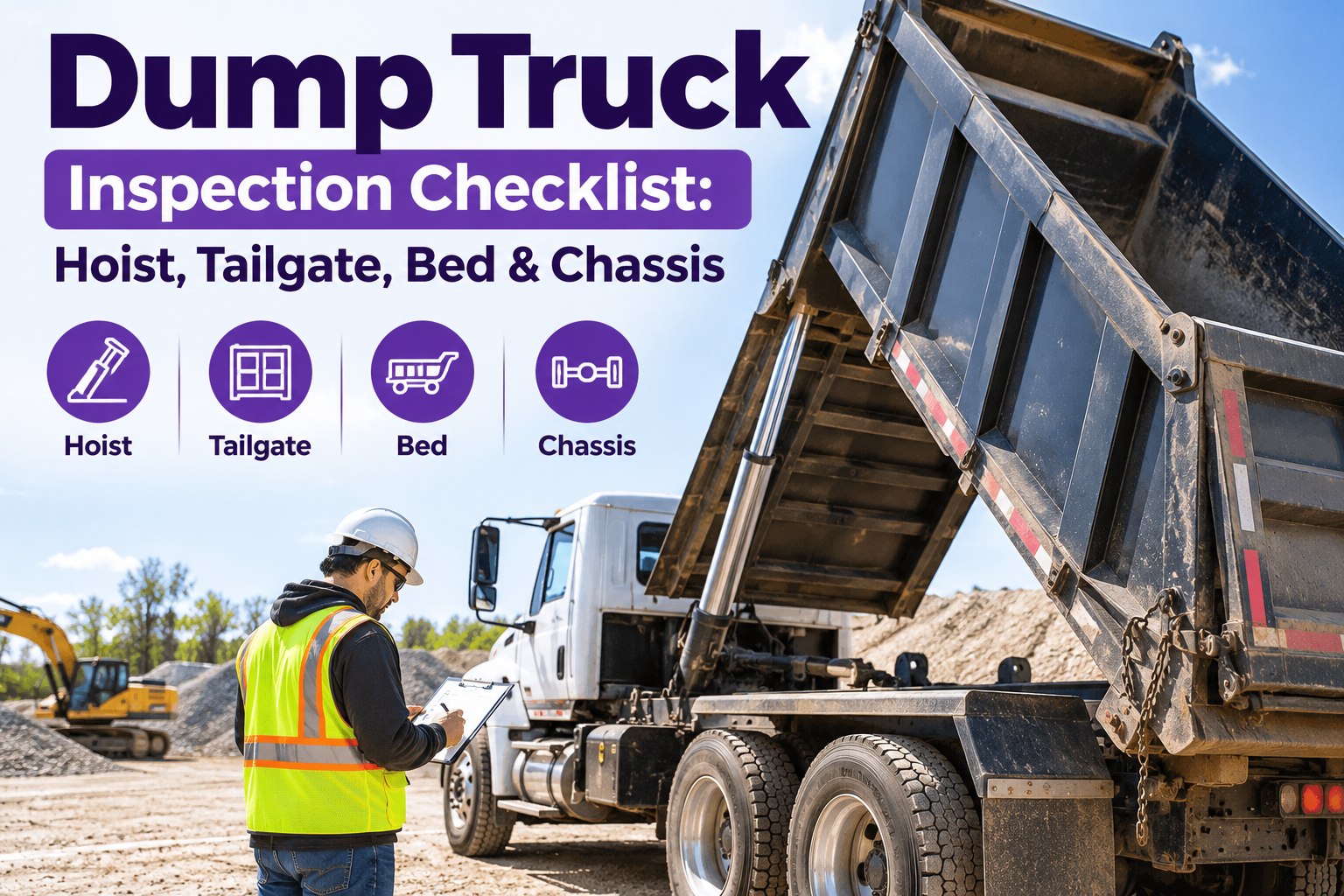
Dump Truck Inspection Checklist: Hoist, Tailgate, Bed & Chassis
A worn hoist, a soft patch of ground, or a tailgate pin nobody checked is how a dump truck tips or lets its body fall. Truck Inspection & Maintenance Management Software turns the dump-truck walk into a guided check of the hydraulics, bed, and chassis, flags any defect the moment it's logged, and routes it to a work order — so the hazards are caught in the yard, not discovered with the body in the air.
Raised bedthe job's highest-risk moment
Hydraulicsthe system a pre-trip must add
Loggeddefect to work order, no guesswork
The Three Hazards of a Raised Bed
Everything on a standard pre-trip still applies — but the dump body adds three failure modes that only exist with the bed in the air. Understand these and the rest of the checklist makes sense.
01
Rollover while dumping
A raised bed moves the center of gravity up and back. On uneven or soft ground, or with a load that sticks to one side, the truck can tip sideways in an instant.
02
A body falling on someone
Anyone working under a raised bed without the body prop engaged is one hydraulic leak or bumped lever away from being crushed — a recurring fatal event in this trade.
03
Contact with overhead lines
A fully raised body reaches far higher than the cab. Raise it under a power line and the whole truck becomes energized — check clearance before the lever moves.
The Dump Truck Inspection Checklist, Area by Area
Work it from the system that makes a dump truck a dump truck outward — hydraulics and bed first, then the chassis it all rides on. Tick each item you verify; anything you can't tick is a defect to fix before the next load.
Before You Raise the Bed — The Three-Point Check
The inspection keeps the truck sound; this keeps the dump safe. Run these three every single time before the lever moves — they take seconds and they're the difference between a dump and a rollover.
▭
Level & firm ground
Park on level, compacted ground before raising. A side slope or soft patch under one wheel is the classic tip-over — reposition rather than risk it.
↥
Overhead clearance
Look up before you lift. A raised body can reach power lines, bridges, and structures the cab clears easily — confirm nothing is above the full travel.
◰
Prop before going under
Never put a body part under a raised bed without the safety prop engaged. Hydraulics fail, levers get bumped — the prop is the only thing that doesn't.
The hazard is the raised bed, not the drive A dump truck can pass a roadside inspection and still be dangerous, because its defining risk lives in a moment most inspections never see — the body in the air on a job site. That's why the hydraulic and bed checks on this list matter as much as the brakes, and why the three-point lift rule belongs in every operator's muscle memory. Truck Inspection & Maintenance Management Software puts the hoist, prop, and bed checks on the same guided walk as the brakes and tires, so the dump-specific hazards get inspected with the same discipline as the road-legal ones.
Where Dump Trucks Fail First
Vocational duty is hard on specific parts. If inspection time is short, these are the ones that bite first.
Hoist & cylinder leaksWorn seals and scored rams that let the bed drift or sink — the signature dump failure.
Frame cracks at the hoist mountRepeated lifting stresses the frame where the hoist attaches — a crack that grows unseen.
Tailgate pins & latchesGrit and impact wear the pins until the gate hangs up or releases unevenly.
Suspension & tiresOverloading and off-road sites chew through springs, U-bolts, and tires fast.
Turn the Dump-Truck Walk Into a Logged, Hazard-Aware Check
Truck Inspection & Maintenance Management Software puts every item above on the operator's phone as a guided dump-truck inspection, builds the raised-bed hazard checks into the flow, and routes any hoist, bed, or chassis defect straight to a work order. It also keeps the hydraulic system and frame on each unit's preventive-maintenance schedule — so a weeping cylinder or a hairline frame crack is caught on a calendar, not when the bed won't come down.
Frequently Asked Questions
What makes a dump truck inspection different from a regular pre-trip?
Everything on a standard pre-trip still applies, but a dump truck adds a hydraulic hoist, a pivoting body, and a tailgate — the systems that let it dump, and the ones that can tip the truck or let a bed fall. A dump inspection checks the cylinder for leaks, the bed and sub-frame for cracks, the tailgate pins for wear, and the frame where the hoist mounts. It also builds in the raised-bed hazards — ground, clearance, and the body prop — that a highway pre-trip never has to consider.
Why do dump trucks roll over when dumping?
Raising the bed lifts the center of gravity high and to the rear, so the truck is far less stable than when loaded flat. Add uneven or soft ground, a side slope, or material that sticks to one side of the bed instead of flowing out, and the load shifts the balance past the tipping point. The fix is procedural: dump only on level, firm ground, lower the bed if the load hangs up rather than driving forward with it raised, and never dump on a slope.
Is a body prop really necessary for under-bed work?
Yes — it's the one thing that holds the bed up if everything else fails. Hydraulics can lose pressure, a hose can burst, a control can be bumped, and a raised body weighs enough to be fatal on contact. The safety prop or brace is a mechanical stop that doesn't depend on hydraulic pressure, so it's engaged any time a person goes under a raised bed, no exceptions. An inspection that confirms the prop is present and functional is confirming a life-safety device, not a convenience.
How often should a dump truck's hydraulic system be inspected?
The visible items — fluid level, hoses, cylinder leaks, bed drift — belong in the daily pre-trip, because they change fast under vocational duty. A deeper check of the pump, PTO, and cylinder condition belongs on the preventive-maintenance interval, tightened for trucks running heavy loads and rough sites. Hydraulics degrade gradually, so reading them on a schedule is what turns a weeping seal into a planned repair instead of a bed stuck in the air on a job.
Contact us to set dump-truck checks across your fleet.
Level · Clear · Propped · Inspected
Keep Every Dump Safe the Moment the Bed Goes Up
Truck Inspection & Maintenance Management Software runs this full dump-truck checklist as a guided inspection, builds the raised-bed hazard checks into the flow, routes any hoist, bed, or chassis defect to a work order, and keeps the hydraulics and frame on each unit's schedule. Fleets use it to make the riskiest thirty seconds of the job predictable — and to keep dumps earning instead of stuck mid-lift.
No credit card required. Free for up to 3 trucks. Built for FMCSA-compliant fleets.