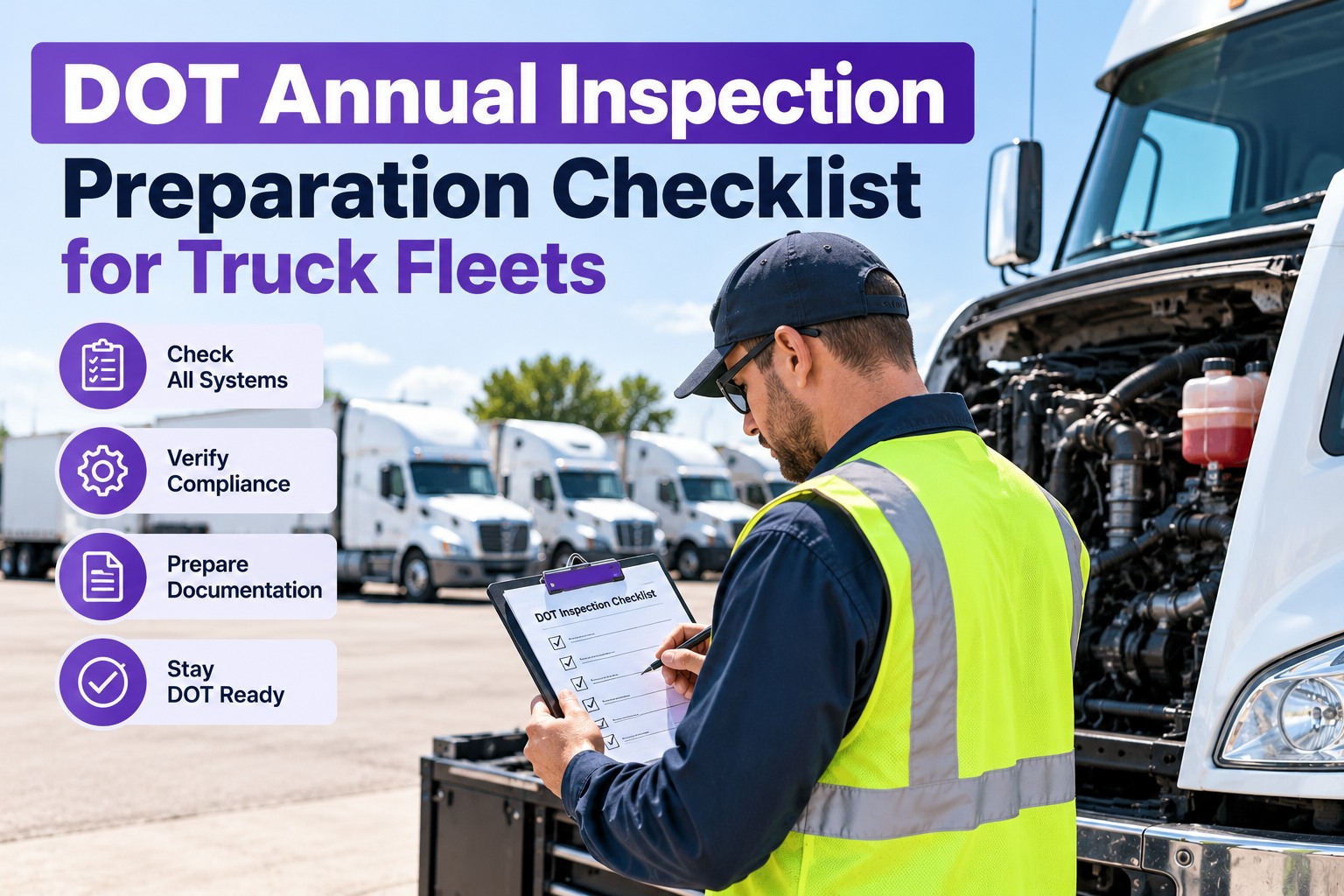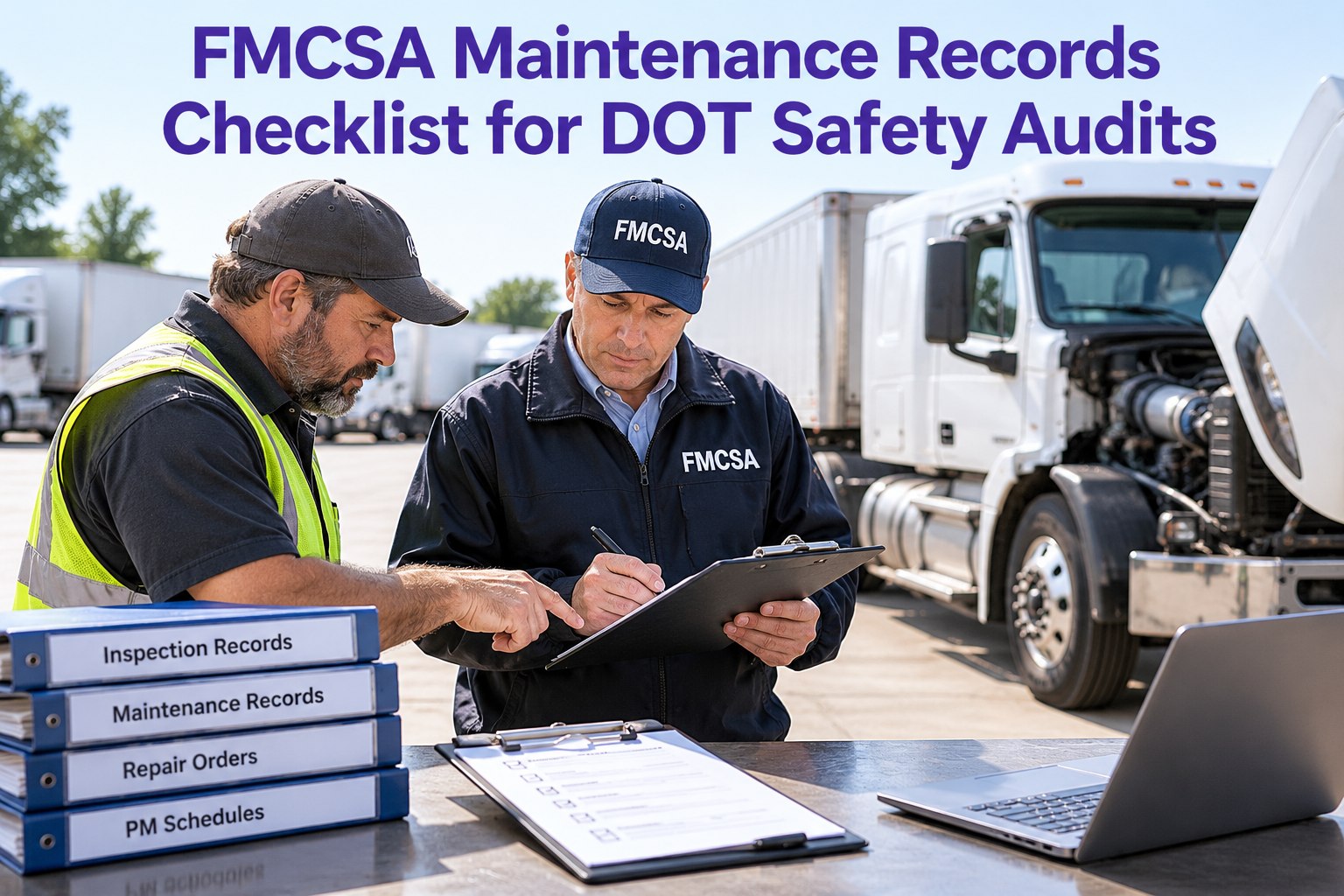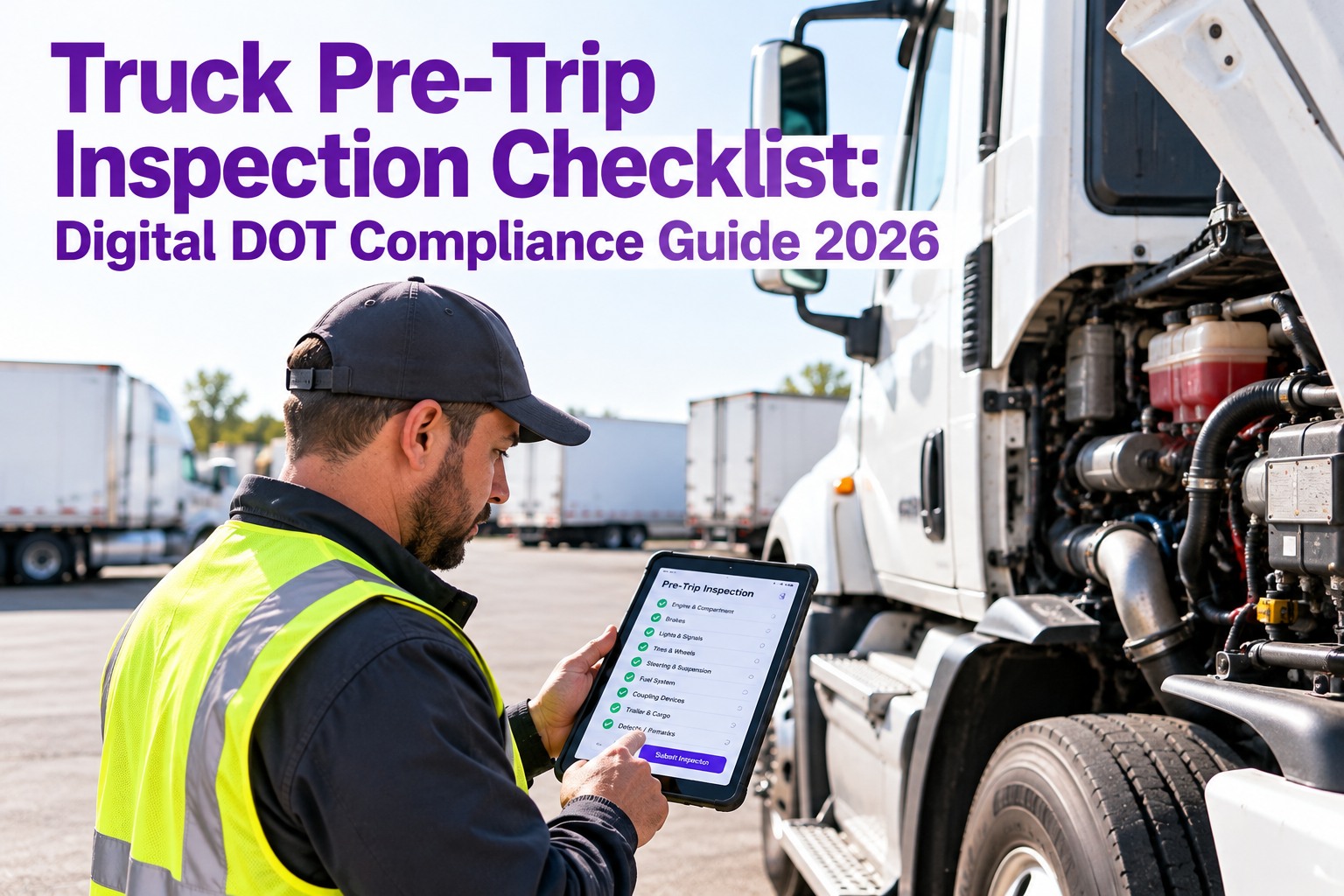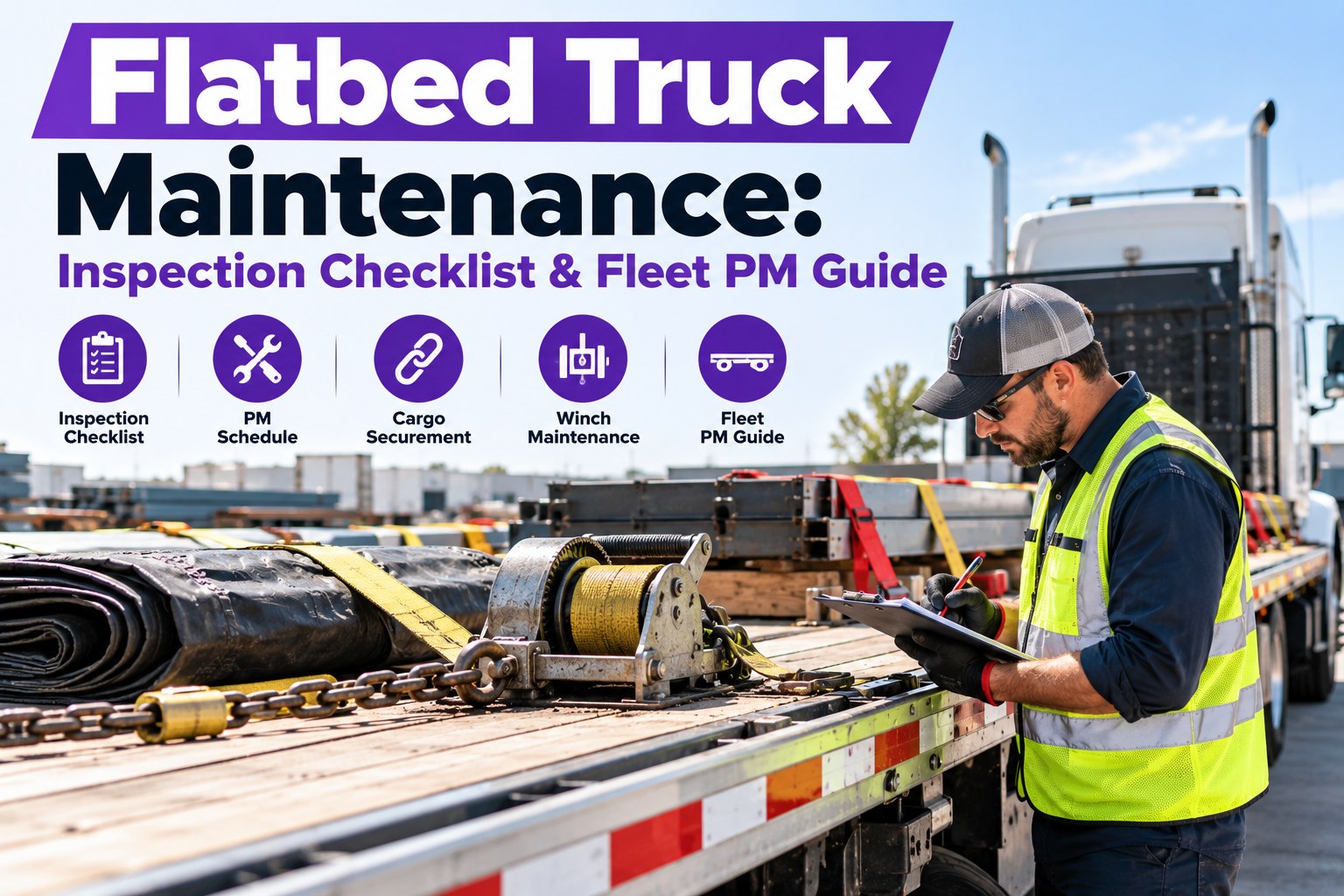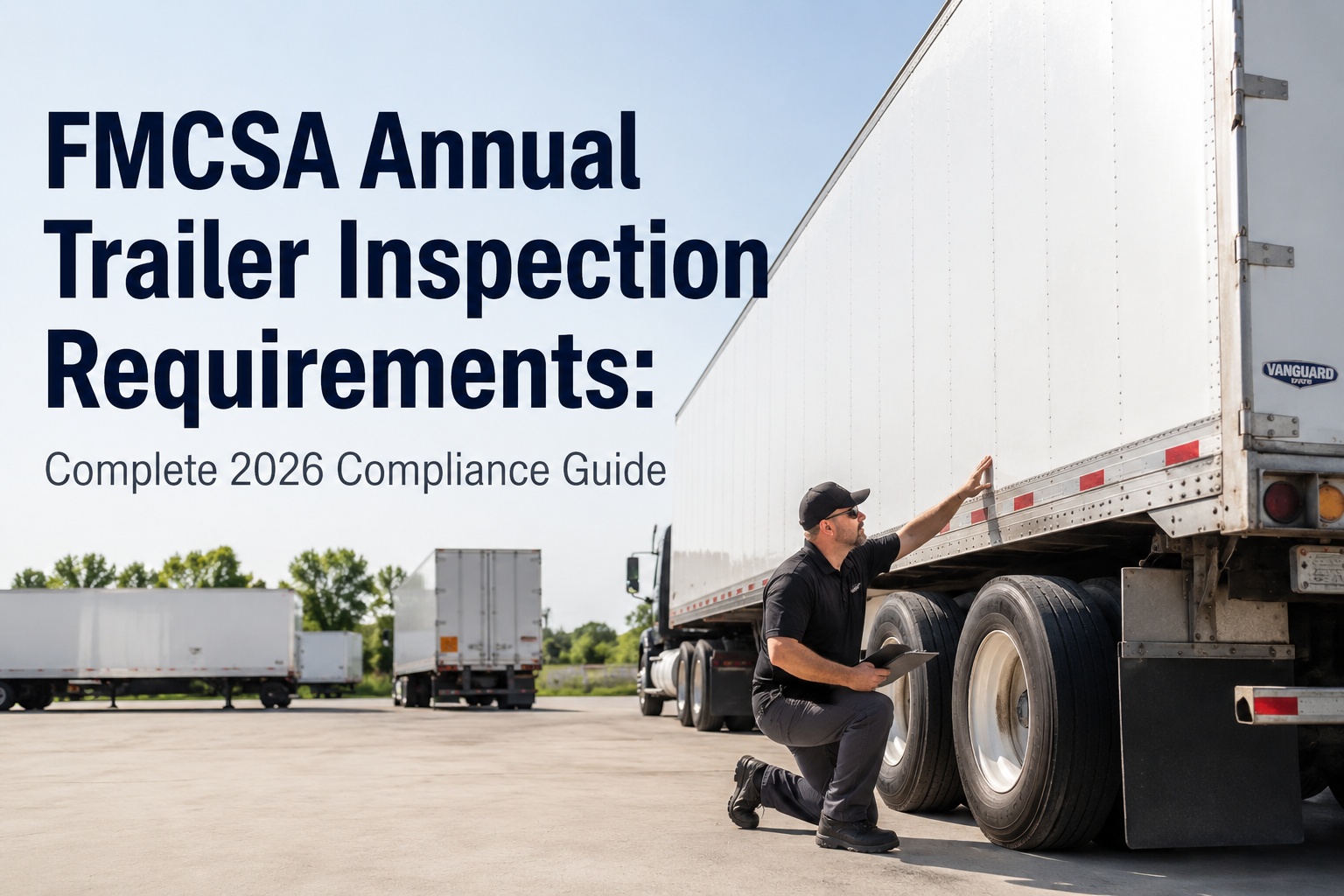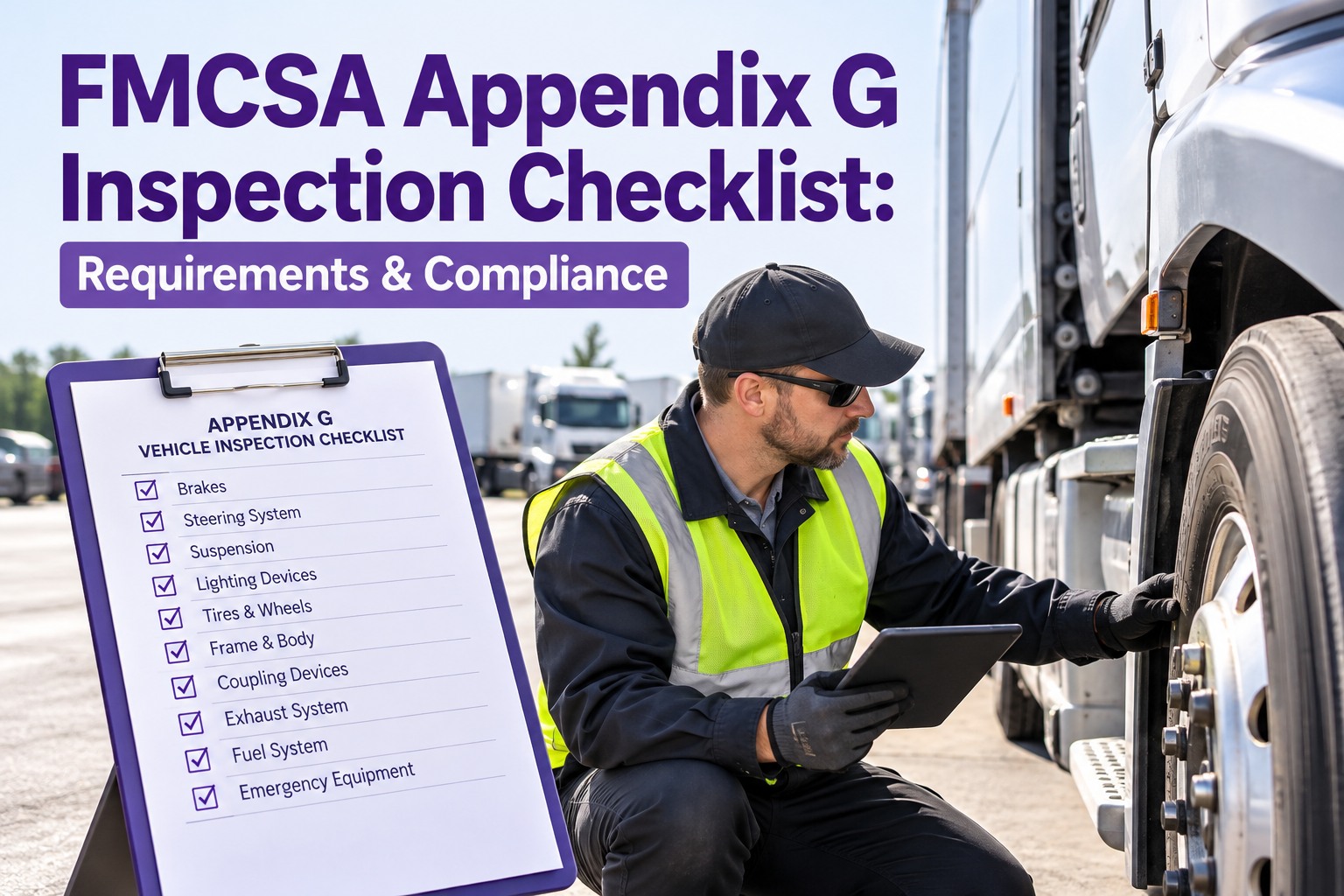
If an auditor asked for the last annual inspection on every truck and trailer in your fleet, how long would it take you to find them? Appendix G to the Federal Motor Carrier Safety Regulations is the list of minimum standards that a periodic (annual) inspection is measured against, and 49 CFR 396.17 requires each commercial motor vehicle to pass one at least every 12 months. The inspection itself is only half the job. You also need a qualified inspector, a report with the right details, and a record you can produce on request. This guide gives you a practical Appendix G checklist by system, the records you need to keep, and how Truck Inspection & Maintenance Management Software keeps due dates and reports in one place. Start free and track annual inspection due dates per vehicle.
FMCSA Appendix G Inspection Checklist: Requirements & Compliance
Annual inspections fail on paperwork as often as on equipment: a missed due date, a report in the wrong folder, a defect nobody turned into a repair. Truck Inspection & Maintenance Management Software keeps each vehicle's inspection history in one place, helps you track when the next one is due, and routes defects found into work orders.
Appendix G at a Glance
The Appendix G Checklist, by System
Appendix G sets minimum standards for the major safety systems below. This is a working summary, so always check the current regulation text and your inspector's form for the exact pass/fail criteria.
- Service and parking brakes
- Drums and rotors, linings
- Hoses, tubing, air lines
- Low-pressure warning, compressor
- Fifth wheels, mounting
- Pintle hooks and drawbars
- Safety devices and chains
- Leaks and loose or missing parts
- Location and condition
- Visible leaks
- Tanks, lines, caps, mountings
- Head, tail, stop, turn lamps
- Clearance and marker lamps
- Cargo securement devices
- Tiedown and securement hardware
- Steering wheel and column
- Linkage, gear box, joints
- Springs, hangers, U-bolts
- Air springs and components
- Cracks, loose or missing fasteners
- Cross members and brackets
- Tread depth, cuts, bulges
- Inflation and condition
- Cracks, damage
- Fasteners and lug nuts
- Glass damage, obstruction
- Wiper operation
Appendix G also includes motorcoach seats and rear impact guards where they apply.
Two Numbers Inspectors Check Closely: Tire Tread
One Record Per Vehicle, Ready When Asked
Keep each truck and trailer's inspection history together with its PM and repair records. See upcoming due dates per vehicle, store inspection reports against the unit, and send defects found into work orders so they're fixed and documented. Free for up to 3 trucks.
What Your Inspection Report Needs
Under §396.21, the inspector's report has to identify the inspection, not just say "passed." Make sure yours includes:
From Inspection to Audit-Ready, in 4 Steps
Frequently Asked Questions
Make Every Annual Inspection Easy to Prove
Due dates per vehicle, inspection records in one place, and defects routed into work orders. Start free to organize your fleet's inspection history, or contact us and we'll help set up your checklist.