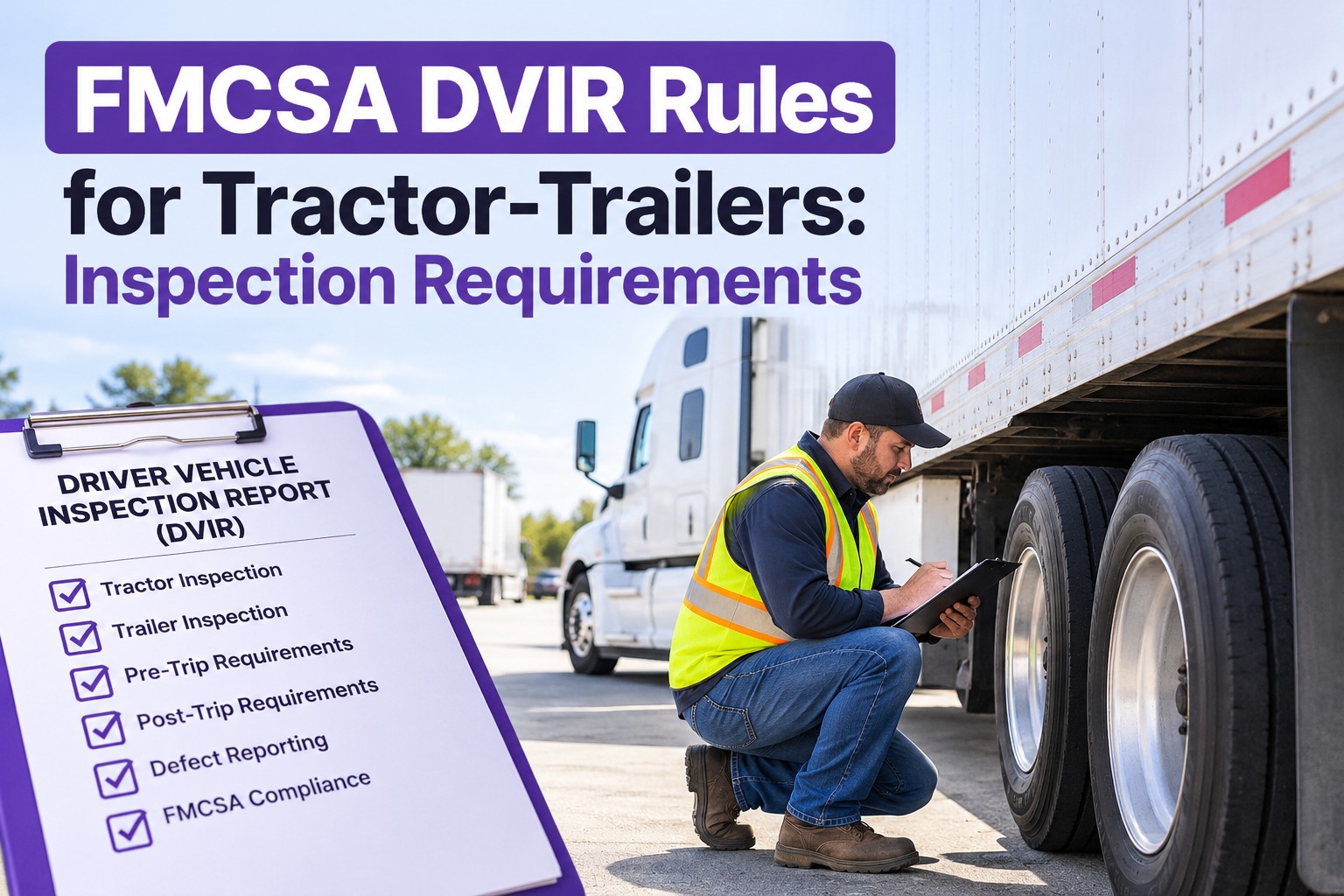
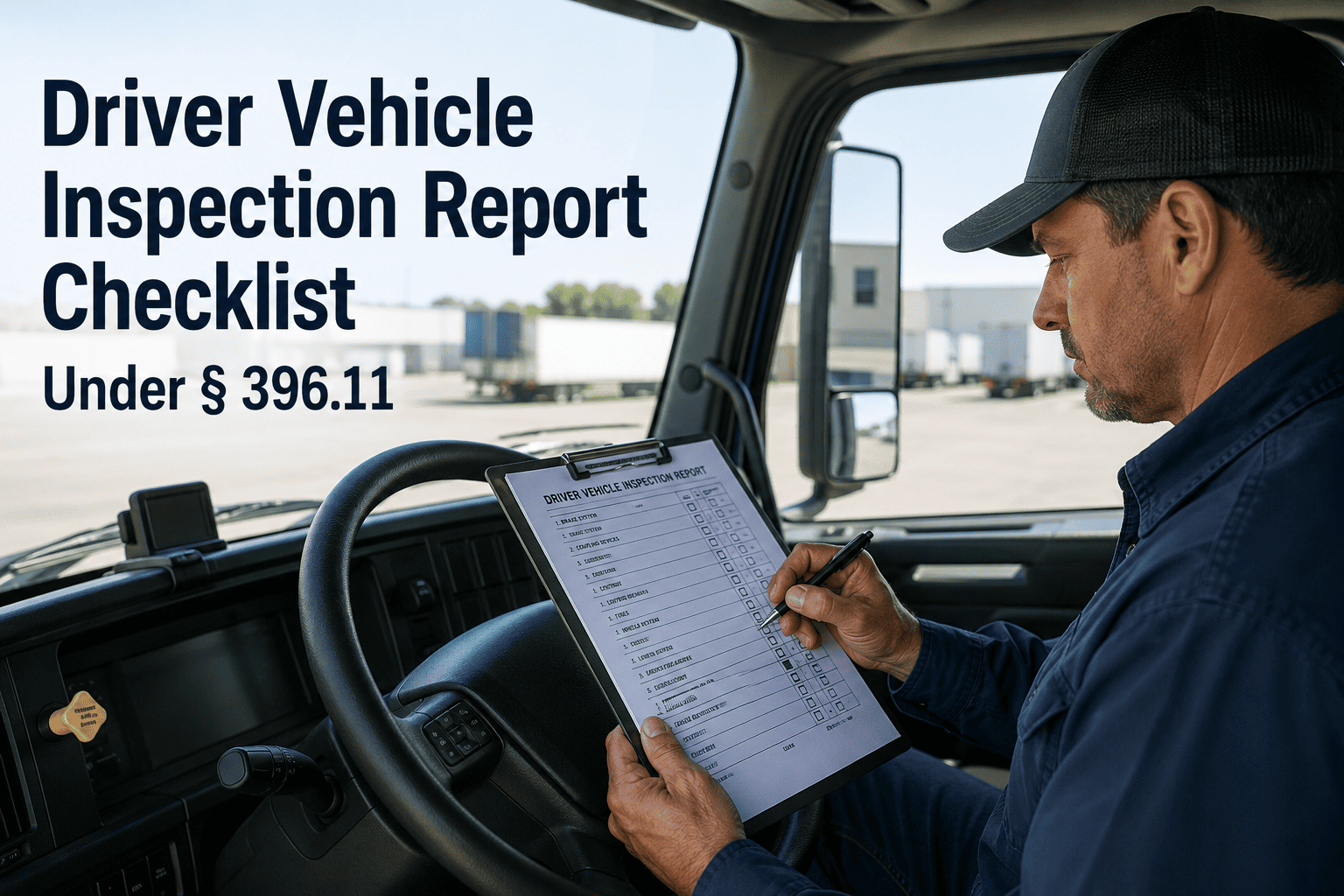
FMCSA DVIR Rules for Tractor-Trailers: Inspection Requirements
By William Jerry on October 23, 2026
A tractor-trailer is one rig, but to the FMCSA it's two commercial vehicles a power unit and a trailer — and the driver vehicle inspection report has to account for both. The rule that governs it, 49 CFR 396.11, is short, but it's specific about who inspects, what gets listed, who fixes it, who certifies the fix, and how long the paperwork lives. This guide walks the DVIR requirements as they apply to a combination vehicle: the regulation in plain terms, the split between tractor and trailer, the coupling system that sits between them, and a practical check you can run before and after every day's work. Start free and run both units on one DVIR with TIM.
TIM · Tractor-Trailer DVIR & 49 CFR 396.11
FMCSA DVIR Rules for Tractor-Trailers: Inspection Requirements
On a combination vehicle the power unit and the trailer each carry their own safety items, and the coupling that joins them is its own inspection zone. 49 CFR 396.11 asks the driver to report defects on every vehicle operated that day, the carrier to repair the safety-critical ones before dispatch, and someone to certify the fix. Truck Inspection & Maintenance Management Software (TIM) runs that loop end to end: a post-trip DVIR on tractor and trailer, each flagged defect graded into a work order, the repair certified, and the report retained for its full three months.
4-hour first responseEvery DVIR defect is acknowledged, graded, and assigned within four hours — so a reported fault becomes a tracked repair the same shift, not next week.
The regulation is brief, and most of it maps cleanly onto a daily routine. Here's the rule on the left and what it means on the yard floor on the right.
Each day, each vehicle
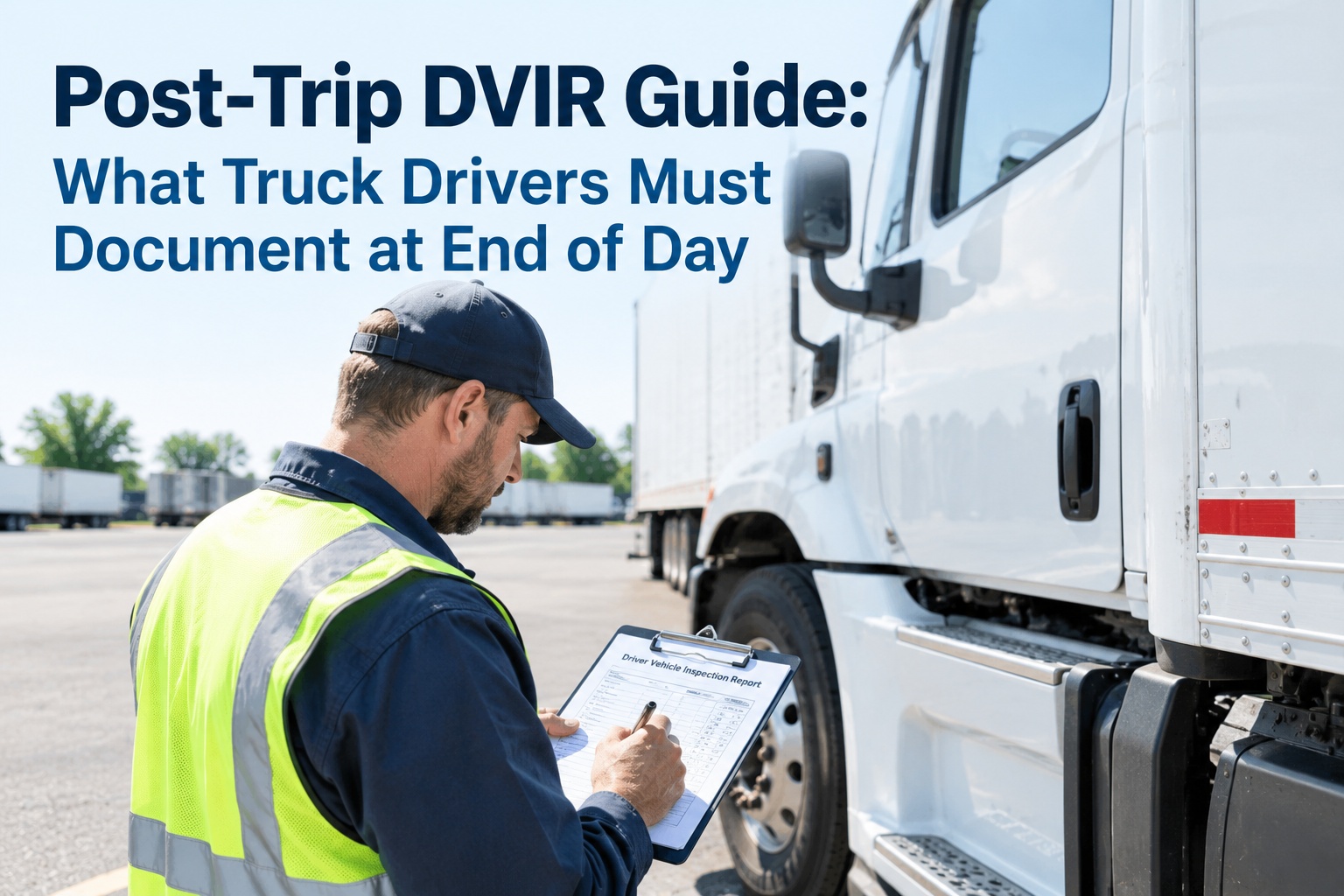
The driver prepares a written report at the end of each day's work, on every vehicle operated. A tractor and a trailer are separate vehicles, so the report has to cover both.
Identify & list defects
The report identifies the vehicle and lists any defect or deficiency the driver finds or is told about that would affect safe operation or cause a breakdown.
Driver signs
The driver signs the report. In a two-driver operation one signature covers both, as long as the drivers agree on what's listed.
No defect, no report
If the driver neither finds nor is told of any defect, a written report isn't strictly required — though most carriers log a "no defect" report anyway for a clean record.
Carrier repairs first
Before the vehicle is dispatched again, the carrier or its agent must repair any listed defect likely to affect safe operation.
Certify the fix
The carrier certifies on the report that each listed defect was repaired — or that a repair wasn't necessary — before the vehicle goes back out.
Next driver reviews
Under 49 CFR 396.13, the next driver reviews the last report and, where defects were noted, signs to acknowledge the certification before driving.
Keep it 3 months
The report, the repair certification, and the driver's review are retained for three months from the date the report was prepared.
A few operations are exempt — private non-business passenger carriers, driveaway-towaway moves, and carriers running a single commercial vehicle — but for a working tractor-trailer fleet, the full rule applies. Contact our team to map 396.11 to your DVIR workflow.
One Report, Two Units — and the Coupling Between
The eleven items 396.11 names apply across the whole combination, but they live on different parts of the rig. Splitting them by unit is how a driver walks the vehicle without missing anything.
Tractor (power unit)
Service and parking brakes
Steering mechanism
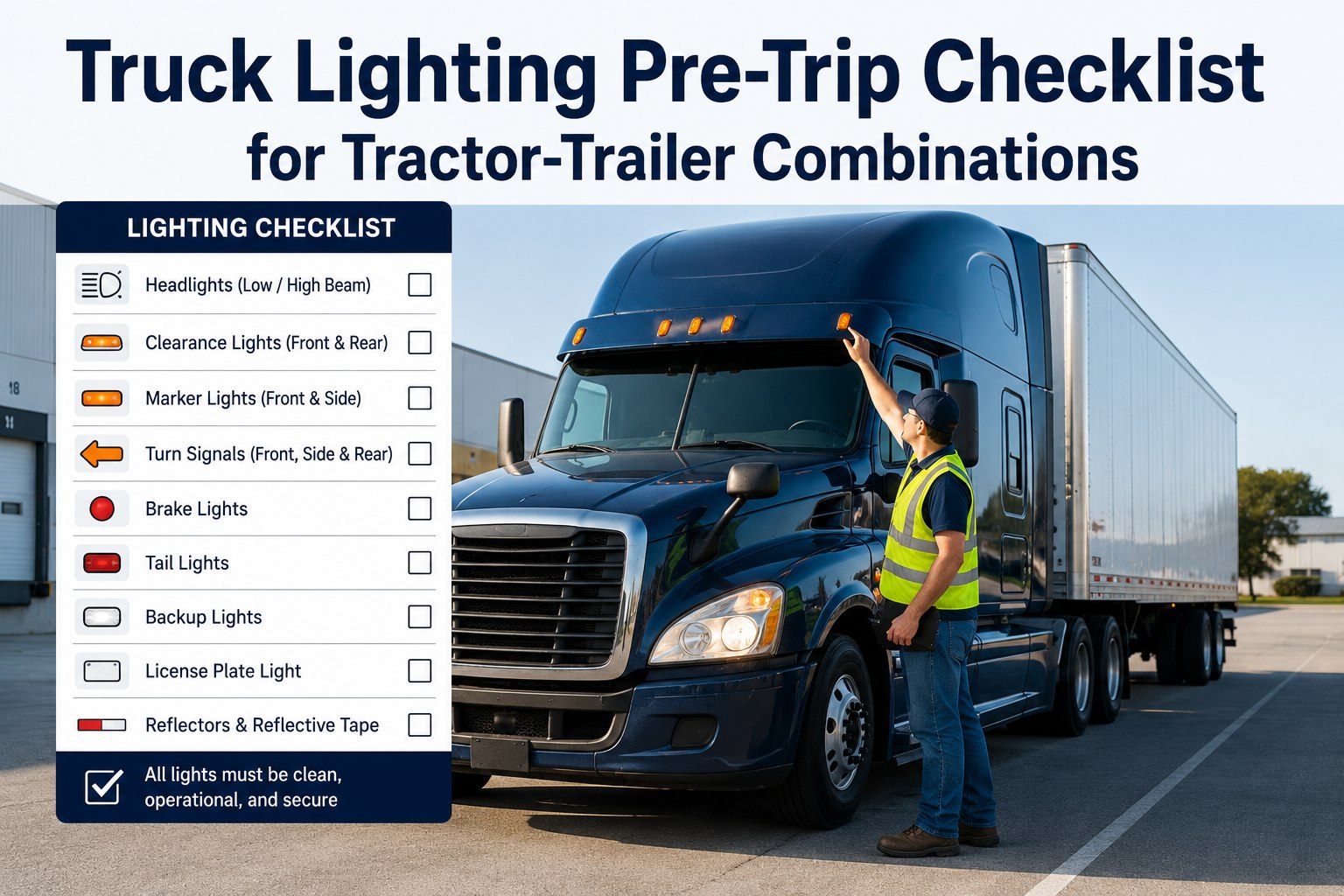
Lighting devices and reflectors
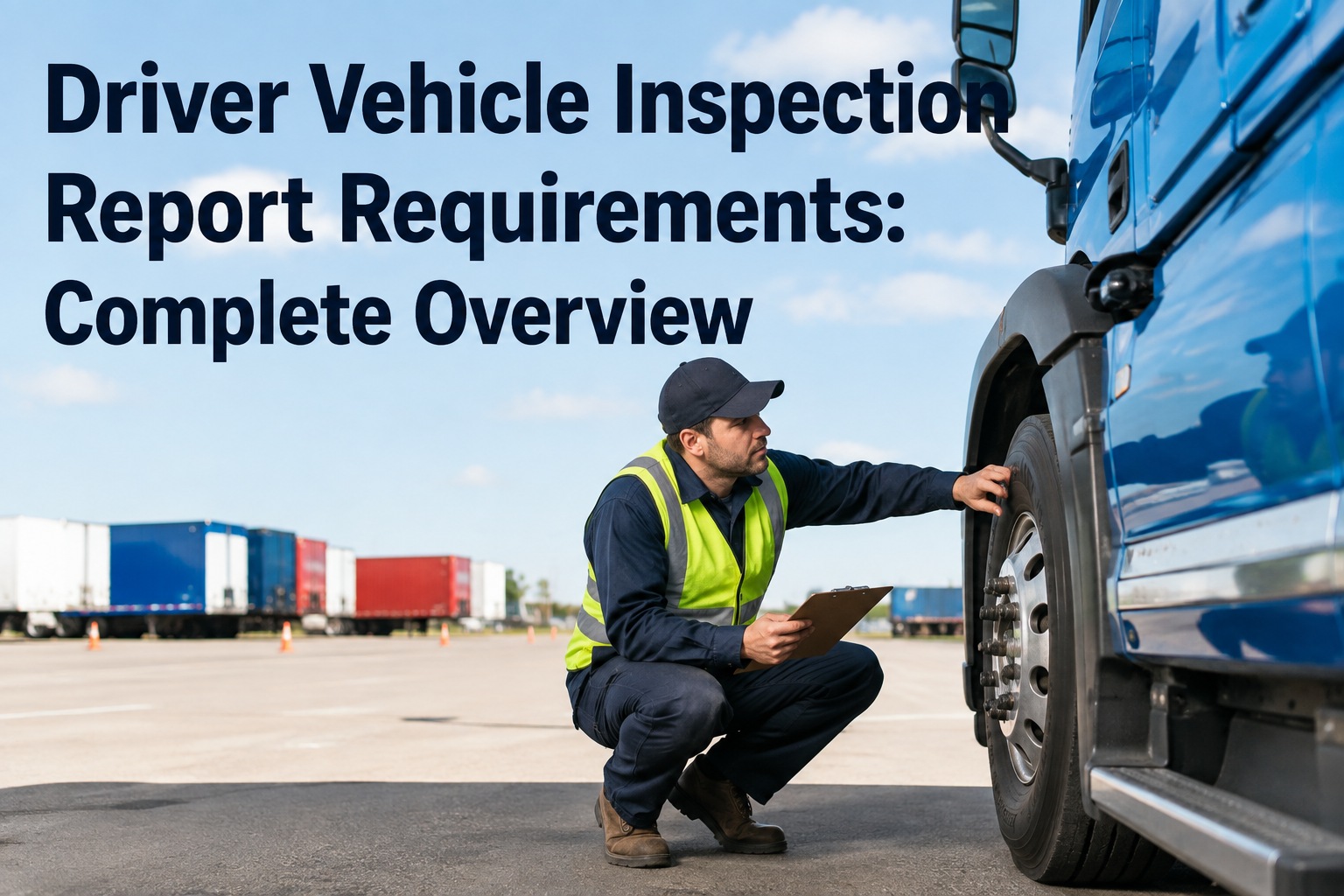
Tires, wheels, and rims
Horn and windshield wipers
Rear-vision mirrors
Emergency equipment
Coupling (between)
Fifth wheel and mounting
Kingpin and locking jaws
Safety latch engaged
Air lines (gladhands)
Electrical pigtail / 7-way
Landing gear raised, secure
Trailer
Trailer brakes and connections
Lighting devices and reflectors
Tires, wheels, and rims
Suspension and frame
Doors, latches, and seals
Load securement points
Rear impact guard
⛓The coupling is the part a single-unit habit skips
A driver used to straight trucks inspects the tractor and the trailer and can walk right past the connection that holds them together. On a combination vehicle the coupling is where a catastrophic failure starts — a trailer that separates on the highway almost always traces back to a fifth wheel, kingpin, or locking-jaw defect that a proper check would have caught.
Fifth wheelMounting bolts tight, no cracks in the plate or brackets, proper lubrication, no excessive play.
Kingpin & jawsLocking jaws fully closed around the kingpin, release handle seated, no gap between upper and lower plates.
Air & electricalGladhands sealed and secured, no leaks or chafing, 7-way pigtail clean and locked in.
Landing gearFully raised, crank secured, legs and braces undamaged, not fouling on turns.
Tractor-Trailer DVIR Checklist
Run this as a post-trip at the end of the day's work and again as a pre-trip before the next. Tap each box you clear; anything you can't clear is a defect — list it on the report, and if it affects safe operation, the unit stays parked until it's fixed and certified.
7 checksTractor / Power Unit396.11
5 checksCoupling Systemcritical
6 checksTrailer396.11
A Listed Defect Has a Clock on It
396.11 doesn't just ask the driver to report — it puts the carrier on the hook to repair safety-critical defects and certify the fix before the unit rolls again. TIM starts that clock the moment a DVIR is filed: the defect is graded, a work order is assigned within four hours, the repair is certified on the record, and the report is held for its three months automatically.
A paper DVIR on a tractor-trailer usually means two forms, a repair that may or may not get logged, and a shoebox of reports no one can find at audit. TIM keeps the whole loop on one record per rig.
Both units, one reportTractor, trailer, and coupling on a single DVIR tied to the rig — every 396.11 item in one place, not two forms that drift apart.
Defect graded in 4 hoursA flagged fault is acknowledged, graded, and turned into an assigned work order within four hours of the report.
Repairs certified on recordThe fix is logged against the defect and certified before dispatch, exactly as 396.11 requires.
3-month retention, automaticReports, repair certifications, and driver reviews held for their full term and pulled up in seconds for an audit.
Next-driver review built inThe last report and its certification surface for the next driver to review and acknowledge under 396.13.
Paperless and mobileDrivers file the DVIR from a phone — electronic reports are permitted under 49 CFR 390.32 — with photos attached to each defect.
Do I need a separate DVIR for the tractor and the trailer?
The rule requires a report on each vehicle operated, and a tractor and a trailer are separate vehicles — so both have to be covered. In practice most carriers put the power unit and the trailer on one combined report tied to the rig, which satisfies the requirement as long as each unit is identified and its defects are listed separately. What you can't do is inspect the tractor and ignore the trailer, or vice versa; the coupling between them needs its own attention too. Contact us to set up a combined tractor-trailer DVIR.
If there are no defects, do I still have to file a report?
Strictly under 396.11, a written report isn't required when the driver neither discovers nor is informed of any defect or deficiency. That said, most fleets require a "no defect" report every day regardless, because a logged clean inspection is far easier to defend at audit than a missing one, and it proves the post-trip actually happened. Filing a quick no-defect record also keeps the next driver's review straightforward.
Who has to repair and certify a listed defect?
The motor carrier or its agent. Before the vehicle is dispatched again, the carrier must repair any listed defect likely to affect safe operation, and must certify on the report that the defect was repaired or that repair was unnecessary. The driver reports; the carrier fixes and certifies. That division is the heart of the rule — and the step fleets most often fail to document, because the repair happens but the certification never makes it onto the report. Start free and keep every repair certified on the record.
How long do DVIRs have to be kept?
Three months from the date the report was prepared. That covers the original driver report, the carrier's certification of repairs, and the driver's review under 396.13. During a compliance review those are exactly the records an investigator asks for, so they need to be retrievable — not buried in a cab or a filing cabinet. Start free and keep every DVIR audit-ready on TIM.
Are electronic DVIRs allowed for tractor-trailers?
Yes. Driver vehicle inspection reports may be generated and stored electronically under 49 CFR 390.32, which means a driver can file the DVIR from a phone or tablet and the carrier can keep the whole three-month record digitally. Electronic reports carry the same weight as paper, with the added benefit that defects, photos, repair certifications, and driver reviews all stay linked on one record instead of scattered across forms. Contact our team to go paperless on your DVIRs.
Tractor · Coupling · Trailer · One Report
Inspect the Whole Rig — and Prove You Did
A tractor-trailer DVIR is only compliant when both units and the coupling between them are inspected, the defects are listed, the safety-critical ones are repaired and certified, and the paper survives three months. TIM runs that entire loop on one record per rig, grades every defect within four hours, and keeps the file audit-ready. It's free to start on your first three trucks.