Long-distance moving fleets run a maintenance pattern that no other trucking segment shares. A refuse truck comes home to the same yard every night. A linehaul freight tractor moves between fixed terminals with in-network shops. A moving truck picks up a household in Phoenix on Tuesday, drops it in Milwaukee on Friday, deadheads to Nashville for the next load, and doesn't see its home yard for 18 days. When a fluid runs low 900 miles from the nearest company shop, the driver has to know: which fluid is it, what does topping it off cost, what's the risk if I don't, and who authorizes the roadside spend. The fleets that solve this run a fluid-check discipline that treats the driver as the last line of defense — because on a long-distance route, the driver IS the maintenance program. This article covers the 7 fluids every moving truck driver checks, the distance-triggered check intervals that fit long-distance ops, and the mobile workflow that turns a phone in the cab into a working fluid dashboard. Truck Inspection & Maintenance runs this workflow for moving fleets nationwide — sign up free or contact our team.
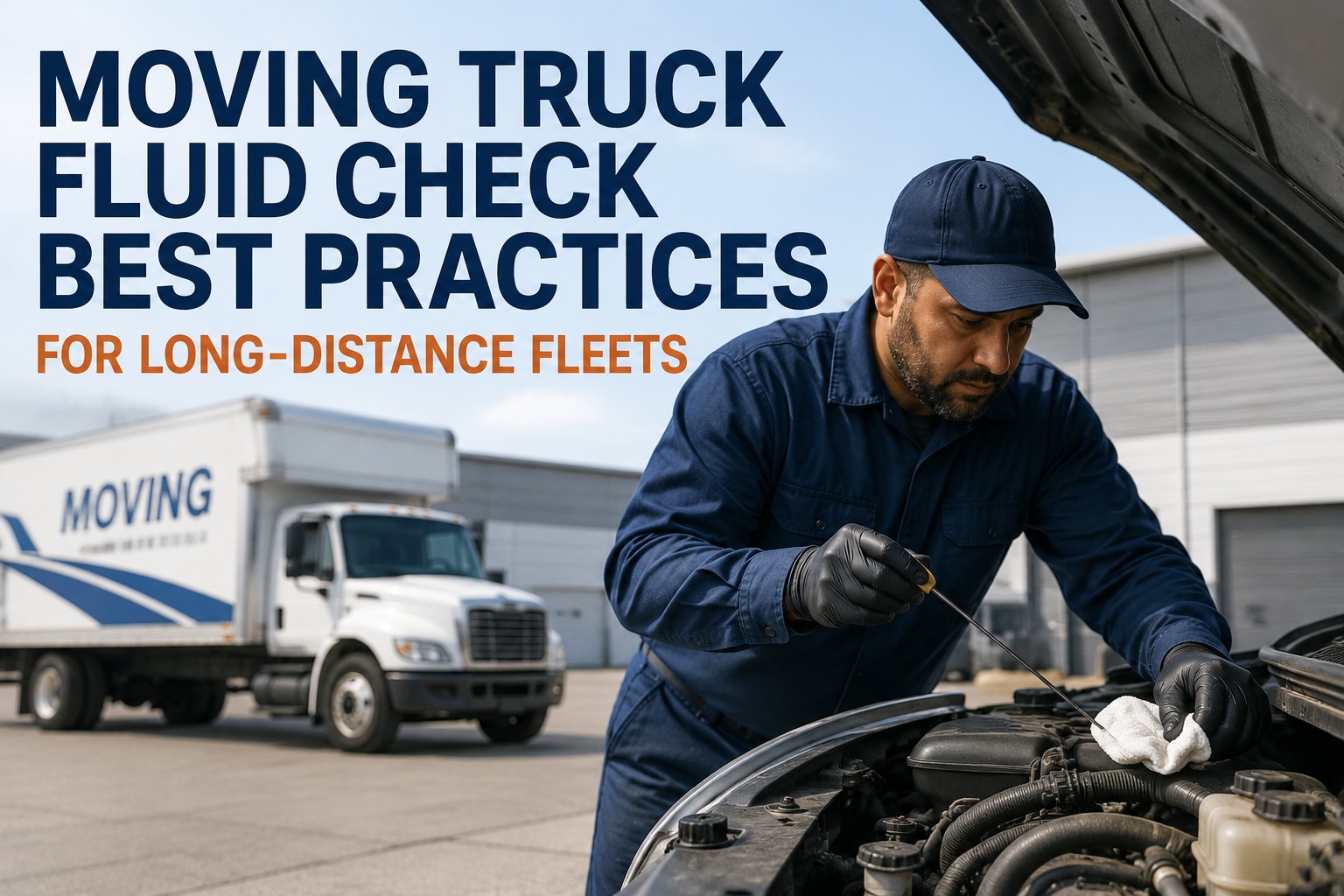
Moving Truck Fluid Check Best Practices for Long-Distance Fleets
The truck won't see its home yard for 18 days. The driver is the fluid program.
Why Long-Distance Moving Fleets Need a Different Fluid Discipline
Three characteristics of the moving-fleet operating model force a stricter driver-side fluid discipline than any other trucking segment:
Long-distance moving loads chain into deadheads and next loads. The truck may not touch home yard for 2–3 weeks — nobody in the shop can put eyes on fluids in that window.
A single roadside call for a low-fluid top-off runs $450+ before parts. A caught-early check by the driver costs $12 in fluid and 5 minutes at a truck stop.
Phoenix → Milwaukee → Nashville is a real 3,500-mile chain. That's 6–7 driving days between yard-side PMs, during which fluid consumption is fully on the driver.
Turn the driver phone into the shop's eyes on every truck on the road — start a free account and get photo-verified fluid checks flowing back to the shop dashboard today.
The 7-Fluid Deep Dive — What to Check, Where, and Why
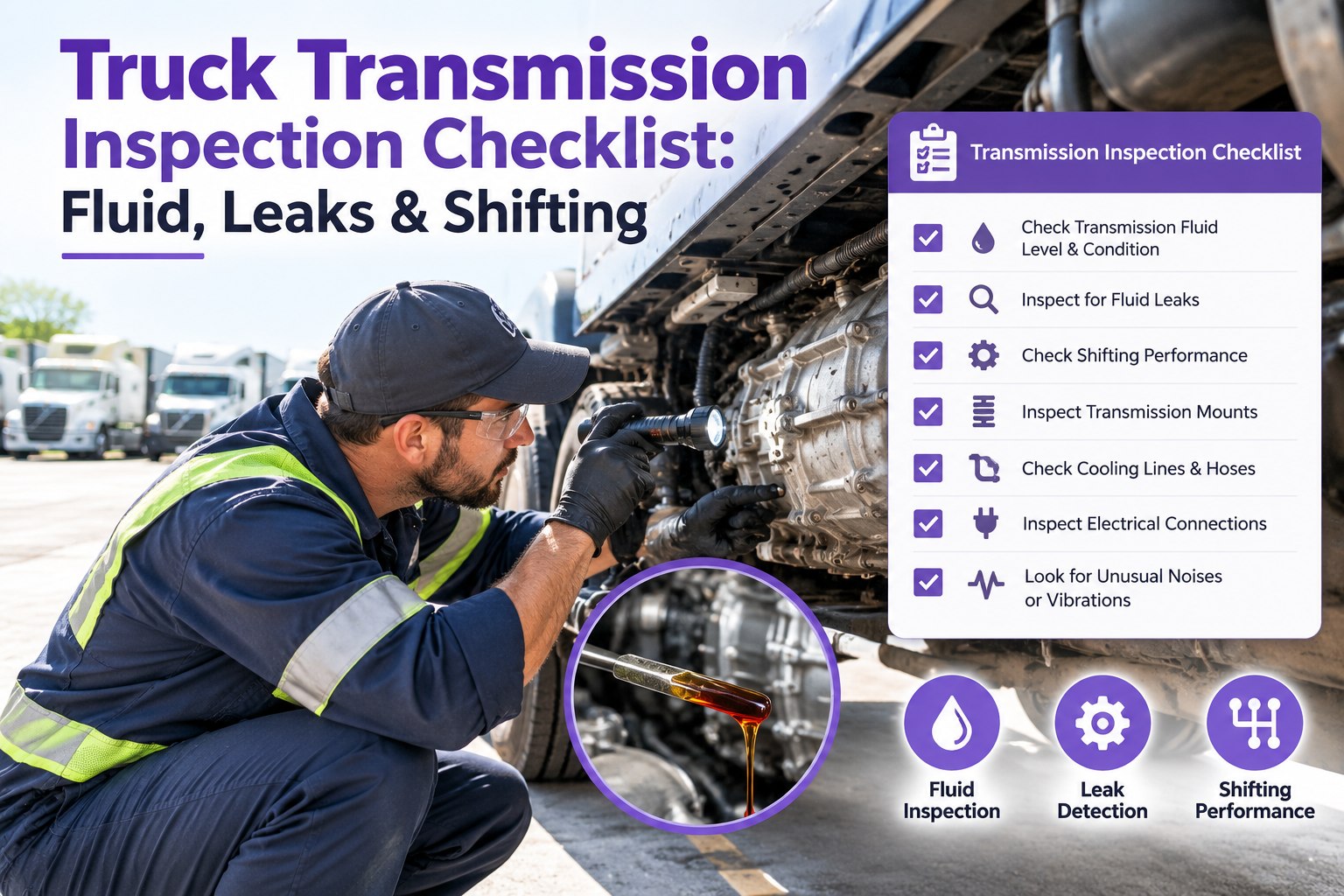
Every long-distance moving truck driver runs these 7 fluid checks on schedule. Each has a specific location on the truck, a specific target level or condition, and a specific consequence if it goes wrong:
Want a printed 7-fluid quick-reference card for each truck cab? Contact our team and we'll ship one per truck, free.
Distance-Triggered Check Intervals
Time-based intervals don't fit long-distance moving. Distance-based intervals do. Here's the standing schedule every driver runs regardless of home yard:
Distance-triggered intervals auto-fire in the driver app based on odometer — sign up free and stop chasing drivers to run the mid-route inspection.
The Driver's Fluid Kit — What Every Moving Truck Should Carry
Long-distance moving trucks should carry enough fluid onboard to survive a top-off between service stops without a $450 roadside call:
The One Rule for Long-Distance Fluid Discipline — Photo Every Top-Off, Every Time
A moving truck driver 900 miles from home yard tops off engine oil at a Loves in Amarillo. If that top-off isn't documented, the shop can't trend consumption over the route, can't spot a growing leak, and can't charge the fluid back to the load cost center. The rule: every fluid top-off gets a photo of the container, a photo of the dipstick after top-off, timestamp, and location. Two minutes on the phone. That's how the shop back home builds consumption history, catches leaks early, and turns a driver 900 miles away into a real member of the maintenance team. Start a free account and require photo-documented top-offs from every driver on the road.
The KPI Dashboard — 6 Fluid Metrics for Long-Distance Moving
The right KPIs turn 18 days on the road into a controlled maintenance program instead of a hope-and-pray fluid cycle:
Every truck runs the 4-fluid daily check every day on route. Missed = compliance gap in the DVIR record.
Above 1 per 10K miles = fluid check discipline is failing. Every call is a $450+ event vs $12 top-off.
Every top-off logged with photo. Missing photos = no consumption trend data = leaks caught late.
Zero tolerance — a DEF derate on a moving load means dropped delivery window and customer credit.
Total fluid spend (oil, coolant, DEF, top-offs) as % of fuel spend. Above 3% suggests unaddressed consumption trend.
Every truck runs the full 7-fluid mid-route inspection at each 2,500-mile mark. Skipped = leak risk grows undetected.
Track all 6 fluid KPIs in real time across your entire long-distance fleet — get in touch for a free KPI baseline audit call.
Turn the driver phone into a working fluid dashboard for every truck on the road.
Daily 4-fluid checks, 2,500-mi full 7-fluid inspection, photo-verified top-offs, real-time consumption trending. Free forever for up to 3 vehicles — create your free account or talk to our team.
The 5 Most Common Long-Distance Fluid Mistakes
Every long-distance moving fleet has watched these five mistakes play out. All five are preventable with the right workflow:
Waiting for the Warning Light
Pattern: Driver figures the truck will tell them when a fluid is low. It will — but only when it's already critically low. By then engine damage, derate, or overheating has begun.
Wrong Fluid Type Top-Off
Pattern: Driver grabs whatever oil the truck stop has. Mixing 15W-40 with 5W-30 or generic ATF with dedicated PS fluid causes wear over thousands of miles that shop never traces.
Top-Off Not Documented
Pattern: Driver adds a quart of oil, doesn't log it. Shop can't trend consumption, can't spot a growing leak. When the truck comes back with an oil consumption pattern, the data isn't there to catch it early.
Skipping the 2,500-mi Full Check
Pattern: Daily pre-trip covers 4 fluids. But the other 3 (transmission, power steering, fuel water separator) only get checked at the mid-route mark. Skip that check and undetected leaks compound.
No Fluid Kit Onboard
Pattern: Driver spots a low fluid at a truck stop with no matching oil in stock. Waits for next truck stop 200 miles later. Or worse — pays $450 roadside instead of $12 topping off from onboard stock.
Recognize any of these 5 patterns in your fleet? Create a free account and fix the top 3 in the first week of the mobile fluid program.
Frequently Asked Questions
How often should moving truck drivers check fluids on a long-distance route?
Three intervals stacked together. Daily at every pre-trip, driver checks the 4 quick-view fluids: engine oil dipstick, coolant reservoir, washer fluid, and DEF gauge. Every fuel stop (roughly every 500 miles), driver repeats those four plus power steering and fuel water separator, and walks around the truck looking for wet spots. Every 2,500 miles, driver runs the full 7-fluid inspection with transmission checked warm-and-idling. Distance-based intervals fit long-distance moving better than time-based because loads chain across variable route lengths.
What fluids should a long-distance moving truck driver carry onboard?
A minimum fluid kit for long-distance routes: 2 qt engine oil (matching OEM viscosity, usually 15W-40 for HD diesel), 1 gal coolant pre-mix matching the reservoir formula, 1 qt transmission fluid, 1 qt power steering fluid, 1 gal washer fluid (winter formula Nov–Mar), and 2.5 gal DEF in sealed jug. This kit covers most between-service top-offs without a $450 roadside call. Never store DEF loose in the cab — heat above 86°F degrades DEF over weeks and can contaminate the SCR system if used.
Why do fluid checks matter more for moving fleets than for other trucking?
Moving trucks run 18-day round-trip cycles between home yard visits. Refuse trucks come home nightly, linehaul freight moves between fixed terminal shops, but moving trucks may cross Phoenix → Milwaukee → Nashville over 3,500 miles before touching a company shop. During that window, nobody but the driver can inspect fluid levels. On top of that, moving loads are customer-paid deliveries with promised windows — a breakdown from an ignored low fluid isn't just a repair bill, it's a load penalty and a customer relationship. The driver-side fluid discipline has to be tighter than segments where the shop can catch drift.
What is a DEF derate and how does it affect moving loads?
Under 2026 EPA rules, when a diesel truck's DEF tank runs low, the engine progressively derates in 4 stages: warning at 10% DEF, check-engine at 5%, speed limit to 65 mph at 2.5%, and 5 mph creep speed at 0%. Recovery requires DEF refill plus ignition cycle. On a moving load, a 5 mph creep is functionally a breakdown — delivery window blown, customer credit likely required, next-load pickup at risk. Zero DEF derate events per month should be a hard target for any long-distance moving fleet.
Should moving truck drivers document every fluid top-off?
Yes, and with a photo. Every top-off logged with a photo of the container used (proves correct fluid type) and a photo of the dipstick after (proves level restored) gives the shop back home the data to trend consumption between yard visits. A driver quietly adding a quart of oil every 3,000 miles is a growing leak the shop needs to see before it becomes an $18K engine job. Photo-verified top-offs are a 2-minute discipline that turns the driver into a real member of the maintenance team.
How does Truck Inspection & Maintenance support moving fleet fluid discipline?
Truck Inspection & Maintenance runs the full moving-fleet fluid program on driver phones. Daily 4-fluid pre-trip checks, every-500-mile fuel-stop expansion, and 2,500-mile full 7-fluid inspection all built into the DVIR flow with photo capture at every step. Top-offs log automatically with container photo, level-after photo, timestamp, and GPS location. Consumption trends by truck feed the shop dashboard so leaks and wear patterns surface between yard visits, not after. Free forever for up to 3 vehicles. Sign up in 10 minutes or contact our team for larger fleets.
The truck is 900 miles from the shop. The driver's phone is the fluid program.
Daily checks, mid-route full inspections, photo-verified top-offs, real-time consumption trending. Free forever for up to 3 vehicles — no hardware, no contract, no credit card.