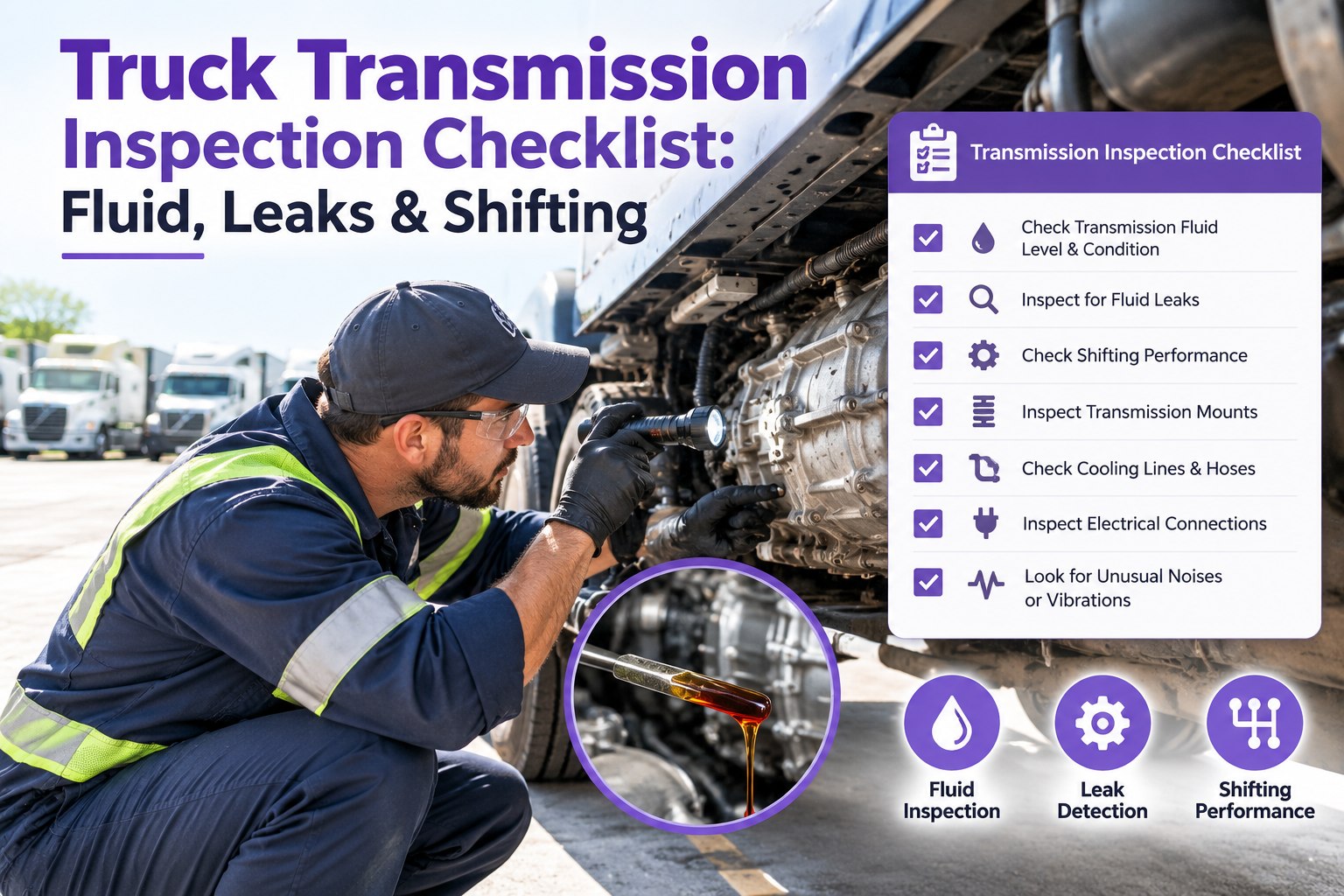
A transmission rarely fails without warning — it gets loud, it slips, it leaves a stain on the yard, it smells faintly burnt on the dipstick. The trouble is those signals are quiet, and the repair bill for ignoring them isn't: a neglected gearbox is one of the most expensive rebuilds on the truck. The fluid check that would have caught it takes two minutes. This checklist walks the whole system — fluid, leaks, shifting, and mounts — so you read the early clues before they become a tow. Start free and put this transmission check on every truck.
Fluid · Leaks · Shifting · Mounts
Truck Transmission Inspection Checklist: Fluid, Leaks, Shifting & Mount
Low or burnt fluid, a weeping seal, a shift that's getting rougher — each is a cheap fix today and a five-figure rebuild if it's ignored. Truck Inspection & Maintenance Management Software turns the transmission walk into a guided check, flags a fluid or shifting defect the moment it's logged, and routes it to a work order — so the gearbox gets attention while it's still a service, not a failure.
Fluid firstlevel, color, and smell tell the story
Shift feelchanges before the gearbox quits
Loggeddefect to work order, no guesswork
The Signals a Transmission Gives Before It Goes
Unlike a tire or a bulb, a transmission talks to you for weeks before it fails. Learn the three languages it speaks and you catch almost every failure early.
◧
The fluid tells the story
Level, color, and smell are the gearbox's health readout — bright and full is good, low or burnt is a warning you can read in seconds.
⇄
Shifting changes first
Hard shifts, slipping, grinding, or delayed engagement show up well before a hard failure — the feel degrades before the gearbox quits.
◔
A leak starves it
Low fluid from a weeping seal or line runs the transmission hot and dry — the fastest path from a cheap seal to a scrapped unit.
The Transmission Inspection Checklist, Area by Area
Work it in order — fluid, leaks, operation, then mounts and cooling. Tick each item you verify; anything you can't tick is a defect to act on before it climbs the repair ladder.
Reading the Fluid — What Color and Smell Tell You
The dipstick is the single most useful two minutes in a transmission check. Here's how to read what's on it before it reaches the shop.
Bright & full
Clean, correct color, at level, no odor. The unit is healthy — note it and move on.
Darkening or low
Fluid going brown or below range. Service it now — change fluid, find why it's low, before heat does damage.
Burnt or metal-flecked
Scorched smell or particles on the stick. Internal wear is underway — pull it from service for diagnosis before it lets go.
Why the fluid check pays for itself Almost every expensive transmission failure traces back to fluid that was low, old, or overheating — and every one of those is visible on a dipstick weeks ahead of the failure. The check costs two minutes; the rebuild it prevents costs a truck for a week and a five-figure invoice. Truck Inspection & Maintenance Management Software makes the fluid read a required, photo-logged step at every interval, so a darkening sample becomes a scheduled service instead of a roadside surprise.
Where Transmissions Fail First
Most transmission repairs start at one of these four points. If inspection time is short, check them before anything else.
Low or burnt fluidNeglected fluid runs the unit hot — the root cause behind most internal failures.
Shaft-seal leaksWeeping input and output seals that quietly drain the unit between services.
Shifting faultsSlipping, grinding, or hard shifts that signal clutch or internal wear building up.
Worn mountsCollapsed or oil-soaked mounts that let the unit move and stress the driveline.
Turn the Transmission Walk Into a Logged, Photo-Backed Check
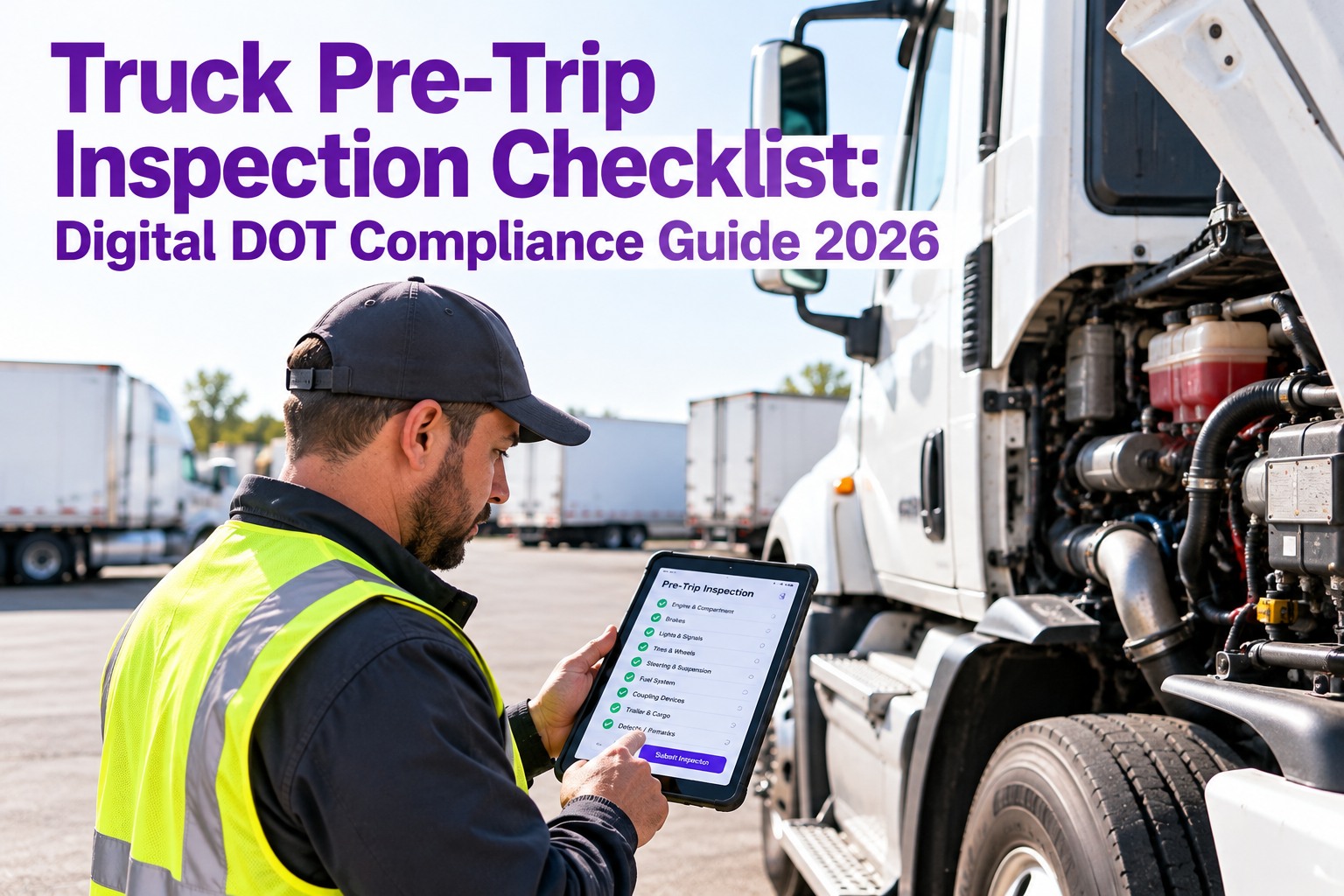
Truck Inspection & Maintenance Management Software puts every item above on the technician's phone as a guided transmission inspection, requires a photo of the fluid, and routes any leak, shifting fault, or worn mount straight to a work order. It also keeps fluid and filter changes on each unit's preventive-maintenance schedule — so service happens on a calendar, not after the gearbox is already slipping on the highway.
Frequently Asked Questions
How do I check transmission fluid correctly?
Check it with the transmission at operating temperature, the truck on level ground, and following the unit's procedure — automatics usually read with the engine running, manuals and many automated units read differently, so follow the maker's spec. You're reading three things: level within range, color (bright and clear is healthy, dark brown or black is not), and smell (a burnt odor means overheating). Metal flecks or foaming on the stick are signs of internal trouble worth a closer look.
What are the early signs of transmission trouble?
The feel of the shift changes first — hard or delayed engagement, slipping where the engine revs climb without matching road speed, or grinding through a gear. Alongside that, watch for a fluid stain under the truck, a burnt smell on the dipstick, and any transmission warning lamp or fault code. None of these means failure tomorrow, but all of them mean the unit is telling you to look now, while the fix is still a service rather than a rebuild.
What causes a transmission fluid leak?
Most leaks come from the input and output shaft seals, the pan gasket, or the cooler-line fittings — seals harden and weep with age and heat, gaskets take a set, and line fittings loosen with vibration. A blocked breather can also push fluid past a seal by letting pressure build inside the case. Wherever it starts, a leak lowers the fluid level, and low fluid runs the unit hot — which is why a stain on the yard is worth chasing down the same day.
How often should a truck transmission be inspected?
The visible items — fluid stain, leaks, shift feel — are part of the daily pre-trip walkaround, and a full fluid and operation check belongs on the preventive-maintenance interval set by the unit's maker and your duty cycle. Heavy-haul and stop-start vocational trucks wear transmissions faster and deserve tighter intervals. The point is to read the fluid and the shift feel on a schedule, so a slow decline gets caught on a calendar instead of on a grade.
Contact us to set transmission checks across your fleet.
Read the Fluid · Feel the Shift · Catch It Early
Keep Every Gearbox Out of the Rebuild Shop
Truck Inspection & Maintenance Management Software runs this full transmission checklist as a guided, photo-backed inspection, routes any fluid, leak, or shifting defect to a work order, and keeps fluid and filter service on each unit's schedule. Fleets use it to catch the quiet signals early — and to keep transmissions in the truck instead of on the bench.
No credit card required. Free for up to 3 trucks. Built for FMCSA-compliant fleets.