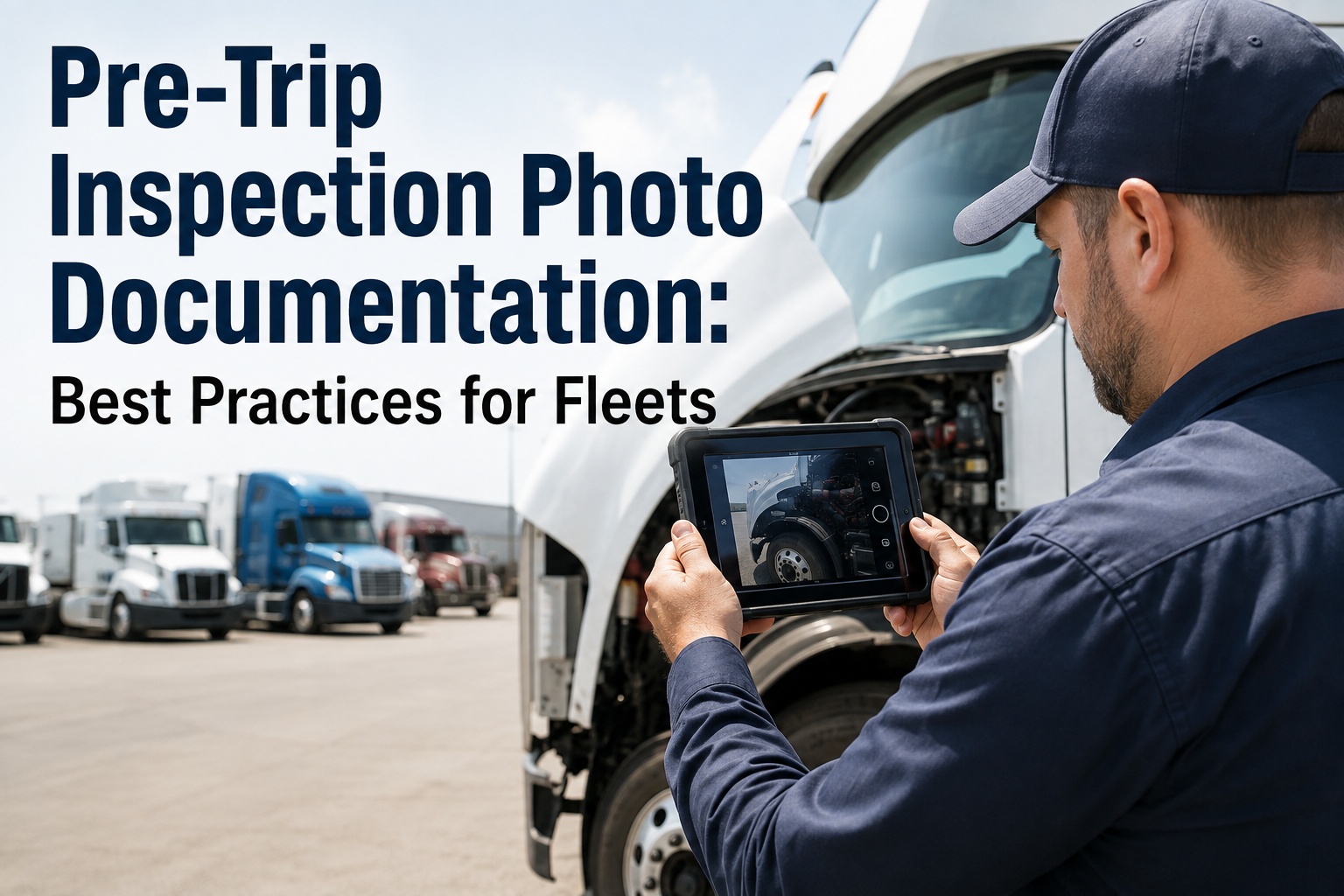
Two drivers do the same pre-trip inspection on the same truck. Driver A signs the DVIR and moves on. Driver B captures three timestamped, geo-tagged photos of the brake chambers, the tire tread with a gauge visible, and the fuel-air line joint — then signs. Six months later, the truck is in a fatal accident. In the ensuing lawsuit, plaintiff's counsel argues the brake was defective and the fleet knew it. Driver A's DVIR is a signature on a page. Driver B's DVIR is 90 seconds of photographic evidence, GPS-verified location, and a server-side timestamp that can't be back-dated. Which one survives a nuclear verdict trial — a jury award of $10 million or more — is not a close question. The trucking industry has seen a surge in nuclear verdicts over the past five years, and the pattern is consistent: plaintiffs' attorneys don't win these cases by proving the crash. They win by mining the paperwork for pre-crash negligence — missed inspections, undocumented defects, "check-box" DVIRs with no supporting evidence. A pre-trip inspection photo is not administrative overhead. It's a legal instrument that either exists or doesn't when your fleet's operating authority depends on it. This guide walks the photo documentation standard that turns compliance into evidence — what to capture, how to store it, and why the fleets that adopt it early are the ones still in business after their first serious lawsuit. Sign up free for Truck Inspection & Maintenance today — no credit card required to enable photo-verified pre-trips on every driver's phone, or contact our team for a litigation-readiness review configured to your fleet's exposure profile.
Pre-Trip Inspection Photo Documentation: Best Practices for Fleets
A signature says the inspection happened. A timestamped, geo-tagged photo proves it. The difference determines what survives a nuclear verdict.
Why Photos Changed From "Nice to Have" to Legal Standard
Ten years ago, pre-trip inspection photos were an operational nicety — helpful for the shop, not required by anyone. Three parallel shifts changed that. The result is a new expectation: fleets that don't document inspections photographically are increasingly the ones losing lawsuits they should have won.
What Makes a Compliant Pre-Trip Photo — 3 Metadata Layers
Not every photo is legally useful. A photo without provenance is just a picture — it could be from any truck, any day, any yard. Three metadata layers turn a photo into evidence.
The 8-Photo Pre-Trip Standard
Every fleet should have a documented photo capture standard baked into the app workflow. Eight photos cover the highest-liability inspection points on a typical tractor-trailer. Under 3 minutes total, all metadata captured automatically.
The Storage & Retention Standard
Capturing the photo is step one. Storing it for the required window and producing it fast when requested is where fleets actually fail. Here's the standard.
Paper DVIR Photos vs eDVIR Photos — The Evidentiary Difference
A photo isn't just a photo. How it's captured, stored, and retrieved determines whether it holds up in litigation. Here's the direct comparison.
Turn every pre-trip signature into photo-verified evidence
Server-side timestamps, GPS-verified location, driver/unit attribution — automatic per photo. Indefinite retention. 48-hour audit production without a paper chase. Built for fleets that want inspections to hold up in court, not just on the shelf.
The Nuclear Verdict Scenario — What Photos Actually Prevent
Understanding what plaintiffs' attorneys look for changes how you build your inspection program. Here's the scenario that repeats across nuclear verdict cases — and where photo evidence breaks the pattern.
Incident: Fatal crash. Plaintiff alleges brake defect caused the collision.
Discovery: Plaintiff subpoenas 90 days of DVIRs for the truck. Records show all inspections marked "no defects" with driver signatures — no photos, no measurements, no timestamps beyond a handwritten date.
Plaintiff's argument: "The fleet's DVIRs are check-box exercises. There's no evidence any actual inspection took place. This crash was predictable — the culture tolerated it." Jury sees pattern, not paperwork.
Outcome: $18M verdict. Fleet loses operating authority within 6 months.
Incident: Same crash. Same defect allegation.
Discovery: Fleet produces 90 days of eDVIRs with 720 photos across the sample. Brake chamber photos from every pre-trip. Tread depth gauge readings. All server-timestamped, GPS-verified, driver-attributed.
Defense argument: "The truck was inspected daily. Photos prove it. The alleged defect did not exist at inspection — the record shows what the driver saw. Any failure was in-service, not systemic." Jury sees professionalism.
Outcome: Case settles at insurance policy limits or is defended successfully. Fleet operates through.
The 3-Minute Photo Pre-Trip Workflow
The whole photo standard should add roughly 3 minutes to the pre-trip inspection. Here's the sequence drivers should follow — same order every time, same result.
Frequently Asked Questions
FMCSA does not require pre-trip inspection photos by rule — the regulation (§392.7) requires the driver to be "satisfied" the vehicle is safe to operate, and §396.11 requires the post-trip DVIR to document any defects found. Photos are not mandated by either. However, the February 19, 2026 FMCSA final rule (Docket FMCSA-2025-0115, effective March 23, 2026) added explicit electronic DVIR authorization to §396.11 and §396.13, formalizing photo evidence as an accepted (and FMCSA-preferred) part of the audit trail. In practice, photos have moved from "nice to have" to industry best practice because of a separate driver: nuclear verdict litigation trends. Plaintiffs' attorneys building cases against trucking companies increasingly mine inspection records looking for check-box DVIRs with no supporting evidence, and juries are receptive to arguments that fleets without photo documentation had systemic inspection culture failures. Legally required by FMCSA — no. Legally advisable given litigation environment — increasingly yes.
Three metadata layers separate evidence from decoration. First, server-side timestamp — the platform's server clock records when the photo was captured, not the phone's device clock (which can be edited). This makes back-dating impossible. Second, GPS coordinates auto-attached to the photo file, proving the physical location where it was taken. This defeats the argument that photos were staged elsewhere. Third, driver and unit attribution — the photo is tied to a specific driver's login credentials and the specific truck's VIN or asset ID, creating a chain of custody. A photo captured with all three metadata layers can withstand discovery challenges and cross-examination. A photo captured on a driver's personal phone and emailed to dispatch typically cannot — the timestamp, location, and attribution can all be challenged, and the photo's evidentiary value collapses. This is why fleet management platforms with integrated photo capture produce stronger defense positions than paper DVIRs with attached phone photos, even when both fleets take the same pictures.
Minimum 90 days under FMCSA §396.11(c) — photos attached to DVIRs inherit the same retention requirement as the DVIRs themselves. For litigation defense, 6-12 months is recommended because accident lawsuits typically request records from months before the incident to establish patterns of maintenance practice. Best practice on digital platforms is indefinite retention — cloud storage costs are effectively zero at the marginal photo, and the photo taken 18 months ago can become the specific evidence needed in a lawsuit filed today. Fleets that purge photos at the 90-day minimum to save perceived cost end up in the worst position: they had the evidence, they discarded it, and now they can't produce it. Digital retention also solves the 48-hour auditor production window — FMCSA investigators expect records within two business days, and searchable cloud archives satisfy this instantly while paper files or phone camera rolls routinely fail. Try the platform free to see photo retention configured automatically per truck.
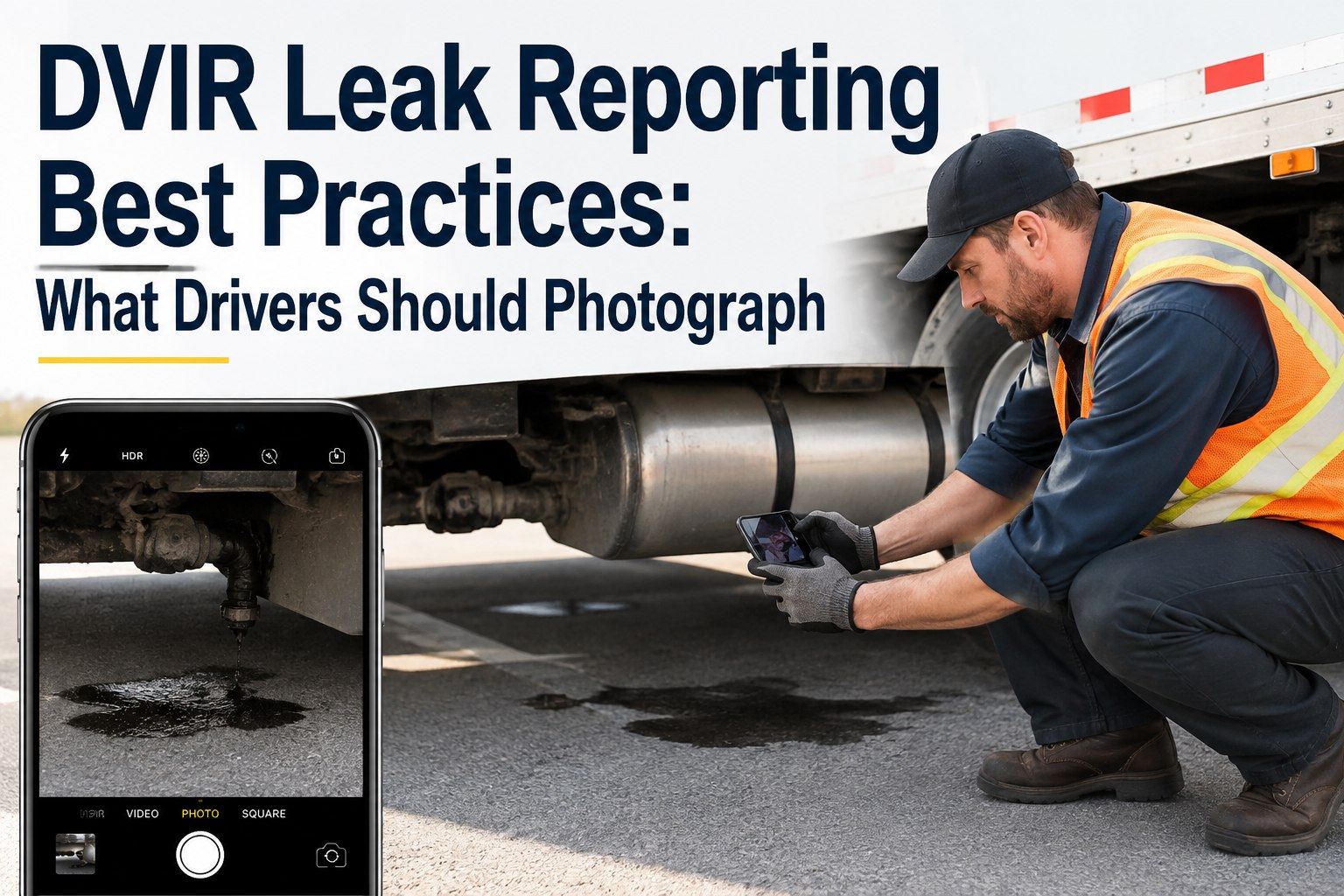
Eight photos cover the highest-liability inspection points on a standard tractor-trailer without becoming administrative burden. The recommended set: four corner photos (front, driver side, passenger side, rear) for overall condition documentation, one tread depth close-up with a gauge visible in a major groove, one brake chamber photo showing pushrod position and no leakage, one coupling area photo showing fifth wheel or pintle with air lines and glad hands connected, and one photo of any defect discovered during the inspection. Total capture time is roughly 90 seconds if the driver knows the sequence. For defects, the standard expands to the 4-photo leak reporting template (source close-up, ground shot, context/location, fluid sample) or equivalent for other defect types. The number can scale up for higher-risk cargo (hazmat, oversized loads, passenger transport) or scale down for low-risk vocational applications, but eight is the general fleet standard for over-the-road commercial operations.
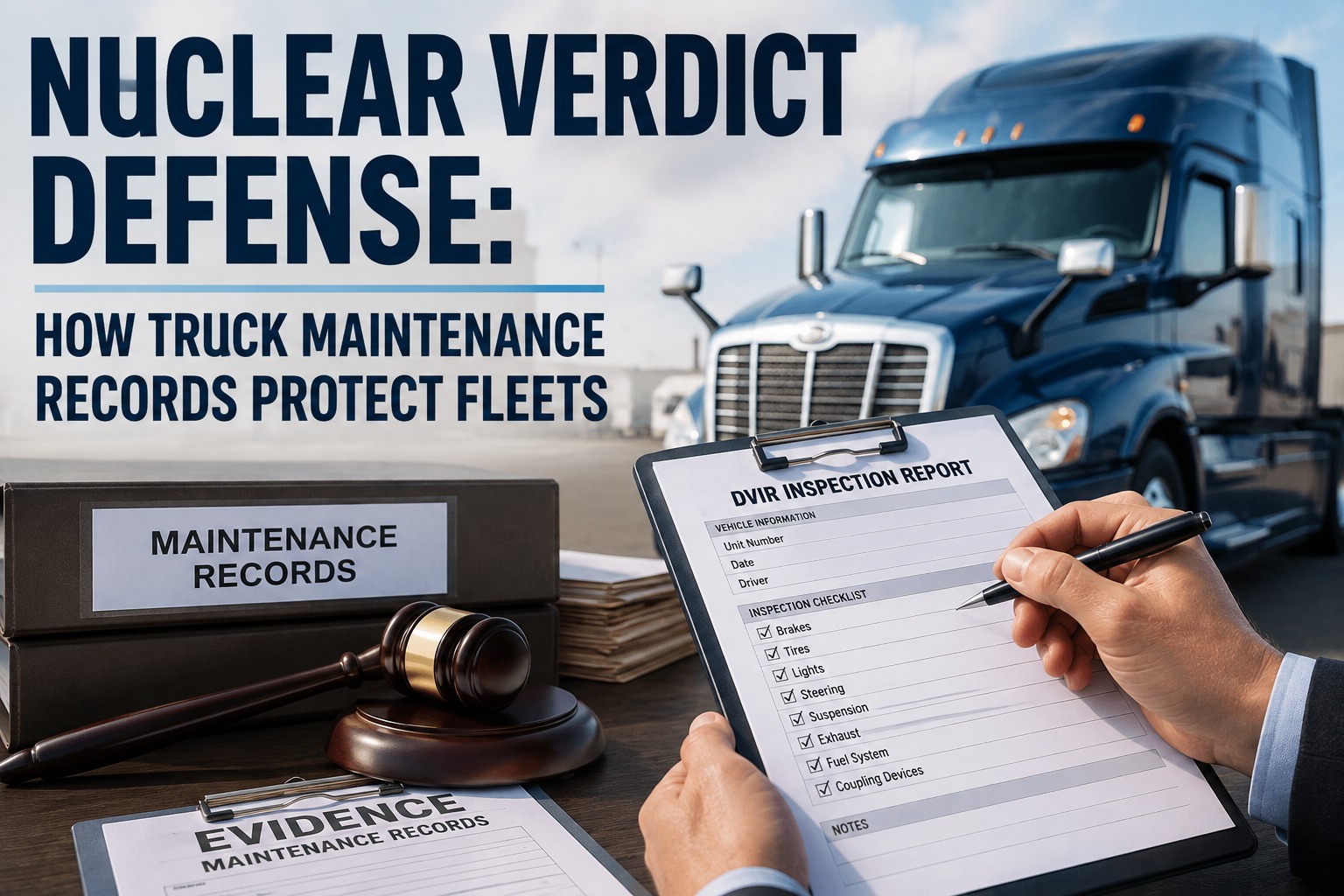
Nuclear verdicts (jury awards exceeding $10 million) are rarely won on the crash itself — they're won on pre-crash pattern evidence. Plaintiffs' attorneys build cases by subpoenaing 90 days of DVIRs and searching for inspection culture failures they can present to a jury as systemic negligence. A DVIR with only a signature reads to a jury as "check-box compliance" and supports the plaintiff's narrative that the fleet tolerated risk. A DVIR with server-timestamped, GPS-verified photos of specific inspection points reads to a jury as professional diligence and undercuts the negligence narrative. The photos don't need to prove no defect existed — they prove the inspection was real, systematic, and documented. That distinction shifts the burden back to the plaintiff, who now has to argue against contemporaneous photographic evidence rather than against a signature that could have been added at any time. Fleets that document photographically don't win every lawsuit, but they win the ones they should win — and settle the rest at policy limits rather than at nuclear verdict levels that end operating authority.
Physically yes, but the evidentiary value collapses if the photos are captured outside a fleet management platform. A photo taken with the phone's default camera app stores locally with a device timestamp (editable), often without GPS coordinates (frequently disabled), and with no attribution to any specific truck or DVIR. If the photo is later emailed, texted, or exported to a fleet system, it loses much of its chain-of-custody strength — plaintiff's counsel can argue it was staged, edited, or captured elsewhere. Fleet management apps that use the phone's camera hardware but capture the image through the app itself preserve all three metadata layers (server-side timestamp, GPS, driver/unit attribution) automatically. This is the correct approach: driver's personal phone as the physical device, fleet platform as the capture and storage system. Fleets that rely on personal phones and email pipelines create a legal exposure they don't realize until the first serious lawsuit. Contact our team for a photo policy template.
Yes — the rule (Docket FMCSA-2025-0115, published February 19, 2026, effective March 23, 2026) added explicit electronic DVIR authorization to §396.11 and §396.13, removing any remaining ambiguity about digital DVIRs and photo attachments as compliant with FMCSA requirements. Electronic records were already permitted under §390.32 since 2018, but the 2026 rule formalizes eDVIRs specifically and signals FMCSA's preference for digital, photo-evidenced audit trails. Practical implications: all three DVIR chain signatures (driver, mechanic, next driver) can now be captured electronically without any lingering uncertainty. Photo evidence attached to DVIRs is explicitly part of the compliant record structure. Fleets running paper DVIRs remain legal but are increasingly the outlier — FMCSA auditors, insurance underwriters, and litigation counsel all now expect digital-first documentation. The rule didn't create a new photo requirement, but it validated photo evidence as the FMCSA-preferred approach and shortened the compliance-vs-litigation gap between what regulators expect and what juries will accept.
Every pre-trip a photo-verified legal instrument — not just a signature
Server-side timestamps. GPS-verified location. Driver and unit attribution. 8-photo pre-trip standard on the driver's phone. Indefinite retention. FMCSA §396.11 & §396.13 compliant. Built for fleets that want to survive nuclear verdicts, not gamble against them.