Paper inspections don't fail at the walk-around — they fail after it. The form sits in a box, the defect waits days to reach the shop, and at audit time nobody can find the one report the officer asked for. Going digital isn't buying an app; it's a migration you sequence — forms, records and drivers moved in phases. This guide walks that sequence, and shows how Truck Inspection & Maintenance Management Software runs the inspection as a connected digital workflow once you're live. Start free and run your first digital inspections today.
Paper → Digital · Migration & Implementation
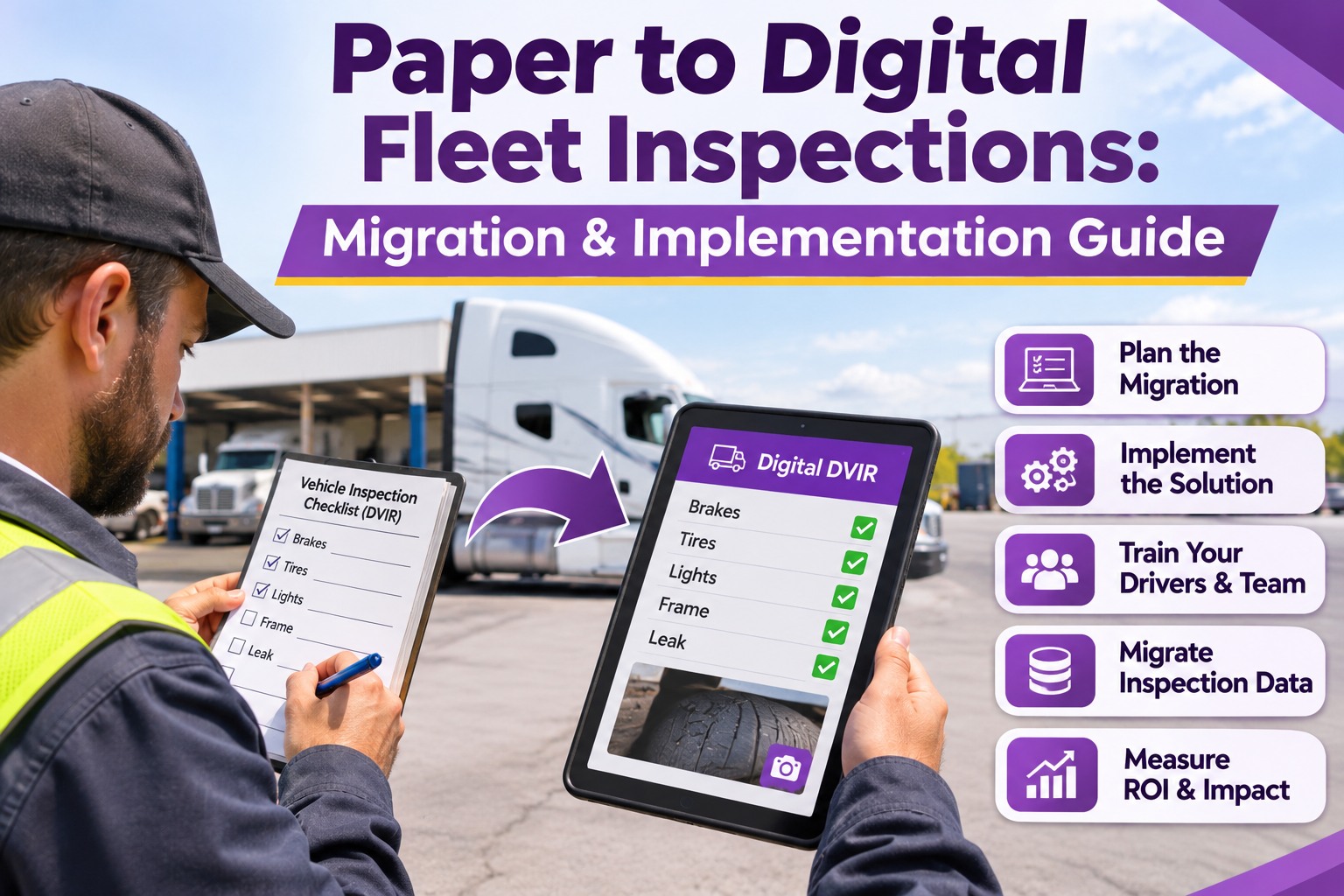
Paper to Digital Fleet Inspections: Migration & Implementation Guide
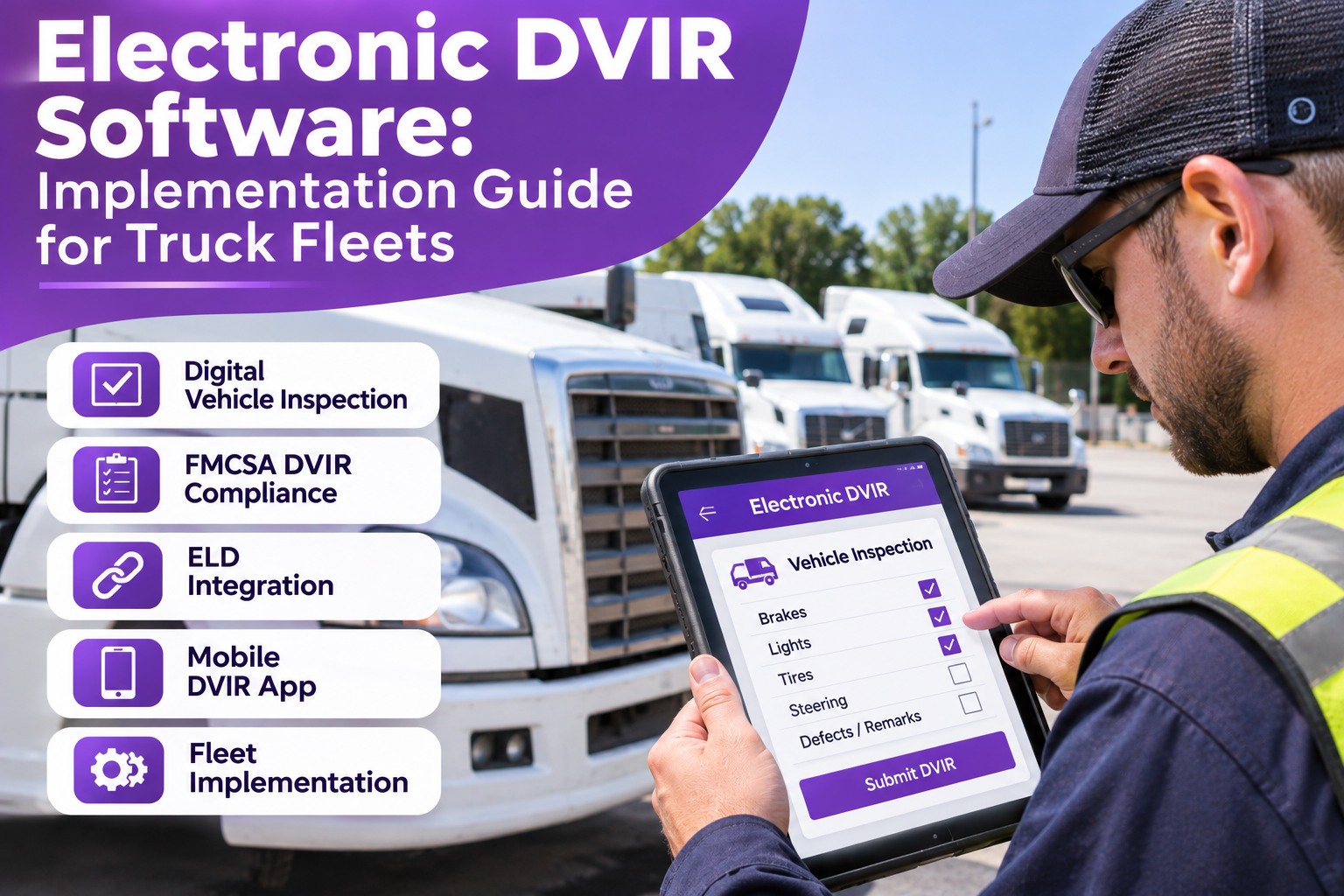
The walk-around stays the same — everything after it gets faster. Our software turns the inspection into a guided digital DVIR: the driver checks each item on the phone, a defect is logged with a photo, it becomes a work order, and the record files itself for the audit. The move there is a planned migration, not a leap, and this guide sequences it.
Why Paper Quietly Costs You
Paper has been the standard for decades, so its costs feel normal. They aren't — they compound across every vehicle, every day.
Illegible & incompleteHandwriting, skipped boxes, missing signatures — paper completion often runs 55–78%.
Days of defect lagA written defect waits in a box for data entry; the truck may run before the shop ever sees it.
Lost formsOne carbon copy, one filing cabinet, one coffee spill — and the record is simply gone.
No photo evidenceA line that reads "cracked mirror" can't prove what the driver saw, or when.
Hours of adminKeying forms, chasing signatures and filing eat a chunk of every week.
Audit scramble"Ninety days of reports on fifteen trucks" means hours in the cabinet — or a finding.
What the 2026 Rule Changed
The ground shifted this year, but not in the way most fleets assume. Three points cover it.
AuthorizedThe FMCSA eDVIR Final Rule (docket FMCSA-2025-0115) explicitly authorized electronic DVIRs under §396.11 and §396.13.
Still legalPaper DVIRs were not banned — they remain fully legal. The rule removed doubt about digital, it didn't force the switch.
E-SIGNElectronic signatures on a DVIR are legally binding, and the CSA "Driver Observed" category now scores inspection quality.
So the switch is a choice, not a mandate — but the gap between a paper form and a connected record is now hard to ignore. Book a demo to see a compliant digital DVIR.
The Five-Phase Migration
Most fleets complete the move in two to four weeks. It's an operational sequence, not a technology project — run it in order.
1Assess & chooseInventory your paper forms and inspection types. Pick an app that enforces the DVIR workflow, not a PDF of a form.
2Build your formsRebuild each paper checklist as a guided digital form, with photo-required items and defect routing rules.
3Migrate recordsLoad the active vehicle list and any open defects. Keep historical paper filed for its retention window, then archive.
4Train driversTrain supervisors first, run a short pilot at one terminal, then roll out in waves — the why, not just the taps.
5Go live & measureSet a hard paper-sunset date, cut over to digital-only, and measure the five metrics against your paper baseline.
Run the sequence once and the payback clock starts the first day drivers use the digital workflow. Start free and build your first digital form.
From Filing Cabinet to Audit-Ready
Forms rebuilt, records moved, drivers trained, paper retired — a sequenced migration that leaves every new inspection in a connected record from day one.
Driver Adoption Is the Whole Game
The software is the easy part; getting every driver to use it is the migration. Four habits separate the fleets whose completion rates climb from the ones who quietly run two systems for six months.
✦Train the why, not the tapsDrivers who understand what the record protects finish it; a login with no walkthrough stalls.
◉Pilot one terminal firstA short pilot surfaces template gaps before they hit the whole fleet.
◆Supervisors drive itTrain them in week one — their walk-around enforcement makes or breaks day 30.
⬒Set a hard paper-sunsetAnnounce the date in training. Parallel running past it breeds resistance, not confidence.
Adoption isn't an age problem — guided walk-arounds, big tap targets and photo-instead-of-typing see strong completion across every driver group within the first month. Book a demo to see the driver experience.
What to Migrate — and What to Leave
Migration is not re-keying years of paper. Move what you'll use; let the archive stay an archive.
Migrate
- The active vehicle list and VINs
- Open, unresolved defects
- Your inspection templates, rebuilt digital
- Records still inside the retention window
Leave in the cabinet
- Years of closed paper forms
- Forms for retired vehicles
- Anything already past retention
- Keep paper filed for the retention window, then archive
Historical paper stays filed for its retention minimum — the DVIR window and the §396.17 annual's longer clock — then archives; every new inspection lives digital from day one. Start free and bring your active fleet across.
Measure the ROI Honestly
Skip the promised numbers. Measure five things on paper now, run three months on digital, and compare — the difference is your real return.
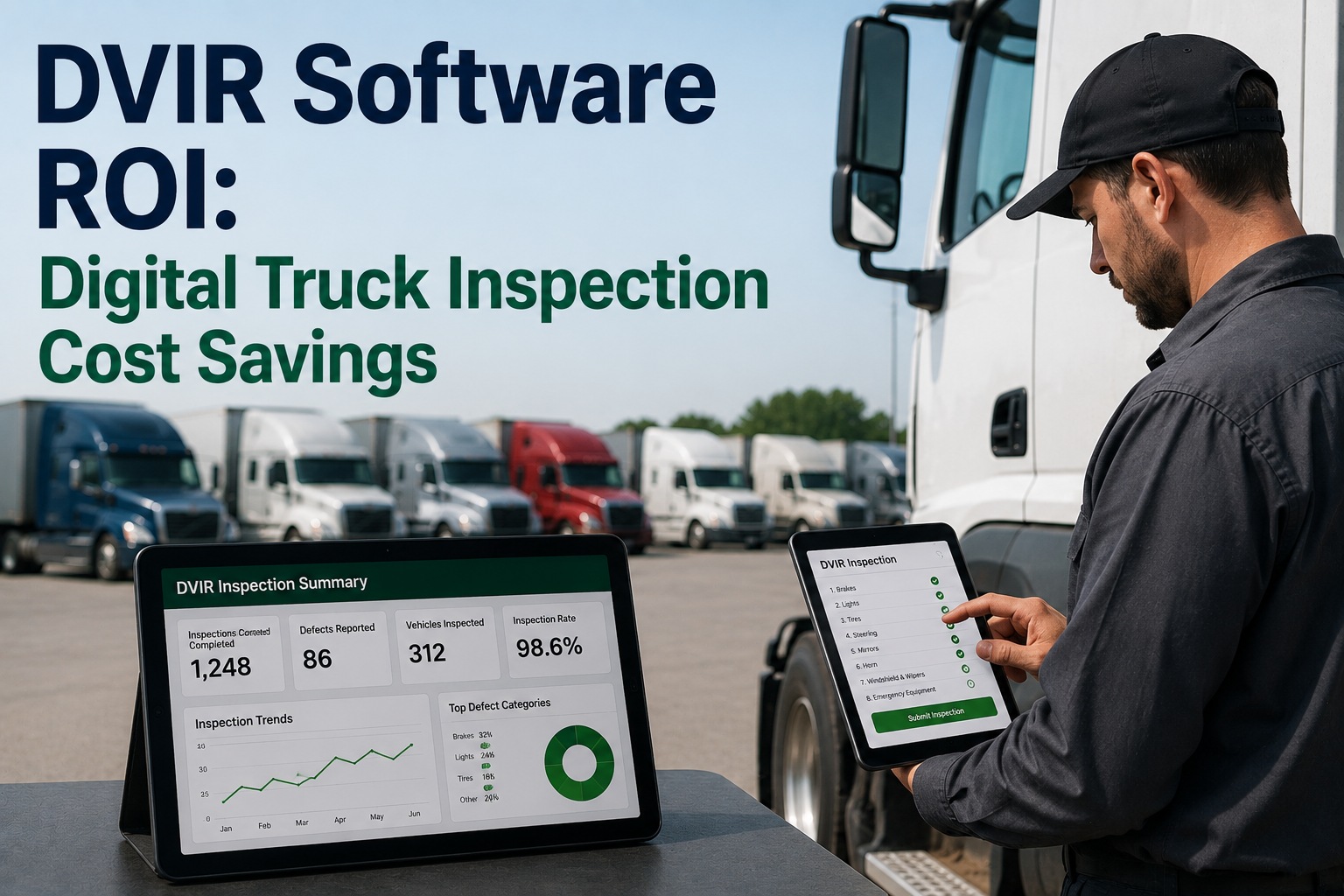
Inspection time~12–25 min→~5–10 min
Completion rate~55–78%→~94–98%
Defect to shopDays→Seconds
Audit retrievalHours→Under a minute
Incomplete reports~15–25%→Near 0%
Typical before/after ranges from industry implementation data — your own baseline is what counts. Measure the same five again at three months. Book a demo to map the metrics to your fleet.
From Paper Form to Live Record
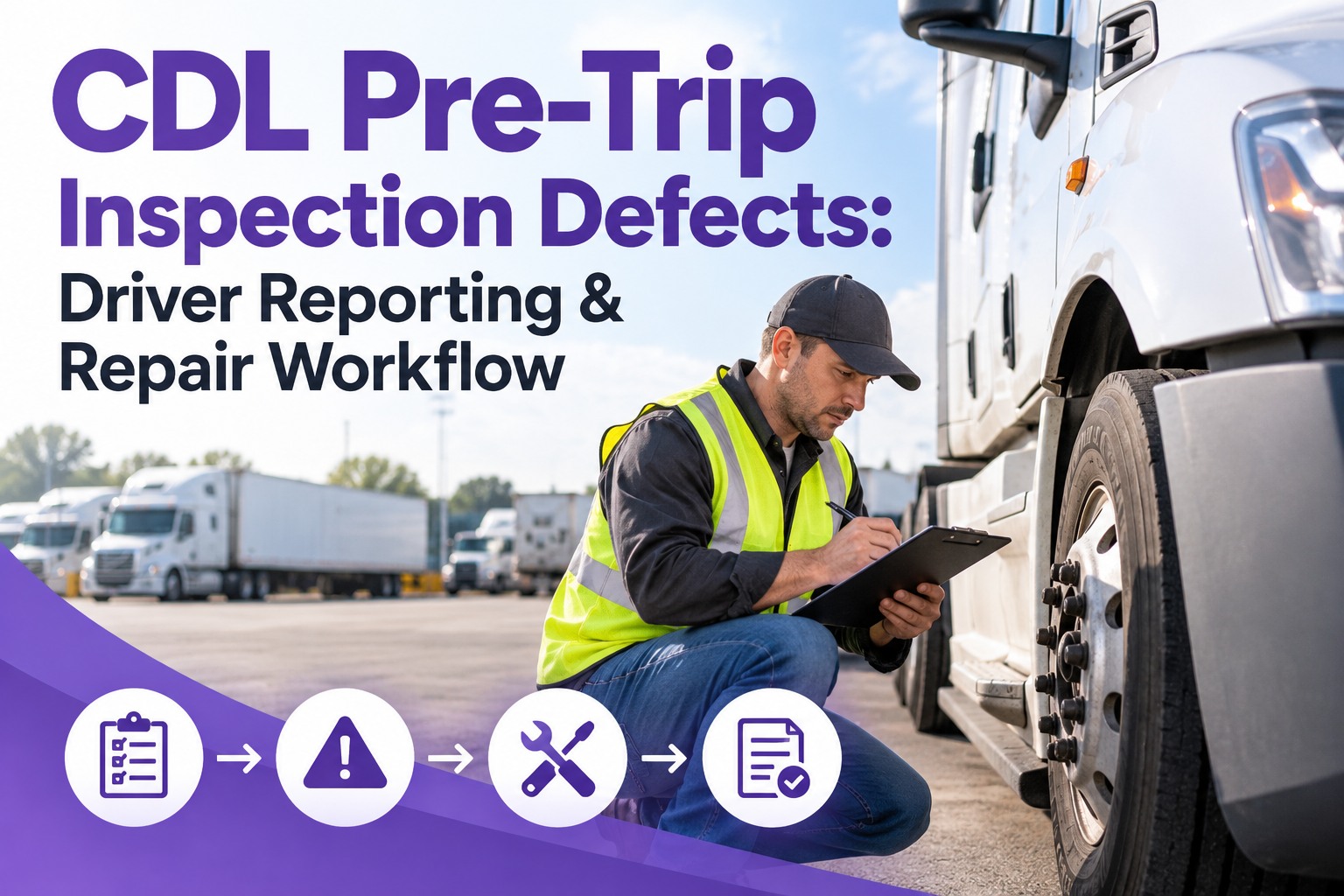
Once you're live, the inspection the driver always did becomes a connected record the moment they finish it.
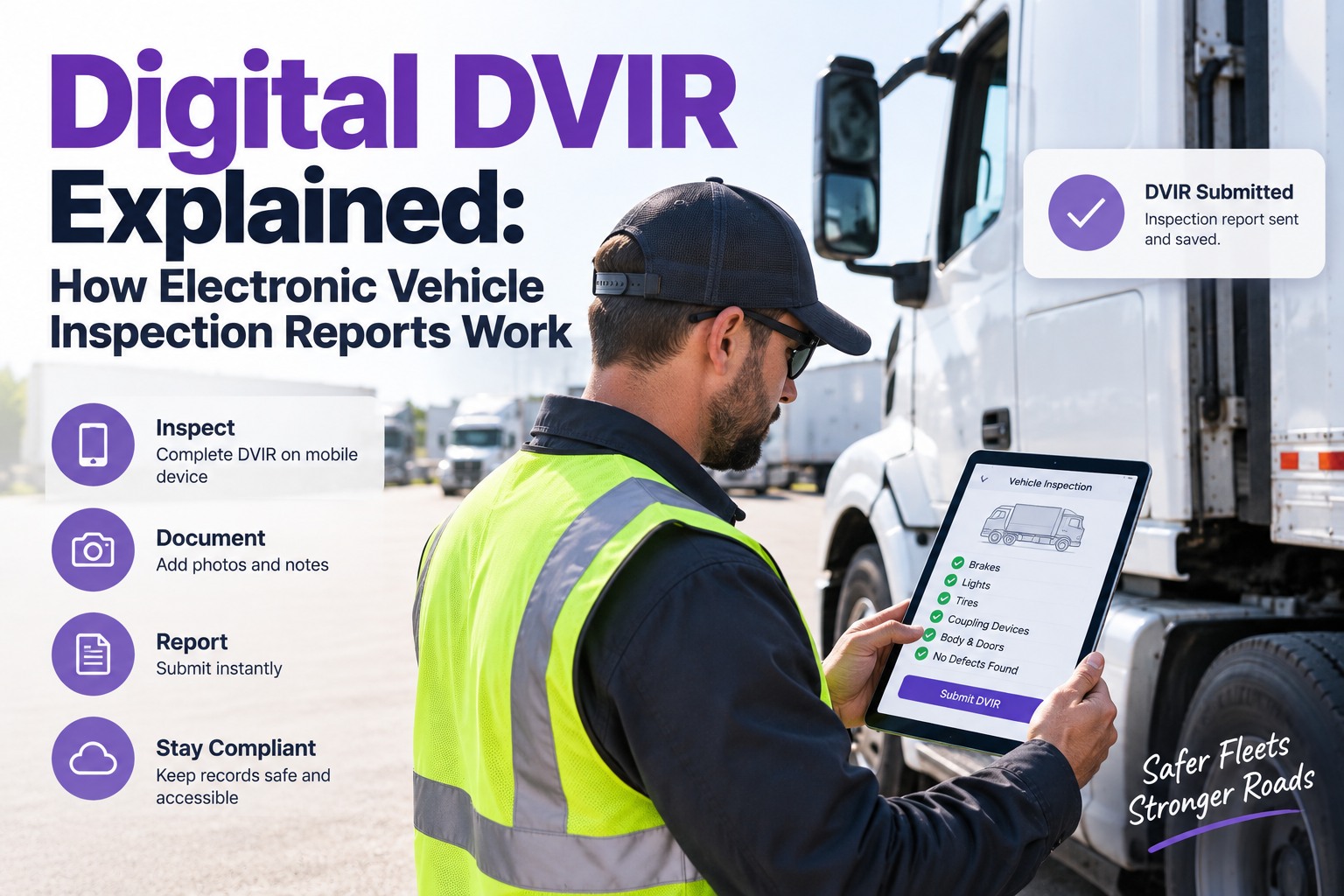
1Inspect on phoneA guided walk-around — no memorizing, big tap targets.
2Log defect + photoA failed item is captured with a photo and location.
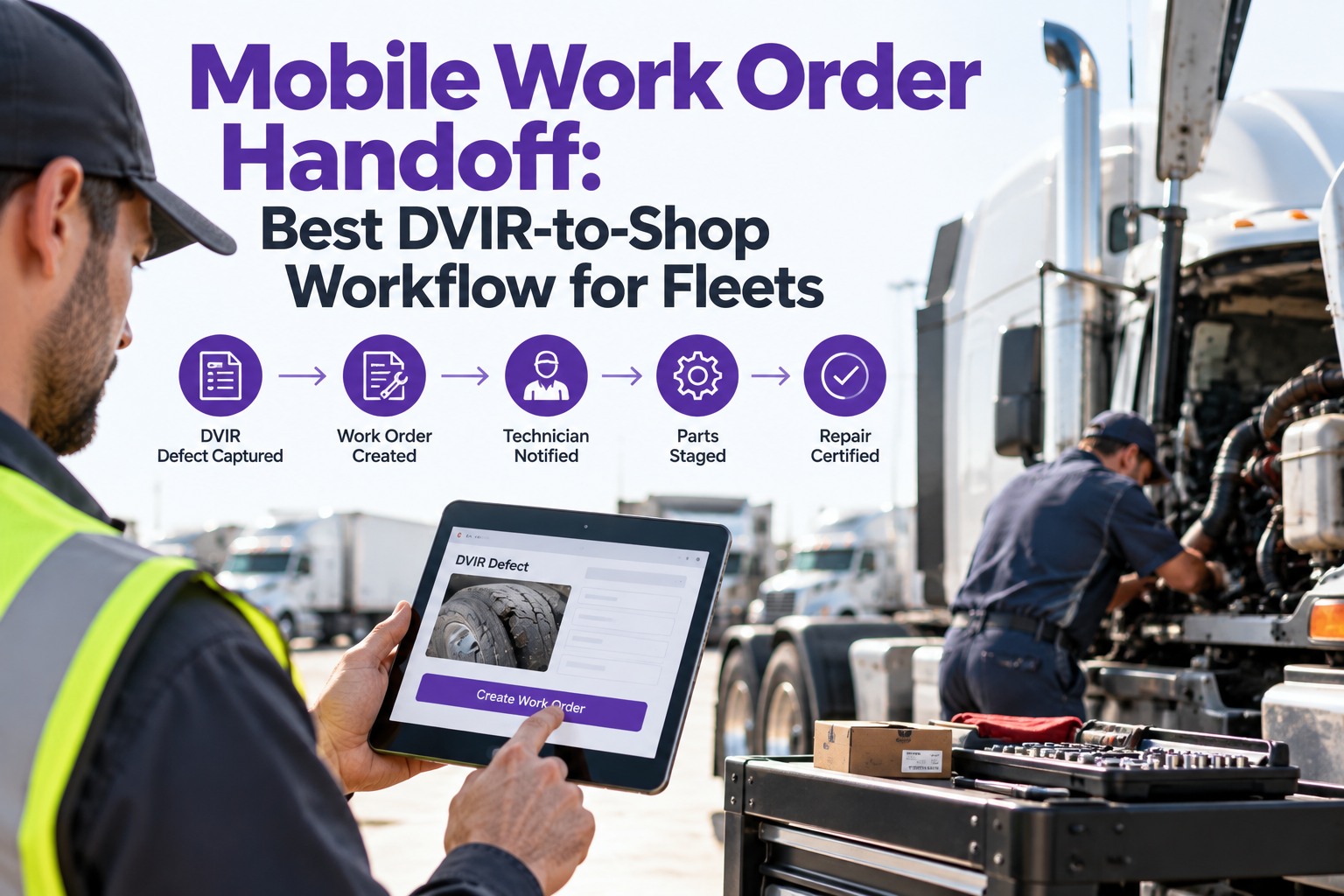
3Work order raisedThe defect routes to the shop in seconds, not days.
4Record filedThe signed DVIR is kept and retrievable for the audit.
The walk-around is unchanged; everything after it is faster and findable. Start free and route defects the moment they're found.
Why Fleets Run the Migration on TIM
The move is a sequence, and the software is what holds each step in place across the whole fleet.
Guided digital formsEach paper checklist rebuilt as a form drivers can't submit half-done.
Photo-required defectsA failed item needs an image before it moves on.
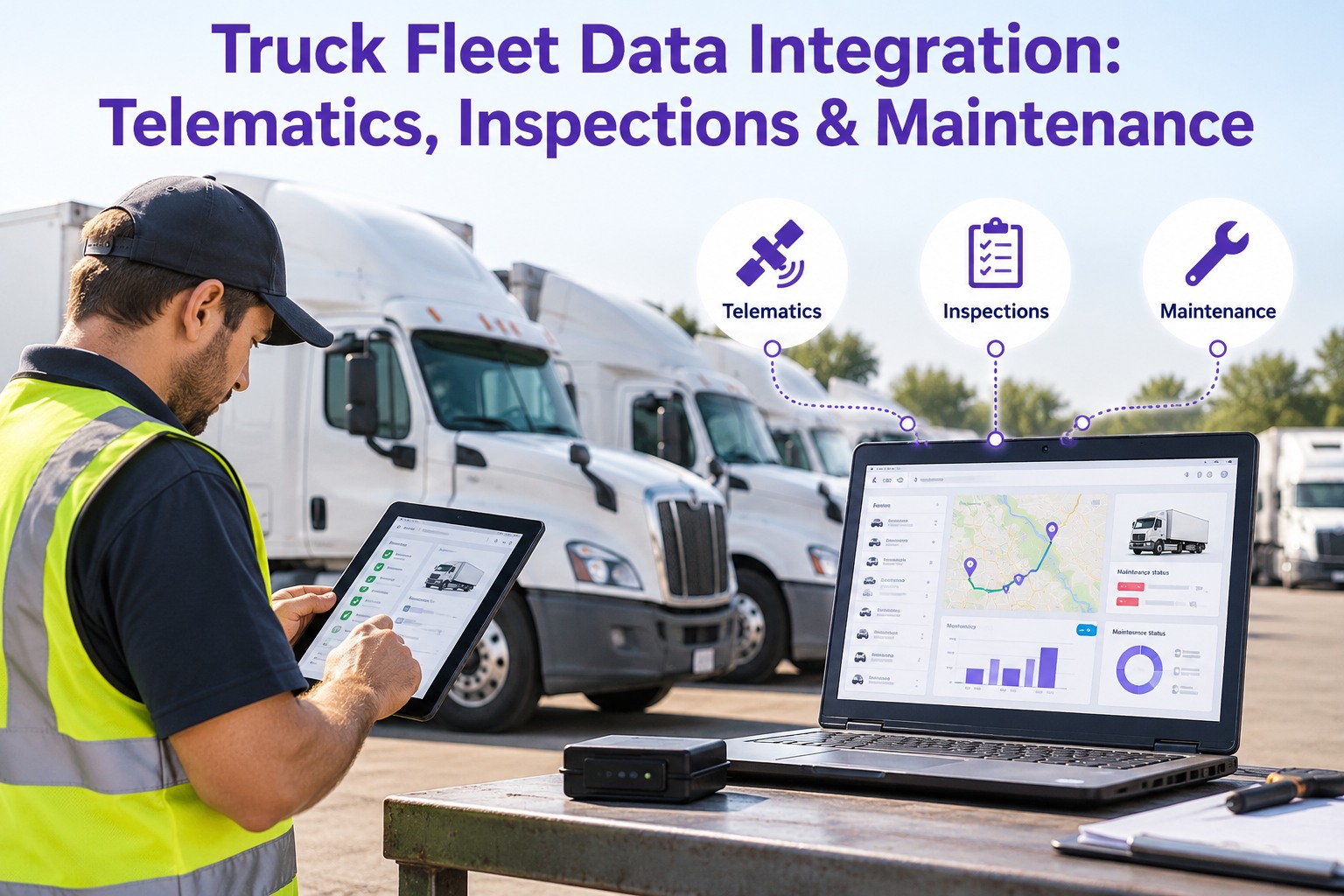
Defect to work orderFindings route to the shop in seconds with the photo attached.
Records kept for youSigned DVIRs filed and retrievable within the retention window.
Completion visibilitySee who inspected, who missed, and which drivers to coach.
Offline captureInspections run with no signal and sync when the phone reconnects.
The result: paper's work still happens, but the record does the filing itself. Start free and move your fleet off paper.
Frequently Asked Questions
1How long does the migration take?
Most fleets go from filing-cabinet DVIRs to fully digital in two to four weeks — a week of prep, a short pilot, waves of training, then a hard paper-sunset. The time cost to the manager is a handful of hours across the month.
Book a demo to plan your timeline.
2Is a digital DVIR legal — is paper banned?
Digital is explicitly authorized under the 2026 FMCSA eDVIR Final Rule (docket FMCSA-2025-0115), with e-signatures binding under the E-SIGN Act. Paper was not banned — it's still legal; digital is simply the stronger record.
Book a demo to see a compliant eDVIR.
3Will drivers actually use it?
They do when it's faster than paper and they know why it matters — train supervisors first, pilot one terminal, and set a sunset date. Strong completion shows up within the first month across every driver group, regardless of age.
Book a demo to see the driver flow.
4What do I migrate from paper?
The active vehicle list, any open defects, and your inspection templates rebuilt as digital forms. Keep historical paper filed for its retention window, then archive it — don't re-key years of old reports.
Book a demo to scope your migration.
Assess · Build · Migrate · Train · Go Live
Retire the Paper, Keep the Walk-Around
Truck Inspection & Maintenance Management Software rebuilds your checklist as a guided digital DVIR, routes defects to the shop, and keeps every record — so the move off paper is a sequence you run once, not a project that drags.
No credit card required. Free for up to 3 trucks. Built for FMCSA-compliant fleets.