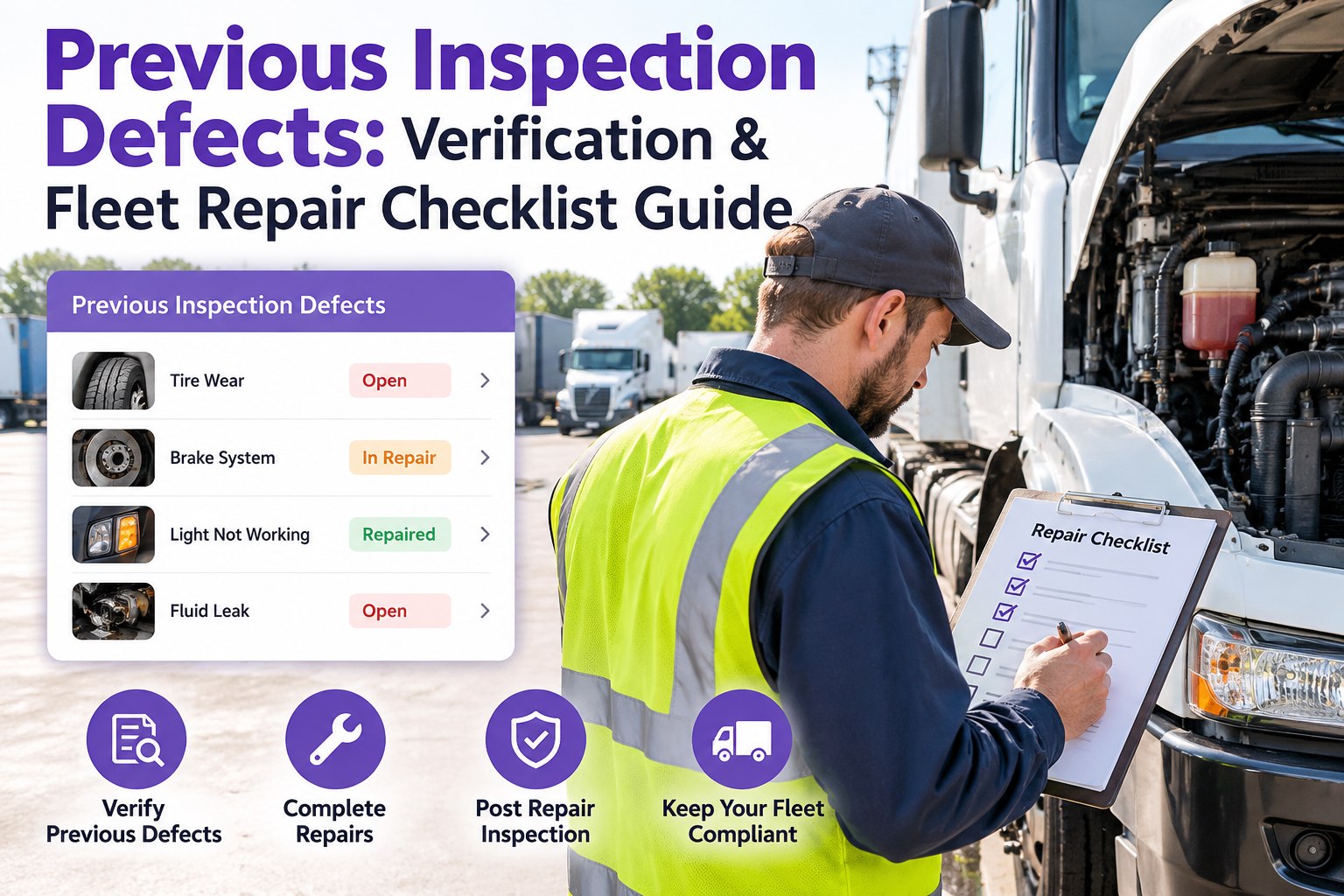
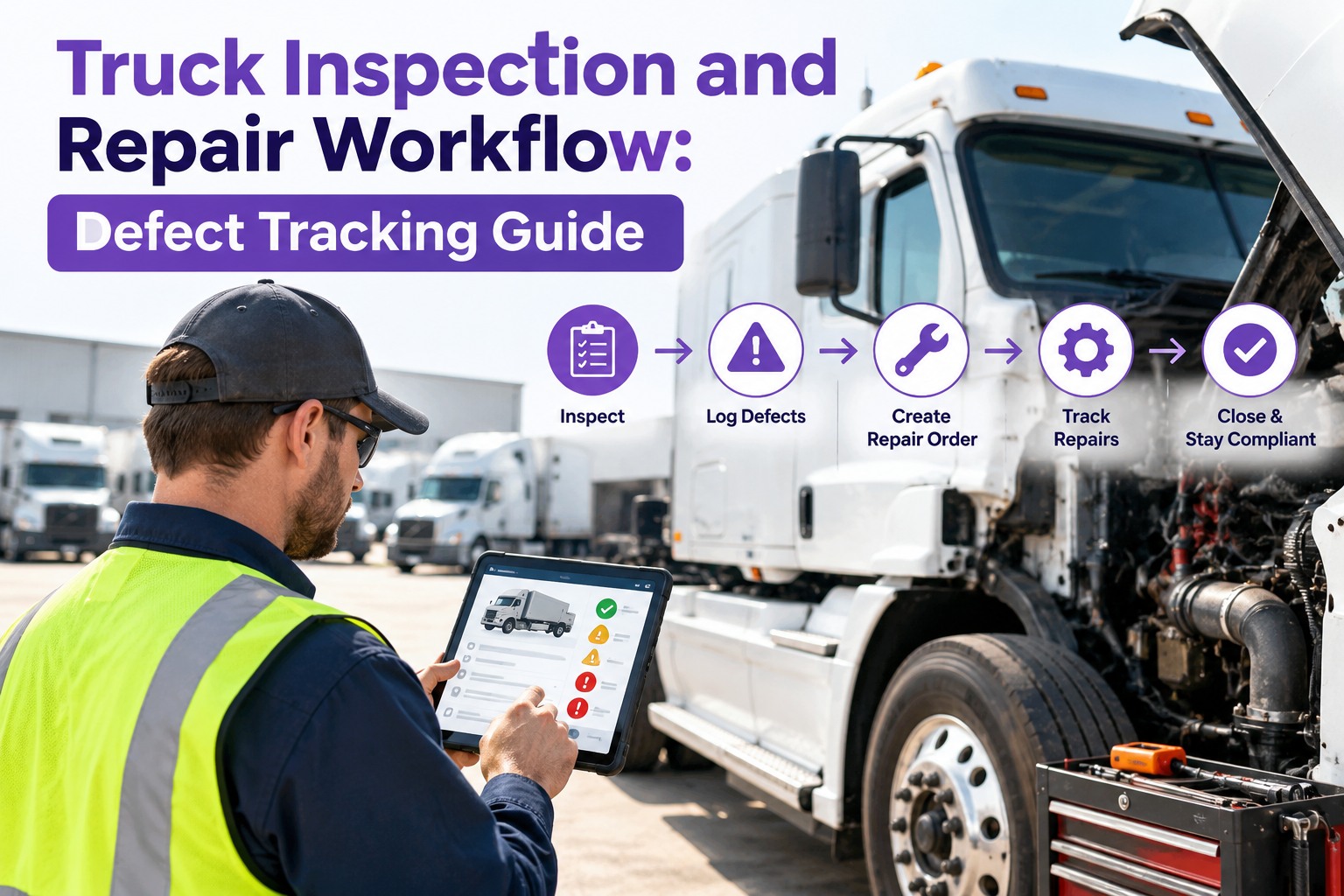
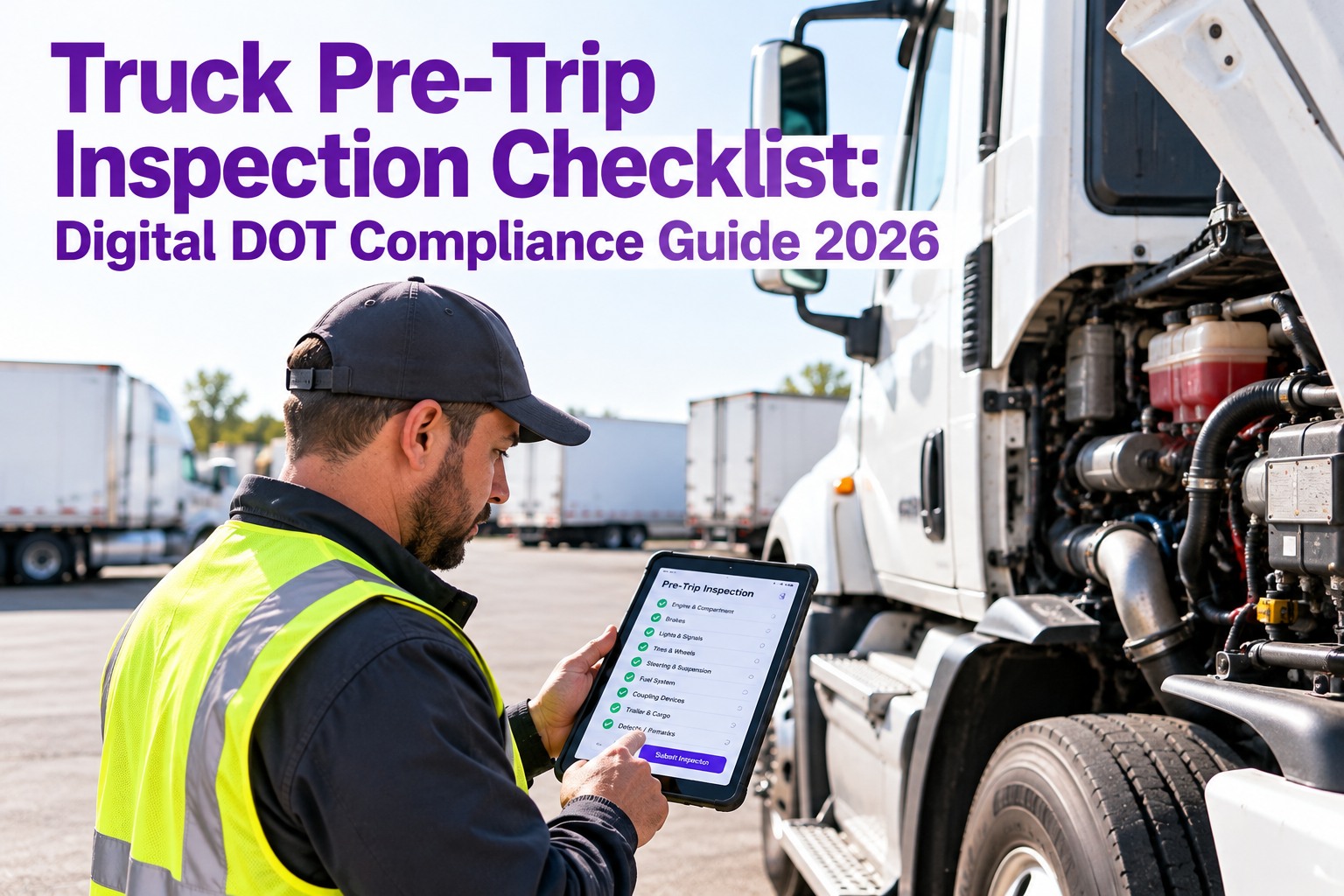
A defect written up yesterday is only closed when three things are true: the repair was done, it was documented, and someone confirmed it before the truck rolled again. Skip the middle or the last step and you have a truck running on a defect everyone assumed was fixed — and a paper trail that shows you knew. This checklist walks the verification chain for previous inspection defects: finding the open items, confirming the repair, documenting it to the regulation, and signing it off so the loop actually closes. Start free and close every open defect with TIM.
TIM · Previous Inspection Defect Verification
Previous Inspection Defect Verification: Fleet Repair Control Guide
A defect logged and then forgotten is the worst finding an inspector can make: it proves you knew and didn't act. What you want is simple — every reported defect confirmed repaired, documented, and signed off before the truck moves again. That's the loop Truck Inspection & Maintenance Management Software (TIM) runs for you: a DVIR defect becomes a graded work order, the repair is tracked to a verified close, the driver's §396.13 certification is captured, and nothing dispatches with an open critical item still on its record.
4-hour first responseEvery reported defect is acknowledged, graded, and assigned within four hours — so an open item never sits unseen while the truck keeps running.
What the Regulation Actually Requires
Verifying a previous defect isn't a best practice you can skip — it's written into the federal rules. The driver vehicle inspection report has to come full circle before the vehicle operates again.
§396.11
The defect is reported
A driver who finds or is made aware of a defect that affects safe operation lists it on the driver vehicle inspection report at the end of the day.
repair
The carrier corrects it
Before the vehicle is operated again, the motor carrier repairs any listed defect that would affect safe operation — and certifies on the report that the repair was made.
§396.13
The driver verifies & signs
Before driving, the next driver reviews the last report, is satisfied the listed defects were corrected, and signs to acknowledge the certification.
That signature is the moment the loop closes. Miss it — or sign it without the repair actually done — and a reported defect becomes a violation on your maintenance record. Contact our team to build this chain into your workflow.
Where the Loop Breaks
A reported defect doesn't fail because no one cared — it fails at a handoff. These are the four places a previous defect quietly stays open while everyone assumes it's closed.
01
Reported, never repaired
The defect is on the report, but the work order was never raised — so the fix simply never happened.
02
Repaired, never documented
A tech fixed it, but nothing was written back to the report — on paper, it still looks open and unverified.
03
Signed without checking
The next driver signs the certification out of habit, without confirming the listed defect was actually corrected.
04
Closed, but not held
The repair and certification happened, but the report wasn't retained — so it can't be proven when asked.
The Previous-Defect Verification Checklist
Run this before the vehicle returns to service on any truck that carried a reported defect. Tap each box as you clear it. The chain only holds if every step is done and recorded — a gap anywhere leaves the defect open.
16 Checks That Turn "We Fixed It" Into Proof
Every one of these is simple on its own — the failures come from a step skipped or a record kept somewhere no one can find. TIM holds the whole chain on one record: the defect, the work order, the completed repair, the driver's certification, and the retained report, so a previous defect is provably closed, not just assumed.
Do-Not-Dispatch Conditions
Most previous-defect findings are a documentation fix. These four mean the truck does not return to service until they're resolved — the loop is genuinely still open.
Hold the TruckAny one of these keeps it out of service
⊘A safety-critical defect from the last report with no completed repair behind it
⊘A repair marked done that the component itself doesn't confirm on inspection
⊘A missing carrier certification that the required repair was performed
⊘A defect carried across multiple reports with no record of any fix
Signing a certification for a repair that wasn't made is the one shortcut that turns a maintenance gap into a falsified record. Contact our team to set do-not-dispatch rules on open defects.
How TIM Delivers It
One Record From Reported Defect to Verified Close
A previous defect stays open because its pieces live in different places — the report on a clipboard, the repair in a shop note, the sign-off nowhere. TIM keeps them on one record, so verifying a past defect is a glance, not a hunt.
Every open defect visibleReported items stay on the unit's record until a verified repair closes them — none slip off.
Defect tied to its repairEach listed defect links to the work order and completed fix, so "done" is provable, not assumed.
Certification capturedThe §396.13 review and signature are recorded against the report before the truck moves.
Nothing dispatches openA unit with an open critical defect is flagged until the fix is verified and signed off.
Photo proof attachedBefore-and-after photos and the repair detail ride with the defect for a clean audit trail.
Reports retained in placeReport, repair record, and certification are stored together for the required period.
Frequently Asked Questions
What does it mean to verify a previous inspection defect?
It means closing the loop on a defect that was reported earlier — confirming the repair was actually completed, documenting it against the original report, and signing it off before the vehicle operates again. Under federal rules, a defect listed on a driver vehicle inspection report has to be corrected by the carrier, certified as repaired, and reviewed and signed by the next driver. Verification is making sure all three of those happened and can be proven, rather than assuming a written-down defect was handled.
What does 49 CFR 396.13 require before driving?
Three things. Before operating a commercial vehicle, the driver must be satisfied it's in safe operating condition, review the last driver vehicle inspection report if one was prepared listing defects, and sign that report to acknowledge the review — a signature that certifies the required repairs were performed. In plain terms, the driver can't just climb in and go if the previous report flagged a defect; they have to confirm it was addressed and sign off on it first. That signature is what formally closes a previous defect.
Why is an unrepaired reported defect such a serious finding?
Because it shows the carrier knew. A defect that was never reported is a miss; a defect that was reported, documented, and then operated on anyway is evidence that the problem was known and the vehicle ran regardless. That's far worse in an audit or after an incident, and it lands on the Vehicle Maintenance side of your safety record. The written report that's supposed to protect you becomes the proof against you if the repair and certification don't follow it.
How long do I keep the report and repair certification?
A driver vehicle inspection report that lists a defect, together with the certification that the required repair was made, must be retained for the period set by the federal rules — commonly three months from the date the report was prepared. The point is that the proof has to outlive the repair: an auditor may ask you to show that a specific reported defect was corrected before the vehicle went back out. Keeping the report, the repair record, and the signed certification together is what lets you answer that quickly.
How does software help verify previous defects?
By keeping the whole chain on one record instead of scattered across paper and shop notes. Good software keeps every reported defect open until a verified repair closes it, links each defect to its work order and completed fix, captures the driver's review and certification, and blocks a unit with an open critical defect from being dispatched. It also retains the report and certification together for the required period, so proving a past defect was corrected is a quick lookup rather than a search through folders.
Start free and track every defect to a verified close with TIM.
Find · Confirm · Document · Sign Off · Retain
A Defect Isn't Closed Until You Can Prove It
"We fixed that" isn't verification — a completed repair, a written certification, a driver's signature, and a retained report is. Run the 16 checks on every unit that carried a reported defect, honor the do-not-dispatch lines, and let TIM hold the chain on one record so a previous defect is provably closed, not just assumed. It's free to start on your first three trucks.
No credit card required · Free for up to 3 trucks · Defect-to-repair tracking, certification capture, and report retention built in