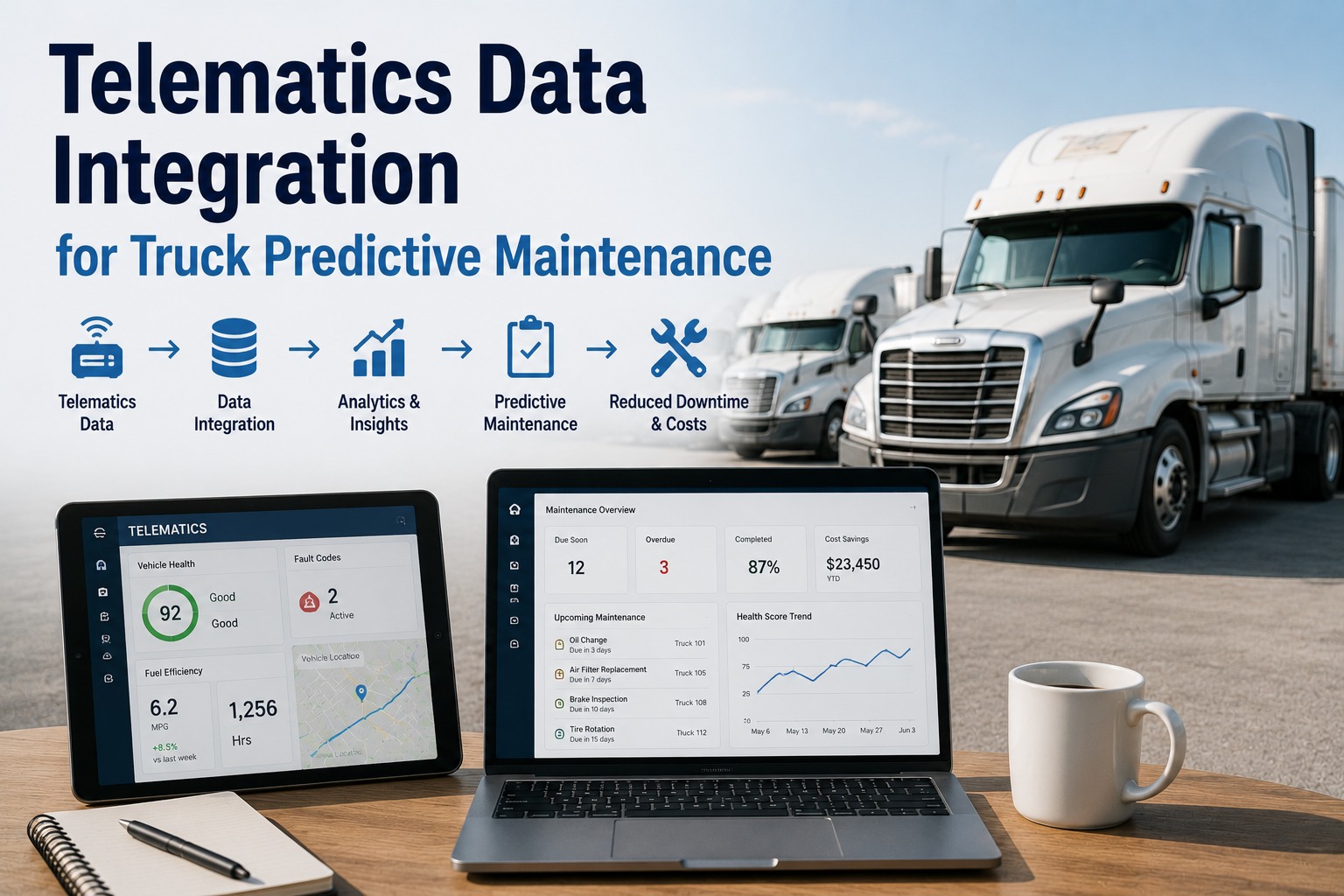
A modern truck streams 1,000+ data points a minute and its engine computer can throw 300 to 400 fault codes a month — nearly all of them noise. That flood is exactly why fleets drown in telematics and still get surprised on the shoulder: the one reading that moved before the failure was buried under hundreds that didn't. The useful skill isn't more data — it's knowing the short list of signals that truly forecast a repair, and acting on each one fast. That second part is exactly what Truck Inspection & Maintenance Management Software (TIM) is built to help with — turning a signal into a tracked, closed repair instead of another ignored alert. Start free and put TIM to work on your fleet's signals.
A Signal Nobody Acts On Is Just a Breakdown With a Head Start.
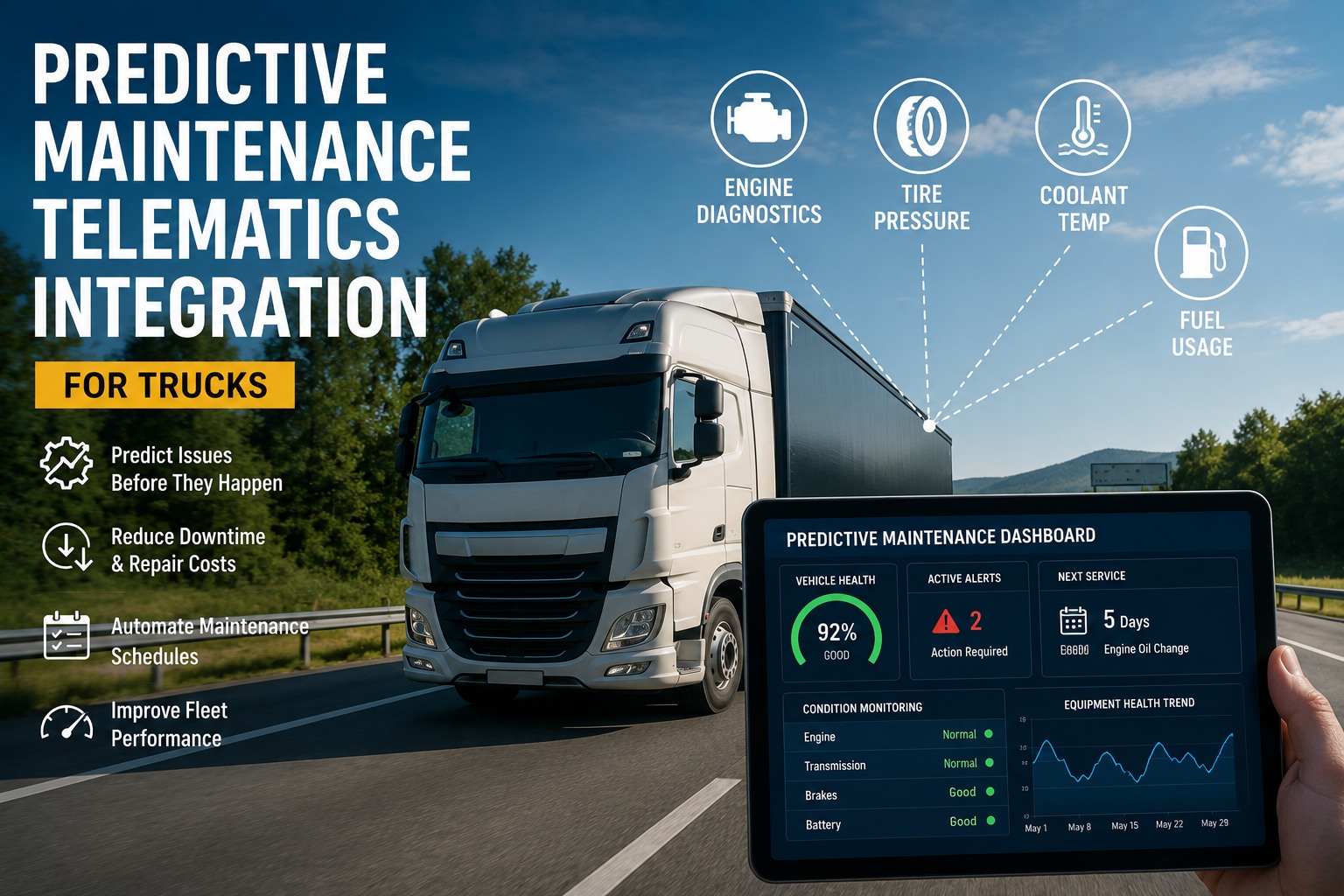
The warning almost always shows up early — in a telematics trend or a pre-trip inspection, days or weeks before the truck quits. What's missing isn't data; it's the workflow to act on it. Truck Inspection & Maintenance Management Software (TIM) runs that loop end to end: a DVIR defect or a flagged signal becomes a graded work order, routes to the right technician by severity, and sets the next PM by mileage, engine hours, and fault condition — on one record, nothing re-typed, nothing forgotten.
Signal vs. Noise — The One Idea This Rests On
Prediction only works on data that moves before the failure. A warning light is already too late — the part is failing by the time it glows. The real signals drift in the days and weeks beforehand, and you spot them the same way every time: compare a reading to that truck's own baseline, not a fleet average. One fault code is noise; the same code firing more each week is a signal.
- Warning light already on
- Active derate limiting power
- A single code, read once
- Truck already on the shoulder
- A code's frequency climbing week over week
- Fuel economy sliding off the truck's own average
- Pressures and temperatures drifting off baseline
- Regens coming closer together
Get that right and the rest is just knowing which readings lead — and TIM does the comparing for you, trending each reading against the truck's own history so a real signal stands out from the noise. Contact our team to map the signals your trucks already stream.
The Top Signals That Actually Predict a Repair
Each of these drifts before the part behind it quits — and each buys lead time if you catch the trend, not the alarm.
How often one code (SPN/FMI) fires, day over day.
The part behind it is degrading — rising frequency is the trend; a one-off is noise.
Trend it per truck; queue the repair when it climbs.
MPG against the truck's own recent average — not the fleet's.
A clogging filter, failing injectors, dragging brakes, or soft tires — before any light.
Compare each truck to itself; chase the lone slip in a pod.
Pressure across the filter and how often it forces a regen.
Aftertreatment strain heading for a derate — regens closing in is the tell.
Fix it at the advisory stage; a cleaning beats a roadside derate.
System voltage at cranking and under load, vs normal.
The most avoidable roadside no-start — a fading battery or alternator.
Flag the dip; swap on your schedule, not the shoulder's.
Running coolant temp vs normal for the load and grade.
Water pump, radiator, thermostat, or fan clutch heading for an overheat.
Watch the baseline drift up, not just the alarm.
Oil-pressure trend plus hub temperature and vibration.
Engine-bearing wear and wheel-end failure — costly and dangerous.
Trend slowly; a hot hub is a bearing talking weeks ahead.
Not one of these is a warning light — every one is a trend, worthless unless it reaches someone who acts, which is exactly the handoff TIM closes. Start free and put every signal in front of the right person with TIM.
Act on Each One — Fast
A signal is only as good as the response it triggers. Don't treat them all the same — sort by lead time into three lanes, and each gets the response it deserves.
Three lanes, not one inbox — and TIM sorts every flag into the right one automatically, which is the difference between a predictive program that sticks and one that dies of alert fatigue. Contact our team to set severity lanes for your fleet.
The Software That Turns Every Signal Into a Closed, Certified Repair
The signal is the easy part; the money is in the response — and that's the job TIM is built for. Most predictions die because the flag lands in a dashboard nobody opens, or never becomes a work order. TIM closes that gap: a flagged condition — a driver's pre-trip defect or a reading off its baseline — becomes a graded, routed, certified work order on one record, with nothing re-typed or forgotten. Here's where the software helps on each front.
Frequently Asked Questions
Which signal is the single best predictor?
How far ahead can a signal warn me?
Why does my team ignore most telematics alerts?
Do I need new hardware for this?
Stop Collecting Data You Never Act On
Your trucks already tell you what's about to break — the warning is in the trend, weeks before the light. The fleets that win get the few signals that matter in front of the right person and turn each into a closed, certified repair. That's the whole job of TIM — the inspection and maintenance management software that carries a signal from flagged to fixed, on one record, so nothing you spot ever goes to waste.