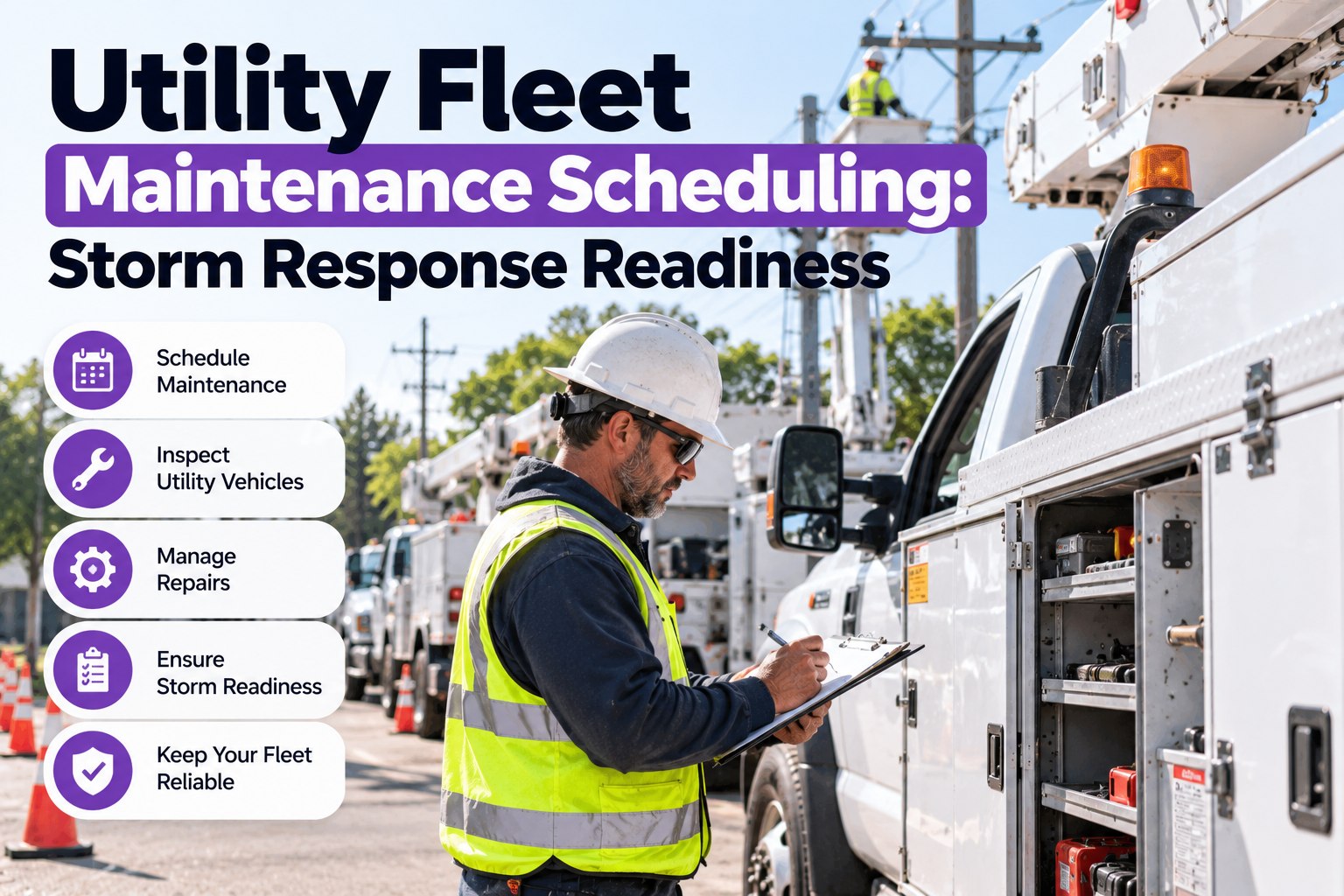
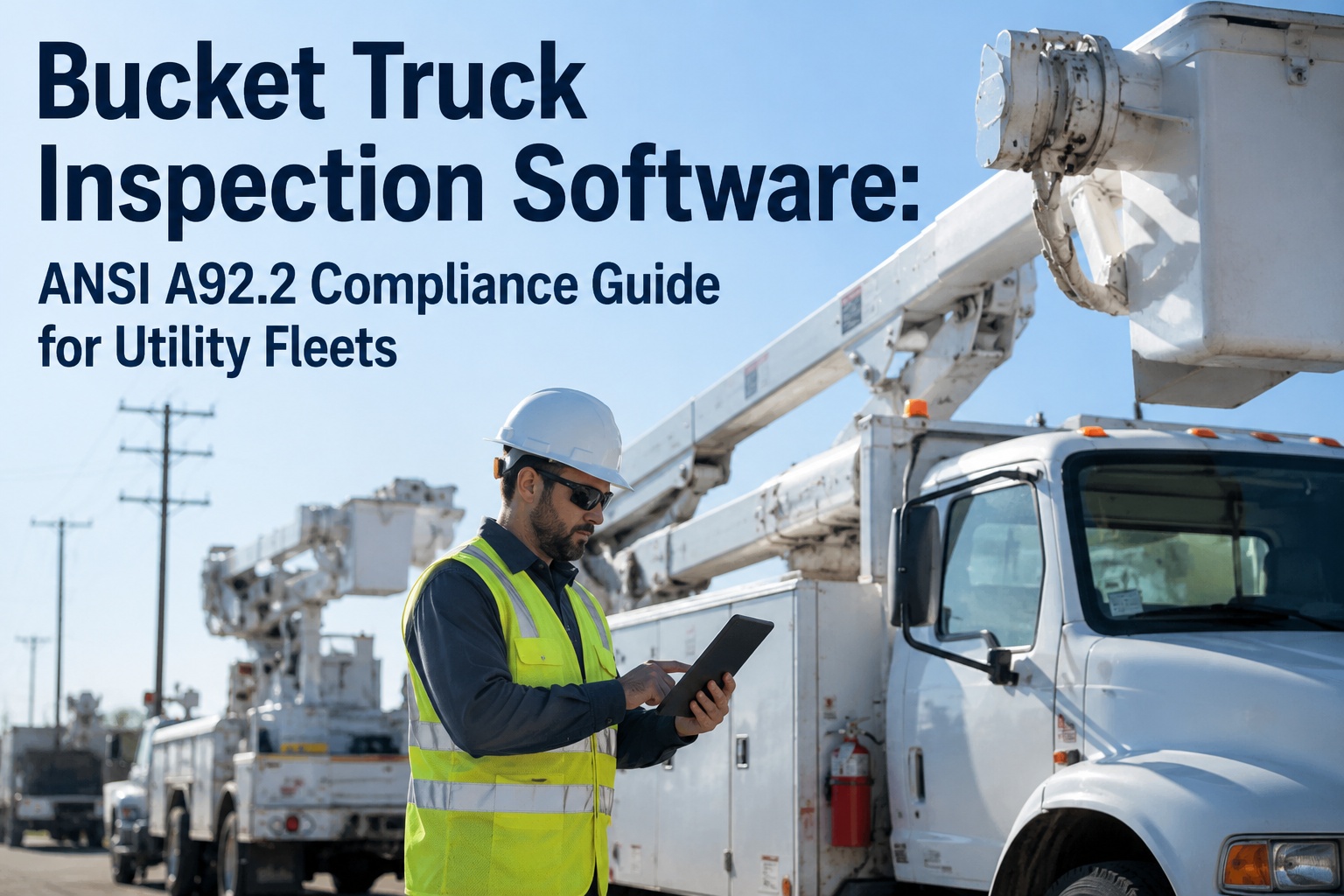
A storm doesn't check your maintenance calendar. It arrives when it arrives, and the question it asks is brutally simple: how many of your bucket trucks, digger derricks, and service units can roll right now? A fleet that defers a few PMs during a quiet stretch looks fine on paper — until the call comes and three trucks are down for the exact service that got pushed. Storm readiness isn't a checklist you run the day before; it's a scheduling discipline that keeps the fleet deployable every day. Start free and keep your restoration fleet ready on demand.
Steady PM · Pre-Storm · Deploy · Recover
Utility Fleet Maintenance Scheduling: Storm Response Truck Readiness
Deferred maintenance doesn't disappear — it waits for the worst possible moment and comes due all at once. Truck Inspection & Maintenance Management Software keeps every utility unit on a live PM schedule, flags the trucks drifting toward overdue before a storm does, and routes every defect to a tracked repair — so your restoration fleet's readiness is a number you can see, not a hope you find out about at mobilization.
On demandstorms don't wait for your calendar
No deferralpushed PM strands trucks at mobilization
Visiblefleet readiness as a live number
The Two Clocks Every Utility Fleet Runs
The whole challenge of storm readiness is that a utility fleet lives by two clocks at once — and they don't sync. Managing the gap between them is the entire job.
The maintenance clock
Predictable and yours to control — PM intervals by mileage, engine hours, and calendar; annual aerial-device and dielectric testing; inspection cycles. You know exactly when each is due.
The storm clock
Unpredictable and nobody's to control — the call can come tomorrow or in three months. When it does, every unit needs to be deployable that hour, whatever the maintenance clock says.
Readiness is the overlap A truck is storm-ready only when both clocks agree — it's current on maintenance and available the moment it's called. Deferring PM to keep trucks on the road during a quiet week quietly erodes that overlap, so the fleet looks available right up until the storm clock fires and the maintenance debt comes due all at once. Truck Inspection & Maintenance Management Software keeps the maintenance clock visible against the calendar, so you close the gap on your schedule instead of the storm's.
The Readiness Schedule — Four Phases, One Continuous Loop
Storm readiness isn't a mode you switch into; it's a cycle the fleet runs year-round. Each phase has its own maintenance focus, and the handoff between them is where readiness is won or lost.
1
Steady-state PM
The quiet stretch. Run every PM on schedule, clear the defect backlog, and keep deferrals at zero — this is where readiness is actually built.
→
2
Pre-storm staging
Forecast in view. Top-off inspections, confirm every unit's status, fast-track any open safety defect, and stage ready trucks.
→
3
Deployment
Restoration underway. Log field defects, triage on the fly, and keep units running with minimal, prioritized fixes.
→
4
Post-event recovery
Storm passed. Catch up deferred work, repair deployment wear, and reset the fleet to full readiness for the next call.
Fleet Readiness, as a Number You Can See
"Are we ready?" shouldn't be a question you answer by walking the yard. A readiness board turns the whole fleet's status into one view — available units, trucks in service, and the ones trending toward overdue before they become a problem.
86%Fleet ready
31Available
4PM due soon
1Down
Bucket trucks12 of 12 current on PM & dielectricAll ready
Digger derricks2 approaching PM interval this weekStage first
Service trucks1 down for brake repair, parts on order1 down
Pole trailersAll units inspected and availableAll ready
Why the number matters at mobilization When a mutual-aid request comes in, dispatch has to commit crews and trucks in hours, not days. A readiness percentage you can trust means you pledge what you can actually field — and don't discover a grounded digger derrick after you've already committed it. Truck Inspection & Maintenance Management Software builds this board from each unit's live PM and defect status, so the number is real-time, not a spreadsheet someone last touched on Tuesday.
What Strands a Utility Truck When You Need It Most
Restoration units don't usually fail from neglect of the obvious — they fail from the specific things that get pushed when the fleet is busy. These are the ones that bite at mobilization.
Deferred PM coming dueServices pushed during a busy stretch that all land at once the week you mobilize.
Aerial device out of certA bucket truck past its annual dielectric or structural inspection can't be put in the air.
Open safety defectA logged brake or hydraulic defect that never became a work order before the call.
Parts not stagedA known wear item with no spare on the shelf, grounding a truck while parts ship.
A note on aerial devices. Bucket trucks and digger derricks carry their own cadence on top of the chassis PM — annual ANSI/SAIA A92.2 inspection and dielectric testing for insulated units, plus structural and hydraulic checks. A chassis can be perfectly current while the aerial device is out of cert, and an out-of-cert boom can't go in the air during restoration. A readiness schedule has to track both the truck and the device it carries as separate clocks on the same unit.
Keep Every Restoration Unit on a Visible Readiness Schedule
Truck Inspection & Maintenance Management Software keeps every utility unit — chassis and aerial device — on its own PM and inspection schedule, flags the trucks drifting toward overdue before a storm forces the issue, routes field defects straight to tracked repairs, and rolls it all into a fleet readiness view. Dispatch sees what's deployable in real time, and the quiet-week discipline that builds readiness is finally something you can measure.
Frequently Asked Questions
Why not just inspect everything the day before a storm?
Because the day before is too late to fix what you find. A pre-storm inspection that uncovers an overdue PM, an out-of-cert bucket, or a brake defect leaves no time to order parts or complete the work before mobilization — so the truck sits out the event. Readiness is built in the quiet weeks by never letting the backlog grow; the pre-storm pass should confirm a ready fleet, not discover an unready one.
What's special about maintaining bucket trucks and digger derricks?
They carry an aerial device with its own inspection and testing cadence on top of the chassis PM — typically an annual ANSI/SAIA A92.2 inspection plus dielectric testing on insulated units, along with structural and hydraulic checks. The chassis and the device are effectively two assets on one unit, each with its own clock. A truck isn't restoration-ready unless both are current, which is why tracking them separately matters.
How does maintenance scheduling affect mutual-aid commitments?
When you pledge crews and equipment to another utility's restoration, you're committing specific units to roll within hours. If your readiness picture is a stale spreadsheet, you risk pledging a truck that's actually grounded — a costly thing to discover mid-mobilization. A live readiness number lets dispatch commit exactly what the fleet can field, which is what makes mutual aid dependable in both directions.
What should happen to the fleet after a storm?
Post-event recovery is its own phase, not an afterthought. Deployment runs trucks hard and often defers non-urgent work to keep them restoring, so once the event passes the fleet needs a deliberate reset — catch up the deferred PM, repair the wear and damage from hard field use, and return every unit to full readiness before the next call. Skipping this is how one storm's deferrals become the reason you're short trucks for the next one.
Contact us to set up a storm-readiness schedule for your fleet.
Ready Before the Call · Deployable on Demand
Make Storm Readiness a Number, Not a Scramble
Truck Inspection & Maintenance Management Software keeps every utility unit on a live PM and inspection schedule, tracks the chassis and aerial device as separate clocks, routes defects to tracked repairs, and shows fleet readiness as a real-time number. Utility and public-works fleets use it to stop deferring their way into a shortfall — and to answer "are we ready?" before the storm asks.
No credit card required. Free for up to 3 trucks. Built for FMCSA-compliant fleets.