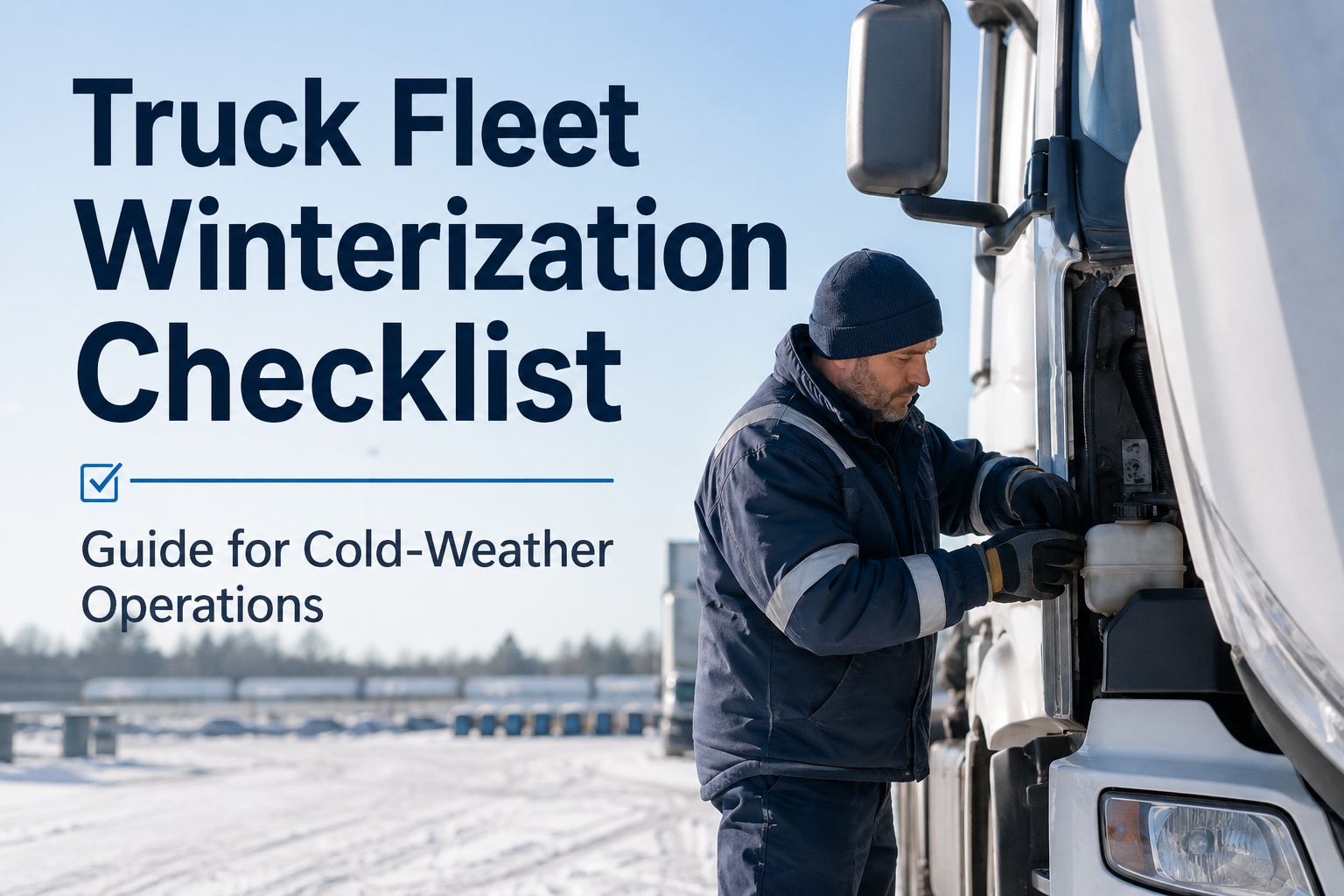
Winter doesn't break trucks. It exposes the weak spot that was already there: a tired battery, a coolant mix that was never tested, fuel that wasn't treated, an air dryer overdue for service. The first hard freeze finds all of them on the same morning. A winter maintenance checklist works when it's done before the cold arrives, on every truck, with a record that shows it was finished. This guide covers the systems that fail first in cold weather, the temperatures that matter, and a season-long routine, then shows how Truck Inspection & Maintenance Management Software (TIM) runs the winterization PM across the whole fleet. Start free and schedule your winter PM for every truck.
Winter Truck Maintenance · Cold Weather Fleet PM · 2026–27 Season
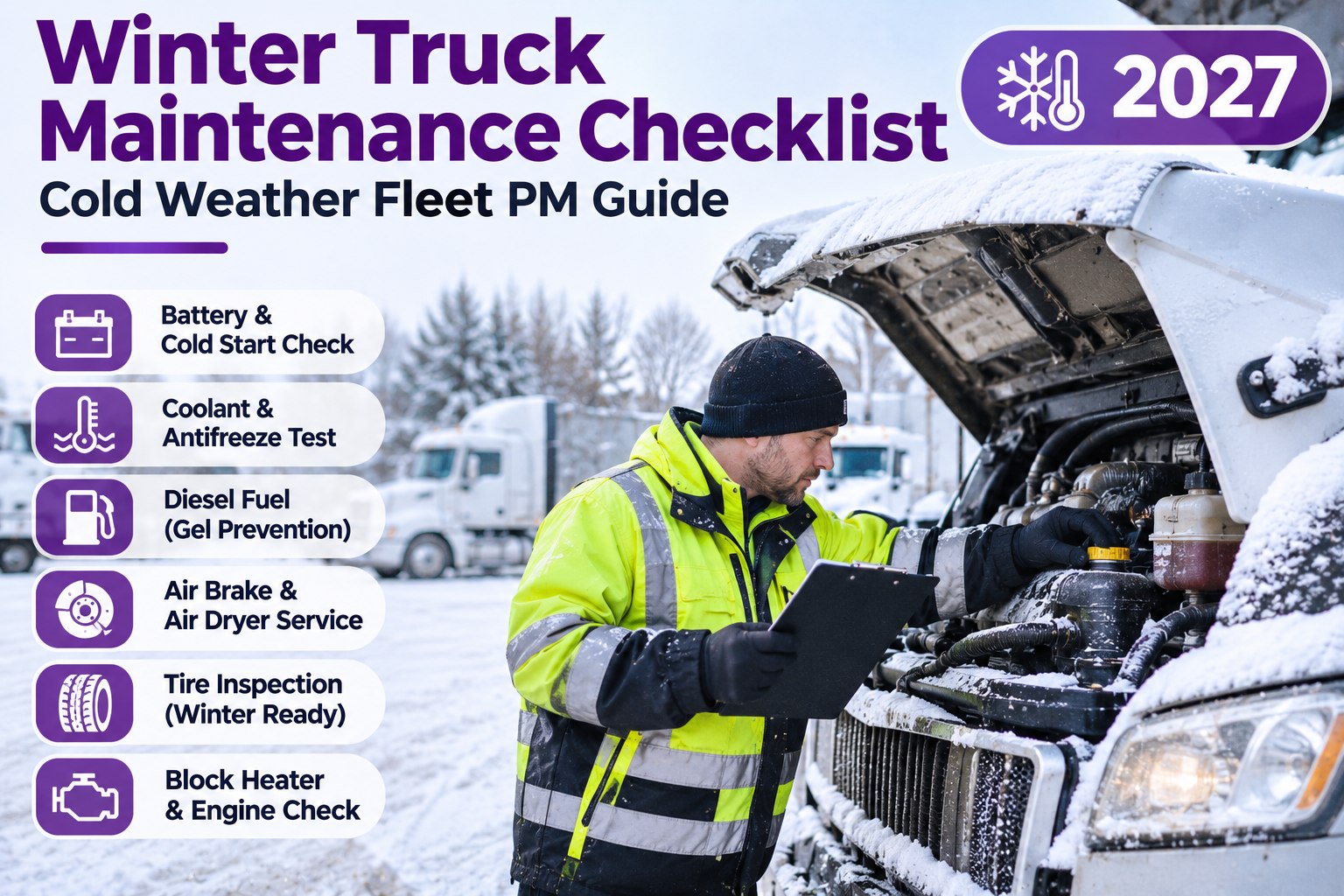
Winter Truck Maintenance Checklist: Cold Weather Fleet PM Guide 2027
Cold-weather no-starts, gelled fuel and frozen air lines almost always trace back to something that could have been checked in the shop. TIM lets you build one winterization checklist, schedule it for every unit, turn findings into work orders, and see at a glance which trucks are done and which aren't.
Before the first freezeShop checks and fluid changes
Through the seasonWeekly and daily routines
Deep cold snapsExtra care for starts and air
The Cold-Start Chain: Five Links, One Weak Link Is Enough
A diesel needs five things to go right on a frozen morning. If any single link fails, the truck doesn't start, so check the whole chain, not just the battery.
1BatteriesCold cuts available power while raising the engine's demand. Load-test batteries, clean and tighten terminals and check the charging system.
→
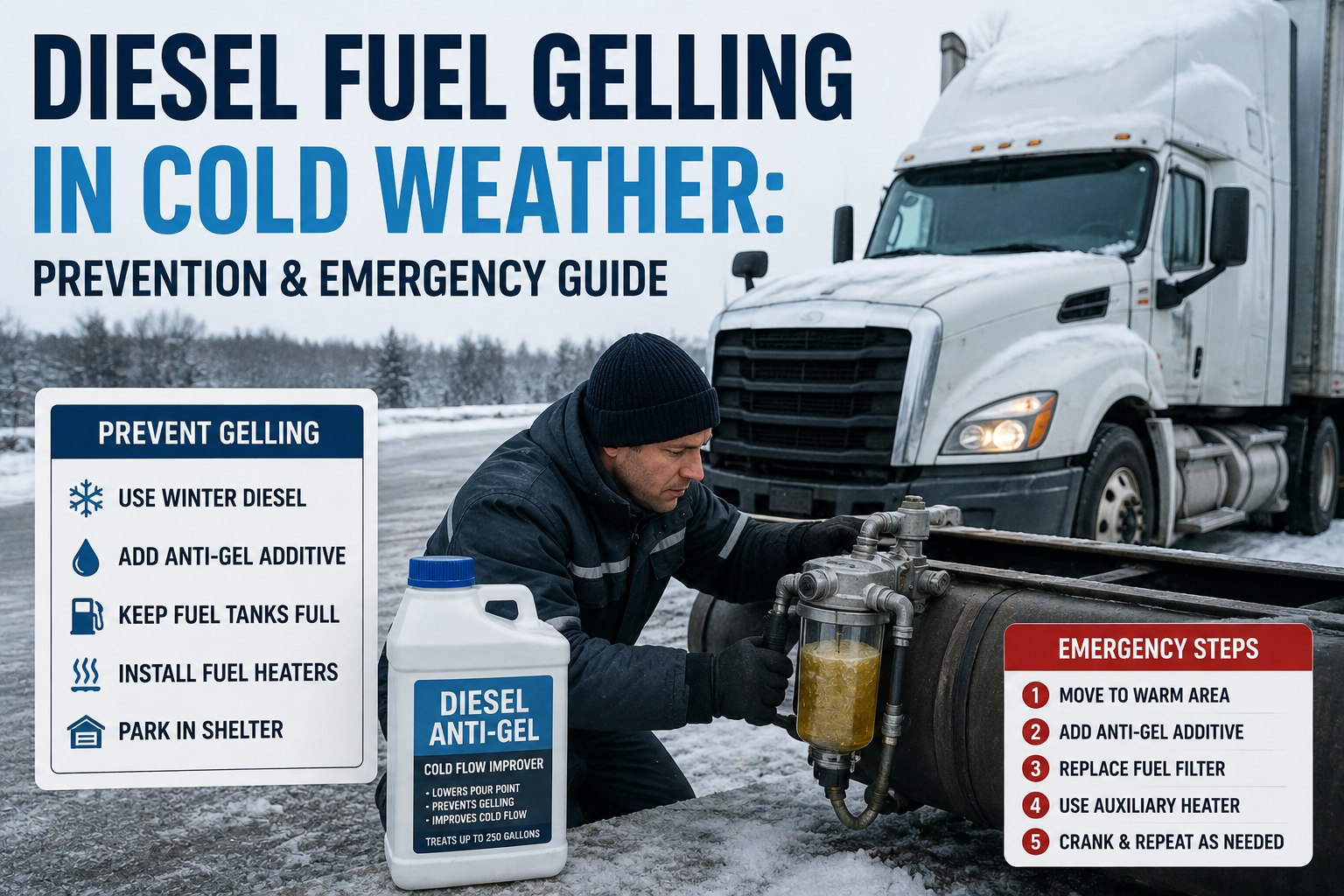
2FuelWax crystals can clog filters. Use winter-blend or treated fuel, change fuel filters and drain the water separator.
→
3Coolant and heatersTest freeze protection and inspect the block heater, cord and plug.
→
4Engine oilUse the viscosity grade your engine manufacturer recommends for cold starts.
→
5DEF systemDEF freezes, so check the tank, lines and heater operation.
The Temperature Ladder: What Freezes, and When
32°F0°C
Water freezesMoisture in air tanks, lines and washer fluid. Drain air tanks, service the air dryer and refill with winter-rated washer fluid.
Variesby fuel
Diesel begins to waxThe temperature depends on the fuel's cloud point. Ask your supplier for the winter blend's cloud point and treat fuel before it gets that cold, since additives generally prevent gelling but don't reverse it.
12°F−11°C
DEF freezesDiesel exhaust fluid starts to freeze around this point. Trucks have heaters, so confirm they work.
−34°F−37°C
Typical 50/50 coolant protectionA 50/50 ethylene glycol mix typically protects to about this temperature. Test the actual mix with a refractometer and follow the engine manufacturer's specification.
Thresholds are general. Fuel, coolant and DEF specifications vary, so always follow your equipment manufacturers' guidance.
Two Systems That Deserve Their Own Checklist
Air brake system
- Replace the air dryer cartridge on schedule and check the dryer's heater and purge operation
- Drain air tanks regularly if they don't drain automatically
- Inspect air lines, fittings and glad hand seals for cracks and leaks
- Check the governor cut-in and cut-out
- Watch for slow pressure build-up, a sign of a leak or moisture
Moisture that freezes in valves or lines can disable brakes, so don't skip this.
Tires and traction
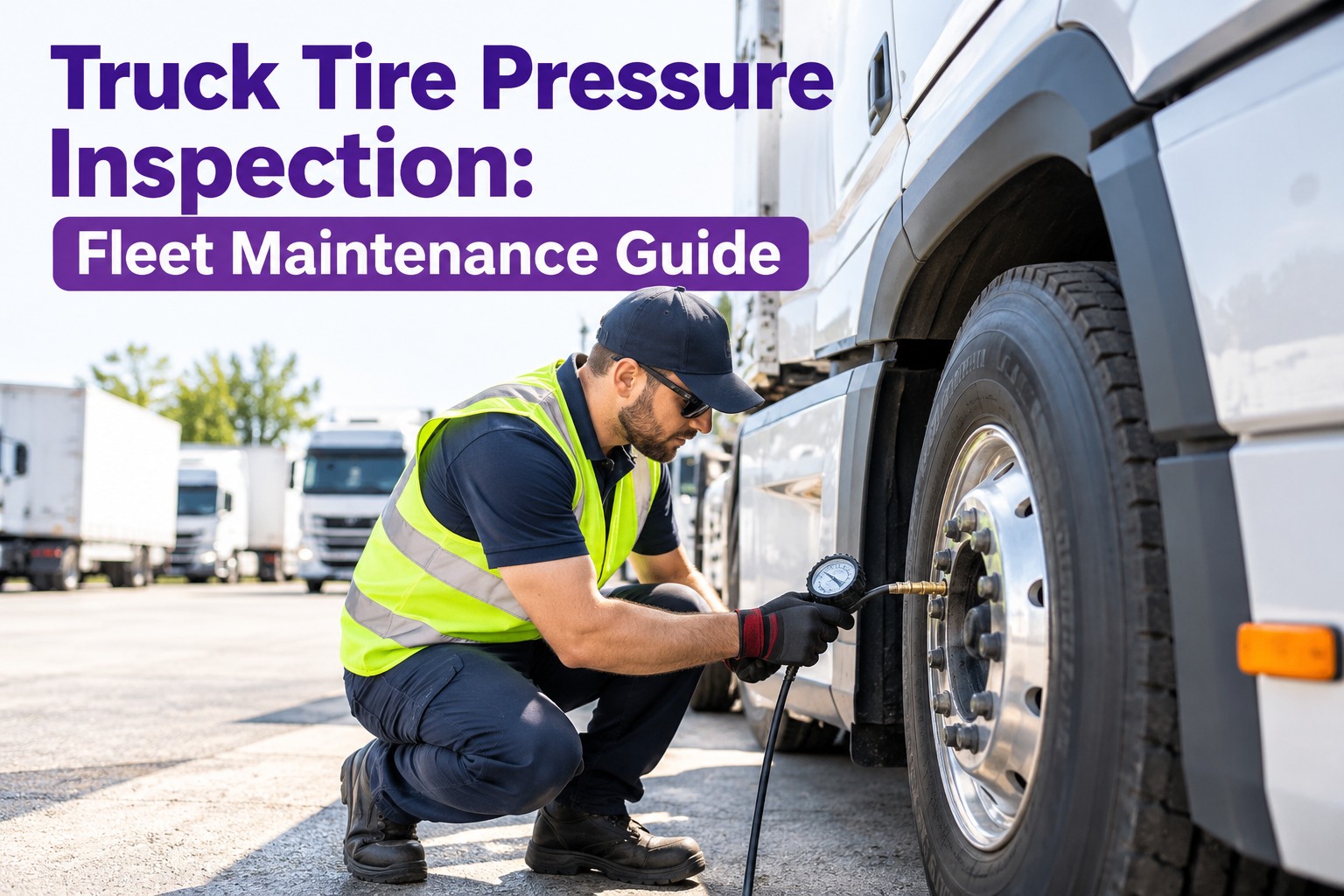
- Check pressure when tires are cold. A rule of thumb is about 1 psi lost for every 10°F drop
- Check tread depth: 4/32" minimum on steer tires and 2/32" on others
- Inspect for sidewall cuts, bulges and valve stem damage
- Carry chains or traction devices where required, and check the rules for your routes
- Clean ice and snow off lights, mirrors and reflectors every day
Under 49 CFR 392.14, drivers must use extreme caution when snow, ice or low visibility affect traction or sight.
One Winter Checklist, Every Truck, Visible Progress
Build the checklist once, schedule it for every unit, and send findings to the shop as work orders instead of sticky notes.
The Season-Long Routine
Before the first freeze
Shop-level checksLoad-test batteries · test coolant and top up · change fuel filters and drain water separators · service the air dryer · inspect block heaters and cords · check the heater, defroster and wipers · switch to winter-grade washer fluid · replace worn tires
Weekly in season
Fleet routineDrain air tanks where needed · check tire pressure cold · inspect lights and reflectors · review fuel additive use · check battery terminals · review open winter defects
Every pre-trip in the cold
Driver checksWalk around for ice on lights and mirrors · check the air system's build-up · listen for start-up issues · inspect tires and wheels · make sure the heater and defroster work · carry warm clothing, gloves, a flashlight and a way to call for help
Deep cold snaps
Extra carePlug in block heaters before shutdown · check local idling rules before running engines · keep fuel tanks full to reduce condensation · allow extra time for pre-trip · report any hard start right away
Safety Never run an engine or fuel-burning heater in an enclosed space, because carbon monoxide builds up quickly. Keep fire safety equipment current and clear of snow.
How TIM Runs Winterization Across the Fleet
Here is what a fleet-wide winter PM looks like on one screen. Each truck is either done, in progress or waiting, and each finding has a work order behind it.
Winterization progressIllustrative example
Unit 101Complete
Unit 102Complete
Unit 103Battery work order open
Unit 104Complete
Unit 105Not started
Unit 106Air dryer due
Unit 107Complete
Unit 108Not started
Frequently Asked Questions
When should we start winterizing trucks?
Start before the first hard freeze in the regions you run. For most fleets that means early autumn, which leaves time for parts and shop capacity. A fleet-wide schedule helps you see which units still need work.
Book a demo to see seasonal PM scheduling in TIM.
Do anti-gel additives fix fuel that has already gelled?
Most additives are designed to prevent wax from clogging filters and are less effective once fuel has already gelled. Treat fuel before temperatures reach its cloud point, and ask your fuel supplier about winter blends for the areas you run.
What should drivers check differently in winter?
Add ice and snow on lights, mirrors and reflectors, air pressure build-up, tire pressure and condition, heater and defroster operation, and wiper and washer function. Anything unusual should be logged as a defect.
Start free with guided inspections.
Is winter maintenance a separate program from regular PM?
It's usually a seasonal add-on to regular PM. Most fleets schedule it once a year before the cold arrives, with a lighter weekly and daily routine through the season. The key is the same as any PM: a checklist, an owner, a due date and a record.
Check · Treat · Test · Record
Know Which Trucks Are Winter-Ready Before the Cold Arrives
Put winter PM, inspections, defects and work orders in one system, and every truck's status is a tap away instead of a phone call to the shop.
No credit card required. Free for up to 3 trucks. Built for FMCSA-compliant fleets.