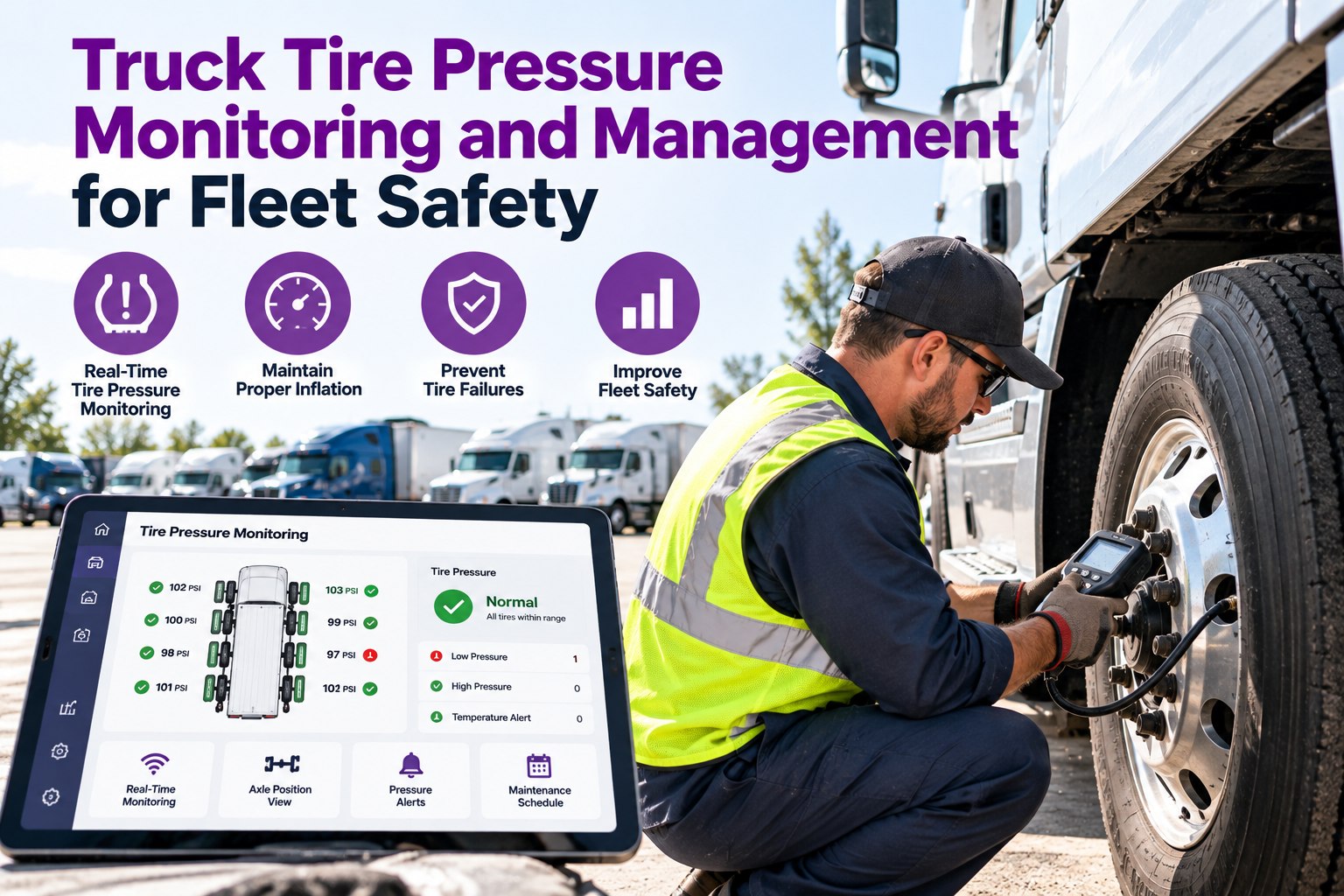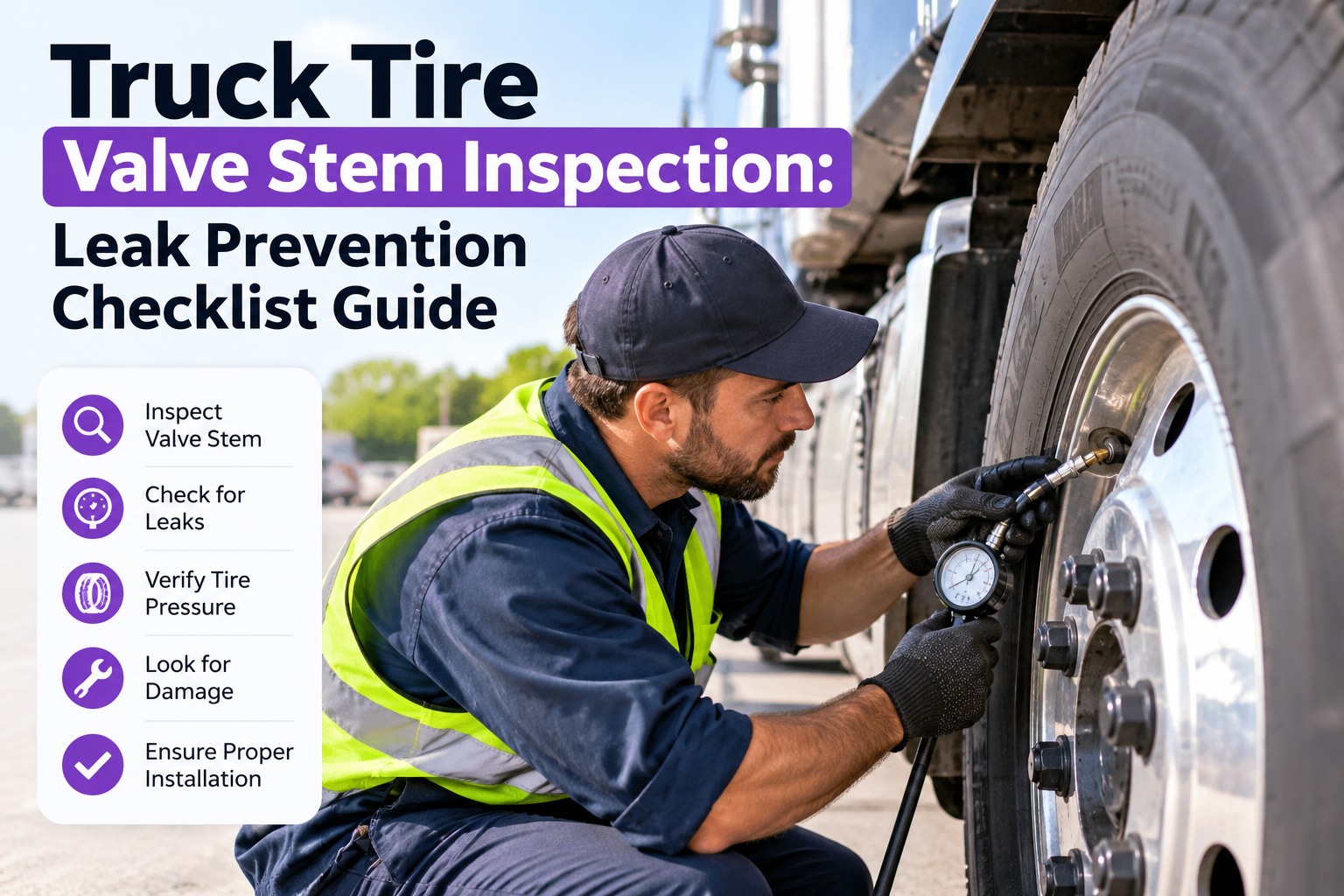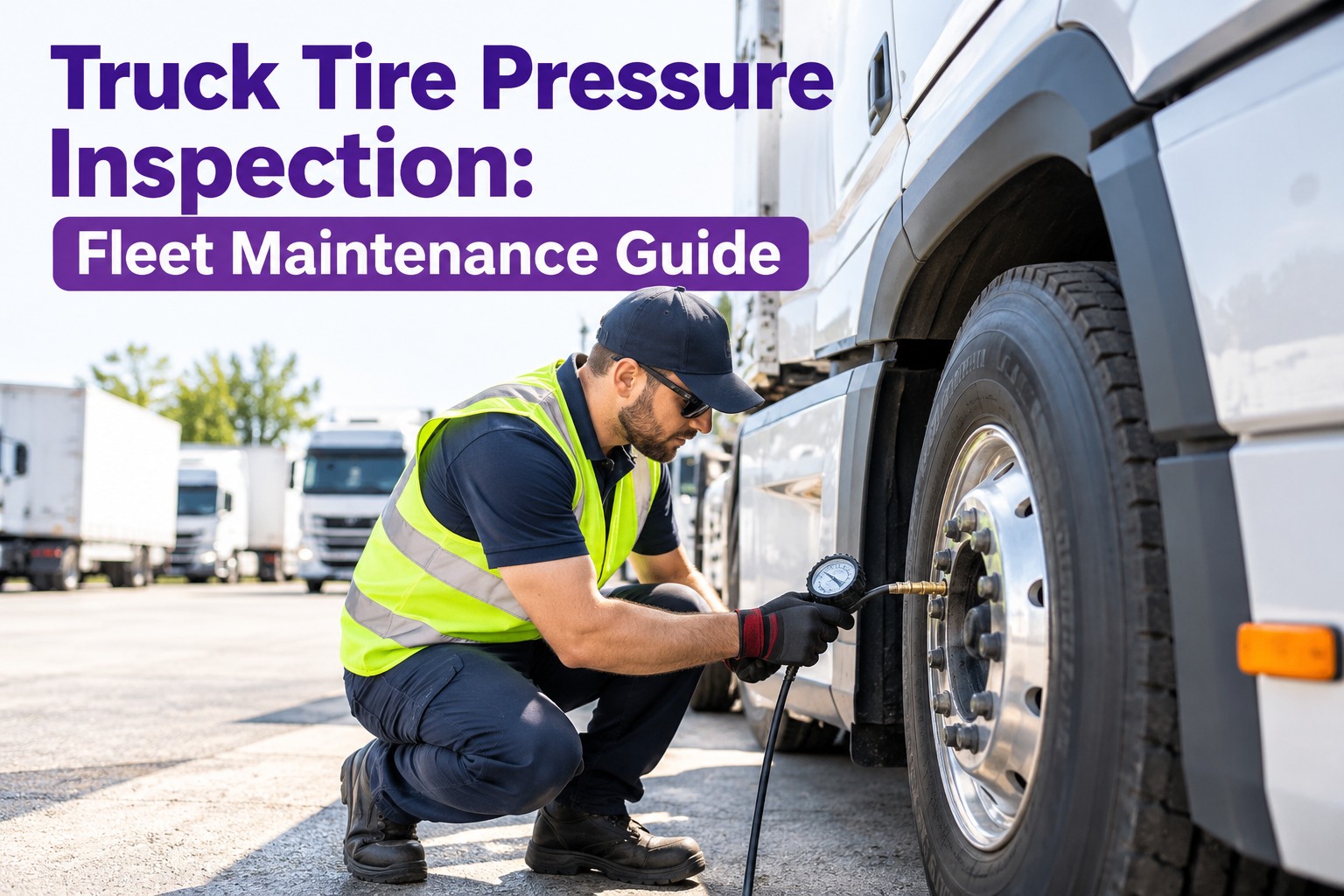
A tire rarely fails out of nowhere. It runs low for days, heats up a little more each mile, and lets go on the highway — usually a steer or trailer tire that nobody put a gauge on. Pressure is the one check that prevents blowouts, saves fuel and extends tread all at once, yet most fleets never measure it the right way. This guide covers how. Start free and log every pressure reading by wheel position.
Truck Tire Pressure Inspection: Fleet Maintenance Guide
Start With the Cold Target, by Position
Correct pressure isn't one number — it's set by the tire's load and specification, and it differs across the three wheel positions. Always set to the cold target stamped for your tires and load; the figures below are typical starting ranges, not a substitute for the spec.
Why "Cold" Matters: Pressure Moves With Temperature
Air pressure rises as a tire heats up on the road and falls as it cools. A tire loses roughly 2–3 PSI for every 10°F fall in temperature — so a cold morning after a warm week can leave a truck well under target before it even rolls.
This is why pressure is always read cold, before the truck runs or after it has fully cooled. Under 49 CFR 393.75 a heat-raised reading is corrected out, not counted in your favor — and topping up a warm tire leaves it under-inflated once it cools. A warm reading is useful only to spot one tire running hotter than its neighbors. Book a demo to see cold readings logged against each wheel.
The Chain: Low Pressure to Blowout
Underinflation doesn't fail a tire directly — heat does. A soft tire flexes more, flexing builds heat, and heat destroys the rubber. Understanding the chain is why pressure is the check that matters most.
How to Check Pressure the Right Way
A tap test finds a flat, but not a tire 15 PSI low — and 15 PSI low is exactly what causes the damage. Do it with a gauge, cold, every position.
A Soft Tire Becomes a Logged Work Order
When a driver records a low reading, Truck Inspection & Maintenance Management Software flags it against the wheel position, opens a tire work order, and keeps the pressure history — so a slow leak shows up as a trend instead of a surprise on the shoulder.
Manual Checks, TPMS and Auto-Inflation
There are three ways a fleet keeps tires at pressure, and they aren't interchangeable. Knowing the difference stops you trusting a system to do a job it can't.
A calibrated reading at every PM and pre-trip. Catches everything, costs only time — and is the audit no system replaces.
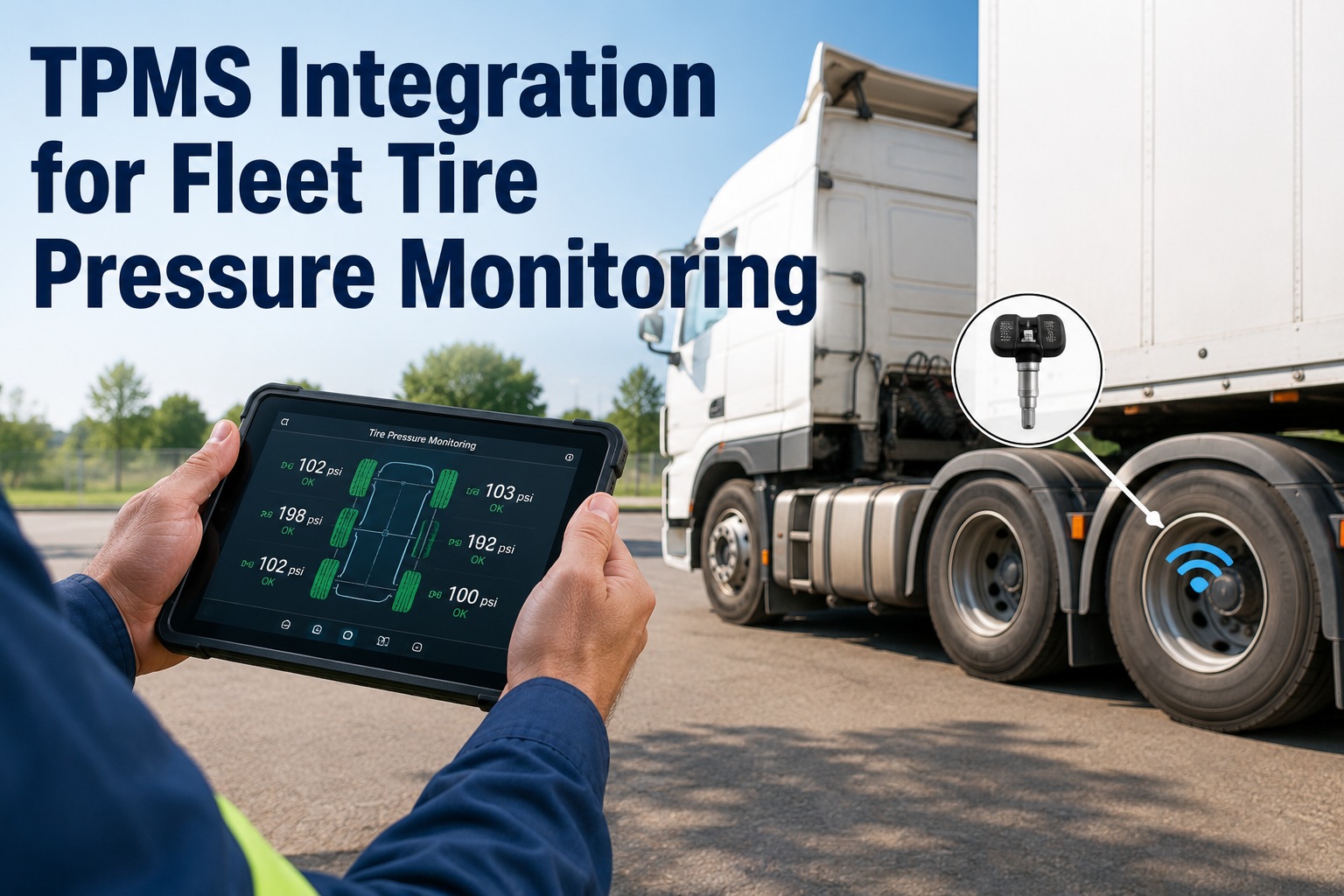
A monitor that alerts when a tire falls below a threshold. It tells the driver early — but it adds no air, so the fix still has to happen.
Trailer systems that top up continuously and can overcome most leaks — but they can mask a slow leak, so a manual audit is still needed.
Pressure Is the Cheapest Mile You'll Ever Save
A gauge costs nothing to use, and the tire it saves costs around a thousand dollars — the blowout it prevents, several times that. Truck Inspection & Maintenance Management Software makes the check a habit and keeps the proof on every truck's record.
Why Fleets Track Tire Pressure in Software
A clipboard reading tells you today's number and nothing else. A logged reading by wheel position tells you which tire has been drifting down for three weeks — the one about to fail. Start free and turn pressure readings into a trend you can act on.
Frequently Asked Questions
Catch the Soft Tire Before the Shoulder Does
Give drivers a guided, cold, by-position tire check that flags a low reading, opens a work order and keeps the pressure history — so a slow leak shows up as a trend, not a blowout.