Most trucks do not die from one catastrophic failure. They bleed out slowly a skipped oil change here, a missed brake adjustment there — until a roadside inspector or a towing bill makes the decision for you. A preventive maintenance schedule is how you take that decision back. Below is a free 2027 PM schedule template for mixed Class 6–8 fleets: the PM-A through PM-D tiers, the mileage and engine-hour triggers behind each, and how to group the work so trucks spend less time in the bay. Start free and load this template as live work orders.
2027 Template · Class 6–8 Mixed Fleet
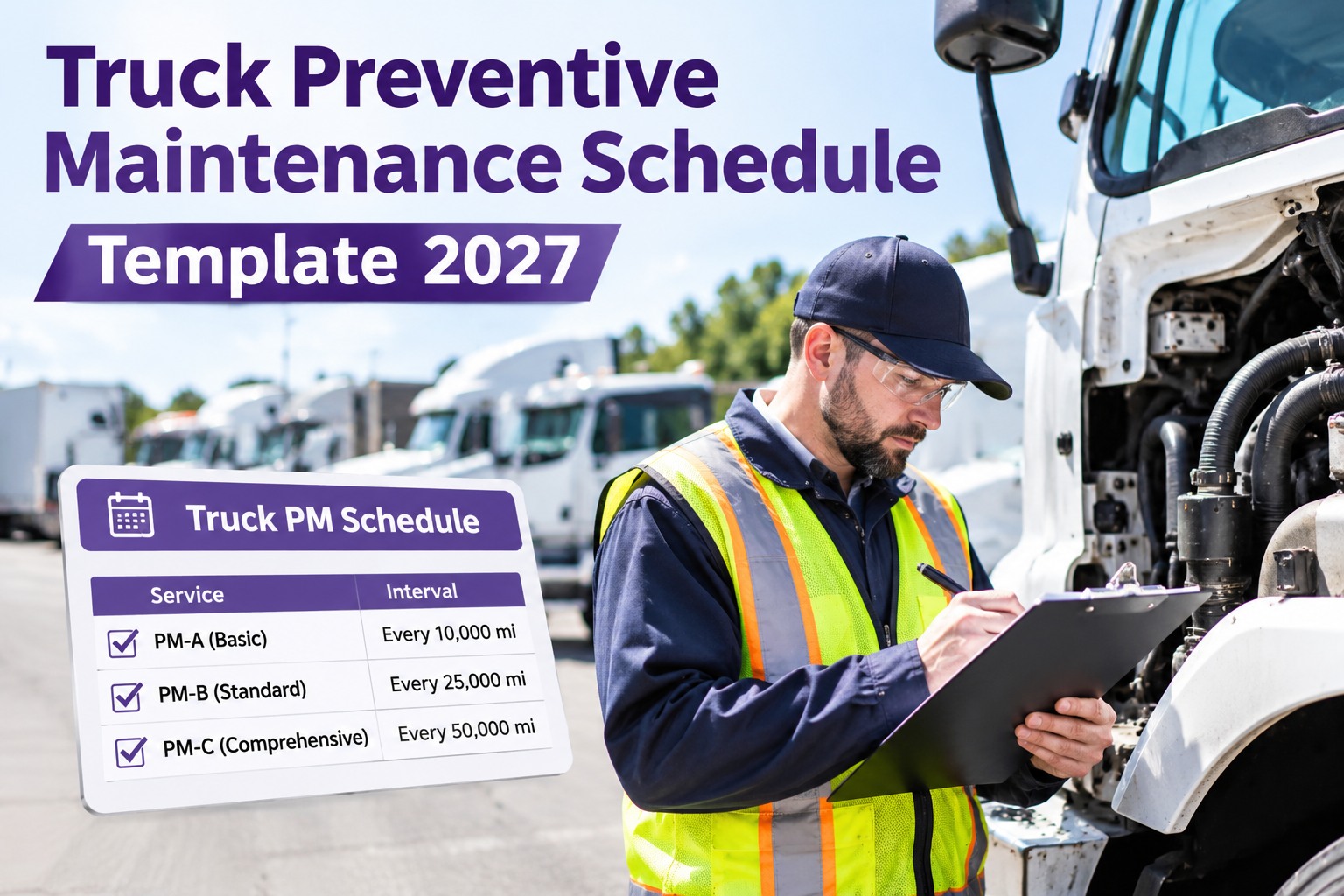
Truck Preventive Maintenance Schedule Template 2027
Four nested service tiers — light and frequent at PM-A, deep and major at PM-D — each one building on the tier below, so nothing is over-serviced and nothing slips past due.
PM-A~10k–15k miLight · frequent
PM-B~25k–30k miA + driveline
PM-C~50k–60k miA+B + full
PM-Dannual / ~100kDOT + major
~22PM events a year for a Class 8 truck at 120k miles
3–9×cost of a reactive engine repair vs a planned one
20–30%maintenance cost cut reported with proactive PM
49 CFR 396.3requires a systematic inspection, repair & maintenance program
The Nested PM Tiers, at a Glance
Every credible fleet program organizes around escalating service tiers. Each visit includes everything in the smaller tiers, so a PM-C also covers the A and B work due that day.
PM-A~10,000–15,000 mi · 250 hr · quarterly
The safety and fluids visit
Engine oil and filter, chassis lube, fluid top-offs, tire pressure and tread, lights, brake adjustment check, and a full pre-trip-style walkaround. Fast, frequent, cheap.
PM-B~25,000–30,000 mi · 500 hr · semi-annual
Everything in A, plus driveline
Transmission and differential checks, fuel and air filters, cooling system, suspension and steering, detailed brake inspection, and belts and hoses.
PM-C~50,000–60,000 mi · 1,000 hr · annual-ish
Everything in A and B, plus deep
Comprehensive inspection, fluid analysis, wear-component replacement, coolant service, and the major systems a lighter visit skips.
PM-Dannual or ~100,000 mi
The yearly overhaul-grade visit
The full DOT annual inspection plus major-system service — the deepest tier, timed to the calendar as much as the odometer.
These are baselines across common platforms, not gospel — your OEM build sheet and duty cycle set the real numbers. Book a demo to tune these tiers to your own trucks.
Pick the Trigger That Actually Fits the Truck
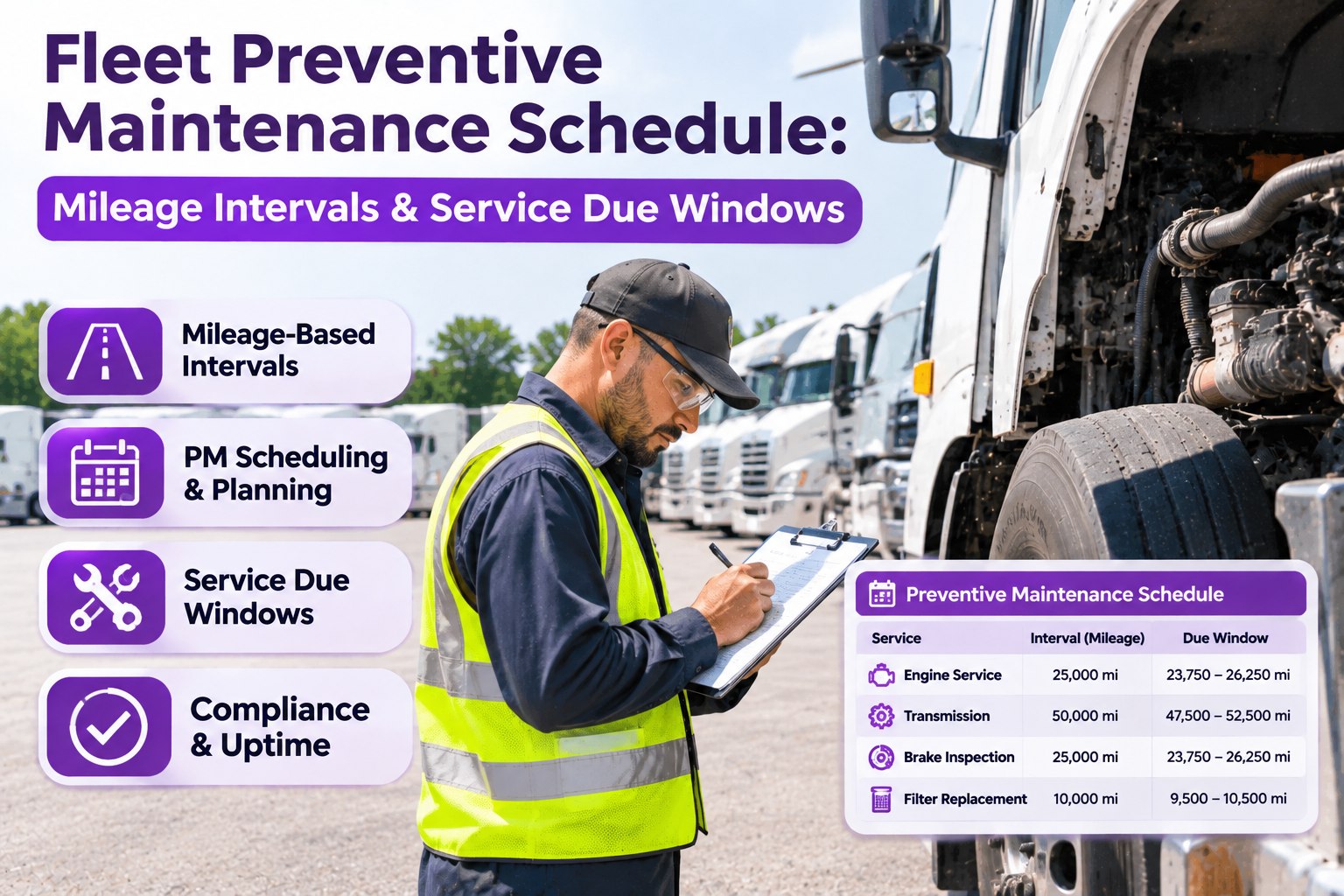
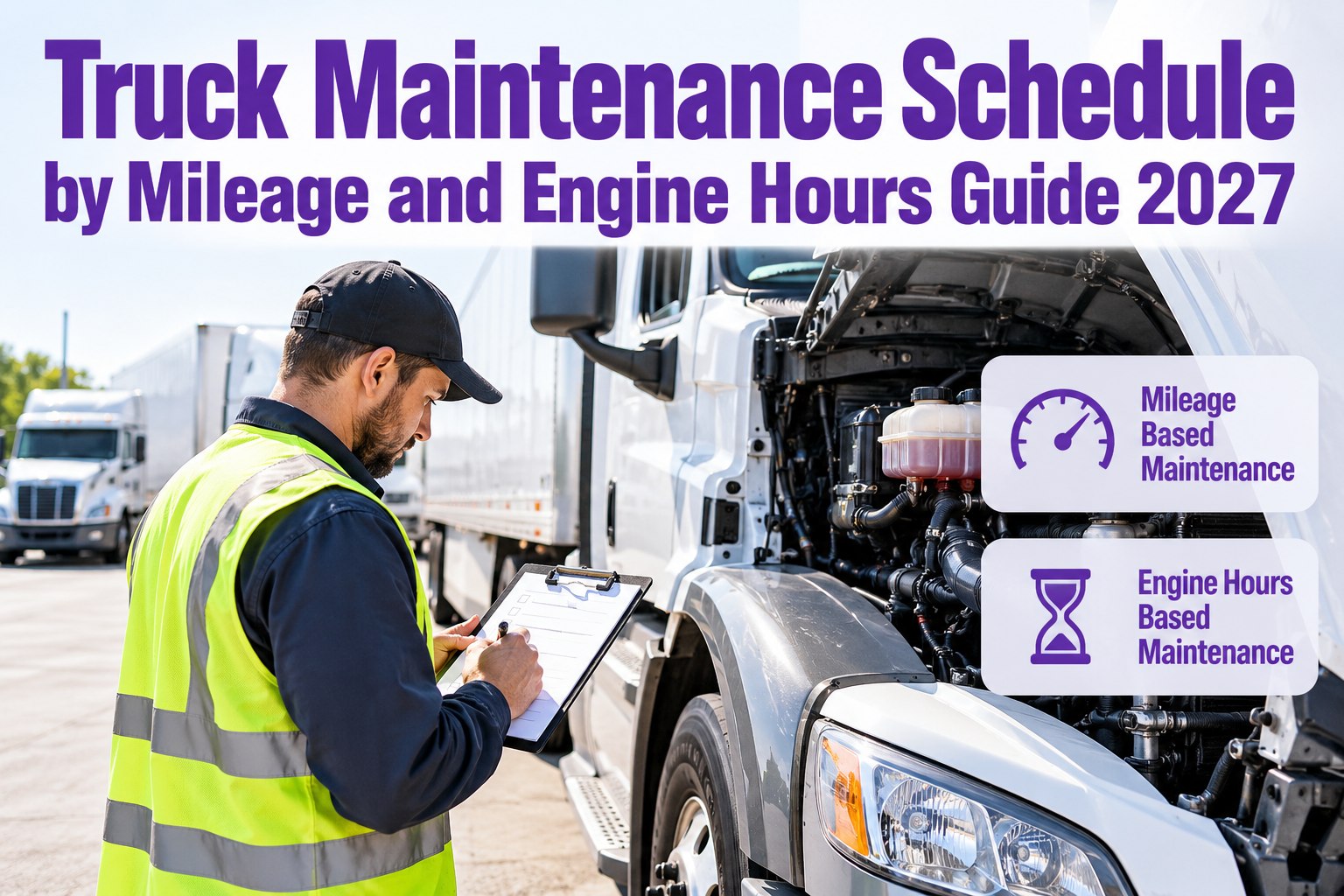
A tier is only half the rule. The other half is what counts down to it — and running all three triggers at once, with whichever hits first opening the work order, is what keeps every kind of truck covered.
MileageLong-haul & over-the-roadHighway tractors rack up miles faster than hours. Odometer is the primary clock.
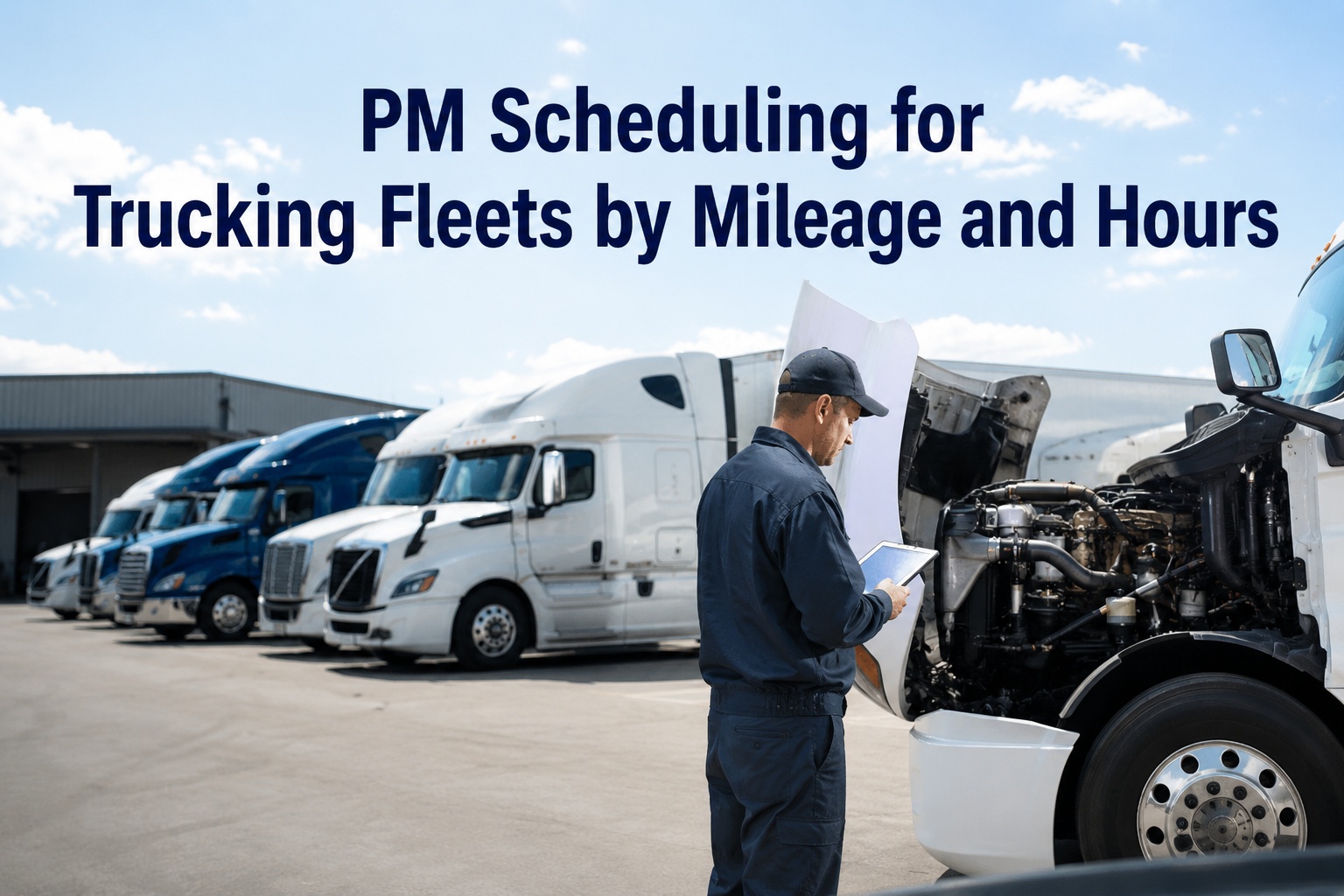
Engine hoursIdle-heavy & vocationalWaste, delivery and transit trucks wear in hours, not miles. Paper says current; the hour meter says otherwise.
CalendarLow-use & DOT itemsFluids age and the DOT annual comes due by date regardless of how far a truck ran.
The "whichever comes first" rule
Set PM-A at, for example, 10,000 miles OR 250 engine hours OR 30 days — whichever arrives first opens the service. Stack the same way for B, C and D, and no dimension of wear slips between checks.
The A-B-A-C Rhythm Across the First 100,000 Miles
Because the tiers nest, a well-run schedule falls into a predictable rhythm — frequent light visits with a deeper service layered in at each milestone. Here is a common pattern on a Class 8 tractor.
12.5kPM-A
→
25kPM-B
→
37.5kPM-A
→
50kPM-C
→
62.5kPM-A
→
75kPM-B
→
87.5kPM-A
→
100kPM-C
Illustrative pattern from the baseline intervals — exact mileage follows your engine's duty profile.
From Template to Live Work Orders
A template on a spreadsheet is a good intention. Truck Inspection & Maintenance Management Software tracks every truck by mileage, engine hours and date at once, then fires each A / B / C / D service as an assigned work order the moment it is due — with a DOT-ready record behind it.
Mixed Fleet: One Template per Class, Not One per Fleet
A Class 6 box truck and a Class 8 tractor on the same route do not wear the same way. Force both onto identical thresholds and you over-service the light truck and under-service the heavy one. Group by class and duty, then set intervals per group.
Class 6–7 · Medium-Duty
Box trucks, stake beds, medium chassis. Higher oil capacity allows longer intervals; mileage-led with a calendar backstop.
PM-A ~10k mi / 6 mo · PM-B ~25k mi / 12 mo
Class 8 · Heavy-Duty Highway
Tractors and straight trucks on linehaul. Mileage-primary with the DOT annual on the calendar.
PM-A ~15k mi / 30 d · PM-B ~50k mi / 6 mo
Vocational · Idle-Heavy
Refuse, utility, short-haul. Engine-hour-primary because idle wear never shows on the odometer.
Hour-led: PM-A ~250 hr · PM-B ~500 hr
Build the tier definitions once per vehicle type, then apply them automatically across every unit in that class. Start free and set a template per truck class.
How the Software Runs the Schedule for You
The template tells you what is due. Software makes sure it never gets missed — and proves it did when DOT or a warranty claim asks.
Three triggers in parallelMileage, engine hours and calendar tracked at once; whichever fires first opens the service.
Auto work ordersEach A / B / C / D service generates as an assigned work order — no spreadsheet, no memory.
Per-class templatesDefine tiers once per vehicle type and apply them across every unit in that class.
Due & overdue visibilitySee every truck's next service and completion rate fleet-wide at a glance.
Inspection-to-WO linkA failed inspection item opens a repair work order against the same truck.
DOT-ready recordsEvery service logged and dated for 49 CFR 396.3 and warranty support.
No truck leaves the yard overdue, and the record is already there when you need it. Book a demo to see the whole fleet on one schedule.
Frequently Asked Questions
1What are the standard PM intervals for a Class 8 truck?
Most fleets use a nested A/B/C/D framework: PM-A roughly every 10,000–15,000 miles, PM-B around 25,000–30,000, PM-C about 50,000–60,000, and PM-D annually or near 100,000. These are baselines, not fixed rules — your OEM build sheet, engine spec and duty cycle set the real numbers, so verify before you lock a schedule.
Book a demo to set intervals per truck.
2Should I schedule by mileage or engine hours?
Both — plus calendar. Use mileage for long-haul tractors, engine hours for idle-heavy vocational trucks, and calendar for low-use units and DOT items. The best practice is to set all three per truck and service on whichever hits first, so a parked-but-idling truck is not fooled by a low odometer.
Book a demo to run all three triggers at once.
3Why do the tier numbers differ between sources?
Because the A/B/C/D names have no single federal standard — different OEMs and fleets use the same labels with different intervals. What matters is that the tiers nest correctly and the intervals fit your engine and route. Use the figures here as a starting template, then tighten them for severe duty.
Book a demo to build a chart that fits your fleet.
4Does a PM schedule help with DOT compliance?
Yes. 49 CFR 396.3 requires a systematic inspection, repair and maintenance program with records to prove it. A tiered PM schedule that logs every service — dated, per truck — is exactly that evidence, and it keeps the annual inspection from slipping past due.
Book a demo to see the compliance record build itself.
Right service · Right truck · Right time
Turn the Template Into a Schedule That Runs Itself
Truck Inspection & Maintenance Management Software takes your PM-A through PM-D tiers, tracks every truck by miles, hours and date, and fires each service as a work order before it is overdue — with the DOT record already behind it.
No credit card required. Free for up to 3 trucks. Built for FMCSA-compliant fleets.