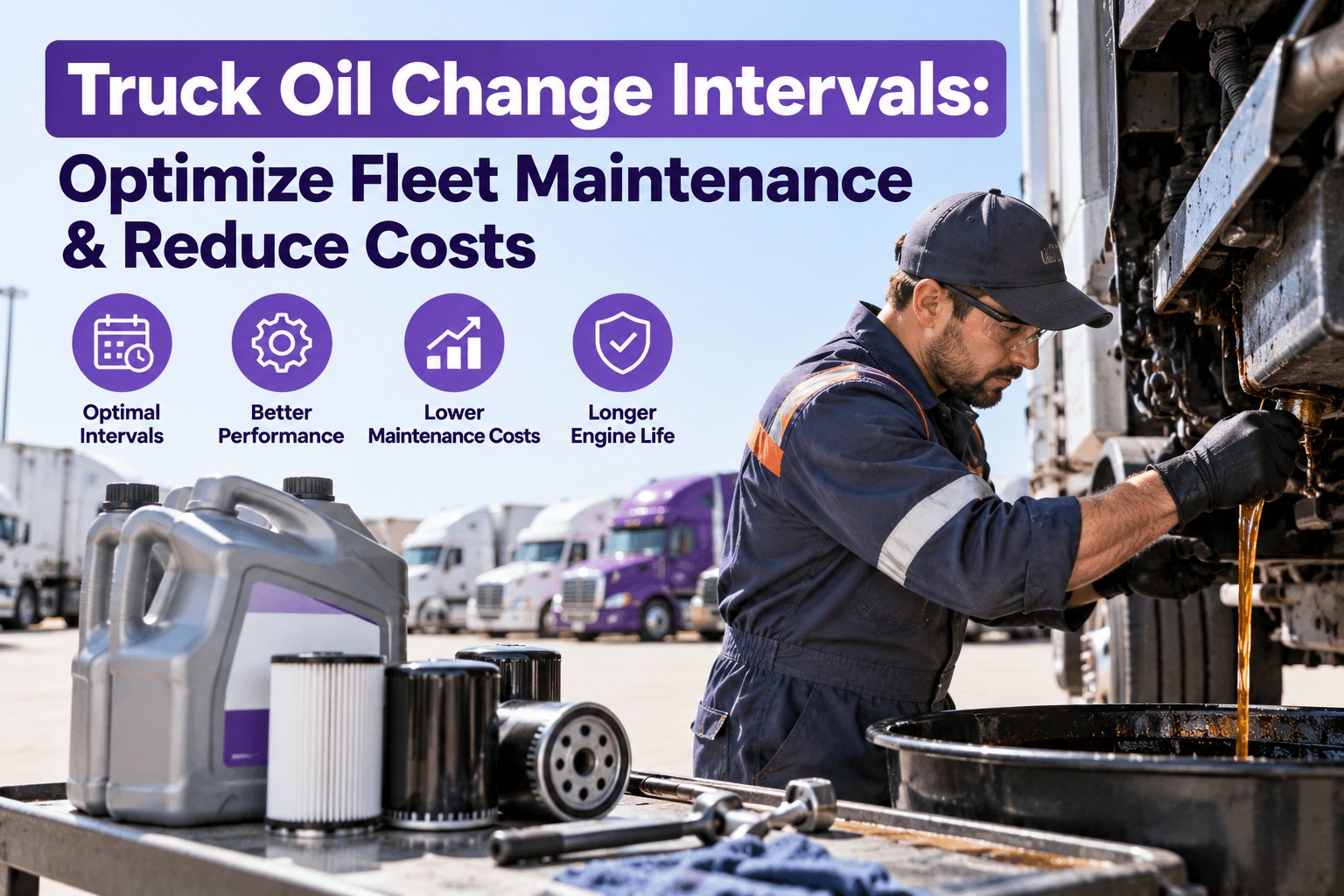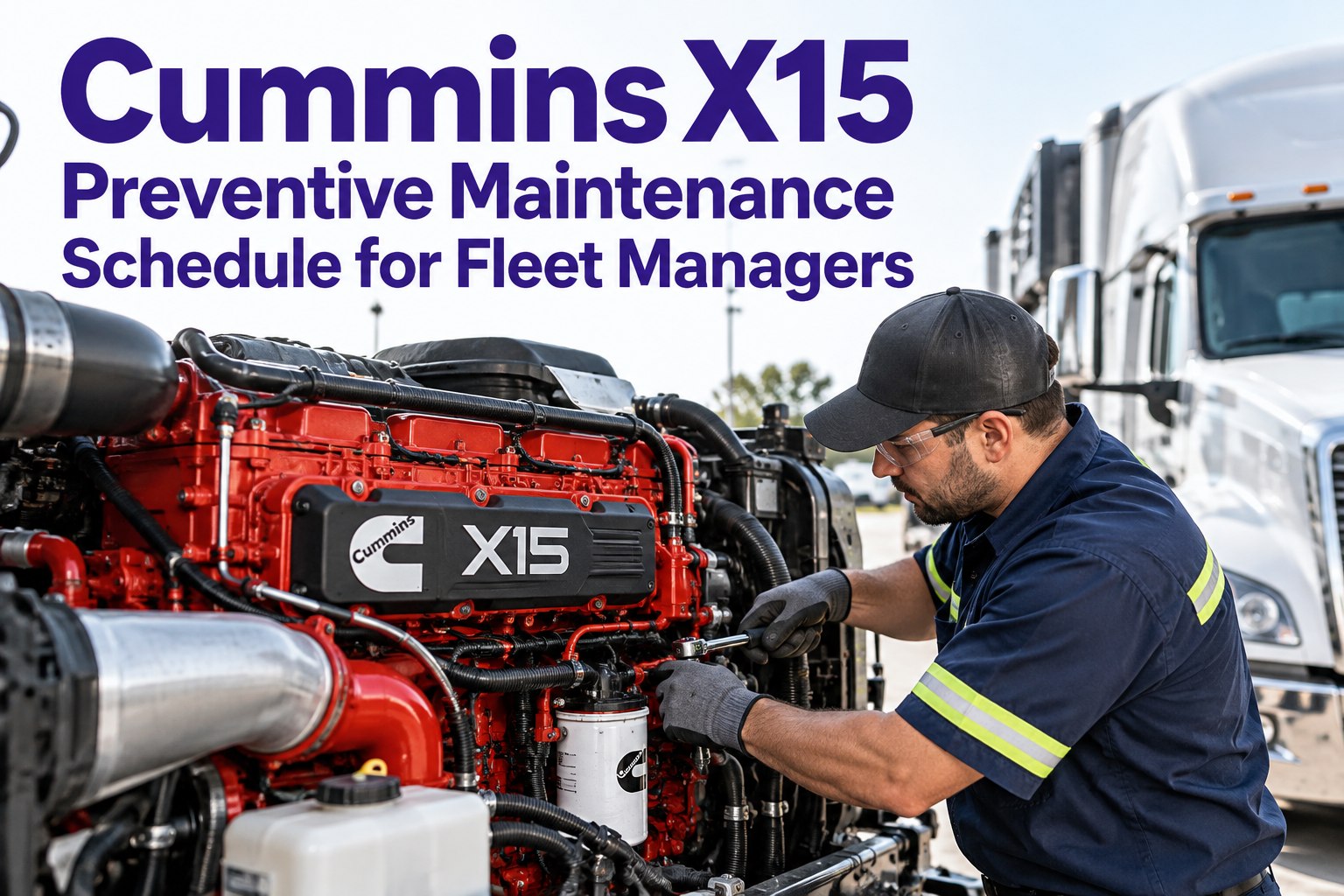
The most expensive mistake a fleet makes with a Cummins X15 isn't skipping an oil change — it's running the wrong interval because the duty cycle was misjudged. The X15 doesn't have one PM schedule; it has one that swings with how the truck is used, and Cummins built it that way on purpose. A linehaul tractor pulling 6.8 MPG and a vocational unit grinding 4.2 MPG are the same engine on paper and two different maintenance plans in reality — get the band wrong and you pay for it in liner wear and injector coking at 400,000 miles instead of 800,000. This guide lays out the X15 intervals by duty cycle, mileage, and hours, and how Truck Inspection & Maintenance Management Software (TIM) keeps each unit on its correct band automatically. Start free and put every X15 on its right PM schedule.
The X15 Doesn't Have One Service Schedule. It Has Four — and Your Fuel Economy Picks Which.
You want service windows you can plan around, not an interval you guess at and hope warranty holds. This guide gives you the real X15 matrix by duty cycle, and TIM makes it operational: assign each truck its band, and oil, fuel-filter, DPF, and valve triggers fire on the right mileage and hours — whichever comes first. Every service that comes due gets a first response within 4 hours — acknowledged, scheduled, and assigned.
Step One — Find Your Duty-Cycle Band
Every X15 interval starts here. Cummins classifies the engine by average fuel economy — a proxy for how hard the truck works. Put each unit in its band first, and mind the override: if idle-plus-PTO time runs high, a truck that looks "normal" on MPG is really working a band harder. When in doubt, drop a band.
Constant stop-start, heavy loads, high idle. Refuse, dump, heavy vocational, congested urban routes.
Regional delivery with a mix of highway and town, moderate idle, frequent stops between runs.
Steady highway miles, consistent cruise, low idle. The band most OTR tractors land in.
Long, uninterrupted highway hauls at optimal weight and speed. The longest intervals apply here.
The X15 Interval Matrix — Whichever Comes First
Read every row as miles / hours / months — whichever comes first, since a low-mileage truck that idles hard hits the hour or month trigger long before the odometer. Oil and fuel-filter intervals tighten sharply as duty gets harder; the milestone items (DPF, valves) are rarer but far costlier to miss.
| Service item | Severe 3–4.9 MPG | Short-haul 5–5.9 | Normal 6–6.9 | Light 7+ |
|---|---|---|---|---|
| Oil & oil filter (ODI)* | 25,000 mi 500 hr / 12 mo |
~35,000 mi | ~45,000 mi | up to 50,000 mi |
| Fuel filter (FF5776) | 25,000 mi | 35,000 mi | 50,000 mi | 50,000 mi |
| Coolant SCA / glycol test | Every 6 months across all bands | |||
| Air filter | By restriction indicator — commonly ~100,000 mi | |||
| DPF ash cleaning | ~200,000 mi / 4,500 hr (earlier duty) | up to 500,000 mi (2016+, >5.5 MPG linehaul) | ||
| Valve lash & overhead | Per OEM — many fleets run it early to catch adjustment under warranty | |||
*Oil must meet Cummins CES 20081 (CK-4, 15W-40); the Fleetguard LF14000NN oil filter and FF5776 fuel filter are mandatory, along with the integrated cartridge-type oil-filter bypass valve. Premium-blue-type oils can extend the drain interval per duty cycle. Synthetic/semi-synthetic oils may help in extreme heat or arctic cold but do not by themselves extend the ODI. Figures are representative of published Cummins guidance — always confirm against the Operation & Maintenance manual for your engine's EPA year and CM calibration.
The Milestone Services — Where the Real Money Is
The routine oil-and-filter rhythm is the easy part. These three milestone items decide whether an X15 reaches 800K–1M miles or dies early — and where duty-cycle discipline pays off most.
The X15's ash-load monitor flags when cleaning is due — a check-engine or amber lamp flashes for 30 seconds at key-on. Cleaning ran ~200K on earlier engines; 2016+ linehaul units above 5.5 MPG can reach 500K. Return DPFs to an authorized location for exchange, not a localized cleaner.
The X15's extra-high-pressure injection is unusually sensitive to contaminants. Change the FF5776 on the duty-cycle interval, and install the filter dry — never pre-fill from the clean-side center hole. Cycle the ignition 3–4 times to prime, or use the bleed line.
A high-cost, low-frequency job. Many veteran operators run the adjustment earlier than the published point — historically, engines adjusted on the long schedule missed warranty windows, while those cut in half caught cam issues while still covered.
The Right Interval Is Worthless If Nobody Fires the Trigger
TIM assigns each X15 its duty-cycle band and turns the whole matrix into automatic triggers — oil, FF5776, coolant test, DPF, valves — each firing on miles, hours, or months, whichever hits first. Service records attach photos for warranty backup, and a misclassified truck can be re-banded in seconds when routes change. The schedule stops living in a binder and drives the shop calendar.
Miss These and the X15 Derates — Three Ways It Happens
Missed maintenance doesn't just shorten X15 life — it can force a power derate that strands the truck. All three paths below are preventable with a disciplined PM program, and all trace back to the aftertreatment and fuel systems the schedule protects.
Low DEF or out-of-spec fluid triggers a warning lamp, then a ~25% torque cut, and eventually a 5 MPH limp mode. This is EPA-mandated inducement — it won't clear until the DEF issue is resolved.
Ignore the ash-load lamp and the filter clogs, backpressure climbs, and the engine derates to protect itself. Cleaning on interval keeps it from ever reaching inducement.
A neglected FF5776 lets contaminants reach the XPI injectors — expensive damage and derate-triggering faults on a system engineered for clean fuel only.
Frequently Asked Questions
Put Every X15 on Its Right Schedule — and Keep It There
Four duty-cycle bands, one interval matrix, and automatic triggers that fire on whichever comes first. Assign the band, attach the warranty photos, re-band in seconds when routes change — and stop losing engines to intervals that never matched how the truck actually runs.