A garbage truck doesn't wear like a highway tractor. It starts and stops hundreds of times a shift, idles at every stop, runs the packer and lift hydraulics hour after hour, and gets washed down with whatever the route leaves behind. A breakdown mid-route means missed pickups and a second truck pulled off its own route, which is why refuse fleets need a PM plan built around engine and PTO hours, hydraulics, contamination, and the few hours a truck is actually free. Federal rules still expect systematic inspection and maintenance under 49 CFR 396.3, but the schedule that works is one built for this duty cycle. This guide covers the route-day inspection loop, the three systems that cause most unplanned downtime, a PM tier plan, and how Truck Inspection & Maintenance Management Software keeps it all on schedule. Start free and build your refuse PM schedule.
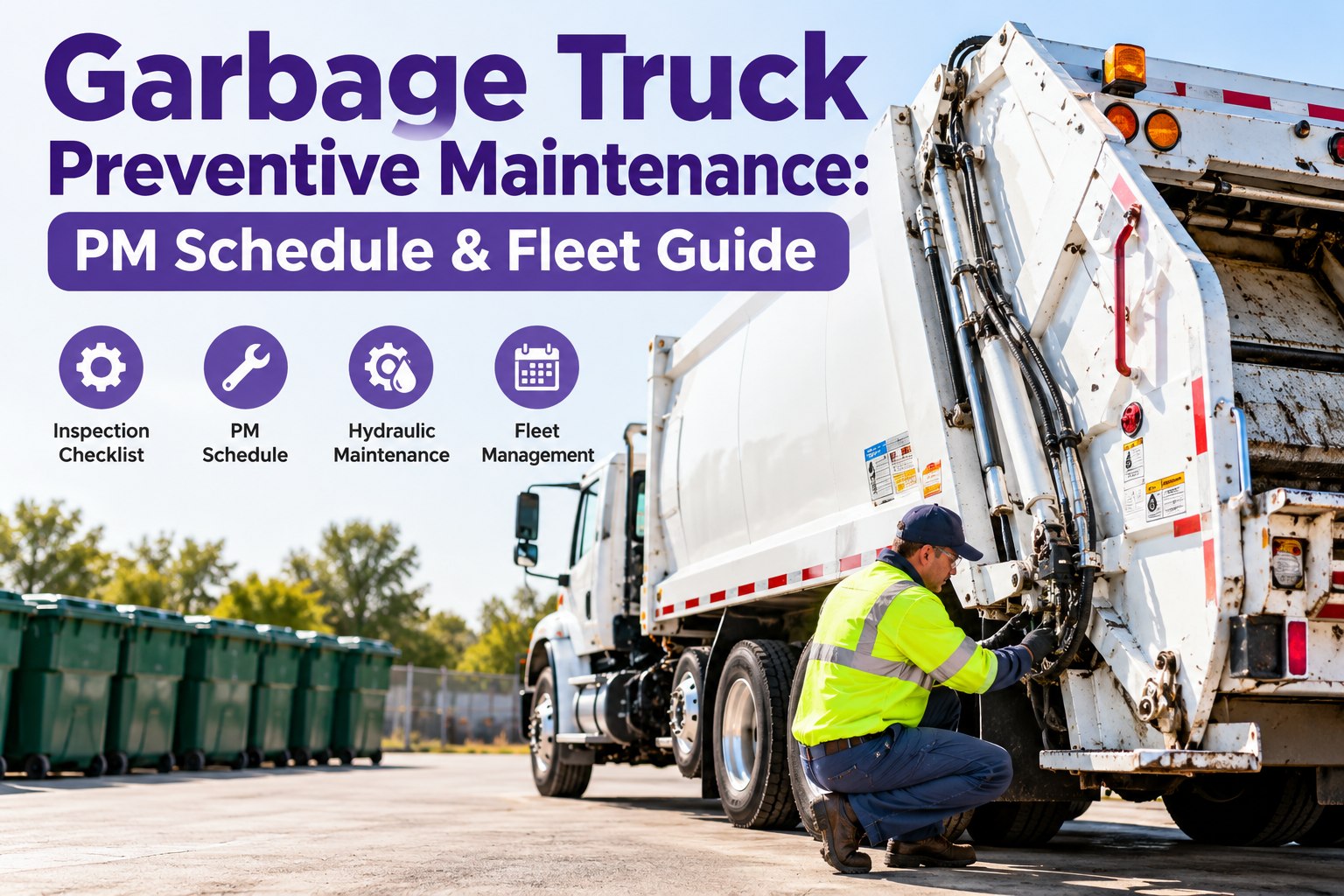
Garbage Truck Preventive Maintenance: PM Schedule & Fleet Guide
Refuse trucks are rarely free, so a late PM usually becomes a breakdown on the route. Truck Inspection & Maintenance Management Software connects driver pre-trips, defects, work orders and hour-based PM into one queue, so the shop sees what each truck needs before it leaves the yard.
A Route Day, and Where Maintenance Fits
Maintenance on a refuse truck happens around the route, not instead of it. These are the four points in the day where inspection and service actually fit:
The Three Systems Behind Most Downtime
Constant stop-and-go wears brakes, tires and suspension faster than highway work. Idle time adds engine hours without miles.
- Brake lining and per-wheel measurements
- Tires and wheel ends
- Engine hours and idle time
- Aftertreatment, which can struggle at low speeds
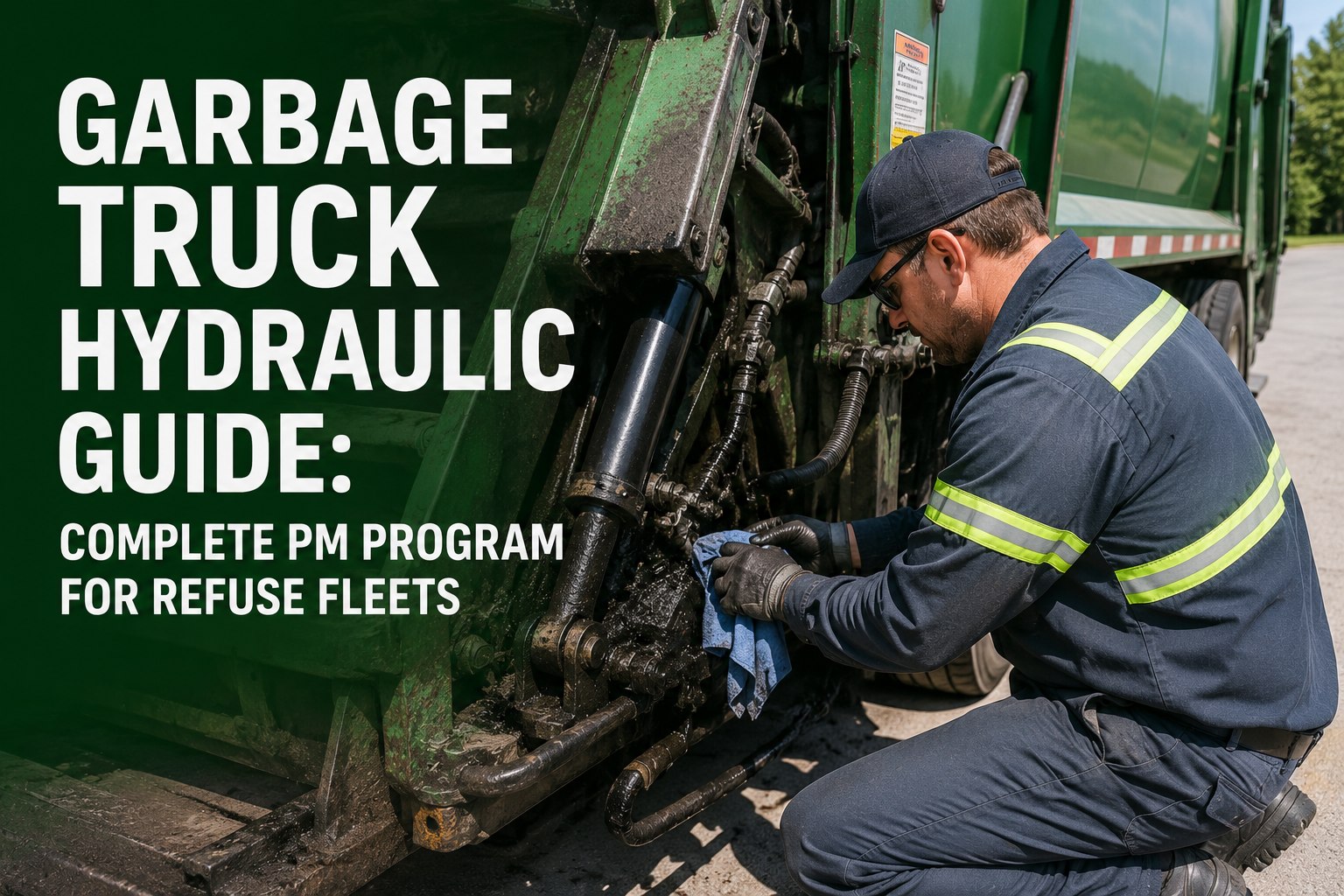
Packer, lift arms and tailgate all run on hydraulic pressure. Heat, contamination and vibration make hoses and fittings the usual weak points.
- Fluid level and condition
- Hoses, fittings and cylinders
- Filters and breathers
- Pump and PTO operation
The body takes impact, corrosion and debris daily. Safety equipment must work every stop, since crews work around the truck.
- Packer blade, rails and tailgate seals
- Lift arm and cart tipper wear
- Cameras, mirrors, alarms, lights
- Body corrosion and welds
Hydraulic Health: What to Check and What It Means
Hydraulic problems usually announce themselves early, if someone is looking. Use these signs as inspection triggers, not as things to monitor "for a while":
| What you see | What it may mean | Action |
|---|---|---|
| Wet or dripping hose or fitting | Chafing, loose fitting or failing hose | Log a defect, repair before the next route |
| Slower packer or lift cycle | Low fluid, clogged filter or worn pump | Check fluid and filters, then escalate |
| Milky or dark fluid | Water or contamination, or overheating | Sample and service before running further |
| Spray or pooling near hot exhaust | Fire risk from leaking fluid on hot surfaces | Take out of service until repaired |
| Jerky or noisy operation | Air in the system or a worn component | Inspect and repair, do not ignore |
Fit PM Into the Hours Trucks Are Actually Free
Track engine hours and miles per truck, set PM-A/B/C triggers, and see which trucks are due before routes are assigned. Driver defects flow into the same work-order list as scheduled PM, so the shop can combine a repair and a service into one visit. Free for up to 3 trucks.
A Refuse PM Tier Plan
Use this as a structure, then set the actual intervals from your OEM manuals, body manufacturer guidance and your own defect history. Intervals in hours work better than miles for most refuse trucks.
- Walkaround, tires, lights
- Leak check under truck and body
- Cameras, alarms, mirrors
- Packer and lift function test
- Engine oil and filters
- Grease points on arms and body
- Hydraulic hoses and fittings
- Brake and tire measurements
- Everything in PM-A
- Hydraulic fluid and filter service
- Packer rails, wear parts, seals
- Battery, electrical and aftertreatment
- Everything in A and B
- Cylinder and pump inspection
- Body structure, welds, corrosion
- Annual DOT inspection (§396.17)
Plan Service Around Demand, Not Against It
Route volume isn't flat. Use a simple weekly view of your own fleet, like this illustration, to pick the days and shifts when trucks can come off route:
Illustration only. Your busiest days depend on routes, holidays and contracts.
5 Steps to Roll It Out
Frequently Asked Questions
Keep Every Route Truck on Its PM Schedule
Pre- and post-trip inspections, defect-to-work-order routing, hour-based PM and a service history per truck in one platform. Start free to see which trucks are due, or contact us and we'll help plan your service windows.