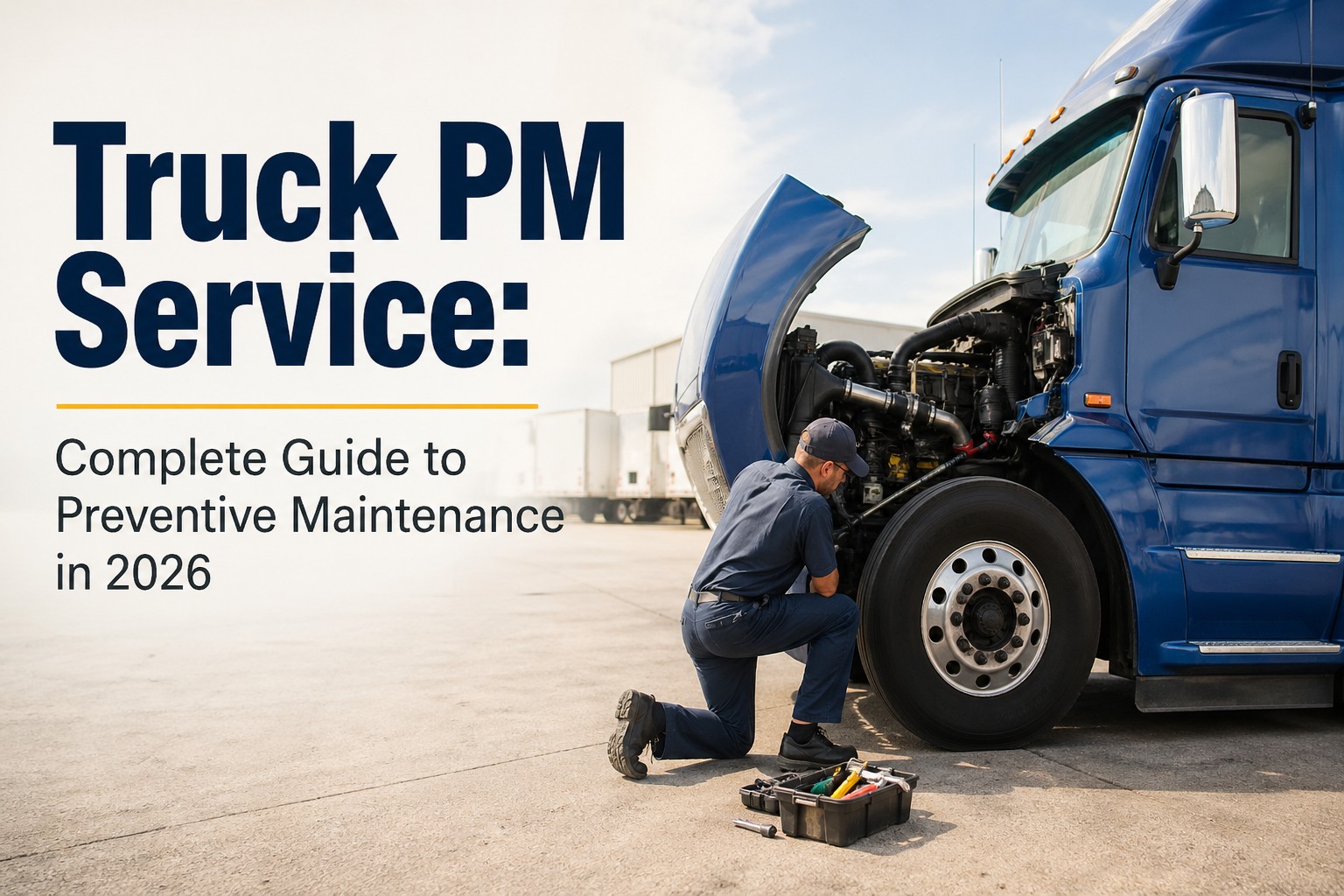
A Class 8 transmission is the single most expensive component you can destroy through a missed fluid change. An Allison 4500 RDS rebuild runs $8,000 to $15,000. An Eaton 18-speed rebuild lands between $10,000 and $22,000. A full replacement on either can push $25,000 once labor and downtime are included — and every one of those repair invoices we see traces back to the same three root causes: fluid pushed past its service life, filter left in past the change interval, or the wrong fluid poured in by a shop that didn't check the OEM spec. Transmission fluid does more than lubricate. It cools the clutch packs on an Allison automatic, films the syncros on an Eaton manual, transmits hydraulic pressure to shift solenoids, carries wear particles to the filter, and neutralizes acids as the additive package sacrifices itself. When it fails, every one of those functions fails simultaneously — and the transmission tells you about it through slipping shifts, delayed engagement, burnt-fluid smell, and a check-engine light that arrives about 5,000 miles too late. This guide covers exactly when to change transmission fluid on a heavy truck, how the intervals split between Allison automatics and Eaton manuals, the correct fluid spec for each unit family, the six warning signs drivers should escalate immediately, and how Truck Inspection & Maintenance software keeps every transmission on schedule across the fleet. Ready to run diff, transmission, and DVIR data in one place? Start a free trial of Truck Inspection & Maintenance, or contact our support team for a walkthrough.
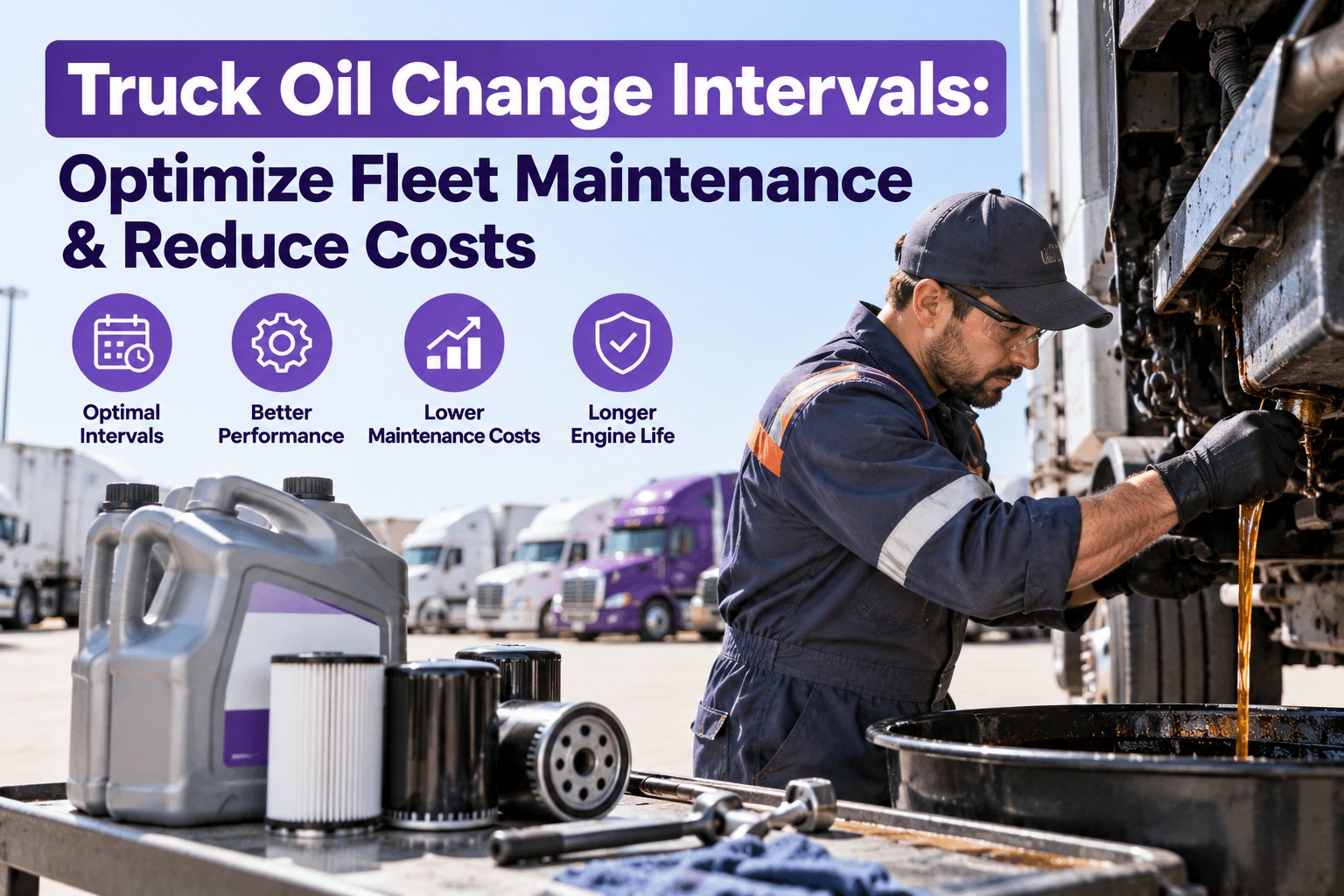
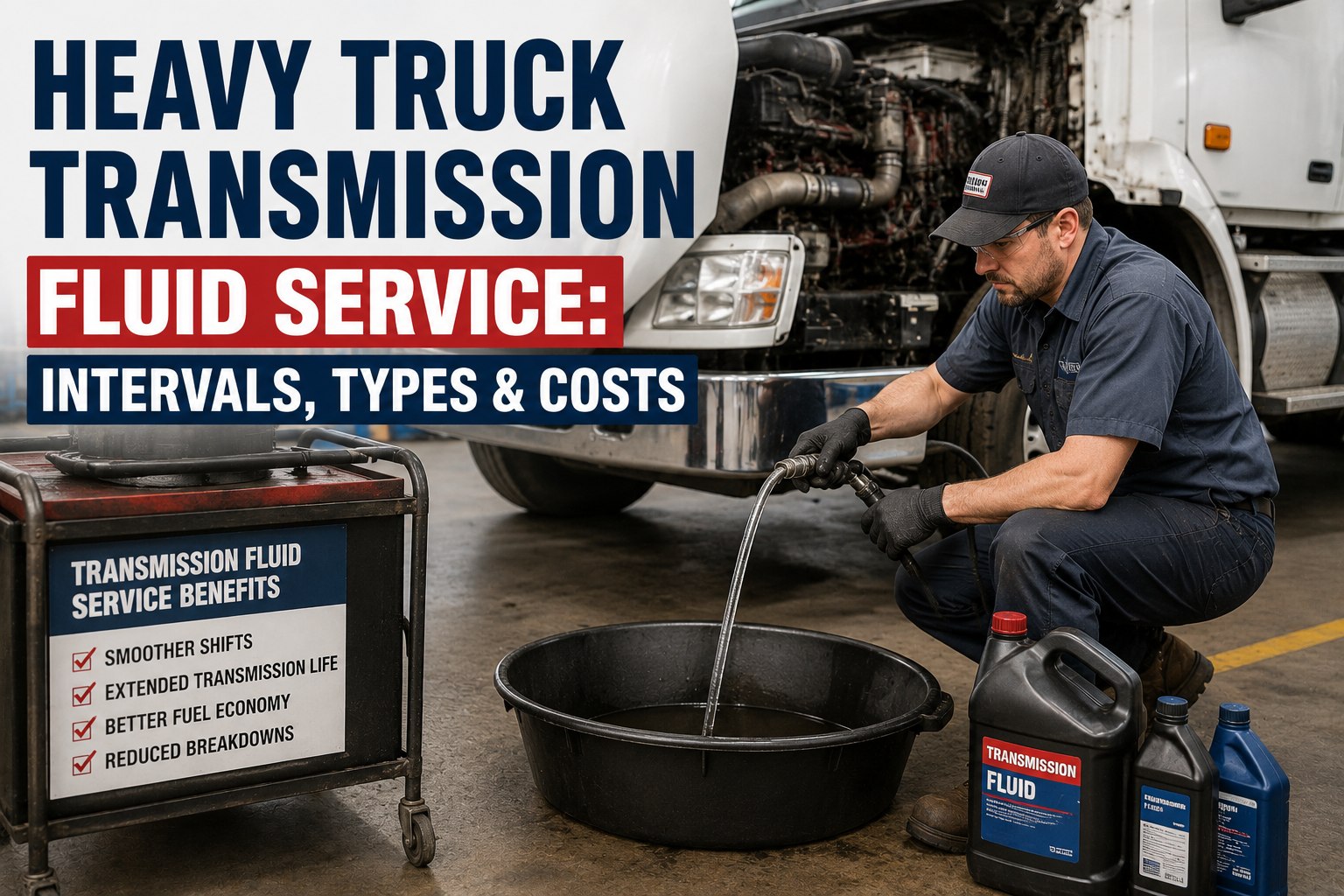
Heavy Truck Transmission Fluid Service: Intervals, Types & Costs
The most expensive component you can destroy through a missed fluid change. Here's exactly when to change it, what to spec, and how to stop guessing.
What Transmission Fluid Actually Does
Most drivers think transmission fluid just lubricates. It does — but that's one of six jobs it performs simultaneously, and when the fluid degrades, all six jobs fail at once. Understanding the workload explains why service intervals are non-negotiable.
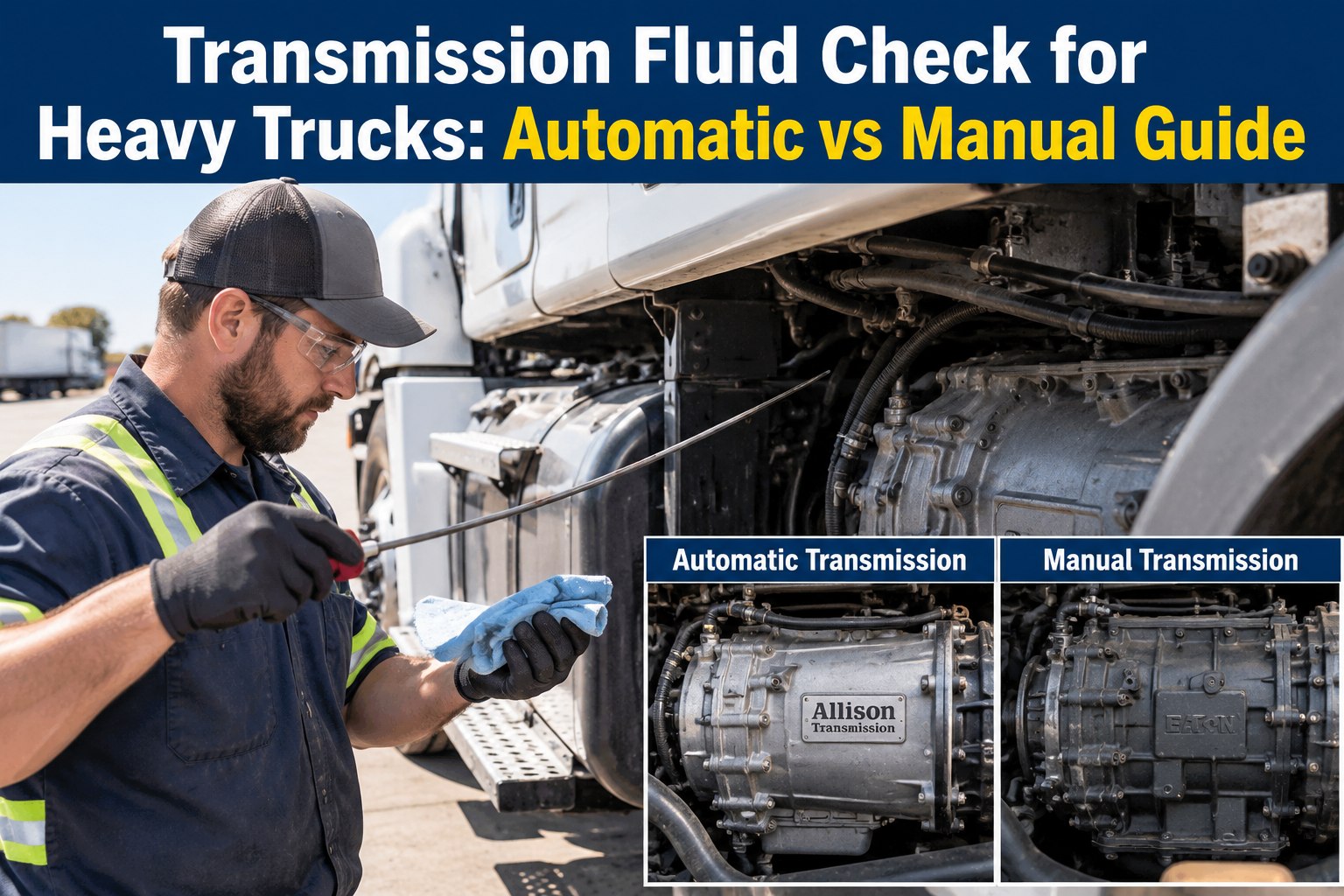
Manual vs. Automatic: Two Different Fluids, Two Different Rhythms
The single biggest mistake in transmission service is treating all heavy truck gearboxes the same. Eaton manuals and Allison automatics use different fluids, run different intervals, and fail different ways. Here's the split.
The Service Interval Decision Tree
The correct interval for your truck depends on four variables. Walk this tree in order, and you'll land on the right mileage every time — or on the specific OEM section you need to consult.
Vocational: 75K mi / 3K hr
Filter every service
Vocational: 120K mi
Standard mineral oil
The Fluid Types Cheat Sheet
Every fluid category exists for a specific reason. Using one outside its intended application costs warranty coverage and shortens component life. Here's what each label actually means.
How Transmission Fluid Fails (Visualized)
Fluid degradation happens in stages. Each stage has a visual signature you can spot at service, and a corresponding cost of ignoring it. Match the color, know the cost.
The 7 Warning Signs Drivers Report First
Transmission problems announce themselves through shift behavior long before a failure light comes on. Train drivers to flag these seven signs at every DVIR, and you'll catch problems in the shop, not on the shoulder.
Truck Inspection & Maintenance software tracks every transmission on schedule
Set intervals by unit family — Allison, Eaton, Endurant, UltraShift. Auto-generate work orders before the mileage or hour threshold. Attach fluid analysis to unit history. Flag DVIR shift complaints to maintenance instantly.
The Real Service Cost — And What You Prevent
Transmission fluid service is the single highest-ROI PM task on a heavy truck. Here's the actual math, benchmarked against 2026 fleet service pricing.
The 6 Mistakes That Kill Transmissions Early
Every failed transmission we see traces back to at least one of these six preventable mistakes. Post this list in the shop.
The Fleet Service Cadence
Systematic fleets run transmission service on layered intervals — driver, shop, and lab. Here's the cadence that keeps every unit alive to warranty end and beyond.
Frequently Asked Questions
It depends on the transmission and the fluid. Allison automatics running TES 295 or TES 668 synthetic can go 300,000 miles in linehaul use and 75,000 miles or 3,000 hours in vocational use. Eaton manuals running PS-386 extended-drain lube stretch to 500,000 miles linehaul and 120,000 miles vocational. Drop to non-OEM fluid and every interval collapses to 25,000–50,000 miles. Also honor time-based intervals — Allison specs fluid every 4 years and filter every 2 years regardless of mileage. Truck Inspection & Maintenance software stores the correct interval per unit so nothing slips.
A routine drain-and-fill with external filter runs $300–$550 per service. A full internal service including main filter, pan gasket, and up to 48 quarts of TES 668 or PS-386 fluid runs $500–$900. Compare that to a repair job at $1,500–$4,000, a rebuild at $8,000–$22,000, or a complete replacement at $15,000–$25,000+, and the routine service pays for itself many times over across a truck's service life.
Depends on the unit. Allison 3000/4000 automatics typically use TES 295 or TES 668-compliant synthetic (TranSynd is the flagship brand). Allison 1000/2000 series may run DEXRON VI in later serial number ranges — but not 500/600/700 series. Eaton Endurant, UltraShift PLUS, Fuller Advantage, FR, and RT series run Eaton PS-386 synthetic for extended-drain performance. Older Eaton manuals may spec straight SAE 50 gear oil. Always verify against the unit tag or OEM manual before pouring — wrong fluid voids warranty and shortens component life.
Seven main symptoms: delayed shift engagement, slipping gears (engine revs without acceleration), hard or rough shifts, burnt fluid smell, red or brown puddles under the truck, transmission temperature warning above 200°F, and whine or grind in neutral. Fluid color also tells the story — bright red is healthy, dark brown is past service, black with metallic particles means internal damage has already started. Any one of these is a service trigger. Contact our team to see how the software captures these at every DVIR.
Yes for most heavy-duty units. Allison automatics have a spin-on external filter that should change every service, plus an internal main filter that Allison specs at every second service. Eaton Endurant AMTs have a filter that changes at every fluid service. Skipping the filter defeats the entire point of the fluid change — new fluid immediately contaminates from debris trapped in the old filter media, and additive package depletion accelerates. Always plan filter cost into the service.
Only within the boundaries the OEM allows. Allison's TES 295 and TES 668-approved synthetics are designed to support extended drain intervals under specific operating conditions — Allison's fluid and filter change guidelines spell out exactly when extension applies and when it doesn't. Eaton allows extended drain only with PS-386 lubricant in eligible transmissions. Extension is never a blanket rule. Fluid analysis every 50K miles is the cleanest way to validate that fluid still has service life — otherwise, honor the shorter interval. Try free: sign up here.
Truck Inspection & Maintenance software keeps every transmission on schedule
Set intervals per unit family — Allison TES 295, Allison TES 668, Eaton PS-386, DEXRON VI. Auto-generate service work orders at the correct mileage, hour, or time threshold — whichever hits first. DVIR shift complaints route straight to maintenance. Fluid analysis results attach to unit history. Cost per mile visible at the transmission level. Everything a fleet needs to keep heavy truck transmissions alive to warranty end and beyond — one platform, one workflow, one source of truth.